
Dog breed profile
German Shepherd Price in India, Care and Full Breed Guide
What a German Shepherd actually costs in India, why the double coat and single coat labels sold here are not breed grades, and what to demand before you pay for a puppy.
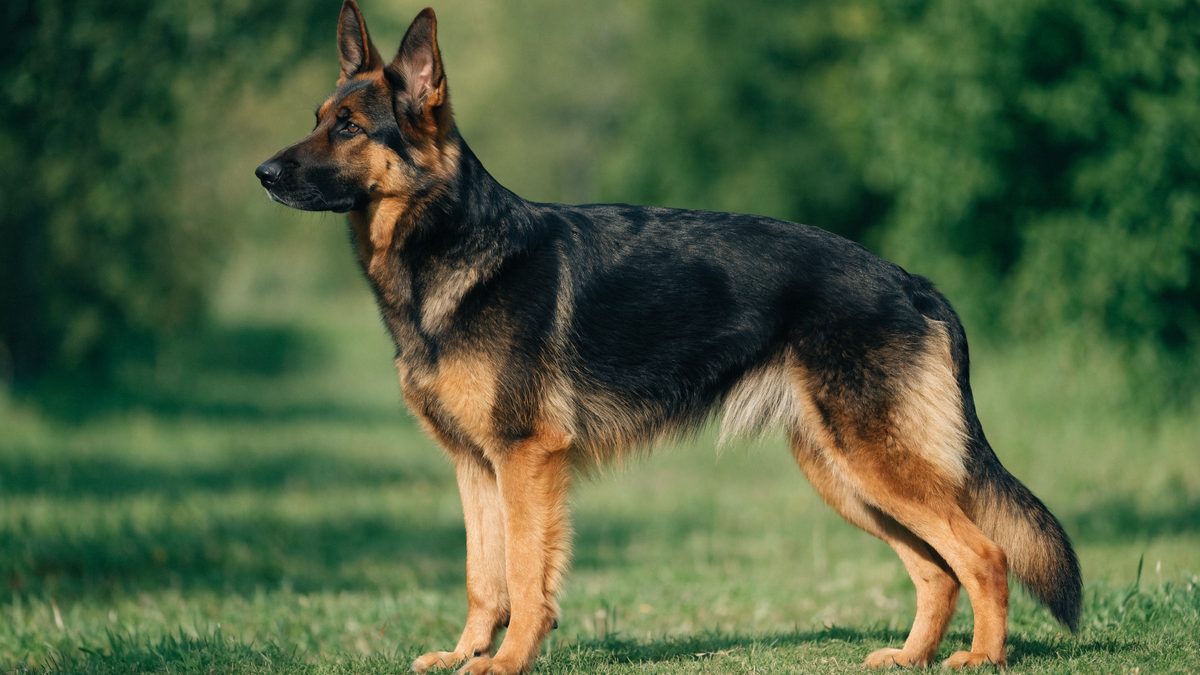
Quick answer
The German Shepherd price in India runs Rs 18,000 to Rs 2,00,000 in 2026, and published sources disagree by a wider margin than for almost any other breed sold here. Pet-quality puppies without papers start near Rs 18,000, KCI-registered puppies are quoted from Rs 40,000, and working line or imported bloodlines run past Rs 1,20,000. The single coat and double coat labels used by Indian sellers are not breed grades, and hip screening matters far more than either.
This guide is general information for Indian pet owners and is not a diagnosis. Always consult a registered veterinarian near you before acting on anything you read here, and treat any sudden change in your dog's condition as urgent.
German Shepherd at a glance
What a German Shepherd is
The German Shepherd is a large herding breed developed in Germany at the end of the nineteenth century as an all-purpose working dog, and almost everything about the breed follows from that job description. It was selected for biddability, nerve strength, endurance and a weatherproof coat. The first three traits are why the breed dominates military and police work worldwide. The fourth is why it struggles in an Indian summer.
Under the SV standard used by the breed's country of origin and adopted internationally, males stand 60 cm to 65 cm at the withers and weigh 30 kg to 40 kg. Females stand 55 cm to 60 cm and weigh 22 kg to 32 kg. The American Kennel Club states the same breed in imperial terms at 24 to 26 inches and 65 to 90 pounds for males, 22 to 24 inches and 50 to 70 pounds for females, with a life expectancy of 12 to 14 years.
| Attribute | SV standard | AKC breed page |
|---|---|---|
| Height, male | 60 to 65 cm | 24 to 26 in (61 to 66 cm) |
| Height, female | 55 to 60 cm | 22 to 24 in (56 to 61 cm) |
| Weight, male | 30 to 40 kg | 65 to 90 lb (29 to 41 kg) |
| Weight, female | 22 to 32 kg | 50 to 70 lb (23 to 32 kg) |
| Life expectancy | Not stated in standard | 12 to 14 years |
The two standards agree on height and disagree at the top of the male weight range, where the AKC allows up to 41 kg against the SV's 40 kg. That gap is trivial for a buyer. It is worth noting only because Indian sellers routinely advertise 45 kg and 50 kg dogs as superior stock, and both governing standards say the opposite.
The coat, stated exactly as the standard states it
The German Shepherd is bred in two coat varieties, and both of them carry an undercoat. The standard's words are that the breed is bred in the hair varieties double coat and long and harsh outer coat, both with undercoat. In the double coat variety the guard hair is dense, harsh and close fitting, short on the head and the front of the legs and longer on the neck. In the long variety the guard hair is long, soft and not close fitting, with tufts on the ears and legs and a near-mane at the neck. The AKC describes the same animal as having a medium-length double coat with a dense, harsh, close-lying outer coat over a softer undercoat.
Under the SV standard, a long straight topcoat without undercoat and a long-haired dog without undercoat are both listed among the breed's faults. A German Shepherd genuinely lacking an undercoat is a standard fault, not a premium variety and not a budget one. This matters enormously in India and the price section below explains why.
The single coat and double coat myth in the Indian market
Indian sellers advertise single coat and double coat German Shepherds as though they were different grades of the same breed, and at least one Indian breeder site sells a German Shepherd Double Coat as its own named product line, marketed on the two-layered coat and its weather resilience. A second lists short-coat, double-coated, long-coated and working line German Shepherds as four separate types, each described as intelligent, trainable and family-friendly. The breed standard recognises no such four-way split. It recognises two coat varieties, and it states that both carry undercoat.
The real variation is coat length, and its genetics are well characterised. Coat length in dogs is governed largely by the fibroblast growth factor-5 gene, in which five recessive variants are associated with long hair. Inheritance is autosomal recessive. A dog carrying two short-hair copies has short hair and cannot pass a long-hair variant on, a dog with one copy has short hair and carries the variant, and a mating between two carriers is expected to produce long-haired puppies about 25 percent of the time. That single recessive gene is why two short-coated German Shepherd parents can produce a long-coated puppy in the same litter, which a seller then reprices as a different type.
| Label used in the Indian market | What the dog usually is | What the standard says |
|---|---|---|
| Single coat | The normal short stock coat, which does have an undercoat underneath | Recognised variety, and the standard calls it the double coat |
| Double coat | The same normal stock coat, described in a way that sounds like an upgrade | The same single recognised variety, not a separate grade |
| Long coat or long haired | The long and harsh outer coat variety, produced by a recessive FGF5 variant | Recognised variety, and it also carries undercoat |
| A dog genuinely lacking undercoat | Rare, and almost never what is being sold under the single coat label | Listed among the breed's faults, not a variety |
Push your fingers against the lie of the coat at the shoulder and again over the hindquarters. If a softer, finer, paler layer sits beneath the harsh guard hair, the dog has an undercoat, and the standard's own description notes that the undercoat shows a light greyish tone. Do this before you discuss price. If a seller is charging a premium for a double coat on a dog whose littermate is being sold as single coat, you are being charged for a label rather than a dog.
Topline, and where the sloped back argument comes from
The standard describes a topline running from the base of the neck via high, long withers and a straight back to a slightly sloping croup at approximately 23 degrees to the horizontal, merging into the tail without interruption. Read that carefully. The standard asks for a straight back and a mildly sloping croup. It does not ask for the dramatic downward-curving topline and deeply angulated hindquarters seen on some show ring dogs. The UK's national kennel club places the German Shepherd in Category 2 of its Breed Watch scheme, the tier reserved for breeds with visible points of concern, and notes that the breed can be affected by conformational concerns. The working versus show line section below treats this factually rather than as a partisan fight.
German Shepherd price in India
A German Shepherd puppy costs Rs 18,000 to Rs 2,00,000 in India in 2026, and that band is honest only because published sources disagree so widely that a narrower one would be false. Two sources ranking on page one for this query differ by Rs 22,000 on the floor and Rs 80,000 on the ceiling for the same animal in the same year.
Bonbeno compared every published Indian source we could open. They do not agree, and the pattern of the disagreement is more useful than any single figure.
| Source | Pet quality, no papers | KCI registered | Top of range |
|---|---|---|---|
| Supertails | Rs 18,000 to Rs 28,000 | Rs 40,000 to Rs 60,000 | Rs 1,00,000 to Rs 4,00,000 imported |
| Mr n Mrs Pet | Rs 40,000 to Rs 80,000 basic | Rs 80,000 to Rs 1,20,000 | Rs 2,00,000 plus |
| Petsworld, Delhi and NCR | Rs 10,000 | Not stated | Rs 70,000 |
| Purfurry | Not separately stated | Not separately stated | Rs 18,000 to Rs 1,20,000 overall |
| Tradeindia B2B listings | Rs 14,000 listed | Not stated | Rs 25,000 listed |
The two ranking guides do not overlap at all, and that is the finding. Mr n Mrs Pet's floor for a basic puppy is Rs 40,000, which is exactly where Supertails' KCI-registered band begins. Go one tier up and the gap widens further: Mr n Mrs Pet starts KCI-registered puppies at Rs 80,000, entirely above Supertails' KCI ceiling of Rs 60,000. One of those two is describing a different market from the other, and neither tells the reader which.
The double coat and single coat premium, which no other page checks
Indian sellers price German Shepherds by coat label, and the published prices for those labels contradict each other outright. Supertails states that a double coat German Shepherd typically costs Rs 5,000 to Rs 10,000 more than a single or short coat. Mr n Mrs Pet lists short-coat, double-coated, long-coated and working line German Shepherds at an identical Rs 40,000 to Rs 80,000 each. One seller charges a coat premium and another does not, for the same claimed distinction.
| Coat label used in the Indian market | Supertails | Mr n Mrs Pet |
|---|---|---|
| Short coat / single coat | Baseline | Rs 40,000 to Rs 80,000 |
| Double coat | Rs 5,000 to Rs 10,000 above baseline | Rs 40,000 to Rs 80,000 |
| Long coat | Rs 45,000 to Rs 80,000 | Rs 40,000 to Rs 80,000 |
| Working line | Rs 50,000 to Rs 1,20,000 | Rs 40,000 to Rs 80,000 |
| White German Shepherd | Rs 35,000 to Rs 80,000 | Rs 1,20,000 to Rs 2,00,000 |
The white German Shepherd row is the clearest evidence that these are marketing categories rather than market rates. Two sites ranking for the same query price the same colour Rs 1,20,000 apart. Colour does not affect a German Shepherd's intelligence, temperament, loyalty or health, which Supertails states plainly on the same page that charges more for it.
Ignore the coat label and the colour. Ask three questions instead. Are both parents hip scored and elbow graded under a recognised scheme. Has either parent been DNA tested for degenerative myelopathy. Can you see the dam with the litter where the puppies were raised. A puppy from screened parents at Rs 60,000 is better value than an unscreened puppy at Rs 25,000, because the difference lands later as orthopaedic treatment.
Bonbeno does not broker puppy sales and does not publish breeder listings. Prices here are reported from third-party sources so buyers can see the disagreement themselves rather than being handed one number.
Monthly cost of owning a German Shepherd in India
The purchase price is the smallest number in German Shepherd ownership. This is a 30 kg to 40 kg working dog with a known orthopaedic risk profile, so food and veterinary provisioning dominate a lifetime total measured across 10 to 14 years.
Published Indian monthly cost estimates exist, but none of the ranking sources states its method or sample. Supertails puts budget kibble at Rs 2,500 to Rs 4,000 a month and premium kibble at Rs 5,000 to Rs 8,000, and puts a first-year total at a minimum of Rs 1.5 lakh with Rs 60,000 to Rs 1,20,000 annually after that. Bonbeno is running a verified owner cost survey across eight metros and will publish it with the sample size and collection date stated. Until then the honest position is that no method-transparent India-wide monthly figure exists, so this section sets out the cost structure instead of inventing a total.
Where the money actually goes
- Food. A large working dog at 30 kg to 40 kg is the single largest recurring line, and cheap grain-heavy kibble is a false economy in a breed with documented digestive sensitivity.
- Preventive veterinary care. Core vaccination, annual boosters, deworming and year-round tick and flea control. Tick-borne disease pressure is high across most Indian metros.
- Ear care. Otitis externa was the single most common diagnosis in the largest primary care study of the breed, affecting 7.89 percent of German Shepherds. In humid Indian coastal cities this is a recurring cost, not a one-off.
- Orthopaedic provisioning. Musculoskeletal disorder was the leading recorded cause of death in that same study at 16.3 percent. Budget for it rather than hope.
- Training. Not optional in this breed. An untrained 35 kg guard dog in an Indian apartment block is a liability to its household and its neighbours.
- Grooming. Lower per session than a Golden Retriever, higher in frequency during the two annual moults.
When we publish cost figures we state the sample size, the cities covered and the collection date. Where we cannot verify a number we say so rather than repeating an unsourced estimate from another site. Every rupee figure above is attributed to the source that published it.
Can a German Shepherd handle the Indian climate
A German Shepherd can live across most of India, but its heat tolerance is genuinely poor and the management burden falls entirely on the owner. The breed carries a dense double coat selected for German winters, and that coat does exactly the wrong job in a Chennai May.
German Shepherds are named among the double-coated breeds at elevated risk during Indian summers, when temperatures cross 45 C in several parts of the country. Veterinary guidance for Indian conditions is specific about timing. Avoid outdoor exposure between 11 am and 4 pm, walk between 5 am and 8 am and again between 7 pm and 9 pm, and keep a cool, well-ventilated indoor space available throughout the day.
What reduces the risk
- Shift all exercise to the cool ends of the day. Early morning and post-sunset windows are the standard Indian veterinary recommendation.
- Keep fresh water available all day, and avoid giving ice-cold water suddenly after exertion.
- Feed lighter in summer, with water-rich foods such as watermelon and cucumber offered alongside meals.
- Never shave the coat. Shaving off fur completely is not recommended for double-coated breeds, because the coat acts as natural insulation and protects skin from direct heat and sunburn.
- Choose the stock coat over the long coat if you are buying into a hot city, because the long variety carries more hair for the same dog to cool through.
Learn the signs before the day you need them, and monitor for them on every hot-weather outing. Heat stroke signs include severe panting, difficulty breathing, heavy salivation, vomiting, diarrhoea, a temperature of 40.5 C or above, blood in the urine, nosebleeds and eventual collapse. Move the dog to shade or air conditioning, sponge with cool but not cold water, use a fan, and stop cooling at 39.4 C to avoid overshooting into hypothermia. Cold water and ice baths are counterproductive. Then get to a veterinarian, because heat stroke in dogs can be fatal.
City by city, where it differs
Coastal humidity in Mumbai and Chennai compounds the problem, because panting cools a dog by evaporation and evaporation works poorly in humid air. A German Shepherd in Mumbai needs harder heat management than one in Pune at the same air temperature. Delhi and Jaipur pose the opposite version of the problem, with a dry heat that dehydrates fast and a genuinely cold winter that this coat handles comfortably. Bengaluru and Pune are the easiest large Indian cities for the breed, and Chennai, Kolkata, Ahmedabad and Nagpur the hardest. None of that changes the daily rules above, it changes only how many months of the year they bind.
Temperament and household fit
The German Shepherd suits committed owners who will train it, and it punishes households that will not. It is a confident, aloof, work-oriented breed, and the AKC quotes the breed standard directly on that aloofness, describing a certain aloofness that does not lend itself to immediate and indiscriminate friendships.
That aloofness is a feature rather than a fault. A German Shepherd is expected to be steady with its own family and reserved with strangers, which is why the Indian Army deploys the breed in guarding, patrol and assault-support roles where endurance and command responsiveness matter. It is also why the breed is a poor choice for an owner who wants a dog that greets everyone.
Indian sellers lean hard on the words loyal and protective, and both are fair descriptions of a well-raised German Shepherd. What the marketing leaves out is that protective is a behaviour a dog performs, not a personality it is born with, and an untrained dog performs it badly. A German Shepherd decides who is a threat using whatever evidence it has gathered, and a puppy that met forty calm strangers before sixteen weeks gathers very different evidence from one that met four.
Aggression, stated honestly
Aggression was the fifth most prevalent diagnosis recorded in the largest primary care study of the breed, affecting 4.76 percent of German Shepherds, and it was more prevalent in males than in females. That figure deserves context rather than alarm. It means roughly one in twenty German Shepherds under veterinary care had aggression recorded in its clinical notes, in a breed whose size makes any incident consequential enough to be recorded. The practical reading is that early socialisation and real training are not optional extras in this breed, and that a poorly raised German Shepherd is a materially bigger problem than a poorly raised small dog.
Apartment reality in India
A German Shepherd can live in an Indian apartment and many do, but this is the hardest common breed to keep well in one. Floor area matters less than daily outlet, and the outlet this breed needs is substantial. What works is two long sessions outdoors at the cool ends of the day, daily training or scent work indoors, and a cool place to rest. What fails is a large balcony and good intentions.
- Good fit. Households with someone home part of the day, owners committed to formal training, homes with secure outdoor access, second-time dog owners.
- Poor fit. Flats empty ten hours a day, first-time owners expecting an easy family dog, households unwilling to budget for training, homes without climate control in peak-summer cities.
- Watch item. Adolescence between roughly 8 and 18 months is when an under-socialised German Shepherd's reserve hardens into suspicion. That window closes quietly and expensively.
Training a German Shepherd
Train a German Shepherd from the first week home with reward-based methods and a clear structure, because this is one of the most biddable breeds in existence and the training ceiling is extremely high. The Indian Army trains its German Shepherds at the Remount and Veterinary Corps Centre and College in Meerut for guarding, patrol and assault-support work, which tells you what the breed can reach when the work is structured.
The herding and protection background produced a dog that wants a job and a handler. That is close to the opposite of the Indian sighthounds such as the Mudhol Hound, where recall is unreliable by design. A German Shepherd will work with you, which also means it will rehearse whatever you accidentally teach it.
What goes wrong, and it is rarely intelligence
- Guarding behaviour rewarded by accident. Barking at the gate is reinforced every time the person outside leaves, which they always do. Left unmanaged this becomes reactivity at the lift, the corridor and the delivery rider.
- Lead pulling in a 35 kg dog. A German Shepherd that pulls is not being dominant, it is being under-trained. Loose-lead work is a first-month job because by month nine the dog outweighs the argument.
- Under-stimulation dressed up as stubbornness. A bored German Shepherd invents work. The invented work is usually digging, barking or destroying furniture.
- Harsh correction during adolescence. The breed is sensitive to handler conflict. Escalating force at 10 months damages the relationship the whole training plan depends on.
Realistic timelines
| Skill | Start | Reliable by |
|---|---|---|
| Name response | Week 1 home | 2 to 4 weeks |
| Sit, down, settle | Week 1 home | 3 to 5 weeks |
| Toilet training | Week 1 home | 4 to 6 months |
| Loose-lead walking | Month 2 | 6 to 9 months |
| Calm behaviour at the gate or door | Month 2 | 9 to 15 months |
| Reliable recall off-lead | Month 2 | 12 to 18 months |
| Settled greeting of visitors | Month 3 | 12 to 20 months |
The American Veterinary Society of Animal Behavior states that it should be the standard of care for puppies to receive socialisation before they are fully vaccinated, and that the first three months are the most important socialisation period in a puppy's life. Enrolling in puppy classes before three months of age is recommended, with each puppy up to date on vaccination and free of disease and parasites before entering the class. In a breed where aggression appears in 4.76 percent of clinical records, this is the single most consequential decision of the first year.
How much exercise a German Shepherd actually needs
An adult German Shepherd needs one to two hours of daily exercise as a minimum, and Indian owners have to fit all of it into the cool ends of the day for most of the year Dainik Jagran English. Physical distance alone does not satisfy this breed, because it was selected for a working mind as much as a working body.
Split the load. Two sessions of 45 to 60 minutes each, one before 8 am and one after 7 pm, is the structure that works across Indian cities. Add 15 to 20 minutes of scent work, obedience or problem-solving indoors, which tires a German Shepherd faster than the equivalent walking and can be done during a heatwave.
Puppies need less, not more
This is where Indian owners cause permanent harm with good intentions. German Shepherds are still developing skeletal structure until around 18 months, and high-impact exercise should be limited during that period, because running on hard surfaces, intense jumping and repetitive high-impact work can damage developing joints. A German Shepherd is not considered fully grown until about 18 months, with males continuing to fill out to roughly two and a half years.
This breed already carries the highest recorded hip dysplasia burden of the five large breeds in a 22-year Swiss screening study. Until the growth plate at each end of the long bones closes, those joints deform under load rather than resisting it, and German Shepherds are still developing skeletal structure to around 18 months. Over-exercising a growing German Shepherd on Indian concrete and apartment stairs adds mechanical load to the breed's weakest point at the exact age it is least able to take it. No stair marathons, no jogging alongside a scooter, no long forced walks before the first birthday.
| Stage | Formal exercise | Timing |
|---|---|---|
| 3 months | Short sessions, free play on soft ground | 2 to 3 sessions, cool hours only |
| 6 months | Building gradually, no impact work | 2 sessions, cool hours only |
| 12 months | Approaching adult load, still no repetitive impact | 2 sessions |
| 18 months plus | 60 to 120 minutes total | 2 sessions, before 8 am and after 7 pm |
| Senior, 8 years plus | Shorter and gentler, kept daily | 2 to 3 shorter sessions |
What counts in Indian conditions
- Swimming beats running where clean, safe water exists, because it delivers load without heat or joint impact.
- Scent work substitutes for distance. Twenty minutes of nose work tires a German Shepherd more than twenty minutes of pavement.
- Skip the midday walk entirely from March to June across most of India.
- Check the pavement with your palm. If you cannot hold it there for five seconds, it will burn paw pads.
Grooming a double coat in Indian humidity
Grooming a German Shepherd in India means managing a dense double coat through year-round shedding and two heavy annual moults, in a climate that punishes damp undercoat. The AKC calls the coat easy to maintain with a quick brushing every few days, adding that the breed sheds more profusely once or twice a year when more frequent brushing is needed.
Indian conditions make that schedule optimistic. Humid weather encourages matting close to the skin where air does not circulate, and monsoon damp trapped in the undercoat is the main driver of hot spots. Petsworld describes the breed's thick, medium-length double coat as one that sheds a lot, which matches every Indian owner's experience and none of the marketing.
The shaving question, answered once
Do not shave a German Shepherd for summer. Indian veterinary advice is explicit that shaving off fur completely is not recommended for double-coated breeds, because the coat acts as natural insulation and protects the skin from direct heat and sunburn. Correct hot-weather grooming removes dead undercoat so air can move through the coat. That is the opposite of removing the coat.
- Brush to the skin, not across the surface. Surface brushing leaves the dead undercoat that mats and traps damp.
- Brush daily during a moult, which for most Indian dogs means late winter and again before the monsoon.
- Dry the dog fully after every bath and every soaking. Damp undercoat in humid weather is what produces hot spots.
- Check the ears twice a week. Otitis externa was the most common diagnosis in the breed at 7.89 percent, and humidity raises the odds.
- Trim or grind nails monthly if they are not worn down naturally, because overly long nails cause pain and structural issues.
Long coat owners have a harder job
The long variety is the same breed with more hair, and in Indian conditions that is a real handicap rather than a cosmetic preference. It retains heat, needs more intensive grooming, and is uncomfortable above 30 C. Anyone buying into Chennai, Kolkata or Ahmedabad should treat the stock coat as the practical choice and the long coat as a commitment.
Health risks, screening and lifespan
The German Shepherd's defining health problem is orthopaedic, and the evidence for it is unusually good. Read this section before comparing prices, because screening status is the only variable in a puppy purchase that reliably changes outcomes.
Lifespan
Median longevity was 10.3 years across German Shepherds under primary veterinary care in the UK, with an interquartile range of 8.0 to 12.1 years and a full range of 0.2 to 17.0 years. That study drew on a population of 455,557 dogs at 430 clinics and included 12,146 German Shepherds. The AKC breed page states a life expectancy of 12 to 14 years. Those two figures are not in conflict so much as measuring different things, because a breed-club style expectancy describes a well-kept dog's potential and a primary care median describes what actually happens across a whole population. Bonbeno reports both rather than picking the flattering one.
Hip dysplasia, the breed's defining inherited problem
Hip dysplasia is the condition the German Shepherd is most associated with, and screening demonstrably works. A Swiss study of five common large breeds radiographed between 1995 and 2016 found the German Shepherd had the highest initial prevalence of the five and the steepest decline over 22 years. Prevalence in 5,326 German Shepherds fell from 46.2 percent in 1995 to 1999 down to 18.0 percent in 2010 to 2016. That is the single strongest argument available for buying only from a breeder who screens.
| Period | Prevalence | What changed |
|---|---|---|
| 1995 to 1999 | 46.2% | Screening early, selection weak |
| 2010 to 2016 | 18.0% | Systematic screening and selective breeding |
| Study total, all five breeds | 32.4% | 5,326 German Shepherds included |
Note what that table does and does not say. It shows what happens to a national population under a mandatory screening scheme. India has no equivalent scheme, no national radiographic register and no published Indian prevalence figure for this breed. Any Indian page quoting you a percentage for hip dysplasia in Indian German Shepherds is extrapolating from foreign data, and Bonbeno will not do that.
Elbow dysplasia and what to demand
Elbow dysplasia sits alongside hips as the second orthopaedic screen. The UK's national kennel club lists hip testing under the BVA and KC Hip Dysplasia Scheme and elbow testing under the BVA and KC Elbow Dysplasia Scheme as minimum good practice for the breed. That is the standard to hold an Indian breeder to, because the scheme is what makes a result comparable rather than a matter of opinion.
Hip score for both parents under a recognised scheme. Elbow grade for both parents. A DNA test result for degenerative myelopathy on at least one parent. A veterinary health certificate for the puppy, dated close to handover. The UK kennel club lists the first two as good practice and the DM DNA test plus eye testing as best practice for this breed. A breeder who cannot produce these is not a breeder you should buy from at any price.
Degenerative myelopathy, and the test that exists
Degenerative myelopathy is a progressive, adult-onset neurodegenerative disease of the spinal cord that was originally described in the German Shepherd, and a mutation in the superoxide dismutase 1 gene, SOD1:c.118G>A, is associated with susceptibility to it. It has a genetic test, which makes it one of the few serious canine diseases a buyer can screen out of a breeding decision entirely.
The prevalence data is sobering and worth reading precisely. In 150 German Shepherds referred to a UK tertiary hospital between 2005 and 2010, the overall allele frequency for the mutation was 0.38. Among dogs under six years old, 8 of 50 were homozygous for the mutation and 19 more were heterozygous carriers. Among dogs over eight years old presenting with pelvic limb ataxia, 21 of 50 were homozygous, against none of 50 age-matched dogs with no neurological disease. The authors concluded that penetrance is relatively high, if not complete, in the UK population.
The mutation is recessive. Two homozygous-clear parents cannot produce an at-risk puppy. Because the allele frequency is high, the authors specifically caution against eliminating all carriers from breeding, since doing so would reduce genetic diversity within the breed. The responsible practice is testing and avoiding carrier-to-carrier matings, not culling carriers. Ask a breeder which of those two they are doing.
The rest of the risk profile
The largest primary care study of the breed recorded the most prevalent diagnoses as otitis externa at 7.89 percent, osteoarthritis at 5.54 percent, diarrhoea at 5.24 percent, overweight or obesity at 5.18 percent and aggression at 4.76 percent. The most common causes of death were musculoskeletal disorder at 16.3 percent, inability to stand at 14.9 percent, neoplasia at 14.5 percent and spinal cord disorder at 13.6 percent.
Two of those four leading causes of death, inability to stand and spinal cord disorder, are the clinical end-points of the orthopaedic and neurological conditions described above. That is the clearest possible statement of what actually kills German Shepherds.
Exocrine pancreatic insufficiency
German Shepherds are significantly over-represented in exocrine pancreatic insufficiency, a condition where the pancreas fails to produce enough digestive enzymes. A retrospective review of 13,069 canine trypsin-like immunoreactivity assays found a significant association with the breed, with a median age at diagnosis of 36 months, while Boxers, Golden Retrievers, Labrador Retrievers, Rottweilers and Weimaraners were under-represented. Chronic loose stool and weight loss in a young German Shepherd on adequate food is a reason to ask your veterinarian about this specifically, not a feeding preference to tinker with.
Bloat
Gastric dilatation-volvulus, in which the stomach twists and fills with gas, is a life-threatening emergency and German Shepherds are a high-risk breed. Feed two smaller meals daily rather than one large meal, avoid vigorous exercise immediately before or after eating, and do not use elevated feeders, which increase bloat risk in large breeds contrary to older advice. A distended abdomen with unproductive retching is an immediate emergency.
Feeding a German Shepherd in India
Feed a German Shepherd as a large-breed dog with controlled growth through puppyhood and lean body condition through adulthood, because growth rate and body weight both load the joints this breed is weakest at. Getting this right costs nothing and getting it wrong is permanent.
German Shepherds grow rapidly, and incorrect calcium-to-phosphorus ratios during growth cause permanent joint damage, which is why a large-breed puppy formula matters rather than an all-life-stages food. Overfeeding a large-breed puppy in the first twelve weeks produces rapid growth that stresses developing joints.
- Use a large-breed puppy formulation through the growth period, feeding 3 to 4 small meals daily until about 4 months and then 2 to 3.
- Split adult intake across two meals rather than one, which also reduces bloat risk in a high-risk breed.
- Keep the dog visibly lean. Overweight or obesity was recorded in 5.18 percent of German Shepherds under primary care, in a breed where osteoarthritis was already the second most common diagnosis.
- Feed to body condition, not to the bag. A 14-month-old German Shepherd that looks rangy is usually normal, because height is reached before the dog fills out.
- Adjust for heat. Appetite commonly drops in Indian summers, and lighter summer meals with water-rich foods are standard local advice. Persistent inappetence is a veterinary matter.
Bonbeno reviews Indian pet food brands separately and tests products first-hand before publishing a verdict. We do not rank a food because a brand pays us. See our testing method for what a Bonbeno food review does and does not claim.
Feeding quantities depend on the individual dog's age, weight, body condition and activity, and this breed's digestive sensitivity makes individual variation larger than usual. Set quantities with a registered veterinarian who has examined your dog.
German Shepherd puppy: month by month through the first two years
A German Shepherd reaches most of its adult height by 12 to 18 months and finishes filling out between two and three years, so the first year is about restraint rather than progress. Knowing the curve matters, because the two biggest first-year mistakes are over-exercising and overfeeding a puppy that is growing fast anyway.
| Age | Male | Female |
|---|---|---|
| 2 months | 5 to 9 kg | 4 to 7 kg |
| 3 months | 8 to 12 kg | 6 to 10 kg |
| 6 months | 18 to 24 kg | 13 to 19 kg |
| 12 months | 29 to 34 kg | 20 to 27 kg |
| 18 months | 30 to 36 kg | 22 to 29 kg |
| 2 years plus | 30 to 40 kg | 22 to 32 kg |
Published growth charts disagree at the margins and it is worth showing that rather than hiding it. One widely used chart puts a male at 71 to 79 lb, roughly 32 to 36 kg, at twelve months, while another puts the same dog at 63 to 76 lb, roughly 29 to 34 kg. Both sit inside the SV standard's adult range of 30 kg to 40 kg for males. Treat any chart as a shape rather than a target, and treat the veterinarian's body condition assessment as the actual measure.
The socialisation window closes before the vaccination course finishes
The first three months are the most important socialisation period in a puppy's life, and the AVSAB position is that puppies should receive socialisation before they are fully vaccinated as a matter of standard care. Puppy classes before three months of age are recommended, with the puppy up to date on its vaccinations and free of disease and parasites before entering. Owners of older puppies are still strongly encouraged to continue socialising to as many people, pets and locations as is practical.
Month by month
- 8 to 12 weeks. Home, name, toilet routine, handling, crate. Vaccination course begins. Managed socialisation starts now, with a puppy class if one is available locally.
- 3 to 6 months. The giraffe phase, where legs outgrow the body and ears go up and down unpredictably. This is normal. Teething peaks, so mouthing does too. Large-breed puppy food, no impact exercise.
- 6 to 12 months. Most adult height arrives here while the dog still looks lean and rangy. Adolescence begins and trained behaviours wobble. Guarding behaviour starts appearing at gates and doors, so manage it now rather than later.
- 12 to 18 months. Height plateaus, muscle and chest fill in. Skeletal development continues to about 18 months, so still no repetitive high-impact work. Adult exercise load builds gradually from here.
- 18 to 30 months. Physically mature. Males continue filling out to roughly two and a half years. Full adult exercise, still timed to the cool hours in most Indian cities.
A German Shepherd at 12 to 14 months is often lean and rangy and has not finished filling out. A two-year-old that looks heavy for its frame is not still growing into it, because by then the frame is set. Indian owners routinely over-feed the first dog and under-worry about the second, and both errors land on the same joints.
German Shepherd vs Mudhol Hound
Choose a German Shepherd for trainability and formal working reliability, and choose a Mudhol Hound for Indian heat and near-zero grooming. Both breeds serve in the Indian armed forces, which makes this the honest comparison for an Indian buyer who wants a capable dog rather than a companion breed.
The Indian Army primarily uses four foreign breeds, the German Shepherd, Belgian Malinois, Labrador Retriever and Great Swiss Mountain Dog, with breed selection depending on terrain, climate and task. All are trained at the Remount and Veterinary Corps Centre and College in Meerut. Under the Aatmanirbhar Bharat initiative the Mudhol Hound from Karnataka has been inducted for border surveillance and IED detection. The two breeds are in service side by side, which is exactly why the comparison is worth making properly.
| Factor | German Shepherd | Mudhol Hound |
|---|---|---|
| Origin | Germany | Bagalkot district, Karnataka |
| Coat | Dense double coat, both varieties with undercoat | Smooth or silky, low shedding |
| Heat tolerance | Poor. Named among the double-coated breeds at risk in Indian summers | Excellent. Bred in the dry Deccan |
| Grooming | Brush every few days, daily during moults | Brush weekly, no professional grooming ever needed |
| Size, male | 60 to 65 cm, 30 to 40 kg | 24 to 30 in, lean build |
| Trainability | Highly biddable, works to command | Independent, needs a clear job |
| Off-lead recall | Achievable with training | Unreliable by design, chase overrides commands |
| Defining health risk | Hip and elbow dysplasia, degenerative myelopathy Holder et al., A retrospective study… | Sighthound anaesthesia sensitivity |
| Price in India, pet quality | Rs 18,000 to Rs 28,000 | Rs 3,000 to Rs 10,000 |
| Price in India, top of published range | Rs 2,00,000 plus | Rs 30,000 show quality |
| Published monthly running cost | Rs 2,500 to Rs 8,000 for food alone | Rs 2,500 to Rs 6,000 all in |
| Indian service use | Guarding, patrol, assault support | Border surveillance, IED detection |
The honest trade is trainability against climate fit and running cost. A German Shepherd is easier to train to a formal standard and worse suited to an Indian summer, and it costs several times more to buy and meaningfully more to keep. A Mudhol Hound is harder to drill, needs secure space to run flat out, and is built for the conditions it will actually live in.
Pick the German Shepherd if you want a dog that works to command, you will invest in training, and you can manage the heat and the grooming. Pick the Mudhol Hound if you live in a hot city, you want minimal grooming and a lighter inherited-disease burden, and you have secure space for a coursing hound to run. If neither profile fits, the Indian Pariah Dog is the most adaptable option in the country and free to adopt.
One caution applies to both. Neither breed suits a household that is empty ten hours a day. The German Shepherd will invent destructive work and the Mudhol will simply never get the running it needs.
Mistakes Indian German Shepherd owners actually make
The failure modes for this breed in India are predictable and mostly avoidable. These are ranked by how much damage they do rather than how often they are mentioned.
- Buying on coat label instead of screening. Paying a premium for a double coat and nothing for a hip score inverts the entire risk calculation. Hip dysplasia in this breed fell from 46.2 percent to 18.0 percent under systematic screening, and no coat description has ever changed an outcome.
- Shaving the coat for summer. Shaving off fur completely is not recommended for double-coated breeds, because the coat is insulation and sun protection. It also frequently regrows badly.
- Over-exercising the puppy. Skeletal development continues to about 18 months and high-impact work before then damages joints. Stairs, jogging and long forced walks before the first birthday are the usual culprits.
- Skipping socialisation until vaccinations finish. The first three months are the most important socialisation period and AVSAB's position is to socialise before full vaccination. In a breed with aggression recorded in 4.76 percent of clinical records, the cost of waiting is not theoretical.
- Treating KCI papers as a health guarantee. KCI registration documents pedigree across at least three generations in the Indian Stud Book, and it does not certify health, temperament or freedom from genetic disease. You need a separate veterinary health certificate.
- Walking at the wrong hours. Outdoor exposure between 11 am and 4 pm is the avoidable risk factor Indian veterinary advice names explicitly.
- Ignoring the ears. Otitis externa is the most common diagnosis in the breed at 7.89 percent, and Indian humidity is not a mitigating factor.
- Feeding one large meal a day. German Shepherds are a high-risk bloat breed and two smaller meals is standard practice.
- Letting an untrained guard dog guard. A 35 kg dog rehearsing gate reactivity in an apartment block is a liability that gets worse every week it continues.
- Assuming a working breed will settle for a balcony. One to two hours daily is the floor, and an under-exercised German Shepherd becomes the destructive dog people then rehome.
Skipping parental health screening to save on purchase price is the mistake with the largest financial and emotional cost, because it lands years later as orthopaedic or neurological treatment. The UK's national kennel club lists hip and elbow scheme testing as minimum good practice for this breed and the degenerative myelopathy DNA test as best practice. Asking for those results costs nothing.
Buying responsibly, working line versus show line, and adoption
Verify the breeder and the screening before you transfer money, and consider adoption before you buy at all. India's breeding trade is largely unregulated, and with this breed the paperwork that matters is medical rather than ancestral.
What KCI registration does and does not prove
The Kennel Club of India is India's national purebred registry, established in 1967 and affiliated with the Fédération Cynologique Internationale. KCI registration means a dog's pedigree has been documented for at least three generations in the Indian Stud Book. It does not certify health, temperament or freedom from genetic disease, and the registry's own explainer says to request a separate veterinary health certificate.
That distinction is worth money. Indian sources put the KCI premium at Rs 40,000 to Rs 60,000 for a registered puppy against Rs 18,000 to Rs 28,000 unregistered, or Rs 80,000 to Rs 1,20,000 against Rs 40,000 to Rs 80,000 depending on which seller you read. Buyers routinely pay that premium and then do not ask for a single hip score. That is paying for lineage and receiving nothing about health.
Working line and show line, handled factually
The two lines are real and the difference is structural. Show line German Shepherds are bred for conformation and are described in Indian market guidance as having the classic sloping back and exaggerated angulation while being more prone to hip and spinal issues. Working line dogs, including Czech and West German lines, are described as having straighter backs, higher drive and stronger nerves, and as generally healthier structurally.
Two things are worth separating there. The breed standard itself asks for a straight back and a croup sloping at approximately 23 degrees, so the extreme sloped topline associated with some show dogs is not what the standard describes. Separately, the UK's national kennel club places the breed in Category 2 of Breed Watch and notes conformational concerns. What no source provides is a controlled study comparing hip and elbow outcomes between show line and working line dogs, so Bonbeno will not tell you one line is measurably healthier than the other. What we will tell you is that an individual dog's screened parents are evidence and a line label is not.
A working line German Shepherd is bred for drive and needs a handler who can use it. Supertails' own guidance is that a good breeder quality puppy in the Rs 30,000 to Rs 45,000 range from a responsible, health-testing breeder suits most Indian families seeking a companion and guard dog. Bonbeno's addition to that is simple. Spend the money on screening, not on line prestige.
Breeder checklist
- Ask for both parents' hip scores and elbow grades under a recognised scheme before anything else.
- Ask for a degenerative myelopathy DNA result on at least one parent, and ask specifically whether two carriers were mated.
- Verify KCI registration directly with the Kennel Club of India rather than trusting a photocopy, remembering it certifies pedigree and not health.
- See the dam with the litter in the place the puppies were raised.
- Decline any seller who will not let you visit, who meets in car parks, or who has multiple breeds available on demand.
- Get a written veterinary health certificate dated close to handover.
Consider adoption first
German Shepherds and German Shepherd crosses turn up in Indian shelters and breed rescue constantly, usually surrendered somewhere between 10 and 24 months when the adolescent dog outgrows the family's plan for it. Shelter and rescue routes are also priced far below the purchase market, with Supertails putting adoption at Rs 5,000 to Rs 15,000 against Rs 18,000 as the floor for a pet-quality puppy.
Adopting an adult removes the two largest unknowns in a puppy purchase, which are adult temperament and early health history, and in this breed both are exactly what you would most want to know. An adult German Shepherd has already declared how it handles strangers, whether it guards, and whether it moves soundly. That is more information than any pedigree provides. If heat tolerance is your deciding factor rather than trainability, the honest answer is a native breed such as the Indian Pariah Dog or the Mudhol Hound, not a German Shepherd managed carefully.
German Shepherd questions Indians actually search
What is the German Shepherd puppy price in India in 2026?
A German Shepherd puppy costs Rs 18,000 to Rs 2,00,000 in India in 2026, depending on registration and bloodline. Published sources disagree sharply. Supertails quotes Rs 18,000 to Rs 28,000 for pet quality without papers and Rs 40,000 to Rs 60,000 KCI registered, while Mr n Mrs Pet quotes Rs 40,000 to Rs 80,000 basic and Rs 80,000 to Rs 1,20,000 registered.
How can we differentiate between a single coated and double coated German shepherd dog?
Under the SV breed standard every German Shepherd carries an undercoat, because the breed is bred in two varieties, the double coat and the long and harsh outer coat, both with undercoat. A long coat without undercoat is listed among the breed's faults, not as a third variety. What Indian sellers call a single coat is usually the normal short stock coat, which does have an undercoat underneath.
Is a double coat German Shepherd worth paying extra for in India?
No, and the market itself does not agree that it is. Supertails states a double coat costs Rs 5,000 to Rs 10,000 more than a single or short coat, while Mr n Mrs Pet prices short-coat, double-coated, long-coated and working line puppies identically at Rs 40,000 to Rs 80,000. Spend the difference on hip and elbow screening for the parents instead.
Is Rs 5,000 or Rs 10,000 a realistic German Shepherd price in India?
Rs 10,000 sits at the very bottom of the published range and Rs 5,000 sits below all of it. One Indian source quotes Rs 10,000 as the floor for a Delhi and NCR pet-quality puppy, and every other published floor we could open sits at Rs 14,000 or above, rising to Rs 40,000. Treat a Rs 5,000 quote as a scam or an undocumented, unscreened litter rather than a bargain.
How much does a KCI registered German Shepherd cost?
Published Indian figures for KCI-registered German Shepherds range from Rs 40,000 to Rs 1,20,000 depending on the source. KCI registration documents pedigree across at least three generations in the Indian Stud Book, and it does not certify health, temperament or freedom from genetic disease. Ask for a separate veterinary health certificate and the parents' screening results before paying the premium.
How long do German Shepherds live in India?
Median longevity was 10.3 years across 12,146 German Shepherds under primary veterinary care in the UK, with an interquartile range of 8.0 to 12.1 years. The American Kennel Club states a life expectancy of 12 to 14 years. No Indian longevity study for the breed exists, so treat the higher figure as a well-kept dog's potential and the lower one as what happens across a whole population.
Do German Shepherds survive in Indian heat?
Yes, with active daily management, though heat tolerance is genuinely one of this breed's weakest points. German Shepherds are named among the double-coated breeds at risk when Indian temperatures cross 45 C. Walk between 5 am and 8 am and after 7 pm, avoid outdoor exposure between 11 am and 4 pm, keep water available all day, and never shave the coat.
Should I get a show-line or working-line German Shepherd?
For most Indian households, neither label should decide the purchase. Show lines are described as having the sloping back and exaggerated angulation and being more prone to hip and spinal issues, and working lines as having straighter backs and higher drive. No controlled study compares screened outcomes between them, so an individual dog's parental hip and elbow results are evidence and a line label is not.
What is the most common problem in German Shepherds?
Orthopaedic disease. In the largest primary care study of the breed, musculoskeletal disorder was the leading cause of death at 16.3 percent, followed by inability to stand at 14.9 percent. Hip dysplasia affected 46.2 percent of Swiss-screened German Shepherds in 1995 to 1999, falling to 18.0 percent by 2010 to 2016 under systematic screening and selective breeding.
Can degenerative myelopathy be tested for before buying a puppy?
Yes. Degenerative myelopathy is associated with the SOD1:c.118G>A mutation and a DNA test exists, which the UK's national kennel club lists as best practice for this breed. In one UK referral population the overall allele frequency was 0.38, and 21 of 50 older dogs with pelvic limb ataxia were homozygous against none of 50 age-matched dogs without neurological disease. Ask whether both parents were tested.
Can I keep a German Shepherd in a flat in India?
Only with a serious daily outlet, and this is the hardest common breed to keep well in an Indian apartment. An adult needs one to two hours of exercise daily plus real mental work, and all of it has to fit into the cool hours for most of the year. Floor area matters far less than whether someone will actually deliver those two sessions every single day.
Is a German Shepherd good for first-time dog owners?
Usually not. The breed is highly trainable, which is a different thing from easy, because it learns unwanted behaviour as fast as wanted behaviour. Aggression was recorded in 4.76 percent of German Shepherds under primary veterinary care and was more prevalent in males. A first-time owner who will commit to professional training and early socialisation can succeed, and one who will not should choose differently.
German Shepherd or Mudhol Hound for India?
The German Shepherd is more biddable and easier to train to a formal standard, and the Mudhol Hound is far better suited to Indian heat with near-zero grooming and a lighter inherited-disease burden. The Indian Army uses both, the German Shepherd for guarding, patrol and assault support and the Mudhol Hound for border surveillance and IED detection. Decide on climate and grooming load, not on prestige.
Is a German Shepherd a good family dog?
For a family that will train it, yes; for one that wants an easy dog, no. The German Shepherd is a confident, aloof, work-oriented breed, steady with its own family and reserved with strangers, and the AKC quotes the standard's line about an aloofness that does not lend itself to indiscriminate friendships. Loyal and protective are fair descriptions of a well-raised dog, but protective is a behaviour a dog performs, not a personality it is born with, and a puppy that met forty calm strangers before sixteen weeks becomes a different adult from one that met four. It suits homes with someone in part of the day, formal training and secure outdoor access.
Is a German Shepherd a good dog?
It is a good dog for a committed owner and a bad one for a casual owner, and the breed punishes households that will not train it. It is highly trainable, which is a different thing from easy, because it learns unwanted behaviour as fast as wanted behaviour, and aggression was recorded in 4.76 percent of German Shepherds under UK primary veterinary care, more often in males. The Indian Army deploys the breed in guarding, patrol and assault-support roles for its endurance and command responsiveness. Adolescence between roughly 8 and 18 months is when an under-socialised dog's reserve hardens into suspicion.
What is the weakness of a German Shepherd?
Two, on this page's evidence: its joints and its coat in Indian heat. Orthopaedic disease is the defining health problem, with musculoskeletal disorder the leading cause of death at 16.3 percent in the largest primary-care study and hip dysplasia affecting 46.2 percent of Swiss-screened dogs in 1995 to 1999, falling to 18.0 percent under systematic screening. Heat tolerance is genuinely one of the breed's weakest points, since it is named among the double-coated breeds at risk when Indian temperatures cross 45 C, so walks belong between 5 and 8 am and after 7 pm and the coat is never shaved.
Compare with similar breeds
German Shepherd sits in 3 Bonbeno groups. Each one compares it directly against the breeds it is genuinely an alternative to, on the same figures.