
Dog breed profile
Pitbull Price in India: The American Pit Bull Terrier, Verified
What a pitbull actually costs in India, which of the four breeds you are being sold, what the law says after three High Courts dealt with the 2024 circular, and why the Indian price ladder is upside down against the breed standard.
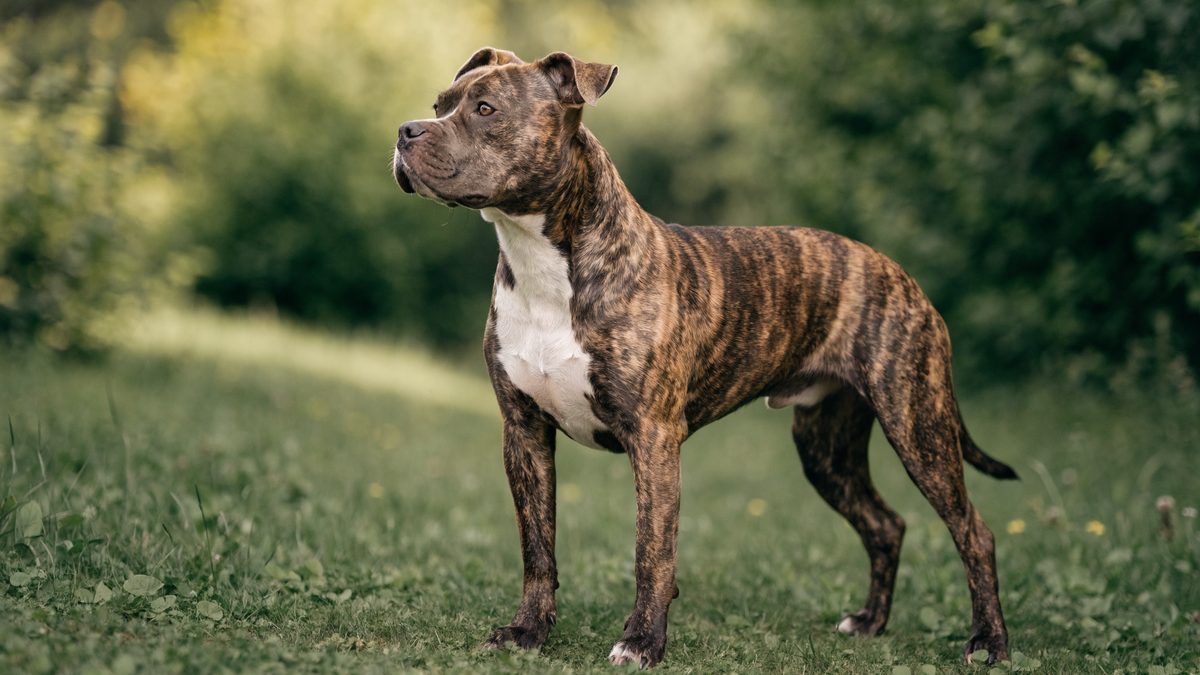
Quick answer
The pitbull price in India runs Rs 8,000 to Rs 5,00,000 across published sources in 2026, because the word covers four separate breeds rather than one. The American Pit Bull Terrier is recognised by the UKC and not by the AKC, and costs Rs 40,000 to Rs 1,00,000 with registration papers. No nationwide ban exists in India, but Gurugram and Chandigarh prohibit the breed by name.
This guide is general information for Indian pet owners and is not a diagnosis. Always consult a registered veterinarian near you before acting on anything you read here, and treat any sudden change in your dog's condition as urgent.
American Pit Bull Terrier at a glance
What a pitbull actually is, and why the word costs Indian buyers money
Pitbull is a type, not a breed, and that single fact explains most of what goes wrong in the Indian market. The word covers at least three separate recognised breeds and, in Indian usage, a fourth. The American Pit Bull Terrier is the breed people usually mean, it is recognised by the United Kennel Club and it is not recognised by the American Kennel Club. Until you know which of these animals a seller is offering you, the price you are quoted means nothing.
Start with the registry position, because it is the only part of this that is documented rather than argued. The United Kennel Club was the first registry to recognise the American Pit Bull Terrier, and UKC founder C. Z. Bennett assigned registration number 1 to his own dog, Bennett's Ring, in 1898. The breed sits in the UKC Terrier Group and its current standard was revised on 1 May 2017. A second American registry, the American Dog Breeders Association, maintains its own separate Heritage conformation standard for the breed, copyrighted in 1976.
The American Kennel Club does not recognise the American Pit Bull Terrier at all. What the AKC recognises is the American Staffordshire Terrier, admitted in 1936. The AKC's own account of the split is unusually direct about where the names came from: as the breed moved to America, the names Pitdog and Pitbull Terrier stuck, but American breeders wanted an animal heavier than the British breed, hence the name American Staffordshire Terrier.
The four dogs Indians call a pitbull
| Breed | Recognised by | Size in the standard | What Indian sellers call it |
|---|---|---|---|
| American Pit Bull Terrier | United Kennel Club since 1898, and the American Dog Breeders Association. NOT the American Kennel Club | Males 18 to 21 in and 35 to 60 lb, females 17 to 20 in and 30 to 50 lb | Pitbull, APBT, sometimes 'red nose' or 'blue nose' |
| American Staffordshire Terrier | American Kennel Club since 1936, Terrier Group | Males 18 to 19 in and 55 to 70 lb, females 17 to 18 in and 40 to 55 lb | Pitbull, or AmStaff when the seller knows the difference |
| Staffordshire Bull Terrier | The Kennel Club in the UK, Terrier Group | Listed as a small breed, exercise up to 1 hour per day, lifespan over 12 years | Pitbull, or Staffy |
| American Bully | United Kennel Club since 15 July 2013, a separate breed | Pocket under 17 in, Standard 17 to 20 in, XL over 20 in to 23 in (males) | Pitbull XL, XXL Pitbull, Hulk Pitbull, 'bully' |
The Orthopedic Foundation for Animals lists all four as separate entries in its breed index, which is what a registry does when it is describing four different populations of dogs rather than four names for one. Bonbeno takes the same position, which is why this site publishes no page called 'Pit bull'. There is no such breed to write about.
Published Indian sources price the American Pit Bull Terrier at Rs 15,000 to Rs 35,000 for pet quality and Rs 40,000 to Rs 1,00,000 with registration papers, while the same page prices the 'Hulk pitbull', described as the XL or XXL Bully type, at Rs 80,000 to Rs 5,00,000 and above. Those are different animals of different breeds sold under one search term. A buyer who says 'pitbull' and accepts the first quote has not agreed a price for anything in particular.
What the breed standard actually describes
The American Pit Bull Terrier is a medium-sized, solidly built, short-coated dog with smooth, well-defined musculature, and the body is just slightly longer than tall. Desirable weight for a mature male in good condition falls between 35 and 60 pounds, and for a mature female between 30 and 50 pounds, with an approximate height guideline of 18 to 21 inches for males and 17 to 20 inches for females at the withers. The ADBA's Heritage standard puts the ideal conditioned show weight between 30 and 75 pounds and says the dog should look athletic, not bulky.
Read those numbers again against the Indian market. A 60 lb dog is about 27 kg. A Tradeindia listing sitting in Google India's top three advertises an 'American Pitbull Dog' at 28 to 40 kg. The top of that range is 88 lb, which is 28 pounds above the upper end of the breed standard for a male. The dog being sold is not the dog being named.
The head is the part everyone photographs and the part the standard is strictest about. It is large and broad, shaped like a broad, blunt wedge when viewed from the front, with a muzzle shorter than the skull at a ratio of approximately 2:3. Then the standard adds a Very Serious Fault for overly large, heavy heads.
The UKC standard names an Eliminating Fault for any disproportionate overdone characteristic, such as short legs, excessive bone or a massive head or body, that would interfere with physical activity or working ability, and a Very Serious Fault for an overly massive body style that impedes working ability. The registry goes further and states that it is unwilling to condone the validity of using exaggerated specimens of this breed in a breeding program, cautioning judges about awarding wins to them. Indian sellers price precisely those dogs at the top of the market, above Rs 80,000 and up to Rs 5,00,000 Wrapinfur, Pitbull Dog in India 2026. Buyers here are paying the largest premium for the conformation the breed's own registry disqualifies. That is the single most useful thing on this page, and no ranking page mentions it.
Coat, colour and the disqualifications worth knowing before you pay
The coat is glossy and smooth, close, and moderately stiff to the touch, and a long coat is a disqualification. Any colour, colour pattern or combination of colours is acceptable except merle, and both merle and albinism are disqualifications. Blue eyes are a serious fault. If an Indian seller is charging extra for a merle 'pitbull', they are charging extra for a disqualifying pattern in the only standard that governs the breed.
- Merle and albinism are disqualifications, so no price premium for either is defensible.
- Long coat is a disqualification, which rules out the fluffy crossbreds sold as pitbulls in Indian classifieds.
- Viciousness or extreme shyness is a disqualification, written into the standard alongside deafness and dwarfism.
- Blue eyes are a serious fault, and mismatched eye colour is too.
- Ears may be natural or cropped without preference under the UKC standard, and UKC states that no dog in any of its events shall be penalised for a full tail or natural ears. In India the ethical and regulatory position on cropping is different, and the common-mistakes section deals with it.
Where the breed came from, and what it was built to do
Nineteenth-century dog fanciers in England, Ireland and Scotland crossed Bulldogs with Terriers looking for a dog that combined the gameness of the terrier with the strength and athleticism of the Bulldog, and immigrants brought those bull-and-terrier crosses to the United States. American farmers and ranchers then used them as catch dogs for semi-wild cattle and hogs, to hunt, to drive livestock, and as family companions. The standard sets the functional test plainly: above all else, the dog must have the functional capability to be a catch dog that can hold, wrestle and breathe easily while doing its job.
The modern record is a sports record. UKC lists the breed competing successfully in Obedience, Rally Obedience, Tracking, Agility, Lure Coursing, Dock Jumping and Weight Pulls as well as Conformation. That is a working, athletic, biddable dog, and it is the honest frame for anyone deciding whether to buy one in an Indian city.
The breed's early history includes bull-baiting and organised dog fighting, and Bonbeno reports that as history rather than as heritage. Under section 11 of the Prevention of Cruelty to Animals Act, 1960, it is an offence, solely with a view to providing entertainment, to incite any animal to fight or bait any other animal, and to organise, keep, use or act in the management of any place for animal fighting, or to permit or offer any place to be so used, or to receive money for admission to such a place. Nothing on this page is guidance for fighting, bite work, protection sport, or producing aggression in a dog, and nothing here should be read that way.
Pitbull price in India, and why published sources disagree by 60 times
The pitbull price in India runs from Rs 8,000 to more than Rs 5,00,000 across published Indian sources in 2026, and that spread is not a rounding error. Six sources ranking for this query quote floors between Rs 8,000 and Rs 45,000 for the same words. Bonbeno prints every published band side by side rather than averaging them, because the average of six numbers that describe six different animals is not a price.
Take the floors first, because that is where the disagreement is sharpest. Wrapinfur puts the range at Rs 8,000 to Rs 80,000 depending on quality, lineage and health condition, and prices a local or mixed pitbull at Rs 10,000 to Rs 30,000. Supertails puts pet quality with no papers at Rs 15,000 to Rs 35,000 and a Tier 2 city floor at Rs 12,000. PawSpace agrees at Rs 15,000 to Rs 35,000 for a pet-quality puppy. iThinkPets starts at Rs 20,000. Mr n Mrs Pet, which brokers the sales it writes about, starts its cheapest tier at Rs 45,000.
| Source | Lowest published price | Highest published price | What the source sells |
|---|---|---|---|
| Wrapinfur | Rs 8,000 | Rs 3,50,000+ (Gotti line) | Content site, no puppy sales |
| Supertails | Rs 12,000 (Tier 2 city) | Rs 5,00,000+ (Hulk, XL or XXL Bully) | Pet pharmacy, food and vet consults |
| PawSpace | Rs 15,000 | Rs 1,50,000+ | Pet services and training, Bengaluru |
| iThinkPets | Rs 20,000 | Rs 1,50,000+ | Pet products |
| PatMyPets | Rs 22,000 (Lucknow) | Rs 1,50,000 (Ahmedabad) | Content site |
| Mr n Mrs Pet | Rs 45,000 | Rs 1,00,000+ | Brokers puppy sales directly |
The two sources with the highest floors are the two with the most direct commercial interest in a high floor. Mr n Mrs Pet sells puppies and starts at Rs 45,000. The sources with no puppy inventory quote floors between Rs 8,000 and Rs 20,000 Supertails, Pitbull Dog Price in India… PawSpace, Pitbull Dog Price in India iThinkPets, Pitbull Price in India. Bonbeno does not sell animals and does not broker puppy sales, so it has no floor to defend.
City-wise pitbull price in India, and where the sources conflict
City tables are where the disagreement becomes measurable, because two sources published within three days of each other in May 2026 give the same city two different ceilings.
| City | Supertails, pet to show quality | Wrapinfur | PatMyPets |
|---|---|---|---|
| Delhi and NCR | Rs 20,000 to Rs 1,50,000+ | Rs 25,000 to Rs 2,80,000 | Rs 28,500 to Rs 44,500 |
| Mumbai | Rs 30,000 to Rs 2,00,000+ | Rs 30,000 to Rs 3,50,000 | Rs 35,000 to Rs 1,00,000 |
| Bengaluru | Rs 25,000 to Rs 1,50,000+ | Rs 25,000 to Rs 2,20,000 | Rs 30,000 to Rs 1,00,000 |
| Hyderabad | Rs 20,000 to Rs 1,20,000+ | Rs 27,000 to Rs 2,20,000 | Rs 27,000 to Rs 92,000 |
| Chennai | Rs 20,000 to Rs 1,00,000+ | Rs 25,000 to Rs 1,80,000 | Rs 25,000 to Rs 95,000 |
| Kolkata | Rs 18,000 to Rs 90,000+ | Rs 20,000 to Rs 1,50,000 | Rs 28,000 to Rs 80,000 |
| Tier 2 cities | Rs 12,000 to Rs 80,000+ | Not published | Lucknow Rs 22,000 to Rs 50,000 |
Delhi shows the problem most clearly. One source caps the city at Rs 44,500 and another at Rs 2,80,000 Wrapinfur, Pitbull Dog in India 2026. That is a difference of Rs 2,35,500 for the same breed in the same city in the same year. Neither source publishes a sample size, a date range or a method, so neither figure can be checked, and Bonbeno reports both rather than choosing.
What you are actually paying for, tier by tier
The tier that matters is registration, not colour. Supertails prices a KCI or UKC registered American Pit Bull Terrier at Rs 40,000 to Rs 1,00,000 against Rs 15,000 to Rs 35,000 for pet quality with no papers, so papers are roughly a Rs 25,000 to Rs 65,000 line item. PawSpace puts KCI registration at Rs 30,000 to Rs 60,000. Wrapinfur puts a KCI or good-breeder dog at Rs 50,000 to Rs 1,50,000.
The Kennel Club of India's own website publishes registration forms for litters, prefixes, single dogs, transfers and annual returns, plus a revised tariff sheet, and it publishes no breed-level registration statistics of any kind. That means no Indian buyer can check how many dogs of this breed the KCI has registered, and no seller's claim about rarity can be tested against a public number. What you can do is insist on seeing the registration certificate with the breed printed on it, in the breeder's name, before you pay. One Indian seller markets a 'Pitbull XL' as KCI registered, vaccinated and home-delivered pan-India, describing it as a rare large-sized Pitbull. There is no breed called Pitbull XL. The XL is a size division of the American Bully, a separate breed the UKC recognised on 15 July 2013. A certificate cannot say Pitbull XL, because no registry has that breed.
| What is being sold | Published Indian price | What the UKC standard says |
|---|---|---|
| Blue nose pitbull | Rs 40,000 to Rs 1,50,000 iThinkPets, Pitbull Price in India | The nose may be any colour. No preference, no premium implied |
| Red nose pitbull | Rs 30,000 to Rs 1,20,000 iThinkPets, Pitbull Price in India | The nose may be any colour |
| Black or 'panther black' pitbull | Rs 25,000 to Rs 1,50,000+ | Any colour, colour pattern or combination is acceptable except merle |
| Blue-eyed dogs | Marketed at a premium in Indian listings | Blue eyes are a Serious Fault, and mismatched eyes are too |
| Merle 'pitbull' | Marketed as rare | Merle is a Disqualification |
| Hulk, XL or XXL type | Rs 80,000 to Rs 5,00,000+ | An overly massive body style that impedes working ability is a Very Serious Fault, and this is a different breed, the American Bully |
The UKC standard says the nose may be any colour and that any colour, colour pattern or combination of colours is acceptable except merle. Red nose and blue nose are therefore descriptions of a dog's pigment, not grades of quality, and there is no standard-based reason for a Rs 1,00,000 gap between them. Where a premium is genuinely defensible is on documented parent health screening, and no Indian price page prices that line at all.
The bottom of the market, and why Rs 4,000 is a warning not a bargain
Google India's own related searches for this query on 16 August 2026 included 'Pitbull dog price 1,000', 'Pitbull dog under 5,000' and 'Pitbull price in India puppy under 2000', and a video promoting Rs 4,000 pitbull puppies at a cheap dog market held a page-one position. That demand is real and the supply answering it is not a bargain version of the same dog.
The Prevention of Cruelty to Animals (Dog Breeding and Marketing) Rules, 2017 set out what a legal Indian breeder has to do before a puppy can be sold, and every one of those obligations costs money. No breeder may carry on breeding or house dogs for breeding and sale without a certificate of registration from the State Board, which must be prominently displayed at the establishment. Pups less than eight weeks in age are not sold, each pup sold must be micro-chipped, and a complete record of treatment and vaccination must be maintained. Only healthy mature females that have reached their eighteenth month may be bred, certified healthy by a veterinary practitioner at least ten days before mating, and the same applies to the stud dog.
A puppy priced at Rs 2,000 cannot have carried the cost of an eighteen-month breeding-age rule, two pre-mating veterinary certifications, eight weeks of rearing, a microchip and a vaccination record. The arithmetic does not close. What that price usually buys is an unregistered litter from an under-age bitch, and the veterinary bill lands on the buyer within the first year.
The result sitting in Google India's top three for this query on the research date is not an article. It is a Tradeindia listing in the Livestock category offering an 'American Pitbull Dog' at 25000 INR per Piece with a minimum order quantity of 5 Piece, from a seller in Hyderabad, with a stated supply ability across south India per day and a delivery time of seven days. Bonbeno reports that because it describes the market a buyer is entering more honestly than any price table does. A living animal listed per piece, in bulk, on a B2B commodity portal is not a puppy from a breeder. Do not buy a dog this way.
Bonbeno reports these published ranges as editorial content. They are not offers, Bonbeno does not broker puppy sales, and no seller named on this page is endorsed.
Monthly cost of keeping an American Pit Bull Terrier in India
Published Indian monthly cost estimates for this breed run from Rs 5,300 to Rs 17,000, and the two ends of that range disagree by more than three times. The purchase price is the smallest number you will pay. Over a twelve-year life at the midpoint of the published range, food, veterinary care and prevention come to several times whatever you paid for the puppy, and two of the largest India-specific line items are missing from every published estimate.
Start with what the published sources actually say, because they do not agree and the reason they disagree is instructive.
| Line item | Supertails | iThinkPets | PawSpace |
|---|---|---|---|
| Food | Rs 3,500 to Rs 6,000 for a 30 kg adult | Rs 4,000 to Rs 6,000, high-protein | Rs 4,000 to Rs 10,000 |
| Veterinary care | Rs 500 to Rs 1,500 per routine visit | Rs 1,500 to Rs 3,000 | Rs 1,000 to Rs 5,000 |
| Flea and tick prevention | Rs 300 to Rs 700 | Not itemised | Not itemised |
| Grooming | Rs 200 to Rs 500 in supplies | Rs 500 to Rs 1,000 | Rs 1,000 to Rs 3,000 |
| Training | Not itemised | Rs 2,000 to Rs 5,000 | Quoted by programme |
| Treats, toys and accessories | Rs 800 to Rs 2,300 | Rs 1,000 to Rs 2,000 | Rs 1,000 and above |
| Published monthly total | Rs 5,300 to Rs 11,000 | Rs 9,000 to Rs 17,000 | Not totalled |
The gap between those two totals is almost entirely training. Supertails does not itemise professional training in its monthly table, while iThinkPets budgets Rs 2,000 to Rs 5,000 a month for early socialisation and obedience training and calls it essential. PatMyPets independently arrives at Rs 9,000 to Rs 17,000 a month. For this breed Bonbeno treats the higher figure as the honest one, because a powerful 25 kg terrier that has not been trained is the failure mode that puts dogs in shelters.
First-year setup, itemised
| Item | Published cost |
|---|---|
| Initial veterinary check and health certificate | Rs 800 to Rs 1,500 |
| Puppy vaccination course | Rs 2,500 to Rs 5,000 |
| Deworming, first three months | Rs 500 to Rs 1,200 |
| Microchip registration | Rs 500 to Rs 1,000 |
| Crate, bed and basic accessories | Rs 3,000 to Rs 8,000 |
| Collar, leash and harness | Rs 1,000 to Rs 3,000 |
| Bowls, toys and chews | Rs 1,000 to Rs 3,000 |
| Total first-year setup including a pet-quality puppy | About Rs 35,000 to Rs 83,000 |
Two India-specific line items nobody budgets
The first is parasite prevention, and the published Rs 300 to Rs 700 a month is not generous, it is barely adequate. A survey of 525 dogs across four Indian cities found that 49.7 percent were infected with one or more canine tick-borne pathogen by PCR, with Hepatozoon canis at 30 percent, Ehrlichia canis at 20.6 percent, Mycoplasma haemocanis at 12.2 percent, Anaplasma platys at 6.5 percent and Babesia vogeli at 5.5 percent. Concurrent infection with more than one pathogen occurred in 39 percent of cases, and potential tick vectors were found on 278 of the dogs examined, which is 53 percent. Treating one ehrlichiosis episode costs more than a year of prevention.
The second is skin, and for this breed in India it is the largest predictable recurring bill. Staffordshire Bull Terriers, the closest well-studied relative in the pit bull type, carried an odds ratio of 7.11 for juvenile-onset demodicosis against crossbred dogs in a 455,553-dog UK study, the second highest of any breed. India's monsoon humidity is a far worse setting for that than a UK winter. Budget for it before it happens rather than after.
Municipal pet licensing is not uniform in India and for this breed it is not trivial. A Gurugram consumer forum order directed the municipal corporation to make pet dog registration mandatory with effect from 15 November 2022 and to issue licences at a fee of at least Rs 12,000 per year, with an annual renewal fee of not less than Rs 10,000 per year. Chandigarh's 2025 pet bylaws set registration at Rs 500 with a renewal charge of Rs 50 every five years. Both cities also prohibit this breed outright, which is dealt with in the adoption section. Check your own municipal corporation's fee before you budget, because no published national estimate captures it.
The twelve-year view
Median survival across 584,734 UK dogs was 12.5 years, with purebred dogs at 12.7 years and crossbreds at 12.0 years. Use twelve years as your planning horizon. At the mid-range published Indian monthly cost of about Rs 13,000, twelve years of ownership is roughly Rs 18,72,000 before any single emergency, against a purchase price that most Indian sources put between Rs 15,000 and Rs 1,00,000 PawSpace, Pitbull Dog Price in India. The puppy is between 1 and 5 percent of what you will spend. Decide on that basis, not on the quote.
- Budget Rs 9,000 to Rs 17,000 a month, the higher published Indian range, because training is not optional for this breed.
- Add year-round tick and flea prevention, given a 49.7 percent tick-borne pathogen prevalence in Indian dogs.
- Hold a skin contingency, because demodicosis and allergic skin disease are the recurring costs this type actually incurs.
- Check the municipal licence fee where you live, which ranges from Rs 500 in Chandigarh to at least Rs 12,000 a year in Gurugram The Indian Express, 11 breeds banned.
- Keep an emergency fund, because heat-related illness carried a case fatality of 14.18 percent in the largest primary-care study available and its treatment is intensive.
Indian climate suitability: heat tolerance rated 3 of 5, and why the coat is the wrong thing to look at
Bonbeno rates the American Pit Bull Terrier 3 of 5 for heat tolerance, which is better than any double-coated import and worse than an Indian native. The short coat genuinely helps. What Indian consumer advice gets wrong is the assumption that the coat is what predicts risk. In the largest data available, heat-related illness is overwhelmingly a consequence of exertion, and a short-coated dog with high drive is exactly the dog that keeps running when it should stop.
The coat first, because that part is straightforward. The breed is a short-coated dog with a glossy, smooth, close coat, moderately stiff to the touch, and a long coat is a disqualification. There is no dense undercoat trapping heat, no seasonal coat blow, and no shaving debate. Against a Siberian Husky or a Chow Chow kept in Chennai, this is a far better-adapted animal.
That is also exactly why Indian consumer advice under-rates the risk. Purina India names the dogs at particular risk of heat stroke as short-faced breeds such as Boxers, Bulldogs, Pugs and Pekingese, and dogs with heavy coats such as Huskies or Newfoundlands. The American Pit Bull Terrier is in neither category, so a buyer reading that advice files it as safe. The advice is not wrong. It is answering a different question from the one an owner of a driven athletic dog needs answered.
What the heat evidence actually measures
Now the evidence, and this is where Bonbeno parts company with every ranking page. Across 905,543 UK dogs under primary veterinary care in 2016, 395 confirmed heat-related illness events were identified, giving an incidence of 0.04 percent and an event fatality rate of 14.18 percent, 95 percent CI 11.08 to 17.96 percent. Nine breeds carried significantly higher odds than the Labrador Retriever, and they were the Chow Chow, Bulldog, French Bulldog, Dogue de Bordeaux, Greyhound, Cavalier King Charles Spaniel, Pug, English Springer Spaniel and Golden Retriever. No pit bull type breed appears on that list.
That absence is not a clean bill of health, and the study's other findings say why. Dogs with a brachycephalic skull shape and dogs weighing over 50 kg were at greater risk, and so was higher bodyweight relative to the breed and sex mean. That last risk factor lands directly on the over-muscled, over-built dogs the Indian market pays the most for.
The companion paper from the same dataset is the one that reframes the whole question. From 1,259 heat-related illness events in 1,222 dogs, exertional heat-related illness was the predominant trigger at 74.2 percent of the 879 events where a cause was recorded, followed by environmental at 12.9 percent and vehicular confinement at 5.2 percent. Young male dogs had greater odds of exertional heat-related illness, while older dogs and dogs with respiratory compromise had the greatest odds of the environmental kind. The authors' own summary is that in the UK, exertional heat-related illness affects more dogs, and kills more dogs, than confinement in a hot vehicle.
An Israeli retrospective series of 54 heat stroke cases found 63 percent were exertional and 37 percent environmental, with 78 percent presenting between June and August and an overall mortality rate of 50 percent. The single most over-represented breed in that series was the Belgian Malinois at an odds ratio of 24, 95 percent CI 8.2 to 64.5, a short-coated working dog. Small breeds under 8 kg were under-represented at an odds ratio of 0.08. Indian consumer heat advice sorts risk by coat, which files every short-coated dog as low risk. For a driven, athletic, short-coated terrier bred to work until the job is done, that is exactly the wrong axis. Bonbeno takes the same position on this breed as on the Belgian Malinois.
The temperature bands that matter in an Indian summer
| Ambient temperature | Risk level | What to do |
|---|---|---|
| Below 28 C | Low | Normal activity with shade and water available throughout |
| 28 to 35 C | Moderate | Shorten walks to 15 to 20 minutes, early morning and late evening only, and avoid midday entirely |
| 35 to 42 C | High | No outdoor exercise for any dog. Typical north Indian April to June. Asphalt reaches 60 C and above, causing severe paw burns within seconds |
| Above 42 C | Extreme | Heat stroke can occur within 10 to 15 minutes of outdoor exposure, and indoor temperatures without cooling can be fatal |
Humidity changes the arithmetic and Indian buyers routinely misjudge it. A 35 C day at 90 percent humidity, which is a typical Mumbai monsoon day, is far more dangerous than a 42 C day at 20 percent humidity in a Delhi summer, because panting relies on evaporation and high humidity prevents evaporative cooling. Coastal cities during the monsoon are particularly deadly despite moderate temperatures.
What to actually do, from April to September
- Walk only before 7 am or after 8 pm from April to September, and keep the walk to 15 to 20 minutes even in those windows, because Indian heat builds rapidly after sunrise.
- Do the 7-second pavement test before every walk. Place the back of your hand on the pavement for seven seconds, and if you cannot hold it there comfortably it will burn paw pads.
- Run air conditioning or fans continuously above 32 C indoors, because indoor temperature above 32 C is dangerous for a dog even at rest.
- Cap the intensity, not just the duration. Fetch and flirt-pole work in 34 C is exertional heat illness waiting to happen, and this breed will not self-limit.
- Keep the dog lean, because higher bodyweight relative to the breed and sex mean was an independent heat risk factor.
- Never leave the dog in a parked vehicle, where the interior rises about 20 C within ten minutes even with windows cracked.
Know the signs first. Severe panting, difficulty breathing, severe salivating, vomiting, diarrhoea, a temperature of 40.5 C or above, blood in the urine, nose bleeds and ultimately collapse and coma. Then move the dog out of the heat, wet the entire body with cool but not cold water at 20 to 25 C, making sure the water reaches the skin rather than running off the coat, focusing on groin, armpits, paw pads, belly and inside the legs, and get air moving across the wet coat with a fan or an AC vent, because evaporation does the cooling rather than the water itself Purina India, Heat Stroke in Dogs. Do not plunge the dog into cold water or an ice bath and do not use frozen gel packs on the body. Ice causes cutaneous vasoconstriction, which traps core heat, delays cooling and increases organ damage, and it also causes shivering which generates more heat. Stop active cooling at about 39.4 to 39.5 C to avoid chilling the dog into hypothermia. Then drive to a clinic regardless of how well the dog looks, because heat stroke causes delayed organ damage that appears 12 to 72 hours later Purina India, Heat Stroke in Dogs.
City by city, the picture is workable rather than easy. Bengaluru and Pune are the most comfortable of the metros for this dog. Delhi gives a usable winter and a brutal April to June that removes daytime exercise entirely. Chennai, Kolkata, Mumbai and coastal Kerala offer no meaningful winter and a monsoon that raises humidity into the range where panting stops working. In all of them, the constraint is not the coat. It is finding two hours a day of hard exercise inside two narrow windows.
Temperament, household fit, and the bite evidence without the panic
The American Pit Bull Terrier is described in its own breed standard as friendly with people, poor as a guard dog, and prone to some level of dog aggression. Those three statements are all in the same document and they are the honest starting point. This section separates what the standard says, what the population data measures, and what nobody can measure at all, because the third category is larger than most people assume.
Read the standard's own words first. The essential characteristics of the breed are strength, confidence and zest for life, it is eager to please and brimming over with enthusiasm, it makes an excellent family companion and has always been noted for its love of children. Then the same paragraph adds the constraint: because most APBTs exhibit some level of dog aggression, and because of its powerful physique, the breed requires an owner who will carefully socialise and obedience train the dog.
Two more lines from that paragraph deserve to be quoted rather than paraphrased, because Indian buyers routinely get both backwards. The first is that the APBT is not the best choice for a guard dog since they are extremely friendly, even with strangers. The second is that aggressive behavior toward humans is uncharacteristic of the breed and highly undesirable. Viciousness or extreme shyness is a disqualification in the conformation ring. The ADBA's Heritage standard makes the same distinction, noting that some degree of dog or animal aggressiveness is characteristic of the breed while unruly behaviour detracts from a judge's ability to assess a dog.
The registry that defined this breed says in its own standard that it is not the best choice for a guard dog because it is extremely friendly even with strangers. A large share of Indian demand for this dog is protection demand, and it is being met by an animal specifically described as unsuited to the job. Buying a friendly, powerful, dog-aggressive terrier and then trying to make it suspicious of people is how dogs and households both get hurt. Bonbeno publishes no guidance on protection training, bite work or sharpening a dog for confrontation.
Dog aggression is real, and it is not the same thing as human aggression
Dog-directed aggression and human-directed aggression are different traits with different histories, and this breed's standard treats them differently on purpose. Expect a dog that may not tolerate other dogs, particularly of the same sex, and that is frequently described as dog-selective rather than dog-social. Plan for that as a management problem rather than a training failure.
Add prey drive to the same management column. Indian veterinary description of this type is of a highly energetic, muscular dog with strong prey drive that is deeply loyal and people-oriented when properly socialised, intelligent and highly trainable. Strong prey drive in an Indian city means cats, poultry, and small free-roaming animals, and it is the reason a long line and a secure boundary are not optional.
The practical consequences in an Indian city are specific. Off-leash dog parks are not a fit. A crowded evening walk past free-roaming street dogs is a management task, not a stroll. And the standard warns about something Indian owners underestimate: the breed's natural agility makes it one of the most capable canine climbers, so good fencing is a must. A balcony grille or a four-foot compound wall is not containment for this dog.
The only population study of a pit bull type breed, and what it found
Here is the number no ranking page publishes. A VetCompass study compared 1,304 Staffordshire Bull Terriers with 21,029 other dogs under UK primary veterinary care and found no significant difference in the odds of aggression between the two groups, odds ratio 1.09, 95 percent CI 0.75 to 1.58, p = 0.644. The breed had significantly increased odds of 4 of 36 disorders studied, with the highest odds for seizure disorder at 2.06, 95 percent CI 1.24 to 3.40. It had reduced odds of 5 of 36 disorders, with the lowest for patellar luxation at 0.15.
Bonbeno states the limits of that finding as clearly as the finding itself. The Staffordshire Bull Terrier is a smaller breed than the American Pit Bull Terrier and it is not the same animal United Kennel Club. Aggression recorded in a veterinary clinical record is a proxy for aggression seen by a vet, not a measure of aggression in the population. What the study does establish is that the assumption of elevated breed aggression in a pit bull type breed did not survive contact with a large, method-controlled dataset.
Why nobody can tell you the pit bull share of bites
The measurement problem sits underneath every claim made about this category, and it is severe. In a prospective study across four shelters, 16 staff members each assessed 30 dogs by appearance and their assignments were compared with DNA breed signatures. DNA identified 25 of 120 dogs, or 21 percent, as pit bull-type, while shelter staff collectively identified 62 dogs, or 52 percent.
| Measure | Result |
|---|---|
| Dogs genetically pit bull-type | 25 of 120, or 21 percent |
| Dogs labelled pit bull-type by staff | 62 of 120, or 52 percent |
| Median inter-observer agreement between staff | 76 to 83 percent, kappa 0.44 to 0.52, moderate |
| Sensitivity for pit bull-type identification | 33 to 75 percent depending on the assessor |
| Specificity | 52 to 100 percent depending on the assessor |
| Median kappa for agreement with DNA results | 0.1 to 0.48, poor to moderate |
| Dogs with pit bull heritage DNA missed by all staff | One in five |
| Dogs with no pit bull heritage DNA labelled pit bull-type by at least one staff member | One in three |
The authors' conclusion is that lack of consistency among shelter staff indicated that visual identification of pit bull-type dogs was unreliable. Every bite statistic attributed to this category rests on exactly that kind of visual identification. Anyone who tells you what share of bites in India involve pitbulls is making it up, and now you know the mechanism by which the number would be wrong even if someone tried.
What the fatality data found instead of breed
The most careful study of dog bite-related fatalities examined 256 deaths in the United States between 2000 and 2009 using homicide detective reports, animal control reports and investigator interviews rather than media accounts. It found a consistent cluster of husbandry factors.
| Factor | Share of the 256 deaths |
|---|---|
| No able-bodied person present to intervene | 223, or 87.1 percent |
| Victim had incidental or no familiar relationship with the dog | 218, or 85.2 percent |
| Owner failure to neuter the dog | 216, or 84.4 percent |
| Victim had compromised ability to interact appropriately with dogs | 198, or 77.4 percent |
| Dog kept isolated from regular positive human interaction rather than as a family dog | 195, or 76.2 percent |
| Owner's prior mismanagement of the dog | 96, or 37.5 percent |
| Owner's history of abuse or neglect of the dog | 54, or 21.1 percent |
| Four or more of these factors co-occurring | 206, or 80.5 percent |
The breed data in the same study is the part worth reading twice. For 401 dogs described in media accounts, the reported breed differed between accounts for 124 of them, or 30.9 percent, and for 346 dogs with both media and animal control breed reports the breed differed for 139, or 40.2 percent. Valid breed determination was possible for only 45 of the 256 cases, which is 17.6 percent. The authors concluded that most of these deaths were characterised by coincident, preventable factors, that breed was not one of them, and that the results supported multifactorial approaches to dog bite prevention instead of single-factor solutions such as breed-specific legislation.
The American Veterinary Medical Association reaches the same place in its literature review, writing that given breed is a poor sole predictor of aggressiveness and pit bull-type dogs are not implicated in controlled studies, it is difficult to support the targeting of this breed as a basis for dog bite prevention. It quotes the behavioural finding underneath that, which is that substantial within-breed variation makes it inappropriate to predict a given dog's propensity for aggressive behaviour based solely on its breed.
Where the evidence is genuinely contested
Bonbeno is not going to present a one-sided literature, because the literature is not one-sided. A systematic review with meta-analysis of facial dog bite injuries, combining a retrospective chart review of 240 patients at two US hospitals over fifteen years with a breed bite-rate search covering 1970 onwards, reported that injuries from pitbulls and mixed breed dogs were both more frequent and more severe, and concluded that breeds vary in both rates of biting and severity. That finding is real and it points the other way.
Read it against its own design and against the study that tested the policy directly. The chart-review component records the breed written in a hospital note, which is the same visual identification that failed reliability testing at kappa values of 0.1 to 0.48 against DNA Essig GF Jr, Sheehan C, Rikhi S. And a comparison of 140 dog bite incidents in Ireland, comprising 100 involving non-legislated breeds and 40 involving legislated breeds, found no significant difference between the two groups in the medical treatment required following the bite or in the type of bite inflicted.
Three things are simultaneously true and Bonbeno publishes all three. A meta-analysis of facial injuries found pitbull-attributed bites more frequent and more severe. A direct comparison of legislated against non-legislated breeds found no difference in treatment required or bite type. And the breed label underneath both is unreliable enough that one in three dogs with no pit bull heritage DNA still gets the label. What follows for a buyer is not that the breed is safe or dangerous. It is that a powerful 25 kg dog inflicts more damage than a small one when a bite happens, whatever its breed, and that the controllable variables are the ones the fatality data identified: supervision, socialisation, integration into the household, and not leaving the dog isolated.
India recorded 21,89,909 dog bite cases in 2022, 30,52,521 in 2023 and 37,15,713 in 2024, with 21, 50 and 54 suspected human rabies deaths respectively, sourced from the IDSP and IHIP portals and tabled in the Lok Sabha on 1 April 2025. Those annexures contain no breed breakdown of any kind. Bonbeno prints the government's own totals and states plainly that the breed share is unknown and currently unknowable in India. Neither a page that blames this breed for Indian bite numbers nor one that clears it is working from evidence.
Household fit, stated plainly
- Good fit. An experienced, physically capable owner in a house with a genuinely secure boundary, someone home for much of the day, and a household that agrees on the rules.
- Poor fit. A first-time owner buying for protection, a household where only one adult can physically manage the dog, and any home where the dog will be alone ten hours a day.
- Watch item. A 25 kg dog with this much drive can knock a small child over with no aggressive intent at all, so supervision around young children is a physics rule before it is a temperament rule.
- Multi-dog households. Treat same-sex pairings as a management decision rather than an assumption, given that some level of dog aggression is characteristic of the breed.
- Fencing. The standard calls this one of the most capable canine climbers and says good fencing is a must. In an Indian apartment that means a secured balcony and a door protocol, not a hope.
The UKC breed standard describes a complete set of evenly spaced, white teeth meeting in a scissors bite, with an undershot or overshot bite listed as a serious fault. It describes no locking mechanism, no ratchet, and no anatomical feature unique to the breed's jaw, because none is described in the standard that defines the breed. What the standard does describe is a powerful physique, which is the real reason the socialisation and training requirement is written into the same paragraph.
Training an American Pit Bull Terrier in India
To train this breed successfully, start obedience and socialisation in the first sixteen weeks and keep both running for life, because the standard itself makes careful socialisation and obedience training a condition of ownership rather than an optional extra. The good news is that the raw material is excellent. This is a biddable, food-motivated, work-willing terrier that competes at a high level in eight different dog sports.
The breed standard is unusually specific about the training obligation. It states that because most APBTs exhibit some level of dog aggression, and because of the breed's powerful physique, the APBT requires an owner who will carefully socialise and obedience train the dog. That sentence is not a warning label bolted on by a critic. It is written by the registry that recognised the breed in 1898.
The same standard describes why it works. The breed is eager to please and brimming over with enthusiasm, and it does very well in performance events because of its high level of intelligence and its willingness to work. UKC lists the breed competing successfully in Obedience, Rally Obedience, Tracking, Agility, Lure Coursing, Dock Jumping and Weight Pulls. A dog that titles in seven sports is not a difficult dog to teach. It is a difficult dog to under-employ.
A realistic Indian training timeline
| Age | Priority | Realistic outcome |
|---|---|---|
| 8 to 16 weeks | Socialisation with people, surfaces, traffic, lifts, autos and calm adult dogs. Handling for ears, paws and skin checks | A puppy that accepts a stranger's hand and a vet's thermometer without a fight |
| 4 to 6 months | Loose-lead walking, name response, a reliable sit and down, crate settle, and a trained hand-target for redirection | A dog you can steer past a street dog on a narrow footpath |
| 6 to 12 months | Impulse control, a solid leave-it, an emergency stop, and structured tug with clear start and stop rules | A dog whose arousal you can switch off, which is the skill that matters most |
| 12 to 24 months | Maintenance, plus formal proofing around other dogs at increasing proximity | A manageable adult, not a socially neutral one |
Indian sources price professional training at Rs 2,000 to Rs 5,000 a month and describe early socialisation and obedience training as essential rather than optional. For this breed Bonbeno agrees, and treats that line as non-negotiable in the monthly cost rather than a nice-to-have.
What this breed resists, and what it does not
- It does not resist obedience. Recall, positions and lead manners come quickly to a dog described as eager to please with a high level of intelligence.
- It does resist social neutrality with other dogs. Some level of dog aggression is characteristic of the breed, and training reduces the risk rather than removing the trait.
- It does not respond well to isolation. Dogs kept isolated from regular positive human interaction rather than as family dogs featured in 76.2 percent of 256 US dog bite-related fatalities. A dog on a chain in a yard is the profile the data warns about.
- It does resist under-exercise. Destructive chewing, excessive barking, hyperactivity and anxiety in this breed are symptoms of an under-exercised, under-stimulated dog rather than breed traits.
- It does not need firmness as a substitute for structure. Aggressive behaviour toward humans is uncharacteristic of the breed and highly undesirable, so a trainer who proposes to suppress it with force is solving a problem the breed does not have.
Any Indian trainer who offers to prepare this dog for fighting, baiting, or confrontation is offering a criminal service and not a training service. Under section 11 of the Prevention of Cruelty to Animals Act, 1960 it is an offence, solely with a view to providing entertainment, to incite any animal to fight or bait any other animal, and to organise, keep, use or act in the management of any place for animal fighting, or to permit or offer any place to be so used, or to receive money for admission to such a place. Report it to the local animal welfare authority and train your dog elsewhere. Bonbeno publishes nothing that supports fighting, baiting, bite work, or training a dog to produce aggression.
One structural point about Indian training that applies to this breed more than most. The Dog Breeding and Marketing Rules require a breeder to screen prospective purchasers to ascertain their potential to take proper care of the breed, especially if it is a large one, and to attend to its grooming, socialising, spatial and veterinary needs. A breeder who asks you nothing before taking your money has already skipped the step the law makes their job.
How much exercise an American Pit Bull Terrier actually needs
Plan on 60 to 90 minutes of vigorous daily activity for an adult, and in most of India that has to fit before 7 am and after 8 pm for five months of the year. This is not a walk requirement, it is a work requirement. The published Indian guidance and the breed's own functional standard agree that a slow neighbourhood stroll does not count.
The published Indian minimum for an adult is 60 to 90 minutes of vigorous physical activity a day, and the source is explicit that this means real exercise rather than a slow neighbourhood stroll. Compare that with the Staffordshire Bull Terrier, which The Kennel Club lists at up to one hour per day and classifies as a small breed suited to a small house. The two dogs Indians call by the same name have materially different daily requirements.
The functional standard explains why. The breed must retain the capability to be a catch dog that can hold, wrestle and breathe easily while doing its job. That is an athlete's specification, and it does not switch off because the dog now lives on the fourth floor of a Pune apartment block.
What actually works, and what does not
- Fetch, which is high-intensity and physically demanding, works well in the cool windows and is dangerous above 32 C AlcoVet Healthcare.
- Swimming is excellent low-impact exercise, especially for dogs with joint concerns, and it is the single best Indian summer option where a safe pool or pond exists.
- Tug-of-war with structured rules builds the relationship and provides an outlet for drive, provided the start and stop cues are trained first.
- Agility and obedience training combine mental and physical load, and this breed already competes in both at UKC events.
- Weight pull and dock jumping are recognised UKC sports for the breed and suit its build far better than distance running in heat.
Exertional heat-related illness accounted for 74.2 percent of the 879 heat-related illness events with a recorded trigger in UK dogs, and young male dogs carried greater odds of it. An Israeli series found 63 percent of 54 heat stroke cases were exertional, with an overall mortality rate of 50 percent. A young male American Pit Bull Terrier that will chase a ball until it collapses is the exact profile those two papers describe. In an Indian summer, cut the intensity first and the duration second, and stop when the dog is still willing rather than when it stops.
What happens without it
Under-exercised dogs of this breed develop destructive chewing, excessive barking, hyperactivity and anxiety, and the Indian veterinary framing is that these are commonly blamed on the breed but are actually symptoms of an under-exercised, under-stimulated dog. The India-specific version of that warning is blunt. A pitbull in a two-bedroom flat with no yard, without two hours of daily exercise, professional training and an engaged owner is likely to become a destructive, anxious dog, and that is a mismatch of lifestyle rather than the breed's fault.
The scheduling problem is the real constraint in India, and it is worth being honest about before you buy. From April to September you have roughly two usable windows a day, before 7 am and after 8 pm, and each of them must carry 30 to 45 minutes of real work Supertails, Pitbull Dog Price in India…. If your job, your commute or your building's rules make that impossible for five months a year, this is not the breed to choose.
Grooming a short coat through an Indian monsoon
Coat care for this breed takes about ten minutes a week. Skin care is the real job, and in Indian conditions it is the most expensive predictable part of owning one. The short, single-layer coat that makes grooming trivial is the same feature that leaves the skin exposed, and the monsoon turns that exposure into recurring veterinary bills.
The coat is glossy and smooth, close, and moderately stiff to the touch, with a curly, wavy or sparse coat listed as a fault and a long coat as an outright disqualification. You groom this coat with a rubber curry or a hound glove once a week, bath the dog only when it is actually dirty, and keep nails, ears and teeth on the usual schedule. Published Indian grooming budgets run from Rs 200 to Rs 500 a month in supplies to Rs 1,000 to Rs 3,000 a month if you use a professional service.
Skin is the actual grooming task
Short, single-layer coats mean this type has very little protection from environmental allergens, skin allergies are extremely common in it, and India's monsoon season dramatically exacerbates fungal and bacterial skin infections. That is the correct framing, and the population data puts a number on the demodex half of it.
Across 455,553 UK dogs under primary veterinary care, demodicosis had a one-year period prevalence of 0.17 percent overall, rising to 0.48 percent in dogs under two years of age and falling to 0.05 percent in dogs over four. Seven breeds carried increased odds against crossbred dogs, and the Staffordshire Bull Terrier sat second on that list at an odds ratio of 7.11, 95 percent CI 5.65 to 8.93, with 191 cases among 8,937 dogs. Five of the seven predisposed breeds belong to the same genetic clade of bull-type dogs.
Juvenile-onset demodicosis is a young dog's disease and it is a bull-breed disease. If a puppy of this type develops patchy hair loss around the eyes, muzzle or forelegs in its first eighteen months, do not treat it at home and do not let a groomer treat it. Get skin scrapes done, because generalised demodicosis needs a diagnosis and a proper course rather than a shampoo. The study also found higher odds in neutered females at 1.44 and neutered males at 1.32 compared with entire females, which is one input among several into neuter timing.
A weekly routine that suits Indian conditions
- Brush once a week with a rubber curry, which takes ten minutes and doubles as a full-body skin inspection.
- Run a tick check every single day in monsoon, because potential tick vectors were found on 53 percent of dogs examined in a four-city Indian survey.
- Dry the dog completely after rain, paying attention to the armpits, groin and skin folds where humidity keeps bacterial and fungal infection going.
- Photograph any lesion the day you find it so you can show a vet whether it is spreading, which matters for telling demodicosis from an allergic flare.
- Keep flea and tick prevention running year round, not seasonally, at the published Rs 300 to Rs 700 a month Abd Rani PAM, Irwin PJ, Coleman GT.
- Never shave or clip this coat, which is short by standard and provides what little barrier the skin has.
The Prevention of Cruelty to Animals (Dog Breeding and Marketing) Rules, 2017 are explicit. There shall be no tail docking, ear cropping, de-barking, de-clawing, branding, dyeing, injecting substances to enhance visual appeal, performing a surgery or procedure to camouflage or hide any defect or infirmity or any other kind of mutilation of any body part of the pup, and any change of appearance by artificial means is strictly forbidden. The UKC standard permits cropped ears in its own country and states that no dog in any UKC event shall be penalised for a full tail or natural ears. In India, a breeder who offers you a cropped puppy is offering you a puppy produced in breach of the rules that govern them. Walk away.
Health risks, screening and lifespan
The American Pit Bull Terrier is a structurally sound breed with a small number of specific inherited problems, and one of them has a DNA test that almost nobody in India orders. Of all the health issues named for this type, four matter most: cerebellar ataxia, hip dysplasia, allergic and parasitic skin disease, and retinal dysplasia. This section separates what is documented, what is inferred from close relatives, and what India simply has no data on.
Cerebellar ataxia, the one with a test
This is the most important health paragraph on the page, because the condition is serious, common in the type, late in onset, and preventable in the next generation by a cheek swab. Many American Staffordshire Terriers and American Pit Bull Terriers suffer from a late-onset progressive neurological disorder characterised initially by subtle signs of impaired balance and ataxia, progressing slowly to include cognitive decline, generalised motor impairment and seizures.
| Question | What the record says |
|---|---|
| Age of onset | Typically between 3 and 6 years, with variable rates of progression |
| Course | Euthanasia has been elected for dogs as young as 7 years, while other affected dogs live past 10 |
| Cause | A mutation in the ARSG gene, which encodes the lysosomal enzyme arylsulfatase G |
| Classification | A form of neuronal ceroid lipofuscinosis, although humans with ARSG mutations do not develop NCL-like signs |
| Inheritance | NCL is almost always inherited as an autosomal recessive trait |
| How common | Based on the testing laboratory's own DNA results, quite common in American Staffordshire Terriers and American Pitbull Terriers, and in mixed breed dogs with pitbull ancestry |
| The test | NCL-4A, one test covering American Staffordshire, Staffordshire Bull and Pit Bull Terriers, ordered through OFA as a buccal swab and processed at the University of Missouri |
Ask for the NCL-4A results of both parents. An autosomal recessive disease means two carriers can produce affected puppies while both parents look completely normal, and onset between three and six years means the breeder may genuinely not know. This is a non-invasive cheek swab that the owner can collect at home with no veterinary appointment. Bonbeno could not find a single Indian page for this query that tells a buyer to ask for it. One competitor mentions cerebellar ataxia and says responsible breeders test for this, without naming the test.
Hips, and an honest note about the data Bonbeno could not obtain
Hip dysplasia is named as a concern for this type by every Indian source, with the risk described as higher in larger and XL American Bully types, and with the recommendation that responsible breeders screen parent dogs through OFA scoring. The Orthopedic Foundation for Animals does list the American Pit Bull Terrier as a distinct entry in its breed database, separately from the American Staffordshire Terrier, the American Bully and the Staffordshire Bull Terrier.
Bonbeno is not printing an OFA hip dysplasia percentage for this breed, because it could not retrieve one. The OFA statistics tables load through a JavaScript interface that did not resolve on the research date, and guessing a breed code returns a real, complete and entirely plausible table for a different breed. Rather than publish a number that might describe the American Staffordshire Terrier or the American Bully, this page states that the figure exists, that Bonbeno could not read it, and that a buyer should ask the breeder for the actual OFA certificate numbers of both parents and look them up directly. Every other page ranking for this query asserts hip dysplasia risk without any number at all.
Eyes, and a breed-specific finding
Retinal dysplasia has been characterised specifically in the American Pit Bull Terrier. A breeding study produced 57 offspring across two generations from an affected founder female, of which 32 were diagnosed with retinal dysplasia, showing a spectrum of severity from multifocal to geographic lesions, with some dogs developing retinal detachment. The breeding studies suggested an autosomal dominant mode of inheritance. Autosomal dominant matters commercially, because a single affected parent can transmit it.
Indian sources also list cataracts and progressive retinal atrophy among the conditions seen in this type. Ask for an eye examination on both parents. For the Staffordshire Bull Terrier, The Kennel Club's published health scheme includes eye testing under the BVA, KC and ISDS Eye Scheme, plus DNA tests for hereditary cataracts (HC-HSF4-2) and L-2-hydroxyglutarate dehydrogenase, and elbow testing under the BVA and KC Elbow Dysplasia Scheme. Those are the nearest thing to a published screening protocol in this family of breeds.
Skin, allergy and the Indian parasite load
Skin is where an Indian owner will actually spend money. The demodicosis odds ratio of 7.11 for the Staffordshire Bull Terrier is covered in the grooming section, and allergic skin disease is described as extremely common in this type, with monsoon humidity worsening fungal and bacterial infection.
On top of that sits India's parasite burden. Of 525 dogs surveyed across four Indian cities, 49.7 percent carried at least one tick-borne pathogen by PCR, with Hepatozoon canis at 30 percent, Ehrlichia canis at 20.6 percent, Mycoplasma haemocanis at 12.2 percent, Anaplasma platys at 6.5 percent, Babesia vogeli at 5.5 percent and Babesia gibsoni at 0.2 percent. Co-infection with more than one pathogen occurred in 39 percent of cases, and the authors advise Indian practitioners that finding one pathogen raises the likelihood of several.
What the population data says about the wider type
The Staffordshire Bull Terrier VetCompass study is the closest thing to a health profile for a pit bull type breed. Against 21,029 other dogs, the breed had significantly increased odds of only 4 of 36 disorders, with the highest odds for seizure disorder at 2.06, 95 percent CI 1.24 to 3.40, and reduced odds of 5 of 36 disorders, with the lowest for patellar luxation at 0.15, 95 percent CI 0.04 to 0.61. Four predispositions out of thirty-six is a light inherited burden by pedigree-dog standards.
Lifespan
Across 584,734 UK dogs including 284,734 deceased, median survival was 12.5 years, with 12.7 years for purebred dogs and 12.0 years for crossbreds. The breeds most at risk of early death in that dataset were the Caucasian Shepherd Dog at a median of 5.4 years, the Presa Canario at 7.7, the Cane Corso at 8.1, the Mastiff at 9.0, and then a cluster at 9.3 to 9.8 years including the St Bernard, Neapolitan Mastiff, Bulldog and French Bulldog. No pit bull type breed appears among them. The AKC gives a life expectancy of 12 to 16 years for the American Staffordshire Terrier, and The Kennel Club lists the Staffordshire Bull Terrier at over 12 years. Plan for twelve to fourteen years.
Ask for these five things in writing before you pay a deposit. One, NCL-4A DNA results for both parents, which is the single highest-value document on this list. Two, OFA hip evaluation certificate numbers for both parents, which you can verify yourself rather than accepting a photograph. Three, an eye examination on both parents, given documented autosomal dominant retinal dysplasia in the breed. Four, cardiac and thyroid screening, both of which Indian veterinary sources list as concerns in this type. Five, the puppy's own microchip number and vaccination record, which the breeder is required by rule to maintain and provide.
Feeding an American Pit Bull Terrier in India
Feed to body condition against the breed standard's weight range rather than to a bag chart, because this is the one breed where Indian owners are actively rewarded for over-conditioning a dog. Published Indian food budgets run Rs 3,500 to Rs 10,000 a month for an adult. The target is a lean, hard, athletic dog at the standard's stated weight, not the bulked animal the market pays a premium for.
Set the target first. The UKC standard puts desirable weight for a mature male in good condition between 35 and 60 pounds, which is about 16 to 27 kg, and for a mature female between 30 and 50 pounds, which is about 14 to 23 kg. The ADBA's Heritage standard puts ideal conditioned show weight between 30 and 75 pounds and says the dog should look athletic, not bulky. Both standards state that overall balance and correct proportion of weight to height matter more than the actual number, and the UKC adds a Very Serious Fault for excessively large or overly massive dogs.
In a study of 905,543 UK dogs, higher bodyweight relative to the breed and sex mean was an independent risk factor for heat-related illness, alongside brachycephaly and a bodyweight over 50 kg. A dog fed and supplemented up to a 40 kg 'bully' physique in a Chennai summer is carrying that risk factor every day. The Indian market rewards the look and the thermometer does not care.
What it costs, and what the sources disagree about
| Source | Monthly food budget | Basis given |
|---|---|---|
| Supertails | Rs 3,500 to Rs 6,000 | Premium adult food for a 30 kg dog |
| iThinkPets | Rs 4,000 to Rs 6,000 | High-protein diets |
| PawSpace | Rs 4,000 to Rs 10,000 | No basis stated |
Note that the Supertails figure is calculated for a 30 kg dog, which is already above the top of the breed standard's range for a male United Kennel Club. A correctly conditioned 22 kg female eats meaningfully less than that, so the honest planning figure for a standard-weight dog sits at the lower end of the published range.
Life stages
- Puppy, up to 12 months. Feed a growth diet in three or four meals a day, and resist the pressure to push weight gain. A heavy puppy on developing joints is the wrong trade in a breed where hip dysplasia is a named concern.
- Adult, 1 to 7 years. Feed to condition twice a day, adjusting for the actual work the dog does that week rather than a fixed cup measure.
- Senior, 7 years and older. Watch weight, joints and any change in coordination, because cerebellar ataxia typically begins between 3 and 6 years and progresses slowly from there.
- Through the Indian summer. Move the larger meal to the cooler end of the day and never feed immediately before or after hard exercise, given that 74.2 percent of heat-related illness events were exertional.
Bonbeno could not find any peer-reviewed Indian study of nutrition, growth rates or body condition in this breed, and states that plainly rather than filling the gap with a number. What exists is published cost data iThinkPets, Pitbull Price in India PawSpace, Pitbull Dog Price in India and a breed standard weight range American Dog Breeders Association. Use those two together, weigh the dog monthly, and let your own vet set the diet.
One last practical point about India specifically. Any supplement sold to build muscle mass on this breed is being sold against the standard it is supposed to conform to, and the 2017 Rules forbid injecting substances to enhance visual appeal outright United Kennel Club. If a breeder or a gym-style trainer offers a bulking protocol, the answer is no.
The first year, month by month
The first year of an American Pit Bull Terrier decides most of what the adult will be, and three windows inside it matter more than the rest. Socialisation closes early, the juvenile skin-disease risk peaks before two years, and the first Indian summer arrives whether the puppy is ready or not. This timeline is built around those three, plus the documents you should be collecting as you go.
| Age | What matters most | What to have in hand |
|---|---|---|
| Before 8 weeks | Nothing. No pup less than eight weeks in age may be sold under the 2017 Rules. A seller offering a six-week puppy is telling you what kind of operation it is | Breeder's certificate of registration from the State Board, displayed at the establishment |
| 8 to 12 weeks | Socialisation with people, lifts, traffic, autos, stairs and calm adult dogs. Handling for ears, paws and skin. First vaccinations at 6 to 8 weeks and 10 to 12 weeks | Microchip number and complete record of treatment and vaccination |
| 3 to 4 months | Vaccination at 14 to 16 weeks including rabies. Crate settle, name response, lead introduction | Written NCL-4A results for both parents if you did not get them at purchase |
| 4 to 6 months | Loose-lead walking, a trained hand target, and the beginning of impulse-control work. Watch for patchy hair loss around eyes, muzzle and forelegs | Municipal pet registration where your city requires it The Times of India |
| 6 to 9 months | First summer for most litters. Cap intensity, shift walks before 7 am and after 8 pm, run cooling above 32 C indoors | A cooling plan that survives a power cut |
| 9 to 12 months | Adolescent testing of every rule. Structured tug and fetch with clear start and stop cues. Formal proofing around other dogs at distance | A neuter-timing decision made with your vet, not with a default |
| 12 to 16 months | Annual DHPPiL and rabies booster. Adult weight settling into 16 to 27 kg for males and 14 to 23 kg for females | A baseline weight you will re-check monthly for life |
The published Indian vaccination schedule
| Age | Vaccine |
|---|---|
| 6 to 8 weeks | DHPPiL, covering distemper, hepatitis, parvovirus, parainfluenza and leptospirosis |
| 10 to 12 weeks | DHPPiL booster |
| 14 to 16 weeks | DHPPiL booster plus rabies |
| 12 to 16 months | Annual DHPPiL and rabies booster |
| Every year thereafter | DHPPiL, rabies, and kennel cough if the dog socialises with other dogs |
Socialisation in the first four months is the single highest-return investment you will make in this dog, because the breed standard makes careful socialisation a condition of responsible ownership and the alternative is an adult you have to manage rather than live with. In the 256-fatality US study, dogs kept isolated from regular positive human interaction rather than as family dogs featured in 76.2 percent of cases. Isolation is the risk factor. A puppy raised on a terrace, alone, because the family is nervous of it, is being set up to become the dog they were nervous of.
Two India-specific notes on the first year. The juvenile demodicosis window closes at about two years of age, where the one-year period prevalence was 0.48 percent against 0.05 percent in dogs over four, so the skin checks matter most exactly when the puppy is growing fastest. And the first monsoon is the first real test of the skin routine, because humidity is what turns a minor lesion into a treated infection.
American Pit Bull Terrier compared: the four breeds, and the dogs Indians cross-shop
Compare the four breeds sold in India under the word pitbull before you compare the pitbull with anything else, because most Indian buyers are choosing between them without knowing it. The table below is the one document that would prevent the majority of mis-sales in this market, and no page ranking for this query publishes it.
This is not pedantry about breed names. The American Pit Bull Terrier is on the prohibited list in Gurugram and Chandigarh and the American Staffordshire Terrier is not The Times of India. A buyer in either city who accepts a puppy described loosely as a pitbull, with no registration paper naming the breed, has no way to establish which animal they own if the question is ever asked. Get the breed written down, from a registry, before money changes hands.
Against the breeds Indians actually cross-shop
Most Indian buyers looking at this breed are also looking at a Labrador Retriever, a German Shepherd or a Doberman. One competitor publishes a direct comparison and Bonbeno reports it as that source's assessment rather than as fact.
| Factor | Pitbull | Labrador Retriever | German Shepherd | Doberman |
|---|---|---|---|---|
| Published price band | Rs 15,000 to Rs 3,00,000+ | Rs 10,000 to Rs 80,000 | Rs 15,000 to Rs 1,50,000 | Rs 15,000 to Rs 1,00,000 |
| Energy level | Very high | High | High | High |
| Trainability | High | Very high | Very high | High |
| Grooming load | Low | Moderate | Moderate | Low |
| Apartment suitable | No, without real commitment | Yes | Marginal | No |
| Legal status in India | Restricted in some areas | Unrestricted | Unrestricted | Unrestricted |
| Good for first-time owners | Not recommended | Yes | With training | With training |
Two of those rows deserve a Bonbeno correction rather than a repeat. The legal row is right in substance and vague in detail, and the adoption section below names the exact jurisdictions and dates The Times of India The Hindu, Karnataka High Court quashes… The Indian Express. The price row understates the top of the market, because the same source elsewhere prices the XL type at Rs 5,00,000 and above.
And against the dog that suits India by default
The honest comparison nobody in this market makes is against the Indian Pariah Dog. It is heat-adapted without an air conditioner, carries no documented inherited neurological disease requiring a DNA test, is named on no municipal prohibited list, and is free or near-free to adopt against a purchase price that starts at Rs 15,000 and runs past Rs 1,00,000 for this breed. If what you actually want is a medium-sized, short-coated, athletic, people-friendly dog for an Indian city, that description fits the Indie exactly and it fits it without the paperwork.
None of which is an argument against the American Pit Bull Terrier for the household that suits it. It is an argument against buying one because the word sounded impressive.
Mistakes Indian pitbull owners actually make
The failure modes for this breed in India are predictable, expensive and mostly avoidable, and the first four all happen before the dog comes home. They are ranked here by the damage they do rather than by how often they are discussed.
1. Paying a premium for the conformation the standard disqualifies
This is the biggest money mistake in the Indian market and almost nobody names it. The UKC standard lists an Eliminating Fault for any disproportionate overdone characteristic, such as short legs, excessive bone or a massive head or body, that would interfere with physical activity or working ability, and a Very Serious Fault for overly large, heavy heads and for an overly massive body style. The registry states it is unwilling to condone the validity of using exaggerated specimens of this breed in a breeding program. Indian sellers price that exact dog at Rs 80,000 to Rs 5,00,000 and above. You are paying the top of the market for the version of the dog its own registry warns judges not to reward.
2. Buying a colour premium the standard does not recognise
The nose may be any colour under the standard, and any colour, colour pattern or combination of colours is acceptable except merle. Blue eyes are a Serious Fault, mismatched eyes are a Serious Fault, and both merle and albinism are outright Disqualifications. Indian listings nevertheless price blue nose dogs at Rs 40,000 to Rs 1,50,000 and red nose dogs at Rs 30,000 to Rs 1,20,000 iThinkPets, Pitbull Price in India. Spend that money on parent health screening instead.
3. Buying, or accepting, a cropped puppy
Ear cropping is a cosmetic mutilation and in India it is expressly forbidden to the breeder. Rule 8 of the Prevention of Cruelty to Animals (Dog Breeding and Marketing) Rules, 2017 states that there shall be no tail docking, ear cropping, de-barking, de-clawing, branding, dyeing, injecting substances to enhance visual appeal, performing a surgery or procedure to camouflage or hide any defect or infirmity or any other kind of mutilation of any body part of the pup, and that any change of appearance by artificial means is strictly forbidden.
Several Indian pages describe the cropping ban as settled by a court. The record is more tangled. On 11 November 2011 the Veterinary Council of India issued a notice on cosmetic tail docking and ear cropping, and on 8 February 2013 the Madras High Court quashed that notice in The Kennel Club of India v. The Union of India, W.P. No. 1750 of 2012, holding that the second respondent lacked the power and jurisdiction to issue the direction and that dog owners could not be accused of mutilating dogs in an unnecessarily cruel manner. The court allowed the writ petition, which had been brought by the Kennel Club of India. What settles the position for breeders today is the 2017 Rules, whose text is quoted above. Bonbeno reports both, because a page that misdescribes a High Court judgment helps nobody.
4. Buying this breed for protection
The standard says, in the registry's own words, that the APBT is not the best choice for a guard dog since they are extremely friendly, even with strangers, and that aggressive behaviour toward humans is uncharacteristic of the breed and highly undesirable. A large share of Indian demand here is protection demand. It is being answered by the wrong dog, and the attempt to correct that with harsh training is how households and dogs both get hurt.
5. Skipping the one DNA test that exists
Cerebellar ataxia in this type is caused by an ARSG mutation, typically shows between 3 and 6 years of age, and is described by the testing laboratory as quite common in American Staffordshire Terriers and American Pit Bull Terriers. The NCL-4A test is a cheek swab collected at home with no veterinary appointment. Asking for both parents' results costs you one message and saves you a dog that loses coordination at four.
6. Reading the heat risk off the coat
Short coat, low heat risk is the assumption, and it is the wrong axis. Exertional heat-related illness accounted for 74.2 percent of heat-related illness events in the largest dataset available, and young male dogs carried greater odds of it. In an Israeli series, the most over-represented breed was a short-coated working dog at an odds ratio of 24, and overall mortality was 50 percent. Cap intensity, not just walk length.
7. Isolating the dog because the family is nervous of it
This is the mistake that converts a manageable dog into a dangerous one, and there is data on it. Dogs kept isolated from regular positive human interaction, rather than kept as family dogs, featured in 195 of 256 US dog bite-related fatalities, which is 76.2 percent, alongside the absence of an able-bodied person to intervene in 87.1 percent and owner failure to neuter in 84.4 percent. Four or more of those co-occurring factors were present in 80.5 percent of the deaths, and the authors concluded that breed was not among them. A dog on a terrace, on a chain, away from the family is the profile.
8. Under-fencing a climber
The standard warns that the breed's natural agility makes it one of the most capable canine climbers, so good fencing is a must. Indian owners routinely treat a compound wall or a balcony grille as containment. Assume the dog can get over, under or through anything it can reach, and add a door protocol so nobody lets it out by accident.
9. Checking the society bylaw after the deposit, not before
Resident welfare association rules restricting so-called dangerous breeds operate independently of central and state law, and for this breed they bite hardest. Two Indian cities go further and prohibit the breed outright, which the next section sets out with dates The Times of India. Read your housing society's pet policy and your municipal corporation's rules before you pay anything.
10. Buying from a bulk listing
A page in Google India's top three for this query offers a live dog at 25000 INR per Piece with a minimum order of 5 Piece in a Livestock category. Elsewhere on page one sits a video promoting Rs 4,000 puppies. Neither can have carried the cost of the eighteen-month breeding-age rule, the two pre-mating veterinary certifications, eight weeks of rearing, a microchip and a vaccination record that the 2017 Rules require. The saving is borrowed from the dog and repaid by you.
Legal status in India, adoption and buying responsibly
There is no nationwide ban on the American Pit Bull Terrier in India, and there are two Indian cities where owning one is prohibited. Both statements are true, and every page ranking for this query gets at least one of them wrong. The central circular that named the breed in March 2024 was quashed by the Karnataka High Court and set aside by the Delhi High Court within five weeks. Municipal prohibitions in Gurugram and Chandigarh are a separate matter and they are in force.
Is a pitbull legal in India, precisely
On 12 March 2024, Dr O P Chaudhary, Joint Secretary in the Union Ministry of Fisheries, Animal Husbandry and Dairying, wrote to the chief secretaries of all states and union territories directing them to ensure that no licences or permissions are issued for the sale, breeding or keeping of dog breeds described as dangerous for human life. The circular also directed persons keeping those breeds as pets to sterilise them. The reported list opens with the Pitbull Terrier and runs through Tosa Inu, American Staffordshire Terrier, Fila Brasileiro, Dogo Argentino, American Bulldog, Boerboel, Kangal, Central Asian Shepherd Dog, Caucasian Shepherd Dog, South Russian Shepherd Dog, Tornjak, Sarplaninac, Japanese Tosa and Akita, Mastiffs, Rottweiler, Terriers, Rhodesian Ridgeback, Wolf Dogs, Canario, Akbash, Moscow Guard, Cane Corso and every dog of the type commonly known as Bandog.
Two entries on that list of 23 are worth pausing on. Pitbull Terrier names no registered breed anywhere in the world. The UKC registers the American Pit Bull Terrier, the AKC registers the American Staffordshire Terrier, and neither registers anything called a Pitbull Terrier. Terriers appears as a separate entry and would, read literally, cover the Yorkshire Terrier and the Jack Russell. A list drafted at that level of precision was never going to be enforceable, and the Karnataka High Court said as much about the process behind it.
| Court and date | Bench and petition | Order | Stated reasoning |
|---|---|---|---|
| Karnataka High Court, stayed 19 March 2024, quashed 10 April 2024 The Hindu, Karnataka High Court quashes… | Justice M. Nagaprasanna, on a petition by King Solomon David and Mardona Jones, both residents of Bengaluru | Stayed, then quashed the circular | The Central government could not have imposed a blanket ban on dog breeds through a circular in the absence of any such power under the Prevention of Cruelty to Animals Act, 1960 or the Animal Birth Control Rules. It could not have imposed a ban without appropriate recommendation from a properly constituted committee, and the circular travels beyond what is found in the ABC Rules. The court gave liberty to re-impose a ban after amending the law |
| Calcutta High Court, 21 March 2024 | Justice Sabyasachi Bhattacharya, in Tanmay Dutta vs State of West Bengal | Partial stay | The court found substance in the argument that the directive to sterilise these breeds could have a fatal effect on them, particularly on puppies. The stay did not extend to the ban on import and sale, because of the commercial connotation of those activities. The Centre was directed to file an affidavit naming the expert committee members and their credentials |
| Delhi High Court, order of 16 April 2024 | Division bench of Acting Chief Justice Manmohan and Justice Manmeet Pritam Singh Arora | Set aside the circular | The court took note of the Centre's submission that other than Government bodies, no private body was heard before the impugned circular was issued, and set it aside on that statement. It held that an oral hearing to each and every dog owner was not possible, and directed a public notice in a national newspaper and on the official website inviting written objections to the proposed or draft notification within two weeks |
Where a prohibition genuinely does apply
This is the part every Indian page for this query leaves out, and for this breed it is the part that matters most. Two municipal jurisdictions prohibit the breed by name, and neither prohibition depends on the quashed central circular. Local lists of banned breeds are made by municipal corporations and consumer forums, they are not uniform across India, and they survive independently of anything the Centre does.
| Jurisdiction | From | Breeds prohibited | Other obligations |
|---|---|---|---|
| Gurugram | 15 November 2022 | Eleven breeds, listed as American Pit-bull Terriers, Dogo Argentino, Rottweiller, Neapolitan Mastiff, Boerboel, Presa Canario, Wolf Dog, Bandog, American Bulldog, Fila Brasileiro and Cane Corso | A consumer forum directed the municipal corporation to make pet dog registration mandatory from the same date, with a licence fee of at least Rs 12,000 per year and an annual renewal of not less than Rs 10,000. Every registered dog to wear a collar with a metal token and a metal chain, one dog per family, and the mouth properly covered with a net cap in public places |
| Chandigarh | Pet and Community Dog Bylaws, 2025 | Seven breeds, listed as American Bulldog, American Pitbull, Pitbull Terrier, Bull Terrier, Cane Corso, Dogo Argentino and Rottweiler, with domestication prohibited entirely in the city | Registration mandatory for every pet dog at Rs 500, renewal Rs 50 every five years. One dog in a house up to five marlas, up to four in larger houses. Existing owners of the prohibited breeds are allowed to keep their pets if they register them within 45 days |
Not in force nationally. There is no central prohibition on owning, breeding, selling or importing an American Pit Bull Terrier in India, and no central obligation to sterilise one because of its breed. The 12 March 2024 circular was quashed by the Karnataka High Court on 10 April 2024 and set aside by the Delhi High Court on 16 April 2024 The Indian Express. In force locally. Gurugram has prohibited the breed since 15 November 2022 and Chandigarh prohibits it under its 2025 bylaws, with a 45-day registration window for existing owners. Also in force everywhere. Municipal registration and licence fees, vaccination requirements, leashing rules, and housing society pet policies, which operate independently of central and state law. Still open. The Karnataka High Court expressly gave the Central government liberty to re-impose a ban after amending the law, and the Delhi High Court directed a fresh public notice inviting written objections to a draft notification. Bonbeno reports the position as at its research date. This is not legal advice, and you should verify the current rules with your own municipal corporation before you buy.
Animal fighting is a criminal offence, and this page will not help with it
Under section 11 of the Prevention of Cruelty to Animals Act, 1960 it is an offence, solely with a view to providing entertainment, to incite any animal to fight or bait any other animal, and to organise, keep, use or act in the management of any place for animal fighting or for baiting any animal, or to permit or offer any place to be so used, or to receive money for the admission of any person to a place kept or used for such purposes. Given this breed's history, that belongs on the page in plain words rather than in a footnote.
The penalties in the section itself are a fine of not less than ten rupees and up to fifty rupees for a first offence, and for a second or subsequent offence within three years a fine of not less than twenty-five rupees and up to one hundred rupees, or imprisonment up to three months, or both. Those figures are not a typographical error and they have not been revised. It is a widely criticised level of deterrence, and it is worth knowing when you assess how well India polices this.
The adoption reality for this breed in India
Adoption for a pit bull type dog in India is genuinely different from the pedigree market, and the difference runs in both directions. Published Indian adoption fees run Rs 2,000 to Rs 10,000 against a breeder price that typically starts at Rs 25,000 and runs well past Rs 1,00,000, and the adoption fee usually covers the first round of vaccinations, deworming, spay or neuter surgery and sometimes a microchip. Named Indian organisations that rehome dogs including pitbulls and pitbull mixes are Voice of Stray Dogs, the Kalyani Animal Welfare Foundation, Second Chance Sanctuary India, the Blue Cross of India and People for Animals.
The reasons these dogs are surrendered are consistent and they are all owner-side. Indian sources list owner misunderstanding, lack of training and poor handling as the causes of abandonment for this breed. None of those is a fault in the dog, and all three are visible in advance in the buyer.
India publishes no breed-wise shelter or surrender data, so the number of pit bull type dogs in Indian rescue is unknown, and Bonbeno states that rather than inventing a figure. There is a second problem specific to this type. When 16 trained shelter staff assessed 120 dogs by appearance, one in three dogs with no pit bull heritage DNA was labelled pit bull-type by at least one staff member, and staff collectively labelled 52 percent of the dogs as pit bull-type against a DNA-confirmed 21 percent. A dog listed as a pitbull mix by an Indian shelter may well not be one, and the label reduces its chance of being adopted. If you are adopting, judge the individual dog in front of you rather than the word on its kennel card.
Adopting an adult, what to ask
- Ask why the dog was surrendered. Exercise, training and handling are the three usual answers, and each tells you whether your household is genuinely different.
- Ask for a full behavioural history with other dogs, because some level of dog aggression is characteristic of the type and you need a known baseline before the dog meets your building.
- Get an independent veterinary examination, with attention to hips, gait, skin and eyes given the documented risks in this type.
- Ask the dog's age against the ataxia window. Onset is typically between 3 and 6 years, so an adult in that band should be assessed for balance and coordination and, where possible, DNA tested.
- Confirm your own city's rules first, because in Gurugram and Chandigarh adopting this breed is not a straightforward act.
- Budget the same monthly running cost as for a puppy. Adoption changes the purchase price and nothing about food, training, prevention or exercise.
If you buy, verify these six things
- The breeder's certificate of registration from the State Board. No breeder may carry on breeding or house dogs for breeding and sale without one, and it must be prominently displayed at the establishment. Ask to see it on the premises rather than as a photograph.
- The puppy's age and microchip. No pup less than eight weeks may be sold, and each pup sold must be micro-chipped with a complete record of treatment and vaccination maintained.
- Both parents' NCL-4A cerebellar ataxia results, which is the single highest-value document available for this breed.
- Both parents' OFA hip evaluation numbers and an eye examination, which you should verify against the registry yourself.
- The pre-mating veterinary certificates. Only healthy mature dogs that have reached their eighteenth month may be bred, certified healthy by a veterinary practitioner at least ten days before mating, for both the bitch and the stud.
- Natural ears and a natural tail. Rule 8 forbids tail docking, ear cropping and any other mutilation of a pup, and forbids any change of appearance by artificial means. Walk away from a cropped puppy whatever the seller tells you about the law.
If this is your first dog, if you live in a flat with no reliable exercise window, or if you want a guard dog, the American Pit Bull Terrier is the wrong choice, and the breed's own standard supports that on the last point. If you already own one, nothing on this page argues for giving the dog up. It is a specification for keeping it well, and the five things that matter most are daily hard exercise inside the cool windows, lifelong socialisation, a lean body condition, year-round skin and tick prevention, and paperwork you can produce on demand AlcoVet Healthcare Abd Rani PAM, Irwin PJ, Coleman GT Prevention of Cruelty to Animals.
Bonbeno does not sell animals and does not broker puppy sales. If you want a medium-sized, short-coated, athletic and people-friendly dog that suits Indian conditions by default, the Indian Pariah Dog fits that description, is free or near-free to adopt, and appears on no prohibited list anywhere in the country. Our editorial standards explain how these pages are sourced and reviewed.
Pitbull questions Indians actually search
Is a Pitbull legal in India?
Yes nationally, and no in two cities. There is no central prohibition on owning an American Pit Bull Terrier in India. The 12 March 2024 circular that listed the breed was quashed by the Karnataka High Court on 10 April 2024 and set aside by the Delhi High Court on 16 April 2024. Gurugram has prohibited the breed since 15 November 2022 and Chandigarh prohibits it under its 2025 bylaws, with a 45-day registration window for existing owners.
Which dog is under RS 5000?
Indian native dogs and indies are the honest answer under Rs 5,000, almost always through adoption rather than purchase. No responsibly bred American Pit Bull Terrier falls in that band. The lowest published Indian price for this breed is Rs 8,000, and a legal Indian breeder must fund an eighteen-month breeding-age rule, two pre-mating veterinary certifications, eight weeks of rearing, a microchip and a vaccination record before a puppy can be sold.
Which dog costs 20 crore?
Bonbeno found no verifiable record of any dog sold for Rs 20 crore, and will not repeat one. Figures of that scale circulate as viral claims without a registry record, an auction record or a named verified buyer behind them. The Kennel Club of India publishes registration forms and a tariff sheet and no sale-price data of any kind, so no Indian source exists against which such a claim could be checked.
Which dog is price 10,000 in India?
Indian pariah dogs, indies and some local mixed-breed puppies sit at or under Rs 10,000, mostly as adoption fees rather than purchase prices. For a pitbull, one published Indian source puts a local or mixed dog at Rs 10,000 to Rs 30,000, which is the bottom of the market and not a bargain version of a registered dog. Adoption of a rescued pit bull type dog in India is published at Rs 2,000 to Rs 10,000.
What is the pitbull price in India for a KCI registered puppy?
Published Indian sources put a registered American Pit Bull Terrier at Rs 40,000 to Rs 1,00,000, against Rs 15,000 to Rs 35,000 for a pet-quality puppy with no papers. A second source puts KCI registration at Rs 30,000 to Rs 60,000 and a third at Rs 50,000 to Rs 1,50,000. Ask to see the certificate with the breed printed on it, because the Kennel Club of India publishes no breed-level registration statistics you could check a claim against.
Is the American Pit Bull Terrier recognised by the AKC?
No. The American Kennel Club does not recognise the American Pit Bull Terrier. The United Kennel Club was the first registry to recognise the breed, assigning registration number 1 to its founder's own dog in 1898, and the American Dog Breeders Association maintains a separate Heritage standard. What the AKC recognises is the American Staffordshire Terrier, admitted in 1936, which is a different and heavier breed.
What is the difference between a pitbull and an American Bully?
They are separate breeds. The United Kennel Club recognised the American Bully on 15 July 2013 as a breed of its own, developed as an extension of the American Pit Bull Terrier and influenced by the American Bulldog, English Bulldog and Olde English Bulldogge. It comes in Pocket, Standard or Classic, and XL sizes. The dogs sold in India as Pitbull XL, XXL or Hulk are American Bully, not American Pit Bull Terrier, and they carry the highest prices in the Indian market.
Are pitbulls banned in Gurugram and Chandigarh?
Yes in both. A Gurugram consumer forum order prohibited eleven breeds with effect from 15 November 2022, listing American Pit-bull Terriers first, and directed mandatory registration with a licence fee of at least Rs 12,000 a year. Chandigarh's Pet and Community Dog Bylaws, 2025 prohibit the domestication of seven breeds including American Pitbull and Pitbull Terrier, while allowing existing owners to keep their dogs if they register them within 45 days.
How much does it cost to keep a pitbull in India every month?
Published Indian monthly estimates run from Rs 5,300 to Rs 17,000, and the gap between the two is almost entirely professional training. Bonbeno treats the higher figure of Rs 9,000 to Rs 17,000 as the honest one for this breed, because training is not optional. Add year-round tick prevention and a skin contingency, because Indian conditions make both predictable rather than occasional.
Can a pitbull live in an Indian apartment?
It is possible and it is hard, and Bonbeno rates apartment suitability 2 of 5. The breed standard calls it one of the most capable canine climbers and says good fencing is a must, so a flat needs a secured balcony and a strict door protocol. It also needs 60 to 90 minutes of vigorous daily exercise, which in most Indian cities has to fit before 7 am and after 8 pm for five months of the year.
Do pitbulls handle Indian heat?
Better than any double-coated breed and worse than most Indian buyers assume. The short coat genuinely helps, but exertional heat-related illness accounted for 74.2 percent of heat-related illness events in the largest dataset available, and young male dogs carried the greatest odds of it. Higher bodyweight relative to the breed mean was also an independent risk factor, which is a direct problem for the bulked dogs the Indian market prefers.
Are pitbulls aggressive?
Some level of dog aggression is characteristic of the breed by its own standard, while aggressive behaviour toward humans is described in that same standard as uncharacteristic and highly undesirable. The only large population study of a pit bull type breed found no significant difference in the odds of aggression between 1,304 Staffordshire Bull Terriers and 21,029 other dogs, at an odds ratio of 1.09 with a p value of 0.644. Individual dogs still vary enormously.
What health tests should I ask a pitbull breeder for?
Ask for five things in writing. NCL-4A DNA results for both parents, which detect the ARSG mutation behind cerebellar ataxia in this type. OFA hip evaluation numbers you can verify yourself. An eye examination on both parents, given documented autosomal dominant retinal dysplasia in the breed. Cardiac and thyroid screening. And the puppy's own microchip number and vaccination record, which the 2017 Rules require the breeder to maintain and hand over.
Compare with similar breeds
American Pit Bull Terrier sits in 2 Bonbeno groups. Each one compares it directly against the breeds it is genuinely an alternative to, on the same figures.