
Dog breed profile
Australian Shepherd in India: Price, MDR1 Risk and Full Breed Guide
What an Australian Shepherd actually costs in India, why published prices disagree by more than Rs 5 lakh, and the one genetic test half this breed needs before any vet visit.
Quick answer
The Australian Shepherd price in India runs Rs 60,000 to Rs 6,00,000 in 2026, and published sources disagree more sharply on this breed than on almost any other. Import-linked listings quote Rs 3,20,000 upward while domestic breeders quote Rs 60,000. The breed is rare in India, needs 90 minutes of daily work, and carries a 50 percent MDR1 mutation rate.
This guide is general information for Indian pet owners and is not a diagnosis. Always consult a registered veterinarian near you before acting on anything you read here, and treat heat stroke, a suspected drug reaction or any sudden collapse as an emergency.
Australian Shepherd at a glance
What an Australian Shepherd actually is
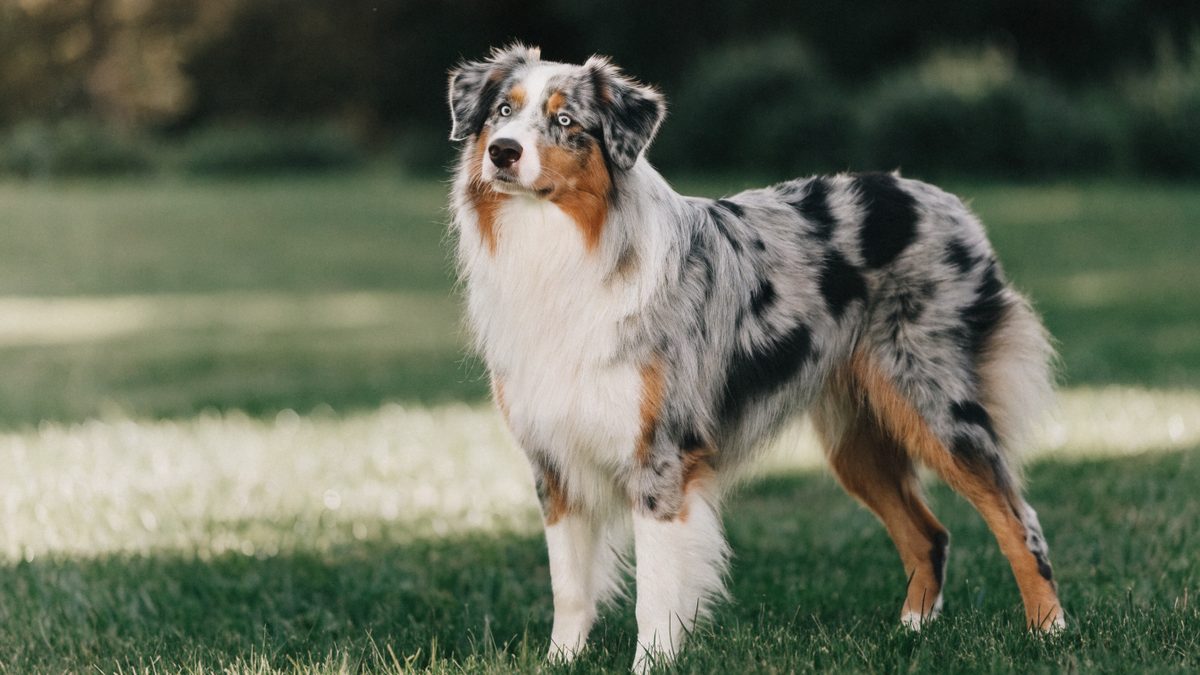
The Australian Shepherd is an American herding breed, developed in California in the 19th century and named after the Australian sheep trade rather than the country it came from. Everything about the dog follows from that job. It was bred to work stock all day at altitude in the western United States, which produced a medium-sized athletic frame, a weather-resistant double coat, extreme biddability, and a herding instinct that does not switch off when you move the dog into a Gurgaon apartment.
The name is the most persistent piece of misinformation about the breed. The Australian Shepherd was developed in the United States, and its ancestry traces to sheepdogs from northwest Spain along with collies imported alongside sheep from Australia and New Zealand. The trade route, not the origin, gave the dog its name. Indian sellers who describe it as an Australian import are wrong twice over, because the dogs reaching India today come mostly through European and North American breeding lines.
Under the Australian Shepherd Club of America standard, the parent club's own document, preferred height at the withers is 20 to 23 inches for males and 18 to 21 inches for females, with the explicit caveat that quality is not to be sacrificed in favour of size. The American Kennel Club lists the same height bands and puts weight at 50 to 65 pounds for males and 40 to 55 pounds for females, with a life expectancy of 12 to 15 years. In metric terms that is a dog of roughly 23 to 29 kg, which is Labrador territory in mass but considerably more agile.
| Attribute | Male | Female |
|---|---|---|
| Height at withers (ASCA and AKC) | 20 to 23 in | 18 to 21 in |
| Weight (AKC) | 50 to 65 lb | 40 to 55 lb |
| Weight in metric | 23 to 29 kg | 18 to 25 kg |
| Coat | Medium-length weather-resistant double | Medium-length weather-resistant double |
| Recognised colours | Blue merle, red merle, black, red | Blue merle, red merle, black, red |
| Life expectancy (AKC) | 12 to 15 years | 12 to 15 years |
The coat, and why it matters more in India than anywhere else
The coat is a medium-length wavy double coat with a dense undercoat and a coarse topcoat, and the breed standard permits blue merle, red merle, solid black and solid red, with or without white markings and tan points. That double coat is an insulating system built for cold nights and dry days on open range. It works by trapping a layer of still air, which is exactly the property that makes it a liability in Chennai in May. The same coat is what makes the Siberian Husky such a poor Indian choice, and it is the single biggest reason to think twice about this breed too.
Merle is not just a colour. It is a pigment-diluting allele with documented health consequences when a dog inherits two copies, and it is the reason merle-to-merle breeding is condemned by every serious breed authority. A study of 153 privately owned merle dogs found that among double merles, 10 percent were unilaterally deaf and 15 percent were bilaterally deaf, against 2.7 percent and 0.9 percent respectively in single merles. Blue merle is also the most commercially desirable colour in India, which creates precisely the wrong incentive for an unregulated market.
Where the breed sits globally, and where it sits in India
The Australian Shepherd is a genuinely popular breed worldwide and a genuinely rare one in India. It ranked 17th of 190 breeds in American Kennel Club registrations in 2017, up from 20th in 2013 and 35th in 2002. India tells the opposite story. Supertails, which publishes the most widely referenced Indian dog price list covering the top 40 breeds, does not list the Australian Shepherd at all. The breed is not in the mainstream Indian pet trade, and the listings that do exist are thin, expensive and import-linked.
If a seller tells you the dog is an Australian breed, or that it is 'used to hot weather because it is from Australia', treat everything else they say as unverified. The breed is American, developed in California, and its coat is built for cool dry air.
One more piece of the standard matters for Indian buyers. The ASCA standard describes dog-on-dog aggression as intolerable and the AKC standard says it should be severely penalised, which is not decoration. In a country where most walks involve free-roaming street dogs, temperament around other dogs is a practical safety question, not a show-ring nicety. ASHGI's own longevity data found that 24.1 percent of accidental deaths in the breed came from fatal interactions with other animals, mostly dog fights.
Australian Shepherd price in India, and why the published figures disagree by seventeen times
The Australian Shepherd price in India runs from Rs 35,000 to Rs 6,00,000 across published Indian sellers in 2026, and that is not a range, it is a disagreement. Four Indian sites selling the same breed quote figures that do not overlap at all. The lowest published band tops out below the point where the highest published band begins. No other breed Bonbeno has priced shows a spread this extreme, and understanding why it exists is the most useful thing a buyer can take from this page.
Here is what each Indian source actually publishes, taken from the seller's own page rather than aggregated.
| Source | Published price | What the figure covers |
|---|---|---|
| Asiapets | Rs 35,000 to Rs 90,000 | Breed guide price band, no quality tiers stated |
| Puppiezo | Rs 76,499 to Rs 1,20,000 | Individual listed puppies, described as KCI registered |
| Premium Pet House | Rs 60,000 to Rs 4,00,000 | Whole-market band, varies by lineage and city |
| Mr n Mrs Pet | Rs 3,20,000 to Rs 6,00,000+ | Three explicit quality tiers, see below |
Mr n Mrs Pet is the only seller that shows its working, and its tiers are worth reading closely. It quotes Rs 3,20,000 to Rs 4,00,000 for basic quality, Rs 4,00,000 to Rs 5,00,000 for KCI registered, and Rs 5,00,000 to Rs 6,00,000 for champion bloodline. Premium Pet House quotes Rs 60,000 to Rs 4,00,000 nationally, with city variation that narrows the top end to Rs 3,00,000 in Chennai and Rs 3,50,000 in Hyderabad, Goa and Jaipur. Asiapets quotes Rs 35,000 to Rs 90,000 with no tiering at all. Puppiezo lists live puppies between Rs 76,499 and Rs 1,20,000.
What is actually driving the seventeen-fold gap
Three separate things are being priced, and the sellers are not labelling which one they mean. The first is a genuine import. A dog brought in from a European or North American breeder carries airfare, an export pedigree, health testing, quarantine paperwork and a broker's margin, and a figure above Rs 3,00,000 is consistent with that chain. The second is a domestically bred puppy from one of the handful of Indian kennels working with the breed, where the cost base is a fraction of an import and Rs 60,000 to Rs 1,20,000 is plausible. The third is a dog that is not an Australian Shepherd at all, and at Rs 35,000 in a market this thin, that possibility has to be stated plainly.
Blue merle is a striking coat pattern that appears in several breeds and in mixed-breed dogs. A merle-coated dog of the right size is easy to sell as an Australian Shepherd to a buyer who has never met one. In a market where the breed is genuinely rare and the price gap is this wide, the cheapest listings deserve the most scrutiny, not the least.
Why an import legitimately costs lakhs
The high end of the published range is not automatically a rip-off, and it helps to understand what sits behind it. A dog imported from a European or North American breeder carries a purchase price at source that is already substantial for a health-tested puppy from a titled litter, then air cargo on an approved carrier, an IATA-compliant crate, an export health certificate, a rabies titre test where required, Indian import permits from the animal quarantine authorities, customs clearance and a quarantine inspection on arrival. Add a broker's margin and the arithmetic reaches Rs 3,00,000 without anyone being dishonest.
The domestic figure is equally explicable. A puppy from an Indian litter has none of those costs, so the cost base is the stud fee, the dam's care, veterinary work and vaccination. That is why Rs 60,000 to Rs 1,20,000 appears on Indian sites and is internally consistent. What is not explicable is a genuine, health-tested, KCI registered Australian Shepherd at Rs 35,000 in a country where the breed barely exists, and that is the number to interrogate rather than celebrate.
Bonbeno does not recommend breeders and does not broker sales. What we will say is that the only figure on this page you can verify independently is a KCI registration, and even that verifies paperwork rather than health. The Kennel Club of India publishes its own litter registration, ownership transfer and prefix registration forms, and a genuine registration can be checked against the club directly rather than against a photograph of a certificate.
What the price should buy, and usually does not
A price above Rs 3,00,000 should buy documented health testing, and in this breed that means specific tests rather than a generic health certificate. The non-negotiable one is MDR1, because roughly half the breed carries the mutation. The others worth asking for are hip evaluation, an eye examination, and the HSF4 cataract test, because a dog carrying the HSF4 deletion is approximately 17 times more likely to develop binocular cataracts than a dog clear of it. Ask for the certificate numbers, not the claim.
- Ask for the MDR1 genotype in writing, stated as normal, carrier or affected.
- Ask for the sire and dam registration numbers and verify them with the Kennel Club of India directly.
- Ask whether either parent is merle, and refuse any litter from a merle-to-merle mating.
- Ask for the hip and eye evaluation certificates by number, not by description.
- Ask what the puppy has been fed and whether it has been socialised with other dogs.
For context on where this sits in the Indian market, Supertails puts the overall Indian dog price range at Rs 2,000 for an indie or native breed to over Rs 1,50,000 for a KCI-registered show-quality dog. On that scale, even the conservative Australian Shepherd quotes sit at the top of the Indian market, and the import-linked quotes sit far above anything the mainstream Indian trade prices.
Monthly cost of owning an Australian Shepherd in India
Budget Rs 9,000 to Rs 22,000 a month to keep an Australian Shepherd properly in an Indian metro, which is materially more than the Rs 5,000 a month that is commonly quoted for an average Indian dog. The gap comes from three specific places: a 25 kg dog eats more than the national average dog, a double coat needs professional grooming that a short-coated breed does not, and a working breed in a hot country needs climate control that shows up on the electricity bill rather than the vet bill.
Supertails puts typical Indian monthly upkeep at about Rs 5,000, within a range of Rs 3,000 to Rs 18,000, and breaks the components out as food at Rs 4,000 to Rs 6,000, grooming at Rs 500 to Rs 1,200, vet visits at Rs 1,000 to Rs 2,000 and vaccination at about Rs 1,800 a year. Those are sound national figures. They describe a medium dog with an easy coat, and the Australian Shepherd is neither.
| Line item | Lower | Upper | Why it differs from the national average |
|---|---|---|---|
| Food | Rs 4,500 | Rs 8,000 | A 25 kg active dog eats near the top of the national food band |
| Professional grooming | Rs 800 | Rs 2,400 | Double coat needs a proper de-shed, not a bath |
| Preventives (tick, flea, deworm) | Rs 700 | Rs 1,500 | High tick pressure in India, and MDR1 restricts the options |
| Routine vet, amortised | Rs 900 | Rs 2,000 | Includes annual vaccination spread across the year |
| Cooling and electricity | Rs 600 | Rs 3,000 | Air conditioning is a health cost for this coat, not a luxury |
| Enrichment, toys, training | Rs 500 | Rs 2,500 | Mental stimulation is a running cost in this breed |
| Insurance or emergency fund | Rs 1,000 | Rs 2,600 | Set against a breed with real cancer and epilepsy risk |
| Total per month | Rs 9,000 | Rs 22,000 |
The costs Indian buyers systematically forget
Two line items in that table are the ones people leave out, and both are specific to this breed. Cooling is the first. A double-coated dog in a Chennai or Nagpur summer needs a room that stays below roughly 28 C through the afternoon, and running an air conditioner or even a good fan-and-cooler setup for eight hours a day for four months is a real number. Enrichment is the second. This breed's need for mental stimulation is not a nice-to-have, and owners who do not budget for training classes, puzzle feeders and replaced toys end up paying for chewed furniture instead.
The third forgotten cost is not monthly at all. It is the emergency. Cancer accounts for 31.3 percent of deaths in the breed, and the ASHGI survey found the median age at cancer death was 10.62 years. Epilepsy accounts for a further 4.2 percent of deaths at a median age of 3.8 years. Long-term anti-epileptic medication in India is not ruinous, but it is a permanent monthly addition, and it starts young. An owner who cannot fund a Rs 60,000 to Rs 1,50,000 diagnostic and treatment episode should not take on this breed.
MDR1 testing is a one-time expense, not a recurring one. Testing once, recording the genotype in the dog's file, and putting a card in the collar tag costs less than a single emergency admission and prevents the most avoidable disaster this breed faces.
Set against the purchase price, the running cost is the smaller number over a lifetime only if the dog is cheap to buy. At the Mr n Mrs Pet figures of Rs 3,20,000 upward, purchase dominates. At the Asiapets figure of Rs 35,000, twelve years of upkeep at even the lower bound comes to roughly Rs 13 lakh, which is thirty-seven times the purchase price. Whichever end of the published range you land on, the monthly cost is the number that actually decides whether this works.
Heat tolerance and climate suitability for India
Bonbeno rates the Australian Shepherd 2 out of 5 for heat tolerance in Indian conditions, and the reasoning is not simply the double coat. The coat is a real problem, but the bigger one is behavioural. This breed does not self-regulate. A Labrador that gets too hot lies down. An Australian Shepherd keeps working, keeps chasing, keeps herding the children around the park, and the first sign that something is wrong is often collapse. That combination, an insulating coat and a dog that will not stop, is what puts it near the bottom of our climate suitability scale.
Start with the environment the dog is being asked to live in. India recorded a maximum of 48.2 C at Sri Ganganagar on 27 May 2026, among the highest temperatures observed anywhere in the country that year. Reuters reported over 300 suspected human heatstroke cases in a single week of May 2026, with Banda in Uttar Pradesh reaching 48 C. Those numbers are for people who can seek shade and drink water on demand. A dog in a double coat, on a leash, on tarmac that is hotter than the air, has none of those options.
The exercise trap, with the study that proves it
The most useful piece of veterinary evidence for this breed is not about coats at all. A VetCompass study of 905,543 UK dogs identified 1,259 heat-related illness events and found that exertional heat-related illness was the trigger in 74.2 percent of the 879 events where a cause was recorded, against 12.9 percent environmental and only 5.2 percent from confinement in a vehicle. The authors' conclusion was blunt: in the UK, exertional heat-related illness affects more dogs and kills more dogs than hot cars do. That study was conducted in a country whose summer is milder than an Indian winter in much of the south.
Apply that finding to a breed rated 5 out of 5 for exercise needs and the risk profile becomes obvious. The owner is not going to leave this dog in a parked car. The owner is going to take it running at 6 pm because it has been climbing the walls all day, and 6 pm in Delhi in May is still 38 C. That is the scenario the numbers describe.
Exercise this breed only when the pavement is cool enough to hold the back of your hand against for seven seconds. In most Indian metros between March and June, that means before 6 am and after 9 pm, and nothing in between.
If it goes wrong, what to do in the first ten minutes
Heat stroke is a time-critical emergency and the first ten minutes at home change the outcome more than anything that happens at the clinic afterwards. Learn this sequence before you need it, because the VetCompass work grading heat-related illness found neurological dysfunction, gastrointestinal haemorrhage and bleeding disorders carried the highest relative risk of death. Those are late signs. You are trying not to reach them.
- Stop all activity immediately and move the dog into shade or an air-conditioned room.
- Pour cool, not ice-cold, water over the whole body, concentrating on the neck, chest, armpits and groin.
- Keep air moving over the wet coat with a fan, because evaporation is what removes heat.
- Offer small amounts of cool water to drink but never force water into the mouth.
- Call your nearby vet while you are cooling, not after, and go in even if the dog seems to recover.
Ice and ice-cold water cause surface blood vessels to constrict, which traps heat in the core and slows cooling. Cool tap water plus moving air is faster and safer. Stop active cooling once the dog is comfortable and alert, because overshooting into hypothermia is a real risk in a wet double coat under a fan.
City by city, what this actually means
Climate suitability for this breed is not uniform across India, and the difference between cities is large enough to change the answer.
| City or region | Workable | The specific constraint |
|---|---|---|
| Shimla, Dehradun, Gangtok, Ooty | Yes | Cool months are genuinely comfortable, summer is manageable |
| Bengaluru, Pune | With effort | Mild by Indian standards, but April and May still need indoor cooling |
| Delhi NCR | With serious effort | 48 C summers and a cold winter the coat handles well. Four months are the problem |
| Mumbai, Chennai, Kolkata | Difficult | Humidity blocks evaporative cooling, so panting works less well |
| Nagpur, Ahmedabad, Jaipur, Hyderabad | Difficult | Sustained dry heat above 44 C for weeks at a stretch |
| Coastal Kerala, Goa | Difficult | High humidity year-round drives coat and skin problems as much as heat |
Humidity deserves its own note, because Indian buyers consistently underrate it. A dog cools itself mainly by panting, which is evaporative. When ambient humidity is above roughly 70 percent, evaporation slows and panting stops working properly. That is why 33 C in Chennai is harder on a double-coated dog than 38 C in Jodhpur. If you live on the coast, the humid months are the dangerous ones, not the hot ones.
The monsoon problem nobody mentions
Indian summer gets the attention, but the monsoon does the quieter damage, and it does it through parasites as much as through damp. A survey of 230 dogs in Tamil Nadu found that 229 of them, 99.6 percent, were infested with ticks, at a mean intensity of 5.6 ticks per dog, and that 67.8 percent carried at least one vector-borne pathogen. A separate molecular survey of 525 dogs across four Indian cities found 20.6 percent positive for Ehrlichia canis. A thick undercoat is an excellent place for a tick to hide and a difficult one for an owner to search, which is why coat management in India is a parasite-control measure and not only a comfort measure. We could find no published Indian figure for skin disease specifically in Australian Shepherds, and we are not going to borrow one from another breed.
- Keep the indoor space below 28 C through the afternoon from March to June.
- Walk before sunrise and after 9 pm during the hot months, never in between.
- Carry water on every walk and offer it every ten minutes in warm weather.
- Dry the undercoat completely after any monsoon walk or bath.
- Learn the early signs of heat stress, which are frantic panting, brick-red gums, thick ropey saliva and a wobbly gait.
The double coat insulates against heat as well as cold and it protects skin from direct sun. Shaving it removes the protection, exposes pale skin to Indian UV, and often permanently damages the way the coat regrows. Brush the undercoat out instead. That is what actually reduces heat load.
The honest summary is this. An Australian Shepherd can live well in Shimla or Dehradun, can live acceptably in Bengaluru with an air-conditioned room and disciplined walk timings, and is a poor choice in Chennai, Nagpur or coastal Kerala unless the owner is willing to run a genuinely climate-controlled household. Heat tolerance is where this breed loses most of its Indian marks, and no amount of enthusiasm compensates for it.
Temperament, and which Indian household this breed actually suits
The Australian Shepherd is an intelligent, energetic, work-oriented dog that bonds intensely with its own household and stays reserved with strangers. It is affectionate rather than clingy, watchful rather than aggressive, and relentlessly busy. The single best predictor of whether it will work in your home is not the size of your flat. It is whether someone is there, and whether that someone genuinely enjoys spending an hour a day working with a dog.
Two traits define daily life with this breed. The first is the herding instinct, which in a home with no sheep gets pointed at whatever moves. Running children, cyclists, autos, other dogs and in one common household version, the vacuum cleaner. It shows up as circling, staring, and heel-nipping. This is not aggression and it is not a training failure, it is a hardwired working behaviour that needs a legitimate outlet rather than suppression.
The second is intensity of attachment. This breed is bred to work in constant partnership with one handler, and separation anxiety is a genuine and frequently reported problem. The ranking Indian sale pages acknowledge it themselves, noting that Australian Shepherds bond strongly and develop separation anxiety if left alone for long. What those pages do not say is what that looks like in an Indian flat: sustained barking that generates society complaints, destroyed doors and door frames, and self-injury.
Who should buy this breed
- Households with at least one adult at home most of the day.
- Owners who already do dog sports, running, trekking or agility.
- Families in hill stations or genuinely temperate Indian cities.
- Owners who want to train seriously rather than own a decorative dog.
- People who have kept a working breed before and know what the ceiling of energy looks like.
Who should not
- Households where the dog is alone eight or more hours a day.
- First-time owners who chose the breed from photographs.
- Families in Chennai, Nagpur or coastal Kerala without full climate control.
- Buyers who want a guard dog, because this breed watches and barks rather than confronts.
- Anyone who cannot commit 90 minutes a day for the next twelve years.
On the guard dog question specifically, Indian sale pages routinely claim the breed makes a brilliant guard dog. It does not. It makes a very good watchdog, which is a different thing. The breed is reserved with strangers and will announce them loudly, which is often exactly what an Indian household wants, but it was bred to move stock rather than to confront intruders, and buying it as protection is a mismatch of purpose.
Australian Shepherds are generally excellent with the children of their own family and are usually gentle about it. The friction point is running and shrieking, which triggers the herding response. Teach children not to run in circles around the dog, and teach the dog a reliable settle. Both are more effective than correcting the nipping after it happens.
With other dogs, the picture is mixed and worth taking seriously in India. The breed standards explicitly penalise dog aggression, which tells you the trait exists in the population. Given that most Indian walks involve encounters with free-roaming dogs, an Aussie that has not been carefully socialised as a puppy becomes a management problem quickly. ASHGI's data that dog fights caused 24.1 percent of accidental deaths in the breed is a hard argument for getting this right early.
Training an Australian Shepherd, and what this breed resists
Train an Australian Shepherd by giving it a job, not by drilling obedience. This is one of the most trainable dogs on earth, which cuts both ways: it learns a cue in three repetitions and it learns a bad habit just as fast. The breed does not resist training, it resists boredom, repetition and heavy-handed correction. Get the format right and the dog does the work for you.
The mechanics of a training plan for this breed in India look like this. Two short sessions a day of five to ten minutes each beat one long session, because attention is not the constraint, novelty is. Reward with food early and shift to access to work as the reward later, because for a herding dog the chance to chase, fetch or move something is more valuable than a treat. Keep criteria clear, because an intelligent dog that is confused about the rules invents its own.
What works
- Mark and reward, using a clicker or a consistent marker word.
- Shape complex behaviours in small pieces rather than luring the whole chain.
- Name the job, so the dog learns that 'find it' and 'settle' are different states.
- Build an off switch deliberately, by rewarding stillness as a trained behaviour.
- End every session while the dog still wants more.
What this breed resists
Three things reliably go wrong. Repetition without purpose produces a dog that offers the behaviour sloppily and then stops offering it. Physical correction produces a dog that becomes handler-sensitive and shuts down, which in this breed looks like an apparent loss of confidence rather than defiance. And unstructured exercise, endlessly throwing a ball, builds an athlete with an adrenaline habit rather than a calm dog. The last one is the most common Indian mistake, because a ball is easier than a training plan.
Physical exercise alone raises the dog's fitness, which raises the amount of exercise it needs. Mental stimulation is what actually produces a settled dog. Twenty minutes of scentwork will do more for an Aussie's evening behaviour than an hour of fetch, and it is far safer in Indian heat.
Realistic timelines
| Age | Realistic milestone | The Indian-specific work |
|---|---|---|
| 8 to 12 weeks | Name, marker word, sit, hand target, crate settled | Socialise to horns, autos, crowds and free-roaming dogs at a safe distance |
| 3 to 5 months | Loose lead in a quiet lane, recall in the house, no bite inhibition problems | Handling practice for grooming and for vet examination |
| 5 to 8 months | Reliable settle on a mat, stay with mild distraction | Introduce scentwork, which can be done indoors when it is too hot to walk |
| 8 to 14 months | Recall around moving distractions, off switch in the evening | Adolescent testing peaks here, and this is when most owners give up |
| 14 to 24 months | A genuinely trained adult dog | Add a real sport: agility, flyball, obedience or scent trials |
Socialisation deserves emphasis, because the window is short and India is a demanding environment. A puppy needs to meet the Indian street, the sounds, the traffic, the crowds and the other dogs, before roughly 16 weeks, and it needs to meet them in a way that stays under threshold. Sale pages advising early training and early socialisation are correct on this point, and the practical version is that you want a hundred short good experiences rather than five long overwhelming ones.
One last note that belongs in the training section because it is a handler decision. If your dog tests as MDR1 affected, the sedation options available to a trainer or groomer change, because acepromazine requires dose reduction in mutant dogs. Train the dog to tolerate grooming and handling without chemical restraint. In this breed that is a safety measure, not a convenience.
Daily exercise requirement, and what happens without it
An adult Australian Shepherd needs roughly 90 minutes of real daily exercise split across two sessions, plus 20 to 30 minutes of structured mental work. That is the requirement, not the ideal. A dog bred to cover 20 to 30 km a day moving stock does not become a low-energy pet because it lives in a flat in Powai, and the gap between what it needs and what it gets is where every behavioural problem in this breed comes from.
Break the 90 minutes down honestly, because the word walk does most of the damage. Two 20-minute lead walks around a colony is 40 minutes of low-intensity movement and near-zero mental load. For this breed that is maintenance, not exercise. What actually satisfies an Aussie is work with a structure: retrieves with rules, directional work, hill walking, scent games, recall drills between two handlers, or an actual dog sport.
| Slot | Duration | Activity | Season note |
|---|---|---|---|
| Before sunrise | 40 to 50 min | Brisk walk plus recall and directional work | The only safe window from March to June |
| Mid-morning, indoors | 10 to 15 min | Scentwork, find-it games, puzzle feeder | Runs regardless of outdoor temperature |
| Afternoon | 0 min | Rest in a cooled room | Non-negotiable in summer |
| After 9 pm | 35 to 45 min | Walk plus structured retrieve or trick training | Check pavement temperature with your hand first |
| Weekly | 1 to 2 hours | Agility class, trek or off-lead work in a safe space | Move it to the coolest day of the week |
The Indian heat constraint changes the whole plan
Most global guidance for this breed assumes you can exercise a dog at any time of day for eight months of the year. In Delhi, Ahmedabad or Nagpur that assumption fails from March through June. The VetCompass finding that 74.2 percent of heat-related illness in dogs is exertional rather than environmental is the reason this matters so much. The owner who compensates for a hot afternoon by running the dog harder in the evening is creating exactly the risk the study measured.
The practical answer is to move load indoors. Scentwork, shaping sessions, food-dispensing puzzles, stair work in a cool stairwell and trick training are all genuine outlets that cost the dog real mental energy and cost it almost no thermal load. An Aussie that has spent 25 focused minutes solving problems is calmer than one that has run for an hour, and it is not at risk of heatstroke.
Not lethargy. The opposite. An under-exercised Australian Shepherd paces, barks at nothing, chews skirting boards, herds household members, becomes reactive to sounds on the landing, and starts obsessive behaviours like shadow-chasing and light-chasing. Once a shadow-chasing habit is established it is very hard to remove, and Indian flats with strong afternoon light through grills are an ideal setting for it to start.
Age-appropriate limits, which owners routinely break
Puppy exercise is where enthusiastic owners do lasting damage. Growth plates in a medium breed close at roughly 12 to 14 months, and repetitive high-impact work before then loads joints that are not finished. Free play on grass is fine at any age. Forced running alongside a bicycle, repeated jumping, and long-distance road work should wait until after 12 months. This matters more in a breed already carrying joint risk, and the neutering literature is a useful reminder that joint outcomes in dogs are shaped by decisions made in the first year.
For an adult in the hills, this dog will happily trek all day and is genuinely excellent company on a Himalayan trail. For an adult in a coastal metro, the honest plan is heavy indoor mental work, disciplined dawn and late-evening physical work, and an acceptance that four months of the year are going to be hard on both of you.
Grooming a double coat in Indian humidity
Brush an Australian Shepherd at least twice a week year-round and daily during a coat blow, and never shave it. The medium-length double coat is less demanding than a Golden Retriever's and much more demanding than a Labrador's, and in Indian humidity the failure mode is not tangles, it is trapped moisture against the skin. That is what produces hot spots, and it happens fast.
The coat has two layers doing two jobs. The coarse outer topcoat sheds water and blocks sun. The dense woolly undercoat insulates. In a temperate climate the undercoat sheds out twice a year in a dramatic coat blow. In much of India, where there is no real cold season to trigger the cycle cleanly, many dogs shed moderately all year and blow coat unpredictably, which means the owner's job is continuous rather than seasonal.
- Brush twice weekly with an undercoat rake and a slicker, working down to the skin.
- Brush daily during any coat blow, which can last three to four weeks.
- Check the armpits, groin, behind the ears and under the tail every week, because that is where mats and hot spots start.
- Bathe roughly every six to eight weeks, and only when you can dry the dog completely afterwards.
- Dry to the skin with a forced-air dryer or a fan, never by towel alone.
Why the shaving question keeps coming up, and why the answer is no
Indian groomers routinely offer a summer shave for double-coated breeds, and Indian owners routinely accept it because the logic feels obvious. It is wrong for three reasons. The topcoat provides sun protection, and a shaved Aussie in Indian UV is exposed skin. The trapped air layer insulates against incoming heat as well as outgoing, so removing it can make the dog hotter in direct sun. And the undercoat often regrows faster and denser than the topcoat, permanently changing the coat's texture and its ability to shed water. Removing dead undercoat by brushing achieves the cooling benefit without any of those costs.
A hot spot is a rapidly spreading area of moist bacterial dermatitis that can go from invisible to the size of a palm in 24 hours. In a double-coated dog it is often hidden under the coat until it is already large. During the monsoon, run your hands through the coat down to the skin every single day and look for damp patches, heat and any spot the dog is licking. Consult your nearby vet the same day if you find one.
Ticks, and why grooming is parasite control in India
Given that 99.6 percent of dogs in the Tamil Nadu survey were carrying ticks, the weekly coat check is a medical procedure. A dense undercoat is exactly where a tick will attach unnoticed. There is a further wrinkle specific to this breed. Some parasiticides are macrocyclic lactones, and while selamectin, milbemycin and moxidectin are safe at label doses even in MDR1 mutant dogs, doses roughly 10 to 20 times the heartworm-prevention dose have caused neurological toxicity in dogs carrying the mutation. Tell your vet the dog's MDR1 status before any parasite treatment is chosen.
| Season | Brushing | Bathing | The specific risk |
|---|---|---|---|
| Winter (Nov to Feb) | Twice weekly | Every 8 weeks | Least demanding period of the year |
| Summer (Mar to Jun) | Three times weekly | Every 6 weeks | Coat blow, heat load, sunburn on any thin-coated area |
| Monsoon (Jul to Sep) | Daily skin check, brush 3 times weekly | Only when fully dryable | Hot spots, fungal skin disease, peak tick season |
| Post-monsoon (Oct) | Three times weekly | Every 6 weeks | Second shed and lingering damp in coastal cities |
One last practical point. Australian Shepherds are not hypoallergenic, and the Indian sale pages are correct to say so. This breed sheds substantially, and in a closed air-conditioned Indian flat the hair goes everywhere. If anyone in the household has a dog allergy, this is the wrong breed, and no grooming schedule fixes that.
Health risks, MDR1, and realistic lifespan
The Australian Shepherd's defining health issue is the MDR1 drug-sensitivity mutation, which Washington State University puts at a frequency of 50 percent in the breed. That single fact changes how the dog must be medicated for the rest of its life, and it is absent from every page currently ranking for this breed in India. Behind it sit three further problems that shorten lives: hemangiosarcoma, lymphoma and epilepsy, which one large breed survey calls the Big Three.
MDR1, the test every Australian Shepherd in India needs
The MDR1 gene, also called ABCB1, codes for a protein that pumps drugs back out of the brain and helps the body excrete them. Dogs with a deletion in that gene cannot do this properly, so drugs that should stay out of the central nervous system accumulate there. The consequences documented by WSU, the laboratory that discovered the mutation, include tremors, disorientation, blindness, severe muscle weakness and death.
The frequency figure is the one to memorise. WSU's published breed table gives the Australian Shepherd an approximate frequency of 50 percent, the same as the Mini Australian Shepherd, against 70 percent in the Collie, 15 percent in the Shetland Sheepdog and English Shepherd, 10 percent in the German Shepherd and under 5 percent in the Border Collie. Put plainly, about one in two Australian Shepherds carries at least one copy. The American Animal Hospital Association's clinical summary describes the same picture, with the mutation most prevalent in collies at up to 70 percent and up to 50 percent of other herding breeds affected.
| Drug | What it is normally used for | What happens in an MDR1 dog |
|---|---|---|
| Ivermectin | Heartworm prevention, and at high dose for mange | Safe at 6 mcg/kg for heartworm. Mange doses of 300 to 600 mcg/kg cause neurological toxicity |
| Loperamide (Imodium) | Antidiarrhoeal | Causes neurological toxicity at ordinary anti-diarrhoea doses. Avoid entirely |
| Selamectin, milbemycin, moxidectin | Parasite prevention | Safe at label heartworm doses. Toxic at roughly 10 to 20 times that dose |
| Acepromazine | Tranquilliser and pre-anaesthetic | Dose reduction required in both carriers and affected dogs |
| Butorphanol | Analgesic and pre-anaesthetic | Dose reduction required in both carriers and affected dogs |
| Vincristine, vinblastine, doxorubicin, paclitaxel | Chemotherapy | Dose reduction required to avoid severe toxicity |
| Apomorphine | Induces vomiting after poisoning | Central nervous system depression at standard doses |
High-dose ivermectin is a common and inexpensive treatment for mange in Indian veterinary practice, and loperamide is sold over the counter in every chemist in the country. Those are the two most likely routes to an avoidable death in this breed in India. Test the dog once, write the result on the file, and tell every vet and every pharmacist before anything is dispensed.
Two further drugs appear on the Collie Health Foundation's problem list that are worth knowing about in India, emodepside and erythromycin, alongside the same macrocyclic lactones, tranquillisers and chemotherapy agents that WSU names. Emodepside is a dewormer and erythromycin is a common antibiotic, which is exactly the point: these are not exotic drugs. They are the ordinary contents of an Indian veterinary shelf, and that is what makes an untested Australian Shepherd a standing risk rather than a theoretical one.
The Orthopedic Foundation for Animals maintains an independent MDR1 test database, and its Australian Shepherd figures differ from WSU's. Across 282 evaluations, OFA records 75.2 percent normal, 21.6 percent carrier and 3.2 percent affected, which ranks the breed second among tested breeds. That is roughly 25 percent carrying at least one copy, against WSU's 50 percent. Both figures are real and neither is wrong. OFA's database is fed by owners who volunteer results, which skews toward carefully bred lines that have already been screened, while WSU's frequency comes from its testing laboratory's broader sample. Treat 25 to 50 percent as the honest range and test your own dog regardless, because a breed-level percentage tells you nothing about the animal in front of you.
The mutation is not confined to North America either. A Portuguese study of herding breeds found the homozygous mutant genotype detected only in Australian Shepherds and Rough Collies among the breeds sampled, confirming that European lines, which is where many Indian imports originate, carry it too.
Lifespan, and why the sale pages overstate it
The AKC lists a life expectancy of 12 to 15 years, and Indian sale listings repeat 13 to 15 years. The largest breed-specific dataset says otherwise. The 2017 ASHGI Longevity Survey pooled 1,502 dogs and found a median lifespan of 11.61 years and an average of 10.74 years. Removing accidental deaths lifted that only to a median of 11.71 and an average of 10.90.
Worse, longevity in the breed is falling. Splitting the dataset by birth cohort, the survey recorded an 8.3 percent decline in average longevity and an 11.4 percent decline in median longevity between dogs born before 1990 and dogs born between 2000 and 2005. For context, a UK study of 584,734 dogs put median survival for purebreds generally at 12.7 years and for medium-sized purebreds at 12.5 years, and a separate UK life-table study put life expectancy at birth for all companion dogs at 11.23 years. That same study carries an Australian Shepherd row of its own, and Bonbeno had not been quoting it. Median survival is 13.7 years, with a 95 percent confidence interval of 12.8 to 14.6 years, from 62 recorded deaths, and a hazard ratio of 0.69 (0.54 to 0.88) against the crossbred group at p<0.01. Read the two findings together rather than separately. On the UK cross-section the Australian Shepherd sits above the 12.7-year purebred median and among the longer-lived breeds, on a modest sample of 62 deaths. The breed-club survey adds direction rather than level, so the honest summary is a comparatively long-lived breed whose own longevity has been falling.
| Cause | % of deaths | Median age (years) |
|---|---|---|
| All causes | 100.0 | 11.61 |
| Cancer | 31.3 | 10.62 |
| Old age | 28.1 | 14.34 |
| Unknown | 18.1 | 10.03 |
| Disease, other or undefined | 11.5 | 10.47 |
| Accidents and miscellaneous | 4.6 | 6.57 |
| Epilepsy | 4.2 | 3.80 |
| Cardiac | 1.7 | 11.72 |
| Behavioural issues | 0.8 | 3.97 |
Cancer, the Big Three, and what the numbers mean for a buyer
Cancer is the single largest killer at 31.3 percent of deaths, and the survey found that hemangiosarcoma and lymphoma together account for well over half of all cancer deaths, with hemangiosarcoma about twice as frequent as lymphoma. In the 5 to 10 year age bracket, hemangiosarcoma at 26 percent, lymphoma at 14 percent and epilepsy at 6 percent jointly accounted for 54 percent of reported euthanasia. Hemangiosarcoma deaths nearly tripled in frequency between the pre-1990 cohort and the recent one.
The heritability finding is the one a buyer should carry into a conversation with a breeder. Among the dogs in the dataset that had at least two offspring recorded, every single sire that died of hemangiosarcoma and 57 percent of dams that died of it had at least one offspring that also died of it. There is no DNA test for hemangiosarcoma, so the only screening tool available is family history. Ask what the grandparents died of, and at what age.
Epilepsy, which kills young
Idiopathic epilepsy is documented in this breed specifically, and the clinical picture is severe. A German cohort study of 50 affected Australian Shepherds, summarised by the International Veterinary Epilepsy Task Force, found that 68 percent of dogs had a history of cluster seizures and 60 percent a history of status epilepticus, that in 28 percent the very first seizure event was a cluster or status epilepticus, and that treatment response was poor in 56 percent of adequately treated dogs. Seizure remission was achieved in only 12 percent. Among the deceased dogs in that study the median age at death was 3.1 years.
The ASHGI survey aligns with that. Epilepsy caused 4.2 percent of all deaths at a median age of 3.8 years, and among dogs euthanised under five years of age, 36.7 percent were euthanised because of epilepsy. This is the reason ASHGI advises removing parents, offspring and siblings of an affected dog from breeding.
Eyes, and the merle question
Two eye conditions matter. Hereditary cataract is associated with a deletion in the HSF4 gene, and in a study of almost 400 privately owned Australian Shepherds a dog carrying the mutation was approximately 17 times more likely to develop binocular cataracts than a dog clear of it. The authors also noted that additional cataract mutations are likely to be segregating in the breed, so a clear HSF4 test reduces risk rather than eliminating it. OFA's cataract DNA database ranks the Australian Shepherd first among tested breeds, recording 93.9 percent normal, 4.4 percent carrier and 1.7 percent affected across 180 evaluations.
Collie eye anomaly is the second. OFA's database records the Australian Shepherd third among tested breeds for this condition, with 95.8 percent normal, 3.7 percent carrier and 0.5 percent affected across 216 evaluations. Separately, degenerative myelopathy carries the highest at-risk figure of any DNA test in the breed's OFA record, at 67.5 percent normal, 18.7 percent carrier and 13.8 percent at risk across 385 tests.
Merle deserves its own warning because it is a purchasing decision, not just a health one. Breeding two merle dogs together produces double merle offspring, and the deafness data is unambiguous: 10 percent of double merles were unilaterally deaf and 15 percent bilaterally deaf, against 2.7 percent and 0.9 percent in single merles. Double merles also commonly carry eye defects. Blue merle is the pattern Indian buyers pay most for, which is precisely why an unregulated market has an incentive to produce it the wrong way.
The screening list to ask for
- MDR1 genotype for both parents and for your puppy.
- Hip evaluation for both parents.
- Annual eye examination by a veterinary ophthalmologist for both parents.
- HSF4 hereditary cataract DNA test.
- Collie eye anomaly DNA test.
- Degenerative myelopathy DNA test.
- A written family history covering cancer and seizures in grandparents.
On neutering, the evidence does not support a blanket rule. A study covering 35 breeds, including 440 Australian Shepherds, found no increased vulnerability to joint disorders associated with neutering in this breed, and its guidance was that the owner can choose the appropriate age while maintaining vigilance for cancers that may be associated with spaying beyond six months. ASHGI's own longevity data found no significant difference between altered and intact dogs with one exception, a 0.7 year shorter lifespan in altered males, which the authors flagged as possibly an artefact of a small subset. Discuss timing with your own vet rather than defaulting to six months.
Everything above is population-level evidence, not advice about your dog. Consult your nearby vet before acting on any of it, take a written record of the MDR1 result to every appointment, and treat collapse, a first seizure, sudden pale gums or a sudden abdominal swelling as an emergency rather than something to watch overnight.
Feeding an Australian Shepherd in India
Feed an adult Australian Shepherd to a body condition score of 4 or 5 out of 9, which for a 25 kg dog usually means 350 to 500 g of a good dry food a day split across two meals. The exact number matters far less than the outcome you are aiming for, which is a dog with a visible waist from above, a tucked abdomen from the side, and ribs you can feel under a thin layer of covering without pressing.
Indian sale pages are right that this breed is prone to obesity if it does not exercise enough and if the diet is not controlled, and right that free-feeding an adult is a mistake. What they leave out is why it matters more here than elsewhere. An overweight double-coated dog in a hot climate carries an extra insulating layer it cannot shed, which pushes it further down the heat tolerance scale. Weight control in India is thermal management as much as joint management.
| Age | Meals per day | Approximate daily quantity | Priority |
|---|---|---|---|
| 8 to 16 weeks | 4 | Per bag guidance for expected adult weight | Steady growth, never rapid growth |
| 4 to 6 months | 3 | Roughly 300 to 400 g puppy food | Protect the joints, keep the puppy lean |
| 6 to 12 months | 2 to 3 | Roughly 350 to 450 g | Transition to adult food at 12 months |
| 1 to 7 years | 2 | Roughly 350 to 500 g adult food | Adjust for real activity level, not breed averages |
| 7 years and older | 2 | Reduce 10 to 15 percent | Watch for muscle loss, not just weight gain |
What is actually available in India
You do not need an imported food. Indian and India-manufactured brands now cover the full quality range, and a mid-tier complete dry food from a reputable manufacturer will meet this dog's needs perfectly well. Supertails puts typical monthly dog food spend in India at Rs 4,000 to Rs 6,000, and a 25 kg working-type dog will sit at or above the upper end of that. An affordable Indian dry food fed correctly beats an expensive imported food fed carelessly.
- Choose a complete food formulated for medium to large breeds with a named meat as the first ingredient.
- Split the daily ration into two meals and weigh it rather than using a cup.
- Feed at least an hour before or after exercise, which reduces the risk of gastric dilatation.
- Add water to dry food in summer, because Indian dogs are frequently mildly dehydrated.
- Reassess the ration every month against the dog's body condition, not against the bag.
Home-cooked and Indian household food
Many Indian households want to feed home-cooked food, and that is workable if it is done properly. It is not workable as roti and dal from the family kitchen. A home-cooked diet for a 25 kg dog needs a defined protein source, a carbohydrate, a fat source, and calcium and micronutrient supplementation calculated by a veterinary nutritionist. Without the supplementation, growing puppies develop skeletal problems. Given that this breed already carries joint risk, and that hip dysplasia is one of the conditions the neutering literature tracks across breeds, getting calcium and phosphorus right during growth is not optional.
Chocolate, grapes, raisins, onion, garlic, xylitol and cooked bones are dangerous to any dog. The breed-specific one is not a food at all. Never give an Australian Shepherd loperamide for diarrhoea, which many Indian households keep in the medicine cupboard as Imodium. In an MDR1 dog it causes neurological toxicity at ordinary doses.
On supplements, the honest position is that a dog on a complete commercial food does not need them, with two exceptions worth discussing with your vet. Omega-3 fatty acids have reasonable support for coat and joint health, which matters in a double-coated dog in a humid climate. Joint supplements in a large active breed are widely used and modestly evidenced. Neither substitutes for keeping the dog lean, which remains the single most effective thing an owner controls.
The first year, month by month
The first twelve months decide what kind of adult you get, and in this breed the two critical windows are socialisation before 16 weeks and structured mental work through adolescence. Miss the first and you get a reactive dog in a country full of stimulus. Miss the second and you get a destructive one. Everything else, house training, lead manners, grooming tolerance, is comparatively easy.
| Age | Physical | Behavioural priority | Health and admin |
|---|---|---|---|
| 8 to 10 weeks | 3 to 5 kg, sleeps 18 hours a day | Crate as a safe place, name, handling | First vaccinations, MDR1 test, deworming |
| 10 to 14 weeks | 5 to 8 kg | Peak socialisation window, 100 short positive exposures | Complete core vaccination course |
| 14 to 20 weeks | 8 to 12 kg, teething | Bite inhibition, lead introduction, alone-time training | Rabies vaccination, tick preventive started |
| 5 to 7 months | 12 to 18 kg | Recall foundation, settle on a mat | Adult teeth in, first proper grooming session |
| 7 to 10 months | 18 to 23 kg | Adolescent regression, hold the line | Discuss neutering timing with your vet |
| 10 to 14 months | 22 to 27 kg, near adult height | Introduce a real sport | Growth plates closing, impact work can begin |
| 14 months and beyond | 23 to 29 kg adult | Consolidate the off switch | Baseline eye examination, annual thereafter |
Weeks 8 to 16, the window that does not reopen
This is the only period in the dog's life when novel experiences are processed as normal rather than as threatening, and India presents a lot of novelty. Horns, temple loudspeakers, construction, cattle, autorickshaws, crowds, festival crackers, and free-roaming dogs. The goal is exposure at a distance the puppy can handle, paired with something good, repeated often. Sale pages are correct that early socialisation makes the dog friendlier with strangers and easier with other pets. The mechanism is habituation, and it has a deadline.
Two India-specific constraints apply. Full vaccination is not usually complete before 14 to 16 weeks, which means carrying the puppy or using a clean space rather than walking it on shared ground. And the socialisation window in a hot city overlaps with months when the puppy cannot safely be outdoors during the day, so early morning and late evening outings become the whole plan.
Months 7 to 14, where most owners lose the dog
Adolescence in a herding breed is not a phase to wait out. The prey drive sharpens, the recall that worked at five months stops working at nine, and the dog starts making its own decisions about what is worth chasing. This is the period when Indian owners most often stop training, start using a longer lead or a harsher collar, and end up with an adult dog that pulls, chases two-wheelers and cannot be let off lead anywhere.
Go backwards deliberately. Reduce the difficulty of every exercise, raise the value of the reward, and rebuild recall on a long line in a low-distraction space. Adolescent regression is normal and temporary in a dog whose owner keeps training. It becomes permanent in a dog whose owner stops.
One structural point about the first year. Growth plates in a medium breed close at roughly 12 to 14 months, so repetitive impact work, long road runs and repeated jumping belong after that point, not before. The breed already carries orthopaedic risk, and the large multi-breed neutering study exists precisely because decisions made in the first year change joint outcomes across a dog's life.
Finally, get the MDR1 test done in the first month you own the dog, not later. It costs a fraction of one emergency admission, the result never changes, and it is the one piece of information that turns a routine Indian vet visit from a hazard into a normal appointment.
Australian Shepherd against the breeds Indian buyers cross-shop
Indian buyers looking at an Australian Shepherd are almost always also looking at a Border Collie, a Belgian Malinois, a German Shepherd or a Labrador Retriever. The comparison that matters is not which dog is smarter, because the first three are all extremely intelligent. It is which dog you can actually keep well in an Indian city, and on that measure the ranking changes completely.
| Breed | Heat tolerance (5 best) | Daily exercise | MDR1 frequency | India availability |
|---|---|---|---|---|
| Australian Shepherd | 2 | 90 min plus mental work | 50% | Very rare, import-linked |
| Border Collie | 2 | 90 to 120 min plus mental work | Under 5% | Rare but growing |
| Belgian Malinois | 2 | 90 to 120 min plus work | Not listed by WSU | Uncommon, working homes |
| German Shepherd | 2 | 60 to 90 min | 10% | Widely available |
| Labrador Retriever | 3 | 60 min | Unknown | Most available breed in India |
| Indian pariah dog | 5 | 45 to 60 min | Not applicable | Free to adopt, everywhere |
The MDR1 column is the one nobody puts in a comparison table, and it is decisive. At a breed frequency of 50 percent the Australian Shepherd carries ten times the German Shepherd's rate and more than ten times the Border Collie's, which WSU records at under 5 percent. If two dogs are otherwise similar and one of them requires a permanent flag on its medical file, that is a real difference in how easy the dog is to own in a country where veterinary practice varies enormously between a metro specialist and a small-town clinic.
Against the Border Collie
These two breeds are close enough that most buyers should read both pages. The Border Collie is more intense, more prone to obsessive behaviours, and needs marginally more work. The Australian Shepherd is a little more biddable in a family setting, a little more reserved with strangers, and considerably heavier-coated. On lifespan the Border Collie has the advantage: UK life-table data put it among the longer-lived common breeds at 12.10 years of life expectancy at age 0, against the ASHGI survey median of 11.61 years for the Australian Shepherd. If your household wants a herding dog and MDR1 worries you, the Border Collie is the lower-risk pick on drugs.
Against the German Shepherd
The German Shepherd is the default Indian working dog and is enormously easier to source, service and insure here. It also carries a 10 percent MDR1 frequency of its own, which is not nothing and is similarly under-discussed. The Australian Shepherd is smaller, more agile, better suited to sport, and worse suited to guarding. If protection is the actual requirement, the German Shepherd is the correct breed and the Australian Shepherd is a mistake.
Against an Indian dog
The comparison Bonbeno will always make is with the Indian pariah dog. It is a genuinely hardy landrace shaped by thousands of years of Indian heat, it costs nothing to adopt, its coat needs almost no work, it is not carrying a 50 percent drug-sensitivity mutation, and it is available in every city in the country. It will not do agility to competition standard and it will not look like the dog in the photograph. If the appeal of the Australian Shepherd is the merle coat rather than the work, that is worth being honest with yourself about before spending Rs 3,00,000.
Buy an Australian Shepherd if you live somewhere cool, train seriously, and want a sport dog. Buy a Labrador if you want a family pet. Adopt an Indian dog if what you want is a good dog that thrives here.
Mistakes Indian owners make with this breed
Five mistakes account for most of the Australian Shepherds that end up rehomed in India, and every one of them is predictable from the breed's history. The dog was built to work all day in a cool dry climate alongside a handler. Indian ownership usually offers a warm humid climate, an empty flat, and a walk. The mistakes are what happens in that gap.
1. Treating the heat as a comfort issue rather than a medical one
Owners assume a fan and an evening walk are enough. The VetCompass data says otherwise: 74.2 percent of heat-related illness in dogs is exertional, and the study's own conclusion was that exertion kills more dogs than hot cars do. In a country that recorded 48.2 C in May 2026, a driven dog that will not stop working is at genuine risk. Treat heat as a hard constraint on the exercise plan, not a discomfort to push through.
2. Not testing for MDR1, or testing and then forgetting
This is the most consequential mistake on the list because it is the one that kills quickly and is completely preventable. Half the breed carries the mutation, high-dose ivermectin for mange is standard practice in Indian veterinary medicine, and loperamide sits in most Indian medicine cabinets. The documented outcome in an affected dog includes tremors, blindness and death. Test once, then make the result impossible to miss.
- Write the MDR1 genotype on the first page of the dog's health file.
- Put it on the collar tag alongside your phone number.
- Photograph the report and keep it on your phone.
- State it out loud at the start of every veterinary consultation, including emergencies.
- Repeat it to any boarding kennel, groomer or trainer who may medicate the dog.
3. Shaving the coat in summer
This one is done with the best intentions and it makes things worse. The double coat insulates against incoming heat and shields skin from Indian UV, and shaving removes both protections while often permanently damaging regrowth. The correct action is aggressive undercoat removal by brushing, which reduces the trapped insulating layer without exposing skin. Shedding is not the enemy here, retained dead undercoat is.
4. Buying on the photograph, and buying the merle
Blue merle is the pattern that sells, and in a market where published prices for the same breed range from Rs 35,000 to Rs 6,00,000 the incentive to produce merle puppies cheaply is obvious. Merle-to-merle breeding produces double merles, of which 15 percent were bilaterally deaf and 10 percent unilaterally deaf in the largest published study, with associated eye defects. Ask the colour of both parents. If both are merle, walk away from the litter entirely.
5. Underestimating what a working brain does when idle
The commonest version of this in India is an owner who works ten hours, gets the dog a long walk in the evening, and cannot understand the barking, the destroyed doors and the society complaints. This breed's separation anxiety is well documented even on the sale pages, and the herding instinct redirects onto children, cyclists and household appliances when it has nothing legitimate to do. An unemployed Aussie does not relax. It finds work.
The typical Indian rehoming of this breed happens between 10 and 18 months, when adolescent energy peaks and the novelty has worn off. If you are buying an Australian Shepherd, the question to ask yourself is not whether you can manage a puppy. It is whether you will still be doing 90 minutes a day in the second year.
A sixth mistake deserves a mention because it is quieter than the others. Owners buy on advertised lifespan and plan for fifteen years. The evidence points lower: a median of 11.61 years across 1,502 dogs, with an 11.4 percent decline in median longevity since 1990 and hemangiosarcoma, lymphoma and epilepsy as inherited risks that arrive early. Planning honestly for eleven or twelve years, with a real emergency fund, is kinder to everyone than being surprised at nine.
Adoption and responsible sourcing in India
Adopting an Australian Shepherd in India is difficult but not impossible, and the honest first step is to ask whether the breed is what you actually want. If the answer is a smart, athletic, trainable dog that will work with you, several Indian shelters can offer that today at no cost. If the answer is specifically this breed, then breed-specific rescue and rehoming networks are the route, and they are thinner here than in North America or Europe.
Start with the rehoming reality, because it is where most adoptable Australian Shepherds in India come from. The breed is bought on impulse, peaks in difficulty between 10 and 18 months, and a proportion of those dogs are quietly rehomed through breed groups, city pet communities and veterinary noticeboards rather than through formal shelters. An adult Aussie looking for a second home is often a better proposition than a puppy, because its temperament is already visible and its adolescence is behind it.
- Contact city-level rescue organisations and ask to be listed for the breed rather than checking listings once.
- Join Indian Australian Shepherd and herding-breed owner groups, where rehomings are usually posted first.
- Speak to large-city veterinary hospitals, which frequently know of owners looking to rehome.
- Ask any breeder you approach whether they take back and rehome their own adult dogs.
- Consider fostering first, because it tests the household against the breed's real demands.
If you buy, verify these things and refuse to proceed without them
Bonbeno does not recommend breeders and will not link a listing. What we will do is state what a defensible purchase looks like, so you can tell one from a marketplace advertisement.
- See the dam with the litter, in person or on a live video call, in the place the puppies were raised.
- Verify the parents' Kennel Club of India registration numbers with the club directly rather than accepting a photograph.
- Get the MDR1 genotype of both parents in writing before any money changes hands.
- Confirm that neither parent is merle if the other is, and get that in writing too.
- Ask what age each grandparent died at, and of what.
- Refuse any seller who will ship a puppy to you without ever meeting you or asking you a single question.
In this market, a high price does not verify a pedigree and a low price does not prove a scam. The seventeen-fold spread between Indian sellers exists because different things are being sold under the same name. Documentation you can independently check is the only proof that means anything.
The case for adopting an Indian dog instead
This section exists on every Bonbeno page and it is not a formality. India has a very large free-roaming dog population, and the Government of India's Animal Birth Control Rules 2023 govern the sterilisation and vaccination programme aimed at managing it and eliminating rabies. Every dog adopted from that population is one fewer on the street and one more household that did not create demand for imported breeding stock.
An Indian pariah dog is heat-adapted, needs no coat management, and is not carrying a 50 percent MDR1 frequency. It is also, for most Indian households, a better practical match: it will happily do 45 to 60 minutes a day, it copes with the climate the household actually lives in, and adopting one costs nothing beyond vaccination and sterilisation. If you adopt, you also skip the entire verification problem described above, because there is no pedigree to falsify.
None of that is an argument against the Australian Shepherd for the right household. In Shimla, in Dehradun, in a home with an owner who trains daily and competes at weekends, it is a magnificent dog and there is nothing quite like it. The argument is only against buying it for the wrong reasons, into the wrong climate, on the strength of a photograph and a price that nobody can explain.
Ask yourself what this dog will be doing at 3 pm on a Wednesday in May. If the honest answer is lying alone in a warm flat, choose a different breed or adopt a dog built for this country.
Australian Shepherd questions Indian buyers actually ask
How expensive is an Australian Shepherd?
Published Indian prices run from Rs 35,000 to Rs 6,00,000 in 2026, and the sources do not agree. Asiapets quotes Rs 35,000 to Rs 90,000, Puppiezo lists puppies at Rs 76,499 to Rs 1,20,000, Premium Pet House quotes Rs 60,000 to Rs 4,00,000, and Mr n Mrs Pet quotes Rs 3,20,000 to Rs 6,00,000 across three quality tiers. The gap reflects imported versus domestically bred dogs, and in the cheapest listings the real possibility that the dog is not the breed advertised.
Can an Australian Shepherd survive the Indian climate?
It can survive most of India and thrive in very little of it. The double coat and the breed's refusal to stop working make it a poor fit for Chennai, Nagpur, Ahmedabad or coastal Kerala without full climate control. Hill stations and cooler cities such as Shimla, Dehradun, Bengaluru and Pune are workable. Bonbeno rates its heat tolerance 2 out of 5 for Indian conditions.
Do Australian Shepherds need a lot of exercise?
Yes. An adult needs roughly 90 minutes of genuine daily exercise across two sessions, plus 20 to 30 minutes of structured mental work such as scentwork or shaping. Two short lead walks around a colony do not meet the requirement. In Indian summer that work has to move to before sunrise and after 9 pm, with mental stimulation indoors filling the gap.
What is the MDR1 mutation and does my Australian Shepherd have it?
MDR1 is a mutation in the ABCB1 gene that stops the body pumping certain drugs out of the brain, causing tremors, blindness and death at ordinary doses. Washington State University puts the frequency at approximately 50 percent in Australian Shepherds. You cannot tell by looking. The only way to know is a one-time DNA test, and every Australian Shepherd in India should have one.
Which drugs are dangerous for an Australian Shepherd?
Washington State University documents ivermectin at mange doses of 300 to 600 micrograms per kilogram, loperamide at ordinary anti-diarrhoea doses, acepromazine, butorphanol, apomorphine, and the chemotherapy agents vincristine, vinblastine, doxorubicin and paclitaxel. Selamectin, milbemycin and moxidectin are safe at label heartworm doses but toxic at roughly ten to twenty times that. Tell every vet the dog's MDR1 status before anything is dispensed.
How long do Australian Shepherds live?
The American Kennel Club lists 12 to 15 years, but the largest breed-specific dataset is lower. The 2017 ASHGI Longevity Survey of 1,502 dogs found a median of 11.61 years and an average of 10.74 years, and recorded an 11.4 percent decline in median longevity between dogs born before 1990 and those born from 2000 to 2005. Plan realistically for eleven or twelve years.
Are Australian Shepherds suitable for compact apartments?
Not really. Bonbeno rates apartment suitability 2 out of 5. A large flat can work if an adult is home most of the day and the dog gets 90 minutes of real work plus indoor mental stimulation. A 2 BHK with everyone out at the office is a welfare problem for this breed, and it typically shows up as barking, destruction and society complaints.
Do Australian Shepherds develop separation anxiety?
Yes, and it is one of the most commonly reported problems in the breed. Australian Shepherds are bred to work in constant partnership with a handler and they bond intensely with their household. Left alone for long stretches they bark persistently, destroy doors and door frames, and can injure themselves. Alone-time training from the first week of ownership is essential, not optional.
Do Australian Shepherds make good guard dogs?
No. They make very good watchdogs, which is a different job. The breed is reserved with strangers and will announce anyone approaching, but it was bred to move livestock rather than to confront intruders. Indian sale pages that advertise it as a brilliant guard dog are overselling. If protection is the actual requirement, a German Shepherd is the correct choice.
Are Australian Shepherds hypoallergenic?
No. The breed has a dense double coat and sheds substantially all year, with heavier periods when it blows coat. In a closed air-conditioned Indian flat the hair spreads everywhere. No grooming schedule makes this breed suitable for a household with a dog allergy, and any seller claiming otherwise is not telling the truth.
Are Australian Shepherds easy to train?
Yes, unusually so, provided the format suits them. They learn a new cue in very few repetitions and respond best to marker training, shaping and access to work as a reward. They resist repetition without purpose and shut down under physical correction. The difficulty is not teaching them things, it is that they learn unwanted habits just as quickly.
What health tests should an Australian Shepherd breeder provide?
Ask for the MDR1 genotype on both parents, hip evaluation, an annual veterinary ophthalmologist eye examination, the HSF4 hereditary cataract DNA test, the collie eye anomaly test and the degenerative myelopathy test. Ask for certificate numbers rather than descriptions. Also ask what each grandparent died of and at what age, because there is no DNA test for hemangiosarcoma.
Should I shave my Australian Shepherd in summer in India?
No. The double coat insulates against incoming heat as well as cold and it shields the skin from Indian UV, so shaving can leave the dog hotter and sunburnt, and the undercoat often regrows denser than the topcoat and permanently changes the coat. Brush the dead undercoat out instead, which achieves the cooling benefit without any of the harm.
Is there a risk of an Australian Shepherd getting obese?
Yes, particularly in India where hot months cut exercise short. Feed to a body condition score of 4 or 5 out of 9, weigh the ration rather than using a cup, and never free-feed an adult. An overweight double-coated dog carries an extra insulating layer it cannot shed, which makes an already heat-sensitive breed measurably worse off in Indian summer.
Where can I adopt an Australian Shepherd in India?
Breed-specific adoption is difficult here because the breed is rare, but adult Australian Shepherds are rehomed regularly between 10 and 18 months when adolescent energy peaks. Register with city rescue organisations, join Indian herding-breed owner groups where rehomings are posted first, and ask large veterinary hospitals. Fostering first is the most honest way to test whether your household suits the breed.
Is an Australian Shepherd a good house dog?
Only in a house where someone is home and enjoys working a dog for an hour a day. The Australian Shepherd bonds intensely with its own household, stays reserved with strangers, and is affectionate rather than clingy and watchful rather than aggressive. Bonbeno rates apartment suitability 2 out of 5: a large flat can work with an adult home most of the day and 90 minutes of real work plus indoor mental stimulation, while a 2 BHK with everyone out at the office produces barking, destroyed doors and society complaints.
Do Aussie dogs bark a lot?
Yes, when under-worked or left alone, and that is the form most Indian complaints take. The breed watches and barks rather than confronts, so it announces anyone approaching, and an under-exercised Australian Shepherd paces, barks at nothing and starts obsessive behaviours such as shadow-chasing. Its well-documented separation anxiety shows up in an Indian flat as sustained barking that generates society complaints, destroyed doors and door frames, and self-injury. Alone-time training from the first week and 90 minutes of daily work are the remedies.
Why are Australian Shepherds so special?
Because everything about the dog follows from a job. Developed in California in the 19th century to work stock all day at altitude, the Australian Shepherd combines a medium-sized athletic frame, a weather-resistant double coat, extreme biddability and a herding instinct that does not switch off. It learns a new cue in very few repetitions and bonds intensely with one handler. The blue merle and red merle coats are the pattern Indian buyers pay most for. The flip side is a 50 percent MDR1 drug-sensitivity frequency and a double coat built for cold nights rather than Chennai in May.
Compare with similar breeds
Australian Shepherd sits in 2 Bonbeno groups. Each one compares it directly against the breeds it is genuinely an alternative to, on the same figures.