
Breed profile
Australian Cattle Dog in India: Price, Deafness Risk and Full Breed Guide
What an Australian Cattle Dog really costs in India, why every ranking page shows you a different dog, the two BAER studies that put congenital deafness near 11 percent, and what the Bluey longevity record actually rests on.
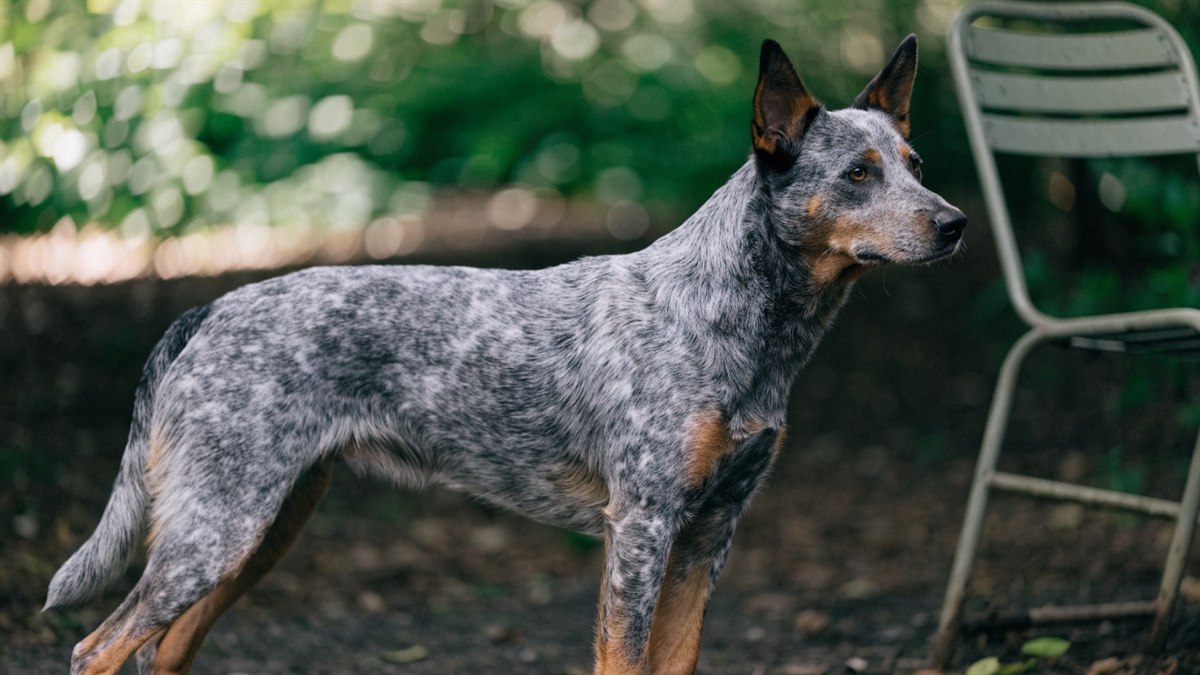
Quick answer
The Australian Cattle Dog price in India runs Rs 25,000 to Rs 75,000 across published sources, and no two Indian sites agree. Asiapets quotes Rs 25,000 to Rs 50,000, TailsBuddy publishes three bands to Rs 75,000, and BarkJunction contradicts itself inside one paragraph. Bonbeno rates the breed 3 of 5 for heat tolerance. Two independent BAER studies put congenital deafness near 11 percent.
This guide is general information for Indian pet owners and is not a diagnosis. Consult your nearby registered veterinarian before acting on anything you read here, ask specifically about a BAER hearing test for any Australian Cattle Dog puppy, and treat collapse after exercise, laboured breathing in heat or any sudden change in your dog's condition as an emergency.
Australian Cattle Dog at a glance, rated for India
What the Australian Cattle Dog actually is, from the registries
The Australian Cattle Dog is a compact Australian herding breed of 46 to 51 cm at the withers for males and 43 to 48 cm for females, built to move wild cattle over long distances, and recognised by the FCI on a definitive basis since 20 March 1972 as breed number 287 Federation Cynologique Internationale. It is the dog Indian sellers advertise as the Blue Heeler.
Four registries carry the breed and they agree on almost everything, which is unusual and useful. The FCI, the American Kennel Club and the United Kennel Club all publish the Australian standard with only minor edits, because Australia is the country of origin and the standard was written there American Kennel Club United Kennel Club. Where they differ is worth knowing before you pay for a puppy, because the one figure Indian sellers quote most often, the dog's weight, appears in only one of the three.
| Registry | Recognition | Group | Height | Weight in the standard |
|---|---|---|---|---|
| FCI (breed 287) | Definitive basis, 20 March 1972; standard published 8 October 2012 | Group 1, Section 2 Cattledogs, without working trial | Males 46-51 cm, females 43-48 cm | None given |
| American Kennel Club | Registration from 1 May 1980; Working Group from 1 September 1980; Herding Group from 1 January 1983 | Herding Group | Dogs 46-51 cm, bitches 43-48 cm | None given |
| United Kennel Club | Recognized in 1985; standard revised 1 October 2013 | Herding Dog Group | Males 18-20 inches, females 17-19 inches | 33 to 50 pounds |
| Kennel Club of India | No breed-specific page published. The KCI site currently serves only registration forms under a stated temporary arrangement | Not published online | Not published online | Not published online |
Read that last column again. The FCI standard and the AKC standard publish no weight at all, and the only registry that does, the UKC, gives 33 to 50 pounds, which is 15.0 to 22.7 kg American Kennel Club United Kennel Club. Now compare the Indian pages. BarkJunction publishes 14 to 16 kg for males and 13 to 15 kg for females, which puts an entire adult male below the only official minimum in existence. TailsBuddy gives 15 to 22 kg and Puppiezo gives 16 to 22 kg, both of which sit inside the UKC range. If a seller tells you a 14 kg adult is correct for the breed standard, the seller has not read one.
The coat is short, and that is not the same as thin
The breed standard describes a smooth double coat with a short dense undercoat, an outer coat that is close, straight, hard and lying flat so that it is rain-resisting, and body hairs averaging 2.5 to 4 cm in length. The UKC puts it more plainly still, calling the outer coat weather-resistant, moderately short, straight, hard and flat lying, over a short dense undercoat. Both standards fault a coat either too long or too short.
That combination matters enormously in India and it is the reason this page rates heat tolerance higher than it rates the Border Collie or the Australian Shepherd. A 2.5 to 4 cm jacket sheds water and blocks sun without trapping the volume of air a herding coat of 8 or 10 cm does. It is still a double coat, so it still holds an insulating layer against the skin, and the words weather-resisting in the standard mean resisting weather in both directions.
The breed is born white, and you can check it at the viewing
Australian Cattle Dog puppies are born white, and this is not folklore. The UKC standard states it in the History section in one sentence: the breed is born white, which is an oddity inherited from the Dalmatian. The parent club in the United States says the same thing and goes further, describing the breed as genetically extreme white and noting that without the ticking and roaning that develops later, the Australian Cattle Dog would present as predominantly white into adulthood.
The peer-reviewed literature confirms the timing. The 899-dog Australian deafness study records that Australian Cattle Dog puppies are born with white coats but also show all dark body and facial masks or markings at birth, red in the case of red dogs and blue or black in the case of blue dogs, and that no new markings appear as the puppy grows, the existing ones simply growing at the same rate as the dog. A separate coat-genetics paper that mapped the roan pattern reports that pups which will show the pattern as adults are born with clear white patterning and pigmentation develops in the first weeks of life. The parent club puts the window at the first few weeks after whelping.
Ask the seller how old the litter is, then look at the puppies. At two weeks a genuine Australian Cattle Dog litter is white or near white with dark head markings and perhaps a body patch. At eight weeks the blue or red roaning has come up across the white. A seller who shows you a fully coloured three-week-old litter is not showing you this breed. This one observation separates a real litter from a mislabelled one before any paperwork changes hands.
Blue mottle, red speckle, and the word the standards never use
The standard calls for two colours and describes them in careful language. Blue mottled means the colour should be blue, blue mottled or blue speckled with or without other markings, with permissible black, blue or tan markings on the head, tan midway up the forelegs and extending to breast and throat, and tan inside the hindlegs. Red speckle means good even red speckle all over including the undercoat, neither white nor cream, with or without darker red markings on the head.
The parent club makes the point that the standard never uses the word white anywhere in describing the correct colours, because white is merely implied in the words blue and red speckle. The blue is an even intermingling of black and white hairs. The more white hairs, the lighter the blue. The fewer, the darker.
It is also not merle, and the parent club says so directly. The pattern of white and coloured hairs is sometimes mistakenly described as merle, when the patterns appear to be governed by ticking and roaning genes at the T locus rather than the merling gene at the M locus. A 2021 mapping study places the roan and ticked patterns on three haplotypes near usherin on canine chromosome 38 and names the Australian Cattle Dog's blue as roan, alongside roan in the English Cocker Spaniel and Belton in the English Setter. That is a different chromosome and a different gene from merle, and the distinction carries the whole health argument later on this page.
Where the breed came from, and why merle keeps appearing in the story
The FCI standard's own history says the breed resulted from crossing blue merle smooth-haired Collies with the Dingo, with a later injection of Dalmatian and black and tan Kelpie blood, and that a Bull Terrier cross was tried and proved unsuccessful for working cattle. The American parent club dates the first crosses to 1840 and George Elliott in Queensland, then records that the Bagust brothers of Canterbury in Sydney crossed a bitch with an imported Dalmatian, and that this cross changed the merle to red or blue speckle.
Read that sentence slowly, because it is the source of a persistent confusion. Merle is in the ancestry. It is not in the modern coat. The Dalmatian cross replaced the merle pattern with speckle, and the club adds honestly that the Dalmatian origin story for the extreme white remains unproven genetically and that many doubt it Australian Cattle Dog Club of America. Robert Kaleski drew up the breed standard in 1902 and had it approved in 1903 by the Cattle and Sheep Dog Club of Australia and the original Kennel Club of New South Wales. The UKC standard records that the breed has been pure since 1893.
The names you will see used in India
Indian listings use several names for the same dog and none of them is wrong. Blue Heeler and Queensland Heeler are the working names, and the UKC standard records Australian Queensland Heeler, Blue Heeler and Red Heeler as breed synonyms. The parent club explains that the blue-coloured dogs proved more popular and became known as Blue Heelers, and that the dogs working the huge Queensland cattle runs picked up the Queensland Heeler tag there. Heeler is literal. The dog moves cattle by nipping at the heel, and the standard is explicit that the dog is required to move difficult cattle by heeling or biting, which is why it insists on sound strong teeth.
Bonbeno covers the closely related breeds separately. Compare this page against the Border Collie, the Australian Shepherd and the German Shepherd, because the three of them are what most Indian buyers are actually cross-shopping when they land here.
Australian Cattle Dog price in India, and why five sources give five answers
The Australian Cattle Dog price in India runs Rs 25,000 to Rs 75,000 across the five published sources Bonbeno could open on 20 August 2026, and the spread is three-fold at the top end BarkJunction, Australian Cattle dog price…. Unlike most rare imported breeds, this one genuinely is sold in India, which makes the disagreement between sources a real problem rather than an academic one.
Start with the numbers as published, then read what each source is actually doing. The table below is the comparison no Indian page runs on itself.
| Source | Price published | What the page is | What the audit found |
|---|---|---|---|
| Asiapets, breed page | Rs 25,000 to Rs 50,000 | Editorial breed profile with a price band | Lowest published floor. The matching for-sale page shows three toy puppies, not this breed |
| TailsBuddy | Basic Rs 30,000 to Rs 40,000; KCI registered Rs 40,000 to Rs 50,000; Show quality Rs 50,000 to Rs 75,000 | Editorial price page with three tiers | The only source that separates registered from unregistered. Also carries visible template filler headings |
| BarkJunction | Rs 30,000 to Rs 60,000, then Rs 30,000 to Rs 45,000 in the next sentence | Editorial price page | Contradicts itself inside one paragraph and carries a section headed for a different breed |
| BarkJunction, second figure | From about Rs 4,382 at a named Kerala kennel | Same page, later section | Implausibly precise, offered alongside the phrase 'a used puppy' |
| Puppiezo | No price published for this breed | Marketplace product page | Its own available-puppies carousel contains no Australian Cattle Dog |
| Mr n Mrs Pet | No price published for this breed | Marketplace listing page | Shows two French Bulldogs and a Bernese Mountain Dog |
The single number a buyer should distrust most
BarkJunction's page carries the sentence that the average cost of a pet-quality Australian Cattle Dog puppy from a reputable breeder is about Rs 30,000 to Rs 60,000, and then immediately says that in India the price range may be slightly higher, with prices ranging between 30,000 and 45,000. Rs 45,000 is not higher than Rs 60,000. The page states a comparison and then contradicts it in the same breath, which tells you the two figures were assembled rather than researched.
The same page then names a kennel near Koickal Bridge in Kilikolloor, Kollam and says prices start at around Rs 4,382, adding that you may be able to find a used puppy for a discounted price. A four-digit price with a stray rupee figure attached, described in the language of a second-hand appliance, is machine-written text and not a market observation. Bonbeno reports it because it currently ranks first in India for this query, not because it is a price.
What the marketplaces are actually selling you
Two of the five pages are marketplaces rather than editorial, and neither of them had an Australian Cattle Dog when Bonbeno audited them. Mr n Mrs Pet's page titled Australian Cattle Dog Puppies for sale in India returned three listings, and they were a French Bulldog in Bangalore, a French Bulldog in Patna and a Bernese Mountain Dog in Ahmedabad. Its Hyderabad page, titled Australian Cattle Dog Price in Hyderabad, returned a Border Collie in Pune and French Bulldogs in Thiruvananthapuram and Ahmedabad, so the page failed on breed and on city at once.
Puppiezo's Australian Cattle Dog product page publishes no price for the breed anywhere on it. Its Other Available Pets carousel offered a Maltipoo at Rs 98,999, two Poodles at Rs 92,599, a Cane Corso at Rs 94,999, a Goldendoodle at Rs 1,20,000, a Rottweiler at Rs 76,499 and a Doxiepoo at Rs 98,999. Not one Australian Cattle Dog. The page also carries a heading reading 'Never feed these foods to Australian Cattle Puppies For Sale', which is a template with the breed name pasted into it.
Asiapets runs a dedicated for-sale page whose visible product cards were a Tiny Chihuahua Puppy, a Tiny Yorkshire Terrier Puppy and a Tiny Toy Pom Puppy. Its separate breed page does publish a band, Rs 25,000 to Rs 50,000, and that band is the lowest floor of the five.
Three of the five sources publish a price and no marketplace could show a live Australian Cattle Dog on the day of the audit. Treat Rs 25,000 to Rs 75,000 as the range of published claims, not as a market you can walk into. A seller who can produce a genuine litter of this breed on demand, in a country where none of the five ranking pages could, is the seller you should be asking the most questions of, not the fewest.
What the three tiers actually buy
TailsBuddy is the only source that splits the price by registration, and its tiers are worth taking seriously even though the numbers are its own. The basic tier at Rs 30,000 to Rs 40,000 covers dogs not registered with any kennel club. KCI registration moves the band to Rs 40,000 to Rs 50,000. Show quality runs Rs 50,000 to Rs 75,000.
The breed itself is FCI recognised on a definitive basis as number 287, so nothing about it is exotic from a registry point of view. What Bonbeno cannot show you is a Kennel Club of India breed page, because there is not one to show. On 20 August 2026 the KCI site was serving only a forms page under a stated temporary arrangement while a new website is deployed, offering the Single Dog Registration Form, the Registration of Litter form and a transfer of ownership form, with a Chennai postal address and enquiry numbers. There is no online breed list to check against, so a buyer cannot verify the breed's registrability from the KCI site itself today and has to ask the club directly.
The honest reading of the Rs 10,000 gap between the basic and KCI tiers is that you are buying a paper trail, not a better dog. That paper trail is worth having for one reason specific to this breed. A pedigree lets you trace the sire and dam, and the deafness evidence later on this page shows that the hearing status of the parents and of all four grandparents is the single strongest predictor of whether a puppy can hear.
The price nobody quotes, and it is the one that matters
None of the five sources mentions a BAER test, so none of them prices it. That is the omission that should change how you spend. In a breed where 10.8 percent of 899 Australian dogs and 11.4 percent of 524 UK puppies failed brainstem auditory evoked response testing, the cost of the hearing test is a larger determinant of whether you got value than the difference between the Rs 30,000 and Rs 50,000 tiers Marsh O, Freeman J, Pollard D.
Bonbeno does not publish a rupee figure for BAER testing in India, because we could not find one published by a facility we could open and verify. Ask your nearby veterinary college or a referral neurology service what it costs before you commit to a puppy, and treat a breeder who has never heard of the test as a breeder who has not screened for the one thing this breed is measurably at risk of.
This section reports published price claims as editorial content. Bonbeno does not recommend breeders, link puppy listings or quote a live price as an offer. Every figure above is what a named public page printed on 20 August 2026, and several of them are wrong, which is exactly why they are printed together.
Monthly cost of ownership in India, honestly bounded
Budget for an Australian Cattle Dog the way you would budget for a working animal, because the recurring costs that matter for this breed are containment, parasite control and exercise, not grooming. Only one Indian source publishes recurring figures for the breed, and its own first-year total contradicts itself by Rs 20,000.
Bonbeno publishes the Indian figures that exist and names the gaps rather than filling them. The table below separates what a source actually printed from what a buyer still has to find out locally.
| Cost line | Published Indian figure | Source | Bonbeno note |
|---|---|---|---|
| Grooming | Rs 1,000 to Rs 10,000 depending on the type of grooming required | BarkJunction | The ten-fold band is not breed specific. A 2.5 to 4 cm flat coat needs almost none of it |
| Training, per session | Rs 900 to Rs 1,500 | BarkJunction | This is the line to overspend on, not underspend |
| Veterinary care, annual | Rs 3,000 to Rs 5,000 covering check-ups, vaccinations, flea and tick prevention | BarkJunction | Plausible as a floor for a healthy dog. It does not cover a tick-borne infection |
| Domestic flight with the dog | Rs 4,000 to Rs 8,000 | BarkJunction | Printed under a heading about a different breed on the same page |
| First year, total | Around Rs 80,000, then Rs 30,000 to Rs 60,000 two paragraphs later | BarkJunction | The page states both. Bonbeno reports both rather than choosing |
| BAER hearing test | No Indian figure published that Bonbeno could verify | None | The single most breed-relevant test there is |
| Secure fencing or containment | No Indian figure published | None | A heeling breed with a working drive is a containment problem, not a leash problem |
The three costs this breed actually drives
- Containment. The FCI standard describes a dog whose prime function is the control and movement of cattle in both wide open and confined areas, always alert and courageous, with a capability of quick and sudden movement that is essential. A dog built to that description leaves an unfenced Indian compound. Spend on the boundary before you spend on anything decorative.
- Parasite control, monthly and year round. A PCR survey of 525 dogs across four Indian cities found 261, or 49.7 percent, infected with at least one tick-borne pathogen, and found Rhipicephalus or Haemaphysalis ticks on 278 dogs, which is 53 percent. A short flat coat makes ticks easier to find, not less likely to attach.
- Training and mental work. A dog that needs real mental stimulation and does not get it will invent work, and in this breed the invented work is usually heeling something. Rs 900 to Rs 1,500 per session is the published Indian range, and this is the one line where spending more genuinely reduces the total cost of ownership.
- Screening you pay for once. Hip and elbow evaluation, an eye examination and a BAER hearing test are what the breed's parent club and the OFA put on the health panel. Buying from a breeder who has already paid for these is cheaper than discovering the results yourself at four years old.
Where this breed is genuinely cheaper than its rivals
Grooming is the one line where an Australian Cattle Dog is more affordable than the herding breeds Indian buyers cross-shop it against. The coat is 2.5 to 4 cm, hard, flat lying and rain-resisting, so it needs a brush and not a groomer. Compare that with the Australian Shepherd, whose coat work in Indian humidity is a standing monthly cost, or the Golden Retriever. Bonbeno rates grooming needs 2 of 5 for this breed and 4 of 5 for the Australian Shepherd, and the gap is real money over ten years.
Feeding is mid-range because the dog is mid-sized. The UKC weight of 33 to 50 pounds puts a working adult at roughly 15 to 23 kg, which is a Labrador's food bill at the top end and well under it at the bottom. What raises the bill is activity. A dog worked two hours a day eats more than a dog walked twice around a block, and this breed does not thrive on the second option.
We will not publish a monthly rupee total assembled from figures we could not verify. One Indian page prints a first-year cost of Rs 80,000 and then prints Rs 30,000 to Rs 60,000 two paragraphs later, and averaging those two would produce a number that exists nowhere. Ask three local vets and two local trainers what they charge, and you will have a better budget than any published Indian page for this breed currently offers.
Suitability for the Indian climate, and why we rate heat tolerance 3 and not 5
Bonbeno rates the Australian Cattle Dog 3 of 5 for heat tolerance in Indian conditions, which is the highest rating this site gives any working herding breed and still not a pass to exercise it at 2 pm in Nagpur. The coat is genuinely better suited to heat than a Border Collie's. The behaviour is genuinely worse.
The rating is mechanical, so here is the mechanism, line by line, with what each claim rests on.
| Factor | What the evidence says | Effect on the rating |
|---|---|---|
| Coat length | Body hairs average 2.5 to 4 cm, flat lying, hard, rain-resisting, over a short dense undercoat | Raises it. Far less trapped air than a long herding coat |
| Coat type | Still a double coat with a dense undercoat, and the standard faults a coat that is too short | Caps it. Short is not single |
| Skull shape | Mesocephalic, with a medium-length deep powerful muzzle | Raises it. Brachycephalic dogs had greater odds of all three types of heat-related illness |
| Body mass | 33 to 50 pounds, compact and hard muscled, no bulk | Raises it slightly. Less mass to shed heat from |
| Origin | Bred to muster and move wild cattle in early Australian conditions | Neutral. Selection pressure was for stamina, not for a cooling mechanism |
| Exertion behaviour | Exertional heat-related illness was the predominant trigger, 74.2 percent of the 879 events with a recorded trigger, in 905,543 UK dogs | Lowers it hard. This breed maximises the dominant pathway |
| Breed-specific heat data | No Australian Cattle Dog figure exists in the UK VetCompass heat studies | Lowers it. Bonbeno will not rate 4 or 5 on an unmeasured breed |
The registry claims this breed handles heat best, and the registry shows no data
The UKC standard makes a striking claim in its History section, stating that the breed is able to withstand the heat better than any other herding breed. That sentence is doing a lot of work on Indian pages, and it deserves testing rather than repeating. It appears in a breed standard, which is a document describing what a dog should look like, not a document reporting a physiological study. No citation accompanies it. Bonbeno treats it as a breed claim, gives it weight because the breed's origin makes it plausible, and does not treat it as evidence.
The evidence that does exist points at a coat mechanism rather than a breed mechanism. The UK primary-care study of heat-related illness reports that among 905,543 dogs the 2016 incidence was 0.04 percent with an event fatality rate of 14.18 percent, and that nine breeds carried higher odds than the Labrador Retriever, the Chow Chow highest at an odds ratio of 16.17. The authors' own explanation for the Golden Retriever ranking above the Labrador despite similar size, temperament and purpose is that the Golden has a thicker coat, which may be the tipping factor. If coat thickness is the tipping factor, then a 2.5 to 4 cm flat coat is a real advantage over a 10 cm one, and that is the entire basis for rating this breed above the Border Collie at 2 of 5.
Three quarters of heat events come from exercise, and this dog will not stop
The finding that should govern how an Indian owner runs this breed is not about coats at all. Reviewing 1,259 heat-related illness events from 1,222 dogs, exertional heat-related illness was the predominant trigger at 74.2 percent of the 879 events where a cause was recorded, followed by environmental at 12.9 percent and vehicular confinement at 5.2 percent. The authors also found that young male dogs had greater odds of exertional heat-related illness, and concluded that in the UK exertional heat illness affects more dogs, and kills more dogs, than confinement in a hot vehicle.
Now read the standard back. The FCI describes the action as true, free, supple and tireless, requires great stamina, and describes a dog with an implicit devotion to duty that makes it an ideal working dog. Those are the words of a dog that keeps going. A heat-tolerant coat on a dog that will not self-limit is a worse combination in an Indian summer than a hot coat on a dog that lies down, because the dog with the hot coat quits first.
Do not let this breed choose its own workload between March and June. It will pick more than it can shed. Move all real exercise to before sunrise and after dark, cap midday activity at a toilet break, and stop the session yourself rather than waiting for the dog to slow down. Take collapse, staggering, laboured open-mouth breathing that does not settle in shade, or bright red gums as an emergency and go to your nearby vet immediately.
City by city, where this breed works and where it does not
| Setting | Verdict | What changes |
|---|---|---|
| Pune, Bengaluru, Hyderabad, hill stations | Workable | Cooler nights and a real morning window. The breed's exercise load fits into dawn and dusk most of the year |
| Delhi NCR, Jaipur, Nagpur, Chandigarh | Workable with a hard summer plan | April to June removes the daytime entirely. Plan indoor mental work for ten weeks or do not buy the dog |
| Mumbai, Chennai, Kochi, Kolkata | Hardest case | Humidity blunts evaporative cooling at night as well as by day, so the cool window narrows rather than shifts |
| A farm, a plot or any property with land | Best fit in India | The breed was designed for this. Space plus a boundary solves most of what a flat cannot |
| A city apartment | Poor fit | One Indian breed page for this dog lists 'Not suitable for apartments' among its own considerations, and that is the correct call |
Note that one of the ranking Indian pages claims the opposite, stating that these dogs have decent tolerance to both high and low temperatures and can comfortably thrive in almost any part of the world. That is too strong. A different Indian page on the same breed lists 'Not suitable for apartments' and 'Very high energy' among its own considerations, and demands at least two hours of vigorous exercise daily. Two hours of vigorous exercise daily is not something a Chennai owner can deliver in May, and the honest version of the sentence is that the coat is hardy across a wide temperature range while the workload is not.
Monsoon, and the one grooming instruction that transfers badly
Overseas breed guidance for short-coated working dogs routinely says to towel the dog and let it air dry. In an Indian monsoon that instruction is worth reading twice, because a weather-resistant flat coat over a dense undercoat holds moisture at the skin longer than it looks like it will, and the ear leather in this breed is described in the standard as thick in texture with the inside of the ear fairly well furnished with hair. A thick, hairy, pricked ear is better ventilated than a drop ear, which is a genuine advantage over the Basset Hound or the American Cocker Spaniel, but it is not self-drying. Dry the ear canal opening deliberately after any wet outing.
Tick pressure rises in the same season and tick-borne disease is the larger monsoon risk for this breed in India. Across four Indian cities, 49.7 percent of 525 dogs carried at least one tick-borne pathogen, with Hepatozoon canis at 30 percent and Ehrlichia canis at 20.6 percent, and concurrent infection with more than one pathogen occurred in 39 percent of cases. A dog that spends its life outdoors in a compound is exactly the dog those numbers describe.
Temperament and household fit, taken from the standard rather than from adjectives
The Australian Cattle Dog is loyal, intelligent, protective and naturally suspicious of strangers, and the breed standard says all four of those things in its own words rather than leaving them to marketing copy. That last trait is the one Indian buyers underweight, and it decides whether this dog suits your household.
Here is the temperament clause, as printed. The Cattle Dog's loyalty and protective instincts make it a self-appointed guardian to the Stockman, his herd and his property; whilst naturally suspicious of strangers, it must be amenable to handling, particularly in the show ring; always alert, extremely intelligent, watchful, courageous and trustworthy, with an implicit devotion to duty. The UKC adds that the breed is naturally suspicious of strangers but must be amenable to being handled in the show ring, and disqualifies viciousness or extreme shyness outright.
Read what a breed standard is willing to write down. Standards are promotional documents by nature, and a standard that volunteers 'naturally suspicious of strangers' twice across two registries is telling you something that will show up in your drawing room. This is not a dog that greets your guests.
Who should buy this breed
- Owners with land, a plot, a farm or a house with a real boundary, who want a working dog and will give it work.
- Experienced handlers who have run a high-drive dog before and know what a dog that never switches off actually costs in daily attention.
- Households with a stable adult routine, where somebody is present enough to structure two sessions of real work a day, every day, for twelve to fifteen years.
- People who want a guardian, and who understand that a guardian which is suspicious of strangers requires management rather than admiration.
- Sport handlers doing agility, obedience, herding trials or scent work, where the breed's drive becomes an asset instead of a problem.
Who should not
- Apartment households. One Indian breed page lists 'Not suitable for apartments' among its own considerations for this dog, and Bonbeno agrees with it.
- Homes with young children. The breed moves cattle by heeling or biting, which the standard states as a functional requirement, and that instinct does not distinguish between a calf's hock and a running child's ankle.
- First-time dog owners. A dog the standard itself describes as extremely intelligent, courageous, watchful and self-appointed will out-plan an inexperienced handler, and it will do so cheerfully.
- Anyone buying for the look. The blue mottle is the most photographed thing about this breed and the least relevant to living with it.
- Households that travel constantly. A dog with this much drive and this much attachment does not board well repeatedly.
The nipping question, answered from the working standard
Heeling is not a behaviour problem in this breed. It is the job description. The standard says the dog is required to move difficult cattle by heeling or biting, and justifies the demand for sound strong teeth on exactly that basis. An Australian Cattle Dog that nips at moving heels in a household is not malfunctioning, it is working with the material available, and the material available in an Indian home is usually a child, a cyclist or the domestic help.
That reframing changes the fix. You do not punish the drive out. You give it a legal object and you manage the illegal ones. A tug toy that only comes out on cue, a herding-ball or flirt-pole session twice a day, and a hard household rule that nobody runs past the dog will do more in a fortnight than six months of correction.
Noise, and what to expect from a working line
The UKC standard calls the breed a silent heeler, which describes how it works stock rather than how it behaves in a garden. In a household this dog is vocal on arrivals and on anything crossing the boundary, because the standard's watchful, alert, self-appointed guardian is precisely a dog that announces. Indian apartment living punishes that harder than most housing does. If a neighbour complaint is a live risk for you, this is not your breed.
Compare it with the German Shepherd, which most Indian buyers consider first for a guardian role. The German Shepherd is larger, more widely understood by Indian trainers and vets, and better served by local breed knowledge. The Australian Cattle Dog is smaller, harder, and far less familiar to the average Indian veterinary practice, which matters when you need somebody to recognise a breed-specific problem.
Training approach, what this breed resists, and realistic Indian timelines
To train an Australian Cattle Dog successfully, give it a job before you give it obedience, because a dog this trainable learns your commands in days and then spends the rest of its life deciding whether your commands are worth obeying. The breed is not difficult to teach. It is difficult to satisfy.
Every Indian page on this breed calls it easy to train, and BarkJunction's own facts table rates trainability simply as 'Easy';. That is true and misleading in equal measure. Acquisition of a behaviour is fast. Maintenance of a behaviour in the face of a more interesting option is where the work is, and this breed generates more interesting options than most owners can compete with.
What works
- Short sessions with a real payoff. Five to eight minutes, three or four times a day, beats one forty-minute block. The dog's attention is not the limit, your consistency is.
- Movement as the reward. A dog bred to control movement values permission to move more than it values food. Release to a chase, a tug or a recall sprint pays better than a biscuit.
- Impulse-control work from week one. Wait at doors, wait at the gate, wait before the toy moves. This is the single highest-return training investment in the breed.
- Scent and problem-solving work indoors. During an Indian April, nose work in an air-cooled room substitutes for a walk in a way that a longer evening walk cannot.
- Hand signals alongside voice. Build them from the first week, for a reason specific to this breed that the health section explains in full.
What this breed resists
- Repetition without purpose. Ten recalls in a row teaches the dog that recalls are meaningless.
- Harsh correction. A courageous, hard dog does not fold under pressure, it escalates or it shuts you out. The standard's own word for the temperament is courageous.
- Being left to make its own decisions. An independent working dog with no assignment writes its own, and the assignment it writes is usually guarding or herding.
- Strangers running the session. A dog naturally suspicious of strangers will not take instruction from your trainer on day one, and a trainer who does not plan for that will blame the dog.
Why hand signals are not optional in this breed
Build hand signals from the first week regardless of what the hearing test says, and there is a hard reason. In the largest published Australian cohort, the proportion of deaf dogs that were deaf in one ear only was 0.69, which the authors state as meaning as many as 69 percent of affected dogs would go undetected if they were not BAER tested. A unilaterally deaf dog responds to sound, comes when called and looks entirely normal, while failing at exactly one thing: locating where a sound came from.
That failure looks like disobedience. An owner calls from the left, the dog turns right, and a year of recall training gets blamed on a stubborn dog. Hand signals remove the ambiguity for both of you, and they cost nothing to build if you start early. Discuss any suspicion of hearing loss with your nearby veterinarian rather than training around it.
A realistic Indian timeline
| Age | Realistic milestone | What usually goes wrong |
|---|---|---|
| 8 to 12 weeks | Name, crate, toilet routine, first hand signals, deliberate handling of feet and ears | Owners socialise indoors only because of heat and end up with a dog that has met nobody |
| 3 to 5 months | Reliable sit, down, wait at doors, loose-lead walking in a quiet street | Heeling starts and gets laughed at instead of redirected |
| 5 to 8 months | Recall under mild distraction, settle on a mat, first structured job | Adolescent testing arrives and the owner starts correcting harder |
| 8 to 12 months | Recall under real distraction, a genuine off-switch indoors, guarding response managed rather than encouraged | Guarding is praised once and becomes self-rewarding |
| 12 to 24 months | Adult work capacity, sport if you want it, a dog that can be left alone without dismantling something | Owners reduce work as the novelty fades and behaviour regresses |
Indian puppies bought in March meet their first heatwave at four months, which is exactly the socialisation window. Do the work at 6 am and after 8 pm rather than skipping it. A dog naturally suspicious of strangers that also met almost nobody as a puppy is a much harder adult than either problem alone.
Daily exercise requirement, and what happens in an Indian home without it
To exercise an Australian Cattle Dog properly in India, plan two structured sessions a day totalling roughly two hours, split across the cool ends of the day, with mental work filling the middle. One Indian breed page states the requirement as at least two hours of vigorous exercise daily and another gives one to two hours, and both are describing the same energetic dog.
The requirement is not negotiable by climate. It is only reschedulable. An owner who cannot deliver it in June should not buy the dog in January.
| Slot | March to June | July to February |
|---|---|---|
| Before sunrise | 45 to 60 minutes of real work, off-lead where safe or long-line | 45 to 60 minutes, same |
| Mid-morning | Nothing outdoors. Ten minutes of indoor training or scent work | 20 minute lead walk if the day is mild |
| Afternoon | Frozen food puzzle, chew, indoor settle. No outdoor activity at all | Rest |
| After dark | 45 minutes of work once the ground has cooled | 45 to 60 minutes plus training |
| Weekly | One longer session on a genuinely cool morning, plus one structured job such as herding, agility or scent | Same, with more scope |
Ground temperature is the constraint, not air temperature
Check the surface before the session, not the forecast. Tarmac and concrete in an Indian city hold heat for hours after sunset, and a dog with hard deep pads and short strong nails still burns on them. Press the back of your hand to the ground for five seconds. If you cannot hold it there, the dog cannot walk on it, and the walk moves to grass or moves to later.
This matters more for this breed than for a slower one because of what the heat data says about the pathway. Exertional heat-related illness accounted for 74.2 percent of heat events in a cohort of 905,543 UK dogs, and young males carried the greatest odds of it. A young male Australian Cattle Dog running on hot ground is close to the exact profile that dominates those numbers.
What happens without it
- Heeling escalates. The drive does not switch off, so it finds ankles, hemlines and moving vehicles.
- Boundary guarding intensifies. A dog with a guardian instinct and nothing else to do patrols, and patrolling is self-rewarding.
- Destruction becomes a job. Dismantling a sofa is problem-solving, which is precisely what the standard's extremely intelligent dog is built for.
- Barking becomes a habit. In an Indian apartment this is usually the point at which the dog is rehomed.
- The dog becomes harder to handle, not easier. Under-exercised drive does not fade with age in this breed the way it does in some retrievers.
Substituting mental work for physical work, correctly
Mental stimulation substitutes for distance but not for movement, and knowing the difference saves an Indian summer. Twenty minutes of scent work genuinely tires this dog and can replace half of a hot-weather walk. It cannot replace the need to run, which is why the pre-dawn session stays even in May. A rough working rule is that ten minutes of hard thinking is worth about twenty minutes of walking for this breed, and nothing is worth a sprint except a sprint.
Good options in an Indian home include a scatter-feed across a room, a find-the-toy game with three named toys, a flirt pole in a corridor for two minutes at a time, a food puzzle frozen the night before, and short shaping sessions teaching a genuinely useless trick. The uselessness is the point. The dog does not care what the job is, only that there is one.
Grooming and coat care in Indian humidity
To groom an Australian Cattle Dog in India, brush the coat weekly with a rubber curry or a short bristle brush, bathe rarely, dry the ears deliberately after any wet outing, and never clip the coat. Bonbeno rates grooming needs 2 of 5, the lowest rating on this page and the breed's clearest practical advantage in an Indian household.
The coat that makes this easy is described identically by three registries. It is smooth, a double coat with a short dense undercoat, the outer coat close, each hair straight, hard and lying flat so that it is rain-resisting, longer under the body and along the neck, short on the head and the front of the legs, and averaging 2.5 to 4 cm on the body American Kennel Club. The UKC adds the word weather-resistant and puts the body coat at 1 to 1.5 inches.
The weekly routine
- Brush once a week, twice during a shed. A rubber curry lifts dead undercoat from a flat hard coat better than a slicker does.
- Bathe only when genuinely dirty. A rain-resisting coat sheds most Indian dust with a brush, and frequent bathing strips the oils that make it rain-resisting.
- Dry the ear opening after every wet outing. Pricked ears ventilate well, but the standard describes thick leather with the inside fairly well furnished with hair, which holds water.
- Check for ticks daily in monsoon, working the fingers against the lie of the coat around the ears, between the toes and under the collar. Half the dogs in a four-city Indian survey carried ticks.
- Trim nails monthly. The standard calls for short strong nails, and a dog on soft Indian ground rather than hard station does not wear them down.
Never clip this coat, and here is the mechanical reason
Indian groomers routinely offer a summer clip for double-coated dogs and it is the wrong service for this breed. The outer coat's job is described in the standard itself, lying flat so that it is rain-resisting, which in Indian terms also means sun-resisting. Removing it exposes skin that has never seen direct sun to an Indian April, and the undercoat regrows faster than the guard coat, so the dog ends up with more insulation and less protection than it started with. The standard faults a coat either too long or too short, and a clipped coat is the second.
The counter-argument you will hear is that a shorter coat is cooler. That argument has already been tested on this breed by nature. The coat is already short, at 2.5 to 4 cm, which is a third to a quarter of what a rough-coated herding breed carries, and that is precisely why this page rates heat tolerance a point higher than it rates the Border Collie.
Shedding, and what Indian pages get wrong about it
One Indian page describes shedding for this breed as 'Minimal' and grooming as 'Low maintenance';. Low maintenance is right. Minimal shedding is not. A double coat with a dense undercoat sheds, and it sheds seasonally in a way that surprises owners who were told the coat was short. Puppiezo's own table simply records shedding as 'Yes', which is closer to the truth than 'Minimal';.
In Indian conditions the shed is often less seasonal and more continuous, because indoor temperature and light cycles blunt the trigger. Expect hair year round, at a manageable volume, on hard flooring where it is easy to sweep. A weekly brush outdoors on a balcony or in a compound moves most of it before it reaches your furniture.
A puppy that arrives white-ish with dark head markings is not a mismarked dog. The roaning develops in the white areas over the first few weeks after whelping, and the markings present at birth simply grow at the same rate as the dog rather than multiplying Sommerlad SF, Morton JM, Haile-Mariam M. Do not let a seller tell you a pale eight-week-old puppy will 'darken into a proper blue' after that window. The pattern is largely set by then.
Health risks, screening and lifespan, with the deafness numbers no Indian page prints
The best-quantified health risk in the Australian Cattle Dog is congenital deafness, measured at 10.8 percent in 899 Australian dogs and 11.4 percent in 524 UK puppies by brainstem auditory evoked response testing. Two independent cohorts on two continents arrived within 0.6 percentage points of each other, which is as close to a settled figure as any breed on this site has.
Everything else in this breed's health picture is less certain than that, and this section says so where it is true rather than filling the gaps. Indian breed pages list the same three or four generic health issues for every working dog and quantify none of them, so what follows is organised the other way round, by how well each risk is actually measured.
The two BAER studies, side by side
| Measure | Australia, Sommerlad 2012 | United Kingdom, Marsh 2021 |
|---|---|---|
| Dogs tested | 899, from 35 breeding kennels | 524 puppies from complete litters |
| Years covered | Data collected over 12 years | 1999 to 2019 |
| Age at testing | Usually between six and eight weeks | 4 to 10 weeks |
| Deaf in at least one ear | 10.8 percent | 11.4 percent |
| Unilaterally deaf | 7.5 percent | 9.7 percent |
| Bilaterally deaf | 3.3 percent, printed as 30 dogs | 1.7 percent |
| Hearing normal in both ears | 89.2 percent | 88.6 percent, printed as 464 puppies |
| Pigmented face marking | Bilateral mask reduced risk, odds ratio 0.2, P at or below 0.001 | Face patch was the only significant variable, and reduced risk |
| Sex effect | Females at increased risk, odds ratio 1.9, P = 0.034 | Not significant on multivariable analysis |
Two things stand out. The first is agreement. The UK authors state plainly that the prevalence was similar to that reported in an Australian population of Australian Cattle Dogs, and the protective effect of facial pigmentation replicated across both cohorts Sommerlad SF, Morton JM, Haile-Mariam M. The second is a real disagreement, and Bonbeno publishes it rather than smoothing it. The Australian study found females at an odds ratio of 1.9 with P = 0.034, while the UK study's multivariable analysis found the presence of a pigmented face patch to be the only phenotypic variable significantly associated with deafness. Whether a female Australian Cattle Dog puppy carries extra risk is not settled. Do not let a breeder tell you it is, in either direction.
The number that should change how you buy: 69 percent go undetected
Most affected Australian Cattle Dogs hear perfectly well in one ear and can therefore pass any test you can run at home. The Australian study states it arithmetically. The proportion of deaf dogs that were unilaterally deaf was 0.69, calculated as 7.5 divided by 10.8, suggesting as many as 69 percent of affected dogs would go undetected if they were not BAER tested.
A unilaterally deaf dog turns to a clap, comes when called and startles at the door. What it cannot do is tell you where a sound came from. In practice that presents as unreliable recall in open ground, as a dog that consistently searches the wrong direction, and as a dog that gets blamed for stubbornness for years. Clapping behind a puppy at a viewing tests nothing.
A BAER test is the only way to detect unilateral deafness, and it is done at six to eight weeks, before the litter goes home. Ask for results for the whole litter and for both parents, not just for your puppy. If the breeder has never heard of the test, you now know more about the breed's principal health risk than the person selling it to you. Ask your nearby veterinarian which referral centre near you runs BAER.
This is piebald deafness, not merle deafness, and the difference is not academic
Bonbeno covers merle deafness in detail on the American Leopard Hound page, and none of those figures apply to this breed. Merle is a different mutation on a different chromosome with a different dose response, and importing a double-merle deafness percentage into an Australian Cattle Dog page would be wrong in mechanism and wrong in magnitude. Three separate lines of evidence separate them.
- The parent club says so. The pattern of white and coloured hairs is sometimes mistakenly described as merle, when the patterns appear to be governed by ticking and roaning genes at the T locus rather than the merling gene at the M locus.
- The coat mapping says so. The roan and ticked patterns map to three haplotypes near usherin on canine chromosome 38, and the Australian Cattle Dog's blue is named as roan in that work. Merle sits elsewhere in the genome entirely.
- The deafness genetics say so. A review of hereditary deafness across domestic animals separates the two pigment associations explicitly, stating that the recessive alleles of the piebald locus and the dominant allele of the merle locus are associated with congenital hereditary deafness in dogs, and it lists the Australian Cattle Dog among breeds with a demonstrated association to the recessive piebald alleles, alongside the Dalmatian, English Setter, English Cocker Spaniel, Border Collie and Jack Russell Terrier.
The eye colour evidence closes the argument. In merle breeds a blue eye is a recognised marker of risk. In the 899-dog Australian Cattle Dog cohort, all dogs had black noses and pad leather and brown or black iris colour, and no blue eyes were seen. The standard requires dark brown eyes, and the breed simply does not produce the merle phenotype. If an Indian seller shows you a blue-eyed dog and calls it an Australian Cattle Dog, that is a finding about the dog's ancestry, not about its beauty.
The specific allele in this breed is unknown, and the parent club and the literature disagree
Here is a genuine open question that no Indian page raises and that Bonbeno will not paper over. The American parent club states that Australian Cattle Dogs are genetically extreme white. The peer-reviewed Australian study, discussing the same S-locus series, notes that the *sw* or extreme white allele is present in the Dalmatian and white Bull Terrier and the *sp* or piebald spotting allele is present in other breeds, and then says in one flat sentence that the allele that is present in the Australian Cattle Dog is unknown.
Both statements were published by credible bodies and they are not compatible. The genome-wide study that followed found a clear association peak on chromosome 20 in the vicinity of MITF, which is the gene the S locus is now known to be, with the most significant SNPs at 1.29 by ten to the minus four, across 104,757 polymorphisms genotyped in 216 dogs. That work supports the pigment-gene family but does not identify which allele, and its authors say directly that further validation, identification of variants and testing in other dog breeds are needed. The estimated heritability in that model was very low at 4.54 by ten to the minus five.
The practical consequence for a buyer is short. There is no DNA test that will tell you whether an Australian Cattle Dog puppy can hear. There is only BAER.
The breed standard may be selecting against the protective marking
This is the most uncomfortable finding on this page and it comes straight out of the data. The Australian study found that dogs with pigmented body spots had a deafness prevalence of 4.8 percent against 12.8 percent in dogs without them, with the odds of deafness estimated at 0.3 times that of other dogs in the multilevel logistic models and 0.4 times in the logistic animal model. Bilateral facial masks were stronger still, 4.4 percent against 14.6 percent in clear-faced dogs, at an odds ratio of 0.2 with P at or below 0.001.
Now read the colour clause. Black markings on the body are not desirable in the blue dog, and red markings on the body are permissible but not desirable in the red speckle dog. The study's authors drew the conclusion themselves, writing that the prevalence of deafness in the Australian Cattle Dog could possibly be reduced if pigmented body spots were no longer classified as a show fault in this breed.
A show ring that penalises the marking associated with hearing is a structural problem, not a breeder problem, and it is worth knowing before you pay a premium for a show-quality puppy at Rs 50,000 to Rs 75,000. A dog with a body patch is a slightly safer bet and a slightly worse show prospect. Choose deliberately.
The Australian paper prints the deafness prevalence in dogs without body spots as 12.8 percent, and its component figures as 9.3 percent unilateral and 3.3 percent bilateral, which sum to 12.6 rather than 12.8. That is a rounding artefact in the components, not a data problem, and Bonbeno flags it because every percentage on this site gets divided out before it is published. Every other figure quoted in this section reconciles exactly.
Ten years of screening did not reduce prevalence, and the reason is the grandparents
The most useful finding for a buyer comes from the follow-up study, which is also the least comfortable one for anybody selling a BAER-tested puppy as a guarantee. Following 608 pups from 122 litters across 10 breeding kennels, the authors found that despite 10 years of testing between 1998 and 2008, no substantial reduction in prevalence of congenital hereditary sensorineural deafness was evident in these 10 breeding kennels. Even in the subset where both parents had been BAER tested as normal hearing, 305 pups from 58 litters, there was no evidence of substantial reduction.
The odds ratios for each extra year since testing began were 1.01 with a 95 percent confidence interval of 0.88 to 1.17, and 1.03 with an interval of 0.82 to 1.30, which is to say no change at all. What did move the number was pedigree depth.
| Grandparents tested normal | Deafness prevalence | Counts |
|---|---|---|
| None | 17 percent | 5 of 29 |
| One | 12 percent | 9 of 74 |
| Two | 9 percent | 9 of 101 |
| Three | 8 percent | 6 of 71 |
| All four | 0 percent | 0 of 9 |
The authors' conclusion is the sentence to take to a breeder. Exclusive breeding of litters in which both parents and all four grandparents are BAER-tested normal is expected to reduce prevalence in pups to the greatest extent over the long term. Note honestly that the all-four cell holds only nine dogs, so the zero is fragile. The gradient across 275 other dogs is not.
Progressive retinal atrophy, and what is genuinely published for this breed
Progressive retinal atrophy is on the breed's official screening panel and there is no published prevalence figure for it in the Australian Cattle Dog that Bonbeno could verify. Both statements are true and they belong together.
The panel is precise. The parent club and the OFA list, as requirements for a CHIC number, hip evaluation, elbow evaluation at two years or older, an eye examination by a boarded ACVO ophthalmologist from 24 months, a prcd-PRA DNA test from an approved laboratory, congenital deafness by OFA evaluation based on BAER test, and a Primary Lens Luxation DNA test which became a requirement effective 6 October 2014. Patellar luxation, cardiac evaluation and an rcd4 PRA DNA test are listed as optional.
That split answers the question precisely. For this breed, prcd-PRA screening is mandatory on the panel and rcd4 screening is optional. Bonbeno checked whether a published rcd4 figure exists for the Australian Cattle Dog and could not find one. The OFA's own rcd4 page describes Animal Health Trust research in the Gordon Setter, reports that as many as 50 percent of Gordon Setters might be carriers, and names Polish Lowland Sheepdogs, Small Munsterlanders and Tibetan Terriers among the breeds studied, and it does not name the Australian Cattle Dog anywhere. An archived capture of the UC Davis Veterinary Genetics Laboratory rcd4 test page likewise did not name the breed.
Bonbeno found no peer-reviewed prevalence figure, no breed-club survey figure and no registry statistic for progressive retinal atrophy in the Australian Cattle Dog. Absent is a legitimate finding and it is what we publish. What is not absent is the screening requirement, so ask for the parents' prcd-PRA DNA results and their ACVO eye examination certificates, and discuss any change in your dog's night vision with your nearby veterinarian promptly.
India's own law names the eye disease and never mentions the ear
The Prevention of Cruelty to Animals (Dog Breeding and Marketing) Rules 2017, notified as G.S.R. 496(E) on 23 May 2017, govern anybody breeding dogs in India, and two clauses matter enormously here.
The first is paragraph 8(10) of the Second Schedule, which requires that the dogs shall have been tested for genetic defects, including hip dysplasia, progressive retinal atrophy, night blindness, hypothyroidism, entropion, ectropion, overshot, undershot jaw (when incisors do not touch or mesh), wry mouth, two or more missing teeth, unilateral cryptorchid or full cryptorchid males. Hip dysplasia and progressive retinal atrophy are both named.
The second is an absence, and Bonbeno checked it word by word. The word 'deaf' does not appear anywhere in the Rules. Neither does BAER, nor any hearing test, nor any pigment-locus screening. India's breeding law therefore requires a breeder to test for the eye disease for which this breed has no published prevalence figure, and does not require a test for the ear condition that two independent cohorts put near 11 percent Sommerlad SF, Morton JM, Haile-Mariam M Marsh O, Freeman J, Pollard D.
Three other clauses of the same Rules are worth knowing before you buy. Rule 8(1)(a) states that every breeder shall ensure that pups less than eight weeks in age are not sold. Paragraph 6(3) of the Second Schedule prohibits in breeding, defined as breeding between relatives of the 2nd to 4th grade in straight or side line within the first four generations, giving uncle to niece, nephew to aunt, cousin to cousin and grandparents to grandchildren as examples, and prohibits incest breeding between parents and children or brother and sister. And paragraph 6(8) forbids tail docking, ear cropping, de-barking, de-clawing, branding and dyeing outright. An Australian Cattle Dog in India is a natural-eared, natural-tailed dog by law as well as by standard.
MDR1 does not apply to this breed
Bonbeno's Australian Shepherd page carries substantial MDR1 material, and a reasonable reader could assume it transfers to another Australian herding breed. It does not. The Australian Cattle Dog is not a documented MDR1 breed.
Washington State University's published breed frequency table for the ABCB1 mutation lists Collie at about 70 percent, Australian Shepherd and Miniature Australian Shepherd at 50 percent, Long-haired Whippet at 50 percent, McNab and Silken Windhound at 30 percent, Chinook at 25 percent, English Shepherd and Shetland Sheepdog at 15 percent, German Shepherd and herding breed crosses at 10 percent, Border Collie under 5 percent, Old English Sheepdog and mixed breeds at 5 percent. The Australian Cattle Dog does not appear anywhere on that page.
An Australian genotyping study reinforces it from the other direction. Testing 4,842 dogs across 27 breeds submitted to two Australian diagnostic laboratories, the mutation was detected in nine breeds, and the most commonly affected were collies, Australian shepherds, white Swiss shepherds and Shetland sheepdogs. The Australian Cattle Dog is not among the named affected breeds, in the country where the breed originated and is most numerous.
The practical difference matters at an Indian vet clinic. An Australian Shepherd owner in India must raise MDR1 before ivermectin is used for mange. An Australian Cattle Dog owner does not have that specific conversation, and should raise the hearing status instead.
What Bonbeno could not retrieve, stated plainly
The Orthopedic Foundation for Animals publishes breed statistics for hip and elbow dysplasia and other screened conditions, and Bonbeno could not retrieve a single figure for this breed on 20 August 2026. The reason is technical and worth recording. The ofa.org statistics, CHIC and advanced-search pages are JavaScript shells that load their breed data from an api endpoint on the wp.ofa.org host, and every connection to that host timed out from this environment. No OFA percentage for the Australian Cattle Dog is published on this page, because a guessed breed code returns a real and plausible table for a different breed, and a wrong number is worse than an absent one.
What is not in doubt is that hip and elbow evaluation are both required for a CHIC number in this breed, which tells you the parent club considers the joints worth screening. Ask for OFA, OVC or PennHIP results on both parents, with the minimum ages the panel specifies, and check the certificate numbers rather than accepting a verbal assurance.
Lifespan, and the Bluey question
Published lifespan figures for the Australian Cattle Dog cluster between 12 and 16 years across Indian sources, with Asiapets and Puppiezo both giving 12 to 16 years, TailsBuddy giving 12 to 15 and BarkJunction giving 13 to 15 Puppiezo, Buy Australian Cattle Dog Puppies… TailsBuddy, Australian Cattle Dog and Puppy… BarkJunction, Australian Cattle dog price…. None of those is a study.
The largest relevant study Bonbeno could open is a UK dataset of 584,734 unique dogs including 284,734 deceased, covering 155 breeds, which reports median survival of 12.5 years for medium-sized breeds against 12.7 for small and 11.9 for large. The Australian Cattle Dog is not among the breeds that study names, and Bonbeno will not substitute the Lancashire Heeler figure that sits near it alphabetically. A medium-breed median of 12.5 years is context, not a breed figure.
What the 29-year record actually rests on
Bluey, an Australian Cattle Dog from Rochester in Victoria, is recorded as having lived 29 years and 5 months, from 7 June 1910 to 14 November 1939. Every Indian page on this breed repeats it. Almost none of them asks what it rests on, so here is what Bonbeno could and could not establish.
| Question | What the evidence shows |
|---|---|
| Is there contemporaneous documentation? | None that Bonbeno could open. The claim is transmitted through the record book and through family testimony, not through a veterinary or civil record |
| Do sources agree on the basic facts? | No. Wikipedia records Bluey as a female owned by Les and Rosalie Hall; ABC News, interviewing a descendant, refers to Bluey as 'he' and says the grandfather William Hall acquired the dog as a puppy in 1910, with Les inheriting it later |
| Would the claim meet the current evidence standard? | It cannot. The Records Director states that a title requires often a minimum of two statements from witnesses and subject experts alongside pictures, video and data from relevant technology, and microchips did not exist in 1939 |
| Has the standard tightened since? | Yes. After the Bobi episode, the requirements were changed to require microchip data and documentary evidence for every year of a dog's life |
| Did the 2024 review re-verify Bluey? | No. The February 2024 announcement concluded that the organisation no longer had the evidence needed to support Bobi's claim, and it does not name Bluey anywhere |
| What did the review say about evidence generally? | That without conclusive evidence available it could not retain a holder and honestly claim to maintain the standards it sets itself |
Read those rows together and the honest verdict is this. Bluey's age is repeated rather than documented. The record survived a review that removed a modern challenger precisely because the challenger could not produce evidence, which is a curious outcome for a claim from 1939, and the reviewing body's own announcement never mentions Bluey ABC News (Australia). Sources cannot agree on whether the dog was male or female or which member of the Hall family owned it ABC News (Australia).
Bonbeno is not saying Bluey did not live to 29. We are saying that a buyer should not price a puppy, or plan a life, on the basis of that number. Plan for 12 to 15 years, which is what every published breed source actually says, and treat anything beyond that as a gift.
Nothing on this page is a diagnosis. Take any collapse after exercise, staggering in heat, sudden reluctance to move at dusk, cloudiness of the eye, persistent head shaking or unexplained change in recall to your nearby registered veterinarian promptly. Tell them the dog is an Australian Cattle Dog with a documented congenital deafness risk near 11 percent and no known MDR1 involvement, because both facts change what they look for and what they can safely prescribe Washington State University.
Feeding and nutrition for an Australian Cattle Dog in India
To feed an Australian Cattle Dog in India, work backwards from body condition rather than from a cup measure, because the only registry weight that exists spans 33 to 50 pounds, which is 15.0 to 22.7 kg, and a 15 kg dog fed like a 22 kg dog gains a third of its bodyweight.
The breed standard gives you the target shape in words that are more useful than any chart. The general appearance is that of a strong, compact, symmetrically built working dog whose combination of substance, power, balance and hard muscular condition must convey the impression of great agility, strength and endurance, and any tendency to grossness or weediness is a serious fault. Grossness and weediness are the two failure modes, and Indian pet ownership produces far more of the first than the second.
Life-stage feeding
| Stage | Meals per day | What matters most |
|---|---|---|
| 8 to 16 weeks | 4 | Small frequent meals, steady growth, no supplementation of a complete puppy food |
| 4 to 6 months | 3 | Growth outpaces coordination. Keep the dog lean through the fastest growth phase |
| 6 to 12 months | 2 | Switch timing to before the cool-hour work sessions, not after them |
| 1 to 7 years | 2 | Adjust for workload week by week. A working week and a monsoon week are different diets |
| 7 years and older | 2 | Watch for weight creep as activity falls, and keep the joints unloaded |
Feeding around Indian heat
Move the main meal away from the hottest part of the day and away from the work session. A dog that eats and then works, or works and then immediately eats, is a dog at avoidable risk, and exertional heat illness was the trigger in 74.2 percent of heat-related events in the largest primary-care cohort available. Feed at least an hour before the pre-dawn session or well after it, and again after the evening work has finished and the dog has cooled.
Water is the more important variable in an Indian summer and it is easy to get wrong. Provide more than one bowl in more than one room, refresh them rather than topping them up, and expect intake to roughly double between February and May. A dog that stops drinking in heat is a dog to take to the vet, not a dog to wait out.
Body condition, checked with your hands
- Ribs should be easy to feel under a thin layer, with no pressing required.
- Waist should be visible from above, tucking in behind the ribs.
- Abdomen should tuck up from the side, following the deep flanks the standard describes.
- Topline should stay level under a hand run along the back, not dip or bulge.
- Movement should stay quick and sudden, which the standard calls essential, and which a heavy dog loses first.
Do this check every fortnight on the same day, because a weight gain of one kilogram on a 17 kg dog is six percent and is genuinely invisible by eye. Adjust portions by ten percent at a time and re-check in two weeks rather than making a large change at once.
Availability in India
Every mainstream Indian brand and imported line stocks a suitable medium-breed adult and puppy food, so availability is not a constraint for this breed the way it can be for a giant breed. Choose on protein source and on the dog's actual condition rather than on breed-labelled packaging, since no commercial diet is formulated for the Australian Cattle Dog specifically. Where a dog is genuinely working two hours a day through a cool season, a higher-energy formulation earns its place, and where a dog is idling through a Chennai May it does not.
The breed's official screening panel requires hip and elbow evaluation, which tells you the joints matter in this breed. You cannot change your dog's hip conformation after purchase. You can change what it weighs, every single day, and that is the single largest lever an owner holds over joint comfort at ten years old. Ask your nearby vet to score body condition at every visit.
Month by month through the first year in an Indian home
Plan the first year around three things in this order, the hearing test, the boundary and the heat calendar. A puppy bought in November meets its first Indian summer at roughly six months old, which lands squarely in the adolescent phase when structure matters most.
Before the puppy arrives, settle four questions with the breeder. Ask them in writing.
- Ask for the litter's BAER results, not just your puppy's. Unilateral deafness cannot be seen, and 69 percent of affected dogs in the largest Australian cohort were affected in one ear only.
- Ask for the hearing status of both parents and all four grandparents. Prevalence fell from 17 percent to 0 percent across that gradient, even though ten years of parent-only testing changed nothing.
- Ask for hip, elbow, eye and prcd-PRA paperwork on both parents, with certificate numbers you can verify rather than a verbal assurance.
- Ask the puppy's date of birth and count the weeks. Indian law states that pups less than eight weeks in age are not to be sold.
| Age | Physical and health | Training and socialisation | India-specific |
|---|---|---|---|
| 8 to 10 weeks | Four meals a day, vaccination course under way, coat still colouring up from white | Name, crate, toilet routine, gentle handling of feet and ears, first hand signals | All outings in the cool hours. Confirm the BAER result if it was not supplied |
| 10 to 14 weeks | Rapid growth, second vaccinations, first tick prevention discussion with your vet | Socialisation window. Meet people, surfaces, traffic noise, other vaccinated dogs | Half the dogs in a four-city Indian survey carried ticks, so start prevention early |
| 4 months | Three meals a day, teething, chewing peaks | Impulse control at doors and gates. Redirect the first heeling attempts onto a tug | If this lands in April, do the socialisation at 6 am and after dark |
| 5 to 6 months | Adult teeth in, coordination lags growth, avoid repetitive jumping | Recall under mild distraction, settle on a mat, structured five-minute sessions | Heat acclimatisation is partial at best. Do not test it |
| 6 to 8 months | Two meals a day. Adolescence arrives and manners regress | Hold the line without escalating corrections. A courageous dog escalates back | Boundary must be finished by now. Adolescent drive plus an open gate is the classic loss |
| 8 to 10 months | Growth plates still closing. Keep hard impact work low | Recall under real distraction, guarding response managed rather than praised | Monsoon ear drying becomes a daily habit rather than an occasional one |
| 10 to 12 months | Close to adult height, still filling out. Females may have had a first season | First genuine job. Herding, agility foundation, scent work or formal obedience | Plan the second summer properly, having now watched the dog through one |
| 12 to 18 months | Adult work capacity. Hip and elbow evaluation becomes possible from one to two years | A real off-switch indoors, reliable in company, alone-time without damage | Book screening at the ages the CHIC panel specifies |
The two moments Indian owners lose this breed
The first is the six-to-eight-month gate. A dog that has learned the boundary as a puppy tests it as an adolescent, and an Indian compound wall with a gap under the gate is not a boundary. Fix it before the dog finds it, not after.
The second is the first hot season. Owners who have run 90 minutes a day through December suddenly cannot, feel guilty, and either overrun the dog in heat or under-run it entirely. Neither works. Substitute mental work deliberately and hold the dawn session, and the summer passes without a behavioural regression that takes months to undo.
Australian Cattle Dog against the breeds Indian buyers cross-shop
Indian buyers who land on an Australian Cattle Dog page almost always have a Border Collie, an Australian Shepherd or a German Shepherd tab open beside it. The comparison that decides it is not price. It is heat tolerance, grooming load and how documented each breed's principal risk is.
| Australian Cattle Dog | Border Collie | Australian Shepherd | German Shepherd | |
|---|---|---|---|---|
| Bonbeno heat tolerance | 3 of 5 | 2 of 5 | 2 of 5 | 2 of 5 |
| Bonbeno grooming needs | 2 of 5 | 3 of 5 | 4 of 5 | 4 of 5 |
| Coat | Smooth double coat, 2.5 to 4 cm, flat and rain-resisting | Moderate to rough double coat | Moderate double coat with feathering | Dense double coat |
| Size | 46 to 51 cm, 15 to 23 kg | Medium | Medium | Large |
| MDR1 mutation frequency | Not listed by WSU. Not among the affected breeds in a 4,842-dog Australian study | Under 5 percent | About 50 percent | About 10 percent |
| Principal documented risk | Congenital deafness, 10.8 and 11.4 percent in two BAER cohorts | Collie eye anomaly and MDR1 | MDR1 at roughly half the breed | Hip and elbow dysplasia |
| Published Indian price band | Rs 25,000 to Rs 75,000 | Rs 20,000 to Rs 7,00,000 across sources | Rs 60,000 to Rs 6,00,000 across sources | Rs 18,000 to Rs 2,00,000 |
| Availability in India | Thin. No marketplace could show one on audit day | Thin | Rare | Everywhere |
| Local vet familiarity | Low | Low | Very low | High |
Against the Border Collie
Choose the Australian Cattle Dog over the Border Collie if your constraint is heat and grooming, and choose the Border Collie if your constraint is a household with children or strangers coming and going. The cattle dog carries the shorter coat, at 2.5 to 4 cm flat and rain-resisting, which is the mechanical reason this page rates it a point higher for heat tolerance. The Border Collie is the more biddable dog with visitors, while this breed's standard describes it as naturally suspicious of strangers.
There is one further difference that a vet visit will surface. The Border Collie sits on the MDR1 frequency table at under 5 percent, so the conversation about ivermectin exists for it. For the Australian Cattle Dog it does not, because the breed is absent from that table entirely Soussa RW, Woodward A, Marty M.
Against the Australian Shepherd
The names are similar and the breeds are not. The Australian Shepherd carries the MDR1 mutation at roughly 50 percent, which is the single most consequential fact about owning one and which drives a mandatory DNA test before certain drugs are used. The Australian Cattle Dog carries a documented congenital deafness risk instead, which drives a BAER test before purchase.
Grooming separates them further. Bonbeno rates the Australian Shepherd 4 of 5 for grooming needs against 2 of 5 here, and in Indian humidity that gap is a real recurring cost and a real skin-problem risk. On price, published Indian sources put the Australian Shepherd far higher, and this breed's Rs 25,000 to Rs 75,000 band is the more affordable of the two by a wide margin.
Against the German Shepherd
The German Shepherd wins on everything except size, coat and drive intensity. It is the breed Indian vets know, Indian trainers understand and Indian breeders produce in volume, and that infrastructure advantage is worth more than most buyers realise when something goes wrong at 2 am. The Australian Cattle Dog is smaller, shorter coated, longer lived on published figures, and almost unknown to the average Indian practice.
Pick this breed over a German Shepherd only if you want a smaller dog with a lighter coat and you can accept that you will be the person in the consulting room who has to explain what the breed is and what it is screened for.
The Indian native option nobody offers you
Compare all four against the Indian pariah dog before you spend anything. A landrace adapted to Indian heat over millennia carries no imported coat, no imported screening gap and no imported price, and it is available free from a shelter in every Indian city. It will not herd cattle. If herding or sport is genuinely why you are buying, this breed earns its place. If you want an alert, hardy, loyal guardian for a house with a compound, the pariah does that job in this climate better than any imported herding breed on the list.
Mistakes Indian owners actually make with this breed
Nine mistakes account for almost every Australian Cattle Dog that goes wrong in India, and seven of them start with reading one page instead of two. Each one below is tied to something specific that a source on this page establishes.
- Skipping the hearing test because the puppy responds to sound. A unilaterally deaf dog responds to sound. In the largest Australian cohort, 69 percent of affected dogs were affected in one ear only and would have passed any home check.
- Accepting parent-only BAER results as a guarantee. Ten years of testing parents produced no substantial reduction in prevalence across ten kennels, while grandparent testing moved prevalence from 17 percent down to zero.
- Assuming MDR1 applies because it is a herding breed. It does not. The breed is absent from the WSU frequency table and from the affected list in a 4,842-dog Australian study Soussa RW, Woodward A, Marty M. Do not carry over the Australian Shepherd protocol.
- Calling the coat merle and treating it as a merle risk. The parent club states the pattern is governed by ticking and roaning genes, not the merling gene, and the coat maps to chromosome 38 rather than to the merle locus Brancalion L, Haase B, Mazrier H.
- Clipping the coat for summer. The outer coat lies flat so that it is rain-resisting, and removing it exposes unprotected skin to an Indian April while the undercoat regrows first.
- Trusting the marketplace listing. On audit day the two largest Indian marketplaces ranking for this breed showed French Bulldogs, a Bernese Mountain Dog, a Border Collie, a Maltipoo, two Poodles, a Cane Corso, a Goldendoodle, a Rottweiler and a Doxiepoo between them, and no Australian Cattle Dog.
- Believing a 14 kg adult is breed standard. The only registry that publishes a weight gives 33 to 50 pounds, which is 15.0 to 22.7 kg, and one Indian page prints a male range that falls entirely below it.
- Letting the dog set its own workload in summer. Exertional heat illness was the trigger in 74.2 percent of heat events in a cohort of 905,543 dogs, and this breed will not stop.
- Planning on 29 years. The record is repeated rather than documented, sources cannot agree on the dog's sex, and the current evidence standard requires witness statements, pictures, video and technology data that a 1939 claim cannot supply ABC News (Australia) Wikipedia, Bluey (long-lived dog).
The mistake underneath all the others
Almost every error on this list comes from taking an Indian price page at face value. The page currently ranking first in India for this breed contradicts its own price range inside one paragraph, quotes an implausible Rs 4,382 alongside the phrase 'a used puppy', and carries an entire section headed 'Factors Affecting Travel Costs for Australian Shepherd Dogs' on a page about a different breed. A page that has not noticed it is discussing two breeds is not a page whose weight table you should trust.
The fix costs ten minutes. The FCI standard is a free eight-page PDF and the AKC standard is a free two-page one, and between them they settle the coat, the colour, the height and the temperament without a single price claim in the way American Kennel Club.
Two mistakes that are specific to Indian conditions
Under-socialising because of heat. A puppy bought in February hits the socialisation window in an Indian April, and owners keep it indoors. A breed the standard describes as naturally suspicious of strangers, raised having met almost nobody, becomes a genuinely difficult adult. Do the work at dawn and after dark instead of skipping it.
Treating tick prevention as a monsoon-only job. Across four Indian cities, 49.7 percent of 525 dogs carried at least one tick-borne pathogen and 53 percent carried ticks at examination, with co-infection in 39 percent of cases. A dog living in a compound needs year-round prevention, and your nearby vet is the person to design that programme rather than a pet-shop counter.
Adoption and responsible sourcing in India
To adopt an Australian Cattle Dog in India, expect to wait, expect most dogs offered to you as one to be something else, and check the eight verification points below before any money moves. Adoption is a real route for this breed precisely because its drive is what gets it surrendered.
Start with the honest position on supply. On 20 August 2026 not one of the Indian marketplaces ranking for this breed could show a live Australian Cattle Dog, and one of the editorial pages describes the availability and demand for the breed in India as 'pretty mediocre'; TailsBuddy, Australian Cattle Dog and Puppy…. A thin market with high demand is the exact condition in which a mislabelled dog gets sold, and this breed is unusually easy to mislabel because a speckled or mottled Indian mixed-breed dog can look convincingly like one.
Eight things to verify before you pay
- The litter's BAER results in writing, for every puppy, not only yours.
- Both parents' BAER results, and the grandparents' if the breeder has them, because that is the gradient that actually moves prevalence.
- Hip and elbow evaluations on both parents, at the minimum ages the CHIC panel specifies.
- An ACVO eye examination and a prcd-PRA DNA result on both parents.
- The puppy's date of birth, counted in weeks, since Indian law states pups less than eight weeks in age are not to be sold.
- Sight of the dam with the litter, in the place the puppies were raised, not at a meeting point.
- The colour history of the litter. A genuine litter was white or near white at birth with dark head markings, and coloured up over the first few weeks.
- Whether the mating was between relatives. Indian law prohibits in breeding between relatives of the 2nd to 4th grade within four generations, and prohibits incest breeding outright.
What you are probably being offered instead
Three things get sold in India as an Australian Cattle Dog and none of them is one. The first is a different breed entirely, which the marketplace audits on this page demonstrate at scale Puppiezo, Buy Australian Cattle Dog Puppies…. The second is an Indian mixed-breed dog with a speckled or mottled coat, which is common here and which no amount of squinting turns into a pedigree. The third is an auto-generated listing page that exists identically for every breed, with the breed name pasted into template headings such as 'Never feed these foods to Australian Cattle Puppies For Sale';.
The second of those deserves better than dismissal. A speckled Indian mixed-breed dog from a shelter is very often a good dog, frequently better suited to the climate than any import, and free. Adopting it is a good decision. Believing it is an Australian Cattle Dog is not, and the belief changes nothing about what the dog actually needs.
The adoption route, realistically
- Register with breed-agnostic rescues in your city and describe what you can offer rather than what breed you want. A home with land, a boundary and two hours a day is a rare offer and rescues remember it.
- Watch for adolescent surrenders. This breed is surrendered at nine to eighteen months, when the drive arrives and the household discovers what it bought. That is the dog most likely to become available to you.
- Take an adult over a puppy if you can. An adult's hearing status, temperament and energy level are all knowable on the day, whereas a puppy's are a forecast.
- Have the dog BAER tested after adoption anyway, because a rescue rarely knows and unilateral deafness explains a great deal of apparent disobedience.
- Budget the first vet visit fully. A dog that has lived outdoors in India has a real probability of carrying a tick-borne pathogen, at 49.7 percent across a four-city survey.
If you buy rather than adopt
Buy from somebody who can answer the eight questions above without checking, and walk away from anybody who cannot answer the first two. A breeder of a breed whose principal documented health risk is congenital deafness, who does not BAER test litters, is not screening for the one thing the literature has actually measured in this breed. That is true whether the puppy costs Rs 25,000 or Rs 75,000.
Ask one more question at the end, and listen to how it is answered. Ask what the breeder does with a puppy that fails its BAER test. A breeder who places it in a suitable home with full disclosure is telling you something good. A breeder who has never had one, in a breed running near 11 percent across two continents, is telling you they do not test Marsh O, Freeman J, Pollard D.
This site does not recommend breeders, link puppy listings or take a commission on any sale. Everything above is a verification checklist you run yourself. Talk to your nearby veterinarian before you commit to a puppy, and ask them directly whether they have handled this breed before, because in most Indian cities the honest answer is no.
Australian Cattle Dog in India, questions buyers actually ask
What is the price of an Australian Cattle Dog in India?
Published Indian sources put the Australian Cattle Dog price in India between Rs 25,000 and Rs 75,000, and they disagree sharply. Asiapets gives Rs 25,000 to Rs 50,000. TailsBuddy splits it into three tiers, Rs 30,000 to Rs 40,000 basic, Rs 40,000 to Rs 50,000 KCI registered and Rs 50,000 to Rs 75,000 show quality. Two marketplaces ranking for the breed publish no price for it at all.
Are Australian Cattle Dogs born white?
Yes, Australian Cattle Dogs are born white. The United Kennel Club standard states it directly in the breed's history, calling it an oddity inherited from the Dalmatian, and the parent club describes the breed as genetically extreme white. The blue or red roaning develops in the white areas over the first few weeks after whelping, while any head or body markings present at birth simply grow with the dog.
Are Australian Cattle easy to train?
Yes, they are easy to teach and hard to satisfy. The breed acquires new behaviours in days because the standard describes it as extremely intelligent. What is difficult is maintaining those behaviours against a more interesting option, because a dog bred to control moving cattle generates its own alternatives. Short sessions, movement as the reward and impulse control from week one work better than repetition.
How much does an Australian Cattle Dog puppy cost in India?
Published Indian editorial pages give figures from Rs 25,000 at the low end to Rs 75,000 for a show quality puppy. Treat those as claims rather than as a market you can walk into, because on 20 August 2026 no Indian marketplace ranking for the breed could actually show a live Australian Cattle Dog puppy for sale, and one page quotes an implausible Rs 4,382.
Is an Australian Cattle Dog a good house dog?
They make good pets for households with land, a real boundary and two hours a day to give them. They make poor apartment pets. The breed standard describes a dog that is naturally suspicious of strangers, always alert and a self-appointed guardian, which is excellent in a compound and difficult in a flat with shared corridors and frequent visitors.
How much exercise do they need?
Plan roughly two hours a day, split across the cool ends of the Indian day. One Indian breed page states at least two hours of vigorous exercise daily and another gives one to two hours. Between March and June that means a pre-dawn session and a post-sunset session, with mental work such as scent games filling the middle rather than an extra walk.
Are Australian Cattle Dogs deaf?
Some are, and the figures are unusually well established. Brainstem auditory evoked response testing found 10.8 percent of 899 Australian dogs and 11.4 percent of 524 UK puppies deaf in at least one ear. Most affected dogs are deaf in only one ear and behave normally, so the Australian study concluded that as many as 69 percent of affected dogs would go undetected without a BAER test.
Is the Australian Cattle Dog a merle breed?
No. The parent club states that the pattern of white and coloured hairs is sometimes mistakenly described as merle when it is governed by ticking and roaning genes at the T locus rather than the merling gene. Coat mapping places the breed's blue among roan patterns near usherin on chromosome 38, and the deafness literature links this breed to the piebald locus instead.
Does the Australian Cattle Dog need an MDR1 test?
No published evidence supports routine MDR1 testing in this breed. Washington State University's breed frequency table for the ABCB1 mutation does not list the Australian Cattle Dog anywhere, and an Australian study of 4,842 dogs across 27 breeds detected the mutation in nine breeds without naming this one. Do not carry the Australian Shepherd protocol across. Discuss any drug sensitivity with your nearby veterinarian.
Did an Australian Cattle Dog really live to 29 years?
That claim is repeated rather than documented. Bluey is recorded as living 29 years and 5 months to November 1939, but no contemporaneous veterinary or civil record is publicly available, sources disagree on whether the dog was male or female and on which Hall owned it, and the current record standard requires witness statements, pictures, video and technology data that a 1939 claim cannot supply.
How long do Australian Cattle Dogs live?
Published breed sources give 12 to 16 years, with Indian pages clustering at 12 to 15. No peer-reviewed lifespan figure exists specifically for this breed that Bonbeno could verify. A UK study of 584,734 dogs across 155 breeds reports median survival of 12.5 years for medium sized breeds, and it does not name the Australian Cattle Dog among them.
Can an Australian Cattle Dog handle Indian heat?
Better than a Border Collie and not well enough to run at midday. Bonbeno rates heat tolerance 3 of 5. The 2.5 to 4 cm flat weather-resistant coat is a genuine advantage over a rough herding coat, but exertional heat illness caused 74.2 percent of heat-related events in a study of 905,543 dogs, and this breed will not stop on its own.
Is the Australian Cattle Dog registered with the Kennel Club of India?
The breed is FCI recognised on a definitive basis as number 287, and the Kennel Club of India registers dogs on its standard single dog and litter forms. Bonbeno could find no KCI breed page for it, because on 20 August 2026 the KCI site was serving only a forms page under a stated temporary arrangement while a new website is deployed. Ask the club in Chennai directly rather than relying on a seller's word.
What health tests should an Australian Cattle Dog breeder show me?
Ask for six things on both parents. Hip evaluation, elbow evaluation at two years or older, an eye examination by a boarded ophthalmologist from 24 months, a prcd-PRA DNA test, a BAER hearing evaluation and a primary lens luxation DNA test. Those six are the parent club and OFA requirements for a health certificate in this breed, and rcd4 PRA testing is optional.
Are Australian Cattle Dogs very cuddly?
Loyal rather than cuddly, on the standard's own words. The FCI standard describes a dog whose loyalty and protective instincts make it a self-appointed guardian to the stockman, his herd and his property, naturally suspicious of strangers, always alert, extremely intelligent, watchful, courageous and trustworthy, with an implicit devotion to duty. That is the vocabulary of a working guardian bonded to one household, not of a lap dog, and the UKC standard's description of a silent heeler refers to how it works stock rather than to a quiet companion.
Are a Blue Heeler and Australian Cattle Dog the same?
Yes. Blue Heeler and Queensland Heeler are the working names for the Australian Cattle Dog, and the UKC standard records Australian Queensland Heeler, Blue Heeler and Red Heeler as synonyms of the breed. The parent club explains that the blue-coloured dogs proved more popular and became known as Blue Heelers, while the dogs working the huge Queensland cattle runs picked up the Queensland Heeler tag there. Heeler is literal, describing a dog that drives cattle by nipping at their heels, and it is the name under which Indian sellers advertise the breed.
Compare with similar breeds
Australian Cattle Dog sits in 2 Bonbeno groups. Each one compares it directly against the breeds it is genuinely an alternative to, on the same figures.