
Breed profile
Bouvier des Ardennes Price in India, Rarity, Coat and Full Breed Guide
A Belgian cattle dog rebuilt from four founders, read from FCI-171, two national studbooks and the one paper that exists about it.
Quick answer
No verified Bouvier des Ardennes price in India exists. Not one Indian listing site that sells a Bouvier des Flandres carries a page for this breed, and Indian import rules reject every breeding application outright. The only published prices are foreign: 1,500 to 3,000 US dollars and 400 to 600 pounds. Belgium registers about 20 puppies a year and France registered 16 in 2017.
This page reports published veterinary and registry data for general information and is not a diagnosis or a treatment plan. Consult a registered veterinarian about your own dog before acting on anything here, particularly on genetic screening, heat management and any suspected neurological sign.
Bouvier des Ardennes at a glance
What the Bouvier des Ardennes actually is
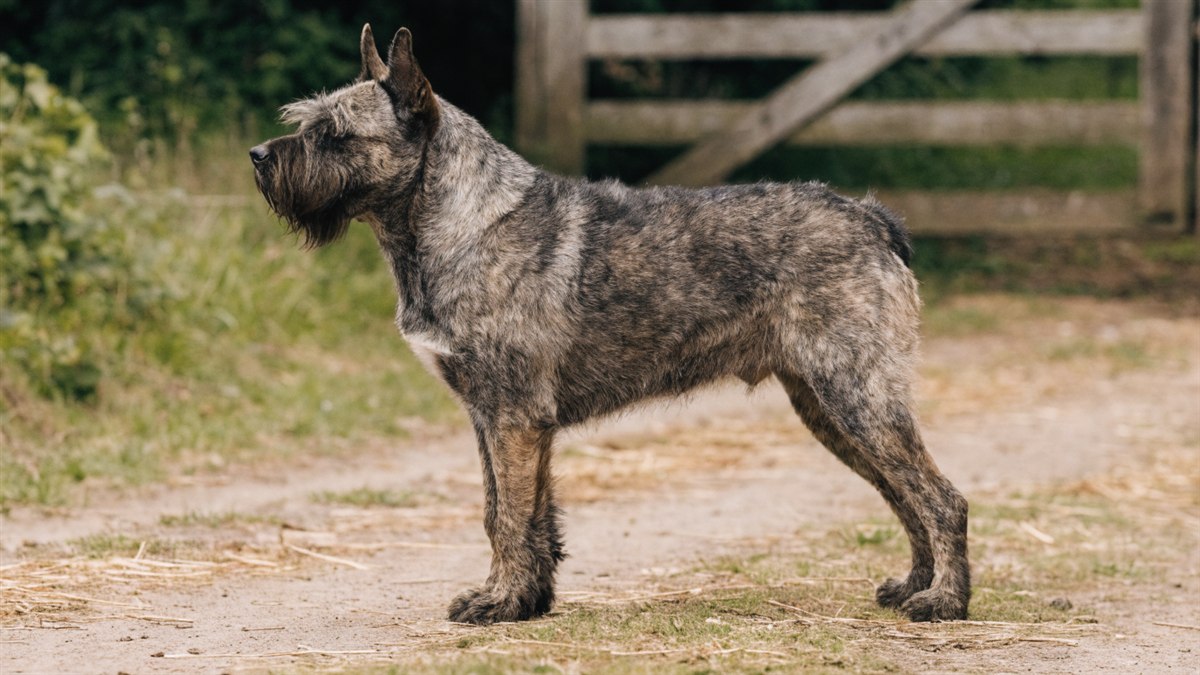
The Bouvier des Ardennes is a rare Belgian cattle dog of medium size, 56 to 62 cm and 28 to 35 kg for males, carrying a harsh tousled double coat about 6 cm long over a very dense undercoat. FCI-Standard No. 171 describes it in one line: a hardy strong dog of medium size which makes no concessions to elegance.
Read the standard rather than the marketing. FCI-171 was published on 22 March 2002 from an official valid text dated 25 October 2000, and its own opening words are plain about the dog's purpose. It is "originally a true cattle dog, used to the open air and to the tough work of rounding-up, guarding and driving cattle", classified in Group 1 Section 2, Cattle dogs, with a working trial. The FCI nomenclature entry records definitive acceptance on 13 June 1955, French as the official authentic language, and Belgium as the country of origin.
The Societe Centrale Canine puts the same idea in a sentence Bonbeno has not seen bettered anywhere in the breed literature. "Ce chien n'existe pas pour etre beau mais pour etre bon." This dog does not exist to be beautiful, but to be good.
The body, measured
| Measure | FCI-171 | UKC | AKC |
|---|---|---|---|
| Height, males | 56 to 62 cm, tolerance plus or minus 1 cm | 22 to 24.5 in (55.9 to 62.2 cm) | 22 to 24.5 in |
| Height, females | 52 to 56 cm, tolerance plus or minus 1 cm | 20.5 to 22 in (52.1 to 55.9 cm) | 20.5 to 22 in |
| Weight, males | 28 to 35 kg | approx 60 to 75 lb (27.2 to 34.0 kg) | 61.5 to 77.5 lb |
| Weight, females | 22 to 28 kg | approx 48 to 60 lb (21.8 to 27.2 kg) | 48.5 to 62 lb |
| Topcoat length | about 6 cm all over, shorter and flatter on the skull | about 2.5 in (6.4 cm) | medium length rough, tousled |
| Beard and moustache | 5 to 6 cm | about 2 in | not specified |
The three registries agree to within a rounding error, which is worth noting because they disagree on almost everything else about this breed United Kennel Club American Kennel Club. UKC recognised the breed on 1 July 2006 and revised the standard on 1 July 2009. The AKC publishes no breed standard for it at all; the breed has only "been recorded in the Foundation Stock Service since 2024", which is a record-keeping service and not a show classification.
Colour, which is easier than most breeds
Every colour is permitted except white. FCI-171 puts it in one clause: "All colours are acceptable except white and the colour of the undercoat varies according to the shade of the top coat." A white mark on the chest or the tips of the toes is tolerated without being sought after, and the usual coat colour is a mixture of grey, black and fawn hairs, or a grey running from pale to dark, or a brownish, red or straw coat. A white coat, or white anywhere other than the chest and toes, is a disqualifying fault.
The behaviour clause, which reads like a warning and a recommendation at once
FCI-171 gives the temperament in two sentences worth quoting whole. The breed "is playful, curious, agile and sociable and its main quality is its adaptable nature, so that it feels at ease in every situation", and it is "obstinate and extremely courageous when it comes to defending its people, its belongings and its territory". Both halves are true at the same time, and Indian buyers reading only the first half are the ones who get surprised.
A medium-sized, rustic, hardy Belgian farm dog with a harsh weatherproof coat, a dense undercoat that never thins out by season, an obstinate streak, and a global population that a peer-reviewed paper describes as only a few hundred animals. Almost none of that is compatible with an Indian metro flat, and the supply chain to get one legally into India does not exist.
This is not the Bouvier des Flandres, clause by clause
Two different breeds share the word Bouvier, the country Belgium, one Belgian breed club and one French breed club, and they are routinely confused. Set FCI-171 against FCI-191 side by side and the differences are large enough to settle the question in about a minute.
Start with the institutions, because they are the reason the confusion persists. In Belgium the breed club is the "Club Belge du Bouvier des Flandres et des Ardennes", registered with the national kennel club as URCSH number 0070, and it runs both breeds from one committee Belgische Club Belge du Bouvier des…. In France the club is the "Club Francais du Bouvier des Flandres et des Ardennes", and the heading on its own home page reads simply "CLUB du BOUVIER des FLANDRES";. When the breed's own institutions bury it inside another breed's name, an Indian buyer reading a listing site has no chance.
Bonbeno read both FCI standards as PDFs, confirmed the breed name printed inside each document, and compared them clause by clause. Our full guide to the sibling breed is at Bouvier des Flandres; this page will not repeat it.
| Clause | Bouvier des Ardennes, FCI-171 | Bouvier des Flandres, FCI-191 |
|---|---|---|
| Origin | Belgium | Belgium and France |
| Height, males | 56 to 62 cm | 62 to 68 cm, ideal 65 cm |
| Weight, males | 28 to 35 kg | approximately 35 to 40 kg |
| Ears | "Un-cropped." Erect straight pointed ears preferred. Cropped ears are a DISQUALIFYING fault | "Cropped in triangle, carried upright, set high." Un-cropped ears described second, as an alternative |
| Tail | "The majority are short-tailed with a good number born tailless." Where docking is prohibited the tail is left natural | "The tail should be docked in the first week of birth leaving 2 or 3 vertebrae." Where docking is banned the whole tail is admitted |
| Coat | Dry, coarse and tousled, about 6 cm, undercoat very dense whatever the season and more abundant in winter, half the topcoat's length | Very abundant, coarse dry and matt, about 6 cm, slightly tousled, undercoat fine and dense forming a waterproof covering |
| Trimming | "All trimming" is a DISQUALIFYING fault | Over-groomed, puffed up or shiny coat is a serious fault |
| Colour | All colours except white; often grey, black and fawn intermixed; brownish, red or straw permitted | Usually grey, brindle or overlaid with black; chocolate brown, pepper and salt and any pale fawn are DISQUALIFYING |
| General appearance | "Makes no concessions to elegance", judged without stacking | Sub-brachymorphic, power without clumsiness |
Sources: FCI-Standard No. 171 and FCI-Standard No. 191, both read as PDFs on fci.be Federation Cynologique Internationale.
The four differences that actually matter to a buyer
- Size. A male Flandres is up to 12 cm taller and roughly 5 kg heavier at the top of the range. Anyone shown a 40 kg dog and told it is an Ardennes is being shown the wrong breed Federation Cynologique Internationale.
- Ears. FCI-171 opens the ear clause with the single word "Un-cropped" and lists cropped ears among the disqualifying faults. FCI-191 opens with "Cropped in triangle". This is the sharpest divergence between the two documents Federation Cynologique Internationale.
- Colour. The Ardennes permits red, straw and brownish coats that the Flandres standard disqualifies outright. A fawn or red Bouvier is either an Ardennes or a Flandres that cannot be shown.
- Coat handling. FCI-171 makes "all trimming" a disqualifying fault, and the Belgian kennel club states plainly that the breed "n'a pas besoin d'etre trimee", does not need to be stripped, and therefore needs slightly less upkeep than the Flandres Societe Royale Saint-Hubert.
The head is the last tell. The Belgian kennel club describes the Ardennes as "moins lourd et robuste" than the Flandres, with a head that is "plus longue et moins massive", less heavy and less massive. FCI-191 by contrast opens its head clause with the words "massive appearance";.
Every Indian listing site that names a Bouvier at all names the Flandres. Bonbeno searched five of them for the Ardennes and found nothing, then ran the identical search for the Flandres and got ten pages back. A seller in India who offers you a Bouvier des Ardennes is, on the balance of evidence, offering you something else, and the four points above are how you check without leaving the room.
Ears and tail: the one breed standard that Indian law does not fight
FCI-171 requires uncropped ears and defers the tail to national law, so an Indian-bred Bouvier des Ardennes can satisfy its own breed standard in full. That is unusual, and it is the opposite of the position this site found for the Bouvier des Flandres.
Here are the two clauses as printed in FCI-Standard No. 171.
"Un-cropped. Set high, triangular, rather small. When flattened, the tip should not reach further than the outer corner of the eye. Erect, straight pointed ears are preferred. Straight ears with tips falling forward or half-pricked ears, folded outwards are equally acceptable." Under DISQUALIFYING FAULTS the standard lists: "Ears: Cropped or flat against the cheeks."
"The majority are short-tailed with a good number born tailless. The tail is thick and set high. Short tail: Follows the topline. In countries where docking is prohibited, the tail should be left natural." Under DISQUALIFYING FAULTS: "Tail: Vertical whip tail or curled tail."
Read the ear clause first. It does not merely permit natural ears; it opens with the word "Un-cropped", and it then makes cropping a disqualifying fault. Compare FCI-191, whose ear clause opens "Cropped in triangle, carried upright, set high, very mobile; a crop proportioned to the head size is recommended", and only then describes uncropped ears. Two Belgian cattle dogs, two standards revised on the same date of 25 October 2000, opposite instructions on the same organ.
Indian law prohibits both procedures, and here is the clause
Tail docking and ear cropping are forbidden to Indian breeders by the Second Schedule, Part II, paragraph 6(8) of the Prevention of Cruelty to Animals (Dog Breeding and Marketing) Rules 2017, notified as G.S.R. 496(E) by the Ministry of Environment, Forest and Climate Change on 23 May 2017. Bonbeno downloaded the gazette PDF, extracted it with pypdf and read the clause rather than a summary of it.
"There shall be no tail docking, ear cropping de-barking, de-clawing, branding, dyeing, injecting substances to enhance visual appeal, performing a surgery or procedure to camouflage or hide any defect or infirmity or any other kind of mutilation of any body part of the pup and any change of appearance by artificial means is strictly forbidden."
The Second Schedule is headed "[See rules 5(2) and 6]", Part II is titled "GENERAL REQUIREMENTS TO BE ADHERED TO BY BREEDERS", and paragraph 6 is headed "Common breeding techniques";. Say which of the two numbering systems you are quoting, because the Rules number clauses twice and there is also a Rule 6 in the body of the Rules themselves.
Why this breed escapes the problem
Neither prohibited procedure is required by FCI-171. Cropping is a disqualifying fault, so an Indian breeder who complies with paragraph 6(8) is also complying with the standard. Docking is handled by an explicit national-law carve-out, "In countries where docking is prohibited, the tail should be left natural", so the natural tail is the correct tail in India by the standard's own words Prevention of Cruelty to Animals.
There is a second reason, and it is genetic rather than legal. This breed frequently produces its own short tail. FCI-171 says most are short-tailed with a good number born tailless. The Belgian kennel club says the breed "nait generalement sans queue ou avec une queue tronquee", is generally born without a tail or with a shortened one, and contrasts that directly with the Flandres, where the tail used to be cut. The AKC adds the practical detail: the breed "may produce both naturally full or naturally bob tail pups in the same litter";.
The one clause an Indian breeder still cannot follow
UKC instructs that "Rear dewclaws should be removed";. Paragraph 6(8) forbids "any other kind of mutilation of any body part of the pup" and "any change of appearance by artificial means";. Those two sentences cannot both be obeyed. FCI-171 avoids the collision by describing rather than instructing: its hindquarters clause simply reads "No dew claws";.
Natural ears, either erect or half-pricked and folded outwards, both acceptable. A short or absent tail that is congenital rather than surgical, which a vet can usually tell from the tip. And no evidence of trimming anywhere on the coat, because FCI-171 disqualifies all of it.
The breed did nearly die out, and the sources disagree about when
Every serious source agrees the Bouvier des Ardennes came close to extinction and was rebuilt from a handful of farm dogs. They do not agree on the decade, and the honest thing to do is print the disagreement rather than pick the tidiest date.
The one hard number comes from the pedigree file, not from the history section of any breed page. A KU Leuven study of 23 Belgian breeds, using genealogical data supplied by the Belgian studbook covering registrations from 1965 to 2013, records 4 founders for the Bouvier des Ardennes, against 509 for the Bouvier des Flandres and 2,286 for the German Shepherd. Four animals. That figure is what "nearly extinct" actually means in this breed's case.
| Source | When the breed collapsed | How it was rebuilt |
|---|---|---|
| FCI-Standard No. 171 | Disappearance of Ardennes farms plus the reduction in milking herds, no decade given | Around 1985 colostrum collection from milking herds led cynophiles to discover a few survivors, more or less typical. By about 1990 breeders worked to the standard. A separate line transplanted north around 1930 was found by the official cynophile authorities only in 1996 |
| Societe Centrale Canine (France) | "Pratiquement disparu apres la seconde guerre." The last dog entered in the Belgian studbook is thought to have died around 1976 | Yves Dambrain, a judge of the Belgian canine society, toured Ardennes farms looking for dogs showing the type, and selected the present stock, which the SCC calls still heterogeneous |
| Societe Royale Saint-Hubert (Belgium) | No date given; the breed is said to date from about 1700 from crosses of local breeds | In 1996 dogs believed to be Ardennes cattle dogs were found in the Antwerp region, and rebuilding followed |
| American Kennel Club | "After WW2, modernization and decrease of farms left the Bouvier des Ardennes nearly extinct" | No detail given; the breed entered the AKC Foundation Stock Service in 2024 |
| Stee and colleagues, J Vet Intern Med 2023 | "The breed almost became extinct at the beginning of the 20th century" | The current population "originates from just a few individuals that were discovered in Belgian farms in 1985", and Bouvier des Flandres and Belgian Malinois were used to strengthen the bloodlines in the early 21st century |
Sources in order: Societe Centrale Canine Societe Royale Saint-Hubert American Kennel Club Stee K, Van Poucke M, Pumarola M.
Which parts are settled
- Settled: the rediscovery happened in Belgium, on farms, and 1985 is the date three independent sources give for it Wikipedia, Bouvier des Ardennes Stee K, Van Poucke M, Pumarola M.
- Settled: the surviving stock was tiny. Four founders in the Belgian pedigree file is a primary-source figure, not an estimate.
- Settled: other Belgian Bouvier types did not survive. The Bouvier de Roulers, the Bouvier de Moerman and the Bouvier de Paret are named as lost.
- Not settled: whether the collapse dates to the early 20th century, to after the Second World War, or to the post-war mechanisation of Ardennes farming. The sources above give all three.
- Not settled: the breed's origin before the collapse. The Belgian kennel club says about 1700 from local crosses, Wamiz says the early 1800s, and Desmond Morris via Wikipedia says the breed was established after 1910 by crossing Bouvier des Flandres with Belgian Malinois and perhaps Briard Wamiz UK, Bouvier des Ardennes Wikipedia, Bouvier des Ardennes.
The one named person, and the limits of what is verified
The Societe Centrale Canine, the French national kennel club, names Yves Dambrain as the man who did the rebuilding work, describing him as a judge of the Belgian canine society who undertook a considerable effort to reconstitute the breed by touring Ardennes farms in search of dogs showing the required type. Bonbeno reports that because a national kennel club published it under its own name. Note one flaw in the same sentence: the SCC glosses the Belgian canine society as "NHSB", which is the abbreviation of the Dutch studbook, not the Belgian one. Treat the attribution as the club's, not as independently confirmed.
How many are alive now
No census exists. The only published figure comes from the 2023 veterinary paper, which describes "the current, limited Bouvier des Ardennes population (estimated to be only few hundreds individuals in the world)" and attributes it in square brackets to "unpublished data, Club Belge du Bouvier des Flandres et des Ardennes";. That is a breed-club estimate reported in a journal, not a count, and this page will not upgrade it into one. What can be counted is registrations, and the next section does exactly that.
FCI-171's history says the definitive Belgian text of 1923 was "published by the FCI on June 16, 1963". The FCI's own nomenclature entry for breed 171 gives the date of acceptance on a definitive basis as 13 June 1955. The two are eight years apart, in documents on the same website, and Bonbeno cannot reconcile them. The French text on the Belgian kennel club's site reproduces the 1963 date, so it is not a translation error.
How rare is rare: Belgian and French studbook numbers
The Belgian studbook averaged 20 Bouvier des Ardennes puppies a year across 2003 to 2012, and the French LOF registered 14 in 2016 and 16 in 2017. Put a familiar breed in the same table and the scale becomes readable: France registered 11,049 German Shepherds in the year it registered 16 Ardennes.
These are the two national studbooks that matter for this breed, because Belgium is where it lives and France is the only other country registering it in any number. Both figures come from primary sources rather than breed-page prose.
| Breed | Mean puppies per year | Dogs in the pedigree file | Number of founders |
|---|---|---|---|
| Bouvier des Ardennes | 20 | 281 | 4 |
| Bouvier des Flandres | 513 | 9,452 | 509 |
| Border Collie | 875 | 13,142 | 1,024 |
| Labrador Retriever | 773 | 13,148 | 1,011 |
| German Shepherd | 1,765 | 30,622 | 2,286 |
Read the last column across. The Bouvier des Ardennes has 4 founders where the Bouvier des Flandres has 509 and the German Shepherd has 2,286, and the whole Belgian pedigree file for the breed holds 281 dogs. Against the national picture, Belgium's studbook registered 16,036 puppies in 2023 and 22,494 in 2017, so 20 Ardennes puppies a year is somewhere between one in 800 and one in 1,100 of everything Belgium registers.
| Breed | 2016 | 2017 | Confirmations 2017 |
|---|---|---|---|
| Bouvier des Ardennes | 14 | 16 | 6 |
| Bouvier des Flandres | 333 | 285 | 55 |
| Border Collie | 2,247 | 2,126 | 605 |
| Berger Allemand (German Shepherd) | 10,964 | 11,049 | 1,890 |
| All Group 1 breeds | 49,305 | 52,763 | 9,863 |
| Whole LOF, all groups | 227,993 | 235,312 | 53,602 |
Divide it out. The Bouvier des Ardennes accounted for 16 of 235,312 French registrations in 2017, which is 0.0068 percent, or about one dog in every 14,707 registered in France that year. The Flandres was registered 17.8 times more often. The SCC does not even print a confirmations-to-registrations ratio for the breed, because it applies that ratio only to breeds with 100 or more registrations in the year.
One arithmetic warning about that source
The SCC article's prose says the Group 1 total was "52 673 enregistrements" while its own table prints 52,763 for the same cell. Ninety dogs, two transposed digits, in a document by the Centrale Canine's own geneticist. Bonbeno uses the table figure and flags the discrepancy rather than quietly averaging it.
There is no Indian number at all, and here is the control
The Kennel Club of India reports to the FCI every year, and the FCI publishes the returns. India registered 32,219 puppies with the studbook in 2025 and 36,616 in 2024, against a cumulative studbook total of 1,425,001 dogs since the register began. Those returns are national totals, not breed-level ones, so they cannot prove a zero for the Ardennes. What they do establish is the size of the register the breed would have to appear in, and the scale of the show system around it: 126 CAC all-breed shows, 2 CACIB shows, 28 FCI judges and 342 individual members in 2025.
The Royal Kennel Club in Britain is a cleaner test, because it publishes a complete Breeds A to Z on one page. Bonbeno retrieved that index page and searched the returned markup: "Bouvier" appears twice and both are the Bouvier Des Flandres entry, filed under Working. "Ardennes" appears zero times. The alphabetical run goes Borzoi, Boston Terrier, Bouvier Des Flandres, Boxer, with nothing in the slot where an Ardennes entry would sit, while control breeds Beauceron, Briard and Border Collie are all present. The controls pass and the absence is real: Britain recognises one Bouvier, not two.
Twenty puppies a year in the breed's home country, sixteen a year in France, none recognised in Britain and none traceable in India. Whatever an Indian seller tells you, there is no plausible route by which a Bouvier des Ardennes puppy reaches a pet shop in Jaipur. The section on availability sets out what those pages are actually selling.
Bouvier des Ardennes price in India: there is no such figure
No published Bouvier des Ardennes price in India exists, and Bonbeno could not find one rupee figure attached to the breed anywhere on an Indian domain. The two prices the ranking pages do publish are foreign: 1,500 to 3,000 US dollars from a breed database, and 400 to 600 pounds from a British breed site.
Say that in the first line rather than the last, because the reader came here for a number and deserves to know immediately that the number does not exist. What follows is every published figure Bonbeno could open, in its own currency, with the arithmetic done.
| Source | Published figure | Currency as printed | Divides by 84.38? | Divides by 74? |
|---|---|---|---|---|
| Dog Breeds List, the number one Indian result | 1,500 to 3,000 | US dollars, stated on the page | Not applicable, already USD | Not applicable |
| Wamiz UK | 400 to 600 | Pounds sterling | Not applicable | Not applicable |
| Any Indian listing site | None found | None | No figure to test | No figure to test |
| Justdial category pages for the breed | None printed | None | No figure to test | No figure to test |
The number one organic result in India for this query is a US breed database that prints its price in dollars and explains why: "Ardennes Cattle Dogs are still a somewhat rare breed in the United States, this can make it both difficult and expensive to find a puppy to buy". The same page rates the breed zero stars on adaptability, apartment friendliness, barking, child friendliness, exercise needs, grooming, health issues, intelligence, shedding, trainability and watchdog ability, lists its popularity rank as blank for every year from 2015 to 2022, and cites exactly one reference, a YouTube video. Wamiz gives 400 to 600 pounds and adds that monthly feeding will run about 30 pounds.
Calibration: what a real Indian purebred price looks like
For scale, one of the same Indian listing sites publishes a three-tier structure for the Labrador Retriever: Rs 30,000 to Rs 60,000 for basic quality, Rs 60,000 to Rs 90,000 for a Kennel Club of India registered dog, and Rs 90,000 to Rs 1,20,000 for a champion bloodline, with the identical band repeated across Hyderabad, Bangalore, Delhi, Chennai, Lucknow, Mumbai, Jaipur and Pune. That is what a breed with a real Indian supply chain looks like on a price page. Our Labrador Retriever guide takes those numbers apart. Nothing remotely comparable exists for the Ardennes.
The only honest costing
If a Bouvier des Ardennes ever reaches India it will arrive as a returning resident's pet under an import authorisation, not as a purchase. The purchase price would then be whatever a Belgian or French breeder charges in euros, plus flights, crate, health certification, DGFT paperwork and quarantine at one of seven permitted ports. Bonbeno has no verified Belgian or French breeder price and will not invent one. What the law permits and forbids is set out in the next section. The full route is set out in how to import a dog to India.
Ask for the FCI or KCI pedigree number, the sire and dam registration numbers, and the country of registration, before you discuss money. A breed registering 16 puppies a year in France and 20 a year in Belgium can be traced by paperwork in an afternoon. If the paperwork does not exist, the dog is not this breed, and the price is irrelevant.
Where the rupee figures near this breed actually come from
Open the Indian pages that print a rupee figure beside the word Bouvier and read the breed label beside each price. On the biggest of them, not one of the eight priced puppies in the Bouvier carousel is a Bouvier of either kind.
There are rupee prices on the Indian internet within one click of the word Bouvier, and they are not attached to a Bouvier at all. Puppiezo's page is titled "Bouvier Des Flandres Puppies For Sale", and its block headed Available Bouvier Des Flandres Puppies For Sale lists eight animals with prices. Bonbeno opened the page and read the breed label printed beside each one.
| Price shown | Breed label printed beside it | Age shown |
|---|---|---|
| Rs 98,999 | Maltipoo | 8 weeks |
| Rs 92,599 | Poodle | 8 weeks |
| Rs 92,599 | Poodle | 8 weeks |
| Rs 94,999 | Cane Corso | 8 weeks |
| Rs 1,20,000 | Goldendoodle | 8 weeks |
| Rs 98,999 | Maltipoo | 8 weeks |
| Rs 76,499 | Rottweiler | 8 weeks |
| Rs 98,999 | Doxiepoo | 8 weeks |
Not one of the eight is a Bouvier of either kind. The named dogs on the page are Fizey, Kuzo, Dugu, Kazuka, Doir, Samy, Tugi and Yoki, and every one is priced at 8 weeks of age. Asia Pets separately prints Rs 50,000 to Rs 1,00,000 against the Flandres. None of these is a Bouvier des Ardennes price, and Bonbeno will not present any of them as one.
Run both conversion tests on them anyway, because Indian pages routinely publish a dollar list run through one exchange rate.
- At 84.38 to the dollar: Rs 92,599 divides to 1,097.40, Rs 94,999 to 1,125.85, Rs 1,20,000 to 1,422.14, Rs 98,999 to 1,173.25 and Rs 76,499 to 906.60. Not one lands on a round dollar amount.
- At 74 to the dollar: the same five divide to 1,251.34, 1,283.77, 1,621.62, 1,337.82 and 1,033.77. Again not one is round.
- Conclusion: these are rupee-native charm prices, not a converted American list. Every one ends in 599, 999, 499 or a round lakh, which is how a shop prices, not how a converter rounds.
This exact figure appears three times on the single Bouvier des Flandres page above, attached to two Maltipoos and a Doxiepoo, and it has been caught on ten separate pages of the same Indian listing site attached to whichever puppy happens to be in stock. It divides to 1,173.25 dollars at 84.38 and to 1,337.82 at 74, so it is not a conversion of anything. If you are quoted Rs 98,999 for a Bouvier des Ardennes, you are being quoted the shop's default number for a dog it does not have.
Is anyone in India actually offering a Bouvier des Ardennes?
No. Bonbeno searched the Indian listing sites that sell a Bouvier des Flandres, ran the identical search for the Flandres as a control, and found that not one of them carries an Ardennes page. The Indian pages that do name the breed are auto-generated category shells and print-on-demand ebooks.
An absence is worthless without a control, so here is the pair of searches, run in the same session on 23 August 2026.
| Query | Result | Reading |
|---|---|---|
| "bouvier des ardennes" price, restricted to mrnmrspet.com, asiapets.in, puppiezo.com, pethouse.co.in and supertails.com | 0 results | Would be meaningless on its own |
| "bouvier des flandres" price, the same five sites, same session | 10 results across puppiezo, asiapets and mrnmrspet, including city pages for Kalimpong, Solan, Poonch, Tiruppur and Mal Bazar | The search works. The zero is real |
| labrador retriever price in india, India-located web search | 8 Indian price and listing pages, all carrying rupee figures | The general search works too |
Those five domains between them publish a Bouvier des Flandres page, a Flandres product page with prices, and dozens of Flandres city pages down to Mal Bazar in the Dooars. None of them has heard of the Ardennes.
What the Indian SERP is actually made of
Bing India returned a genuine results page for "bouvier des ardennes price in india", HTTP 200, about 2,390 results. Positions one and three were Amazon.in print-on-demand ebooks with titles like "Bouvier Des Ardennes: Comprehensive Training Guide and Cost", which Bing itself flagged "Missing: india". Position two was a Justdial auto-generated page. Positions four to ten were APMC mandi price boards, broiler and poultry rate sheets, a livestock marketplace and an agricultural commodity price site, each flagged by Bing as "Missing: bouvier des ardennes". When a search engine has to fill seven of ten slots with wheat and chicken prices, the commercial query has nothing to match.
The Justdial pages, read to the end
Justdial publishes "Popular Pet Shops For Bouvier Des Ardennes Dog" pages city by city and even neighbourhood by neighbourhood, all under one category number, nct-13824988. Bonbeno opened the Jaipur one. Four things in it settle what it is.
- One of the ten listings is in Jaipur. The rest are in Gurgaon, Agra, Faridabad, Noida, Delhi, Sirsa, Jhansi, Moradabad and Roorkee.
- Not one listing has Bouvier in its own categories. Their actual listed categories are Dog Trainers, Kennel Services, Pet Product Dealers, Pet Shops For Labrador Dog, Pet Shops For Indian Bully Dog, Pet Clinics, Veterinary Clinics, Pet Shops For Bolognese Dog and Pet Shops For CA Me Mallorqui Dog.
- The reviews are about other animals. The three shown mention a Labrador puppy, a vet visit and pet food. None mentions a Bouvier.
- One listing's thumbnail is served from the Shih Tzu category folder, and the page's own generated advice says the breed's ears need cleaning because infections "can be common in breeds with floppy ears". FCI-171 prefers erect ears and makes ears flat against the cheeks a disqualifying fault. The text was not written about this dog.
The same pattern shows up in a rehoming form on an Indian adoption site, where "Bouvier des Ardennes" appears in an alphabetical breed dropdown between Bolognese and Bouvier des Flandres. A dropdown is a list of options, not a list of dogs.
Why no lawful supply chain can form
Indian import law closes the commercial route completely. DGFT Trade Notice No. 22/2022-23, dated 19 December 2022, classifies mammals under ITC(HS) 01061900 as Restricted, and Policy Condition (7) permits the import of dogs for only three purposes: a pet dog with a valid pet book and records in the importer's name, research by an organisation with a CPCSEA recommendation, and internal security by the Defence and Police Force. Policy Condition (8) states that "Import of commercial dogs for breeding or any other commercial activities other than the purposes mentioned above is not permitted", and paragraph 6 adds that "any applications for trading/breeding purposes, or applications made on behalf of some another person/entity shall be duly rejected";.
Two further constraints in the same notice. Permanent import as passenger baggage without a DGFT authorisation is open only to a person transferring residence to India after two years of continuous stay abroad, for up to two pets. And animals may enter only through the airports and seaports of Delhi, Mumbai, Chennai, Hyderabad, Bengaluru and Kolkata and, since October 2024, Kochi airport, with quarantine where required and an advance NOC from the Animal Quarantine and Certification Service seven days before travel Department of Animal Husbandry….
A breed with 20 registered puppies a year in Belgium and 16 in France, and an Indian import regime that rejects every breeding or trading application outright. No lawful commercial supply chain can form. Any Indian offer of a Bouvier des Ardennes puppy is therefore either a different dog, a crossbreed, or an advance payment against a dog that does not exist.
Monthly cost of keeping a 30 kg double-coated working dog in India
Budget the monthly cost in two parts: the part with published Indian prices, which is grooming and hygiene, and the part you must price locally, which is food and veterinary care. A 30 kg dog on a medium activity level eats about 10.7 kg of large-breed dry food a month, and a large-breed full groom in an Indian salon runs Rs 1,500 to Rs 3,000 a visit.
Bonbeno will not publish an invented rupee total. Below is what is actually documented, and what you have to fill in yourself.
| Item | Documented figure | Source status |
|---|---|---|
| Large-breed full groom | Rs 1,500 to Rs 3,000 per visit, Rs 2,000 to Rs 4,000 or more at giant size | Published Indian salon survey |
| Premium Gurugram salon full groom | Rs 1,850 to Rs 2,200, basic bath from about Rs 900 | Published |
| Tier-2 city discount | Roughly 20 to 30 percent below metro rates | Published |
| Groom frequency for a double-coated breed | Every 8 to 12 weeks, plus extra sessions in shedding season | Published |
| De-shedding add-on | Rs 200 to Rs 500 | Published |
| Medicated or anti-tick bath | Rs 1,000 to Rs 1,500 | Published |
| Nail trimming | Rs 200 to Rs 300 | Published |
| Ear cleaning | Rs 250 to Rs 400 | Published |
| Food, 30 kg dog, medium activity | 355 g a day, about 10.7 kg a month | Manufacturer feeding table, price not published |
| Routine veterinary care | No verified Indian figure for this breed | Not documented |
| Tick and flea prevention | No verified Indian figure | Not documented |
The grooming figures come from a 2026 Indian salon-pricing survey. Note one internal inconsistency in that source: its national table gives Rs 1,500 to Rs 3,000 for large breeds while its Bengaluru section says "Large breeds: Rs 3,000 onward". Take the higher band if you live in a metro.
Food, in kilograms rather than rupees
Royal Canin India's Maxi Adult daily feeding table covers adult large-breed dogs from 26 to 44 kg and gives, for a 30 kg dog, 307 g a day at low activity, 355 g at medium and 404 g at high. At 34 kg, near the top of the male range, it is 337 g, 390 g and 443 g. Multiply the medium figure by 30 and a 30 kg dog eats about 10.7 kg a month, which is a little over one 10 kg bag or roughly seven tenths of a 15 kg bag.
This is a working cattle dog with, in the words of one breed database, "high energy levels", so the medium-to-high column is the realistic one for a dog getting proper exercise. That takes a 34 kg male to about 13.3 kg of food a month. Bonbeno has no verified current Indian shelf price for a 15 kg bag and will not estimate one; take the per-month kilogram figure to your own retailer and multiply.
The only published feeding cost anywhere in the ranking set is Wamiz's British figure of about 30 pounds a month, which tells an Indian reader nothing except that the dog is not cheap to feed.
The three costs specific to this breed
- A KCNJ10 DNA test on both parents. The single peer-reviewed paper on the breed identifies an autosomal recessive spinocerebellar ataxia with a 15 percent allele frequency in a sample of 63 healthy Belgian dogs. That test is not optional in this breed, and it is a one-off cost carried by the breeder, not by you.
- Anti-tick baths rather than ordinary ones. A dense undercoat on a dog bred for Ardennes weather is a tick habitat in India, and the medicated bath line item is Rs 1,000 to Rs 1,500 rather than Rs 500 to Rs 1,250.
- Nothing for hand stripping. The Belgian kennel club states that this breed does not need to be stripped, and FCI-171 disqualifies all trimming, so the one grooming service Indian salons genuinely struggle to supply is a service this breed does not want Federation Cynologique Internationale.
Grooming and hygiene are documented and modest for a coated breed of this size, because the coat is meant to be combed rather than styled. Food is the big recurring number and you must price it locally. What no Indian owner should budget for is a purchase price, because there is nothing lawful to buy.
Heat tolerance: rated 1 out of 5, argued from the standard and the data
Rate the Bouvier des Ardennes 1 out of 5 for heat tolerance in India. The argument is mechanical. FCI-171 specifies a double coat whose undercoat is "very dense whatever the season, and even more abundant in winter", built for a home region that recorded 59 days above 30 C in ten years, against Chennai's 2,522.
Bonbeno queried NASA POWER by explicit latitude and longitude, never by place name, for 3,653 consecutive days from 1 January 2016 to 31 December 2025. The API echoes the requested coordinates back in its response, which is checked against the request, so no city can be substituted by accident. The origin point is 50.0000 N, 5.7167 E, about half a kilometre from the centre of Bastogne in the Belgian province of Luxembourg, whose published coordinates are 50.00417 N and 5.7200 E.
| Location | Mean air temp | Days max 30 C or above | Days max 35 C or above | Days above 30 C at 60 percent humidity or more | Nights never below 25 C |
|---|---|---|---|---|---|
| Belgian Ardennes at Bastogne (50.0000 N, 5.7167 E) | 9.5 C | 59 | 6 | 6 | 0 |
| Pune (18.5204 N, 73.8567 E) | 23.8 C | 1,323 | 784 | 265 | 12 |
| Bengaluru (12.9716 N, 77.5946 E) | 23.9 C | 1,800 | 544 | 795 | 13 |
| Kolkata (22.5726 N, 88.3639 E) | 26.0 C | 2,293 | 819 | 1,877 | 1,743 |
| Mumbai (19.0760 N, 72.8777 E) | 26.8 C | 2,359 | 1,052 | 1,061 | 1,047 |
| Delhi (28.6139 N, 77.2090 E) | 25.3 C | 2,385 | 1,332 | 861 | 1,246 |
| Chennai (13.0827 N, 80.2707 E) | 28.0 C | 2,522 | 878 | 2,341 | 1,995 |
Two headline ratios. Chennai recorded 2,522 days at or above 30 C against the Ardennes' 59, which is 42.7 times as many out of the same 3,653 days. Delhi crossed 35 C on 1,332 days against the Ardennes' 6, which is 222 times as many. The Ardennes' hottest reading in ten years was 38.8 C. Delhi's was 48.5 C.
A methodological note, because two Ardennes towns return one answer
Bonbeno also queried Saint-Hubert at 50.0269 N, 5.3742 E, 27 km west. It returned identical statistics to Bastogne, including the same 385.99 m elevation, because both points fall inside a single NASA POWER grid cell. That is a limitation of the dataset's resolution and it is reported rather than hidden. An independent check exists: the Royal Meteorological Institute's 1981 to 2010 normals for Bastogne give an annual mean of 8.2 C, a July mean daily maximum of 21.4 C and a January mean daily minimum of minus 2.4 C. Our decade of satellite data gives 9.5 C, which is what a warmer recent decade should look like against a 1981 to 2010 baseline. The two sources agree.
The coat is not adjustable, and the standard says so twice
FCI-171 states the coat's purpose in its own words: "The coat must allow the dog to live outside, to guard and drive herds, however extreme its local atmospheric conditions may be." It then specifies an undercoat that is "very dense whatever the season and even more abundant in winter, protecting the dog from extremes of weather", with a length about half that of the roughly 6 cm topcoat. The phrase to notice is "whatever the season". FCI-191 makes lack of undercoat a serious fault in the Flandres; FCI-171 makes it a disqualifying fault in the Ardennes.
That coat was specified for a place that dropped to minus 15.8 C in our ten-year window. UKC describes the same coat as "dense, double and completely weatherproof". Royal Canin's Indian page repeats the point without drawing the obvious conclusion for its Indian readers, saying the coat is "dense and weatherproof, allowing them to guard and drive herds no matter how harsh the weather";.
Body mass, and why the Ardennes is only slightly better placed than the Flandres
A dog loses heat across its skin, and skin area scales roughly with mass to the power of two thirds, so skin area per kilogram scales with mass to the power of minus one third. Take the breed's 28.25 kg midpoint against a 6.5 kg terrier: the cube root of 28.25 divided by 6.5 is 1.63, so the Ardennes has about 38.7 percent less skin per kilo of body through which to dump heat. Against a 10 kg dog it still has about 29 percent less.
Against its bigger cousin the arithmetic runs the other way, and it is worth doing because the two breeds get compared constantly. A 37.5 kg Bouvier des Flandres midpoint against a 28.25 kg Ardennes midpoint gives a cube root of 1.099, so the Flandres has about 9 percent less skin per kilo than the Ardennes. Nine percent of one term in the equation does not move the rating. The Ardennes is a slightly smaller dog wearing the same coat in the same weather.
Pune and Bengaluru are the least punishing, mainly because their nights still cool: 12 and 13 warm nights in ten years against Chennai's 1,995. Delhi is the dry-heat extreme at 1,332 days above 35 C. Chennai, Kolkata and Mumbai combine daytime heat with humidity that blunts panting and nights that never recover. None of the six is a climate this coat was specified for, and the Ardennes' own home region managed six humid-hot days in a decade against Chennai's 2,341.
The monsoon problem: a dense undercoat in a tick season
A dog with an undercoat half the length of a 6 cm topcoat, dense in every season, is a tick habitat in an Indian monsoon. A survey of 525 Indian dogs found ticks on 80 percent in Mumbai and 75.3 percent in Delhi, and nearly half the whole sample carried at least one tick-borne pathogen.
Panting is evaporative cooling, so it fails as the air fills with water. That is why the humid column in the climate table matters more than the temperature column. Chennai recorded 2,341 days that were both above 30 C and at 60 percent relative humidity or higher, against six in the Belgian Ardennes across the same 3,653 days. On those days a panting dog is moving air that cannot accept much more moisture, and a dense undercoat is holding a layer of warm wet air against the skin.
Ticks, with denominators
The best Indian evidence is a 2011 study in Parasites and Vectors that sampled 525 dogs across four climatic zones using both microscopy and PCR.
| Location | Dogs sampled | Carrying ticks | Ehrlichia canis | Hepatozoon canis |
|---|---|---|---|---|
| Mumbai, tropical | 162 | 80% | 27.2% | 43.8% |
| Delhi, humid subtropical | 162 | 75.3% | 39.5% | 38.3% |
| Sikkim, subtropical highland | 101 | 17% | 0% | 0% |
| Ladakh, montane | 100 | 11% | 0% | 24% |
| All four sites | 525 | 53% (278 dogs) | 20.6% | 30% |
Check the arithmetic: 162 plus 162 plus 101 plus 100 is 525, and 278 of 525 is 53.0 percent. Across the whole sample, 261 of 525 dogs, or 49.7 percent, were PCR positive for at least one tick-borne pathogen, and dogs carrying ticks were 3.3 times more likely to be positive than dogs without. Infected dogs had a mean packed cell volume of 29.7 percent against 35.8 percent in uninfected dogs.
Two caveats belong with those figures and this page prints both. The dogs were stray and refuge animals, not owned pets on preventives, so the prevalences are an upper bound for a well-managed household dog. And sampling ran from June to September 2008, the monsoon months, so the seasonal peak is baked into the numbers rather than measured against a dry-season control.
Why the coat makes this worse rather than neutral
Rhipicephalus was 100 percent of the ticks identified in Mumbai, Delhi and Ladakh, and Haemaphysalis appeared only in Sikkim. The brown dog tick attaches in ears, between toes, in the groin and along the neck, which on this breed are exactly the places FCI-171 specifies extra hair: "the auditory canal is protected by longer hairs which blend with those from the collar effect of backward sloping hairs around the neck", "the spaces between the pads are filled with very short hairs", and "the back of the thighs has longer hair making the breeches";. A tick under 6 cm of harsh topcoat and a dense undercoat is a tick you find late.
What to actually do in the monsoon
- Comb to the skin with a steel comb at least twice a week from June to September, working ears, ruff, breeches, armpits, groin and between the toes, not just the back.
- Brush the outer coat daily during heavy shedding so the undercoat does not felt against wet skin.
- Dry the dog properly after every wetting. A dense undercoat holds water for hours, and warm damp skin under a mat is where Indian pyoderma starts.
- Book the medicated or anti-tick bath rather than the standard one during tick season, which is a Rs 1,000 to Rs 1,500 line item rather than Rs 500 to Rs 1,250.
- Screen for tick-borne disease by PCR rather than by blood smear if the dog is dull, anaemic or off food. In the Indian study, blood smears found nothing at all in a sample where PCR found pathogens in half the dogs.
An Indian groomer looking at a big hairy dog in May will suggest taking the coat off. FCI-171 makes lack of undercoat a disqualifying fault and makes all trimming a disqualifying fault, and the undercoat is the layer that slows solar gain reaching the skin. Shaving a double coat removes insulation in both directions and exposes skin that has never seen Indian sun. Ask for the coat combed out and thinned by hand, not removed.
Temperament: adaptable and obstinate at the same time
FCI-171 gives the temperament in one balanced sentence and one warning sentence. The breed is "playful, curious, agile and sociable" with adaptability as its main quality, and it is "obstinate and extremely courageous when it comes to defending its people, its belongings and its territory". Both halves are true simultaneously.
The standard's own fault list tells you what the breed should not be. Timidity and indolence are faults; an aggressive or nervous dog is a disqualifying fault. A Bouvier des Ardennes that is either frightened or reactive is not showing breed type, it is showing a problem.
Where the sources agree
- High energy that needs a job. The AKC calls it "a high energy dog with intensity and enthusiasm" that requires "a home that makes effective use of such dedication". The Belgian kennel club says it suits people who want to work a dog hard.
- Territorial rather than generally suspicious. FCI-171 and UKC both frame the guarding as defence of family, possessions and territory rather than hostility to the world United Kennel Club.
- Stubborn under pressure. The French kennel club is blunt: you must take authority over this dog and be firm without being rough, "ce qu'il ne supporterait pas", which it would not tolerate. The AKC says the same in English, that discipline must come early "and without cruelty";.
- Built for outdoors. The Belgian club calls the breed ideal for people who live outside, because it was selected to live in the open air, while adding that it also likes close contact with its family.
Where the sources disagree, and it matters
| Question | One answer | The other answer |
|---|---|---|
| Can it live with other dogs? | Wamiz: "Probably best as an only dog in the home to prevent any aggression between pets", and notes dominance and same-sex aggression is known | Royal Canin: "settle relatively easily into homes with other pets, so long as they are introduced properly" |
| Is it easy to train? | Belgian kennel club: "vigilant, obeissant et facile a eduquer", watchful, obedient and easy to educate | French kennel club: "Patient et tetu", patient and stubborn, requiring firm authority; FCI-171: obstinate |
| Is it good with children? | Royal Canin: "known to be patient with children" | Wamiz: good with children in the family, wary of strange children, and "may tend to be too robust with toddlers" |
Sources in order Royal Canin India Societe Royale Saint-Hubert Societe Centrale Canine Federation Cynologique Internationale. None of these is a study. All of them are breed-page prose, and the honest reading is that a breed with a few hundred animals worldwide has no dataset behind any temperament claim. Weight the two national kennel clubs above the commercial breed sites, and note that even they disagree about trainability.
Who should not buy this dog in India
- Anyone in an apartment. Wamiz puts it plainly: "Not suited to being cooped up inside. Needs intense exercise so better suited to larger outside living spaces." The French kennel club says the breed will certainly prefer rural life to urban life, adapting only on condition of staying close to its owner.
- Anyone who is out all day. The same source records that the breed craves constant company and can be anxious when separated from its people for any length of time.
- Anyone buying a first dog. A hardy, territorial, obstinate working breed with no local breed club, no local rescue, no Indian veterinary familiarity and a documented inherited neurological disease is not a starter dog.
- Anyone who wants a guard dog and nothing else. Watchdog work is the easy part. This dog also needs daily physical and mental work, and the barking that Wamiz notes in under-exercised dogs is what an Indian housing society complains about first.
A household with real outdoor space in a cooler part of India, someone at home most of the day, experience of a working breed, and a genuine interest in giving the dog a job. Bengaluru or Pune with a garden beats Chennai with a balcony by a wide margin, and both are still a compromise against a climate the coat was never specified for.
Training: firm, early, and never confrontational
To train a Bouvier des Ardennes, take quiet authority early and keep every session short, varied and paid. The French national kennel club states the rule directly: be firm without being rough, because roughness is the one thing this dog will not tolerate.
Start with what the breed was selected for, because it explains the behaviour you will actually get. FCI-171 classifies the breed in Group 1 Section 2 "With working trial", meaning the FCI requires working qualification for its international titles rather than treating it as a show breed. Only the hardiest and most hardworking dogs "of a deliberately restricted population were retained to drive the herds", and during both World Wars the breed became the poacher's dog. That is a selection history for independent decision-making, not for compliance.
What works
- Start on day one, not at six months. The AKC advice for this breed is to impress good discipline "early and without cruelty".
- Pay generously and stop early. A dog the French kennel club calls patient and stubborn will outlast you in any contest of wills, so end each session while it is still winning.
- Give it a task, not just obedience. The AKC says the breed requires "a home that makes effective use of such dedication", and the Belgian club says it suits owners who want to work a dog hard.
- Socialise deliberately and constantly. With no Indian breed club, no local breed rescue and almost no chance of meeting another of its kind, every piece of social exposure a puppy gets has to be arranged by you.
- Train a reliable recall before anything else. FCI-171 records that off the lead "its ability to drive herds means that it often follows its owner, making sweeping semi-circles";. That is herding behaviour aimed at you, and in Indian street traffic it is dangerous.
What this breed resists
Confrontation, repetition and idleness, in that order. The FCI standard, the AKC and the Societe Centrale Canine all use the same word in different languages: obstinate, stubborn, tetu American Kennel Club Societe Centrale Canine. Only the Belgian kennel club calls the breed "obeissant et facile a eduquer", obedient and easy to educate. Three sources against one, and the three include the standard itself, so plan for the obstinate version and enjoy it if you get the easy one.
Under-exercised, the breed talks. Wamiz records that it barks in a territorial manner when guarding, and "can be quite excitable and barks if he doesn't get sufficient exercise", and that high energy without an outlet produces destructive tendencies. In an Indian housing society, barking is the complaint that ends the tenancy.
The one training input India cannot supply
The French kennel club says the breed's behaviour is simply better if it can have frequent contact with livestock. Almost no Indian pet home can arrange that. Substitute structured work: scent games, retrieve to hand, place and stay under distraction, cart or drag work in cool weather, and a daily problem to solve. Herding instinct that never gets used does not go away; it gets pointed at cyclists, cattle on the road, and children running.
Realistic timelines
| Age | What should be solid | What will still be hard |
|---|---|---|
| 8 to 16 weeks | Name, crate, toilet routine, handling of ears feet and coat, calm around household noise | Nothing is reliable yet; this is exposure, not obedience |
| 4 to 6 months | Sit, down, place, loose lead in quiet spaces, comb and brush accepted without a fight | Recall around movement; the herding urge switches on in this window |
| 6 to 12 months | Recall in a fenced space, settle on a mat, greeting visitors without guarding the gate | Adolescent testing; the obstinate streak peaks here |
| 12 to 24 months | Reliable recall outdoors, stable with strangers on the owner's terms, a real job it does weekly | Same-sex dog tolerance, which Wamiz flags as a known issue in this breed |
Never punish this dog physically. Two national kennel clubs and the AKC independently warn against it for this breed, and the standard makes a nervous dog a disqualifying fault. A rough hand on a territorial working breed produces exactly the temperament the standard rejects.
Daily exercise, and the Indian problem of when to do it
Budget a minimum of one hour of hard work a day, which is the only published figure for this breed, and understand that in most Indian cities you cannot deliver it in the middle of the day for eight months of the year.
The only quantified requirement Bonbeno could find is Wamiz's, which puts it at "a minimum of one hour jogging each day" and adds the line every owner of a working breed recognises: "You just cannot seem to tire out the Bouvier des Ardennes dog";. The French kennel club's version for city dwellers is regular exercise and long walks. The AKC calls it a high energy dog with intensity and enthusiasm.
FCI-171 describes what that hour should look like. "A fast free walk and a lively trot are the usual gaits. The Bouvier des Ardennes is not usually a galloper but it can spin round instantly, whatever its speed or gait", and "Because it is an active dog, the Bouvier des Ardennes rarely remains still";. This is a trotting, turning, working dog rather than a sprinter, so distance at a steady pace suits it better than a sprint at a park.
The window problem, quantified
In six Indian cities Bonbeno measured, the safe exercise window is narrow and in three of them the evening does not cool down at all.
| City | Days max 30 C or above | Nights that never fall below 25 C | Practical reading |
|---|---|---|---|
| Pune | 1,323 | 12 | Early morning and evening both usable most of the year |
| Bengaluru | 1,800 | 13 | Evenings genuinely cool; the best Indian option for this breed |
| Delhi | 2,385 | 1,246 | Pre-dawn only for four months; evenings stay hot |
| Kolkata | 2,293 | 1,743 | Evening recovery gone for nearly half the decade |
| Mumbai | 2,359 | 1,047 | Humidity, not temperature, is the limit |
| Chennai | 2,522 | 1,995 | No cool evening for 55 percent of nights in ten years |
The night column is the one almost nobody prices. A heavily coated dog that cannot dump its heat load overnight starts the next day already warm, and heat injury accumulates across days rather than arriving in one afternoon.
How to actually deliver the hour
- Split it. Forty minutes before sunrise and twenty after full dark, rather than one hour at any single time.
- Move the hard work to the cool months. In most of India, November to February is when a dog like this can do real distance. Build fitness then and maintain it in summer.
- Use the middle of the day for the brain. Scent work, food puzzles, shaping sessions and trick chains cost the dog effort and cost it no heat load.
- Walk on grass or soil, not tar. Road surface temperature in an Indian summer afternoon is a paw-pad injury before it is a heat problem.
- Carry water and stop early. A dog with a dense undercoat gives you less warning than a short-coated dog, because the coat hides the flank heave until it is pronounced.
Wamiz records excitable barking and destructive tendencies in Bouviers des Ardennes that do not get enough exercise, and the breed craves company besides. An Indian owner who cannot commit an hour a day, every day, in split shifts around the heat, should choose a different breed. Our Indian Pariah Dog guide covers a hardy, heat-adapted alternative that is genuinely available here.
Grooming: the breed standard bans the one service Indian salons cannot supply
Groom this coat with a comb, a stiff brush and nothing else. FCI-171 makes "all trimming" a disqualifying fault, the Belgian kennel club states outright that the breed does not need to be stripped, and that combination means the Indian grooming gap this site documented for harsh-coated terriers does not apply here.
Here is the coat clause as printed. The topcoat "must be dry, coarse and tousled, about 6 cm long over all the body but shorter and flatter on the skull", with a moustache and little beard 5 to 6 cm long, shorter dry slightly shaggy hair on the forearms, longer hair forming the breeches behind the thighs, and an undercoat "very dense whatever the season and even more abundant in winter" at about half the topcoat's length. Under disqualifying faults: "Coat: All trimming";. UKC says the same thing in American: "Disqualification: Any evidence of trimming of the coat";.
The Belgian kennel club settles the practical question in one sentence
"Cette race n'a pas besoin d'etre trimee et necessite donc un peu moins d'entretien que le Bouvier des Flandres." This breed does not need to be stripped and therefore requires slightly less upkeep than the Bouvier des Flandres. It adds that although the coat is rough, combing and brushing it well is enough. The French kennel club is equally specific about the tool: upkeep is easy and the harsh coat wants regular brushing, preferably with a stiff bristle brush. Royal Canin's key-facts box says "Requires moderate grooming";.
Why this differs from the sibling breed, and from the terriers
This site has published a specific Indian finding twice: hand stripping is taught on one Indian diploma with practical sessions in a single city, advertised in prose by one Jaipur salon, and priced on no Indian salon menu Bonbeno could find. For our Bouvier des Flandres, Airedale Terrier and Border Terrier guides, that absence is a real problem, because those coats want stripping to hold texture. For the Bouvier des Ardennes it is not a problem at all, because the standard forbids the service and the breed's own national club says it is unnecessary. The gap is real; this breed simply does not stand in it.
What the coat actually needs in India
| Job | How often | Available in India? | Indian cost |
|---|---|---|---|
| Comb to the skin with a steel comb | Weekly, twice weekly June to September | Yes, at home, and it is the job that matters most | A comb and twenty minutes |
| Brush the topcoat with a stiff bristle brush | Two or three times a week, daily in heavy shed | Yes, at home | Cost of the brush |
| Bath, force dry, nail and ear work | Every 8 to 12 weeks for a double-coated breed | Yes, on almost every Indian salon menu | Rs 1,500 to Rs 3,000 for a large-breed full groom |
| Medicated or anti-tick bath in tick season | As advised locally | Yes | Rs 1,000 to Rs 1,500 |
| De-shedding or carding to thin the undercoat | During the shed | Often unnamed on the menu; describe it rather than name it | Rs 200 to Rs 500 add-on |
| Hand stripping | Never | Rare in India, and irrelevant here | Not needed; FCI-171 disqualifies all trimming |
| Summer shave-down | Never | Widely offered | Refuse it |
Indian salon prices from a 2026 national survey; frequency for double-coated breeds from the same source; the trimming prohibition from FCI-171 and UKC United Kennel Club.
The three places to comb that owners skip
- Behind the ears and under the ruff, where FCI-171 specifies longer hairs protecting the auditory canal, blending into the backward-sloping collar of hair around the neck. This is the commonest mat site and a favourite tick site.
- The breeches, the longer hair on the back of the thighs, which mats against the skin after a monsoon walk.
- The beard, 5 to 6 cm of hair around the mouth that in an Indian climate holds food, water and, if it stays damp, yeast. Wipe and dry it after every meal.
Wamiz rates shedding average and describes the coat shedding lightly twice a year and more heavily besides, manageable with regular grooming. Nobody has measured shedding in this breed, and nobody should tell you it is hypoallergenic. No dog breed is. Vredegoor and colleagues measured Can f 1 in 196 dogs of so-called hypoallergenic breeds against 160 non-hypoallergenic dogs and found the hypoallergenic group higher, not lower, at a geometric mean of 2.26 micrograms per gram of hair against 0.77 and 27.04 in coat samples against 12.98, concluding that "There is no evidence for the classification of certain dog breeds as being hypoallergenic". FCI-171 says nothing about shedding at all.
Health: one paper exists, and it describes an inherited neurological disease
The entire peer-reviewed literature on the Bouvier des Ardennes is a single 2023 case series, and it identifies an autosomal recessive spinocerebellar ataxia caused by a KCNJ10 missense variant, with a 15 percent allele frequency in 63 healthy Belgian dogs. Ask any breeder for that DNA test before anything else.
Bonbeno searched PubMed through the E-utilities API on 23 August 2026 and read the query translation, because a result count on a rare breed is not evidence on its own. The exact phrase "Bouvier des Ardennes" returned exactly one record. The unquoted form returned 11, but PubMed rewrote it as ("bouvier" OR "bouviers") AND "des" AND ("ardenne" OR "ardennes"), and ten of those eleven were French cancer-epidemiology papers by authors named Bouvier. Controls run in the same session: "Bouvier des Flandres" returned 26 genuine canine papers, "Belgian Shepherd" dog returned 65, and canine hip dysplasia returned 780. The database works. The literature is one paper.
What that paper found
Stee and colleagues at Ghent University and the University of Liege describe five related Bouvier des Ardennes puppies with spinocerebellar ataxia, alongside 8 healthy close relatives and 63 healthy unrelated Belgian dogs of the breed.
| Group | T/T | T/C carriers | C/C affected | Total | C-allele frequency |
|---|---|---|---|---|---|
| Clinical cases | 0 | 0 | 5 | 5 | 100% |
| Healthy family members | 4 | 4 | 0 | 8 | 25% |
| Healthy other Belgian dogs | 44 | 19 | 0 | 63 | 15% |
Every percentage in that table divides out. In the 63 healthy dogs, 19 carriers give 19 C alleles in 126, which is 15.08 percent. Thirty percent of the healthy dogs sampled were carriers, against the 25.5 percent Hardy-Weinberg would predict at that allele frequency. Two carriers bred together produce, on average, one affected puppy in four.
What the disease does
- Onset is early. Signs began at 6 weeks in one puppy with severe cerebellar disease and at 7 to 10 weeks in the other four with milder spinocerebellar signs.
- It is progressive and fatal. The first puppy was euthanised by 8 weeks; the remaining four progressed to non-ambulatory status and were euthanised between 7 and 11 months.
- Two clinical signs are cheap to check. All examined puppies had bilaterally absent patellar reflexes and absent menace responses. A vet can test both in a minute at the first puppy visit.
- Imaging can miss it. A 1.5 T MRI of the caudal cranial fossa and cervical spinal cord in one affected puppy showed no abnormalities at all. Histopathology showed cerebellar spongy degeneration and a bilateral symmetrical demyelinating myelopathy.
- It is recessive and traceable. All five cases were homozygous C/C, all sampled parents were heterozygous, and no healthy dog was homozygous. A DNA test on both parents settles the question completely.
The owners of one affected dog reported a 20-minute episode of rigidity and tremors in lateral recumbency with preserved consciousness, which caused the dog to develop a life-threatening hyperthermia of 42 degrees Celsius. That happened in Belgium, where the origin region recorded six days above 35 C in a decade. Put the same episode in a Chennai May and the thermal margin is gone. This single case report is the strongest argument on this page for rating the breed 1 out of 5 for heat tolerance.
Why a Malinois variant is in this breed at all
The same KCNJ10 c.986T>C variant causes SAMS and spongy degeneration with cerebellar ataxia in the Belgian Malinois. The paper explains the crossover directly: investigating the breeding schemes "revealed that some Bouvier des Flandres and Belgian Malinois dogs were used to strengthen the Bouvier des Ardennes blood lines in the early 21th century";. The rebuild that saved the breed also imported a Malinois disease allele into it. Our Belgian Shepherd guide covers the Malinois side of the same variant.
Two honest caveats. The paper notes that "given the small size of the Bouvier des Ardennes sample in Belgium, these 63 dogs are almost all related to some extent to the affected families", so 15 percent is an allele frequency in a related sample rather than in a random population. And 63 dogs is a small denominator by any standard, which is a fact about the breed rather than about the study.
Show me the KCNJ10 c.986T>C result for the sire and the dam. Clear by clear, or clear by carrier, is acceptable. Carrier by carrier is not, because one puppy in four will be affected and will be dead or euthanised before its first birthday. Any breeder of this breed who has not heard of the test is not breeding it seriously.
Screening data and lifespan: an honest absence, proved with controls
The Orthopedic Foundation for Animals holds a registry code for this breed and publishes no statistics for it, because the breed has never reached OFA's own publication threshold. No lifespan study exists either, and the four published life expectancies disagree by four years.
OFA maintains a breed-code table, and Bonbeno read it directly rather than guessing. BAR is BOUVIER DES ARDENNES. BF is BOUVIER DES FLANDRES. BDF is BRAQUE FRANCAIS, a French pointer. Guessing the obvious three letters for either Bouvier returns a complete, plausible table for the wrong dog, which is a mistake this site has documented repeatedly.
The absence, and the controls that make it a finding
Bonbeno retrieved OFA's full disease-statistics dump on 23 August 2026, 2.23 million characters holding every breed and every register, and searched it case-insensitively.
| Search term | Rows returned | What it proves |
|---|---|---|
| ARDENNES, case-insensitive | 0 | The claim under test |
| BOUVIER | 56 | Every one of them reads BOUVIER DES FLANDRES |
| LABRADOR | 109 | The dump is populated and the search works |
| Labrador Retriever, case-sensitive | 0 | Breed names are in capitals; a case-sensitive search manufactures a false zero |
| BERGAMASCO | 1 | A genuinely rare breed does appear when it clears the threshold |
| BRAQUE FRANCAIS | 25 | Confirms the BDF code belongs to a different dog |
The controls pass, so the zero is real. OFA states the reason on its own FAQ page: "Breeds are not included in the OFA statistics tables until a minimum number of individuals have been evaluated. For hips, each breed must have at least 100 evaluations in the database. For all other databases, there must be at least 50";. A breed producing 20 puppies a year in Belgium and 16 in France has not put 100 hips through an American registry, and it may never do so. Absent is a legitimate finding. A guessed figure would not be.
So there is no hip dysplasia rate, and nobody should print one
Wamiz lists hip and elbow dysplasia, eye problems, gastric dilatation volvulus and occasional epilepsy for this breed, with no prevalence attached to any of them, and adds that "during previous years, close breeding has caused reproductive complications such as ovarian cysts and endometritis";. That last claim is plausible given the pedigree data, and it is also completely unsourced. Bonbeno reports it as a claim, not as a finding.
Lifespan: four published figures, no study behind any of them
| Source | Life expectancy | Evidence offered |
|---|---|---|
| American Kennel Club | 12 to 16 years | None stated |
| Royal Canin India | 11 to 14 years | Attributed to the FCI, which publishes no life expectancy in FCI-171 |
| Dog Breeds List | 12 to 14 years | One reference on the whole page, a YouTube video |
| Wamiz, breed data field | 11 to 13 years | None stated |
| Wamiz, health section on the same page | 11 to 12 years | None stated, and it contradicts the field above it |
Sources Royal Canin India Dog Breeds List, Bouvier des Ardennes breed… Wamiz UK, Bouvier des Ardennes. The spread runs from 11 to 16 years, which is four years wide at the top. One page manages to disagree with itself. And Royal Canin India's own footnote says "key facts and characteristics sourced from Federation Cynologique Internationale (FCI)", yet FCI-171 contains no life expectancy at all, so the attribution cannot be right Federation Cynologique Internationale.
The large UK life-table work that gives this site real median survival figures for common breeds covers 155 recognised purebreds, and the Bouvier des Ardennes is not among the breeds British registries recognise; the Royal Kennel Club's Breeds A to Z carries the Flandres and no Ardennes. So there is no measured lifespan for this breed, and this page publishes none.
In the absence of breed data, screen as you would for any 30 kg working dog and add the breed-specific test. Hip and elbow radiographs on both parents at 24 months or older, a current eye examination, and the KCNJ10 c.986T>C DNA result on both parents. Publish nothing you cannot show, and expect a serious breeder to hand it over unprompted.
An average inbreeding coefficient of 44.7 percent, and what Indian law says about it
The Belgian pedigree file gives the Bouvier des Ardennes an average inbreeding coefficient of 44.7 percent and an effective population size of 3.2, the extreme values in a study of 23 Belgian breeds. Second Schedule Part II paragraph 6(3) of India's 2017 breeding Rules prohibits exactly the matings a population like that requires.
Read the genealogical numbers first, because they are the hardest evidence on this page after the DNA paper. All come from the Belgian studbook's own pedigree file, analysed with PEDIG over registrations from 1965 to 2013, with the reference population defined as dogs born between 2000 and 2013.
| Measure | Bouvier des Ardennes | Bouvier des Flandres | German Shepherd | What it means |
|---|---|---|---|---|
| Average inbreeding coefficient F | 44.7% | 4.8% | 2.1% | Share of the genome expected to be identical by descent |
| Average kinship C | 42.2% | 1.6% | 0.9% | How related two random dogs are |
| Effective population size Ne | 3.2 | 55.8 | 119.9 | Below 50 means at risk; below 10 is critical |
| Ne based on coancestry | 4.5 | 170.2 | 334.9 | Accounts for population structure |
| Number of founders | 4 | 509 | 2,286 | Animals with no known parents in the file |
| Effective number of founders | 3 | 177 | 259 | Founders weighted by their genetic contribution |
| Founder genome equivalents | 1.2 | 31.3 | 48.5 | How much independent founder genome survives |
An average inbreeding coefficient of 44.7 percent is higher than the 25 percent produced by a single full-sibling mating, which makes this the most inbred of the 23 Belgian breeds studied by a very wide margin. Nine of the 23 had an effective population size below 50, and the Bouvier des Ardennes was the lowest at 3.2, with the German Shepherd highest for kinship-based size at 334.9. Founder genome equivalents of 1.2 means the surviving genetic material is worth barely more than one unrelated animal.
One counter-intuitive result worth reporting
The molecular half of the same study is less bleak than the pedigree half. Across 19 microsatellite markers in 22 sampled Bouviers des Ardennes, allelic richness came out at 3.80, higher than the Bouvier des Flandres at 3.54 and higher than 17 of the 23 breeds, and observed heterozygosity at 0.714 exceeded expected heterozygosity of 0.668. The authors explain it as a breed "that has only recently been re-established" which "probably has not suffered from bottlenecks yet", and they note that the ratio of effective ancestors to effective founders is 0.99, illustrating the absence of a further genetic diversity bottleneck beyond the founding one. They also warn that the negative fixation index needs caution because of the low number of sampled animals. Two methods, two different pictures, both published here.
Second Schedule Part II para 6(3), read from the gazette
The Second Schedule, Part II, paragraph 6 of the Prevention of Cruelty to Animals (Dog Breeding and Marketing) Rules 2017 names four breeding techniques and permits two of them. Sub-paragraph (2) permits out breeding, "the mating of dogs, which are not at all related to one another", and line breeding, "mating between dogs that are marginally related to each other". Sub-paragraph (3) prohibits the other two.
"(i) in breeding, mating between dogs that are related, which means that at least one ancestor of either is present on the side of both sire and dam and in breeding is breeding between relatives of the 2nd to 4th grade in straight or side line within the first four generations e.g. uncle to niece, nephew to aunt, cousin to cousin, grandparents to grandchildren; (ii) incest breeding, mating between parents and children or between brother and sister, i.e. 1st grade relatives."
Now put the two together. In a population whose average kinship is 42.2 percent and which descends from four founders, almost no available pair is "not at all related" and very few are only "marginally related". A breeder in India working with imported Ardennes stock would, on the pedigree evidence, struggle to find a single lawful mating under paragraph 6(3) Prevention of Cruelty to Animals.
The route out of that box is closed too. DGFT Trade Notice 22/2022-23 states that applications for breeding purposes "shall be duly rejected", so unrelated foundation stock cannot lawfully be imported into India for the purpose. Between the pedigree arithmetic and the two instruments, there is no lawful path to breeding this dog in India.
Rule 8(1)(a) of the same Rules provides that "pups less than eight weeks in age are not sold". Second Schedule paragraph 5(2) requires that only normal, healthy, mature females that have reached their eighteenth month be bred, certified healthy by a veterinary practitioner at least ten days beforehand. Paragraph 5(6) limits a female to five litters in her lifetime and 5(5) to one litter a year. Cite the clause you are quoting, because the document numbers its provisions twice.
Feeding a 30 kg working dog in Indian conditions
Feed a 30 kg adult about 355 g a day of a large-breed dry food at medium activity, split into two meals, and adjust by body condition rather than by the bag. The French national kennel club describes the breed as rustic and says a balanced diet suits it perfectly, with no special growth requirements.
Start with the manufacturer's own table rather than a rule of thumb. Royal Canin India's Maxi Adult formula is specified for adult large-breed dogs from 26 to 44 kg, from 15 months to 5 years, and its Daily Feeding Recommendations run as follows.
| Body weight | Low activity | Medium activity | High activity |
|---|---|---|---|
| 28 kg | 291 g | 337 g | 383 g |
| 30 kg | 307 g | 355 g | 404 g |
| 32 kg | 322 g | 373 g | 424 g |
| 34 kg | 337 g | 390 g | 443 g |
Note the range this breed occupies. FCI-171 gives males 28 to 35 kg and females 22 to 28 kg, so males sit inside the Maxi band while smaller females fall below its 26 kg floor and belong on a medium-breed formula instead Royal Canin India, Maxi Adult dry food. Read the label's own weight range before you buy the bag.
Which activity column applies in India
In practice, most Indian Bouviers des Ardennes will sit between the low and medium columns for eight months of the year, because the heat caps what they can actually do. A dog getting its full hour in the cool season moves to medium or high. Adjust by ribs, not by calendar. You should feel the ribs easily under a thin fat cover and see a waist from above; if you cannot, cut 10 percent and re-check in three weeks.
Two meals, not one
Wamiz records that the breed is "an active dog that needs sufficient food to meet his high energy levels" and that "it is probably best to offer meals twice a day, rather than just one", and separately lists gastric dilatation volvulus among the conditions that can affect it. Nobody has measured bloat incidence in this breed, so treat that as a general large-breed precaution rather than a breed-specific rate. Splitting the ration, avoiding hard exercise for an hour either side of a meal, and feeding at floor level rather than from a raised bowl are the standard cautions for any deep-chested dog.
Growth, which is easier here than in a giant breed
The Societe Centrale Canine's nutrition note for the breed is short and useful: a rustic dog that adapts to commercial kibble or other diets, of normal growth, for which a balanced diet is perfectly sufficient. That is a meaningful distinction. A 30 kg dog is not a Great Dane, so the puppy calcium and growth-rate anxiety that dominates giant-breed feeding advice applies here in a milder form. Use a large-breed puppy food to 15 months, keep the puppy lean, and do not supplement calcium.
Indian specifics
- Water before food. A double-coated dog in Indian heat drinks more than owners expect. Two bowls, refilled, in different rooms.
- Store the bag against humidity. A 15 kg bag open for six weeks in a Mumbai monsoon goes rancid at the surface. Decant into an airtight container and buy the size you will finish in a month.
- Feed in the cool part of the day. A dog that is thermally stressed at 3 pm will not eat, then over-eats at night. Move the main meal to early morning in summer.
- Watch the beard. Five to six centimetres of hair around the mouth collects food. Wipe and dry it after every meal, or the skin under it becomes the first problem you notice.
- Do not free-feed. A breed described as obstinate and endlessly energetic still gains weight if the bowl is always full, and every extra kilo is extra heat to shed.
A 30 kg dog at medium activity eats about 10.7 kg of dry food a month. A 34 kg male in work eats about 13.3 kg. Bag sizes on the Indian market for this formula are 4 kg, 10 kg and 15 kg. Bonbeno has no verified current Indian shelf price and will not estimate one, so take those kilogram figures to your own retailer.
Month by month through the first year, with the dates that matter
Two dates dominate a Bouvier des Ardennes puppy timeline and neither appears on any ranking page. Indian law forbids the sale of a pup under eight weeks, and the breed's documented inherited ataxia starts showing between six and ten weeks. Those two windows overlap.
Read the overlap carefully, because it is the single most useful thing this page can give a buyer. Rule 8(1)(a) of the Prevention of Cruelty to Animals (Dog Breeding and Marketing) Rules 2017 provides that "pups less than eight weeks in age are not sold";. In the 2023 case series, the severely affected puppy showed signs from 6 weeks and the four milder cases from 7 to 10 weeks. A puppy sold at the legal minimum age is therefore right at the edge of the onset window, and a puppy that looks normal at eight weeks can still be affected.
| Age | What happens | What you do |
|---|---|---|
| 6 to 8 weeks | Still with the breeder. Legal minimum sale age is 8 weeks. The severe form of the inherited ataxia can already be visible | Ask to see the litter moving on video. Ask for the KCNJ10 result on both parents before you pay anything |
| 8 to 10 weeks | Homecoming. The milder spinocerebellar form typically declares itself in this window | First vet visit within 48 hours. Ask specifically for patellar reflexes and menace response on both sides, which were absent in every examined case |
| 10 to 16 weeks | Socialisation window. Adult coat has not come in | Handle ears, feet, beard and coat daily so grooming is never a fight later. Exposure to traffic, stairs, lifts, other dogs, monsoon rain |
| 4 to 6 months | Growth is fast; the herding urge switches on | Large-breed puppy food, lean condition, no forced running on hard surfaces. Start a real recall |
| 6 months | Rule 8(1)(b) becomes relevant: a dog over six months may not be sold without first being sterilised, unless the sale is to another licensed breeder | If you are buying an older dog, ask how the seller complies |
| 6 to 12 months | Adolescence. The obstinate streak peaks. Undercoat thickens into the first cool season | Twice-weekly combing becomes weekly plus daily brushing in the shed. Hold the training line without confrontation |
| 12 to 15 months | Adult weight approached, 28 to 35 kg for males and 22 to 28 kg for females | Switch to adult food at about 15 months, per the manufacturer's own age band |
| 24 months | Skeletal maturity | Hip and elbow radiographs for certification, which cannot be done before 24 months of age under OFA rules |
Sources across the table Stee K, Van Poucke M, Pumarola M Federation Cynologique Internationale Royal Canin India, Maxi Adult dry food Orthopedic Foundation for Animals, FAQs.
The tail question, answered at birth
Do not be surprised by littermates with different tails. The AKC records that the breed "may produce both naturally full or naturally bob tail pups in the same litter", FCI-171 says the majority are short-tailed with a good number born tailless, and the Belgian kennel club says the breed is generally born without a tail or with a shortened one Federation Cynologique Internationale Societe Royale Saint-Hubert. A short tail on an eight-week-old Ardennes puppy is usually congenital. If it is not, and the pup was born in India, the breeder has broken paragraph 6(8).
The Indian summer that lands in the middle of the first year
A puppy born in a Belgian autumn and imported in spring meets its first Indian summer at four to six months, in the middle of its growth spurt, with an undercoat that has just come in and no acclimatisation. Plan the first year around that. Move all exercise to pre-dawn and post-dusk from March, keep the dog indoors with air movement in the middle of the day, and expect the first shed to be heavier and messier than the breed's home-country literature describes.
Coordinated when it runs and turns. No head or limb tremor when it reaches for food, which is what an intention tremor looks like in a puppy. A normal wide-based stance rather than a swaying one. Patellar reflexes present on both sides and a menace response on both sides, both of which your vet can test in a minute. If any of those is off, get the KCNJ10 test before you take the dog home.
Bouvier des Ardennes against the breeds an Indian buyer will actually be offered
Nobody in India cross-shops a Bouvier des Ardennes against another Bouvier des Ardennes, because there is only ever one on offer and usually not even that. The realistic comparison is against the herding and cattle breeds a seller will steer you to instead.
| Breed | Heat tolerance | Grooming load | French LOF 2017 | Realistically available in India? |
|---|---|---|---|---|
| Bouvier des Ardennes | 1 of 5 | 3 of 5 | 16 | No. No Indian listing, no KCI trail, no lawful import for breeding |
| Bouvier des Flandres | 1 of 5 | 5 of 5 | 285 | Listed by several Indian sellers, though the pricing is a house carousel |
| Belgian Shepherd (Malinois and varieties) | 2 of 5 | 2 of 5 | 12,307 across all four varieties | Yes, widely and genuinely |
| German Shepherd | 2 of 5 | 4 of 5 | 11,049 | Yes, the most established purebred market in India |
| Australian Cattle Dog | 3 of 5 | 2 of 5 | 218 | Occasionally, and it is the closest functional substitute |
| Indian Pariah Dog | 5 of 5 | 1 of 5 | Not an FCI breed | Yes, free, from any Indian shelter |
French registration figures for 2017 from the Societe Centrale Canine. Heat and grooming ratings are Bonbeno's own, applied consistently across the guides linked below.
Against the Bouvier des Flandres
Choose the Ardennes for a smaller, less heavily furnished dog whose coat must never be trimmed; choose the Flandres if you can actually get one. The Ardennes is 6 cm shorter at the withers and roughly 5 kg lighter at the top of the range, which buys about 9 percent more skin per kilogram for heat loss, and its standard forbids the stripping that the Flandres coat wants Societe Royale Saint-Hubert. Neither is a sensible dog for an Indian metro, and both rate 1 out of 5 for heat. Full detail in our Bouvier des Flandres guide.
Against the Belgian Shepherd
The Belgian Shepherd is the honest substitute for anyone drawn to a Belgian working dog. It is genuinely available in India, it carries a far lighter coat, it rates 2 rather than 1 for heat, and France registered 12,307 of them in 2017 against 16 Ardennes. One caution: the Malinois shares the exact KCNJ10 c.986T>C variant that causes the ataxia in the Ardennes, and that shared variant is how researchers traced the outcross in the first place. Ask for the same DNA test. See our Belgian Shepherd guide.
Against the Australian Cattle Dog
If what you want is a compact, hard-headed, medium-sized dog that will genuinely work cattle, the Australian Cattle Dog does the same job with a short weatherproof coat instead of a 6 cm tousled one, rates 3 out of 5 for heat rather than 1, and is occasionally available in India. It is the closest functional match on this page. See our Australian Cattle Dog guide.
Against the dog outside your gate
The Indian Pariah Dog is heat-adapted, low-maintenance, free from an Indian shelter, and rates 5 out of 5 for heat tolerance on this site's scale. It has no inherited ataxia allele at 15 percent, no import paperwork, and no founder bottleneck. For most Indian households asking about a rare Belgian cattle dog, this is the better answer to the question they were actually asking. See our Indian Pariah Dog guide.
A calibration from the breed's own country
Even in Belgium, nobody has this dog. Belgium's national Dog ID register recorded 171,571 dogs registered in 2020 alone, with the Chihuahua top at 15,340, the Border Collie at 9,602 and the Malinois at 5,972. The Bouvier des Ardennes does not appear in the top ten and averaged 20 studbook puppies a year in the preceding decade. A breed that is invisible in its own home country's top ten is not going to be sitting in a pet shop in Agra.
Wag! runs sections on this breed titled Similar Maintenance Breeds and Similarly Sized Breeds, which is the right idea and the wrong axis for India. The axis that matters here is heat load against availability, and on that axis the Bouvier des Ardennes scores worst on both. Every alternative above is easier to obtain, easier to keep cool, or both.
Ten mistakes Indian buyers make with this breed
Most of the damage happens before the dog arrives. Nine of the ten mistakes below are made at the point of purchase, and every one of them can be avoided with a document, a photograph or a division.
- Buying the name and getting the other Bouvier. Not one Indian listing site that sells a Bouvier des Flandres carries an Ardennes page, so an Indian offer of an Ardennes is almost certainly a Flandres, a crossbreed or nothing at all. Check height, ears, colour and coat handling against the four-point list in the clause-by-clause section.
- Accepting Rs 98,999 as a price. That figure is a house price point on one Indian carousel and appears there twice beside Rs 92,599, Rs 94,999, Rs 1,20,000 and Rs 76,499, attached to whichever puppy is in stock. Divide any quoted rupee figure by 84.38 and by 74 before you believe it, and remember that a figure which refuses both may simply be invented rather than converted.
- Reading a Justdial category page as evidence of supply. The Jaipur page lists ten businesses of which one is in Jaipur, none has Bouvier in its own categories, one thumbnail is served from the site's Shih Tzu category folder, and the generated grooming advice for this breed explains that ear cleaning prevents infections "which can be common in breeds with floppy ears", when FCI-171 prefers erect ears and makes ears flat against the cheeks a disqualifying fault Federation Cynologique Internationale.
- Cropping the ears to match a photograph. The photograph is of a Flandres. FCI-171 opens its ear clause with the word Un-cropped and lists cropped ears among the disqualifying faults, and paragraph 6(8) of the 2017 Rules forbids ear cropping outright.
- Docking a tail that was going to be short anyway. Most of this breed is born short-tailed or tailless, and the standard defers to national law where docking is prohibited.
- Shaving the coat in May. FCI-171 makes lack of undercoat a disqualifying fault and the undercoat is the layer that slows solar gain to the skin. Ask for combing and thinning, never removal.
- Paying for hand stripping. The Belgian kennel club states this breed does not need to be stripped, and both FCI-171 and UKC make evidence of trimming a disqualifying fault. Anyone charging you for it is charging you to break the standard United Kennel Club.
- Skipping the KCNJ10 test because the puppy looks fine. The milder form of the breed's documented spinocerebellar ataxia declares itself between 7 and 10 weeks, and 30 percent of the healthy Belgian dogs sampled were carriers.
- Trusting a published lifespan. Four sources give 11 to 16 years, one page contradicts itself, and no study exists. Royal Canin India attributes its figure to the FCI, which publishes none Federation Cynologique Internationale.
- Assuming you can import one to breed from. DGFT Trade Notice 22/2022-23 states that applications for trading or breeding purposes shall be duly rejected, and permits entry only through six ports. DAHD added a seventh port, Cochin International Airport at Kochi, for pets arriving under the baggage rules in October 2024.
The one mistake owners make after the dog arrives
Treating the standard's word "adaptable" as if it meant apartment-friendly. FCI-171 says the breed's main quality is that it feels at ease in every situation, and that is a working dog's temperament under changing field conditions, not a description of a dog that copes with a 900 square foot flat and two short walks. The French kennel club is explicit that the breed will prefer rural to urban life and adapts to the city only on condition of staying close to its owner, with regular exercise and long walks. Wamiz is blunter: not suited to being cooped up inside.
And the one a vet will thank you for avoiding
Do not present a wobbly eight-week-old puppy as "just clumsy". In the published case series, the two signs present in every examined dog were bilaterally absent patellar reflexes and absent menace responses, and an MRI in one affected dog was completely normal. Normal imaging does not rule this out. A neurological examination and a DNA test do.
Before money changes hands, ask for three documents: the FCI or national pedigree showing sire and dam registration numbers, the KCNJ10 c.986T>C results for both parents, and, for an imported dog, the DGFT import authorisation and the AQCS no-objection certificate. A breed registering roughly 20 puppies a year in Belgium and 16 in France is fully traceable on paper. If the paper does not exist, neither does the dog.
Adoption: there is nothing to rescue, and that is the point
You cannot adopt a Bouvier des Ardennes in India, and you almost certainly cannot adopt one anywhere. Wamiz's own adoption listing for the breed reads "There are no Bouvier des Ardennes adoption profiles at the moment", and no Indian rescue has one.
Take that seriously rather than as a disclaimer. A breed producing 20 registered puppies a year in Belgium and 16 in France does not generate a rehoming population, because there are not enough dogs for any of them to fail. The breed appears on Indian adoption sites only where it appears on Indian sales sites: inside an alphabetical dropdown that lists every FCI breed, between Bolognese and Bouvier des Flandres. A dropdown is a list of options, not a list of dogs.
What to do instead, in order of how good the outcome is
- Adopt an Indian street dog. Heat-adapted, free, immediately available from any Indian shelter, and rated 5 out of 5 for heat tolerance on this site's scale against this breed's 1. Read our Indian Pariah Dog guide first.
- Adopt or buy a working breed that actually exists here. France registered 12,307 Belgian Shepherds in the year it registered 16 Ardennes, and the Indian market for them is real. Our Belgian Shepherd guide covers the same Belgian working temperament in a coat that survives an Indian summer.
- If you are relocating to India from Belgium, France or the Netherlands with a dog of this breed you already own, this is the one lawful route. DGFT Trade Notice 22/2022-23 permits a pet dog with a valid pet book and records in the importer's name, and permits import as passenger baggage without a DGFT authorisation only to a person transferring residence after two years of continuous stay abroad, for up to two pets.
- Do not pay a deposit against a future import. Applications made on behalf of another person or entity "shall be duly rejected" under the same notice, so a seller who promises to import one for you is describing a transaction the regulator has already refused.
How to verify a dog that really is one
| Step | What you ask for | What a genuine answer looks like |
|---|---|---|
| 1. Registry | The pedigree, with the studbook and registration number | A Belgian URCSH or French LOF number, traceable to a national studbook that registers this breed |
| 2. Parents | Sire and dam registration numbers | Two numbers you can quote back to the breed club, which in both countries is the Club du Bouvier des Flandres et des Ardennes |
| 3. Genetics | KCNJ10 c.986T>C results for both parents | Clear by clear, or clear by carrier. Never carrier by carrier |
| 4. Orthopaedics | Hip and elbow evaluations on both parents | Radiographs taken at 24 months or older, because certification is not available before that age |
| 5. Import | DGFT import authorisation and AQCS advance NOC | Entry through Delhi, Mumbai, Chennai, Hyderabad, Bengaluru, Kolkata or, since October 2024, Kochi, the only permitted ports |
| 6. Age at sale | Date of birth against date of sale | Eight weeks or older, because Rule 8(1)(a) forbids the sale of younger pups |
Steps 3 and 4 reference and; steps 5 and 6 reference and; step 2 references the breed clubs in Belgium and France Societe Centrale Canine.
If you are an Indian breeder reading this
The 2017 Rules bind you before the dog arrives. Rule 6 requires every breeder to comply with the Second Schedule, whose Part II governs breeding technique, and registration with the State Animal Welfare Board is a precondition of any local-authority licence. Given an average kinship of 42.2 percent in the source population and an import regime that rejects breeding applications, the honest advice is that this breed cannot lawfully be bred in India at present.
The Bouvier des Ardennes is a genuinely interesting dog with a genuinely remarkable survival story, four founders and a Belgian farm rediscovery in 1985. It is also heat-sensitive, unavailable, unbreedable here and carrying a documented recessive neurological disease at a 15 percent allele frequency. Read about it, admire it, and adopt an Indie.
Bouvier des Ardennes: the questions Indian buyers actually ask
What is the Bouvier des Ardennes price in India?
There is no verified Bouvier des Ardennes price in India. Bonbeno searched five Indian listing sites that sell a Bouvier des Flandres and found no Ardennes page on any of them, then ran the identical search for the Flandres and got ten results back, so the search works and the absence is real. The only published prices are 1,500 to 3,000 US dollars and 400 to 600 pounds.
What is the difference between a Bouvier des Ardennes and a Bouvier des Flandres?
Size, ears, colour and coat handling. FCI-171 gives males 56 to 62 cm and 28 to 35 kg against FCI-191's 62 to 68 cm and 35 to 40 kg. The Ardennes standard opens its ear clause with the word Un-cropped and disqualifies cropping; the Flandres standard opens with Cropped in triangle. The Ardennes permits red, straw and brownish coats the Flandres disqualifies, and it must never be trimmed.
Is the Bouvier des Ardennes a rare breed?
Yes, and the numbers are specific. The Belgian studbook averaged 20 puppies a year across 2003 to 2012 from a pedigree file of 281 dogs and just four founders, and the French LOF registered 14 in 2016 and 16 in 2017 out of 235,312 registrations. Britain's Royal Kennel Club does not recognise the breed at all.
What health issues does the Bouvier des Ardennes have?
One documented inherited disease and very little other data. A 2023 case series identified an autosomal recessive KCNJ10 spinocerebellar ataxia that killed all five affected puppies between 8 weeks and 11 months, with a 15 percent allele frequency in 63 healthy Belgian dogs. Breed pages also list hip and elbow dysplasia, eye problems, bloat and occasional epilepsy, none with a prevalence attached.
How long do Bouvier des Ardennes live?
Nobody has measured it. The American Kennel Club says 12 to 16 years, Royal Canin India says 11 to 14, Dog Breeds List says 12 to 14 and Wamiz prints 11 to 13 in one field and 11 to 12 in its own health section on the same page. Royal Canin attributes its figure to the FCI, whose standard contains no life expectancy at all.
Can a Bouvier des Ardennes cope with Indian heat?
Poorly, and Bonbeno rates it 1 out of 5. The breed's home region in the Belgian Ardennes recorded 59 days at or above 30 C across ten years and no night above 25 C at all, against Chennai's 2,522 such days and 1,995 warm nights over the same 3,653 days. The undercoat is required to be dense in every season.
Does the Bouvier des Ardennes need hand stripping?
No, and stripping it would break the standard. The Belgian national kennel club states that the breed does not need to be stripped and therefore needs slightly less upkeep than the Bouvier des Flandres, and FCI-171 lists all trimming among the disqualifying faults. Comb to the skin weekly and brush with a stiff bristle brush.
Are Bouvier des Ardennes ears cropped?
No. FCI-171 opens the ear clause with the single word Un-cropped and lists cropped ears as a disqualifying fault, and the United Kennel Club disqualifies them too. Cropping is separately forbidden to Indian breeders by Second Schedule Part II paragraph 6(8) of the Dog Breeding and Marketing Rules 2017.
Why are some Bouvier des Ardennes born without a tail?
Because the trait is congenital in this breed rather than surgical. FCI-171 records that the majority are short-tailed with a good number born tailless, the Belgian kennel club says the breed is generally born without a tail or with a shortened one, and the American Kennel Club notes that a single litter can contain both full and naturally bobbed tails.
Can I import a Bouvier des Ardennes into India?
Only as your own pet. DGFT Trade Notice 22/2022-23 makes dogs a Restricted import and permits entry for a pet dog with a valid pet book in the importer's name, for research with a CPCSEA recommendation, or for Defence and Police use. Applications for trading or breeding purposes shall be duly rejected, and entry is limited to seven ports.
Can a Bouvier des Ardennes be registered with the Kennel Club of India?
In principle, because the Kennel Club of India is an FCI member and this is FCI breed 171, but Bonbeno found no published KCI breed list and no evidence of a single registration. The FCI's returns for India are national totals only: 32,219 puppies registered in 2025 against a cumulative studbook of 1,425,001 dogs.
Does the Bouvier des Ardennes shed a lot, and is it hypoallergenic?
It sheds, and no dog breed is hypoallergenic. Wamiz rates shedding average, describing a light shed twice a year and heavier periods besides. Vredegoor and colleagues measured Can f 1 in 196 dogs of so-called hypoallergenic breeds against 160 controls and found the hypoallergenic group higher, not lower, concluding there is no evidence for the classification.
Are Bouvier des Ardennes good pets?
For an outdoor working household, yes. FCI-171 describes a playful, curious, agile and sociable dog whose main quality is adaptability, and which is obstinate and extremely courageous in defending its people, belongings and territory; an aggressive or nervous dog is a disqualifying fault. The AKC calls it a high energy dog needing a home that uses that dedication, the Belgian kennel club says it was selected to live in the open air, and it does not suit an apartment, a household out all day or a first-time owner.
Is a Bouvier a good family dog?
The published advice on the Bouvier des Ardennes contradicts itself, and none of it is a study. Royal Canin says the breed is known to be patient with children and settles into homes with other pets when introduced properly; Wamiz says it is good with children in the family but wary of strange children, may be too robust with toddlers, and is probably best as an only dog because same-sex aggression is known. It craves constant company and can be anxious when separated. The larger Bouvier des Flandres is a different breed with its own guide.
What's the price of a Bouvier dog?
For the Bouvier des Ardennes, no Indian price exists: not one rupee figure is attached to the breed on any Indian domain. The two published prices are foreign, 1,500 to 3,000 US dollars from the breed database that ranks first in India, which explains that the breed is rare enough to make a puppy difficult and expensive to find, and 400 to 600 pounds from a British breed site. Belgium registers about 20 puppies a year and France 16, so ask for the FCI pedigree number before discussing money.
Compare with similar breeds
Bouvier des Ardennes sits in 2 Bonbeno groups. Each one compares it directly against the breeds it is genuinely an alternative to, on the same figures.