
Dog breed profile
Boxer Dog in India: Price, Heat Tolerance and Full Breed Guide
What a Boxer costs in India, why the published prices disagree by more than Rs 1,90,000, what the veterinary evidence says about cancer and Boxer cardiomyopathy, and why the cropped-ear Boxer you see in Indian listings is illegal.
Quick answer
The boxer dog price in India runs Rs 6,000 to Rs 2,00,000 in 2026, and the four published sources disagree so sharply that the pet-quality floor alone varies threefold. Bonbeno rates the Boxer 2 of 5 for heat tolerance. It is a moderately brachycephalic working breed with a documented cancer burden roughly twice that of any comparable large breed, and an inherited heart disease that needs an annual Holter monitor rather than a stethoscope.
This guide is general information for Indian pet owners and is not a diagnosis. Always consult a registered veterinarian near you before acting on anything you read here, and treat any sudden change in your dog's condition as urgent.
Boxer at a glance
What a Boxer is
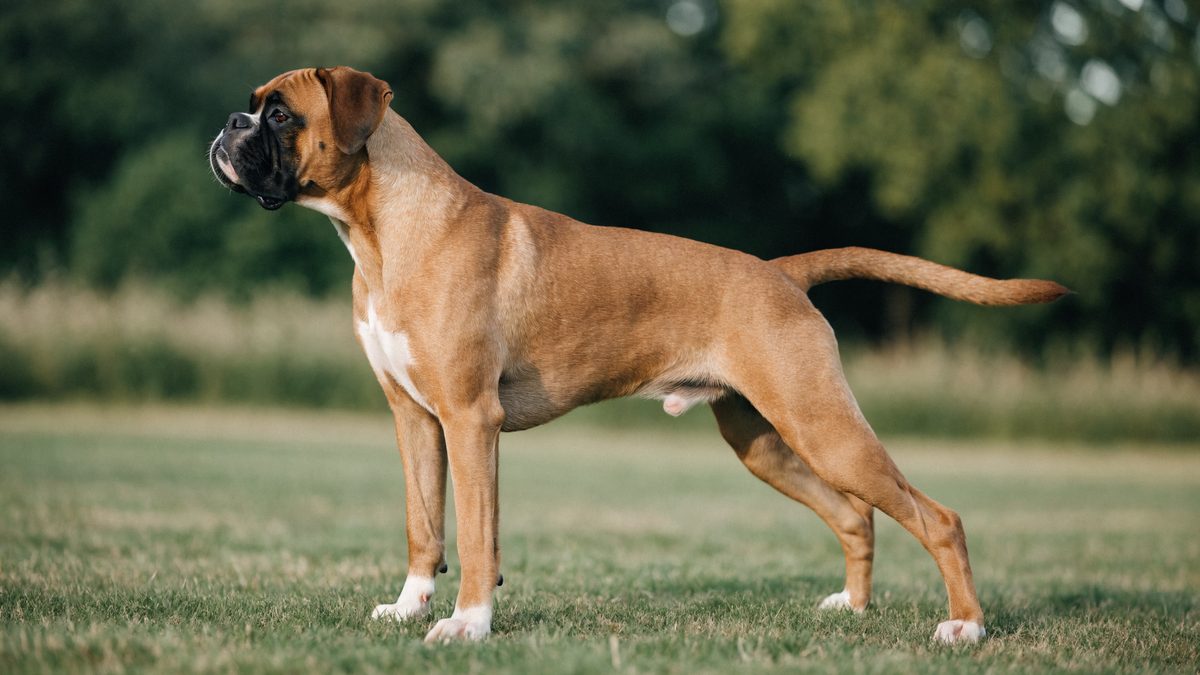
The Boxer is a medium-sized, square-built, smooth-coated German working dog with a broad blunt muzzle and an undershot jaw, developed in the late nineteenth century by crossing the Brabant Bullenbeisser with English Bulldogs and other breeds to produce an athletic working dog with a stable temperament. Almost everything an Indian buyer needs to know follows from that sentence, including the flat face, the muscle, the energy and the cancer.
Three kennel clubs publish a Boxer breed standard and they do not say the same thing. Under the American Kennel Club standard, approved 11 February 2005, adult males stand 23 to 25 inches at the withers and females 21.5 to 23.5 inches, with no size disqualification. The FCI standard, valid from 1 April 2008, sets dogs at 57 to 63 cm and bitches at 53 to 59 cm, with dogs over 30 kg when the height at the withers is about 60 cm and bitches about 25 kg at about 56 cm. The Kennel Club in the United Kingdom gives the same heights and puts dog weight at approximately 30 to 32 kg and bitch weight at approximately 25 to 27 kg.
The differences that matter are not the heights. They are the ears and the tail, and they are the reason this page opens with a breed standard comparison rather than a price table.
| Authority | Ears | Tail |
|---|---|---|
| American Kennel Club, approved 2005 | "Customarily cropped, cut rather long and tapering, and raised when alert" | "Set high, docked, and carried upward. An undocked tail should be severely penalized" |
| FCI-Standard N 144, valid 2008 | "The natural ears are of appropriate size" | "The tail is of normal length and left natural" |
| The Kennel Club, UK, updated 2025 | "Moderate size, thin, set wide apart, lying flat and close to cheek in repose" | "Previously customarily docked". Undocked accepted and described |
| India, PCA (Dog Breeding and Marketing) Rules, 2017 | Ear cropping "strictly forbidden" | Tail docking "strictly forbidden" |
Read that table twice before you look at a single Indian breeder photograph. The cropped-ear, stub-tailed Boxer that dominates Indian classified listings is the American show look, and producing it in India is prohibited. Second Schedule Part II para 6(8) of the Prevention of Cruelty to Animals (Dog Breeding and Marketing) Rules, 2017 states that "there shall be no tail docking, ear cropping de-barking, de-clawing, branding, dyeing, injecting substances to enhance visual appeal, performing a surgery or procedure to camouflage or hide any defect or infirmity or any other kind of mutilation of any body part of the pup and any change of appearance by artificial means is strictly forbidden";. The full legal history is in the adoption section of this page, because it decides which breeder you can responsibly buy from.
The head, and why it is the whole animal
The blunt muzzle is the breed's defining feature. Under the AKC standard the muzzle is one third the length of the head from occiput to nose tip and two thirds the width of the skull, the bite is undershot with the lower jaw protruding beyond the upper and curving slightly upward, and neither the teeth nor the tongue should show when the mouth is closed. The FCI states the same proportion as a ratio of nose bridge to skull of 1:2 and adds that the bridge of the nose must not be forced back into the forehead as in the Bulldog.
That one-third muzzle is what makes the Boxer brachycephalic, and it is measurable. Published craniofacial ratios put the Boxer at 0.31, against 0.22 for the English Bulldog, 0.19 for the French Bulldog and 0.08 for the Pug. The Boxer is therefore the least extreme of the commonly kept flat-faced breeds by a wide margin, and the climate and health sections of this page treat it accordingly rather than lumping it in with the Pug.
| Attribute | AKC 2005 | FCI 2008 | Kennel Club UK 2025 |
|---|---|---|---|
| Height, dogs | 23 to 25 in | 57 to 63 cm | 57 to 63 cm (22.5 to 25 in) |
| Height, bitches | 21.5 to 23.5 in | 53 to 59 cm | 53 to 59 cm (21 to 23 in) |
| Weight, dogs | 65 to 80 lb | Over 30 kg at about 60 cm | Approximately 30 to 32 kg |
| Weight, bitches | About 15 lb less than dogs | About 25 kg at about 56 cm | Approximately 25 to 27 kg |
| Coat | Short, shiny, smooth and tight | Short, hard, glossy, close fitting | Short, glossy, smooth and tight |
| Colour | Fawn and brindle only | Fawn or brindle | Fawn or brindle |
| Disqualification | Any colour other than fawn or brindle; white over one third | Aggressive or overly shy | Any other colour unacceptable |
Where the breed came from
The Boxer was developed in late nineteenth century Germany through the deliberate cross-breeding of the Bullenbeisser, a traditional large hunting breed, with English Bulldogs and other breeds. The FCI records that the small Brabant Bullenbeisser is regarded as the immediate ancestor, that its job was to seize game put up by the hounds and hold it until the huntsman arrived, and that this is why the breed was selected for jaws as wide as possible with widely spaced teeth. The AKC recognised the breed in 1904 and places it in the Working Group.
One piece of scientific history matters here more than any show record. The first high-quality full genome sequence of the domestic dog, published in 2005, used a female Boxer called Tasha, and the researchers chose the breed partly because they believed a predisposition to cancers in Boxers would help them find genetic contributors to cancer in humans. Every prospective Indian Boxer owner should sit with that fact for a moment. Geneticists picked this breed as a cancer model on purpose.
Boxers made up 0.96 percent of 336,865 dogs under UK primary veterinary care in 2016, and were the fourteenth most popular breed in the UK in 2020. Registrations peaked at over 10,000 a year in 1997. India publishes no comparable registration series, so nobody knows how many Boxers are in the country and any page quoting an Indian Boxer population figure is guessing.
The temperament clauses are unusually explicit for a guarding breed. The AKC calls the Boxer instinctively a hearing guard dog, alert, dignified and self-assured, fundamentally playful with family and friends yet patient and stoical with children, deliberate and wary with strangers, and states that any evidence of shyness or lack of dignity or alertness should be severely penalised. The FCI is blunter still and lists "aggressive or overly shy" as a disqualifying fault. A Boxer that lunges at visitors is not displaying breed type. It is failing the standard.
Boxer dog price in India
A Boxer puppy costs Rs 6,000 to Rs 2,00,000 in India in 2026, and the useful fact is not the range but the disagreement inside it. Four published Indian sources give four different pet-quality floors, and the lowest and highest differ by a factor of more than seven. Nobody is auditing any of these numbers, including the sellers who publish them.
Bonbeno compared every Indian page publishing a Boxer price band for 2026 and put them side by side. The gaps are not rounding errors.
| Source | Pet quality | KCI registered | Show or champion | Imported |
|---|---|---|---|---|
| Supertails | Rs 15,000 to Rs 40,000 | Rs 40,000 to Rs 70,000 | Rs 70,000 to Rs 1,20,000 | Rs 1,20,000 to Rs 2,00,000+ |
| Mr n Mrs Pet | Rs 45,000 to Rs 55,000 | Rs 55,000 to Rs 95,000 | Rs 95,000 to Rs 1,50,000+ | Not stated |
| Wrapinfur | Rs 20,000 to Rs 35,000 | Rs 60,000 to Rs 90,000 | Rs 90,000 to Rs 1,50,000+ | Not stated |
| Petsworld | Rs 6,000 to Rs 50,000, single band | Not stated | Not stated | Not stated |
Look at the pet-quality column. One source starts at Rs 6,000, another at Rs 15,000, a third at Rs 20,000 and a fourth at Rs 45,000 Supertails, Boxer Dog Price Wrapinfur, Boxer Dog in India: Price, Care Mr n Mrs Pet, How Much Does a Boxer Puppy…. That is a threefold spread on the same tier of the same breed, published in the same market, in the same year. The KCI registered band is only slightly better behaved, running from a Rs 40,000 floor to a Rs 60,000 floor depending on who you read.
Two of the four sources that publish detailed bands also broker puppy sales, and one of the two openly invites you to call a sales number from the same page as the price table. That is a commercial interest in the number. Bonbeno discloses it here because neither page discloses it itself.
City-wise price, and how far it can be trusted
Two sources publish a city-wise price breakdown for the Boxer, which is one more than most breeds get, so for once the city table can be cross-checked.
| City | Supertails, pet quality | Supertails, KCI registered | Wrapinfur, all quality |
|---|---|---|---|
| Delhi NCR | Rs 20,000 to Rs 45,000 | Rs 45,000 to Rs 85,000 | Rs 30,000 to Rs 70,000 |
| Mumbai | Rs 22,000 to Rs 48,000 | Rs 48,000 to Rs 90,000 | Rs 35,000 to Rs 90,000+ |
| Bengaluru | Rs 20,000 to Rs 45,000 | Rs 45,000 to Rs 85,000 | Rs 30,000 to Rs 70,000 |
| Pune | Rs 18,000 to Rs 40,000 | Rs 40,000 to Rs 78,000 | Not listed |
| Chennai | Rs 18,000 to Rs 38,000 | Rs 38,000 to Rs 75,000 | Rs 30,000 to Rs 70,000 |
| Kolkata | Rs 16,000 to Rs 35,000 | Rs 35,000 to Rs 70,000 | Rs 25,000 to Rs 55,000 |
| Hyderabad | Not listed separately | Not listed separately | Rs 25,000 to Rs 60,000 |
| Kerala | Rs 16,000 to Rs 35,000 | Rs 35,000 to Rs 70,000 | Not listed |
The two city tables broadly agree on rank order, with Mumbai dearest and Kolkata cheapest, and they disagree on level by roughly Rs 10,000 in most cities Wrapinfur, Boxer Dog in India: Price, Care. Neither publisher states a sample size or a collection method, so neither table is a market survey. Treat the rank order as informative and the absolute numbers as estimates.
The white Boxer and the black Boxer, answered properly
A solid black Boxer does not exist. The AKC standard permits only fawn and brindle, and disqualifies Boxers of any other colour. The FCI and the Kennel Club say the same The Kennel Club, Boxer breed standard. What Indian sellers advertise as a black Boxer is a heavily marked dark brindle, and the term is used to manufacture rarity. Anyone charging a premium for a black Boxer is charging you for a word.
The white Boxer is a different case and it is real. White Boxers exist, they are not albino, they sit outside every breed standard, and they made up 10.71 percent of 3,219 Boxers under UK primary veterinary care. Kennel Club registration data for Boxers born between 2015 and 2018 recorded 6.8 percent white, or 1,022 of 15,124. Indian pricing for a white Boxer is published at Rs 18,000 to Rs 40,000, comparable to or slightly below fawn and brindle pet-quality pups, because a white Boxer cannot be shown.
White colour in Boxers shares a genetic cause with white colour in Bull Terriers, and white colouring has been linked to congenital deafness for over a century. A BAER study of 1,060 UK Bull Terriers found 19.29 percent of white dogs deaf in one or both ears against 0.77 percent of non-white dogs. That figure is an extrapolation, not a Boxer measurement, and the VetCompass Boxer study itself recorded only two deaf dogs in the whole cohort, one white and one not, which the authors read as substantial under-reporting. Ask the breeder for a brainstem auditory evoked response result rather than an assurance.
What the price is actually tracking
- Registration status. A KCI registered puppy is quoted Rs 15,000 to Rs 25,000 above an unpapered one depending on the source. Registration documents pedigree. It is not a health certificate, and it says nothing about whether either parent had a Holter monitor fitted.
- Cardiac screening in the parents. Breeders who screen breeding dogs for cardiomyopathy pass that cost on through pricing, and this is the single premium on the list that buys you something real. The American Boxer Club asks for an annual Holter monitor on any Boxer in a breeding programme.
- Sex. The published gap between male and female puppies is modest, roughly Rs 2,000 to Rs 5,000, with males occasionally dearer for frame.
- Age at sale. Puppies between 8 and 12 weeks are priced highest. Under Indian law a pup less than eight weeks old must not be sold at all.
- Colour, which buys nothing. Fawn and brindle are the only standard colours and the standards express no preference between them. A premium for a particular brindle pattern is aesthetic demand, not quality.
A Boxer advertised significantly below Rs 12,000 to Rs 15,000 from an unverified seller is described as a red flag for unregulated backyard breeding by one of the same sources that publishes a Rs 15,000 floor. In India, breeding or housing dogs for sale without a certificate of registration from the State Animal Welfare Board is prohibited outright, and every breeder must maintain individual records including microchip number, date of birth and the microchip numbers of the sire and dam. A price far below market usually means none of that paperwork exists.
Bonbeno does not broker puppy sales and publishes no breeder listings. Every figure above is reported from a third party so you can see the disagreement yourself and price the uncertainty into your own decision.
Monthly cost of owning a Boxer in India
Published Indian monthly cost estimates for a Boxer sit between Rs 5,000 and Rs 13,500, and all three of them leave out the two line items that actually define this breed's cost, which are annual cardiac screening and the statistical near-certainty of a cancer work-up in later life. The purchase price is the small number.
Three Indian sources publish a monthly cost structure. They agree more closely than they do on purchase price, which is itself informative, because the recurring cost of a short-coated dog is easier to estimate than the price of a puppy.
| Line item | Supertails | Mr n Mrs Pet | Wrapinfur |
|---|---|---|---|
| Food | Rs 2,500 to Rs 5,000 | Rs 2,500 to Rs 5,000 | Rs 3,000 to Rs 6,000 |
| Veterinary care, amortised | Rs 700 to Rs 1,500 | Rs 1,000 to Rs 2,000 | Rs 1,000 to Rs 2,500 |
| Vaccinations, year 1 amortised | Rs 350 to Rs 600 | Included above | Included above |
| Grooming | Rs 400 to Rs 1,000 | Rs 500 to Rs 1,500 | Rs 500 to Rs 1,000 |
| Training, first year | Rs 2,000 to Rs 4,000 | Rs 1,000 to Rs 2,000 | Rs 1,500 to Rs 3,000 |
| Accessories and toys | Rs 500 to Rs 1,200 | Included above | Rs 500 to Rs 1,000 |
| Stated monthly total | Rs 6,450 to Rs 13,300 | Rs 5,000 to Rs 10,000 | Rs 6,500 to Rs 13,500 |
None of the three states a sample size or a collection method, so none is a survey result. Bonbeno is running a verified owner cost survey across eight metros and will publish the sample size, the cities covered and the collection date when it is complete. Until then the honest position is that no reliable India-wide monthly figure exists for this breed.
The two lines every Indian Boxer budget is missing
Here is where Bonbeno departs from every page ranking for this query. Two costs are structural to the Boxer specifically, and none of the three published budgets contains either.
- Annual Holter monitoring. Boxer cardiomyopathy primarily affects the electrical system of the heart, so a 24-hour ambulatory ECG is the only way to test for it, and NC State University recommends starting at 3 years of age and repeating it annually. A stethoscope does not find it. In India, 24-hour Holter hire is available only through a small number of veterinary cardiology referral centres in metros, so budget the referral consultation and the travel as well as the test. Bonbeno does not publish an Indian price for it because no Indian source publishes one, and inventing a figure would be worse than admitting the gap.
- Oncology. Neoplasia was diagnosed in 14.20 percent of UK Boxers in a single year of primary-care records. That is a one-year figure, not a lifetime figure. Fine-needle aspirates, histopathology, staging bloodwork, surgical excision with wide margins and, in some cases, chemotherapy are Boxer-typical expenses in the second half of the dog's life, and they arrive in lumps of tens of thousands of rupees rather than as a monthly line.
When we publish cost figures we state the sample size, the cities covered and the collection date. Where published sources disagree, as they do on purchase price here, we print all of them rather than averaging them into a number none of them supports. Where no Indian figure exists, as with Holter hire, we say so.
First-year costs beyond the monthly budget
- Core vaccination course, Rs 4,000 to Rs 7,000 in year one.
- Sterilisation. Under Indian rules a dog over six months old must not be sold without first being sterilised unless it is going to another licensed breeder, so a correctly sold adult should already be done.
- Microchipping. Every breeder must record a microchip number for each dog and supply it on the sale receipt, so ask for the number rather than paying to have it done again.
- Structured obedience training, Rs 2,000 to Rs 4,000 a month in the first year. For a powerful, mouthy, jumping adolescent this is not optional.
- Chew-resistant toys, replaced often. Boxers are enthusiastic chewers and destroy soft toys quickly.
One genuine saving offsets some of this. Grooming is the cheapest line in the budget for a Boxer at Rs 400 to Rs 1,500 a month, because a short tight coat needs no professional clipping at all. A Boxer owner in Chennai pays a fraction of what a Golden Retriever owner pays a groomer, and the whole difference goes to the cardiologist instead.
Climate suitability: why heat tolerance is rated 2 of 5
Bonbeno rates the Boxer 2 of 5 for heat tolerance, and the reasoning is deliberately more careful than the ranking pages allow. The Boxer is brachycephalic and therefore at elevated heat risk, but it is the least extreme of the flat-faced breeds and the largest study available did not find its risk statistically significant. The evidence supports caution, not panic, and the single most useful thing you can do about it is keep the dog lean.
Start with the authority every Indian page cites without reading. Purina India lists the breeds at particular risk of heat stroke and names Boxers first: "Short-faced dog breeds, such as Boxers, Bulldogs, Pugs and Pekingese, and dogs with heavy coats (such as Huskies or Newfoundlands), are at particular risk of heat stroke";. An Indian veterinary heatstroke guide places Boxers in its extremely high risk group alongside Pugs and Bulldogs, flagging them as having a brachycephalic tendency. Cornell adds that short-muzzle breeds, along with older or overweight dogs, are at higher risk, and that dogs which survive one episode are at greater risk of another.
What the largest study actually found, and what it did not
Now the number nobody else publishes. In a study of 905,543 UK dogs under primary veterinary care, nine breeds had significantly higher odds of heat-related illness than the Labrador Retriever, and the Boxer was not one of them. The Boxer's odds ratio was 2.26, with a 95 percent confidence interval of 0.95 to 5.34 and p = 0.064. The authors describe it in their own words as another brachycephalic breed that "trended towards increased odds";.
Read that correctly. A confidence interval that crosses 1.0 means the study could not rule out no effect at all. It does not mean the Boxer is safe, and the point estimate of 2.26 sits in the same territory as breeds that did reach significance, such as the English Springer Spaniel at 2.74 and the Golden Retriever at 2.65. What it means is that the Boxer's individual risk was not proven, while the risk of its skull shape was, because brachycephalic dogs overall carried 2.10 times the odds of heat-related illness compared with mesocephalic dogs.
| Breed | Odds ratio | 95 percent CI | p value |
|---|---|---|---|
| Chow Chow | 16.61 | 6.21 to 44.44 | <0.001 |
| Bulldog | 13.95 | 8.01 to 24.29 | <0.001 |
| French Bulldog | 6.49 | 3.62 to 11.63 | <0.001 |
| Pug | 3.24 | 1.67 to 6.29 | <0.001 |
| Golden Retriever | 2.65 | 1.40 to 5.01 | 0.003 |
| Boxer | 2.26 | 0.95 to 5.34 | 0.064 |
| Siberian Husky | 1.18 | 0.28 to 5.06 | 0.822 |
| German Shepherd Dog | 0.92 | 0.35 to 2.48 | 0.874 |
| Rottweiler | 0.86 | 0.20 to 3.69 | 0.841 |
The same model found that dogs at or above the mean adult bodyweight for their breed and sex had 1.42 times the odds of heat-related illness (95 percent CI 1.12 to 1.80, p = 0.004). Bodyweight is the one risk factor on that list you control. Now put it beside the UK Boxer measurement: mean adult bodyweight was 32.99 kg in males and 27.56 kg in females, both above the upper limit the breed standard recommends of 30 to 32 kg and 25 to 27 kg. The average pet Boxer is already carrying the risk factor. Keep yours lean and you remove it.
The airway question, answered against the data
Indian pages routinely warn that Boxers cannot breathe in the heat. The primary-care evidence does not support that as stated. Grouped upper respiratory tract disorder was recorded in only 3.23 percent of UK Boxers, against 22 percent in extreme brachycephalic breeds and 9.7 percent in the moderate and non-brachycephalic group. The study authors call the low figure unexpected and attribute it to the Boxer's relatively higher craniofacial ratio of 0.31, concluding that the more moderate facial conformation likely results in reduced risk of airway overcrowding.
They also name the mistake directly. Attributing the risks of all brachycephalic breeds to the Boxer specifically is an ecological fallacy, and the study underlines the value of breed-specific investigation rather than group-level assumption. Bonbeno repeats that here because it cuts both ways. The Boxer is not a Pug. It is also not a Labrador, and the Kennel Club currently lists it in Breed Watch Group 2 citing pinched nostrils as a point for judges to monitor.
None of that makes brachycephaly harmless. A separate multivariable VetCompass analysis of a random sample of 22,333 dogs drawn from 955,554 under UK veterinary care found that brachycephalic dogs differed from non-brachycephalic dogs in their odds for 10 of 30 common disorders, with predispositions for eight and protections for two, and concluded that the evidence that brachycephalic breeds are generally less healthy than their non-brachycephalic counterparts is strong. The authors also warn that studies reporting only univariable results should be treated with extreme caution because of unaccounted confounding, which is a fair description of almost every breed claim on the Indian internet.
| Ambient temperature | Risk level | What it means in practice |
|---|---|---|
| Below 28 C | Low | Normal activity with shade and water. Caution even here for flat-faced breeds |
| 28 to 35 C | Moderate | Shorten walks to 15 to 20 minutes, early morning and late evening only |
| 35 to 42 C | High | Outdoor activity contraindicated. Asphalt reaches 60 C and above |
| Above 42 C | Extreme | Heat stroke possible within 10 to 15 minutes outdoors. Indoor heat without cooling can be fatal |
Humidity changes the arithmetic completely. A 35 C day at 90 percent humidity is more dangerous than a 42 C day at 20 percent humidity, because panting works by evaporation and humid air blocks it. A Boxer in Chennai, Mumbai or Kolkata during the monsoon is under more thermal load than the thermometer suggests, and a dog that pants through a humid August night is telling you something the temperature reading is not.
What actually reduces the risk
- Keep the dog lean. This is the only intervention on the list with a published odds ratio attached. Score body condition by hand every week and feed to the ribs, not to the bag.
- Walk only before 7 am or after 8 pm from April to September, and keep each walk to 15 to 20 minutes in those windows.
- Never exercise a Boxer hard in the heat. Vigorous exercise in hot weather can produce heat stroke in as little as 30 minutes.
- Run fans or air conditioning above 32 C indoors. Indoor temperature above 32 C is dangerous for a dog at rest.
- Do the 7-second pavement test. Place the back of your hand on the pavement for seven seconds. If you cannot hold it there, asphalt at 60 C will burn paw pads within about 30 seconds.
- Never confine the dog to a balcony above 30 C. Concrete balconies are heat traps with no airflow and no shade.
- Plan for power cuts. Load shedding peaks exactly when cooling demand peaks, so keep a battery fan, frozen packs and a fallback location.
A dog's normal body temperature is 100.5 to 102.5 F, and heatstroke results when it cannot regulate and the temperature reaches 105 F or higher, at which point prolonged elevation damages every organ. Cool the dog immediately. Move it to shade or air conditioning, wet the body with cool but not cold water making sure the water reaches the skin, especially the belly and inner legs, and get air moving across it. Do NOT use ice water or ice packs, which constrict skin blood vessels and trap heat in the core Purina India, Heat Stroke in Dogs. Stop active cooling at 39.4 C to avoid overshooting into hypothermia. Then go to a clinic regardless, because delayed organ failure can appear 12 to 72 hours later.
One India-specific hazard deserves separate mention for this breed. A parked car at 26 C outside reaches 32 C inside within five minutes and 43 C within 25 minutes. Indian traffic turns a ten-minute trip into an hour without warning, and a brachycephalic dog in a stalled car with the engine off is in a genuine emergency within fifteen minutes. Do not take a Boxer in a car in May unless the journey is short, air-conditioned and unavoidable.
Temperament and household fit
The Boxer suits an active household that wants an affectionate, energetic, physically demonstrative family dog and is prepared to supply an hour of exercise a day for a decade. It suits nobody who wants a low-effort guard dog. The breed standards describe a playful, patient animal that is wary of strangers without being aggressive, and the primary-care data broadly agrees, with one sex-specific caveat worth stating plainly.
Take the standards first, because they are unusually specific about character. The AKC calls character and temperament of paramount importance in the Boxer, describes the dog as fundamentally playful with family and friends yet patient and stoical with children, deliberate and wary with strangers, and requires that any evidence of shyness or lack of dignity or alertness be severely penalised. The FCI asks for a dog that is fearless, self-confident, calm and equable, harmless with his family but distrustful of strangers, with a character that is trustworthy and shows no guile or cunning even in old age. The Kennel Club summarises it as lively, strong, loyal to owner and family, distrustful of strangers, obedient, friendly at play, but with guarding instinct.
All three agree on the same animal. Now the data.
The aggression figure, printed rather than dodged
Across 3,219 UK Boxers under primary veterinary care, aggression was recorded in 2.80 percent overall, split as 3.96 percent of males and 1.56 percent of females, making males 2.5 times as likely to be recorded aggressive as females. Aggression was the fifth most common fine-level disorder in male Boxers, recorded more often than diarrhoea or osteoarthritis, which the study authors themselves describe as somewhat surprising.
Context matters and Bonbeno prints it beside the number rather than after it.
| Breed | Aggression recorded, one-year prevalence |
|---|---|
| Rottweiler | 7.46 percent |
| German Shepherd Dog | 4.76 percent |
| Boxer, males | 3.96 percent |
| Boxer, overall | 2.80 percent |
| Greyhound | 1.70 percent |
| Boxer, females | 1.56 percent |
| Labrador Retriever | 1.09 percent |
The Boxer sits below the German Shepherd and the Rottweiler and above the Labrador. That is the honest placement, and it is a long way from either the "nanny dog" framing of the marketing pages or the "dangerous breed" framing of the comment sections. Note too that behavioural disorder was the fourth commonest cause of mortality in male Boxers and carried the lowest median age of death of any cause, at 7.00 years. Dogs are still being put down for behaviour that started as under-exercised adolescence.
The Boxer descends from bull-baiting and fighting stock, and the AKC says so directly, recording that until dogfighting and bullbaiting were outlawed the Boxer, like all dogs of its type, was used for those purposes. That is history, not a use case. In India, Section 11(1)(m)(ii) of the Prevention of Cruelty to Animals Act, 1960 makes it an offence to incite any animal to fight or bait any other animal, and Section 11(1)(n) makes it an offence to organise, keep, use or act in the management of any place for animal fighting. Bonbeno publishes nothing that helps anyone produce an aggressive dog. If a seller markets a Boxer on fighting lineage, walk away and report it.
Is the Boxer banned in India
No. The Boxer is not banned in India and was never on the list named in the March 2024 advisory from the Ministry of Fisheries, Animal Husbandry and Dairying, which runs to 24 comma-separated entries where CBIC Instruction 05/2024-Customs of 14 March 2024 reproduces it, 23 in press reports that fold the closing Bandog clause in and 25 where Japanese Tosa and Akita is split, and that advisory was itself struck down by the Delhi High Court and the Karnataka High Court, leaving no nationwide breed ban in force. Ordinary obligations still apply, which are municipal registration, current vaccination records, leash use in public, and compliance with your housing society's pet policy, which can be independent of central or state law.
Who this breed fits
- Good fit. An active household with someone home for part of the day, in a house or a large flat, with an adult willing to walk a strong 30 kg dog twice daily in the dark hours of an Indian summer.
- Good fit. Families with children old enough not to be flattened. The standard describes a dog patient and stoical with children, and the risk is the dog's exuberance rather than its intent.
- Poor fit. First-time owners who want a guard dog and expect it to arrive pre-installed. A Boxer is a hearing guard dog by standard, meaning it alerts. Everything beyond that is training, and training toward aggression is both wrong and, at its extreme, criminal.
- Poor fit. Households empty ten hours a day. An under-exercised Boxer indoors becomes destructive out of boredom rather than bad behaviour.
- Watch item. Boxers are not always tolerant of other dogs of the same sex, though most Boxers of opposite sexes enjoy each other's company. Plan introductions in a country where off-lead dogs are common on the street.
One quiet advantage suits Indian flats specifically. The Boxer is not a habitual barker and its short coat sheds very little indoors Petsworld, Boxer price in Delhi/NCR and All…. In a shared building that is a real and underrated benefit, and it is the opposite of the problem a Husky or a Spitz creates. What the Boxer costs you in a shared building is drool, snoring and the noise of a 30 kg dog deciding to play at 11 pm.
Training a Boxer
Train a Boxer in short, varied, reward-based sessions from the week it arrives, and expect a highly intelligent problem solver that becomes bored with repetition and has a mind of its own. The failure mode with this breed is not stubbornness. It is an adolescent that learned jumping, mouthing and pulling before anybody taught it anything else.
The AKC states the training position plainly. Early socialisation and puppy training classes are vital in channelling the breed's energy and exuberance, Boxers are highly intelligent but become bored with repetition, they tend to have a mind of their own, and they are excellent problem solvers. Indian sources agree that Boxers are intelligent but can be stubborn and that obedience training should start early.
The single most important instruction is a management rule rather than a training milestone. The Boxer must never be allowed to run loose, and needs its exercise on lead or in a securely fenced area. The breed's heritage as a chaser of wild game means young dogs spend a great deal of time jumping and leaping and need constant reminders to stay down.
Realistic timelines
| Skill | Start | Realistic outcome |
|---|---|---|
| Name response | Week 1 home | Reliable indoors in 2 to 3 weeks |
| Sit, down, settle | Week 1 home | 3 to 6 weeks |
| Toilet training | Week 1 home | 3 to 5 months |
| Four paws on the floor, no jumping | Week 1 home | 6 to 12 months, and it regresses in adolescence |
| Bite inhibition and mouthing | Week 1 home | 4 to 6 months, longest through teething |
| Loose-lead walking | Month 2 | 6 to 12 months with maintenance. This is a strong dog |
| Reliable recall off-lead | Month 2 | Never rely on it. Lead or fence, permanently |
| Settle on a mat while the family eats | Month 3 | 2 to 4 months of consistent practice |
Socialise the puppy early and widely, because the standard calls for a dog that is deliberate and wary with strangers yet responds promptly to friendly overtures honestly rendered, and that second half is built rather than inherited. In Indian practice that means controlled exposure to lifts, watchmen, delivery riders, traffic, cattle, other dogs, groomers, handling of the feet and ears, and the vet's table, all booked into the cool hours the same way walks are.
This breed needs a 24-hour Holter monitor fitted annually from three years of age, regular ear examinations given that otitis externa is its most common recorded disorder at 7.15 percent, and eye checks given corneal ulceration at 5.00 percent. A Boxer that accepts a chest harness, having its ears held, having its eyes examined and standing still for five minutes is a dog whose health screening will actually happen. Teach that in month two, not in year four.
What works and what does not
- Short sessions, many of them. Five minutes, six times a day beats one thirty-minute drill with a dog that bores of repetition.
- Change the exercise before the dog does. Boxers excel in obedience, agility and herding and work as service, assistance and therapy dogs and in detection and search-and-rescue roles. The breed wants a job with an end to it.
- Reward-based methods only. The FCI describes a dog easy to train on account of his willingness to obey. Punishment in a confident, physically powerful breed builds avoidance rather than reliability.
- Manage the jumping from day one. A jumping 8 kg puppy is charming. A jumping 32 kg adult is a liability with elderly relatives and small children.
- Never train through the heat. Move all sessions indoors from March to October, which is easy, because scent games and impulse-control work run perfectly well in a cool room.
The breed was one of the first selected in Germany for police training. Treat that as a statement about capacity rather than about purpose. A Boxer given twenty minutes of thinking work a day is a different animal in the house from one given none.
How much exercise a Boxer actually needs
A Boxer needs 60 to 90 minutes of daily exercise under every Indian published guide and more than two hours a day under the Royal Kennel Club, and that gap of an hour is the largest single disagreement about this breed anywhere in the sources. The consequence of missing the requirement is not a slightly restless dog. It is the destructive, mouthy, difficult animal that fills Indian rehoming posts.
Four Indian sources publish a daily exercise requirement and they sit within fifty minutes of each other, which is unusually tight for this market. The Royal Kennel Club sits an hour above all of them.
| Source | Stated daily requirement |
|---|---|
| Royal Kennel Club, UK | More than 2 hours per day |
| Supertails, India | 60 to 90 minutes |
| Mr n Mrs Pet, India | 60+ minutes |
| Wrapinfur, India | 45 to 60 minutes |
| Petsworld, India | More than 40 minutes |
| American Kennel Club | "Ample exercise every day", on lead or securely fenced |
Print the disagreement rather than resolving it. The Royal Kennel Club, which publishes the breed standard the FCI recognises, lists the Boxer's exercise requirement as more than two hours per day, its ideal home as a large house with a large garden, its grooming as once a week and its lifespan as over 10 years. Every Indian source publishes between 40 and 90 minutes Supertails, Boxer Dog Price. Bonbeno treats the Indian figure as the floor and the Royal Kennel Club figure as the standard, and notes that the Indian numbers may have drifted downward simply because two hours of outdoor exercise is not deliverable in an Indian summer. That is a constraint on the country, not a reduction in the dog's requirement, and the gap has to be filled indoors.
Bonbeno takes the 60 to 90 minute figure as the working number and the 40 minute figure as a floor that no adult Boxer should be held to. The AKC does not put a number on it at all, describing Boxers instead as very playful, high-energy dogs that need ample exercise every day on leash or in a securely fenced area. Supertails is unusually direct about the consequence, stating that without 60 to 90 minutes of daily physical activity a Boxer indoors can become destructive simply out of boredom, and that if your lifestyle does not allow at least an hour of activity daily the breed is a poor fit regardless of how charming the puppy photographs look.
Section 11(1)(g) of the Prevention of Cruelty to Animals Act, 1960 makes it an offence for an owner to neglect to exercise or cause to be exercised reasonably any dog habitually chained up or kept in close confinement. Section 11(1)(f) covers keeping an animal chained or tethered on an unreasonably short or heavy chain for an unreasonable time. A Boxer left on a terrace or tied in a yard all day, which is common practice for guarding dogs in India, sits squarely inside that language.
Fitting an hour into the Indian day
The scheduling problem is the same as for every large breed here, made harder by the flat face. From April to September, the safe outdoor windows are before 7 am and after 8 pm, and each session should run 15 to 20 minutes rather than a single long block. That means an hour of exercise is delivered as three short outings plus indoor work, not one walk. Vigorous exercise in hot weather can produce heat stroke in as little as 30 minutes, so a hard evening run in May is not a compromise, it is a risk.
- Two short lead walks in the cool windows, 15 to 20 minutes each, on grass rather than asphalt where possible, since grass runs 10 to 15 C cooler than asphalt in the same sun.
- Twenty minutes of scent work or puzzle feeding indoors. Nose work in an air-conditioned room delivers more than an equivalent walk for a bored problem solver.
- Impulse control and trick sessions in five-minute blocks, which suit a dog that tires of repetition.
- Swimming where clean, safe water exists. It loads the muscles without loading the joints or the airway.
- Structured sport in the cool season. Boxers excel at obedience and agility, and December to February is when an Indian Boxer can actually train outdoors.
Watch the dog rather than the clock in hot weather. Respiratory rate above 60 breaths a minute at rest, frantic unproductive panting, thick ropey saliva and bright red gums are the first stage of heat stress and they are reversible if you stop immediately. A Boxer that lies flat with its limbs extended trying to maximise surface area has already moved past that stage.
The Indian failure pattern for this breed is predictable. Destroyed furniture, chewed skirting, mouthing that escalates with children, pulling on the lead hard enough that nobody wants to walk the dog, and then a rehoming post at eighteen months. None of that is a behavioural disorder. It is an athletic working dog with an unspent hour.
Grooming a short coat in Indian humidity
Groom a Boxer with a rubber curry brush or a hound glove once or twice a week and stop there, because the coat is the easiest part of owning this breed. The real grooming work in India is not the coat at all. It is the eyes, the ears, the facial folds and the skin, which together account for the three most common disorders recorded in the breed.
The AKC is unusually brief on Boxer grooming, and correctly so. The short, shiny coat requires very little grooming, a good once-over with a rubber curry brush or a hound glove once or twice a week keeps the dog looking its best, and the Boxer tends to be a clean dog needing a bath only occasionally. Nails should be trimmed at least once a month unless naturally worn down, and teeth brushed often, daily if possible. Indian sources put bathing at every three to six weeks with a mild dog shampoo Supertails, Boxer Dog Price.
That is the whole coat routine. Now the part the ranking pages skip.
The eyes, which is where this breed's grooming actually lives
Corneal ulceration was the third most common disorder in UK Boxers at 5.00 percent, and the dedicated VetCompass study of corneal ulcerative disease across 104,233 dogs in England puts the Boxer second only to the Pug, at 4.98 percent of the breed affected (95 percent CI 3.89 to 6.26) against 5.42 percent in Pugs and an all-dog prevalence of 0.80 percent. The Boxer's odds were 12.12 times those of crossbred dogs (95 percent CI 8.77 to 16.76, P < 0.001), and brachycephalic types overall carried 11.18 times the odds. Conformational predisposition to corneal ulceration among brachycephalic dogs has been recognised for over a century, and a breed-specific problem of non-healing indolent corneal ulceration was formally described in Boxers in the 1960s.
Frontally placed, generous eyes on a shortened muzzle sit further forward and less protected than a long-nosed dog's. In India, add dust, construction particulate, monsoon grass seeds and the abrasive grit of a city pavement. Squinting, a held-shut eye, pawing at the face, sudden tearing or cloudiness in a Boxer means a same-day veterinary appointment. The indolent ulcer this breed is known for does not heal on its own and worsens with delay. The study recorded pain in 46.2 percent of corneal ulcer cases and analgesia in 54.6 percent, 7.4 percent were referred for advanced management, and the condition contributed to the euthanasia decision for 10 dogs. This is a painful condition, not a cosmetic one.
Ears and skin in Indian humidity
Otitis externa was the single most common disorder recorded in Boxers at 7.15 percent, and skin disorder was the most common disorder group at 17.74 percent. The ear figure is close to the 7.30 percent seen across all UK dogs, so it is not a strong breed predisposition, and the study authors argue it should still be a breed health priority precisely because it is so common. In humid Indian coastal cities it gets worse, not better.
- Check the ears weekly and dry them after every bath or swim. A warm, humid ear canal in Mumbai or Kochi is an incubator. Smell before you look, because yeast announces itself first.
- Wipe and dry the facial creases. The standard describes creases always present from the lower edge of the stop running downward on both sides of the muzzle. Those folds trap moisture, food and drool.
- Brush the coat with a rubber curry once or twice a week. Boxers shed a negligible amount, so this is about skin health and circulation rather than hair control.
- Dry the dog fully after the monsoon walk. A damp Boxer left to air-dry in 90 percent humidity is how hot spots start.
- Watch for skin sensitivities. Boxers are described as somewhat prone to skin allergies, and skin was the most prevalent disorder group in the breed.
- Check the whole dog for lumps every month while you brush. In a breed with 14.20 percent one-year neoplasia prevalence, the weekly brush is your cancer screening programme.
That last point is the reason a low-maintenance coat does not mean a low-maintenance dog. Run both hands over the whole body, including the groin, the armpits and between the toes, once a month. Mast cell tumours in dogs are diagnosed at a median age of 8.2 years in the UK and 7.93 years in Swedish insurance data, so the habit needs to be established long before you expect to find anything.
Periodontal disease was recorded in only 4.63 percent of Boxers against 12.52 percent of UK dogs overall, and the study suggests the open-mouthed breathing, widely spaced teeth and increased saliva flow of the breed may be protective by reducing food trapping. Obesity was also lower at 3.82 percent against 7.07 percent. Brush the teeth anyway, but the Boxer starts from a better place than most flat-faced breeds.
Health problems, screening and life expectancy
The Boxer carries the heaviest documented disease burden of any imported breed on Bonbeno, and the two things that define it are cancer and an inherited heart disease that a stethoscope cannot find. Neoplasia was diagnosed in 14.20 percent of UK Boxers in a single year, roughly double the rate in Labradors and Rottweilers of similar size, and Boxer cardiomyopathy needs an annual 24-hour Holter monitor rather than an annual listen. Everything else on the list is secondary to those two.
Life expectancy, and where the sources agree for once
Published life expectancy figures for the Boxer are unusually consistent, which is rare on Bonbeno and worth saying.
| Source | Figure | What it is measuring |
|---|---|---|
| VetCompass UK primary care, 346 recorded deaths | 10.46 years median (IQR 9.00 to 11.98, range 2.76 to 18.00) | Actual recorded deaths |
| American Kennel Club | 10 to 12 years | Breed-club expectation |
| Petsworld, India | 9 to 12 years | Editorial estimate |
| Wrapinfur, India | Around 10 to 12 years | Editorial estimate |
| Supertails, India | 10 to 12 years | Editorial estimate |
| UK longevity dataset of 584,734 dogs | No separate Boxer figure quoted here | 155 breeds analysed by size, sex and cephalic index |
The VetCompass median of 10.46 years is the only figure derived from recorded deaths, and the useful comparison is against other large breeds measured the same way. Rottweilers reached 9.0 years, German Shepherds 10.3 years and Labrador Retrievers 12.0 years, against 12.0 years across all UK dogs. The study's conclusion is careful and Bonbeno repeats it rather than sensationalising it. Boxer longevity is largely consistent with other breeds of this body size, which is notable given that extreme brachycephaly is strongly linked to shortened lifespan, and the authors suggest the Boxer's moderate rather than extreme conformation does not impose a meaningful lifespan penalty.
A separate UK longevity analysis of 584,734 dogs, including 284,734 deceased across 155 breeds, treats cephalic index as one of its stratifying variables alongside body size and sex, and links breed lifespan to canine evolutionary history and artificial selection. It also carries a Boxer row, and Bonbeno now prints that beside the VetCompass figure rather than instead of it. Median survival is 11.3 years, with a 95 percent confidence interval of 11.3 to 11.5 years, from 5,925 recorded deaths, and a hazard ratio of 1.18 (1.15 to 1.21) against the crossbred group at p<0.001. The VetCompass primary-care median is 10.46 years. The two come from different methods and different populations, so carry both and name the gap rather than averaging them. Either way the Boxer does not die young for a dog of 30 kg. It dies of cancer.
Cancer, the defining Boxer problem
Neoplasia was the second most prevalent disorder group in UK Boxers at 14.20 percent in a single year, behind only skin disorder at 17.74 percent. The comparison the study makes with the same data source and the same method is the number that should decide whether you buy this breed.
| Breed | Neoplasia diagnosed in one year |
|---|---|
| Boxer | 14.20 percent |
| Rottweiler | 7.96 percent |
| Labrador Retriever | 7.40 percent |
| Greyhound | 5.50 percent |
| German Shepherd Dog | 4.82 percent |
That is roughly double the nearest comparable large breed and close to three times the German Shepherd. A further 10.10 percent of Boxers were recorded with mass lesion, a category the authors say was likely to include many cases of neoplasia that had not been worked up to full diagnosis. Neoplasia was also the leading recorded cause of death at 12.43 percent, at a mean age of 9.45 years, and the authors note that large components of the deaths ascribed to brain disorder (9.54 percent), mass lesion (8.38 percent) and unrecorded cause (21.10 percent) may also have involved neoplasia.
Mast cell tumour, the specific cancer to learn by sight
Two independent national datasets put the Boxer at or near the top of the mast cell tumour risk tables, and the figures are large.
| Study | Population | Boxer finding |
|---|---|---|
| VetCompass England, 2007 to 2013 | 168,636 dogs, 453 with mast cell tumour | Boxer prevalence 1.95 percent (95 percent CI 1.40 to 2.51) against 0.27 percent in all dogs; odds 10.7 times crossbreds (95 percent CI 3.7 to 30.4) |
| Agria insured dogs, Sweden, 2011 to 2016 | Just over 600,000 dogs, 917 cases | Boxer relative risk 9.78 (95 percent CI 7.02 to 13.3), second only to the Dogo Argentino at 30.0 |
The two studies used different countries, different methods and different denominators, and both landed on a roughly tenfold elevation Engdahl K, Saellström S, Hedhammar Å. Median age at first diagnosis was 8.2 years in the English data and 7.93 years in the Swedish data, and 11.6 percent of affected Swedish dogs suffered multiple mast cell tumour events. Boxers were 10 percent of all English cases despite being a small fraction of the population.
A mast cell tumour can look like almost anything, including a soft fatty lump, a small red raised nodule or a patch that changes size week to week. In a Boxer, treat every new skin lump as one until a veterinarian says otherwise. A fine-needle aspirate is cheap, quick and usually needs no sedation, and it is the difference between a small excision at 8 years and a staging work-up at 9. Do not accept "let us watch it" on a Boxer lump.
Boxer cardiomyopathy, and the test to demand by name
Arrhythmogenic right ventricular cardiomyopathy, usually called Boxer cardiomyopathy or ARVC, is an inherited heart muscle disease characterised by ventricular tachycardias, syncope and sometimes systolic dysfunction and heart failure. It is the reason a Boxer can collapse and die suddenly with no prior symptom. It is also the best-characterised inherited disease in the breed, with a named gene, a commercial test and a screening protocol you can ask for by name.
A deletion in the 3' untranslated region of the striatin gene has been associated with ARVC in Boxer dogs. Striatin is a desmosomal protein that colocalises with plakophilin, and mutations in desmosomal proteins are frequently involved in ARVC in humans, which is why the Boxer is studied as a model for the human disease. A 2013 study of 33 Boxers with dilated cardiomyopathy, 29 with the striatin deletion and ARVC, and 16 without cardiac disease found that 30 of the 33 dogs with DCM were positive for the striatin deletion, with the mutation and the homozygous genotype both strongly associated with the DCM phenotype (P < .001 and P = .005). The authors also note that 3 of 33 developed DCM without the mutation, so at least one other cause exists.
Zygosity changes the prognosis. Dogs with one copy have a variable prognosis and many remain asymptomatic or are managed on antiarrhythmic drugs for years, while dogs homozygous for the mutation appear to do worse. A 2024 prospective study of 64 client-owned adult Boxers with ARVC put numbers on it. Median survival after enrolment was 270 days overall, and striatin homozygous-positive dogs had a median survival of 93 days against 373 days for heterozygotes and 214 days for homozygous-negative dogs.
The prognosis, where two good studies disagree
Bonbeno prints both of the two best studies rather than the frightening one, because they were built differently and they reach different places. A prospective natural history study followed 72 Boxers, 49 with ARVC and 23 controls, defining ARVC as 300 or more ventricular premature complexes in 24 hours and controls as dogs aged six or over with fewer than 50. Median age at diagnosis was 6 years, roughly a third of affected dogs had syncope, only two dogs in the whole cohort had fractional shortening below 20 percent, and 36 of the 43 genotyped affected dogs carried the striatin deletion. The headline finding is the reassuring one. Although ARVC dogs did die suddenly, there was no difference in survival time between the affected group and the controls, with a median age of survival of 11 years for the ARVC dogs and 10 years for the controls, and the authors conclude that the prognosis in many affected dogs is good.
Set that against the 2024 series, where median survival after enrolment was 270 days and homozygous dogs survived a median of 93 days. The two are not contradictory once you read the recruitment. The 2024 study enrolled dogs referred with established ARVC and explicitly acknowledges selection bias toward more severe disease, while the prospective study recruited Boxers over a year old for annual re-evaluation and therefore caught mild and subclinical cases the referral series never sees. The honest summary for an Indian buyer is that a screened, monitored, medically managed Boxer with ARVC often lives a normal Boxer lifespan, and an unscreened one is the dog that dies suddenly at six with no warning.
That same 2024 study tested all 64 Boxers for exposure to canine vector-borne pathogens, including Ehrlichia, Babesia, Anaplasma, Bartonella, Borrelia, Rickettsia and Dirofilaria, every one of which circulates in India. Exposure or infection was not associated with median survival time or age at death in Boxers with ARVC. The authors are explicit that selection bias for severe disease and a small sample limited the analysis, so this is not a licence to relax about tick control. It does mean that an Indian Boxer with ARVC and a history of tick fever is not, on the current evidence, facing a worse cardiac prognosis for that reason.
The screening protocol is where a buyer has real leverage. The finding on a Holter that suggests ARVC is the ventricular premature complex, or VPC, and because the disease affects the electrical system, a 24-hour Holter monitor is the best way to test for it. NC State recommends Holtering start at 3 years of age and repeat annually, and states plainly that a single normal Holter does not mean the dog can never have ARVC, only that it does not at that time. The American Boxer Club sets a minimum age of 12 months for the Holter and asks for it annually for any dog in a breeding programme.
A 2022 review of cardiomyopathy screening puts numbers on what a Holter report means, and these are the numbers to read on your own dog's result. Screening should start at three years of age and use Holter monitoring in Boxers and Dobermans, healthy dogs typically show fewer than 50 ventricular premature complexes in 24 hours with minimal complexity, and more than 100 VPCs in 24 hours is the general cut-off for establishing a diagnosis, with breed-specific recommendations existing for Boxers and Dobermans. Yearly screening across the dog's life is recommended, because a one-time screening is not sufficient to rule out later disease. Set that against the 4,856 VPCs averaged by mutation-positive Boxers over six years old in the NC State series and the scale of a real ARVC Holter becomes clear.
NC State reports testing 1,690 Boxers for the striatin mutation, of which 53 percent were negative, 41 percent positive heterozygous and 6 percent positive homozygous. Only 80 Holter readings were submitted to correlate with those results, and of those only 13 were from dogs aged 6 or older, the ARVC age group. Ten of those 13 were mutation-positive and averaged 4,856 VPCs. The genetic test is easy and people do it. The Holter is inconvenient and people do not. That gap is exactly where a Boxer buyer should push.
The OFA record, breed by test
The Orthopedic Foundation for Animals runs the Canine Health Information Center scheme with each breed's parent club, and the Boxer requirements are specific. A Boxer needs a hip evaluation, an autoimmune thyroiditis evaluation, an advanced cardiac exam that must also include a Holter, a DNA test for degenerative myelopathy and a DNA test for ARVC, plus permanent identification by microchip or tattoo. The published results across all Boxers ever submitted are below, and one row should stop you.
| Test | Total tested | Normal or clear | Abnormal or at risk | Carrier |
|---|---|---|---|---|
| Hips | 7,708 | 6,602 (85.7 percent) | 976 dysplastic (12.7 percent) | Not applicable |
| Degenerative myelopathy DNA | 6,139 | 1,285 (20.9 percent) | 3,038 at risk (49.5 percent) | 1,816 (29.6 percent) |
| Congenital cardiac | 4,404 | 4,310 (97.9 percent) | 29 (0.7 percent) | 65 equivocal (1.5 percent) |
| Advanced cardiac | 2,437 | 2,160 (88.6 percent) | 136 (5.6 percent) | 136 equivocal (5.6 percent) |
| Thyroid | 2,329 | 1,757 (75.4 percent) | 243 (10.4 percent) | 329 equivocal (14.1 percent) |
| Elbows | 1,783 | 1,761 (98.8 percent) | 20 dysplastic (1.1 percent) | Not applicable |
| Eyes | 615 | 582 (94.6 percent) | 33 (5.4 percent) | Not applicable |
| ARVC DNA | 396 | 386 (97.5 percent) | 10 (2.5 percent) | Not applicable |
Two rows carry the story. Degenerative myelopathy: 49.5 percent of 6,139 OFA-tested Boxers are homozygous at risk, with a further 29.6 percent carriers, leaving only 20.9 percent genetically clear. That is the highest at-risk proportion of any Boxer screening test by a distance. The good news buried in the trend line is that the clear percentage by birth year rose from 8.6 percent for dogs born 1996 to 2000 to 56.4 percent for dogs born from 2021 onward. Boxer breeders who test are visibly selecting away from it.
The second row is the ARVC DNA line. Only 396 Boxers have ever had an ARVC DNA result registered with OFA, against 6,139 degenerative myelopathy tests and 7,708 hip evaluations. The breed's signature killer has the thinnest screening record of any test on its own CHIC list. Ask your breeder about that specific discrepancy.
Hip dysplasia deserves a correction too, because Indian pages list it as a headline Boxer risk Petsworld, Boxer price in Delhi/NCR and All…. In the OFA record 12.7 percent of evaluated Boxers were dysplastic, with 9.4 percent mild, 2.8 percent moderate and only 0.4 percent severe. In UK primary care, elbow dysplasia sat at 1.1 percent of OFA-evaluated dogs and orthopaedic disease did not appear among the leading Boxer disorders at all O'Neill DG, Rooney L, Brodbelt DC. Hips are worth screening. They are not the thing most likely to shorten your Boxer's life.
The rest of the list, in order of how much it actually matters
- Epulis, a benign gum mass. The second most common fine-level disorder in UK Boxers at 5.84 percent, and a predisposition recognised since the 1960s. It is benign, but it is a mass in a breed where masses cannot be assumed benign.
- Corneal ulceration at 5.00 percent, second highest of any breed and 13 times the crossbreed rate. Covered in the grooming section, and a same-day veterinary matter.
- Heart murmur at 4.98 percent in males and 3.50 percent in females, the fifth most common fine-level disorder overall. Aortic and subaortic stenosis carry a documented male predisposition in this breed, and the American Boxer Club asks for auscultation plus a Doppler echocardiogram from 24 months because AS and SAS can develop after sexual maturity in dogs previously tested clear.
- Hypothyroidism at 1.68 percent, which sounds small until you see the breed comparison. A VetCompass study of 905,553 dogs found the Boxer among the three most predisposed breeds at an odds ratio of 10.44 (95 percent CI 8.66 to 12.58), behind only the Standard Doberman Pinscher at 17.02 and the Tibetan Terrier at 11.25, against an all-dog annual prevalence of 0.23 percent O'Neill DG, Rooney L, Brodbelt DC. OFA records 10.4 percent abnormal thyroid results in tested Boxers, and the ABC panel must include TGAA, Total T4AA, Free T4AA by equilibrium dialysis and cTSH. Bodyweight above the breed and sex mean was itself associated with higher odds of a hypothyroidism diagnosis.
- Juvenile kidney disease. Renal disease deaths in the VetCompass cohort came at a mean age of 7.92 years, well below the breed median, and the Kennel Club Breed Health and Conservation Plan lists juvenile kidney disease as a key Boxer priority.
- Colitis and gastric torsion, listed among the minor concerns for the breed by Indian sources, and enteropathy deaths in the UK cohort came at a mean age of 8.77 years O'Neill DG, Rooney L, Brodbelt DC.
- Congenital deafness in white Boxers, discussed in the price section. Ask for a BAER result rather than an assurance.
What to ask a breeder to screen for
Screen the parents, not the puppy. The American Boxer Club publishes a specific testing and reporting table for dogs in an active breeding programme, and every dog must be identified by microchip.
| Condition | Test used | Minimum age | Frequency |
|---|---|---|---|
| Hip dysplasia | Radiograph | 2 years | Once |
| Elbow dysplasia | Radiograph | 6 months | Once |
| Hypothyroidism | Thyroid panel with TGAA, Total T4AA, Free T4AA, cTSH | 2 years | Annually for breeding |
| Aortic valve disease | Auscultation and Doppler | None stated | None stated |
| Aortic and subaortic stenosis | Auscultation and Doppler echocardiogram | 24 months | Once by echo |
| Boxer cardiomyopathy | Holter monitor | 12 months | Annually for breeding |
| ARVC | DNA test | None | Once |
| Degenerative myelopathy | DNA test | None | Once |
NC State's guidance on the striatin mutation is unusually sensible and worth repeating to any Indian breeder who quotes you a "100 percent clear line". Removing a significant number of dogs from the breeding population could be very bad for the breed, because dogs carrying this mutation also carry other important good genes. Heterozygous dogs without signs of disease can be bred to mutation-negative dogs, with mutation-negative puppies selected over generations to replace the positive parent. Homozygous dogs should generally not be bred at all unless exceptional, and then only to a negative dog. A breeder who understands that distinction is a breeder worth buying from.
One last honest limit. Every figure in this section comes from the United Kingdom, the United States or Sweden, because India publishes no breed-level veterinary epidemiology at all. There is no Indian Boxer cancer registry, no Indian ARVC prevalence estimate and no Indian screening dataset. Bonbeno states that rather than dressing foreign numbers up as local ones, and the practical consequence is that an Indian Boxer owner is working from the best available evidence rather than from evidence about Indian dogs.
The UK Boxer Breed Council runs a formal aortic stenosis heart-scoring scheme in which a registered cardiologist's form is verified and the dog is added to a published UK Boxer Heart List, alongside a public list of participating cardiologists and a puppy handout sheet for buyers. It maintains separate standing programmes for juvenile kidney disease, Boxer cardiomyopathy, progressive axonopathy, cancer and brachycephalic obstructive airway syndrome, including a 2020 cardiomyopathy report and an archive of veterinary papers. India has no equivalent for this breed, no published heart list, and no register a buyer can check. That absence is the single biggest practical difference between buying a Boxer in the UK and buying one in India.
Feeding a Boxer in India
Feed a Boxer a high-protein diet split across two meals and keep it visibly lean, because bodyweight is the one heat-risk factor in this breed with a published odds ratio attached. The average pet Boxer already weighs more than its own breed standard allows, and in an Indian summer that is not a cosmetic problem.
Start with the number that reframes everything else. Mean adult bodyweight in UK Boxers under primary veterinary care was 32.99 kg in males and 27.56 kg in females, and the study notes that both exceed the upper limit suggested by the breed standard of 30 to 32 kg for dogs and 25 to 27 kg for bitches. The authors offer two explanations, either that the general population is genuinely larger-framed than the show ideal, or that a population tendency to overweight is skewing the result.
Now put that beside the heat study. Dogs at or above the mean adult bodyweight for their breed and sex carried 1.42 times the odds of heat-related illness, and that association was statistically significant at p = 0.004. Obesity limits heat conduction and radiation from the skin and can limit effective cooling through respiration, and overweight animals overheat faster and take longer to cool. An Indian veterinary source puts it more bluntly still, stating that obese pets overheat two to three times faster than lean pets.
In a brachycephalic breed kept at 42 C, feeding is a thermoregulation decision before it is a nutrition decision. The good news is that Boxers start ahead of the field, with recorded obesity at 3.82 percent against 7.07 percent across UK dogs. The bad news is that the average Boxer is still over standard weight. Feed to the ribs.
Portions, and what Indian sources publish
Published Indian portion guidance sits at roughly 2 to 3 cups of nutritious dry food per day for an adult, divided into two meals, at a food cost of Rs 2,500 to Rs 6,000 a month Supertails, Boxer Dog Price Wrapinfur, Boxer Dog in India: Price, Care. Indian sources consistently recommend a high-protein diet on the grounds that Boxers are muscular, high-energy dogs Wrapinfur, Boxer Dog in India: Price, Care. The AKC adds only that the diet should suit the life stage and that some Boxers are prone to getting overweight, so calorie consumption and weight level need watching, and that treats used in training can cause obesity if overdone.
Treat all of that as a starting point to be adjusted against the dog in front of you rather than a prescription.
- Score body condition weekly by hand. Ribs should be easy to feel under light pressure with a visible waist from above. Feed to that, not to a number on a bag.
- Split the daily ration across two meals and time them away from the hottest part of the day.
- Avoid oily, spicy or processed human food, which Indian sources flag specifically because it causes digestive upset in a breed already listed with colitis among its minor concerns.
- Expect appetite to drop in peak summer. A mild seasonal dip is normal. Persistent inappetence in a Boxer over seven is a veterinary matter, not a feeding preference, given the breed's cancer profile.
- Keep multiple water stations refreshed two to three times a day. Water heats fast in an Indian flat and dehydration dramatically increases heat stroke risk.
- Raise the bowl only on veterinary advice. Gastric torsion appears among the breed's listed concerns, and the evidence on bowl height is contested, so this is a conversation with your vet rather than an internet rule.
Feeding quantities depend on the individual dog's age, weight, body condition and activity level. Set them with a registered veterinarian who has examined your dog, and review them at the start of each summer when activity drops and requirements change. If your Boxer is on cardiac medication, review the diet with the treating veterinarian rather than changing it independently.
Bonbeno reviews Indian pet food brands separately and tests products first-hand before publishing a verdict. See our testing method for what a Bonbeno food review does and does not claim.
Boxer puppy: the first year, month by month
A Boxer puppy's first year in India is organised around four deadlines, which are the vaccination course, the socialisation window, the first summer and the start of the health screening record. Plan the arrival date around the calendar rather than around the litter, because the fourth deadline is the one nobody tells you about.
Bring a Boxer puppy home in October or November if you have any choice. That gives the dog the cool months for the socialisation window, house training and early lead work, and it means the first Indian summer arrives when the puppy is six to eight months old, already settled indoors, and old enough to understand that walks happen at dawn.
- 8 to 12 weeks. Home, name, toilet routine, handling, crate. The core vaccination course costs Rs 4,000 to Rs 7,000 across year one. A puppy under eight weeks old must not have been sold to you in the first place. Check the ears and tail on collection day, because a cropped or docked puppy tells you the breeder broke the law before you ever met them. Start managed socialisation now, not after the last vaccine.
- 3 to 4 months. Teething, so mouthing peaks and this is the hardest month with a Boxer in a house with children. Supply chew-resistant toys and replace them, because this breed destroys soft ones. Teach the four-paws-on-the-floor rule now, while the puppy weighs 10 kg rather than 30.
- 4 to 6 months. Vaccination course completes. Loose-lead work in earnest with a well-fitted harness, because this is when the dog starts out-pulling a child. Elbow radiographs can be taken from 6 months under the American Boxer Club schedule if you intend to breed, though most pet owners will not. Confirm the microchip number recorded on your sale receipt actually scans.
- 6 to 9 months. Adolescence begins and everything trained loosely comes apart. Jumping returns, recall degrades, and same-sex dog tolerance can narrow. Under Indian rules a dog over six months old must not be sold without first being sterilised, so if you are acquiring an older Boxer at this stage, ask why that was not done.
- 9 to 12 months. Build exercise volume toward the adult requirement of 60 to 90 minutes daily, spread across the cool windows. The American Boxer Club sets a minimum age of 12 months for the first Holter monitor, so this is when the cardiac record can begin.
- 12 to 24 months. Hip radiographs are read from 2 years and the thyroid panel from 2 years under the ABC schedule. The aortic and subaortic stenosis echocardiogram is set at a minimum of 24 months, because AS and SAS may develop upon sexual maturity in dogs previously tested clear.
- From 3 years. Annual Holter monitoring, every year, for life. This is the appointment that separates a Boxer owner who read the evidence from one who read a price list.
The first summer
Set the cooling plan up before the puppy's first April rather than during it. That means fans or air conditioning working, a cooling mat or a ceramic tile surface in place, curtains blocking direct sun during peak hours, water stations refreshed two to three times a day, and a written fallback for power cuts. A puppy under six months has immature thermoregulation and sits in an elevated risk category on its own, before the flat face is counted.
Place the back of your hand on the pavement for seven seconds before every summer walk. Asphalt reaches 60 C and above in direct sun and causes third-degree paw burns within about 30 seconds. Grass runs 10 to 15 C cooler than asphalt in the same sun, so route the walk accordingly, and carry the puppy across any unavoidable stretch of road.
One habit is worth building in month one and keeping for twelve years. While you brush the puppy each week, run both hands over the entire body and note anything new. In a breed with a tenfold elevation in mast cell tumour risk and a median diagnosis age near eight years, the value of that habit is that it is already automatic by the time it matters Engdahl K, Saellström S, Hedhammar Å.
Boxer vs Labrador Retriever vs Indian Pariah Dog
Choose a Boxer over a Labrador only if you specifically want this dog's character and can accept roughly double the cancer rate and a shorter life, and choose an Indian Pariah Dog over both if climate fit, cost and health robustness decide it for you. The comparison is not close on the health axis, and Bonbeno prints it that way because every ranking page for this query avoids it.
Indian buyers cross-shop the Boxer against two very different animals. The Labrador Retriever is the default family dog of urban India and the honest like-for-like comparison. The Indian Pariah Dog is the native landrace, free to adopt, and the comparison that most Indian households should actually be making.
| Factor | Boxer | Labrador Retriever | Indian Pariah Dog |
|---|---|---|---|
| Origin | Germany, from the Bullenbeisser | Newfoundland via Britain | Indian subcontinent, native landrace |
| Skull shape | Moderately brachycephalic, craniofacial ratio 0.31 | Mesocephalic | Mesocephalic |
| Heat tolerance, Bonbeno rating | 2 of 5 | 3 of 5 | 5 of 5 |
| Neoplasia, one-year UK prevalence | 14.20 percent | 7.40 percent | No breed-level data exists |
| Aggression recorded, UK primary care | 2.80 percent | 1.09 percent | No breed-level data exists |
| Median life expectancy, VetCompass | 10.46 years | 12.0 years | 12 to 16 years, observational |
| Coat and grooming load | Short, smooth, minimal | Short double coat, heavy seasonal shed | Short, single, minimal |
| Daily exercise | 60 to 90 minutes | 60 minutes or more | Moderate, roughly an hour |
| Purchase cost, India | Rs 6,000 to Rs 2,00,000 Petsworld, Boxer price in Delhi/NCR and All… | Broadly comparable mid-range | Usually free to adopt |
| Published monthly cost, India | Rs 5,000 to Rs 13,500 Mr n Mrs Pet, How Much Does a Boxer Puppy… | Broadly comparable | Substantially lower |
| Mandatory annual screening | 24-hour Holter from age 3 | None breed-specific | None |
The Indian Pariah Dog is a landrace, not a registered breed with a kennel-club standard, and there is no breed-level epidemiology for it in the way there is for the Boxer. Its figures here are observational and drawn from Bonbeno's own breed profile rather than from a registry or an insurance dataset. Bonbeno flags that asymmetry rather than presenting all three columns as equally evidenced, because pretending otherwise would be exactly the sourcing failure this site exists to correct. The Labrador figures come from the same VetCompass data source and method as the Boxer figures, so that half of the table is a fair comparison.
Where the Boxer genuinely wins
Three things are true in the Boxer's favour and should not be lost in the cancer argument.
- Grooming. The Boxer sheds a negligible amount and needs no professional grooming at all, which in a humid Indian flat is a real and daily advantage over a Labrador or a Golden Retriever.
- Dental health. Periodontal disease sat at 4.63 percent in Boxers against 12.52 percent in UK dogs overall, and obesity at 3.82 percent against 7.07 percent.
- Airway. Despite the flat face, grouped upper respiratory tract disorder was recorded in only 3.23 percent of Boxers, far below the 22 percent seen in extreme brachycephalic breeds. The Boxer is not a Pug and should not be priced or feared as one.
The Indian Pariah Dog profile is at Indian Pariah Dog and the Labrador profile is at Labrador Retriever. If the deciding factor is climate, cost or expected lifespan, the native dog wins on all three. If the deciding factor is that you want this specific temperament, the Boxer is a workable choice for a household that can supply the hour, the cool windows and the cardiology appointment.
Mistakes Indian Boxer owners actually make
The failure modes for this breed in India are predictable and mostly avoidable. These are ranked by how much damage they do rather than by how often they are discussed on Indian pet pages.
- Buying a cropped or docked puppy, and thereby funding an illegal practice. Second Schedule Part II para 6(8) of the 2017 Rules forbids tail docking and ear cropping outright, the Veterinary Council of India banned the procedures in 2011 following an Animal Welfare Board of India advisory that called them mutilation amounting to cruelty and a punishable offence, and the Madras High Court confirmed the ban in 2019 in view of the 2017 and 2018 Rules. Ear cropping amputates roughly two-thirds of each ear at 6 to 12 weeks and is followed by weeks of taping. Check the ears and tail before you check the papers.
- Skipping the Holter monitor because the vet heard no murmur. Boxer cardiomyopathy is a disease of the electrical system and the best way to test for it is a 24-hour Holter, started at 3 years and repeated annually. A normal auscultation says nothing about ventricular premature complexes. Only 396 ARVC DNA results have ever been registered with OFA for the whole breed.
- Waiting on a lump. Neoplasia was recorded in 14.20 percent of UK Boxers in one year, roughly double the Labrador and Rottweiler rates, and Boxers carry roughly ten times the mast cell tumour risk of crossbreds in two independent national datasets Engdahl K, Saellström S, Hedhammar Å. Every new lump on a Boxer gets a fine-needle aspirate.
- Letting the dog run to 35 kg because it looks impressive. The average UK Boxer already exceeds the breed standard weight, and dogs at or above their breed and sex mean weight carried 1.42 times the odds of heat-related illness. Muscle is not the same as mass.
- Exercising hard in the heat. Vigorous exercise in hot weather can produce heat stroke in as little as 30 minutes, and a brachycephalic dog gets there faster. Move the hour to before 7 am and after 8 pm from April to September.
- Buying it purely as a guard dog. The standards describe a hearing guard dog that is deliberate and wary with strangers, and the FCI lists "aggressive or overly shy" as a disqualifying fault. Training a dog toward aggression is a welfare failure, and inciting any animal to fight is an offence under Section 11 of the Prevention of Cruelty to Animals Act, 1960.
- Under-exercising the dog and calling the result a temperament problem. Behavioural disorder was the fourth commonest cause of death in male Boxers, with the lowest median age of death at 7.00 years. Most of that starts as an unspent hour.
- Ignoring a squinting eye. Corneal ulceration runs at 5.00 percent in Boxers, second highest of any breed and 13 times the crossbreed rate, and the breed is known for non-healing indolent ulcers.
- Assuming KCI papers mean health testing. Registration documents pedigree. The breed's own club asks for hips, elbows, a full thyroid panel, an AS/SAS echocardiogram, an annual Holter, an ARVC DNA test and a degenerative myelopathy DNA test. None of that is implied by a registration certificate.
- Buying from an unregistered breeder. Breeding or housing dogs for sale without a certificate of registration from the State Board is prohibited under the 2017 Rules, which also require monthly veterinary examination of every dog, individual records including sire and dam microchip numbers, and a written handover of feeding, inoculation and deworming details. Most Indian buyers never ask to see any of it.
- Confining the dog to a balcony or terrace. Concrete balconies are heat traps with no airflow and are dangerous above 30 C, and neglecting to exercise a dog kept in close confinement is named in Section 11(1)(g) of the Act.
- Paying a premium for a "black Boxer";. Solid black does not exist in the breed and any colour other than fawn or brindle is a disqualification. What is sold as black is heavily marked dark brindle.
The highest-cost mistake is buying on the purchase price and discovering the health profile afterwards. A dog bought for Rs 35,000 that needs Rs 5,000 to Rs 13,500 a month, 60 to 90 minutes of daily exercise, an annual Holter monitor from three years old and a realistic prospect of oncology in its ninth year is a very different commitment from the one most Indian buyers think they are making O'Neill DG, Rooney L, Brodbelt DC. That mismatch, not cruelty, is what fills rehoming lists.
Ear cropping, adoption and buying responsibly
Adopt a Boxer if you can find one, and if you buy, treat the ears and tail as your first test of the breeder before you look at a single certificate. Ear cropping and tail docking are prohibited in India, the cropped-ear Boxer in Indian classified listings is the American show look rather than the legal Indian one, and a breeder willing to break that rule has told you what else they will do.
The Indian legal position on ear cropping and tail docking, in order
The law here has a history, and the ranking pages either get it wrong or skip it. Here is the sequence, dated.
| Date | What happened |
|---|---|
| September 2011 | The Chairman of the Animal Welfare Board of India issued an advisory stating that non-therapeutic tail docking and ear cropping is mutilation amounting to cruelty under the Prevention of Cruelty to Animals Act, 1960 and is therefore a punishable offence, and directed kennel clubs to stop registering docked or cropped dogs and to bar them from shows |
| 2011 | The Veterinary Council of India banned the procedures following that advisory |
| February 2013 | The Madras High Court, on a writ petition by the Kennel Club of India, quashed the notice issued by the Veterinary Council |
| 23 May 2017 | The Prevention of Cruelty to Animals (Dog Breeding and Marketing) Rules, 2017 came into force, Second Schedule Part II para 6(8) forbidding tail docking, ear cropping, de-barking, de-clawing, branding, dyeing and any other mutilation of any body part of a pup |
| 2018 | The Prevention of Cruelty to Animals (Pet Shop) Rules, 2018 followed |
| July 2019 | Hearing the AWBI's appeal, the Madras High Court confirmed the ban, the parties having informed the court that in view of the 2017 and 2018 Rules such mutilations are prohibited by law |
So the current position is settled. Non-therapeutic ear cropping and tail docking of dogs in India are prohibited, challenges to the 2017 Rules have not obtained an interim stay, and the challenge before the Rajasthan High Court was dismissed in May 2018. Maiming a dog also engages Section 429 of the Indian Penal Code, and mutilating any animal is separately listed in Section 11(1)(l) of the Prevention of Cruelty to Animals Act, 1960.
Ear cropping is carried out at 6 to 12 weeks and involves incisions beginning at the tops of the ears and finishing close to the head, with approximately two-thirds of the ears amputated, after which the ears are sutured and a frame or brace is taped over the puppy's head, in some protocols for as long as 21 continuous days. Tail docking is performed on a puppy before it is a fortnight old, either by cutting the tail off or by applying a rubber ligature to cut off the blood supply until the end dries and drops off, in both cases without anaesthesia. Neither procedure has a therapeutic purpose in a companion Boxer, and the AKC standard's requirement that an undocked tail be severely penalized is a show convention rather than a health measure.
One hopeful footnote. Because of docking bans elsewhere, breeders and geneticists began working to introduce the natural bobtail C189G mutation by cross-breeding, and have succeeded in Boxers. Since October 2008 the Royal Kennel Club has recorded puppies born with naturally bobbed tails on registration certificates, accepting only the word bobtail and requiring veterinary certification on practice headed paper, while refusing to record any other tail description including legally docked. A naturally short-tailed Boxer is now a real animal rather than a surgical one.
Adopting a Boxer in India
Adopt rather than buy if the breed is what you want and you can meet its requirements. Adult Boxers do appear in Indian shelters and breed-specific rescues, usually surrendered at 12 to 24 months when the adolescent energy overwhelmed a first-time household, which is precisely the profile the exercise section of this page describes. Adopting an adult also removes the two largest unknowns in a puppy purchase, which are adult temperament and early health history.
- Ask why it was surrendered. Energy, jumping and mouthing are the usual three with this breed. Each tells you something specific about whether your household is different.
- Ask for a cardiac work-up before you commit, and if the dog is over three, ask about a Holter monitor rather than only a stethoscope check.
- Ask for a full body examination for masses, given a one-year neoplasia prevalence of 14.20 percent in the breed.
- Check the eyes carefully, given corneal ulceration at 5.00 percent, second highest of any breed.
- Budget the same operating cost as for a puppy. Adoption reduces the purchase price. It does not reduce the cardiology bill.
- Do not reject a cropped or docked rescue dog. The dog did not choose it and is not the problem. The point of this section is to stop the money flowing to whoever did it.
If you buy, verify these seven things
- Look at the ears and the tail first. Natural, uncropped, undocked. Anything else means the breeder broke Second Schedule Part II para 6(8).
- Verify the breeder's registration. Breeding or housing dogs for sale without a certificate of registration from the State Board is prohibited, and the certificate must be prominently displayed at the establishment. Ask to see it.
- Ask for the parents' Holter monitor results, dated, and ideally annual. This is the single most important certificate to ask for in this breed.
- Ask for the parents' ARVC and degenerative myelopathy DNA results, reported as A/A, A/N or N/N. Understand that a carrier bred to a clear dog is acceptable practice and that eliminating every carrier would damage the breed.
- Ask for the parents' hip and elbow evaluations and the full thyroid panel, the panel including TGAA, Total T4AA, Free T4AA by equilibrium dialysis and cTSH.
- Ask for the AS/SAS echocardiogram done at 24 months or later, since the condition can develop after sexual maturity in dogs previously tested clear.
- Confirm the puppy is at least eight weeks old, take the written record of feeding, inoculation dates, deworming and the attending veterinarian's name and address, and check the microchip number on the receipt scans.
If you want an easy first dog in an Indian metro, the Boxer is not it, and the honest reason is health rather than temperament. This is an affectionate, playful, trainable family dog with a documented cancer burden roughly double that of comparable breeds and an inherited heart disease that needs an annual 24-hour test most Indian cities cannot easily supply North Carolina State University College…. If you already own one, none of this page is an argument for giving the dog up. It is a specification for keeping it well, and the four things that matter most are keeping it lean, walking it in the cool windows, aspirating every lump, and putting a Holter monitor on it every year from three.
Bonbeno does not sell animals and does not broker puppy sales. If you want a dog that suits Indian conditions by default, the Indian Pariah Dog is free to adopt, better adapted to the heat, and lives longer.
Boxer questions Indians actually search
What is the boxer dog price in India?
Published Indian sources put a Boxer puppy between Rs 6,000 and Rs 2,00,000 in 2026, and they disagree sharply. Pet-quality floors range from Rs 6,000 to Rs 45,000 across four sources, and KCI registered bands start anywhere from Rs 40,000 to Rs 60,000. Treat any single quoted range as one publisher's estimate rather than a market rate.
Is boxer dog banned in india
No. The Boxer was not on the list of 24 breeds named in the March 2024 central advisory, and that advisory was struck down by the Delhi and Karnataka High Courts, so no nationwide breed ban is currently in force. Standard obligations still apply, including municipal registration, current vaccination and leash use in public spaces.
Do boxer dogs have tails
Yes. Boxers are born with a normal-length tail, and the FCI breed standard requires that it be of normal length and left natural. Docking is prohibited in India under Second Schedule Part II para 6(8) of the Prevention of Cruelty to Animals (Dog Breeding and Marketing) Rules, 2017, so a stub-tailed Indian Boxer puppy indicates an illegal procedure rather than a natural feature.
Do boxer dogs have breathing problems
Less often than their flat face suggests. Grouped upper respiratory tract disorder was recorded in only 3.23 percent of UK Boxers under primary care, against 22 percent in extreme brachycephalic breeds. The Boxer's craniofacial ratio of 0.31 is far higher than the Pug's 0.08, and researchers attribute the lower airway burden to that more moderate conformation.
Why do boxer dogs die so young
Mostly cancer. Median life expectancy in UK primary-care records is 10.46 years, which is normal for a 30 kg dog, but neoplasia was the leading recorded cause of death at 12.43 percent, at a mean age of 9.45 years. Boxers were diagnosed with neoplasia at 14.20 percent in one year, roughly double the Labrador and Rottweiler rates.
How much exercise does a Boxer need daily in India?
Sixty to ninety minutes a day, delivered in short blocks rather than one long walk. From April to September that hour has to fit before 7 am and after 8 pm, because vigorous exercise in hot weather can produce heat stroke in as little as 30 minutes. Indoor scent work and impulse-control sessions cover the rest.
Is a Boxer suitable for the Indian climate?
Only with disciplined management. Purina India names Boxers first among the short-faced breeds at particular heat stroke risk, and Bonbeno rates the breed 2 of 5 for heat tolerance. The largest study available put the Boxer's odds of heat-related illness at 2.26 against a Labrador, which did not reach statistical significance, so the risk is real but not extreme.
What health problems do Boxers have?
Cancer first and heart disease second. Neoplasia was recorded in 14.20 percent of UK Boxers in one year, mast cell tumour risk runs roughly ten times that of crossbreds in two national datasets, and arrhythmogenic right ventricular cardiomyopathy is associated with a deletion in the striatin gene. Corneal ulceration, epulis, hypothyroidism and degenerative myelopathy follow.
What is a Holter monitor and does my Boxer need one?
A Holter monitor is a 24-hour wearable ECG, and it is the best way to test a Boxer for cardiomyopathy because the disease affects the heart's electrical system rather than producing a murmur. NC State University recommends starting at 3 years of age and repeating it annually. A single normal result does not rule out later disease.
Can boxer dogs be black
No. Solid black does not exist in the Boxer, and the AKC standard disqualifies any colour other than fawn or brindle. What Indian sellers advertise as a black Boxer is a heavily marked dark brindle, and any premium charged for it is being charged for a word rather than for a rarer dog.
Is the white Boxer deaf?
Some are. White Boxers made up 10.71 percent of UK Boxers under primary care, and they share the genetic cause of white colour with Bull Terriers, in which a BAER study of 1,060 dogs found 19.29 percent of white dogs deaf in one or both ears against 0.77 percent of non-white dogs. Ask for a BAER test result before buying.
Is boxer dog aggressive
Less than a German Shepherd, more than a Labrador. UK primary-care records show aggression in 2.80 percent of Boxers overall, split as 3.96 percent of males and 1.56 percent of females, against 4.76 percent in German Shepherds, 7.46 percent in Rottweilers and 1.09 percent in Labradors. The FCI standard lists aggression as a disqualifying fault.
Why are boxer dogs ears cropped in India?
Because Indian breeders copy the American show look, and it is illegal here. The AKC standard still describes the ears as customarily cropped, while the FCI and Kennel Club standards call for natural ears. Second Schedule Part II para 6(8) of the 2017 Indian rules forbids ear cropping outright, and the Madras High Court confirmed the ban in 2019.
Is a Boxer good for first-time dog owners in India?
Rarely, and the reason is health rather than temperament. The dog itself is affectionate, playful and trainable. The commitment is 60 to 90 minutes of daily exercise, an annual Holter monitor from age three, and monthly lump checks in a breed with roughly double the cancer rate of comparable large breeds. That is a lot for a first dog.
Is a Boxer dog a good family dog?
Yes, for an active household that will supply an hour of exercise a day for a decade. The AKC standard calls the Boxer fundamentally playful with family and friends yet patient and stoical with children, deliberate and wary with strangers, and the FCI lists aggressive or overly shy as a disqualifying fault. The caution with children is physical rather than temperamental, because a 30 kg adolescent at full speed knocks a small child over, so the four-paws-on-the-floor rule is taught while the puppy weighs 10 kg. It suits nobody who wants a low-effort guard dog.
Is a Boxer a high risk dog?
Not behaviourally, and yes medically. UK primary-care records show aggression in only 2.80 percent of Boxers, the breed is not on any Indian restricted list, and both standards penalise aggression. The risk sits in health: neoplasia was recorded in 14.20 percent of UK Boxers in one year, mast cell tumour risk runs roughly double that of comparable breeds, the breed carries an inherited cardiomyopathy that needs an annual 24-hour Holter test from age three, and Purina India names Boxers first among the short-faced breeds at particular heat stroke risk. Median life expectancy is 10.46 years.
Is a Boxer a type of pitbull?
No. The Boxer is a German breed with its own FCI and AKC standards, developed in the late nineteenth century by crossing the Brabant Bullenbeisser, a large hunting dog bred to seize and hold game, with English Bulldogs and other breeds. The AKC recognised it in 1904 and places it in the Working Group. It was not among the 24 breeds named in India's March 2024 central advisory, which did name the Pitbull Terrier, and that advisory was in any case struck down by the courts.
What are the pros and cons of a Boxer dog?
The pros are temperament and coat: an affectionate, playful, trainable family dog, patient and stoical with children by its breed standard, with a short smooth coat that needs little grooming. The cons are health and effort: a documented cancer burden roughly double that of comparable large breeds, an inherited heart disease that needs an annual 24-hour Holter test most Indian cities cannot easily supply, a flat face that puts it first on Purina India's heat stroke list, 60 to 90 minutes of daily exercise fitted around Indian summer, and a median life expectancy of 10.46 years.
Compare with similar breeds
Boxer sits in 4 Bonbeno groups. Each one compares it directly against the breeds it is genuinely an alternative to, on the same figures.