
Dog breed profile
Boston Terrier Price in India, Heat Risk and Full Breed Guide
What a Boston Terrier really costs in India, why the published prices differ by a factor of twenty, and why a shortened muzzle is a harder problem in Chennai than a thick coat is.
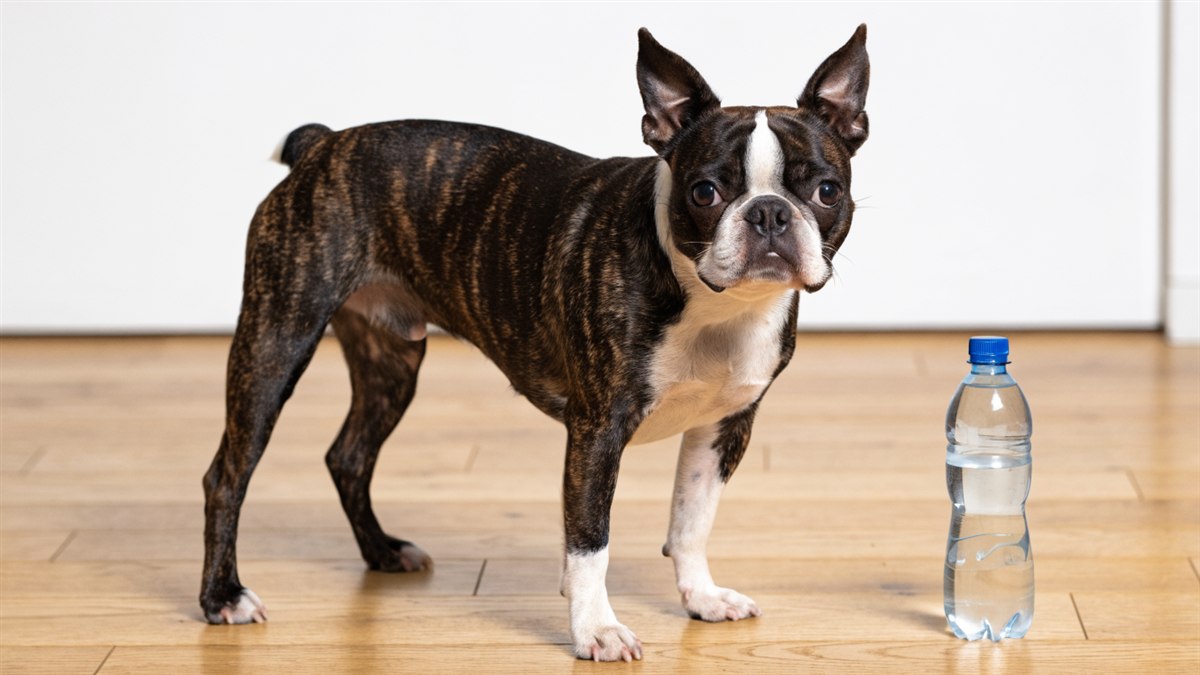
Quick answer
Boston Terrier price in India runs about Rs 30,000 to Rs 80,000 in the credible published listings, and the far higher figures of Rs 3,00,000 to Rs 7,00,000 quoted by some Indian sellers are not supported. The bigger question is climate. This is a flat-faced breed, and flat-faced dogs carry 2.10 times the odds of heat-related illness, which makes most of India a poor fit.
This guide is general information for Indian pet owners and is not a diagnosis. Always consult a registered veterinarian near you before acting on anything you read here, and treat laboured breathing, blue or grey gums, collapse or a bulging eye in a Boston Terrier as an emergency rather than something to watch overnight.
Boston Terrier traits, rated for Indian conditions
What a Boston Terrier is, and the one fact that decides everything
The Boston Terrier is a small American companion breed weighing no more than 11.5 kg, built on a deliberately shortened muzzle, and that short muzzle is the fact an Indian buyer has to reason from first.
Three kennel clubs describe the same dog in almost the same words. The American Kennel Club standard, approved 11 February 2011, calls it a lively, highly intelligent, smooth coated, short-headed, compactly built, short-tailed, well balanced dog in brindle, seal or black, evenly marked with white. The Federation Cynologique Internationale carries it as FCI-Standard No 140 in Group 9, Section 11 Small Molossian Dogs, with the valid standard dated 28 January 2013. The Royal Kennel Club places it in the Utility group and last updated its standard in November 2025.
The standard writes the short muzzle into the breed
The muzzle is capped by rule, not by accident. Both the AKC and the FCI require a muzzle "not exceeding in length approximately one-third of the length of the skull", square, wide, deep and free from wrinkles Federation Cynologique Internationale. The Royal Kennel Club puts the same limit as "stop to tip of nose approximately one-third of length of skull" and then adds two clauses the American standard does not have, "Nostrils open" and "Excessively prominent eyes highly undesirable";. Those two additions are a health correction written into a beauty document, and they tell you exactly which two things go wrong in this breed.
The bite is the second written-in feature. Every one of the three standards says the bite is "even, or sufficiently undershot to square the muzzle"; The Royal Kennel Club. In the Cambridge clinical study of the breed, mandibular prognathia, the undershot jaw, was recorded as "a ubiquitous finding in Boston Terriers";.
Size, coat and colour, in numbers
| Feature | What the standard requires | Source |
|---|---|---|
| Weight ceiling | Not exceeding 11.5 kg (25 lb) | Royal Kennel Club, November 2025 |
| Weight classes | Lightweight under 6.8 kg, Middleweight 6.8 to under 9.1 kg, Heavyweight 9.1 to under 11.4 kg | Royal Kennel Club |
| Muzzle length | Approximately one third of skull length, no more | AKC and FCI |
| Coat | Short, smooth, bright, fine in texture | AKC 2011 |
| Colour | Brindle, seal or black with required white muzzle band, white blaze between the eyes and white forechest | AKC 2011 |
| Tail | Set on low, short, fine, tapering, straight or screw, never above horizontal | AKC and Royal Kennel Club |
| Disqualifications | Blue eyes, Dudley nose, docked tail, solid colour without the required white markings | AKC 2011 |
Real dogs land inside that. The 104 Boston Terriers measured under clinical conditions at Cambridge averaged 7.8 kg with a range of 4.2 to 15.8 kg, a median age of three years and a median body condition score of 5 out of 9. Mean body length was 31 cm and mean height 38 cm.
Where it came from, and why the screw tail matters
The breed was made in Boston in the nineteenth century by crossing the Bulldog with terriers, which is why it sits in the same genetic neighbourhood as the Bulldog and the French Bulldog rather than with working terriers. The shared ancestry is not cosmetic. The DVL2 variant that produces the screw tail is fixed or close to fixed in the French Bulldog, the Bulldog and the Boston Terrier, and can also occur in the Staffordshire Bull Terrier Tomlinson F, Liu N-C, Sargan DR. A Boston Terrier is a screw-tailed bulldog-type in a small, tidy package, and it inherits the package's problems in proportion.
It is a popular dog where it comes from and a rare one here. The AKC ranks it 23rd of 210 breeds for registrations. In the UK, 1,603 Boston Terriers were registered with the Kennel Club in 2022, against 11,667 Bulldogs and 42,538 French Bulldogs. In India, Google returned about 161 results in total for the exact phrase "boston terrier price in india" on 23 August 2026. That number is reported as an observation and not as evidence of market size: a Labrador Retriever control run on 2 September 2026 returns a dense commercial result set across only two pages, so exact-phrase counts in the low hundreds are normal even where the market is thick.
The Boston Terrier is a compact, affectionate, highly trainable companion whose breed standard mandates a shortened muzzle. Everything difficult about owning one in India follows from that single clause.
BOAS in the Boston Terrier, and whether 'less affected' is evidenced
Brachycephalic obstructive airway syndrome affects 62.5 percent of Boston Terriers, measured directly. That figure is better than the French Bulldog and the Bulldog, and it is not the same thing as being unaffected.
Two Cambridge studies settle this, and both are on the breed itself rather than borrowed. Tomlinson and colleagues recruited 107 Boston Terriers from the UK pet population, put 104 of them through full respiratory function grading with an exercise tolerance test, and published in PLOS ONE on 31 December 2024 under the title "BOAS in the Boston Terrier: A healthier screw-tailed breed?";. The same group then graded 898 dogs across fourteen brachycephalic breeds, Boston Terrier included at n = 107, and published that in PLOS ONE on 18 February 2026.
The grade distribution, with the denominator
| Grade | Dogs | Share | What it means clinically |
|---|---|---|---|
| Grade 0 | 39 | 37.5% | No audible upper airway noise, no excess respiratory effort |
| Grade 1 | 37 | 35.6% | Mild BOAS, no exercise intolerance, not clinically affected |
| Grade 2 | 27 | 26.0% | Moderate BOAS, clinically significant |
| Grade 3 | 1 | 0.96% | Severe BOAS, unable to exercise or in respiratory distress |
| Total graded | 104 | 100% | 39 + 37 + 27 + 1 = 104 |
Divide it out yourself. 39 of 104 is 37.5 percent, so 65 of 104, or 62.5 percent, carried some measurable degree of BOAS. Only one dog in the whole cohort reached Grade 3.
Against the French Bulldog, the Bulldog and the Pug
The comparison is real and it is favourable, with one caveat. In the 2024 paper the Boston Terrier's 37.5 percent Grade 0 was set against 15.2 percent in Bulldogs (p = 0.001) and 10 percent in French Bulldogs (p<0.001), both from an equivalent Cambridge study population. The 2026 fourteen-breed paper used a slightly different reference set for the same three breeds, Pugs 7 percent, French Bulldogs 10 percent and Bulldogs 10.9 percent Grade 0. Note the Bulldog figure moved from 15.2 to 10.9 percent between the two papers. We publish both rather than picking one.
The Pug comparison exists only in the 2026 paper. The 2024 Boston Terrier study, despite its title, never puts a Pug number on the page. So anyone telling you the Boston is "better than a Pug" from the 2024 study alone is reading something that is not there.
Moderate risk, not low risk
The fourteen-breed study is the one that should change an Indian buyer's mind. It sorts breeds into three bands and puts the Boston Terrier in the middle one, alongside the Griffon Bruxellois, the King Charles Spaniel, the Dogue de Bordeaux and the Shih Tzu Tomlinson F, Liu N-C, Sargan DR. The authors define that band plainly: these five breeds "have significantly more Grade 0 dogs within the breed than the three popular breeds, but at least 50% of dogs in the sample population are Grades 1-3".
Six breeds scored better. The Staffordshire Bull Terrier, Cavalier King Charles Spaniel, Chihuahua, Boxer, Affenpinscher and Pomeranian all had at least 50 percent Grade 0 and at least 75 percent clinically unaffected. So the Boston Terrier is the fifth-worst of the fourteen breeds tested, not a mild case.
What predicts BOAS inside the breed, and what a buyer can see
Two features predict BOAS within the Boston Terrier, nostril stenosis and a proportionately shorter muzzle, and nostril stenosis is the only one of them a buyer can assess by looking at a puppy.
Two features carry the risk, and one of them you can look at. In the 2024 multiple logistic regression, nostril stenosis gave an odds ratio of 2.51 (95% CI 1.18 to 5.85, p = 0.02) and craniofacial ratio gave 0.757 (95% CI 0.603 to 0.919, p = 0.009), meaning a proportionately shorter muzzle raised risk. The model classified 82.8 percent of dogs correctly with an area under the curve of 0.868. The 2026 study found the same two things and added that the Boston Terrier was the only one of fourteen breeds in which nostril stenosis was significant in its own breed-specific model, at an odds ratio of 2.3 (95% CI 1.2 to 4.7, p = 0.017). Its craniofacial ratio split cleanly too, 0.15 in Grade 0 dogs against 0.12 in Grade 1-3 dogs, p<0.0001.
Severe nostril stenosis was recorded in only six of the fourteen breeds, and the Boston Terrier is one of them. Thicker necks also mattered, with a mean neck to chest girth ratio of 0.63 in affected dogs against 0.62 in Grade 0 dogs, p = 0.039.
A third dataset, where this breed does not appear
Insurance records give an independent read and they are quietly favourable. Dimopoulou and colleagues followed roughly 450,000 dogs insured in Sweden between 2011 and 2014, recording 6,590 upper respiratory tract claims in 4,781 dogs at an overall incidence rate of 50.56 per 10,000 dog years at risk, 95 percent confidence interval 49.14 to 52.01. Thirteen breeds came out at high relative risk and eight of those were brachycephalic, but the five with the highest incidence were the English bulldog, Japanese chin, Pomeranian, Norwich terrier and pug. The Boston Terrier is not among the named high-risk breeds.
Read that carefully rather than as reassurance. A breed can be absent from a Swedish insurance high-risk list simply because too few of them are insured in Sweden, and the same study found that French bulldogs with an upper respiratory diagnosis had a median lifespan of 3.61 years against 7.81 years for other diagnosed breeds, which shows how lethal the vulnerable end of this group is. What the three datasets agree on is direction, not magnitude. The Boston Terrier is the least badly affected of the popular flat-faced breeds, and it is still a flat-faced breed.
The Kennel Club and University of Cambridge Respiratory Function Grading Scheme, the one that produces a graded certificate, is "currently limited to French Bulldogs, Pugs and Bulldogs";. No Indian breeder can hand you a UK RFG certificate for a Boston Terrier, because the scheme does not issue one. OFA in the United States does hold a respiratory register, and it lists 118 Boston Terrier evaluations at 92.4 percent normal, but a voluntary register of dogs presented for certification is a self-selected sample and cannot be read as a population prevalence. The Cambridge figure of 37.5 percent Grade 0 is the one built on a recruited cohort.
Heat tolerance in India, measured against Boston's own climate
The Boston Terrier has poor heat tolerance in almost all of India, because Chennai's coolest month is warmer than Boston's hottest month and this dog cools itself through the one organ its breed standard shortens.
Dogs do not sweat to cool down. They pant, which is evaporative cooling across the surfaces of the nose, mouth and airway, so a dog whose airway is narrowed has less cooling surface and more work to move air across it. That is the mechanism, and it is different from a thick-coated dog overheating. A Golden Retriever in Chennai has a heat problem you can help with a fan and a shady floor. A flat-faced dog has a heat problem in its throat.
Boston, Massachusetts against four Indian cities
One source, one methodology, five explicit coordinate pairs. Every figure below comes from the NASA POWER long-term climatology, queried by latitude and longitude rather than by place name, so no city can be substituted for another by a slug lookup. T2M is the monthly mean air temperature two metres above ground.
| Place | Coldest month mean | Hottest month mean | Annual mean | Months with peak max at or above 30 C |
|---|---|---|---|---|
| Boston, Massachusetts (42.36 N, 71.06 W) | -3.5 C (January) | 22.4 C (July) | 9.6 C | 7 of 12 |
| Bengaluru (12.97 N, 77.59 E) | 20.2 C (December) | 28.4 C (April) | 23.7 C | 12 of 12 |
| Delhi (28.61 N, 77.21 E) | 13.6 C (January) | 35.9 C (June) | 25.6 C | 11 of 12 |
| Mumbai (19.08 N, 72.88 E) | 23.2 C (January) | 31.2 C (May) | 26.8 C | 12 of 12 |
| Chennai (13.08 N, 80.27 E) | 24.1 C (January) | 31.5 C (May) | 28.0 C | 12 of 12 |
Read the first column against the second. Chennai's coldest month averages 24.1 C. Boston's warmest month averages 22.4 C. Chennai's winter is 1.7 C warmer than the hottest month this breed was developed in, and Mumbai's January, at 23.2 C, is also above Boston's July. Delhi's June, at 35.9 C, runs 13.5 C above Boston's hottest month. Annual mean temperature in Chennai is 28.0 C against 9.6 C in Boston, a gap of 18.4 C.
Humidity is the part Indian pages miss
Panting fails when the air is already wet. Mumbai's monsoon is the worst combination on this table, not its summer. In July the mean temperature is 26.6 C at 89.6 percent relative humidity, and in August 26.1 C at 90.4 percent. Those months look mild on a thermometer and are the hardest months of the year for a brachycephalic dog, because evaporative cooling barely works at 90 percent humidity. Chennai holds 80.0 to 82.3 percent relative humidity through October and November. Delhi is the outlier in the other direction, dropping to 23.4 percent in May, which means its dry 48.1 C peak is survivable indoors in a way Mumbai's humid 26 C monsoon afternoon is not.
Where in India is least bad
Bengaluru is the only Indian city on this table with a genuine cool season for a flat-faced dog. Its December mean of 20.2 C sits below Boston's July mean of 22.4 C, and its hottest month, April at 28.4 C, is 3.1 C cooler than Chennai's hottest. Pune, Ooty, Shillong, Dehradun and the hill stations follow the same logic. Chennai, Mumbai, Kolkata, Hyderabad, Ahmedabad and coastal Kerala are the hardest places in the country to keep this breed honestly, and Delhi is survivable only because it is dry and because indoor cooling is common there.
The 2.10 odds ratio, and whether it belongs to this breed
Brachycephalic dogs carry 2.10 times the odds of heat-related illness, 95 percent confidence interval 1.68 to 2.64, and the Boston Terrier is not modelled as its own breed in the study that produced that figure. It is named in that study's own supplementary list of brachycephalic breeds, which is why 2.10 applies to it directly rather than by analogy.
Brachycephalic dogs carry 2.10 times the odds of heat-related illness compared with mesocephalic dogs, 95 percent confidence interval 1.68 to 2.64, p<0.001. That comes from VetCompass, drawn from the clinical records of 905,543 UK dogs under veterinary care in 2016, in which 395 confirmed heat-related illness events were identified, an incidence of 0.04 percent with an event fatality rate of 14.18 percent (95% CI 11.08 to 17.96). Fifty-six of the 395 dogs died.
The Boston Terrier is not modelled as its own breed in Hall, Carter and O'Neill 2020, and it has no odds ratio of its own. We searched the article text: Bulldog appears 29 times, Chow 12, Retriever 22, Pug 7, Terrier 5, and Boston zero. The nine breeds with significantly raised odds were the Chow Chow (OR 16.61), Bulldog (13.95), French Bulldog (6.49), Dogue de Bordeaux (5.31), Greyhound (4.26), Cavalier King Charles Spaniel (3.45), Pug (3.24), English Springer Spaniel (2.74) and Golden Retriever (2.65). But the article text is not the whole paper, and a zero there is not proof of absence. The paper's own supplementary material, Supplementary Note 1, Table 1, headed Breed types defined as brachycephalic skull shape, lists the Boston Terrier by name. So this breed was inside the 905,543-dog cohort and was counted in the brachycephalic group that produced 2.10. That figure is the study's own classification of this dog, not a number borrowed from a neighbouring breed, and Cambridge measuring 62.5 percent of Boston Terriers as BOAS-affected corroborates it rather than being the reason for it. What the paper does not give is a breed-specific Boston Terrier odds ratio, because the breed met neither arm of an inclusion rule that admitted breeds with at least five heat-illness cases and/or at least 5,000 dogs in the population.
The Indian evidence does not exist, and we checked properly
PubMed holds zero genuine records on canine heat-related illness in India. The search returned exactly one hit, and opening it showed a 2012 paper on treating canine cutaneous leishmaniasis with radio-frequency induced heat therapy, which is not heat illness. Brachycephalic dogs in India returned one hit, a 2026 deep-learning paper on classifying stenotic nares. Boston Terrier combined with heat or thermoregulation returned two, both about the HSF4 heat shock transcription factor and cataracts.
Those zeros are earned rather than assumed. Run in the same session, the control queries returned 1,451 records for dogs and India, 712 for brachycephalic dogs, and 14 for Labrador Retriever and India. The searches work. There simply is no published Indian study of heat illness in dogs, which is why this page compares climates itself instead of citing one.
One further absence is worth recording because it is the trap this kind of search sets. Two of those queries returned a non-zero count, and both counts were noise. Boston Terrier combined with heat or thermoregulation returned two records, and opening them showed a 2008 paper on heat shock transcription factor 4 as a candidate gene for cataracts and a 2007 paper on the same HSF4 gene. Brachycephalic dogs and India returned one record, a 2026 deep-learning method for classifying stenotic nares. A result count is not coverage until you open the records.
Keeping one alive through an Indian summer, and knowing when it is an emergency
To keep a Boston Terrier safe in India, run air-conditioning through the hot season, walk only before 07:00 and after 20:00, use a harness rather than a collar, and treat noisy laboured breathing with blue or grey gums as an emergency that needs a vet within minutes.
This section assumes you have already decided to own one, or already do. The advice below is what actually reduces risk, in order of how much difference each step makes.
The seven things that matter
- Run air-conditioning, not a fan, through the hot months. A fan moves hot air across a dog that cannot sweat. In Chennai, Mumbai and Kolkata the monthly mean sits above 24 C for all twelve months, so this is a nine-month running cost, not a two-week one. Budget it before you buy.
- Walk in the dark at both ends of the day. Cornell's Riney Canine Health Center puts the hottest part of the day at roughly 3 to 5 pm and advises walking in early morning or evening hours. In India that means before 07:00 and after 20:00 through April to June, and it is not optional for this breed.
- Use a harness and retire the collar. A neck collar puts pressure exactly where a brachycephalic airway is already narrow, and thicker necks are a measured BOAS risk factor in this breed, mean neck to chest girth ratio 0.63 in affected dogs against 0.62 in unaffected, p = 0.039. A Y-front harness moves the load to the chest.
- Keep the dog lean. Nineteen point two percent of BOAS-affected Boston Terriers were recorded as overweight against 10.3 percent of Grade 0 dogs, and across all fourteen brachycephalic breeds body condition score was one of only three factors significantly associated with BOAS. Higher bodyweight relative to the breed mean also raised heat-illness odds in VetCompass, OR 1.42 (95% CI 1.12 to 1.80).
- Never leave the dog in a parked car, not even briefly. Cornell records that at an outside temperature of 70 F, roughly 21 C, the inside of a car can rise by 40 F within an hour, with most of the rise in the first 15 to 30 minutes. Indian afternoon starting temperatures are far above 21 C.
- Plan for power cuts. An air-conditioned flat that loses power in a May afternoon becomes a sealed hot box. Keep a cool tiled bathroom floor, a wet towel and drinking water reachable, and know which room stays coolest without electricity.
- Do not let a stranger say the noise is normal. Owners of brachycephalic breeds routinely read their dog's breathing noise as breed character rather than as disease. Snoring, snorting and a rasp on a short walk are clinical signs, not personality.
The warning signs, in escalation order
| What you see | What it means | What to do |
|---|---|---|
| Panting harder than usual, seeking cool floor, slowing on a walk | Early heat stress, reversible | Stop, get indoors into air-conditioning, offer water, do not resume the walk |
| Loud rasping or honking on inhalation, tongue hanging wide and flat | Airway is struggling to move enough air | Cool the dog and stop all activity. Book a veterinary assessment this week |
| Thick ropey drool, staggering, vomiting, disorientation | Heat illness in progress | Emergency. Start cooling with room-temperature water on the belly, groin and paws, get moving air across the wet coat, and drive to a vet now |
| Gums blue, grey or brick red. Collapse. Seizure | Oxygen is not reaching tissue | Emergency. Cool en route and call the clinic so they are ready. Do not wait to see if it settles |
| An eye out of its socket after a knock or a scuffle | Proptosis, a surgical emergency | Keep the eye wet with saline or clean water, do not push it back, go to a vet immediately |
Cool with room-temperature water rather than ice. Cornell's guidance is to bring the dog into cool air conditioning with access to water immediately. Ice water on a severely overheated dog causes surface blood vessels to constrict, which traps heat in the core, so tap water and airflow beat an ice bath.
First, the monsoon is not a rest period for this breed. Mumbai runs 89.6 percent humidity in July and 90.4 percent in August at a mean of about 26 C, and panting works poorly in that air. Second, if you travel with the dog, remember that Indian pet imports are only permitted through the airports and seaports of Delhi, Mumbai, Chennai, Hyderabad, Bengaluru and Kolkata and, since October 2024, Kochi airport Department of Animal Husbandry…, all but one of which sit in the hottest or most humid part of the country.
Boston Terrier price in India, and why the published figures differ by twenty times
Boston Terrier price in India is quoted between Rs 25,000 and Rs 7,00,000 across published sources, a spread of twenty-eight times, and only the lower band has anything behind it. Four of the six sellers ranking on page one publish no price at all.
We opened every source below ourselves. Where a page shows no price, that is recorded as no price, not filled in from somewhere else.
| Source | Published figure | What is behind it |
|---|---|---|
| Mr n Mrs Pet | Rs 3,00,000 to Rs 7,00,000+ | Three tiers. Basic Rs 3-4 lakh, KCI Registered Rs 4-6 lakh, Champion Bloodline Rs 6-7 lakh |
| PetBuy.in | Rs 30,000 to Rs 80,000 | Editorial band. The same page prints 'Listings 0' and a blank live average |
| Wrapinfur 2026 price list | Rs 35,000 to Rs 80,000 | Row 33 of a 50-breed table, monthly cost Rs 3,500 to Rs 6,500 |
| Quora, top answer of 34 | Rs 30,000 rising to Rs 60,000 or 70,000 | A user answer roughly seven years old, holding position two on Google India |
| Google AI Overview, main panel | Rs 3,00,000 to Rs 7,00,000 | Sourced to Mr n Mrs Pet |
| Google AI Overview, PAA panel | Rs 25,000 to Rs 60,000 | Sourced to Mr n Mrs Pet, on the same results page |
| Puppiezo (ranks first) | None for this breed | No Boston Terrier price anywhere on the page |
| Poddar Kennel | None | Breed page, contact number only |
| Dav Pet Lovers | None | Shopify product with og:price:amount set to 0.00 INR |
| The Dog Farm | None | Breed page, contact number only |
The Rs 3 to 7 lakh figure fails its own control
Mr n Mrs Pet uses one pricing template across its whole catalogue, so the template can be tested. Its Beagle page runs the identical three tiers and gives Basic Rs 30,000 to Rs 40,000, KCI Registered Rs 40,000 to Rs 65,000 and Champion Bloodline Rs 65,000 to Rs 90,000+. The Boston Terrier band on the same template is ten times higher at every tier. A Boston Terrier is not ten times a Beagle in any market on earth, and nothing on the page explains the multiple.
It matters because Google believed it. The main AI Overview on the Indian results page for this query reproduces Rs 3,00,000 to Rs 7,00,000 and credits Mr n Mrs Pet. Further down the same page, the AI Overview generated inside the People Also Ask panel cites the same site and gives Rs 25,000 to Rs 60,000. Two answers, one source, one page, a factor of twelve apart. That is the state of the evidence a buyer walks into.
Running the 84.38 test
None of these figures is a dollar price in disguise, and that is worth stating because it usually is. Divide each by 84.38, the rate that has produced round-dollar artefacts on other breed pages on this site. Rs 30,000 becomes 355.53 dollars, Rs 35,000 becomes 414.79, Rs 80,000 becomes 948.09, Rs 3,00,000 becomes 3,555.34 and Rs 7,00,000 becomes 8,295.80. Not one is a round dollar figure. These are genuine rupee claims, well-founded or not.
Run the test the other way and something more interesting appears. The US market band quoted on the same Quora thread is 600 to 1,200 dollars with a median of 800, which converts to roughly Rs 50,600 to Rs 1,01,300, median about Rs 67,500. The credible Indian band of Rs 30,000 to Rs 80,000 sits at or below the American price for an American breed that has to be imported. Cheap imports are the anomaly here, not the lakh-scale ones.
The Rs 98,999 that is not a Boston Terrier
Puppiezo holds position one for this exact query and shows no Boston Terrier price. What it does show is a carousel of eight other puppies under the heading Other Available Pets, and three of them are priced at Rs 98,999. Those three are a Maltipoo called Fizey, a Maltipoo called Samy and a Doxiepoo called Yoki. The rest of the carousel runs Rs 92,599 for two Poodles, Rs 94,999 for a Cane Corso, Rs 1,20,000 for a Goldendoodle and Rs 76,499 for a Rottweiler.
This site has now caught the same Rs 98,999 figure on five separate breed pages, attached each time to whatever puppy happens to be in stock and usually a Maltipoo. If you see Rs 98,999 quoted anywhere as the Boston Terrier price in India, it came off a carousel of unrelated dogs. It is not a Boston Terrier price.
What we would actually tell a buyer
Treat Rs 30,000 to Rs 80,000 as the credible published band and treat everything above Rs 1,00,000 as unevidenced. Then treat the number as the least important thing on this page. A Rs 35,000 puppy with severe nostril stenosis in a Chennai flat will cost far more in surgery, emergency visits and shortened life than a Rs 80,000 puppy with open nostrils in Bengaluru. Price is not the variable that decides this purchase.
Monthly cost of ownership, and the line item nobody prices
Published Indian monthly cost for a Boston Terrier is Rs 3,500 to Rs 6,500, and that figure omits the two expenses this breed actually generates, air-conditioning and airway medicine.
One Indian source gives a monthly cost figure and we can check how it was made. Wrapinfur's 2026 list puts the Boston Terrier at Rs 3,500 to Rs 6,500 a month in row 33. Row 31, the Toy Poodle, carries the identical Rs 3,500 to Rs 6,500. The figure is a small-dog band applied by size class, not a breed calculation, and it is useful only as a floor for food, treats, deworming and routine vaccination.
Google's AI Overview adds its own breakdown on the Indian results page, giving food and nutrition at Rs 4,000 to Rs 8,000 a month, grooming and care at Rs 1,500 to Rs 3,000 a month, and medical at "Rs 3,000 to Rs 6,005 annual average";. The Rs 6,005 is worth noticing. A genuine market range does not end in a five, and a figure that precise inside a round band is a tell that the number was generated rather than observed. We report it as an artefact, not as a cost.
What this breed adds on top
- Air-conditioning through the hot season. In Chennai and Mumbai every one of the twelve monthly means sits above 23 C, so cooling is a nine-to-twelve-month running cost rather than a summer one. No Indian breed page we opened prices it, and we will not invent a rupee figure. Get your own electricity tariff and your own room size, work out the number honestly, and treat it as the largest recurring cost of this breed.
- Airway assessment and, for some dogs, surgery. Sixty-two point five percent of Boston Terriers graded at Cambridge had measurable BOAS and 26.0 percent were Grade 2, meaning clinically significant. Grade 2 dogs are the ones who end up discussing nostril widening or soft palate surgery with a specialist. Indian specialist soft-tissue surgery pricing is not published in any source we could verify, so budget for a referral consultation and expect the number to be substantial.
- Eye care. OFA holds 10,458 Boston Terrier eye evaluations, of which 8.4 percent were abnormal. Prominent eyes on a shallow orbit mean a lifetime of saline flushes, occasional ulcers and the standing risk of an emergency.
- Emergency capacity. Heat illness in this breed is a same-hour problem, not a next-morning problem. Know which clinic near you is open late and can give oxygen, and factor a taxi at 2 am into the plan.
- Dental work. OFA's dentition register recorded 15.2 percent abnormal in 92 Boston Terrier evaluations, which is a small denominator but a rate ranked thirteenth across all breeds in that register. Dental crowding in a shortened jaw means scaling and extractions arrive earlier than in a mesocephalic dog.
How to think about the total
The published Rs 3,500 to Rs 6,500 covers the boring part of dog ownership and is broadly reasonable for a 7 to 9 kg dog eating a commercial diet in an Indian city. It is the wrong number to plan on, because the costs that make this breed different are conditional and lumpy. Most months you will spend the small figure. In the months where an ulcer, a heat episode or an airway assessment happens, you will spend a multiple of it.
If the air-conditioning line frightens you, that is the decision. A household that cannot run cooling reliably through April to June, or through a Mumbai monsoon, should not buy this breed at any purchase price. That is not a cost you can economise on later without the dog paying for it.
Temperament and household fit, and who should not buy one
The Boston Terrier is an affectionate, playful, people-centred companion that suits apartment living and families with children, and it is the wrong dog for a household that is out for ten hours a day or cannot cool a room.
The standards agree on character and they are unusually direct about it. The AKC calls the breed "a friendly and lively dog" with "an excellent disposition and a high degree of intelligence, which makes the Boston Terrier an incomparable companion";. The FCI carries that sentence verbatim. The Royal Kennel Club is blunter and more useful, summarising temperament as "Lively, intelligent, determined and strong willed";. Determined and strong willed is the half that Indian seller pages leave out.
What living with one is like
It is a small dog with a large appetite for company. The breed was selected out of pit-fighting bull-and-terrier stock into a companion within a few decades, and what survived that selection is sociability rather than drive. A Boston Terrier does not want a job, it wants to be in the room. Left alone for long stretches it becomes frustrated and develops unwanted behaviour, which the AKC's own care guidance states plainly.
It is genuinely a compact, sturdy dog rather than a fragile toy. Cambridge measured a mean weight of 7.8 kg with a range of 4.2 to 15.8 kg and a mean body length of 31 cm, and the standard's language is that the dog "must not appear to be either spindly or coarse";. Children can be around one without the constant fear of injury that a 2 kg dog demands, provided the eyes are protected.
The noise, and what it actually is
Snoring, snorting and a rasp during play are not charm. Sixty-two point five percent of the graded Cambridge cohort had measurable BOAS and 26.0 percent were Grade 2, clinically significant. If your dog is loud at rest, that is a clinical observation you can act on, and the strongest thing an owner can do for this breed is refuse to normalise the sound.
Who this breed suits
- Apartment households in a cool or air-conditioned city. Bengaluru, Pune, Dehradun, Shillong and the hill stations are the honest fits.
- Homes with someone in for most of the day. Work-from-home, a joint family, a retired parent at home. This is a dog that does badly with an empty flat.
- Families with school-age children who can be taught to protect the eyes. No face-level rough play, no toys thrown near the head, no unsupervised handling by toddlers.
- Owners who will train and socialise deliberately. Determined and strong willed responds to structure and dislikes being nagged.
Who should not buy one
- Anyone in Chennai, Mumbai, Kolkata, Hyderabad or coastal Kerala without reliable cooling. Every month of the year in Chennai averages above 24 C and the breed is measurably heat-sensitive.
- Anyone who wants a running or trekking companion. Grade 2 BOAS means clinically significant exercise intolerance, and a quarter of the breed has it.
- Anyone out of the house for ten to twelve hours daily. Separation problems are the predictable outcome.
- Anyone buying on looks. The flatter the face, the higher the risk, measured at odds ratio 0.757 per unit of craniofacial ratio in the direction of a shorter muzzle. The cutest puppy in the photo is often the one that will breathe worst.
- Anyone who wants a guard dog. It barks, it is friendly to strangers, and that is the end of its security value.
If you want the temperament without the airway, the Beagle and the Indian pariah dog give you a sociable family dog with a full-length muzzle. If you have already fallen for the flat face, read the Pug and French Bulldog pages before deciding, because both are measurably worse on the same test, at 7 percent and 10 percent Grade 0 against the Boston Terrier's 37.5 percent.
Training a Boston Terrier, and the Indian scheduling problem
To train a Boston Terrier, use short reward-based sessions indoors, socialise hard in the first four months, and schedule every session outside the heat of the day, because this is a highly trainable dog whose training window in India is narrow.
This breed is easy to teach and easy to sour. The AKC's guidance on the breed reads "Many Bostons are quite sensitive; for them, gentle corrections should be followed by warmth and praise";. The Royal Kennel Club's temperament clause, "determined and strong willed", is the other half. Put those together and you get a dog that learns a cue in a handful of repetitions and then argues about it if the reward stops.
What works
- Keep sessions to five minutes. Short, frequent, reward-based repetitions beat one long session, and they also keep respiratory effort low.
- Train indoors during the hot months. Sit, down, stay, place, recall and handling tolerance all work perfectly well on a tiled floor under a fan or air-conditioner. Only loose-lead walking genuinely needs to happen outside.
- Use food, not pressure. Measure the training treats out of the daily ration so the dog does not gain weight, because a higher body condition score is one of only three factors significantly associated with BOAS across fourteen brachycephalic breeds.
- Teach handling from week one. This dog needs its eyes checked daily for life, so a puppy that accepts a hand near its face is doing preventive medicine.
- Train a settle. A dog that can lie down calmly indoors for an hour is a dog that survives a 43 C afternoon without complaining.
What this breed resists
It resists repetition without payoff, harsh handling and being ignored. It also physically resists anything that raises respiratory effort in warm air, and owners misread that as stubbornness. A Boston Terrier that stops halfway through a recall drill in a Delhi May afternoon is not being disobedient. Grade 2 BOAS, present in 26.0 percent of the graded Cambridge cohort, is defined as clinically significant disease, and Grade 3, in one dog of 104, is defined by "an inability to exercise or signs of respiratory distress, such as cyanosis".
The socialisation window, and the Indian complication
Socialise between eight and sixteen weeks, and in India that period usually falls inside the hot season for a puppy bought in spring. The fix is to socialise indoors and in the dark. Car rides at 07:00, a friend's flat, a lift lobby, a vet clinic waiting room, the sound of a pressure cooker, an autorickshaw horn, children, a broom, a cat. None of that needs midday sun.
The Indian legal minimum matters here too. Rule 8(1)(a) of the Prevention of Cruelty to Animals (Dog Breeding and Marketing) Rules 2017 requires that "pups less than eight weeks in age are not sold";. A puppy taken at six weeks has missed a fortnight of littermate learning that no amount of later training replaces, and the page ranking first in India for this breed advertises "45+ days of Old Male and Female Puppies";. Forty-five days is six weeks and three days.
Sports, honestly
Obedience, rally, trick training and scent work suit this breed. Agility and flyball are advertised for it by retail breed pages, and they are a poor fit for an Indian climate in a dog with a one-third-length muzzle. If you want to compete, do it in an air-conditioned hall in the cool months, watch the dog's breathing rather than the clock, and stop at the first change in the sound of the breath.
Two five-minute indoor sessions, one before breakfast and one after dinner. One short outdoor walk before 07:00 and one after 20:00 for loose-lead practice and sniffing. A puzzle feeder for the middle of the day. That is enough mental work for a Boston Terrier and it never asks the dog to breathe hard in hot air.
Daily exercise, and why the imported advice is wrong here
A Boston Terrier in India needs two short walks of 15 to 20 minutes in the dark plus indoor play, not the 45 to 60 minutes Indian retail pages copy out of overseas breed guides.
Start with what the overseas sources actually say, because Indian pages reproduce them verbatim. The AKC's breed guidance says the requirement "varies from individual to individual", that for some "a brisk walk once or twice a day will be enough" and that others need more time to run and play. An Indian seller page reprints that entire passage word for word, including "simply letting a Boston out into the backyard doesn't count as exercise", with no adjustment at all. Another Indian retail page prescribes "around 45 to 60 minutes of daily exercise";.
Why that advice does not transfer
The AKC text is written for a country whose warmest month in the breed's home city averages 22.4 C. A brisk walk twice a day is sound advice at 22 C. At Chennai's May mean of 31.5 C with 64.5 percent humidity, or Mumbai's August mean of 26.1 C at 90.4 percent humidity, the same walk is a heat-loading exercise for a dog whose only cooling route is the airway the breed standard shortens.
The dog also cannot always tell you it is in trouble. Exercise intolerance is what separates BOAS Grade 1 from Grade 2 in the Cambridge scheme, and 26.0 percent of graded Boston Terriers were Grade 2 or worse. That is roughly one dog in four who is already exercise-limited before you add 30 C air.
The Indian schedule that works
| Season | Outdoor walking | Indoor work | Absolute stop |
|---|---|---|---|
| Cool months (roughly December to February in most of India) | Two walks of 20 to 30 minutes, morning and evening | Puzzle feeder, short training sessions | Any change in breathing sound |
| Hot dry months (March to June in Delhi and the north) | Two walks of 15 minutes, before 07:00 and after 20:00 only | Indoor fetch on a cool floor, scent games, trick training | Panting that does not settle within five minutes of stopping |
| Monsoon (June to September, worst in Mumbai and the coast) | Two short walks whenever the air is coolest, even if that is 06:00 | Everything else indoors under cooling | Loud rasping on inhalation at rest |
| Coastal year-round (Chennai, Mumbai, Kochi) | Dark hours only, all twelve months | Indoor enrichment as the primary activity | Blue or grey gums, at any time, is an emergency |
What happens without enough exercise
Two things go wrong, and both feed the airway problem. The dog gains weight, and higher body condition score was one of only three factors significantly associated with BOAS across 898 dogs of fourteen brachycephalic breeds. Nineteen point two percent of BOAS-affected Boston Terriers at Cambridge were recorded as overweight against 10.3 percent of Grade 0 dogs. Higher bodyweight relative to the breed mean also carried 1.42 times the odds of heat-related illness in VetCompass, 95 percent confidence interval 1.12 to 1.80. The second failure is behavioural. An under-stimulated Boston Terrier chews, barks and cannot settle, which the AKC's own guidance predicts.
So the answer is not less activity, it is differently timed activity. A dog that gets thirty minutes of thinking work indoors and two short cool-hour walks is better exercised than one dragged round a park at five in the afternoon.
Do not use swimming as the hot-weather substitute for walking with this breed. A heavy front end, a short muzzle sitting close to the waterline and a dog that has to pant to cool itself is a combination that drowns. If you use water at all, use a shallow paddling tray the dog can stand in, under supervision, and never a pool.
Grooming in Indian humidity, which is the easiest part of this breed
Grooming a Boston Terrier takes one weekly brush and a daily face check, because the coat is short and smooth and the real maintenance is the eyes and any facial fold rather than the hair.
The coat is specified as "short, smooth, bright and fine in texture" and the skull as "free from wrinkles";. Both those clauses are good news in a humid climate. There is no undercoat to trap moisture against the skin, no long ear feathering to hold water after a monsoon walk, and no deep face fold of the kind that makes a Pug or a Bulldog a daily cleaning job.
What the clinical examinations actually found
Cambridge examined the skin and ears of the same cohort it graded, which gives real denominators instead of general advice. Eighty-nine point five percent of the Boston Terriers had no skin lesion of any kind. Of the remaining 10.5 percent, six dogs (5.7 percent) showed erythema, on the muzzle in three, the ears in two, the axilla in two, the ventrum in three and the feet in two, with one case of lichenification and four of alopecia or excoriation.
The ear finding is the one Indian owners should note. External ear examination was unremarkable in 104 of the dogs, with abnormalities in only three, two cases of erythema and one of discharge. That is a low rate for a dog breed and it is what an erect, open, unfeathered ear buys you. Indian owners of drop-eared breeds fight otitis every monsoon. This is not that breed, and the routine ear-plugging advice written for spaniels does not need to be transferred here.
The fold that the standard says is not there
The standard says free from wrinkles and the dogs disagree. Facial skin folds were recorded in 39 of 93 Boston Terriers examined, which the paper reports as 41 percent, and 39 divided by 93 is 41.9 percent. Of those 39, eight had mild dermatitis and one had moderate dermatitis. A lip fold was noted in one dog and a tail fold in one other.
So roughly two Boston Terriers in five have a facial fold, and roughly one in four of those folds is already inflamed. In Indian humidity that ratio will not improve. If your dog has a fold, wipe it dry daily with a soft cloth and no soap, and look at the skin inside it while you do.
The weekly routine
- Brush once a week with a soft-bristle brush, a rubber mitt or a hound glove, which is the AKC's own instruction and transfers fine to India.
- Bathe rarely, only when the dog is genuinely dirty. Frequent bathing in a humid climate strips the coat and does nothing useful on a smooth-coated dog.
- Dry the fold and the tail pocket after any bath or wet walk. A screw tail can sit in a tight pocket that stays damp.
- Trim nails regularly, because overlong nails cause pain and change how the dog moves.
- Check both eyes daily for redness, cloudiness or debris, and keep sterile saline in the house. This is the single most important grooming habit for the breed.
- Brush the teeth, because a jaw shortened to one third of skull length crowds teeth that were sized for a longer face.
Shedding, and the disagreement about it
Indian pages contradict each other and the truth is in the middle. Puppiezo's own spec card prints "Shedding: Yes"; while PetBuy's card for the same breed prints "Shedding: Low"; and a third Indian page says it "sheds lightly throughout the year";. All three can be true at once, because a short fine coat sheds continuously in small amounts rather than blowing out in seasonal moults. Expect fine hairs on dark clothing all year and no fur drifts. Nothing in any of the three breed standards says anything about shedding or allergens Federation Cynologique Internationale The Royal Kennel Club, so treat any allergy-friendly sales claim as unsupported.
A Boston Terrier needs about five minutes of grooming a day and it should be spent on the face, not the coat. Eyes, fold if present, teeth. The hair looks after itself.
Health issues with real denominators, from the OFA registers
The three health issues a Boston Terrier buyer must screen for are patellar luxation, deafness and eye disease, and the Orthopedic Foundation for Animals holds 5,420, 4,335 and 10,458 evaluations respectively to put numbers against them.
Every figure in this section was read out of OFA's own disease-statistics tables on 23 August 2026, with the breed label printed on each row confirmed as BOSTON TERRIER before any number was taken. That check matters. OFA's short breed code BT does not serve this breed at all, it serves the Belgian Tervuren, and we discarded a full set of plausible-looking figures after reading the breed name printed at the top of that page.
| Register | Evaluations | Normal | Abnormal | Detail |
|---|---|---|---|---|
| Eyes (ACVO) | 10,458 | 91.6% | 8.4% | Ranked 35th across all breeds |
| Patella | 5,420 | 95.1% | 4.9% | Grade 1 3.4%, Grade 2 1.1%, Grade 3 0.4% |
| BAER hearing | 4,335 | 98.7% | 1.2% | 0.1% equivocal. Ranked 18th |
| Congenital cardiac | 1,338 | 99.3% | 0.5% | 0.1% equivocal |
| Basic cardiac | 1,115 | 99.4% | 0.4% | 0.3% equivocal |
| Hereditary cataract (DNA) | 807 | 97.0% clear | 0.0% affected | 3.0% carriers. Ranked 2nd of all breeds tested |
| Hips | 598 | 86.0% | 12.5% dysplastic | Excellent 11.7%, Good 57.5%, Fair 16.7%, Mild 9.4%, Moderate 2.7%, Severe 0.5% |
| Advanced cardiac | 264 | 91.7% | 4.2% | 4.2% equivocal |
| Tracheal hypoplasia | 240 | 97.5% | 0.4% | 2.1% equivocal. Ranked 4th |
| Degenerative myelopathy (DNA) | 150 | 90.7% clear | 2.7% at risk | 6.7% carriers |
| Respiratory function grading | 118 | 92.4% | 7.6% | Voluntary register, not a population sample |
| Elbow | 107 | 95.3% | 4.7% | Grade 1 2.8%, Grade 2 1.9%, Grade 3 0.0% |
| Dentition | 92 | 84.8% | 15.2% | Ranked 13th across all breeds |
| Thyroid | 64 | 95.3% | 0.0% | 4.7% equivocal, below OFA's 100-evaluation reporting threshold |
Patellar luxation, where two good sources disagree
OFA and Cambridge give very different answers and we publish both. OFA's patella register holds 5,420 Boston Terrier evaluations at 4.9 percent abnormal. The Cambridge clinical examination of the same breed found patella luxation in 16 dogs out of 107, unilateral in nine and bilateral in seven. Sixteen divided by 107 is 15.0 percent, three times the OFA rate.
Both numbers are probably right about their own populations. OFA is a voluntary register, and breeders submit dogs they expect to pass, so it under-reports. Cambridge recruited pet dogs and examined every one, so it catches the mild luxations nobody would have sent for certification. A buyer should plan on the higher number and ask for the OFA certificate anyway.
Deafness is the quiet one
Deafness is where the biggest denominator sits and the number is reassuring. Of 4,335 BAER hearing tests, 98.7 percent were normal and 1.2 percent abnormal. BAER testing is on the national breed club's recommended list alongside patella evaluation and an ophthalmologist evaluation. It is a one-off test done on a puppy, it takes minutes, and it is the only way to detect unilateral deafness, which an owner will otherwise never notice.
Indian law does not help you here. The mandatory genetic-defect testing clause in the 2017 Rules, Second Schedule Part III paragraph 8(10), names hip dysplasia, progressive retinal atrophy, night blindness, hypothyroidism, entropion, ectropion, overshot jaw, undershot jaw, wry mouth, two or more missing teeth and cryptorchidism. Deafness is not on that list and BAER is not mentioned anywhere in the Rules. An Indian breeder can comply fully with the law and never test a Boston Terrier's hearing.
Life expectancy, honestly bounded
Indian and overseas pages give 11 to 13 years, and one gives 15. The AKC states 11 to 13, PetBuy repeats 11 to 13, Wrapinfur's table gives 11 to 13, and an Indian retail page gives a flat 15 years. The largest longevity study available, McMillan and colleagues on 584,734 UK dogs including 284,734 deceased across 155 breeds, puts the median for all dogs at 12.5 years, the Bulldog and French Bulldog at 9.8 and the Pug at 11.6.
The Boston Terrier's own row is in McMillan's Supplementary Table S3: median survival 11.8 years, 95 percent CI 11.0 to 12.2, from 443 recorded deaths, at a hazard ratio of 1.30 (1.18 to 1.42) against the crossbred group. An earlier version of this page said the row could not be extracted and published no figure. It can, and the measured median sits below the 11 to 13 year range the registries and retail pages give and nowhere near the 15 years one Indian page prints.
Two further findings from the clinical cohort belong here. Thoracic auscultation detected a heart murmur in five of 103 Boston Terriers, 4.9 percent, either Grade 1 in three dogs or Grade 2 in two. Six dogs showed neurological deficits in proprioception, and two had been diagnosed with Chiari-like malformation or syringomyelia.
Eye problems and eye injury, the second consequence of the flat face
Eye problems affect 8.4 percent of Boston Terriers in the largest register available, 10,458 evaluations, and the eye that sits proudest is the eye most easily lost in an accident.
A shortened skull gives a shallow orbit, and a shallow orbit gives a prominent eye. That is anatomy, not bad luck, and the Royal Kennel Club has written the health warning straight into its breed standard with the clause "Excessively prominent eyes highly undesirable";. Cambridge measured the consequence directly, recording abnormal scleral show in 78 of the Boston Terriers examined, 74 percent, with only 28 dogs, 26 percent, having no ocular abnormality at all. Abnormal scleral show was also significantly associated with BOAS status in the same dogs, p = 0.04.
What 10,458 eye examinations found
OFA's summary eye register holds 10,458 Boston Terrier evaluations at 91.6 percent normal and 8.4 percent abnormal, ranked 35th across all breeds. The diagnosis-level tables use a slightly smaller denominator of 10,420 examinations and a stricter definition of normal, recording 7,774 dogs, 74.6 percent, with no finding of any kind. Both figures are OFA's own and we give both rather than choosing.
| Finding | Dogs affected | Rate |
|---|---|---|
| No finding of any kind | 7,774 | 74.6% |
| Persistent pupillary membranes, iris to iris | 481 | 4.6% |
| Incipient cataract, anterior cortex | 388 | 3.7% |
| Distichiasis | 353 | 3.4% |
| Corneal dystrophy, epithelial or stromal | 233 | 2.2% |
| Cataract, significance unknown | 207 | 2.0% |
| Imperforate lacrimal punctum | 180 | 1.7% |
| Entropion | 34 | 0.3% |
| Exposure keratopathy syndrome | 16 | 0.2% |
| Keratoconjunctivitis sicca (dry eye) | 8 | 0.1% |
| Glaucoma | 1 | 0.0% |
| Other, suspected as not inherited | 528 | 5.1% |
Check the arithmetic if you like. 7,774 divided by 10,420 is 74.60 percent, 481 is 4.62 percent, 353 is 3.39 percent and 528 is 5.07 percent. Every figure divides out.
Cataract comes in two forms and the DNA test covers only one
This is the trap in the paperwork. Boston Terriers get two genetically distinct hereditary cataracts. Early-onset hereditary cataract strikes in the first months of life, is always progressive and bilateral, and ends in total blindness. Late-onset hereditary cataract generally appears after three years and varies in how far it goes. Mellersh and colleagues analysed 22 Boston Terriers with early-onset cataract plus 40 that were either clinically clear or affected with the late-onset form, and concluded that the HSF4 mutation causes the early form and "is not associated with the development of the late-onset form".
So a breeder waving a DNA-clear certificate has cleared the puppy of one of two conditions. OFA's cataract DNA register shows 807 Boston Terriers tested at 97.0 percent clear, 3.0 percent carrier and 0.0 percent affected, which is the second-highest testing rank of any breed. Good breeders test. The certificate still says nothing about the cataract that shows up when the dog is four.
Proptosis, the injury that ends an eye
Proptosis is the globe coming forward out of the socket after a knock, a dog fight or a scruff grab, and it is a same-hour surgical emergency. The Boston Terrier is named in the ophthalmology literature as one of the breeds most affected, alongside the Shih Tzu, Pug and Pekingese.
The best case series we could open contains no Boston Terriers at all. Ali and Mostafa studied 15 small-breed dogs with unilateral traumatic proptosis over two years in Cairo, and the breeds were eight Pekingese (53.3 percent), four Griffon (26.7 percent), two Maltese (13.3 percent) and one mixed breed (6.7 percent). What transfers is the outcome, not the incidence. Eight of the 15 eyes, 53.3 percent, ended in phthisis bulbi, meaning the globe shrank and the eye was lost. Roughly half of proptosed eyes in shallow-orbited small dogs do not survive. That is the number to carry, and we are not going to attach a Boston Terrier incidence rate to it because nobody has published one.
A second study is worth mentioning only to show how thin the breed-specific data is. Costa, Steinmetz and Delgado examined 93 brachycephalic dogs with ocular signs across two European teaching hospitals, and just three of them were Boston Terriers. Those three came out unusually well, being the only breed in the sample with no corneal ulcer and no corneal pigmentation, while one had ectopic cilia, one a prolapsed nictitans gland and one an iris cyst. With a denominator of three, none of that supports a conclusion, and we report it so that nobody else builds one on it.
What an owner in India actually does
Check both eyes daily in good light. Keep sterile saline in the house and flush out dust, which matters more in Delhi and Ahmedabad than in Kochi. Never scruff-grab this breed. Never let a child pick the dog up by the head or shoulders. Keep it away from unfamiliar dogs at face height. If an eye ever comes forward, keep it wet, do not push it back, and go straight to a veterinary hospital.
Dystocia and the caesarean section rate, the highest of any breed
The Boston Terrier has the highest caesarean section rate of any breed in the largest survey ever run, above 80 percent of litters across a study of 151 breeds and 22,005 litters.
A puppy of this breed is usually not born, it is delivered surgically. Evans and Adams surveyed 151 breeds covering 13,141 bitches and 22,005 litters, and the Boston terrier came out first of the ten breeds with the highest caesarean rates, ahead of the bulldog, the French bulldog, the mastiff and the Scottish terrier. The published abstract states only that the rate exceeded 80 percent in the Boston terrier, bulldog and French bulldog. The figure quoted for the Boston terrier in the publisher's own summary of the study is 92.3 percent. We give the abstract's floor and the summary's specific number, and note that we read the 92.3 percent in the summary rather than in the paper itself.
The mechanism is straightforward. A wide, square skull selected for by three breed standards has to pass through a pelvis on a dog that weighs under 11.5 kg The Royal Kennel Club. It frequently does not.
The emergency-care picture
A second study measured what happens once labour goes wrong. O'Neill and colleagues examined 18,758 entire female dogs across 50 UK emergency clinics and identified 701 dystocia cases, a prevalence of 3.7 percent (95% CI 3.5 to 4.0). Caesarean section was performed in 341 of 701 cases, 48.6 percent (95% CI 44.9 to 52.4). Brachycephalic dystocic bitches carried 1.54 times the odds of needing surgery compared with non-brachycephalics (95% CI 1.05 to 2.28, p = 0.028), and 129 of the 668 bitches with breed data, 19.3 percent, were brachycephalic.
Boston terriers appear in that study with a tiny denominator and an unremarkable result. Nine Boston terrier dystocia cases were recorded, four of which, 44.4 percent, went to caesarean, an odds ratio of 0.98 (95% CI 0.23 to 4.19, p = 0.976). Read that carefully. It does not contradict Evans and Adams, because it measures a different thing: among bitches that have already presented in difficulty, a Boston terrier is no more likely than a crossbreed to need surgery. The Evans and Adams figure is the share of all litters delivered by caesarean, which is the number that matters to whether the breed can whelp naturally at all.
Both figures point the same way for an Indian buyer. Every litter of this breed is a planned abdominal surgery with a booked theatre, an anaesthetist willing to anaesthetise a brachycephalic bitch, and the cost that comes with all of it. A breeder who tells you their Boston Terriers whelp naturally is describing something the largest survey of the breed says happens in fewer than one litter in five.
What Indian law says about breeding for a flat face
India's 2017 breeding Rules contain a clause prohibiting breeding for unusual looks, and a mandatory defect-testing list that includes the exact jaw conformation this breed's standard requires.
Paragraph 6(9), and a breed defined by a shortened muzzle
India's Prevention of Cruelty to Animals (Dog Breeding and Marketing) Rules 2017 contain a clause that nobody in the Indian pet trade quotes. In the Second Schedule, Part II, General requirements to be adhered to by breeders, paragraph 6(9) reads in full: "Breeding to create new breeds of dogs or unusual looks shall be strictly prohibited.";
The clause immediately above it, paragraph 6(8), forbids "tail docking, ear cropping de-barking, de-clawing, branding, dyeing, injecting substances to enhance visual appeal, performing a surgery or procedure to camouflage or hide any defect or infirmity or any other kind of mutilation of any body part of the pup and any change of appearance by artificial means";. That one has a direct consequence for this breed. Both the AKC and FCI standards permit ears "either natural or cropped"; Federation Cynologique Internationale. In India, cropping is forbidden outright, so a lawfully kept Boston Terrier has natural erect ears and nothing else.
Paragraph 6(9) prohibits breeding for unusual looks. Three kennel clubs require a muzzle no longer than approximately one third of skull length Federation Cynologique Internationale The Royal Kennel Club, and Cambridge has demonstrated that within this breed a shorter muzzle predicts BOAS, at p<0.0001 for craniofacial ratio. Whether a written breed standard makes a conformation ordinary rather than unusual is a question Indian courts and the Animal Welfare Board have not settled, and we are not going to settle it here. What a buyer can take from it is narrower and more useful: Indian law already contains language pointing at exactly this problem, and no Indian seller page for this breed mentions it.
The law's own list contradicts the breed standard
Second Schedule Part III paragraph 8(10) requires that breeding dogs "have been tested for genetic defects, including hip dysplasia, progressive retinal atrophy, night blindness, hypothyroidism, entropion, ectropion, overshot, undershot jaw (when incisors do not touch or mesh), wry mouth, two or more missing teeth, unilateral cryptorchid or full cryptorchid males";.
Two items on that list are things the Boston Terrier standard asks for. The bite is required to be "even, or sufficiently undershot to square the muzzle";, and mandibular prognathia was found to be ubiquitous in the Cambridge cohort. Indian law lists as a genetic defect requiring testing a jaw conformation that the breed standard mandates. A breeder cannot comply with both documents at once for this breed, and that tension is worth knowing before anyone tells you their dogs are fully compliant.
The other breeding rules a buyer can check
Second Schedule Part II paragraph 5 sets limits an Indian buyer can verify against a breeder's own records. Only healthy females aged eighteen months or over may be bred, certified healthy by a veterinary practitioner at least ten days beforehand. No female may be bred in two consecutive seasons. Only one litter may be produced in one year. No female may produce more than five litters in her lifetime, and none may be mated after the age of eight years. Second Schedule Part II paragraph 6(3) prohibits in-breeding within four generations, naming uncle to niece, nephew to aunt, cousin to cousin and grandparent to grandchild, and prohibits incest breeding outright. In a breed that needs a caesarean for most litters, the five-litter cap is not a formality, it is five abdominal surgeries.
Feeding a Boston Terrier in India, where body condition is a breathing issue
Feed a Boston Terrier by measured portion against a body condition score rather than by appetite, because in this breed being overweight is not a cosmetic problem, it is a documented risk factor for both airway disease and heat illness.
Weight is the one health variable an Indian owner fully controls, and it moves two separate risks at once. Across 898 dogs of fourteen brachycephalic breeds, body condition score was one of only three factors significantly associated with BOAS in the multivariate model, alongside nostril stenosis and craniofacial ratio. Within the Boston Terrier specifically, 19.2 percent of BOAS-affected dogs were recorded as overweight against 10.3 percent of Grade 0 dogs. And in VetCompass, dogs at or above their breed and sex mean bodyweight carried 1.42 times the odds of heat-related illness, 95 percent confidence interval 1.12 to 1.80.
The Cambridge cohort's median body condition score was 5 out of 9, which is the ideal, at a mean weight of 7.8 kg. That is the target. Weigh the dog monthly on the same scale and write it down.
How much, and how to check
- Measure every meal with a cup or a kitchen scale. Free-feeding a 7 kg dog that loves food ends one way.
- Feed to a body condition score of 4 or 5 out of 9, not to the number on the bag. Ribs should be easy to feel under a thin fat cover, with a visible waist from above and a tucked abdomen from the side.
- Subtract training treats from the daily ration. A breed this trainable gets a lot of treats, and small dogs run out of calorie budget fast.
- Split into two meals rather than one large one, and leave a gap between the evening meal and the evening walk.
- Keep clean water reachable at all times, which the 2017 Rules also require of any registered establishment, specifying an "adequate supply of fresh, clean drinking water in a safe receptacle, dish or container and available at all times";.
- Do not feed immediately before or after heat exposure. A dog that has just eaten is a dog with a full abdomen pressing on a diaphragm that already has to work harder than a mesocephalic dog's.
The bowl problem nobody mentions
A jaw shortened to square the muzzle, with an undershot bite that is ubiquitous in the breed, is not an efficient tool for picking food out of a deep narrow bowl. Use a wide shallow dish. A dog that has to burrow into a bowl to reach kibble swallows more air doing it, and this is a breed with a narrowed airway to begin with. The same reasoning argues against the tall novelty slow-feeders with deep vertical channels.
Diet in Indian conditions
The AKC's own guidance is unusually sensible here and transfers without adjustment. It states the breed "should do well on a high-quality dog food, whether commercially manufactured or home-prepared with your veterinarian's supervision and approval", that the diet should suit the life stage, and that "some dogs are prone to getting overweight, so watch your dog's calorie consumption and weight level";. Nothing about that is climate-specific, which is why it survives the transfer where the exercise guidance does not.
For an Indian household the practical points are supply and heat. Commercial small-breed diets are widely stocked in Indian cities and online, so availability is not a constraint the way it is for large-breed or prescription diets. Wet food spoils quickly in a Chennai afternoon, so put down what will be eaten in twenty minutes and remove the rest. If you feed home-cooked, do it with a veterinarian's plan rather than from a blog, because a 7 kg dog has very little margin for a badly balanced ration.
If you can see a waist from above and feel the ribs without pressing, the dog is breathing as well as it is going to. If you cannot, you have added a risk factor to a breed that already has two.
Month by month through the first year
The first year of a Boston Terrier in India has four fixed points, the eight-week legal collection floor, the eighteen-week end of the vaccination course, the sixteen-week close of the socialisation window and the twelve-month mark when airway and knees can finally be assessed properly.
| Age | What is happening | What you do |
|---|---|---|
| Before 8 weeks | The puppy legally cannot be sold. Rule 8(1)(a) requires that pups less than eight weeks in age are not sold | Do not collect. If a seller offers a puppy at 45 days, walk away and note the date they told you |
| 8 to 10 weeks | Collection, settling, first vaccinations. The Rules note that vaccination "can start at the age of seven-eight weeks"; | Book a full veterinary check in week one. Ask specifically for a nostril assessment and a look at both eyes |
| 8 to 16 weeks | The socialisation window. Also the point at which BAER hearing testing is done | Socialise indoors and in cool hours. Get BAER testing done, because it is on the national breed club's recommended list and Indian law does not require it |
| Up to 18 weeks | Vaccination course completes, usually by eighteen weeks under the Rules | Only after this does unrestricted outdoor exposure make sense. In hot months, keep it to dark hours anyway |
| 4 to 6 months | Teething. The jaw is short and crowded, so watch which teeth come through where | Handle the mouth daily. Start toothbrushing now, before crowding becomes tartar |
| 6 months | Rule 8(1)(b) prohibits sale of dogs over six months without prior sterilisation, unless to another licensed breeder | Discuss neutering timing with your vet. Weigh anaesthetic risk in a brachycephalic dog against the benefits, and use a clinic that does brachycephalic anaesthesia routinely |
| 6 to 9 months | Adult weight approaches. Cambridge's cohort averaged 7.8 kg with a range of 4.2 to 15.8 kg | Start monthly weighing and body condition scoring. This is where lifelong weight habits are set |
| 9 to 12 months | Breathing under exertion becomes readable as the dog matures | Record a short video of the dog breathing after two minutes of gentle trotting, in a cool room. It gives your vet a baseline |
| 12 months | The age at which formal respiratory function grading recruits dogs. The Cambridge cohort ranged from 1 to 10 years | Ask for a full airway assessment, an ophthalmologist evaluation and a patella evaluation, the three tests the national breed club recommends |
What to watch for as the year goes on
Airway signs get worse with age rather than better, and the fourteen-breed study found age positively associated with BOAS status across the whole population at an odds ratio of 1.08 per year, 95 percent confidence interval 1.01 to 1.16, p = 0.02. A puppy that is quiet at four months is not cleared for life. Within the Boston Terrier specifically the median age of Grade 1 to 3 dogs was three years against 2.5 years for Grade 0 dogs, though that difference was not statistically significant at p = 0.18.
Timing the purchase against the calendar
Buy in the cool season if you can. A puppy collected in November in Delhi gets its whole socialisation window before the March heat arrives, and by the time May comes the dog is old enough and settled enough to accept staying indoors. A puppy collected in April in Chennai spends its formative twelve weeks with the outdoors effectively closed, and that is a harder start.
Get the nostrils assessed by a vet at eight weeks and again at twelve months, and write down what they say. Nostril stenosis carried an odds ratio of 2.51 for BOAS in the Cambridge model and 2.3 in the fourteen-breed model, and it is the only major risk factor visible from the outside. Severe nostril stenosis was recorded in only six of fourteen brachycephalic breeds, and this is one of them.
Boston Terrier against the breeds Indian buyers cross-shop
Against the French Bulldog, Pug and Bulldog the Boston Terrier is measurably the healthiest airway of the four, and against the Staffordshire Bull Terrier, Beagle or an Indian pariah dog it is measurably the worst.
The comparison below uses one test applied to all of them. Respiratory function grading, the same protocol, the same graders, the same exercise tolerance test, run across 898 dogs of fourteen brachycephalic breeds plus the published reference figures for the three popular ones.
| Breed | Grade 0 | Sample | Risk band |
|---|---|---|---|
| Pug | 7% | reference study | High |
| French Bulldog | 10% | reference study | High |
| Bulldog | 10.9% (15.2% in the 2024 paper) | reference study | High |
| Pekingese | 10.9% | 45 | High |
| Japanese Chin | 17.4% | 46 | High |
| Griffon Bruxellois | 25 to 50% | 52 | Moderate |
| Boston Terrier | 37.5% | 104 to 107 | Moderate |
| King Charles Spaniel | 25 to 50% | 83 | Moderate |
| Dogue de Bordeaux | 25 to 50% | 51 | Moderate |
| Shih Tzu | 25 to 50% | 42 | Moderate |
| Staffordshire Bull Terrier | at least 50% | 120 | Mild |
| Boxer | at least 50% | 79 | Mild |
| Chihuahua | at least 50% | 47 | Mild |
| Pomeranian | at least 50% | 51 | Mild |
So the Boston Terrier is fifth from the top of fourteen. It beats the three breeds Indian buyers usually put it against and loses to six others in the same study.
Head to head on the numbers that decide an Indian purchase
| Measure | Boston Terrier | French Bulldog | Pug | Bulldog |
|---|---|---|---|---|
| BOAS Grade 0 | 37.5% | 10% | 7% | 10.9% |
| Heat illness odds ratio vs Labrador | Not modelled as a breed, but named in the study's own brachycephalic list | 6.49 (3.62 to 11.63) | 3.24 (1.67 to 6.29) | 13.95 (8.01 to 24.29) |
| Median life expectancy | 11.8 years, HR 1.30 (1.18 to 1.42) | 9.8 years | 11.6 years | 9.8 years |
| Caesarean rate, share of litters | 92.3%, highest of 151 breeds | 81.3% | Not in the top ten | 86.1% |
| Adult weight ceiling | 11.5 kg | Heavier | Similar | Much heavier |
One of those cells is a blank and it is honest. The Boston Terrier is not named in the VetCompass heat study at all, so no breed odds ratio exists for it. The McMillan cell used to be blank too and should not have been: the breed's row is in Supplementary Table S3 at 11.8 years on 443 deaths.
If the flat face is negotiable
Then the comparison changes completely and the Boston Terrier stops making sense in most of India. A Beagle gives you a similar family temperament with a full-length muzzle. A Staffordshire Bull Terrier shares the same screw-tailed bulldog genetics and the same affectionate character, and at least half of them grade clinically unaffected. An Indian pariah dog is the only option on this page that evolved in the climate you are going to keep it in, costs nothing to acquire, and has no caesarean problem.
If the flat face is not negotiable
Then the Boston Terrier is the right one of the four, and this is the one place where the marketing and the evidence agree. It has three to five times the proportion of clinically unaffected dogs of the Pug, the French Bulldog or the Bulldog Tomlinson F, Liu N-C, Sargan DR. It carries only 1.2 percent abnormal on 4,335 BAER tests and 0.4 percent abnormal on 240 tracheal hypoplasia evaluations. It is under 11.5 kg, which matters because heat-illness odds rose with bodyweight in VetCompass, reaching 3.42 for dogs over 50 kg. And its face is free from the deep wrinkles that make a Pug's or a Bulldog's skin a daily job.
Best flat-faced choice for India, of the ones commonly offered. Still a worse choice than any mesocephalic breed of the same size. If you are choosing between a Boston Terrier and a Pug, choose the Boston Terrier. If you are choosing between a Boston Terrier and a dog with a normal muzzle, and you live in Chennai, choose the normal muzzle.
Twelve mistakes Indian Boston Terrier owners actually make
The twelve errors below all come from something an Indian page published or something a breed standard implies, and every one of them is fixable before it costs the dog anything.
- Hearing the noise as personality. Snoring, snorting and rasping are clinical findings. Sixty-two point five percent of graded Boston Terriers had measurable BOAS and 26.0 percent were Grade 2, defined as clinically significant. The dog is not being funny, it is working to breathe.
- Reading 'healthier screw-tailed breed' as healthy. The Cambridge paper's title is a question, and its own fourteen-breed follow-up puts the Boston Terrier in the moderate-risk band with the Shih Tzu and the Dogue de Bordeaux, not in the mild band with the Boxer and the Chihuahua.
- Copying the overseas exercise advice unchanged. An Indian seller reproduces the AKC's "a brisk walk once or twice a day" text word for word with no heat caveat, and another prescribes 45 to 60 minutes daily. That advice was written for a city whose hottest month averages 22.4 C.
- Walking between 10 am and 6 pm. Cornell puts the hottest part of the day at roughly 3 to 5 pm and advises early morning or evening walks. In Delhi in June the monthly mean alone is 35.9 C.
- Using a neck collar. Thicker necks are a measured BOAS risk factor in this breed, mean neck to chest girth ratio 0.63 in affected dogs against 0.62 in Grade 0 dogs, p = 0.039. A harness costs a few hundred rupees and removes the pressure.
- Letting the dog get heavy. Nineteen point two percent of BOAS-affected Boston Terriers were overweight against 10.3 percent of Grade 0 dogs, and heavier dogs carried 1.42 times the heat-illness odds in VetCompass.
- Choosing the flattest-faced puppy in the litter. Craniofacial ratio predicted BOAS at p<0.0001 within this breed, 0.15 in Grade 0 dogs against 0.12 in affected dogs. The shortest muzzle in the photo is the one most likely to struggle.
- Not looking at the nostrils. Nostril stenosis is the only major BOAS risk factor visible without equipment, at an odds ratio of 2.51, and severe stenosis occurs in this breed. The Royal Kennel Club standard says "Nostrils open" for a reason.
- Believing a cataract DNA certificate clears the eyes. The HSF4 test covers early-onset hereditary cataract only. Mellersh and colleagues showed HSF4 "is not associated with the development of the late-onset form" and that the two are genetically discrete conditions.
- Skipping BAER hearing testing. It is on the national breed club's three recommended tests, OFA holds 4,335 evaluations showing 1.2 percent abnormal, and Indian law does not mention deafness or BAER anywhere in the 2017 Rules. Nobody will make you do it.
- Accepting a puppy under eight weeks. Rule 8(1)(a) states plainly that "pups less than eight weeks in age are not sold";, and the page ranking first in India for this breed advertises 45-day-old puppies.
- Paying a lakh-scale price on an AI Overview's word. Google's own AI Overview quoted Rs 3,00,000 to Rs 7,00,000 and, lower down the same page, Rs 25,000 to Rs 60,000, both credited to the same seller.
Three emergency-handling errors
Ice-bath cooling is the first. Cornell's guidance is to move the dog into cool air conditioning with access to water, and room-temperature water plus airflow cools faster than ice, which constricts surface vessels and traps heat in the core. Scruff-grabbing is the second, because it puts force on a neck and head where the globe sits in a shallow orbit and roughly half of proptosed eyes in shallow-orbited small dogs are lost to phthisis bulbi. Pushing a proptosed eye back in is the third. Keep it wet and get to a vet.
Almost every error on this list comes from treating the Boston Terrier as a small dog that happens to have a short face, rather than as a dog whose short face is the governing fact. Reason from the airway and most of these decisions make themselves.
What to verify before buying one in India, and what the import law means
Before buying a Boston Terrier in India, verify the puppy's age against Rule 8(1)(a), verify KCI registration by number rather than by claim, and understand that no lawful commercial import route exists for this breed at all.
There is no legal import pipeline
India classifies dogs as a Restricted import. DGFT Trade Notice No. 22/2022-23, dated 19 December 2022, records ITC (HS) 01061900, Mammals: Other, as Restricted, and Policy Condition (7) permits import only for a pet dog with a valid pet book in the importer's name, for R&D organisations with a CPCSEA recommendation, or for internal security by Defence and Police forces. Policy Condition (8) then states that "Import of commercial dogs for breeding or any other commercial activities other than the purposes mentioned above is not permitted", and paragraph 6 adds that "any applications for trading/breeding purposes, or applications made on behalf of some another person/entity shall be duly rejected".
Entry is also physically limited. Paragraph 7 restricts import of pet animals to the airports and seaports of Delhi, Mumbai, Chennai, Hyderabad, Bangalore and Kolkata, with quarantine where required. DAHD added a seventh port, Cochin International Airport at Kochi, for pets arriving under the baggage rules in October 2024. Permanent import as passenger baggage without DGFT authorisation is open only to a person transferring residence to India after two years of continuous stay abroad, for up to two pets. The full route is set out in how to import a dog to India.
So every Boston Terrier in India descends from a dog that came in as somebody's personal pet, or from dogs already here. That is a very narrow founder base for a breed that needs surgical delivery for most litters, and it is the single most useful thing to understand about the Indian market for it.
The eleven checks
- Ask the puppy's date of birth in writing and count the days. Rule 8(1)(a) requires that pups less than eight weeks in age are not sold. A '45 days old' offer is six weeks and three days.
- Verify KCI registration by number, not by the word KCI on a web page. Several Indian sellers describe stock as KCI-registered in meta descriptions while publishing no price and no registration number.
- Ask to see the dam. In a breed with a caesarean rate above 80 percent you want to know she exists, that she is over eighteen months as paragraph 5(2) requires, and how many litters she has had against the lifetime cap of five.
- Ask for a BAER hearing certificate. It is one of the three tests the national breed club recommends and Indian law does not require it.
- Ask for an ophthalmologist evaluation and a patella evaluation on both parents, the other two recommended tests.
- Ask for the HSF4 cataract DNA result and understand its limit. It covers early-onset hereditary cataract only.
- Look at the nostrils yourself, on the puppy and on both parents if you can. Open nostrils are a written requirement of the Royal Kennel Club standard and stenosis carries an odds ratio above two for BOAS in this breed.
- Listen to the parents breathe in a quiet room. There is no UK respiratory grading certificate available for this breed, so your own ears are the assessment.
- Ask which vet sees the litter, and phone them. Paragraph 8(1) of the Second Schedule requires every breeder to have a consultant veterinary practitioner available, with records of visits maintained in writing.
- Refuse home delivery of a puppy you have not met. Several Indian sellers advertise all-India home delivery of live animals. A puppy shipped unseen is a puppy you cannot assess.
- Read the guarantee. Puppiezo's own terms state that if "your pet perishes because of any health concern (covered under our vet-approved conditions) arises within the guarantee period and is confirmed by a licensed vet, we'll happily offer a replacement". A replacement policy for a dead puppy tells you how the seller categorises the animal.
What a thin market looks like from the outside
The supply signals are worth reading before you commit. PetBuy publishes a Rs 30,000 to Rs 80,000 band while printing 'Listings 0' and a blank live average on the same card. Mr n Mrs Pet shows '8 Result Found' nationwide. Four of the sellers ranking on page one publish no price at all Poddar Kennel, Boston Terrier Dog Puppy… Dav Pet Lovers, Boston Terrier Puppies… The Dog Farm, Boston Terrier Best Quality…. Google returned about 161 total results for the exact query. None of that is a functioning market with stock and competition. It is a handful of brokers with a phone number.
Ask the seller one question: what is the craniofacial ratio of the sire and dam, and has either been graded for respiratory function. A breeder who understands the question is a breeder worth continuing with. A breeder who redirects to colour, bloodline or a discount for booking today has answered you.
Adoption, and the one route that makes this breed defensible in India
Adopting an adult Boston Terrier is the best version of this decision in India, because an adult dog can be assessed for the breathing problem before you commit and because rehoming one takes no new puppy out of a caesarean.
Buying a puppy of this breed in India funds a supply chain that has no lawful commercial import route, a caesarean rate above 80 percent of litters, and a first-page seller advertising puppies below the eight-week legal floor Ministry of Environment. Adopting an adult that is already here does none of those things.
Why an adult is the better buy, clinically
You can hear the problem before you take the dog home. Respiratory function grading recruits dogs from twelve months, and the Cambridge cohort ranged from one to ten years. Age was also positively associated with BOAS across fourteen brachycephalic breeds at an odds ratio of 1.08 per year, which means an adult's grade is closer to its lifetime grade than a puppy's is. A three-year-old Boston Terrier that breathes quietly after a walk has told you something a nine-week-old puppy cannot.
You also skip the two riskiest windows. Sixty-two point five percent of the breed carries measurable BOAS, the eyes get their share of early trauma, and a rehomed adult has already passed through the age at which most of that becomes visible.
Where flat-faced dogs turn up in Indian rescue
Surrendered brachycephalic dogs are a real and growing category in Indian cities, and the reasons are mundane. A family moves to a flat without air-conditioning. A dog turns out to need airway surgery nobody budgeted for. An owner who bought on looks discovers that a dog who cannot walk in the evening is a dog who cannot come along. Ask municipal shelters, established city rescues and breed-specific rehoming groups, and be patient, because this is a rare breed here and one will not appear on demand.
What to check on an adult before you adopt
- Listen to it breathe at rest in a quiet room, then again after two minutes of gentle walking. Rasping, stertor or a honking cough at rest is Grade 2 territory.
- Look at the nostrils in daylight. Pinched nostrils on an adult mean the airway has been narrowed for years.
- Check both eyes for scarring, cloudiness and old ulcer damage. OFA's register shows 8.4 percent of 10,458 Boston Terrier eye evaluations abnormal.
- Watch it walk away from you for the skip that suggests patellar luxation. Cambridge found luxation in 16 of 107 dogs.
- Ask whether it responds to a clap from behind. A cheap first pass at the deafness OFA records in 1.2 percent of 4,335 tested dogs.
- Have a vet assess it before you commit, and take the airway assessment seriously rather than treating it as a formality.
The alternative worth naming
If no Boston Terrier is available near you, the honest recommendation is not to wait. An Indian pariah dog is free to adopt, is available in every Indian city today, has a full-length muzzle, whelps naturally, and evolved in the exact climate the NASA POWER figures above describe. Every risk this page has documented, the 2.10 heat odds ratio, the 62.5 percent BOAS rate, the 92.3 percent caesarean rate and the 8.4 percent eye abnormality rate, is a consequence of a shortened muzzle that an indie dog does not have.
The Boston Terrier is the best of the flat-faced breeds commonly sold in India and it is still a poor choice in most of the country. It becomes defensible under three conditions together: a cool or reliably air-conditioned city such as Bengaluru, Pune or a hill station; a household prepared to walk only in the dark and to pay for airway and eye care; and an adult dog adopted after its breathing has been heard rather than a puppy bought from a photograph. Meet all three and this is a delightful dog to live with. Meet fewer than three and you are buying an animal that will spend its life working to breathe in air it was never built for.
Boston Terrier questions Indians actually search
Is the Boston Terrier available in India?
Yes, but barely. Google returned about 161 total results for the exact phrase boston terrier price in india on 23 August 2026, four of the sellers ranking on page one publish no price at all, PetBuy prints Listings 0 on its own price card, and Mr n Mrs Pet shows eight results for the whole country. There is also no lawful commercial import route, because DGFT Trade Notice 22/2022-23 classifies dogs as a Restricted import and says applications for trading or breeding purposes shall be duly rejected.
How much do Boston Terriers cost?
Published Indian figures run from Rs 25,000 to Rs 7,00,000, and only the lower part of that has anything behind it. Treat Rs 30,000 to Rs 80,000 as the credible band, from PetBuy, Wrapinfur and the Quora thread. Treat Rs 3,00,000 to Rs 7,00,000 as unevidenced, because the same seller's identical pricing template gives a Beagle Rs 30,000 to Rs 90,000. Rs 98,999 is a seller house price point attached to Maltipoos and other breeds, not to this one.
Which dog under 3000?
No Boston Terrier is sold under Rs 3,000 anywhere we could find, and no responsibly bred puppy of any imported breed will be. The honest answer to this search is adoption. An Indian pariah dog costs nothing, is available in every Indian city, has a full-length muzzle, whelps naturally and evolved in the climate you are going to keep it in. If the budget is Rs 3,000, adopt rather than buy.
Which dog is 20 crore price in India?
No dog is genuinely worth Rs 20 crore and no Boston Terrier is remotely near that figure. Numbers like this circulate from one-off publicity purchases reported in the press and are not a market price for any breed. For this breed the credible published Indian range is Rs 30,000 to Rs 80,000, and even the highest seller claim we found tops out at Rs 7,00,000 with nothing supporting it.
Can a Boston Terrier survive an Indian summer?
Only indoors with cooling, and only with walks moved to before 07:00 and after 20:00. Brachycephalic dogs carry 2.10 times the odds of heat-related illness compared with mesocephalic dogs, 95 percent confidence interval 1.68 to 2.64, in a VetCompass study of 905,543 UK dogs. Chennai's coldest month averages 24.1 C, which is warmer than Boston's hottest month at 22.4 C, so the whole Indian year is hotter than the climate this breed was made in.
Do Boston Terriers have breathing problems?
Yes, 62.5 percent of them do. Cambridge graded 104 Boston Terriers and found 39 at Grade 0, 37 at Grade 1, 27 at Grade 2 and one at Grade 3, so 65 of 104 carried measurable brachycephalic obstructive airway syndrome and 26.0 percent were clinically significant. That is better than the French Bulldog at 10 percent Grade 0 and the Pug at 7 percent, and it puts the breed in the moderate-risk band rather than the mild one.
Is the Boston Terrier healthier than a French Bulldog or a Pug?
On airway grading, yes, and the margin is large. Cambridge scored 37.5 percent of Boston Terriers as Grade 0 against 10.9 percent of Bulldogs, 10 percent of French Bulldogs and 7 percent of Pugs on the same test. The Boston Terrier also has a lower weight ceiling at 11.5 kg and no deep face wrinkle. It still sits in the moderate-risk band, behind the Staffordshire Bull Terrier, Boxer, Chihuahua and Pomeranian.
What health tests should a Boston Terrier breeder show me?
Three, and the national breed club names them. A patella evaluation, an ophthalmologist evaluation and BAER hearing testing. Ask for the HSF4 cataract DNA result too, and understand that it clears only early-onset hereditary cataract, not the late-onset form, which research showed to be a genetically discrete condition. Indian law does not require BAER testing anywhere in the 2017 Rules, so nobody will make a breeder do it.
What is the youngest age a Boston Terrier puppy can be sold in India?
Eight weeks. Rule 8(1)(a) of the Prevention of Cruelty to Animals (Dog Breeding and Marketing) Rules 2017 states that every breeder shall ensure pups less than eight weeks in age are not sold. This matters in practice, because the page ranking first in India for this breed advertises 45-plus day old male and female puppies available, and 45 days is six weeks and three days.
Do Boston Terriers need a caesarean section?
Usually. In a survey of 151 breeds covering 13,141 bitches and 22,005 litters, the Boston terrier had the highest caesarean rate of any breed, above 80 percent of litters and reported as 92.3 percent in the publisher's summary. A wide square skull required by three breed standards has to pass through the pelvis of a dog weighing under 11.5 kg, and frequently cannot.
Which Indian city is best for a Boston Terrier?
Bengaluru, on the numbers. Its December mean of 20.2 C is the only figure in our comparison that sits below Boston's July mean of 22.4 C, and its hottest month, April at 28.4 C, is 3.1 C cooler than Chennai's hottest. Pune and the hill stations follow the same logic. Chennai, Mumbai, Kolkata, Hyderabad and coastal Kerala are the hardest places in the country to keep this breed honestly.
How much exercise does a Boston Terrier need in India?
Two walks of 15 to 20 minutes in the dark, plus indoor enrichment, rather than the 45 to 60 minutes Indian retail pages prescribe. Those longer figures are copied from overseas guidance written for a city whose hottest month averages 22.4 C. Roughly one Boston Terrier in four is already exercise-limited by Grade 2 or worse airway disease before you add 30 C air.
Are Boston Terriers prone to eye problems?
Yes. OFA holds 10,458 Boston Terrier eye evaluations of which 8.4 percent were abnormal, and its diagnosis-level tables show persistent pupillary membranes in 4.6 percent, incipient anterior cortical cataract in 3.7 percent and distichiasis in 3.4 percent of 10,420 examinations. Cambridge recorded abnormal scleral show in 74 percent of the dogs it examined. Prominent eyes in a shallow orbit also carry a standing risk of proptosis after any knock.
Is a Boston Terrier good for apartment living in India?
Yes, provided the apartment can be cooled. Under 11.5 kg, compact, low-shedding and happier indoors than out, this breed suits a flat better than almost any other. The constraint is not floor area, it is air-conditioning through the hot months and a household with somebody home, because a Boston Terrier left alone for ten hours a day develops frustration behaviours.
Should I use a collar or a harness on a Boston Terrier?
A harness, without exception. A neck collar loads the exact place a brachycephalic airway is already narrow, and thicker necks are a measured risk factor in this breed, with a mean neck to chest girth ratio of 0.63 in BOAS-affected dogs against 0.62 in unaffected ones at p equals 0.039. A Y-front harness moves the load to the chest and costs a few hundred rupees.
Compare with similar breeds
Boston Terrier sits in 2 Bonbeno groups. Each one compares it directly against the breeds it is genuinely an alternative to, on the same figures.