
Dog breed profile
Pomeranian in India: Price, the Indian Spitz Problem and Full Breed Guide
What a Pomeranian actually costs in India, how to tell a real one from the Indian Spitz that is routinely sold under its name, and what the screening data says about the knees, the windpipe and the teeth.
Quick answer
The Pomeranian price in India spans Rs 5,000 to Rs 80,000 in 2026, a sixteen-fold gap between the cheapest quoted floor and the dearest ceiling. The bigger problem is identity. An adult Pomeranian weighs 1.4 to 3.2 kg, so many of the cheap white fluffy dogs sold as Pomeranians in India are Indian Spitz. Check the muzzle to skull ratio and the parents before you check the price.
This guide is general information for Indian pet owners and is not a diagnosis. Always consult a registered veterinarian near you before acting on anything you read here, and treat any sudden change in your dog's condition as urgent.
Pomeranian at a glance
What a Pomeranian actually is
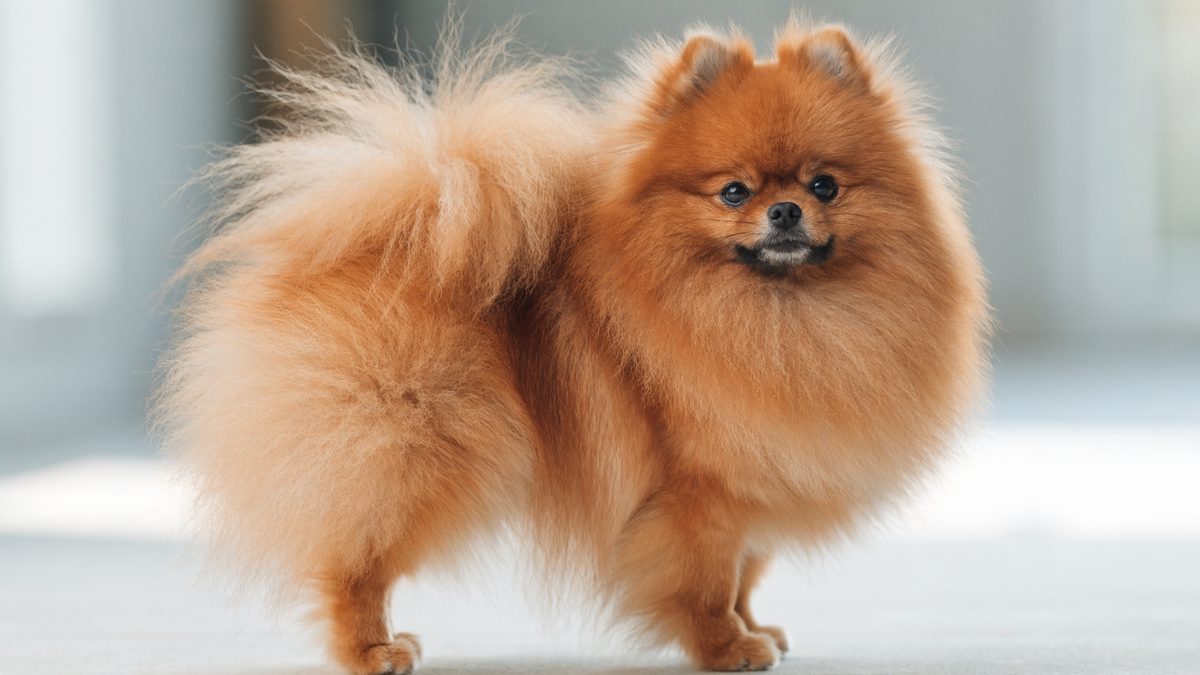
A Pomeranian is the smallest of the five German Spitz varieties, a toy dog of 3 to 7 pounds with a foxy head, small erect ears, a harsh stand-off double coat and a heavily plumed tail that lies flat along the back. That definition matters more in India than anywhere else, because the word Pomeranian is applied here to dogs that are four to seven times the standard weight.
Start with the numbers, because they settle most arguments. Under the American Kennel Club standard approved on 12 July 2011, the Pomeranian weighs 3 to 7 pounds, with the ideal weight for show specimens being 4 to 6 pounds. The AKC breed page puts height at 6 to 7 inches and life expectancy at 12 to 16 years. The UK Kennel Club standard, last updated April 2025, is stricter still, giving an ideal weight of 1.8 to 2 kg for dogs and 2 to 2.5 kg for bitches. The FCI, whose standard governs the breed across most of the world, specifies a height at the withers of 21 cm plus or minus 3 cm.
Three registries, three ways of measuring, one conclusion. A purebred adult Pomeranian is a dog you can hold in one hand.
| Registry | Weight | Height | Standard date |
|---|---|---|---|
| American Kennel Club | 3 to 7 lb, ideal 4 to 6 lb for show | 6 to 7 in, per the AKC breed page | Approved 12 July 2011 |
| The Kennel Club, UK | Dogs 1.8 to 2 kg, bitches 2 to 2.5 kg | Not specified | Updated April 2025 |
| FCI Standard No. 97 | Weight corresponding to its size | 21 cm plus or minus 3 cm | 20 September 2024 |
| Asia Pets, India | 1.4 to 3.2 kg | 18 to 24 cm | Undated breed page |
The German Spitz family, and where the Pomeranian sits in it
The Pomeranian is not a separate species from the Indian Spitz, and understanding why is the whole game. FCI-Standard No. 97 covers one breed, the German Spitz, in five size varieties, and it states plainly that in non-German-speaking countries the Toy Spitz, the Zwergspitz, is known as the Pomeranian. The five varieties differ almost entirely by height.
| Variety | Height at withers | Common name |
|---|---|---|
| Wolfsspitz | 49 cm plus or minus 6 cm | Keeshond |
| German Giant Spitz | 45 cm plus or minus 5 cm | Grossspitz |
| German Medium Size Spitz | 35 cm plus or minus 5 cm | Mittelspitz |
| German Miniature Spitz | 27 cm plus or minus 3 cm | Kleinspitz |
| German Toy Spitz | 21 cm plus or minus 3 cm | Pomeranian, Zwergspitz |
The Indian Spitz was developed in India from German Spitz stock in the medium and miniature size range, which is why a Greater Indian Spitz stands well above a Pomeranian and weighs several times as much. Bonbeno's full profile is at Indian Spitz, and the side-by-side comparison later on this page is the practical version of this table.
Weight will not tell you what an eight-week-old puppy will become. The muzzle to skull ratio will. FCI Standard No. 97 gives the muzzle to skull length ratio as 2 to 3 for the Giant, Medium and Miniature Spitz and 2 to 4 for the Toy Spitz, the Pomeranian. The AKC puts it the same way, with the ratio of muzzle length to skull at one third to two thirds. In plain terms, a Pomeranian's muzzle is about half the length of its skull, and a Spitz muzzle of any larger variety is noticeably longer. That proportion is fixed by bone and is visible from eight weeks. Measure it before you pay.
Coat, colour and the parts of the standard that get ignored
The Pomeranian is a double-coated breed, with a short dense undercoat carrying a long, harsh-textured outer coat that stands off from the body and forms a ruff around the neck, framing the head and extending over the shoulders and chest. The head and leg coat is tightly packed and shorter than the body coat, the forelegs are well feathered, and the tail is profusely covered with long, harsh, spreading straight hair forming a plume. A soft, flat or open coat is a major fault, and a cotton-type coat is undesirable in an adult.
Colour is where Indian sellers make their money and where the standards give them nothing. The AKC standard allows all colours, patterns, and variations thereof, and states they must be judged on an equal basis. The FCI lists white, black, brown, orange, grey-shaded and a defined set of other colours. Light blue, blue marbled or blue flecked eyes are an outright disqualification under the AKC standard, and the UK Kennel Club standard states that any other colour or combination of colours, including merle, is unacceptable. So a premium charged for a rare colour is a premium charged for demand, not for quality, and a premium charged for a merle Pomeranian is a premium charged for a dog two registries will not accept.
History, in one paragraph
The Pomeranian is a miniaturised relation of the powerful spitz-type sled dogs of the Arctic, named for Pomerania, the region of north-eastern Europe now split between Poland and western Germany. German Spitz dogs are described in the FCI standard as descendants of the stone-age peat dogs and the later lake-dwelling Spitz, and as the oldest dog breed in Central Europe. Queen Victoria encountered a Pomeranian weighing twelve pounds and took an interest in breeding smaller ones, which is how a farm watchdog became a toy. The AKC recognised the breed in 1888, specimens were shown in the United States as far back as 1892, and they were not officially classified until 1900.
That miniaturisation is the origin of almost every health problem later on this page. You are looking at a working Spitz that was shrunk by roughly half in height inside a century, and the knees, the windpipe and the jaw did not all shrink at the same rate.
Pomeranian price in india, compared across every published source
A Pomeranian puppy costs Rs 5,000 to Rs 80,000 in India in 2026, and no two published sources agree on where inside that band the truth sits. The floor quoted by Indian publishers ranges from Rs 5,000 to Rs 20,000 and the ceiling from Rs 25,000 to Rs 80,000, which is a sixteen-fold spread on what is meant to be the same purebred dog.
Bonbeno pulled the price bands published by every page currently ranking or cited for this query and put them side by side. Read them together and the disagreement is impossible to miss.
| Source | Headline range | Pet or unregistered | KCI registered | Show or champion |
|---|---|---|---|---|
| Supertails, March 2026 | Rs 15,000 to Rs 80,000+ | Rs 15,000 to Rs 25,000 | Rs 25,000 to Rs 40,000 | Rs 40,000 to Rs 80,000+ |
| Mr n Mrs Pet, October 2025 | Rs 15,000 to Rs 60,000+ | Rs 15,000 to Rs 25,000 | Rs 25,000 to Rs 45,000 | Rs 45,000 to Rs 60,000+ |
| Fluffyn, May 2026 | Rs 5,000 to Rs 80,000+ | Rs 5,000 to Rs 15,000 | Rs 20,000 to Rs 60,000 | Can exceed Rs 80,000 |
| Critzo, July 2026 | Rs 5,000 to Rs 30,000 | Rs 5,000 to Rs 18,000 in tier-2 cities | Papers add 30 to 60 percent | Rs 15,000 to Rs 55,000 by city |
| Asia Pets | Rs 5,000 to Rs 25,000 | Not stated | Not stated | Not stated |
| PatMyPets, June 2025 | Rs 5,000 to Rs 60,000 | Not separated | Not separated | Not separated |
| PetIndiaOnline, January 2025 | Rs 20,000 to Rs 70,000 | Rs 20,000 to Rs 35,000 | Not separated | Rs 40,000 to Rs 70,000, imported Rs 50,000 to Rs 1,50,000 |
| WrapInFur, 2026 | Rs 5,000 to Rs 75,000 | Not separated | Not separated | May reach Rs 90,000 or more |
| ZoodleApp, 2026 | No figure published at all | Not stated | Not stated | Not stated |
Three features of that table deserve calling out. The first is that Fluffyn's unregistered band tops out at Rs 15,000, which is exactly where Supertails and Mr n Mrs Pet both start their pet-quality band Supertails, Pomeranian Dog Price in India… Mr n Mrs Pet, How Much Does a Pomeranian…. Those two claims cannot both describe the same animal. The second is that PetIndiaOnline's floor of Rs 20,000 sits above the entire published range of two other sources, one of which caps the breed at Rs 25,000 and the other at Rs 30,000 Asia Pets, Pomeranian, Breed Information Critzo, Pomeranian Price in India. The third is that one page ranking on the first results page for this query publishes an entire cost guide without a single rupee figure in it, and instead directs readers to its own network of sitters.
City-wise price, and why the two city tables disagree
Three publishers give a city-wise price breakdown. Set two of them against each other on the same tier and the gap is large enough to change a buying decision.
| City | Supertails | Fluffyn |
|---|---|---|
| Delhi NCR | Rs 30,000 to Rs 50,000 | Rs 20,000 to Rs 50,000 |
| Mumbai | Rs 28,000 to Rs 48,000 | Rs 30,000 to Rs 60,000 |
| Bengaluru | Rs 25,000 to Rs 40,000 | Rs 25,000 to Rs 55,000 |
| Hyderabad | Rs 22,000 to Rs 38,000 | Rs 20,000 to Rs 45,000 |
| Chennai | Rs 24,000 to Rs 39,000 | Rs 22,000 to Rs 50,000 |
| Pune | Rs 26,000 to Rs 42,000 | Rs 22,000 to Rs 48,000 |
A third source prices tier-2 India separately and lands lower again, quoting Rs 8,000 to Rs 18,000 pet-quality in Kolkata and Rs 6,000 to Rs 15,000 in Jaipur, Lucknow and Ahmedabad. A fourth publishes Mumbai at Rs 15,000 to Rs 75,000 and Chennai at Rs 20,000 to Rs 35,000, and a fifth publishes the highest set of all, with Mumbai at Rs 40,000 to Rs 80,000 and Delhi at Rs 35,000 to Rs 75,000. Read those two together on Chennai and the disagreement is stark. One source caps Chennai at Rs 35,000 and another starts Chennai at Rs 35,000. None of these five city tables states a sample size or a collection method, so treat every one of them as a publisher's estimate rather than as a market survey. Bonbeno prints them together rather than averaging them into a number no source supports.
What the price is actually tracking
- KCI registration. One source puts the premium for Kennel Club of India papers at Rs 8,000 to Rs 15,000 on the purchase price, and another puts it at 30 to 60 percent. Registration documents pedigree. It is not a health certificate, and no Indian registry publishes screening results the way OFA does.
- Coat colour. Orange and cream sit mid-range, while blue merle, lavender and parti-colour command a premium. The AKC standard gives no colour any preference at all, and merle is explicitly unacceptable under the UK standard. You are paying for scarcity, not for a better dog.
- Claimed size. The smaller the dog is claimed to be, the higher the quoted price, which inverts the normal relationship between size and cost. Published teacup prices run Rs 1,20,000 to Rs 4,00,000 and above.
- Who is publishing the number. Four of the six sources in the table above also broker or list puppy sales. That is a commercial interest in the figure, disclosed here because none of those pages discloses it itself.
The teacup Pomeranian, priced against the standard
There is no teacup Pomeranian. The AKC standard recognises one Pomeranian at 3 to 7 pounds and lists no varieties, and the FCI recognises one Toy Spitz at 21 cm. The largest published owner survey of the breed, covering 3,104 adult Pomeranians, found that exactly zero were under 3 pounds. Teacup, toy, mini and micro are marketing terms, and the same survey source says so directly. An Indian guide reaches the same conclusion and adds that deliberately undersized Poms carry hypoglycaemia, dental crowding, fragile bones and a higher risk of luxating patella.
Indian listings price a teacup Pomeranian at Rs 1,20,000 to Rs 4,00,000 and above, with the same band quoted identically in Hyderabad, Bengaluru, Delhi, Chennai, Lucknow, Mumbai and Jaipur. That is between two and twenty-six times the price of a standard Pomeranian from the same market Fluffyn, Pomeranian Price in India 2026. The premium buys a word the breed standards do not contain, attached to a dog whose small size is itself a documented welfare risk. Bonbeno's position is plain. Do not pay it.
The listing that explains the whole market
One result on the first page of Google India for this exact query is worth more than any price table. A live marketplace listing advertises a five-month-old white Pomeranian weighing 7 kg at Rs 600 per unit, with a minimum order quantity of 10 units, a stated supply ability of 500 per month and packaging listed as Cage. The seller's other listings include a three-month-old 4 kg Siberian Husky and a three-month-old 5 kg white Golden Retriever.
Set 7 kg against the standard. The AKC maximum for an adult Pomeranian is 7 pounds, which is 3.18 kg. This dog is five months old and already more than double the adult ceiling. Whatever it is, it is not a Pomeranian, and it is being wholesaled ten at a time. Nothing else on this page tells you more about what the word Pomeranian means in the Indian market.
Bonbeno does not broker puppy sales and does not publish breeder listings. Every figure above is reported from a third party so you can see the disagreement yourself and price it into your own decision.
Monthly cost of owning a Pomeranian in India
Keeping a Pomeranian in India costs between Rs 1,800 and Rs 9,700 a month depending on which published estimate you believe, and the four sources that give a figure disagree by more than Rs 5,000 at the top end. The line that actually separates a cheap Pomeranian from an expensive one is not food. It is teeth.
Four Indian publishers give a monthly cost structure for this breed. Their totals are not comparable until you look at what each one counts.
| Line item | Supertails, comfortable tier | Mr n Mrs Pet | Fluffyn | Critzo, metro |
|---|---|---|---|---|
| Food | Rs 1,200 to Rs 1,800 | Rs 1,000 to Rs 2,000 | Rs 2,000 to Rs 3,500 | Rs 1,200 to Rs 2,500 |
| Professional grooming | Rs 1,000 to Rs 1,500 | Rs 1,000 to Rs 2,500 | Rs 800 to Rs 1,500 | Rs 600 to Rs 1,800 per visit |
| Veterinary care, averaged | Rs 800 to Rs 1,200 | Rs 1,000 to Rs 2,000 | Rs 700 to Rs 1,500 | Not separated |
| Dental support | Rs 400 to Rs 600 | Not counted | Rs 3,000 to Rs 8,000 a year extra | Rs 6,000 to Rs 15,000 every 2 to 3 years |
| Insurance | Rs 300 to Rs 500 | Not counted | Not counted | Rs 500 to Rs 7,500 a year |
| Stated monthly total | Rs 4,100 to Rs 6,300 | Rs 4,000 to Rs 8,000 | Rs 4,000 to Rs 7,000 | Rs 2,000 to Rs 4,500 |
None of these totals is a survey result. None states a sample size, a city mix or a collection date. Bonbeno is running a verified owner cost survey across eight metros and will publish the sample size, the cities covered and the collection date when it is complete. Until then the honest position is that no reliable India-wide monthly figure exists for this breed, and the table above compares four estimates rather than answering the question.
The dental sinking fund nobody budgets for
Here is the number that moves the lifetime cost of a Pomeranian in India more than any other. A dental cleaning under anaesthesia is published at Rs 6,000 to Rs 15,000 in a metro and Rs 4,000 to Rs 10,000 in a tier-2 city, needed every two to three years. A second source puts a cleaning at Rs 2,000 to Rs 8,000 and an extraction at Rs 5,000 to Rs 15,000. Over a 12 to 16 year life that is five or six procedures, and it is the single biggest preventable cost on this breed.
The mechanism is documented. In a VetCompass study of 22,333 UK dogs under primary veterinary care, increasing adult bodyweight was associated with progressively decreasing odds of periodontal disease. Smaller dog, higher odds. A Pomeranian sits at the extreme small end of that gradient, which is why the AKC tells you to brush the teeth during the weekly grooming session rather than treating dental care as an occasional extra.
First-year costs most Indian guides leave out
- Full first-year total, Rs 65,000 to Rs 1,50,000 including the puppy, published as one source's estimate.
- Vaccination course, Rs 2,000 to Rs 3,500, completed by 16 weeks. A second source puts year-one vaccination and boosters at Rs 3,500 to Rs 6,000 in a metro.
- Deworming, four rounds, Rs 800 to Rs 1,500 at 2, 4, 8 and 12 weeks.
- Microchipping, Rs 400 to Rs 1,000. Under the Animal Welfare Board of India rules all puppies must be microchipped before sale, so this should already be done.
- Professional grooming across the first year, Rs 7,200 to Rs 18,000 on a four to six week cycle.
- Flea and tick prevention, Rs 2,400 to Rs 5,400 a year, essential year-round in humid zones.
- Heat and climate management, Rs 2,000 to Rs 8,000 for cooling in the first year.
When we publish cost figures we state the sample size, the cities covered and the collection date. Where published sources disagree, as all four do here, we print every one of them rather than averaging them into a figure none of them supports.
One claim in the ranking set deserves a flag rather than a citation. A first-page source states that Pomeranian demand has surged 55 percent in urban India since 2023 and attributes its price tiers to interviews with 12 or more certified breeders. No underlying dataset, no interview record and no methodology is published for either claim, so Bonbeno does not repeat the 55 percent figure as fact. India publishes no breed-level registration series, so nobody can honestly state how many Pomeranians are in the country or how fast that number is growing.
Climate suitability: heat tolerance rated 2 of 5
Bonbeno rates the Pomeranian 2 of 5 for heat tolerance, and the reasoning is a balance of two facts pulling opposite ways. This is a dense double-coated northern breed carrying an insulating undercoat in a country where ambient temperatures routinely exceed 45 C, which is bad. It is also a 2 kg indoor dog that needs almost no outdoor exercise, which is a real advantage no husky or retriever has.
Take the coat first. The Pomeranian carries a short dense undercoat under a long harsh-textured outer coat that stands off from the body, and Indian veterinary guidance groups thick and dark coats with the elevated heat-risk categories, noting that such coats absorb more solar radiation and retain heat. Every Indian source on this breed reaches the same conclusion. Heat sensitivity comes from the dense double coat, meaning strict shade, water access, and no afternoon walks in a 40 C summer. One publisher goes further and states that Pomeranians are not suitable for unair-conditioned homes in India's warm zones during May to July.
Now take the offsetting fact. The AKC says Poms are active but can be exercised with indoor play and short walks, and are content in both the city and suburbs. That single sentence is why this breed scores 2 rather than 1 on heat tolerance. A dog whose entire daily exercise requirement can be met indoors in an air-conditioned flat is structurally easier to keep cool than a dog that needs two hours of outdoor work.
The temperature thresholds that matter in India
| Ambient temperature | Risk level | What it means in practice |
|---|---|---|
| Below 28 C | Low | Normal activity with shade and water |
| 28 to 35 C | Moderate | Shorten walks to 15 to 20 minutes, early morning and late evening only |
| 35 to 42 C | High | Outdoor activity contraindicated. Asphalt reaches 60 C and above |
| Above 42 C | Extreme | Heat stroke possible within 10 to 15 minutes outdoors. Indoor temperatures without cooling can be fatal |
Humidity changes that arithmetic completely. A 35 C day at 90 percent humidity is far more dangerous than a 42 C day at 20 percent humidity, because panting works by evaporation and humid air blocks it. A Pomeranian in Chennai, Mumbai or Kolkata during the monsoon is under more thermal load than the thermometer suggests, and the Indian guides that recommend building the day around the cool hours in coastal humidity are giving the right advice for the right reason. Purina India lists excessive humidity as an independent risk factor for heat stroke alongside lack of water, enclosed space, obesity, intense exercise and old age.
Purina India also names the breed categories at particular risk, and heavy-coated dogs are on that list beside the short-faced breeds. It sets the clinical threshold at a raised temperature of 40.5 C or above, and warns that a dog can develop heat stroke in as little as 30 minutes of vigorous exercise in hot weather. The car figure is the one Indian owners underestimate most. At an outside temperature of 26 C, the inside of a car reaches 32 C in five minutes and 43 C in 25 minutes. On a 40 C Delhi afternoon, five minutes is not a margin.
What actually reduces the risk
- Walk only before 7 am or after 8 pm from April to September, and keep each walk to 15 to 20 minutes.
- Run air conditioning or fans continuously above 32 C indoors, because indoor temperature above 32 C is dangerous for a dog at rest.
- Do the 7-second pavement test. Place the back of your hand on the pavement for seven seconds. If you cannot hold it there, asphalt at 60 C will burn paw pads within about 30 seconds. This matters more for a Pomeranian than for a tall dog, because a 20 cm dog walks with its whole body inside the hot layer just above the ground.
- Use a cooling mat, an elevated bed or a ceramic tile floor, since many dogs seek out cool surfaces instinctively.
- Never confine the dog to a balcony above 30 C. Concrete balconies are heat traps with no airflow and no shade.
- Plan for power cuts, because load shedding peaks exactly when cooling demand peaks. Keep a battery fan, frozen packs and a fallback location.
- Brush the coat out rather than cutting it down. Regular brushing removes dead undercoat and improves air circulation to the skin, and that is the correct summer intervention for a double-coated dog.
Heatstroke is defined as core body temperature above 40 C from environmental heat exposure, and once temperature exceeds 41 C multi-organ failure begins within minutes. Cool the dog immediately with room-temperature water, focus on the groin, armpits, paw pads and neck, get air moving across the wet coat, and drive to a clinic while cooling continues. Purina India adds two details worth memorising. Make sure the water reaches the skin rather than running off the coat, which matters enormously on a dense double coat, and stop cooling once the temperature returns to 39.4 C so you do not tip the dog into hypothermia. Do not plunge the dog into cold water or an ice bath, which prevents the core temperature coming down and constricts skin blood vessels so heat is trapped in the core. Every heatstroke case needs veterinary examination even after apparent recovery, because organ failure can present 12 to 72 hours later.
City by city, where this breed is easiest and hardest
Bengaluru and Pune are the easiest Indian metros for a Pomeranian, and one Indian source rates the breed's year-round climate adaptation as good in both. Delhi NCR gives a genuinely cold winter and a brutal April to June, so the whole management plan is seasonal. Chennai, Mumbai, Hyderabad and Kolkata offer no meaningful winter, and there the air conditioning has to be running before the dog arrives rather than after the first heat scare. Hill stations and the northern winter belt are the only places in India where the coat is an asset rather than a liability.
Cornell's Riney Canine Health Center sets the clinical numbers in Fahrenheit and adds the fact that should govern how an Indian owner behaves after a scare. Normal canine body temperature is 100.5 to 102.5 F, heatstroke results when the dog cannot regulate and temperature reaches 105 F or higher, and prolonged elevation damages every organ in the body, commonly causing acute kidney injury, blood clotting problems and shock. Many dogs do not survive, and patients that survive are at greater risk of heatstroke again in the future. A Pomeranian that has had one episode in an Indian April needs a stricter regime the following April, not a relaxed one.
One honest caveat on all of the above. No published epidemiological study names the Pomeranian as a statistically significant heat-related-illness breed, and India has no national veterinary dataset that would allow one to be written. What exists is a documented coat mechanism, Indian veterinary guidance on double-coated dogs, and consistent editorial advice from Indian publishers Critzo, Pomeranian Price in India Fluffyn, Pomeranian Price in India 2026. Bonbeno states that limit rather than inventing a percentage.
Temperament and household fit
The Pomeranian suits a household that wants a confident, affectionate, highly vocal small dog and can absorb the noise. It suits a household with toddlers, a strict housing-society noise policy, or an expectation of a quiet lap dog very badly indeed.
Start with what the standards say, because they are unusually consistent. The AKC describes the Pomeranian as an extrovert exhibiting great intelligence and a vivacious spirit, alert in character and inquisitive by nature. The UK Kennel Club standard gives temperament as extrovert, lively and intelligent, and characteristics as sound, vivacious and dainty. The FCI adds that the German Toy Spitz is always attentive, lively and extraordinarily attached to its owner, that it is very teachable and easy to train, and that its companionable and cheerful character makes it an ideal companion, family dog and watch dog for house and apartment.
Three practical consequences follow, and none of them is about aggression.
- It is vocal. An Indian guide describes the breed barking at delivery boys, lifts, pigeons, leaves and the general concept of strangers, and calls it a feature in a watchdog and a nuisance to your residents' association. Another names excessive barking as the first consideration against the breed. In a shared Indian building that is a complaint within weeks, not months.
- It has a big-dog temperament in a 2 kg body. Poms are alert, confident, and genuinely unaware they weigh 3 kg, and will challenge a much larger dog without blinking. That is a safety problem for the Pomeranian, not for the other dog.
- It is fragile. The AKC recommends the breed for families with children old enough to know the difference between a toy dog and a toy, and one Indian source lists fragility and snappiness among the breed's considerations. A dropped Pomeranian is a fractured Pomeranian.
Apartment reality, which is genuinely good
This is the section where the Pomeranian outperforms almost every imported breed Bonbeno covers. The FCI standard names it a watch dog for house and apartment, in contrast to the larger German Spitz varieties described as watch dogs for home and farm. An Indian source calls it one of the best apartment dogs for Indian cities, noting that its moderate exercise needs are met with short daily walks and that it adapts well to flat living in Mumbai, Bengaluru and Delhi. Another says it is perfectly content in a 1BHK. Bonbeno rates apartment suitability 5 of 5 for this breed on space, and the constraint is entirely acoustic.
- Good fit. A working couple or a single professional in a flat, someone at home for part of the day, an owner willing to train the bark on cue from week one, and a household that can fund the dental and grooming line every month.
- Poor fit. Homes with toddlers, buildings with a strict noise policy and thin shared walls, households with no air conditioning in a coastal or peak-heat metro, and anyone buying on the purchase price alone.
- Watch item. Poms bond strongly with their primary owner and can be protective, so early socialisation is what prevents excessive barking and nervousness.
The Pomeranian also scores well on a factor Indian buyers rarely weigh. It is a genuinely long-lived dog at 12 to 16 years, with one Indian source reporting well-managed dogs occasionally reaching 17. That is a longer commitment than most large imported breeds, and it should be priced into the decision alongside the monthly cost.
Training a Pomeranian
Train a Pomeranian with early lead work, an early recall, hard socialisation between 8 and 14 weeks, and a bark cue installed before the neighbours ask for one. This is an easy breed to teach and a hard breed to housebreak, and the failure mode in India is almost never obedience. It is noise.
The registries agree on the raw material. The AKC calls Poms alert and highly intelligent, easily trained, and says they enjoy and can excel in canine activities like agility, rally and obedience, or working as therapy dogs. The FCI says the German Toy Spitz is very teachable and easy to train. The UK standard describes an extrovert, lively and intelligent dog. You are not fighting the dog's temperament here.
The four things the AKC tells you to do first
- Train the dog to walk on a leash early on, which for an Indian owner means harness rather than collar, for reasons the health section explains.
- Teach it to come when called from the start.
- Accept that housebreaking can be a challenge, and that consistency and patience are the whole method. One Indian source lists difficulty in housetraining among the breed's considerations. Plan on months, not weeks.
- Stop the dog jumping on and off couches and beds, because a Pomeranian can injure a joint or even break a bone doing it. Put steps or a ramp against the sofa on day one.
The bark, and the Indian housing-society problem
Barking is the reason Pomeranians get rehomed in Indian apartments, and it is preventable. The window is narrow. Socialise hard from 8 to 14 weeks, because Poms are alert and confident and will challenge much larger dogs, and train the bark on cue early, which heads off most complaints before they start. Early socialisation is also what prevents nervousness, which is the other driver of noise.
The practical version for an Indian flat is to build a controlled exposure list and work through it in the cool hours. Lifts, the security desk, delivery riders at the door, the building's other dogs, the groomer's table, nail clippers, a harness going on and off, and the sound of a doorbell. Every one of those is a bark trigger you can neutralise at 10 weeks and cannot easily neutralise at 10 months.
The FCI standard describes a dog that is neither timid nor aggressive, with a natural watch-dog function. What that produces in practice is a 2 kg dog with no working sense of its own size. Manage it as a physical safety matter rather than a behavioural one. Keep the dog on a short lead in areas with free-roaming dogs, and never let it approach a larger dog off-lead. Indian sources note that other dogs who are not controlled can easily hurt a Pom.
Realistic timelines
| Skill | Start | Realistic outcome |
|---|---|---|
| Name response | Week 1 home | Reliable indoors in 2 to 3 weeks |
| Sit, down, settle | Week 1 home | 3 to 6 weeks. This breed learns fast |
| Harness acceptance | Week 1 home | 2 to 4 weeks with daily handling |
| Toilet training | Week 1 home | 6 to 10 months. The AKC calls it a challenge |
| Loose-lead walking | Week 2 home | 2 to 4 months |
| Quiet on cue | Week 2 home | Partial by 6 months, and maintained for life |
| Tolerating a full groom | Month 3 | Introduce before the first professional session at 4 to 6 weeks |
| Accepting daily tooth brushing | Week 1 home | 4 to 8 weeks, and it is not optional |
Two habits belong in the training plan rather than in the health plan, because they only work if you install them as puppy routines. The first is daily tooth brushing, which one Indian veterinary guide calls genuinely essential rather than a nice-to-have because of the small crowded jaw. The second is weekly hands-on handling of the feet, ears and mouth, so that the groomer's four to six week full groom is uneventful.
How much exercise a Pomeranian actually needs
A Pomeranian needs short walks plus indoor play, and that is the honest full answer. The AKC states that Poms are active but can be exercised with indoor play and short walks, so they are content in both the city and suburbs. In India that low requirement is the breed's biggest structural advantage, because the entire daily need fits inside the safe temperature windows without argument.
Indian sources put a number on it. Two 20-minute walks plus indoor play cover it. Another puts short walks and play sessions at around 30 minutes a day. A third describes moderate exercise needs easily met with two short daily walks. Those three figures agree closely, which is unusual on this page and worth saying.
The one registry that publishes a hard number agrees with them. The UK Kennel Club sets the Pomeranian's exercise requirement at up to 30 minutes per day, the size of home at flat or apartment, the size of garden at small or medium, grooming at more than once a week, and lifespan at over 12 years. That is the shortest exercise requirement Bonbeno has recorded for any breed on this site, and it is the single strongest practical argument for this breed in an Indian metro.
| Source | Stated daily requirement |
|---|---|
| The Kennel Club, UK | Up to 30 minutes per day |
| American Kennel Club | Indoor play and short walks |
| Critzo, India | Two 20-minute walks plus indoor play |
| Mr n Mrs Pet, India | Around 30 minutes a day |
| Fluffyn, India | Two short daily walks |
| Supertails, India | Avoid exercise during peak heat, 8 am to 5 pm |
Three safety rules that outrank the duration
For most breeds the exercise question is how much. For a Pomeranian it is how safely, and the AKC devotes its entire exercise section to hazards rather than to distance.
- Contain the dog properly. Pomeranians are notorious for escaping through small crevices or gaps in fencing, or climbing over short fencing. An Indian society gate, a lift door and a balcony grille are all Pomeranian-sized problems.
- Do not leave the dog outdoors unattended. Small breeds like Pomeranians can be mistaken for rabbits or squirrels by large predatory birds such as hawks and owls, so it is vital to keep a Pom under cover or stay with them at all times. Indian cities carry substantial black kite and other raptor populations, which makes this a live risk rather than an American curiosity.
- Watch the other dogs. Other dogs who are not controlled can easily hurt a Pom, and free-roaming dogs are a normal feature of Indian streets. Keep the lead short, and change the route rather than the dog.
Walk a Pomeranian in a harness rather than a collar, because a collar pulling on the leash puts direct pressure on soft tracheal rings. The AKC lists collapsing tracheas among the conditions responsible breeders screen for in this breed, and Swedish insurance data covering roughly 450,000 dogs places the Pomeranian in the top five of 327 breeds for upper respiratory tract disorders. A harness costs a few hundred rupees. A tracheal collapse diagnosis and its management do not.
What counts when the outdoors is closed
- Indoor fetch and puzzle feeding, which run in an air-conditioned room during a heatwave and meet most of the requirement on their own.
- Short trick and obedience blocks, since this breed excels in agility, rally and obedience and enjoys the work.
- Chew toys and puzzles, which one Indian source recommends specifically because Pomeranians want attention and get destructive without it.
- Scent games on a tiled floor, which tire a toy breed faster than distance and cost nothing.
- Two cool-window walks rather than three that include a hot one, from March to October.
A word on stairs and sofas, which is an exercise question disguised as a furniture question. The AKC is explicit that a Pom should be kept from jumping on and off couches or beds, because it can injure joints or even break a bone. Given that 29.1 percent of OFA-evaluated Pomeranians have an abnormal patella result, repeated hard landings on an Indian tile or stone floor are a genuine orthopaedic risk rather than a fussy precaution.
Grooming a double coat in Indian humidity
Groom a Pomeranian by brushing dead undercoat out down to the skin at least once a week, and never by cutting the coat off. The AKC sets the baseline at a pin brush and a slicker brush through to the skin once a week to keep the hair from matting, plus a full professional groom every four to six weeks. Indian humidity pushes both of those higher, not lower.
The coat is the most demanding part of owning this breed and the largest recurring bill after food. Indian sources put brushing at three to four times a week, at two to three times a week, and at daily during the shed. Professional grooming is published at every four to six weeks and every six to eight weeks, at Rs 600 to Rs 1,800 a visit in a metro. Without regular grooming the undercoat mats and causes skin irritation, and matted fur traps heat against the skin.
| Source | Home brushing | Professional groom |
|---|---|---|
| American Kennel Club | Once a week, to the skin, pin and slicker brush | Every 4 to 6 weeks |
| Supertails, India | Not specified | Every 4 to 6 weeks, every 3 to 4 weeks in summer |
| Fluffyn, India | 3 to 4 times a week | Every 6 to 8 weeks |
| Mr n Mrs Pet, India | Daily | Every 4 to 6 weeks |
| Critzo, India | Daily during the coat blow | Every 6 to 8 weeks |
Shedding, and the twice-yearly coat blow
Pomeranians shed heavily, and one Indian breed page lists heavy shedding among the breed's considerations. Twice a year the dog blows coat heavily for two to four weeks, and during that period daily brushing keeps the flat manageable while once a week does not. Plan for it in March and again after the monsoon, and buy the de-shedding tools before you need them rather than during.
The shaving question, answered properly
Do not shave a Pomeranian. Indian veterinary guidance is unambiguous. Never shave double-coated breeds, because the undercoat provides insulation that protects from both cold and heat, shaving exposes skin to sunburn, and the coat may grow back patchy or incorrectly. Light trimming of a heavily matted dog is acceptable only after veterinary consultation. An Indian breed guide reaches the same conclusion, noting that shaving a double-coated breed damages both the coat and the skin's temperature regulation.
The American Kennel Club's chief veterinary officer, Dr. Jerry Klein, puts the mechanism in one sentence. A dog's coat acts as an insulator, and shaving that coat to reduce shedding or supposedly to keep the dog cool eliminates that insulating layer of fur, makes the dog susceptible to heat stroke, and can result in improper hair growth and the possibility of follicle damage, while the coat itself protects against sunburn and decreases the risk of skin cancer. The damage is also long-term. Shaved down to the skin, the undercoat regrows faster and can crowd out the slower-growing guard hairs, changing the texture and colour of the coat and leaving it patchy.
The AKC also makes the point that undercuts the whole reason owners ask for it. Shaving has no big impact on cooling a dog down, because dogs regulate temperature mainly by panting, by vasodilation that brings hot blood closer to the skin surface especially at the ears and face, and by merocrine sweat glands located only in the paw pads. A shaved Pomeranian is not a cooler Pomeranian. It is a sunburn risk with a damaged coat.
The breed standard supports the same conclusion from a completely different direction. The AKC standard permits trimming only for neatness and a clean outline, and lists a soft, flat or open coat as a major fault. A shaved coat that regrows soft and flat is a coat that has lost the structure the standard describes, and structure is what makes a double coat work as insulation in both directions.
Regular brushing to remove dead undercoat and improve air circulation to the skin is the correct summer intervention for a double-coated dog, not clipping. Increase professional grooming frequency to every three to four weeks through the hot months rather than asking for a shorter cut. If a groomer in an Indian metro offers to take a Pomeranian down to the skin for summer comfort, that is the wrong groomer.
The Indian humidity adjustments
- Brush down to the skin, not across the surface. Surface brushing leaves the dead undercoat that mats and traps heat, which is exactly the AKC's stated reason for weekly brushing with a pin brush and slicker brush.
- Dry the coat completely after every bath. A damp dense undercoat in humid weather is the main driver of hot spots, and matted fur traps heat.
- Keep the nails short, because Pomeranians are active dogs and long nails change the way the foot loads.
- Book the full groom including bath, brushing, ears, nails and anal glands every four to six weeks if you are not comfortable doing it at home.
- Brush the teeth during the weekly grooming session, which is the AKC's own recommendation and the cheapest dental intervention available to you.
- Watch for symmetrical hair loss on the neck, trunk, thighs and tail, which is the presentation of alopecia X and is a veterinary matter rather than a grooming one.
One thing this breed does not demand is frequent bathing. The double coat is designed to shed dirt, and over-bathing strips the outer coat of the harsh texture the standard calls for. Follow the four to six week full-groom cycle and brush in between, and the coat looks after most of itself.
Health issues, screening and lifespan
The Pomeranian is not a robust breed, and the screening data says so more clearly than any breed guide does. It ranks first of all breeds in Orthopedic Foundation for Animals patellar luxation statistics, sits in the top five of 327 breeds for upper respiratory disorders in Swedish insurance data, and carries the highest recorded incidence of alopecia X of any breed. Against that, it lives 12 to 16 years, which is longer than most.
The single most important number on this page
The Orthopedic Foundation for Animals publishes screening results by breed, and in the patella table the Pomeranian is ranked 1 of all breeds evaluated, with 3,495 evaluations returning 70.9 percent normal and 29.1 percent abnormal, broken down as 15.0 percent grade 1, 11.3 percent grade 2 and 2.5 percent grade 3. The second-ranked breed, the Skye Terrier, sits at 21.4 percent abnormal on 70 evaluations, and the Yorkshire Terrier at 17.0 percent.
Read that carefully, because it is easy to over-read. OFA data comes from dogs that owners chose to submit, mostly breeding stock, so it is not a population prevalence. What it does establish is that among dogs screened well enough to appear in a public registry, nearly three in ten Pomeranians have an abnormal patella, and no other breed ranks higher. That is a screening-population figure, and Bonbeno labels it as one.
What those grades actually mean for a dog you own
OFA classifies patellar luxation into four grades, and the distribution matters more than the headline percentage. In grade 1 the patella luxates at full extension of the stifle but returns to the trochlea when released, with no crepitation and only minimal deviation of the tibial crest. In grade 2 luxation is frequent, the limb is sometimes carried, and the constant luxation over the medial trochlear ridge erodes the articulating surface, though many dogs live with it reasonably well for many years. In grade 3 the patella is permanently luxated with 30 to 50 degrees of tibial deviation, and in grade 4 the patella is permanently luxated, the trochlea is absent or convex, and the limb is carried or the animal moves in a crouch.
Set the Pomeranian's OFA distribution against those definitions. Of 3,495 evaluations, 15.0 percent were grade 1, 11.3 percent grade 2 and 2.5 percent grade 3. In other words, the majority of abnormal Pomeranians in the registry are at the grades a dog lives with rather than the grades that cripple it, which is the correctly calibrated version of the scary headline number.
OFA states that patellar luxation should be considered an inherited disease, that the anatomical deformities responsible are present at birth even when the luxation is not, and that animals can be affected by the time they are eight weeks of age. It also notes that the most opportune time to gather breeding data is at 6 to 8 weeks, before the puppy is released to its new owner. A registry number is only issued at 12 months or older, so what a buyer should ask for is the parents' certificates, not the puppy's. A separate pattern applies later in life. Lateral luxation in small breeds is most often seen from 5 to 8 years of age and can develop rapidly after minor trauma, which is exactly why the AKC tells you to stop a Pomeranian jumping off the sofa.
| Test | Evaluations | Result | Breed rank |
|---|---|---|---|
| Patella | 3,495 | 29.1 percent abnormal | 1st of all breeds |
| Hips | 410 | 18.8 percent dysplastic, 80.2 percent normal | 59th |
| Advanced cardiac | 255 | 6.3 percent abnormal, 3.1 percent equivocal | 33rd |
| Thyroid | 257 | 87.9 percent normal, 10.9 percent equivocal | 102nd |
| Eyes | 2,835 | 1.8 percent abnormal | 216th |
| Degenerative myelopathy | 112 | 18.8 percent carrier, 0.9 percent affected | 67th |
Hip dysplasia is treated as a large-breed disease in almost every Indian dog guide. OFA data shows 18.8 percent of 410 evaluated Pomeranians as dysplastic, made up of 14.6 percent mild, 3.2 percent moderate and 1.0 percent severe. That is a higher dysplastic percentage than the Siberian Husky records in its own breed-club screening data. The American Pomeranian Club lists an OFA radiographic hip evaluation as optional but recommended for this breed, which is a signal worth reading.
The windpipe, and why the harness rule exists
A study of upper respiratory tract disorders in a cohort of approximately 450,000 insured Swedish dogs, covering 327 breeds between 2011 and 2014, found that the English bulldog, Japanese chin, Pomeranian, Norwich terrier and pug had the highest relative risk of upper respiratory tract disorders. The overall incidence rate across the whole cohort was 50.56 per 10,000 dog years at risk, and the median age at first diagnosis was 6.00 years.
The authors are candid about the mechanism. The Chihuahua, Cavalier King Charles Spaniel, Pomeranian and Yorkshire terrier are named as breeds frequently affected with the upper respiratory disorder tracheal collapse, and toy breeds including the Japanese chin, Chihuahua and Pomeranian are described as having undergone exaggerated miniaturisation, with the consequence that the airway can be narrowed to 1 mm or less at the level of the nasopharyngeal meatus. The paper also notes that it remains unclear to what extent brachycephalic conformation contributes to the increased risk found for the Pomeranian, and calls for further study.
The practical consequence is one rule. Use a harness, never a collar on the lead, because tracheal collapse comes from soft tracheal rings. Signs to act on are a persistent cough or a honking cough.
Teeth, which are the real day-to-day problem
Periodontal disease is the most commonly diagnosed disorder in dogs, with a one-year period prevalence of 12.52 percent across a random sample of 22,333 UK dogs under primary veterinary care. The finding that matters for a Pomeranian owner is the size gradient. Increasing adult bodyweight was associated with progressively decreasing odds of periodontal disease, and the highest-odds breed in the study was the Toy Poodle at an odds ratio of 3.97 against crossbred dogs.
The Pomeranian is not individually named among that study's highest-odds breeds, and Bonbeno says so rather than implying otherwise. What applies is the bodyweight gradient, which puts a 2 kg dog at the far end of it, plus the mechanism an Indian veterinary guide describes, which is a small crowded jaw that makes daily brushing genuinely essential rather than a nice-to-have. The AKC's advice is the same and is easy to act on. Brush the teeth during the weekly grooming session.
Alopecia X, the black skin disease
Alopecia X is a progressive skin disorder causing hair loss in plush-coated breeds, and Pomeranians have the highest incidence of any breed. Affected dogs lose hair on the neck, trunk, thighs and tail, and while both sexes can develop it, intact males are much more frequently affected. The underlying cause is unknown, diagnosis relies on the expensive process of excluding other hair-loss conditions, neutering is effective in some male cases, and other treatments have variable success rates.
The AKC Canine Health Foundation is funding a genome-wide investigation of alopecia X in Pomeranians running from September 2025 to August 2028, using whole genome sequencing data from 200 affected and healthy Pomeranians, with the goal of a genetic risk assessment tool. There is no such tool today. An Indian guide describes the condition as cosmetic but stressful for the dog, and the honest reading is that a Pomeranian's coat plays a real role in regulating body temperature and protecting against skin injury and infection, which in an Indian summer makes it more than cosmetic.
The full condition list, and what to screen for
The AKC states that responsible breeders screen their stock for luxating patellas, hypothyroidism, collapsing tracheas, congestive heart failure, seizures, and alopecia X. The American Pomeranian Club publishes the actual requirements through the Canine Health Information Center, which is jointly sponsored by the AKC Canine Health Foundation and the Orthopedic Foundation for Animals.
The club's own published health statement is blunter than any commercial page, and it is worth reading in the club's own words. Luxating patellas are the most common problem in the Pomeranian breed, grades one and two are common and not unusual in toy breeds, and grades three and four may require surgery, sometimes early in the dog's life. Hypothyroidism is very common in the Pomeranian breed, and thyroid testing is an optional rather than a required screen. Idiopathic epilepsy typically occurs between 3 and 7 years of age and is thought to be inherited. Collapsing trachea is found in many Poms, presents as a honking noise or a sound like the dog coughing up a hairball, is diagnosed on X-ray, and can be life-threatening, so it must not be ignored.
OFA records only 1.8 percent of 2,835 evaluated Pomeranian eyes as abnormal, which reads like a clean bill of health. The breed club supplies the caveat. To date there have not been many eye problems found, but that may be because not many dogs have been tested. A low abnormal rate in a voluntary registry is a statement about who submits, not only about the breed. Bonbeno prints the number and the caveat together rather than presenting the number alone.
The American Pomeranian Club describes two presentations. A puppy may carry a profuse puppy coat with no guard hairs that does not shed, and when that puppy coat finally sheds the coat does not grow back. The later-onset version starts as a normal coat that slowly thins at the back of the thighs and buttocks and moves up the back. There are no health tests for this problem, so the club's advice to a buyer is to ask to see the parents in person or ask for current photographs of them. That is a genuinely actionable instruction for an Indian buyer, and it costs nothing to follow.
| Screen | Status | What it involves |
|---|---|---|
| Patellar luxation | Required | Veterinary evaluation of patellar luxation |
| Cardiac | Required | Advanced cardiac exam or basic cardiac exam |
| Health elective | Required, one of two | ACVO eye examination registered with OFA, or autoimmune thyroiditis evaluation from an approved lab |
| Hip dysplasia | Optional but recommended | OFA radiographic hip evaluation |
| Legg-Calve-Perthes | Optional but recommended | OFA Legg-Calve-Perthes radiographic evaluation |
The AKC's own Toy Group testing table shows how much that is by toy-breed standards. The Pomeranian carries three recommended tests, a patella evaluation, a cardiac exam and an ophthalmologist evaluation, while the Pekingese, the Shih Tzu and the Silky Terrier are all listed with no recommended health tests at all, and the Miniature Pinscher with a patella evaluation alone. A breed's own club asking for three screens is a statement about the breed.
Screen the parents, not the puppy. Ask any Indian breeder for the sire's and dam's patella evaluation and cardiac exam results in writing, because those two are the club's non-negotiables, and one Indian source already reports patellar luxation and heart evaluations offered at Rs 5,000 to Rs 10,000 in the KCI-registered tier. A breeder who cannot produce them has not done the screening.
The open fontanelle, which almost nobody checks
Check the top of the puppy's skull with a fingertip. The UK Kennel Club places the Pomeranian in Breed Watch Category 2 and lists exactly one point of concern for special attention by judges, which is that in mature dogs over 12 months the fontanelle should be fully closed. The FCI is harsher still and lists a gap in the fontanel as a disqualifying fault for the Toy Spitz. Two registries, working independently, flag the same feature on the same breed.
A fontanelle is the soft gap between the skull plates, and in a toy breed it is the visible consequence of miniaturising a skull faster than the bone can close. It is a five-second check on a puppy you are about to buy and on the parents you are being shown, and Bonbeno has not found a single Indian Pomeranian page that mentions it. Ask the breeder to let you feel the top of both parents' heads.
Hypoglycaemia, which kills puppies and is preventable
Small-breed puppies can drop blood sugar fast, so hypoglycaemia is a real risk before six months, and the answer is small frequent meals until then. The breed club is specific about who is at risk and for how long. Hypoglycaemia occurs in young Pomeranians, is more common in the very small or very active puppies, and is a problem the puppy outgrows as it matures. Adult hypoglycaemia is a different and more serious matter, described by the club as a serious metabolic disorder, and dogs who have it should not be bred. Ask your breeder for complete instructions on recognising the early signs, which is exactly what the club tells buyers to do.
The risk is concentrated in the smallest dogs, and the same size-related pattern applies to structural problems including collapsed trachea, which is why very small Poms should always wear harnesses rather than collars on the lead. This is the mechanism that makes deliberately undersized teacup breeding a welfare issue rather than a preference.
An Indian veterinary guide lists the presentations that need prompt attention in this breed. Sudden lameness on a back leg or a skipping gait, a persistent or honking cough, refusal to eat for more than 12 hours especially in a puppy, vomiting or diarrhoea or weakness lasting beyond 12 to 24 hours, sudden collapse or seizure, heavy panting in heat, and bleeding gums with visible tartar build-up. Five of those seven map directly onto the conditions in this section, which is what makes them worth memorising.
Lifespan, where the sources agree for once
| Source | Figure | What it is measuring |
|---|---|---|
| American Kennel Club | 12 to 16 years | Breed-club expectation |
| Asia Pets, India | 12 to 16 years | Editorial estimate |
| Critzo, India | 12 to 16 years, sometimes 17 | Editorial estimate |
| VOSD, India | Around 16 years | Editorial estimate |
| Bonbeno note | No India-specific figure exists | India publishes no canine mortality dataset |
Every one of those figures is a breed-club or editorial expectation rather than a mortality study. No published life table covers the Pomeranian specifically, and India has no national veterinary mortality dataset at all, so nobody can tell you how long Pomeranians actually live in Indian conditions. What is protective is documented and cheap. Dental care, weight control, harness use instead of a collar, and prompt attention to lameness or coughing.
Feeding a Pomeranian in India
Feed a Pomeranian a small-breed food appropriate to its life stage, in three to four small meals a day until six months and twice a day thereafter, and weigh the dog rather than trusting the bag. A 2 kg dog has almost no margin for error in either direction, because a Pomeranian puppy can go hypoglycaemic on a missed meal and an adult can go obese on a handful of extra treats.
The AKC's guidance is deliberately plain. The Pomeranian should do well on a high-quality dog food, whether commercially manufactured or home-prepared with your veterinarian's supervision and approval, with the diet appropriate to the dog's age, and treats used as a training aid rather than a habit, because giving too many can cause obesity. Indian sources add the small-breed formulation point, recommending small-breed kibble to maintain coat health and energy and describing life-stage-appropriate small-breed kibble as the most straightforward and safest option.
Portions by life stage
- Under 6 months, three to four small meals a day. Small-breed puppies can drop blood sugar fast, so frequent small meals are the standing recommendation until six months.
- 6 to 12 months, three meals a day, tapering to two as the puppy approaches adult weight.
- Adult, two meals a day. Indian guidance is consistent on twice-daily feeding for an adult Pomeranian.
- Senior, two meals a day with a veterinary weight review. The AKC ties diet to life stage explicitly, and dental status changes what texture the dog can manage.
Published Indian monthly food costs for this breed run Rs 900 to Rs 1,800 at the economical tier, Rs 1,000 to Rs 2,000, Rs 1,200 to Rs 2,500 in a metro, and Rs 2,000 to Rs 3,500 for premium small-breed kibble. That fourfold spread on the same 2 kg dog reflects brand choice, not the dog's requirement.
Body condition beats the chart
- Score body condition weekly by hand. Ribs should be easy to feel under light pressure with a visible waist from above. Feed to that, not to a number on a bag, and remember that some dogs are prone to getting overweight.
- Extra weight is a heat risk as well as a joint risk. Adipose tissue insulates and reduces heat dissipation, and overweight pets overheat two to three times faster than lean ones. On a breed already carrying a dense double coat that compounds badly.
- Weight control protects the knees. With 29.1 percent of OFA-evaluated Pomeranians recording an abnormal patella, every extra 200 g on a 2 kg frame is a meaningful percentage load through a joint that is already the breed's weak point.
- Keep multiple water stations, refreshed two to three times a day, because water heats fast in an Indian flat and dehydration dramatically increases heat stroke risk.
- Use dental-support food and chews as a supplement to brushing, not a replacement, at a published Rs 400 to Rs 600 a month.
An Indian veterinary guide lists the household foods to keep away from a Pomeranian entirely. Milk, heavily spiced food, cooked bones, chocolate, onion and garlic. Cooked bones matter more for a toy breed than most owners assume, because a jaw this small splinters them differently, and the dog's dental status is already the breed's biggest recurring cost.
Feeding quantities depend on the individual dog's age, weight, body condition and activity level. Set them with a registered veterinarian who has examined your dog, and review them at the start of each summer when activity drops and requirements change. Check with your vet if you have any concerns about your dog's weight or diet, and keep clean fresh water available at all times.
Bonbeno reviews Indian pet food brands separately and tests products first-hand before publishing a verdict. See our testing method for what a Bonbeno food review does and does not claim.
Pomeranian puppy: the first year, month by month
A Pomeranian puppy's first year in India is organised around four deadlines, which are the vaccination course, the socialisation window that closes at about 14 weeks, the first coat change, and the first summer. Get the socialisation window wrong and you will be managing a barking complaint for the next fourteen years.
Bring a Pomeranian puppy home between October and December if you have any choice. That puts the 8 to 14 week socialisation window inside the cool months, so you can actually take the puppy out to meet lifts, traffic, delivery riders and other dogs, and it means the first Indian summer arrives when the dog is six to eight months old and already settled into an indoor routine.
- 8 to 12 weeks. Home, name, crate, toilet routine, daily handling of feet, ears and mouth. Puppies must not have been sold to you before 8 weeks of age under the Animal Welfare Board of India rules, and must already be microchipped. Start the vaccination course, published at Rs 2,000 to Rs 3,500 to completion by 16 weeks. Feed three to four small meals a day against hypoglycaemia. Begin managed socialisation now, because the window is 8 to 14 weeks.
- 3 to 4 months. Teething, so mouthing peaks and chew toys earn their money. Introduce the harness, not a collar, for lead work. Book a dental health baseline assessment, which one source recommends at 3 to 4 months and prices at Rs 1,500 to Rs 3,000. Deworming rounds continue.
- 4 to 6 months. Vaccination course completes. Book the first professional groom and stay for it, so the dog learns the table before the coat needs it. Install sofa steps and enforce the no-jumping rule, since a Pom can injure a joint or break a bone jumping off furniture. Hypoglycaemia risk tails off around six months.
- 6 to 9 months. The puppy coat changes and many owners panic. Puppy coat may be dense and shorter overall and may or may not show guard hair, and a cotton-type coat is undesirable only in an adult. Increase brushing rather than clipping. Adolescence sharpens the barking, so the quiet cue needs maintaining.
- 9 to 12 months. First full adult coat blowing may occur, running two to four weeks with daily brushing. Housebreaking should be reliable by now if it is going to be, and the AKC's warning that it can be a challenge is worth remembering rather than panicking about. Settle into two 20-minute walks plus indoor play.
- 12 months onward. Move to adult food and two meals a day. Establish the annual dental review, and start the sinking fund for a cleaning under anaesthesia every two to three years at Rs 6,000 to Rs 15,000 in a metro. Watch for a skipping gait on a back leg, which is the presentation of patellar luxation.
The first summer
Set the cooling plan up before the puppy's first April rather than during it. That means air conditioning or fans running continuously above 32 C indoors, a cooling mat or ceramic tile floor, curtains blocking direct sun during peak hours, water stations refreshed two to three times a day, and a written fallback for power cuts. A puppy under six months has immature thermoregulation and sits in an elevated risk category on its own, before the double coat is counted.
Place the back of your hand on the pavement for seven seconds before every summer walk. Asphalt reaches 60 C and above in direct sun and causes third-degree paw burns within about 30 seconds, and grass runs 10 to 15 C cooler than asphalt in the same sun. A Pomeranian stands about 20 cm tall, so its entire body sits inside the hottest layer of air above that pavement. Route the walk over grass and carry the dog across hot stretches.
Pomeranian vs Indian Spitz: how to tell them apart before you pay
Compare a Pomeranian against an Indian Spitz on size, muzzle proportion, price and health, and the two breeds separate cleanly on every axis. That comparison is the most useful thing this page can give an Indian buyer, because a large share of the small white fluffy dogs sold in India as Pomeranians are Indian Spitz.
This is not a Bonbeno theory. An Indian veterinary guide states it directly. The Pomeranian and the Indian Spitz are two of the most confused dogs on Indian classifieds, and the white Pomeranian going for Rs 3,000 in tier-2 markets is almost always an Indian Spitz, a separate breed and a genuinely lovely dog, just not a Pomeranian. A second Indian source says many dogs referred to in India as Indian Pomeranian dogs are actually closer to the Indian Spitz breed than to a pure Pomeranian, that the difference directly affects both price and appearance, and that buyers should always confirm which of the two they are being sold because many sellers label Indian Spitz puppies as Pomeranians. A third frames the same confusion around the wider Spitz family and notes that at first glance the Pomeranian and the German Spitz look similar, and that only closer inspection reveals the differences.
So the confusion is acknowledged. What no Indian page supplies is a test. The nearest any of them gets is a qualitative comparison naming a short fox-like face against a longer muzzle, a compact body against a slightly taller one, and very thick fluffy coat density against medium. Those are the right features and the wrong instrument, because none of them is measurable and all of them are arguable in front of a seller. The registry standards give you numbers for the same features, which is what the four-step check below uses.
The confusion has a real history. Both descend from the same German Spitz stock, and the Indian Spitz was developed in India from that stock, which is why the two look like the same dog at different scales. Bonbeno's full profile of the native breed is at Indian Spitz.
The four-step check to run before you pay
- Measure the muzzle against the skull. A Pomeranian's muzzle is roughly half the length of its skull, at 2 to 4 under the FCI standard and one third to two thirds under the AKC standard American Kennel Club. Any larger German Spitz variety runs 2 to 3, which reads as a noticeably longer nose. This proportion is set by bone and is visible at eight weeks.
- Weigh both parents, not the puppy. An adult Pomeranian is 1.4 to 3.2 kg Asia Pets, Pomeranian, Breed Information. If either parent is over 5 kg, you are not looking at a purebred Pomeranian litter, whatever the paperwork says.
- Look at the tail. The Pomeranian tail is heavily plumed, set high, and lies flat and straight on the back, with a low tail set listed as a major fault. A tail that curls to one side or arcs above the back points away from this breed.
- Check the ears against the ruff. Pomeranian ears are small, mounted high and carried erect, and proper ear set should be favoured over size. Large, tall ears standing clear of the ruff belong to a bigger Spitz.
- Feel the top of the skull on both parents. In a mature dog over 12 months the fontanelle should be fully closed, and a gap in the fontanel is a disqualifying fault under the FCI standard. This is a health check rather than a breed-identification check, but you are already standing there.
Do not conclude from weight by itself that you were mis-sold. In an owner survey of 3,104 adult Pomeranians, only 32 percent fell inside the AKC 3 to 7 pound band, 65 percent were 7.5 pounds or heavier, 36 percent were 7.5 to 10 pounds and 29 percent were over 10 pounds. Zero were under 3 pounds. Pet Pomeranians run larger than the show standard everywhere in the world, and a 4 kg Pom is unremarkable. The same source notes that a dog of 14 pounds or more may be a throwback or may be a cross with another Spitz that looks exceedingly similar. So weight is a flag, not a verdict. The muzzle proportion is the better test, and both parents' weights are better still.
Which one you should actually buy
Buy a Pomeranian if you specifically want the toy-breed character and the dense plumed coat, and can fund weekly grooming, a four to six week professional groom, daily tooth brushing and a dental cleaning every two to three years American Kennel Club. Buy an Indian Spitz if what you actually wanted was a small white spitz-type dog that is sturdier, more heat-tolerant, healthier on the whole and cheaper both to buy and to keep. Neither is the lesser dog. What is unacceptable is paying a Pomeranian price for an Indian Spitz because a seller used the wrong word.
One more caution on Indian sources. A well-known Indian rescue organisation's own comparison page states that the Pomeranian is a toy breed of twelve to fifteen inches, which is double the 6 to 7 inches the AKC publishes and well outside the FCI's 18 to 24 cm. That is not a criticism of the organisation's rescue work. It is an illustration of how deeply the size confusion runs in Indian writing about this breed, and why a buyer should check the registry standard rather than the nearest Indian article.
Mistakes Indian Pomeranian owners actually make
The failure modes for this breed in India are predictable and mostly cheap to avoid. These are ranked by how much damage they do rather than by how often they get discussed.
- Walking the dog on a collar instead of a harness. A collar pulling on the leash loads soft tracheal rings directly, and this breed sits in the top five of 327 breeds for upper respiratory disorders in Swedish insurance data. The AKC lists collapsing tracheas among the conditions responsible breeders screen for. Buy the harness on day one.
- Skipping daily tooth brushing. Odds of periodontal disease rise progressively as adult bodyweight falls, the Pomeranian's small crowded jaw makes brushing genuinely essential rather than a nice-to-have, and the AKC tells you to do it during the weekly grooming session. Skipping it converts a free daily habit into a Rs 6,000 to Rs 15,000 procedure every two to three years.
- Shaving the coat for summer. Never shave double-coated breeds, because the undercoat insulates against heat as well as cold, shaving exposes skin to sunburn, and the coat may regrow patchy or incorrectly. The AKC's chief veterinary officer adds that shaving makes the dog susceptible to heat stroke and can cause follicle damage, and that shaving has no big impact on cooling a dog down in the first place. Brush the dead undercoat out instead.
- Paying a Pomeranian price for an Indian Spitz. The cheap white Pomeranian on Indian classifieds is almost always an Indian Spitz, and one live marketplace listing on the first page of results for this query advertises a 7 kg five-month-old white Pomeranian at Rs 600 per unit with a minimum order of 10. Check the muzzle proportion and the parents' weights before the price.
- Paying a premium for a teacup. There is no recognised teacup Pomeranian, no adult Pom in a 3,104-dog survey was under 3 pounds, and Indian listings still price the label at Rs 1,20,000 to Rs 4,00,000. Deliberately undersized Poms carry hypoglycaemia, dental crowding, fragile bones and higher luxating-patella risk.
- Letting the dog jump on and off furniture. The AKC warns that a Pom can injure joints or even break a bone doing it, and 29.1 percent of OFA-evaluated Pomeranians already record an abnormal patella. Steps against the sofa cost a few hundred rupees.
- Leaving the dog outdoors unattended. Pomeranians escape through small crevices and gaps in fencing or climb over short fencing, and small breeds can be mistaken for rabbits or squirrels by large predatory birds such as hawks and owls. On an Indian terrace with kites overhead, that is not a theoretical hazard.
- Ignoring barking until the neighbours complain. Train the bark on cue early, because it heads off most complaints before they start, and socialise from 8 to 14 weeks. Excessive barking is the first consideration Indian breed pages list against this dog.
- Treating KCI papers as a health guarantee. Registration documents pedigree. The screening the breed's own club requires is a patellar luxation evaluation, a cardiac exam, and one of an ACVO eye examination or an autoimmune thyroiditis evaluation, and none of that is implied by a registration certificate.
- Buying from an unregistered breeder. All dog breeders in India must be registered with the Animal Welfare Board of India, breeding without registration is an offence that can result in confiscation of stock and a fine, no puppy may be sold before 8 weeks, and all puppies must be microchipped before sale. Most Indian buyers never ask to see the registration.
- Over-treating a 2 kg dog. Some dogs are prone to getting overweight and too many treats cause obesity, and overweight pets overheat two to three times faster than lean ones. On a dog this small, a few biscuits a day is a large percentage of daily intake.
- Missing the skipping gait. Sudden lameness on a back leg or a skipping gait needs a prompt veterinary call, because it is the classic presentation of the condition this breed ranks first in.
The most expensive mistake is buying on the purchase price and discovering the operating cost afterwards. A dog bought for Rs 20,000 that needs Rs 2,000 to Rs 7,000 a month Critzo, Pomeranian Price in India, a professional groom every four to six weeks, daily tooth brushing, and a dental cleaning every two to three years for twelve to sixteen years is a very different commitment from the one most Indian buyers think they are making. That mismatch, not cruelty, is what fills the rehoming lists.
Adoption, responsible sourcing and how to verify a breeder
Adopt a Pomeranian if you can find one, and verify the breeder against the Animal Welfare Board of India rules if you buy. India regulates dog breeding more strictly on paper than most Indian buyers realise, and almost nobody asks to see the paperwork the law requires.
What Indian law already requires of every breeder
The Animal Welfare Board of India's Dog Breeding and Marketing Rules set requirements that a buyer can check in ten minutes, and a breeder who cannot meet them is operating illegally rather than informally.
- All breeders of dogs must be registered with the AWBI, and breeding without registration is an offence that can result in confiscation of breeding stock and puppies as well as a fine.
- All breeding stock, both dogs and bitches, must be microchipped, vaccinated against rabies, distemper, parvovirus, adenovirus, canine influenza and leptospira, with certificates available for inspection.
- Each registered breeder may hold no more than 6 breeding bitches and 2 stud dogs, and no more than two breeds.
- No puppy may be sold before 8 weeks of age, and all puppies must be microchipped before sale.
- A registered veterinary doctor must certify in the Stock Control Register that the animals to be mated are fit and healthy, are neither aggressive nor nervous, and have no serious genetic defects.
- A bitch may not be bred more than 5 times in her lifetime, may not be bred in her first season, may not be bred after 8 years old, and must be sterilised after her fifth litter.
- Kennel clubs in India shall not register any dog that is not registered with the AWBI, and registering animals from a non-registered breeder is an offence.
That last rule is the one Indian buyers should quote back at sellers. A KCI registration certificate on a puppy from a breeder who is not AWBI-registered is not the reassurance the seller is presenting it as.
A widely shared Indian buying guide advises that a puppy should be at least 6 to 8 weeks old before leaving its mother, and a second describes puppies of 8 to 12 weeks as the most expensive tier. The 6-week half of that first figure is wrong in India as a matter of law. No puppy may be sold until it has reached 8 weeks of age and is fully weaned, and no puppy under 8 weeks may even be transported without written permission from the Secretary of the AWBI. Treat 8 weeks as a floor with no exceptions, not as the upper end of an acceptable range.
If you buy, verify these six things
- Ask to see the AWBI breeder registration, which is a legal requirement rather than a courtesy.
- Ask for both parents' patellar luxation evaluations, which the American Pomeranian Club lists as a required screen and which matter more in this breed than in any other.
- Ask for both parents' cardiac exam results, advanced or basic, also a required screen. The AKC names congestive heart failure among the conditions responsible breeders screen for.
- Ask for the health elective, meaning either an ACVO eye examination registered with OFA or an autoimmune thyroiditis evaluation from an approved lab.
- Weigh and photograph both parents. An adult Pomeranian is 1.4 to 3.2 kg, and a parent well outside that range tells you what the puppy will become.
- Confirm the puppy is at least 8 weeks old and already microchipped, both of which the rules require.
A quoted price far below the market, which usually means an Indian Spitz mis-sold as a Pomeranian or an unvaccinated puppy from a backyard breeder, and the money saved shows up later as a vet bill. A breeder advertising teacup or charging extra for the smallest size, which one Indian veterinary guide flags as a red flag worth walking away from. Any listing sold by minimum order quantity, with a stated monthly supply ability and packaging described as a cage. And any seller who will not let you see the mother with the litter.
The adoption route
Adopting a Pomeranian in India is harder than adopting an indie dog and easier than most buyers assume. Small purebred dogs do reach Indian shelters and breed rescues, usually surrendered over barking, over the grooming and dental workload, or after a family move. The AKC's own breed listing points owners toward its rescue network for exactly this reason. Adopting an adult also removes the two largest unknowns in a puppy purchase, which are adult temperament and adult size, and on this breed adult size is the whole question.
- Ask why the dog was surrendered. Barking, grooming cost and dental bills are the usual three, and each tells you something specific about whether your household is different.
- Get a veterinary examination before you commit, with particular attention to the knees, the teeth and any cough.
- Ask whether the dog has had a dental cleaning and when. An adult Pomeranian arriving with untreated periodontal disease brings a Rs 6,000 to Rs 15,000 procedure with it.
- Budget the same operating cost as for a puppy. Adoption reduces the purchase price. It does not reduce the groomer's bill.
If you want a small, affordable, fluffy, apartment-suited dog in an Indian city and you are not specifically committed to the toy size, the Indian Spitz gives you most of what you wanted, more cheaply, with better heat tolerance and fewer luxating patellas. If you want a Pomeranian specifically, buy a verified one, use a harness, brush the teeth daily, and never shave the coat. Those four decisions cover most of what goes wrong with this breed in India.
Bonbeno does not sell animals and does not broker puppy sales. If you want a dog that suits Indian conditions by default, the Indian Pariah Dog is free to adopt, better adapted to the heat, and needs almost no grooming at all.
Pomeranian questions Indians actually search
Which dog is best under 5000 in India?
An adopted indie dog is the honest answer under Rs 5,000, and most Indian shelters rehome healthy dogs for a nominal fee. No responsibly bred Pomeranian falls in this band. The cheapest published Pomeranian floor in India is Rs 5,000 for an unregistered puppy, and Indian veterinary guidance says a genuine Pomeranian under Rs 5,000 to Rs 7,000 is almost always an Indian Spitz mis-sold as a Pom, or an unvaccinated backyard-bred puppy.
Which dog is under 10,000 rupees?
Indian native breeds and indie dogs are the realistic options under Rs 10,000, mostly through adoption rather than purchase. An Indian Spitz sits near the top of that band on some published listings. One Indian source quotes unregistered Pomeranians at Rs 5,000 to Rs 15,000, but that band overlaps almost exactly with the price at which Indian Spitz puppies are commonly sold under the Pomeranian name.
Which dog is best under 2000?
No purebred dog is sold responsibly under Rs 2,000 in India, and adoption is the only honest route at that figure. Municipal shelters and rescue groups rehome healthy dogs for a nominal fee, often including initial vaccination and sterilisation. Any purebred puppy advertised in this band should be treated as a warning about how the litter was bred, raised and weaned, not as a bargain.
Which dog under 3000?
Adoption is the only responsible answer under Rs 3,000. Indian veterinary writing specifically names the white Pomeranian offered for around Rs 3,000 in tier-2 markets as almost always an Indian Spitz, a separate breed and a genuinely good dog, but not the one on the advertisement. If you want that dog, buy it as an Indian Spitz at an Indian Spitz price rather than as a discounted Pomeranian.
What is the real Pomeranian price in India in 2026?
Published Indian sources put it between Rs 5,000 and Rs 80,000, and they disagree sharply. Supertails and Mr n Mrs Pet both start their pet-quality band at Rs 15,000, while Fluffyn's entire unregistered band tops out at Rs 15,000 and Critzo caps the headline range at Rs 30,000. KCI-registered puppies are quoted at Rs 20,000 to Rs 60,000. Bonbeno prints all of those rather than averaging them.
Is my Pomeranian actually an Indian Spitz?
Check the muzzle before the weight. A Pomeranian's muzzle is roughly half its skull length, at a ratio of 2 to 4 under FCI Standard No. 97, while every larger German Spitz variety runs 2 to 3 and shows a visibly longer nose. Then weigh both parents. An adult Pomeranian is 1.4 to 3.2 kg, so a parent above 5 kg means the litter is not purebred Pomeranian whatever the paperwork says.
Are teacup Pomeranians real?
No. There is one Pomeranian breed and no official off-shoots or varieties, and teacup, toy, mini and micro are marketing terms. In an owner survey of 3,104 adult Pomeranians, exactly zero weighed under 3 pounds. Indian listings still price the teacup label at Rs 1,20,000 to Rs 4,00,000, and deliberately undersized Poms carry hypoglycaemia, dental crowding, fragile bones and higher luxating-patella risk.
Can a Pomeranian survive Indian summer?
Yes, with continuous indoor cooling and disciplined scheduling. Bonbeno rates heat tolerance 2 of 5 for the dense double coat, offset by an exercise requirement the AKC describes as indoor play and short walks. Run cooling above 32 C indoors, walk only before 7 am or after 8 pm from April to September, keep multiple water stations, and never shave the coat to cool the dog down.
Should I shave my Pomeranian in summer?
No. Indian veterinary guidance says never shave double-coated breeds, because the undercoat provides insulation that protects from heat as well as cold, shaving exposes skin to sunburn, and the coat may grow back patchy or incorrectly. The correct summer intervention is regular brushing to remove dead undercoat and improve air circulation to the skin, which is the opposite of clipping the coat off.
Do Pomeranians shed a lot in India?
Yes, and twice a year they blow coat heavily for two to four weeks. Daily brushing keeps an Indian flat manageable during those periods, and once a week is not enough. The AKC baseline outside the shed is brushing through to the skin with a pin brush and a slicker brush once a week, plus a full professional groom every four to six weeks at Rs 600 to Rs 1,800 a visit in a metro.
What health issues do Pomeranians have?
Knees, windpipe, teeth and coat. The Pomeranian ranks first of all breeds in OFA patellar luxation statistics at 29.1 percent abnormal across 3,495 evaluations, sits in the top five of 327 breeds for upper respiratory disorders in Swedish insurance data covering about 450,000 dogs, and carries the highest recorded incidence of alopecia X of any breed. OFA data also shows 18.8 percent of evaluated hips as dysplastic.
How long do Pomeranian dogs live?
The American Kennel Club gives 12 to 16 years, and Indian sources repeat that figure with occasional reports of well-managed dogs reaching 17. Every one of those numbers is a breed-club or editorial expectation rather than a mortality study, and India publishes no canine mortality dataset. Dental care, weight control, harness use instead of a collar, and prompt attention to lameness or coughing are what protect the span.
Are Pomeranians good for first-time dog owners in India?
Yes on training and space, with two caveats. The breed is alert, highly intelligent and easily trained, and it is one of the best apartment dogs for Indian cities. Housebreaking is a genuine challenge that takes months, and the barking needs a cue installed between 8 and 14 weeks or it becomes a housing-society problem. Budget the grooming and dental costs before you buy, not after.
Compare with similar breeds
Pomeranian sits in 4 Bonbeno groups. Each one compares it directly against the breeds it is genuinely an alternative to, on the same figures.