
Dog breed profile
Affenpinscher in India: Availability, Real Price Evidence and Full Breed Guide
Bonbeno could not find a single verifiable Affenpinscher for sale in India, and says so. Here is what the pages ranking for this query actually sell, what the registries really specify, and the health and climate evidence that survives checking.
Quick answer
There is no reliable affenpinscher price in india in 2026, and that is the honest finding. Bonbeno opened every page ranking for this query and found no verifiable Indian Affenpinscher for sale. The top result ships from the Philippines, one seller's Rs 98,999 belongs to a Maltipoo, and India's top-40 price list omits the breed entirely.
This guide is general information for Indian pet owners and is not a diagnosis. Screening results, prevalence figures and treatment costs vary by individual dog. Consult your nearby vet, or a registered veterinary practitioner or specialist, before acting on anything in the health, feeding or exercise sections, and treat any sudden change in your dog's condition as urgent.
Affenpinscher traits, rated for Indian conditions
What an Affenpinscher actually is
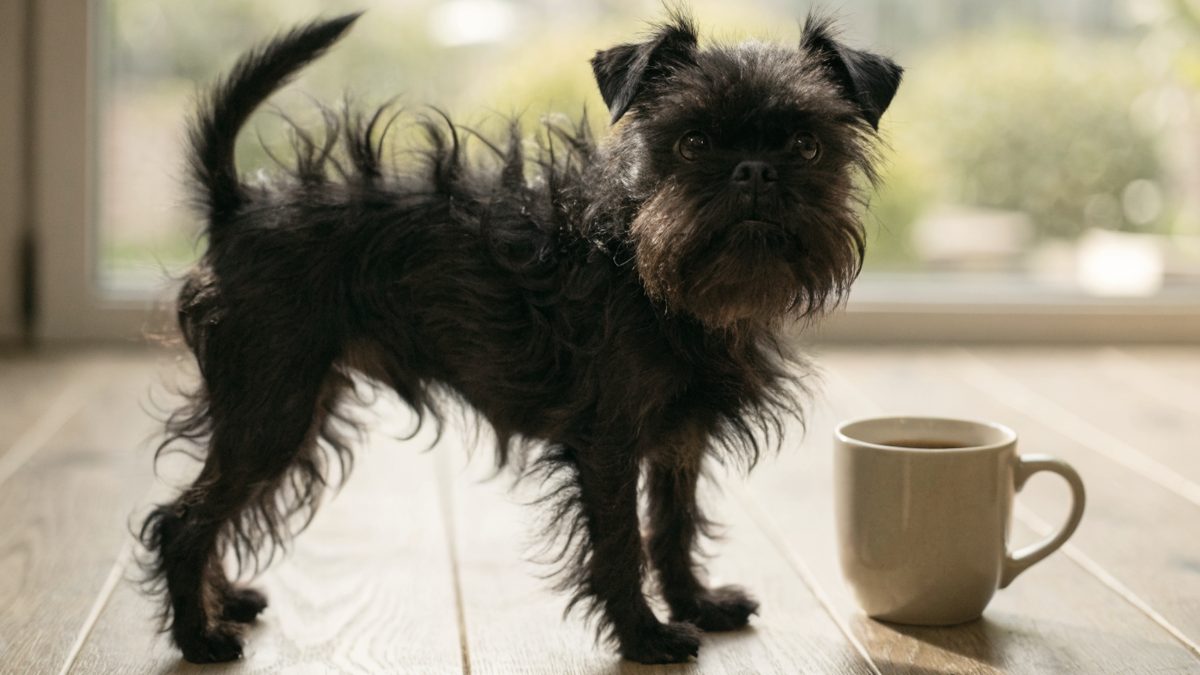
The Affenpinscher is a small, rough-coated German companion dog of Pinscher type, standing 25 to 30 cm and weighing roughly 4 to 6 kg, named for the monkey-like expression created by the harsh straggly hair framing its face. It is not a lap dog, it is not a miniature Schnauzer, and despite sharing half its name with the Miniature Pinscher it is a separate line with a different coat, a different head and a very different lifespan.
Start with the name, because it explains the dog. Affenpinscher is German for monkey-like terrier, and the AKC standard uses exactly that translation. The French call it the diablotin moustachu, the moustached little devil. The FCI records that the breed evolved from the rough coated Pinschers of southern Germany, that its ancestors appear in the woodcuts of Albrecht Durer, who lived from 1471 to 1528, and that the first entries of Affenpinschers in the stud books go back to 1879. Its job was killing rats in kitchens, granaries and stables. The AKC dates that work to German stables of the 1600s and admitted the breed to its stud book in 1936.
The breed is small but not obscure in the show world. In 2013 an Affenpinscher named Banana Joe won Best in Show at the Westminster Kennel Club, and the AKC records that Affens have also worked as therapy dogs and competed in agility and obedience. The same article notes that the grit which made them effective ratters has never left the breed, which is the useful part for a buyer.
That history matters for an Indian buyer in one practical way. A dog built to corner rats in a barn is not a decorative accessory. The AKC standard describes the temperament as game, alert and inquisitive, generally quiet but capable of becoming vehemently excited when threatened, and fearless toward any aggressor. The Royal Kennel Club standard says the same thing more briefly: loyal and loving companion, watchful of strangers and fearless toward aggressors.
The registries do not agree, and in India that costs money
Three registries publish an Affenpinscher breed standard and they disagree on group, on height and, most consequentially, on colour. Bonbeno puts them side by side because an Indian buyer is almost certainly buying against the FCI, whether they know it or not, since India appears on the FCI's own list of member countries. The FCI's nomenclature entry places the breed at number 186 in Group 2, section Pinscher and Schnauzer type, subsection Pinscher, accepted on a definitive basis on 15 July 1955, with German as the official authentic language. That subsection is worth noting, because it is the same one the Miniature Pinscher sits in.
| What is specified | FCI Standard No. 186 | AKC standard | Royal Kennel Club |
|---|---|---|---|
| Group | Group 2, Pinscher and Schnauzer type. Not a toy group at all | Toy Group | Toy Group |
| Height | 25 to 30 cm | Preferred 9.5 to 11.5 inches, roughly 24 to 29 cm | 24 to 28 cm |
| Weight | Approximately 4 to 6 kg | No weight in the standard. The breed page prints 7 to 10 pounds | Not specified |
| Colour | Pure black with black undercoat | Black, gray, silver, red, black and tan, or belge, all acceptable | Black, grey shading occurs. Any other colour unacceptable |
| Bite | Lower jaw protrudes and turns up slightly. A scissor bite is a DISQUALIFYING fault | Slightly undershot. A level bite is acceptable | Slightly undershot |
| Tail | Natural, sabre or sickle carriage sought after | May be docked or natural, docked between 1 and 2 inches | Left a natural length |
| Ears | V-shaped lying close, or small prick ears | Cropped to a point, or natural erect, semi-erect or dropped | Semi-erect, drop or erect |
Two of the three registries permit black only. The FCI standard your KCI dog is bred to says pure black with black undercoat, and the Royal Kennel Club says black with grey shading and that any other colour or combination of colours is unacceptable The Royal Kennel Club. The AKC is the outlier, permitting six colours including red and belge. None of this makes a red dog unhealthy. It does mean a seller charging an Indian premium for a rare colour is charging for something the registry behind your paperwork does not recognise, and it is a fair question to put to them.
The same split applies to the tail and ears, and in India the answer is not optional. The AKC standard still permits a docked tail and ears cropped to a point. The FCI and Royal Kennel Club standards both call for a natural tail The Royal Kennel Club. A puppy offered in India with cropped ears or a docked tail has had a cosmetic procedure done to it, and you should ask who did it and why before you ask anything else.
How to tell an Affenpinscher from the dogs it gets confused with
The confusions are predictable and the measurements settle them. Bonbeno lists the checkable differences rather than the impressions.
- Miniature Pinscher. Shares the Pinscher name and the FCI group, and nothing else visually. The Min Pin carries a short, smooth, close coat and is usually black and tan or red; the Affenpinscher carries a harsh, dense coat about an inch long on the body with a mane at the withers and a full beard. Compare the two on the Miniature Pinscher page.
- Brussels Griffon. The closest relative and the hardest call. Both carry the domed skull and the beard. The Griffon's muzzle is markedly shorter and the breed sits at a higher BOAS risk band than the Affenpinscher in the Cambridge data.
- Yorkshire Terrier. A long, fine, silky coat that grows continuously against a harsh coat about an inch long that does not. The Yorkshire Terrier needs daily brushing and clipping; the Affenpinscher needs stripping.
- Miniature Schnauzer. Similar beard and eyebrows in a much larger dog, and typically salt and pepper rather than black.
- A black indie of terrier type. Genuinely common in India, and there is no shame in the comparison. The tells are the square build with height at withers about equal to body length, the domed skull, the slightly undershot jaw and the wreath of harsh hair around the eyes.
One structural note worth carrying into the health section. The FCI standard requires a complete set of 42 teeth and specifies that neither the canines and incisors nor the tongue may show when the mouth is closed, in a jaw that is deliberately undershot. That is a lot of dentition packed into a very short jaw, and it is the anatomical reason dental disease shows up as the single most reported problem in the breed's own health survey.
Affenpinscher price in India, and why no honest one exists
No reliable Affenpinscher price in India exists in 2026. Bonbeno opened every result on page one of the Indian SERP for this query, read each page in full, and found not one verifiable Affenpinscher offered for sale anywhere in the country. Rather than average a set of numbers that describe other dogs, other countries or nothing at all, this section shows you exactly what each ranking page contains.
This is the opposite of the usual Bonbeno price section. On a Golden Retriever or a Miniature Pinscher the problem is too many published Indian bands that disagree with each other, and the job is to lay the disagreement out. Here the problem is that there is no Indian market to have a disagreement about. Reporting that honestly is more useful than manufacturing a range, so here is the evidence, page by page.
| Position and source | What it appears to offer | What is actually on the page |
|---|---|---|
| 1. TradeIndia | Cute Affenpinscher Puppies at best price | A B2B livestock export listing. The seller is Egargo Pet, registered in 2019, address Poblacion, Maragusan, 8116 Compostela Valley, Davao, Philippines. No price is shown at all, only Get Latest Price. The comparison table gives a minimum order quantity of 5 puppies |
| 3. Puppiezo | Rs 98,999, Platinum tier | Zero Affenpinschers. The Available Affenpinscher Puppies section is empty. The Rs 98,999 in Google's snippet belongs to Fizey, a Maltipoo in the Other Available Pets carousel, alongside two Poodles, a Cane Corso, a Goldendoodle, a Rottweiler and a Doxiepoo |
| 4. Mr n Mrs Pet | KCI registered Affenpinscher puppies, 3 Result Found | Three dogs, none of them an Affenpinscher. They are Vito, a Bernese Mountain Dog; Jax, an English Bulldog; and Piper, a Cavalier King Charles Spaniel, shown under the heading Similar breeds at other locations. Every price is behind a sign-up wall |
| 9. Supertails | Dog Price List in India 2026, Top 40 Breeds | A genuine and detailed Indian price guide that does not mention the Affenpinscher once, in any table, city breakdown or section |
| Not ranking, but worth checking | VOSD's 21 Best Small Dog Breeds in India, medically reviewed by a veterinary officer | Covers the Pug, Pomeranian, Chihuahua, Miniature Pinscher, Yorkshire Terrier, Pekingese, Papillon and fourteen others. The Affenpinscher is not one of the 21 |
| 5, 7, 11, 12, 15. Foreign pages | Affenpinscher price | US and UK figures only. USD 1,800 to 2,500, USD 3,500 to 4,500, GBP 690 to 1,250 and GBP 450 to 600. None of these is an Indian price and none of them converts into one |
Google's own snippet for the number three result attaches Rs 98,999 to the query 'affenpinscher price in india'. That figure is the listed price of a Maltipoo. If you have seen roughly ninety-nine thousand rupees quoted as the Affenpinscher price in India, on a blog, in a video or from an AI assistant, this is almost certainly where it came from, and it is not a price for this breed.
Why the breed is this rare, in numbers
The scarcity is structural rather than Indian, and the cleanest evidence comes from a registry that does publish its numbers. The Royal Kennel Club registered 85 Affenpinschers in the whole of the United Kingdom in 2025. Across the ten years from 2016 to 2025 the annual figures were 73, 95, 89, 102, 88, 101, 103, 96, 89 and 85, which totals 921 dogs in a decade.
| Breed | 2025 UK registrations | Multiple of the Affenpinscher |
|---|---|---|
| Affenpinscher | 85 | 1x |
| Miniature Pinscher | 132 | 1.6x |
| Pekingese | 151 | 1.8x |
| Yorkshire Terrier | 385 | 4.5x |
| Maltese | 490 | 5.8x |
| Pug | 834 | 9.8x |
| Pomeranian | 1,541 | 18x |
| Cavalier King Charles Spaniel | 3,224 | 38x |
India has no equivalent table, and that absence is itself worth stating plainly. The Kennel Club of India publishes a tariff sheet and registration forms but does not publish per-breed registration counts, so no one, including Bonbeno, can tell you how many Affenpinschers are registered in India. Anyone who quotes you a number for that is guessing.
The breeding arithmetic that keeps the price high everywhere
A breed cannot get cheap when the litters are this small. In the OFA's breed health survey, 44 percent of Affenpinscher litters were one to two puppies and 50 percent were three to four, leaving only 6 percent at five or more. Among owners reporting reproductive problems, 71 percent reported a caesarean section and 50 percent reported dystocia or uterine inertia. That survey is self-selected with no verification of responses, and OFA says so on the page, so treat the percentages as indicative rather than as prevalence.
Now layer Indian law on top. Under the Prevention of Cruelty to Animals (Dog Breeding and Marketing) Rules, 2017, a bitch may not be bred before her eighteenth month, may produce only one litter in a year, may not whelp within twelve months of her last litter, and may not produce more than five litters in her lifetime; artificial insemination is expressly prohibited. A legally compliant Indian Affenpinscher bitch would therefore produce something like five litters across her life at an average of perhaps three puppies each. That is a lifetime output of roughly fifteen dogs, from a foundation stock that would itself have to be imported. There is no arrangement of those numbers that produces an affordable, widely available Indian Affenpinscher.
What a realistic Indian acquisition would actually look like
Bonbeno will not publish a purchase price band, because inventing one is exactly what this page exists to argue against. What can be said, with sources, is which costs are documented and which are not.
- Documented. KCI registration of an imported dog costs Rs 2,500, a certified four-generation pedigree costs Rs 1,000, and an export pedigree costs Rs 2,000. These are published, checkable figures.
- Documented. For context on the wider market, Supertails puts Indian dog prices in 2026 between Rs 2,000 for an indie and over Rs 1,50,000 for a KCI-registered show-quality dog, and reports that city-wise prices vary by 15 to 30 percent, with Mumbai and Delhi the most expensive.
- Not documented. The purchase price of an Affenpinscher in India. No Indian source publishes one, and Bonbeno found no dog to attach a price to.
- Not documented. Import, transport, veterinary certification and quarantine costs for this specific breed. These vary by country of origin and airline and cannot be responsibly generalised.
- Not documented. Any Indian waiting list, breeder network or breed club. Bonbeno found none.
Ask the seller three questions before you discuss money. Where is the dog physically now, and can you visit it with its dam. What registry is it registered with, and can you see the paperwork rather than a photograph of it. What colour is it, and does that colour appear in the standard your registry follows. If the answers are a WhatsApp number, a promise of papers later and a dog in another country, you are looking at the same thing Bonbeno found on page one of Google. Bonbeno does not broker sales, publish breeder listings or recommend individual sellers, and nothing on this page is an offer.
One more note on KCI registration specifically. Registration documents pedigree. It certifies nothing about hips, kneecaps, heart or airway, and on this breed those are the four things the OFA and the breed's own parent club actually ask breeders to screen for. A registered dog with no health testing behind it is a dog with a paper trail, not a healthy dog.
Monthly cost of keeping an Affenpinscher in India
Budget Rs 4,000 to Rs 9,000 a month for an Affenpinscher in an Indian metro, and understand that the largest single line is grooming rather than food. Bonbeno builds this from published Indian service prices rather than from a breed-specific Indian source, because no breed-specific Indian source exists. Every component below is cited; the total is arithmetic, not a survey.
Two framing figures set the scale. Supertails reports that urban Indian households now spend Rs 5,000 or more every month on a dog, and puts general monthly upkeep between Rs 3,000 and Rs 18,000 depending on breed size and grooming needs. A 4 to 6 kg dog eats very little, so food will not be what moves your number. The coat will.
| Line item | Monthly range | Where the figure comes from |
|---|---|---|
| Food | Rs 700 to Rs 1,500 | A 4 to 6 kg adult eats a fraction of what a Labrador does. Scaled from the general Indian upkeep range |
| Professional grooming, amortised | Rs 1,100 to Rs 2,300 | A short-coat full groom runs Rs 900 to Rs 1,400 in Pune, Rs 1,100 to Rs 1,800 in Mumbai, Rs 1,000 to Rs 1,600 in Bangalore and Rs 800 to Rs 1,300 in Hyderabad, recommended every 6 to 8 weeks |
| Dematting surcharge, when it happens | Rs 0 to Rs 1,250 | Billed separately at Rs 500 to Rs 1,500 per occurrence |
| Routine veterinary care and preventives | Rs 600 to Rs 1,500 | Vaccination, deworming, tick and flea prevention, spread across the year |
| Monsoon skin and ear episodes | Rs 300 to Rs 1,200 | Indian veterinary dermatology reports a 40 percent spike in skin consultations during monsoon |
| Dental care provision | Rs 400 to Rs 1,000 | Dental disorders were the most reported problem category in the breed's own health survey, at 14 percent |
| Treats, bedding, toys, replacements | Rs 400 to Rs 900 | Small dog, small consumables |
| Total | Rs 4,000 to Rs 9,000 | Sum of the above. Mumbai sits at the top of the band, Hyderabad at the bottom |
The line Indian cost guides always miss on this breed
Grooming frequency is not constant across the Indian year, and the monsoon changes the arithmetic. Indian grooming guidance recommends shifting from an eight-week cycle to a five to six week cycle from June through September, an increase of roughly 25 to 30 percent in sessions. On a dog groomed eight times a year at Rs 1,400 that is not a rounding error; it adds two or three extra sessions and Rs 3,000 to Rs 4,000 to the annual bill.
There is also a cost that does not appear on any Indian price list because the service is barely sold here. A correct Affenpinscher coat is maintained by hand-stripping, and India's most detailed national grooming guide prices basic washes, full grooms, spa packages, de-shedding, Poodle clips and Bichon styling across four metros without listing hand-stripping once. If you find a groomer who will strip a coat properly, expect to pay above the standard full-groom rate for the time it takes, and expect to book well ahead. The grooming section explains why this matters more than it sounds.
First-year and whole-life costs
Supertails puts a first year in India, including purchase, vaccinations, food, training and supplies, at Rs 80,000 to Rs 2,00,000. For an Affenpinscher you should treat that as a floor rather than a range, because the purchase and import component is unquantified and because there is no local support network to fall back on.
Take Rs 6,500 a month as a mid-point and multiply by the measured median lifespan of 9.3 years. That is roughly Rs 7.25 lakh in running costs alone, before purchase, before import, before a single unexpected veterinary bill. It is also the point at which the lifespan finding stops being trivia. A breed that lives 9.3 years rather than the 13.7 of a Miniature Pinscher gives you about four and a half fewer years of dog for a comparable annual outlay. Budget for the dog you will have, not the dog the marketing copy describes.
One saving is real and worth naming. This is not a breed that needs a large flat, a car boot, a big crate or a professional walker. Its exercise requirement is modest, its food bill is genuinely small, and it will not destroy furniture the way a bored 30 kg dog will. If you can solve the coat and the climate, the running cost of an Affenpinscher is one of the more manageable parts of owning one.
Suitability for the Indian climate and heat tolerance
Bonbeno rates the Affenpinscher 2 out of 5 for heat tolerance in India, lower than its 4 to 6 kg body would suggest, because in April 2026 the OFA formally added the breed to the list of breeds eligible for Respiratory Function Grading Scheme certification, the screening programme for brachycephalic obstructive airway syndrome. A breed on that list is a breed whose airway is being screened, and heat intolerance is one of the named clinical signs of the condition it screens for.
This is the newest and least-reported fact about the breed, and no Indian page carries it. The OFA update reads that, based on updated research at the University of Cambridge, the Affenpinscher was added alongside the Boston Terrier, Boxer, Cavalier King Charles Spaniel, Chihuahua, Dogue de Bordeaux, Brussels Griffon, Japanese Chin, English Toy Spaniel, Pekingese, Pomeranian, Shih Tzu and Staffordshire Bull Terrier. The OFA describes BOAS clinical signs as variable and including noisy breathing, exercise and heat intolerance, regurgitation and difficulty swallowing, and notes that many owners are unaware of the disease and interpret breathing noises as simply normal for the breed.
What the Cambridge study actually found, including the good news
Bonbeno opened the underlying paper rather than relying on the summary, and the picture is more nuanced than brachycephalic alone suggests. Tomlinson and colleagues assessed 898 dogs across fourteen brachycephalic breeds recruited between September 2021 and April 2024, of which 69 were Affenpinschers.
| Finding | What the paper reports | What it means for India |
|---|---|---|
| Risk band | Grouped with the mild risk breeds, alongside the Staffordshire Bull Terrier, Cavalier, Chihuahua, Boxer and Pomeranian. At least 50 percent of dogs graded 0 and at least 75 percent clinically unaffected | Genuinely better than a Pug or a French Bulldog. This is not a flat-faced emergency |
| Against the three worst breeds | The Affenpinscher had a significantly greater proportion of Grade 0 dogs than Pugs, French Bulldogs and Bulldogs, at p-values of 0.005 against all three | If you were choosing between this and a Pug on airway grounds alone, this is the better dog |
| Tracheal collapse | Whilst few Affenpinschers were BOAS affected, 26 percent were found to show signs of tracheal collapse, having a characteristic honking cough | The real respiratory story in this breed. More than a quarter of dogs examined |
| Body condition score | Significant in the Affenpinscher model, odds ratio 9.7, 95 percent CI 1.4 to 194, p = 0.046 | Weight is the one lever you control. The confidence interval is very wide, so treat the size of the effect as uncertain |
That confidence interval of 1.4 to 194 is enormous, and honesty requires saying so. It tells you the direction is real and the magnitude is poorly estimated from 69 dogs. Bonbeno will not print 'an overweight Affenpinscher is ten times more likely to have BOAS' as though it were a settled figure. What the evidence supports is narrower and still actionable: within this breed, body condition was one of only a handful of variables that reached significance, so keeping the dog lean is the single highest-value thing an Indian owner can do for its airway.
The size advantage, which is real
Body mass cuts the other way and it matters. The largest UK primary-care study of heat-related illness examined 905,543 dogs under veterinary care in 2016, identified 395 confirmed heat-related illness events, and found significant risk factors including brachycephalic skull shape, higher bodyweight relative to the breed and sex mean, being over two years of age, and weighing over 50 kg. The estimated incidence was 0.04 percent with an event fatality rate of 14.18 percent, 95 percent CI 11.08 to 17.96. A dog that weighs 4 to 6 kg is nowhere near the 50 kg threshold, and a small body sheds heat faster for simple geometric reasons. That is why this breed is a 2 and not a 1.
Note also what that study did not do. It never named the Affenpinscher, and the breeds it flagged were the Chow Chow, Bulldog and French Bulldog. The rating here is an inference from measured risk factors applied to the body the standards describe, combined with the breed-specific Cambridge data. It is not a measured breed-specific heat finding, and Bonbeno will not present it as one.
City by city, where this dog is a problem and where it is not
The Indian answer splits by climate zone more sharply for this breed than for a short-coated one, because you are managing two things at once: a coat that holds heat and an airway that has just been classified as worth screening.
| Where you live | The dominant problem | What actually changes in your routine |
|---|---|---|
| Delhi, Jaipur, Nagpur, Ahmedabad, Lucknow | Dry extreme heat, March to June, with surface temperatures far above air temperature | Walks before 7 am and after 8 pm without exception. Indoor exercise through the worst six weeks. Winter is a second, milder problem for a small dog |
| Mumbai, Chennai, Kochi, Kolkata | Humidity, which blunts panting as a cooling mechanism | Air conditioning or strong fans through summer. Purina lists excessive humidity as a direct heat stroke risk factor |
| Bengaluru, Pune, Hyderabad | The most forgiving Indian climate for this breed | Normal routine most of the year, with April and May treated as a plains summer |
| Shimla, Dehradun, Guwahati hills | Damp rather than heat | Coat drying discipline year round. A harsh coat that stays damp gets the same fungal problems as any other |
- Keep the dog lean, first and always. This is the one variable the breed-specific evidence identifies as significant for its airway, and obesity is separately listed as a heat stroke risk factor by Purina India.
- Use 28 degrees Celsius as your walking ceiling. Indian veterinary guidance for small breeds says plainly to avoid walking flat-faced breeds above 28 degrees and to walk in early morning or evening instead. The Affenpinscher now sits inside that category.
- Test the pavement with the back of your hand for five seconds before every walk. A 25 to 30 cm dog walks with its entire body inside the radiant heat layer above Indian tar.
- Learn the honking cough. A quarter of Affenpinschers in the Cambridge sample showed signs of tracheal collapse. A goose-honk cough that appears on excitement, on pulling against a collar or in heat is not a normal breed noise, and it is a reason to see a vet rather than a quirk to film.
- Walk on a harness, never a collar. In a breed with this much tracheal collapse in it, pressure on the throat is the wrong choice, and the FCI standard already describes a rather short neck with tight throat skin.
- Know the temperatures. Purina India lists a raised temperature of 40.5 degrees Celsius or above among the warning signs of heat stroke, alongside severe panting, difficulty breathing, severe salivating, vomiting, diarrhoea and ultimately collapse and coma.
- Never leave the dog in a car. When the outside temperature is 26 degrees Celsius, a car interior reaches 32 degrees in five minutes and 43 degrees in 25 minutes. Indian summer afternoons start far above 26.
Move the dog out of the heat into a cool or shaded area or air conditioning. Spray or sponge with cool, not cold, water, making sure the water reaches the skin rather than running off the coat, and wet the belly and inside the legs thoroughly. Use a fan. Do not plunge the dog into cold water or an ice bath, because that prevents the core temperature coming down. Stop cooling once the temperature returns to 39.4 degrees Celsius so you do not cause hypothermia, then seek veterinary attention as soon as possible. On a breed now formally screened for airway obstruction, consult your nearby vet the same day even if the dog appears to recover, because respiratory disease is itself listed among the factors that increase heat stroke risk.
The Indian factor nobody connects to this breed: air
Heat is not the only thing in Indian air that this breed's windpipe reacts to. Cornell lists inhaled irritants such as smoke among the factors that exacerbate coughing in tracheal collapse, alongside heat and humidity. Now put that beside where India sits on air quality. IQAir's 2025 ranking places India sixth of 143 countries and territories on annual average PM2.5, at 48.9 micrograms per cubic metre, against 8.7 for the United Kingdom and 7.3 for the United States. That is nearly ten times the WHO's recommended annual guideline of 5 micrograms.
The city-level picture is sharper still. Sixty-six of the world's 100 most polluted cities are in India, Delhi remains the world's most polluted capital at an annual average PM2.5 of 99.6 micrograms, twenty times the WHO guideline, and in November 2025 Delhi's daily average peaked near 460 micrograms, which corresponded to a rise in hospital patients with asthma, cardiac issues and difficulty breathing.
A quarter of Affenpinschers examined in the Cambridge study showed signs of tracheal collapse. Tracheal collapse is aggravated by inhaled irritants, heat and humidity. India has the sixth worst annual air quality of 143 countries measured and the single most polluted capital city in the world Fletcher ER. Air Quality Worsens Globally. Bonbeno has not found a study measuring this breed's respiratory outcomes in Indian conditions, and will not pretend one exists. What can be said is that the three facts sit together uncomfortably, and that a north Indian winter is the season an Affenpinscher owner should watch the cough most closely, not the summer. If you live in Delhi NCR, discuss an air purifier and indoor exercise during the winter pollution peak with your nearby vet.
One last point that cuts against the panic. Purina India also lists lack of acclimatisation as a risk factor, and an imported Affenpinscher arriving in Chennai in April is by definition unacclimatised. If you do bring one in, time the arrival for October or November and let the dog meet an Indian summer gradually rather than on day three.
Temperament and whether it fits an Indian household
The Affenpinscher is a fearless, busy, self-possessed little terrier that behaves like a much larger dog, and the households it suits are adult ones with time and patience rather than families looking for a placid lap dog. All three registries describe the same animal, and none of them uses the words gentle or docile.
Take the standards at face value. The FCI describes the temperament as fearless, alert, persistent and devoted, sometimes full of quick-tempered passion, and an agreeable family dog in all aspects. The AKC standard says the demeanour is game, alert and inquisitive with great loyalty and affection toward its master and friends, generally quiet, but capable of becoming vehemently excited when threatened or attacked, and fearless toward any aggressor. The Royal Kennel Club says lively and self confident, carrying itself with a comic seriousness, watchful of strangers and fearless toward aggressors.
Read those three together and a consistent picture emerges. This is a confident, funny, opinionated dog with a guarding instinct disproportionate to its size, which will alert at the door, is devoted to its own people and is reserved with everyone else. The breed rescue puts it less diplomatically and more usefully: charming, extremely intelligent, loving and devoted, cute beyond words, stubborn and very busy for the most part.
Who should buy this breed
- Adult households with time. The breed is social and demanding of attention, and the rescue's own framing is that the more you give them, the more they give back.
- Owners who actively want a small dog with an opinion. If the comic seriousness of a 5 kg dog defending a doorway sounds delightful rather than exhausting, this is your breed.
- People who can commit to a coat. More on this below, but the grooming decision is the one most Indian owners will get wrong.
- Households where barking is acceptable. In an Indian apartment with a shared lift lobby, a watchful terrier is an audible terrier.
Who should not
- Families with toddlers. A sturdy dog with medium bone is still a 4 to 6 kg dog with a terrier's low tolerance for rough handling. Bonbeno rates the breed 2 out of 5 with young children.
- Households with hamsters, gerbils or ferrets. The AKC is explicit that as ratters, Affenpinschers tend not to do well with rodent pets, though they do tend to get along with other dogs.
- Buyers who want a quiet, undemanding companion. That dog exists. It is not this one.
- First-time owners. Bonbeno rates first-time-owner fit at 2 out of 5, and the reason is not the temperament so much as everything around it: rarity, the coat, the short lifespan and the absence of any Indian support network.
On apartment living the verdict is genuinely positive. A dog of 25 to 30 cm that exercises adequately in about half an hour a day is well suited to a 1BHK or 2BHK, and Bonbeno rates apartment suitability 4 out of 5. The constraint is sound, not floor area. If your building has a strict noise culture or you share a wall with a shift worker, factor that in honestly before you fall in love with the face.
The OFA breed health survey recorded temperament issues in only 4 percent of dogs, with separation anxiety, fear of storms, noise fear and shyness each appearing once or twice in a very small subset. That is reassuring but the sample is tiny and self-selected, so do not read it as evidence the breed tolerates ten-hour days alone. A social, attention-seeking terrier left alone through a full Indian commute-plus-office day is a recipe for barking complaints from neighbours, which in a housing society is a real problem for a real reason.
Training an Affenpinscher, and what it will refuse to do
To train an Affenpinscher, build a relationship first and drill second, because this breed cooperates out of partnership rather than obedience. A professional handler quoted by the AKC frames it exactly right: this is not a breed you train, he is like a human, you befriend him. Bonbeno rates trainability 3 out of 5, which reflects high intelligence paired with genuine stubbornness.
The intelligence is not in question. The breed rescue calls them extremely intelligent and very busy, and the AKC describes an alert and inquisitive demeanour. What you are working against is a terrier's independence, bred deliberately into a dog whose job was to make its own decisions about a rat in a dark granary. Repetition bores it. Correction offends it. Short, varied, reward-led sessions work.
A realistic Indian training timeline
| Period | What you should be working on | Realistic expectation |
|---|---|---|
| 8 to 16 weeks | Name, handling tolerance, crate as a safe place, first grooming table sessions | Handling tolerance is the priority. A dog that will not accept a comb at 12 weeks will not accept stripping at two years |
| 3 to 6 months | House training, recall foundations, socialisation to Indian street noise, horns, cattle, other dogs | House training is often slower than in a larger breed. Small bladders and Indian monsoons work against you |
| 6 to 12 months | Loose lead walking on a harness, settling on cue, alone-time tolerance | Expect an adolescent phase where earlier obedience appears to evaporate. It returns |
| 12 to 24 months | Barking management, impulse control at the door, real-world recall | Barking is the behaviour Indian owners will actually need help with, because the breed is bred to be watchful of strangers |
The three things this breed resists
- Repetition without purpose. Ten identical sit repetitions will lose the dog. Three sits scattered through a game will not.
- Harsh correction. A breed described in its own standard as fearless toward any aggressor does not fold under pressure, it argues back. Confrontational methods produce a dog that avoids you, not one that complies.
- Being ignored. This is a dog that wants to be involved. Training it in a corner while the household happens elsewhere fails; training it as part of the household works.
One piece of Indian-specific training advice that is not optional. Train the dog to be groomed before you need to groom it. In a breed whose coat requires an unusual and slow procedure, and in a country where you may be handing the dog to a groomer unfamiliar with that procedure, a dog that lies still and tolerates a stripping knife is worth more than a dog that sits on cue. Start on a non-slip surface at home, in ninety-second sessions, from the week the puppy arrives.
The socialisation list for an Indian dog is different from a Western one and the window closes early. Prioritise free-roaming dogs seen at a calm distance, cattle, autorickshaws and horns, lift doors and metal shutters, monsoon rain on a tin awning, firecrackers introduced gradually at very low volume well before Diwali, and the specific experience of being handled by a stranger in a grooming salon. A confident, fearless breed can still be made fearful by a bad first year, and the OFA survey's small temperament tally included fear of noise and fear of storms.
Daily exercise requirement, and what happens without it
An adult Affenpinscher needs roughly 30 minutes of exercise a day, split across two sessions, and in India the timing of those 30 minutes matters more than the duration. The Indian seller page that publishes a figure for this breed puts the exercise routine at 30 minutes per day with a medium energy level, and that is consistent with a compact 4 to 6 kg companion dog.
Thirty minutes is the floor, not the ceiling, and it should not all be walking. This is a breed with a working history of hunting vermin in confined spaces, which means its exercise appetite is as much mental as physical. A dog that has walked for half an hour and thought about nothing is still a dog with energy to spend on your skirting boards.
| Session | Duration | What it is for |
|---|---|---|
| Morning walk, before 7 am in summer | 15 to 20 minutes | Physical exercise, toileting and controlled exposure to the street |
| Evening walk, after 8 pm in summer | 10 to 15 minutes | Second toileting, decompression, sniffing rather than marching |
| Indoor scent or puzzle work | 10 minutes, most days | The mental half. Scatter feeding, a snuffle mat, find-the-treat games |
| Structured play, flirt pole or tug | 5 to 10 minutes, three or four times a week | Uses the terrier drive productively in a corridor-sized space |
| Peak summer substitution | Move the whole load indoors for six weeks | March to June in the plains. Air-conditioned corridor recall beats a 4 pm walk |
What under-exercise looks like in this breed
- Escalating barking. A watchful breed with nothing to do becomes a watchful breed that reports everything.
- Destructive investigation. Not spite, curiosity. A busy dog will find the interesting thing behind the sofa.
- Weight gain, which is the serious one. Body condition score was one of the few variables reaching statistical significance in the Affenpinscher BOAS model, and obesity is separately listed as a heat stroke risk factor. In this breed an under-exercised dog is not just bored, it is at measurably higher airway risk.
- Demand behaviour. Pawing, vocalising and shadowing, all of which read as affection and are actually a request for a job.
Purina India warns that a dog can develop heat stroke in as little as 30 minutes of vigorous exercise in hot weather, and lists intense exercise among the direct risk factors. On a breed now eligible for BOAS screening, that guidance applies with more force, not less. If your dog is making noise on inspiration during exercise, stop the session and consult your nearby vet rather than pushing through it.
One genuine advantage is worth stating. Because the requirement is 30 minutes rather than 90, this is one of the few imported breeds whose exercise needs can be met honestly inside an Indian summer and an Indian working day. A Border Collie or a Siberian Husky in Nagpur is a welfare problem. An Affenpinscher, walked at the right hours and given something to think about, is not.
Grooming a wire coat in Indian humidity
The Affenpinscher's coat is the single hardest part of owning one in India, and the reason is not shedding or matting but technique. A correct harsh coat is maintained by hand-stripping, and hand-stripping is not a service India's grooming market meaningfully sells. Get this decision wrong once and the coat changes permanently.
Start with what the coat is. The AKC standard describes dense hair, rough, harsh, and about one inch in length on the shoulders and body, with longer and less harsh coat on the head, neck, chest, stomach and legs, a mane or cape of strong hair at the withers, and longer hair on the head, eyebrows and beard standing off to frame the face. The FCI requires the body coat to be harsh and dense and says the head coat should be as hard, straggly and sticking out as possible, because it contributes essentially to the monkey-like expression. The Royal Kennel Club is blunter still: a correct coat needs no trimming, and stylised or sculptured presentation is highly undesirable.
Why 'needs no trimming' is a trap in India
Read those standards carelessly and you conclude this is a low-maintenance dog. It is low-maintenance only if the coat is maintained the way the standards assume, which is by plucking dead hair out at the root rather than cutting it off. The AKC's grooming guidance for the breed describes brushing the wiry coat twice a week, first with a brush and then with a metal comb, pulling any mats apart with the fingers, brushing the head hair forward and cutting an inverted V to expose the eyes, and trimming the nose bridge into a fan shape to keep the eyes clear.
Here is the Indian problem, stated as a finding rather than an opinion. Bonbeno read the most detailed national guide to Indian pet grooming services and costs, covering Pune, Mumbai, Bangalore and Hyderabad, listing basic washes, mini grooms, full grooms for short and long coats, spa packages, de-shedding treatments, dematting, blueberry facials, Poodle clips, Bichon styling and scissor finishing. Hand-stripping does not appear anywhere in it. That is not proof no Indian groomer strips a coat. It is strong evidence that stripping is not a mainstream, priced, bookable Indian service, and that what you will be offered by default is a clipper.
Clipping cuts the hair shaft and leaves the dead root in place. On a harsh coat the visible result over successive clips is a softer, paler, less weather-resistant jacket that loses the harsh texture the standard requires. The change is not a grooming fashion, it is structural, and it does not reverse on its own. If you own this breed in India, decide before the first appointment whether you are committing to strip the coat or accepting a clipped pet coat, and then be consistent. Alternating between the two gives you the worst of both.
A realistic Indian grooming routine
- Brush twice a week with a slicker followed by a stainless steel comb, working right down to the skin rather than over the top.
- Strip the coat every 8 to 12 weeks if you have found someone who can, or hand-strip a small area yourself weekly, which is slower but keeps the coat in permanent rolling condition.
- Keep the face furnishings clean daily. A full beard on a dog that eats wet food in a humid climate is a yeast problem waiting to happen. Wipe and dry the beard after meals.
- Clear the eyes. The standards call for hair framing the eyes, not covering them; the AKC describes cutting an inverted V to expose the eyes.
- Dry completely, every single time. In Indian humidity a half-dry coat can develop fungal infection within hours during monsoon season.
- Clean and dry the ears after every wet walk. Indian grooming guidance credits this one habit with preventing the large majority of monsoon ear infections.
The monsoon, which is the season that costs you money
Indian veterinary dermatology reports a roughly 40 percent spike in skin-related consultations during monsoon, and the guidance is blunt that almost all of it is preventable by drying the coat completely after every bath and walk. The named risks are fungal infections including Malassezia and ringworm, acute moist dermatitis or hot spots, and ear infections, all driven by warm damp coats. Indoor humidity above 70 percent recreates the same conditions inside a Mumbai or Chennai flat that exist outside it.
Increase grooming frequency from roughly every eight weeks to every five or six weeks from June through September, ask your vet or groomer about a medicated shampoo containing chlorhexidine or ketoconazole for the monsoon months, and check the paw pads daily. A harsh coat about an inch long has one real advantage here: it dries far faster than a Lhasa Apso's or a Yorkshire Terrier's, and a shorter coat dries roughly three times faster than a long one.
This is not a heavy-shedding double-coated breed, and there is no seasonal blow to manage. Indian owners of Huskies, Golden Retrievers and German Shepherds budget for de-shedding treatments that remove 70 to 80 percent of loose undercoat. You will not need one. The Indian seller page for the breed does record shedding as present rather than absent, so no dog is truly non-shedding, but the volume is not comparable and no breed should be described as hypoallergenic on that basis.
Health risks, screening and the lifespan nobody publishes
The Affenpinscher lives a median 9.3 years according to the largest UK primary-care longevity dataset, which is roughly four years less than the 12 to 15 years the AKC publishes, and makes it the fifth shortest-lived of 155 breeds analysed American Kennel Club. That single disagreement is the most important health fact on this page, and no page ranking for this breed in India mentions it.
Bonbeno publishes both figures rather than choosing between them, because they measure different things. The AKC number is a breed-club-informed estimate of how long a well-bred, well-kept dog can live. The 9.3 year figure is a median calculated from real veterinary records for 338 individual dogs, of which 204 had died, with a 95 percent confidence interval of 7.4 to 10.8 years. It comes from the McMillan and colleagues analysis of companion dog breed longevity published in Scientific Reports, which the accompanying breed table summarises. Both can be true. The one that should shape your budget and your expectations is the measured one.
| Breed | Median life expectancy | Difference vs Affenpinscher |
|---|---|---|
| Affenpinscher | 9.3 years | Baseline |
| Bulldog | 9.8 years | +0.5 years |
| Pug | 11.6 years | +2.3 years |
| Pomeranian | 12.2 years | +2.9 years |
| Shih Tzu | 12.8 years | +3.5 years |
| Yorkshire Terrier | 13.3 years | +4.0 years |
| Brussels Griffon | 13.3 years | +4.0 years |
| Miniature Pinscher | 13.7 years | +4.4 years |
| Lhasa Apso | 14.0 years | +4.7 years |
The Affenpinscher is shorter-lived than the Bulldog, the French Bulldog and the Pug, the three breeds Indian buyers are routinely warned about on longevity grounds. It is 4.4 years shorter-lived than the Miniature Pinscher, a breed of almost identical size and weight that Bonbeno covers separately at Miniature Pinscher. Two caveats belong here in fairness. The Affenpinscher sample is 338 dogs against 660 for the Min Pin and tens of thousands for common breeds, and the confidence interval runs from 7.4 to 10.8 years, so the estimate is genuinely less precise than for a popular breed. It is still the best measured evidence that exists, and it is four and a half years away from the marketing figure.
What the breed's own screening protocol requires
The OFA, working with the breed's parent club, recommends four health screenings for all Affenpinscher breeding stock, and a dog meeting them receives a CHIC number. All four are requirements rather than electives, which is stricter than many toy breeds.
- Hip dysplasia, by OFA radiographic hip evaluation.
- ACVO eye examination, by a boarded ophthalmologist, minimum age one year, results registered with the OFA.
- Patellar luxation, veterinary evaluation registered with the OFA, minimum age one year.
- Cardiac evaluation, either basic or advanced.
- Permanent identification by microchip or tattoo, which is a CHIC requirement across all participating breeds.
The OFA numbers, and the one that should surprise you
Bonbeno read these figures from the OFA's own statistics page after confirming the breed code AFP against the breed name printed on the returned page, because guessing an OFA code returns a complete and plausible table for an entirely different breed.
| Screening | Dogs evaluated | Normal | Abnormal | Breed rank |
|---|---|---|---|---|
| Hips | 543 | 416 (76.6%) | 118 dysplastic (21.7%) | 45 |
| Patella | 512 | 495 (96.7%) | 17 (3.3%) | 61 |
| Eyes | 368 | 357 (97.0%) | 11 (3.0%) | 175 |
| Legg-Calve-Perthes | 258 | 258 (100.0%) | None recorded | 40 |
| Elbows | 189 | 178 (94.2%) | 10 dysplastic (5.3%) | 80 |
| Congenital cardiac | 129 | 128 (99.2%) | None, 1 equivocal | 82 |
| Basic cardiac | 85 | 85 (100.0%) | None recorded | 137 |
The hip figure is the counterintuitive one. Nearly 22 percent of 543 Affenpinschers evaluated by the OFA were graded dysplastic, in a breed weighing 4 to 6 kg Fédération Cynologique Internationale. Hip dysplasia is popularly understood in India as a large-breed problem, something you worry about in a German Shepherd or a Labrador. In this breed it is the most common abnormal finding by a wide margin, at roughly seven times the patellar luxation rate.
| Birth years | Percent dysplastic |
|---|---|
| 1996 to 2000 | 10.5% |
| 2001 to 2005 | 20.3% |
| 2006 to 2010 | 20.2% |
| 2011 to 2015 | 26.5% |
| 2016 to 2020 | 25.6% |
| 2021 onward | 32.6% |
That trend runs the wrong way, roughly tripling across twenty-five years of birth cohorts. Bonbeno will not over-read it. The later cohorts contain fewer dogs, OFA submissions are voluntary and self-selecting, and a rising rate can reflect changing submission behaviour as much as changing hips. What it does justify is a specific question to any breeder: show me the OFA hip result for both parents, not just the CHIC number.
What owners actually report
The OFA also publishes a breed health survey for the Affenpinscher. It carries an explicit warning that respondents are self-selected, that there is no verification of responses and no duplicate checking, so the figures below are indicative of what owners notice rather than measured prevalence. Read in that spirit they are still useful, because they show where the problems cluster.
| Category | Percent reporting a problem | What was named most often inside it |
|---|---|---|
| Dental | 14% | Periodontal disease, premature dental loss after 3 years, retained puppy teeth, missing teeth |
| Orthopedic | 11% | Patellar luxation, then hip dysplasia |
| Reproductive | 11% | Caesarean section in 71 percent of those reporting, dystocia or uterine inertia in 50 percent |
| Eye | 8% | Senile cataracts, dry eye, corneal ulcer |
| Skin | 8% | Hot spots, yeast infections, atopy |
| Liver | 8% | Liver failure, with a single portosystemic shunt reported |
| Respiratory | 7% | Collapsed trachea in 44 percent of those reporting, plus elongated soft palate and laryngeal paralysis |
| Allergy | 7% | Food allergies in 46 percent of those reporting |
| Gastrointestinal | 7% | Pancreatitis, inflammatory bowel disease |
Dental disease topping that list is exactly what the standard predicts. A complete set of 42 teeth is required in a deliberately undershot jaw on a skull 25 to 30 cm off the ground. Crowding follows, tartar follows crowding, and periodontal disease follows tartar. Budget for dental care from year one rather than year six.
The airway, and why it now needs its own paragraph
As of April 2026 the Affenpinscher is eligible for OFA Respiratory Function Grading Scheme certification, the licensed North American version of the Royal Kennel Club and University of Cambridge BOAS screening programme. The exam is conducted by a trained veterinarian and consists of a breathing-history survey, auscultation at rest, a brisk three-minute walk at roughly 4 to 5 miles per hour, and a second auscultation immediately afterward, producing a grade from 0 to 3. Grades 0 and I are clinically unaffected; Grades II and III are clinically affected, with noise audible without a stethoscope, and those dogs should be monitored and may require veterinary treatment.
The reassuring context has already been given in the climate section: the Cambridge data placed the breed in the mild risk band with significantly more Grade 0 dogs than Pugs, French Bulldogs or Bulldogs. The finding that deserves an Indian owner's attention is the other one. Of 69 Affenpinschers examined, 26 percent showed signs of tracheal collapse with a characteristic honking cough, and collapsed trachea was also the most named respiratory problem in the owner survey.
Walk on a harness rather than a collar from day one. Keep the dog lean, because body condition was significant in the breed's own BOAS model. Ask for OFA hip results on both parents rather than accepting a CHIC number alone. Book a patella and eye assessment at twelve months, which is the minimum age both OFA screenings accept. Start toothbrushing in puppyhood. Learn what a honking cough sounds like and treat it as a veterinary appointment rather than a quirk. And consult your nearby vet before acting on anything in this section, because none of it is a diagnosis and every figure here describes populations rather than your individual dog.
Cornell's canine health centre describes tracheal collapse as a progressive disease with no cure, in which the C-shaped cartilage rings supporting the windpipe weaken and flatten, narrowing the airway. The Indian relevance is in its list of aggravating factors: stress, excitement, physical activity, heat and humidity, inhaled irritants such as smoke, and pressure on the neck all exacerbate the cough. Its lifestyle advice reads like a checklist written for Indian cities, namely switch from neck collars to harnesses, avoid respiratory irritants, and avoid hot and humid environments. Most affected dogs respond well to medical management, and most continue to have progressive signs throughout life.
Two screening details worth knowing before you book
On patellas, the OFA classifies luxation on a four-grade scale, from a grade 1 kneecap that luxates on manipulation and returns on release, to a grade 4 that is permanently luxated with the tibia twisted 50 to 90 degrees. Two points matter for an owner rather than a breeder. Dogs can be affected from as early as eight weeks, and patellar luxation should be considered an inherited disease. And lateral luxation in toy and miniature breeds most often appears late, between five and eight years of age, which is why the OFA recommends periodic re-examination since some luxations will not be evident until later in life. A clear patella at one year is not a clear patella forever.
On Legg-Calve-Perthes, there is a wrinkle the raw statistics hide. The OFA lists the Affenpinscher first, alphabetically, among the breeds at risk, alongside the Yorkshire Terrier, Miniature Pinscher, Pomeranian and Pug. LCP is a disorder in which the blood supply to the femoral head is interrupted, causing bone cells to die and the femoral head to remodel or collapse, most often seen in miniature and toy breeds between four months and a year of age. It is believed to be inherited, though the mode of inheritance is unknown, and affected dogs should not be bred. So the breed is formally at risk and, in 258 OFA evaluations, not one abnormal result was recorded.
Legg-Calve-Perthes returned 258 evaluations with zero abnormal results in this breed despite the OFA listing it as predisposed Orthopedic Foundation for Animals, and patellar luxation at 3.3 percent is low for a toy-sized dog. The Affenpinscher's problems are real but they are specific, and two of the conditions small-dog buyers in India worry about most are not among them. The shortcut is this: the same radiograph evaluates both LCP and hip dysplasia, so a dog over 12 months with a normal OFA hip result is automatically normal for LCP and eligible for an LCP number. One x-ray, two answers. Ask your vet about it rather than paying for two procedures. Consult your nearby vet before acting on any of this.
Feeding an Affenpinscher in India
Feed an Affenpinscher to a lean body condition above all else, because body condition score is the one modifiable factor that reached statistical significance in the breed's own airway model, at an odds ratio of 9.7 for BOAS. On a 4 to 6 kg dog, two hundred extra grams is a meaningful percentage of bodyweight, and in Indian heat that percentage has consequences.
This is the section where the climate, health and feeding stories converge. Purina India lists obesity among the direct risk factors for heat stroke. The UK heat-related illness study found that dogs at or above their breed and sex mean bodyweight were at higher risk. The Cambridge BOAS study found body condition significant within the Affenpinscher specifically. Three independent lines of evidence point at the same lever, and it is the food bowl.
| Life stage | Meals per day | What to prioritise |
|---|---|---|
| 8 to 16 weeks | 4 | Small-breed puppy food. Frequent meals guard against the low blood sugar that small puppies are prone to |
| 4 to 6 months | 3 | Steady growth rather than fast growth. Weigh the dog weekly and record it |
| 6 to 12 months | 2 to 3 | Transition toward adult food across the second half of the year, on your vet's timing |
| 1 to 7 years | 2 | Adult small-breed maintenance. This is where most Indian dogs quietly gain weight |
| 7 years and older | 2 | The breed reaches its measured median lifespan at 9.3 years, so senior support starts earlier than owners expect |
How to tell whether your dog is actually lean
Do not use the number on the scale alone, because the registries disagree about what this breed should weigh. The FCI says approximately 4 to 6 kg; the AKC breed page prints 7 to 10 pounds, roughly 3.2 to 4.5 kg. Those bands barely overlap, so a dog at 5.5 kg is either mid-standard or well over it depending on which document you consult. Body condition scoring solves this, because it assesses the dog rather than the paperwork.
- Feel the ribs through a thin layer of covering, without pressing hard. On a harsh-coated dog you must use your hands, because the coat hides the outline completely.
- Look from above for a visible waist behind the ribcage.
- Look from the side for an abdominal tuck. The FCI standard describes a moderately tucked up belly.
- Weigh monthly and write it down. A 300 g gain is invisible on a 5 kg dog and is six percent of its bodyweight.
- Ask your vet to score the dog at every visit and tell you the number rather than saying it looks fine.
Indian food availability and the practical choices
Small-breed dry food is widely available across Indian metros and this is a genuinely cheap dog to feed, at roughly Rs 700 to Rs 1,500 a month scaled from general Indian upkeep figures. What the OFA breed health survey shows about what owners actually feed is worth knowing: 68 percent reported premium or high-end dry kibble, 26 percent canned food, 24 percent a raw or BARF-type diet, 24 percent home-cooked food, and only 6 percent grocery-store mid-range kibble. Again, self-selected respondents, so read it as a picture of committed owners rather than of the breed.
A full beard plus wet or home-cooked food plus Indian humidity produces a permanently damp muzzle, and yeast infections were among the named skin problems in the breed survey. If you feed wet or home-cooked food, wipe and dry the beard after every meal. Owners who feed dry kibble largely avoid this. It is a real reason to prefer kibble in a humid Indian city that has nothing to do with nutrition.
Two further Indian specifics. Keep water available in more than one room, because a 5 kg dog dehydrates faster than a large one and shows it later, and lack of water is the first risk factor Purina India lists for heat stroke. And with dental disease the most reported problem category in the breed, talk to your vet about whether the texture of what you feed is helping or hurting, rather than assuming any single food fixes teeth. Consult your nearby vet before making a significant diet change, particularly for a puppy or a senior.
Month by month through the first year
An Affenpinscher's first year in India runs on a different timetable from a locally bred breed's, because the dog will most likely arrive as an import rather than from a nearby litter. That single fact moves the socialisation window, the vaccination schedule and the acclimatisation plan, so the timeline below starts before the dog is in the country.
One legal anchor before the month-by-month. Under the Indian Rules, no pup under eight weeks of age may be sold, every pup sold must be micro-chipped with a complete record of treatment and vaccination maintained, only dogs in good health that have received their medical inoculations may be sold, and the breeder must furnish the purchaser in writing with details of feeding, dates of inoculations and deworming, and the name and address of the attending veterinary practitioner. If any of that is missing, the transaction is not compliant, whatever the seller says.
| Age | What is happening | What you should be doing |
|---|---|---|
| Before arrival | Import logistics, if the dog comes from abroad | Time the arrival for October or November so the dog is not meeting an Indian summer unacclimatised. Collect written vaccination and microchip records |
| 8 to 10 weeks | Settling, four meals a day, first fear period | Handling tolerance above everything. Touch the feet, the ears, the beard and the body daily. Introduce a comb for ten seconds at a time |
| 10 to 14 weeks | Core socialisation window closing fast | Indian street sounds at a distance, lift doors, autorickshaw horns, free-roaming dogs seen calmly. Vaccination timing per your vet |
| 3 to 4 months | Teething, house training, testing everything | Expect chewing. Start toothbrushing now, because dental disease is the breed's most reported problem |
| 4 to 6 months | Three meals a day, adult coat texture emerging | Book the first professional grooming session as a positive, short experience rather than a full groom |
| 6 to 9 months | Adolescence. Obedience appears to vanish | Loose lead work on a harness, never a collar. Barking management starts here, before the habit sets |
| 9 to 12 months | Physically close to adult size at 25 to 30 cm | Settle into two meals a day and roughly 30 minutes of exercise |
| 12 months | Screening age reached | Patellar luxation evaluation and ACVO eye examination both accept a minimum age of one year. RFGS respiratory grading also has a minimum age of 12 months |
Three of this breed's four screening protocols become available at exactly twelve months, and a fourth is now possible for the first time. Patella and eye evaluations both have a minimum age of one year, and RFGS respiratory grading has a minimum age of 12 months, with exams on younger dogs treated as preliminary and ineligible for certification. Even if you never breed the dog, a baseline airway assessment at one year on a breed newly classified as brachycephalic gives you something to compare against at six, when a honking cough starts and you are trying to work out whether it is new.
What is different about raising an imported puppy
- The socialisation window may be partly spent in transit. A puppy that flies at ten weeks loses part of the most valuable fortnight of its life to a crate. Compensate deliberately in the fortnight after arrival.
- Climate acclimatisation is a real process. Lack of acclimatisation is a named heat stroke risk factor, and a dog raised in a European winter needs a gradual Indian introduction.
- There is no local breed network to ask. With 85 dogs a year registered in the entire UK and no published Indian count, you will not find an experienced Indian Affenpinscher owner easily. Build a relationship with a good small-animal vet early.
- Your groomer will not have met the breed. Have the conversation about coat texture and stripping at the first appointment, not the fourth.
Affenpinscher against the breeds Indians actually cross-shop
On the measures that matter in India, availability, lifespan, grooming cost and heat, the Affenpinscher loses to most of the small breeds it competes with, and the honest recommendation for the great majority of Indian buyers is one of the alternatives below. The table shows why, using the same sources throughout so the comparison is like for like.
Bonbeno compares breeds on documented figures rather than on temperament impressions, because temperament descriptions in breed marketing are interchangeable and numbers are not.
| Breed | Median lifespan | UK registrations 2025 | Indian availability | Heat position |
|---|---|---|---|---|
| Affenpinscher | 9.3 years | 85 | None found | Now RFGS-eligible as brachycephalic, mild risk band Tomlinson F, Liu N-C, Sargan DR, Ladlow JF |
| Miniature Pinscher | 13.7 years | 132 | Sold, with published Indian bands | Not brachycephalic, short smooth coat |
| Yorkshire Terrier | 13.3 years | 385 | Widely sold in India | Long coat, high grooming cost in humidity |
| Pug | 11.6 years | 834 | Rs 8,000 to Rs 30,000 | Worst of this group. Significantly more BOAS than the Affenpinscher |
| Pomeranian | 12.2 years | 1,541 | Rs 8,000 to Rs 80,000 | Also added to the RFGS list in April 2026 |
| Lhasa Apso | 14.0 years | Not in the toy group table | Rs 10,000 to Rs 40,000 | Long coat, but long-lived and India-established |
| Indian Spitz | Not in the UK dataset | Not UK registered | Widely available and inexpensive | Adapted to Indian conditions over generations |
| Indian Pariah Dog | Not in the UK dataset | Not UK registered | Free to adopt nationwide | Fully heat-adapted. No brachycephalic risk |
The Miniature Pinscher comparison, since the names invite it
These two breeds share the Pinscher name, the FCI group and almost nothing else, and Bonbeno covers the Min Pin in full at Miniature Pinscher. The FCI classifies both in Group 2, Pinscher and Schnauzer type, so the shared name is not a marketing invention. But the Miniature Pinscher's own FCI standard describes it as a reduced image of the German Pinscher, a smooth-coated line, while the Affenpinscher standard traces the breed to the rough coated Pinschers of southern Germany. Same family, different branch, and the practical differences are large.
- Lifespan. 9.3 years against 13.7 years, a gap of 4.4 years.
- Coat. A harsh coat needing stripping against a short smooth coat needing a weekly brush.
- Airway. The Affenpinscher is now RFGS-eligible as a brachycephalic breed; the Miniature Pinscher is not on that list.
- Availability in India. Published Indian price bands exist for the Min Pin. For the Affenpinscher, nothing.
- Heat tolerance. Bonbeno rates the Min Pin 4 out of 5 and the Affenpinscher 2 out of 5, and the gap is coat and airway rather than size.
This page is not an argument that nobody should own one. If you specifically want this breed's character, you have an experienced small-animal vet, you can solve the coat, you live in Bengaluru, Pune or Hyderabad rather than Nagpur, and you have made peace with a measured median of 9.3 years and an import process, it is a wonderful and genuinely funny dog to live with. What the evidence does not support is choosing it casually, on the basis of a photograph, at a price quoted by someone who does not have one.
Mistakes Indian owners and buyers actually make
The most expensive Affenpinscher mistake in India happens before the dog exists, when a buyer accepts a price and a promise for a breed that has no verifiable local market. The rest of the list follows from the same root cause: this is a rare breed in a country with no established knowledge base for it, so the defaults everyone applies are the wrong ones.
- Paying a deposit on a dog you have not seen. The number one Indian search result is a livestock exporter in Davao, Philippines, offering a minimum order quantity of five puppies and no price at all. Two of the top four Indian results advertise the breed and list none Mr n Mrs Pet, Affenpinscher Puppies…. Insist on seeing the dog with its dam, in person, before money moves.
- Quoting Rs 98,999 as the price. That figure belongs to a Maltipoo in a sidebar on a page that has no Affenpinschers on it. It has circulated as an Affenpinscher price because Google's snippet put it next to the query.
- Believing the 12 to 15 year lifespan. The measured median in UK primary-care records is 9.3 years against the AKC's published 12 to 15. Plan and budget for the measured figure.
- Assuming a small terrier is heat-tolerant. As of April 2026 the breed is on the OFA list eligible for BOAS certification, and heat intolerance is a named clinical sign of that condition. Size helps, but it does not make this a heat-tolerant dog in a Nagpur May.
- Letting a groomer clip the coat by default. Clipping softens a harsh coat permanently, and India's national grooming price guide does not list hand-stripping as a service in any of its four metros. Decide before the first appointment, not after the third.
- Walking on a collar. With 26 percent of Affenpinschers in the Cambridge sample showing signs of tracheal collapse, throat pressure is the wrong tool. Use a harness.
- Letting the dog get heavy because it is small. Body condition was significant in the breed's own BOAS model, and obesity is a listed heat stroke risk factor. On a 5 kg dog, a few hundred grams is a large percentage.
- Ignoring hips because the dog is tiny. Nearly 22 percent of OFA-evaluated Affenpinschers were dysplastic, rising to 32.6 percent in dogs born from 2021. Ask for both parents' hip results.
- Skipping dental care until year five. Dental disorders were the most reported problem category in the breed health survey, and the standard packs 42 teeth into a short undershot jaw.
- Paying a premium for a red or silver coat. The FCI and Royal Kennel Club both permit black only, and the KCI follows the FCI. Only the AKC recognises the wider palette.
- Accepting a cropped or docked puppy without asking questions. The FCI and RKC standards call for a natural tail and uncropped ears. If an Indian puppy arrives altered, find out who did it.
- Buying from a seller with no State Board registration. Indian law requires a certificate of registration from the State Animal Welfare Board before anyone may breed or house dogs for sale, with a non-refundable application fee of five thousand rupees and a certificate valid for two years. Ask to see it displayed, because the Rules require it to be displayed prominently.
Treating rarity as prestige. In a breed with no Indian market, no published Indian registration count and 85 registrations a year in the whole of the United Kingdom, scarcity is not a luxury signal. It is a warning that whoever is offering you one has had to source it from somewhere you cannot inspect, and that when something goes wrong there will be no local breed network, no experienced breeder down the road and possibly no groomer who has handled the coat. Rarity is the risk, not the reward.
Adoption, responsible sourcing and the alternative worth considering
You will almost certainly not find an Affenpinscher to adopt in India, and the honest recommendation is to consider what you actually want from the breed and whether an available dog can give it to you. Adoption of this specific breed is a functioning route in the United States, where a dedicated all-volunteer rescue exists. In India there is no equivalent, because there is no population to rescue from.
Affenpinscher Rescue of America is an all-volunteer organisation that rehomes Affenpinschers from shelters and from owners who cannot keep them. Its process is a useful benchmark for what responsible sourcing looks like anywhere, including India. Applications are not processed first-come first-served, because the stated goal is a good placement rather than a fast one. Adoptions require reference checks and a home visit. The adoption fee covers spay or neuter, vaccines including rabies and virals, heartworm testing and preventive, plus any extra medical care, and the organisation notes that fees often do not even cover basic medical costs.
The rescue is also refreshingly honest about what it rehomes, and Indian buyers should read this before romanticising the breed. Its own description says rescued dogs do not necessarily adhere to the breed standard, many are larger than standard, and rescued Affenpinschers can have social, emotional, behavioural or house-training issues, most of which can be worked through with time, patience, commitment and training.
How to source responsibly if you do proceed
- Verify the dog physically exists. See it with its dam, in the place it was raised. Every failure documented on this page starts with skipping this step.
- Verify the seller is registered. Indian law prohibits breeding or housing dogs for sale without a State Board certificate of registration, which must be displayed prominently at the establishment and is valid for two years.
- Verify the paperwork, not a photograph of it. KCI registration of an imported dog costs Rs 2,500 and a certified four-generation pedigree costs Rs 1,000, so these are documents a genuine seller can produce.
- Verify the health screening. Ask for OFA hip, patella, eye and cardiac results on both parents, which is exactly what the breed's CHIC protocol requires.
- Verify the age and the microchip. No pup under eight weeks may be sold, and every pup sold must be micro-chipped with treatment and vaccination records maintained and a sale receipt issued carrying that microchip number.
- Refuse to buy a puppy displayed in a public place for immediate sale, which the Rules prohibit outright.
The Indian alternative that deserves a serious look
If what draws you to the Affenpinscher is a small, bold, funny, characterful dog that fits an apartment, India already has that dog and it is free. The Indian Pariah Dog is fully adapted to Indian heat, carries no brachycephalic airway risk and appears on no BOAS screening list. The Indian Spitz is small, hardy, widely available and a fraction of the cost. Neither will look like an Affenpinscher. Both will outlast the 9.3-year median this breed records in most owners' experience, and both can be met, handled and assessed before you commit.
For most Indian households asking about this breed, the recommendation is not to import an Affenpinscher. If you want the terrier character in an available package, look at the Miniature Pinscher or the Jack Russell Terrier. If you want a small dog for an Indian flat with the lowest heat and health risk, adopt an indie. If you want this breed specifically and can meet everything on this page, proceed carefully, verify everything and expect to wait. Bonbeno does not broker sales, publish breeder listings or recommend individual sellers, and nothing here is an offer or an endorsement.
A closing word on why this page exists at all. A directory that only covers breeds with a healthy local market is a catalogue, not an encyclopedia. The most useful thing Bonbeno can publish about the Affenpinscher in India is the truth that there is nothing to buy, backed by the evidence of every page that claims otherwise, plus a complete and accurate account of the dog itself for the small number of readers who will go ahead anyway. Both halves matter.
Affenpinscher questions Indian buyers actually ask
How much does an Affenpinscher dog cost in India?
No verifiable Affenpinscher price in India exists in 2026. Bonbeno opened every page ranking for this query and found no actual Affenpinscher offered for sale in the country. The Rs 98,999 that Google's snippet attaches to this query is the listed price of a Maltipoo on a seller page that has zero Affenpinschers on it. The number one result is a livestock exporter in Davao, Philippines, with no price shown and a minimum order of five puppies.
Is Affenpinscher available in India?
Not in any verifiable way as of August 2026. India's two largest puppy-listing platforms both rank for the breed and neither has one: one shows an empty listing section, and the other says three results found but the three dogs are a Bernese Mountain Dog, an English Bulldog and a Cavalier King Charles Spaniel. India's top-40 dog price list, which covers every major city, does not mention the breed at all.
Why is the Affenpinscher so rare?
The breeding arithmetic makes it structurally rare everywhere, not just in India. The Royal Kennel Club registered 85 Affenpinschers in the whole United Kingdom in 2025 and only 921 across the decade from 2016 to 2025. In the breed's own health survey, 44 percent of litters were only one to two puppies and just 6 percent were five or more, and among owners reporting reproductive problems 71 percent reported a caesarean section.
How long do Affenpinschers live?
A median of 9.3 years according to UK primary-care veterinary records covering 338 dogs, with a 95 percent confidence interval of 7.4 to 10.8 years. That makes it the fifth shortest-lived of 155 breeds analysed, and shorter-lived than the Bulldog, the French Bulldog and the Pug. The AKC publishes 12 to 15 years, roughly four years higher. Bonbeno prints both and recommends planning around the measured figure.
Can an Affenpinscher survive in Indian climate?
Yes, with real management, and Bonbeno rates its heat tolerance 2 out of 5. In April 2026 the OFA added the breed to the list eligible for Respiratory Function Grading Scheme certification, formally treating it as brachycephalic, and heat intolerance is a named clinical sign of the condition that scheme screens for. Its small 4 to 6 kg size helps considerably. Walk before 7 am and after 8 pm from March to June, and keep the dog lean.
Is Affenpinscher a brachycephalic breed?
Officially yes, as of April 2026, when the OFA added it to the breeds eligible for BOAS certification based on updated University of Cambridge research. The nuance matters though. In that Cambridge study of 69 Affenpinschers the breed fell in the mild risk band, with at least half the dogs graded 0 and significantly more unaffected dogs than Pugs, French Bulldogs or Bulldogs. The bigger respiratory finding was that 26 percent showed signs of tracheal collapse.
Is the Affenpinscher the same as a Miniature Pinscher?
No. They share the Pinscher name and the FCI group 2 classification but they are separate lines. The Affenpinscher descends from the rough coated Pinschers of southern Germany and carries a harsh wire coat; the Miniature Pinscher is smooth-coated and its own standard calls it a reduced image of the German Pinscher. The practical gap is large: the Min Pin lives a median 13.7 years against the Affenpinscher's 9.3.
What colour is a real Affenpinscher?
Black, if you are buying against the standard your Indian registry follows. The FCI specifies pure black with black undercoat, and the Royal Kennel Club specifies black with grey shading and states that any other colour or combination of colours is unacceptable. The AKC is the outlier, permitting black, gray, silver, red, black and tan, or belge. India appears on the FCI's list of member countries, so a red Affenpinscher sits outside the standard behind your paperwork.
Do Affenpinschers shed?
Yes, but very little compared with a double-coated breed, and there is no seasonal blow to manage. The harsh coat is about one inch long on the body. The real grooming issue is not shedding but technique: a correct wire coat is maintained by hand-stripping rather than clipping, and clipping softens the coat permanently. India's national grooming price guide does not list hand-stripping as a service in any of the four metros it covers.
Are Affenpinschers hypoallergenic?
The AKC describes the coat as wiry and often considered hypoallergenic, but no dog breed is genuinely hypoallergenic and Bonbeno will not present one as such. Low shedding reduces how much dander circulates in a flat, which helps some people, but the allergen itself is in saliva and skin rather than in hair length. If someone in the household has a dog allergy, test the reaction to an individual dog before committing.
Do Affenpinschers bark a lot?
Enough to matter in an Indian apartment block, and Bonbeno rates noise level 4 out of 5. The Royal Kennel Club standard describes a dog watchful of strangers and fearless toward aggressors, and the AKC standard says the breed is generally quiet but can become vehemently excited when threatened. In a building with a shared lift lobby and a doorbell, that is an alerting dog. Barking management should start in adolescence, before the habit sets.
Is Affenpinscher a good family dog?
It suits adult households better than families with toddlers, and Bonbeno rates it 2 out of 5 with young children. It is a sturdy but small terrier with limited tolerance for rough handling, and its own rescue organisation describes the breed as stubborn and very busy. The AKC also warns that as ratters, Affenpinschers tend not to do well with rodent pets such as hamsters, ferrets and gerbils, though they get along with other dogs.
How much exercise does an Affenpinscher need?
Roughly 30 minutes a day split across two sessions, plus about ten minutes of mental work such as scent games or puzzle feeding. The Indian seller page that publishes a figure for the breed gives 30 minutes per day at a medium energy level. In Indian summer the timing matters more than the duration: move the load indoors from March to June in the plains and walk only before 7 am and after 8 pm.
What health tests should an Affenpinscher breeder have done?
Four, and all of them are requirements rather than electives under the breed's CHIC protocol. An OFA radiographic hip evaluation, an ACVO eye examination by a boarded ophthalmologist from one year of age, a patellar luxation evaluation from one year, and a cardiac evaluation. Ask specifically for the hip results on both parents, because nearly 22 percent of OFA-evaluated Affenpinschers were graded dysplastic and the rate has been rising.
Can I adopt an Affenpinscher in India?
Almost certainly not, because there is no Indian population to rescue from. A dedicated all-volunteer breed rescue operates in the United States, requiring an application, reference checks and a home visit, with an adoption fee covering spay or neuter, vaccines, heartworm testing and preventive care. In India, the honest alternative is an indie dog, which is free to adopt, fully heat-adapted and carries none of this breed's airway risk.
Are Affenpinschers aggressive?
Not aggressive, but fearless toward aggressors, and the three registries use almost the same words. The AKC standard says the breed is generally quiet but capable of becoming vehemently excited when threatened or attacked and fearless toward any aggressor, the FCI adds sometimes full of quick-tempered passion, and the Royal Kennel Club says watchful of strangers. The OFA breed health survey recorded temperament issues in only 4 percent of dogs. The practical risk is a 4 to 6 kg terrier with a low tolerance for rough handling next to a toddler, and a ratter's instinct next to hamsters, gerbils or ferrets.
Compare with similar breeds
Affenpinscher sits in 4 Bonbeno groups. Each one compares it directly against the breeds it is genuinely an alternative to, on the same figures.