
Group
Pinscher and Schnauzer breeds
The FCI's Pinscher and Schnauzer section, the stable-ratting history behind it, and the two members that became police dogs.
Quick answer
A pinscher or schnauzer breed is one the FCI files in Group 2 Section 1, Pinscher and Schnauzer type, a German or neighbouring farmyard dog kept to kill rats and announce strangers. The Standard Schnauzer entered the Pinscher-Schnauzer-Klub in 1895 as the rough-haired Pinscher, the Miniature Schnauzer began as a rough-haired Zwergpinscher, and the Miniature Pinscher's standard calls it a reduced image of the German Pinscher. The Dobermann and the Giant Schnauzer were bred on to police work with a working trial. In India only the Miniature Pinscher, Miniature Schnauzer and Dobermann have a market, and the other seven are sold by substitution.
The breeds
The FCI files these ten together, and the pages agree on why. They are German and neighbouring stable and farmyard dogs kept to kill rats, two of which were later bred on to police work.
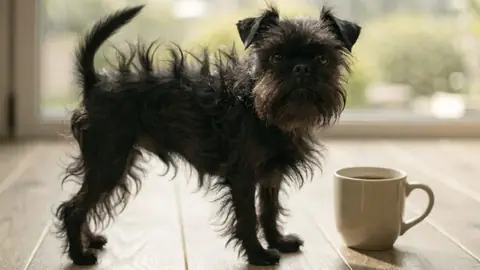 AffenpinscherBonbeno could not find a single verifiable Affenpinscher for sale in India, and says so. Here is what the pages ranking for this...
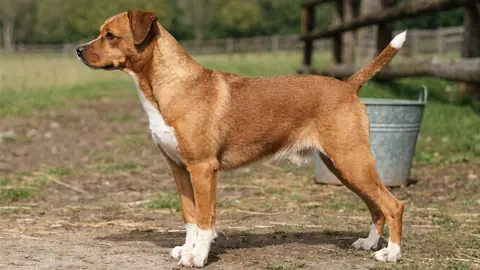 Austrian PinscherFCI Standard 64, read from the FCI's own PDF, the Austrian register counted rather than described, and an audit of what the...
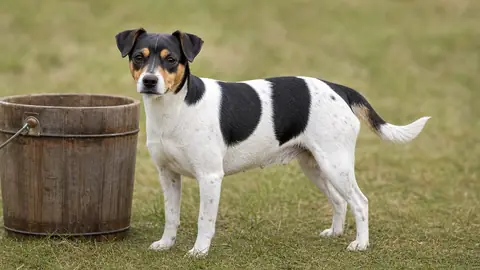 Danish-Swedish FarmdogA 34 cm Scandinavian farm dog with a rat-catching job, a jointly Danish and Swedish passport, and almost no presence in India.
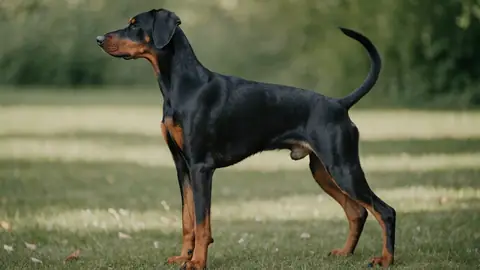 DobermannWhat a Doberman costs in India, why dilated cardiomyopathy is the single most important fact about the breed, what Indian law...
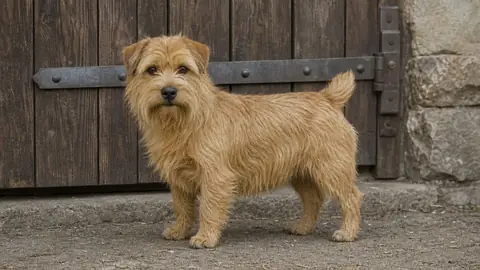 Dutch SmoushondThe Hollandse Smoushond is the clearest documented case in dog breeding of a breed being rebuilt after it stopped existing. The...
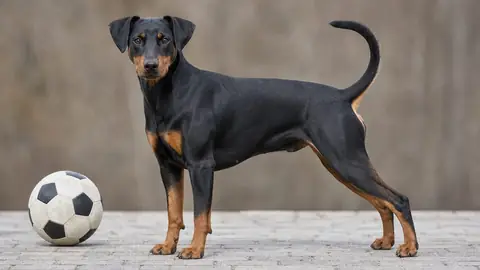 German PinscherGermany's smooth-haired Pinscher came within one bitch of disappearing. The population alive today descends from five dogs...
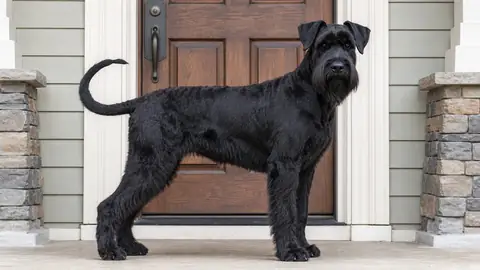 Giant SchnauzerOne breed, three registries, and a 10 kg disagreement about what it should weigh. Plus the single strongest breed-cancer signal...
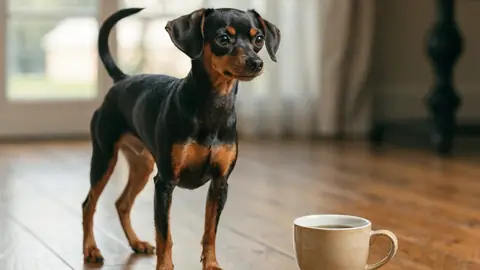 Miniature PinscherWhat a Min Pin actually costs in India across five published sources that disagree by a factor of nearly nineteen, why the...
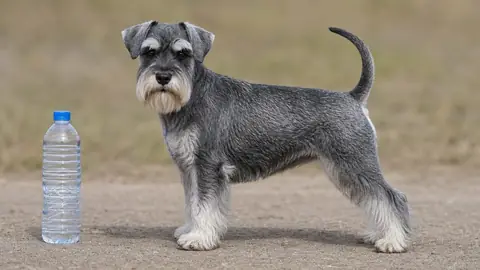 Miniature SchnauzerThe smallest Schnauzer is a real Indian breed with a real Indian market, and almost everything published about its size, its...
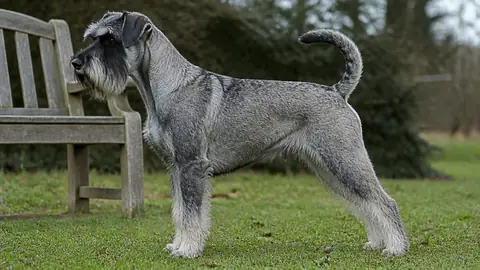 Standard SchnauzerThe middle Schnauzer, priced in India as though it were the small one and screened as though it were the big one, with a heart...
Compare the breeds side by side
To compare these 10 breeds directly, read across the table rather than down the guides. Heat tolerance is a Bonbeno rating out of 5 for Indian conditions, and the reasoning behind each one sits on the breed's own page.
| Breed | Heat tolerance | Published price, India |
|---|---|---|
| Affenpinscher | 2 of 5 | Zero |
| Austrian Pinscher | 2 of 5 | None exists |
| Danish-Swedish Farmdog | 1 of 5 | See page |
| Dobermann | 3 of 5 | Rs 20,000 to Rs 80,000 |
| Dutch Smoushond | 1 of 5 | 600 euro |
| German Pinscher | 3 of 5 | Rs 1,748.25, and it is a name tag |
| Giant Schnauzer | 2 of 5 | Rs 30,000 to Rs 80,000, from one Indian breed guide with no stated method |
| Miniature Pinscher | 4 of 5 | Rs 8,000 to Rs 1,50,000 |
| Miniature Schnauzer | 2 of 5 | Rs 25,000 to Rs 80,000 across four Indian sources, none of which divides to a whole dollar at 84.38 or 74 |
| Standard Schnauzer | 2 of 5 | None. India's top-40 list carries only the Miniature |
What matters in this group
The points below are what the evidence on these 10 guides actually supports, not what the category is assumed to mean.
- The FCI files all ten of these dogs in Group 2 Section 1, Pinscher and Schnauzer type, and the pages show why the section holds together. The Pinscher-Schnauzer-Klub 1895 remains the single club for all six Pinscher and Schnauzer breeds, and the Standard Schnauzer was entered in it that year under the name rough haired Pinscher. The Miniature Schnauzer began around the turn of the century as a dwarf Schnauzer from the Frankfurt area, at that point still described as a rough haired Zwergpinscher, and its standard calls it a reduced image of the Schnauzer. FCI 185 opens by calling the Miniature Pinscher a reduced image of the German Pinscher, and standards 184 and 185 were published on the same day with the same wording for everything except the size line. The Affenpinscher evolved from the rough-coated Pinschers of southern Germany, with stud book entries from 1879. The three non-German members are filed by type. The Austrian Pinscher and the Danish-Swedish Farmdog sit in subsection 1.1 as Pinscher type, and the Dutch Smoushond in 1.3, its standard recording only that the yellow Schnauzer is generally believed to be one of its original dogs.
- The shared history is the stable and the farmyard, and the job was rats. The German Pinscher's talent for killing them is described in German sources as genetically fixed and still visible today. The Standard Schnauzer was a Southern German stable dog that watched for rodents to kill them in a flash, which earned it the name Rattler, and the Austrian Pinscher carried the same nickname because rats and mice were the only quarry a farm dog was permitted to take. The Danish Kennel Club states in its own lexicon that the farmdog is not a terrier but a pinscher, indispensable on every farm to keep stables and barns free of rats and mice and as an alarm bell when someone approached. The Affenpinscher killed rats in kitchens, granaries and stables, the Miniature Pinscher rid vermin from farmers' barns, the Miniature Schnauzer was a farm ratter with a watchdog job attached, and the Dutch Smoushond was sold in 1830s Amsterdam as the gentleman's stable dog to catch rats where the horses stood. For an Indian flat that history arrives as the three behaviours the smaller guides keep naming. A prey drive that street cats and poultry trigger, an alarm bark that a shared corridor supplies all day, and an independence that reads as arguing.
- Two members left the stable and became something else, and a working trial marks the change. Friedrich Louis Dobermann bred his dog in the 1870s from butcher's dogs, an early type of Rottweiler and a black and rust Thuringian shepherd dog, recognised as a police dog by the start of the twentieth century. The German Pinscher guide adds that he used German Pinscher stock among others. The Giant Schnauzer was built around Munich by cattle farmers who took the Standard Schnauzer as a foundation and added Rottweiler, Great Dane and sheepdogs. It drove cattle, guarded breweries, butchers' shops, stockyards and factories, and served as a police dog. Both carry a working trial, and the Royal Kennel Club puts each at more than two hours of exercise a day. The mid-sized three are a different animal. The German Pinscher, Standard Schnauzer and Austrian Pinscher are filed without a working trial and their standards give the use as watch and companion dog. The Miniature Pinscher guide puts the distinction plainly, an alert dog rather than a guard dog, because a 5 kg dog cannot stop anybody. The Austrian standard does call the breed an incorruptible guard, and its club explains that as a bark at every stranger, conceding that in urban density this is not the ideal starting point for neighbourly harmony.
- Only three of the ten have an Indian market, and the other seven are sold by substitution. Five Indian sources price the Miniature Pinscher at Rs 8,000 to Rs 1,50,000, four price the Miniature Schnauzer at Rs 25,000 to Rs 80,000 in rupee-native figures, and five price the Dobermann at Rs 15,000 to Rs 3,50,000. India's largest marketplace has a German Pinscher page showing two French Bulldogs and a Border Collie, the only rupee figure attached to that breed is a pet identity tag, and India's top-40 price list carries one Schnauzer row, the Miniature. The page ranking first in India for the Miniature Schnauzer carries the Giant Schnauzer's height, weight and photographs. The Austrian Pinscher's only rupee band is, by its own author's admission, based on what people pay internationally, and sits one sentence after a Miniature Pinscher price. The Dutch club fixes its price at 600 euro and does not export. The fix is a tape measure. A German Pinscher stands 45 to 50 cm and a Miniature Pinscher 25 to 30. The three Schnauzers stand 30 to 35, 45 to 50 and 60 to 70. And the Miniature Pinscher is not a small Dobermann. Its standard names the German Pinscher and the AKC says the two breeds are unrelated.
- Coat, not family, decides the Indian summer, and the section splits down the middle. The smooth single coats rate best. The Miniature Pinscher scores 4 of 5 for heat on the structural case, 4 to 6 kg, a blunt-wedge muzzle and no undercoat. The German Pinscher scores 3 with a standard that mentions no undercoat, and the Dobermann scores 3 because FCI 143 disallows undercoat outright and lists visible undercoat as a disqualifying fault. Everything with an undercoat rates 2 or 1. The three Schnauzers carry a wiry harsh top coat over a dense undercoat from homelands whose hottest month averages 18 to 20 C, and the Giant adds a black coat on a 35 to 47 kg body. The Austrian Pinscher carries a thick double coat where the German and Miniature Pinscher standards mention no undercoat, which makes the most rustic-looking of the three the least suited to an Indian plain. The Danish-Swedish Farmdog and the Dutch Smoushond take the site's lowest rating, because Malmo never exceeds a 16.11 C monthly wet bulb and Amsterdam's warmest month averages 17.97 C, while Chennai's coolest month sits at 24 C. The Affenpinscher scores 2 for a different reason, its April 2026 addition to the OFA respiratory grading list for airway obstruction, whose signs include heat intolerance.
Membership is generated from the breed data itself, not typed by hand, so this list cannot drift from the guides it points at and fills in as more publish. The 10 guides here cite 386 sources between them.
This page is a directory of published Bonbeno guides, generated from their data rather than written as clinical guidance, so no veterinarian reviewed this page itself. Each linked guide carries its own veterinary review and its own health sections. Breed level evidence describes populations, and your animal is an individual, so consult your nearby vet before acting on anything you read here.
Common questions
How does Bonbeno decide which breeds belong on this page?
Membership is generated from each breed's own published data rather than chosen by an editor. The group is defined by a shared trait rather than a rating, so its members are named in the site's own cluster definition and each one is checked against the published guide before it appears. A breed appears here the moment its guide publishes and meets that rule, and never before, which is why no link on this page can point at a guide that does not exist.
What is a Bonbeno heat tolerance rating?
It is a 1 to 5 rating of how well a breed copes with Indian conditions, where 5 is best. Almost no international breed reference publishes one, and in a country where summer temperatures pass 45 C it is the most decision-relevant trait there is. It is Bonbeno's own judgement, built from published heat-illness evidence where that exists and stated as inference where it does not.
Are the prices on this page current?
Each price is read from that breed's own guide, where it is compared across published Indian sources and cited. Published Indian breed prices disagree widely between sellers, sometimes by more than a lakh for the same breed, so treat the figure here as the lowest band Bonbeno found and read the guide for the full range.
Does Bonbeno sell or broker any of these dogs?
No. Bonbeno does not sell pet food, products or animals and does not broker puppy or kitten sales. Nothing on this page is a listing, and no breeder or seller can pay to appear on it.