
Dog breed profile
Pekingese in India: Price, Heat Risk and Full Breed Guide
What a Pekingese costs in India, why Bonbeno rates heat tolerance 1 of 5, and what the February 2026 Cambridge breathing study found when it graded 46 Pekingese: only 10.9 percent breathed cleanly.
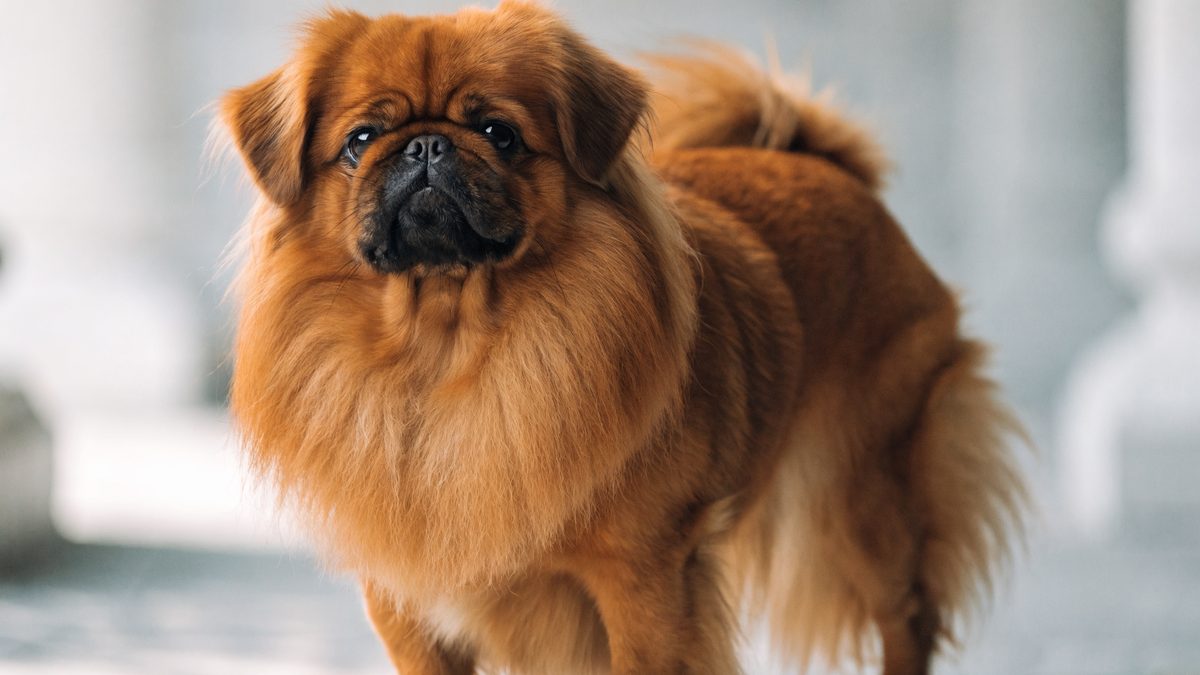
Quick answer
The Pekingese price in India runs Rs 15,000 to Rs 2,00,000 in 2026, and published Indian sources disagree by more than Rs 1,50,000 for the same puppy. Bonbeno rates the Pekingese 1 of 5 for heat tolerance. It is a flat-faced, heavy-coated toy breed, and a February 2026 Cambridge study graded only 10.9 percent of Pekingese free of breathing abnormality, statistically the same as the Pug and the Bulldog.
This guide is general information for Indian pet owners and is not a diagnosis. Always consult a registered veterinarian near you before acting on anything you read here, and treat any sudden change in your dog's condition as urgent.
Pekingese at a glance
What a Pekingese is
The Pekingese is a small, compact Chinese companion dog with a flat face, large prominent eyes and a heavy double coat, weighing no more than 5 kg for a dog and 5.4 kg for a bitch under the Royal Kennel Club breed standard. Two of those features, the flat face and the heavy coat, are exactly the two things that make an Indian summer difficult for this breed.
The breed sits in the toy group and traces to the Chinese imperial court. Short-legged, short-faced dogs of Pekingese type have been traced in China as far back as the 8th century, in the Tang dynasty, and the breed took its name from the imperial palace in Peking. When British forces ransacked Peking in 1860, four dogs were taken back to Britain, the breed became fashionable in Victorian society, and the Kennel Club accepted it for registration in 1910.
In practical numbers, the American Kennel Club publishes a height of 6 to 9 inches, a weight of up to 14 pounds and a life expectancy of 12 to 14 years for the breed. Fourteen pounds is about 6.35 kg, and it is a disqualification rather than a target: the AKC standard states that all weights are correct within the limit of 14 pounds and that weight over 14 pounds disqualifies.
Under all three major standards the Pekingese is heavy in front and lighter behind, with a distinctly rolling gait that comes from bowed forelegs, a broad chest and a narrow light rear. The head is large in proportion to the body and wider than it is deep. The ears are heart-shaped and lie flat against the head. The coat is a long coarse outer coat over a thick soft undercoat, forming a mane around the neck.
What the breed standard actually asks for
Read the breed standard properly and it reads less like a description and more like a warning. Each of the three recognised standards contains explicit limits on the very features Indian sellers advertise as desirable.
| Point | Royal Kennel Club | American Kennel Club | FCI Standard No 207 |
|---|---|---|---|
| Nose and nostrils | Nose not too short, broad, nostrils large and open. Pinched nostrils unacceptable | Nostrils are wide and open rather than pinched | Nose not too short, broad, nostrils large and open. Pinched nostrils to be heavily penalised |
| Muzzle | Muzzle must be evident, but may be relatively short and wide | Very flat, broad and well filled-in below the eyes | Must be evident, but may be relatively short and wide |
| Nose wrinkle | A slight wrinkle, preferably broken. Heavy over-nose wrinkles unacceptable | Never so prominent as to obscure more than a small portion of the eyes, or fall forward over any portion of the nose leather | Heavy over-nose wrinkles unacceptable and to be heavily penalised |
| Eyes | Clear, round, dark, not too large. Free from obvious eye problems | The look is bold, not bulging. The white of the eye does not show when the dog is looking straight ahead | Clear, round, dark lustrous and not too large. Free from obvious eye problems |
| Breathing | Any signs of respiratory distress for any reason unacceptable | Not addressed in the 2004 standard | Any signs of respiratory distress for any reason unacceptable and should be heavily penalised |
| Coat | Excessive coat highly undesirable. Movement hindered by excessive body coat unacceptable | A long and profuse coat is desirable providing it does not obscure the shape of the body | Excessive coat must be heavily penalised |
| Weight ceiling | Ideal weight not exceeding 5 kg dogs, 5.4 kg bitches | All weights correct within 14 pounds. Over 14 pounds is a disqualification | Ideal weight not exceeding 5 kg males, 5.4 kg females |
The history explains the shape. India's oldest dog directory records the rules attributed to the Chinese Dowager Empress Tzu Hsi: the Pekingese should have short bowed legs so that it could not wander far, a ruff of fur around its neck to give it an aura of dignity, and selective taste buds so that it should appear dainty. The same source notes that the profuse double coat conceals the bowed legs. Every one of those three specifications is about appearance and containment rather than about the dog's function, and the modern breed carries the consequences of all three.
Notice what the standards do not say. None of them asks for a face with no nose. None of them asks for eyes that stand proud of the skull. The Royal Kennel Club and the FCI both use the word unacceptable about pinched nostrils, about heavy over-nose wrinkles and about any sign of respiratory distress Federation Cynologique Internationale. The Royal Kennel Club standard was last updated in April 2025, so this is current guidance rather than history.
Why the standard matters to an Indian buyer
The standard is your only free, published, written specification of what a correctly built Pekingese looks like. When an Indian seller sends you photographs, the standard is the checklist. Open visible nostrils, a wrinkle that does not cross the nose, eyes that sit in the socket without showing white, and a coat that does not swallow the outline of the body are all things you can see in a photo.
That check matters because the two most detailed Indian pages currently ranking for this query publish a weight range that runs past the standard ceiling. One quotes 4 to 6 kg for a male Pekingese and another quotes 3 to 6 kg, against a standard limit of 5 kg for dogs and 5.4 kg for bitches. A 6 kg Pekingese is not a bigger and better Pekingese. It is a dog carrying weight it does not have the airway to carry, and body condition is one of only three factors that predicted breathing trouble across 898 brachycephalic dogs in the most recent study.
Category 3 is the highest level of concern, for breeds with visible conditions that may harm health or welfare. The named points of concern for the Pekingese are signs of respiratory difficulty or distress, excessively profuse coat, protruding eyes, heavy overnose wrinkle, pinched nostrils, poor muscle tone, signs of visible eye irritation or discomfort including redness, discharge and tear staining, and incorrect hind conformation. Read that list again as a shopping list of what to avoid, because several of those points are precisely what Indian listings photograph as the breed's charm.
Bonbeno's position on this breed is narrow and specific. We are not telling you the Pekingese is a bad dog. It is an affectionate, dignified, genuinely apartment-suited companion with a long and real history. We are telling you that in India the flat face and the heavy coat carry a cost, that the cost is measurable, and that the measurements exist and are published.
Pekingese price in India
A Pekingese puppy costs Rs 15,000 to Rs 2,00,000 in India in 2026, and the most useful fact about that range is that the two most detailed published sources disagree by more than Rs 1,50,000 for what they both call the same dog. One page puts a Kennel Club of India registered puppy at Rs 25,000 to Rs 40,000. Another puts the identical tier at Rs 1,00,000 to Rs 1,50,000.
Bonbeno compared every Indian page publishing a Pekingese price band on page one of the search results for this query. Read them side by side and the disagreement is impossible to miss.
| Source | Headline range | Entry or pet quality | KCI registered | Show or champion line |
|---|---|---|---|---|
| Supertails | Rs 15,000 to Rs 50,000 plus | Rs 15,000 to Rs 25,000 | Rs 25,000 to Rs 40,000 | Rs 40,000 plus |
| Mr n Mrs Pet | Rs 70,000 to Rs 2,00,000 plus | Rs 70,000 to Rs 1,00,000 | Rs 1,00,000 to Rs 1,50,000 | Rs 1,50,000 to Rs 2,00,000 |
| Happy Pet | Rs 15,000 to Rs 50,000 | Not broken out | Not broken out | Not broken out |
| Asia Pets | No price published | Not stated | Not stated | Not stated |
| Puppiezo | No price published | Not stated | Not stated | Not stated |
The gap on the KCI-registered tier is Rs 1,10,000 at the top and Rs 75,000 at the bottom, for the same claim about the same certificate. The gap on the entry tier is Rs 55,000. Two of the five pages publish no number at all and ask you to call or send a WhatsApp message instead Puppiezo, Pekingese Puppies For Sale…. Nobody audits any of these figures, and three of the five pages sell or broker puppies, which is a commercial interest in the number that none of them discloses.
The city-wise table that is not a city-wise table
Only one Indian source publishes a city breakdown for the Pekingese, and every city in it carries the identical figure. Hyderabad, Bangalore, Delhi, Chennai, Lucknow, Mumbai, Jaipur and Pune are each listed at Rs 70,000 to Rs 2,00,000. That is not a market survey. It is one national range repeated eight times with a city name on the front, and it is presented in a table that looks like local data.
Bonbeno prints that plainly rather than reproducing the table as if it told you something about Pune specifically. If you are in Pune, the honest answer is that no published source has measured Pune. Ask three sellers, write the numbers down, and treat any figure outside Rs 15,000 to Rs 2,00,000 as needing an explanation.
Why the spread is this wide: the breed is genuinely rare in India
The price spread is wide because supply is thin. On 15 August 2026 the two largest Indian puppy marketplaces between them listed eight Pekingese for the whole country. Mr n Mrs Pet showed six results nationally and Asia Pets showed two. For comparison, the same Mr n Mrs Pet page counts 650 Shih Tzu, 549 Siberian Husky and 487 Golden Retriever listings.
Indian breeders say the same thing in their own words. A Coimbatore listing on DogsIndia, the country's longest-running dog directory, states plainly that the Pekingese is nowadays quite rare in India, and the two Pekingese breeder listings on that page were first posted in 2017 and 2019 and have not been refreshed since. That is a supply picture, not a marketing pitch.
Thin supply does three things to price. It removes the reference point a buyer would normally use to sanity-check a quote. It hands pricing power to whoever has a litter. And it makes the seller's claim about lineage effectively unverifiable, because there is no local market of comparable dogs to check it against. That is the real reason the published bands differ by a factor of four rather than by ten percent.
The scarcity shows in the search results themselves. In Bonbeno's own India-restricted pull for this query on 15 August 2026, recorded in full further down this page, position seven was a Flipkart listing for a hardback book about the breed and two of the ten slots were the same blogspot page repeated. Google filled a commercial-intent result set with a book and a duplicate because it could not find ten Indian pages worth ranking, which tells you how small this market is.
What the price is actually tracking
- Registration status. A Kennel Club of India certificate documents pedigree. It is not a health certificate, it does not mean the parents were screened for anything, and it says nothing about the puppy's airway, eyes or spine. One Indian source prices the KCI tier at Rs 25,000 to Rs 40,000 and another at Rs 1,00,000 to Rs 1,50,000, which tells you the certificate is not what is setting the price.
- Claimed champion lineage. The champion band is quoted at Rs 1,50,000 to Rs 2,00,000 and described as imported or award-winning parents. Ask which show, which year, which registry, and ask for the parents' registration numbers. A champion title is a public record and a real breeder produces it in a minute.
- Colour. Indian listings quote White, Black, Fawn, Fawn Brindle, Black and Tan, Cream and Grey. All three recognised standards state that all colours and markings are of equal merit, with albino, liver and merle unacceptable to the Royal Kennel Club. Any colour premium on a Pekingese is aesthetic demand, not quality.
- Who is publishing the number. Three of the five price sources on page one also sell puppies. Read a price band from a seller as an anchor, not as market data.
What a low quote and a high quote each mean
A very low quote and a very high quote are both signals, and they signal different things. Below roughly Rs 15,000 you are below every published Indian band for this breed, which usually means the dog is not what it is being sold as, or the litter came from an unregistered operation. In India, breeding without a certificate of registration from the State Animal Welfare Board is prohibited under the Prevention of Cruelty to Animals (Dog Breeding and Marketing) Rules, 2017, and pups less than eight weeks old must not be sold at all.
Above Rs 1,50,000 you are paying a premium that no published Indian source ties to any health screening. The premium is attached to lineage and colour, not to a respiratory function grade or an eye certificate. If you are spending that much, spend it on evidence rather than on paperwork: ask for the parents' Respiratory Function Grading Scheme grades, which exist for this breed and are published on the Royal Kennel Club's own results finder.
Every published Indian source agrees the monthly cost sits between Rs 3,300 and Rs 10,000 Mr n Mrs Pet, Pekingese Puppies For Sale…. Over a 12-year life that is Rs 4,75,000 to Rs 14,40,000 before a single specialist consultation, and this is a breed whose common problems are ophthalmic and neurological, which are the two most expensive things to treat in India. The purchase price is rarely the decision that costs you money.
Bonbeno does not broker puppy sales and does not publish breeder listings. Every figure above is reported from a third party so you can see the disagreement for yourself and price it into your own decision.
Monthly cost of owning a Pekingese in India
Published Indian estimates put the monthly cost of a Pekingese at Rs 3,300 to Rs 10,000, and the three sources that give a figure disagree by a factor of three. Every one of those budgets leaves out the two lines that matter most in India, which are cooling and eye care.
Start with what the Indian sources actually publish, laid out line by line.
| Line item | Supertails | Happy Pet | Mr n Mrs Pet |
|---|---|---|---|
| Food | Rs 1,200 to Rs 1,800 | Rs 1,200 to Rs 1,800 | Bundled in total |
| Wet food and supplements | Rs 500 to Rs 1,000 additional | Not separated | Bundled in total |
| Veterinary and parasite control | Rs 900 to Rs 1,800 | Rs 900 to Rs 1,800 | Bundled in total |
| Grooming | Rs 1,200 to Rs 1,800 per professional session | Rs 1,200 to Rs 1,800 | Bundled in total |
| Cooling and electricity | Not costed | Not costed | Not costed |
| Monthly total | Roughly Rs 3,800 to Rs 6,400 by addition | Rs 3,300 basic to Rs 5,400 premium | Rs 5,000 to Rs 10,000 |
The Happy Pet and Supertails numbers agree closely, which is unsurprising because they use the same line items. Mr n Mrs Pet sits roughly twice as high and does not itemise. Bonbeno reports both rather than averaging them, because averaging two numbers that were produced by different methods gives you a third number that nobody measured.
The three lines every Indian Pekingese budget omits
- Cooling. No published Indian source prices air conditioning for a Pekingese. Not one of the three budgets above contains an electricity line, even though the same pages state that this breed does not tolerate heat and that its ideal weather band is 15 C to 25 C. Most Indian metros sit outside that band for the majority of the year, and Delhi recorded 42 C to 44 C through May 2026. Whatever your flat's cooling costs in summer, a large part of it becomes a dog expense, and no Indian page will tell you the number.
- Ophthalmic care. This is the breed's most likely recurring medical cost and no Indian budget lists it. Corneal ulcer is a painful, recurring, sometimes sight-threatening condition, and brachycephalic types carry 11.18 times the odds of it against crossbred dogs. Add lubricant drops, repeat fluorescein staining and the possibility of referral, and eyes become the line that breaks a Rs 3,300 monthly budget.
- Emergency surgery. No published Indian source gives a cost for globe replacement surgery, for brachycephalic airway surgery, or for spinal surgery, all three of which are documented risks in this breed Chai O, Harrosh T, Bdolah-Avram T. Bonbeno will not invent a figure. What we will say is that all three are specialist procedures available in a small number of Indian cities, and that a household with no reserve for them is not budgeting for this breed honestly.
Grooming is the one line India makes worse
The Royal Kennel Club rates Pekingese grooming as every day. That is not a suggestion aimed at show dogs. A long coarse outer coat over a thick soft undercoat mats quickly, and a matted undercoat in Indian humidity traps moisture against the skin. Professional sessions at Rs 1,200 to Rs 1,800 each, at the four-to-six-week interval an Indian seller recommends, add Rs 900 to Rs 1,800 a month on their own Mr n Mrs Pet, Pekingese Puppies For Sale….
You can cut that line by learning to brush the dog yourself, which is genuinely worth doing. You cannot cut it to zero, because the parts of the job that need doing daily are the parts most owners skip.
A realistic Indian budget
Bonbeno's honest read is that the published Indian budgets describe a dog that never gets sick and never needs cooling. Take the published range of Rs 3,300 to Rs 10,000 a month as the floor Mr n Mrs Pet, Pekingese Puppies For Sale…, then set aside a separate annual reserve for eyes, airway and spine. Over the 12 to 14 year lifespan Indian sources quote for the breed, the monthly line alone runs to between Rs 4,75,000 and Rs 16,80,000.
The cheapest health intervention available to you is a kitchen scale and a notebook. Higher body condition score was one of only three factors significantly correlated with breathing trouble across 898 brachycephalic dogs, obese dogs are twice as likely to show BOAS signs, and dogs at or above their breed and sex mean bodyweight carried 1.42 times the odds of heat-related illness. Keeping a Pekingese lean under the 5 kg standard ceiling is free and it moves three separate risk numbers at once.
Climate suitability: why Bonbeno rates heat tolerance 1 of 5
The Pekingese is one of the worst-suited breeds in this encyclopedia for the Indian climate, because it hits both of the two conformations that impair cooling at the same time. Purina India names short-faced breeds and heavy-coated breeds as the two groups at particular heat stroke risk, and lists the Pekingese by name in the first group. This breed belongs in both.
A dog cools itself mainly by panting, and panting works by moving air across the wet surfaces inside the nose. Unlike humans, dogs have sweat glands only on their paws and must rely on panting to cool down. Brachycephalic dogs have less of that internal surface and less effective ventilation to drive air over it, which is the mechanism behind their reduced heat dissipation. Then put a coarse outer coat over a thick soft undercoat on top of it, and you have an animal with a restricted radiator wearing a blanket.
Cornell's canine health centre defines the threshold precisely. Normal canine body temperature runs 100.5 F to 102.5 F, which is about 38.1 C to 39.2 C, and heatstroke results when the dog cannot regulate and temperature reaches 105 F, about 40.6 C, or higher. Short-muzzle breeds, older dogs and overweight dogs are all named as higher risk, and heatstroke commonly leads to acute kidney injury, blood clotting problems and shock.
What the evidence actually says, and where it stops
The largest study of heat-related illness in dogs analysed 905,543 dogs under UK primary veterinary care in 2016 and found 395 confirmed heat-related illness events. Incidence was 0.04 percent and the event fatality rate was 14.18 percent, with a 95 percent confidence interval of 11.08 to 17.96. Roughly one dog in seven that develops heat-related illness dies of it.
Brachycephalic dogs carried 2.10 times the odds of heat-related illness against mesocephalic dogs, with a confidence interval of 1.68 to 2.64. Purebred dogs carried 1.86 times the odds of crossbreds, and dogs at or above their breed and sex mean bodyweight carried 1.42 times the odds of lighter dogs of the same breed.
Here is the limit, stated plainly because no competing page states it. The Pekingese does not appear as a named breed in that study's results. The breeds with published breed-level odds ratios were the ones common enough in the UK denominator population to model, including the Chow Chow, Bulldog and French Bulldog. The Pekingese is counted inside the brachycephalic skull-shape group and nowhere else. So the honest statement is that there is no published breed-specific heat-illness risk figure for the Pekingese, and the 2.10 conformation figure is the best evidence that exists.
That evidence is also generated in Britain. UK summer conditions are not Indian summer conditions, so the direction of the effect transfers and the magnitude almost certainly understates the Indian case.
The comfort band against the Indian thermometer
An Indian breed page states the Pekingese ideal weather band as 15 C to 25 C. Set that against what Indian cities actually recorded in May 2026.
| City or place | Recorded maximum, May 2026 | Degrees above the stated comfort ceiling |
|---|---|---|
| Banda, Uttar Pradesh | 47.6 C | 22.6 C |
| Delhi | 42 C to 44 C | 17 C to 19 C |
| Ahmedabad | 41 C to 43 C | 16 C to 18 C |
| Nagpur | 41 C to 43 C | 16 C to 18 C |
| Jaipur | 40 C to 41 C | 15 C to 16 C |
| Lucknow | 40 C to 41 C | 15 C to 16 C |
| Hyderabad | Mid to high 30s C | About 10 C to 14 C |
| Chennai | Mid to high 30s C | About 10 C to 14 C |
| Mumbai | High 30s C, humid | About 13 C to 14 C |
| Kolkata | High 30s C | About 13 C to 14 C |
Cities make this worse than the regional figure suggests. The urban heat island effect can leave a metropolitan area up to 10 C hotter than the countryside around it, because vegetation has been replaced by concrete, steel and glass that absorb heat. Your balcony floor at 4 pm in Delhi is not at the reported city maximum. It is well above it.
The warm-night problem nobody writes about
The Indian risk for a flat-faced dog is not really the afternoon. It is the night that no longer cools down. India's weather service classifies a warm night as one where the minimum temperature runs 4.5 C to 6.4 C above the seasonal normal minimum, and above 6.4 C it becomes a very warm night. On 21 May 2026 Delhi recorded its warmest night in 14 years, and the weather service forecast further warm nights for Delhi, Haryana, Uttar Pradesh and Vidarbha.
That matters specifically to this breed. A dog with normal nasal anatomy banks its recovery overnight. A Pekingese that spends a 42 C day working harder than a mesocephalic dog to hold its temperature needs the night to get the heat back out. Warm nights remove that window, and they arrive in exactly the northern and central belt where India's Pekingese listings cluster.
Humidity and the monsoon
Humidity attacks the same mechanism from the other side. Evaporative cooling depends on the air being able to take up water, and excessive humidity is listed among the factors that increase heat stroke risk. Mumbai's high-30s maximums are meaningfully harder on a Pekingese than Delhi's low-40s because of the moisture load.
The monsoon then swaps a breathing problem for a skin problem. A thick undercoat that stays damp is a warm moist environment, and the facial folds of a flat-faced dog create the same conditions in miniature, which is why bacteria and yeast grow there and cause infection and severe itching. Two things follow. Dry the dog properly to the skin after every wet walk, and clean and dry the nose wrinkle daily rather than weekly.
The Indian protocol for a Pekingese
- Walk before sunrise and after dark. Vigorous exercise in hot weather can produce heat stroke in as little as 30 minutes. In an Indian summer that means before 6 am and after 8 pm, and it means judging by the pavement rather than by the clock.
- Cool the flat, not the dog. Air conditioning is the intervention that works, and shade plus fresh water is the minimum where cooling is not available. A Pekingese is a 5 kg dog in a small space, which is the one thing that makes this affordable.
- Never leave the dog in a car. At 26 C outside, a car interior reaches 32 C in five minutes and 43 C in 25 minutes. In an Indian May the starting point is 15 C higher than that example.
- Learn the signs. Severe panting, difficulty breathing, heavy salivating, vomiting, diarrhoea, a temperature of 40.5 C or above, blood in the urine, nose bleeds, then collapse. On a brachycephalic dog the early sign is that the normal noisy breathing gets louder and more effortful.
- Cool correctly if it happens. Move the dog into shade or air conditioning, sponge cool but not cold water onto the skin including the belly and inside of the legs, use a fan, and stop cooling once the temperature reaches 39.4 C. Do not plunge the dog into cold water or an ice bath, because that prevents core temperature falling.
- Go to a vet regardless. Heat stroke can be fatal and the immediate priority after cooling is veterinary attention. Cornell's guidance is to start cooling at home with cool water and then place the dog directly in front of the car's air conditioning on the way to the hospital.
Patients that survive heatstroke are at greater risk of heatstroke again in the future. For an Indian Pekingese owner that means one bad afternoon changes the rules permanently: after an episode, the dog's summer becomes an indoor summer, and the walk window narrows rather than returning to normal once the dog recovers.
Respiratory sounds such as snorting and snoring are not normal. They are clinical signs of airway obstruction and compromised breathing. Both the Royal Kennel Club and FCI standards call any sign of respiratory distress unacceptable in this breed Federation Cynologique Internationale. If your Pekingese is noisier in May than in January, that is the heat unmasking an airway that was already marginal, and it is a reason to see a vet rather than to buy a cooling mat.
Temperament and household fit
The Pekingese temperament is written into the breed standard in four words: fearless, loyal, aloof, not timid or aggressive Federation Cynologique Internationale. The American standard adds that the breed is a good natured, opinionated and affectionate companion to those who have earned its respect. Earned is the operative word, and it is the single most useful thing to know before you buy one.
This is a dignified dog rather than a demonstrative one. The American standard describes a temperament of directness, independence and individuality, and an image that implies courage, dignity, boldness and self-esteem rather than daintiness or delicacy. In practice that means a Pekingese decides who it likes, decides when it wants attention, and is entirely comfortable being left alone in a room.
Indian listings describe the same animal in softer marketing language. One calls the breed regal, affectionate and independent with a bold spirit and intense loyalty. Another lists the temperament as opinionated, good-natured, affectionate, loyal and bold, and then also lists aggressive in the same string, which reads like template text rather than a considered claim.
Who this breed genuinely suits
- Adults in an air-conditioned flat. Small, quiet, low on daily exercise and content alone. The breed is described as highly apartment friendly by Indian sources and up to 30 minutes of exercise by the Royal Kennel Club, and both are accurate.
- Owners who are home in the heat. A Pekingese needs someone to notice the breathing changing. That is not a dog you leave in an unventilated flat from 9 am to 8 pm in May.
- People who like a dog with opinions. The breed carries itself as though it outranks you, and owners who find that funny do well with it. Owners who want compliance do not.
- Households with the reserve for specialist care. Eyes, airway and spine are all live risks in this breed, and the fit question is financial as much as behavioural.
Who should not buy one
Households with toddlers should think hard, and not for the reason people expect. Indian breed pages already say the Pekingese is not the best fit where small children are present, because the breed dislikes rough play and suits older children or adults in a calm environment. The stronger reason is anatomical.
A shallow eye socket and a prominent globe mean this breed's eyes can be displaced out of the socket by trauma that would not injure a normal-skulled dog. Proptosis in small brachycephalic breeds most often develops from minimal lateral head trauma, and even restraining a small dog by the scruff of the neck can occasionally cause a mild temporary proptosis. In one Egyptian case series of 15 proptosis cases the mean age was 15 months, and every case followed a traumatic injury from an accident or a fight with another dog.
So the risk in a house with a five-year-old is not that the Pekingese bites. It is that a child grabs at the face, or lifts the dog by the scruff, or drops it, and you are in an emergency clinic with an eye out of its socket. That is a manageable risk with supervision and rules. It is not a manageable risk with an unsupervised toddler.
With other dogs and cats
Indian sources describe the breed as selective with other animals and inclined to prefer its own kind, and say early socialisation is what makes multi-pet homes work. That matches the standard's aloof rather than aggressive framing. The practical caution is size and structure rather than attitude: a boisterous Labrador that body-checks a 5 kg chondrodystrophic dog is a spinal risk, and the breed's own risk of disc extrusion is well documented.
Two of the three recognised standards use the word aloof in the temperament clause Federation Cynologique Internationale. A Pekingese that ignores your guests is behaving exactly as described. Do not read it as under-socialisation, and do not force introductions, which in a breed this fragile creates the grabbing and lifting that causes eye and spine injuries.
Training a Pekingese
To train a Pekingese, negotiate rather than drill. Indian breed guidance is consistent that training is challenging because of the breed's stubborn and independent nature, and that patience, consistency and positive reinforcement are what work, with early socialisation as the foundation. There is no version of this breed that responds to repetition and pressure.
Start from the standard's own description. The Pekingese is bred for directness, independence and individuality, and is affectionate towards those who have earned its respect. That is a dog that asks what a request is for. Short sessions, high-value food, a clear payoff and an early stop work far better than a twenty-minute drill.
What to train first, and why it is medical
- Accepting face and eye handling. This is the single highest-value behaviour in the breed. You will be cleaning a nose wrinkle daily, checking eyes daily and putting drops in at some point in this dog's life. Pair face touching with food from week nine and keep paying for it for a year.
- Being lifted correctly. Teach a lift with one hand under the chest and one under the hindquarters, and teach the household to use it. Never allow a scruff lift, which can itself cause temporary proptosis in small brachycephalic breeds.
- Four paws on the floor. A chondrodystrophic breed with a documented disc-extrusion risk should not be jumping off sofas and beds. Ramps and steps are training, not equipment.
- A calm three-minute trot on a harness. The Respiratory Function Grading Scheme assessment asks the dog to move at a quick pace for three minutes so the vet can listen before and after. A dog that can do this calmly can be graded, and a graded dog is a dog whose airway you actually know about.
- Toilet routine that survives the monsoon. Build an indoor option before the rain arrives, because a breed that already resists being told what to do will not learn a new habit while standing in a downpour.
Use a harness, not a collar
A neck collar on a brachycephalic dog puts pressure on an airway that is already compromised. Increased neck girth was independently associated with greater risk of brachycephalic obstructive airway syndrome across breeds, alongside a shorter muzzle. A Y-front harness moves the load onto the chest. This is a small change that costs Rs 400 and is worth more than most training equipment you will buy.
Train indoors for most of the Indian year
Training a Pekingese outdoors in an Indian summer is a bad idea for the same reason walking it is. Heat stroke can follow vigorous exercise in warm weather in as little as 30 minutes, and a dog working mentally is also panting. Move recall, settle work and handling practice into an air-conditioned room and save the outdoors for the early morning.
Socialisation without injury
Socialise this breed with people and surfaces rather than with rough play. Take the puppy to the lift, the gate, the parking level and the vet's waiting room and let it observe. Do not stage wrestling sessions with larger dogs. The goal is a dog that is calm about the world, not a dog that has been handled by fifty strangers, because handling is precisely the input this breed's eyes cannot afford.
Teach the dog to lie on its side on a towel on command, and reward it heavily. It is how you check the nose wrinkle, examine the eyes, brush the coat and get a groomer through a session without a fight. Every daily-care job in this breed becomes ten seconds instead of ten minutes once this is trained.
How much exercise a Pekingese actually needs
A Pekingese needs up to 30 minutes of daily exercise, which is the figure the Royal Kennel Club publishes for the breed. An Indian breed page puts it at 20 to 40 minutes with an energy level rated low. Both are right, and both are almost irrelevant next to the question no ranking page asks, which is whether this particular dog can do 30 minutes at all.
The published guidance is consistent. The American Kennel Club describes the breed as fairly sedate most of the time with only modest exercise requirements, while noting that Pekingese enjoy canine sports at their own pace. Indian sources describe a couple of short leisurely walks a day rather than a high-intensity workout, warn against overdoing it in hot weather because the flat face makes breathing harder, and note that the aim is enough activity to prevent weight gain without exhausting the dog. That is a fair description of a healthy Pekingese.
Test your own dog rather than trusting the breed average
The most recent Cambridge study graded 898 brachycephalic dogs using an exercise tolerance test, and the protocol is simple enough to understand at home. A vet listens to the dog's breathing at rest with a stethoscope, moves the dog at a quick pace for three minutes, then listens again and assigns a grade Tomlinson F, Liu N-C, Sargan DR.
Eight of the 898 dogs could not complete the test at all, because of behavioural reasons or existing orthopaedic, neurological or cardiopulmonary disease. That is the number worth carrying with you. A meaningful minority of flat-faced dogs cannot do three minutes of brisk movement, and the breed-average advice of 30 minutes says nothing about whether yours is one of them.
| Grade | What the vet found | What it means for daily exercise |
|---|---|---|
| Grade 0 | Clinically unaffected, no respiratory signs | Up to 30 minutes daily in cool conditions is reasonable |
| Grade 1 | Noise audible only with a stethoscope, exercise unaffected | Normal exercise, but repeat the assessment every two years |
| Grade 2 | Noise audible without a stethoscope, moderate signs | Clinically affected. Shorten sessions, avoid heat entirely, see a vet |
| Grade 3 | Severe signs, inability to exercise or respiratory distress | Veterinary examination and treatment before any exercise plan |
Only 10.9 percent of the 46 Pekingese in that study were Grade 0. Put bluntly, if you own a Pekingese, the base rate says your dog is more likely than not to be somewhere on the affected scale, and a generic 30-minute recommendation is being applied to a dog that has never been assessed.
How to run a Pekingese walk in India
- Split it. Two sessions of 12 to 15 minutes beat one of 30, because the breed's problem is heat accumulation rather than fitness.
- Go before sunrise and after 8 pm. Vigorous activity in warm weather can trigger heat stroke within 30 minutes, and the pavement holds heat long after the air cools.
- Use a harness. Neck girth is an independent risk factor for airway obstruction, so keep pressure off the throat.
- Walk on grass or shaded pavement. A 5 kg dog carries its face 20 cm off a surface that is radiating heat back at it.
- Turn back at the first change in breathing noise. Louder is not fitter.
Replace distance with enrichment
A Pekingese does not need a long walk to be satisfied, and in India for eight months of the year it should not have one. Scatter feeding, snuffle mats, short training games and a slow indoor sniff route give the same mental load with none of the thermal load. This is the breed where indoor enrichment is not a compromise, it is the correct default.
Weight loss in this breed is a food decision, not an exercise decision. Body condition is one of only three factors correlated with breathing trouble across the 898-dog study, and dogs at or above breed mean bodyweight carried 1.42 times the odds of heat-related illness. Cutting portions and cutting treats is safe. Adding distance to an overweight brachycephalic dog in an Indian summer is not.
Grooming a double coat and a face fold in Indian humidity
Groom a Pekingese every day, which is the frequency the Royal Kennel Club publishes for the breed. Daily is not perfectionism. The coat is a coarse straight outer coat over a thick soft undercoat, with long feathering on the ears, the backs of the legs, the tail and the toes, and in Indian humidity all four of those feathered areas mat and stay damp.
Get the coat type right first, because one of the top-ranking Indian pages does not. It states that Pekingese have dense, curly coats that need trimming every four to six weeks. All three recognised breed standards describe the coat as moderately long and straight Federation Cynologique Internationale American Kennel Club. The same page's frequently asked questions section also refers to buying from responsible Corgi breeders on a Pekingese page, which is a good indication that the grooming advice there was written for a different breed.
The daily job, in order
- Mist and brush. Lightly mist the coat with water before brushing to protect the hair, then work through with a pin brush. Dry brushing a coarse outer coat over a dry undercoat snaps hair and creates the mats you are trying to prevent.
- Clean the nose wrinkle. Wipe the fold, then dry it completely. Facial folds create a warm moist environment where bacteria and yeast grow, which leads to infection and severe itching. In a Mumbai monsoon that environment exists all day.
- Check both eyes. Look for redness, discharge, tear staining, squinting or a dull patch on the cornea. Visible eye irritation or discomfort including redness, discharge and tear staining is a named Breed Watch point of concern for this breed, and squinting or discharge in a flat-faced dog warrants a vet visit rather than a wait.
- Trim the hair around the eyes. The hair around a Pekingese's eyes should be carefully trimmed to keep it from causing irritation. Hairs from the nasal fold rubbing the cornea are part of why the nasal fold is linked to corneal ulceration in brachycephalic breeds.
- Feel the feathering. Ears, thighs, tail and toes. Mats form there first and you find them by hand, not by eye.
Bathing and drying in an Indian climate
Bathe about once a month or as needed with a dog-specific shampoo. The part that matters in India is not the bath, it is the dry. An undercoat that is dry on the surface and damp underneath is exactly the warm moist environment that produces skin infection. Dry to the skin with a towel and a cool dryer, then check the armpits, groin and the base of the tail with your fingers.
The same rule applies after a monsoon walk. A soaked Pekingese towelled once on top is still a wet dog under the coat an hour later.
Should you clip the coat in summer?
There is no published breed-standard answer to summer clipping, and Bonbeno will not invent one. What the standards do say is that excessive coat is highly undesirable and that movement hindered by excessive body coat is unacceptable, and that excessive coat must be heavily penalised. Breed Watch names excessively profuse coat as a point of concern for judges.
Read that as a breeding instruction rather than a clipping instruction. The standards are telling breeders to stop producing so much coat, not telling owners to shave it off. If you are considering a summer clip for a dog that is genuinely struggling, that is a conversation with your vet about an individual animal, and it belongs alongside a Respiratory Function Grading assessment rather than instead of one.
What professional grooming costs and buys
Indian professional grooming runs Rs 1,200 to Rs 1,800 a session Happy Pet, Pekingese Dog Breed Guide, and one Indian seller recommends a four to six week interval. A groomer is worth it for nails, sanitary trimming and a proper deep dry that most flats cannot achieve. A groomer is not a substitute for the daily five minutes, because mats and eye problems both develop faster than a six-week cycle.
The Royal Kennel Club's every-day grooming rating for this breed is the honest one. Five minutes a day of misting, brushing, wrinkle-cleaning and an eye check will catch a corneal problem days earlier than a weekly session will, and in a breed where brachycephalic types carry 11.18 times the odds of corneal ulcer, days matter.
Health issues, screening and lifespan
The four health issues that define this breed are breathing, eyes, spine and birth, and all four now have published numbers. The most important of them is four months old: in February 2026, a Cambridge team graded 46 Pekingese for brachycephalic obstructive airway syndrome and found that only 10.9 percent were Grade 0, the lowest proportion of the 14 brachycephalic breeds studied.
Every Indian page ranking for this breed lists health problems in general terms. Two of the three most prominent list bloat and hip dysplasia among the Pekingese's common health issues Supertails, What's the Real Cost of Owning…, neither of which is a recognised breed-defining problem in a 5 kg toy dog. What follows is what the veterinary literature actually records, breed by breed and number by number.
Breathing: the February 2026 figure that changes the picture
Brachycephalic means short-headed, and the University of Cambridge's veterinary school lists the Pekingese alongside the French Bulldog, Bulldog, Pug, Shih Tzu, Japanese Chin, Boxer and Boston Terrier as examples of the type. Its own summary is blunt: breeding selection for extreme brachycephalic features over recent decades has produced dogs predisposed to upper airway obstruction and respiratory distress, and while not all brachycephalic dogs show clinical signs, the incidence and severity of respiratory disorders has increased.
Brachycephalic obstructive airway syndrome had, until recently, been studied intensively in only three breeds: the Bulldog, French Bulldog and Pug. The Tomlinson study, published in PLOS ONE on 18 February 2026 and funded by the Kennel Club Charitable Trust, extended the respiratory function grading assessment to 14 more breeds, covering 898 dogs recruited between September 2021 and April 2024.
| Breed | Percent Grade 0 | Risk band assigned by the study |
|---|---|---|
| Pug | 7 percent | Reference high-risk breed |
| French Bulldog | 10 percent | Reference high-risk breed |
| Bulldog | 10.9 percent | Reference high-risk breed |
| Pekingese | 10.9 percent | Higher risk, no significant difference from the three above, adjusted p = 1.00 |
| Japanese Chin | 17.4 percent | Higher risk, adjusted p = 1.00 |
| Griffon Bruxellois, Boston Terrier, Dogue de Bordeaux, King Charles Spaniel, Shih Tzu | 25 to 50 percent | Moderate risk |
| Staffordshire Bull Terrier, Cavalier King Charles Spaniel, Chihuahua, Boxer, Affenpinscher, Pomeranian | At least 50 percent | Lower risk |
Read the fourth row against the first three. The Pekingese sits in the same statistical band as the Pug and the Bulldog, the two breeds that have driven a decade of international welfare campaigning. Indian buyers cross-shopping a Pekingese against a Pug because the Pekingese looks less extreme are working from an intuition the data does not support.
Three factors were significantly correlated with BOAS across the whole study population: higher body condition score, nostril stenosis, and a lower craniofacial ratio, which is the technical way of saying a shorter muzzle relative to the skull. Together they explained about 20 percent of the variation in BOAS status. Two of those three are things you can see: how heavy the dog is, and whether its nostrils are open.
There is a sting in the detail. Within the Pekingese specifically, craniofacial ratio did not distinguish the Grade 0 dogs from the affected ones, because the breed's average ratio is already below 0.1 and there is too little variation left to select on. An earlier study across breeds found that over 80 percent of dogs with a craniofacial ratio below 0.1 were affected by BOAS, and that no dog with a muzzle at least half its cranial length was affected at all. That same paper reproduces the Pekingese breed standard's own wording as an example of a standard that specifies a short muzzle.
The Royal Kennel Club and University of Cambridge Respiratory Function Grading Scheme covers 17 breeds, and the Pekingese is one of them. Dogs are assessed from 12 months and reassessed every two years, results are published on the Kennel Club's Health Test Results Finder, and grades run 0 to 3 with Grade 2 and Grade 3 counted as clinically significant. Almost no Indian buyer knows this scheme exists for the Pekingese. Asking a seller for the parents' RFG grades is the single most useful question on this page.
Eyes: the risk this breed is genuinely defined by
Corneal ulcer is the first of three ocular problems and it is common. In a study of 104,233 dogs under primary veterinary care in England, corneal ulcerative disease had a one-year prevalence of 0.80 percent overall, but brachycephalic types carried 11.18 times the odds of it against crossbred dogs, with a confidence interval of 8.72 to 14.32. Pain was recorded in 46.2 percent of cases, analgesia was used in 54.6 percent, 7.4 percent were referred for advanced management, and the condition contributed to the euthanasia decision for 10 dogs.
The Pekingese is classified inside the brachycephalic group in that study and does not carry a separately published breed-level odds ratio. The named breeds with the highest odds were the Pug at 19.05, the Boxer at 12.12 and the Shih Tzu at 10.04. Bonbeno reports the group figure rather than borrowing the Pug's number.
The Royal Veterinary College's own release on that study hypothesised the mechanism directly: the peculiar skull anatomy of brachycephalic dogs, with large eyelid openings and protruding eyes, predisposes their corneas to injury. The Kennel Club's response is the sentence Indian buyers should carry into a viewing. Risk is increased in dogs with exaggerated features, such as protruding eyes or eyes that are showing white when the dogs are looking straight ahead, which is why the Kennel Club argues for breeding and choosing moderate, non-exaggerated dogs. That is a free, visual test you can apply to a photograph, and it matches the American standard word for word.
One more line from that release matters for anyone who thinks a corneal ulcer is a wait-and-see problem. The study's veterinary ophthalmologist co-author notes that ulcers in brachycephalic dogs can degenerate quickly, so prompt diagnosis is paramount to successful treatment.
The single most important thing an Indian Pekingese owner does not know
Brachycephalic dogs have poor corneal sensitivity. They are less responsive to touch on the eye surface than longer-nosed breeds, which means they may not show the usual clinical signs of a corneal ulcer at all, and that can lead to deepening ulceration and corneal perforation, sometimes ending in loss of the eye. That guidance is published by the Royal Kennel Club and written by a Royal Veterinary College research fellow.
Sit with that for a second, because it inverts the normal rule. In most breeds you wait to see whether the dog seems uncomfortable. In a Pekingese, a comfortable-looking dog is not evidence of a healthy eye, because the anatomy that makes the eye vulnerable also blunts the eye's ability to report the problem. This is why the daily eye check on this page is a daily check and not a weekly one.
The underlying anatomy is specific and worth understanding. A shallow eye socket produces prominent bulging eyes and means many brachycephalic dogs cannot fully blink, which dries the cornea, especially at the centre. The eyelid opening is often excessively wide, and eyelids may turn in as entropion or out as ectropion, adding further drying or damage from lashes. And in some dogs the nasal fold contacts the cornea directly, so the skin and its hairs rub the eye surface with every movement.
Those three mechanisms map exactly onto three of the eight Breed Watch points of concern for this breed: protruding eyes, heavy overnose wrinkle, and visible eye irritation. The judging guidance and the clinical explanation are describing the same dog.
| What you may see | What the vet does | What treatment can involve |
|---|---|---|
| Squinting or an eye held closed, excessive blinking, sensitivity to light, pawing at the eye | Examines the eye and applies a dye to the cornea to diagnose an ulcer | Painkillers and antibiotic eye drops, plus a collar to keep paws away |
| Discharge, redness, cloudiness of the eye, excessive watering | Tests tear production with a tear test strip and may swab for bacteria | Long-term tear replacement therapy where corneal drying is the driver |
| No obvious sign at all, because corneal sensitivity is reduced in these breeds | The reason routine checks matter more than symptom-watching | Deeper ulcers may need corneal sutures or conjunctival grafts, referred to a specialist |
| Repeated or non-healing ulcers | Assesses the underlying conformation | Surgery to correct eyelids, or removal or reduction of the nasal folds where they touch the cornea |
The last row is the one that turns this from a medical story into a buying decision. When ulcers keep coming back, the fix is to surgically alter the face the dog was bred to have, and in refractory cases vets may recommend removing the eye to end the chronic pain. Choosing a puppy with open nostrils, a broken wrinkle and eyes that sit in the socket is the cheapest possible version of that surgery.
Proptosis is the second, and here the Pekingese does have breed-specific data. In a two-year Egyptian series of 15 small-breed dogs presenting with traumatic proptosis, eight were Pekingese, 53.3 percent of the caseload, with four Griffons, two Maltese and one mixed-breed dog making up the rest. Mean age was 15 months. Every case followed trauma from an accident or a fight, and all were admitted within 12 hours.
The outcomes are the part to read carefully. Exposure keratitis, dry eye and outward eye deviation were present in all 15 dogs at presentation, the cornea was cloudy in 60 percent, and after surgical replacement of the globe 53.3 percent developed phthisis bulbi, meaning the eye shrank and was lost as a functioning organ, with strabismus in 26.7 percent. This is a small case series from one clinic and Bonbeno will not present 15 dogs as a prevalence estimate. What it does establish is the mechanism and the breed's overrepresentation in it.
Entropion is the third. In 2,250,417 UK dogs under primary care during 2019, conformational eyelid disorders had an annual prevalence of 0.36 percent, with entropion at 0.33 percent. Brachycephalic dogs carried 1.83 times the odds of entropion, further exaggerated in the severely brachycephalic subset, and the paper names the Pekingese as one of those severely brachycephalic breeds. Around 18.20 percent of incident entropion cases required surgery. The same paper links corneal ulceration probability to the brachycephalic conformation and the presence of a nasal fold, which is the direct anatomical bridge between the wrinkle on the face and the ulcer on the eye.
Dry eye and progressive retinal atrophy round out the list. Keratoconjunctivitis sicca leaves the eye under-lubricated so the surface and the eyelid rub, producing painful red eyes, squinting and a thick mucus, and corneal ulcers are common alongside it. That is why the Royal Kennel Club's Best Practice screening recommendation for this breed is eye testing under the BVA, Kennel Club and ISDS Eye Scheme.
Spine: the inherited risk with a specific genetic explanation
The Pekingese is a chondrodystrophic breed, which in veterinary usage means a short-limbed dog with progressive degeneration of the intervertebral disc after birth. That short-legged shape is produced by two retrogene insertions of the FGF4 gene, one on chromosome 12 and one on chromosome 18, and only the chromosome 12 copy is associated with intervertebral disc disease.
In 32 tested Pekingese, the CFA12 FGF4 retrogene allele frequency was 0.61 and the CFA18 frequency was 0.94. The breed therefore carries both. The number that matters for the future of the breed is the 0.61 rather than the 0.94, because it means the disease-linked copy is still segregating: five of the 32 dogs carried none of it. In high-risk breeds that carry both retrogenes, breeding away from the CFA12 copy while keeping the shortness contributed by the CFA18 copy is possible.
The clinical picture in the breed comes from a case-control study of 426 Pekingese at a veterinary teaching hospital between 2005 and 2015, of which 81 had confirmed disc extrusion.
| Finding | Figure |
|---|---|
| Cases under 2 years of age | 2 of 81, about 2 percent |
| Extrusions in the thoracolumbar region | 57 of 81, 70 percent |
| Extrusions in the cervical region | 22 of 81, 27 percent |
| Most common sites | T12 to T13 and C6 to C7 |
| Odds of extrusion with calcified discs visible at T10 to L4 on plain radiographs | 21.2 times |
| Odds of extrusion in black-coated dogs | 1.6 times |
| Bodyweight in affected dogs | Significantly higher than in unaffected dogs |
Two of those rows are directly actionable in India. Calcified discs are visible on ordinary radiographs, which almost every Indian small-animal clinic can take, and their presence at T10 to L4 raised the odds of extrusion 21.2 times. And affected dogs were heavier, which is the same lever that reduces breathing and heat risk.
Two caveats belong here. The first is that the Royal Kennel Club's own general article on spinal problems names the Basset Hound, Dachshund and French Bulldog as the IVDD breeds and does not name the Pekingese at all, while the breed-specific literature clearly does Dickinson PJ, Bannasch DL. Current…. General owner guidance under-states this breed's spinal risk, which is one reason Indian pages repeating that guidance miss it entirely.
The second is that there is no screening scheme for this breed. An official Kennel Club IVDD screening scheme exists, but only for Dachshunds. For a Pekingese you are relying on plain radiographs and on the breeder's willingness to test, not on a published scheme, which is the opposite of the situation with breathing.
Know what surgery does and does not achieve before you need to decide. Spinal surgery is complicated, requires specialist treatment and may not always be successful. Some dogs completely paralysed in the hind legs never regain use of them, long-term care can involve mobility carts and bladder expression, and some owners opt for euthanasia where mobility and feeling cannot be restored. In India, where veterinary neurologists are concentrated in a handful of cities, that decision often has a travel and cost dimension attached to it as well.
The Royal Kennel Club is also unambiguous about breeding. It is not recommended to breed from dogs with spinal problems, because they may pass the condition on and add risky genes to the breed. Ask whether either parent has ever been treated for back or neck pain, and treat a vague answer as an answer.
Birth: 43.8 percent of litters by caesarean
In the 2004 Kennel Club and BSAVA purebred dog health survey covering 13,141 bitches and 22,005 litters across 151 breeds, the Pekingese caesarean rate was 43.8 percent, the ninth highest of any breed. The breeds above it were the Boston Terrier at 92.3 percent, the Bulldog at 86.1 percent, the French Bulldog at 81.3 percent, the Mastiff, the Scottish Terrier, the Miniature Bull Terrier, the German Wirehaired Pointer and the Clumber Spaniel.
The authors themselves flag that the survey was a convenience sample of breed club members rather than a random sample of the UK pedigree population, so the figure should be read as evidence that caesarean rates need monitoring in certain breeds rather than as a precise national rate. Bonbeno prints the caveat because the number is often quoted without it. For an Indian buyer the practical consequence is simple: roughly two in five Pekingese litters arrive by surgery, and that surgical cost is inside the price of every puppy you are quoted.
Lifespan: what to actually expect
Indian sources put the Pekingese lifespan at 12 to 14 years PetMD, Pekingese Dog Breed Health and Care and one at 12 to 15. The Royal Kennel Club records over 12 years. Those figures are optimistic against the conformation-level evidence.
In a UK dataset of 584,734 dogs including 284,734 deceased across 155 breeds, median survival for brachycephalic purebreds was 11.2 years against 12.8 years for medium-muzzled purebreds, a hazard ratio of 1.4. The same dataset carries a Pekingese row, and it runs against the class figure rather than with it: median survival 13.3 years, with a 95 percent confidence interval of 13.0 to 13.8 years, from 339 recorded deaths, and a hazard ratio of 0.71 (0.64 to 0.79) against the crossbred group at p<0.001. Carry the breed row and the class figure together rather than picking whichever suits the argument. The flat face is a welfare problem this page documents at length, and on this particular measure the Pekingese still outlived the brachycephalic average by more than two years. Separately, a veterinary welfare fact sheet citing the primary literature reports that dogs with extreme brachycephalic conformation live to 8.6 years against 12.7 years for all other breeds, and that upper respiratory disorders were the cause of death for 17 percent of extreme-brachycephalic dogs against 0 percent of all other breeds.
Bonbeno's honest reading is that a well-bred, lean, correctly-conformed Pekingese kept in air conditioning in India can reach the 12 to 14 years Indian pages promise. A heavy one with pinched nostrils, kept in a hot flat, will not, and no published Indian source tells buyers that the gap between those two outcomes is measured in years rather than months.
The screening you can actually ask for in India
- Respiratory Function Grading grade for both parents. The scheme covers the Pekingese, dogs are assessed from 12 months, and results are published. A grade of 0 or 1 on both parents is the strongest single piece of evidence a seller can produce.
- Eye certification under the BVA, Kennel Club and ISDS Eye Scheme. This is the Royal Kennel Club's Best Practice screening recommendation for the breed.
- Genetic diversity. The Royal Kennel Club's Good Practice recommendation for the Pekingese is prioritising genetic diversity, and inbreeding coefficients are published.
- Testing required by Indian law. Under the Prevention of Cruelty to Animals (Dog Breeding and Marketing) Rules, 2017, dogs at a registered breeding establishment shall have been tested for genetic defects including progressive retinal atrophy, entropion, ectropion and hip dysplasia. Ask for the test records. A registered breeder has them and an unregistered one is operating unlawfully.
- Plain radiographs of the spine in an adult you are buying. Calcified discs at T10 to L4 raise disc-extrusion odds 21.2 times and show on an ordinary film.
India's dog breeding rules list undershot jaw, defined as incisors that do not touch or mesh, among the genetic defects a registered breeder's dogs must have been tested for. The American Kennel Club breed standard for the Pekingese requires that the lower jaw is undershot and broad. Bonbeno is not resolving that for you. We are printing it because a buyer being told a Pekingese trait is a defect, or that a legally listed defect is a breed trait, deserves to know both documents exist and that they do not agree.
Feeding a Pekingese in India
Feed a Pekingese to keep it lean, because body condition is the one health variable an owner controls that moves three separate risk numbers at once. Published Indian guidance puts an adult Pekingese at about 300 kcal a day and a puppy at about 600 kcal, on a small-breed formulation, at a food cost of Rs 1,200 to Rs 1,800 a month Supertails, What's the Real Cost of Owning….
Take the 300 kcal figure as a starting point rather than a prescription. It is published for the breed by an Indian source and is a reasonable maintenance estimate for a 5 kg dog, but the correct daily amount for your dog is whatever holds it at a lean body condition, which you find by weighing monthly and adjusting.
| Item | Published figure | Source |
|---|---|---|
| Puppy energy requirement | About 600 kcal a day | Happy Pet |
| Adult energy requirement | About 300 kcal a day | Happy Pet |
| Protein share of the diet | About 30 percent | Happy Pet |
| Monthly kibble cost | Rs 1,200 to Rs 1,800 | Supertails and Happy Pet Happy Pet, Pekingese Dog Breed Guide |
| Wet food and supplements | Rs 500 to Rs 1,000 additional | Supertails |
Why weight matters more in this breed than in most
Three separate bodies of evidence converge on the same lever. Higher body condition score was one of only three factors significantly correlated with brachycephalic obstructive airway syndrome across 898 dogs. Obese dogs are twice as likely to show BOAS signs as dogs in normal condition. Dogs at or above their breed and sex mean bodyweight carried 1.42 times the odds of heat-related illness. And in the Pekingese disc-extrusion study, affected dogs weighed significantly more than unaffected ones.
That is four risk pathways, one intervention. There is no supplement, no cooling accessory and no grooming routine on this page that does as much good as keeping the dog under the 5 kg standard weight.
Feeding around a flat face
A brachycephalic dog eats and drinks around an obstructed airway, and regurgitation or vomiting is listed among the clinical signs of BOAS rather than treated as a separate quirk. Practical consequences follow from that anatomy. Feed smaller meals more often rather than one large bowl. Let the dog settle before and after eating rather than feeding immediately after activity. If your Pekingese regularly brings food back up, that is a veterinary conversation about the airway, not a food-brand conversation.
The face also means the bowl gets into the coat. A shallow, wide bowl keeps the ear feathering out of the food, and wiping and drying the face after every meal is part of the same daily routine that keeps the nose wrinkle clean.
Life stages
- Eight weeks to four months. Small-breed puppy food, four meals a day, at roughly the 600 kcal published figure adjusted to the individual. Under Indian rules the breeder must give you, in writing, the feeding details, the dates of inoculations and deworming, and the name and address of the attending veterinary practitioner. Do not change the food in the first fortnight.
- Four to nine months. Three meals a day. This is where Indian owners most often overfeed, because a growing Pekingese looks like it should be rounder than it is under the coat. Feel the ribs weekly rather than looking at the dog.
- Nine to twelve months. Two meals a day and a transition to adult food. Weigh monthly and write the number down.
- Adult. Two meals, portion controlled, treats counted inside the daily total rather than on top of it.
- Senior, from about eight years. A senior diet with joint support, gentler feeding routine, and continued attention to breathing and dental care as Indian breed guidance recommends.
What not to feed
The standard exclusions apply and Indian breed guidance lists them: chocolate, grapes and raisins, onions and garlic, high-fat foods, and cooked bones. Indian sources also specifically warn against foods heavy in salt, sugar or dairy for this breed. The one addition Bonbeno makes is table food generally, because a 5 kg dog reaches an overweight body condition on a remarkably small amount of extra roti and rice.
A Pekingese trains on food and needs handling practice daily for its eyes and coat. Take the treats out of the measured daily ration rather than adding them, and you get the training, the handling tolerance and the lean body condition from the same 300 kcal.
Pekingese puppy: the first year, month by month
The first year of a Pekingese decides the two things you cannot fix later, which are whether the dog tolerates having its face handled and whether you know what its airway is doing. Both have hard dates. Vaccination starts at seven to eight weeks and is usually complete by eighteen weeks, and the Respiratory Function Grading assessment becomes available at twelve months.
Before month one, get the paperwork right. Under Indian rules a pup less than eight weeks old must not be sold, every pup sold must be micro-chipped with a complete record of treatment and vaccination, and the breeder must provide a receipt carrying the microchip number along with the purchaser's details. A seller who cannot produce a microchip number is not a verified source, whatever the listing says.
| Age | What is happening | What you do |
|---|---|---|
| 8 to 9 weeks | Legal earliest sale age in India. First vaccinations may already be given, since these can start at 7 to 8 weeks | Collect the written feeding, inoculation and deworming record and the vet's details. Keep the breeder's food for two weeks |
| 9 to 12 weeks | Second core vaccination window, distemper, parvovirus, hepatitis and parainfluenza | Start daily face handling, wrinkle cleaning and eye checks. Pair every touch with food |
| 14 to 16 weeks | Rabies vaccination. Vaccination course usually complete by 18 weeks | Begin short, calm outings. Teach the two-handed lift and ban the scruff lift for good |
| 4 to 6 months | Coat thickening, first mats appear in ear and leg feathering | Move to a daily brush and mist routine Supertails, What's the Real Cost of Owning…. Introduce a groomer before there is a problem to fix |
| 6 to 9 months | First Indian summer for most puppies bought in winter | Move all exercise to before sunrise and after dark, and learn the heat-stroke signs |
| 9 to 12 months | Adult food transition. Growth largely complete | Weigh monthly against the 5 kg standard ceiling. Teach a calm three-minute trot on a harness |
| 12 months | Respiratory Function Grading assessment becomes available | Get the dog graded. Repeat every two years for life |
Two windows that close
The handling window closes first. A Pekingese that has had its eyelids lifted and its wrinkle wiped every day since week nine will let a vet examine a painful eye at four years old. One that has not will need sedation for the same examination, which in a brachycephalic dog is a meaningfully higher-risk procedure.
The second window is the exercise window. Puppies bought in October meet their first 42 C May at about seven months old, and that is the summer where owners discover what their dog's breathing actually does under load. Do not discover it on a walk. Discover it in a consulting room at twelve months with a stethoscope and a stopwatch.
What is not yet a risk, and what already is
Disc extrusion is largely a later problem. Only 2 of 81 confirmed cases in the 426-dog Pekingese study occurred in dogs under two years old. That is not a reason to let a puppy jump off furniture, because the habits formed now are the habits that load the spine at six.
Eye trauma is already a risk. The mean age in the Egyptian proptosis series was 15 months, which is a young adult dog. Household rules about lifting, about children and about play with larger dogs need to be in place in the first year, not after the first incident.
Grade 0 dogs under two years old are still advised to have an annual health check because BOAS can develop later in life, and all dogs should be reassessed every two years. Treat the grading like a vaccination date rather than like a test you take when something is wrong.
Pekingese versus the flat-faced breeds Indian buyers cross-shop
Indian buyers considering a Pekingese almost always look at the Pug, the Shih Tzu and the French Bulldog in the same week, and the usual assumption is that the Pekingese is the gentler-looking, therefore safer, choice. On the two measures with published breed-level data, breathing and spine, that assumption is wrong.
Bonbeno already publishes full guides to the Pug, the French Bulldog, the Shih Tzu and the Bulldog, each with its own Indian price research and evidence base. This table compares them on the four metrics where the same study measured more than one of them.
| Measure | Pekingese | Pug | Shih Tzu | French Bulldog |
|---|---|---|---|---|
| Graded free of breathing abnormality, Grade 0 | 10.9 percent | 7 percent | In the 25 to 50 percent moderate-risk band | 10 percent |
| Study risk band | Higher risk | Reference high-risk breed | Moderate risk | Reference high-risk breed |
| Named odds of corneal ulcer versus crossbreds | No breed-level figure published, counted in the brachycephalic group at 11.18 times | 19.05 times | 10.04 times | No breed-level figure published in this study |
| CFA12 FGF4 retrogene frequency, the disc-disease copy | 0.61 | Not listed in the published table | 0.30 | 0.94 |
| Caesarean rate, UK breed club survey | 43.8 percent, ninth highest of 151 breeds | Not among the ten highest | Not among the ten highest | 81.3 percent, third highest |
Three things fall out of that table. The Pekingese and the Bulldog share an identical Grade 0 figure of 10.9 percent, and the Pekingese is statistically indistinguishable from the Pug and French Bulldog on breathing, with an adjusted p value of 1.00. The Shih Tzu, which Indian buyers often treat as the same category of dog, sits a full risk band lower. And on the spine, the Pekingese carries the disease-linked retrogene at roughly twice the Shih Tzu's frequency and roughly two-thirds of the French Bulldog's.
Where the Pekingese is genuinely the better choice
- Against the French Bulldog on birth. A caesarean rate of 43.8 percent is bad. A caesarean rate of 81.3 percent is worse by a wide margin.
- Against the Pug on the eye ulcer figure that exists. The Pug carries a published breed-level odds ratio of 19.05 for corneal ulcer, the highest of any named breed in that study. The Pekingese has no published breed-level figure, which is not the same as a lower figure, but it does mean nobody has measured it as worse.
- On exercise load. Up to 30 minutes a day and a small home is genuinely all this breed asks, which suits an Indian flat where the dog stays indoors for eight months of the year.
- On size. A 5 kg dog is cheaper to cool, cheaper to feed and easier to carry to a vet than a 12 kg one.
The comparison Indian buyers should actually run
The most useful comparison is not Pekingese against Pug. It is a Pekingese with a published Grade 0 or Grade 1 respiratory grade against a Pekingese with no grade at all. Between two dogs of the same breed, that single piece of evidence separates outcomes far more than breed choice does, and it is available and published for this breed.
If the flat face itself is the concern rather than the individual dog, the honest alternative is a non-brachycephalic breed. Median survival for medium-muzzled purebreds was 12.8 years against 11.2 for brachycephalic purebreds in a 584,734-dog UK dataset, and no dog with a muzzle at least half its cranial length was affected by BOAS at all in the largest conformation study. The Indian Pariah Dog is the heat-adapted native option, free to adopt and built for exactly this climate. Bonbeno also covers the Lhasa Apso and the Pomeranian, both small, both long-coated, and both a full risk band better on breathing than the Pekingese.
A Pekingese's coat and mane soften the outline of a face that is, by craniofacial ratio, in the same group as the King Charles Spaniel, the Japanese Chin and the Griffon Bruxellois, all with average ratios below 0.1. The hair is doing a lot of visual work. Judge the face by the nostrils and the profile, not by the overall impression.
Mistakes Indian Pekingese owners actually make
Six mistakes account for most of the avoidable suffering in this breed in India, and five of them are free to fix. They are treating noisy breathing as normal, buying on colour and lineage instead of on a breathing grade, letting the dog get heavy, skipping the daily face routine, exercising in the heat, and letting the dog jump.
- Treating snoring and snorting as breed charm. Respiratory sounds such as snorting and snoring are clinical signs of airway obstruction, not personality, and both the Royal Kennel Club and FCI standards state that any sign of respiratory distress in this breed is unacceptable Federation Cynologique Internationale. With only 10.9 percent of Pekingese grading clean, the noise your dog makes is the most important health information you have.
- Paying for lineage instead of for evidence. Indian sellers price a champion-bloodline Pekingese at Rs 1,50,000 to Rs 2,00,000. No published Indian listing attaches a price premium to a Respiratory Function Grading grade or an eye certificate, both of which exist and are published for this breed The Royal Kennel Club, Pekingese. Buyers are paying a premium for the wrong document.
- Letting the dog go over 5 kg. The standard ceiling is 5 kg for dogs and 5.4 kg for bitches, yet Indian listings routinely quote up to 6 kg as normal Asia Pets, Pekingese Puppies for Sale…. Extra weight raises BOAS risk, doubles the likelihood of BOAS signs at obesity, raises heat-illness odds 1.42 times and was significantly higher in Pekingese with disc extrusion.
- Grooming weekly and skipping the face. The Royal Kennel Club rates this breed as needing grooming every day. Skin folds create a warm moist environment where bacteria and yeast grow and cause infection and severe itching, and in Indian humidity a fold cleaned on Sunday is a problem by Wednesday. Visible eye irritation, redness, discharge and tear staining are named Breed Watch points of concern for exactly this reason.
- Walking at the wrong time. Vigorous exercise in warm weather can cause heat stroke in as little as 30 minutes, Indian cities recorded 40 C to 47.6 C through May 2026, and heat-related illness kills 14.18 percent of the dogs that develop it. A 6 pm walk in Delhi in May is not a short walk, it is an exposure.
- Letting the dog jump off furniture. Seventy percent of confirmed disc extrusions in 426 Pekingese were thoracolumbar and calcified discs at T10 to L4 raised the odds 21.2 times. Ramps and a no-sofa-jumping rule cost nothing.
- Lifting the dog by the scruff. Restraining a small brachycephalic dog by the neck scruff can itself cause a temporary proptosis, and proptosis in these breeds follows minimal lateral head trauma. Teach every member of the household the two-handed lift.
The mistake that is not the owner's fault
Indian buyers are working from bad information, and it is worth saying so. The number one ranking page for this query lists bloat and hip dysplasia among the breed's health considerations and another lists bloat and hip dysplasia as the breed's common health issues, while neither mentions corneal ulcer, proptosis or intervertebral disc disease. A third page describes the Pekingese coat as dense and curly and refers to Corgi breeders in its own frequently asked questions.
None of that is malicious. It is templated content produced at scale for a breed too rare in India to justify original research. The consequence is that a diligent Indian buyer who reads all three top results still ends up knowing none of the four things that actually determine how this dog's life goes.
Squinting, discharge, redness or a dull patch on the eye in a flat-faced dog needs a same-day veterinary appointment. Corneal ulcers are painful, pain was recorded in 46.2 percent of cases in the largest study, and 7.4 percent required referral for advanced management. This is one of very few things on this page that will not wait until the weekend.
Adoption, responsible sourcing and how to verify a seller
Adopt if you can, and if you buy, verify against Indian law rather than against a listing. The Prevention of Cruelty to Animals (Dog Breeding and Marketing) Rules, 2017 give you a written, enforceable checklist that most Indian buyers have never read, and every item on it is something you can ask a seller to produce.
Start with the honest gap. India publishes no breed-wise shelter data, so nobody can tell you how many Pekingese are in Indian rescue at any given moment, and Bonbeno will not guess. What we can tell you is that the breed is rare in the commercial market: the two largest Indian puppy marketplaces listed eight Pekingese nationally on 15 August 2026, six on one platform and two on the other. Rare in the sale market usually means rare in rescue too, so an adoption route for this specific breed will take patience and a waiting list rather than a weekend visit.
If you are open on breed, the position reverses completely. Indian shelters are full of indie dogs that are heat-adapted, structurally sound and free or nominal to adopt, and Bonbeno's Indian Pariah Dog guide covers what that actually looks like. One Indian seller page concedes the same point, describing adoption as a noble and rewarding choice if you are open about breeds.
What Indian law requires of anyone selling you a puppy
- A certificate of registration from the State Animal Welfare Board. No breeder may carry on breeding, or own or house dogs for breeding and sale, without one, and the certificate must be prominently displayed at the establishment.
- An inspectable establishment. The premises must be kept open for inspection by a person authorised by the State Board, and a registered establishment is inspected at least once each year.
- A pup at least eight weeks old. Pups less than eight weeks in age must not be sold.
- A microchip. Each pup sold must be micro-chipped with a complete record of treatment and vaccination maintained.
- A receipt carrying the microchip number. The breeder must give a receipt for sale to each purchaser and retain a copy with the microchip number and the purchaser's name, address and phone number.
- Written care details. The breeder must furnish, in writing, feeding details, dates of inoculations and deworming, and the name and address of the attending veterinary practitioner.
- Evidence of genetic testing. Dogs at the establishment shall have been tested for genetic defects including progressive retinal atrophy, entropion, ectropion and hip dysplasia.
- No public display for immediate sale. Pups must not be displayed in public places for the purpose of immediate sale.
Two more provisions are worth knowing because they tell you what a genuine breeder behaves like. The rules require a breeder to screen prospective purchasers to ascertain their potential to take proper care of the breed, including its grooming, socialising, spatial and veterinary needs and the expense of its upkeep. They also require the breeder to keep track of every pup produced and sold and to obtain information about its health at least once each year.
A seller who asks you nothing, and who has no interest in the dog after the money clears, is not meeting the standard the law sets. That is a useful filter and it costs you nothing to apply.
The breed-specific questions to add
- What are both parents' Respiratory Function Grading grades? The scheme covers the Pekingese and results are published on the Kennel Club's Health Test Results Finder. This is the highest-value question on the page.
- Are the parents eye tested under the BVA, Kennel Club and ISDS Eye Scheme? This is the Royal Kennel Club's Best Practice screening recommendation for the breed.
- Was the litter born by caesarean? Roughly two in five Pekingese litters in a UK survey were, and a breeder who answers this straight is one who keeps records.
- Send me a straight-on photograph of both parents' faces. You are checking three things you can now assess yourself: nostrils large and open rather than pinched, no white showing in the eye when the dog looks straight ahead, and a nose wrinkle that does not fall over the nose leather.
- What is the inbreeding coefficient? The Royal Kennel Club's Good Practice recommendation for this breed is prioritising genetic diversity, and coefficients are published.
Buying a rescued or rehomed adult
Taking on an adult Pekingese is often the better route in India, and not only for welfare reasons. An adult has already declared its airway, its eyes and its temperament, none of which you can assess in an eight-week-old puppy. You can have an adult graded for breathing on the same protocol, from twelve months upwards, and plain radiographs of the spine will show whether calcified discs are present at T10 to L4, which raises extrusion odds 21.2 times.
Ask for the dog's history around eyes specifically. Exposure keratitis and dry eye were present in every dog in the proptosis series before surgery, and a dog that has had one corneal problem is a dog whose anatomy produced it.
Bonbeno reports published price ranges as editorial content. We do not broker puppy sales, we do not recommend breeders, we do not link puppy listings, and no figure on this page is an offer. If you want the fastest single improvement to your odds with this breed, it is not a better seller. It is asking for a respiratory grade and walking away when nobody has one.
Pekingese in India: common questions answered
How much does a Pekingese dog cost?
Published Indian bands run from Rs 15,000 to Rs 2,00,000 and the sources disagree sharply. Supertails publishes Rs 15,000 to Rs 50,000 plus, with Rs 25,000 to Rs 40,000 for a KCI-registered puppy. Mr n Mrs Pet publishes Rs 70,000 to Rs 2,00,000 plus for the same breed, putting the KCI tier at Rs 1,00,000 to Rs 1,50,000. Treat any single figure with caution.
What is the average price of a Pekingese in India?
There is no reliable average, because the two most detailed Indian sources differ by more than Rs 1,50,000. Mr n Mrs Pet states an average of Rs 70,000 to Rs 2,00,000 depending on type, coat quality, lineage and breeder reputation, while Supertails and Happy Pet both publish Rs 15,000 to Rs 50,000. Bonbeno publishes both rather than averaging numbers produced by different methods.
How much does it cost to maintain a Pekingese in India monthly?
Published Indian estimates run Rs 3,300 to Rs 10,000 a month. Happy Pet gives Rs 3,300 basic and Rs 5,400 premium, built from food at Rs 1,200 to Rs 1,800, veterinary care at Rs 900 to Rs 1,800 and grooming at Rs 1,200 to Rs 1,800. Mr n Mrs Pet gives Rs 5,000 to Rs 10,000. None of them costs air conditioning or eye care.
Can Pekingese handle hot weather?
No. Purina India names the Pekingese by name among short-faced breeds at particular heat stroke risk, and separately names heavy-coated breeds, and this breed is both. Vigorous exercise in warm weather can cause heat stroke in as little as 30 minutes, and the warning signs are severe panting, difficulty breathing, salivating, vomiting and a temperature of 40.5 C or above.
Do Pekingese need AC in India?
For most of the Indian year, yes. An Indian breed page states the Pekingese comfort band as 15 C to 25 C, while Delhi recorded 42 C to 44 C in May 2026 and Banda in Uttar Pradesh reached 47.6 C. Urban heat islands add up to 10 C over surrounding countryside. No published Indian source prices the cooling, which is the largest missing line in every Pekingese budget.
What are common health problems in Pekingese?
Breathing, eyes, spine and birth. A February 2026 Cambridge study graded 46 Pekingese and found only 10.9 percent free of any breathing abnormality, the lowest of 14 brachycephalic breeds and statistically the same as the Pug and Bulldog. Add corneal ulcer, traumatic proptosis, entropion, intervertebral disc disease and a 43.8 percent caesarean rate. Bloat and hip dysplasia, which two Indian pages list, are not the breed's defining problems.
How long do Pekingese live?
Indian and American sources publish 12 to 14 years and the Royal Kennel Club records over 12 years. Conformation-level data is less generous. Median survival for brachycephalic purebreds in a 584,734-dog UK dataset was 11.2 years against 12.8 years for medium-muzzled purebreds, a hazard ratio of 1.4. A lean, correctly built, air-conditioned Pekingese can reach the higher figure.
Are Pekingese easy to train?
No. Indian breed guidance describes training as challenging because of the breed's stubborn and independent nature, and recommends patience, consistency and positive reinforcement with early socialisation. The breed standard itself describes a temperament of directness, independence and individuality. Short sessions with high-value food work. Repetition and pressure do not.
How often should a Pekingese be groomed?
Every day, which is the frequency the Royal Kennel Club publishes for this breed. A coarse straight outer coat over a thick soft undercoat mats fast, and long feathering on the ears, legs, tail and toes mats first. Daily also covers cleaning and drying the nose wrinkle and checking both eyes, which are the two jobs that catch problems early in Indian humidity.
Do Pekingese require professional grooming?
Professional sessions help but do not replace the daily job. Indian salons charge Rs 1,200 to Rs 1,800 a session and one Indian seller recommends a four to six week interval. A groomer is worth it for nails, sanitary trimming and a proper deep dry. Mats and eye problems both develop faster than a six-week cycle, so the five minutes at home is the part that matters.
Are Pekingese good with children?
Not with small children. Indian breed guidance says the breed dislikes rough play and suits older children or adults in a calm environment. The stronger reason is anatomical: proptosis in small brachycephalic breeds follows minimal lateral head trauma, and even lifting a small dog by the scruff can cause a temporary proptosis. The risk is not that the dog bites, it is the dog's eye.
Do Pekingese get along with other pets?
Selectively. Indian sources describe the breed as sometimes choosy towards other animals and often preferring its own kind, with early socialisation making multi-pet households work. The practical caution is structural rather than behavioural, because a boisterous large dog that body-checks a 5 kg chondrodystrophic breed is a spinal risk.
Should I buy or adopt a Pekingese?
Adopt if you can find one, and if you buy, verify against Indian law. The Prevention of Cruelty to Animals (Dog Breeding and Marketing) Rules, 2017 require a State Board certificate of registration, a minimum sale age of eight weeks, a microchip, a receipt carrying the microchip number, and written feeding, vaccination and deworming records. A seller who cannot produce those is operating outside the rules.
Where is the best place to buy a Pekingese puppy in India?
Bonbeno does not recommend sellers. What we recommend is one question that filters them: ask for both parents' Respiratory Function Grading Scheme grades. The scheme covers the Pekingese, dogs are assessed from twelve months, grades run 0 to 3, and results are published on the Kennel Club's Health Test Results Finder. A seller who has never heard of it has not screened the litter for the breed's defining problem.
Is a Pekingese a good family dog?
For adults and older children in a calm, air-conditioned flat, yes. For a home with toddlers, no. The breed standard gives the temperament in four words, fearless, loyal, aloof, not timid or aggressive, and the American standard calls it an affectionate companion to those who have earned its respect, so expect a dignified dog with opinions rather than a demonstrative one. It needs up to 30 minutes of exercise a day and is content alone in a room, but a shallow eye socket means a child grabbing at the face or lifting it by the scruff risks an eye out of its socket.
Is a Pekingese a Shih Tzu?
No. They are separate breeds that Indian buyers cross-shop in the same week, and the published health data separates them clearly. In the February 2026 Cambridge grading, 10.9 percent of Pekingese were free of breathing abnormality, statistically the same as the Pug and Bulldog, while the Shih Tzu sat a full risk band lower in the 25 to 50 percent moderate-risk band. On the spine, the Pekingese carries the disc-disease FGF4 retrogene at a frequency of 0.61 against the Shih Tzu's 0.30, roughly twice as often.
Compare with similar breeds
Pekingese sits in 5 Bonbeno groups. Each one compares it directly against the breeds it is genuinely an alternative to, on the same figures.