
Dog breed profile
English Cocker Spaniel in India: Price, Ears and Full Breed Guide
What an English Cocker Spaniel actually costs in India, why the ears are the whole job in a monsoon climate, what the coat colour data says about temperament, and the two breed-specific DNA tests no Indian seller will mention.
Quick answer
The English Cocker Spaniel price in India runs Rs 15,000 to Rs 1,20,000 in 2026, and published sources disagree by more than three times on the floor. Bonbeno rates this breed 3 of 5 for heat tolerance. The recurring cost is the ears. It carries 14.66 times the odds of aural discharge against other dogs, and 59.25 percent of Indian canine ear cases fall in the two monsoon months.
This guide is general information for Indian pet owners and is not a diagnosis. Always consult a registered veterinarian near you before acting on anything you read here, and treat any sudden change in your dog's condition as urgent.
English Cocker Spaniel at a glance
What an English Cocker Spaniel is
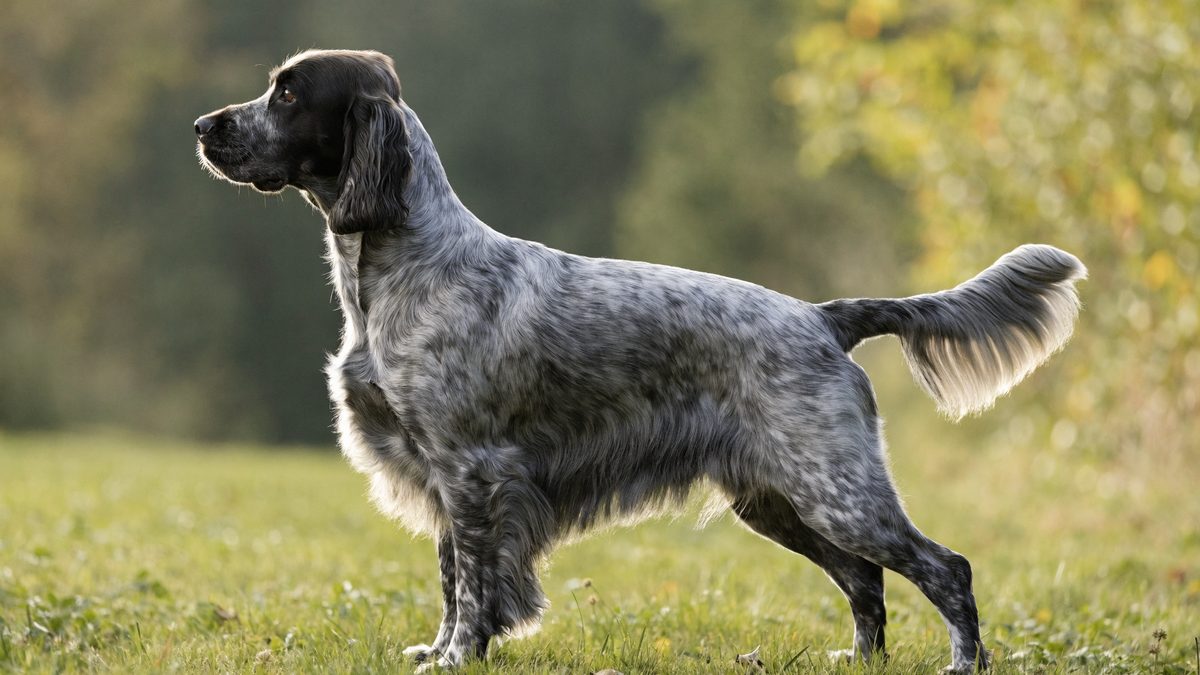
The English Cocker Spaniel is a compact flushing dog from Great Britain, standing 39 to 41 cm at the withers for males and 38 to 39 cm for females at roughly 13 to 14.5 kg, bred to push woodcock out of heavy cover and to keep its tail moving while it works. It is a separate breed from the American Cocker Spaniel, and on an Indian advert the single word Cocker usually means the seller has not said which one they have.
Start with the sentence the standard opens on, because it explains the dog. FCI-Standard No. 5 describes the English Cocker Spaniel as merry, sturdy, sporting, well balanced and compact, with a merry nature and an ever-wagging tail that shows a typical bustling movement, particularly when following scent, fearless of heavy cover, gentle and affectionate yet full of life and exuberance. The breed was recognised as separate from the Field and Springer Spaniels soon after the formation of the Kennel Club in 1873, and took its name from flushing woodcock. The Royal Kennel Club first recognised it as a distinct breed in 1893.
| Registry | Males | Females | Weight |
|---|---|---|---|
| FCI-Standard No. 5, published 8 October 2012 | 39 to 41 cm | 38 to 39 cm | Approximately 13 to 14.5 kg |
| The Royal Kennel Club, updated 1 August 2025 | 39 to 41 cm (15.5 to 16 in) | 38 to 39 cm (15 to 15.5 in) | 13 to 14.5 kg (28 to 32 lb) |
| American Kennel Club, approved 8 August 2023 | 16 to 17 in (40.6 to 43.2 cm) | 15 to 16 in (38.1 to 40.6 cm) | 28 to 34 lb males, 26 to 32 lb females |
Read that table carefully, because the registries do not agree and no Indian page reports it. The AKC asks for a taller, heavier dog than the FCI and the Royal Kennel Club do. An AKC male tops out at 17 inches, about 43 cm, against 41 cm under the British and FCI standards, and the AKC allows 34 lb against a British ceiling of 32 lb The Royal Kennel Club. That is a real 2 cm and 1 kg gap in what a correct adult male looks like. If you are handed a measuring tape and a dog in Pune, the honest answer is that a 42 cm male is oversized in Britain and correct in America.
Real dogs run heavier still. UK primary-care records for 10,313 English Cocker Spaniels put the median adult bodyweight at 15.05 kg, with an interquartile range of 13.12 to 17.35 kg and a full range of 6.50 to 34.13 kg. So the median pet English Cocker Spaniel already sits above the top of the standard's weight guidance, and a quarter of them are above 17.35 kg. Treat 13 to 14.5 kg as a show-ring ideal, not as a prediction about the dog in your house.
The ears are the breed, structurally
The head is the part of the standard that matters most for your vet bills. Both British texts ask for ears that are lobular, set low on a level with the eyes, with fine leathers extending to the nose tip, well clothed with long, straight, silky hair The Royal Kennel Club. The AKC asks for the same thing in different words, with ears set low, lying close to the head, leather fine, extending to the nose. A flap that reaches the nose, hangs from eye level and carries long silky feathering does one thing to the ear canal underneath it, which is seal it. Every ear figure later on this page follows from that sentence in the standard.
Coat and coat colour
The coat is flat and silky, and the standards disagree about waviness. FCI-5 and the Royal Kennel Club both say the hair is flat, silky in texture, never wiry or wavy, not too profuse and never curly The Royal Kennel Club. The AKC standard says the coat is of medium length on the body, flat or slightly wavy, silky in texture, well-feathered but not so profusely as to interfere with field work. So a slight wave is a fault in Britain and acceptable in America. Both agree on the practical point, which is that this coat is silky and moderate rather than heavy, and that it should never carry so much furnishing that the dog cannot work.
The recognised coat colour list is long and it drives Indian pricing, so it is worth printing in full.
- Solid colours. Black, red, golden, liver (chocolate), black and tan, and liver and tan, with no white allowed except a small amount on the chest.
- Bicolours. Black and white, orange and white, liver and white, and lemon and white, all with or without ticking.
- Tricolours. Black, white and tan, and liver, white and tan.
- Roans. Blue roan, orange roan, lemon roan, liver roan, blue roan and tan, and liver roan and tan.
- Anything else. Any colour or marking other than the above is undesirable under FCI-5 and unacceptable under the Royal Kennel Club standard The Royal Kennel Club.
Indian breeders advertise across that whole range. One single-breed English Cocker Spaniel kennel in Kolar, Karnataka lists liver roan and tan, white and gold, white with liver and tan, tricolour, red, orange roan, blue roan, white and liver, and white and black in its gallery. Note that the standard expresses no preference between any of them. There is a documented behavioural difference between solid-coloured and particolour dogs, covered in the temperament section, and it runs in the opposite direction to what the market prices.
Both British standards describe two tails, because docking used to be routine. The undocked tail is slightly curved, of moderate length, proportionate to the body, ideally not reaching below the hock, strong at the root and tapering to a fine tip, well feathered, carried on a plane not higher than the level of the back The Royal Kennel Club. The AKC simply says docked or undocked. In India the choice is not yours. Non-therapeutic tail docking and ear cropping are prohibited under the Prevention of Cruelty to Animals (Dog Breeding and Marketing) Rules, 2017 and the Pet Shop Rules, 2018, the Veterinary Council of India banned the procedures in 2011 following an Animal Welfare Board of India advisory, and the Madras High Court has confirmed that position. A legally bred Indian English Cocker Spaniel has a full tail. Most stock photography of the breed does not, so do not use a photograph to decide what correct looks like.
Work lines and show lines are not the same dog
FCI-5 states the split openly, and it is the single most useful sentence in the standard for a buyer. As with a number of gundog breeds there is nowadays a difference between those used for work and those used for show, and the show Cocker is a sturdier, heavier version of his working counterpart. The AKC standard echoes the working requirement, asking for a dog capable of hunting in dense cover and upland terrain, with a gait characterised more by drive and the appearance of power than by great speed. Indian imports and Indian show lines are almost entirely from the show side, which means a heavier dog with more coat and, usually, more ear. Ask a breeder which line their dogs come from and expect a straight answer.
How popular it actually is, and where
This is one of Britain's default family dogs, which is why so much data exists on it. The English Cocker Spaniel was the third most commonly registered breed with The Royal Kennel Club in 2022, the fourth most common breed under primary veterinary care in the UK in 2019, and the fifth most commonly microchipped breed in the UK between 2004 and 2014. Over twenty thousand Cocker Spaniel puppies were registered with the Kennel Club in 2015 alone. In UK veterinary records the breed made up 10,313 of 336,865 dogs under primary care in 2016, or 3.06 percent, and its share of annual births held steady between 2.97 and 3.51 percent from 2005 to 2016.
India publishes no equivalent series. The Kennel Club of India does not release breed-wise registration counts, so nobody knows how many English Cocker Spaniels are in the country, and any page quoting an Indian population figure for this breed is guessing. Bonbeno says that rather than filling the gap with a number.
For the full American against English comparison, including the identification checklist and the three-registry disambiguation, see Bonbeno's American Cocker Spaniel profile. This page does not repeat that work. It carries the English breed's own evidence, which is considerably better than the American breed's, because British veterinary epidemiologists have studied this dog specifically.
English Cocker Spaniel price in India
An English Cocker Spaniel puppy costs Rs 15,000 to Rs 1,20,000 in India in 2026, and the useful fact is not the range. It is that the published floors differ by more than three times, one publisher prints two different floors on two of its own pages about the same dog, and Indian sources cannot agree on whether the English or the American type is the more expensive.
Bonbeno pulled every price figure published by the pages currently ranking in India for this query and set them side by side. Nobody else does this, and the disagreement is the story.
| Source | What it is measuring | Stated range | Tiers given |
|---|---|---|---|
| Happy Pet, English Cocker Spaniel page | Editorial cost of buying | Rs 15,000 to Rs 50,000 | None |
| Happy Pet, Cocker Spaniel page | Editorial cost of buying | Rs 20,000 to Rs 50,000 | None |
| Marshalls Petzone | Retailer, all India | Rs 30,000 to Rs 35,000 | None |
| Shubh Kennel | Marketplace, stated range | Rs 25,000 to Rs 60,000 | City bands only |
| Mr n Mrs Pet | Marketplace, tiered | Rs 35,000 to Rs 1,20,000+ | Basic, KCI registered, show line |
| Puppiezo | Live English Cocker Spaniel listings, KCI registered | Rs 58,999 to Rs 1,20,000 | Per puppy |
Three things fall out of that table. First, the lowest published floor is Rs 15,000 and the highest is Rs 58,999, so one source's cheapest English Cocker Spaniel costs less than a quarter of another's. Second, the only source that publishes live per-puppy prices for this breed specifically is a marketplace, and its entire book sits at or above Rs 58,999. Third, and this is the one to keep, the same publisher gives two different floors on two of its own pages, Rs 15,000 on the page titled English Cocker Spaniel and Rs 20,000 on the page titled Cocker Spaniel, while quoting identical monthly costs on both Happy Pet, Cocker Spaniel dog price. Bonbeno does not average those. A five-thousand-rupee gap inside one publisher tells you the numbers are estimates, not survey results.
The KCI registration tiers, and what they buy
One Indian marketplace publishes the clearest tier structure, so it is worth reading even though the publisher sells puppies.
| Tier | Published price | What the seller says it means |
|---|---|---|
| Basic or pet quality | Rs 35,000 to Rs 65,000 | No pedigree papers, sold as a pet |
| KCI registered | Rs 65,000 to Rs 85,000 | Pedigree certified by the Kennel Club of India |
| Show or champion line | Rs 85,000 to Rs 1,20,000+ | Premium bloodline for showing or breeding |
Understand exactly what KCI registration is before you pay the step up. A registration certificate documents pedigree. It is not a health certificate, it does not mean the parents were screened, and it says nothing about ears, eyes or kidneys. The health section of this page lists four DNA and screening results that a serious English Cocker Spaniel breeder can produce, and none of them is implied by a KCI paper. Pay the premium for the screening results, and treat the registration as the paperwork that lets you check the parents are the dogs the seller says they are.
Which type costs more, and why the sources contradict each other
Indian sources disagree on direction, not just amount, which is unusual and worth printing.
| Source | Which type is priced higher | Stated reason |
|---|---|---|
| Mr n Mrs Pet | English Cocker Spaniel | Stated plainly, with no reason given |
| Sources recorded on Bonbeno's American Cocker Spaniel page | American Cocker Spaniel | The American is scarcer in India and carries a heavier coat |
Both cannot be true in the same market in the same year. Bonbeno's American Cocker Spaniel page records two Indian publishers pricing the American type above the English and giving the same reason, that the American is rarer here and needs more grooming. A third Indian marketplace states the reverse outright. The honest reading is that neither claim rests on transaction data, and that in a market where most sellers do not name the breed at all, a price gap between two types nobody is separating cannot be measured.
City prices, and a marketplace that contradicts itself
One marketplace publishes city-level bands alongside its live listings, and the two do not match.
| City | Published band | Highest live listing on the same page |
|---|---|---|
| Hyderabad | Rs 27,000 to Rs 40,000 | Rs 55,000 |
| Jaipur | Rs 27,000 to Rs 40,000 | Rs 50,000 |
| Ahmedabad | Rs 27,000 to Rs 40,000 | Rs 45,000 |
| Chennai | Rs 27,000 to Rs 50,000 | Rs 40,000 |
| Bengaluru | Not published | Rs 46,000 |
| Kolkata | Not published | Rs 42,000 |
| Mumbai | Not published | Rs 50,000 |
In three of the four cities where a band is published, the marketplace's own listings run above the top of its own band. That is not dishonesty so much as evidence that the bands are copy rather than data. Use city figures as a rough orientation and nothing more, and take any Indian city price table, including this one, as one publisher's estimate rather than a market survey.
What actually moves the price
- Registration status. A KCI registered puppy is quoted at Rs 65,000 to Rs 85,000 against Rs 35,000 to Rs 65,000 for an unregistered one, a step of roughly Rs 30,000.
- Coat colour. Indian sellers advertise by colour and treat rarer patterns as premium. The breed standard expresses no preference between recognised colours, and the one colour-linked finding in the veterinary literature is a behavioural risk rather than a benefit.
- Line. Show and champion bloodlines carry the top tier at Rs 85,000 and above. That premium buys conformation, not health screening.
- Seller type. The two sources publishing live per-puppy prices for this breed are both marketplaces that broker sales. Bonbeno discloses that because neither page does.
- City. Metro demand is cited as a price driver by the marketplace that publishes tiers, and the city listings do run higher in Mumbai and Bengaluru than in Jaipur.
Under the Prevention of Cruelty to Animals (Dog Breeding and Marketing) Rules, 2017, no establishment may be licensed to breed or house dogs for breeding unless the breeder holds a certificate of registration from the State Board, and puppies less than eight weeks in age must not be sold. Ask to see the registration certificate and ask for the puppy's date of birth in writing. Most Indian buyers do neither. A price far below the published floor usually means the seller could not have satisfied either rule.
Bonbeno does not broker puppy sales, does not publish breeder listings and does not recommend sellers. Every rupee figure above is reported from a third party so that you can see the spread, price the uncertainty into your own decision, and ask better questions than a headline range allows.
Monthly cost of owning an English Cocker Spaniel in India
Published Indian estimates put the monthly cost of an English Cocker Spaniel between Rs 4,650 and Rs 9,500, and both of the sources that publish a total leave out the line that actually defines this breed. Neither budgets for recurring ear disease, and neither budgets for dental work, which are the two most common veterinary events recorded in the breed anywhere in the world.
Two Indian publishers give a monthly cost structure. They agree on shape and disagree on ceiling by about Rs 3,000.
| Line item | Happy Pet | Mr n Mrs Pet |
|---|---|---|
| Food | Rs 2,250 to Rs 3,000 | Rs 2,000 to Rs 4,000 |
| Veterinary care, averaged | Rs 1,200 to Rs 1,800 | Rs 1,000 to Rs 2,000 |
| Grooming | Rs 1,200 to Rs 1,800 | Rs 1,500 to Rs 2,000 |
| Training, toys and treats | Not itemised | Rs 500 to Rs 1,000 |
| Stated monthly total | Rs 4,650 to Rs 6,600 | Rs 5,000 to Rs 9,500 |
Neither source states a sample size or a collection method, so neither total is a survey result. Bonbeno is running a verified owner cost survey across eight metros and will publish the sample size, the cities covered and the collection date when it is complete. Until then the honest position is that no reliable India-wide monthly cost figure exists for this breed, and the table above compares two estimates rather than settling a question.
The line both sources leave out
Here is what a monthly cost table for this breed should contain and does not. In UK primary-care records, otitis externa was diagnosed in 10.09 percent of English Cocker Spaniels in a single year and the breed carried 14.66 times the odds of aural discharge and 3.59 times the odds of a recorded ear disorder against other dogs. Roughly one dog in ten needs an ear consultation in any given year, before you count the ones treated at home. In India the seasonal loading is worse, because a Himachal Pradesh study of 2,476 dogs found 59.25 percent of all canine otitis externa cases falling in the two rainy months of July and August. Bonbeno's Beagle profile carries the full seasonal table for that dataset.
No Indian source publishes a treatment cost for canine otitis externa, so Bonbeno does not print one. What we can say is structural. An ear consultation for this breed is not a one-off. It is a recurring line that peaks in the monsoon, it often needs cytology to identify what is growing, and untreated chronic cases in cocker-type ears progress toward surgery. Budget for it as a category even though the rupee figure is unknown, and ask your own veterinarian for their consultation and cytology charges before you take the puppy, not after the first flare.
The second missing line is dental. Periodontal disease was the single most common diagnosis in the breed at 20.12 to 20.97 percent in a year, ahead of ear disease, with 1.89 times the odds against other dogs Engdahl KS, Brodbelt DC, Cameron C. Cornell's canine health centre reports that 80 to 90 percent of dogs over the age of 3 have some component of periodontal disease and that successful prevention requires both daily brushing at home and regular professional cleanings under general anaesthesia. A general anaesthetic dental is a four-figure event in any Indian metro. Neither Indian cost table has a row for it.
Grooming, where the sources disagree on frequency
| Task | Happy Pet | Mr n Mrs Pet |
|---|---|---|
| Brushing | 2 to 3 times a week | 3 to 4 times a week |
| Bathing | Every 4 to 6 weeks | Every 3 to 4 weeks |
| Professional grooming | Every 6 to 8 weeks | Every 1 to 2 months |
| Ear cleaning | Regularly | Weekly |
Bonbeno takes the higher figure in each row for Indian conditions and explains why in the grooming section. A silky coat in Chennai humidity mats faster than the same coat in Britain, and the bathing frequency is exactly the variable that drives ear risk, because water in a sealed canal is the mechanism. The cheaper schedule is not the safer one here.
First-year costs that are not monthly
- Purchase price, Rs 15,000 to Rs 1,20,000 depending on registration status and seller.
- Puppy vaccination course. The published Indian schedule for this breed runs DHPP at 6 to 8 weeks, DHPP again at 12 to 16 weeks, rabies at 16 to 18 weeks, then annual boosters. Price it with your own clinic; Indian quotes vary by city and brand.
- Neutering or spaying, timed with your veterinarian. Recheck the food portion afterwards, because this is a breed with 1.41 times the odds of obesity.
- Professional grooming from month four, so the puppy learns to stand on a table before the adult coat arrives.
- A veterinary-approved ear cleaner and a stack of cotton pads, bought before the first monsoon rather than during it.
When we publish cost figures we state the sample size, the cities covered and the collection date. Where two published sources disagree, as they do here on both the monthly total and the grooming schedule, we print both rather than averaging them into a number neither source supports. Where no figure exists at all, as with Indian ear-treatment costs for this breed, we say so instead of estimating.
The structural summary is simple. The purchase price is a one-off and the ears are a subscription. A household that can afford the puppy but not a recurring, seasonally-loaded ear line plus a general anaesthetic dental every few years has not budgeted for this breed. That is a harder sentence than any monthly total, and it is the true one.
Climate suitability: heat tolerance, humidity and the monsoon
Bonbeno rates the English Cocker Spaniel 3 of 5 for heat tolerance, and the reason it is not lower is that this dog is neither brachycephalic nor double-coated, which are the two conformations Indian veterinary guidance actually names as high risk. The reason it is not higher is that India's real threat to this breed is not the thermometer. It is humidity, and it attacks through the ear canal rather than through the airway.
Take the heat question first, because competitors get it backwards in both directions. Purina India names the breeds at particular risk of heat stroke as short-faced breeds such as Boxers, Bulldogs, Pugs and Pekingese, and dogs with heavy coats such as Huskies or Newfoundlands. The English Cocker Spaniel is on neither list. It has a normal muzzle, described in the standard as square and equal in length to the skull, and a flat silky single-textured coat that the standard explicitly says must not be too profuse. So a page telling you this breed cannot survive an Indian summer is overstating it.
The same page is understating something else. Purina India also warns that no matter what coat your dog has, vigorous exercise in hot weather can produce heat stroke in as little as 30 minutes. This is a sporting breed with drive, bred to work dense cover, and it does not self-regulate when it is having a good time. The risk here is behavioural, not anatomical.
| Ambient temperature | Risk level | What it means in practice |
|---|---|---|
| Below 28 C | Low | Normal activity with shade and water |
| 28 to 35 C | Moderate | Shorten walks to 15 to 20 minutes, early morning and late evening only |
| 35 to 42 C | High | Outdoor activity contraindicated. Asphalt reaches 60 C and above |
| Above 42 C | Extreme | Heat stroke possible within 10 to 15 minutes outdoors. Indoor temperatures without cooling can be fatal |
Indian publishers cannot agree on what temperature range suits this dog, and the disagreement sits inside one publisher again. The Happy Pet English Cocker Spaniel page gives an ideal weather range of 10 to 30 C; the same publisher's Cocker Spaniel page gives 15 to 25 C Happy Pet, Cocker Spaniel dog price. Bonbeno prints both rather than picking one. The practical read is that this dog is comfortable through an Indian winter almost everywhere, workable through a Bengaluru or Pune summer with sensible timing, and needs active management in Delhi in May and on the coast from June onward.
Humidity is the real Indian variable
A 35 C day at 90 percent humidity is far more dangerous than a 42 C day at 20 percent humidity, because panting cools by evaporation and humid air blocks evaporation. That single sentence reorders the Indian city map for this breed. Delhi's dry 44 C afternoon is a scheduling problem you solve with a clock. Mumbai's 33 C monsoon week is a physiology problem you solve with air movement and a dehumidified room, and it lasts for months.
Humidity does something to this breed that it does not do to most others. The ear leather reaches the nose tip and lies flat over the canal, so the canal is a warm, sealed, poorly ventilated tube. Add ambient humidity and the environment inside it stops drying between baths and swims. The Indian evidence for what follows is direct. In a study of 2,476 dogs at veterinary clinics in the Palam valley of Himachal Pradesh, 81 were diagnosed with otitis externa, and 69.13 percent of those cases occurred in breeds with pendulous ears. 59.25 percent of all the cases fell in the two rainy months.
Nearly six in ten Indian canine ear cases occur in two months of rain, and the English Cocker Spaniel carries 14.66 times the odds of aural discharge against other dogs. Put those two facts together and the calendar writes itself. From the first week of the monsoon to a fortnight after it ends, dry the ears after every wetting, check them daily rather than weekly, and treat a head shake or a smell as a same-week veterinary appointment rather than a wait-and-see. This is the single most useful sentence on this page for an Indian owner.
The city-by-city read
| City or region | Dominant stress | What to manage |
|---|---|---|
| Bengaluru, Pune, hill stations | Mild year round | The easiest Indian climate for this breed. Ear routine still applies through the rains |
| Delhi NCR, Jaipur, Lucknow | Dry extreme heat April to June | Timing and pavement temperature. Ear risk is lowest here because the air is dry |
| Mumbai, Chennai, Kochi, Goa | Sustained high humidity | Ears, skin folds and coat drying. The hardest Indian climate for this breed |
| Kolkata, Guwahati, coastal Odisha | Humid heat plus a long monsoon | A four to five month ear-risk window rather than two |
| Ahmedabad, Nagpur, Hyderabad | Dry heat with a sharp wet season | Two distinct regimes. Switch the ear routine when the rain starts |
The summer rules that actually matter
- Walk before 7 am or after 8 pm from April to September and cap the walk at 15 to 20 minutes even in those windows.
- Do the seven-second pavement test. Hold the back of your hand on the pavement for seven seconds. If you cannot, it will burn paw pads. Asphalt reaches 60 C in direct sun and causes third-degree burns within about 30 seconds.
- Walk on grass or dirt rather than asphalt, which runs 10 to 15 C cooler in the same sun.
- Cut the retrieve games short in hot weather, because 30 minutes of vigorous exercise is enough to produce heat stroke in any dog.
- Keep the resting area ventilated. Air movement matters more than air temperature for a dog whose main problem is a canal that will not dry.
- Recognise heat stroke and cool correctly. Move the dog into shade or air conditioning, sponge or spray with cool but not cold water down to the skin including belly and inner legs, use a fan, and go straight to a veterinarian. Do not plunge the dog into cold water or an ice bath, which prevents the core temperature falling, and stop cooling once the temperature reaches 39.4 C.
One last honest note on evidence. No published study identifies the English Cocker Spaniel as a statistically elevated heat-risk breed, and Bonbeno will not manufacture one. The 3 of 5 rating reflects a normal-muzzled, moderately coated sporting dog with high drive, kept in a country where the ear conformation is the liability and the humidity is the trigger. Rate the monsoon, not the thermometer.
Temperament, household fit and the rage syndrome question
The English Cocker Spaniel is a merry, affectionate, biddable family dog that suits an Indian household with people in it most of the day, and the breed standards describe it as gentle and affectionate, full of life and exuberance, neither sluggish nor hyperactive. It also has the best-documented behavioural literature of any spaniel, and that literature contains two findings Indian buying guides never report: aggression tracks coat colour, and rage syndrome is probably not what you have been told it is.
Start with the standards, because they are accurate. FCI-5 describes a merry nature with an ever-wagging tail, a typical bustling movement particularly when following scent, fearless of heavy cover, gentle and affectionate yet full of life and exuberance. The AKC puts it as merry and affectionate, of equable disposition, neither sluggish nor hyperactive, a willing worker and a faithful and engaging companion. Indian sources agree and add the caveat that matters most in a metro flat, which is that this breed is sweet, loyal, active and extremely people-oriented, and does not do well left alone for long periods Happy Pet, Cocker Spaniel dog price.
What the aggression data actually says
Aggression in this breed is real, measurable and modest in absolute terms. In UK primary-care records, aggression was recorded in 4.01 percent of English Cocker Spaniels in a single year (95 percent CI 3.21 to 4.81), placing it sixth on the breed's list of most common diagnoses behind periodontal disease, ear disease, obesity, anal sac impaction and diarrhoea. Compared against other dogs and controlling for age, sex, bodyweight, insurance status and practice, the breed carried 1.80 times the odds of aggression (95 percent CI 1.39 to 2.32), at 3.94 percent against 2.19 percent in non-English Cocker Spaniels.
Read that as a real breed effect on a low base. Roughly 96 dogs in 100 had no aggression recorded in a year. The breed is not dangerous. It is somewhat more likely than average to end up in a consultation about behaviour, and the risk is not spread evenly across the breed.
Coat colour, and the finding that inverts the Indian market
This is the most decision-relevant fact on the page, and no page ranking for this query carries it. In the same UK dataset, the prevalence of aggression was 7.00 percent in solid-coloured English Cocker Spaniels against 3.66 percent in bi-coloured dogs (95 percent CI 5.30 to 8.69 and 2.13 to 5.20, two-proportion z-test P = 0.010). Within the four commonest solid colours the difference was sharper still.
| Coat colour | Prevalence of aggression | 95 percent confidence interval |
|---|---|---|
| Golden (solid) | 12.08 percent | 7.64 to 16.52 |
| Red (solid) | 6.52 percent | 2.24 to 17.50 |
| Black (solid) | 6.29 percent | 3.62 to 8.96 |
| Liver (solid) | 4.33 percent | 2.29 to 8.02 |
| All solid-coloured | 7.00 percent | 5.30 to 8.69 |
| All bi-coloured | 3.66 percent | 2.13 to 5.20 |
| Whole breed | 4.01 percent | 3.21 to 4.81 |
The colour association was statistically significant across the four solid colours (chi-square P = 0.017), and coat colour was recorded for 1,483 of 2,318 dogs, of which 872 were solid-coloured, 573 bi-coloured and 38 tri-coloured. This is not a new or isolated result. Thirty years earlier, a questionnaire study distributed through the Kennel Club to owners of purebred English Cocker Spaniels drew 1,008 replies, of which 932 owners covering 1,109 dogs were analysed, and found that solid colour dogs were significantly more likely to show aggression than particolour dogs in 12 of the 13 situations tested, with red and golden dogs more likely than blacks in ten of them. A Spanish referral series of 145 aggressive English Cocker Spaniels found the same signal from the other direction, with golden dogs making up 60.7 percent of the aggressive caseload.
Roughly 88 in 100 golden English Cocker Spaniels had no aggression recorded. Colour is a probability shift, not a verdict, and the confidence interval on the red figure runs from 2.24 to 17.50 percent, which is wide enough to be nearly uninformative on its own. Use it as one input among several. It matters in India specifically because Indian sellers advertise by colour and price rarer patterns as premium, while the breed standard expresses no preference between recognised colours at all. If you are choosing from a litter and everything else is equal, a particolour or roan puppy from screened, well-tempered parents is the lower-risk pick, and it usually costs less.
Rage syndrome, answered with evidence
Rage syndrome in the English Cocker Spaniel is probably not a distinct neurological disease. The largest behavioural study of the breed asked owners to rate aggression across 13 situations, one of which was specifically aggression shown suddenly and without apparent reason. Cluster analysis of the responses found that the tendency to display aggression suddenly and without apparent reason clustered with the other typical symptoms of dominance-type aggression rather than standing apart. The authors concluded that so-called rage syndrome, usually characterised by its sudden and unpredictable onset, is an expression of social dominance conflicts rather than a separate or pathological phenomenon.
A separate referral series does report something distinctive about how this breed expresses aggression. Among 145 English Cocker Spaniels presented for aggression to a Barcelona veterinary teaching hospital between 1998 and 2006, owner-directed aggression accounted for 67.6 percent of cases, against 18.4 percent toward unfamiliar people, 10.1 percent toward unfamiliar dogs and 3.3 percent toward dogs in the family, and the breed showed impulsive aggression, meaning attacks without warning signals, more frequently than aggressive dogs of other breeds. So the impulsiveness owners describe is documented. What is not documented is that it is a seizure disorder.
That distinction changes what you do about it. A neurological entity is something you wait out and medicate. A dominance-conflict pattern with poor warning signalling is something you prevent through early handling, consistent household rules, resource management and a behaviourist, starting in the first year rather than after the first bite.
Sex, neutering and who is holding the lead
- Males are more affected. UK records put aggression at 4.95 percent in male English Cocker Spaniels against 2.87 percent in females (P = 0.015). The 1996 questionnaire found males more likely to show aggression toward strange dogs, toward the owner or family, when disciplined and when reached for or handled, while females were more likely only in aggression toward other dogs in the household.
- The Barcelona caseload was 71.0 percent male, and 92.2 percent of those males were entire.
- Owner personality is associated with outcome. Among 285 owners of purebred English Cocker Spaniels assessed on a standard personality questionnaire, owners of high-aggression dogs were significantly more likely to be tense, emotionally less stable, shy and undisciplined than owners of low-aggression dogs. Read that as a correlation and a prompt, not as blame. A sensitive breed does better with a calm, consistent, predictable household.
- Late homing and pet-shop sourcing show up in the caseload. The average age at which the Barcelona dogs were acquired was 5.6 months, and 45.6 percent had been purchased from a pet shop against 21 percent from professional breeders. Both of those describe the Indian market well.
Household fit in India
- Good fit. A household with someone home most of the day, children old enough to be taught how to handle a dog, and a willingness to run a daily ear routine for twelve to fourteen years.
- Workable fit. An Indian apartment. Indian sources rate this a high-energy breed that benefits from a yard but note it can thrive in a flat if the exercise need is genuinely met.
- Poor fit. A home empty ten hours a day. Indian sources state plainly that Cocker Spaniels do not do well alone and that being left alone induces anxiety.
- Poor fit. A household that wants a guard dog. Nothing in any standard for this breed describes protectiveness.
- Watch item. A first dog for a tense or inconsistent household, given the owner-personality association and the breed's sensitivity to correction.
The summary an Indian buyer needs is short. This is an affectionate, biddable, people-shaped dog with a real but modest behavioural risk that is concentrated in solid-coloured males and best managed by early, calm, consistent handling. Buy the temperament of the parents, meet them, and treat any seller who will not let you do that as a seller with something to hide.
Training an English Cocker Spaniel
Train an English Cocker Spaniel with reward-based methods, start inside the socialisation window, and make ear and paw handling a trained behaviour rather than a struggle you have twice a month for fourteen years. This is a biddable, food-motivated, willing worker by standard, so the obedience part is easy. The two hard parts are specific to this breed, and they are the nose and the ears.
The breed is easy to teach and Indian sources say so. Cocker Spaniels are described as intelligent and eager to please, which makes training relatively straightforward, and Indian guidance recommends interactive toys and basic obedience for mental stimulation Mr n Mrs Pet, Cocker Spaniel Puppy Price…. The AKC standard calls the breed a willing worker and a faithful and engaging companion of equable disposition. You will not fight this dog for a sit.
Handling training is the highest-value thing you will teach
Teach ear handling before you ever need to clean an ear. This breed carries 14.66 times the odds of aural discharge against other dogs, and 10.09 percent of English Cocker Spaniels had otitis externa recorded in a single year. Over a fourteen-year life in an Indian climate you will lift, inspect, dry and medicate those ears several hundred times. A dog that finds ear handling normal makes that a ten-second job. A dog that does not makes it a two-person wrestle that you skip during a busy week, which is exactly when an infection establishes.
- Week one home. Lift one ear, feed a treat, put it down. Ten repetitions a day, no cleaning attempted.
- Week two. Lift the ear, look inside for two seconds, feed, release. Add paw handling on the same schedule.
- Week three. Introduce the cleaner bottle without using it. Let the puppy sniff it, feed, put it away.
- Week four. Wipe the visible part of the ear with a dry pad, feed, release. Still no liquid.
- Month two onward. Clean properly with a veterinary-approved product, on a table, in the same order every time.
- Every month after that. Keep feeding for the handling even when nothing is wrong, so the routine never becomes a predictor of discomfort.
The nose is the recall problem
The standard describes a dog with a typical bustling movement, particularly when following scent, fearless of heavy cover, and the AKC asks for a dog capable of penetrating dense cover to flush and retrieve game. That is a working brief, not a personality quirk. An English Cocker Spaniel that picks up a scent in an Indian park will follow it into whatever is on the other side of the hedge, and the veterinary record shows what happens next: the breed carries 2.60 times the odds of a foreign body against other dogs, and grass awns lodging in the ear canal are reported as a more frequent cause of otitis externa in this breed than in others.
So build recall as a paid, high-value behaviour from week one, and until it is genuinely reliable, use a long line rather than hope. After any walk through long grass, scrub or an unmown Indian park, check the ears, the paws between the toes and the armpits before the dog settles.
Method, and why it matters more in this breed than most
Use rewards, keep sessions short and keep the household consistent. The behavioural literature on this breed points at conflict rather than at stubbornness. Owner-directed aggression made up 67.6 percent of a referral caseload of 145 aggressive English Cocker Spaniels, and cluster analysis of 1,109 dogs found sudden unexplained aggression sitting inside the ordinary dominance-conflict pattern rather than outside it. Confrontational handling in a sensitive, biddable breed manufactures exactly the pattern you are trying to avoid.
The owner-personality finding points the same way. Owners of high-aggression English Cocker Spaniels scored as significantly more tense, emotionally less stable, shy and undisciplined than owners of low-aggression dogs. The actionable version of that is not a personality test. It is that this breed does best with predictable rules that every adult in the house applies identically, which in a multi-generation Indian household means agreeing the rules out loud before the puppy arrives.
Realistic timelines
| Skill | Start | Realistic outcome |
|---|---|---|
| Name response | Week 1 home | Reliable indoors in 2 to 3 weeks |
| Sit, down, settle | Week 1 home | 3 to 6 weeks. This part is easy |
| Ear and paw handling | Week 1 home | Calm on a table by week 6, maintained for life |
| Toilet training | Week 1 home | 3 to 5 months |
| Loose-lead walking | Month 2 | 4 to 8 months, with maintenance |
| Standing for a groomer | Month 3 | Before the adult coat arrives, so by month 6 |
| Recall in a quiet space | Month 2 | 3 to 6 months |
| Recall off a live scent | Month 4 | Long line until proven. Some dogs never get there |
| Tooth brushing accepted | Month 3 | Daily habit by month 6 |
The socialisation window closes early, so the exposure list has to be booked rather than hoped for. For an Indian English Cocker Spaniel that list is specific: lifts, stairwells, building watchmen, autos and two-wheeler noise, other dogs on a lead, monsoon rain on the balcony, a hair dryer, a grooming table, a nail clipper, a toothbrush and a stranger touching both ears. Do it calmly and pay for every repetition. Puppies must not have been sold to you under eight weeks of age in the first place, so plan the window from the day the puppy legally arrives.
One last framing. Give this breed a job with a start and a finish. It was bred to quarter ground, find, flush and retrieve, and the drive does not disappear because you live in a flat in Thane. Fifteen minutes of scent work with treats hidden around a room satisfies more of that brief than an hour of aimless walking, it runs indoors during the monsoon, and it is the cheapest behavioural insurance you can buy.
How much exercise an English Cocker Spaniel actually needs
Published Indian guidance puts the English Cocker Spaniel's daily exercise requirement between 45 and 90 minutes, and the sources disagree by a factor of two. Bonbeno takes the higher figure of 60 to 90 minutes across two sessions as the working number, because the lower figure comes from a page that also sells puppies and because this is a breed the standard describes as capable of penetrating dense cover.
| Source | Stated daily requirement | Stated energy level |
|---|---|---|
| Happy Pet, English Cocker Spaniel page | 60 to 90 minutes | High |
| Happy Pet, Cocker Spaniel page | 60 to 90 minutes | High |
| Mr n Mrs Pet | 45 to 60 minutes | Active dogs |
| The Royal Kennel Club, UK | Up to 1 hour per day | Size category small |
The gap matters because the low figure and the high figure produce different dogs in a flat. Take the AKC standard as the tiebreaker. It asks for a dog capable of hunting in dense cover and upland terrain, with a gait characterised more by drive and the appearance of power than by great speed, covering ground effortlessly. FCI-5 asks for legs not too short to interfere with the tremendous exertions expected from this grand, sporting dog. That is not a 45-minute animal.
How to split it in an Indian day
- Two sessions, not one. Thirty to forty-five minutes each, morning and evening, is easier on an Indian schedule and easier on the dog than one long block.
- From April to September, walk before 7 am or after 8 pm and cap each session at 15 to 20 minutes outdoors when the temperature sits between 28 and 35 C.
- Make up the shortfall indoors. Scent games, puzzle feeders and short retrieve sessions on a cool floor deliver mental load without heat load.
- Skip the midday walk entirely above 35 C, when outdoor activity is contraindicated for any dog.
- Keep vigorous play short in warm weather, because 30 minutes of vigorous exercise is enough to produce heat stroke.
- Dry the ears after any wet activity, which in practice means after swimming, after a monsoon walk and after a bath.
The joints are better than you expect, and the pain data is odd
This is a genuinely good-news paragraph and no competing page reports it. Against other dogs under UK primary care, the English Cocker Spaniel had reduced odds of osteoarthritis at 0.37 (95 percent CI 0.22 to 0.59) and reduced odds of patellar luxation at 0.48 (95 percent CI 0.26 to 0.82). OFA screening agrees: of 2,225 English Cocker Spaniels evaluated for patellar luxation, 97.1 percent were normal and only 2.9 percent abnormal, and of 1,524 elbow evaluations, 99.6 percent were normal with 0.3 percent dysplastic. For a medium pedigree dog, that is a strong orthopaedic profile.
One finding cuts the other way and deserves an honest flag. The same study recorded 7.06 times the odds of musculoskeletal pain in the breed (95 percent CI 3.74 to 14.08), which is the third-highest odds ratio in the entire analysis. That sits awkwardly beside protection from osteoarthritis and patellar luxation. The most likely reading is a labelling effect, where pain in this breed is recorded as musculoskeletal pain rather than resolved into a named orthopaedic diagnosis. Bonbeno prints the number and states the uncertainty rather than quietly dropping an inconvenient result.
The English Cocker Spaniel carries 1.41 times the odds of obesity against other dogs, with obesity recorded in 9.68 to 9.88 percent of dogs in a single year, the third most common diagnosis in the breed. That is not a cosmetic problem in India. Excess weight reduces heat tolerance, loads joints and worsens skin and ear conditions in humid weather. If you cannot deliver 60 minutes a day reliably, you have to take the difference out of the food bowl, and you have to weigh the dog to know whether you did.
What counts as exercise for this breed
- Scent work. Hide treats or a scented toy around a room and let the dog find them. Twenty minutes of this tires a spaniel more than twenty minutes of lead walking.
- Retrieve on grass. The breed was built to flush and retrieve, and a short structured retrieve session satisfies more of the brief than distance.
- Swimming where clean, safe water exists. It delivers load without heat, with one condition: dry the ear canals thoroughly afterwards, every time.
- Structured lead walking with sniffing allowed. Letting the dog work its nose on a walk converts distance into mental load, which is the currency this breed spends.
- Puzzle feeders during the monsoon, when the outdoor session is the one that gets cancelled.
An under-exercised English Cocker Spaniel in an Indian flat does not become destructive in the way a working guardian breed does. It becomes vocal, attention-seeking, clingy and fat, and it stops sleeping through the evening. Those are early signals rather than late ones, and they are your cue that the daily hour is not being delivered.
Grooming a silky coat and pendulous ears in Indian humidity
Brush an English Cocker Spaniel three to four times a week, book a professional groom every six to eight weeks, and treat the ears as a separate daily job rather than part of the grooming appointment. The coat is flat and silky and less work than an American Cocker's, but the ear leathers reach the nose tip and lie flat over the canal, and in humid Indian air that is where the real maintenance is.
The coat itself is moderate by design. Both British standards ask for hair that is flat, silky in texture, never wiry or wavy, not too profuse and never curly, with feathering on the forelegs, body and hind legs above the hocks. The AKC calls it short and fine on the head, of medium length on the body, flat or slightly wavy, silky, well-feathered but not so profusely as to interfere with field work, and permits trimming to remove overabundant hair and enhance the dog's true lines, done so as to appear as natural as possible. Indian sources rate shedding as moderate.
That is materially less coat than the American Cocker Spaniel carries, which Bonbeno's American Cocker Spaniel page rates 5 of 5 for grooming. The English coat is a step down from that, not a step up.
The schedule, with the Indian adjustment
| Task | Frequency | Why, in Indian conditions |
|---|---|---|
| Brush to the skin | 3 to 4 times a week | Silky feathering on ears, chest and legs mats fastest where it stays damp |
| Comb the ear feathering | Every session | Matted ear hair holds moisture directly against the canal opening |
| Bathe | Every 4 to 6 weeks | Bathing is the wetting event you control. Plug the ears and dry them afterwards |
| Professional groom | Every 6 to 8 weeks | Feathering, feet and sanitary areas. Ask for the ear undersides to be thinned |
| Clean the ears | Weekly, daily inspection | Weekly in the dry season, more often through the rains |
| Dry the coat completely | After every bath and every soaking | A damp silky coat in humid air is how hot spots and ear flare-ups start |
| Brush teeth | Daily | Periodontal disease is the breed's single most common diagnosis |
One source goes considerably further than any Indian page. The Royal Kennel Club lists grooming for this breed as a daily job, not a weekly one. That is the national kennel club of the breed's country of origin describing a temperate climate. Bonbeno's three-to-four times a week figure is the realistic Indian floor, and daily is the standard to aim at through the monsoon.
The ear routine, written out
This is the part worth printing in full, because it is the difference between an easy dog and an expensive one.
- Look every day. Lift both ears, look at the canal opening, and smell. A yeasty or sour smell is the earliest signal and it precedes visible discharge.
- Comb the feathering on the underside of the leather, where mats form first and hold water longest.
- Clean weekly with a veterinary-approved cleaner in the dry months, and increase the frequency through the monsoon.
- Never push anything into the canal. Clean what you can see and let the product and the dog's head shake do the rest.
- Dry the ears after every wetting. After a bath, after a swim, after a monsoon walk. This is the single highest-value habit in the routine.
- Lift the ears while the dog rests in humid weather, or use a snood at mealtimes, so air reaches the canal opening.
- Check after long grass. The breed carries 2.60 times the odds of a foreign body, and grass awns in the canal are a documented cause of otitis externa in this breed specifically.
- Escalate early. Head shaking, scratching, an odour or a discharge is a veterinary appointment this week, not next month.
A study of chronic, severe otitis found distinctly different pathological characteristics in the ear canals of Cocker Spaniels, with most dogs of this breed showing a ceruminous tissue response pattern, while the commonest pattern in other breeds was fibrosis. In plain terms, a cocker's ear responds to chronic inflammation by producing wax rather than by scarring. That ceruminous response is the likely reason the breed reaches 14.66 times the odds of aural discharge while sitting at only 1.40 times the odds of otitis externa itself. It also means discharge volume is the symptom to watch, and a routine built around removing wax before it accumulates does more good in this breed than one built around treating infections after they appear.
Coat and skin, where the breed is better than its reputation
Indian owners expect a long-coated dog to be an itchy dog in the monsoon. The data says otherwise for this breed. Against other dogs under UK primary care, the English Cocker Spaniel had 0.14 times the odds of atopic dermatitis, 0.14 times the odds of allergy, 0.35 times the odds of alopecia, 0.35 times the odds of pododermatitis and 0.65 times the odds of pruritus, with grouped skin disorders at 0.70. The Royal Veterinary College summarised the breed as seven times less likely than other dogs to develop allergy and atopic dermatitis.
One coat finding does run the other way. The breed carried 2.86 times the odds of a hair coat disorder. The study's authors note that both hair coat and ear disorders can be caused by vitamin A-responsive dermatosis, a cornification disorder producing greasy coats and ceruminous otitis, for which there is some evidence of predisposition in Cocker Spaniels although the condition is reportedly rare, and that a greasy coat with waxy ears can equally be a sign of hypothyroidism, which debuts in middle-aged to older dogs.
If an adult English Cocker Spaniel's coat turns greasy or scurfy and the ears get waxier at the same time, do not solve it with a stronger shampoo. That combination points at a cornification disorder or at thyroid disease rather than at grooming, and both are diagnosed rather than guessed. OFA has made autoimmune thyroiditis a required test for this breed's health certification with effect from 1 September 2025, which tells you how seriously the breed's own registry takes it.
Do not shave, and do not over-trim
The standard permits trimming to remove overabundant hair and enhance the dog's true lines, done so as to appear as natural as possible, and Indian summers are a fair reason to keep the feathering shorter than a show trim. What the coat should not be is stripped off. This is a single flat silky coat that protects skin from sun and insects, and the breed's skin is already documented as low-risk for allergy and dermatitis, so there is nothing to gain by removing it. Ask the groomer to thin the feathering on the underside of the ear leathers instead. That is the one trim that directly reduces moisture at the canal opening, and almost no Indian groomer offers it unless you ask.
Health issues, screening and lifespan
The English Cocker Spaniel has the best breed-level health evidence of any spaniel, because British veterinary epidemiologists have studied it directly rather than by inference. The headline is ears and eyes. Against all other dogs under UK primary veterinary care this breed carries 14.66 times the odds of aural discharge and 7.64 times the odds of dry eye, and it is protected from allergy and atopic dermatitis at 0.14 times the odds.
One sourcing note first, because it is the reason this page exists. Bonbeno's American Cocker Spaniel page had to borrow the 14.66 aural-discharge figure and label it plainly as English Cocker Spaniel data, because no equivalent dataset exists for the American breed. This is that figure's proper home. It comes from a VetCompass study comparing random samples of 2,510 English Cocker Spaniels against 7,813 other dogs, drawn from a population of 336,865 dogs under primary veterinary care in the UK in 2016, controlling for age, sex, bodyweight within breed-sex, insurance status, neuter status and veterinary practice group.
Across the 43 most common disorders the breed had significantly increased odds of 21 and significantly reduced odds of 11, so it differed from other dogs on 32 of 43 conditions, and it carried 1.12 times the odds of having at least one disorder diagnosed annually. The Royal Veterinary College summarised that as different and somewhat poorer overall health than dogs in general.
| Disorder | Prevalence in the breed | Odds ratio (95 percent CI) |
|---|---|---|
| Aural discharge | 1.95 percent | 14.66 (7.73 to 30.80) |
| Keratoconjunctivitis sicca, dry eye | 1.59 percent | 7.64 (4.33 to 14.14) |
| Musculoskeletal pain | 1.20 percent | 7.06 (3.74 to 14.08) |
| Subcutaneous mass | 1.47 percent | 4.92 (2.92 to 8.46) |
| Ear disorder | 1.79 percent | 3.59 (2.33 to 5.57) |
| Hair coat disorder | 1.67 percent | 2.86 (1.87 to 4.38) |
| Foreign body | 2.55 percent | 2.60 (1.84 to 3.67) |
| Mammary mass | 1.39 percent | 2.60 (1.62 to 4.12) |
| Cataract | 1.20 percent | 1.90 (1.18 to 3.00) |
| Periodontal disease | 20.12 percent | 1.89 (1.67 to 2.14) |
| Anal sac impaction | 7.77 percent | 1.82 (1.51 to 2.18) |
| Aggression | 3.94 percent | 1.80 (1.39 to 2.32) |
| Obesity | 9.68 percent | 1.41 (1.20 to 1.66) |
| Otitis externa | 10.40 percent | 1.40 (1.20 to 1.63) |
| Osteoarthritis | 0.76 percent | 0.37 (0.22 to 0.59), protected |
| Pododermatitis | 0.56 percent | 0.35 (0.19 to 0.59), protected |
| Atopic dermatitis | 0.20 percent | 0.14 (0.05 to 0.31), protected |
| Allergy | 0.28 percent | 0.14 (0.06 to 0.28), protected |
Ears: the defining welfare and cost issue
The ear numbers are the breed. Otitis externa was recorded in 10.09 percent of English Cocker Spaniels in a single year in the demography study and 10.40 percent in the predisposition study, making it the second most common diagnosis after periodontal disease. Grouped ear-disorder odds ran 1.75 against other dogs, and the Royal Veterinary College links the breed's ear infections directly to the pendulous ear flaps that are typical of it and favoured by the public Engdahl KS, Brodbelt DC, Cameron C. A separate UK study of 22,333 dogs put the Cocker Spaniel at 1.67 times the odds of otitis externa (95 percent CI 1.29 to 2.17), with pendulous ear carriage at 1.76 times and V-shaped drop ears at 1.84 times the odds of erect-eared breeds, against an all-dog one-year prevalence of 7.30 percent. In a UK dataset, Cocker Spaniel means this breed.
Allergic skin disease is the most commonly reported primary cause of otitis externa in dogs generally. In this breed it is almost certainly not the driver. Both the prevalence and the odds of atopic dermatitis (0.20 percent, OR 0.14) and allergy (0.28 percent, OR 0.14) were low, and the authors state directly that the study does not suggest allergic skin disease is a main trigger for otitis externa in the English Cocker Spaniel. What they point at instead is mechanical and glandular: pendulous ear conformation, aural foreign bodies such as grass awns which are reported as more frequent in this breed than in others, and a ceruminous rather than fibrotic ear-canal response to chronic inflammation. In India, add humidity and bath water. If a clinic reaches for an allergy work-up before it has looked for a grass awn and asked about the bathing routine, this paragraph is worth showing them.
The Indian seasonal loading is documented. Of 2,476 dogs screened at veterinary clinics in the Palam valley of Himachal Pradesh, 81 were diagnosed with otitis externa, a hospital prevalence of 3.27 percent, of which 69.13 percent occurred in breeds with pendulous ears and 59.25 percent fell in the two rainy months. Bonbeno's Beagle profile carries the full seasonal breakdown of that dataset.
A second Indian study names the trigger outright, and it is the one thing in this whole section you fully control. At Anand Agricultural University in Gujarat, 116 dogs presented with ear conditions and 67 of them, or 57.76 percent, had symptoms of otitis. Most cases had a history of bathing seven to twelve days earlier, and the authors conclude that the most common cause of otitis was bathing without ear plugging, with Staphylococcus species the commonest isolate. One Cocker Spaniel appears in that study's breed table, behind the Labrador Retriever at 35.82 percent of cases, which reflects how common each breed is at that hospital rather than breed risk.
Eyes: dry eye is the breed signature, and glaucoma is not
Four eye findings reached significance and the biggest is under-reported everywhere. Keratoconjunctivitis sicca, or dry eye, carried 7.64 times the odds at 1.59 percent prevalence against 0.20 percent in other dogs. Ocular discharge came in at 2.03 times, cataract at 1.90 times and conjunctivitis at 1.49 times, with grouped ophthalmological disorders at 1.82 times.
Know what dry eye looks like, because Indian owners mistake it for ordinary morning gunk for months. KCS is inadequate production of the watery component of tears, and it causes redness, irritation and thick yellow-green discharge, with squinting, a dull or dry appearance to the eye, pawing at the face, and blood vessels or dark pigment on the cornea in chronic cases. It is diagnosed with a Schirmer tear test measuring tear production over one minute, and it is a chronic condition that generally requires lifelong treatment with tear-stimulating drops such as cyclosporine or tacrolimus plus artificial tears. Left untreated it progresses to permanent eye damage or vision loss, and dogs with very low or absent tear production at diagnosis respond worse. In a breed with 7.64 times the odds, ask for a Schirmer test at the annual check rather than waiting for the discharge to be obvious.
Now the honest negative, which no competing page reports. Glaucoma did not appear among the 43 most commonly recorded disorders in this breed. That matters because glaucoma is the American Cocker Spaniel's headline eye risk, and Bonbeno's American Cocker Spaniel page carries the highest breed glaucoma prevalence recorded in North America for that breed. The two breeds are not interchangeable on eyes, and a page that transplants the American glaucoma figure onto the English dog is simply wrong. OFA's own eye register for the English Cocker Spaniel shows 3,651 examinations, 95.1 percent normal and 4.8 percent abnormal.
The inherited retinal disease that does matter here has a cheap DNA test. Progressive rod-cone degeneration is an autosomal recessive form of progressive retinal atrophy, and most affected dogs have noticeable visual impairment by 4 years of age, typically progressing to complete blindness. OFA lists a DNA-based prcd-PRA result from an approved laboratory as a required screening for this breed, and the test costs USD 58 as a single test at the UC Davis Veterinary Genetics Laboratory. Of 620 English Cocker Spaniels in OFA's progressive retinal atrophy register, 82.9 percent were clear, 16.5 percent were carriers and 0.6 percent affected.
The two breed-specific DNA tests nobody in India asks for
Familial nephropathy is documented in the English Cocker Spaniel specifically, it is fatal, and it has had a DNA test since 2007. It is caused by the COL4A4 c.115A>T nonsense mutation, inherited in an autosomal recessive manner, producing a type IV collagen defect in the glomerular basement membranes that leads to progressive juvenile renal failure. It has been described in this breed since the late 1940s and serves as a model of autosomal recessive Alport syndrome in humans. Researchers at Texas A&M University identified the mutation in 2006, and commercial testing began in January 2007. The primary paper studied 134 English Cocker Spaniels, including 12 with the disease and 8 obligate carriers, and identified a single nucleotide substitution at base 115 causing a premature stop codon in exon 3 of COL4A4. Its conclusion is unusually direct: use of a test for the mutation will permit eradication of the disease in the English Cocker Spaniel. In that same cohort the mutation was found in 39 of 114 English Cocker Spaniels whose status had previously been unknown.
A study genotyped 221 English Cocker Spaniels in Brazil and found the familial nephropathy allele frequency at 1.7 percent in unregistered dogs against 0.4 percent in kennel-club registered dogs, with an overall allele frequency of 0.9 percent and no affected homozygotes. Among 3,465 English Cocker Spaniels tested through The Kennel Club in the UK between 2006 and 2018 the allele frequency was 0.4 percent. The authors' explanation is direct: registered breeders knew about the disease and used the test, while owners of unregistered dogs mated them indiscriminately because they were unaware of it. India's English Cocker Spaniel population is overwhelmingly unregistered and untested. Carriers show no clinical signs at all, so the only way to know is to test.
The second breed-specific test is for adult onset neuropathy, and this one is startling. A progressive weakness due to a neuropathy is recognised as an autosomal recessive hereditary disorder in English Cocker Spaniels by the research team at the University of Missouri Animal Molecular Genetics Laboratory. Clinical signs typically begin between 7.5 and 9 years of age, starting as an uncoordinated gait or wobbling in the hind limbs with a wide-based stance and hocks dropping lower to the ground, progressing to the front limbs and eventually to difficulty swallowing, over 3 to 4 years. The disease has so far only been clinically diagnosed in English Cocker Spaniels, with the mutation detected very rarely in Field Spaniels. The Royal Kennel Club approved an official DNA testing scheme for it in November 2016.
Here is the number that matters. Of 5,957 English Cocker Spaniels in OFA's adult onset neuropathy register, 77.8 percent were clear, 2.1 percent affected and 20.1 percent were carriers. One dog in five in the tested population carries it. Two carriers bred together produce affected puppies, and because onset comes at seven and a half years or later, a breeder who has not tested will not find out until long after those puppies have been sold and bred from in turn.
Acral mutilation syndrome, rare and entirely preventable
Acral mutilation syndrome belongs to the hereditary sensory and autonomic neuropathies, and it is caused by a point mutation in a long intergenic non-coding RNA upstream of the GDNF gene, inherited in an autosomal recessive manner. Symptoms appear in puppies at around four months old, when they begin to lick and bite their paws, progressing in most cases to severe self-mutilation of the feet. Several sporting breeds are affected. OFA lists a DNA-based acral mutilation syndrome test among the elective screenings for this breed, and of 201 English Cocker Spaniels tested, 96.5 percent were clear with 3.5 percent carriers and none affected. It is rare. It is also avoidable with a cheek swab, which is the point.
What to demand from a breeder, taken from the breed's own registry
OFA publishes the health screening requirements for this breed and they are specific. Four screenings are required, plus two more chosen from a list of six.
- Hip dysplasia. An OFA radiographic hip evaluation.
- Progressive retinal atrophy. A DNA-based prcd-PRA result from an approved laboratory.
- Patellar luxation. A veterinary evaluation registered with OFA.
- Autoimmune thyroiditis. An evaluation from an approved laboratory. OFA moved thyroid from elective to required with effect from 1 September 2025.
- Two of six electives. A familial nephropathy DNA test, a BAER hearing test, an OFA CAER or ACVO eye examination, an adult onset neuropathy DNA test, an exercise-induced collapse DNA test, or an acral mutilation syndrome DNA test.
- Permanent identification. Across all participating breeds the dog must be microchipped or tattooed to qualify for a health certification number.
| Screening | Dogs tested | Normal or clear | Abnormal, affected or carrier |
|---|---|---|---|
| Hips | 10,108 | 93.3 percent | 6.0 percent dysplastic |
| Adult onset neuropathy | 5,957 | 77.8 percent | 20.1 percent carriers, 2.1 percent affected |
| Eyes, CAER | 3,651 | 95.1 percent | 4.8 percent abnormal |
| Patella | 2,225 | 97.1 percent | 2.9 percent abnormal |
| Elbows | 1,524 | 99.6 percent | 0.3 percent dysplastic |
| BAER hearing | 1,166 | 98.5 percent | 1.5 percent abnormal |
| Thyroid | 778 | 90.4 percent | 3.9 percent abnormal, 5.8 percent equivocal |
| Progressive retinal atrophy | 620 | 82.9 percent | 16.5 percent carriers, 0.6 percent affected |
| Familial nephropathy | 481 | 96.7 percent | 3.3 percent carriers, none affected |
| Acral mutilation syndrome | 201 | 96.5 percent | 3.5 percent carriers, none affected |
Indian breed pages routinely list hip dysplasia as a headline English Cocker Spaniel risk Happy Pet, Cocker Spaniel dog price. The register does not support treating it as one. Of 10,108 English Cocker Spaniels evaluated, 93.3 percent were normal and 6.0 percent dysplastic, with 20.0 percent rated excellent and 62.3 percent good, and the breed ranks 172nd among all breeds. The dysplastic share by birth year has been broadly flat, at 5.8 percent for dogs born 1996 to 2000 and 6.3 percent for dogs born 2016 to 2020. The UK primary-care data goes further and finds this breed protected from osteoarthritis at 0.37 times the odds. Screen the hips because the registry asks for it, then stop treating hips as this breed's problem. The ears are.
Lifespan and cause of death
Two UK datasets give two different lifespan numbers, and the difference is methodological rather than contradictory.
| Source | Figure | What it is measuring |
|---|---|---|
| VetCompass primary-care records | Median age at death 11.44 years, IQR 9.46 to 13.47 | Dogs that died during the study year, all causes including accidents |
| Dogs Trust longevity study via LJMU | 13.3 years for Cocker Spaniels | Modelled median life expectancy from 584,734 dogs including 284,734 deaths |
| American Kennel Club | 12 to 14 years | Breed-club expectation |
| Happy Pet, India | 12 to 14 years | Editorial estimate |
The modelled figure of 13.3 years puts the breed above the all-dog median life expectancy of 12.5 years and ahead of the Labrador Retriever at 13.1 years. No Indian lifespan data exists for this breed and Bonbeno will not extrapolate one. The most common recorded causes of death were neoplasia at 9.26 percent, mass-associated disorders at 8.33 percent and collapse at 7.41 percent, which is consistent with the elevated odds of subcutaneous masses at 4.92 and mammary masses at 2.60 in the same breed. Monthly lump checks and an informed spay decision matter more in this breed than hip radiographs do.
Feeding an English Cocker Spaniel in India
Feed an English Cocker Spaniel twice a day on a measured portion of a complete medium-breed food and control treats harder than you control meals, because this breed carries 1.41 times the odds of obesity against other dogs and obesity is its third most common diagnosis. Indian calorie guidance for the breed exists but contradicts itself, so feed to body condition rather than to a printed number.
Start with the contradiction, because it is instructive. The one Indian publisher that gives calorie figures for this breed publishes two different sets on two of its own pages.
| Page | Puppy | Adult |
|---|---|---|
| Happy Pet, English Cocker Spaniel | 1,500 kcal a day | 1,200 kcal a day |
| Happy Pet, Cocker Spaniel | 1,200 kcal a day | 800 kcal a day |
A 400 kcal gap on the adult figure is a third of the ration. Bonbeno does not average those and does not pick one. Treat both as unsourced editorial estimates, and note that a 15 kg adult English Cocker Spaniel is a medium dog rather than a large one, so the lower figure is closer to what most Indian pets doing an hour of daily exercise will actually need. Set the number with a veterinarian who has weighed your dog.
Body condition beats the chart
The check that replaces the calorie argument takes ten seconds a week. On the WSAVA nine-point scale, the ideal score of 5 is defined as ribs palpable without excess fat covering, a waist observed behind the ribs when viewed from above, and an abdomen tucked up when viewed from the side. Run both hands along the ribcage weekly, look down at the dog from above, and look at the tuck from the side. A silky, well-feathered coat hides weight gain visually, which is exactly why you have to use your hands rather than your eyes on this breed.
- Weigh the daily ration once and use the same measuring cup every day rather than eyeballing it.
- Cap treats at roughly ten percent of daily calories and subtract them from meals rather than adding them on top.
- Use the kibble itself as training currency through the first year, when you will be paying for a great deal of ear handling.
- Weigh the dog monthly at the clinic through the first two years, then quarterly for life.
- Recheck the portion after neutering or spaying, which is the point at which Indian sources flag accelerated weight gain.
- Score body condition weekly by hand and adjust the ration by ten percent at a time rather than in large steps.
What to put in the bowl
Indian guidance for the breed is generic but reasonable. Build the diet on lean animal proteins such as chicken, turkey, fish and beef, aim for a protein content of 22 to 28 percent as recommended by AAFCO, and include omega-3 and omega-6 fatty acids for skin and coat. Mr n Mrs Pet adds that a protein-rich, high-quality food supports both energy levels and coat health in this breed. Split the ration across two meals and time them away from the hottest part of the day.
One caution on supplements. Indian pages recommend omega-3 for coat and skin sensitivity in Cocker Spaniels, and for this breed that reasoning is weaker than it sounds. The English Cocker Spaniel is protected from atopic dermatitis and allergy at 0.14 times the odds and from pruritus at 0.65 times. A dull coat in an Indian August is far more likely to be a moisture and grooming problem than a fatty acid deficiency. Talk to your veterinarian before adding anything.
Indian guidance for this breed names alcohol, avocados, coffee and tea, dairy, garlic, grapes, mushrooms, onions, salt and sugar as foods to keep out of reach, on the basis that English Cocker Spaniels love to eat and will take whatever is available. In an Indian kitchen, onions, garlic and dairy are the three that reach the floor most often. A dog with 1.86 times the odds of intoxication against other dogs should not be supervising the chopping board.
Life-stage feeding and senior care
| Stage | Meals a day | Priority |
|---|---|---|
| 8 to 16 weeks | 4, then 3 | Complete puppy food for medium breeds. Keep the breeder's food for the first fortnight, then transition gradually |
| 4 to 8 months | 3 | Steady growth. Do not free-feed a breed that is over-represented for obesity |
| 8 to 14 months | 2 | Transition to adult food and recheck the portion after neutering |
| Adult, 1 to 8 years | 2 | Feed to a body condition score of 5, not to a printed calorie figure |
| Senior, 8 years and older | 2 | Lower fat, lean protein, joint support. Watch the hind limbs Orthopedic Foundation for Animals |
Senior care in this breed has one item that no general guide includes. Indian guidance for the ageing English Cocker Spaniel recommends a senior formula with lower fat, lean protein and joint-supporting nutrients such as glucosamine and omega-3, plus low-impact movement like short walks and swimming to keep joints mobile. Sound advice, and incomplete. In this breed specifically, a wobbling or uncoordinated hind gait appearing between seven and a half and nine years is not automatically arthritis. Adult onset neuropathy presents exactly that way, with a wide-based hind stance and hocks dropping toward the ground, and it progresses to the front limbs over three to four years. Ask for a neurological examination rather than accepting a joint supplement, especially given the breed is protected from osteoarthritis at 0.37 times the odds.
Two more senior notes worth budgeting for. Anal sac impaction affected 7.77 to 8.07 percent of the breed in a single year at 1.82 times the odds of other dogs, which is a dietary fibre and body condition conversation with your veterinarian rather than a home remedy. And periodontal disease, the breed's single most common diagnosis, increases in incidence with age, so daily brushing with a veterinary paste matters more at nine than at two.
Feeding quantities depend on the individual dog's age, weight, body condition and activity level. Set them with a registered veterinarian who has examined your dog, and review them at the start of each summer, after neutering, and again at eight years old.
The first year, month by month
An English Cocker Spaniel puppy's first year in India is organised around four deadlines: the vaccination course, the socialisation window, the fourth month when acral mutilation syndrome would first show itself, and the first monsoon. Take the puppy home no earlier than eight weeks, and have it standing calmly for ear handling before the rains arrive.
A responsible breeder does not sell a puppy before eight weeks, and in India that is not a preference. The Prevention of Cruelty to Animals (Dog Breeding and Marketing) Rules, 2017 require that pups less than eight weeks in age are not sold. Anyone offering you a six-week-old English Cocker Spaniel has told you everything you need to know about the rest of their practice.
Bring an English Cocker Spaniel puppy home between October and January if you have any choice about it. That gives you the dry months for the socialisation window, house training, early lead work and the ear-handling routine, and it means the puppy meets its first monsoon at six to nine months old with the ear habit already built rather than at eight weeks old while learning everything at once. Nearly six in ten Indian canine ear cases fall in two rainy months, so arriving into that season with an untrained puppy is the hardest possible start.
| Age | Health and admin | The thing that matters most |
|---|---|---|
| 6 to 8 weeks, still with the breeder | First DHPP given, covering distemper, parvovirus, hepatitis and parainfluenza | See both parents, their KCI registration and their screening results. Ask for hips, prcd-PRA, patella and thyroid at minimum |
| 8 to 9 weeks, homecoming | Veterinary check within 48 hours. Deworming record handed over | Keep the breeder's food for a fortnight. Start lifting both ears daily for a treat from day one |
| 10 to 12 weeks | Socialisation in earnest, with managed exposure rather than isolation | Lifts, stairwells, two-wheeler noise, watchmen, rain on a balcony and a stranger touching both ears |
| 12 to 16 weeks | Second DHPP. Puppy class if one exists locally | Reward-based methods only. Confrontational handling manufactures the exact conflict pattern this breed is prone to |
| 16 to 18 weeks | Rabies vaccination | Watch the paws. Acral mutilation syndrome first shows at around four months as licking and biting of the feet |
| 4 to 6 months | Teething, so mouthing peaks. Start daily tooth brushing with a veterinary paste | First professional groom, booked for handling practice rather than for the trim |
| 6 to 9 months | Discuss neutering timing. Weigh monthly | Adolescence. Recall gets worse before it gets better, so go back to the long line rather than arguing |
| 9 to 12 months | Transition to adult food and recut the portion | Adult coat arrives. Feathering on ears, chest and legs starts to mat if you skip a week |
| 12 months onward | Annual rabies and DHPP boosters as advised by your veterinarian | Ear routine is now permanent. Weekly clean, daily look, escalate on smell |
The four-month paw check nobody tells you about
If an English Cocker Spaniel puppy of around four months starts licking or biting its paws persistently, do not treat it as teething or boredom. That is the presenting sign of acral mutilation syndrome, an inherited sensory neuropathy caused by a point mutation upstream of the GDNF gene and inherited recessively, which in most cases progresses to severe self-mutilation of the feet including claw loss. It is uncommon, with 3.5 percent carriers and no affected dogs among 201 English Cocker Spaniels in the OFA register, and it is the single most time-critical thing a first-year owner of this breed can recognise. A veterinarian who knows the breed will ask about pain sensation in the feet. Most Indian owners will be told it is an allergy, which in a breed with 0.14 times the odds of allergy is the least likely explanation.
The first monsoon
Set the ear routine up before the puppy's first June rather than during it. That means a veterinary-approved cleaner already bought, cotton pads in the house, a towel by the door, a habit of drying the ear canals after every soaking, and a daily look that takes ten seconds. Nearly six in ten Indian canine otitis externa cases occur in the two rainy months, and 69.13 percent occur in pendulous-eared breeds. A puppy that already finds ear handling normal walks into that season protected. One that does not spends it being restrained.
This breed carries 1.41 times the odds of obesity, and obesity is its third most common diagnosis at 9.68 to 9.88 percent in a single year Engdahl KS, Brodbelt DC, Cameron C. A puppy that is round at six months becomes an adult that is overweight at three, and in Indian conditions excess weight cuts heat tolerance, loads joints and worsens skin and ear problems in humid air. Feed to a body condition score of 5, where the ribs are palpable without excess fat covering and a waist is visible from above. Take the training treats out of the daily ration, weigh what is left, and feed that.
One last first-year note on eyes. Progressive rod-cone degeneration is late-onset, and most affected dogs show noticeable visual impairment by four years of age rather than in puppyhood. So a clear-eyed puppy tells you nothing. The prcd result you need is the parents', not the puppy's, and OFA lists it as a required screening for this breed. Ask for it before you pay, because after you have the puppy the answer no longer changes anything.
English Cocker Spaniel against the dogs Indian buyers confuse it with
The first comparison is not against another breed you might prefer. It is against the two dogs an Indian seller may hand you instead, which are the American Cocker Spaniel and the English Springer Spaniel, plus the Cockapoo that is increasingly sold as a Cocker. After that, the choice most Indian households actually face is between this dog and a shorter-coated breed with a lower ear bill.
Against the American Cocker Spaniel
Bonbeno publishes a full American Cocker Spaniel profile that carries the three-registry disambiguation, the 1947 separation of the two breeds and a four-step identification checklist on withers height, skull shape, coat quantity and eye colour. This page does not repeat that work. What it adds is the health comparison, which runs in a direction most buyers do not expect.
| Factor | English Cocker Spaniel | American Cocker Spaniel |
|---|---|---|
| Standard | FCI No. 5, Great Britain | FCI No. 167, U.S.A., covered on Bonbeno's American Cocker page |
| Height, males | 39 to 41 cm under FCI, 16 to 17 in under AKC American Kennel Club | Ideal 15 in, about 38 cm. The shorter dog |
| Coat quantity | Flat, silky, explicitly not too profuse | Heavy feathering on ears, chest, abdomen and legs |
| Grooming load, Bonbeno rating | 4 of 5 | 5 of 5, the highest on this site |
| Ear evidence available | Direct. 14.66 times the odds of aural discharge in 2,510 dogs | None specific to the breed. Bonbeno's American page borrows this figure and labels it |
| Headline eye risk | Dry eye at 7.64 times the odds. Glaucoma absent from the top 43 disorders | Glaucoma, the highest breed prevalence recorded in North America |
| Breed-specific DNA tests | Familial nephropathy and adult onset neuropathy, both documented in this breed | Neither is an American Cocker Spaniel disease |
| OFA hip dysplasia | 6.0 percent dysplastic of 10,108 | 6.9 percent dysplastic of 17,401, per Bonbeno's American page |
| Which costs more in India | Indian sources contradict each other on direction | Two Indian sources price it higher, one prices it lower |
The honest summary is that the English is the better-documented dog and the lighter grooming job, and the American has the worse eyes. Neither is the healthier breed outright. If ear disease is what you fear, note that the English breed's number is high because someone measured it, not because the American's is low.
Against the English Springer Spaniel
The Springer is the third dog in this family and it is a genuinely different animal. FCI-5 records that Cocker Spaniels were recognised as a separate breed from the Field and Springer Spaniels soon after the formation of the Kennel Club in 1873, and that the Cocker took its name from flushing woodcock. The separator you can use in a room is size. An English Cocker Spaniel male stands 39 to 41 cm and weighs 13 to 14.5 kg The Royal Kennel Club. An English Springer Spaniel is a materially taller and heavier dog. In India, long-eared spaniel-type puppies get advertised interchangeably, and a photograph will not settle it. Ask for papers naming the breed, and if the seller cannot produce them, treat the puppy as unregistered rather than as either breed.
The Cockapoo was created by crossing the English Cocker Spaniel with the Poodle, and it is now the UK's second most popular dog breed acquired as a puppy. The Royal Veterinary College's own commentary on the English Cocker Spaniel research warns that prospective Cockapoo owners should be aware of potentially higher risks of ear and eye problems carried over from the English Cocker Spaniel parent, and that this may be a particular problem for those Cockapoos that retain the pendulous ears and loose facial skin typical of that parent. Indian sellers increasingly offer Cockapoos at Cocker prices. Crossing the breed does not remove the ear conformation, and there is no VetCompass dataset for Indian Cockapoos at all.
Against the breeds Indian buyers actually cross-shop
| Breed | What you gain | What you give up |
|---|---|---|
| Beagle | A short wash-and-go coat with no salon bill and a lower purchase price | Another pendulous-eared breed with its own documented ear risk, plus a scent hound's recall problem |
| Golden Retriever | A larger, famously biddable family dog | A true double coat in Indian heat, a much bigger dog in a flat, and drop ears of its own |
| Labrador Retriever | India's most available breed, with the widest veterinary familiarity | Size, shedding and a shorter modelled life expectancy of 13.1 years against 13.3 for Cocker Spaniels |
| Indian Pariah Dog | Erect ears, a short single coat, native heat adaptation and a free adoption | No breed standard, no registry screening and no predictable size or coat |
| Shih Tzu | A smaller dog for a smaller flat | A brachycephalic airway, which Indian heat guidance places in the high-risk category |
Notice what separates the top and bottom of that table. It is not temperament, which is broadly friendly across all of them. It is ear carriage. Pendulous ears carry 1.76 times the odds of otitis externa and V-shaped drop ears 1.84 times, against erect-eared breeds, in a UK study of 22,333 dogs. Every drop-eared option on that list inherits some version of the same Indian monsoon problem, and the only row that escapes it is the native breed with erect ears.
Where the English Cocker Spaniel genuinely wins
- Skin. Protected from allergy and atopic dermatitis at 0.14 times the odds, and from pruritus, alopecia and pododermatitis. That is a real advantage in an Indian monsoon.
- Joints. Protected from osteoarthritis at 0.37 times the odds and patellar luxation at 0.48, with 99.6 percent normal elbows across 1,524 OFA evaluations Orthopedic Foundation for Animals.
- Lifespan. A modelled median of 13.3 years, above the all-dog median of 12.5.
- Size. A 13 to 15 kg dog fits an Indian flat, a lift and a car in a way a retriever does not Engdahl KS, Brodbelt DC, Cameron C.
The decision is not really which spaniel. It is whether your household will run a daily ear routine for fourteen years. If yes, this is an excellent Indian family dog with unusually good skin, joints and longevity. If no, choose an erect-eared breed and save yourself the recurring bill.
Mistakes Indian English Cocker Spaniel owners actually make
The failure modes for this breed in India are predictable, documented and mostly cheap to avoid. They are ranked here by how much damage they do rather than by how often they get discussed on forums.
- Bathing without drying the ears. This is the single most consequential habit in Indian ownership of this breed. The ear leather reaches the nose tip and lies flat over the canal, the breed carries 14.66 times the odds of aural discharge, and 59.25 percent of Indian canine ear cases fall in two rainy months. Water goes in easily and does not come out on its own.
- Treating a smell or a head shake as something to watch. In a breed whose ear canals respond to chronic inflammation by producing wax rather than scarring, discharge volume is the symptom and early treatment is the whole strategy. A week of waiting is how a manageable problem becomes a chronic one.
- Accepting an allergy diagnosis for ear disease without a search for a foreign body. The breed is protected from atopic dermatitis and allergy at 0.14 times the odds, and the study's authors state directly that allergic skin disease does not appear to be the main trigger of otitis externa in this breed. Aural grass awns are reported as more frequent in the English Cocker Spaniel than in other breeds.
- Buying a golden or red puppy purely on looks. Aggression was recorded in 12.08 percent of golden English Cocker Spaniels against 3.66 percent of bi-coloured dogs in UK primary-care data, and solid colour dogs were more aggressive than particolour dogs in 12 of 13 tested situations in a study of 1,109 dogs. Indian sellers price rare colours up; the standard expresses no preference at all.
- Believing rage syndrome is a seizure disorder and waiting it out. Cluster analysis found that sudden, apparently unprovoked aggression in this breed sits inside the ordinary dominance-conflict pattern rather than apart from it. That means it responds to early, consistent, reward-based management, and that doing nothing is the wrong plan.
- Skipping the parents' DNA results because the puppy looks healthy. Familial nephropathy carriers show no clinical signs whatsoever, adult onset neuropathy does not appear until seven and a half years, and prcd blindness arrives at four. None of these is visible in an eight-week-old puppy.
- Treating KCI registration as a health guarantee. A registration certificate documents pedigree, and the screening this breed's registry asks for is not implied by it. Buying unregistered is worse still: the familial nephropathy allele ran at 1.7 percent in unregistered dogs against 0.4 percent in registered ones.
- Repeating that hip dysplasia is the breed's main problem. It is not. 93.3 percent of 10,108 OFA-evaluated English Cocker Spaniels had normal hips, the breed ranks 172nd, and UK data finds it protected from osteoarthritis at 0.37 times the odds Engdahl KS, Brodbelt DC, Cameron C. Indian pages list it anyway.
- Ignoring the teeth. Periodontal disease is the breed's single most common diagnosis at 20.12 to 20.97 percent in a year, at 1.89 times the odds of other dogs Engdahl KS, Brodbelt DC, Cameron C, and 80 to 90 percent of all dogs over three have some component of it. Daily brushing with a veterinary paste is the mainstay, and almost no Indian owner does it.
- Letting the dog get heavy, or leaving it alone all day. Obesity odds run 1.41 times other dogs and a silky feathered coat hides the gain World Small Animal Veterinary Association. Isolation induces anxiety in this breed and is its commonest route to a rehoming advert.
- Letting a groomer shave the coat for summer. This is a single flat silky coat that the standard says must not be too profuse in the first place, on a breed with unusually low allergy and dermatitis odds. Thin the underside of the ear leathers instead. That is the trim that actually reduces ear moisture.
- Accepting a docked puppy. Non-therapeutic tail docking is prohibited in India under the 2017 and 2018 Rules, was banned by the Veterinary Council of India in 2011 following an Animal Welfare Board of India advisory, and has been confirmed by the Madras High Court. A docked tail on an Indian-bred puppy is evidence of an illegal procedure, not of a show line.
Most Indian buyers of this breed never learn which Cocker they bought, because the seller never said. That is a market failure rather than a buyer failure. The fix is procedural and it costs nothing: ask for the registration paper, read the breed name printed on it, and measure the dog at the withers against 39 to 41 cm for an English male. If the paper and the tape disagree, believe the tape and ask more questions.
Almost every item on that list is a habit rather than a purchase. A towel by the door, a weekly ear clean, a daily toothbrush, a monthly weigh-in and a long line at the park will prevent more veterinary spend on this breed than any supplement or insurance product sold in India.
Adoption and responsible sourcing in India
Adopt an English Cocker Spaniel if you can find one, because purebred spaniels do reach Indian rescue, usually as adolescents surrendered for behaviour or as adults surrendered for chronic ear disease. If you buy instead, the verification list below is short, specific and almost never asked for, which is exactly why it works.
Two honest statements first. India publishes no breed-wise shelter or surrender data, so nobody can tell you how many English Cocker Spaniels are in rescue at any moment, and any page that quotes a figure is guessing. And Bonbeno does not broker sales, recommend breeders or link puppy listings. What follows is a method, not a directory.
Why this breed reaches rescue
The surrender reasons are legible from the health and behaviour data. Chronic ear disease is the first, because a dog needing repeated consultations at 10 percent annual otitis prevalence and 14.66 times the odds of aural discharge becomes expensive and unpleasant for an unprepared household. Behaviour is the second, and the referral literature is specific: among 145 English Cocker Spaniels presented for aggression, the average age at acquisition was 5.6 months and 45.6 percent had been bought from a pet shop against 21 percent from professional breeders. Late homing and unregulated retail are both normal in India. Separation distress is the third, in a breed Indian sources describe as not doing well alone.
Adopting an adult English Cocker Spaniel removes most of the uncertainty this page has been describing. Acral mutilation syndrome would already have shown itself at around four months, prcd blindness by four years, and the temperament is in front of you rather than predicted from a coat colour. The two things an adult cannot tell you are its familial nephropathy status and its adult onset neuropathy status, both of which are cheek-swab tests you can run yourself after adoption. Ask the rescue about ear history and get a veterinary ear examination before you commit, because a dog with established chronic otitis is a real ongoing cost and you deserve to know.
How to adopt in India
- Contact city rescues and municipal shelters directly and register a standing interest in the breed rather than checking listings. Purebred spaniels move fast when they appear.
- Ask breed-specific groups and veterinary clinics. Rehoming in India often happens informally through vets and groomers before anything reaches a public listing.
- Get a veterinary examination before you commit, with the ear canals looked at properly and a comment on any discharge or thickening.
- Ask for the surrender reason in writing and treat behaviour and ear disease as things to plan for rather than as disqualifiers.
- Run the two breed-specific DNA tests after adoption if you intend ever to breed, which for a rescue dog you should not.
- Budget for a dental. With periodontal disease as this breed's most common diagnosis and incidence rising with age, an adult rescue very likely needs one.
If you buy, verify these seven things
- The breeder's certificate of registration from the State Board. No establishment may be licensed to breed or house dogs for breeding without it under the 2017 Rules. Ask to see it. Almost nobody does.
- The puppy's date of birth in writing. Pups less than eight weeks in age must not be sold.
- Both parents, in person, in the place the puppies were raised. Temperament in this breed is the thing you are buying and it is visible in the dam.
- Hip, prcd-PRA, patella and thyroid results for both parents, which are the four screenings OFA requires for this breed, with thyroid required from 1 September 2025.
- A familial nephropathy DNA result for both parents. It is one of six electives, it costs a cheek swab, the disease is fatal and juvenile, and the carrier allele runs four times higher in unregistered stock.
- An adult onset neuropathy DNA result for both parents. One dog in five in the OFA-tested population is a carrier, and onset at seven and a half years means an untested breeder will not find out in time.
- A full, undocked tail on every puppy in the litter. Docking is prohibited in India, and the standard describes exactly what a correct undocked tail looks like: slightly curved, of moderate length, ideally not reaching below the hock, well feathered, carried no higher than the level of the back.
A breeder who can produce four screening results and two DNA certificates is telling you they belong to an international standard of practice, and they will price accordingly. A seller who says the puppies are healthy, that the parents have never had a problem, or that these tests are not done in India is telling you they have not tested. Neither answer is a moral judgement. Both are information, and the second one means you are buying an unscreened dog at a screened dog's price. The question that separates them takes four seconds: may I see the prcd-PRA certificate for the sire and dam?
One last framing, because it is the fairest thing this page can say. This breed's problems are concentrated in one anatomical feature and two recessive genes, and all three are addressable before you pay. Verify the parents, buy a particolour or roan if everything else is equal, and build the ear habit in week one.
English Cocker Spaniel in India: common questions
How much does a Cocker Spaniel dog cost in India?
Published Indian prices run Rs 15,000 to Rs 1,20,000 in 2026, and the sources disagree badly. The lowest editorial floor is Rs 15,000, a retailer quotes Rs 30,000 to Rs 35,000, a marketplace tiers it from Rs 35,000 to Rs 1,20,000 and above, and live KCI-registered listings for this breed specifically start at Rs 58,999.
Is English Cocker Spaniel price different from American Cocker Spaniel price in India?
Indian sources contradict each other on direction, not just amount. One marketplace states that English Cocker Spaniels are usually more expensive than American ones in India, while two sources recorded on Bonbeno's American Cocker Spaniel page price the American type higher because it is scarcer here and carries a heavier coat. Neither claim rests on transaction data.
What is the difference between an English Cocker Spaniel and an American Cocker Spaniel?
The English is the taller, leaner dog with less coat. An English male stands 39 to 41 cm under the FCI standard, against an ideal 15 inches or about 38 cm for the American, and the English coat is explicitly described as not too profuse. They are separate breeds with separate FCI standards, separate kennel club standards and separate entries in the OFA health register.
Do English Cocker Spaniels have a lot of ear problems?
Yes, and this breed has the clearest evidence of any spaniel. Compared with all other dogs under UK primary veterinary care, English Cocker Spaniels had 14.66 times the odds of aural discharge, 3.59 times the odds of a recorded ear disorder and 1.40 times the odds of otitis externa, with otitis externa diagnosed in about one dog in ten in a single year.
Is rage syndrome real in English Cocker Spaniels?
The evidence says it is probably not a separate disease. In a study of 1,109 English Cocker Spaniels, cluster analysis found that aggression shown suddenly and without apparent reason grouped with the ordinary symptoms of dominance-type aggression rather than standing apart, so the authors concluded that so-called rage syndrome is an expression of social dominance conflicts rather than a separate or pathological phenomenon.
Does coat colour affect temperament in a Cocker Spaniel?
UK primary-care records found aggression in 7.00 percent of solid-coloured English Cocker Spaniels against 3.66 percent of bi-coloured dogs, with golden dogs highest at 12.08 percent, then red at 6.52, black at 6.29 and liver at 4.33 percent. Read it as a probability shift, not a verdict, because about 88 in 100 golden dogs had no aggression recorded.
Can an English Cocker Spaniel live in an Indian apartment?
Yes, if the daily exercise is genuinely delivered. Indian guidance rates this a high-energy breed that benefits from a yard but can thrive in a flat when its energy needs are met, and the Royal Kennel Club puts the requirement at up to one hour per day. The bigger apartment issue is that this breed does not cope well with being left alone all day.
Can English Cocker Spaniels tolerate Indian summer heat?
Better than most imported breeds, because it is neither short-faced nor double-coated, and Indian heatstroke guidance names those two conformations as the high-risk ones. Bonbeno rates heat tolerance 3 of 5. The real Indian problem is humidity rather than temperature, because a sealed ear canal never dries in monsoon air.
How long do English Cocker Spaniels live?
UK figures differ by methodology. A modelled study of 584,734 dogs put Cocker Spaniels at a median life expectancy of 13.3 years against 12.5 years for all dogs, while primary-care records of dogs that actually died gave a median age at death of 11.44 years. No Indian lifespan data exists for this breed.
What health tests should an English Cocker Spaniel breeder have done?
Four are required by the breed's registry: an OFA hip evaluation, a DNA-based prcd-PRA test, a patellar luxation evaluation and an autoimmune thyroiditis test, which became required from 1 September 2025. Two more must come from a list of six that includes the familial nephropathy and adult onset neuropathy DNA tests.
What is familial nephropathy in English Cocker Spaniels?
It is a fatal inherited kidney disease caused by the COL4A4 c.115A>T mutation, inherited recessively, that produces progressive juvenile renal failure and serves as a model of human Alport syndrome. A DNA test has existed since 2007, and carriers show no clinical signs at all, so testing the parents is the only way to know.
Are English Cocker Spaniels prone to hip dysplasia?
Less than Indian pages claim. Of 10,108 English Cocker Spaniels evaluated by OFA, 93.3 percent had normal hips and 6.0 percent were dysplastic, placing the breed 172nd among all breeds, and UK primary-care data actually finds the breed protected from osteoarthritis at 0.37 times the odds of other dogs.
How often should I clean an English Cocker Spaniel's ears?
Look every day and clean weekly with a veterinary-approved product, increasing the frequency through the monsoon. An Indian study found the most common cause of otitis was bathing without ear plugging, with most cases presenting seven to twelve days after a bath, so drying the canals after every wetting matters as much as the cleaning itself.
Should an Indian English Cocker Spaniel have a docked tail?
No. Non-therapeutic tail docking and ear cropping are prohibited in India under the 2017 Dog Breeding and Marketing Rules and the 2018 Pet Shop Rules, the Veterinary Council of India banned the procedures in 2011, and the Madras High Court has confirmed that position. A docked tail on an Indian-bred puppy is evidence of an illegal procedure.
Is an English Cocker Spaniel a good pet?
Yes, for a household with people in it most of the day. FCI-Standard No. 5 describes a merry, sturdy, sporting dog with an ever-wagging tail, gentle and affectionate yet full of life, and the AKC adds equable disposition, neither sluggish nor hyperactive, a willing worker and a faithful companion. It is intelligent and eager to please, so training is straightforward. The two conditions are an hour of real exercise a day and a daily ear routine for twelve to fourteen years, because this breed has the clearest ear-disease evidence of any spaniel, and Indian sources state plainly that it does not do well alone.
Is a Cocker Spaniel a good family dog?
Yes, and it is one of Britain's default family dogs for that reason, the third most registered breed with The Royal Kennel Club in 2022. It suits children old enough to be taught how to handle a dog and a home where someone is in most of the day. Two findings from the breed's behavioural literature that Indian guides skip: UK primary-care records found aggression in 7.00 percent of solid-coloured English Cocker Spaniels against 3.66 percent of bi-coloured dogs, and in 4.95 percent of males against 2.87 percent of females, so colour and sex are worth weighing when choosing a puppy.
Do English Cocker Spaniel bark a lot?
Not as a breed trait, but yes as a symptom. The page's evidence points to circumstance: an under-exercised English Cocker Spaniel in an Indian flat does not become destructive the way a guardian breed does, it becomes vocal, attention-seeking, clingy and fat, and stops sleeping through the evening. Indian sources state that Cocker Spaniels do not do well alone and that being left alone induces anxiety, which is the breed's commonest route to a rehoming advert. Deliver the daily hour and do not leave the dog ten hours a day, and the barking largely takes care of itself.
Compare with similar breeds
English Cocker Spaniel sits in 2 Bonbeno groups. Each one compares it directly against the breeds it is genuinely an alternative to, on the same figures.