
Breed profile
Ariège Pointer (Braque de l'Ariège): The India Guide
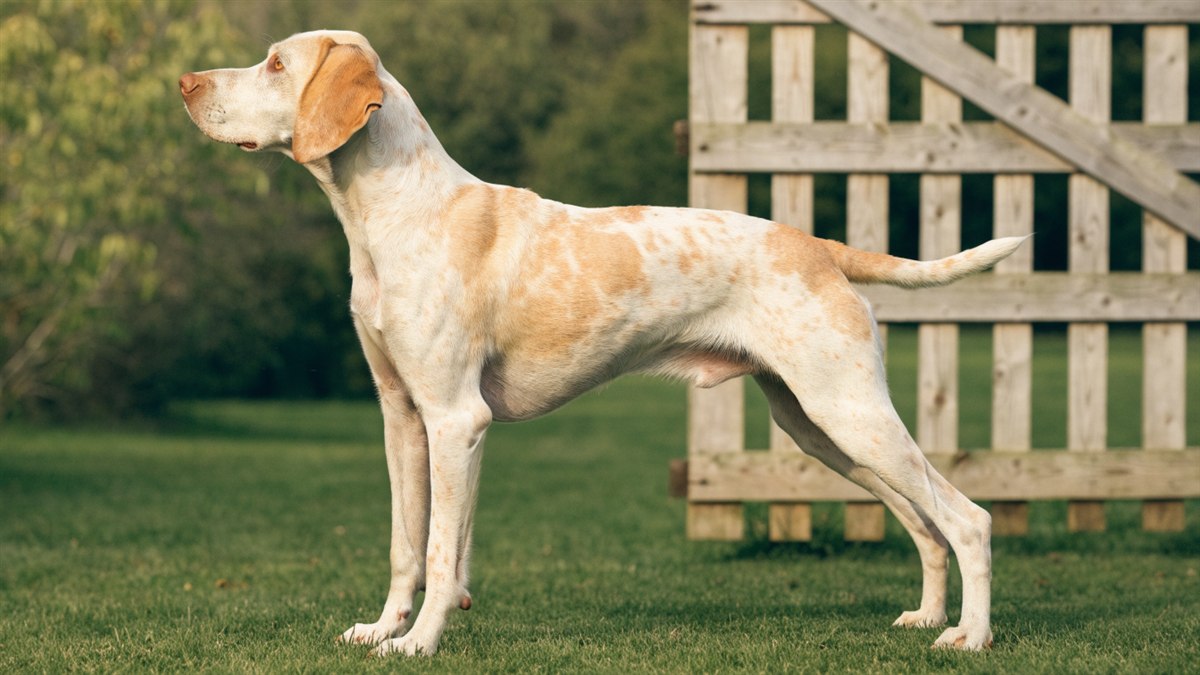
A French pointing gundog that nearly died out twice, produces roughly ten puppies a year in France, and has never been recorded in India. Its own standard describes a short white coat, an orange nose and ears that reach the tip of the nose.
Quick answer
The ariege pointer, or Braque de l'Ariège, is a rare French pointing gundog held by the FCI as Standard No. 177 in Group 7, standing 58 to 65 cm for males and 54 to 63 cm for females under the standard valid from 2023. Its own breed club records around 10 births a year in France. No Ariège Pointer was found anywhere in India, and Indian law bars commercial and breeding imports outright.
This guide is general information for Indian pet owners and is not a diagnosis. Consult your nearby vet, a registered veterinarian, before acting on anything you read here, and treat any sudden change in a dog's condition, especially collapse, laboured breathing, a distended abdomen or a painful ear, as urgent.
Ariège Pointer at a glance
What the Ariège Pointer actually is
The Ariège Pointer is a French pointing gundog recognised by the FCI as Standard No. 177 under its French name Braque de l'Ariège, placed in Group 7 Pointing Dogs, Section 1.1 Continental Pointing Dogs, type Braque, with working trial. It is a large, lightly built, predominantly white dog with orange or brown ticking, a nose that must never be black, and long pendulous ears that reach the tip of the nose.
Two facts define this breed before any other. It is a working pointing dog, not a companion breed, and it is genuinely rare. The FCI standard's own history section records that the headcount shrank because of the World Wars and that a complete disappearance was avoided only because a few Ariégeois huntsmen kept using the dog, until in 1990 a team of breeders decided to devote themselves to its survival and its renewal. The Club du Braque de l'Ariège is blunter about how close that came. When the club was founded in 1990, no dog had been entered in the Livre des Origines Françaises, the French studbook, since 1964.
The one test that separates it from the Ariégeois
Check the nose. A black nose disqualifies an Ariège Pointer and is mandatory on an Ariégeois, and that single feature settles the confusion faster than anything else. The two breeds share a place name in the French Pyrenees and almost nothing else. FCI-Standard No. 177 requires a nose ranging from orange to more or less pale brown, never black, and lists both a black nose and black nails among its disqualifying faults. FCI-Standard No. 20, the Ariégeois, requires a black nose, black pads and black nails, and puts the breed in Group 6 Scenthounds, Section 1.2 Medium sized Hounds. English Wikipedia carries a disambiguation hatnote at the top of its article for exactly this reason.
| Feature | Ariège Pointer (Braque de l'Ariège) | Ariégeois (Ariege-Hound) |
|---|---|---|
| FCI standard number | 177 | 20 |
| FCI group | Group 7 Pointing Dogs, Section 1.1 Continental Pointing Dogs, type Braque | Group 6 Scenthounds, Section 1.2 Medium sized Hounds |
| Job it was bred for | Points game for a walking gun | Drives game to waiting guns, hunts in a pack, hare its favourite quarry |
| Nose | Orange to pale brown, never black. A black nose disqualifies | Black, well developed |
| Nails and pads | Black nails disqualify | Pads and nails black |
| Coat colour | White with pale to vivid orangy fawn and slight brown, sometimes ticked | White with jet black markings, pale tan on cheeks and above the eyes |
| Height, males | 58 to 65 cm | 52 to 58 cm |
| Height, females | 54 to 63 cm | 50 to 56 cm |
What the current standard actually says about size
The current FCI standard gives males 58 to 65 cm at the withers, with a preferred size of 61 cm plus or minus 2 cm, and females 54 to 63 cm, with a preferred size of 59 cm plus or minus 2 cm. Almost every page you will find online prints something else, because almost every page is copying a standard the FCI retired. The superseded English text of FCI-Standard No. 177, dated 7 August 1998 and derived from the original valid standard of 24 January 1996, gave males 60 to 67 cm and females 56 to 65 cm. Wikipedia still prints 60 to 67 cm and cites the 1998 document by name. DogZone prints 60 to 67 cm for males and 59 to 65 cm for females, and that female floor of 59 cm matches neither version of the standard. The pattern repeats across the rest of the ranking set: PetPaw, World Dog Finder and 101DogBreeds all present the breed without ever naming which edition of the standard their figures come from World Dog Finder 101DogBreeds, Ariege Pointer profile.
The revision also changed the traditional docking fraction. The 1998 text said the tail was generally docked by 4/10; the 2023 text says traditionally docked by 6/10 Fédération Cynologique Internationale. Both texts admit the natural long tail, which matters in India, where docking is illegal and covered further down this page.
Two registries, two different dogs on paper
The United Kennel Club also recognises this breed, in its Gun Dog Group, and its figures do not match the FCI's. UKC gives 23.5 to 26.5 inches for males and 22 to 25.5 inches for females. Converted, that is 59.7 to 67.3 cm and 55.9 to 64.8 cm, roughly 2 cm taller at both ends than the current FCI range and a close match for the pre-2023 FCI figures. The explanation is printed on the UKC page itself: the standard is copyright 2006 and was last revised on 1 July 2009, so it predates the FCI's 10 August 2023 revision by fourteen years.
The two registries also describe the skull differently. The FCI says the length of the skull is almost as long as the muzzle, plus or minus 1 cm; UKC says the skull is slightly longer than the muzzle, which is what the 1998 FCI text said United Kennel Club Fédération Cynologique Internationale. UKC describes the nose as pink, flesh coloured or pale brown; the current FCI text says from orange to more or less pale brown. Neither allows black.
The FCI standard and the UKC standard both give height at the withers and neither states a weight for this breed. The figure of 25 to 30 kg that circulates on breed-profile sites is not sourced to either standard, and the pages that print it do not say where it came from. Bonbeno reports it as an unsourced secondary figure rather than a breed fact.
Appearance, in the standard's own terms
The standard describes a braccoid dog whose bone structure is powerful but without excessive heaviness, robust and of strong appearance, with a preference for lean legs, prominent muscles and well-defined lines. The coat is short, rather thick and well provided, glossy, and finer and smoother on the head and the ears. The colour is a solid coat with very extended or invasive white patches, sometimes ticked, in all the nuances of pale to vivid orangy fawn and slight brown. The skin is moderately thick, supple, finer on the head, and the external epitheliums must correspond in colour to the coat and never carry black patches.
The ears are the feature an Indian buyer should look at hardest. They are quite fine, long, curled in, set on at eye level, carried not close to the head, and long enough to reach the beginning of the nose without being stretched. Flat ears and high-set ears are eliminatory. Movement is extended and energetic, with great suppleness and lightness, and amble is undesirable.
Where it came from, and why three sources disagree
Three accounts of this breed's origin are in print and they do not agree, so Bonbeno prints all three rather than picking one. The FCI standard says the Ariège Pointer most likely issued from the old French Braques, crossed during the 19th century with Braques of Meridional or Southern stock of white and orange coat, which gave them more lightness and dynamism. Wikipedia says the type was said to be descended from crosses of the Perdiguero de Burgos and the Bracco Italiano. The breed club's own history page reports that some cynologists see a resemblance to the white and orange dog in the Oudry paintings at the Louvre and Versailles and treat that old hunting dog as the ancestor, while others hold that the breed came from the old Braque Français of the Charles X type crossed in the nineteenth century with local braque varieties.
The club adds a naming detail worth knowing, because it will show up in old books and in French classified ads. The dog was also called the Braque de Toulouse and the Braque du Midi, and it carries its present name only because the first breeders happened to be in the Ariège. If you meet a reference to a Braque de Toulouse, that is this breed.
What it is like to live with, according to the people who work it
Both registries describe an easy dog. The FCI calls the breed stable and sociable with humans and other dogs, adapted to all types of hunting, resistant, docile and easy to train. UKC condenses that to docile, easy to train and adaptable to all kinds of hunting. The club's own working standard, adopted by the club committee on 11 May 2002 and revised in May 2003, is warmer and more specific: it calls the breed very affectionate and sensitive, praises its intelligence and great ease of adaptation, and warns in its opening line that the dog's gentle character and intelligence tolerate mechanisation badly.
Ariège Pointer price in India, and why there is no such number
There is no Ariège Pointer price in India because there are no Ariège Pointers in India. No Indian breeder, no Indian listing, no Indian shelter dog and no published Indian figure was found for this breed, and the reason is not that nobody has looked. It is that the supply chain that would create an Indian price cannot lawfully form.
Start with how rare the breed is where it lives. The Club du Braque de l'Ariège states on its own breeding-genetics page that at its best the breed reached 28 births a year, and that today it runs at around 10 a year in France. Ten puppies a year, in the country that owns the breed, spread across a club whose members are hunters. That is the entire annual output. A number that small does not generate exports to a market with no buyers, no breed club and no show class for it.
Bonbeno found no evidence that a single Ariège Pointer has ever been kept in India. Any Indian seller advertising one is either offering a different breed, a crossbreed, or a dog it does not have. Ask for the export pedigree from the French studbook and the DGFT import authorisation before any money moves.
What Indian sites actually serve for this breed, which is nothing
Most absent breeds at least generate an auto-built shell page. The Ariège Pointer has not managed even that. A search restricted to India's main dog marketplaces and pet retailers, including mrnmrspet.com, puppiezo.com, dogspot.in, dogsindia.com, indiamart.com, olx.in, quikr.com, supertails.com and headsupfortails.com, returned no dog at all for this breed. What it returned was laser pointers. DogSpot's breed directory serves a genuine HTTP 404 for the slug. The only pointing breeds those sites actually list are the German Shorthaired Pointer, the German Wirehaired Pointer and the plain Pointer, which is a useful signal in itself: the Indian market has a pointer shelf, and this breed is not on it.
That absence is worth more to a reader than any invented range. It means an Indian buyer typing this breed's name has, in practice, three real options. Buy a different pointing breed that is genuinely available here. Import one dog lawfully as a pet, which is possible but narrow and covered below. Or adopt, which is covered in the last section of this page.
The only published prices anywhere, and they are not Indian
Two figures exist in the ranking set and both are British. Wamiz publishes a purchase price of about 500 to 700 pounds and monthly upkeep of 80 to 100 pounds. Neither number is sourced on the page, neither is Indian, and neither survives conversion into an Indian expectation, because the cost that dominates an imported dog is not the puppy. It is the flight, the crate, the health certification, the quarantine and the authorisation.
| Source | Figure published | What it is actually evidence of |
|---|---|---|
| Wamiz (UK) | About 500 to 700 pounds to buy | An unsourced UK estimate on a page that also prints the retired FCI height |
| Wamiz (UK) | 80 to 100 pounds a month to keep | A UK cost of living figure, not transferable to India |
| Indian marketplaces | No listing found | The breed is absent from every Indian dog marketplace searched |
| Kennel Club of India | No published position | The KCI site was serving a temporary forms-only placeholder with no breed list |
| French breed club | No price published | The club publishes litters and breeders, not prices |
| Bonbeno's finding | No Indian price exists | There is no Indian market to price |
Why no lawful Indian supply chain can form
Indian import law closes the commercial route completely. Dogs enter India under ITC (HS) 01061900, where the import policy is Restricted, and DGFT Trade Notice No. 22/2022-23 of 19 December 2022 sets out the only three purposes for which a dog may be imported at all: a pet dog with a valid pet book and relevant records in the name of the importer, dogs imported by R&D organisations with the recommendation of CPCSEA, and dogs for internal security by the Defence and Police Force. Policy Condition 8 states that import of commercial dogs for breeding or any other commercial activity other than those purposes is not permitted. Paragraph 6 removes any ambiguity: any applications for trading or breeding purposes, or applications made on behalf of some other person or entity, shall be duly rejected.
The notice also limits where a dog may physically arrive. Import of pet animals is allowed only through the airports and seaports of Delhi, Mumbai, Chennai, Hyderabad, Bengaluru and Kolkata and, since October 2024, Kochi airport, seven ports in total, and the animal may be quarantined at the government quarantine station of that port Department of Animal Husbandry…. Read those two provisions together and the conclusion is mechanical. Nobody can lawfully bring this breed into India to breed it or to sell it, so no Indian population can start, so no Indian price can ever exist. This is not a gap in Bonbeno's research. It is the answer. The full route is set out in how to import a dog to India.
The one lawful route, and what it demands
One dog may come in as your own pet, and only as your own pet. Up to two pets may be imported as passenger baggage without a DGFT authorisation, but only by a person transferring residence to India after two years of continuous stay abroad, and only cats and dogs qualify under the baggage rules. If your continuous stay abroad was under two years, or the animal is not travelling as passenger baggage, or the baggage rules do not otherwise apply, you need an import authorisation from DGFT. More than two pets always needs one, and applications go to DAH&D for examination first.
The paperwork is specific. A permanent import needs the vaccination book, pet passport or pet book, a certificate for emotional support and the pet's passport. Applications run against your Importer Exporter Code, or against the permanent IEC number IIHIE0153E for persons importing goods for personal use not connected with trade, and are filed on the DGFT portal under Import Management System. You must also obtain an Advance No Objection Certificate from the Regional Officer or Quarantine Officer of the arrival port, seven days before travel and relaxable to three days, after submitting the DGFT licence and a health certificate from a veterinarian in the exporting country, with the prescribed disease testing done in that country. DGFT advises starting the process at least two months before travel.
If you already live in France with an Ariège Pointer and you are moving home to India after two or more years abroad, your dog can come with you. If you live in India and want to buy one, the answer under current law is that you cannot, and no amount of paperwork changes it.
The registry question, which has no clean Indian answer
India's national registry is the Kennel Club of India, based in Chennai and affiliated to the FCI. Because the FCI's own nomenclature lists the Braque de l'Ariège, number 177, among the breeds recognised on a definitive basis rather than provisionally, a dog imported with an export pedigree from a French FCI-member studbook is in principle registrable in India by the single-dog route for imported animals. In principle is as far as this goes. Audited on 20 August 2026, the KCI website was serving a temporary forms-only placeholder carrying the notice that it is a temporary arrangement while the new website is being deployed, with downloadable forms and contact details and no recognised-breed list at all. There is currently no way for an Indian reader to confirm the position from the registry's own site, and Bonbeno will not assert one it cannot verify. Ask the KCI office directly, in writing, before you commit to anything.
Monthly cost of ownership, bounded honestly
Budget Rs 8,000 to Rs 14,000 a month for a dog of this size in India, using the published Indian large-breed range, and treat every rupee of it as an estimate by size rather than a figure for this breed. No Indian cost data exists for the Ariège Pointer, because no Indian owner exists to generate it.
The honest method here is to price the dog you would be keeping rather than pretend to price the breed. A 58 to 65 cm male sits in the large-breed band in every Indian cost table, alongside the Labrador Retriever and the German Shepherd, so that is the band to use. Supertails publishes a large-breed monthly total of Rs 8,000 to Rs 14,000, made up of Rs 4,000 to Rs 6,000 on dry or wet food and Rs 500 to Rs 1,200 on grooming, against Rs 6,000 to Rs 10,000 for a medium breed and Rs 12,000 to Rs 20,000 for a giant one.
Where the published Indian sources disagree
The two Indian cost sources on this page contradict each other on grooming, and the gap is not small. Supertails puts large-breed grooming at Rs 500 to Rs 1,200 a month. wagNbush, pricing actual salon work in July 2026, puts a single full groom for a large breed at Rs 1,500 to Rs 3,000, with Bengaluru quoting from Rs 3,000 for a large dog and Delhi NCR quoting Rs 1,850 to Rs 2,200 for a full groom and around Rs 900 for a basic bath. One full salon groom therefore costs more than Supertails' entire monthly grooming budget.
Both can be right, and the resolution matters for this breed specifically. Supertails is describing what a large short-coated dog costs when the owner does the routine work at home, and wagNbush is describing salon pricing for a full groom. This breed's short coat lands on the cheap side of that split, because wagNbush notes that short-coated dogs cost less to groom while long-haired and double-coated dogs cost more. A dog with a short, glossy, single-length coat does not need a Rs 3,000 salon appointment. It needs a bath, a brush and, above all, its ears dried.
| Line item | Monthly range | Note for this breed |
|---|---|---|
| Food, dry or wet | Rs 4,000 to Rs 6,000 | Large-breed band. A working-bred dog exercised properly sits at the top of it |
| Grooming | Rs 500 to Rs 1,200 at home; Rs 1,500 to Rs 3,000 per salon groom | Short coat, so home care is realistic. The recurring spend is ear cleaner, not clipping |
| Routine veterinary care and vaccination | Included in the Rs 8,000 to Rs 14,000 total | Annual rabies is mandatory practice under Indian breeding rules and sensible for every dog |
| Tick and flea control | Included in the total | Not optional in India. See the health section |
| Published large-breed total | Rs 8,000 to Rs 14,000 | Bonbeno's working budget for a dog of this size |
The costs a size band does not capture
Three line items sit outside every Indian monthly table and all three are larger for this breed than for a Labrador. The first is ear care, because a pendulous-eared dog in an Indian summer will need cleaner, drying solution and occasional veterinary attention, and an otitis case that goes chronic is not a Rs 500 problem. The second is sun protection, because an unpigmented nose needs shade management and, per the Merck Veterinary Manual, topical sunscreen applied at least twice daily where solar dermatitis is a concern. The third is the exercise infrastructure a working pointer requires, which in an Indian city usually means either a car and a place to drive to at dawn, or a compromise the dog pays for.
There is also a one-off cost nobody prices honestly, and it is the import. A lawful pet import means an airline-approved crate, a health certificate with the prescribed disease testing done in the exporting country, a DGFT authorisation where the baggage rules do not apply, an Advance NOC from the port quarantine officer, and possibly a quarantine period at a government station at one of the seven permitted ports Department of Animal Husbandry…. Bonbeno publishes no figure for that total, because no Indian owner of this breed exists to have paid one, and inventing a number would be worse than saying so.
Suitability for the Indian climate, and heat tolerance rated 3 out of 5
Bonbeno rates the Ariège Pointer 3 out of 5 for heat tolerance in Indian conditions, which is the best score any breed in this site's gundog cluster has earned and still not a recommendation. The coat is genuinely well suited to a hot country. The dog's job, its drive and its lack of pigment are not.
Rate the coat first, because the coat is the part that argues in this breed's favour. The standard asks for hair that is short, rather thick and well provided, glossy, and finer and smooth on the head and the ears. UKC calls it short, close and glossy. Neither standard requires an undercoat, and neither mentions one. Compare that with the American Water Spaniel, whose standard makes an undercoat mandatory for protection against weather, water and punishing cover, and which this site rates 2 out of 5. A short, single, glossy coat over a predominantly white body reflects more and traps less than a dark double coat, and on that axis alone this dog would score 4.
Why the score drops to 3, and it is not the coat
Exertion causes most canine heat illness, and this breed exists to exert itself. The largest primary-care study of the question reviewed 905,543 UK dogs and identified 1,259 heat-related illness events in 1,222 dogs. Of the 879 events with a recorded trigger, exertional heat-related illness accounted for 652, or 74.2 percent, against 12.9 percent environmental and 5.2 percent from confinement in a vehicle. Exertional events carried a 7.6 percent fatality rate and accounted for the majority of heat-related deaths with a known trigger. The study also found elevated odds in the breeds most often used as working and assistance dogs, and named the Labrador Retriever, Golden Retriever, Border Collie and English Springer Spaniel among them.
Now read the club's working standard against that. It requires a sustained canter, describes the breed as endurant, and states that the dog must have well-rhythmed paces that let it hunt for hours on end without slowing. Hours on end. The FCI describes the gait as extended and energetic and classifies the breed with working trial. This is a dog built to produce exactly the exertion that the evidence identifies as the dominant cause of heat illness, in a country where the ambient temperature at the hours it would want to work is frequently above 35 degrees.
A short white coat helps a dog resting in shade. It does very little for a dog running hard at noon. The mistake this breed invites is precisely the one the evidence punishes: an owner sees a short-coated dog, assumes heat is handled, and works it in the middle of the day.
The pigment problem, which is written into the standard
This breed is required to be poorly pigmented on the very surfaces that burn. The FCI standard fixes the nose from orange to more or less pale brown and never black, disqualifies a black nose and black nails, disqualifies excessive depigmentation of the eyelids, and requires the external epitheliums to correspond in colour to the coat and never carry black patches. UKC calls the nose pink, flesh coloured or pale brown and disqualifies a black nose, black nails and albinism. The colour is white with fawn or brown ticking. That is a description of a dog with very little melanin where sunlight lands.
The Merck Veterinary Manual is direct about what that means. Solar dermatitis typically affects lightly pigmented skin and begins with waxing and waning erythema; in true nasal solar dermatitis the nonpigmented areas of the planum nasale are affected first, occasionally spreading to the bridge of the nose with inflammation and ulceration, and the lesions are worse in summer. The condition can progress to discoid lupus erythematosus or squamous cell carcinoma. Merck's management advice is exposure to sunlight must be severely curtailed, with topical sunscreens effective but needing application at least twice daily. Merck also adds an honest caveat that Bonbeno passes on rather than hides: nasal dermatosis due to solar radiation is probably not as common as previously thought and may often be a misdiagnosis for the lupus variants.
No Indian study of solar dermatitis in this breed exists, because no Indian population of this breed exists. What can be said is that the anatomy the standard mandates is the anatomy the veterinary literature identifies as at risk, and that Indian sunlight is stronger and lasts longer than sunlight in the Ariège.
Humidity, the monsoon and the ears
Humidity is a recognised predisposing factor for otitis externa, alongside swimming and pinna conformation. India supplies humidity in quantity, and this dog carries long ears that reach the tip of the nose. That combination is the reason the ear section of this page is longer than the coat section.
The Indian seasonal evidence is less tidy than it is often reported, and the disagreement is worth publishing. A one-year series of 281 dogs in and around Durg district, Chhattisgarh, found an overall otitis externa prevalence of 18.14 percent, and its seasonal breakdown put the highest share of cases in summer, March to June, at 41.18 percent, ahead of the rainy season from July to October at 33.33 percent, with winter lowest at 25.49 percent. That is the opposite ordering to the monsoon-first pattern reported in some other Indian series. The paper's own explanation is that late summer with high humidity produces the ideal environment for bacterial and yeast growth. For an owner the practical conclusion is the same either way and slightly broader: the risk window in India is not one month of rain, it is the whole hot humid half of the year.
City by city
| City or region | Main constraint | Practical verdict |
|---|---|---|
| Chennai, Mumbai, Kolkata, Kochi | High heat plus high humidity for most of the year, so evaporative cooling works poorly | Hardest. The dog's working requirement and safe exercise hours barely overlap |
| Delhi NCR, Jaipur, Ahmedabad | Extreme dry summer heat, then a humid monsoon, then a usable winter | Four to five usable months. The rest of the year is dawn-only walking |
| Bengaluru, Pune, Hyderabad | Milder temperatures, still a long humid monsoon | The most workable Indian cities for this breed, and still not easy |
| Shimla, Dehradun, Gangtok, Ooty | Cool enough that heat stops being the limiting factor | Genuinely suitable on climate. Everything else on this page still applies |
The hill stations are the honest exception. A short-coated pointing dog from the foothills of the Pyrenees would be comfortable in Shimla or Ooty, and an owner there could give it something close to the work it wants. That is a real answer, and it applies to a very small number of Indian households.
Temperament and household fit
The Ariège Pointer is described by both recognising registries as docile, sociable and easy to train, and by its own breed club as very affectionate and sensitive. That temperament is genuinely pleasant and it is not the reason to say no to this breed. The reason is that a docile dog with a working pointer's drive still needs the work.
The FCI standard's temperament clause reads: stable and sociable with humans and other dogs, adapted to all types of hunting, resistant, docile, and easy to train. Note what is in that sentence and what is not. Sociable with other dogs is stated explicitly, which is unusual and useful. Aggressive or overly shy dogs are a disqualifying fault, and so is any dog clearly showing physical or behavioural abnormalities. The 1998 text listed aggressive, biting or very timid dogs as eliminating faults in similar terms.
The club's working standard adds the part that a buyer actually needs. It opens by saying the dog's gentle character and intelligence tolerate mechanisation badly, and closes by calling the breed very affectionate and sensitive, appreciated for its intelligence, its great ease of adaptation and its passion for hunting. Sensitive is the operative word. A sensitive dog is easy to live with and easy to damage.
Who this dog would suit, if it were available
- Households in a hill station or a genuinely cool Indian region, with land and time
- Owners who already run, cycle or trek daily and want the dog with them at dawn
- Families with children, since the standard requires a stable, sociable temperament and disqualifies aggression
- Multi-dog homes, since sociability with other dogs is written into the standard
- Owners who train with reward rather than correction, because a sensitive dog shuts down under pressure
Who should not buy this breed
- Apartment households in Chennai, Mumbai or Delhi with no way to give the dog hours of work
- First-time owners who want a low-maintenance short-coated dog and have read only the coat description
- Owners away at work all day, since a bored pointing dog invents its own job
- Anyone who intends to use a board-and-train setup that relies on correction
- Anyone hoping to breed, which Indian import law forbids and this breed's genetics make irresponsible
Good with children and other pets, honestly answered
Yes on both counts, with one caveat. The temperament clause supports it, the disqualifying faults back it up, and the club describes an affectionate dog. The caveat is prey drive rather than aggression. This is a pointing breed selected for centuries to find and freeze on birds, and the club's working standard describes a dog that dislikes losing contact with running game. A household with pet birds, rabbits or free-range chickens should assume the instinct is intact. Cats raised with the dog from puppyhood are usually fine; a cat met at nine months in a garden is a different situation.
Tolerance of being alone
No breed-specific separation-anxiety data exists for the Ariège Pointer, and Bonbeno will not borrow another breed's figure to fill the gap. What can be said comes from the standard and the club: this is a dog bred to work in close partnership with a walking gun, described as affectionate and sensitive, whose intelligence tolerates mechanisation badly. Breeds built that way do not usually do well left alone through a nine-hour Indian working day, and an owner should plan on that basis rather than hope.
Training approach, and what this breed resists
Train an Ariège Pointer with reward, repetition and short sessions, because every published description of the breed says the same thing twice over: it is docile and easy to train, and it does not tolerate being drilled. The thing it resists is not commands. It is mechanisation.
Both registries call the breed easy to train United Kennel Club, and the club's working standard opens with the qualifier that matters: the dog's gentle character and intelligence supportent mal la mécanisation, which is to say they tolerate mechanisation badly. The same document repeats the theme in its section on the quest, insisting that the dog's search of the ground must not be mechanised but serious and dynamic, so that it explores the terrain methodically and effectively.
That is a training instruction disguised as a working standard. A dog selected for independent, thoughtful searching is a dog that will disengage from rote drilling. Sessions should be short, varied, and built around problems the dog solves rather than patterns it repeats.
Are Ariege Pointers easy to train for first-time dog owners?
Easy to train and easy for a first-time owner are different questions, and the honest answer splits them. The obedience is easy: this is a biddable, sociable, docile dog that wants to work with a person. The management is not. A first-time owner in an Indian city would be taking on a large dog with hours of daily exercise demand, an ear-care routine that cannot be skipped, sun-sensitive skin, and no local breed community, no Indian breed club and no Indian veterinarian who has seen one. Those are not training problems and training will not solve them.
The training timeline that actually applies
| Age | What to work on | What not to do |
|---|---|---|
| 8 to 16 weeks | Socialise hard and wide. Handling of ears, feet and mouth every single day | Do not enforce long stays or start formal drilling |
| 4 to 6 months | Recall on a long line, name response, crate and car comfort, tolerance of grooming | Do not correct a sensitive puppy for a failed recall. Reset the distance instead |
| 6 to 12 months | Steadiness, walking on a loose lead, exposure to other dogs and to livestock | Do not force the point. It arrives on its own or it does not |
| 12 to 18 months | Structured searching problems, retrieve work, field exposure where lawful and safe | Do not begin hard physical conditioning before growth plates close |
| 18 months onward | Endurance work, field trial style quartering if you have the ground for it | Do not train in Indian midday heat at any age |
Retrieving and the soft mouth
The club's working standard asks that the retrieve be performed with joy, states that speed will not be demanded, and notes that a soft mouth is highly sought after. That is a permissive brief, and it tells you how to teach it. Do not build a fast, mechanical retrieve. Build a willing one, reward delivery to hand, and never wrestle an object out of the dog's mouth, because a hard mouth is far easier to create than to fix.
The point itself
The standard for the point asks that it be firm but not cataleptic, with the ideal position standing, the dog concentrated on the game with a fixed eye and the ear slightly raised, and it explicitly allows the attitude to vary with the quarry and the ground. The document also permits ground checks where they are justified, and says they cannot be counted as a fault. This is a standard written by people who wanted a practical hunting dog rather than a stylised one, and an owner training such a dog should hold the same standard: reward the behaviour that works, not the picture.
Many Indian board-and-train operations still rely on aversive correction and long tethered periods. A sensitive breed whose own club warns against mechanisation is the worst possible candidate for that method. If you use a trainer, watch a full session before you hand over a dog.
How much exercise an Ariège Pointer actually needs
Plan on two to three hours of real physical and mental work a day, because the club's own working standard defines the breed's normal output as hunting for hours on end without slowing. Exercise requirement is the single thing Indian buyers most underestimate in gundogs, and this breed sits at the demanding end even within that group.
Read the requirement in the breed's own words. The working standard says the habitual gait is a sustained canter, not necessarily fast, broken during the search by brief periods of a lively trot, and that the dog must have well-rhythmed paces allowing it to hunt for hours on end without slowing. It calls for great adaptability across biotopes, requiring the dog to be as comfortable on the plain as on the grass and rock of high mountain or in woodland. The FCI adds that movement should be extended and energetic, with great suppleness and lightness, and classifies the breed with working trial, meaning a working assessment forms part of its evaluation.
Compare that against the baseline Indian law sets for kennelled dogs. The Prevention of Cruelty to Animals (Dog Breeding and Marketing) Rules, 2017 list, among acceptable ways of providing exercise, exercising for at least thirty minutes twice per day. One hour a day is the regulatory floor for a dog in a breeding establishment. For a dog whose own working standard specifies hours of sustained canter across mountain terrain, one hour is not exercise. It is the amount of movement required to stop the arrangement being cruel.
How much exercise does an Ariege Pointer need daily?
Two to three hours daily, split across at least two sessions, with a meaningful part of it off-lead running or scent work rather than lead walking. A dog of this build will trot beside a bicycle or a runner happily, but lead work alone does not satisfy a searching breed. The mental half matters as much as the physical: scent games, hidden retrieves, and problems the dog has to solve.
The Indian timing problem, stated numerically
The hours this dog can safely work and the hours an Indian owner is awake and free barely overlap for most of the year. Exertional heat-related illness is the trigger behind 74.2 percent of heat-related illness events with a known cause, and it carried a 7.6 percent fatality rate in that cohort. Exertional events also occurred year-round rather than only in summer, which is the finding most owners miss. In practice that means an Indian owner of a working pointer is committed to two dawn sessions and one after dark, in the cooler months, and to dawn-only work with enforced rest for the rest of the year.
| Slot | Duration | Content |
|---|---|---|
| Dawn, before 6:30 am | 60 to 90 minutes | Off-lead running on safe ground, recall work, quartering or scent searching |
| Midday | 0 minutes | Rest indoors, in shade, with water. This is not negotiable in an Indian summer |
| After dark | 45 to 60 minutes | Lead walking, hidden-retrieve games, obedience with reward |
| Daily, indoors | 20 to 30 minutes | Scentwork, food puzzles, training problems. Mental work reduces the physical deficit but does not replace it |
| One day a week | Half a day | A trip to open ground where the dog can genuinely run, if you have access to any |
What happens without it
An unexercised searching dog does not become calm. It becomes a dog with a job it invented. The predictable results are destructive chewing, digging, barking, counter-surfing, escaping and an escalating inability to settle indoors. None of that is a behaviour problem in the usual sense. It is an exercise deficit wearing a behaviour problem's clothes, and no trainer can fix it while the deficit stands.
Across this site's gundog and retriever pages, the requirement Indian buyers get wrong most often is exercise, not grooming or price. Buyers read short coat, low maintenance, good with children, and never register that the same dog was selected for generations to work a full day in the field. This breed is the sharpest version of that mismatch, because its own club prints the requirement in hours.
Grooming and coat care in Indian humidity
Grooming an Ariège Pointer takes ten minutes a week for the coat and five minutes a day for the ears, and the ratio is the point. This is one of the lowest-maintenance coats in the gundog group and one of the highest-maintenance ear structures, and Indian humidity makes the second half of that sentence the one that costs money.
The coat asks almost nothing. It is short, rather thick and well provided, glossy, and finer and smooth on the head and the ears. UKC calls it short, close and glossy, over skin that is moderately thick and very supple. There is no undercoat requirement, no feathering to mat, no furnishings to strip and no clipping pattern to maintain. A rubber curry brush once or twice a week lifts dead hair and spreads coat oil, and that is the whole coat routine.
Does the Ariege Pointer shed a lot and what grooming do they need?
It sheds moderately and continuously rather than in heavy seasonal blowouts, which is what a short single coat does, and the grooming it needs is a weekly brush plus daily ear care. Short hair does not mean no hair. Short, stiff, light-coloured hairs weave into upholstery and are harder to lift than the long hair of a spaniel, so an Indian household should expect visible shedding on dark sofas year-round. There is no coat-blow season to plan around and no de-shedding appointment to book.
Never shave this dog, and here is the specific reason
A short-coated dog with unpigmented skin has one layer of sun protection and it is the coat. Clipping it down for an Indian summer removes the shade over skin that the Merck Veterinary Manual identifies as the type most at risk of solar dermatitis, which begins as erythema and scaling on lightly pigmented skin and can progress to ulceration and to squamous cell carcinoma. This is not the usual double-coat argument about insulation. On this breed it is simpler and more direct: the coat is the sunscreen.
The ears, which are the actual job
This is where the site's gundog cluster finding needs extending rather than repeating. The established pattern across Bonbeno's gundog pages is that drop ears over a coat that holds water drive the most common disorder recorded in the group, and the American Water Spaniel and English Cocker Spaniel pages carry the mechanism in full. The Ariège Pointer only half fits that pattern, and the half it escapes is worth knowing.
Take the mechanism apart. UK primary-care data covering a random sample of 22,333 dogs put the one-year period prevalence of otitis externa at 7.30 percent, with breed and ear carriage the two highest-ranked risk factors. Breeds with pendulous ear carriage carried 1.76 times the odds of otitis externa compared with erect-eared breeds, and breeds with V-shaped drop ears carried 1.84 times the odds. The paper lists swimming, humidity and pinna conformation among the predisposing factors, and notes that breed-related anatomy such as the degree and point of folding of the ear flap further predisposes a dog.
| Predisposing factor | Present in the Ariège Pointer? | What the standard says |
|---|---|---|
| Pendulous ear carriage | Yes | Ears long, curled in, reaching the beginning of the nose, at 1.76 times the odds band |
| Ear held flat against the head | No | Both standards require the ear carried NOT close to the head, so the canal is less occluded |
| Coat that holds water in the ear | No | Short, close, glossy hair, finer and smooth on the leathers. It dries fast |
| Heavy hair inside the canal | Not required by the standard | No furnishings are specified, unlike the curly and feathered gundog coats |
| Ambient humidity | Yes, unavoidably, in India | Nothing in the standard changes this |
| Swimming and bathing | Owner-controlled | This is the variable you actually get to manage |
So the honest reading is that this breed carries two of the six factors rather than five, and that its ear is meaningfully better ventilated than a Cocker's or a Water Spaniel's. It is still a large pendulous ear over a canal, in a country that supplies humidity for six months a year, on a dog that will run through wet undergrowth. It is a manageable risk rather than a structural one, which is a genuinely better position than the rest of this site's gundog cluster occupies.
The Indian ear routine
- Lift and look inside both ears every day. Thirty seconds. You are checking for redness, smell and discharge
- Dry the ear canal after every bath, every swim and every walk in rain, using a veterinary drying solution rather than cotton buds
- Clean with a veterinary ear cleaner at the frequency your vet sets, not on a fixed schedule copied from a website
- Escalate early. Head shaking, ear scratching, head tilt, pain on palpation and a malodorous discharge are the recognised presenting signs
- Treat the whole hot humid half of the year as the risk window, not just the monsoon months
Over-cleaning is a real harm and not a theoretical one. The UK study's authors specifically recommend cautious, low-harm preventive approaches, including judicious use of ear cleaners and avoidance of overzealous ear-cleaning, and the Indian series notes that excessive trauma to the ear canal from exuberant cleaning or from instruments can itself allow bacterial colonisation. Daily inspection is right. Daily flushing is not.
Ticks, and why grooming time is inspection time
Indian grooming rules treat parasite control as part of grooming for a reason. The 2017 Rules require that weeds, grasses and bushes be controlled to prevent fleas and ticks, and that regular de-ticking be practised at the time of grooming. That is sound advice for any Indian dog and essential for one that runs through vegetation. Run your hands over the whole dog during the weekly brush, checking between the toes, inside the ear leathers, under the collar and around the tail base.
Health risks, screening and life expectancy
No cohort study of Ariège Pointer health exists, no OFA breed statistics could be retrieved, and no published prevalence figure for any disorder in this breed was found. That is the honest answer for a breed producing around ten puppies a year, and it is stated three times on this page rather than filled once with another breed's numbers.
Say what is missing before saying what is known. There is no VetCompass breed analysis for the Ariège Pointer, no breed health survey, no published lifespan study, and no screening prevalence table. The Orthopedic Foundation for Animals interface was audited on 20 August 2026 by three separate routes, the disease-statistics page, the advanced-search page and the CHIC browse-by-breed page, and none of them returned any breed row in their HTML, for this breed or for any other. Bonbeno therefore publishes no OFA figure for this breed. A guessed breed code would have returned a real, complete and plausible table for a different dog, which is worse than publishing nothing.
DogZone's health section for this breed lists four conditions: ear infections, hip dysplasia, patellar luxation and bloat. Not one carries a breed-level number, a study, or a population. It is a generic large-gundog list applied to a breed nobody has studied. Bonbeno treats each item below on its merits and says clearly which are supported for this breed and which are not.
Hip dysplasia, the only condition this breed actually screens for
Hip dysplasia is the one disorder with a real, breed-specific, published programme behind it, and it belongs to the club rather than to any register. The Club du Braque de l'Ariège runs its own hip screening scheme, states its engagement in the fight against hereditary defects, and publishes the protocol in full. Radiographs are taken from twelve months of age under general anaesthesia, with the limbs in full extension, symmetrical and internally rotated so the patellae sit medially and are visible on the film. The film must be marked indelibly by the veterinarian with the dog's name and affix, identification or microchip number, date of birth, breed, sex, date of the radiograph, left and right, and the practitioner's name.
Grading follows the international five-letter scale the club sets out: A normal hips, B intermediate or nearly normal, C mild dysplasia, D moderate dysplasia, E severe dysplasia. Readings are done only by the club's two named official readers, at a fee of 25 euros per reading. The club also notes a legal point specific to France, that any transaction legally engages the seller's liability where a dog is officially recognised as dysplastic.
What the club does not publish is a prevalence figure. There is no percentage of A hips, no sample size, and no year-by-year trend on the site. Bonbeno therefore states the screening scheme exists and that the breed's dysplasia rate is unpublished, rather than converting the existence of a scheme into an implied number.
The club's veterinary page is also unusually honest about the limits of screening, and its warning transfers to any breed. Two non-dysplastic dogs can still produce dysplastic offspring, statistically less often than others but not never, because the trait does not behave like a simple recessive and a single parent appears able to transmit it. The club calls the worst offenders détériorateurs, deteriorators, and says finding the improvers takes statistical work over generations. Its practical conclusion is that a pedigree with four generations of unaffected parents on both sides is close to an assurance of freedom from dysplasia.
Inbreeding, which is this breed's real health story
The genuine health risk in this breed is not any named disease. It is the size of the gene pool, and the club says so itself in plainer language than any outside source would dare use. Its breeding-genetics page tells members that given the breed's weak numbers they will find, on studying the pedigrees, that no great effort is needed to produce inbreeding; that all the dogs alive today descend from a few individuals; and that everyone is therefore breeding in consanguinity, contenting themselves with directing that inbreeding towards the best subjects.
The outcrossing page goes further. It states that a dog unrelated to your own does not exist in this breed, that all the dogs of a breed are more or less related but that in a low-numbers breed like this one the relationship is not distant, and that at best the common ancestry goes back to the years around 1989, offering to trace any member's pedigree back to the pairing Elza x Eclair.
That is why the club runs an official outcross programme, and the choice of partner breed is documented. It selected the Bracco Italiano, as earlier Ariège Pointer breeders had done, on the reasoning that the outcross breed should be neither too close nor too distant and should bring something the breed wants, such as low dysplasia or an exceptional nose, and that the Bracco's distinctive topline gives an efficient selection criterion. The Pointer is named as a second option, with the caveat that it brings a black nose and a marked stop. First-cross dogs are registered à titre initial after presentation to a judge, and are crossed back to Ariège Pointers until they conform to the standard.
This is the sharpest collision on this page. The club openly recommends father-to-daughter and half-sibling matings, and gives the resulting inbreeding coefficients of 25 percent and 12.5 percent. Second Schedule Part II paragraph 6(3) of India's Prevention of Cruelty to Animals (Dog Breeding and Marketing) Rules, 2017 prohibits both. It bans in-breeding, defined as mating between relatives of the second to fourth grade within the first four generations, naming uncle to niece, nephew to aunt, cousin to cousin and grandparent to grandchild, and separately bans incest breeding between parents and children or between siblings. The method by which this breed is currently kept alive in France could not lawfully be used to keep it alive in India.
Ear infections, treated on the evidence
Ear disease is the best-evidenced risk on this page, though the evidence is about ear shape rather than about this breed. Pendulous ears carry 1.76 times the odds of otitis externa against erect ears in UK primary-care data covering 22,333 dogs, where the one-year prevalence across all dogs was 7.30 percent. Indian series run higher: 18.14 percent of 281 dogs screened in and around Durg district, Chhattisgarh, over one year. That Indian study also found prevalence rising sharply with age, from 5.45 percent in dogs up to one year to 28.40 percent in dogs of five years and above, and it found the highest seasonal share in summer at 41.18 percent rather than in the rainy season. The grooming section above sets out which parts of the mechanism this breed carries and which it escapes.
Patellar luxation and bloat, and what the evidence supports
Patellar luxation appears on the ranking pages with no breed data behind it, and Bonbeno found none either. It is a real orthopaedic condition, most commonly seen in small breeds, presenting classically as a dog that skips on a hind leg for a few steps and then walks normally. There is no published evidence that the Ariège Pointer is predisposed to it, and no Indian or French dataset that would show one. Treat it as a condition to have a vet check for at a routine examination, not as a breed risk.
Bloat, or gastric dilatation-volvulus, is asserted for this breed on the basis of chest shape, and the anatomy claim is at least real. The FCI standard describes a chest that is broad, deep and well let down to elbow level, with an oval cross section. The evidence behind the deep-chest association comes from a prospective cohort of 1,914 dogs across eleven breeds, which measured the depth and width of the thorax and abdomen and reported an incidence of 23 cases per 1,000 dog-years at risk for the seven large breeds and 26 for the four giant breeds, a cumulative incidence of 5.7 percent across all breeds, and death in 30 of the 105 dogs that developed GDV, or 28.6 percent. The eleven breeds studied were the Akita, Bloodhound, Collie, Great Dane, Irish Setter, Irish Wolfhound, Newfoundland, Rottweiler, Saint Bernard, Standard Poodle and Weimaraner. No French braque was among them. The risk factors the study did identify, increasing age, a first-degree relative with a history of GDV, faster eating and a raised feeding bowl, are actionable regardless of breed.
Eye faults the standard itself polices
Two eyelid conditions are written into the standard as disqualifying faults, which tells you the breed's own judges consider them worth policing. Entropion and ectropion, or any sign of surgical intervention to correct them, disqualify a dog under FCI-Standard No. 177, as does excessive depigmentation of the eyelids and an excessively light eye or wall eye. UKC disqualifies wall eyes and entropion or ectropion on the same basis. India's 2017 Rules independently require that breeding dogs be tested for genetic defects including hip dysplasia, progressive retinal atrophy, night blindness, hypothyroidism, entropion and ectropion. Ask to see eyelid conformation and hip results on both parents.
Indian risks that apply to any dog kept here
Tick-borne disease is the one an imported European dog would meet without any prior exposure. A survey of 525 dogs across four Indian climatic zones, Sikkim, Ladakh, Delhi and Mumbai, found by PCR that 261 of them, 49.7 percent, were infected with one or more canine tick-borne pathogen. Hepatozoon canis was commonest at 30 percent, followed by Ehrlichia canis at 20.6 percent, Mycoplasma haemocanis at 12.2 percent, Anaplasma platys at 6.5 percent, Babesia vogeli at 5.5 percent and Babesia gibsoni at 0.2 percent. Concurrent infection with more than one pathogen occurred in 39 percent of cases, and potential tick vectors, most commonly Rhipicephalus, were found on 278 of the dogs examined, 53 percent. Year-round tick control is not optional for a dog that works in vegetation in India.
Rabies vaccination is the other non-negotiable. India's 2017 Rules require that dogs at every breeding establishment be vaccinated annually against rabies, and preferably against canine distemper, parvovirus, leptospirosis and viral hepatitis. Puppy vaccination under those rules can start at seven to eight weeks and is usually completed at eighteen weeks.
What is the average lifespan and cost to adopt an Ariege Pointer?
Royal Canin publishes an average life expectancy of 12 to 15 years for this breed, and that figure carries no citation on its page and rests on no cohort study Bonbeno could find. Bonbeno reports it as the only published life expectancy for the breed and as an estimate rather than a finding. No adoption cost exists in India, because no Ariège Pointer has been found in an Indian shelter; the adoption section below covers what a reader can actually do instead.
There is no lifespan study, no screening prevalence figure and no OFA table for the Ariège Pointer. For most FCI-standard breeds outside the popular set there is genuinely no cohort study, and saying so is the accurate answer. Any page that gives you a confident breed-specific health percentage for this dog has taken it from somewhere else.
Whatever you read here, take a dog with any ear, eye, skin or lameness sign to a professional promptly. Consult your nearby vet before acting on general information, and treat any sudden change in a dog's condition as urgent.
Feeding, body condition and nutrition in India
Feed an Ariège Pointer to a body condition score of 4 or 5 on the 9-point scale rather than to a quantity on a bag, because no breed-specific calorie figure exists for this dog and the standard describes a lean, muscular animal with well-defined lines. The dog in front of you is the measurement.
The standard sets the target shape explicitly. It asks for a powerful bone structure without excessive heaviness, and states a preference for subjects with lean legs, prominent muscles and well-defined lines. A well-fed Ariège Pointer looks athletic, not substantial. If the muscles are no longer defined, the dog is either overweight or under-exercised, and in an Indian household it is usually both.
Use the WSAVA 9-point body condition score to judge it. Score 4 to 5 is the target: ribs palpable without excess fat covering, waist visible from above, abdominal tuck visible from the side. Run the check weekly with your hands rather than monthly with your eyes, because a short coat hides less than a spaniel's but daily familiarity still blinds an owner to slow change.
No breed calorie figure exists, so work from size and workload
Bonbeno publishes no daily gram figure for this breed and no calorie count, because neither standard states a weight and no feeding study exists. What can be said is structural: a 58 to 65 cm dog is a large dog, and a large dog doing two to three hours of real work needs meaningfully more than the same dog kept as a house pet. Start with the manufacturer's guidance for the dog's actual weight and activity level, then adjust by body condition every two weeks in either direction.
| Stage | Meals per day | What to watch |
|---|---|---|
| 8 weeks to 4 months | 4, reducing to 3 | Large-breed puppy food. Do not over-supplement calcium. Steady growth beats fast growth |
| 4 to 12 months | 3, reducing to 2 | Keep the puppy visibly lean. Excess weight during growth loads developing joints |
| 12 months to adult | 2 | Switch to adult food. Recheck body condition fortnightly as the growth appetite falls away |
| Adult, working | 2, timed away from exercise | Feed at least an hour after hard exercise and well before it, not immediately either side |
| Senior, 8 years onward | 2, smaller | Watch for muscle loss versus fat gain. They are different problems with different answers |
Two feeding practices worth changing on the evidence
The GDV cohort identified faster speed of eating and a raised feeding bowl as factors significantly associated with increased risk, alongside increasing age and a first-degree relative with a history of GDV. Those findings came from a study of eleven breeds that did not include any French braque, so they are not breed evidence for this dog. They are cheap, low-cost changes with real evidence behind them for large deep-chested dogs generally: feed at floor level, use a slow-feeder bowl if the dog bolts, and split the daily ration across two meals rather than one.
Water, heat and the Indian feeding day
Fresh clean water available at all times is a legal requirement for kennelled dogs under India's 2017 Rules and simple good sense for every dog. For a working breed in Indian heat it needs active management: multiple bowls, refreshed rather than topped up, and water carried on every walk. The same Rules require food at suitable intervals of not more than eight hours, which is a useful floor for planning a two-meal day around dawn and evening exercise.
Availability in India
Nothing this breed needs is hard to buy in India. Large-breed puppy and adult diets from the major brands are widely stocked in Indian metros and online, and the Rs 4,000 to Rs 6,000 monthly food band published for large breeds reflects those products. There is no breed-specific formulation for the Ariège Pointer and there does not need to be. What matters more than the brand is that the dog is fed to condition, exercised properly, and weighed on the same scale every month.
The first year, month by month
Plan an Ariège Pointer puppy's first year around three things in order: socialisation before sixteen weeks, joint protection until the growth plates close, and an ear-handling habit built from day one. The breed's own club and India's own rules supply most of the milestones below.
Before the puppy arrives
Two documents should be in your hands before the dog is. The first is the pedigree, tracing at least four generations, because the club's own dysplasia guidance holds that four generations of unaffected parents on both sides is close to an assurance of freedom from dysplasia. The second is the hip reading for both parents, graded A to E by an official reader. For any dog entering India, add the DGFT import authorisation or the transfer-of-residence documentation, the health certificate from the exporting country's veterinarian with the prescribed disease testing done there, and the Advance NOC from the arrival port's quarantine officer.
| Age | Priorities | Health and legal checkpoints |
|---|---|---|
| 8 to 10 weeks | Home settling, crate, house training, daily ear and foot handling | Indian rules bar the sale of pups under eight weeks. Vaccination can start at seven to eight weeks |
| 10 to 16 weeks | Socialise hard. New people, surfaces, sounds, vehicles, calm dogs, city noise | Primary vaccination course usually completed by eighteen weeks. Microchip in place |
| 4 to 5 months | Recall on a long line, name response, loose lead. Short walks only | First adult-teeth check. Confirm both testicles descended in males |
| 5 to 7 months | Continue socialisation. Introduce water, wet grass and the drying routine that follows | Ear inspection becomes a daily habit before the first monsoon |
| 7 to 9 months | Steadiness and impulse control. Structured scent games | Discuss neutering timing with your vet. Large breeds are often left later |
| 9 to 12 months | Build duration slowly. Still no hard running on hard surfaces | Body condition check monthly against the 9-point scale |
| 12 months | Hip radiograph becomes possible | The club's scheme requires the dog to be a full year old, imaged under general anaesthesia |
| 12 to 18 months | Begin genuine conditioning once growth plates have closed | Annual rabies booster. Year-round tick control from the first walk |
The socialisation window is the one you cannot redo
Everything else on this timeline can be caught up later. Socialisation cannot. A breed described as sensitive, whose intelligence tolerates mechanisation badly, and which is expected to be stable and sociable with humans and other dogs, needs that stability built in the first four months Club du Braque de l'Ariège. India's own rules gesture at the same point by requiring socialising with people at intervals equalling at least three hours a day for adults and five hours a day for pups under four months of age in registered establishments. Five hours a day is a striking floor and worth taking seriously as guidance for a home puppy too.
Do not over-exercise a growing pointer
The temptation with a working breed is to start the conditioning early, and it is the wrong instinct. Build duration and variety through the first year, not speed or hard surfaces, and leave real endurance work until after eighteen months. The dog's adult requirement of hours of sustained canter is an adult requirement. A twelve-month-old that has been run into the ground on tarmac will not get those years back.
Build the ear habit before you need it
Handle both ears every single day from week eight. Lift the leather, look inside, touch the base, then reward. A dog that accepts this at eight weeks accepts it at eight years, and by then it is the routine that catches problems early. A dog that first meets ear handling when the ear already hurts learns the opposite lesson at the worst possible moment.
How the Ariège Pointer compares with pointing breeds Indians can actually get
Anyone drawn to an Ariège Pointer wants a mid-sized, short-coated, biddable pointing dog, and three breeds already available in India deliver that without an import authorisation. The comparison below is deliberately practical rather than flattering.
The comparison worth running is not against other braques. It is against the pointing and gundog breeds an Indian buyer can lawfully obtain, because that is the actual decision. The German Shorthaired Pointer, the German Wirehaired Pointer and the plain Pointer are the pointing breeds that appear on Indian marketplaces, and the retrievers and spaniels are the gundogs Indians actually keep in numbers.
| Breed | Coat | Ear carriage | Heat tolerance, Bonbeno rating | Available in India |
|---|---|---|---|---|
| Ariège Pointer | Short, close, glossy, no undercoat required | Long, pendulous, carried away from the head | 3 of 5 | No. None found anywhere in India |
| German Shorthaired Pointer | Short and dense | Broad, drop | Not yet rated on this site | Yes, listed on Indian marketplaces |
| English Cocker Spaniel | Silky, feathered, heavy ear furnishings | Long, pendulous, feathered | 3 of 5 | Yes, with a published Indian price range |
| American Water Spaniel | Marcel to curly over a mandatory undercoat | Long, lobular | 2 of 5 | No. No verified Indian source found |
| Labrador Retriever | Short double coat | Drop | Rated on its own page | Yes, one of India's most common breeds |
| Indian Pariah Dog | Short single coat | Erect | Rated on its own page | Yes, free, and in every Indian shelter |
Against the English Cocker Spaniel
The English Cocker Spaniel is the drop-eared gundog Indians actually buy, and it is the sharper comparison on ear disease. That page documents a breed carrying 14.66 times the odds of aural discharge against other dogs, over a silky feathered coat and an ear held close to the head. The Ariège Pointer's ear is also long and pendulous, but both its standards require it to be carried not close to the head, and its coat is short and glossy rather than feathered United Kennel Club. Structurally, that is a better-ventilated ear over a faster-drying coat. On availability the Cocker wins outright: it has a real Indian price range and a real Indian population, and this breed has neither.
Against the American Water Spaniel
The American Water Spaniel is this site's closest match on rarity, and the two pages reach opposite conclusions on climate for a specific, readable reason. The Water Spaniel's standard makes an undercoat mandatory, in a dark liver-to-chocolate colour, which is why it is rated 2 of 5 for heat tolerance. This breed's standard requires a short, close, glossy coat, mentions no undercoat, and specifies a predominantly white body. That is a genuinely better piece of equipment for a hot country, and it is why this page rates 3 rather than 2. Both breeds share the problem underneath the coat, which is a working drive that its owner will want to satisfy in the heat.
Against the Ariégeois, which is the confusion this page exists to fix
The Ariégeois is a pack scenthound from the same French department and is a different animal in every respect that matters. It is FCI Standard No. 20 in Group 6, it is smaller at 52 to 58 cm for males, it has a black nose, black pads and black nails, and its coat is white with jet black markings and pale tan on the cheeks. It was bred to drive game to waiting guns and to hunt in a pack, and its favourite quarry is hare. The Ariège Pointer is a pointing dog for a walking gun. If a seller uses the two names interchangeably, that alone is enough to walk away.
Against the other French braques
Bonbeno takes no figures from the Braque Français, the Braque du Bourbonnais, the Braque d'Auvergne, the Braque Saint-Germain or the Braque Dupuy for this page, and readers should be equally careful. They are separate breeds with separate FCI standards, separate sizes and separate populations, and a health or lifespan figure from any of them is not evidence about this one. The only cross-breed connection this page reports is the documented one: the club's official outcross programme uses the Bracco Italiano, and names the Pointer as a second option with the warning that it introduces a black nose.
The alternative most Indian readers should actually take
If what you want is an athletic, biddable, short-coated dog for an Indian climate, the Indian Pariah Dog does the job better than any imported pointing breed. It is erect-eared, which removes the ear-disease mechanism entirely; it is naturally adapted to Indian heat; it is pigmented, which removes the solar dermatitis concern; it is available in every Indian city for free; and it needs no import authorisation, no quarantine and no six-port routing.
Mistakes Indian buyers make with this breed
Six mistakes account for almost everything that goes wrong when an Indian reader researches the Ariège Pointer, and five of them happen before any dog changes hands. They are listed in the order a buyer usually hits them.
1. Confusing it with the Ariégeois
The two breeds share a place name and nothing else, and the mistake is common enough that Wikipedia carries a disambiguation hatnote for it. One is a pointing dog in FCI Group 7 with a nose that must never be black; the other is a pack scenthound in FCI Group 6 with a black nose, black pads and black nails Fédération Cynologique Internationale. Check the nose, then check the FCI standard number on the paperwork. If the document says 20, it is not this breed.
2. Trusting a height figure the FCI retired in 2023
Nearly every page online prints 60 to 67 cm for males, and that range was superseded on 10 August 2023. The current standard says 58 to 65 cm for males with a preferred 61 cm, and 54 to 63 cm for females with a preferred 59 cm. Wikipedia still prints the old figure and cites a 1998 document; DogZone prints the old male range plus a female floor of 59 cm that has never appeared in any version of the standard. If you are assessing a dog against the standard, download the standard.
3. Treating the widely repeated weight as a breed fact
The 25 to 30 kg figure that appears on breed-profile sites comes from no standard. Neither the FCI text nor the UKC text states a weight for this breed at all United Kennel Club. It may be a reasonable estimate for a dog of this height, but it is an estimate, and a page that presents it as a specification is telling you it has not read the source.
4. Reading short coat as low maintenance and stopping there
The coat genuinely is low maintenance. Everything else about this dog is not. The exercise requirement runs to hours of sustained canter by the club's own working standard, the ears need daily attention in a humid country, and the unpigmented nose needs sun management that Merck describes as severely curtailing sunlight exposure with twice-daily sunscreen where solar dermatitis is a concern. Across this site's gundog cluster, exercise is the requirement Indian buyers most consistently underestimate, and a short coat is precisely what makes them underestimate it.
5. Exercising a working pointer in the middle of an Indian day
Exertional heat-related illness accounted for 74.2 percent of heat-related illness events with a known trigger in a cohort of 905,543 dogs, with a 7.6 percent fatality rate, and the events occurred year-round rather than only in summer. A short white coat does not change that arithmetic. It reduces the load on a resting dog in shade; it does not license a hard run at noon in Chennai.
6. Paying a deposit to an Indian seller who claims to have one
No Ariège Pointer was found anywhere in India, on any marketplace, at any price. Any Indian listing for this breed should be assumed to be a different breed, a crossbreed, or a dog the seller does not have until proven otherwise. Ask for three specific things before any money moves: the export pedigree from a French FCI-member studbook naming the breed and its FCI standard number, the DGFT import authorisation or transfer-of-residence documentation for the dog, and the port quarantine Advance NOC. A seller who cannot produce all three is not selling you this dog.
Do not. Indian law forbids importing a dog for breeding and states that such applications shall be duly rejected, and the mating methods the French club relies on to keep the breed alive, including father-to-daughter and half-sibling pairings, are prohibited under Second Schedule Part II paragraph 6(3) of India's 2017 Rules Ministry of Environment. A breeding programme for this breed in India would be both illegal and, from a gene pool this small, irresponsible.
One mistake this breed does not invite
Docking. Both FCI texts describe a traditionally docked tail, at 4/10 in the 1998 version and 6/10 in the current one, and both explicitly admit the natural long tail. UKC goes further and states that no dog in any UKC event, including conformation, shall be penalised for a full tail or natural ears. India's 2017 Rules forbid tail docking, ear cropping and any other cosmetic mutilation outright. So an Indian owner faces no conflict here: the undocked dog is lawful, is admitted by both standards, and is the only version you should ever see in this country.
Adoption and responsible sourcing
Adopt rather than import, because no Ariège Pointer exists in India to adopt and the dogs that do need homes here are in every shelter in the country. If you are set on this breed specifically, the only responsible route runs through the French breed club and a lawful personal pet import.
Start with the real situation. No Ariège Pointer was found in any Indian shelter, rescue listing or marketplace, and no Indian rescue organisation has a breed-specific programme for it, because a breed with roughly ten births a year in France does not generate abandoned dogs in Chennai. There is nothing to adopt. That is a complete answer to the adoption question for this breed and it points directly at what a reader should do instead.
What is actually available to adopt in India
Every Indian city has more dogs needing homes than homes needing dogs, and the Indian Pariah Dog is the breed that fills them. It is a short-coated, athletic, erect-eared, naturally heat-adapted dog that escapes both of this page's structural concerns: it has no pendulous ear over a canal, and it is pigmented, so solar dermatitis is not the risk it is for an unpigmented white dog. Municipal shelters, SPCAs recognised under the Prevention of Cruelty to Animals rules, and city rescues all rehome them. If what attracted you to this page was an athletic short-coated dog, that is the dog.
If you genuinely want this breed, the only lawful route
- Contact the Club du Braque de l'Ariège directly. It is the breed's national club, it maintains the breeder listings and the stud and bitch register, and it publishes a breeder charter
- Ask for the hip readings on both parents, graded A to E by one of the club's two official readers, and for a four-generation pedigree
- Ask directly whether the litter descends from an outcross to a Bracco Italiano, since the club runs an official outcross programme and registers first-cross descendants à titre initial
- Confirm your own eligibility under DGFT Trade Notice 22/2022-23 before anything else. If you are not transferring residence to India after two years abroad, you need a DGFT import authorisation
- Begin the authorisation at least two months before travel, and route the animal through one of the six ports the DGFT notice names, Delhi, Mumbai, Chennai, Hyderabad, Bangalore or Kolkata
- Obtain the Advance NOC from the port's Regional or Quarantine Officer seven days before travel, with the DGFT licence and the exporting country's veterinary health certificate
How to verify a breeder, wherever they are
Four checks apply to any breeder of any breed, in France or in India. Ask to see the dam with the litter, in the place the puppies were raised. Ask for the health testing on both parents in writing, not verbally. Ask what happens if you cannot keep the dog, and take the answer seriously. And read the paperwork carefully enough to confirm which breed it names, because a document that says Ariégeois or FCI Standard No. 20 is describing a different dog.
The Indian standards a seller here must meet
Any Indian breeder, regardless of breed, must hold a certificate of registration from the State Animal Welfare Board and display it in the establishment, and no licence may be granted by a local authority without it. The same Rules set the conditions for sale: pups under eight weeks may not be sold, every pup sold must be microchipped with a complete record of treatment and vaccination maintained, pups may not be displayed in public places for immediate sale, a receipt must be provided, and the breeder must screen prospective purchasers for their ability to care for the breed, especially a large one, including its grooming, socialising, spatial and veterinary needs. A seller who meets none of those is operating outside the law whatever breed they claim to have.
The honest closing position
This page exists to answer a question accurately rather than to sell a dog. The Ariège Pointer is a genuine, recognised, well-documented French pointing gundog with a hard-won survival story and a breed club doing careful work on a very small gene pool. It is also unavailable in India, unsuited to most Indian cities on exercise grounds alone, and legally impossible to import for breeding or trade. If you came here to buy one, the accurate answer is that you cannot. If you came here to identify one, or to tell it apart from the Ariégeois, this page has given you the nose, the FCI number and the group.
Ariège Pointer questions Indian readers actually ask
What is the temperament of an Ariege Pointer?
The FCI standard describes the Ariège Pointer as stable and sociable with humans and other dogs, adapted to all types of hunting, resistant, docile and easy to train. Its breed club calls it very affectionate and sensitive, and warns that its gentle character and intelligence tolerate mechanisation badly, which means it disengages from rote drilling.
How big does an Ariege Pointer typically get?
The current FCI standard, valid from 10 August 2023, gives males 58 to 65 cm at the withers with a preferred size of 61 cm plus or minus 2 cm, and females 54 to 63 cm with a preferred 59 cm plus or minus 2 cm. Neither the FCI nor the UKC standard states a weight for this breed at all.
Does the Ariege Pointer shed a lot and what grooming do they need?
It sheds moderately and continuously rather than in seasonal blowouts, because the standard requires a short, rather thick, glossy coat with no undercoat specified. Grooming is a weekly rubber-curry brush plus daily ear inspection and drying, which in Indian humidity is the part that matters. Never clip the coat down, since it is the dog's only sun protection.
Are Ariege Pointers easy to train for first-time dog owners?
The obedience is easy and the ownership is not. Both registries call the breed docile and easy to train, so it learns willingly with reward-based methods. A first-time owner in India would still be taking on two to three hours of daily exercise, a daily ear routine, sun-sensitive skin and no local breed support, and none of that is a training problem.
What common health issues should I watch for in an Ariege Pointer?
Hip dysplasia is the only disorder with a real breed programme behind it, run by the French club with radiographs from twelve months graded A to E by two named official readers. No prevalence figure is published for any condition in this breed, no cohort study exists, and no OFA table could be retrieved. Ear disease is the best-evidenced structural risk, since pendulous ears carry 1.76 times the odds of otitis externa.
Is the Ariege Pointer good with children and other pets?
Yes on both counts, with a prey-drive caveat rather than an aggression one. The FCI standard requires a temperament that is stable and sociable with humans and other dogs, and disqualifies aggressive or overly shy dogs. Households with pet birds or rabbits should assume a pointing breed's instinct towards small moving animals is intact.
How much exercise does an Ariege Pointer need daily?
Two to three hours a day of real physical and mental work, split across at least two sessions. The club's own working standard requires a sustained canter and states the dog must be able to hunt for hours on end without slowing. In India that means dawn and after-dark sessions, because exertion causes 74.2 percent of heat-related illness events with a known trigger.
What is the average lifespan and cost to adopt an Ariege Pointer?
Royal Canin publishes an average life expectancy of 12 to 15 years, with no citation and no cohort study behind it, and Bonbeno reports it as the only published figure rather than as a finding. There is no adoption cost in India because no Ariège Pointer has been found in any Indian shelter or listing.
Ariege Pointer price in India
There is no Ariège Pointer price in India, because there are no Ariège Pointers in India. A search restricted to India's main dog marketplaces and pet retailers returned no dog for this breed at all. Indian import law bars commercial and breeding imports outright and states such applications shall be duly rejected, so no lawful supply chain can form.
Is the Ariege Pointer the same as the Ariegeois?
No, and the fastest test is the nose. The Ariège Pointer is FCI Standard No. 177 in Group 7 Pointing Dogs, and a black nose disqualifies it. The Ariégeois is FCI Standard No. 20 in Group 6 Scenthounds, is a pack hound, is smaller at 52 to 58 cm for males, and must have a black nose, black pads and black nails.
Can I import an Ariege Pointer into India?
Only as your own pet, and only under narrow conditions. Up to two pets may enter as passenger baggage without a DGFT authorisation, but only for a person transferring residence to India after two years of continuous stay abroad. Otherwise an import authorisation is required, entry is limited to the six ports the DGFT notice names, and applications for trading or breeding shall be duly rejected. A pet arriving under the baggage rules can also land at Kochi since October 2024.
How rare is the Ariege Pointer?
Rare enough that its own club counts the puppies. The Club du Braque de l'Ariège records that when it was founded in 1990 no dog had been entered in the French studbook since 1964, and its breeding page states that the breed peaked at 28 births a year and now runs at around 10 a year in France. Its outcrossing page adds that an unrelated Ariège Pointer does not exist.
Can an Ariege Pointer handle Indian heat?
Partly. Bonbeno rates heat tolerance 3 out of 5, the best score in this site's gundog cluster, because the standard requires a short glossy coat with no undercoat over a predominantly white body. The score is capped at 3 because the breed is a working pointer whose exertion drives most heat illness, and because its standard mandates an unpigmented nose that is vulnerable to solar dermatitis.
Does the Ariege Pointer need its tail docked?
No, and in India it must not be. Both FCI texts describe a traditionally docked tail while explicitly admitting the natural long tail, and UKC states that no dog shall be penalised in any UKC event for a full tail or natural ears. India's Prevention of Cruelty to Animals (Dog Breeding and Marketing) Rules, 2017 forbid tail docking and ear cropping outright.
Compare with similar breeds
Ariège Pointer sits in 2 Bonbeno groups. Each one compares it directly against the breeds it is genuinely an alternative to, on the same figures.