
Dog breed profile
Havanese in India: Price, Coat Reality and Full Breed Guide
What a Havanese costs in India when every published price comes from a page selling one, why three registries cannot agree whether the breed even has an undercoat, and what a 12 to 18 cm coat actually costs to keep in Chennai humidity.
Quick answer
Havanese price in India is quoted between Rs 30,000 and Rs 2,50,000 in 2026, and every one of those numbers comes from a page trying to sell you a puppy. No independent Indian survey of this breed exists. Bonbeno rates the Havanese 3 of 5 for heat tolerance, because the registries disagree about whether the coat carries an undercoat at all.
This guide is general information for Indian pet owners and is not a diagnosis. Always consult a registered veterinarian near you before acting on anything you read here, and treat any sudden change in your dog's condition as urgent.
Havanese at a glance
What a Havanese actually is
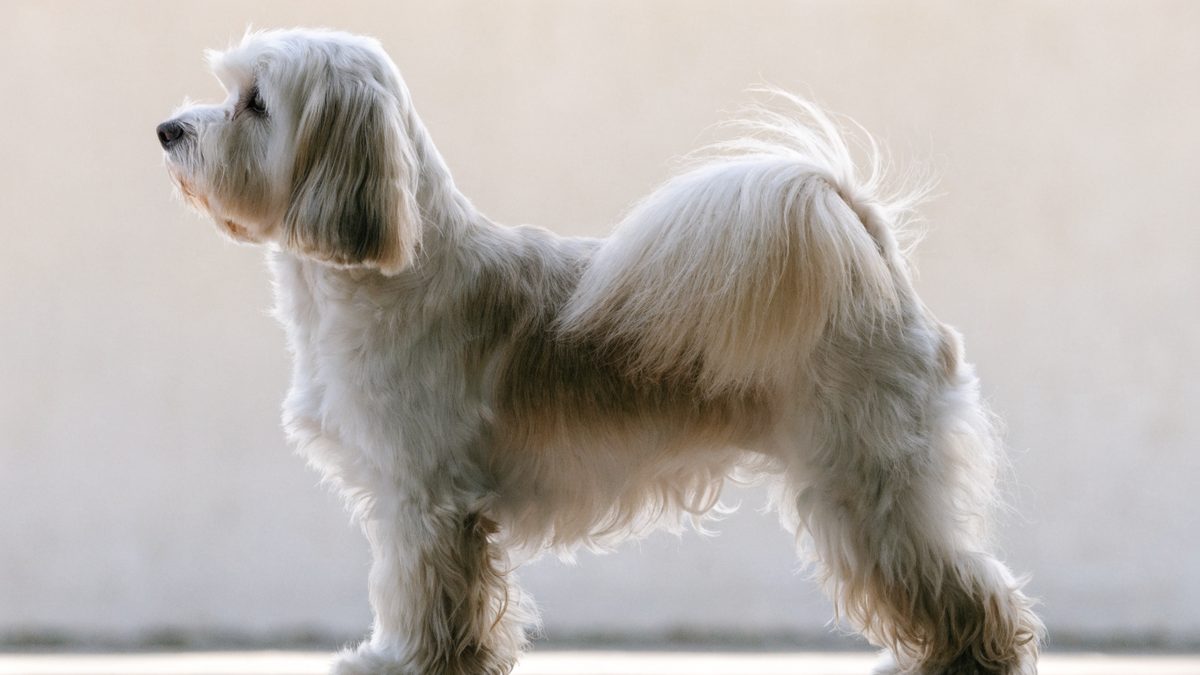
The Havanese is the national dog of Cuba and the only breed native to the island, a toy companion that stands 23 to 27 cm at the withers under the FCI standard with a tolerance of 21 to 29 cm. It is slightly longer than it is tall, it carries a plumed tail arched forward over the back, and it moves with a springy gait that the American Kennel Club calls essential to type.
Start with the size, because that is where the Indian listings go wrong first. The AKC standard sets an ideal height of 9 to 10.5 inches with an acceptable range of 8.5 to 11.5 inches, and it disqualifies any adult outside that range. The Royal Kennel Club asks for 23 to 28 cm. The FCI, whose standards govern registration through the Kennel Club of India, asks for 23 to 27 cm. Three registries, three slightly different ceilings, and the spread matters more here than it looks, for a reason the health section explains.
No registry publishes a weight for this breed
Not one of the three registries gives a weight. The AKC standard describes the Havanese as moderately boned and says it should never appear coarse or fragile, and then stops. The FCI standard gives height and tolerance only. The Royal Kennel Club gives an ideal height and nothing else. Every kilogram figure circulating on Indian sales pages therefore comes from somewhere other than a breed standard.
| Source | Height | Weight | What it governs |
|---|---|---|---|
| FCI Standard No 250 | 23 to 27 cm, tolerance 21 to 29 cm | Not published | KCI registration in India |
| AKC breed standard | 8.5 to 11.5 inches, ideal 9 to 10.5 | Not published | AKC shows in the United States |
| Royal Kennel Club | Ideal 23 to 28 cm | Not published | UK shows |
| AKC breed page | 8.5 to 11.5 inches | 7 to 13 pounds | Buyer guidance, not the standard |
| Purina India | 23 to 28 cm | 3 to 6 kg | Nothing. Editorial |
| Asia Pets | 23 to 27 cm | 3 to 6 kg | Nothing. Listing page |
| Mr n Mrs Pet | 8.5 to 11.5 inches | 4 to 7.3 kg | Nothing. Sales page |
Read the last row against the second. Mr n Mrs Pet quotes the AKC height verbatim and then adds a weight the AKC standard does not contain, topping out at 7.3 kg, which is above every editorial figure published anywhere else American Kennel Club. Ask a seller for the source of a weight range and you will usually find there is not one.
The coat, and the disagreement that decides everything else
The Havanese coat is long, soft and wavy, and the three registries do not agree on whether it has an undercoat. That is not trivia. It is the single fact that decides how this dog is clipped, brushed and cooled in an Indian summer.
| Registry | Exact position on the undercoat | Coat length |
|---|---|---|
| AKC | A long untrimmed double coat, soft and light in texture in both outer and undercoat. A single, flat, frizzy or curly coat is faulted | Long, abundant and wavy, standing slightly off the body |
| Royal Kennel Club | Soft, silky, wavy or slightly curled, full coated with an undercoat | Profusely coated |
| FCI | Undercoat woolly and not very developed, often totally absent | Topcoat 12 to 18 cm in an adult dog |
The FCI is the registry that matters most in India, because the Kennel Club of India is a full FCI member based in Chennai and registers to FCI standards. Its position is that a Havanese may have almost no undercoat at all. The AKC's position is the opposite, that both coats must be present and soft. A real Indian Havanese sits somewhere on that spectrum, and where it sits changes how much insulation it is carrying in May.
Note the other number in that table. 12 to 18 cm of topcoat on an adult dog is the only published coat-length figure for this breed anywhere, and it comes from the FCI. No Indian page prints it. It is the figure that turns grooming from an adjective into an arithmetic problem.
Mr n Mrs Pet, which holds position one for this query, tells buyers that Havanese have dense, curly coats. The AKC standard faults a curly coat and disqualifies a coarse, wiry one. A Havanese with a genuinely curly coat is a Havanese being described from a Bichon Frise template.
Colour, and the white-dog myth
All colours are correct. The AKC standard states that all colours and marking patterns are permissible and of equal merit, and that the skin may be any colour. The Royal Kennel Club permits any colour or combination except merle, which it calls unacceptable. The FCI goes further and says the breed is rarely completely pure white, listing fawn, black, havana-brown, tobacco and reddish-brown as the usual shades.
So when a Mumbai listing page describes Havanese as little white dogs, it is describing a colour the FCI calls rare in the breed. Indian sellers also price colour, listing mahogany and tobacco as premium varieties. No registry supports a colour premium, because every registry ranks the colours equally.
The corded option nobody in India mentions
The Havanese may be shown corded. The AKC standard permits it and describes adult corded dogs as completely covered in tassel-like cords that develop over time from naturally separating wavy sections. A corded coat is a legitimate, standard-compliant Havanese presentation, and it is a genuinely bad idea in Indian humidity, because a cord holds water against the skin for hours after a bath or a monsoon walk. Bonbeno mentions it so you can recognise it and then rule it out, not as a recommendation.
History, and why the gene pool is narrow
The Havanese came from the western Mediterranean, not from Havana. The FCI records that the breed developed along the Spanish and Italian coasts and was carried to Cuba early by ocean-going Italian captains, and that the tobacco colour, not the city, is what produced the Havana legend. Cuban political events then wiped out the old bloodlines on the island, and the breed survived because a few dogs were taken out of Cuba and their descendants bred on in the United States.
That rescue was very small. When American breeders took the breed up in the 1970s, the United States gene pool was 11 dogs. The AKC recognised the Havanese only in 1996. Nearly every Havanese alive today, including every imported dog now in India, traces to that bottleneck, which is the background to the inherited conditions covered further down this page.
Popular abroad, genuinely rare in India
The Havanese is the 25th most popular of 210 AKC breeds in the United States. In India it is not a market at all. On the day Bonbeno pulled this search, India's largest puppy marketplace listed four Havanese nationwide, against 650 Shih Tzu, 549 Siberian Husky and 487 Golden Retriever on the same site. A Mumbai page ranking on page one for the price query listed none.
That scarcity is the most important commercial fact on this page. It is why the price section below reads the way it does, and why the honest answer to how much a Havanese costs in India starts with who is doing the counting.
Havanese price in India
Havanese price in India is published between Rs 30,000 and Rs 2,50,000 in 2026, and every one of those figures comes from a page whose business is selling you the puppy. There is no editorial survey, no registry price series and no independent Indian source for this breed. Bonbeno prints the range as a spread nobody has audited rather than as a market rate, because on a breed this rare that distinction is the whole answer.
Four Indian pages carry a number. Put them side by side and they do not overlap.
| Source | Published range | What the page also is |
|---|---|---|
| Asia Pets | Rs 30,000 to Rs 70,000 | Breed guide attached to a puppy marketplace |
| Breed n Breeder, Mumbai | Rs 35,000 to Rs 75,000 or more | City sales page with zero puppies listed on it |
| Mr n Mrs Pet | Rs 70,000 to Rs 2,50,000+ | Marketplace with four live Havanese listings in the country |
| Puppiezo | No Havanese price on the page | Seller ranking for a price query, showing other breeds' prices instead |
| Awsum Havanese | No price published | Licensed Indian breeder, position two, prices on request |
Asia Pets tops out at exactly the rupee where Mr n Mrs Pet begins Mr n Mrs Pet, Havanese Puppies For Sale…. Rs 70,000 is one page's ceiling for the whole breed and the other page's absolute floor. There is no rupee value they agree on. Across the full set the spread runs 8.3 times from Rs 30,000 to Rs 2,50,000, and the two lower sources between them list not one actual puppy for sale.
On a breed with 650 listings, disagreeing sources still bracket a real market. On a breed with four listings nationwide, the published range is closer to four opinions than to a price. Bonbeno reports it and labels it. Nobody, including Bonbeno, can tell you what a Havanese actually trades for in India, because no independent record of Indian Havanese sales exists.
The three tiers, and where the money leaks
One Indian source publishes a tiered puppy price breakdown, so read it as one broker's list rather than as a market survey.
| Tier | Published range | What the seller says you get |
|---|---|---|
| Basic quality | Rs 70,000 to Rs 1,50,000 | Family pet, no show or breeding rights |
| KCI registered | Rs 1,50,000 to Rs 2,00,000 | Kennel Club of India certificate, verified lineage, vaccinations, vet health check |
| Champion bloodline | Rs 2,00,000 to Rs 2,50,000 | Imported or award-winning parents |
The middle row costs Rs 80,000 more than the row above it at the floor. Now price the paperwork. The Kennel Club of India tariff effective 1 April 2024 charges Rs 750 to register a puppy from a litter within 60 days of birth and Rs 500 to transfer ownership of a registered dog within 12 months. That is Rs 1,250 of registry fees being sold for Rs 80,000, a multiple of about 64.
Registration is still worth having. A KCI certificate documents parentage and lets you trace a pedigree, and on a breed whose global gene pool started from 11 dogs, traceable parentage is genuinely useful. What it is not is a health certificate. It says nothing about whether either parent was screened for patellas, hips or eyes, which are the three tests the breed's own parent club requires. Pay for the paper knowingly, then ask separately for the screening results.
Imported parents, and the fees that actually apply
Because almost no Havanese breeding stock exists in India, the champion tier is effectively an import story. The KCI tariff prices that route too. Registering an imported dog costs Rs 2,500, and registering a puppy from an imported whelp within 60 days costs Rs 1,500 per puppy, rising to Rs 3,000 if the paperwork is filed between 121 and 180 days.
| KCI service | Actual fee | Sold to you as |
|---|---|---|
| Litter registration per puppy within 60 days | Rs 750 | Part of an Rs 80,000 tier jump |
| Transfer of ownership within 12 months | Rs 500 | Included in the same jump |
| Registration of an imported dog | Rs 2,500 | Champion bloodline premium |
| Litter registration of an imported whelp within 60 days | Rs 1,500 | Champion bloodline premium |
| Certified pedigree, four generations | Rs 1,000 | Proof of lineage |
Ask for the certificate number and the four-generation pedigree in writing before payment. Both are cheap to buy and impossible to fake convincingly, and a seller who will not produce them is selling you a story.
The city table that is not a city table
One source publishes city prices for the Havanese. It gives eight cities and almost one number.
| City | Published range |
|---|---|
| Hyderabad | Rs 75,000 to Rs 2,50,000 |
| Bengaluru | Rs 75,000 to Rs 2,50,000 |
| Chennai | Rs 75,000 to Rs 2,50,000 |
| Delhi | Rs 70,000 to Rs 2,50,000 |
| Mumbai | Rs 70,000 to Rs 2,50,000 |
| Pune | Rs 70,000 to Rs 2,50,000 |
| Jaipur | Rs 70,000 to Rs 2,50,000 |
| Lucknow | Rs 70,000 to Rs 2,50,000 |
Eight cities, two floor values Rs 5,000 apart and one identical ceiling. That is a spread of 1.07 times between the dearest and cheapest city, which is not what a real market looks like. Compare it with the same publisher's Mumbai competitor, which puts the city at Rs 35,000 to Rs 75,000 and describes a typical price difference of Rs 7,000 to Rs 14,000 between puppies. The two Mumbai figures do not overlap either. Treat the city table as a template that a city name was dropped into.
What actually moves the price, and what does not
- Import cost and scarcity. Four national listings means most Havanese sold in India arrive as imports or from a handful of litters, and that is the real driver.
- Registration status. A KCI-registered puppy is quoted Rs 80,000 above a basic-quality puppy, against Rs 1,250 of registry fees Kennel Club of India.
- Parent screening. Hips, patellas and an annual eye exam are the three tests the parent club requires for a health clearance number, and a screened litter genuinely costs more to produce.
- Coat colour, which should move nothing. Sellers price mahogany and tobacco as premium and white as classic, while every registry ranks all colours equally.
- Show or breeding rights, which most buyers will never use. The champion tier is priced for breeders, and a pet home gains nothing from it.
There is no published count of Havanese registered with the Kennel Club of India, no Indian breed club, and no Indian litter data. Bonbeno looked and could not find one. Any page that tells you the average Indian Havanese price with confidence is quoting a seller, and any page that gives you a national average across eight identical cities has not counted anything.
Monthly cost of a Havanese in India, with the clip priced in
Budget Rs 3,340 to Rs 9,700 a month to keep a Havanese in an Indian metro, and expect the single largest line to be professional grooming rather than food. That is a wider band than the Rs 3,000 to Rs 7,000 the top-ranking seller quotes, and the difference is entirely the coat.
Work the grooming line first, because it is the one every Indian page leaves out. Published Indian salon rates for a full groom on a long coat run Rs 1,200 to Rs 2,500 in Hyderabad, Rs 1,400 to Rs 2,500 in Pune, Rs 1,500 to Rs 3,000 in Bengaluru and Rs 1,800 to Rs 3,500 in Mumbai. The same source puts long-coated breeds on a four to six week schedule, which is 8.7 to 13 sessions in a year.
Multiply it out. Grooming alone lands between Rs 10,440 and Rs 45,500 a year, or Rs 870 to Rs 3,790 a month, before a single kilogram of food. At the top of that range the salon costs more than everything else combined.
| Line | Low | High | Source and basis |
|---|---|---|---|
| Professional grooming, every 4 to 6 weeks | Rs 870 | Rs 3,790 | Published city salon rates for a long-coat full groom |
| Home coat kit, combs, slicker, detangler, dryer time | Rs 200 | Rs 500 | Consumable share of a kit replaced yearly |
| Food for a 3 to 6 kg dog | Rs 1,200 | Rs 2,800 | Scaled down from the Rs 3,000 to Rs 7,000 published for a medium dog |
| Preventive veterinary care, vaccination, deworming, tick and flea | Rs 420 | Rs 670 | Rs 5,000 to Rs 8,000 a year, published Indian figure |
| Routine vet consultations | Rs 100 | Rs 340 | Rs 300 to Rs 1,000 per consult, two to four visits a year |
| Ear care and skin maintenance | Rs 250 | Rs 600 | Breed-specific. See the health section on sebaceous adenitis |
| Contingency for a dental, an eye check or a skin flare | Rs 300 | Rs 1,000 | Emergency and chronic care in India runs Rs 15,000 to Rs 1,00,000 per episode |
| Total | Rs 3,340 | Rs 9,700 | Monthly, excluding boarding and training |
Why the seller's number is low
Mr n Mrs Pet puts monthly maintenance at Rs 3,000 to Rs 7,000 and says Havanese typically cost less to maintain than Standard ones. There is no Standard Havanese. That sentence is copy left over from a Poodle page, on the same page that also thanks its verified Corgi breeders for supplying Havanese puppies. When the maintenance estimate on a page was written for a different breed, it is not an estimate.
The floor of that seller range is roughly right for a dog whose owner combs daily and clips at home. The ceiling is wrong for a Mumbai owner on a six-weekly salon schedule, which is the normal case.
One-time costs before the first month
- Setup kit, Rs 8,000 to Rs 12,000. Crate, bed, bowls, leash, toys and the first vaccinations, on published Indian figures.
- Grooming tools, Rs 2,500 to Rs 6,000. A pin brush, a metal greyhound comb, a slicker and a dryer. Buy the comb first, because it is the tool that finds mats a brush glides over.
- Basic obedience course, Rs 5,000 to Rs 25,000. Optional, and worth it for a breed this trainable.
- KCI paperwork, Rs 1,250 to Rs 2,500. Litter registration and transfer, or import registration if the dog came from abroad.
- Screening you should ask the breeder to have paid for already. Hips, patellas and an eye exam by an ophthalmologist.
The lifetime number, and why it is bigger here than for most toys
A Havanese in India is a 14 to 15 year commitment, not a 12 year one. The largest published UK dataset puts the breed's median life expectancy at 14.5 years. Run the middle of the monthly table across 14.5 years and recurring costs alone come to roughly Rs 11.3 lakh, which on the low published purchase price is about 38 times what you paid for the dog.
Learn to comb the dog properly and the salon bill halves, because most of what you pay a groomer for on a long coat is de-matting time rather than the clip itself. A dog that arrives combed out gets a faster, cheaper, gentler groom. A dog that arrives felted gets shaved, and you pay for the privilege.
Havanese in the Indian climate, heat, humidity and monsoon
Bonbeno rates the Havanese 3 of 5 for heat tolerance in India. A 3 to 6 kg body sheds heat efficiently and the breed is not on any published high-risk list for heatstroke, but the registries cannot agree whether the coat carries an insulating undercoat, and in a humid Indian city the coat causes skin trouble long before it causes a heat emergency Hall EJ, Carter AJ.
Take the heatstroke question first, because it is the one buyers ask and the answer is more reassuring than the coat suggests. The largest published study of heat-related illness followed 905,543 UK dogs and found dogs over 50 kg carried 3.42 times the odds of heat-related illness compared with dogs under 10 kg, with the smallest breeds showing the lowest odds of all. A Havanese sits at the protected end of that scale by body mass.
Purina India names the breeds it considers at particular risk, and they are short-faced dogs such as Boxers, Bulldogs, Pugs and Pekingese, plus heavy-coated breeds such as Huskies and Newfoundlands. The Havanese is neither. It has a full muzzle that the AKC standard describes as broad and rectangular, so it can pant properly, which is the entire cooling system a dog has.
So why 3 and not 4
Because the coat is an open question and the humidity is not. The FCI standard says the undercoat is woolly, not very developed and often totally absent, and puts adult topcoat at 12 to 18 cm. The AKC standard requires a soft light undercoat and faults a single coat. The Royal Kennel Club asks for a full coat with an undercoat. You cannot know from the paperwork which one you have bought, and an Indian buyer importing from an AKC-registered line is more likely to get the heavier version.
Then add the part no registry measures. A long coat over a dog living through an Indian monsoon holds moisture against the skin for hours at a time, and this is a breed that already carries a documented predisposition to a disease of its own oil glands. The Indian problem with a Havanese is dermatological before it is thermal.
| Where you live | Main risk | What changes in practice |
|---|---|---|
| Chennai, Mumbai, Kochi, Kolkata, coastal humid | Skin and ear disease, matting | Shortest clip of any zone, ear checks weekly, dry the dog fully after every wash |
| Delhi, Jaipur, Ahmedabad, dry extreme heat | May and June daytime exposure | Walk before sunrise and after sunset, indoors between 10am and 5pm, water always available |
| Bengaluru, Pune, Hyderabad, moderate | Least difficult zone in India for this breed | Standard four to six week clip, normal routine most of the year |
| Guwahati, Bhubaneswar, high humidity plus monsoon | Fungal and bacterial skin infection, tick load | Shortest clip, tick prevention year round, towel and dryer after every walk |
| Shimla, Dehradun, Gangtok, hill stations | None thermally, the coat is an asset here | Full coat is workable if you will comb it daily |
Monsoon is the dangerous season, not summer
The tick-borne disease burden in India peaks around the monsoon, and a 12 to 18 cm coat is the best tick hide a parasite could ask for. A 2026 study of 120 clinically affected dogs in southern India found Babesia species in 66.7 percent, with co-infection of Babesia gibsoni and Babesia vogeli in 76.3 percent of the Babesia-positive cases, and a peak in cases during the pre-monsoon months of March to May. Tick infestation was frequently observed among those cases.
A hospital-based study in Punjab tested 82 clinically suspected dogs and found Ehrlichia canis DNA in 32.9 percent and Anaplasma platys DNA in 57.3 percent, with both pathogens present together in 23.2 percent. The authors are explicit that these are clinically suspected animals and not a population prevalence, and Bonbeno repeats that caveat rather than quoting the number bare.
On a short-coated dog you spot an attached tick. On a Havanese in full coat you do not, and by the time the dog is febrile and off its food the tick has been feeding for days. Run your fingers through to the skin along the neck, behind the ears, in the armpits and between the toes after every outdoor walk in the monsoon, and keep a year-round preventive on the dog rather than a seasonal one.
Never shave a Havanese to the skin
Clip short, do not shave bare. The coat is a barrier against sun and insects as well as an insulator, and the AKC standard notes that the skin under it may be any colour, including pale skin under a white or cream coat. A 6 mm to 12 mm summer clip removes the heat load and the matting risk while leaving a layer of protection. A bare shave in a Chennai May gives you a sunburned, insect-bitten dog with an itch you will then treat as an allergy.
The heat numbers worth memorising
- 40.5 degrees C body temperature or above is a heatstroke emergency in a dog.
- Stop active cooling at 39.4 degrees C, because over-cooling is its own problem.
- Cool with cool water on skin, belly and inner legs, plus a fan. Do not use ice baths or ice water.
- A car at 26 degrees C outside reaches 32 degrees C inside in five minutes and 43 degrees C in 25 minutes. In an Indian April that maths starts far higher.
- Go to the vet even if the dog looks recovered. The event fatality rate for heat-related illness in the UK study was 14.18 percent.
The practical Indian routine for this breed is unglamorous. Walk early and late, keep the dog indoors through the afternoon, keep water in front of it, clip for the season rather than for photographs, and treat the skin as the thing that will actually go wrong.
Havanese temperament and who should not buy one
The Havanese is friendly, playful, alert and intelligent with a sweet, non-quarrelsome disposition, and the AKC standard faults both aggression and shyness. The FCI adds that it is exceptionally bright, affectionate, a charmer, a bit of a clown, and that it loves children and plays endlessly with them. It is also, in the FCI's own words, easy to train as an alarm dog, which is the sentence Indian apartment buyers should read twice.
Three registries describe this dog in almost identical language. The Royal Kennel Club calls it lively, affectionate and intelligent, friendly and outgoing. An Indian listing site rates it 5 out of 5 for family, children, other pets and strangers alike. On temperament, the sources agree for once, and they agree that this is a cheerful companion animal with no guarding function.
The alarm dog problem in an Indian apartment
Alert and vocal are the same trait seen from two sides. The FCI standard describes a dog easy to train as an alarm dog. The same Indian listing site that scores the breed 5 for friendliness lists can be barky among its five considerations. In a Cuban courtyard that is charm. In a Mumbai flat sharing a wall, with a doorbell that rings for deliveries, domestic help, building staff and the milkman, it is a complaint from your neighbour.
This is manageable and it is not automatic. A Havanese that is taught what the doorbell means, and that gets paid for going to a mat instead of the door, becomes quiet at the door within weeks. A Havanese that is shouted at for barking learns that the door is where the shouting happens.
The Velcro trait, and why it matters more in India
The Havanese is a companion breed in the literal sense. Indian listing sites name separation anxiety and describe it as a Velcro dog in the same breath as recommending it for apartments. The AKC notes the breed is happiest when someone is with it.
That collides with a specific Indian household pattern. A dual-income couple in Gurugram or Whitefield who leave at 8am and return at 8pm are buying a dog that is designed to be with people and will spend twelve hours alone. The dog will bark, chew, house-soil, or all three, and the household will conclude the puppy is badly behaved. It is not. It is a breed being used against its design.
| Good fit | Poor fit |
|---|---|
| Someone at home most of the day, including remote workers and retired owners | A household empty ten hours a day with nobody dropping in |
| A joint family or a home with staff, where the dog is rarely alone | A first dog for someone who wants a low-maintenance pet |
| An apartment owner who will do daily coat work | A buyer who thinks small dog means small effort |
| A family with children old enough to be gentle with a 3 to 6 kg dog | A home with toddlers who are not yet supervised around animals |
| An owner who wants a dog to train, because this breed enjoys it | Anyone wanting a guard dog. The standard faults aggression outright |
| A hill-station or moderate-climate household happy to comb a full coat | An owner unwilling to budget Rs 10,000 to Rs 45,000 a year for grooming |
With children, with other pets, with your building
The FCI says the Havanese loves children and plays endlessly with them, and Bonbeno has no reason to soften that. The caution runs the other way. A 3 to 6 kg dog is easy for a small child to injure by falling on it or picking it up wrong, and the AKC standard describes moderate bone rather than substance Purina India, Havanese. Supervise the child, not the dog.
With other dogs and with cats the breed is genuinely social. With building security, delivery riders and strangers on the lift, expect an outgoing dog that wants to greet everyone, which is a different management problem from a suspicious one.
Trainability. The FCI calls the Havanese exceptionally bright, the AKC pictures it competing in agility, and Indian sellers list quick learners as a selling point that is, for once, accurate American Kennel Club Mr n Mrs Pet, Havanese Puppies For Sale…. If you want a small dog you can teach genuinely useful behaviour to in an Indian flat, this breed will meet you more than halfway.
How to train a Havanese, and the two things it resists
To train a Havanese, pay it in food and keep sessions short, because the FCI calls the breed exceptionally bright and easy to train and the AKC shows it competing in agility American Kennel Club. Two things resist that ease. House-training takes longer than owners expect, and being left alone has to be taught deliberately rather than assumed.
Start with the training nobody lists, because on this breed it outranks sit and stay. Teach the puppy to lie still and be handled, on a table, on its side, with its feet and ears and armpits touched, before you ever need to. You are about to comb this dog most days for 14 years and clip it eight to thirteen times a year ThePetNest, Ultimate Guide to Pet Grooming…. A Havanese that has been conditioned to grooming from week nine is a cheap, calm dog to maintain. One that has not is a dog that gets sedated at the salon at eight years old.
House-training, the honest Indian timeline
Indian listing sites name housetraining challenges among the breed's considerations, and they are right. Small dogs have small bladders, Indian apartments have no garden, and the monsoon removes the outdoors for weeks at a time. Plan for four to six months to reliable, not four to six weeks.
- Pick one surface and never change it. A balcony tray, a puppy pad in a fixed corner, or outdoors. Switching between them during the monsoon is what causes most Indian house-training failures.
- Take the puppy out after every sleep, meal, and play session, which at ten weeks means roughly every 90 minutes in waking hours.
- Pay the correct choice within two seconds, outdoors, with food. Praise indoors after the fact teaches nothing.
- Clean accidents with an enzymatic cleaner, because a phenyl-scented floor still smells like a toilet to the dog.
- Never punish an accident. A punished toy-breed puppy learns to hide the act, which is how owners end up finding it behind the sofa.
Alone-time, taught in minutes not hours
The breed is happiest with company, so absence has to be built up rather than imposed Asia Pets, Havanese, Breed Information. Begin at ten seconds behind a closed door on day one and add time in small increments, always returning before the dog gets anxious rather than after. Feed the dog's most interesting meal of the day only when you leave. A frozen stuffed toy takes 20 minutes to empty, which covers the window in which most separation distress starts.
The doorbell, and the alarm bark
Because the FCI describes a dog easy to train as an alarm dog, the barking is trainable in both directions. Ring your own bell twenty times a day and pay the dog for going to a mat. Within a fortnight the bell predicts food on the mat rather than a person at the door. Do this in the first six months and you will never have the conversation with your resident welfare association.
Socialisation, in an Indian context
Socialise the puppy against the things it will actually meet here. Autorickshaw horns, lift doors, marble floors, monsoon thunder, cows, street dogs behind a gate, the pressure cooker, festival firecrackers, and the sound of a hair dryer, which it will hear after every bath for the rest of its life. Between eight and sixteen weeks, one new calm experience a day is worth more than an hour of obedience drill.
The AKC is unusually direct about this breed. Never over-exercise a Havanese of any age, and stop if the dog is panting and struggling to keep up. On a breed where nearly every dog carries the chondrodystrophy retrogene, forced distance work on a growing puppy is a bad idea for the front legs specifically.
What good looks like at each stage
| Age | What should be in place |
|---|---|
| 8 to 12 weeks | Name response, crate is a good place, tolerates a comb on a lap, one fixed toilet surface |
| 3 to 4 months | Sit and recall in a quiet room, five minutes alone without distress, has met 40 new things calmly |
| 4 to 6 months | Walks on a harness without panic, mat behaviour on the doorbell, stands still for a full groom |
| 6 to 9 months | Reliable indoors on toileting, 30 to 45 minutes alone, recall in the corridor and lift lobby |
| 9 to 18 months | Adult manners, tolerates the salon dryer, can be handled by a vet for an eye exam without a fight |
How much exercise a Havanese actually needs
A Havanese needs about 30 minutes of walking a day plus indoor play, and Purina India puts the figure at half an hour. The AKC calls the requirement moderate and says a brisk daily walk, garden play, or even romping inside the home can be enough. In an Indian summer that half hour has to be split and moved to the ends of the day.
Split it into two walks of 15 to 20 minutes, one before 7am and one after 7pm from March to June in most of the country. The dog is small enough that indoor movement genuinely counts, which is the practical advantage of this breed over a retriever in a two-bedroom flat.
| Slot | Cool season | Peak summer |
|---|---|---|
| Morning | 20 to 25 minute walk | 15 minute walk before sunrise |
| Midday | 5 minutes of trick work | Indoors. Scent game or trick work on a cool floor |
| Evening | 20 minute walk plus play | 15 to 20 minute walk after dark |
| Coat check | Comb-through, 5 to 10 minutes | Comb-through plus a tick check after every outing |
What indoor exercise looks like for a bright toy breed
- Scatter feeding. Throw the dog's kibble across a rug and let it hunt. Ten minutes of sniffing tires a dog more than ten minutes of walking.
- Trick training in five-minute blocks. Spin, weave through legs, paw targets. The breed enjoys this and it costs nothing.
- Food puzzles and frozen stuffed toys. Doubles as the alone-time tool from the training section.
- Indoor recall between two people. Two rooms, two handlers, one dog running back and forth for food.
- Low agility on a rug. Step-overs and tunnels, never jumps at height on a chondrodystrophic front end.
What happens without it
An under-exercised Havanese barks, chews and follows you into the bathroom. The second-order problem is bodyweight, and bodyweight in this breed points both ways. The largest English primary-care study of patellar luxation covered 210,824 dogs, found an overall prevalence of 1.30 percent, and reported that dogs whose bodyweight sat below the mean for their breed and sex carried 1.4 times the odds of diagnosis. Overweight is bad for a small dog's joints and underweight is not protective either. Feed to body condition, which the feeding section sets out.
The other thing that goes wrong is the coat. A dog that never leaves the sofa still grows 12 to 18 cm of topcoat, and a sedentary dog is a dog whose owner combs it less often because it looks tidy sitting still. Movement and matting are connected. Friction points at the armpits, behind the ears and under the harness are exactly where mats start.
Use a well-fitted harness on a toy breed rather than a neck collar, and check that it does not rub a mat into the coat at the armpit. Two-thirds of the de-matting a groomer does on this breed is in places where equipment sat against hair.
Havanese grooming in Indian humidity, and the honest answer on hypoallergenic
To groom a Havanese in India, comb through to the skin every day and book a full clip every four to six weeks, because the FCI standard puts adult topcoat at 12 to 18 cm and Purina India says the breed requires grooming daily Purina India, Havanese. That is the largest recurring cost of owning this dog here, at Rs 10,440 to Rs 45,500 a year on published Indian salon rates, and not one page ranking for the Indian price query prices it.
Understand the coat before you buy a tool for it. The AKC standard describes a double coat that is soft and light in both outer and undercoat, long, abundant and wavy, standing slightly off the body. The Royal Kennel Club describes a soft silky coat, wavy or slightly curled, full coated with an undercoat. The FCI says the undercoat is woolly, not very developed and often totally absent.
That disagreement changes your daily job. A coat with a real undercoat felts at the base, close to the skin, where a brush passes straight over the top and leaves a mat you cannot see. A coat without one tangles at the ends, which is easier. Assume the harder version and work to the skin, and you will be right either way.
The show standard says do not groom. India needs the opposite
Read the FCI wording carefully. All grooming, the usage of scissors to even out the length of the coat and all trimming is forbidden, and a groomed coat is listed as a severe fault. The AKC permits no trimming or sculpting beyond the feet and a minimal tidy of the anal and genital area, to be so severely penalised as to preclude placement.
Those rules describe a dog in a show ring in a temperate country. The AKC's own breed page then says pet owners often choose to have the coat clipped to a short trim to reduce grooming time. In an Indian metro that is not a preference, it is the default. A clipped Havanese is not a lesser Havanese. It is a pet Havanese, and it is the right call in Chennai. What you give up is the show ring, which almost no Indian buyer of this breed will ever enter.
| Clip | Length left | Best for | Comb frequency |
|---|---|---|---|
| Full coat, show length | 12 to 18 cm | Hill stations and show homes only | Daily, to the skin, 15 to 20 minutes |
| Teddy or puppy clip | 25 to 40 mm | Bengaluru, Pune, Hyderabad, cooler months anywhere | Every other day, 5 to 10 minutes |
| Short pet clip | 12 to 20 mm | Mumbai, Chennai, Kolkata, Kochi year round | Twice a week, 5 minutes |
| Summer clip | 6 to 12 mm | April to June, and after any severe matting | Twice a week plus a skin check |
| Shaved to skin | Under 3 mm | Nobody. Sunburn and insect exposure | Not recommended |
| Corded | Full cords | Not in India. Cords hold water at the skin for hours | Separating cords, hours per month |
The daily routine that actually prevents matting
- Mist lightly first. Combing a bone-dry coat snaps hair and hurts. A light leave-in spray costs almost nothing and halves the breakage.
- Line-comb, do not surface-brush. Part the coat, comb the exposed layer from the skin outward, drop the part a centimetre and repeat. A slicker over the top of a matted coat only tidies the roof.
- Work the six friction points every time. Behind the ears, under the collar or harness, the armpits, the groin, the tail base and between the toes. Mats begin at all six and nowhere else, in that order.
- Finish with a metal comb. If the comb does not run from skin to tip without catching, the section is not done. A brush will lie to you and a comb will not.
- Clean the eye corners daily. The AKC recommends this to prevent tear-staining of the face furnishings.
Bathing and drying, the part Indian humidity punishes
Bathe every two to four weeks in an Indian city, more often than a temperate-climate guide will tell you, because dust, sweat from your floor and monsoon damp all sit in this coat. The rule that matters is not frequency, it is drying. Dry the dog completely, to the skin, with a dryer on a cool setting. A Havanese towel-dried and left to air-dry in Mumbai in July is a warm, damp, enclosed environment against the skin for several hours, which is how yeast and bacterial skin infections start.
Never comb a wet coat and never let it dry into a mat. Wet hair stretches, dries tight, and welds. Brush during the dry, not after it.
Ears, and the sign that is not just a bad coat
The Havanese ear is dropped with a distinct fold and covered in long hair, which means very little airflow reaches the canal Federation Cynologique Internationale. Check inside weekly and keep the hair around the opening short.
Then learn one word, because it is the highest-value thing on this page for a long-coated dog in a humid country. A follicular cast is a tight collar of scale wrapped around a tuft of hair, close to the skin, that comes away with the hair rather than flaking off. In the largest published study of sebaceous adenitis in Havanese, follicular casts were present in 92 percent of affected dogs, the trunk, head and ears were commonly involved, and 67 percent of cases had involvement of the ear flap or the ear canal. In India that presentation is very easily read as a monsoon fungal problem and treated with a medicated shampoo for a year while the sebaceous glands are destroyed.
Scaling that clings to the hair shaft, dull greasy coat, thinning over the back and ears, and hair that comes out in tufts with a cuff of scale on it are the signs. Photograph it, do not shave the area first, and ask your veterinarian whether a skin biopsy is warranted. This is diagnosed on histopathology, not on appearance.
Hypoallergenic, and why every Indian page has it wrong
No dog breed is hypoallergenic, and that includes this one. Mr n Mrs Pet's Havanese specification table lists Hypoallergenic: Yes. Asia Pets answers its own FAQ with yes, their silky coat sheds minimally and produces less dander. Purina India says the breed's hypoallergenic coat does not shed.
The measured evidence points the other way. A study comparing Can f 1, the major dog allergen, in hair and coat samples and in the homes of so-called hypoallergenic breeds against control breeds found higher allergen concentrations in the hair and coat of the hypoallergenic group, no difference in airborne levels between breeds, and concluded there is no evidence for classifying any dog breed as hypoallergenic. Low-shedding is a real and useful property of this coat. Low-allergen is not the same claim, and the two get sold as one.
What a groomer should and should not do
- Ask for the clip length in millimetres, not by name. Teddy means different things in different Indian salons.
- Refuse a dematting blade on a felted coat. If the coat is felted, the humane answer is a short clip and a fresh start, not an hour of pulling.
- Ask them to leave 12 mm minimum. Bare skin under an Indian sun is worse than a warm dog.
- Check the ears and pads are trimmed, which the AKC standard itself permits for the feet.
- Book the same groomer. Continuity matters on a breed that needs 100-plus lifetime sessions.
Havanese health issues, screening and life expectancy
The Havanese lives a median of 14.5 years, which makes it the joint fifth longest-lived of 155 breeds in the largest published UK dataset, and it carries the highest rate of congenital liver shunt of any breed in the largest published study of that disease Tobias KM, Rohrbach BW. Association…. Both of those facts are missing from every Indian page ranking for this breed. This section is general information for Indian owners, not a diagnosis, so consult your nearby veterinarian before acting on it.
Life expectancy, the measured number
Indian pages print 13 to 16 years, 14 to 16 years and 12 to 16 years for this breed Asia Pets, Havanese, Breed Information Puppiezo, Havanese Puppies For Sale…. None of them says where the figure came from. The largest published dataset, covering 155 breeds and the crossbred group, gives a median life expectancy of 14.5 years for the Havanese from 381 dogs, with a lower 95 percent confidence bound of 14.1 and an upper bound that could not be estimated McMillan KM, Bielby J, Williams CL.
| Breed | Median years | Dogs in sample |
|---|---|---|
| Havanese | 14.5 | 381 |
| Lhasa Apso | 14.0 | 7,216 |
| Poodle | 14.0 | 6,427 |
| Yorkshire Terrier | 13.3 | 14,579 |
| Maltese | 13.1 | 2,021 |
| Shih Tzu | 12.8 | 12,007 |
| Bichon Frise | 12.5 | 5,902 |
| Pomeranian | 12.2 | 2,941 |
| Crossbreed | 12.0 | 111,053 |
The Havanese outlives the Bichon Frise by two full years and the crossbred group by two and a half in the same dataset, measured the same way. That is a genuinely strong result for a purebred toy dog. Read the third column before you celebrate. The Havanese estimate rests on 381 dogs against 5,902 for the Bichon and 111,053 for crossbreds, and only 56 of the Havanese in the sample had died, which is why the upper confidence bound is not estimable. It is the best number available and it is a thinner number than the ones around it.
Liver shunt, the single most important thing on this page
A portosystemic shunt is a blood vessel that carries blood past the liver instead of through it, so toxins the liver should clear reach the brain. Of 2,400 dogs with congenital portosystemic shunts recorded in the Veterinary Medical Database over 22.2 years, the Havanese had the greatest proportion of diagnoses of any breed, at 3.2 percent, against 0.05 percent in mixed-breed dogs and 0.18 percent across all dogs. That is 64 times the mixed-breed rate.
| Breed | Proportion of diagnoses |
|---|---|
| Havanese | 3.2 percent |
| Yorkshire Terrier | 2.9 percent |
| Maltese | 1.6 percent |
| Dandie Dinmont Terrier | 1.6 percent |
| Pug | 1.3 percent |
| All dogs | 0.18 percent |
| Mixed-breed dogs | 0.05 percent |
The MSD Veterinary Manual names the Havanese explicitly among the toy breeds in which extrahepatic shunts are common, alongside Yorkshire Terriers, Cairn Terriers, Maltese, Pugs and Miniature Schnauzers. Signs usually appear in young animals and show up first as neurological disturbance, which is hepatic encephalopathy, then later as vomiting, poor appetite, diarrhoea and fluid in the abdomen.
A puppy that is smaller than its littermates, dull or wobbly for an hour or two after meals, drools, presses its head against a wall, or has one seizure and then seems fine, is a puppy that needs liver function tested before anything else is investigated. Take it to your nearby veterinarian and ask specifically about liver function, because in India this presentation is commonly worked up as a neurological or nutritional problem first.
Prognosis is real either way. Non-surgical management with a protein-restricted diet, with or without lactulose, is reported with a median estimated survival of about three years, and surgical correction is possible for a single shunt. Catching it at eight weeks rather than eight months changes which of those you are choosing between.
Cataracts, second highest of any breed
The largest North American review of breed-related cataracts covered 39,229 cataract cases over 40 years and put the baseline prevalence in mixed-breed and hybrid dogs at 1.61 percent. The Havanese came second of every breed studied, at 11.57 percent, behind only the Smooth Fox Terrier at 11.70 percent and just ahead of the Bichon Frise at 11.45 percent. That is roughly 7.2 times the mixed-breed baseline.
This is why the parent club requires an annual eye examination rather than a one-off. The Havanese Club of America's health clearance requires OFA hips, OFA patellas and annual eye examinations by a board-certified ophthalmologist, and the AKC lists patella evaluation, hip evaluation and ophthalmologist evaluation as the national breed club's recommended tests American Kennel Club. Annual is the operative word. An eye certificate from 2023 tells you nothing about 2026.
Sebaceous adenitis, the coat disease Indian owners will misread
Sebaceous adenitis is a suspected immune-mediated disease that targets and destroys the skin's own oil glands. In a retrospective study at a dermatology practice, it was diagnosed in 35 percent of Havanese seen over a five-year period, 12 of 34 dogs.
| Finding | Figure |
|---|---|
| Diagnosed in Havanese seen over five years | 35 percent, 12 of 34 dogs |
| Age at onset | Young adulthood |
| Follicular casts present | 92 percent, 11 of 12 |
| Ear flap or ear canal involved | 67 percent, 8 of 12 |
| Secondary pyoderma | 42 percent, 5 of 12 |
| Sebaceous glands absent on biopsy | 83 percent, 10 of 12 |
| Treated with cyclosporin | 83 percent, 10 of 12 |
| Prevalence in the club's 2014 owner health survey | 0.8 percent, plus or minus 0.2 |
Those last two rows look like a contradiction and are not. The 35 percent figure comes from dogs already referred to a dermatology practice, so it measures how often a Havanese with a skin problem turns out to have this specific disease. The 0.8 percent comes from the Havanese Club of America's 2014 owner survey, so it estimates how many Havanese in the general population have it. Both are useful, and the referral figure is the one an Indian owner needs, because it says that when this breed's coat goes wrong, this is a leading explanation rather than a rare one.
Treatment in the study was cyclosporin in most cases, with vitamin A and fatty acid supplementation, antiseborrhoeic shampoos and sprays and oil soaks. Follow-up of two months to three years was obtained for 67 percent of dogs, improvement ranged from minimal to marked, better response was associated with longer treatment, and owners followed for more than a year commonly reported occasional flares. It is managed, not cured.
Short legs are not a defect in most Havanese, they are the breed
A Norwegian study genotyped 355 Havanese for the FGF4 retrogene on canine chromosome 18, the insertion associated with chondrodystrophy, and found the mutant allele at a frequency of 0.975 against 0.025 for the wild type. In other words almost every Havanese carries it. Dogs carrying the wild-type allele averaged 31.3 cm at the shoulder against 26.4 cm for homozygous mutant carriers, a difference of 4.9 cm.
Set that against the FCI standard, which allows 23 to 27 cm with a tolerance to 29 cm. A wild-type Havanese averaging 31.3 cm is outside the standard on height. The breed standard therefore selects for the chondrodystrophy allele, which is worth knowing before a seller describes bowed forelegs as a fault of that particular puppy. A previous owner survey cited in the same paper reported that 44 percent of US Havanese owners said their dog had bowed or shortened forelegs.
Marked, uneven bowing is still a veterinary matter. The Havanese Club of America treats chondrodysplasia as hereditary and advises that affected dogs should not be bred. Bonbeno's point is narrower. Do not pay a premium for a Havanese sold as having correct straight legs, and do not assume a slightly bowed front is evidence of a bad breeder.
The rest of the inherited list, and how it hangs together
A heritability study of the breed found that skeletal defects, particularly osteochondrodysplasia, are the most frequently observed anomalies, with cataracts, liver shunts, heart murmurs and missing incisors also common. It reported moderate heritability with evidence for a single major locus, and identified four traits that co-segregate: cataracts, hepatic abnormalities, osteochondrodysplasia and cardiac abnormalities. A canine microarray found 113 genes differentially regulated in the liver of affected dogs.
Four things travelling together in one breed is why the parent club's testing list is short and specific rather than long and vague.
| Test | When it is done | Status |
|---|---|---|
| Eye examination, CAER | Annually, by a board-certified ophthalmologist | Required for the breed club health clearance |
| Patella evaluation | After 1 year of age | Required for the breed club health clearance |
| Hip radiograph | After 2 years of age | Required for the breed club health clearance |
| Hearing, BAER | One-off, from 6 weeks | No longer required. The club states the incidence is so low |
| Cardiac evaluation | Annually from 5 to 6 years | Recommended, in the awards programme, not required |
| Thyroid | Annually for the first 4 years, then alternate years | Recommended, not required |
| Legg-Calve-Perthes | Visible on the hip films, typically affects dogs between 4 months and 1 year | Not separately required |
Patellar luxation, in proportion
Patellar luxation is the kneecap slipping out of its groove, and Purina India names it as the Havanese's typical small-breed problem. The English primary-care picture puts it in proportion. Across 210,824 dogs the diagnosed prevalence was 1.30 percent, 39.0 percent of cases were managed medically, 13.2 percent had surgery and 3.7 percent were referred. Eleven breeds showed increased odds against crossbreds, led by the Pomeranian at 6.5, the Chihuahua at 5.9, the Yorkshire Terrier at 5.5 and the French Bulldog at 5.4.
The Havanese does not appear in that English breed table, which almost certainly reflects how few Havanese are on UK primary-care books rather than a clean bill of health, and Bonbeno will not convert an absence into a claim. What does transfer is the finding that dogs whose bodyweight sat below the mean for their breed and sex carried 1.4 times the odds of diagnosis. Undersized is not safer.
The Orthopedic Foundation for Animals publishes breed-level screening results for hips, patellas and eyes, and its per-breed tables would normally give a percentage of Havanese failing each test. Those tables did not load on the day this page was researched, and Bonbeno will not quote an OFA figure it did not read. There is a known trap here, because an OFA breed code entered by guesswork returns a complete, plausible table for the wrong breed. This page reports what it verified.
The five questions to ask before you pay
- Show me both parents' eye certificates, dated within the last 12 months. Annual, not lifetime.
- Show me both parents' patella and hip results. Patellas after 1 year, hips after 2.
- Has this litter been checked for liver shunt? The Havanese leads every breed on congenital portosystemic shunt diagnoses.
- Has any dog in this line had sebaceous adenitis? Ask directly, because the coat looks fine until it does not.
- What is the microchip number? It is compulsory at sale under Indian law, and it is the only thing tying this puppy to this breeder.
Feeding a Havanese in India, by life stage
Feed a Havanese to body condition rather than to a printed portion, because not one of the three registries publishes a weight for this breed The Royal Kennel Club. The reference figures in circulation are 7 to 13 pounds from the AKC breed page and 3 to 6 kg from Purina India, and a healthy adult can sit correctly anywhere across that span depending on frame.
Body condition beats the weighing scale on a breed with this much variation in leg length. The AKC standard calls for a moderate tuck-up and a small, moderately boned dog that never looks coarse or fragile. In practice that means you can feel the ribs under a thin fat cover without pressing, you can see a waist looking down from above, and the belly rises from the ribcage to the groin when you look from the side.
| Age | Meals a day | What matters most |
|---|---|---|
| 8 to 12 weeks | 4 | Never let a toy puppy go long without food. Low blood sugar is the acute risk at this size |
| 3 to 6 months | 3 | Growth food. Weigh weekly and adjust rather than guess |
| 6 to 12 months | 2 to 3 | Switch to adult food between 10 and 12 months on veterinary advice |
| 1 to 8 years | 2 | Body condition check monthly. Treats counted inside the daily ration |
| 8 years and older | 2 | Watch dental comfort and weight drift. This breed has 6 or more years still to run at 8 |
What changes because you are in India
- Buy the smallest sealed pack you can. A 4 kg dog eats slowly through a bag, and kibble goes rancid faster in Indian humidity than the printed shelf life assumes.
- Store in an airtight container in the original bag. Decanting straight into a plastic bin transfers oils to the walls and speeds the same problem.
- Expect appetite to drop in May and June. A dog eating less in peak heat is usually normal. A dog eating less in January is not.
- Keep water in more than one room. In a flat with a closed bedroom door, a toy dog can be shut away from its only bowl for hours.
- Do not feed the household roti-and-milk diet as the main ration. It is the most common Indian small-dog feeding mistake and it produces an overweight dog with a poor coat, which on this breed is the one thing you most want to avoid confusing with a skin disease.
Two diet decisions that are veterinary, not editorial
First, protein. The published non-surgical management for a dog with a congenital liver shunt is a protein-restricted diet with or without lactulose, reported with a median estimated survival of about three years. That is a treatment for a diagnosed dog. A healthy Havanese needs normal dietary protein, and putting a well dog on a low-protein liver diet because the breed is predisposed is an error. Diagnose first, restrict second, and only with your veterinarian.
Second, supplements for the coat. In the largest Havanese sebaceous adenitis study, systemic therapy included vitamin A and fatty acid supplementation alongside cyclosporin in most cases. Fatty acids are low-risk. Vitamin A is fat-soluble and can accumulate, so it is a prescription decision rather than a purchase decision.
What food actually costs here
Published Indian figures put food for a medium-sized dog at Rs 3,000 to Rs 7,000 a month, rising to about Rs 10,000 on premium imported kibble or prescription diets. A 3 to 6 kg Havanese eats a fraction of a medium dog's ration, so treat that band as a ceiling rather than an estimate. The cost table earlier on this page budgets Rs 1,200 to Rs 2,800 a month for food on that basis, and flags it as scaled rather than measured, because no Indian source publishes a food cost specific to a toy breed.
Keeping a Havanese lean. It costs nothing, it protects the knees on a dog whose parent club screens patellas, and on a breed with a measured median of 14.5 years you have a genuinely long run to protect Dogs Trust, Life expectancy for 155 dog….
Havanese puppy timeline, month by month
A Havanese puppy should not leave its breeder before eight weeks, because Indian law prohibits the sale of pups under that age. From there the first year runs on a coat clock as much as a training clock, because the puppy coat changes texture and the dog that was never taught to be combed at three months becomes the dog that is shaved at three years.
| Age | Body and coat | What you do |
|---|---|---|
| 8 to 9 weeks | Puppy coat is shorter and softer than adult coat. Legal minimum age to leave the breeder | Collect microchip number, vaccination record, deworming dates and the vet's name in writing |
| 9 to 12 weeks | Four meals a day. Very small margin for missed meals | Daily lap combing for two minutes. Introduce the dryer at low speed from a distance |
| 3 months | Growing fast. Legs and body proportions still changing | Socialisation window. One new calm experience a day. Start the doorbell-to-mat game |
| 4 months | Adult teeth coming through. Legg-Calve-Perthes typically appears between 4 months and 1 year, so any limp gets seen | First salon visit for a bath and blow-dry only, no clip. Buying a calm association |
| 5 to 6 months | Coat begins to change texture and mats appear for the first time | Move to line-combing to the skin. This is where owners get caught out |
| 6 months | Under Indian rules a dog over six months may not be sold without sterilisation, except to another licensed breeder | Discuss neutering timing with your vet. First proper clip if you are in a humid city |
| 7 to 9 months | The heaviest matting phase of the whole life. Coat change is at its worst | Comb daily without exception. Clip shorter for the monsoon rather than fighting it |
| 9 to 12 months | Adult coat settling. Frame close to final height | Patella evaluation becomes possible after 1 year of age |
| 12 to 18 months | Adult. Full coat can reach 12 to 18 cm if grown out | Set the clip length you will keep. Hips can be radiographed after 2 years |
The coat change nobody warns Indian buyers about
Between roughly five and nine months the puppy coat gives way to the adult coat, and for those months there are two coat textures on the dog at once. That is when a Havanese mats fastest, and it is when most Indian owners quietly give up and have the dog shaved. Clip shorter before the coat change rather than after the mats, and you get through it.
The first-year checklist
- Get the paperwork at handover. Microchip number, vaccination and deworming record, feeding details and the attending veterinarian's name and address are all required of the breeder in writing under the 2017 rules.
- Book a baseline vet visit in week one. Body condition, heart auscultation for a murmur, and a look at the puppy's growth against its littermates.
- Raise liver function early if anything is odd. Small for the litter, dull after meals, or one unexplained seizure.
- Condition to grooming before you need it. Table, comb, dryer, ears, feet. Two minutes a day beats an hour a month.
- Do not over-exercise. The AKC says never over-exercise a Havanese of any age.
- Plan the monsoon. Tick prevention, drying routine and a shorter clip go in before the rain, not after the first skin problem.
One page ranking on the first page for this query advertises 45-plus day old male and female Havanese puppies available. Forty-five days is six and a half weeks. Rule 8 of the Prevention of Cruelty to Animals (Dog Breeding and Marketing) Rules, 2017 states plainly that pups less than eight weeks in age are not sold. Walk away from any seller offering a puppy below that age, whatever the breed.
Havanese compared with the small dogs Indian buyers cross-shop
The Havanese costs more and lives longer than every small breed it competes with in India, and it is far harder to find. India's most widely cited all-breed price list covers 40 breeds and does not include the Havanese at all. That absence is the comparison in one line.
Start with money, using the one Indian list that prices these breeds on the same page and the same day.
| Breed | Published Indian range | Source |
|---|---|---|
| Havanese | Rs 30,000 to Rs 2,50,000+ | Two sources that do not overlap Mr n Mrs Pet, Havanese Puppies For Sale… |
| Bichon Frise | Rs 30,000 to Rs 80,000 | 40-breed Indian price list |
| Maltese | Rs 25,000 to Rs 80,000 | 40-breed Indian price list |
| Shih Tzu | Rs 20,000 to Rs 80,000 | 40-breed Indian price list |
| Lhasa Apso | Rs 10,000 to Rs 40,000 | 40-breed Indian price list |
| Pomeranian | Rs 8,000 to Rs 80,000 | 40-breed Indian price list |
| Indian Pariah Dog | Free to adopt | Shelter adoption, not a sale |
The Havanese entry tier starts roughly where every other small breed on that list ends. Mr n Mrs Pet's cheapest Havanese tier begins at Rs 70,000, within Rs 10,000 of the Rs 80,000 ceiling the same list gives the Bichon, Maltese, Shih Tzu and Pomeranian, and its KCI tier runs at about two to two and a half times that ceiling. You are paying a scarcity premium, not a quality premium.
Availability, which is the real difference
| Breed | Listings |
|---|---|
| Shih Tzu | 650 |
| Siberian Husky | 549 |
| Golden Retriever | 487 |
| Labrador Retriever | 454 |
| German Shepherd | 412 |
| Beagle | 274 |
| Poodle | 263 |
| Pomeranian | 136 |
| Havanese | 4 |
Four listings nationwide against 650 for the Shih Tzu is a ratio of 162 to 1. Practically that means you will wait, you will probably travel, and you will have almost no ability to compare litters or walk away from a bad breeder, which is the exact market condition in which buyers overpay and skip screening.
Head to head on the things that decide the next 14 years
| Measure | Havanese | Bichon Frise | Maltese | Shih Tzu |
|---|---|---|---|---|
| Median life expectancy | 14.5 years | 12.5 years | 13.1 years | 12.8 years |
| Dogs behind that estimate | 381 | 5,902 | 2,021 | 12,007 |
| Breed-related cataract prevalence | 11.57 percent, second of all breeds | 11.45 percent, third | Not among the highest-prevalence breeds named | Not among the highest-prevalence breeds named |
| Congenital liver shunt diagnoses | 3.2 percent, highest of any breed | Not in the top five | 1.6 percent, third | Not in the top five |
| Undercoat per the registries | Disputed. AKC yes, FCI often absent Federation Cynologique Internationale | Undercoat required, see the Bichon Frise page | Single coat, see the Maltese page | See the Shih Tzu page |
| Bonbeno heat tolerance rating for India | 3 of 5 | 3 of 5 | 3 of 5 | See the Shih Tzu page |
| Indian listings on the largest marketplace | 4 | Dozens | Dozens | 650 |
Which one you should actually buy
- Buy the Havanese if you want the longest-lived of the group, you will be home most of the day, and you have genuinely budgeted the coat.
- Buy the Shih Tzu if availability, price and a large Indian owner base matter more than two extra years of life.
- Buy the Maltese if you want a single coat with no undercoat argument, and you accept a higher liver shunt risk than most toys but lower than the Havanese.
- Buy the Bichon Frise if you like the same look at a third of the price and can live with two fewer years Supertails, Dog Price List in India.
- Buy the Poodle if you want comparable trainability with a longer Indian track record and far easier access, at 263 live listings against four.
- Adopt an Indian Pariah Dog if what you actually want is a healthy, heat-adapted, low-grooming companion, which is the honest answer for a lot of first-time Indian buyers.
Longevity. Two extra years against a Bichon Frise and two and a half against the crossbred median is a large difference in a family's life, and it is measured rather than claimed. It is also the strongest argument for spending on screening rather than on a champion bloodline label.
Twelve mistakes Indian Havanese owners actually make
Most Havanese problems in India start with the coat and end at a shaving machine. The twelve below are the ones that cost real money, and every one of them is avoidable in the first six months.
- Brushing the surface instead of combing to the skin. A slicker glides over the top of a coat the AKC describes as standing slightly off the body, leaving a felted layer underneath that only a metal comb finds.
- Losing the coat change at five to nine months. Two coat textures grow at once, matting peaks, and the household gives up and shaves. Clip shorter before the change, not after the mats.
- Air-drying after a bath. In a humid Indian city that leaves warm damp hair against skin for hours, which is how yeast and bacterial infections start. Dry to the skin with a cool dryer.
- Reading follicular casts as monsoon fungus. Scale wrapped around the hair shaft was present in 92 percent of Havanese diagnosed with sebaceous adenitis, and in India it is routinely treated as a seasonal fungal problem for months.
- Believing the hypoallergenic claim. Three Indian sources state it flatly, and the measured study found no evidence for classifying any breed as hypoallergenic Vredegoor DW, Willemse T, Chapman MD.
- Paying Rs 80,000 for Rs 1,250 of paperwork. The KCI tariff charges Rs 750 for litter registration and Rs 500 for transfer, against an Rs 80,000 gap between the basic and KCI-registered tiers.
- Accepting a puppy under eight weeks. One page ranking for this query offers 45-plus day old puppies, below the legal floor Ministry of Environment.
- Skipping the microchip. Indian rules require every pup sold to be micro-chipped and the number recorded on the receipt, and no Indian Havanese listing mentions it.
- Leaving a Velcro breed alone for ten hours. Indian listing sites name separation anxiety among this breed's five main considerations, and the AKC says it is happiest with company.
- Missing the liver signs. A runt that is dull after meals or has a single unexplained seizure needs liver function tested, in the breed with the highest congenital shunt rate of any.
- Shaving to bare skin in May. The skin under this coat may be any colour, pale included, and a shaved toy dog in Indian sun gets burned and bitten.
- Stopping eye exams after year one. The breed's clearance requires an annual eye exam, in a breed with the second highest cataract prevalence recorded in North America.
Two mistakes sellers make that you should not repeat
Do not accept a coat description from a sales page. The top-ranking Indian page calls the Havanese coat dense and curly, which the AKC standard faults, and a Mumbai page calls the breed little white dogs, which the FCI contradicts by saying it is rarely completely pure white Breed n Breeder, Havanese Puppies Available… American Kennel Club Federation Cynologique Internationale.
Do not pay a colour premium either. Indian sellers price mahogany and tobacco as rare and highly desired, and every registry ranks all colours as being of equal merit American Kennel Club.
Ten minutes a day with a metal comb, worked in sections from the skin outward, prevents mistakes one, two, three and eleven, halves the salon bill and gives you a weekly look at the skin of a breed that has a documented skin disease. No product substitutes for it.
Adoption, and how to verify a Havanese seller in India
Adopting a Havanese in India is close to impossible, because a breed with four national listings does not generate a rescue population. Adopting a small dog in India is easy, and adopting an Indian Pariah Dog is easier still. If you are set on this breed, the useful work is verifying the seller against Indian law, which every page currently ranking for this query fails to mention.
What Indian law requires of a dog breeder
Breeding and selling dogs in India is regulated. Under the Prevention of Cruelty to Animals (Dog Breeding and Marketing) Rules, 2017, no breeder may carry on breeding or house dogs for breeding without a certificate of registration from the State Animal Welfare Board, the application fee is Rs 5,000, the certificate is valid for two years, and a registered establishment must be inspected at least once a year.
| Requirement | The rule |
|---|---|
| Minimum age | Pups less than eight weeks in age are not sold |
| Microchip | Each pup sold is micro-chipped and a complete record of treatment and vaccination is maintained |
| Receipt | A receipt is provided to each purchaser, retained with the microchip number and the purchaser's name, address and phone number |
| Written handover | The breeder furnishes feeding details, inoculation and deworming dates and the attending veterinary practitioner's name and address |
| Older dogs | Dogs over six months are not sold without first being sterilised, unless sold to another licensed breeder |
| Buyer screening | The breeder screens purchasers for their ability to attend to grooming, socialising, spatial and veterinary needs |
| Health | Only dogs in good health, that have been given the medical inoculations, are sold |
| Public display | Pups are not displayed in public places for the purpose of immediate sale |
| Unsold pups | A pup not sold within six months is rehabilitated through an Animal Welfare Organisation |
Read the buyer-screening line again, because it is unusually specific for this breed. The rules require the breeder to screen you for your ability to attend to grooming. On a dog carrying 12 to 18 cm of coat in an Indian summer, a breeder who does not ask you a single question about how you will manage the coat is not meeting the standard the law sets.
The breeding rules that separate a breeder from a mill
- Females bred only from 18 months, certified healthy by a veterinary practitioner at least ten days before mating.
- One litter a year, with no litters in two consecutive breeding seasons.
- Five litters maximum in a lifetime for any female.
- No artificial insemination or rape stands.
- Records kept eight years, including microchip numbers of sire and dam, dates of mating and whelping, and cause of death for any dog that dies.
At least one Indian Havanese breeder operates inside that framework and says so, describing herself as among the first five breeders in India issued a breeder's licence after the 2018 law, and criticising home breeders and puppy mills by name. That page publishes no prices, which is itself informative. A breeder who talks about gene pools and record-keeping before money is behaving differently from a marketplace that quotes a tier chart.
Red flags in the pages currently ranking
| Page | What it offers | Why it should worry you |
|---|---|---|
| Puppiezo | 45-plus day old puppies and a tiered replacement guarantee of 15, 30 or 60 days | Below the eight-week legal floor, and a replacement framing treats a dog as a returnable product |
| Mr n Mrs Pet | Pan-India doorstep delivery by air, road or rail with a 20-30-50 payment split | A toy puppy shipped across the country at eight to ten weeks, paid for largely before you meet it |
| Breed n Breeder | A Mumbai price range with no puppies listed | Ranking for a price query while holding no stock |
| Asia Pets | A price band Rs 1,80,000 below the market leader's ceiling | Two sources with no overlapping rupee value on the same breed |
| Supertails 40-breed list | No Havanese entry at all | India's most cited price list does not consider this a breed with an Indian market |
Your verification checklist, in order
- Ask for the State Animal Welfare Board registration certificate. It must be displayed at the establishment and is non-transferable.
- Visit the place the puppy was born, or refuse. Video calls are staged and delivery vans are not kennels.
- See the dam with the litter. Not a photograph of her, and not a different room.
- Take the microchip number before payment. Then confirm it matches the receipt and the vaccination record.
- Read both parents' health certificates. Eyes within 12 months, patellas after 1 year, hips after 2 years.
- Ask what liver testing was done on a breed that leads every other on congenital shunt diagnoses.
- Confirm the KCI registration number and pay the Rs 750 litter fee's real value, not a tier premium.
- Walk away if the answer to any of these is a phone number.
The adoption route that actually exists
Two realistic paths exist in India. The first is rehoming an adult Havanese, which occasionally comes up through breeders themselves, because a licensed breeder is obliged to take an interest in dogs they have sold and to rehabilitate unsold pups through an Animal Welfare Organisation. Ask breeders directly whether they know of a retired or returned adult. An adult Havanese is a good bet, because the breed is friendly and non-quarrelsome by standard and adapts well to new homes.
The second is to adopt a small Indian dog instead. Every Indian city has shelters full of small, healthy, heat-adapted dogs that will live a normal lifespan without a Rs 45,000 annual grooming bill or a 3.2 percent congenital shunt rate Tobias KM, Rohrbach BW. Association…. If what you want is a bright, affectionate, apartment-sized companion, an Indian Pariah Dog delivers it for the cost of a vaccination course.
This page reports published prices as editorial content. Bonbeno does not sell animals, does not take commissions from breeders and does not recommend individual sellers. Where we name a page, we are describing what it publishes, not endorsing it.
Havanese in India, questions Indian buyers actually ask
What is the average price of a Havanese in India?
There is no reliable average. Published Indian prices run Rs 30,000 to Rs 2,50,000 and above in 2026, and the two main sources share no overlapping rupee value, because one page's ceiling of Rs 70,000 is the other page's floor. Every figure comes from a seller, and India's most cited 40-breed price list does not include the Havanese at all.
How much does it cost to maintain a Havanese in India monthly?
Budget Rs 3,340 to Rs 9,700 a month in an Indian metro. Grooming alone accounts for Rs 870 to Rs 3,790 of that, because a long-coat full groom costs Rs 1,200 to Rs 3,500 in Indian cities and this coat needs one every four to six weeks. The seller estimate of Rs 3,000 to Rs 7,000 leaves the salon bill out.
Do Havanese require professional grooming?
Yes. The FCI standard puts adult topcoat at 12 to 18 cm and Purina India says the breed requires grooming daily, so plan on daily combing at home plus a professional clip every four to six weeks. In humid Indian cities most owners keep the dog in a short pet clip year round rather than in full coat.
Are Havanese hypoallergenic?
No dog breed is hypoallergenic, including this one. A study measuring Can f 1, the major dog allergen, found higher allergen levels in the hair and coat of so-called hypoallergenic breeds than in control breeds, no difference in airborne levels, and concluded there is no evidence for classifying any breed as hypoallergenic. Low-shedding is real. Low-allergen is a different claim.
Should I buy or adopt a Havanese?
Adopting this specific breed in India is close to impossible, because four national listings do not generate a rescue population. If you want a bright, affectionate, apartment-sized dog rather than this breed specifically, adopting a small Indian dog gives you the same companionship without a Rs 45,000 annual grooming bill or the highest congenital liver shunt rate of any breed.
What should I check before buying a Havanese puppy in India?
Check five documents in this order. The breeder's State Animal Welfare Board registration certificate, the puppy's microchip number on the receipt, both parents' eye certificates dated within twelve months, both parents' patella and hip results, and the KCI litter registration number. Indian law requires the first two, and the breed's parent club requires the next two.
Do Havanese get along with other pets?
Yes. The AKC standard describes a friendly, playful, alert dog with a sweet, non-quarrelsome disposition and faults both aggression and shyness, while the FCI adds that the breed loves children and plays endlessly with them. Indian listing sites rate it five out of five with family, children, other pets and strangers alike.
Can a Havanese handle the Indian climate?
Bonbeno rates the Havanese 3 of 5 for heat tolerance in India. A 3 to 6 kg body sheds heat well and the breed appears on no published high-risk list for heatstroke, but the registries disagree over whether the coat carries an insulating undercoat, and in Indian humidity the coat causes skin and ear disease long before it causes a heat emergency.
How long do Havanese live?
The measured median is 14.5 years, from 381 Havanese in the largest published UK life expectancy dataset covering 155 breeds. That makes the Havanese the joint fifth longest-lived breed in that table, two years above the Bichon Frise and two and a half above the crossbred median of 12.0 years.
Is a Havanese a double coated dog?
The registries do not agree. The AKC standard describes a long untrimmed double coat, soft and light in both outer and undercoat, and faults a single coat. The Royal Kennel Club asks for a full coat with an undercoat. The FCI standard, which governs Kennel Club of India registration, says the undercoat is woolly, not very developed and often totally absent.
Why are Havanese so expensive in India?
Scarcity, not quality. India's largest puppy marketplace listed four Havanese nationwide against 650 Shih Tzu on the same day, so almost all breeding stock is imported or comes from a handful of litters. The tier premium is separate. A KCI-registered puppy is quoted Rs 80,000 above a basic one, against Rs 1,250 of actual registry fees.
What health problems do Havanese have?
Four matter most. Congenital liver shunt, where the Havanese leads every breed at 3.2 percent of diagnoses against 0.05 percent in mixed breeds. Cataracts, at 11.57 percent, the second highest prevalence of any breed in North America. Sebaceous adenitis, a coat-destroying skin disease. And skeletal issues, chiefly osteochondrodysplasia. Consult your nearby veterinarian before acting on any of this.
Can a Havanese be left alone all day?
No. Indian listing sites name separation anxiety among the breed's five main considerations and describe it as a Velcro dog, and the AKC says it is happiest when someone is with it. A household empty for ten hours a day will get barking, chewing or house-soiling, and the dog is not at fault.
Do Havanese have short or bowed front legs?
Most of them do, and it is the breed rather than a defect. A study genotyping 355 Havanese found the FGF4 retrogene associated with chondrodystrophy at an allele frequency of 0.975, and a previous owner survey reported 44 percent of US owners saying their dog had bowed or shortened forelegs. Marked uneven bowing still needs a vet.
Is the Havanese recognised by the Kennel Club of India?
The Kennel Club of India is a full FCI member based in Chennai and registers dogs to FCI standards, and the FCI publishes Standard No 250 for the Havanese. Indian sellers advertise KCI-registered Havanese, so ask for the certificate number and the four-generation pedigree in writing, which costs Rs 1,000 from the KCI itself.
Is a Havanese a good first dog in India?
Only if you are home most of the day and have budgeted the coat. It is easy to train, apartment-sized and friendly with everyone, which suits a first-time owner. It is also a daily grooming commitment for 14 or more years, and the grooming, not the training, is what defeats most Indian first-time owners of this breed.
What is the downside of Havanese?
Three, on this page's evidence. The coat: adult topcoat runs 12 to 18 cm under the FCI standard, Purina India says the breed needs grooming daily, and the grooming rather than the training is what defeats most Indian first-time owners. The attachment: it is a Velcro dog with separation anxiety among its five main considerations, so a household empty for ten hours gets barking, chewing or house-soiling. And the health list: congenital liver shunt, where the Havanese leads every breed at 3.2 percent of diagnoses, plus the chondrodysplasia retrogene, patellar luxation and cataract.
Are Havanese dogs good pets?
Yes, for a home where someone is in most of the day. The AKC standard describes a friendly, playful, alert dog with a sweet, non-quarrelsome disposition and faults both aggression and shyness, and the FCI adds that it is exceptionally bright, affectionate, a bit of a clown, and loves children and plays endlessly with them. It is easy to train, apartment-sized and friendly with everyone, and the measured median lifespan is 14.5 years. The conditions are daily grooming for all of those years and a household that does not leave it alone all day.
Is a Havanese a high maintenance dog?
On coat, yes. The FCI standard puts adult topcoat at 12 to 18 cm and Purina India says the breed requires grooming daily, so plan on daily combing at home plus a professional clip every four to six weeks, which accounts for Rs 870 to Rs 3,790 of a published Rs 3,340 to Rs 9,700 monthly budget in an Indian metro. In humid Indian cities most owners keep the dog in a short pet clip year round rather than in full coat. On exercise and training it is a low-demand dog, and a 3 to 6 kg body is content indoors provided somebody is home.
Do Havanese dogs bark a lot?
They alarm-bark, and it is trainable in both directions. The FCI standard describes a dog easy to train as an alarm dog, and the same Indian listing site that scores the breed 5 for friendliness lists can be barky among its five considerations, which in a Mumbai flat with a doorbell ringing for deliveries and building staff becomes a neighbour complaint. Ring your own bell twenty times a day and pay the dog for going to a mat, and within a fortnight the bell predicts food rather than a visitor. An under-exercised or long-alone Havanese also barks, and that is the breed being used against its design.
Compare with similar breeds
Havanese sits in 2 Bonbeno groups. Each one compares it directly against the breeds it is genuinely an alternative to, on the same figures.