
Breed profile
Coton de Tulear in India: Price, Tropical Origin and Full Breed Guide
What a Coton de Tulear really costs in India, why the published prices differ by a factor of twenty, and why a Madagascan coat is harder work here than in Toliara.
Quick answer
Coton de Tulear price in India runs Rs 32,000 to Rs 7,00,000 across published 2026 sources, a twenty-fold spread that no ranking page explains. Budget Rs 5,000 to Rs 11,000 a month after that, most of it grooming, because this single cotton coat needs a professional groom every four to six weeks and daily brushing to the skin in Indian humidity.
This guide is general information for Indian pet owners and is not a diagnosis. Always consult a registered veterinarian near you before acting on anything you read here, and treat any sudden change in your dog's condition as urgent.
Coton de Tulear traits, rated for Indian conditions
What a Coton de Tulear actually is
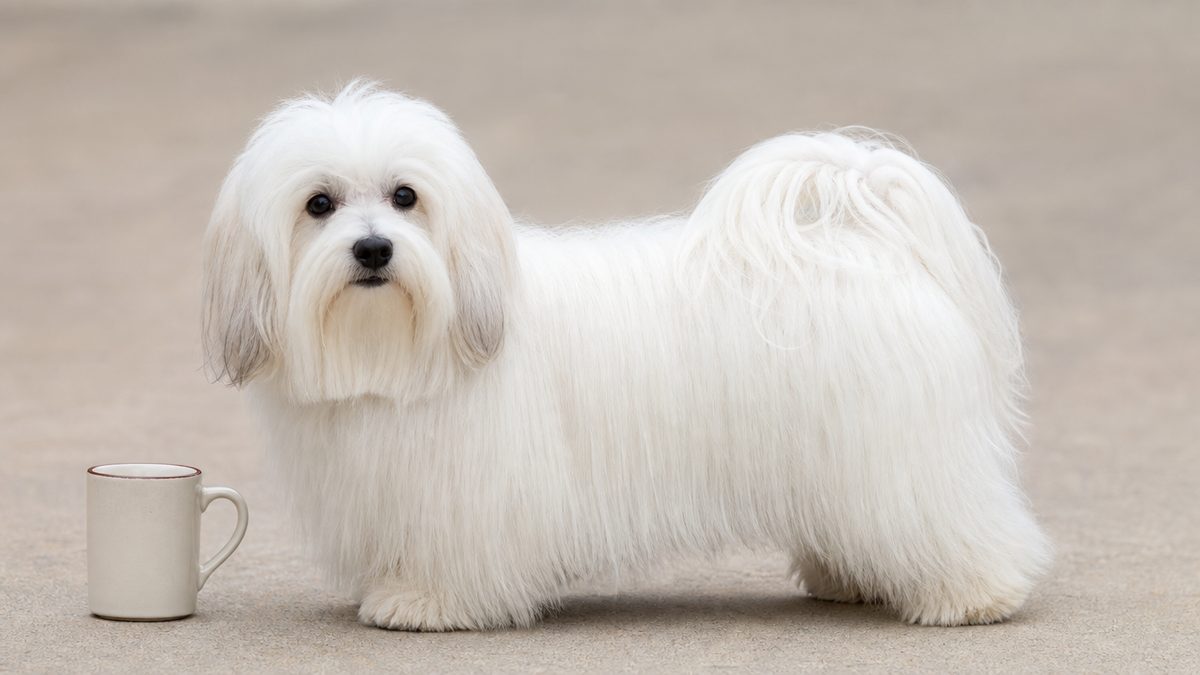
A Coton de Tulear is a small white companion dog from Madagascar, 23 to 28 cm at the withers and 3.5 to 6 kg, carrying a single long coat with the texture of cotton that is never curly and never silky. It is a purebred with a published breed standard from its country of origin, not a designer cross, and the standard is stricter than any Indian seller admits.
Two registries define this breed and they agree on almost everything. The Federation Cynologique Internationale files it as standard number 283, Group 9 Companion and Toy Dogs, Section 1.2 Coton de Tuléar, with Madagascar as the country of origin and France as the country of patronage, accepted on a definitive basis on 9 February 1970. The American Kennel Club places it in the Non-Sporting Group and recognised it in 2014, working to a standard approved on 11 September 2013 American Kennel Club. India is a full member of the FCI, represented by the Kennel Club of India in Anna Nagar, Chennai, so a KCI pedigree for this breed traces against the FCI standard rather than the American one.
Size and weight, and the figure Indian sellers publish that no standard allows
Read the weight column before you read a price. A male Coton is capped at 6 kg by the country-of-origin standard and at 15 pounds, about 6.8 kg, by the American one. India's largest commercial listing for the breed advertises males at 5.5 to 7 kg and females at 4 to 6.5 kg. The top of both those bands sits outside the FCI standard, and the FCI lists size and weight outside the requirements and tolerance of the standard as a disqualifying fault.
| Source | Height at withers | Weight | What it is |
|---|---|---|---|
| FCI Standard No 283 | Males 26 to 28 cm, females 23 to 25 cm, tolerance 2 cm above and 1 cm below | Males 4 kg to a maximum of 6 kg, females 3.5 kg to a maximum of 5 kg | The standard of the country of origin |
| AKC official standard | Dogs 10 to 11 inches ideal, bitches 9 to 10 inches, half an inch below or one inch above tolerated | Dogs 9 to 15 pounds ideal, bitches 8 to 13 pounds | The US conformation standard |
| AKC breed page | 10 to 11 inches male, 9 to 10 inches female | 9 to 15 pounds male, 8 to 13 pounds female | AKC's own public summary |
| Mr n Mrs Pet, India | Male 10 to 11 inches, female 9 to 10 inches | Male 5.5 to 7 kg, female 4 to 6.5 kg | Seller listing, heavier than both standards |
| Puppiezo, India | 9 to 11 inches | 4 to 6 kg | Seller listing, matches the FCI male band |
| Top Pet Products, India | 9 to 11 inches | 3.6 to 6 kg in the body text, 9 to 15 pounds in the FAQ, 5 to 10 pounds in the pros list | One page carrying three different weights |
| Best For Pets, India | Not stated | 8 to 15 pounds | Seller-adjacent blog |
The AKC standard also sets hard height limits that disqualify rather than merely penalise. Any bitch under 8.5 inches or over 11 inches, and any dog under 9.5 inches or over 12 inches, is disqualified, with the minimum not applying to puppies under twelve months. Ask a seller for the adult weight of both parents in kilograms before you look at a single photograph.
The coat, which every Indian page describes wrongly
The Coton coat is soft, supple, dense, profuse and at most very slightly wavy, with the texture of cotton and never hard or rough. Curl is a fault, not a feature. The FCI lists hair that is too short, too wavy or curly as a severe fault, and hair that is atypical, tightly curled, woolly or silky as a disqualifying fault. The AKC standard matches it, calling atypical hair or hair that is tightly curled, woolly or silky a severe fault. India's largest listing for the breed nonetheless tells buyers that Coton de Tulears have dense, curly coats. A buyer who used that page to judge a puppy would reject a correct dog and buy a faulty one.
Neither standard mentions an undercoat. That single absence is the whole reason this breed behaves differently from a Bichon Frise in Indian humidity, and it is worked through in the grooming sections below.
Ears, colour and the two searches that lead nowhere good
The ears are pendulous, triangular, set high on the skull, fine at the tips, carried close to the cheeks and reaching the corners of the lips American Kennel Club. Pricked or semi-pricked ears are a disqualifying fault under the FCI standard, so the Indian page that describes this breed as having erect, triangular ears is describing a disqualified dog Federation Cynologique Internationale. That pendulous, densely haired ear is also the breed's main health liability in an Indian monsoon, covered in full further down.
Google India's own related-search strip for this query offers 'Black coton de tulear price in india' alongside 'White coton de tulear price in india'. The coat colour is white. The AKC standard permits light tan shading over at most 5 percent of the body of an adult over twelve months and states that black on the body is a disqualification at any age. The FCI permits slight light grey or red-roan shadings on the ears and lists any marking of a definite black as a disqualifying fault. One Indian price page nonetheless lists white, black and tri-colour as breed colours. Anyone selling you a black Coton is selling you a dog that could not be shown, and probably not a purebred Coton at all.
Where the breed came from, and why Toliara matters to an Indian buyer
The Coton de Tulear comes from Toliara, a port city on the south-west coast of Madagascar that was called Tulear under French administration and is the capital of the Atsimo-Andrefana region, 936 km south-west of Antananarivo. That place name is not decoration. It is the only breed on this site whose origin climate can be tested against Indian cities directly, and the test does not give the answer most people expect.
The FCI records the breed as Madagascan in origin with France as the country of patronage, and its brief historical summary says only that the breed was introduced to France long before its official recognition in 1970, that it quickly acquired a prominent position among French companion dogs, and that it is now widespread all over the world Federation Cynologique Internationale. That is the whole of what the country-of-origin standard claims. It says nothing about sailors, shipwrecks or rat-catching, all of which appear as confident statements of fact on Indian pages ranking for this breed Best For Pets, Coton De Tulear Price….
The American standard adds one paragraph that the FCI does not. It calls the breed the Royal Dog of Madagascar and states that in Madagascar the Coton de Tulear survived in packs in the wilderness, later becoming a companion dog of the native Malagasy and Merina tribal nobles. Bonbeno reports that as what the AKC standard says rather than as settled history, because no primary Malagasy record is cited for it in either document.
A small founder population, and what Indian law makes of it
A breed that left one island in small numbers has a narrow genetic base, and Indian law has a specific view about how that base may be managed. Second Schedule Part II paragraph 6(3) of the Prevention of Cruelty to Animals (Dog Breeding and Marketing) Rules, 2017 prohibits in breeding, which it defines as breeding between relatives of the second to fourth grade in straight or side line within the first four generations, naming uncle to niece, nephew to aunt, cousin to cousin and grandparents to grandchildren. It also prohibits incest breeding between parents and children or brother and sister. Only out breeding and line breeding are permitted, under paragraph 6(2).
The practical consequence for an Indian buyer is a question, not a warning. Ask for a four-generation pedigree and look for repeated names on both the sire and dam sides. The Kennel Club of India issues a certified four-generation pedigree for Rs 1,000, so this is a document a serious breeder can produce on request rather than a favour. Three of the breed's published inherited conditions are autosomal recessive, which means they only surface when both parents carry the variant, which is exactly what a narrow pedigree makes likelier Vidgren G, Vainio-Siukola K, Honkasalo S Grahn BH, Sandmeyer LL.
Recognition status, checked rather than assumed
The recognition question has a clean answer in India. The FCI accepted the Coton de Tulear on a definitive basis on 9 February 1970 as standard number 283, and India is a full member of the FCI represented by the Kennel Club of India in Chennai, so the breed is registrable here against FCI nomenclature. The AKC recognised the breed separately in 2014 and files it in the Non-Sporting Group.
Madagascar itself is only an FCI contract partner, represented by the Association des Cynophiles de Madagascar, while India is a full member. On paper, the Kennel Club of India has a higher standing in the federation that governs this breed than the kennel club of the country the breed comes from. That is worth knowing when a seller implies that Indian registration is somehow second class.
One thing the origin does not give you is a domestic supply chain. The Coton does not appear anywhere on India's most-cited all-breed price list, which carries forty breeds including the Bichon Frise, the Maltese, the Shih Tzu and the Lhasa Apso Supertails, Dog Price List in India 2026. Google India returned about 166 results in total for the exact phrase this page targets. Both facts point the same way: this is a genuinely thin Indian market, and thin markets are where invented prices live.
Coton de Tulear price in India, and why the sources disagree by a factor of twenty
Coton de Tulear price in India runs from Rs 32,000 to Rs 7,00,000 across the published sources ranking for this query in August 2026, and the bands do not overlap Mr n Mrs Pet, Coton de Tulear Puppies…. One page's ceiling of Rs 1,00,000 sits below another page's floor of Rs 1,50,000. Bonbeno publishes the disagreement rather than averaging it, because the average of four numbers that cannot all be true is a fifth number that is definitely not true.
| Source | Published price | What the source is | Date on the page |
|---|---|---|---|
| Tegha Kennel, Delhi | Rs 40,000 listed, Rs 37,000 current, 'start from Rs 32000' | Delhi kennel product listing, three prices on one page | Published 27 February 2015, never modified |
| Top Pet Products | Rs 40,000 to Rs 1,00,000 | Affiliate blog with a five-city table | Published February 2025 |
| Best For Pets | Rs 40,000 to Rs 1,50,000 or more | Seller-adjacent blog | Published January 2024 |
| Mr n Mrs Pet, basic quality | Rs 1,50,000 to Rs 2,50,000 | India's largest commercial listing for the breed | Retrieved 27 August 2026 |
| Mr n Mrs Pet, KCI registered | Rs 2,50,000 to Rs 5,50,000 | Same page, second tier | Retrieved 27 August 2026 |
| Mr n Mrs Pet, champion bloodline | Rs 5,50,000 to Rs 7,00,000 | Same page, third tier | Retrieved 27 August 2026 |
| Supertails top-40 price list | Not listed | India's most-cited all-breed price list, forty breeds | 9 March 2026 |
The honest reading is that there is no established Indian market price for this breed. Forty breeds appear on Supertails' 2026 list, including the Bichon Frise at Rs 30,000 to Rs 80,000 and the Maltese at Rs 25,000 to Rs 80,000; the Coton de Tulear appears nowhere on it. A breed absent from the reference list, with about 166 total Google India results for its price query, does not have a market rate. It has a set of asking prices.
The number one result has no Coton price on it at all
India's top organic result for this exact query is titled 'Coton de Tulear Price in India' and its available-pets carousel contains not one Coton. What it does contain is Rs 98,999 printed three times, attached to two Maltipoos named Fizey and Samy and a Doxiepoo named Yoki, beside a Poodle at Rs 92,599 twice, a Cane Corso at Rs 94,999, a Rottweiler at Rs 76,499 and a Goldendoodle at Rs 1,20,000. Bonbeno has now recorded that same Rs 98,999 figure, and those same three animals, across breed pages on this site that the seller does not stock either. Never treat Rs 98,999 as any breed's price. It is a house charm price attached to whichever puppy is in stock.
The conversion tests, and what they rule out
Indian breed prices are frequently a US dollar figure run through one exchange rate, so Bonbeno divides every published figure by the three rates this has been caught at. On this breed, all three tests come back negative, and that is a finding rather than a gap.
- At 84.38, zero of seventeen figures divide to a whole dollar. Rs 1,50,000 becomes 1,777.67 and Rs 7,00,000 becomes 8,295.80. This is the strong test and nothing passes it.
- At 74, one of seventeen divides, and it is Tegha Kennel's discounted Rs 37,000, which comes to exactly 500. One hit is noise, and a discount struck off a rupee-native Rs 40,000 is the least likely figure on the page to have been converted from anything.
- At 80, fourteen of seventeen appear to divide, and that number means almost nothing. Because 1,000 divided by 80 is 12.5, any rupee figure ending in three zeros passes the 80 test by construction. Read the quotients instead: Rs 2,50,000 becomes 3,125 dollars, Rs 5,50,000 becomes 6,875 and Rs 90,000 becomes 1,125. No seller prints those numbers.
- The three figures that fail at 80 are the visibly rupee-native ones, which is the pattern in reverse. Rs 45,000 gives 562.50, Rs 37,000 gives 462.50, and the Puppiezo charm prices give 1,237.49, 1,157.49, 1,187.49 and 956.24.
So the Indian Coton prices are not a converted American price list. They are rupee-native and arbitrary, which is a different problem with the same effect on your wallet. Rs 98,999 divides to 1,173.25 dollars at 84.38 and 1,337.82 at 74, confirming it as a rupee-native charm price rather than a conversion.
Mr n Mrs Pet publishes a city-wise price table for Hyderabad, Bangalore, Delhi, Chennai, Lucknow, Mumbai, Jaipur and Pune. All eight rows read Rs 1,50,000 to Rs 7,00,000. A price table in which the price does not vary by city is not city data, it is one number in eight boxes. The five listings on that page carry no visible price at all, each one requiring a sign-up to view, and every one is labelled Pet Quality with the age field left blank.
Monthly cost of keeping a Coton de Tulear in India
Budget Rs 5,000 to Rs 11,000 a month, and expect grooming to be the largest single line. The two Indian sources that publish a monthly figure for this specific breed give Rs 5,000 to Rs 10,000 and Rs 6,000 to Rs 10,000, which is unusually close agreement for this subject. Bonbeno's own check of the components pushes the top of that band slightly higher in Mumbai, for one reason.
Grooming, costed from published salon rates rather than guessed
A long-coated dog groomed every four to six weeks needs nine to thirteen sessions a year. Published 2026 Indian salon rates for a full groom on a long coat are Rs 1,200 to Rs 2,500 in Hyderabad, Rs 1,400 to Rs 2,500 in Pune, Rs 1,500 to Rs 3,000 in Bangalore and Rs 1,800 to Rs 3,500 in Mumbai, on that same four to six week frequency. Nine sessions at the Hyderabad floor is Rs 10,800 a year, or Rs 900 a month. Thirteen sessions at the Mumbai ceiling is Rs 45,500 a year, or Rs 3,792 a month.
So professional grooming alone accounts for somewhere between a fifth and two fifths of the entire published monthly budget for this breed. Two surcharges sit on top and both are avoidable. A heavily matted coat is billed for de-matting separately at Rs 500 to Rs 1,500, and a mobile groomer who comes to you adds Rs 200 to Rs 500 per visit.
| Line | Published figure | Source and note |
|---|---|---|
| Professional grooming, long coat | Rs 1,200 to Rs 3,500 a session, every 4 to 6 weeks | City-wise Indian salon rates, Hyderabad floor to Mumbai ceiling |
| De-matting surcharge | Rs 500 to Rs 1,500 on top | Billed separately when the coat has been left |
| Vaccination, deworming, tick and flea prevention | Rs 5,000 to Rs 8,000 a year | All-India figure, not breed specific |
| Routine vet consultation | Rs 300 to Rs 1,000 per visit | Varies by clinic and city |
| Basic obedience course, metro | Rs 5,000 to Rs 25,000 one off | Metro training class rates |
| Starter kit: crate, bed, bowls, leash, toys | Rs 8,000 to Rs 12,000 one off | First-year setup |
| Emergency surgery or chronic illness | Rs 15,000 to Rs 1,00,000 per event | The line most Indian budgets omit entirely |
| Published monthly total, this breed | Rs 5,000 to Rs 10,000 | Two independent Indian sources agree Best For Pets, Coton De Tulear Price… |
The one line nobody publishes honestly for this breed
Food is the gap. The only Indian monthly food figure Bonbeno could source is Rs 3,000 to Rs 7,000 for a medium-sized dog, rising to Rs 10,000 on premium imported kibble. A Coton de Tulear weighs 3.5 to 6 kg and eats a small fraction of what a medium dog eats. Bonbeno will not scale that number and present the result as a fact, because a scaled figure is a guess with a citation attached to it. Ask your own vet for a daily gram target at your dog's body condition, then price your chosen food per kilogram. That is a five-minute calculation and it beats any published range.
One of the two Indian pages publishing a monthly total prints each line in rupees with a dollar figure beside it, and the dollar column gives the table away. Food at Rs 2,000 to 3,000 is labelled 30 to 45 dollars, training at Rs 1,000 to 2,000 is 15 to 30 dollars, and the total of Rs 6,000 to 10,000 is 90 to 150 dollars. Every one of those implies an exchange rate of exactly 66.67 rupees to the dollar. Three other rows on the same table imply 71.43 and 75.00, so the page contradicts itself. None of the three is a rate this site tests for, and a cost table generated by division rather than by pricing anything in India tells you nothing about India.
The lifetime number
Multiply the monthly figure by the median lifespan before you look at the purchase price. At Rs 5,000 to Rs 10,000 a month across a median life expectancy of 14.2 years, recurring costs come to roughly Rs 8.5 lakh to Rs 17 lakh Dogs Trust, Life expectancy for 155 breeds…. The highest asking price on any Indian listing for this breed is Rs 7,00,000. So even at the top of the market, what you pay to bring the dog home is smaller than what you will spend keeping it, and the gap widens every year the dog lives. This is the calculation that should decide whether you buy a Coton, and no page ranking for the price query performs it.
Heat tolerance: what a Madagascan origin really means in India
The Coton de Tulear is a tropical-origin breed, and Bengaluru is the only major Indian metro that is genuinely cooler than its homeland on the measure that matters. Toliara's hottest month reaches a mean wet-bulb temperature of 25.1 degrees Celsius; Bengaluru peaks at 22.7, while Kolkata reaches 27.9, Delhi 27.7, Chennai 27.4 and Mumbai 26.6. So four Indian metros are between 1.5 and 2.8 degrees harsher than the origin, and one is 2.4 degrees kinder.
Bonbeno used wet-bulb temperature rather than air temperature because a dog cools by evaporation, panting moisture off the respiratory tract. Dry air temperature tells you how hot it is; wet-bulb temperature tells you how much cooling the air will still accept. NASA POWER defines T2MWET as wet bulb temperature at 2 metres in degrees Celsius, and the figures below are 20-year monthly climatologies for January 2001 to December 2020, derived from MERRA-2 NASA Prediction Of Worldwide Energy….
The queries were made by explicit latitude and longitude rather than by place name, which is the only way to be certain a climate service has not silently returned a different city. The origin point was Toliara at 23.35 degrees south, 43.67 degrees east, the coordinates of the Madagascan port the breed is named after.
| Place | Peak monthly wet-bulb | Peak monthly max air temperature | Annual mean rainfall | Difference in wet-bulb against Toliara |
|---|---|---|---|---|
| Toliara, Madagascar (23.35 S, 43.69 E) | 25.1 C in January | 38.9 C in December | 1.6 mm a day | origin |
| Kolkata (22.57 N, 88.36 E) | 27.9 C in June | 46.8 C in May | 4.3 mm a day | +2.8 C |
| Delhi (28.61 N, 77.21 E) | 27.7 C in July | 48.8 C in June | 2.1 mm a day | +2.6 C |
| Chennai (13.08 N, 80.27 E) | 27.4 C in May | 42.7 C in May | 3.4 mm a day | +2.3 C |
| Mumbai (19.08 N, 72.88 E) | 26.6 C in June | 44.9 C in April | 6.9 mm a day | +1.5 C |
| Bengaluru (12.97 N, 77.59 E) | 22.7 C in May | 40.4 C in April | 2.3 mm a day | -2.4 C |
Three things in that table that change the usual advice
The origin is not a cool climate, and it is not the hottest either. Toliara's hottest month tops out at a mean maximum of 38.9 C, which is 9.9 degrees below Delhi's June and 1.5 degrees below Bengaluru's April. Read on air temperature alone, the breed would look comfortable everywhere in India, because its homeland is milder than all five cities. That is exactly why air temperature is the wrong measure.
The city ranking flips between the two measures. On peak air temperature the order is Delhi worst at 48.8 C, then Kolkata, Mumbai, Chennai and Bengaluru mildest. On peak wet-bulb the order is Kolkata worst at 27.9 C, with Delhi a tenth of a degree behind despite being nearly two degrees hotter in air temperature. A Delhi owner reading a temperature forecast is reading a number that overstates the risk relative to Kolkata, and a Kolkata owner is reading one that understates it.
The most humid city is not the most dangerous one. Mumbai reaches 90.4 percent mean relative humidity in August, the highest of the five, yet its peak wet-bulb of 26.6 C is the lowest of the four hot metros. Mumbai's monsoon is wet and comparatively cool. Humidity on its own does not tell you how hard a dog has to work to shed heat.
The real mismatch is rain, not heat
Toliara is semi-arid, and that is what the coat was built for. Its wettest month averages 5.3 mm of rain a day and its driest, July and August, average 0.2 mm, giving an annual mean of 1.6 mm a day. Mumbai averages 6.9 mm a day across the year and 26.9 mm a day in July, roughly five times Toliara's wettest month sustained for weeks. A long single coat that dries quickly under a dry-season Madagascan sun does not dry at all in a Mumbai July. Everything difficult about keeping this breed in India follows from that one number, and it is worked through in the grooming and monsoon sections below.
The largest study of heat-related illness in dogs examined 905,543 UK dogs under primary veterinary care and identified 395 confirmed events, an incidence of 0.04 percent with an event fatality rate of 14.18 percent. The Coton de Tulear is not in it. The model only included breeds with at least five heat-illness cases or at least 5,000 dogs in the study population, and the word Coton appears nowhere in the paper. Bonbeno will not import an odds ratio onto a breed the authors never modelled. What does transfer is a risk factor rather than a breed: bodyweight above the breed and sex mean was significantly associated with heat-related illness, as was being over two years old. The paper also found that no breed type had significantly reduced odds compared with the Labrador Retriever, so there is no published evidence that any breed is safer than average in heat.
The practical rule for India follows from the bodyweight finding. Keep a Coton inside its standard weight, which is 4 to 6 kg for males and 3.5 to 5 kg for females. In the OFA breed health survey, 20 percent of Cotons were reported at 13.5 to 15 pounds and a further 12 percent at over 15 pounds, so roughly a third sit at or above the top of the standard. On a 5 kg dog an extra kilogram is a fifth of bodyweight, and it is the only heat risk factor an Indian owner fully controls. Walk before 7 am and after 8 pm from March to June, change the water three times a day, and never leave the dog in a parked car.
Temperament and household fit
A Coton de Tulear is a happy, stable, highly sociable house dog that adapts to most living situations, and the country-of-origin standard treats that temperament as one of the defining characteristics of the breed rather than a nice extra. It suits an Indian flat with people in it most of the day. It suits an empty flat badly.
The FCI wording is unusually direct for a breed standard. It states that the Coton is of a happy temperament, stable, very sociable with humans and with other dogs, that it adapts perfectly to all ways of life, and that its temperament is one of the main characteristics of the breed. It then disqualifies any dog that is aggressive or overly shy, which puts temperament on the same footing as a structural fault.
The American standard adds detail the FCI leaves out and it is worth reading before you buy. It describes the breed as gay and energetic and at times boisterous but never demanding, naturally clownish and lighthearted as well as calm and easygoing, with a remarkable gentle, sympathetic awareness of those around it. It also notes, in the same paragraph, that the breed is known for expressing unique vocalizations.
The quiet-dog claim, and what the standards actually say
India's largest listing for this breed advertises Low Noise Levels and says Cotons bark only when necessary. Two published sources cut against that. The AKC standard names unique vocalizations as a breed characteristic, and the AKC's training guidance describes the Coton as an alert dog and naturally territorial American Kennel Club. One Indian page listing the breed's cons puts barking on it, saying it can be an issue if not properly trained.
For an Indian buyer this matters more than it would elsewhere, because in a metro flat the neighbour's tolerance is a real constraint and many housing societies restrict dogs on noise complaints. Treat this as a dog that talks, socialise it heavily to lift and corridor traffic from eight weeks, and do not buy it on a promise that it will be silent.
What owners actually report
The OFA runs an open breed health survey for the Coton de Tulear whose temperament section is worth reading with its limits in mind. Respondents are self-selected, there is no verification and no duplicate checking, and the sample is about 130 dogs, so these are reported impressions rather than measured prevalence.
| Description | Dogs | Share of respondents |
|---|---|---|
| Confident | 88 | 67 percent |
| Curious | 62 | 47 percent |
| Protective | 29 | 22 percent |
| Reserved | 28 | 21 percent |
| Timid | 11 | 8 percent |
| Very shy | 3 | 2 percent |
Two figures there are useful. Roughly one owner in five describes their Coton as reserved, and one in twenty-two as very shy, in a breed whose standard disqualifies overt shyness Federation Cynologique Internationale. Meet both parents before you buy, and walk away from a dam that will not approach you. Separately, seven of 127 respondents reported a temperament problem, and within that small group extreme shyness and aggression were each named four times and separation anxiety twice.
Who should buy this breed, and who should not
- Buy if someone is home most of the day. Separation anxiety is named as a breed con on Indian pages and appears in the OFA survey, and this is a dog bred for centuries to follow a person around a house American Kennel Club.
- Buy if you have children over about six. The standard calls for a gentle, sociable dog, and at 3.5 to 6 kg the supervision runs the other way, protecting the dog from being dropped.
- Buy if you already own another dog. The FCI standard specifies sociability with other dogs, not just with people.
- Do not buy if the flat is empty ten hours a day. This is the single clearest mismatch for the breed.
- Do not buy if you want a guard dog. A dog the standard requires to be very sociable with strangers is a poor one, and buying one for security guarantees disappointment.
- Do not buy if nobody in the house will brush a dog daily. That is a grooming decision, not a temperament one, and it is the reason most Coton coats in India end up shaved.
Read Indian listing copy for this breed with one eye on the template. The page carrying the country's headline price band tells buyers that Coton de Tulears typically cost less to maintain than Standard ones, which is a sentence about Poodle sizes, and elsewhere refers to its verified and responsible Corgi breeders on a Coton page. Another ranking page contains a heading titled Amazing Facts About Pygmy Marmoset Monkey inside a Coton de Tulear article. Neither error is about temperament. Both tell you how much of the surrounding description was written about this breed.
Training a Coton de Tulear, and the one thing it resists
Train a Coton with short, lively, positive sessions and it learns almost anything; train it with correction and it shuts down. The AKC states plainly that Cotons respond poorly to negative training practices but excel in most dog-sport activities when trained with positive methods, and that a bored Coton will be unable to learn anything. The one genuine difficulty is house-training, which Indian sources name as a breed con.
Start with socialisation rather than obedience. The AKC's own guidance is that Cotons should be well socialised from an early age so they enjoy going with you wherever you go, and that obedience training is a good idea for socialisation as much as for manners. It also describes the breed as an alert dog and naturally territorial, which is the trait that turns into corridor barking in a flat if it is never worked on.
Indian law sets the earliest date you can start. Rule 8(1)(a) of the Prevention of Cruelty to Animals (Dog Breeding and Marketing) Rules, 2017 prohibits the sale of pups under eight weeks of age, so a legally sold Indian puppy arrives at eight weeks or later. The socialisation window is open when it arrives, so use it.
A realistic Indian timeline
- Weeks 8 to 10. Name, crate, and handling. Handle the ears and the feet daily from the first day, because both will be handled by a groomer every four to six weeks for the next fourteen years.
- Weeks 10 to 14. Lift, stairwell, watchman, doorbell, delivery riders and building-society traffic. This is the window that decides whether an alert, territorial breed becomes a barker in an Indian flat.
- Weeks 12 to 18. Complete the vaccination course. Second Schedule Part III paragraph 8(9) records that pups are vaccinated starting at seven to eight weeks and usually completed by eighteen weeks. Ask your vet what outdoor exposure is safe before then.
- Months 4 to 6. Recall, loose-lead walking and settle. Keep sessions under ten minutes and end while the dog is still interested.
- Months 6 to 12. Grooming table conditioning, car travel, and a basic obedience course if you want one. Metro courses run Rs 5,000 to Rs 25,000.
- Month 12 onward. Agility, obedience or therapy work. The AKC records that Cotons do well in agility and obedience and make excellent therapy dogs, and 25 percent of surveyed owners reported their Coton doing therapy work Orthopedic Foundation for Animals.
House-training is the hard part
Expect house-training to take longer than the rest of the training combined. One Indian source lists difficulty housebreaking among the breed's cons, alongside separation anxiety and barking. Small dogs have small bladders and Indian monsoon months remove the outdoor option for weeks at a time, so plan for an indoor toilet area from day one rather than improvising it in July.
Three things make it work. Take the puppy out on a fixed schedule rather than on demand, because a Coton will not reliably tell you. Reward outside within two seconds of finishing, not when the dog comes back in. And clean indoor accidents with an enzymatic cleaner, since anything ammonia-based marks the spot as a toilet.
Grooming is a training subject, not a grooming subject
The most valuable thing you can teach this breed is to lie still while you brush to the skin. The AKC is explicit that unless the coat is kept in a short puppy clip the dog will need a great deal of brushing, that you must get the comb all the way to the skin gently, and that extensive matting may mean the dog has to be shaved down. A dog that fights the comb gets brushed badly, mats, and loses its coat. Condition it in ninety-second sessions from eight weeks, on a raised surface, with food, before there is any coat worth brushing.
Both standards treat temperament as a disqualifying matter. The FCI disqualifies a dog that is aggressive or overly shy, and roughly one owner in five in the OFA survey already described their Coton as reserved Orthopedic Foundation for Animals. Correction-based training on a soft, socially sensitive 5 kg dog pushes it toward exactly the trait the standard was written to keep out of the breed. Keep sessions short, keep them cheerful, and stop before the dog does.
Daily exercise, and what an Indian summer does to the schedule
A Coton de Tulear needs about thirty to forty-five minutes of activity a day, split across two walks and indoor play. The AKC describes the Coton as a fairly active dog requiring a moderate amount of exercise, with daily walks at a slow speed enough to keep it in condition, and Indian listings put the routine at thirty minutes daily Puppiezo, Coton de Tulear Price in India. What changes in India is not the amount. It is the clock.
The AKC adds one sentence that matters more than the number. A bored and unhappy Coton can become destructive, and the breed does best when given enough exercise, with chasing a ball around a yard keeping its mind active as well as its body. This is a small dog whose exercise requirement is largely mental. An Indian flat with no yard can meet it, but only if somebody is playing with the dog rather than opening a door.
Timing the walks against the wet-bulb
Walk before 7 am and after 8 pm from March to June in every metro except Bengaluru. Chennai's mean wet-bulb temperature peaks at 27.4 C in May and Kolkata's at 27.9 C in June, both roughly 2.5 degrees above anything the breed's origin climate produces, and the peak daily maximum air temperature reaches 42.7 C in Chennai and 48.8 C in Delhi. A dog cooling by evaporation has very little margin at those wet-bulb figures, whatever the thermometer says.
| City | Hardest months | Why | Practical rule |
|---|---|---|---|
| Delhi | May to July | Peak air maximum 48.8 C in June, peak wet-bulb 27.7 C in July | Two short walks before 6.30 am and after 9 pm; indoor play at midday |
| Kolkata | May to August | Highest peak wet-bulb of the five at 27.9 C in June, with 89 percent humidity in September | Before 6.30 am and after 8.30 pm; watch for panting that does not settle within five minutes indoors |
| Chennai | April to June | Peak wet-bulb 27.4 C in May, peak air maximum 42.7 C in May | Before 6.30 am and after 8.30 pm year round; the coolest month still averages 24.1 C |
| Mumbai | April to June, then the monsoon | Peak wet-bulb 26.6 C in June, then 26.9 mm of rain a day in July | Heat is the summer problem and drying the dog is the monsoon problem |
| Bengaluru | March to May | Peak wet-bulb 22.7 C, 2.4 degrees below the breed's origin | Normal walking hours work for most of the year, which no other metro on this list can say |
Surface temperature, not air temperature
Check the pavement with the back of your hand before every summer walk. A 4 to 6 kg dog stands a few centimetres above the road surface and its pads are in direct contact with it, so the temperature that matters to a Coton is not the one on your phone. If you cannot hold your hand flat on the surface for five seconds, the walk waits. This applies for longer in the day than most Indian owners expect, because tarmac and stone continue radiating heat well after sunset.
Exercise, weight and heat risk are one problem
Under-exercising this breed is a heat-safety issue, not just a behaviour issue. Bodyweight above the breed and sex mean was a significant risk factor for heat-related illness across 905,543 UK dogs, and roughly a third of Cotons in the OFA breed health survey were reported at 13.5 pounds or more, which is at or beyond the top of the standard Federation Cynologique Internationale. A dog that misses its walks in May because it is too hot, and then keeps eating the same amount, is heavier by August when the wet-bulb is still high.
- Split the daily thirty to forty-five minutes into two sessions rather than one.
- Replace a missed hot-weather walk with indoor work: scent games, a food puzzle, or five minutes of trick training.
- Weigh the dog monthly on the same kitchen scale and write the number down. On a 5 kg dog, 200 g of drift is 4 percent of bodyweight.
- Watch for panting that does not settle within five minutes of coming indoors, and treat it as a reason to call your vet rather than to wait.
Swimming and beach walks are the two exercise choices that cost the most in grooming. A long single cotton coat holds salt water and sand at the skin, and the coat that goes in wet comes out matted at the base. If the dog swims, plan on a full rinse and a proper dry the same day, not an air dry, for reasons set out in the monsoon section below.
Coat care: daily brushing to the skin, and the clip decision
Brush a Coton de Tulear to the skin every day and book a professional groom every four to six weeks, or keep it in a short clip and accept that you have chosen a pet coat over a show coat. The AKC states the choice in exactly those terms: unless you keep your Coton in a short puppy clip, the dog will require a great deal of brushing, and you must get the comb all the way to the skin gently or the hair next to the skin will mat.
Understand what you are brushing first, because this coat is not the coat on the breeds it is sold alongside. Both standards describe a single coat: very soft and supple, with the texture of cotton, never hard or rough, dense, profuse and at most very slightly wavy American Kennel Club. Neither standard mentions an undercoat anywhere. The Bichon Frise standard, by contrast, requires a soft dense undercoat beneath a coarser curly outer coat.
That single difference decides how the coat fails. A curly double coat felts from the undercoat outward, and once felted a comb cannot open it. A long single cotton coat tangles in sheets and slides against itself, which is worse in the short term and much better in the long term, because a sheet that is brushed to the skin daily never becomes felt. Miss a week in a humid Indian August and you get both.
The daily routine that actually prevents matting
- Work in sections, lifting the coat and brushing the layer underneath before you brush the layer above it. Brushing over the top of a Coton coat leaves the mats intact and hidden.
- Reach the skin with every stroke. The AKC's instruction is to get comb and brush all the way to the skin, gently, during daily brushing.
- Spray a light conditioner as you go. The AKC specifically recommends a spray conditioner while brushing to avoid breakage, because dry cotton-textured hair snaps.
- Check the four friction points daily: behind and under the ears, the armpits, the groin and the back of the hind legs. Mats start there in every long-coated breed.
- Clear the ears a couple of times a week, removing excess hair, wax and debris. The AKC ties this directly to avoiding ear infections.
- Finish at the feet and the sanitary area, which are the two places an Indian monsoon puts wet dirt into a white coat.
The clip, and what it costs you
Clipping a pet Coton in India is the right call for most owners, and it is worth being clear about what it forfeits. The AKC standard says the dog must be shown as naturally as is consistent with good grooming, that only the hair on the very bottom of the feet and between the pads may be trimmed, and that any other trimming or sculpting of the coat, or any grooming which alters the natural appearance, is to be severely penalised. A clipped Coton is a pet, not a show dog.
For a dog that will never see a ring, that is not a loss. A short clip cuts brushing from a daily obligation to a manageable one, cuts drying time in the monsoon, and cuts the risk of the outcome the AKC itself names, where matting becomes too extensive and the dog has to be shaved down. Choosing the clip deliberately in April is a different thing from having it forced on you in July.
| City | Full groom, long coat | Frequency | Nine sessions a year | Thirteen sessions a year |
|---|---|---|---|---|
| Hyderabad | Rs 1,200 to Rs 2,500 | Every 4 to 6 weeks | Rs 10,800 to Rs 22,500 | Rs 15,600 to Rs 32,500 |
| Pune | Rs 1,400 to Rs 2,500 | Every 4 to 6 weeks | Rs 12,600 to Rs 22,500 | Rs 18,200 to Rs 32,500 |
| Bangalore | Rs 1,500 to Rs 3,000 | Every 4 to 6 weeks | Rs 13,500 to Rs 27,000 | Rs 19,500 to Rs 39,000 |
| Mumbai | Rs 1,800 to Rs 3,500 | Every 4 to 6 weeks | Rs 16,200 to Rs 31,500 | Rs 23,400 to Rs 45,500 |
Add the de-matting surcharge of Rs 500 to Rs 1,500 whenever the coat has been left, and Rs 200 to Rs 500 per visit if you want the groomer to come to you. Over a median life expectancy of 14.2 years, a Mumbai owner grooming thirteen times a year at the top rate spends more than Rs 6 lakh on grooming alone ThePetNest, Ultimate Guide to Pet Grooming…. That is close to the highest asking price anyone in India publishes for the dog itself.
India's grooming supply is short and it is not evenly distributed. Demand for professional groomers has outpaced supply in Mumbai, Bangalore, Pune and Hyderabad, bookings fill weeks in advance, and the sector is still fragmented with no national chains. If you live outside those four cities, find a groomer who has actually handled a long single coat and confirm they will take your dog on a five-week cycle before you commit to the breed. A Coton in a city with no competent groomer is a Coton that gets shaved.
The monsoon problem: a dry-season coat in a wet country
The Coton coat evolved somewhere that gets 1.6 mm of rain a day on average, and Mumbai gets 26.9 mm a day in July. That ratio, not temperature, is the real climate mismatch for this breed in India. A long single coat that dries in an hour under a Madagascan dry season stays damp at the skin for a day and a half in an Indian monsoon, and everything that goes wrong with a Coton here starts there.
Set the two rainfall profiles side by side. Toliara's wettest month averages 5.3 mm a day and its driest, July and August, average 0.2 mm, for an annual mean of 1.6 mm a day. Kolkata averages 10.7 mm a day in July and 9.9 in August; Mumbai averages 17.8 in June, 26.9 in July and 19.6 in August; Chennai's wettest month is November at 9.7. Mumbai's single wettest month runs at roughly five times the rate of the wettest month the breed's origin climate produces, sustained for four to six weeks.
Never air dry this dog in the monsoon
Towel and blow dry to the skin every single time the coat gets wet, and do not let the dog dry on its own. Overseas care guidance for long-coated breeds is generally written for climates where a coat left damp will dry; in a Mumbai or Kolkata monsoon, ambient humidity runs at 89 to 90 percent and there is nowhere for the moisture to go. A coat that stays damp at the base is a coat that mats, and a mat holds water against the skin.
The evidence for taking this seriously is Indian rather than imported. A cross-sectional study at Palampur screened 2,476 dogs presenting to veterinary clinics between June 2022 and July 2023 and diagnosed otitis externa in 81, an overall hospital prevalence of 3.27 percent. Forty-eight of those 81 cases, 59.25 percent, presented in the rainy season of July and August, against 18.51 percent in summer, 12.34 percent in winter and 9.87 percent in autumn. Excessive moisture was recorded as a predisposing factor in 17 of the 81 cases, 20.98 percent.
The ear, which is where the coat and the climate meet
The Coton has pendulous ears carried close to the cheeks and covered in long hair, which is the worst combination for ventilation American Kennel Club. Three Indian studies and one large UK study all identify that conformation as the driver, and the next section sets their figures side by side, including the one that disagrees.
The Palampur study's own table gives pendulous-eared breeds as the commonest predisposing factor at 53 cases and 69.13 percent, and erect-eared breeds at 25 cases and 30.86 percent. Those two figures cannot both be right. 53 divided by 81 is 65.4 percent, not 69.13, and 69.13 percent of 81 would be 56 cases. The two counts also sum to 78 rather than 81, while the two percentages sum to 100. Bonbeno reports the direction of that finding, which matches the UK odds ratio, and does not reuse the broken percentage. The season figures on the same page do check out: 48 of 81 is 59.26 percent and all four seasons sum to 81.
A monsoon protocol for a Coton in an Indian metro
- Dry the dog completely after every wet walk, working the towel and dryer to the skin rather than over the coat. Damp at the base is the whole problem.
- Plug the ears with cotton wool before every bath and dry the ear leather afterwards. Water entry was recorded as a factor in a fifth of the Indian otitis cases.
- Shorten the groom cycle to four weeks through the monsoon rather than six, and consider a summer clip in April so the coat is short before the rain starts.
- Rinse the feet and belly after every walk on wet streets, then dry them, because a white coat picks up standing water and whatever is in it.
- Store the towels dry. A damp towel reused on a damp dog in 90 percent humidity is a way of keeping the coat wet rather than drying it.
Skin, and what owners report
Skin problems are the second monsoon consequence and they are reported at a modest rate in this breed. In the OFA breed health survey, 12 of 124 respondents reported a skin disorder, about 10 percent, and within that group atopic dermatitis was named five times, sebaceous adenitis four times and hot spots three times. That survey is self-selected and unverified, so treat it as a list of what to watch for rather than as a prevalence estimate. Hypersensitivity was also the commonest primary cause of otitis in the Indian series, at 37 of 81 cases or 45.67 percent, so skin and ear disease in this breed are usually the same problem presenting in two places.
Ear disease in India: four studies, and one that disagrees with the others
Ear disease is the condition a pendulous, densely-haired white coat most predictably produces in an Indian monsoon, and the published Indian figures for it range from 1.25 percent to 3.27 percent depending on where you look. Bonbeno prints all four series it could open rather than the one that suits the argument, because two of them cut against it.
| Study and place | Denominator | Cases | Prevalence | What kind of figure it is |
|---|---|---|---|---|
| Nagpur Veterinary College, 2026 | 18,172 cases at the medicine section | 228 | 1.25 percent | Hospital prevalence among presenting cases |
| Assam Agricultural University, Guwahati, 2021 | 5,312 dogs registered | 112 | 2.11 percent | Hospital prevalence among presenting cases |
| CSK HPKV, Palampur, Himachal Pradesh | 2,476 dogs presented | 81 | 3.27 percent | Hospital prevalence among presenting cases |
| VetCompass, United Kingdom, 2021 | 22,333 dogs sampled from 905,554 | 1,631 | 7.30 percent | One-year period prevalence in a random sample |
Do not read that table as a ranking. The three Indian figures are hospital prevalences counted among animals already brought to a veterinary clinic for any reason, while the UK figure is a one-year period prevalence measured in a random sample of a whole insured-and-registered population. Those are different denominators measuring different things, and the arithmetic in each is internally sound: 228 of 18,172 is 1.25 percent, 112 of 5,312 is 2.11 percent, 81 of 2,476 is 3.27 percent and 1,631 of 22,333 is 7.30 percent.
What the three Indian series agree on
All three name the same mechanism. The Guwahati authors write that the pendulous structure of the ear facilitates improper ventilation to the ear canal and leads to increased accumulation of moisture, and note that in most of their cases regular cleaning after the bath was not followed, leaving water trapped in the ear canal. The Nagpur authors attribute the Labrador's predisposition to apocrine gland density and pendulous ear conformation leading to retention of moisture. The Palampur authors cite poor ventilation and moisture retention in breeds with pendulous or densely haired ears.
The Coton de Tulear has pendulous, densely haired ears carried close to the cheeks by both standards, which places it squarely in the conformation those three Indian papers describe American Kennel Club. And the UK study quantifies exactly that variable: pendulous ear carriage carried 1.76 times the odds of otitis externa against erect ear carriage, 95 percent confidence interval 1.48 to 2.10.
And the finding that cuts the other way
The Nagpur series says small dogs get less of it, not more. Its weight-wise distribution put 40.35 percent of the 228 cases in the 24.1 to 34.0 kg band and 29.82 percent in the 14.1 to 24.0 kg band, while the 4.0 to 14.0 kg band, which is where a Coton de Tulear sits, was the lowest at 14.04 percent. The authors attribute that to the anatomy of the ear canal relative to body size affecting ventilation and moisture retention.
Bonbeno publishes that rather than burying it. Two readings are possible and the data cannot separate them. Either small dogs genuinely get less otitis externa, in which case the pendulous-ear risk is partly offset by size in this breed, or the band simply reflects how many small dogs come through a Nagpur clinic, since the same table shows Labradors, German Shepherds and Golden Retrievers accounting for 56 percent of cases in a country where those three are among the commonest owned breeds. The paper reports no denominator by weight band, so neither reading can be confirmed. The honest conclusion is that ear risk in this breed rests on ear shape and coat, which are measured, rather than on body size, which is not.
The Indian ear routine that follows from all four
- Lift and look inside both ears daily from June to September. Erythematous ear canals appeared on otoscopy in 88.8 percent of the Palampur cases.
- Remove excess hair, wax and debris a couple of times a week, which is the AKC's own instruction for this breed and is tied directly to avoiding ear infections.
- Plug the ears before every bath and dry the ear leather afterwards. Failure to clean after bathing was named by the Guwahati authors as a recurring management fault in their cases.
- Treat head shaking, pawing, foul smell or a tilted ear as a same-week vet visit rather than a wait-and-see. Those are the exact screening signs all three Indian studies used.
- Ask before you medicate. Treatment error was recorded as a predisposing factor in 11.11 percent of the Palampur cases.
- Look at the skin at the same time. Hypersensitivity was the commonest primary cause at Palampur, 37 of 81 cases or 45.67 percent, so an ear that keeps coming back is usually a skin problem.
Two of the three Indian series put peak prevalence in middle age rather than in puppies. Nagpur found the highest share in the 3.1 to 6 year band at 38.60 percent, and Palampur found 41.97 percent in the 1 to 5 year band Nainika and Sharma P. Otitis externa…. So the ear routine is not something you can relax once the puppy year is over. On a dog with a median life expectancy of 14.2 years, the highest-risk window is years three to six, which is exactly when most owners have stopped checking.
Life expectancy and screening data, with the real numbers
The median life expectancy of a Coton de Tulear is 14.2 years, with a 95 percent confidence interval running from 13.1 years to an upper bound the data could not estimate, measured across 319 dogs of which 44 had died. That is a long-lived breed. It is also 0.8 to 4.8 years shorter than the figures every page selling this dog in India puts in front of you.
Set the published claims against the dataset. Indian listings give 14 to 16 years and 14 to 18 years, and the AKC's own breed page states 15 to 19 years Puppiezo, Coton de Tulear Price in India Top Pet Products American Kennel Club. The Dogs Trust table of 155 breeds and the crossbred group gives a median of 14.2, which sits below the bottom of the AKC's own range. Nobody in India publishes the measured number.
Two caveats belong with it. The Coton's confidence interval is printed with NA as its upper bound, because only 44 deaths had been recorded, so the data can place a floor under the estimate but not a ceiling. And the breed still ranks near the top of that table: only six of the 155 breeds and the crossbred group have a higher median, and three more tie with it, against an overall median across all rows of 13.0 years. Long-lived, with real uncertainty above the point estimate, is the honest summary.
What the OFA database shows
The figures below come from the Orthopedic Foundation for Animals statistics table for COTON DE TULEAR, read on 27 August 2026, with the breed name confirmed on the returned page before any number was taken from it. These are results submitted by owners and breeders who chose to test, so they describe a screened population rather than the breed as a whole, and they move as evaluations are added.
| Test | Dogs evaluated | Normal or clear | Abnormal or affected | Carrier or equivocal |
|---|---|---|---|---|
| Patella | 2,752 | 2,609 (94.8 percent) | 143 (5.2 percent) | none recorded |
| Eyes, ACVO examination | 2,045 | 1,997 (97.7 percent) | 45 (2.2 percent) | none recorded |
| Congenital cardiac | 1,654 | 1,652 (99.9 percent) | 1 (0.1 percent) | 1 equivocal |
| Hips | 1,402 | 1,241 (88.5 percent) | 141 dysplastic (10.1 percent) | 20 equivocal (1.4 percent) |
| Elbows | 1,002 | 968 (96.6 percent) | 29 (2.9 percent) | 5 equivocal (0.5 percent) |
| Thyroid | 734 | 637 (86.8 percent) | 25 (3.4 percent) | 72 equivocal (9.8 percent) |
| Chondrodystrophy, CDDY and IVDD | 245 | 156 (63.7 percent) | 17 (6.9 percent) | 72 carriers (29.4 percent) |
| Legg-Calve-Perthes | 175 | 174 (99.4 percent) | 1 (0.6 percent) | none recorded |
| Dentition | 54 | 53 (98.1 percent) | 1 (1.9 percent) | none recorded |
The hip figures break down cleanly and the arithmetic checks. Of 1,402 evaluations, 141 were graded excellent, 842 good and 258 fair, giving 1,241 normal; of the 141 dysplastic, 122 were mild, 16 moderate and 3 severe. Mild plus moderate plus severe comes to 141 exactly, and normal plus dysplastic plus equivocal comes to 1,402 exactly. A 10.1 percent dysplasia rate in a 5 kg dog is higher than most buyers would expect, and hip dysplasia is one of the defects Indian law names in Second Schedule Part III paragraph 8(10).
The disc disease number, and why it deserves attention
Of 245 Cotons tested for the chondrodystrophy variant associated with intervertebral disc disease, 17 came back affected and 72 came back carriers, so 36.3 percent of the tested dogs carried at least one copy. In the OFA breed health survey, intervertebral disc disease was named by six of the 24 owners reporting an orthopaedic problem, tied with hip dysplasia and behind patellar luxation at fourteen. Both figures rest on small numbers and the survey is unverified, but they point the same way. Ask a breeder for the CDDY result, not just the hip and patella results.
The CHIC requirements, which tell you what to ask for
The OFA and the breed's parent club require three tests for a CHIC number plus three from an elective list. The three required are an ACVO eye examination, a veterinary evaluation of patellar luxation, and a cardiac evaluation, basic or advanced. The elective list includes hips, elbows, thyroid, von Willebrand's, degenerative myelopathy, canine multifocal retinopathy, hyperuricosuria, both chondrodystrophy variants, Legg-Calve-Perthes, and the two conditions that are specific to this breed and covered in the next section. A CHIC number does not mean every result was normal; it means every result is public.
Fifteen respondents to the OFA breed health survey recorded an age at death. Five dogs died at over fourteen years and five between ten and fourteen, but two died between six months and two years, two between two and five years, and one between five and ten. So a third of that small sample died before five. Fifteen dogs is far too few to draw a prevalence from, and the survey is self-selected and unverified by its own statement. It is quoted here only because the two published inherited conditions in the next section both kill puppies rather than old dogs, and an early-death tail is what you would expect to see if they were going untested.
Bandera's neonatal ataxia, the disease that belongs to this breed
Bandera's neonatal ataxia is an autosomal recessive cerebellar ataxia that the Orthopedic Foundation for Animals states affects the Coton de Tulear and the Havanese only, and it has a named causal mutation and a DNA test Zeng R, Farias FHG, Johnson GS, McKay SD. No Indian page selling this breed mentions it. It is the first question to ask a Coton breeder and the cheapest to answer.
What it looks like in a puppy
Affected puppies cannot coordinate movement, and the signs begin at about two weeks of age. Coates and colleagues described seven affected pups, 32 percent of 22, drawn from five different litters with phenotypically normal parents, presenting with normal mental status but head titubation, intention tremors and severe gait, stance and ocular ataxia beginning at two weeks. Most could not stand and used propulsive swimming movements to get about; the condition was non-progressive at least to four months of age.
The OFA describes the same picture in owner language. Affected pups nurse well and grow adequately with good strength, but cannot coordinate their movements once littermates become active, and the condition neither progresses nor improves. It is named for Bandera, a Coton de Tulear puppy and the second in which the condition was identified University of Missouri College….
Coates and colleagues also ran the full diagnostic battery and found almost nothing. Blood and urine screening, cerebrospinal fluid organic and amino acid concentrations, magnetic resonance imaging, computed tomography, electromyography, motor nerve conduction studies and brain stem auditory-evoked potentials were all within normal limits, and routine light microscopy of brain, spinal cord, nerve and muscle disclosed no lesions. The abnormality only appeared on comparison of cerebellar synapses. That matters practically: there is no scan or blood test an Indian vet can run to diagnose this. The DNA test is the diagnosis.
The mutation, and how firmly it is established
Zeng and colleagues mapped the locus by genome-wide association and found that exon 8 of GRM1, the gene encoding metabotropic glutamate receptor 1, was interrupted by an inserted truncated retrotransposon. Online Mendelian Inheritance in Animals records the entry as OMIA:000078-9615, single-gene, autosomal recessive, key variant known, and notes that the mapping used a case-control study of 12 affected and 12 control Coton de Tulear dogs genotyped on a whole-genome array, with homozygosity mapping narrowing the region to 713 kb containing part or all of four annotated genes.
The genotype data is unusually clean. All 15 affected puppies in the study were homozygous for the insertion, while the remaining Cotons were heterozygous, 43 dogs, or homozygous for the ancestral allele, 54 dogs, from a total of 112. None of 87 dogs from 12 other breeds carried the insertion allele at all. Do not read those 43 heterozygotes as a population carrier rate: that cohort was assembled around affected litters and is enriched for carriers by construction. For a population figure, the OFA has 380 Cotons tested for neonatal cerebellar ataxia, of which 11, or 2.9 percent, came back carriers.
Bandera's is inherited as a straightforward recessive. A pup can only be affected if it inherits two copies, which means both parents must be carriers, and carriers themselves show no signs because one normal copy is enough. So a single pair of DNA results, one for the sire and one for the dam, removes the risk entirely. The test was developed at the University of Missouri College of Veterinary Medicine by the group that found the mutation, and the OFA lists it on the breed's CHIC elective panel Orthopedic Foundation for Animals. Ask for both results by name, in writing, before you pay a deposit.
One reason this breed's genetics get studied at all
OMIA links the canine disorder to human disease, recording it as a model for autosomal recessive spinocerebellar ataxia 13 and cross-referencing the corresponding human trait and gene entries. That is why a small companion breed from Madagascar has a better-characterised neurological mutation than most breeds ten times its population size. For an Indian buyer the practical consequence is simply that the science exists, the test exists, and there is no excuse for a breeder not to have used it.
Hearing, which Indian law does not touch
Across the whole gazette text of the Prevention of Cruelty to Animals (Dog Breeding and Marketing) Rules, 2017, the word BAER appears zero times and the word deaf appears zero times; the single occurrence of hearing is an appeal hearing before the Secretary, Animal Husbandry. Indian law therefore mandates no hearing test on any breeding dog of any breed.
Bonbeno does not claim the Coton has a deafness problem, and the available evidence does not support one. Brain stem auditory-evoked potentials were within normal limits in the ataxia study, and in the OFA breed health survey seven of 127 respondents reported an ear disorder with deafness named in three of those seven, which is far too few to draw anything from. It is recorded here only so an Indian buyer knows that if they want the question asked, they will have to ask it themselves.
Primary hyperoxaluria and the retinopathy, and where Indian law misses both
Two more inherited conditions are specific to the Coton de Tulear, and both have a timing problem for an Indian buyer. Primary hyperoxaluria kills affected puppies at three to four weeks, before they are legally old enough to be sold, and the breed's multifocal retinopathy appears at three to four months, after they have already gone home Grahn BH, Sandmeyer LL Ministry of Environment.
Primary hyperoxaluria, which the buyer never sees
Primary hyperoxaluria is the condition that should decide which Coton breeder you buy from, precisely because you will never meet an affected puppy. Vidgren and colleagues examined seven Coton de Tulear puppies from four apparently unrelated litters that fell suddenly ill at three to four weeks of age. Complete necropsy showed tubular necrosis with extensive oxalate crystal deposition in the kidneys, and sequencing identified a single base change in AGXT, c.996G>A, changing a conserved residue at p.Gly102Ser.
The carrier figures matter to a buyer, and the two available ones disagree. Of 118 Finnish Coton de Tulear dogs tested, ten, or 8.5 percent, were carriers, and the authors recommend genetic testing before breeding to prevent affected offspring. The OFA database gives a much lower figure from a differently assembled group, 3 carriers among 354 dogs tested, or 0.8 percent. Bonbeno publishes both rather than choosing. The Finnish figure comes from a targeted study of one national population that had already produced affected litters; the OFA figure comes from a self-selected international testing population. They are not measuring the same thing and the ten-fold gap between them is what you would expect from that difference.
Four unrelated litters is the detail that should concern an Indian buyer more than either percentage. It means the variant was already distributed across the population rather than confined to one kennel, which is what a narrow founder base produces and what Second Schedule Part II paragraph 6(3) of the 2017 Rules is written to slow down.
The retinopathy that appears after the puppy is sold
The retinopathy of Coton de Tulear dogs is inherited as an autosomal recessive condition and manifests as multifocal serous retinal detachments in homozygous puppies between three and four months of age, with minimal progression of the lesions beyond one year. Grahn and colleagues followed multiple Cotons for three years using biomicroscopy, indirect ophthalmoscopy, photopic and scotopic electroretinography, fluorescein and indocyanine green angiography, optical coherence tomography and ultrasonography.
The findings are reassuring on severity and unhelpful on timing. The blood ocular barrier remained intact, no leakage of fluorescein or indocyanine green was detected, and the only significant difference between affected dogs and age-matched Coton controls on electroretinography was during photopic flicker. This is not a blinding, progressive disease.
What makes it an Indian buyer's problem is the calendar. Rule 8(1)(a) prohibits selling a pup under eight weeks, so a legally sold Indian puppy changes hands at eight weeks or a little after, one to two months before the lesions appear. A clear eye examination at purchase cannot rule this out. The parents' DNA results can, and the OFA records 37 carriers among 481 Cotons tested for canine multifocal retinopathy, 7.7 percent, the highest carrier rate of any DNA test on the breed's panel.
| Condition | Inheritance | Age signs appear | OFA carrier rate | Can a puppy check detect it |
|---|---|---|---|---|
| Bandera's neonatal ataxia | Autosomal recessive, GRM1 | About 2 weeks | 11 of 380, 2.9 percent | Yes, an affected pup never leaves the breeder |
| Primary hyperoxaluria | Autosomal recessive, AGXT | 3 to 4 weeks | 3 of 354, 0.8 percent, against 8.5 percent in the Finnish study | Yes, an affected pup dies before eight weeks |
| Multifocal retinopathy | Autosomal recessive | 3 to 4 months | 37 of 481, 7.7 percent | No. The puppy is already home |
Read that last column carefully, because it inverts the usual advice. For the two conditions that kill, an Indian buyer is protected by the eight-week rule whether or not anyone tested anything, since an affected puppy will not survive to sale. For the one condition that does not kill, the eight-week rule actively works against the buyer. So the only test that changes what you take home is the one for the mildest of the three.
Second Schedule Part III paragraph 8(10) of the 2017 Rules requires that breeding dogs shall have been tested for genetic defects, including hip dysplasia, progressive retinal atrophy, night blindness, hypothyroidism, entropion, ectropion, overshot and undershot jaw when incisors do not touch or mesh, wry mouth, two or more missing teeth, and unilateral or full cryptorchid males. Progressive retinal atrophy is named, and 4 of 195 Cotons tested for it in the OFA database are carriers. Canine multifocal retinopathy, at 7.7 percent, is nearly four times commoner in the tested population and is not named. The saving word is including, so the list is illustrative rather than closed and no defect is outside the clause merely because it is unlisted. But a breeder who tests only the named items has complied with the letter of the rule and missed the eye disease their breed actually has. Ask for the CMR result by name.
One clause does fit this breed unusually well. Paragraph 8(10) names entropion, ectropion and undershot jaw when the incisors do not touch or mesh; the FCI standard lists entropion and ectropion as severe faults and disqualifies an overshot or undershot mouth with lack of contact between the incisors, while explicitly permitting an inverted bite that keeps contact Federation Cynologique Internationale. The law and the standard use the same test in almost the same words. For most breeds the two documents talk past each other; here a breeder who has read either has effectively read both.
Feeding a Coton de Tulear in India
Feed a Coton de Tulear a complete small-breed food measured by weight rather than by scoop, and keep the adult inside 4 to 6 kg for a male and 3.5 to 5 kg for a female. The AKC's own guidance is a high-quality food appropriate to the dog's age, with a warning that some dogs in this breed are prone to getting overweight and that table scraps should be given sparingly if at all, especially foods high in fat.
That fat warning is not generic. In the OFA breed health survey, 14 of 125 respondents reported a gastrointestinal disorder, and within that group pancreatitis was the single commonest, named by seven owners, ahead of irritable bowel disease at six and anal gland impaction at three. The sample is small, self-selected and unverified. It is still the only owner-reported data that exists for this breed, and it lines up exactly with the AKC's caution about high-fat food. In an Indian household where the dog eats what the family eats, that is the line to hold.
Life-stage feeding, in the order it happens
- Weeks 8 to 16. Four meals a day of a complete puppy food for small breeds. Keep the brand the breeder used for the first fortnight and change over across seven days, because a gut upset in the same week as a house move and a vaccination is avoidable.
- Months 4 to 8. Three meals a day. This is the coat-change window and the fastest growth phase, so weigh weekly rather than monthly.
- Months 8 to 12. Two meals a day. Move to adult food when growth flattens, which your vet can judge better than a bag.
- Year 1 to about year 8. Two meals a day of adult small-breed food, portioned to hold a steady weight rather than to empty a scoop.
- About year 8 onward. Same two meals, less of them, and a body condition check at every vet visit. A dog with a median life expectancy of 14.2 years spends roughly half its life as a senior.
The Indian cost question, answered honestly
There is no published Indian monthly food figure for this breed, and Bonbeno will not manufacture one. The only Indian figure available is Rs 3,000 to Rs 7,000 a month for a medium-sized dog, rising toward Rs 10,000 on premium imported kibble. A Coton weighs 3.5 to 6 kg. Scaling that number down by bodyweight would produce a figure that looks precise and rests on nothing.
Do the calculation yourself instead, in five minutes. Ask your vet for a daily gram target at your dog's current weight and body condition. Read the price per kilogram off the pack you actually intend to buy. Multiply, and you have a real number for your dog in your city rather than an average of somebody else's.
What Coton owners actually feed
Dry food dominates and mixed feeding is common. In the OFA survey, 85 percent of respondents fed dry food, 24 percent fed a raw diet, 20 percent fed home-cooked and 13 percent fed canned, with the totals exceeding 100 percent because owners could select more than one. Those are American and European households. In India the relevant difference is storage: an open bag of kibble in a Mumbai July, where mean relative humidity reaches 90.4 percent, goes stale and can go mouldy. Decant into an airtight container, buy smaller bags through the monsoon, and never top up an old bag with a new one.
No diet prevents primary hyperoxaluria. The condition is caused by a variant in AGXT, the gene for the enzyme alanine-glyoxylate aminotransferase, and affected puppies died at three to four weeks of age with oxalate crystals throughout the renal tubules. It is an inherited enzyme defect, not a food problem, and it is prevented by testing the parents rather than by changing what the puppy eats. If a seller tells you a special diet manages it, they have not read the paper.
Two practical Indian habits are worth adopting. Change the water at least three times a day through summer, because Chennai's mean wet-bulb temperature peaks at 27.4 C and a small dog dehydrates quickly. And use part of the daily ration as training reward rather than adding treats on top, which is the simplest way to feed a food-motivated small breed without letting it drift above the standard weight that the heat research identifies as a risk factor.
The first year, month by month
Plan the first year around four dated events rather than around the puppy's mood: the eight-week legal floor on sale, the three-to-four-month window when the breed's retinopathy appears, the eighteen-week end of the vaccination course, and the twelve-month mark when coat colour and adult height are finally judged Grahn BH, Sandmeyer LL American Kennel Club. Each has a source and a date, and each changes what you should be doing that week.
Before you collect the puppy
Two things happen before the dog is yours and both are legal requirements on the breeder. Rule 8(1)(a) of the 2017 Rules prohibits selling a pup under eight weeks of age, and Second Schedule Part III paragraph 8(9) records that all pups shall be vaccinated starting at seven to eight weeks and usually completed by eighteen weeks. Ask for the vaccination card with dates on it, and ask for the sire and dam DNA results for Bandera's neonatal ataxia and primary hyperoxaluria before you pay anything Vidgren G, Vainio-Siukola K, Honkasalo S.
| Age | What is happening | What you do | Why now |
|---|---|---|---|
| 8 to 10 weeks | Puppy arrives, coat is short and soft | Crate, name, daily handling of ears and feet, ninety-second brushing sessions on a raised surface | Earliest legal sale age under Rule 8(1)(a) |
| 10 to 14 weeks | Socialisation window still open | Lift, stairwell, doorbell, watchman, delivery riders, other dogs | The AKC calls this breed alert and naturally territorial, so this is when barking is prevented |
| 3 to 4 months | The retinopathy window | Book an ACVO-style eye examination and tell the vet what you are looking for | Multifocal serous retinal detachments appear in affected puppies between three and four months of age |
| Up to 18 weeks | Vaccination course completes | Confirm the final booster and ask your vet when outdoor exposure is safe | Second Schedule Part III paragraph 8(9) |
| 4 to 8 months | Adult coat replaces puppy coat | Move to daily brushing to the skin; book the groomer on a fixed four to six week cycle | The AKC notes the puppy coat is much softer than the adult coat |
| 6 months | The legal line on sale changes | If you are buying an older dog, know the rule | Rule 8(1)(b): dogs over six months are not to be sold without first being sterilised, unless sold to another licensed breeder |
| 8 to 12 months | Adult weight settles | Weigh monthly and hold 4 to 6 kg for a male, 3.5 to 5 kg for a female | Bodyweight above the breed mean is a heat-illness risk factor Federation Cynologique Internationale |
| 12 months | Colour and height are judged | Photograph the dog and compare against the standard | Puppy colour tolerance ends at twelve months and the minimum height disqualification starts applying |
Months 4 to 8 are the ones people underestimate
The coat change is where most Indian Coton owners lose the coat. The AKC standard notes that a puppy coat is much softer in texture than an adult coat, and the transition is when a dog that had a manageable coat in March has a matting one in July. If those months fall across the monsoon, tighten the groom cycle to four weeks and consider taking the coat down in April, before the rain rather than after the mats.
Build the grooming habit in this window and it holds for fourteen years. Skip it and you will be paying the Rs 500 to Rs 1,500 de-matting surcharge on top of a Rs 1,200 to Rs 3,500 groom, several times a year.
Colour, and the surprise at twelve months
A Coton puppy may legitimately have colour that an adult may not. The AKC standard explicitly exempts puppies under twelve months, allowing light tan, light brown, dark brown, chestnut or grey on the body and head on the basis that these have the potential to fade to the acceptable 5 percent allowance by one year, and says they should not be penalised. After twelve months, any colour beyond that 5 percent of light tan is a severe fault, and black on the body is a disqualification at any age.
In the OFA breed health survey, 80 percent of dogs were described by their owners as white, 8 percent as black, brown and white, 7 percent as grey and white and 5 percent as black and white. So a fifth of surveyed Cotons were not white, in a breed whose standards say they should be. If you are told a coloured puppy will clear, ask specifically whether the colour is black, because that one does not clear and never was allowed.
Teach the puppy to lie on its side on a table and be combed. Every other cost on this page is fixed by the market; this one is fixed by you. A Coton that accepts grooming keeps its coat, avoids the de-matting surcharge, gets its ears checked twice a week without a fight, and lets a vet examine it. A Coton that fights the comb gets brushed superficially, mats at the skin through the monsoon, and is shaved in July.
Coton de Tulear against the breeds Indian buyers cross-shop
Against the small white companion breeds it is cross-shopped with, the Coton de Tulear buys you longevity and a calmer temperament and costs you money and coat work. It sits eighth of the 155 breeds and the crossbred group in the Dogs Trust life expectancy table, above the Bichon Frise, the Maltese and the Shih Tzu, and its Indian asking price is the highest of the group by a wide margin Supertails, Dog Price List in India 2026.
Read the table by column rather than by row. The life expectancy column is the strongest evidence on this page, because it comes from one dataset applying one method to every breed in it. The price column is the weakest, because each figure comes from a different Indian publisher with a different incentive.
| Breed | Median life expectancy | 95 percent CI | Dogs in dataset | Deaths | Published Indian price |
|---|---|---|---|---|---|
| Bolognese | 14.9 years | 14.0 to NA | 182 | 32 | Not on the Supertails top-40 list |
| Havanese | 14.5 years | 14.1 to NA | 381 | 56 | Not on the Supertails top-40 list |
| Coton de Tulear | 14.2 years | 13.1 to NA | 319 | 44 | Rs 32,000 to Rs 7,00,000 |
| Lhasa Apso | 14.0 years | 13.9 to 14.2 | 7,216 | 2,723 | Rs 10,000 to Rs 40,000 |
| Poodle | 14.0 years | 13.8 to 14.1 | 6,427 | 2,399 | Not listed by size on the same table |
| Maltese | 13.1 years | 12.6 to 13.5 | 2,021 | 666 | Rs 25,000 to Rs 80,000 |
| Shih Tzu | 12.8 years | 12.6 to 12.9 | 12,007 | 5,894 | Rs 20,000 to Rs 80,000 |
| Bichon Frise | 12.5 years | 12.3 to 12.7 | 5,902 | 2,900 | Rs 30,000 to Rs 80,000 |
Two things in that table deserve more weight than the headline number. The Coton's confidence interval has no upper bound, printed as NA, because only 44 of its 319 dogs had died when the table was compiled. The Shih Tzu's interval spans three months either side of 12.8 years on 5,894 deaths. So the Coton's 14.2 is a genuine point estimate with real uncertainty above it, while the Shih Tzu's 12.8 is close to settled. Treat the Coton as long-lived and the size of its advantage as unproven.
Coton de Tulear or Bichon Frise
Choose the Coton for temperament and lifespan, and the Bichon Frise for cost and availability. The gap in median life expectancy is 1.7 years in the Coton's favour, on two large enough samples to take seriously. The coats are not the same thing despite both being white: the Bichon's is curly over a dense undercoat, while the Coton's standard describes a soft cottony coat that is dense and profuse and at most very slightly wavy, with a tightly curled or woolly texture listed as a disqualifying fault. In India that difference decides how a groomer works. A curl mats into felt from the base; a long straight cotton coat tangles in sheets that a comb can still open if you brush to the skin daily.
Coton de Tulear or Maltese
Choose the Coton if you want a sturdier dog. The FCI puts Coton males at 4 to 6 kg and females at 3.5 to 5 kg, and the AKC standard opens by calling the breed hardy and sturdy and saying it should never appear fragile. The Maltese is a genuinely toy-sized dog, its median life expectancy is 13.1 years against the Coton's 14.2, and it is available in India at a quarter of the asking price.
Coton de Tulear or Havanese
The Havanese is the closest match and the harder call. It shares the Coton's Group 9 Bichon ancestry, its median life expectancy is 14.5 years against 14.2, and both figures rest on small samples with open-ended confidence intervals, 56 deaths for the Havanese and 44 for the Coton. Neither appears on India's most-cited all-breed price list. Decide on the dog in front of you rather than on a three-month difference in a median.
Compare the Coton against an Indian Pariah Dog before you compare it against another import. The pariah is free to adopt, evolved in this climate rather than a Madagascan one, carries a short coat that no groomer has to clip every five weeks, and has none of the three breed-specific inherited conditions described in the health sections below. If what you want is an affectionate, small, trainable house dog and not a specific coat, that is the honest first option.
Against the Shih Tzu and the Lhasa Apso, the Coton's advantage is respiratory rather than cosmetic. Neither Coton standard describes a shortened muzzle; the FCI requires a straight muzzle with a skull to muzzle ratio of 9 to 5 and the AKC calls for a muzzle that is rather large and capacious with a strong chin American Kennel Club. In an Indian summer that matters more than any coat decision, because a dog that can pant efficiently has a working cooling system and a dog with a crowded airway does not. The Bolognese is the only breed in the table with a higher median life expectancy, on 32 deaths, which is too few to build a purchase decision on.
Mistakes Indian owners actually make with a Coton de Tulear
The five mistakes below all come from the same root: Indian buyers treat this as a small white lapdog when it is a long single-coated tropical breed with three published inherited conditions and a grooming bill that outlives the purchase price. Each one is checkable against a cited source rather than against opinion.
1. Buying on a price band that no ranking page can justify
The mistake is treating Rs 1,50,000 as the floor because one commercial page says so. Mr n Mrs Pet publishes Rs 1,50,000 to Rs 7,00,000 and repeats that identical band across eight city pages, including Hyderabad, Bangalore, Delhi, Chennai, Lucknow, Mumbai, Jaipur and Pune. A city table in which every city carries the same number is a template, not market data. Two other Indian pages put the same breed at Rs 40,000 to Rs 1,00,000 and Rs 40,000 to Rs 1,50,000, and a Delhi kennel lists from Rs 32,000 Best For Pets, Coton De Tulear Price… Tegha Kennel, Coton de tulear puppies…. Ask any seller quoting the top band what specifically justifies it, in writing.
2. Paying a KCI premium without asking what KCI registration costs
Do not pay a six-figure uplift for paperwork that costs Rs 750. The Kennel Club of India's published tariff, effective 1 April 2024, charges Rs 750 to register a puppy in a litter within sixty days, Rs 2,500 to register an imported dog, and Rs 1,000 for a certified four-generation pedigree. The same tariff is public. A KCI certificate is worth having, because India is a full FCI member represented by the Kennel Club of India in Chennai, so a KCI pedigree traces against FCI nomenclature. It is simply not worth Rs 1,00,000 on its own.
3. Letting the coat go and then having it shaved in July
Brush to the skin daily rather than over the top of the coat. The AKC's own guidance is explicit that unless you keep the dog in a short puppy clip it will need a great deal of brushing, that you must get the comb all the way to the skin gently, and that if matting becomes too extensive the dog may need to be shaved down. In Indian metros a full groom on a long coat runs Rs 1,200 to Rs 3,500 depending on city, and de-matting a badly matted dog is billed separately at Rs 500 to Rs 1,500 on top. Owners who skip the daily brush pay the de-matting surcharge, then lose the coat anyway.
4. Buying the hypoallergenic claim
No dog breed is hypoallergenic, and the sellers of this one contradict themselves about it in the same table. Mr n Mrs Pet's own specification table prints HYPOALLERGENIC as 'No (low-shedding, allergy-friendly)', which is both answers at once, while Puppiezo's spec card prints Shedding as simply 'No'; and two other Indian pages state the coat is hypoallergenic outright Best For Pets, Coton De Tulear Price…. The evidence runs the other way. Vredegoor and colleagues measured the major dog allergen Can f 1 across 196 dogs of so-called hypoallergenic breeds against 160 control dogs and found higher concentrations in the hypoallergenic group, 2.26 micrograms per gram of hair against 0.77 and 27.04 in coat samples against 12.98, with no difference in airborne allergen, concluding that there is no evidence for classifying any breed as hypoallergenic. The Coton was not one of the breeds tested, so that study does not measure this breed's allergen load. It does dismantle the category the sellers are selling.
5. Assuming an eight-week eye check rules out the breed's eye disease
It cannot, because the retinopathy appears after the puppy has already been sold. Grahn and colleagues documented the multifocal retinopathy of Coton de Tulear dogs as an autosomal recessive condition that manifests as multifocal serous retinal detachments in homozygous puppies between three and four months of age, then barely progresses beyond one year. Indian puppies change hands at eight weeks under Rule 8(1)(a) of the Prevention of Cruelty to Animals (Dog Breeding and Marketing) Rules, 2017, which prohibits the sale of pups under eight weeks. A clear eye exam at that age proves nothing about this condition. The parents' DNA results do, and 37 of 481 Cotons tested for canine multifocal retinopathy in the OFA database came back as carriers.
Do not let the dog run heavy. Hall and colleagues found that bodyweight above the breed and sex mean was a significant risk factor for heat-related illness across 905,543 UK dogs, alongside brachycephaly and being over two years old. Thirty-two percent of the Cotons in the OFA breed health survey were reported at over 13 pounds, which is above the FCI maximum for females and at the top of it for males Federation Cynologique Internationale. In a 4 to 6 kg dog, an extra kilogram is a fifth of its bodyweight and it is the one heat risk factor an Indian owner fully controls.
Adoption, responsible sourcing and how to verify a Coton seller
Adopt first, and if you buy, verify the seller against Indian law rather than against their own marketing. There is no Coton de Tulear breed rescue in India, so realistic adoption means an indie dog or a surrendered small companion breed from a metro shelter; if you do buy, the Prevention of Cruelty to Animals (Dog Breeding and Marketing) Rules, 2017 give you a checklist a legitimate breeder can satisfy in one conversation.
The adoption route, honestly described
Expect to wait, and expect not to find this breed. The Coton is rare enough in India that it does not appear on the country's most-cited all-breed price list at all, while the Bichon Frise, Maltese, Shih Tzu and Lhasa Apso all do. A breed this thinly held produces almost no surrenders, so a breed-specific rescue has nothing to rescue. What Indian metros do have is a steady supply of small, long-coated companion dogs given up when the grooming bill lands, and adoption fees in India run from nothing to about Rs 5,000 against Rs 20,000 to Rs 2,00,000 for a purebred puppy from a breeder.
Three practical routes work. Register with the municipal or NGO shelters in your city and ask specifically for small long-coated dogs rather than for a breed name. Ask veterinary clinics in your neighbourhood, because surrendered pedigree dogs are very often rehomed through the clinic that treated them rather than through any shelter. And consider an Indian Pariah Dog, which is free, heat-adapted and carries none of the three published Coton-specific inherited conditions.
If you buy, these are the legal checks
Verify the seller against the 2017 Rules, clause by clause, and walk away from anyone who fails one. The Rules were notified as G.S.R. 496(E) on 23 May 2017 by the Ministry of Environment, Forest and Climate Change and they bind every breeder in India.
- Confirm the puppy is at least eight weeks old. Rule 8(1)(a) states plainly that pups less than eight weeks in age are not sold. A Delhi listing for this breed states a minimum age of two months, which does satisfy the rule.
- Confirm the breeder is registered with the State Animal Welfare Board. Rule 6 requires every breeder to comply with the standards and requirements set out in the Second Schedule, and registration is what makes that enforceable.
- Confirm the parents were not closely related. Second Schedule Part II paragraph 6(3) prohibits in breeding, defined as breeding between relatives of the second to fourth grade within the first four generations, and prohibits incest breeding between parents and children or brother and sister. Only out breeding and line breeding are permitted under paragraph 6(2).
- Confirm the dam's age. Second Schedule Part II paragraph 6(4) states that female dogs shall not be mated after the age of eight years, and paragraph 6(5) requires the breeder to furnish proof of her age certified by a veterinary practitioner.
- Confirm genetic testing was done. Second Schedule Part III paragraph 8(10) requires that the dogs shall have been tested for genetic defects, including hip dysplasia, progressive retinal atrophy, night blindness, hypothyroidism, entropion, ectropion, overshot and undershot jaw when incisors do not touch or mesh, wry mouth, two or more missing teeth, and cryptorchid males.
- Confirm the vaccination schedule. Second Schedule Part III paragraph 8(9) states that all pups shall be vaccinated starting at seven to eight weeks of age, usually completed at eighteen weeks. Ask to see the card, not a verbal assurance that the puppy is vaccinated.
Paragraph 8(10) names entropion, ectropion and undershot jaw when the incisors do not touch or mesh. The FCI standard for the Coton de Tulear uses almost exactly the same test, listing entropion and ectropion as severe faults and disqualifying an overshot or undershot mouth with lack of contact between the incisors, while explicitly permitting an inverted bite that keeps contact Ministry of Environment. For most breeds Indian law and the breed standard talk past each other. Here they agree on the wording, so a breeder who has read either document has effectively read both.
What a good Coton breeder can show you in five minutes
Ask for four documents and read the names on them. A DNA result for Bandera's neonatal ataxia on both parents, because the causal retrotransposon insertion in GRM1 has been identified and a test exists. A DNA result for primary hyperoxaluria on both parents, because the AGXT variant kills affected puppies at three to four weeks of age. An OFA or equivalent patellar luxation evaluation, since patella is one of the three tests the OFA and the breed's parent club require for a CHIC number, alongside an ACVO eye examination and a cardiac evaluation. And a KCI registration certificate whose fee, Rs 750 within sixty days, tells you it was never the expensive part.
Two red flags end the conversation. A seller who cannot name the sire and dam, and a listing that prices a dog it does not have. India's number one organic result for this breed's price query carries no Coton in its available-pets carousel at all.
Coton de Tulear questions Indian buyers actually ask
How much does a Coton de Tulear cost?
Published Indian prices run from Rs 32,000 to Rs 7,00,000 and the sources do not overlap, so there is no single answer. One Delhi kennel lists from Rs 32,000, two Indian blogs give Rs 40,000 to Rs 1,00,000 and Rs 40,000 to Rs 1,50,000, and India's largest commercial listing gives Rs 1,50,000 to Rs 7,00,000 across three quality tiers.
How much does a Coton de Tulear cost in India?
Rs 32,000 to Rs 7,00,000 across published 2026 sources, with no established market rate behind it. The Coton de Tulear does not appear on India's most-cited all-breed price list, which carries forty breeds including the Bichon Frise, Maltese, Shih Tzu and Lhasa Apso, so the figures you see are asking prices rather than a market.
Why is Coton de Tulear so rare?
The breed left a single island in small numbers and was only recognised internationally in 1970, so the global population started narrow. In India specifically it is absent from the country's reference price list of forty breeds, Google returns about 166 total results for its price query, and the top-ranking seller page carries no Coton in its available-puppy carousel at all.
Why are Coton de Tulear puppies so expensive?
In India the price reflects scarcity and seller positioning rather than any measurable input cost. The KCI paperwork that justifies the biggest single uplift costs a breeder Rs 750 per puppy within sixty days, and Rs 4,750 even if you add an imported-dog registration, a certified four-generation pedigree and an ownership transfer.
What is a Coton de Tulear?
A Coton de Tulear is a small white companion dog from Madagascar, 23 to 28 cm at the withers and 3.5 to 6 kg, with a single long coat the texture of cotton. The FCI recognises it as standard number 283 in Group 9 Companion and Toy Dogs, and the American Kennel Club placed it in the Non-Sporting Group in 2014.
Where did the Coton de Tulear come from?
Toliara, a port city on the south-west coast of Madagascar that was called Tulear under French administration and is the capital of the Atsimo-Andrefana region. The FCI records Madagascar as the country of origin and France as the country of patronage, and accepted the breed definitively on 9 February 1970.
Which dog is 20 crore price in India?
Bonbeno has not verified any Rs 20 crore dog sale and does not report unverified figures, whatever they may be. What is verifiable is the top of India's most-cited all-breed price list, where the highest published ceilings are Rs 3,00,000 for the Dogo Argentino and the Akita. The highest published Indian price for a Coton de Tulear is Rs 7,00,000.
What is the no. 1 costly dog?
On India's most-cited all-breed price list of forty breeds, the joint highest published ceilings are Rs 3,00,000 for the Dogo Argentino and the Akita, ahead of the Cane Corso and Samoyed at Rs 2,50,000. The Coton de Tulear is not on that list at all, though separate Indian listings for it reach Rs 7,00,000.
Is a Coton de Tulear hypoallergenic?
No, and no dog breed is. Vredegoor and colleagues measured the major dog allergen Can f 1 across 196 dogs of so-called hypoallergenic breeds against 160 controls and found higher levels in the hypoallergenic group, 2.26 against 0.77 micrograms per gram of hair, concluding there is no evidence for classifying any breed as hypoallergenic. The Coton was not among the breeds tested.
Can a Coton de Tulear live in India?
Yes, and Bengaluru suits it best of the major metros. Its origin climate at Toliara peaks at a mean wet-bulb temperature of 25.1 C, which is 2.4 C above Bengaluru but below Chennai, Kolkata, Delhi and Mumbai. The conditions are walks before 7 am and after 8 pm in summer, water changed three times a day, and a groomer every four to six weeks.
How long does a Coton de Tulear live?
The median is 14.2 years, with a 95 percent confidence interval from 13.1 years to an upper bound the data could not estimate, measured across 319 dogs of which 44 had died. Only six of the 155 breeds and the crossbred group in that table live longer. Indian pages saying 14 to 18 years and the AKC's own 15 to 19 years both sit above the measured median.
What health issues does a Coton de Tulear have?
Three inherited conditions are specific to this breed: Bandera's neonatal ataxia from a retrotransposon in GRM1, primary hyperoxaluria from an AGXT variant that killed seven puppies at three to four weeks, and a multifocal retinopathy appearing at three to four months. Screening data also shows 10.1 percent hip dysplasia and 5.2 percent patellar luxation among tested dogs.
How often does a Coton de Tulear need grooming?
Brush to the skin daily and book a professional groom every four to six weeks, which is nine to thirteen sessions a year. Indian salon rates for a full groom on a long coat run Rs 1,200 to Rs 3,500 a session depending on city, with a de-matting surcharge of Rs 500 to Rs 1,500 if the coat has been left.
Is there a black Coton de Tulear?
Not one that meets either breed standard. The AKC standard states that black on the body is a disqualification at any age, and the FCI lists any marking of a definite black as a disqualifying fault. Google India's own related searches offer a black Coton de Tulear price, and one Indian page lists black and tri-colour as breed colours, but the standards do not.
What should I check before buying a Coton de Tulear puppy in India?
Six things, in order. Confirm the puppy is at least eight weeks old under Rule 8(1)(a), that the breeder is registered with the State Animal Welfare Board, that the parents are not related within four generations, that the dam is under eight years, that genetic testing was done, and that the vaccination card shows real dates.
Is a Coton de Tulear a good first dog for an Indian family?
Yes, if somebody is home most of the day and somebody will brush it daily. It is small, affectionate, apartment-suited and long-lived, and it needs only thirty to forty-five minutes of exercise. It is a poor choice for an empty flat, for anyone wanting a guard dog, or for a city with no competent long-coat groomer.
Compare with similar breeds
Coton de Tulear sits in 1 Bonbeno group. Each one compares it directly against the breeds it is genuinely an alternative to, on the same figures.