
Dog breed profile
Australian Silky Terrier in India: the Coat and Size Facts That Separate It From a Yorkie
One breed, three registries and two near-identical cousins. What the standards actually say about the Silky's single silky coat and 23 to 26 cm frame, why a docked tail is unlawful in India, and what a long coat really costs in Indian humidity.
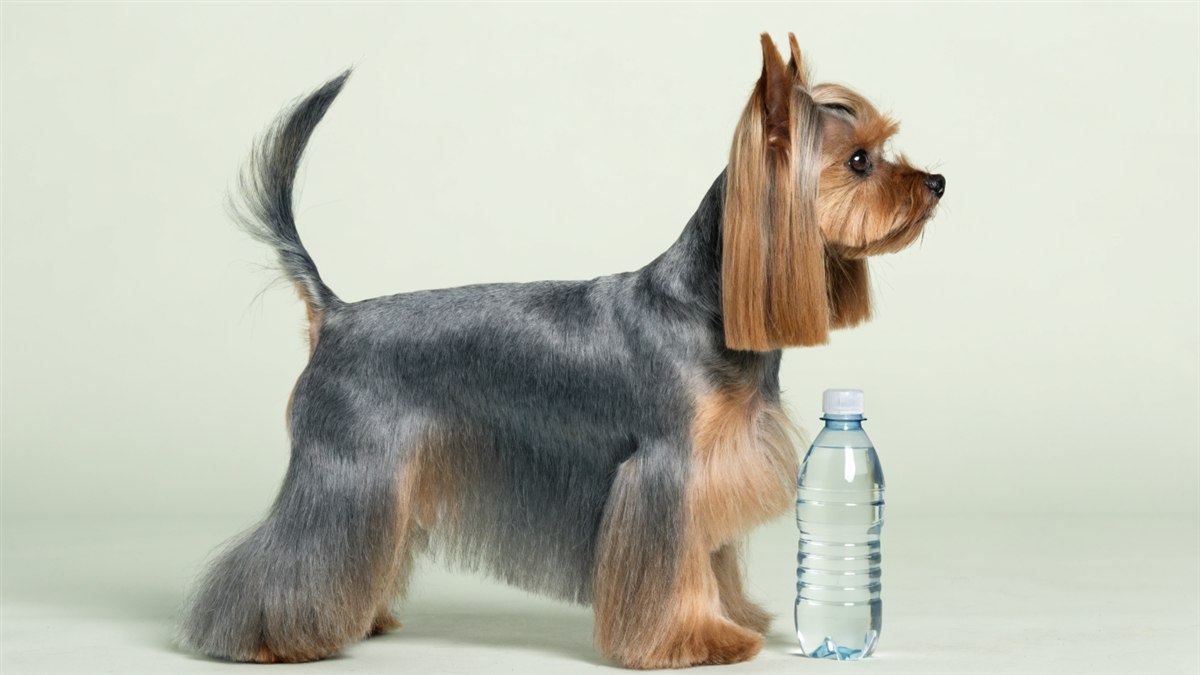
Quick answer
The Australian Silky Terrier is a toy terrier standing 23 to 26 cm, carrying a single flat silky coat that the standard says must not approach floor length. That coat clause separates it from a Yorkshire Terrier, while a harsh double coat and a 6.5 kg frame separate the Australian Terrier from both. Indian price data is thin, three published bands span Rs 25,000 to Rs 70,000, and Bonbeno rates heat tolerance 3 of 5.
This guide is general information for Indian pet owners and is not a diagnosis. Consult your nearby vet, a registered veterinarian, before acting on anything you read here, and treat any sudden change in your dog's condition as urgent.
Australian Silky Terrier at a glance
What an Australian Silky Terrier actually is
The Australian Silky Terrier is a toy terrier bred in Australia from the Australian Terrier and the Yorkshire Terrier, standing 23 to 26 cm at the withers and carrying a single flat silky coat short enough that daylight can be seen under the dog. It is the middle dog of three that Indian sellers treat as interchangeable, and the standards separate all three cleanly once you read them.
Start with the sentence that explains the whole breed. The FCI standard's own history section states that the two main ancestors of this breed were the Australian Terrier and the Yorkshire Terrier. Between 1820 and 1830 a Broken Coated Terrier bitch of a blue sheen colour, bred in Tasmania, was taken to England and mated to a Dandie Dinmont Terrier. A Mr Macarthur Little of London bought puppies from that litter and bred on to produce the soft silky coat, then migrated to Sydney and continued the programme using both Australian Terriers and Yorkshire Terriers. A standard was first drawn up in the early 1900s.
So the Silky is not a variant of either cousin. It is a deliberate third breed made from both, and it sits between them on almost every measurement that matters. The general appearance clause both Australian and FCI standards share opens by calling the dog compact, moderately low set, of medium length with a refined structure, and adds that the parted, straight silky hair presents a well-groomed appearance. Compact is doing real work in that sentence: it is a short-backed dog, not a long low one like its working cousin.
The three registries do not agree on what kind of dog this is
Dogs Australia, the country of origin and the owner of the standard, lists the Australian Silky Terrier under Group 1 (Toys). The Federation Cynologique Internationale lists the same breed under Group 3 Terriers, Section 4 Toy Terriers, with the utilisation given as Toy Terrier and companion dog. The American Kennel Club places it in the Toy Group and opens its standard with the phrase 'The Silky Terrier is a true toy terrier';.
All three are describing the same animal and the disagreement is only about filing. It matters anyway, because it is why an Indian buyer gets told two different things about what they are buying. Filed as a toy, the Silky reads as a lapdog. Filed as a terrier, it reads as a working dog. The AKC settles it in one line that no Indian page repeats: more a terrier than a lapdog, the Silky Terrier requires more exercise than most Toy Group breeds.
The coat clause, which is the whole argument
The AKC standard gives the coat in eleven words that settle every mis-sale question. Straight, single, glossy, silky in texture. Single is the load-bearing word. On matured specimens the coat falls below and follows the body outline, and the standard then adds the instruction that separates this breed from a Yorkshire Terrier at a glance: it should not approach floor length.
The Australian and FCI standards say the same thing from the other direction. The coat must be flat, fine and glossy and of a silky texture, and the length of coat must not be so long as to impede the dog's action and should allow daylight to be seen under the dog Federation Cynologique Internationale. A correctly coated Silky has visible daylight between its belly hair and the floor. A show-coated Yorkie does not.
The Yorkshire Terrier's AKC coat clause permits the coat to be trimmed to floor length. The Silky Terrier's AKC coat clause says the coat should not approach floor length. The Australian Terrier is not in this argument at all, because its body coat is a harsh straight dense top coat approximately 6 cm long with a short soft textured undercoat, which is a double coat and is meant to be left untrimmed. One breed has a long single coat, one has a medium single coat, one has a short harsh double coat. Nothing else about the three is as easy to check.
Size and weight, and the figure the standards refuse to give
Height is specified and weight is not. Dogs Australia and the FCI both put males at 23 to 26 cm at the withers, with bitches able to be slightly less, and then say only that weight is in proportion to height Federation Cynologique Internationale. Neither standard contains a kilogram figure anywhere. The AKC standard gives shoulder height as 9 to 10 inches, calls deviation in either direction undesirable, and likewise sets no weight. The nearest thing to an official weight is the AKC breed page's vital statistic of around 10 pounds, roughly 4.5 kg, which is a guideline rather than a standard requirement.
| Standard | Height specified | Weight specified | Coat structure |
|---|---|---|---|
| Australian Silky Terrier, Dogs Australia | 23 to 26 cm, dogs | None. In proportion to height | Flat, fine, glossy, silky texture |
| Australian Silky Terrier, FCI 236 | 23 to 26 cm, males | None. In proportion to height | Flat, fine, glossy, silky texture |
| Silky Terrier, AKC | 9 to 10 inches, 22.9 to 25.4 cm | None in the standard | Straight, single, glossy, silky |
| Australian Terrier, Dogs Australia | Approximately 25 cm, dogs | Approximately 6.5 kg, dogs | Harsh dense top coat 6 cm plus undercoat |
| Yorkshire Terrier, FCI 86 | None anywhere in the standard | Up to 3.2 kg | Moderately long, straight, fine silky |
Read that table before you accept any seller's description. The Australian Silky Terrier and the Australian Terrier stand within two centimetres of each other, so height cannot tell them apart. Weight and coat can, and the gap is large: an Australian Terrier at roughly 6.5 kg is about 45 percent heavier than a Silky at roughly 4.5 kg American Kennel Club. Against the Yorkshire Terrier the arithmetic runs the other way. The Yorkie standard caps weight at 3.2 kg and specifies no height at all, so the Silky is both taller and heavier than the breed it is most often confused with. The AKC says so in plain words on its own breed page, that the Silky is larger than his close cousin, the Yorkshire Terrier.
Colour, where two registries genuinely disagree
Adult colour is blue and tan in every standard, and the registries then part company over silver. The AKC standard states that the blue may be silver blue, pigeon blue or slate blue, with the tan deep and rich, and the topknot silver or fawn lighter than the tan points. The Australian and FCI standards accept all shades of blue and tan, call a silver blue or fawn topknot desirable, and then state flatly that silver and white are not acceptable as body colour.
That is a real disagreement, not a translation slip. A silver-blue-bodied Silky is describable under the AKC standard and is not acceptable under the standard written in its country of origin. The AKC also registers Silver and Tan, Gray and Tan and Silver Black and Tan as Silky Terrier colours, alongside Blue and Tan, Black and Tan and Blue Silver and Tan.
Both the Australian and FCI standards state that black colouring is permissible in puppies and that blue colour must be established by 18 months of age Federation Cynologique Internationale. A Silky puppy sold to you as black and tan is a normal puppy that has not finished changing colour. It is not a rare variety and it does not justify a higher price. If the dog is still black at two years, it has failed to meet the standard, which is the opposite of what a premium buys.
Registry recognition and dates, verified from the registries
The FCI's own nomenclature entry records the Australian Silky Terrier as breed number 236, recognised on a definitive basis on 3 October 1962, with the country of origin given as Australia and the official valid standard dated 8 October 2012 Federation Cynologique Internationale. The American Kennel Club records the year of recognition as 1959 and assigns the breed code 514. The current AKC standard was approved on 10 October 1989 and took effect on 30 November 1989. The Dogs Australia standard carries an Australian National Kennel Council 1997 line and was last updated on 22 May 2009.
Note the naming split, because it affects what you search for. The AKC calls the breed simply Silky Terrier and lists Silky and Sydney Silky as nicknames. Dogs Australia and the FCI call it the Australian Silky Terrier Federation Cynologique Internationale. Indian sellers use both, which is one reason the price pages are so hard to compare.
Temperament as the standards define it
The FCI standard asks for a dog that displays terrier characteristics, embodying keen alertness, activity and soundness, and calls it a courageous and dignified toy terrier that is second to none as a companion. The general appearance clause is blunter about what the breed was for: a refined structure but of sufficient substance to suggest the ability to hunt and kill domestic rodents Dogs Australia (Australian National Kennel…. The AKC standard requires the keenly alert air of the terrier, faults shyness or excessive nervousness, and describes the manner as quick, friendly and responsive. The AKC's own breed guidance adds the practical consequence: the breed has a strong prey drive, and a leash is essential when walking outside. Bonbeno's guide to terrier breeds covers what that instinct costs an Indian household in full.
Australian Silky Terrier price in India
Three Indian pages publish an Australian Silky Terrier price in India, and between them the bands run from Rs 25,000 to Rs 70,000, a spread of 2.8 to one on the same puppy. All three are content or marketplace pages rather than transaction data, one of them carries unreplaced demo text in its own footer, and the largest published Indian breed price list does not list this breed at all. Bonbeno reports the bands and the evidence about how reliable they are, and does not manufacture a range.
Here is what exists, taken off the raw pages rather than from a summary. Nothing is averaged, because averaging three numbers that were never measured the same way produces a figure that describes nothing.
| Source | Headline band | Basic or pet quality | KCI registered | Show quality |
|---|---|---|---|---|
| Tailsbuddy | Rs 25,000 to Rs 70,000 | Rs 25,000 to Rs 35,000 | Rs 35,000 to Rs 45,000 | Rs 45,000 to Rs 70,000 |
| Asiapets.in | Rs 25,000 to Rs 50,000 | Not broken out | Not broken out | Not broken out |
| HappyPet.care | Rs 40,000 to Rs 70,000 | Not broken out | Not broken out | Not broken out |
| Supertails, Dog Price List in India 2026 | Breed not listed | Breed not listed | Breed not listed | Breed not listed |
| Mr n Mrs Pet, the top-ranking result | Returned HTTP 403 to every request during research | Not readable, so not cited | Not readable, so not cited | Not readable, so not cited |
The bottom two rows carry as much information as the top three. Supertails publishes the most comprehensive Indian breed price table available, running to more than forty breeds and explicitly including the Maltese at Rs 25,000 to Rs 80,000, the Chihuahua at Rs 15,000 to Rs 50,000, the Lhasa Apso at Rs 10,000 to Rs 40,000 and the Bull Terrier at Rs 25,000 to Rs 70,000. The Australian Silky Terrier is not in it, and neither is the Yorkshire Terrier. A breed missing from the largest published Indian price list is a breed with too few transactions to have settled on a market price. That is the honest headline, and it is more useful than any band above it.
The Tailsbuddy page that supplies the three-tier price table used across the Indian web ends with the words 'Duis autem vel eum iriure dolor in hendrerit in esse molestie consemuat', an unreplaced Latin placeholder from a website template. Below it sits a postal address of 70 Bowman St South, Windsor, CT 06074, in the United States, two phone numbers beginning '+00', and three dated article stubs credited to a 'Naomi Jefferson';. A page that has not replaced its demo content has not verified its price table either. Treat the figures as advertising copy rather than market data, and never as an offer.
Check whether you are being sold a Yorkshire Terrier
This is the specific test an Indian buyer needs, and it is cheap to run. The same Tailsbuddy page lists the breed's common coat colours as Black and Gold, Silver and Tan, Grey and Tan, Blue and Tan, Silver Black and Tan. Four of those five match the AKC's registrable colour list for the Silky Terrier exactly. One does not. Black and Gold is a Yorkshire Terrier colour, one of the four the AKC registers for that breed, and it is not on the AKC's Silky Terrier list at all.
One swapped colour is not proof that any individual puppy is mislabelled. It is proof that Yorkshire Terrier content has been pasted into an Indian Silky Terrier page, which is exactly the mechanism by which a Yorkie gets sold as a Silky. Since the two breeds share an ancestor, blue and tan colouring and a silky single coat, the resemblance does the rest.
- Measure the height at the withers. A Silky is 23 to 26 cm, and no Yorkshire Terrier standard anywhere specifies a height, because the breed is defined by weight instead Federation Cynologique Internationale. The AKC's own vital statistic for a Yorkie is 7 to 8 inches against 9 to 10 inches for a Silky American Kennel Club.
- Weigh the adult dog. A Yorkshire Terrier is capped at 3.2 kg by the standard that governs KCI registration. A Silky's guideline weight is around 4.5 kg American Kennel Club.
- Look under the dog. A correct Silky coat allows daylight to be seen underneath and must not approach floor length. A Yorkie coat may be trimmed to floor length.
- Check the ears. The Silky standard requires ears entirely free from long hair, and calls a long fall of hair on the foreface or cheeks very objectionable. A Yorkie's head fall is long by design.
- Ask for the KCI paperwork and read the breed name on it. If the pedigree says Yorkshire Terrier, you are buying a Yorkshire Terrier at a Silky Terrier price.
What the KCI registration premium actually costs the breeder
The Indian price tables charge roughly Rs 10,000 more for a KCI registered puppy than for a basic one. The Kennel Club of India's own revised tariff sheet, effective 1 April 2024, prices litter registration at Rs 750 per puppy within 60 days, rising to Rs 1,200 between 61 and 120 days and Rs 2,000 between 121 and 180 days, with transfer of ownership within twelve months of birth costing Rs 500. Registering an imported dog costs Rs 2,500 and a certified four-generation pedigree costs Rs 1,000.
So the paperwork behind a Rs 10,000 step costs the breeder about Rs 1,250 if it is done promptly. That does not make the premium dishonest, because a breeder who registers litters is usually doing other things properly too. It does mean you should ask to see the certificate rather than pay for the word.
Why no lawful bulk supply chain can form for this breed
India regulates the import of dogs tightly, and for a breed this rare the regulation is the reason there is no settled price. Under the Directorate General of Foreign Trade's Trade Notice No. 22/2022-23 dated 19 December 2022, mammals under ITC (HS) 01061900 are a Restricted import. Policy Condition 7 permits the import of dogs only for a pet dog with a valid pet book and relevant records in the name of the importer, for R&D organisations with a CPCSEA recommendation, or for internal security by the Defence and Police Force. Policy Condition 8 states that import of commercial dogs for breeding or any other commercial activities other than the purposes mentioned above is not permitted.
The notice then removes any ambiguity. Paragraph 6 states that any applications for trading or breeding purposes, or applications made on behalf of some another person or entity, shall be duly rejected, and paragraph 7 limits entry to the airports and seaports of Delhi, Mumbai, Chennai, Hyderabad, Bangalore and Kolkata. DAHD added a seventh port, Cochin International Airport at Kochi, for pets arriving under the baggage rules in October 2024. Up to two pets may come in as passenger baggage without a DGFT authorisation, and only for a person transferring residence to India after two years of continuous stay abroad. The full route is set out in how to import a dog to India.
Every Australian Silky Terrier lawfully in India arrived either as a returning resident's personal pet or was bred here from such dogs. Nobody can lawfully import breeding stock to scale the breed up. That is why the breed is absent from the largest Indian price list, why three published bands disagree threefold, and why a seller offering several Silky puppies at short notice deserves harder questions than usual Supertails, Dog Price List in India.
What a lawful Indian sale must include
The Prevention of Cruelty to Animals (Dog Breeding and Marketing) Rules, 2017, notified as G.S.R. 496(E) on 23 May 2017, set the floor. Rule 3(1) states that no breeder shall carry on or continue any breeding activity, or own or house dogs for breeding and sale, unless the breeder has obtained a certificate of registration from the State Animal Welfare Board. Rule 8 then lists the conditions for sale, and the ones you can check in five minutes are these.
- Verify the age. Rule 8(1)(a) states that pups less than eight weeks in age are not sold.
- Verify the chip. Rule 8(1)(e) requires that each pup sold is micro-chipped and that a complete record of treatment and vaccination is maintained.
- Verify the receipt. Rule 8(1)(g) requires a receipt to each purchaser, with the breeder retaining a copy carrying the micro-chip number and your name, address and phone number.
- Verify the written handover. Rule 8(2) requires the breeder to furnish you in writing with feeding details, dates of inoculations and de-worming, and the name and address of the attending veterinary practitioner.
- Expect to be screened yourself. Rule 8(3) requires every breeder to screen prospective purchasers to ascertain their potential to take proper care of the breed, expressly including its grooming needs and the ability to bear the expense of upkeep. For a long-coated toy dog that clause is not a formality.
Puppies must also not be displayed in public places for the purpose of immediate sale, under Rule 8(1)(f). A pet shop window full of puppies is not a lawful shopfront for this transaction.
Bonbeno does not recommend breeders, link puppy listings or broker sales. The bands above are reported from published pages as editorial content and are not offers.
The real monthly cost of a Silky in India
Budget Rs 3,300 to Rs 7,600 a month for an Australian Silky Terrier in an Indian metro, and understand that the size of that range is decided almost entirely by how much of the coat work you do yourself. This is the one place where the Silky is genuinely cheaper than a Yorkshire Terrier, because the standard forbids a floor-length coat, and a shorter coat is a smaller grooming bill.
Two Indian sources give a monthly figure. HappyPet.care puts average monthly expenses for this breed at Rs 3,300 to Rs 5,400, with monthly food at Rs 1,200 to Rs 1,800. Supertails, working from a small-breed category rather than this breed, puts the small-breed monthly total at Rs 4,000 to Rs 8,000, built from food at Rs 1,500 to Rs 2,500, routine vet visits at Rs 500 to Rs 1,000, grooming at Rs 1,500 to Rs 3,000, treats and toys at Rs 300 to Rs 800, flea and deworming at Rs 300 to Rs 600, and vaccinations at Rs 1,200 a year.
Neither figure is wrong. They describe two different owners, and the difference between them is the brush.
Price the grooming from a groomer's rate card, not a seller's blog
ThePetNest's 2026 city-wise pricing survey puts a full groom for a long-coated dog at Rs 1,800 to Rs 3,500 in Mumbai, Rs 1,500 to Rs 3,000 in Bangalore, Rs 1,400 to Rs 2,500 in Pune and Rs 1,200 to Rs 2,500 in Hyderabad, at a recommended frequency of every four to six weeks. Dematting is billed separately at Rs 500 to Rs 1,500 on top, charged the moment a coat has gone past brushing. Supertails independently prices a professional groom for a Shih Tzu, a comparable long-coated small breed, at about Rs 2,500 per visit.
| City | Salon-led, 9 full grooms a year | Home-led, 4 full grooms a year | Annual difference |
|---|---|---|---|
| Mumbai | Rs 16,200 to Rs 31,500 | Rs 7,200 to Rs 14,000 | Rs 9,000 to Rs 17,500 |
| Bangalore | Rs 13,500 to Rs 27,000 | Rs 6,000 to Rs 12,000 | Rs 7,500 to Rs 15,000 |
| Pune | Rs 12,600 to Rs 22,500 | Rs 5,600 to Rs 10,000 | Rs 7,000 to Rs 12,500 |
| Hyderabad | Rs 10,800 to Rs 22,500 | Rs 4,800 to Rs 10,000 | Rs 6,000 to Rs 12,500 |
Nine sessions a year is the arithmetic of a five-week interval, sitting in the middle of the four to six week band ThePetNest recommends for a long coat. Four sessions a year is the home-led route: you brush and bath at home on the AKC's schedule and book a professional for a quarterly reset, including the June trim-down. The home-led route is only honest if you actually brush. A Silky that goes to the salon four times a year without daily attention in between arrives matted, and dematting at Rs 500 to Rs 1,500 a visit erases most of the saving.
A full annual budget, built from priced components
| Line | Salon-led, low | Salon-led, high | Source |
|---|---|---|---|
| Food, small or toy breed formula | Rs 18,000 | Rs 30,000 | Supertails, Dog Price List in India |
| Routine veterinary visits | Rs 6,000 | Rs 12,000 | Supertails, Dog Price List in India |
| Annual vaccination boosters | Rs 1,200 | Rs 1,200 | Supertails, Dog Price List in India |
| Treats, dental chews and toys | Rs 3,600 | Rs 9,600 | Supertails, Dog Price List in India |
| Tick, flea and deworming | Rs 3,600 | Rs 7,200 | Supertails, Dog Price List in India |
| Professional grooming, 9 long-coat sessions | Rs 16,200 | Rs 31,500 | ThePetNest, Ultimate Guide to Pet Grooming… |
| Annual total, salon-led | Rs 48,600 | Rs 91,500 | |
| Monthly equivalent, salon-led | Rs 4,050 | Rs 7,625 | |
| Monthly equivalent, home-led with 4 grooms | Rs 3,300 | Rs 6,167 |
The salon-led band of Rs 4,050 to Rs 7,625 a month sits neatly inside Supertails' small-breed estimate of Rs 4,000 to Rs 8,000. The home-led floor of Rs 3,300 lands exactly on HappyPet's stated floor for this breed. Two sources built from different methods converging on the same two numbers is about as much confidence as Indian pet-cost data currently allows.
The AKC's grooming guidance for this breed is that the coat should be brushed at least twice a week with a pin brush or soft bristle brush, nails trimmed once a month, and a bath given every four to six weeks. Compare that with the same organisation's Yorkshire Terrier guidance, which asks for daily brushing on a coat kept long. The difference is not a difference of opinion, it is the coat clause: a Silky coat must not approach floor length, so there is simply less hair to manage. Over a thirteen-year life in Mumbai, that clause is worth somewhere between Rs 1,17,000 and Rs 2,27,500 in avoided salon visits, on the difference between the two grooming routes above.
The AKC's twice-a-week figure was not written for an Indian monsoon
Take that saving carefully. The AKC's twice-a-week brushing schedule assumes a temperate North American home, and ThePetNest's Indian guidance is explicit that long-coat breeds prone to matting need daily brushing and that grooming frequency should rise by 25 to 30 percent from June to September. The same survey warns that in India's humidity a half-dry coat can develop a fungal infection within hours during monsoon season.
Bonbeno's position, stated plainly, is that the twice-a-week figure holds for eight months of the Indian year and does not hold from June to September. Budget four extra salon visits or four months of daily brushing, and do not treat the club's number as a year-round instruction.
The line nobody budgets for is anaesthesia
Dental disease is the recurring surgical cost in every toy breed and it arrives on a schedule Indian buyers rarely plan for. Royal Canin's veterinary review of small-breed medicine notes that small dogs are more likely to suffer retained deciduous teeth and periodontal disease than larger dogs, hypothesised to follow from small mouths and crowded teeth, and that the smaller, more delicate jaws of these dogs have less bone, making them more susceptible to loose teeth, pathologic bone loss, and even the possibility of mandibular fractures during dental procedures. Every one of those procedures is a general anaesthetic.
Bonbeno does not publish an Indian surgical price estimate for this breed, because no reliable published figure exists and inventing one would be worse than saying so. What we can tell you is which line items to raise with your own vet, priced in your own city, before you commit. Assume a dental under anaesthetic from middle age onward, and ask what one costs where you live.
There is no CHIC health-testing bundle to pay for. The Silky Terrier Club of America's health statement filed with the AKC states in full that the club does not have any health requirements and that its health committee is currently reviewing the policy. The AKC's own recommended-tests field for the breed reads No recommended health tests. That saves money and costs assurance, and the health section below explains why the second matters more.
Heat tolerance and the Indian climate, rated 3 of 5
Bonbeno rates the Australian Silky Terrier 3 out of 5 for heat tolerance in Indian conditions. The frame is favourable and the coat is the constraint, which is the opposite of how every Indian page describes this breed. A single silky coat behaves very differently from the harsh double coat on its Australian cousin, and reasoning that difference through is the only way to get the rating right.
Two Indian pages tell you this breed is fine in Indian heat, and neither cites anything. Tailsbuddy states that the breed's tolerance to heat and high temperatures is really good which means they can comfortably thrive in a hotter country (India), on the same page that carries unreplaced lorem ipsum demo text and a Connecticut postal address in its footer. Bonbeno will not repeat an unsourced verdict from a page that has not proofread itself. Here is the reasoning instead, built from the standards and the published heat-illness evidence.
What works in the breed's favour
- Small body mass. At roughly 4.5 kg the Silky sits at the opposite end of the published risk distribution from the dogs that get into trouble. In the largest study available, covering 905,543 dogs under UK veterinary care in 2016, dogs weighing over 50 kg were at greater risk of heat-related illness. A small dog carries less heat-generating tissue per unit of skin, so it sheds heat proportionally faster.
- An open airway. The Silky is not brachycephalic. The standard describes a head of moderate length, only slightly shorter from the tip of the nose to between the eyes than from the same position to the occiput, with a defined but moderate stop. Panting is the only cooling mechanism a dog has, and in the 905,543-dog study a brachycephalic skull shape was an independent risk factor. This breed has the airway to cool itself.
- No insulating undercoat. The AKC standard specifies the coat as straight, single, glossy, silky in texture. A double coat works by trapping a still layer of air against the skin, which slows heat transfer in both directions and holds moisture in humid air. A single coat has no such layer, so heat and moisture move through it far more freely.
- A standard that mandates air movement. Both the Australian and FCI standards require that the coat should allow daylight to be seen under the dog Federation Cynologique Internationale. A coat open enough to transmit light is a coat open enough to convect. That clause is a grooming instruction, and in India it is also a cooling instruction.
- Absent from both published risk lists. Purina India names two categories of breed at particular risk of heat stroke, short-faced breeds such as Boxers, Bulldogs, Pugs and Pekingese, and heavy-coated breeds such as Huskies and Newfoundlands. The Silky is in neither. The Australian study of heat-related illness in New South Wales named sixteen elevated-risk breed groups and the Silky Terrier was not among them.
What holds the rating down to 3
Four things, and none of them is the airway.
- The coat is still long over the trunk. Single is not the same as short. A correct Silky coat falls below and follows the body outline, so the trunk carries a full-length blanket even though the legs and feet are clear. Against a genuinely short-coated Indian breed this is a real handicap, and it is why the Silky does not reach 4.
- Humidity is a named risk factor and this coat holds water. Purina India lists excessive humidity among the general risk factors for heat stroke. ThePetNest's Indian survey warns that a half-dry coat can develop a fungal infection within hours in monsoon conditions, and that a shorter coat dries roughly three times faster. A wet long coat is both a skin problem and an insulation problem.
- The breed self-exerts. The AKC states plainly that the Silky requires more exercise than most Toy Group breeds and has a strong prey drive. Purina India warns that vigorous exercise in hot weather can produce heat stroke in as little as 30 minutes. Exertion is the trigger in the published evidence, and this is a dog that will chase a squirrel across hot concrete without being asked.
- Small size is not a licence. The New South Wales study covering 1997 to 2017 found 119 heat-related illness cases with a fatality rate of 23 percent, and its elevated-risk list included the Italian Greyhound, a small, lean, thin-coated toy breed. Whatever protects a small dog, it is not enough on its own.
The two breeds reach the same rating by different routes, and the difference is worth knowing. The Yorkshire Terrier is held at 3 by a documented airway disease that heat and humidity make worse. The Silky is held at 3 by coat length and self-exertion, on a frame that is otherwise slightly better: taller, heavier, sturdier and with a coat the standard forbids to reach the floor Federation Cynologique Internationale. No published prevalence figure for tracheal collapse exists for the Silky Terrier, and Bonbeno will not borrow the Yorkshire Terrier's. What Royal Canin's small-breed review says, and all it says, is that tracheal collapse is virtually unheard of in larger dogs and not uncommon in small and toy breeds as a group.
City by city, what actually changes
| Setting | Dominant risk | What to change |
|---|---|---|
| Delhi NCR, Jaipur, Ahmedabad, dry summer heat | Radiated road heat on a dog whose chest sits roughly 20 cm off the ground, plus long afternoons above 40 C | Walk before 7 am and after 8 pm from March to June. Press the back of your hand to the pavement for five seconds first. If you cannot hold it, neither can the dog. |
| Mumbai, Chennai, Kochi, humid year round | Humidity as a named heat-stroke risk factor, plus coat drying time after every bath | Never leave the coat half dry. Run a fan or air conditioning at rest, and keep the coat at standard length rather than growing it long for looks. |
| Bangalore, Pune, mild but with a long monsoon | Monsoon skin disease rather than heat | Increase grooming frequency 25 to 30 percent from June to September and dry the coat completely every time. |
| Kolkata, hot plus humid plus a long monsoon | Both problems at once | Trim the coat shorter in June. A shorter coat dries about three times faster, which prevents most monsoon skin trouble. |
| Hill stations and north Indian winters | Cold, not heat | A single-coated toy dog has almost no insulation, because there is no undercoat to trap warm air. Use a coat below about 12 C. |
One Indian veterinary dermatologist quoted in ThePetNest's survey reports a 40 percent spike in skin-related consultations during monsoon, and attributes almost all of it to owners treating a mostly dry coat as dry enough. For a silky single coat that mats against itself, mostly dry is never dry enough.
Purina India lists the signs as severe panting, difficulty breathing, severe salivating, vomiting, diarrhoea, a raised temperature of 40.5 C or above, blood in the urine, nose bleeds, and ultimately collapse. Move the dog into shade or air conditioning, sponge cool but not cold water onto the belly and inside the legs, use a fan, never use an ice bath, and stop cooling at 39.4 C to avoid overshooting into hypothermia. On the car: when the outside temperature is 26 C the inside of a car reaches 32 C in five minutes and 43 C in twenty-five minutes. Indian summer afternoons start well above 26 C. Consult your nearby vet immediately if you suspect heat stroke, because it is an emergency, not a wait-and-see.
One last framing point. In the 905,543-dog study, higher bodyweight relative to the breed and sex mean was an independent risk factor for heat-related illness, alongside being over two years of age. A Silky is small in absolute terms and can still be fat in relative terms, and a 6 kg Silky is carrying about a third more than the breed guideline. Keeping the dog lean is the cheapest heat protection available and it costs nothing.
Temperament and who should buy one
Buy an Australian Silky Terrier if you want an alert, affectionate, opinionated terrier that fits an apartment and will not be ignored. Skip it if you want a quiet lapdog, if you keep a cat or a rabbit, or if the house is empty for ten hours a day. The standards call it a courageous and dignified toy terrier; the AKC calls it more terrier than lapdog. Both are describing the same dog.
The FCI and Australian standards ask for a dog that displays terrier characteristics, embodying keen alertness, activity and soundness, and describe it as a courageous and dignified toy terrier that is second to none as a companion. The AKC standard requires the keenly alert air of the terrier and faults shyness or excessive nervousness, with the manner given as quick, friendly and responsive.
Then read the general appearance clause again, because it is the honest one. The breed is of refined structure but of sufficient substance to suggest the ability to hunt and kill domestic rodents Dogs Australia (Australian National Kennel…. That is not decorative language. It is what the dog was selected for, and it is why the AKC's practical guidance says the breed has a strong prey drive, and a leash is essential when walking outside.
The prey drive is the thing Indian sellers never mention
A dog bred to pursue and dispatch rodents without waiting for instruction is not a neutral flatmate for a cat, a hamster or an unsupervised balcony with pigeons on the railing. No amount of training removes the instinct, and the AKC's advice to keep a leash on outside is a management instruction rather than a suggestion. Indian marketplace pages list prey drive among the breed's considerations, so the information is not hidden, it is simply printed below the price.
Noise is the second thing. Indian sources rate the breed a good watchdog and note it can be barky, and Tailsbuddy adds that Silkies can be a little noisy, sometimes and do not get along that well with other dogs. In an Indian apartment block with shared walls, an alert watchdog that announces every lift arrival becomes a neighbour problem within a fortnight unless a quiet cue is trained early.
The temperament trap is the owner, not the dog
The AKC names the failure mode precisely. Silky Terriers need owners who have the time to devote to them, they do not like to be ignored, preferring to play fetch or go on walks with their family, and taken by the breed's charm, owners may be tempted to let a Silky Terrier get away with undesirable behaviours; it is best to make rules and stick to them.
Royal Canin's veterinary review supplies the evidence behind that warning. One study set 14 categories of undesirable behaviour against a dog's height and weight, covering stranger-, owner- and dog-directed aggression, dog rivalry, stranger-directed and dog-directed fear, non-social fear, touch sensitivity, separation-related behaviour, attachment and attention seeking, trainability, chasing, excitability and energy level. The regression coefficients were negative for all 14 except trainability and stranger-directed fear. In plain terms, the smaller the dog, the more problem behaviours are reported.
The review then asks whether that is genetic or whether it is how people treat small dogs, and leans toward the second. Owners tolerate behaviour in a small dog they would never accept from a large one, may not require it to respond to commands, may carry it rather than expect it to walk, and may overprotect it in a way that interferes with socialisation. Every one of those is a choice an Indian owner makes daily with a 4.5 kg dog in a crowded lift lobby.
The correlation between small size and reported bad behaviour is not the dog's fault and it is not fixed by apologising for it. It is fixed by treating a 4.5 kg terrier as a dog: making it walk, making it respond to a cue, and letting it meet the world on its own four feet before sixteen weeks of age. A Silky that is carried past every dog it meets learns that other dogs are a threat, which is exactly the outcome the carrying was meant to prevent.
Children, other pets and being left alone
Indian sources rate this breed 4 out of 5 with family, 3 with children, 3 with strangers and 2 with other pets, which is the lowest of the four and consistent with everything the standards say about prey drive. Treat the children rating carefully rather than as reassurance. Royal Canin notes that in the smallest toy dogs, fractures occur after a short fall or jump, from being stepped or sat on, or even from rough play. A Silky at 4.5 kg is sturdier than a 2.5 kg Yorkshire Terrier and is still not a dog for a household with toddlers.
On being left alone, the AKC's line that the breed does not like to be ignored is the whole answer. A ten-hour Indian office day with nobody home is a poor match for a dog that was bred to be busy and wants a job. If that is your household, a second adult at home or a midday break is not optional.
| Good fit | Poor fit |
|---|---|
| Apartment households with someone home most of the day | Homes empty for ten hours a day |
| Owners who will actually brush a coat several times a week | Buyers who want the look without the maintenance |
| Adults, teenagers and calm older children | Homes with toddlers or children under seven |
| Households with no cat, rabbit, hamster or free-flying bird | Households with small pets the dog will hunt |
| Owners who want a terrier and know it | Owners who wanted a quiet lapdog and were sold a toy label |
| Buyers who have read the standards and can tell three breeds apart | Buyers relying on a seller's word about which breed this is |
One correction to the Indian marketplace copy. Asiapets lists stubborn among the breed's considerations. The behaviour research says the opposite about this size class: trainability was one of only two of 14 behaviour categories that did not worsen with decreasing size. A Silky that ignores you is usually a Silky that was never taught, not a Silky that cannot learn.
Training an Australian Silky Terrier in India
To train an Australian Silky Terrier, set house rules on day one and enforce them consistently, teach coat handling before you teach anything else, and never trust recall against a moving squirrel. The breed is trainable and the AKC's own warning is about the owner rather than the dog. Expect house training to take longer than it would with a larger breed, for an anatomical reason rather than a behavioural one.
The AKC's guidance for this breed is unusually direct. Silky Terriers can adapt well to any living situation but need owners with the time to devote to them, because they do not like to be ignored. Taken by the breed's charm, owners may be tempted to let a Silky Terrier get away with undesirable behaviours; it is best to make rules and stick to them. Read that as the training plan, not as a caution. Consistency is the intervention.
Coat handling comes before sit
This is the training priority that separates a Silky from a short-coated terrier, and Indian pages never rank it first. You will brush this coat several times a week for thirteen years and bath it every four to six weeks. A puppy taught at ten weeks to lie still for a comb, a toothbrush and a nail clipper saves a decade of wrestling and, more practically, saves the dematting surcharge of Rs 500 to Rs 1,500 that a groomer charges when a coat has gone past brushing.
- Start on a table or a raised surface, so the dog learns that this position means grooming and not play.
- Pair every session with food from the first day, before there are any tangles to fight about.
- Work through the four places that mat first, which are behind the ears, under the front legs, along the belly and around the tail.
- Finish while the dog is still relaxed rather than when the coat is finished, for the first month.
- Handle the feet daily, because the standard requires front and rear feet free from long hair and a groomer will need to work there.
- Clip one nail on the first day, two on the second, and build up rather than attempting all eighteen at once. The AKC asks for nails trimmed monthly for thirteen years, so a dog that fights the clippers is a monthly problem.
House training is genuinely harder, and it is anatomy
Royal Canin supplies the mechanism that Indian owners usually mistake for disobedience: toilet training can be difficult in tiny dogs because of the minute capacity of the bladder, so these dogs need to be taken outside more frequently than their larger relatives. A Silky is at the larger end of the toy range, so it is easier than a 2 kg dog and still harder than a Labrador.
- Take the puppy out on a fixed schedule rather than on request, roughly every 60 to 90 minutes awake at 8 to 12 weeks, stretching as the bladder grows.
- Reward at the spot within two seconds, every single time, for the first month.
- Use an indoor toilet area alongside outdoor trips if you live above the eighth floor, because a lift ride is longer than a ten-week-old toy puppy's bladder allows.
- Avoid punishing an accident, which in a breed the standard says should never be shy produces hiding rather than continence.
- Expect three to five months to reliability rather than the six to eight weeks a large-breed owner reports.
Socialisation, and the Indian timing problem
Under Rule 8(1)(a) of the Dog Breeding and Marketing Rules 2017, a pup less than eight weeks in age may not be sold in India. You therefore take delivery with roughly six to eight weeks of the primary socialisation window left, and you spend part of that finishing the vaccination course. Do not waste it.
Carry the puppy out to meet traffic noise, lift doors, tiled floors, delivery riders, autorickshaw horns, temple bells, cattle and calm adult dogs before it is safe to walk on the ground. You have to socialise this dog deliberately in those eight weeks, because nothing about an Indian apartment does it for you. Royal Canin's warning applies exactly here: overprotected small dogs miss this stage because owners carry them instead of letting them experience the world. Carrying a puppy to a new place is socialisation. Carrying an adult dog past every dog it meets is avoidance, and the two look identical from the outside.
Train recall properly and then behave as though it will fail. A dog whose standard describes the substance to hunt and kill domestic rodents, and whose registry tells you a leash is essential outside, is a dog that will not hear you once something small starts moving American Kennel Club. In Indian conditions the specific hazards are open society gates, unfenced parks, monkeys, street cats and traffic. Use a long line in open ground rather than trusting a cue against instinct.
Three behaviours to train before anything else
- Quiet on cue. The breed is an alert watchdog that Indian sources describe as barky. In an apartment block this single behaviour decides whether your neighbours tolerate the dog.
- Four on the floor. Medial patellar luxation is a standard differential for hind-limb lameness in small dogs, so limit repeated jumping down from sofas and beds while the puppy is growing.
- Settle on a mat. A terrier that wants a job and is given none will invent one. Fifteen minutes of scent work or a food puzzle settles this dog more reliably than an extra kilometre of hot pavement.
On cost, published Indian training figures are for dogs in general rather than for this breed, and they are small against the grooming bill. Supertails puts training over six months at Rs 0 to Rs 3,000 for a small breed, which is the lowest of its four size bands. Spend it. A trained 4.5 kg terrier is a pleasure and an untrained one is thirteen years of apologising in the lift.
How much exercise a Silky actually needs
An Australian Silky Terrier needs more daily exercise than most toy breeds, which is the single most under-reported fact about this dog in India. The American Kennel Club states it outright, and every Indian page that files the Silky under low-maintenance apartment pets is contradicting the registry that recognises it.
The AKC's exercise guidance runs as follows. More a terrier than a lapdog, the Silky Terrier requires more exercise than most Toy Group breeds. Intelligent, bold, and energetic, Silkies need human partners who will know how to channel that energy into daily exercise and training for sports and work. The breed does well in the conformation ring and Silkies have been successful in companion events, particularly agility.
Set that against the Indian marketplace copy, which lists exercising needs as manageable and files the breed as a fine apartment choice Asiapets.in, Silky Terrier breed…. Both things are true and the framing matters. The Silky fits an Indian flat by floor area. It does not fit a household that plans to walk it once around the block and call the day finished.
A workable Indian daily plan
- Walk twice a day, before 7 am and after 8 pm from March to June in most Indian cities, because Purina India advises exercising in the cooler parts of the day and warns that vigorous exercise in hot weather can cause heat stroke in as little as 30 minutes.
- Add fifteen minutes of scent work, a food puzzle or a new trick daily. A terrier bred to hunt rodents needs something to do with its brain, and mental work settles this dog more reliably than distance.
- Use a long line in any unfenced space, because the standard's hunting instinct and the AKC's leash instruction both point the same way.
- Limit repeated jumping down from furniture while the dog is growing, since medial patellar luxation sits among the standard hind-limb differentials for small breeds.
- Consider agility once the dog is skeletally mature, which is the activity the AKC specifically names for this breed.
A Silky's chest sits roughly 20 cm off the ground, inside the layer of radiated heat coming off asphalt that you cannot feel standing upright. Press the back of your hand flat to the pavement and hold it for five seconds. If you have to lift it, so would your dog, and the coat over its belly is close enough to the surface to gain heat rather than shed it. In that case walk on grass, walk later, or do the day's work indoors.
What happens without it
An under-exercised terrier does not become calm, it becomes noisy and destructive. Indian sources already flag barking and scrappiness among the breed's considerations, and both worsen in a dog with unspent drive Tailsbuddy, Silky Terrier Dog and Puppy…. The second consequence is weight. Higher bodyweight relative to the breed and sex mean was an independent risk factor for heat-related illness in the 905,543-dog study, so an under-exercised Silky in an Indian summer is compounding two problems at once.
The AKC's framing is the honest one for an Indian buyer to sit with before purchase. This breed asks for a human partner who will channel its energy. If nobody in the household wants that job, the breed is the wrong choice however well it fits the flat.
Grooming a silky single coat in Indian humidity
Brush an Australian Silky Terrier at least twice a week and daily through the monsoon, bath it every four to six weeks, and keep the coat at the length the standard describes rather than growing it long. This is the section where the breed's own registry advice needs correcting for India, because the AKC's schedule was written for a climate that does not have a four-month wet season.
Start with what the AKC says, because it is correct as far as it goes. The Silky Terrier's coat should be brushed at least twice a week with a pin brush or soft bristle brush. A long-toothed metal comb helps work through areas where tangles are beginning to form. Left unattended, tangles and mats are uncomfortable and can cause skin problems. Nails should be trimmed once a month, and a bath every four to six weeks with a gentle shampoo keeps the coat and skin clean.
That is a lighter routine than a Yorkshire Terrier needs, and the reason is written into the standard rather than into anyone's opinion. A Silky coat should not approach floor length and must allow daylight to be seen under the dog, so there is less hair to manage and shorter hair mats more slowly.
Where the AKC schedule stops working in India
ThePetNest's Indian grooming survey, which prices and schedules grooming across four Indian cities, gives different advice for a long-coated dog here. Brush dogs two to three times weekly, daily for long-coat breeds prone to matting, book professional grooming every four to six weeks for long-coat breeds, and during monsoon increase frequency by 25 to 30 percent across the board.
The two are not in conflict about the dog. They are in conflict about the weather. Bonbeno's position is that the AKC's twice-a-week figure holds from October to May and does not hold from June to September, when a silky coat that stays damp becomes a skin problem rather than a cosmetic one.
ThePetNest's survey is explicit that in India's humidity a half-dry coat can develop fungal infection within hours in monsoon season, and instructs drying completely at every session. An Indian veterinary dermatologist quoted in the same survey reports a 40 percent spike in skin-related consultations during monsoon and says almost all of it is preventable by drying the coat completely after every bath or walk. On a single coat with no undercoat to wick water outward, the belly and the armpits stay wet longest. Dry those two places last and check them with your fingers, not by eye.
The June decision every Indian Silky owner has to make
Trim the coat shorter in June. ThePetNest's monsoon checklist puts it first: keep long coats trimmed shorter in June, because a shorter coat dries three times faster, and this one change prevents most monsoon skin issues. The survey also recommends running a dehumidifier set to 50 to 55 percent relative humidity indoors, noting that humidity above 70 percent in Indian monsoons creates the same warm damp environment on a coat as outdoors, particularly for flat dwellers in Mumbai and Chennai where ventilation is limited.
A shorter summer coat costs you nothing in this breed that it would cost in another, because the standard already forbids the floor length that makes a trim feel like a loss. Growing an Indian Silky's coat past standard length is a choice to buy a grooming problem.
The four places that mat, and the five things the standard asks you to keep clear
- Behind the ears, where the head fall meets the neck hair.
- Under the front legs, which stay damp longest after a bath.
- Along the belly, the part of the coat that sits closest to hot or wet ground.
- Around the tail and vent, which the standard requires to be free of feathering.
- Between the toes, where the standard requires front and rear feet to be free from long hair and where Indian monsoon walks deposit grit and water.
Two more standard requirements double as grooming instructions. The topknot must be fine and silky and not falling over the eyes, with a long fall of hair on the foreface or cheeks called very objectionable, which means the hair over the eyes is trimmed or tied up rather than left to irritate the cornea. And the ears must be entirely free from long hair. In an Indian monsoon that second clause is a health rule, because a pricked ear kept clear of hair is an ear that dries.
| City | Basic bath and dry | Full groom, long coat | Recommended interval |
|---|---|---|---|
| Mumbai | Rs 500 to Rs 800 | Rs 1,800 to Rs 3,500 | Every 4 to 6 weeks |
| Bangalore | Rs 450 to Rs 700 | Rs 1,500 to Rs 3,000 | Every 4 to 6 weeks |
| Pune | Rs 400 to Rs 650 | Rs 1,400 to Rs 2,500 | Every 4 to 6 weeks |
| Hyderabad | Rs 350 to Rs 600 | Rs 1,200 to Rs 2,500 | Every 4 to 6 weeks |
Those are 2024 to 2025 market rates as published, and dematting is billed separately at Rs 500 to Rs 1,500 when a coat has gone past brushing. The dematting line is the one you control. It is the price of the brushing you did not do.
One Indian price page prints a breed attribute box with HYPOALLERGENIC: Yes. There is no such thing. A study measuring Can f 1, the major dog allergen, in hair and coat samples and in home dust found significantly higher Can f 1 concentrations in the hair and coat of so-called hypoallergenic breeds than in control breeds, with no difference in airborne levels between groups, and concluded there is no evidence for the classification of certain dog breeds as being hypoallergenic. A Silky sheds less visibly than a double-coated dog because a single coat drops hair into the coat instead of onto the sofa. That is a housekeeping difference, not an allergy one. If someone in the household is allergic, consult your nearby vet and an allergist before you buy, not after.
Health risks, lifespan and what the evidence does not cover
The Australian Silky Terrier has three documented breed-specific risks in the published literature, cataracts, portosystemic shunts and cystine urinary stones, and almost nothing else, because the breed-specific evidence base for this dog is one of the thinnest Bonbeno has worked with. Its parent club publishes no health requirements at all. This section gives the three real figures, names what is missing, and borrows nothing from the Yorkshire Terrier.
Consult your nearby vet before acting on anything here. Nothing in this section is a diagnosis, and every figure below describes a population rather than your dog.
First, how much evidence actually exists
A search of the PubMed index for the exact phrase 'silky terrier' returned five records in total on the day this page was researched, and 'australian silky terrier' returned three. One of the five is a single case report describing a rectal mast cell tumour in one eight-year-old neutered female Australian Silky Terrier, which is a clinical curiosity rather than epidemiology. Only four papers in the whole index carry a breed-level finding for this dog, and all four are cited below Lulich JP, Ulrich R Case LC, Ling GV, Franti CE, Ruby AL. By contrast the Yorkshire Terrier has prevalence studies running to five figures of dogs, which is why this page refuses to reuse them here.
Then there is the parent club. The Silky Terrier Club of America's breed health statement filed with the American Kennel Club reads, in its entirety, that the club does not have any health requirements and that the health committee is currently reviewing this policy. The AKC's own recommended-test field for the breed says No recommended health tests.
There is no breed screening protocol you can hold an Indian breeder to, because the breed's own national club has not published one. That is not the same as the breed being healthy. It means the assurance that a Golden Retriever buyer gets from a hip score does not exist here, and the only enforceable floor in India is the general one: Rule 8(1)(d) of the Dog Breeding and Marketing Rules 2017, which requires that only dogs in good health, that have been provided the medical inoculations, are sold. Ask instead for the parents' eye examination, and read the next two sections to understand why that is the request that matters.
Cataracts, the one strong breed-specific figure
This is the number to take to a breeder. A retrospective study of every dog presented with cataracts to veterinary teaching hospitals across North America between 1964 and 2003, covering 39,229 cataract cases, found 59 breeds affected above the baseline prevalence of 1.61 percent seen in mixed-breed and hybrid dogs. The Silky Terrier's prevalence was 10.29 percent, placing it sixth among the highest-prevalence breeds, behind the Smooth Fox Terrier at 11.70 percent, the Havanese at 11.57 percent, the Bichon Frise at 11.45 percent, the Boston Terrier at 11.11 percent and the Miniature Poodle at 10.79 percent.
That is roughly six and a half times the mixed-breed baseline. It is also exactly what the AKC's otherwise vague health note is pointing at when it says responsible breeders test their stock for conditions the breed can be prone to, including patellar luxation and eye disease.
| Breed | Cataract prevalence |
|---|---|
| Smooth Fox Terrier | 11.70 percent |
| Havanese | 11.57 percent |
| Bichon Frise | 11.45 percent |
| Boston Terrier | 11.11 percent |
| Miniature Poodle | 10.79 percent |
| Silky Terrier | 10.29 percent |
| Toy Poodle | 10.21 percent |
| Mixed-breed and hybrid baseline | 1.61 percent |
Two caveats you should hold alongside it. The data is a hospital referral population from a forty-year window ending in 2003, so it over-represents dogs sick enough to reach a teaching hospital, and it says nothing about Indian lines specifically. It is still the best breed-specific figure that exists for this dog, and no Indian page mentions it.
Portosystemic shunts, from an Australian study of an Australian breed
A review of 242 cases of portosystemic vascular anomaly at the University Veterinary Centre in Sydney, covering 233 dogs and nine cats, found that breeds significantly over-represented included the Maltese, the Silky Terrier, the Australian Cattle Dog, the Bichon Frise, the Shih Tzu, the Miniature Schnauzer, the Border Collie, the Jack Russell Terrier and the Irish Wolfhound. A portosystemic shunt is a blood vessel that bypasses the liver, so toxins the liver should filter reach the brain instead.
The same study carries a finding that changes what a shunt diagnosis means depending on the breed. Fifty-six of 61 operable shunts in large-breed dogs, 92 percent, were intrahepatic, against 10 of 153, 7 percent, in small breeds, and breeds that were not predisposed to shunts were significantly more likely to have unusual or inoperable shunts than dogs from predisposed breeds, at 29 percent against 7.6 percent. Overall the study reports 214 dogs, 91.4 percent, with shunts amenable to surgical attenuation.
A Silky Terrier is a predisposed breed, which raises the chance of the problem and improves the odds that it is the operable kind if it happens. The signs to watch for in a puppy are poor growth, dullness or disorientation after meals, excessive drinking and seizures. If a puppy is markedly smaller than its littermates and slow to thrive, ask your nearby vet about a serum bile acid test rather than assuming it is the runt.
Cystine bladder stones, named in two studies 33 years apart
Two independent studies name this breed for cystine urolithiasis, which is unusual for a breed with almost no literature. An analysis of 107 cystine-containing urinary calculi from 102 dogs, submitted to a urinary stone analysis laboratory between 1981 and 1989, found significantly increased risk of cystine calculus formation in a list of breeds that includes Silky Terriers. Cystine calculi accounted for 2 percent of all canine urinary calculi submitted in that period, and 101 of the 102 affected dogs were male.
A far larger and much more recent study reached a finding with a direct practical consequence. Examining 5,477 dogs with cystine uroliths against 263,938 dogs with non-cystine uroliths and 44,491 hospital controls, it reported that dogs with cystine uroliths were 99 percent male, and that intact males were over-represented among cystine stone formers in all breeds except eight. The Silky Terrier is one of those eight, alongside the Akita, Belgian Malinois, Brussels Griffon, Cane Corso, Coonhound, Newfoundland and Scottish Terrier.
In most breeds, cystine stones are androgen-driven, so castration reduces the risk. In the eight breeds where intact males were not over-represented, that logic does not clearly apply, which means neutering a Silky Terrier is less likely to be the answer to cystine stones than it would be in most breeds. Diagnosis occurred before 36 months of age in 28 percent of intact male cystine stone formers across the whole cohort, so this is a young dog's problem when it appears. Discuss the neutering decision with your nearby vet on this breed's own evidence rather than on the general rule.
Patellar luxation, where guidance exists but breed data does not
The AKC names patellar luxation as one of two conditions responsible breeders test for in this breed, and Indian care pages repeat that Silkies can suffer dental and patellar luxation issues. Royal Canin's small-breed review places medial patellar luxation and Legg-Calve-Perthes among the standard differentials for hind-limb lameness in small dogs, in contrast to the cruciate tears and hip dysplasia that dominate large-breed practice.
The Orthopedic Foundation for Animals states that patellar luxation should be considered an inherited disease, and describes lateral luxation in toy and miniature breeds as most often appearing late in the animal's life, from five to eight years of age, with heritability unknown for that form. Its patellar luxation database applies only to dogs of 12 months and over, and examinations on younger dogs are treated as consultations with no OFA number assigned.
Bonbeno could not reach OFA's breed statistics tables during research for this page. The statistics portal loads its data from a separate host that did not respond to any request from this environment, and no alternative route returned a table. Rather than guess a breed code, which on OFA's system silently returns a complete and plausible table for a different breed, this page publishes no OFA figure for the Australian Silky Terrier at all. If you need one, check ofa.org directly and read the breed name printed on the returned page before you trust a number on it.
Lifespan, and why the number is less certain than it looks
The UK breed longevity table accompanying a 2024 study of 584,734 dogs from 18 sources, including 284,734 deceased, gives the Silky Terrier a median life expectancy of 13.3 years, with a 95 percent confidence interval of 11.7 to 14.2 years, from 105 individuals of which 45 were deceased McMillan KM, Bielby J, Williams CL. The AKC's own figure for the breed is 13 to 15 years, and an Indian care page gives 12 to 15 HappyPet.care, Silky Terrier Breed Guide.
Now put it next to the Yorkshire Terrier, because the comparison is the useful part. The same table gives the Yorkie a median of 13.3 years too, but from 14,579 individuals with 9,509 deceased, and a confidence interval of 13.3 to 13.4 years.
| Breed | Median life expectancy | 95 percent confidence interval | Dogs in sample | Deaths |
|---|---|---|---|---|
| Australian Silky Terrier | 13.3 years | 11.7 to 14.2 years | 105 | 45 |
| Yorkshire Terrier | 13.3 years | 13.3 to 13.4 years | 14,579 | 9,509 |
| Australian Terrier | Not listed in the table | Not listed | Not listed | Not listed |
| All purebred dogs in the study | 12.7 years | 12.6 to 12.7 years | 473,681 | 212,289 |
The two point estimates are identical and the confidence intervals are not. The Silky's interval spans 2.5 years and the Yorkshire Terrier's spans 0.1 years, so the Silky's is twenty-five times wider. A 13.3-year estimate built on 105 dogs is a reasonable expectation, not a reliable prediction, and any page that quotes it as a flat fact is overstating what the data supports. The Australian Terrier does not appear in the table at all, which is worth knowing before anyone quotes a lifespan for that breed either.
For context, the same study puts median survival for all purebred dogs at 12.7 years and for crossbreds at 12.0 years. On the best available evidence the Silky is a long-lived small dog, and the honest way to say so is with the sample size attached.
The recurring cost nobody plans for is teeth
Small dogs are more likely to suffer retained deciduous teeth and periodontal disease than larger dogs, hypothesised to follow from small mouths and crowded teeth. The AKC's guidance for this breed asks that the teeth should be brushed often, using a toothpaste designed for dogs, and that ears be checked regularly for signs of infection. Daily toothbrushing from puppyhood is the cheapest veterinary intervention available to a toy-breed owner in India, and it is the one most often skipped.
Feeding an Australian Silky Terrier in India
Feed an Australian Silky Terrier a complete food formulated for small or toy breeds, split across two or three meals a day, and weigh the portion rather than eyeballing it. On a 4.5 kg dog the margin for error is tiny, and the single most useful comparison in the veterinary literature explains exactly why an Indian household's habit of sharing food is a problem here.
The AKC's nutrition guidance for this breed is short and correct. The Silky Terrier should be fed a high-quality dog food appropriate to the dog's age, puppy, adult or senior, and ideally formulated for small or toy breeds, with table scraps given sparingly if at all, avoiding cooked bones and very high-fat foods.
Small-breed formulations exist for two structural reasons rather than as marketing. Toy dogs have a higher metabolic rate per kilogram than large dogs, so they need more calories per unit of bodyweight, and they may need feeding several times a day because of a propensity toward hypoglycaemia. Kibble size also matters in a small crowded mouth where periodontal disease is already more likely.
Royal Canin's veterinary review puts it in one sentence: the occasional bite of people food for a toy dog is akin to a large-breed dog being fed an entire cheeseburger, making obesity and nutrient imbalance a very real concern. In an Indian home where a dog is fed from four different plates at dinner, a 4.5 kg Silky can be several hundred calories over budget before anyone has opened the kibble bag. Agree one person feeds the dog, and keep treats and human food under a small fixed share of the daily ration.
What food costs in India for this size of dog
Two published Indian figures bracket it. HappyPet.care puts monthly food expenses for a Silky Terrier at Rs 1,200 to Rs 1,800. Supertails puts dry and wet food for a small breed at Rs 1,500 to Rs 2,500 a month, against Rs 4,000 to Rs 6,000 for a large breed. Taken together, budget roughly Rs 1,200 to Rs 2,500 a month, or Rs 14,400 to Rs 30,000 a year, and treat the lower end as achievable only with a mid-tier kibble rather than a premium one.
That is one of the few genuinely cheap lines in owning this breed. On the numbers above, food is smaller than professional grooming in every Indian metro Bonbeno priced.
Life-stage feeding, month by month
| Stage | Meals per day | What changes |
|---|---|---|
| 8 to 16 weeks | 4 | Small frequent meals guard against hypoglycaemia in a toy puppy. Puppy formula for small breeds, and never leave more than five hours between meals. |
| 4 to 8 months | 3 | Puppy formula continues. Start weighing portions weekly, because growth slows before appetite does. |
| 8 to 12 months | 2 to 3 | Transition to adult small-breed food over seven to ten days. Introduce daily toothbrushing alongside meals. |
| 1 to 8 years | 2 | Adult small or toy breed formula. Reassess the portion every time the dog is weighed at the vet, not by eye. |
| 8 years and older | 2 | Senior formula if your vet advises it. Watch weight closely, because a heavier dog relative to the breed mean carries higher heat-illness risk in Indian summers. |
Two Indian-specific feeding notes
First, water. Purina India lists lack of water first among the factors that increase heat stroke risk, and a small dog dehydrates faster than a large one because it holds less. Two water bowls in different rooms, refilled twice daily, is a trivial change that removes a real risk.
Second, urinary stones. Given that two separate studies name this breed for cystine urolithiasis, water intake is not a general wellness point here, it is a breed-specific one Lulich JP, Ulrich R. If your Silky strains to urinate, urinates frequently in small amounts, or passes blood, treat it as urgent and consult your nearby vet the same day rather than waiting to see whether it settles.
The first year, month by month
Plan an Australian Silky Terrier's first year around three things, the socialisation window that closes at about sixteen weeks, the coat-handling habit that has to be built before the adult coat arrives, and the colour change that is not finished until eighteen months. Everything else follows a normal toy-breed schedule.
| Age | What is happening | What you do |
|---|---|---|
| Before 8 weeks | The puppy is legally not yours yet. Rule 8(1)(a) of the 2017 Rules forbids the sale of pups under eight weeks. | Verify the breeder's State Board registration certificate and ask to see the dam. Refuse any early handover. |
| 8 to 10 weeks | Handover. The coat is short and puppy-textured, and black colouring is normal and permitted at this age. | Collect the micro-chip number, the written vaccination and deworming record, and the attending vet's name and address, all required under Rule 8. Start four meals a day. |
| 8 to 16 weeks | The primary socialisation window. Vaccination is usually completed around eighteen weeks. | Carry the puppy out daily to meet Indian street noise, lifts, tiled floors and calm adult dogs. Begin ninety-second grooming sessions on a table. |
| 3 to 4 months | House training becomes possible as bladder capacity grows. | Fixed toilet schedule every 60 to 90 minutes awake. Teach a quiet cue before barking becomes a habit. |
| 4 to 6 months | Adult teeth erupt. Retained deciduous teeth are more common in small breeds. | Ask your vet to check for retained puppy teeth at every visit. Start daily toothbrushing now, not later. |
| 6 to 9 months | The adult coat starts coming through and matting risk rises sharply. | Move to brushing at least twice weekly, daily in monsoon ThePetNest, Ultimate Guide to Pet Grooming…. Book the first professional groom. |
| 9 to 12 months | Near-adult height, 23 to 26 cm, and near-adult weight around 4.5 kg American Kennel Club. | Discuss the neutering decision with your vet on this breed's own evidence, given the cystine urolith finding. |
| 12 months | The patella can now be formally evaluated. OFA's patellar luxation database applies only to dogs of 12 months and over. | Ask for a patella check at the annual visit, especially if there has been any skipping gait. |
| 12 to 18 months | Colour finishes changing. Blue must be established by 18 months under both the Australian and FCI standards Federation Cynologique Internationale. | If the body coat is still black at eighteen months, the dog does not meet the standard. It is still your dog and it is not a rare colour. |
Indian puppies handed over in June or July often lose the socialisation window to rain and to a well-meant instinct to keep the puppy indoors until vaccinations finish. The window does not wait. Carry the puppy to a covered market entrance, a society gate, a lift lobby and a friend's home with a calm vaccinated adult dog. Overprotection at this stage is the documented route to the fearful, reactive small dog that owners later describe as the breed's temperament.
One growth note specific to this breed. The AKC standard calls deviation from the 9 to 10 inch height undesirable in either direction, so a Silky that finishes well under 9 inches is not a premium miniature, it is a dog outside the standard. Paragraph 6(9) of the Second Schedule to the 2017 Rules is blunter still, prohibiting breeding to create new breeds of dogs or unusual looks. Anyone in India advertising a teacup, micro or miniature Silky is advertising something no registry recognises and Indian law forbids producing. Bonbeno's toy dog breeds guide covers that market in full.
Silky, Australian Terrier or Yorkshire Terrier
To tell an Australian Silky Terrier from an Australian Terrier, feel the coat and weigh the dog, because their heights are within two centimetres of each other and height will not settle it. To tell a Silky from a Yorkshire Terrier, measure the height and look for daylight under the belly. These three breeds share ancestry, share a blue and tan pattern, and are the most reliably confused group on the Indian market.
The confusion is not accidental. The FCI's own history of the Silky records that the two main ancestors of this breed were the Australian Terrier and the Yorkshire Terrier. Every family resemblance a seller can lean on is real. What follows is what the standards say when you stop looking at the resemblance and start measuring.
| Attribute | Australian Silky Terrier | Australian Terrier | Yorkshire Terrier |
|---|---|---|---|
| Group, country of origin registry | Group 1, Toys | Group 2, Terriers | Toy |
| FCI classification | Group 3, Section 4 Toy Terriers | Group 3, Section 2 Small-sized Terriers | Group 3, Section 4 Toy Terriers |
| Stated purpose in the standard | Toy terrier and companion dog | One of the smallest of the working terriers | Companion dog |
| Height at withers, males | 23 to 26 cm | Approximately 25 cm | Not specified in any standard |
| Weight | Not specified, in proportion to height | Approximately 6.5 kg, about 14 lb | Up to 3.2 kg, 7 lb |
| Working weight guideline in practice | Around 10 lb, roughly 4.5 kg | Around 14 lb, roughly 6.5 kg | 7 lb, 3.2 kg |
| Coat structure | Straight, single, glossy, silky | Harsh dense topcoat about 6 cm plus a short soft undercoat | Moderately long, straight, glossy, fine silky |
| Coat length rule | Must not approach floor length, daylight visible under the dog Dogs Australia (Australian National Kennel… | Untrimmed, with a definite ruff at the neck | Body coat moderately long, may be trimmed to floor length |
| Colour | All shades of blue and tan, silver disputed between registries American Kennel Club | Blue, steel blue or dark grey blue with rich tan, or clear sandy or red | Dark steel blue, explicitly not silver blue, with tan |
| Median life expectancy, UK 2024 table | 13.3 years from 105 dogs | Not listed in the table | 13.3 years from 14,579 dogs |
| AKC popularity rank of 210, 2024 | 111 | Not compared here | 11 |
The three checks that settle it in a minute
- Run your hand backward along the spine. A Silky feels flat, fine and slippery, because the coat is a single silky layer. An Australian Terrier feels harsh and springy and your fingers meet a soft undercoat beneath the top layer. This is the one test a photograph cannot fake and a seller cannot talk around.
- Weigh the adult dog. Roughly 3.2 kg is a Yorkshire Terrier, roughly 4.5 kg is a Silky, roughly 6.5 kg is an Australian Terrier American Kennel Club Dogs Australia (Australian National Kennel…. A Silky and an Australian Terrier stand the same height and the Australian Terrier is about 45 percent heavier.
- Look under the belly in daylight. A correct Silky coat allows daylight to be seen under the dog, so the outline of the legs is visible from the side. A show-coated Yorkie's coat reaches the floor and hides the legs entirely.
This is the counterintuitive part and it is why the mis-sale works. The Australian Silky Terrier standard gives 23 to 26 cm for dogs; the Australian Terrier standard gives approximately 25 cm Dogs Australia (Australian National Kennel…. A 25 cm dog is a correctly sized example of either breed. The toy classification the Silky carries in its own country describes its build and coat, not its height, which is why a buyer who assumes toy means smaller ends up confused in front of two dogs of identical stature.
Similar breeds, and which of the three suits an Indian household
Beyond those three, the similar breeds an Indian buyer is likely to be shown are the Maltese, the Havanese and the Bichon Frise, all small, all long-coated or curly-coated, and all sold into the same apartment market. Two of them share this breed's documented health risks: the Bichon Frise appears alongside the Silky Terrier in both the North American cataract table and the Australian portosystemic shunt series, and the Havanese sits just above the Silky in that cataract table at 11.57 percent Hunt GB. Effect of breed on anatomy….
On the evidence gathered for this page, the Silky sits in a defensible middle. It is heavier and sturdier than a Yorkshire Terrier, so less fragile around children, and it carries less coat than a show-kept Yorkie, so the grooming bill is lower American Kennel Club. Against the Australian Terrier it has no insulating undercoat, which matters in humid Indian cities, and against both it demands more exercise than its toy filing suggests.
Bonbeno also keeps a fourth breed in the frame here. The Maltese is the other long single-coated toy Indian buyers cross-shop, with a median life expectancy of 13.1 years from 666 dogs in the same UK table, an AKC popularity rank of 37 of 210, and a grooming burden closer to a Yorkshire Terrier's than a Silky's because it carries no coat-length ceiling in its standard American Kennel Club.
If you want a small dog that is genuinely low effort in Indian heat, none of these four is the answer, and the honest alternative is the Indian Pariah Dog or the Indian Spitz, both of which are adapted to this climate and cost nothing to acquire from a shelter.
Mistakes Indian owners make with this breed
The commonest mistake with an Australian Silky Terrier in India is not a care mistake, it is buying the wrong dog. After that come three coat mistakes and one legal one, and all five are avoidable in the ten minutes before you pay.
1. Paying Silky money for a Yorkshire Terrier
The two breeds share an ancestor, a blue and tan pattern and a silky single coat, and the Indian content selling them has already blurred. One Indian price page lists Black and Gold among the Silky's common colours, which is a Yorkshire Terrier registration colour and is not on the AKC's Silky list at all American Kennel Club. Measure the height, weigh the dog, feel the coat, and read the breed name on the pedigree.
2. Growing the coat long because it looks better in photographs
The standard forbids it and the climate punishes it. A Silky coat should not approach floor length and must allow daylight to be seen under the dog Dogs Australia (Australian National Kennel…. Growing it past that buys you the Yorkshire Terrier grooming bill without the Yorkshire Terrier breed, and in Indian humidity it buys a coat that stays damp, because a shorter coat dries roughly three times faster.
3. Treating mostly dry as dry
ThePetNest's Indian survey is explicit that a half-dry coat can develop fungal infection within hours in monsoon conditions, and quotes an Indian veterinary dermatologist reporting a 40 percent spike in skin-related consultations during monsoon, almost all of it preventable by drying completely. On a single coat, the belly and armpits are the last places to dry and the first places to go wrong.
4. Believing the unsourced heat claim
An Indian page states that this breed's tolerance to heat and high temperatures is really good and that it can comfortably thrive in a hotter country, citing nothing. The published evidence supports a middling verdict, not a good one, and the reasoning is in the climate section above. Small size and an open airway help; a long coat over the trunk, humidity and a self-exerting terrier temperament do not Purina India, Heat Stroke in Dogs American Kennel Club.
5. Under-exercising a dog filed as a toy
The registry that recognises the breed says it plainly: more a terrier than a lapdog, the Silky Terrier requires more exercise than most Toy Group breeds. An Indian buyer who chose the breed for a small flat and plans one short walk a day has bought the wrong dog, and the symptoms will arrive as barking and destructiveness rather than as obvious frustration.
The AKC standard for this breed still states that the tail is docked, set high and carried at twelve to two o'clock position, and gives no description of an undocked tail at all. The Australian and FCI standards describe both, with the undocked tail carried erect or slightly curved on the first three vertebrae Federation Cynologique Internationale. None of that applies in India. Paragraph 6(8) of the Second Schedule to the Prevention of Cruelty to Animals (Dog Breeding and Marketing) Rules, 2017 states that there shall be no tail docking, ear cropping, de-barking, de-clawing, branding, dyeing, injecting substances to enhance visual appeal, performing a surgery or procedure to camouflage or hide any defect or infirmity or any other kind of mutilation of any body part of the pup, and any change of appearance by artificial means is strictly forbidden. A docked Indian-bred Silky puppy is evidence of a prohibited procedure, not of show quality. That prohibition is binding rather than advisory, because Rule 6 states that every breeder shall comply with the standards and requirements set out in the Second Schedule, and Rule 5(2) makes compliance with rule 6 and the Second Schedule a condition the State Board must be satisfied of before it renews a breeder's registration. A breeder who docks is breaching the condition their licence depends on. Walk away.
7. Paying a premium for a black puppy or a small one
Black colouring is permissible in puppies and blue must be established by 18 months, so a black and tan Silky puppy is a normal puppy mid-change, not a rare colour Federation Cynologique Internationale. On size, the AKC standard calls deviation from 9 to 10 inches undesirable in either direction, and paragraph 6(9) of the Second Schedule prohibits breeding to create new breeds of dogs or unusual looks Ministry of Environment. Undersized is not premium in this breed or any other.
8. Skipping the eye examination
Given a published breed cataract prevalence of 10.29 percent against a 1.61 percent mixed-breed baseline, an eye examination on the parents is the single most evidence-backed question you can ask an Indian breeder about this breed. Nobody will volunteer it, because the parent club publishes no health requirements to prompt it. Ask anyway, and consult your nearby vet about a baseline eye check for your own dog.
Adoption and sourcing a Silky responsibly in India
Adopting an Australian Silky Terrier in India means watching general shelter and rehoming listings rather than finding a breed rescue, because the Indian population of this breed is too small to support one. That same smallness is the reason the sourcing questions below matter more here than they would for a common breed.
Start with the structural facts, because they explain everything about how this breed reaches Indian homes. Import of dogs is Restricted under Trade Notice No. 22/2022-23, permitted only for a pet dog with a valid pet book in the importer's name, for R&D with a CPCSEA recommendation, or for Defence and Police use, with applications for trading or breeding purposes duly rejected. The breed does not appear in the largest published Indian breed price list, which covers more than forty breeds. Between those two facts, the Indian Silky population is small, closed and descended from a handful of legally imported pets.
A breeder working with very few unrelated dogs faces obvious pressure to breed close relatives, and Indian law forbids exactly that. Paragraph 6(3) of the Second Schedule to the 2017 Rules prohibits in breeding, meaning mating between relatives of the second to fourth grade in straight or side line within the first four generations, for example uncle to niece, nephew to aunt, cousin to cousin, grandparents to grandchildren, and incest breeding, meaning mating between parents and children or between brother and sister. The Rules also state that female dogs shall not be mated after the age of eight years. Ask to see a four-generation pedigree, which the KCI issues for Rs 1,000, and read it for repeated names rather than admiring the champions on it.
The adoption route that actually exists
Bonbeno found no Silky Terrier breed rescue operating in India during research for this page, which is what you would expect for a breed absent from the national price list. The realistic route is therefore the general one, and it works.
- Register your interest with municipal and NGO shelters in your city and ask them to call you if a small long-coated terrier type comes in. Surrendered toy dogs are more common than surrendered rare breeds.
- Watch owner-rehoming listings, because relocation and emigration are the commonest reasons a purebred toy dog needs a new home in an Indian metro.
- Consider the adult dog rather than the puppy. An adult Silky arrives past the difficult house-training stage, with its adult coat and colour already settled, and with any patellar or eye problem already visible rather than years away.
- Ask the shelter for a veterinary examination including eyes before you commit, given the breed's published cataract prevalence.
- Adopt an Indian dog instead if the coat commitment reads as too much once you have read the grooming section. The Indian Pariah Dog is adapted to this climate and free to adopt.
If you buy, verify these six things before you pay
- Registration. Rule 3(1) requires a certificate of registration from the State Animal Welfare Board before any breeding activity, and Rule 3(2) requires the breeder to display it prominently in the establishment. Ask to see it on the wall.
- Age. Rule 8(1)(a) forbids the sale of pups less than eight weeks in age.
- Micro-chip. Rule 8(1)(e) requires each pup sold to be micro-chipped with a complete treatment and vaccination record maintained, and Rule 8(1)(g) requires the receipt to carry that number.
- Written handover. Rule 8(2) requires feeding details, inoculation and de-worming dates and the attending veterinary practitioner's name and address, in writing.
- Health. Rule 8(1)(d) requires that only dogs in good health that have been provided the medical inoculations are sold, and vaccination usually completes at about eighteen weeks. Add your own request for the parents' eye examination, because no breed club protocol will do it for you.
- Screening in the other direction. Rule 8(3) requires the breeder to screen you, expressly including whether you can attend to the breed's grooming needs and bear the expense of upkeep. A breeder who asks you nothing is a breeder who is not following the rules.
Two red flags close the section. Puppies must not be displayed in public places for the purpose of immediate sale, under Rule 8(1)(f), so a shop window full of puppies is not a lawful shopfront. And registered establishments are inspected at least once each year, with the State Board able to revoke registration after a report and an opportunity to show cause, under Rule 7(3) and Rule 7(5). A seller who cannot produce a current certificate has either not been inspected or has not passed.
Bonbeno does not recommend breeders, link puppy listings or broker sales, and nothing on this page is an offer.
Australian Silky Terrier questions Indian buyers actually ask
How is a Silky Terrier different from a Yorkie?
The Silky is taller, heavier and shorter-coated. Its standard specifies 23 to 26 cm at the withers and its coat must not approach floor length, while no Yorkshire Terrier standard specifies a height at all and the Yorkie coat may be trimmed to floor length. Guideline weights are roughly 4.5 kg against 3.2 kg. The AKC states on its own breed page that the Silky is larger than his close cousin, the Yorkshire Terrier.
Is an Australian Silky Terrier the same as an Australian Terrier?
No, and height will not tell them apart. Both stand about 25 cm, but the Australian Terrier weighs approximately 6.5 kg against the Silky's roughly 4.5 kg, and it carries a harsh dense topcoat about 6 cm long with a soft undercoat, meant to be left untrimmed. The Silky carries a single flat silky coat with no undercoat. Dogs Australia files the Silky in Group 1 Toys and the Australian Terrier in Group 2 Terriers.
How expensive are silky terriers?
In India, three published sources give bands of Rs 25,000 to Rs 70,000, Rs 25,000 to Rs 50,000 and Rs 40,000 to Rs 70,000, so the floors alone differ by Rs 15,000 and the full spread is 2.8 to one. None is transaction data, one carries unreplaced lorem ipsum demo text in its own footer, and the largest published Indian breed price list does not list this breed at all. Bonbeno reports the bands and does not manufacture a single figure from them.
How Long Do Silky Terrier Live?
The UK breed longevity table accompanying a 2024 study of 584,734 dogs gives the Silky Terrier a median life expectancy of 13.3 years, with a 95 percent confidence interval of 11.7 to 14.2 years, from a sample of just 105 dogs of which 45 were deceased. The AKC gives 13 to 15 years. Treat 13.3 as a reasonable expectation rather than a reliable prediction, because 105 dogs is a small sample.
Is It a Hypoallergenic Dog?
No. A study measuring Can f 1, the major dog allergen, in hair, coat and home dust found significantly higher allergen concentrations in the hair and coat of so-called hypoallergenic breeds than in control breeds, with no difference in airborne levels, and concluded there is no evidence for classifying any dog breed as hypoallergenic. One Indian price page for this breed prints HYPOALLERGENIC: Yes, which is not supportable.
What Is the Best Climate for an Australian Silky Terrier?
A temperate one, and Bonbeno rates the breed 3 out of 5 for Indian heat. Small size and an open non-brachycephalic airway help, and a single coat with no insulating undercoat sheds heat better than a double coat does. Against that, the coat is still long over the trunk, humidity is a named heat-stroke risk factor, and this terrier will exert itself in the heat without being asked.
Can the Australian Silky Terrier Live in an Apartment?
Yes, on floor area, and the constraint is noise rather than space. The breed is an alert watchdog that Indian sources describe as barky, so a quiet cue trained early decides whether a shared-wall building tolerates it. It also needs more exercise than most toy breeds, so an apartment works only if somebody walks the dog twice a day and gives it something to do.
Are They Aggressive Dogs?
No, but they carry a strong prey drive, which is a different thing. The breed standard asks for sufficient substance to suggest the ability to hunt and kill domestic rodents, and the AKC says a leash is essential when walking outside. Indian sources rate the breed lowest of all on tolerance of other pets. Shyness and excessive nervousness are faulted in the standard, and genuine aggression is not typical.
Do They Get Along Well With Other Animals?
Often not, and this is the honest answer rather than the comfortable one. Indian marketplace pages rate the breed 2 out of 5 with other pets, the lowest of their four friendliness scores, and list prey drive among the breed's considerations. A dog selected to hunt and kill rodents is not a safe housemate for a rabbit, hamster, guinea pig or free-flying bird, and no training removes that instinct.
How Long Does It Take for an Australian Silky Terrier to Reach Adult Size?
Near-adult height and weight arrive between nine and twelve months, but the breed is not finished until later, because colour keeps changing. Both the Australian and FCI standards state that black colouring is permissible in puppies and that the blue colour must be established by 18 months of age. A Silky puppy sold as a rare black variety is simply a normal puppy that has not finished changing.
Are Silky Terriers good with children and other pets?
With calm older children, yes. With other small pets, usually not. At roughly 4.5 kg the Silky is sturdier than a Yorkshire Terrier, and it is still a toy dog in which fractures follow a short fall, a jump, or being stepped or sat on, so households with toddlers should choose a larger breed. On other pets, the prey drive the standard describes makes cats, rabbits and birds a real risk.
Is tail docking allowed for this breed in India?
No. The AKC standard still describes the tail as docked and gives no undocked description, while the Australian and FCI standards describe both. In India, paragraph 6(8) of the Second Schedule to the Prevention of Cruelty to Animals (Dog Breeding and Marketing) Rules, 2017 states there shall be no tail docking, ear cropping, de-barking, de-clawing or any other kind of mutilation, and that any change of appearance by artificial means is strictly forbidden.
What health tests should I ask an Indian breeder for?
Ask for an eye examination on both parents first, because the strongest breed-specific figure available is a cataract prevalence of 10.29 percent against a 1.61 percent mixed-breed baseline in a 39,229-case North American series. Also ask about the patella and about any liver signs in the line. Be aware that the Silky Terrier Club of America publishes no health requirements at all, so no breed protocol exists to hold anyone to. Consult your nearby vet about a baseline check for your own dog.
Is a Silky Terrier a good dog?
For an owner who wants an alert, affectionate, opinionated terrier that fits a flat, yes; for anyone wanting a quiet lapdog or keeping a cat or rabbit, no. The FCI and Australian standards ask for keen alertness, activity and soundness in a courageous and dignified toy terrier that is second to none as a companion, and the AKC standard gives its manner as quick, friendly and responsive while faulting shyness. The same standards require sufficient substance to suggest the ability to hunt and kill domestic rodents, which is why the AKC says the breed has a strong prey drive and a leash is essential outdoors.
Do Australian silky terriers bark a lot?
Enough that noise, not floor area, is what decides whether a shared-wall Indian building tolerates one. Indian sources rate the breed a good watchdog and note it can be barky, and Tailsbuddy adds that Silkies can be a little noisy sometimes and do not get along that well with other dogs. An alert watchdog that announces every lift arrival becomes a neighbour problem within a fortnight unless a quiet cue is trained early, and barking worsens in a dog with unspent drive, so one short walk a day in a small flat produces exactly the symptom buyers hoped to avoid.
Compare with similar breeds
Australian Silky Terrier sits in 3 Bonbeno groups. Each one compares it directly against the breeds it is genuinely an alternative to, on the same figures.