
Dog breed profile
Caucasian Shepherd in India: Price, the 20 Crore Story and Full Breed Guide
What a Caucasian Shepherd actually costs in India, the full paper trail behind the Rs 20 crore and Rs 50 crore dog headlines, and why a Caucasus mountain livestock guardian rates 1 of 5 for heat tolerance on the Indian plains.
Quick answer
The Caucasian Shepherd price in India runs Rs 20,000 to Rs 15,00,000 across published sources in 2026, a spread of 75 times, while dog trainers who handle the breed put the real figure at Rs 50,000 to Rs 1 lakh. No dog has verifiably sold for 20 or 50 crore. Both claims trace to one Bengaluru breeder, and the Enforcement Directorate found no ownership evidence and no matching transaction. Bonbeno rates heat tolerance 1 of 5.
This guide is general information for Indian pet owners and is not a diagnosis. Always consult a registered veterinarian near you before acting on anything you read here, and treat any sudden change in your dog's condition as urgent.
Caucasian Shepherd Dog at a glance
What a Caucasian Shepherd Dog actually is
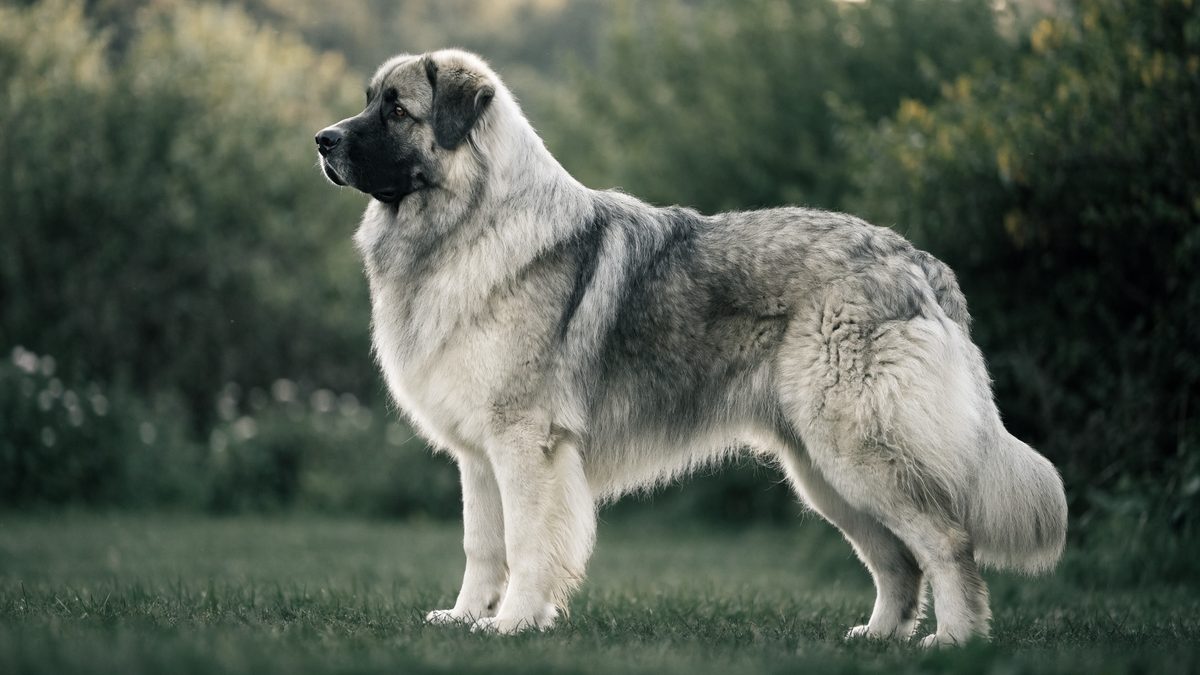
The Caucasian Shepherd Dog is a giant livestock guardian breed from the Caucasus mountains, built to work alone against wolves in sub-zero weather and standardised in the Soviet Union from about 1920 Wikipedia, Caucasian Shepherd Dog. It is not a Tibetan Mastiff, it is not a wolf hybrid, and it is not the pet the Indian internet thinks it is.
Three names describe the same animal. Caucasian Shepherd Dog is the name the Federation Cynologique Internationale uses in English. Caucasian Ovcharka is the transliterated Russian, from Kavkazskaya ovcharka, and it is the name most working breeders still use. Caucasian Mountain Dog and Caucasian Sheepdog turn up in older books. Indian sellers mix all of them freely, which matters when you are trying to compare two listings.
The FCI recognises the breed under FCI-Standard No. 328, Kavkazskaia Ovtcharka, with origin recorded as the USSR and patronage held by Russia. It sits in Group 2, Section 2.2, Molossian and Mountain type, without working trial, and the standard's stated utilisation is two words: guard and watchdog. The FCI accepted the breed definitively in 1984 under Soviet patronage. The United Kennel Club recognised it as the Caucasian Mountain Dog in 1995 and files it under the Guardian Dog Group.
How big it really is, from the breed standard rather than the headlines
Read the numbers before you read the news stories. FCI-Standard No. 328 sets a desirable height at the withers of 72 to 75 cm for males with a minimum of 68 cm, and 67 to 70 cm for females with a minimum of 64 cm. Weight is given only as a floor: minimum 50 kg for males and minimum 45 kg for females, with no upper limit stated. The AKC lists the breed at 23 to 30 inches and 99 to 170 pounds, which is 45 to 77 kg. One reference work quoted on Wikipedia puts the usual range at 45 to 70 kg.
| Source | Male height | Female height | Weight |
|---|---|---|---|
| FCI-Standard No. 328 | 72 to 75 cm desirable, 68 cm minimum | 67 to 70 cm desirable, 64 cm minimum | Males minimum 50 kg, females minimum 45 kg, no maximum stated |
| United Kennel Club | Minimum 25 in, over 27 in preferred | Minimum 24 in, over 25 in preferred | In proportion to height, no figure given |
| American Kennel Club | 23 to 30 in for the breed | 23 to 30 in for the breed | 99 to 170 lb, roughly 45 to 77 kg |
That table settles one recurring Indian claim. A national outlet reported the Bengaluru dog Cadaboms Hayder as six feet tall and the size of a female lion. Six feet is 183 cm. The tallest height any standard describes as desirable is 75 cm at the withers. A six-foot measurement is a dog standing on its hind legs against a person, which is a photograph, not a specification. NDTV separately reported the same dog at over 100 kg with a head measuring 38 inches. Royal Canin's own giant-breed feeding table runs to a 100 kg dog, so 100 kg is real and reachable in this breed, but it is roughly double the FCI floor rather than a breed norm.
The coat, which is the whole story in India
The FCI standard specifies a straight, coarse, stand-off coat with a well developed undercoat, and it sets a length rule that most Indian pages never quote: the guard coat and the undercoat should each be not less than 5 cm. The longer outer coat forms brushes on the ears, a mane around the neck and trousers on the backs of the thighs. The UKC accepts three coat lengths without preference, long, intermediate and short, and describes the short coat as the least common type. The AKC describes two long-established types, the Mountain type which is long-coated and heavier in body mass, and the Steppe type which is shorter-coated and lighter.
Almost every Caucasian Shepherd Dog sold in India is the heavy Mountain type, because that is the look the price is attached to. A double-coated mountain dog carrying 5 cm of undercoat is engineered for a Caucasus winter, and that single design decision drives most of what follows on this page: the heat rating, the grooming load, the electricity bill and the honest advice about which Indian households should not buy one.
Where it came from and what it was built to do
For centuries dogs of this type guarded flocks and villages across Georgia, Armenia, Azerbaijan and Dagestan, defending sheep from wolves and from human sheep-thieves. The FCI standard traces the first mention of large molossoid dogs used by the army of the Armenian Tsar Tigran the II to the first century BC. Systematic selection began in the USSR in the 1920s, and the FCI records the qualities that were deliberately cultivated: physical power, self-confidence, fearlessness, sharply developed hearing, good sight, and a dense and waterproof coat.
Regional type still varies widely. Dogs from Azerbaijan are fairly tall and lightly built, those from Dagestan are smaller and roughly square in outline, and those from what is now Ingushetia and Chechnya are heavily built and very large. Georgia's dogs are widely accepted as the best and most uniform, which is why the Georgian SSR became the principal region for cultivating the breed in the Soviet Union. The Soviet state also put the breed to industrial use, running state kennels that used it to guard factories and government facilities, and it still works as a prison guard dog in Russia.
The Caucasian Shepherd Dog is banned in Denmark and subject to restrictions in Russia, where the Interior Ministry compiled a list of potentially dangerous breeds. In India it was named by name in the Union circular of 12 March 2024 that asked states to stop issuing licences for the sale, breeding and keeping of 24 breeds described as dangerous for human life. That circular was quashed by the Karnataka High Court on 10 April 2024 and set aside by the Delhi High Court on 16 April 2024, so no nationwide ban is in force in 2026 The Indian Express. The full record is in the price section below, and Bonbeno's Cane Corso page carries the same litigation history in detail.
One more piece of the breed standard matters before you look at a photograph of a puppy. The FCI describes the ears as moderate, thick, triangular and naturally pendant, then adds a sentence that decides the ethics of this breed in India: ears are traditionally cropped in the country of origin, and natural ears are of equal value. The UKC standard permits cropped or uncropped ears and describes the shepherd's crop, in which the ear flap is removed horizontally and bluntly close to the head. Indian law does not permit that procedure, and the grooming and common-mistakes sections below set out exactly what the Dog Breeding and Marketing Rules say.
Caucasian Shepherd price in India, and the 20 crore story traced to its source
The published Caucasian Shepherd price in India runs from Rs 20,000 to Rs 15,00,000, a spread of 75 times for the same breed, and the two sources at the extremes are a content site and a puppy broker. The most useful figure on the entire search results page came from working dog trainers, who told News18 in 2023 that a one-and-a-half-year-old Caucasian Shepherd would cost Rs 50,000 to Rs 1 lakh.
No Indian breed page compares its price against the others. That is the first thing this page does, because the disagreement is the finding.
| Source | Figure published | What the source is |
|---|---|---|
| Happy Pet, updated 21 July 2025 | Rs 20,000 to Rs 80,000 | Indian breed-information site. Publishes a price band but no methodology |
| Dog trainers and the police canine wing, via News18, January 2023 | Rs 50,000 to Rs 1 lakh for a dog aged about 18 months | Named journalism. Trainers who work with VIP owners, plus a senior veterinary physician on import law |
| An anonymous dog behaviourist, via News18, January 2023 | "I am damn sure none of them paid more than a lakh for it"; | Direct quote about the Caucasian Shepherds actually kept in India |
| Enforcement Directorate sources, via Deccan Herald, April 2025 | "Not even Rs 1 lakh" for the dog at the centre of the Rs 50 crore claim | Valuation attributed to investigation sources, not a market survey |
| PetMD, reviewed by a veterinarian, 2023 | USD 1,000 to USD 2,500 in the United States | US purchase price. Useful only as a sanity check on the Indian ceiling |
| Mr n Mrs Pet, 2026 | Rs 3,50,000 to Rs 15,00,000 and above | Puppy broker. Sells the animals whose price it publishes |
| Call 4 Dog, Delhi, 2026 | No price published at all | Puppy seller. Lists weight, height, coat and litter size, then routes every price enquiry to WhatsApp |
Bonbeno does not average those numbers and does not pick a favourite. What the table shows is a market in which the people who sell the dogs quote between four and fifteen times what the people who train them say the dogs are worth. The broker's tiering is worth reading closely, because it is where the money is: basic quality at Rs 3,50,000 to Rs 6,50,000, Kennel Club of India registered at Rs 6,50,000 to Rs 10,00,000, and champion bloodline at Rs 10,00,000 to Rs 15,00,000. The same page then quotes the identical Rs 3,50,000 to Rs 15,00,000 band for Hyderabad, Bangalore, Delhi, Chennai, Lucknow, Mumbai, Jaipur and Pune, which tells you the city breakdown is a template rather than a survey.
The same broker page that prices this dog at up to Rs 15,00,000 says monthly upkeep runs Rs 5,000 to Rs 10,000. Royal Canin India's own feeding table gives a 65 kg dog at medium activity 602 g of Giant Adult a day, and that food lists at Rs 10,592 for 15 kg, or about Rs 706 a kilogram. That is 18.1 kg a month and roughly Rs 12,750 of food alone, before a single vaccination, tick preventive or grooming session. The upkeep figure is not low, it is impossible. Bonbeno's own arithmetic is in the cost-of-ownership section below.
Which dog costs 20 crore? The record, in date order
No dog in India has verifiably sold for Rs 20 crore or Rs 50 crore. Both questions are asked constantly on Google India, and both trace to one Bengaluru breeder and two dogs. Here is what each outlet actually published, and when.
| Date | Outlet | What was reported |
|---|---|---|
| 5 January 2023 | Bangalore Mirror | Headline: "Bengaluru's top dog, bought for Rs 20 crore." Reports that Satish, of Cadabom's Kennels and president of the Indian Dog Breeders Association, bought a Caucasian Shepherd priced at Rs 20 crore from a Hyderabad-based breeder six months earlier, named him Cadabom Hayder, and that Hayder was about 1.5 years old and won 32 medals in seven days. The same report lists earlier purchases: Korean Dosa Mastiffs at Rs 1 crore, an Alaskan Malamute at Rs 8 crore and a Tibetan Mastiff at Rs 10 crore |
| 6 January 2023 | NDTV | Headline: "Bengaluru Man Has Dog As Big As Lioness, Gets Rs 20 Crore Offer." Reports that Satish S was offered Rs 20 crore by a Hyderabad builder and declined. Gives the dog as one-and-a-half years old and over 100 kg, and says he imported two Korean mastiff puppies for Rs 2 crore in 2016 |
| 10 January 2023 | Business Today | Reports that S Sathish "recently received an offer of a whopping Rs 20 crore for a Caucasian Shepherd dog. However, he refused to sell it to the builder." The same article prices the Tibetan Mastiff at USD 3,000 to USD 5,000 |
| 10 January 2023 | News18 | Went and asked. Dog trainers who work with VIPs and with the police canine wing said a dog of that age would cost Rs 50,000 to Rs 1 lakh. A dog behaviourist asked, on the record, how the transaction was made and for its details. Dr Nagesh Reddy, a senior veterinary physician, said no dog under two years of age may be brought in from another country under law, so the pup must have been born inside India |
| 18 December 2023 | CNBC-TV18 | Reports the dog as valued at Rs 20 crore and of Russian origin, and quotes the owner saying "I purchased him for Rs 20 crore" and "I have been spending Rs 3 lakhs monthly towards his maintenance." Describes the dog as three years old and eating 3 kg of chicken daily |
| 17 April 2025 | Deccan Herald and The Times of India | The Enforcement Directorate searched the residence of the same breeder over a separate claim, that he had spent Rs 50 crore importing a wolf and Caucasian Shepherd hybrid called Cadaboms Okami. Officers found no documentary evidence he owned the dog, no trace of the rare breed, and no Rs 50 crore transaction in his bank statements. He reportedly told them the dog was not his and that he had posed for photographs with it. Sources put the animal's actual value at not even Rs 1 lakh The Times of India |
Four contradictions inside the coverage itself
You do not need the Enforcement Directorate to see that the Rs 20 crore story never held together. Four contradictions sit inside the published record, and no ranking page mentions any of them.
- Bought, or offered and refused? Bangalore Mirror ran "bought for Rs 20 crore" on 5 January 2023. NDTV ran "Gets Rs 20 Crore Offer", declined, on 6 January. Business Today ran the refusal on 10 January. CNBC-TV18 quoted the owner saying he purchased the dog for Rs 20 crore in December. The direction of the money reversed twice in eleven months.
- Indian-bred, or Russian? Two January 2023 reports say the dog came from a breeder in Hyderabad News18, Bengaluru Man Buys Caucasian…. The December 2023 report says the dog is of Russian origin. Both cannot be true, and the veterinarian quoted by News18 explained why the import version is the harder one to sustain.
- How old is the dog? Reported as one-and-a-half years old in January 2023 by three outlets NDTV, Bengaluru Man Has Dog As Big… Business Today, Rs 20 Crore Offered For Dog…, then as three years old in December 2023. Eleven months passed and the dog aged eighteen months.
- Rs 3 lakh a month, or Rs 2,000 a day? CNBC-TV18 quotes Rs 3 lakh a month on maintenance. The New Indian Express video on the same dog, still ranking on the same search results page, states about Rs 2,000 a day, which is roughly Rs 60,000 a month. The two figures differ by a factor of five for the same dog in the same year.
The Times of India's report on the Enforcement Directorate findings is blunter than the Deccan Herald's. It records that officials discovered the photographs used to substantiate the claim were of a dog owned by another individual, and that there were no records of foreign transactions, import licences, or any evidence of an Rs 50 crore expenditure, concluding that the entire episode appears to have been a meticulously crafted publicity stunt.
Three further outlets reported the same search, and each adds a detail worth keeping. NDTV reported that the ED sifted through the breeder's bank account and did not come across any large transaction around the time the dog was allegedly purchased in February 2025, and quoted a source saying that the dog appears to be of Indian breed while a detailed probe continued. That is the same conclusion the veterinarian quoted by News18 had reached two years earlier from the import rules alone. WION reported the claimed figure as USD 5.7 million and recorded that Satish neither had the rare breed nor any paperwork to support his claims, and that the dog was owned by somebody else. Gulf News, reporting the story for a Gulf audience, summarised the outcome as a probe finding that the breeder used social media hype to inflate value, with no trace of the animal and no documentation supporting the alleged purchase.
That international spread is part of why the claim has been so hard to kill. The story ran worldwide on the strength of photographs and an interview, and the correction ran mostly in India. Bonbeno is publishing the correction in the place an Indian buyer will actually search for it.
Bonbeno reports what named outlets published and what investigators were reported to have found. It does not allege any offence, and the ED action reported in April 2025 was a search under the Foreign Exchange Management Act rather than a conviction The Times of India. What the record supports is narrower and more useful to a buyer: no receipt, contract, bank record or import licence for a Rs 20 crore or Rs 50 crore dog has ever been published by anybody. Bonbeno's Tibetan Mastiff, Chippiparai and Indian Spitz pages carry the same correction, and nothing on this page contradicts them.
Why the import claim is the weakest part of the story
India's rules on bringing a dog into the country are short and public. The Animal Quarantine and Certification Service, under the Department of Animal Husbandry and Dairying, allows import of up to two dogs or cats under the baggage rule, and requires proof of at least two years of continuous stay abroad, proof of transferring residence to India, an official health certificate from the country of origin, rabies vaccination given more than one month but within 12 months before embarkation, and a declaration from the owner that the dog is a bonafide pet with no commercial interest, gift or breeding purpose. Above that line, the same page states in capitals that import of commercial dogs for breeding or any other commercial activities is not permitted.
The litigation around that policy is genuinely unresolved and Bonbeno will not flatten it. On 6 June 2023 the Madras High Court, in a writ petition by the Kennel Club of India and the Madras Canine Club, set aside the DGFT notification of 25 April 2016 that banned import of dogs for commercial activities, holding that it had been issued without the necessary scientific study and due diligence. The court accepted that quarantine and testing already address disease risk, and rejected the claim that foreign dogs contaminate Indian breeds.
That is not the end of the story, and pages which stop there are misleading you. On 24 October 2023 The Hindu reported that the Centre had filed a writ appeal against Justice Anita Sumanth's order, contending that the single judge had erred and that it was beyond the scope of judicial review for the High Court to interfere with a policy decision, relying on the Supreme Court's 2020 ruling in Union of India versus AGRICAS LLP that the DGFT is part of the government and empowered to issue such notifications. Chief Justice S.V. Gangapurwala and Justice D. Bharatha Chakravarthy ordered the appeal listed for 8 November 2023. The same report records what the 2016 notification actually banned: import of all dogs except those used as pets abroad by the importers concerned, canines required for research by R&D organisations, and animals required for internal security by the defence and police forces.
Bonbeno did not trace the outcome of that appeal and will not guess at it. The correct statement in 2026 is that the executive position is restrictive, the judicial position has been contested and appealed, and an importer must verify each requirement with AQCS and DGFT directly rather than rely on a headline or on this page. This is reporting, not legal advice.
For a buyer, that translates into one instruction. If a seller tells you a dog was imported, ask to see the import authorisation, the AQCS clearance and the export pedigree, all three, with the dog's microchip number on them. In the biggest imported-dog claim India has produced, investigators looked for exactly those documents and reported finding none.
The other legal fact a buyer needs before paying
On 12 March 2024 Dr O P Chaudhary, Joint Secretary in the Union Ministry of Fisheries, Animal Husbandry and Dairying, wrote to the chief secretaries of all states and union territories asking them to ensure no licences or permissions were issued for the sale, breeding or keeping of dog breeds dangerous for human life, on the recommendation of an expert committee formed under the chairmanship of the Animal Husbandry Commissioner. The list, which CBIC Instruction 05/2024-Customs of 14 March 2024 reproduces in full at 24 comma-separated entries, names the Caucasian Shepherd Dog explicitly, alongside the Central Asian Shepherd Dog, the South Russian Shepherd Dog, the Kangal, the Cane Corso, the Rottweiler and the Boerboel.
One instruction in that circular is routinely left out of Indian coverage and matters enormously to anyone who already owns one of these dogs. The circular also directed persons keeping those breeds as pets to sterilise them. That is what turned a trade measure into something existing owners had to fight, and it is why the courts moved as fast as they did.
| Date | Court | Outcome |
|---|---|---|
| 19 March 2024 | High Court of Karnataka, Justice M. Nagaprasanna | Stayed the circular, but only in Karnataka, saying it shall remain stayed until the Deputy Solicitor General produces "those documents that went into decision making of the impugned circular". The petitioners claimed the expert committee consulted no stakeholder before deciding |
| 21 March 2024 | Calcutta High Court, Justice Sabyasachi Bhattacharya | Partially stayed the circular and directed the Centre to file an affidavit giving details of the expert committee members and their credentials. The court found substance in the argument that the sterilisation directive could have a fatal effect on the dogs, particularly puppies, but held that the stay did not apply to the ban on import and sale, given the commercial connotation of those activities |
| 31 March 2024 | Kerala High Court | Stayed the operation of the notification dated 12.03.2024 "except with regard to prohibition on import and selling of the dogs of the breeds specified therein", relying on the interim orders already granted by the Karnataka and Calcutta High Courts |
| 10 April 2024 | High Court of Karnataka, Justice M. Nagaprasanna | Quashed the circular, holding that the Central government could not impose a blanket ban on dog breeds by circular in the absence of any such power under the Prevention of Cruelty to Animals Act, 1960 or the Animal Birth Control Rules, that "none of the stakeholders were heard", and that the composition of the committee was not in consonance with the rules framed under the PCA Act |
| 16 April 2024 | High Court of Delhi, Acting Chief Justice Manmohan and Justice Manmeet Pritam Singh Arora | Set aside the circular, recording the Centre's submission that other than government bodies no private body was heard before it was issued, and its counsel's statement that he had no objection to it being set aside. Directed a public notice inviting written objections to any fresh notification |
Two qualifications belong with that table. The Karnataka High Court expressly preserved the government's liberty to re-impose a ban after amending the rules, provided it hears all the stakeholders. And the counts that do not match across outlets are a punctuation artefact rather than a disagreement about substance. The customs instruction reproducing the letter prints 24 comma-separated entries, which is the number the Delhi High Court used The Indian Express; press reports say 23 because they fold the closing Bandog clause in, and 25 appears where Japanese Tosa and Akita is split into two. It makes no difference to this breed, which is named on every reading. Bonbeno's Cane Corso, Rottweiler and Dobermann pages carry the same record.
So the honest answer to "what does a Caucasian Shepherd cost in India" has three parts. Published asking prices run Rs 20,000 to Rs 15,00,000 Mr n Mrs Pet, Caucasian Shepherd Puppies…. The people who handle these dogs professionally put the real transaction range nearer Rs 50,000 to Rs 1,00,000. And the purchase price is the smallest number you will deal with, because a 50 to 90 kg giant breed in an Indian city costs more to keep every year than most buyers paid to acquire it.
Monthly cost of owning a Caucasian Shepherd in India
Budget Rs 18,000 to Rs 32,000 a month to keep an adult Caucasian Shepherd in an Indian plains city, and expect food alone to take Rs 9,700 to Rs 17,600 of it Supertails, Royal Canin Giant Adult Dog Dry…. The monthly cost is the number that should decide this purchase, because the puppy price happens once and this does not.
Two Indian sources publish a monthly figure for this breed and both are too low to be arithmetic. Mr n Mrs Pet says Rs 5,000 to Rs 10,000. Happy Pet is more granular, at Rs 5,700 for a basic lifestyle and Rs 8,550 for a premium one, split as food Rs 3,000 to Rs 4,500, veterinary Rs 1,500 to Rs 2,250 and grooming Rs 1,200 to Rs 1,800. Both figures are plausible for a 20 kg dog. Neither survives contact with a 65 kg one.
Food, priced from the manufacturer's own table
Royal Canin India specifies its Giant Adult formula as a complete feed for adult giant breed dogs over 45 kg and over 18 to 24 months old, and publishes a daily ration by bodyweight and activity level that runs all the way to a 100 kg dog. The same product lists on an Indian retailer at Rs 10,592 for 15 kg, which is Rs 706 a kilogram. That is enough to do the sum properly rather than guess it.
| Adult bodyweight | Daily ration, medium activity | Kg per 30 days | Monthly cost at Rs 706 per kg |
|---|---|---|---|
| 45 kg | 457 g | 13.7 kg | Rs 9,700 |
| 55 kg | 531 g | 15.9 kg | Rs 11,250 |
| 65 kg | 602 g | 18.1 kg | Rs 12,750 |
| 75 kg | 670 g | 20.1 kg | Rs 14,200 |
| 85 kg | 736 g | 22.1 kg | Rs 15,600 |
| 100 kg | 831 g | 24.9 kg | Rs 17,600 |
A female at the FCI minimum of 45 kg costs about Rs 9,700 a month to feed on that food Supertails, Royal Canin Giant Adult Dog Dry…. A large male at 85 kg costs about Rs 15,600. The gap between the low and high activity columns at 65 kg is 164 g a day, which is 4.9 kg a month, which is roughly Rs 3,500 either of avoidable spend or of avoidable weight gain. Weigh the food rather than scooping it, because in a breed this size guessing is expensive in both directions.
The owner of the Bengaluru dog told CNBC-TV18 that the animal eats as much as 3 kg of chicken daily. At any realistic Indian retail price that is a larger line than premium kibble, not a smaller one, and raw chicken alone is not a complete diet for a giant breed. PetMD's guidance is to choose a food meeting AAFCO nutritional guidelines and formulated for the life stage, and to feed large-breed puppy food during growth. Mixed feeding is fine. Replacing a complete feed with meat is not.
The India-specific line nobody prices: keeping the dog cool
Bonbeno could locate no published Indian estimate of what it costs to cool a Caucasian Shepherd, and says so rather than inventing one. What the record does contain is more telling. When Bangalore Mirror asked the owner of India's most famous Caucasian Shepherd where the dog lived, the answer was that he stays at a residence which is air-conditioned. That is Bengaluru, the mildest of India's large metros. Any household in Delhi, Ahmedabad, Nagpur, Hyderabad or Chennai should assume a larger cooling requirement than that, not a smaller one.
Neither Indian monthly estimate includes electricity at all Happy Pet, Caucasian Shepherd Dog Breed…. For a breed whose standard requires a guard coat and undercoat each not less than 5 cm, leaving cooling out of the budget is the single biggest omission in the published Indian numbers.
A realistic monthly budget, with every line sourced or marked as an estimate
| Line | Monthly range | Basis |
|---|---|---|
| Complete giant-breed dry food | Rs 9,700 to Rs 17,600 | Royal Canin Giant Adult ration at 45 to 100 kg, at Rs 706 per kg Indian shelf price |
| Veterinary care, averaged | Rs 1,500 to Rs 2,250 | Published Indian estimate for this breed |
| Grooming | Rs 1,200 to Rs 1,800 | Published Indian estimate for this breed. Expect the upper end during the twice-yearly coat blow |
| Cooling and electricity | Not published anywhere Bonbeno could find | No Indian source prices it. India's most-photographed Caucasian Shepherd is kept in an air-conditioned room in Bengaluru |
| Parasite control, tick and flea, monsoon months | Estimate, not a published figure | Bonbeno flags this as an estimate rather than dressing it as data |
| Realistic total, food plus vet plus grooming only | Rs 12,400 to Rs 21,650 | Sum of the sourced lines above, before cooling, parasite control or any emergency |
Add cooling and contingency and Rs 18,000 to Rs 32,000 a month is the honest working range for most Indian metros. That is two to six times what the two ranking Indian pages tell you Happy Pet, Caucasian Shepherd Dog Breed…, and it is the number that should be checked against a household budget before anyone looks at a puppy photograph.
The one-off costs that are easy to forget
- Fencing. PetMD describes the ideal home as one with a yard secured by a six-foot fence, and the AKC advises keeping the dog contained when exercised, in a fenced yard or on lead. In an Indian gated society, that means an owner-funded compound wall or gate, agreed in writing with the association before the dog arrives.
- Health screening of the parents. The OFA CHIC programme for this breed requires a hip evaluation, an elbow evaluation and a DNA test for degenerative myelopathy, with cardiac, eye, patella and dentition exams optional. Ask the breeder to screen and to show results before you pay, not after.
- Transport. A 70 kg dog does not fit in a hatchback or a ride-hailing car, and does not travel in cabin on any Indian carrier. Plan for a vehicle you own or a pet ambulance, and price it before the first emergency rather than during it.
- A veterinarian who will handle the dog. Many Indian clinics are not set up to restrain, sedate or radiograph a 70 kg guardian breed safely. Find the practice, meet them with the puppy, and keep the relationship warm.
Climate suitability: why heat tolerance is rated 1 of 5
Bonbeno rates the Caucasian Shepherd Dog 1 of 5 for heat tolerance, the lowest rating on this site, and the evidence is unusually direct for a rare breed. The FCI standard sets a minimum male weight of 50 kg, and the largest study of heat-related illness in dogs found that dogs over 50 kg had 3.42 times the odds of heat-related illness compared with dogs under 10 kg.
That single sentence is the most important thing on this page for an Indian buyer, so here is the study behind it. The VetCompass programme examined the clinical records of 905,543 dogs under primary veterinary care in the UK in 2016 and identified 395 confirmed heat-related illness events. Incidence was 0.04 percent, and the event fatality rate was 14.18 percent, with a 95 percent confidence interval of 11.08 to 17.96 percent. Roughly one dog in seven that developed heat-related illness died of it.
A companion paper by the same team, published in Animals in 2020, answers the question every Indian owner should ask next: what actually triggers it. Reviewing the same 905,543 dogs, the authors identified 1,259 heat-related illness events from 1,222 dogs and found that exertional heat-related illness was the predominant trigger at 74.2 percent of the 879 events where a cause was recorded, followed by environmental at 12.9 percent and vehicular confinement at just 5.2 percent. Their conclusion is the title of the paper: in the UK, exertional heat-related illness affects more dogs, and kills more dogs, than confinement in a hot vehicle.
That reorders the Indian advice completely. Public awareness in India, where there is any, is about dogs left in parked cars. The evidence says the far bigger killer is a dog being exercised. For a 50 to 90 kg mountain guardian in Chennai, the dangerous act is not the car. It is the 11 am walk.
The multivariable analysis named the risk factors. Breed mattered, with the Chow Chow, Bulldog and French Bulldog most affected. So did higher bodyweight relative to the breed and sex mean, and being over two years of age. Brachycephalic dogs had 2.10 times the odds of mesocephalic dogs. And dogs over 50 kg in bodyweight had 3.42 times the odds of heat-related illness, with a confidence interval of 1.54 to 7.57. The paper's own conclusion is worth quoting in substance: as the world warms, veterinary professionals may need to include resistance to heat-related illness among their rationales when advising owners on breed selection.
For most breeds the over-50 kg risk band is something only the biggest individuals reach. For this one it is the floor. FCI-Standard No. 328 gives a minimum weight of 50 kg for males and 45 kg for females, with no upper limit, and the AKC records the breed at up to 170 lb, about 77 kg. A correctly built male Caucasian Shepherd Dog begins its adult life in the highest-risk bodyweight category the study identified, and the coat is still to come.
The coat, which is not a heat shield in the Indian plains
Two claims circulate about heavy coats and hot weather, and they need separating. The first is that a double coat insulates against heat as well as cold. That is true in part, and the AKC explains the mechanism: the soft inner coat close to the skin serves as an insulating layer, a dog sheds much of that under-layer in summer, and what remains helps capture air between the two coat layers so the dog can keep heat at bay and regulate its body temperature. This is precisely why you must never shave a Caucasian Shepherd. Shaving removes the insulating layer, makes the dog susceptible to heat stroke, and can cause improper hair growth and follicle damage.
The second claim is that because of this, a heavy coat is fine in Indian heat. It is not. Purina India names the categories at particular risk of heat stroke and puts dogs with heavy coats in the same sentence as short-faced breeds. The same guidance lists excessive humidity, enclosed space, obesity, intense exercise, old age and lack of acclimatisation among the factors that increase risk, and every one of those describes a heavy-coated mountain guardian newly arrived in an Indian city. Insulation slows heat gain. It does not remove heat, and in a Chennai August the dog has nowhere to dump it.
One Indian source states the point plainly without arguing it. Happy Pet's breed data lists the ideal weather for a Caucasian Shepherd as 25 degrees Celsius. Delhi, Nagpur, Ahmedabad, Hyderabad and Chennai all spend months well above that.
The UKC says the breed adapts to a wide range of climates. Read that carefully.
The United Kennel Club standard states that the breed is hardy and able to adapt to a wide range of climates. That sentence is accurate and it is also being misused by Indian sellers. The climates a Caucasian Shepherd historically worked across run from the high Caucasus to the southern Russian steppe, which is a wide range of cold and continental conditions, not a range that includes coastal humidity at 35 degrees. Nothing in the standard says the breed tolerates tropical heat, and the same standard requires an undercoat, treating absence of undercoat as a serious fault.
What Indian law says about keeping this dog outdoors
This is the part no competing page covers, and it is the reason the climate question in India is legal as well as ethical. Second Schedule Part IV paragraph 21 of the Prevention of Cruelty to Animals (Dog Breeding and Marketing) Rules, 2017 governs outdoor housing facilities. It states that certain categories of dog shall not be kept in outdoor facilities unless that practice is specifically approved by the attending veterinary practitioner in writing. The categories are listed in the rule itself:
- Dogs that are not accustomed to the temperatures prevalent in the area or region in question
- Dog breeds that cannot tolerate the temperatures prevalent in the area or region in question, such as long-haired breeds in high temperature locations
- Sick, infirm, aged or young animals
A Caucasian Shepherd Dog with a 5 cm guard coat and a 5 cm undercoat, kept in a compound in Delhi or Chennai, is the textbook illustration of the second category. The rule goes further: outdoor facilities must include roofed shelters accessible to each animal, large enough for the dog to sit, stand, lie down and turn about freely, plus one or more separate outside areas of shade large enough to contain all the animals at once and protect them from the direct rays of the sun. Shelters must have a roof, four sides and a floor, and must give protection from heat and cold and from direct sun.
Section 11 of the Prevention of Cruelty to Animals Act, 1960 makes it an offence to keep any animal chained or tethered for an unreasonable time upon an unreasonably short or unreasonably heavy chain or cord, and separately makes it an offence for an owner to neglect to reasonably exercise any dog habitually chained up or kept in close confinement. The same section covers failing to provide sufficient food, drink or shelter. Indian guard dogs are very often kept exactly this way. The penalty under the section is small, a fine of ten to fifty rupees for a first offence rising to a hundred rupees or up to three months imprisonment for a repeat within three years, but the standard of care the section describes is the right one regardless of what the fine is.
How to run a Caucasian Shepherd through an Indian summer
- Walk before sunrise and after 8 pm, never in between. Purina India warns that a dog can develop heat stroke in as little as 30 minutes of vigorous exercise in hot weather, and advises early morning or evening exercise.
- Keep the dog indoors and cooled during the day, not in a shaded corner of the compound. Cornell lists remaining indoors during periods of extreme heat and humidity among its core prevention measures.
- Never leave the dog in a car, even briefly. At an outside temperature of 26 degrees, the inside of a car reaches 32 degrees in five minutes and 43 degrees in 25 minutes. Indian afternoons start far above 26.
- Know the numbers that define an emergency. Normal canine body temperature is 100.5 to 102.5 degrees Fahrenheit, and heatstroke results when the dog cannot regulate and temperature reaches 105 degrees Fahrenheit or higher. Purina India gives the same threshold in metric, a raised temperature of 40.5 degrees Celsius or above.
- Watch for the signs. Heavy panting, drooling, vomiting, bloody diarrhoea, weakness, confusion, seizures and collapse. Purina adds severe salivating, blood in the urine and nose bleeds.
- Cool the dog correctly on the way to the vet. Wet the body with cool but not cold water, making sure it reaches the skin rather than running off the coat, wet the belly and inside the legs thoroughly, and use a fan. Do not plunge the dog into ice water, which prevents the core temperature coming down. Stop cooling at 39.4 degrees Celsius. Then get to a veterinary hospital, because heatstroke needs intensive critical care.
One further point from Cornell that owners rarely hear. Dogs that survive heatstroke are at greater risk of heatstroke again in the future. A Caucasian Shepherd that has had one episode in an Indian summer is not a dog that got away with it. It is a dog whose margin has narrowed permanently.
Where in India this breed can reasonably live
| Region | Verdict | What it takes |
|---|---|---|
| Himalayan belt: Ladakh, Himachal, Uttarakhand hills, Sikkim, Arunachal | The only genuinely suitable part of India | Closest match to the conditions the breed was selected for, with a real winter and low humidity. Outdoor keeping is defensible here in a way it is not anywhere else |
| Northern plains: Delhi NCR, Punjab, Haryana, western Uttar Pradesh | Difficult, and only indoors with cooling | Long, very hot summers. Second Schedule Part IV paragraph 21 of the 2017 Rules effectively rules out unapproved outdoor kennelling for a long-haired breed here |
| Deccan and central India: Hyderabad, Nagpur, Pune, Bengaluru | Difficult. Bengaluru is the least bad | Even Bengaluru's most famous example of the breed is reported as living in an air-conditioned room |
| Coastal and humid: Mumbai, Chennai, Kochi, Kolkata, Goa | Bonbeno advises against it | Excessive humidity is a named heat stroke risk factor, and it removes the evaporative cooling a panting dog depends on |
Temperament and household fit, said plainly
The Caucasian Shepherd Dog is steady, active, self-confident, fearless and independent, shows devoted attachment to its owner, and is an excellent guard dog. The AKC puts the same thing more usefully for a buyer: this is a serious guardian breed and should never be taken lightly.
Every registry that describes this breed describes the same animal, and none of them softens it. The UKC calls Caucasians spirited, intelligent, strong-willed guardian dogs, gentle and demonstrative with family members, whose active defence reaction and strong territorial instincts make the breed very suspicious of strange people or dogs. They are steady and even tempered but will protect flock, family and property from danger, real or perceived, with lightning-quick speed. The AKC says the dog is bold, fearless, self-confident and fierce when a threat is present, and soft, devoted, kind and endearing to his family.
Both halves of that are real. This is not a dog that dislikes people. It is a dog that divides the world into its own and everyone else, and defends the line without asking. In the Caucasus that was the job description. In an Indian gated society it is a management problem you take on for a decade.
What the registries say about strangers, children and other dogs
| Question | What the source says |
|---|---|
| Strangers | Very suspicious of strange people or dogs, with an active defence reaction. Aloof with strangers and will distrust new people in the home |
| Young children | Best suited to homes without young children; small, hyper children may not be compatible cohabitators; the dogs do not do well with children pulling their tail or climbing on them. An Indian source rates the breed as not ideal with kids and says supervision is needed |
| Other dogs | Many prefer to be the only pet in the home. The UKC instructs judges that Caucasian Ovcharka are not to be penalised for mild dog aggression, as it is a normal characteristic of this breed |
| Being left with others | If you travel a lot, a Caucasian Shepherd will find it difficult to be boarded or even to be cared for by a pet sitter |
| Noise | Any change in their surroundings can result in warning barks and growls, particularly at night |
| Maturity | The breed is slow to mature and headstrong |
The line about boarding deserves an Indian reading. A great many urban Indian households travel for weddings, festivals and family obligations several times a year, and the default plan is a boarding kennel or a relative. For this breed neither is straightforward, and a dog that is difficult to board is a dog whose owner eventually stops travelling or starts leaving it somewhere unsuitable.
What a guardian temperament means in an Indian gated society
Bonbeno is going to be specific here rather than dramatic, because the sensational version helps nobody. In a typical Indian apartment complex or gated layout, the following people come to your door or past your gate without an appointment, most days.
- Security staff doing rounds, changing shift at fixed hours
- Food and parcel delivery riders, often several a day and rarely the same person twice
- Domestic help, cooks and drivers who work across several flats
- Housekeeping, plumbers, electricians, water-can suppliers and gas delivery
- Neighbours' children retrieving a ball, and neighbours' dogs on the same walking route
- Extended family, house guests and festival visitors, in numbers, at short notice
A breed selected for an active defence reaction against anything unfamiliar meets that list every single day. The dog is not being badly behaved when it reacts. It is doing what it was bred to do, in an environment that supplies a hundred triggers a week. Managing that is not a training problem you solve once. It is a permanent architecture of gates, doors, leads, muzzle conditioning where appropriate, and household rules that every family member follows without exception.
While quashing the 2024 breed circular, the Karnataka High Court observed that the responsibility of a pet owner "would not be limited to owning oral responsibility but should be made accountable for the payment of entire treatment of the victim who would be injured by the dog including separate claim for the damages";. Read that sentence before you buy a 70 kg guardian breed, not after an incident. It is also worth knowing that the same court expressly left the government free to re-impose a breed ban after amending the rules and hearing stakeholders, so the regulatory position on this breed is settled for now rather than settled forever.
The line Bonbeno will not cross
Guardian temperament is a trait to be managed and contained, never a trait to be sharpened. Section 11 of the Prevention of Cruelty to Animals Act, 1960 makes it an offence, solely with a view to providing entertainment, to incite any animal to fight or bait any other animal, and separately makes it an offence to organise, keep, use or act in the management of any place for animal fighting, to permit or offer any place to be so used, or to receive money for admission to such a place. Bonbeno publishes nothing that could be read as guidance for producing aggression or for fighting, and this page contains no such guidance. If anyone offers to sell you a Caucasian Shepherd on the strength of what it will do to an intruder, walk away from that seller.
The FCI is on the same side of this. Under FCI-Standard No. 328, aggressive or overly shy dogs are a disqualifying fault, as is any dog clearly showing physical or behavioural abnormalities. The UKC disqualifies viciousness or extreme shyness outright. A correct Caucasian Shepherd is confident and discriminating, not reactive. A dog that cannot be handled is not a better guardian, it is a dog outside its own breed standard.
Who should buy this breed, and who should not
- Buy one if you own a house with secure fencing in a cool part of India, you are at home most of the time, you have handled a large guardian breed before, you have no young children and no other dogs, and you have Rs 20,000 a month spare for the dog's upkeep. PetMD describes the ideal home as one without children or other pets, with an owner who is home often, and a yard secured by a six-foot fence.
- Do not buy one if you live in a flat, you are a first-time dog owner, you travel often, you have toddlers, you want an easy family dog, or you are buying because of a headline. This breed is not a good fit for a first-time pet parent, and the number that drew you here was never real.
- Do not buy one as a status object. That is the failure mode this breed has already produced in India once, in public, with the Enforcement Directorate at the end of it.
Training a Caucasian Shepherd, and what the breed will resist
To train a Caucasian Shepherd Dog, work on containment and social exposure first and obedience polish second, and expect the process to run across three years rather than one. The AKC states the position without varnish: extremely independent and intelligent, the breed can prove difficult to train for obedience but not impossible.
Understand what you are working with before you pick a method. A livestock guardian was selected to make decisions alone, at night, several hundred metres from any human, and to act on them without waiting for instruction Wikipedia, Caucasian Shepherd Dog. Every trait that made that dog good at its job makes it slow at heelwork. The UKC records the two consequences directly: the breed is slow to mature and headstrong.
That single phrase resets the timeline. A Labrador is broadly a finished dog at two. A Caucasian Shepherd is still filling out and still forming opinions about the world well past that, and the guarding behaviour often arrives later than owners expect, at around 18 months to three years, in a dog that was tolerant of visitors at eight months. Plan for that arrival rather than being surprised by it.
What works
- Socialise deliberately and early. PetMD, reviewed by a veterinarian, advises that puppies need lots of slow exposure to new sounds, places, situations and people. The UKC adds that socialisation and patient training techniques can be used to temper the Caucasian Ovcharka's characteristic suspicion and aggressiveness toward strange people and dogs, resulting in a mature dog with good judgment. Good judgment, note, rather than indifference.
- Use positive reinforcement, always. PetMD is unambiguous on method for this breed. Confrontational handling of a 70 kg dog that was bred to stand its ground is a losing strategy on the day it stops working, and it is the day you will not choose.
- Train containment before you train obedience. The AKC advises that because the breed is intelligent and independent, the dog should be kept contained when exercised, in a fenced yard or on lead. Gate routines, door manners and a reliable lead protocol matter more here than a competition sit.
- Teach a settle, not just a stay. The AKC notes that although active while outdoors, Caucasian Shepherds are usually fairly quiet in the house. That indoor calm is a genuine asset in an Indian summer, when the dog needs to be indoors and cool for most of the daylight hours anyway, and it is worth reinforcing rather than taking for granted.
- Manage the doorbell as a training project in itself. Any change in surroundings can produce warning barks and growls, particularly at night. In an Indian flat or gated house, the doorbell is the highest-frequency trigger you own.
What the breed will resist
Off-lead reliability is the honest limit. Nothing in the AKC, UKC or FCI descriptions suggests a biddable off-lead dog, and the AKC's own advice is containment rather than recall United Kennel Club. Treat an unfenced Indian park as unavailable to this breed. Repetition drilling is the second limit. An independent guardian that has already decided a task is pointless will not do it faster because you asked again, and pushing it converts training into conflict.
The socialisation window in early puppyhood is the period during which novel experiences are absorbed most easily, and it is why breeders and veterinarians press so hard on exposure in the first months. Bonbeno could locate no published, breed-specific figure defining that window for the Caucasian Shepherd Dog, and will not borrow a week range from a different breed and present it as this one's. What is sourced is the instruction itself, slow and repeated exposure to new sounds, places, situations and people, starting as soon as the puppy is home and vaccination status allows. Talk to your veterinarian about when your specific puppy can safely meet the world.
The Indian complication: your training windows are also your cool windows
In most of India, from March to October, the only safe hours to work a heavy-coated dog outdoors are before roughly 7 am and after roughly 8 pm, because Purina India warns that vigorous exercise in hot weather can produce heat stroke in as little as 30 minutes. That is not a small scheduling note. It means every outdoor training session, every socialisation outing, every long walk and every recall rehearsal has to fit into two narrow blocks a day, in the dark at both ends, for eight months of the year.
Three consequences follow. Build indoor training into the daily routine so the dog is still learning at 2 pm without leaving the house. Do social exposure in cool, quiet, controlled settings rather than at a crowded weekend market. And find a trainer before the puppy arrives, not at ten months when the dog has begun guarding, because a trainer who has actually handled livestock guardian breeds is not easy to find at short notice in most Indian cities.
One last framing that helps. You are not training this dog to be friendly. The standard does not describe a friendly dog and it is not going to become one United Kennel Club. You are training it to be predictable, containable and safe around the specific set of people who will cross its territory, and to hand the decision back to you. That target is achievable. The other one is not.
How much exercise a Caucasian Shepherd actually needs
Give a Caucasian Shepherd Dog 60 to 90 minutes of steady daily activity split across two cool sessions, and take every minute of it on lead or inside a fenced boundary. This is an endurance breed rather than a sprinting one, and the published sources disagree about how energetic it is.
Print the disagreement rather than resolving it by preference. The AKC describes the Caucasian Shepherd as doing best with a large yard, suitable for families that like daily walks, and says that even though it is a low energy dog, he should have good endurance for walking and hiking, adding that some breeders encourage endurance tests. An Indian breed source rates the energy level as high and puts the exercise routine at 60 to 90 minutes. Both descriptions fit a livestock guardian, which is a low-intensity, high-duration animal: it does not chase a ball for an hour, it patrols a boundary all night.
| Source | Requirement | Constraint attached |
|---|---|---|
| American Kennel Club | Daily walks, good endurance for walking and hiking, described as a low energy dog | Should be kept contained when exercised, in a fenced yard and on-leash when being walked |
| Happy Pet, India | 60 to 90 minutes daily, energy level rated high | Ideal space listed as a house with farm area, not an apartment |
| FCI-Standard No. 328 | Free, elastic, unhurried movement with good driving power behind. The trot is the typical movement | Movement description, not an exercise prescription |
| Purina India | Whatever you do, not in the middle of the day | Vigorous exercise in hot weather can cause heat stroke in as little as 30 minutes |
Bonbeno's working number for an adult in India is two sessions of 30 to 45 minutes, one before sunrise and one after 8 pm, at a walking pace rather than a run. In the Himalayan belt, and in the Indian winter elsewhere, you can extend that considerably. In a Chennai May you cannot, and pretending otherwise is how dogs end up in emergency clinics.
Why exercise is a joint decision, not just a fitness one
In OFA-evaluated Caucasian Shepherds, 49.6 percent of hips submitted were graded dysplastic and 37.8 percent of elbows were graded dysplastic. Those figures come with a large caveat that the health section below sets out in full, but they change how you exercise a growing dog. Do not force-run a puppy, do not use stairs repeatedly during the growth phase, and do not take a heavy adolescent hiking on hard descents. Steady walking on a soft, level surface builds the muscle that supports a joint. Impact does not.
Under-exercising a giant breed in India is not a behaviour problem first, it is a heat problem first. Purina India lists obesity among the factors that increase heat stroke risk, and the VetCompass study found that higher bodyweight relative to the breed and sex mean was an independent risk factor for heat-related illness. A Caucasian Shepherd that has gained 10 kg because nobody wanted to get up at 5.30 am has moved itself further up a risk curve it already sits near the top of. Keeping the dog lean is a heat intervention as much as a joint one.
Mental work, which this breed needs more than it needs distance
A guardian breed with nothing to guard and nothing to think about becomes a nuisance barker, and in an Indian gated community that is the complaint that starts the conversation with your association. Scent work, obedience games, food puzzles and short structured training blocks indoors all count, and PetMD lists obedience training, scent work, agility, fetch and tug-of-war among suitable activities. Ten minutes of nose work in an air-conditioned room at 3 pm is worth more to this dog on a May afternoon than a walk it should not be taking.
Grooming a double coat in Indian humidity
To groom a Caucasian Shepherd Dog in India, brush the whole coat at least weekly and daily through the twice-yearly shed, check the ears every week, and never shave the dog. A long-coated dog needs grooming daily according to the AKC, and this breed has a lot of fur even by giant-breed standards PetMD, Caucasian Shepherd Dog Breed Health….
Start with what you are brushing. The FCI standard requires a straight, coarse, stand-off coat with a well developed undercoat, with the guard coat and undercoat each not less than 5 cm, forming brushes on the ears, a mane at the neck and trousers on the thighs. The UKC accepts long, intermediate and short coats without preference, and treats absence of undercoat as a serious fault. Whichever length you have, there is an undercoat underneath it, and the undercoat is the part that mats.
PetMD describes the shedding pattern: this fur sheds a lot throughout the year, especially in spring and autumn, and regular brushing at least once a week is the minimum. An Indian source rates the breed as high shedding and recommends daily brushing during the seasonal blows. The owner of India's best-known Caucasian Shepherd made the same point in his own words in 2023, saying the dog needs frequent brushing, and that routine cleaning of the ears and clipping of nails is mandatory.
Bangalore Mirror reported that the Bengaluru owner had planned to introduce the dog publicly in November, but postponed because the dog's hair had started to shed and he wanted to take precautions. That is a useful, dated, India-specific observation: a heavy coat blowing in a Bengaluru November. Plan your own household around two heavy sheds a year, not one, and expect the timing to shift with your city's climate rather than matching a European calendar.
Never shave the coat. The AKC explains exactly why.
This is the single most common well-intentioned mistake made with heavy-coated breeds in India, and the AKC's position is specific enough to quote in substance. Double-coated dogs have a soft inner coat close to the skin that serves as an insulating layer, helping keep them warm in cold weather and cool in hot weather. In summer a dog sheds a good part of that under-layer, and what remains helps capture air between the two coat layers, allowing the dog to keep heat at bay and regulate body temperature.
Shaving that coat eliminates the insulating layer, makes the dog susceptible to heat stroke, and can result in improper hair growth and the possibility of follicle damage. The damage is also long term. When a double coat is shaved down to the skin, the undercoat hair grows back faster and sometimes crowds out the slower-growing guard hairs, which changes the texture and colour of the coat and leaves it patchy. If a groomer in your city offers a summer shave for your Caucasian Shepherd, that is a groomer who does not understand the coat.
What actually helps is removing dead undercoat, which is a brushing job rather than a clipping one, plus shade, cooling and air movement Purina India, Heat Stroke in Dogs. A thoroughly de-shedded coat moves air. A matted one does not, and a mat over the skin in a humid Indian monsoon is where hot spots start.
The monsoon routine
- Dry the dog completely after every wetting, right down to the skin on the neck, chest and hindquarters where the coat is deepest. A damp undercoat under 5 cm of guard hair in July does not dry on its own.
- Check the ears weekly and keep them clean and dry. PetMD advises using a dog-specific cleanser and contacting the vet on odour, redness or discharge. A natural pendant ear that lies close to the cheek, which is what the FCI standard describes, is warmer and less ventilated than an erect one, and Indian humidity is exactly the condition that turns that into an infection.
- Watch the eyes. Entropion, an inward-rolling eyelid, is an inherited condition PetMD names for this breed, with excessive tear production, discharge and redness as signs. FCI-Standard No. 328 lists entropion as a disqualifying fault, which tells you the breed has enough of it to need excluding.
- Trim the nails on a schedule. The AKC describes the breed's nails as strong and fast-growing, needing regular trimming to avoid overgrowth, splitting and cracking.
- Brush the teeth. The AKC lists it plainly, and dentition is an optional OFA screening test for the breed.
Unlike several other giant breeds sold in India, the Caucasian Shepherd Dog is not a wrinkled dog. The FCI standard requires skin that is thick and sufficiently elastic, without any folds and wrinkles, and the UKC standard likewise describes thick, elastic skin and faults pendulous lips and drooling. That removes skin-fold dermatitis from the Indian monsoon problem list, which is a genuine advantage over a Shar-Pei or a Neapolitan Mastiff. If a seller shows you a heavily wrinkled Caucasian Shepherd and prices the wrinkles as a feature, they are pricing a deviation from the standard.
Ear cropping: what the standards allow and what Indian law says
The registries and Indian law disagree here, and a buyer needs both. FCI-Standard No. 328 records that ears are traditionally cropped in the country of origin and states that natural ears are of equal value. The UKC standard permits cropped or uncropped ears and describes the shepherd's crop, in which the ear flap is removed horizontally and bluntly, close to the head.
India's position is different and it is written down. Rule 6 of the Prevention of Cruelty to Animals (Dog Breeding and Marketing) Rules, 2017 states that there shall be no tail docking, ear cropping, de-barking, de-clawing, branding, dyeing, injecting substances to enhance visual appeal, performing a surgery or procedure to camouflage or hide any defect or infirmity, or any other kind of mutilation of any body part of the pup, and that any change of appearance by artificial means is strictly forbidden. Section 11 of the Prevention of Cruelty to Animals Act, 1960 separately makes it an offence to mutilate any animal.
So ear cropping is traditional in this breed, permitted by two international standards, and prohibited under the Indian rules that govern breeding and marketing Prevention of Cruelty to Animals. Bonbeno's Dobermann, Boxer and Great Dane pages set out the same rule and the litigation around it in more detail.
The veterinary position is not divided at all, which is why Bonbeno treats this as settled rather than as a matter of taste. The American Veterinary Medical Association opposes ear cropping and tail docking of dogs when done for cosmetic or nontherapeutic purposes, and encourages the elimination of ear cropping and tail docking from breed standards. The British Veterinary Association calls ear cropping a painful and illegal mutilation with no welfare benefit, involving cutting off part of the ear flap, often without anaesthesia or pain relief. The RSPCA describes it as an entirely unnecessary surgical procedure with no benefit to the dog that can cause permanent damage, notes that supporters' claims about preventing ear infections or injuries are completely untrue, and records that there is no evidence of any benefit to cropping or taping a dog's ears unless done for medical reasons.
The RSPCA also documents how fast the practice has spread on the back of images rather than function. It is generally done on puppies between six and 12 weeks, and new figures released in February 2022 showed a 621 percent increase in reports of ear cropping and cropped ears raised with the charity over six years, with 279 reports made to its emergency hotline between 2015 and 2020. The RSPCA attributes part of that to celebrity culture and to images shared on social media from countries where the practice is unregulated. India's Caucasian Shepherd market runs almost entirely on exactly that kind of image.
The Indian litigation history is tangled and Bonbeno reports it rather than simplifying it. PETA India records that in 2019 the Madras High Court disposed of an appeal by the Animal Welfare Board of India after counsel informed the court that, in view of the enactment of the Prevention of Cruelty to Animals (Dog Breeding and Marketing) Rules, 2017 and the Pet Shop Rules, 2018, such commonly practised unnecessary mutilations are prohibited by law, so the appeal had become infructuous. Bonbeno did not obtain that order itself and attributes the account to PETA India. The written rule remains the clearest thing in the record, and it is Second Schedule Part II para 6(8).
The practical instruction is short. Do not commission the procedure, do not reward a breeder who offers it, and do not choose a puppy on the basis of how its ears will look at six months. If you already own a cropped dog, none of this is directed at you. The dog has what it has, and nothing here is an argument for treating it differently.
Health risks, screening and lifespan
The two health facts that matter most about this breed are uncomfortable and both come from named datasets. In OFA-evaluated Caucasian Shepherds, 49.6 percent of hips were graded dysplastic, ranking the breed ninth worst of all breeds OFA ranks. And a 2024 study of 584,734 UK dogs put the breed's median lifespan at 5.4 years, the shortest figure it printed.
Both numbers carry real caveats, and Bonbeno prints the caveats in the same breath as the numbers rather than in a footnote nobody reads.
Hip dysplasia and elbow dysplasia, from the OFA database
Hip dysplasia and elbow dysplasia are the breed's headline orthopaedic risks, and PetMD names both, describing them as abnormal bone growth and development producing a loose joint that impacts mobility, causes pain and leads to arthritis. The OFA's testing statistics for the Caucasian Shepherd give the following, read from the breed page after confirming the breed name printed on it.
| Screening | Total evaluated | Normal or clear | Abnormal or dysplastic |
|---|---|---|---|
| Hips | 117 | 54, or 46.2 percent | 58, or 49.6 percent, plus 5 equivocal at 4.3 percent |
| Hips, breakdown of normal grades | 117 | Excellent 4 (3.4 percent), Good 34 (29.1 percent), Fair 16 (13.7 percent) | Mild 28 (23.9 percent), Moderate 24 (20.5 percent), Severe 6 (5.1 percent) |
| Elbows | 90 | 56, or 62.2 percent | 34, or 37.8 percent |
| Elbows, breakdown of dysplastic grades | 90 | Grade 1: 24 (26.7 percent) | Grade 2: 8 (8.9 percent), Grade 3: 2 (2.2 percent) |
Read the sample size before you read the percentage. Only 117 hips and 90 elbows have ever been submitted for this breed, which is a tiny dataset by OFA standards, and OFA rankings are built on voluntary submissions rather than a random sample. That normally biases a breed's figures optimistic, because owners of obviously affected dogs often do not submit the films at all. Here the figure is bad anyway. The OFA also records that the parent club has not initiated a health survey for this breed, so there is no club-run prevalence estimate to set beside it.
Bonbeno's reading, stated as a reading rather than a fact: a 49.6 percent dysplastic rate on 117 films is not a precise population prevalence, and it is more than enough to make hip and elbow screening of both parents non-negotiable before you buy a puppy. Compare it with the Siberian Husky, where the breed club's own OFA figure is 2.2 percent dysplastic. This is a different order of risk.
What to screen, exactly, from the OFA CHIC list
The OFA, working with the breed's parent club, publishes the basic health screening tests recommended for all breeding stock in this breed. Screen for these, and ask to see the certificates for both parents by registration number rather than accepting a verbal assurance.
| Screening | Status | Testing option |
|---|---|---|
| Hip dysplasia | Required for a CHIC number | OFA radiographic hip evaluation, or PennHIP evaluation with results registered with OFA |
| Elbow dysplasia | Required for a CHIC number | OFA radiographic elbow evaluation |
| Degenerative myelopathy | Required for a CHIC number | DNA-based DM test from an approved lab |
| Cardiac evaluation | Optional | Advanced or basic cardiac exam |
| Eyes | Optional | ACVO eye examination, results registered with OFA |
| Patellar luxation and dentition | Optional | Veterinary evaluation, results registered with OFA |
Degenerative myelopathy is worth pausing on because it is the one most Indian buyers have never heard of. It is a progressive spinal cord disease of older dogs and it has a DNA test, which is why the OFA lists it as a CHIC requirement for this breed rather than an optional extra. A verified DNA result on both parents costs a fraction of what treating an affected dog costs, and unlike hips it is a simple yes or no.
The Kennel Club of India registers pedigrees. A KCI certificate documents parentage. It is not a health certificate, it does not mean the parents were hip or elbow scored, and Bonbeno could locate no Indian registry that publishes breed-level hip or elbow statistics the way the OFA does. That matters here because the broker tier that costs the most in India is the Kennel Club of India registered tier, at Rs 6,50,000 to Rs 10,00,000. You are paying a premium for a document that says nothing about the joints of a breed with a 49.6 percent dysplastic rate in the only public dataset that exists.
Lifespan, and the 5.4-year figure
The registries put this breed at 10 to 12 years. The AKC gives a life expectancy of 10 to 12 years, an Indian source gives the same, PetMD says most live 10 to 12 years and notes the breed has a short lifespan because of its size, and one reference work quoted on Wikipedia reported 10 to 11 years in 2020.
Then there is the 2024 paper. McMillan and colleagues, writing in Scientific Reports, analysed 584,734 unique UK dogs including 284,734 deceased across 155 breeds. Their list of breeds most at risk from early death opens with the Caucasian Shepherd Dog at a median of 5.4 years with a hazard ratio of 2.4, confidence interval 1.6 to 3.7, ahead of the Presa Canario at 7.7, the Cane Corso at 8.1, the Mastiff at 9.0 and the St Bernard at 9.3. The paper also found that clusters of low median lifespan localise within three phylogenetic clades, the first of which includes the Caucasian Shepherd Dog.
Do not read 5.4 years as this breed's life expectancy. The confidence interval on the hazard ratio, 1.6 to 3.7, is wide, which is what a small breed sample looks like. Wikipedia's summary of the same study records the breed sample as just 22 dogs, and flags it for that reason. Bonbeno did not find the per-breed count printed in the article body it read, so that figure is attributed to Wikipedia rather than to the paper. What the finding does support is a direction rather than a number: in a very large UK dataset, this breed sat at the bottom, in the company of other giant guardian and mastiff-type breeds. Plan for a dog that is old at eight, not at twelve.
Bloat, which is the emergency that kills fast
Gastric dilatation-volvulus is the acute risk in every deep-chested giant breed, and an Indian source lists bloat first among common health issues for this breed. The primary evidence is a prospective cohort study of 1,637 large and giant breed dogs, which found a cumulative incidence of GDV of 6 percent during the study. Factors significantly associated with increased risk were increasing age, having a first-degree relative with a history of GDV, a faster speed of eating, and having a raised feeding bowl. Approximately 52 percent of GDV cases among the giant breed dogs were attributed to the raised feed bowl.
That gives you four instructions you can act on tonight. Put the bowl on the floor. Split the daily ration into two or three meals. Use a slow feeder if the dog bolts, which PetMD also recommends. And ask the breeder whether any first-degree relative has had GDV, because family history was an independent risk factor.
The rest of the list, and the Indian layer on top
- Entropion, an inward-rolling eyelid. PetMD calls it an inherited condition in this breed, correctable with surgery, with excessive tear production, eye discharge and redness as signs. FCI-Standard No. 328 lists entropion among the disqualifying faults.
- Heat-related illness, which for this breed is a primary risk rather than a seasonal inconvenience. Dogs over 50 kg had 3.42 times the odds of heat-related illness, and the event fatality rate across the study was 14.18 percent. The climate section above sets out the full protocol.
- Panosteitis and growth conditions, listed by an Indian source among common problems in the breed. Growth-phase bone pain in a giant breed is a reason to follow the manufacturer's feeding quantity rather than pushing growth.
- Obesity, which compounds both the joint risk and the heat risk. PetMD notes that because Caucasian Shepherds are at risk of hip and elbow dysplasia, they need to eat lean their whole life.
- Vector-borne disease and core vaccination, which are Indian problems rather than breed problems. An Indian source lists parasites, heartworm, canine distemper, leptospirosis, kennel cough, rabies and parvovirus among the conditions to guard against, with core vaccines at 6 to 8 weeks, 10 to 12 weeks and 14 to 16 weeks, then annual boosters. Confirm the actual schedule with your own veterinarian, because that list is a reference rather than a prescription.
One structural problem is worth naming. There is no published Indian health data for this breed at all: no prevalence study, no registry statistics, no breed club survey. Every figure on this page comes from the UK, the United States or a manufacturer's own table. Bonbeno says that plainly rather than dressing foreign data as Indian data.
Feeding a Caucasian Shepherd in India
Feed a Caucasian Shepherd Dog a complete giant-breed formula, weighed rather than scooped, split across two or three meals a day, from a bowl on the floor, timed clear of exercise. Those five instructions come straight out of the bloat evidence, because a raised feed bowl was linked to approximately 52 percent of gastric dilatation-volvulus cases in giant breed dogs.
Giant-breed diets exist because giant dogs are not simply large dogs. Royal Canin India specifies its Giant Adult formula as a complete feed for adult giant breed dogs over 45 kg, over 18 to 24 months old, formulated with glucosamine and chondroitin to support muscle, cartilage and bone health, with taurine and L-carnitine for circulatory and cardiac function, and an antioxidant complex. The analytical constituents are protein 28.0 percent, fat 20.0 percent, crude ash 5.3 percent and crude fibre 1.8 percent.
Two things in that specification matter for this breed specifically. The joint support is not marketing filler when the only public dataset shows 49.6 percent of evaluated hips graded dysplastic. And the switch age of 18 to 24 months is a real instruction, not a suggestion. A Caucasian Shepherd looks like an adult long before it is one, and the UKC records that the breed is slow to mature. Stay on the growth formula until the manufacturer's age, not until the dog looks big.
How much to feed, in grams
The cost section above prints the full Royal Canin ration table by bodyweight. The short version for an adult at medium activity is 457 g a day at 45 kg, 602 g at 65 kg, 736 g at 85 kg and 831 g at 100 kg. Weigh it on a kitchen scale. The difference between the low and high activity columns at 65 kg is 164 g a day, which over a year is close to 60 kg of food.
One Indian source publishes a calorie figure rather than a gram figure, giving roughly 2,000 kcal a day for puppies and 3,000 kcal for adults. Bonbeno records it because it is the only Indian number published for this breed, and flags that no bodyweight is attached to it, which makes it hard to use. The manufacturer's table is attached to bodyweight and activity, so use the manufacturer's table.
Life stage, meal by meal
| Stage | What to feed | How to feed it |
|---|---|---|
| Puppy, 8 weeks to about 18 to 24 months | A puppy food formulated for large or giant breeds, to keep up with rapid growth and development | Three to four small meals a day on a regular schedule. Follow the manufacturer's quantity for the puppy's current weight, not its target weight |
| Adult, from 18 to 24 months | A complete giant-breed adult formula for dogs over 45 kg | Twice a day once adult. Weighed to the ration table, from a floor-level bowl Glickman LT, Glickman NW, Schellenberg DB |
| Senior, from around seven years | As advised by your veterinarian. No breed-specific Indian guidance exists | Given the 2024 longevity finding, treat seven as the start of senior monitoring rather than nine |
| Any stage | Clean water available 24 hours a day so the dog can drink as needed | Lack of water is a named heat stroke risk factor in India |
The JAVMA cohort study identified increasing age, a first-degree relative with a history of GDV, a faster speed of eating and a raised feeding bowl as the factors significantly associated with increased risk, and attributed approximately 52 percent of giant-breed GDV cases to the raised bowl alone. Cumulative incidence of GDV during the study was 6 percent across large and giant breeds. So the rule set is short: two or three meals a day, floor-level bowl, a slow feeder if the dog bolts, and an hour clear of any walk in either direction.
Body condition, assessed by hand because you cannot weigh a 70 kg dog at home
Body condition is the number that actually governs this dog's health, and PetMD states the requirement bluntly: because Caucasian Shepherds are at risk of hip and elbow dysplasia, they need to eat lean their whole life. Two independent risks compound it. Higher bodyweight relative to the breed and sex mean was an independent risk factor for heat-related illness in the VetCompass study, and Purina India lists obesity among the factors that increase heat stroke risk.
Most Indian households cannot put a 70 kg dog on a scale, so assess by hand instead. Run your palms along the ribcage: you should feel the ribs easily under a thin covering, without pressing. Look down from above for a waist behind the ribs. Look from the side for an abdominal tuck. If you have to press to find ribs, reduce the ration by the difference between two activity columns in the manufacturer's table and re-check in four weeks. If the ribs are visible and the spine is prominent, go the other way and talk to your veterinarian.
On the 3 kg of chicken
The most widely repeated Indian feeding claim about this breed came from the owner of the Bengaluru dog, who told CNBC-TV18 that the animal is fond of non-vegetarian food and eats as much as three kilograms of chicken daily. Treat that as a colour detail from a publicity story, not a feeding plan. Fresh meat in moderation is fine and PetMD supports cooked lean protein alongside a complete diet, but a complete food meeting AAFCO nutritional guidelines and formulated for the dog's life stage is the base of the diet, not an optional extra.
PetMD also notes that Caucasian Shepherds typically do not need special dietary foods or supplements unless a veterinarian recommends them, though a vet may suggest joint supplements given the breed's joint risk. Do not add calcium or growth supplements on top of a complete giant-breed puppy food without a veterinarian's specific instruction. In a giant breed, pushing growth is a way of creating an orthopaedic problem, not preventing one.
Caucasian Shepherd puppy: the first two years, stage by stage
A Caucasian Shepherd puppy must not legally be sold under eight weeks of age in India, will still be growing at 18 to 24 months, and will still be maturing after that, because the breed is slow to mature and headstrong. Plan the first two years, not the first six months.
This breed rewards a long view more than almost any other sold in India, because everything that makes it difficult arrives late. The dog that is tolerant of your neighbours at nine months may not be at twenty. Building the habits before the guarding switches on is the whole job.
| Age | What is happening | What you do |
|---|---|---|
| Before you collect | Rule 8 of the 2017 Rules prohibits the sale of pups less than eight weeks in age, and breeders must maintain records including microchip number, date of birth and the microchip numbers of the sire and dam | Ask to see the breeder's certificate of registration from the State Board, which Rule 3 requires them to display prominently. Ask for the OFA hip, elbow and DM results for both parents |
| 8 to 12 weeks | Core vaccination is under way. An Indian reference schedule gives distemper and parvovirus at 6 to 8 weeks, then parvovirus, hepatitis and leptospirosis at 10 to 12 weeks | Three to four small meals a day of large-breed puppy food. Start slow, deliberate exposure to new sounds, places, situations and people, guided by your vet on what is safe pre-vaccination |
| 12 to 16 weeks | Rabies vaccination lands in this window on the Indian reference schedule. AQCS requires rabies vaccination from three months of age for any dog crossing a border | Widen socialisation. Introduce the specific categories of visitor your household actually gets: delivery riders, security staff, domestic help. Do it cool, calm and on lead |
| 4 to 6 months | Rapid growth. This is when panosteitis and other growth-phase bone pain can appear in giant breeds | Do not force-run the puppy and do not add supplements to a complete food without veterinary instruction. Follow the manufacturer's quantity for current weight |
| 6 to 12 months | The dog gets big fast and starts to look adult. It is not. Under Rule 8, a breeder may not sell a dog over six months of age without first sterilising it, unless the sale is to another licensed breeder | Lock in door and gate routines now. Talk to your veterinarian about the timing of neutering in a giant breed, because growth-plate closure is later here than in a medium breed |
| 12 to 18 months | Territorial and guarding behaviour typically firms up. The UKC records that the breed is slow to mature and headstrong, and that socialisation and patient training can temper its characteristic suspicion | Keep exposure going rather than stopping it. This is the stage where owners quietly stop taking the dog out and the problem compounds |
| 18 to 24 months | Royal Canin's Giant Adult formula is specified for dogs over 45 kg and over 18 to 24 months old | Switch to the adult formula on the manufacturer's schedule and drop to two meals a day Royal Canin India |
| Two years and beyond | Being over two years of age was itself an independent risk factor for heat-related illness in the VetCompass study | Re-check body condition quarterly. A dog that has finished growing but keeps eating a growth-sized ration gains weight fast |
The first Indian summer is the one to plan for
A puppy bought in a Delhi December will meet its first Delhi May at about six months old, carrying a coat it has never had to cope with in that temperature. Purina India lists lack of acclimatisation among the factors that increase heat stroke risk, and Cornell lists young age among the vulnerable groups by implication of its general prevention advice about extreme heat. Second Schedule Part IV paragraph 21 of the 2017 Rules separately names young animals among the categories that must not be kept in outdoor facilities without written veterinary approval.
So the practical instruction for a first Indian summer is unambiguous. Keep the puppy indoors and cooled through the day, move all activity to before sunrise and after 8 pm, and know the emergency numbers before you need them: 105 degrees Fahrenheit or 40.5 degrees Celsius is the line at which this stops being discomfort and becomes a medical emergency.
Confirm the puppy is at least eight weeks old and micro-chipped, both of which the 2017 Rules require of a registered breeder. Take copies of the vaccination and deworming record. Take the microchip numbers of the sire and dam, which the breeder must hold under Rule 9. Photograph the parents' OFA certificates if they exist. Walk away from any breeder who offers to crop the ears, whatever they say about the law. And walk away from any breeder who cannot produce the State Board certificate of registration that Rule 3 requires them to display.
Caucasian Shepherd vs Tibetan Mastiff, and the alternatives worth considering
Indian buyers cross-shop the Caucasian Shepherd Dog against the Tibetan Mastiff more than against anything else, and the two breeds are confused constantly. PetMD separates them in one line: Caucasian Shepherds reach 170 pounds and are larger than Tibetan Mastiffs, which typically top out around 150 pounds, and Caucasian Shepherds are an Eastern European breed while Tibetan Mastiffs have Asian origins.
| Point of comparison | Caucasian Shepherd Dog | Tibetan Mastiff |
|---|---|---|
| Origin | Caucasus region, Georgia, Armenia, Azerbaijan and Dagestan, standardised in the USSR from about 1920 Federation Cynologique Internationale | Asian origins |
| Top weight | Up to 170 lb, about 77 kg, with an FCI minimum of 50 kg for males | Typically tops out around 150 lb |
| US purchase price | USD 1,000 to USD 2,500 | USD 3,000 to USD 5,000 |
| Named in India's 12 March 2024 circular? | Yes, listed by name among the 24 breeds | Not in the list of 24 the customs instruction prints |
| Median lifespan, McMillan 2024 | 5.4 years, hazard ratio 2.4 | Not among the breeds listed as most at risk from early death in that paper |
| The crore headlines | This is the breed both stories are actually about Deccan Herald, Not even Rs 1 lakh | Priced at USD 3,000 to USD 5,000 in the very article that reported the Rs 20 crore Caucasian Shepherd offer |
That last row is the one Indian search engines get wrong. Google India's People Also Ask routinely attaches the crore questions to the Tibetan Mastiff, and Bonbeno's Tibetan Mastiff page carries the correction in full. The Rs 20 crore figure was an offer reported for a Caucasian Shepherd named Cadabom Hayder, and the same Business Today article priced the Tibetan Mastiff at USD 3,000 to USD 5,000 in the next panel. The Rs 50 crore figure referred to Cadaboms Okami, described as a wolf and Caucasian Shepherd hybrid, and the Enforcement Directorate reported finding no evidence of ownership or of the transaction The Times of India.
Where this breed sits among giant guardians on lifespan
The McMillan study gives a rare like-for-like comparison, because all these breeds sat in the same dataset of 584,734 UK dogs and were analysed the same way.
| Breed | Median lifespan | Hazard ratio |
|---|---|---|
| Caucasian Shepherd Dog | 5.4 years | 2.4, CI 1.6 to 3.7 |
| Presa Canario | 7.7 years | 3.0, CI 2.5 to 3.7 |
| Cane Corso | 8.1 years | 2.4, CI 2.0 to 3.0 |
| Mastiff | 9.0 years | 2.3, CI 2.2 to 2.4 |
| St Bernard | 9.3 years | 1.7, CI 1.5 to 1.8 |
| Neapolitan Mastiff | 9.3 years | 1.8, CI 1.6 to 2.0 |
The Caucasian Shepherd Dog's confidence interval is the widest in that group, 1.6 to 3.7, which is what a small breed sample looks like and is exactly why Bonbeno does not present 5.4 years as a life expectancy. What the table supports is that giant guardian and mastiff-type breeds cluster at the bottom of canine longevity as a group, and the paper's own phylogenetic analysis found precisely that, with low-lifespan clusters localising in three clades, the first of which includes this breed. Bonbeno's Cane Corso, St Bernard and Great Dane pages carry the same dataset.
The alternatives an Indian buyer should look at first
- Himalayan Sheepdog, if what you want is a large, thick-coated Indian guardian. It is a native livestock guardian of the same functional type, adapted to Indian mountain conditions rather than Caucasian ones, and it is not on the 12 March 2024 list.
- Indian Pariah Dog, if what you want is an alert, territorial dog that will bark at the gate and can actually survive an Indian summer. It is heat-adapted, free to adopt, and available in every Indian city today.
- Great Dane, if the appeal is size rather than guardian temperament. It shares the giant-breed bloat and joint risks, and Bonbeno's page prices the same Royal Canin Giant Adult diet, but it is a fundamentally different temperament to live with.
- Rajapalayam or Kombai, if you want an Indian guarding breed with a short coat and no heat penalty. Both are covered on Bonbeno with their own adoption routes.
Bonbeno is not telling you not to keep a Caucasian Shepherd. It is pointing out that in Chennai, Mumbai or Delhi, most of what a buyer actually wants from this breed, a serious presence at the gate, is available from a dog that will not spend eight months of the year at the top of a heat-risk curve Purina India, Heat Stroke in Dogs.
Mistakes Indian Caucasian Shepherd owners actually make
Ten mistakes account for most of what goes wrong with this breed in India, and the first one happens before the dog arrives. Buying a Caucasian Shepherd because of a Rs 20 crore headline is buying into a claim that investigators reported finding no documentary support for.
1. Buying on the headline
The Rs 20 crore and Rs 50 crore stories put this breed in front of millions of Indians, and the price section above traces both to their sources. What survives scrutiny is thin. Two outlets reported the Rs 20 crore as a purchase CNBC-TV18, Meet the dog worth more than 10…, two reported it as an offer that was refused Business Today, Rs 20 Crore Offered For Dog…, and dog trainers who work with the police canine wing put the actual value of a dog of that age at Rs 50,000 to Rs 1 lakh. On the separate Rs 50 crore claim, the Enforcement Directorate reported finding no ownership evidence, no import licence and no matching bank transaction The Times of India. If the headline is your reason, you do not have a reason.
2. Believing a KCI certificate says anything about health
The most expensive Indian broker tier is KCI registration, at Rs 6,50,000 to Rs 10,00,000. Registration documents pedigree. It is not a health certificate, it does not mean the parents were hip or elbow scored, and no Indian registry publishes breed-level orthopaedic statistics the way the OFA does. In a breed where 49.6 percent of OFA-evaluated hips came back dysplastic, paying a premium for paperwork that ignores hips is the wrong premium.
3. Shaving the coat for summer
It feels kind and it is not. Shaving a double coat eliminates the insulating layer, makes the dog susceptible to heat stroke, and can cause improper hair growth and follicle damage, with the undercoat regrowing faster and crowding out the slower-growing guard hairs so the coat comes back patchy and altered in texture and colour. Brush the dead undercoat out instead.
4. Keeping the dog outdoors in the compound because it is a guard dog
This is the most common and the most serious Indian mistake with this breed. Second Schedule Part IV paragraph 21 of the 2017 Rules states that dog breeds which cannot tolerate the temperatures prevalent in the area, such as long-haired breeds in high temperature locations, shall not be kept in outdoor facilities unless specifically approved in writing by the attending veterinary practitioner. A dog with a 5 cm guard coat and a 5 cm undercoat is that breed. Section 11 of the 1960 Act separately addresses chaining on an unreasonably short or heavy chain and failing to exercise a dog habitually chained or kept in close confinement.
5. Cropping the ears
Ear cropping is traditional in the country of origin and the FCI standard says so, but the same standard states that natural ears are of equal value. Rule 6 of the 2017 Rules prohibits ear cropping and every other form of mutilation of a pup outright, along with any change of appearance by artificial means. Section 11 of the 1960 Act makes mutilating an animal an offence. There is no show, standard or buyer in India worth doing this for.
6. Feeding from a raised bowl
Approximately 52 percent of gastric dilatation-volvulus cases among giant breed dogs in the JAVMA cohort were attributed to having a raised feed bowl. Raised bowls are sold in India specifically for giant breeds, and they look sensible. Put the bowl on the floor and split the ration.
7. Budgeting from the broker's monthly figure
Two Indian sources put monthly upkeep at Rs 5,000 to Rs 10,000 and Rs 5,700 to Rs 8,550. The manufacturer's own ration table plus the Indian shelf price of that food puts food alone at Rs 9,700 to Rs 17,600 Supertails, Royal Canin Giant Adult Dog Dry…. Neither Indian figure includes cooling, and cooling is the India-specific line. Budget from the arithmetic, not from a page that also sells you the puppy.
8. Buying for an apartment
The AKC says Caucasian Shepherds do best with a large yard. PetMD describes the ideal home as one with a yard secured by a six-foot fence, without children or other pets, and with a human who is home often. An Indian source lists the ideal space as a house with a farm area and answers the apartment question with a flat no. Add the warning barks at night, the shared lift, the corridor and the guaranteed complaint to the association, and a flat is the wrong container for this dog.
9. Stopping the socialisation once guarding begins
The breed is slow to mature and headstrong, and its characteristic suspicion of strange people and dogs is tempered by socialisation and patient training rather than by time. What usually happens instead is that guarding firms up at 12 to 18 months, outings become embarrassing, the owner quietly stops taking the dog out, and the dog's world shrinks to the people it already suspects. Keep going, with better management rather than fewer outings.
10. Taking an import claim on trust
The AQCS route for a personal pet allows up to two dogs, requires two years of continuous stay abroad, a transfer of residence, an official health certificate and a signed declaration that the dog is a bonafide pet with no commercial, gift or breeding purpose, and states that import of commercial dogs for breeding or other commercial activities is not permitted. A senior veterinary physician told News18 in 2023 that a dog under two years of age cannot be brought in from another country, which is why the Bengaluru pup must have been born inside India. Verify the paperwork or assume the dog is Indian-bred and price it accordingly.
Nothing on Bonbeno is guidance for making a dog aggressive or for fighting. Section 11 of the Prevention of Cruelty to Animals Act, 1960 makes it an offence to incite any animal to fight or bait another animal for entertainment, and to organise, keep, use or manage any place for animal fighting, to permit or offer a place to be so used, or to receive money for admission. A guardian breed is bought to be contained and managed, not sharpened. Both international standards for this breed agree: the FCI disqualifies aggressive dogs and the UKC disqualifies viciousness.
Adoption, responsible sourcing and how to verify a breeder
Try adoption before you try a breeder, and if you go to a breeder, ask for the State Board certificate of registration that Rule 3 of the 2017 Rules requires them to display prominently. India publishes no breed-wise shelter data at all, so nobody can tell you how many Caucasian Shepherds are in rescue, and Bonbeno says that rather than guessing.
A rare giant breed does turn up in Indian rescue, usually for the same three reasons: the owner moved to a flat, the dog grew larger and more protective than expected, or the household could not sustain a Rs 18,000 a month upkeep. None of that is recorded centrally. If you want one of these dogs, put the word out with the large-breed rescue networks in your city and with veterinary practices that handle giant breeds, and be willing to wait.
Rule 8 of the Prevention of Cruelty to Animals (Dog Breeding and Marketing) Rules, 2017 states that every breeder shall rehabilitate a pup not sold within a period of six months, through an Animal Welfare Organisation. In a breed that is slow to sell at Rs 3,50,000 and up, that rule is not theoretical. If a registered breeder near you has an unsold pup approaching six months, the lawful destination for that dog is an Animal Welfare Organisation, not a further price cut. It is worth asking rescue organisations in your city whether they have received one.
What a lawful Indian breeder looks like, rule by rule
The 2017 Rules are specific, public and rarely quoted by the pages selling puppies. Use them as your checklist.
| Provision | What it requires | What you ask to see |
|---|---|---|
| Rule 3 | No breeder may carry on breeding, or own or house dogs for breeding and sale, without a certificate of registration from the State Board, and the certificate must be prominently displayed | The physical certificate, on the wall, at the establishment |
| Rule 3(3) and Rule 7 | The establishment must be kept open for inspection by a person authorised by the State Board, and a registered breeder's establishment is inspected at least once each year | Ask when the last inspection was and who conducted it |
| Second Schedule Part II para 6(8) | No tail docking, ear cropping, de-barking, de-clawing, branding, dyeing, injecting substances to enhance visual appeal, surgery to camouflage a defect, or any other mutilation. Any change of appearance by artificial means is strictly forbidden | Natural, uncropped ears on every dog on the premises |
| Second Schedule Part II para 6(9) | Breeding to create new breeds of dogs or unusual looks shall be strictly prohibited | This is the rule that answers the wolf-hybrid question. Do not buy one |
| Second Schedule Part II para 6(5) | Every breeder shall furnish proof of age of their breeding female dogs, certified by a veterinary practitioner | The dam's certified age, and her litter history under Second Schedule Part II para 6(6) |
| Rule 8(1)(a) | Pups less than eight weeks in age are not to be sold | Date of birth, corroborated by the microchip record |
| Rule 8(1)(b) | Dogs over six months in age are not to be sold without first being sterilised, unless sold to another licensed breeder | If you are being sold an older dog, ask how this rule is being satisfied |
| Rule 9 | Records must include breed, microchip number, sex, colour, date of birth and the names and microchip numbers of sire and dam | The record entry for your puppy, and for both parents |
The health questions to ask before money moves
- Ask for OFA hip and elbow results for both parents, by registration number. The OFA CHIC programme for this breed requires a hip evaluation, an elbow evaluation and a DNA-based degenerative myelopathy test. If the breeder has never heard of any of that, the answer to your question is no.
- Ask whether any first-degree relative has had gastric dilatation-volvulus. It was an independent risk factor in the JAVMA cohort study.
- Ask about entropion in the line. PetMD names it as an inherited condition in this breed and the FCI standard lists it as a disqualifying fault.
- Ask how old the parents are and how long the line's dogs have lived. Given the McMillan finding, a breeder who can point to dogs living past ten is telling you something useful.
- Ask to meet the dam, in her own space, on a normal day. Temperament in a guardian breed is the trait you will live with longest, and the FCI disqualifies both aggressive and overly shy dogs.
The wolf-hybrid question, answered once
Do not buy a wolf and Caucasian Shepherd hybrid, and be sceptical that anyone selling you one has what they say they have. Second Schedule Part II para 6(9) of the 2017 Rules prohibits breeding to create new breeds of dogs or unusual looks outright. India's most publicised example, Cadaboms Okami, was claimed to be a Rs 50 crore imported wolfdog. The Enforcement Directorate searched the claimant's residence under FEMA, found no documentary evidence of ownership, no trace of the animal and no matching transaction in his bank statements, and sources put the dog's real value at not even Rs 1 lakh. The Times of India reported that the photographs used to support the claim were of a dog owned by another individual, and that there were no records of foreign transactions or import licences.
Red flags that end the conversation
- No State Board certificate of registration on display
- An offer to crop the puppy's ears, or cropped adults on the premises
- A puppy offered under eight weeks of age
- A price quoted only over WhatsApp, with no written invoice and no premises visit, which is how at least one seller ranking for this term operates
- An import claim with no import authorisation, no AQCS clearance and no export pedigree
- Any variation on the crore story used as a sales pitch
- A seller who tells you the dog will be fine outdoors in a Chennai or Delhi summer, which Second Schedule Part IV paragraph 21 addresses directly
Bonbeno does not broker puppy sales, publishes no breeder listings and takes no commission on anything above. Every price on this page is reported from a third party so that you can see the disagreement for yourself and price it into your own decision. If after all of this you still want a Caucasian Shepherd Dog, and you live somewhere it can actually be kept well, you will be one of the few Indian owners who bought this breed with their eyes open. That is the outcome this page is written for.
Caucasian Shepherd questions Indians actually search
Which dog costs 20 crore?
No dog has verifiably sold for Rs 20 crore. The figure comes from a Caucasian Shepherd named Cadabom Hayder in Bengaluru, and the Indian press could not agree whether the owner bought the dog for that sum or was offered it and refused. Dog trainers asked by News18 in 2023 put the real value of a dog of that age at Rs 50,000 to Rs 1 lakh.
Which dog costs 50 crore?
None. The Rs 50 crore claim referred to a wolf and Caucasian Shepherd hybrid called Cadaboms Okami that a Bengaluru breeder said he imported. The Enforcement Directorate searched his residence under FEMA, found no documentary evidence he owned the dog, no trace of the rare breed and no Rs 50 crore transaction in his bank statements, and sources put the animal's actual value at not even Rs 1 lakh.
How expensive are Caucasian Shepherd dogs?
Published prices run from Rs 20,000 to Rs 15,00,000, which is a spread of 75 times for the same breed. A puppy broker publishes the top of that range and sells the puppies it prices, tiering them as basic quality, KCI registered and champion bloodline. Bonbeno prints the disagreement rather than averaging it, because averaging conflicting figures hides the thing you need to see.
Can a Caucasian Shepherd survive in India?
In the Himalayan belt, yes. In the plains and on the coast it needs indoor cooling for most of the year. The breed standard requires a guard coat and undercoat each not less than 5 cm, and the largest study of heat-related illness in dogs found that dogs over 50 kg had 3.42 times the odds of heat-related illness, with a case fatality rate of 14.18 percent.
Is the Caucasian Shepherd banned in India?
No, not in 2026. The Caucasian Shepherd Dog was named in the Union circular of 12 March 2024 that listed 24 breeds described as dangerous for human life, but the Karnataka High Court quashed that circular on 10 April 2024 and the Delhi High Court set it aside on 16 April 2024. The Karnataka court left the government free to re-impose a ban after amending the rules and hearing stakeholders.
Do Caucasian Shepherds need AC in India?
In the plains and on the coast, effectively yes for most of the year, and Bonbeno could find no published Indian estimate of what that costs. The most telling data point is that India's most photographed Caucasian Shepherd is reported as living in an air-conditioned room in Bengaluru, which is the mildest of India's large metros.
What is the monthly cost of a Caucasian Shepherd in India?
Budget Rs 18,000 to Rs 32,000 a month for an adult in an Indian metro. Food alone runs Rs 9,700 to Rs 17,600 using Royal Canin India's own giant-breed ration table at the current Indian shelf price of about Rs 706 a kilogram. Indian pages quoting Rs 5,000 to Rs 10,000 a month have not done the arithmetic and omit cooling entirely.
Are Caucasian Shepherds good for apartments?
No. The AKC says the breed does best with a large yard, PetMD describes the ideal home as one with a yard secured by a six-foot fence and without children or other pets, and an Indian source lists the ideal space as a house with farm area. The UKC adds that any change in surroundings can produce warning barks and growls, particularly at night.
How long do Caucasian Shepherds live?
The registries say 10 to 12 years, and the AKC and Indian sources both give that figure. A 2024 study of 584,734 UK dogs across 155 breeds put the breed's median lifespan at 5.4 years with a hazard ratio of 2.4, the shortest figure it printed, though the wide confidence interval of 1.6 to 3.7 signals a small breed sample. Plan for a dog that is old at eight.
Is ear cropping legal for Caucasian Shepherds in India?
No. Rule 6 of the Prevention of Cruelty to Animals (Dog Breeding and Marketing) Rules, 2017 prohibits ear cropping, tail docking and any other mutilation of a pup, and forbids any change of appearance by artificial means. Cropping is traditional in the breed's country of origin and the FCI standard permits it, but that same standard states that natural ears are of equal value.
Can you import a Caucasian Shepherd into India?
Only as a genuine personal pet, and only under conditions. India's Animal Quarantine and Certification Service allows up to two dogs under the baggage rule, requiring two years of continuous stay abroad, proof of transferring residence, an official health certificate, rabies vaccination and a signed declaration of no commercial, gift or breeding purpose. Import of commercial dogs for breeding or other commercial activities is not permitted.
Which is bigger, a Caucasian Shepherd or a Tibetan Mastiff?
The Caucasian Shepherd. PetMD states that because they can reach 170 pounds, Caucasian Shepherds are larger than Tibetan Mastiffs, which typically top out around 150 pounds, and notes that Caucasian Shepherds are an Eastern European breed while Tibetan Mastiffs have Asian origins. The two are confused constantly in Indian coverage, including in the crore stories.
What health tests should a Caucasian Shepherd breeder have done?
Three, at minimum. The OFA CHIC programme for this breed requires a radiographic hip evaluation or a PennHIP evaluation registered with OFA, a radiographic elbow evaluation, and a DNA-based degenerative myelopathy test from an approved lab. Cardiac, eye, patella and dentition exams are optional. Ask for results by registration number for both parents before any money moves.
Is a Caucasian Shepherd a good family dog?
Not for a typical family. Every registry describes the same serious guardian: the FCI calls it steady, fearless and independent with devoted attachment to its owner, the UKC calls it gentle and demonstrative with family but very suspicious of strange people or dogs, and the AKC says it should never be taken lightly. PetMD describes the ideal home as one without children or other pets, with a six-foot fence and an owner who is home often, and says small, hyper children may not be compatible. Buy one only if you have a fenced house in a cool part of India, guardian-breed experience, no young children and no other dogs.
Compare with similar breeds
Caucasian Shepherd Dog sits in 3 Bonbeno groups. Each one compares it directly against the breeds it is genuinely an alternative to, on the same figures.