
Breed profile
Sarplaninac: Price in India, Origin Dispute and Health
A solid-coloured Balkan mountain guardian the FCI still files under a Yugoslav-era name, with two countries in its origin field and no Indian supply route.
Quick answer
The Sarplaninac has no established price in India and no lawful commercial supply route, because India's dog import policy is restricted and DGFT states that dogs for breeding or as a gift are not allowed to be imported. The FCI still files it under the Yugoslav-era name Jugoslovenski ovcarski pas-Sarplaninac and records both North Macedonia and Serbia as its country of origin.
This page reports published veterinary research, registry documents and Indian price data. It is not a diagnosis and it is not a treatment plan. Hip dysplasia, bloat and heat collapse all need professional assessment, and a heavily coated mountain guardian in an Indian summer is at real risk. Consult your nearby vet before acting on anything here, and treat collapse during or after exercise as a same-day emergency.
Sarplaninac at a glance
What the Sarplaninac is, and what the FCI documents actually say
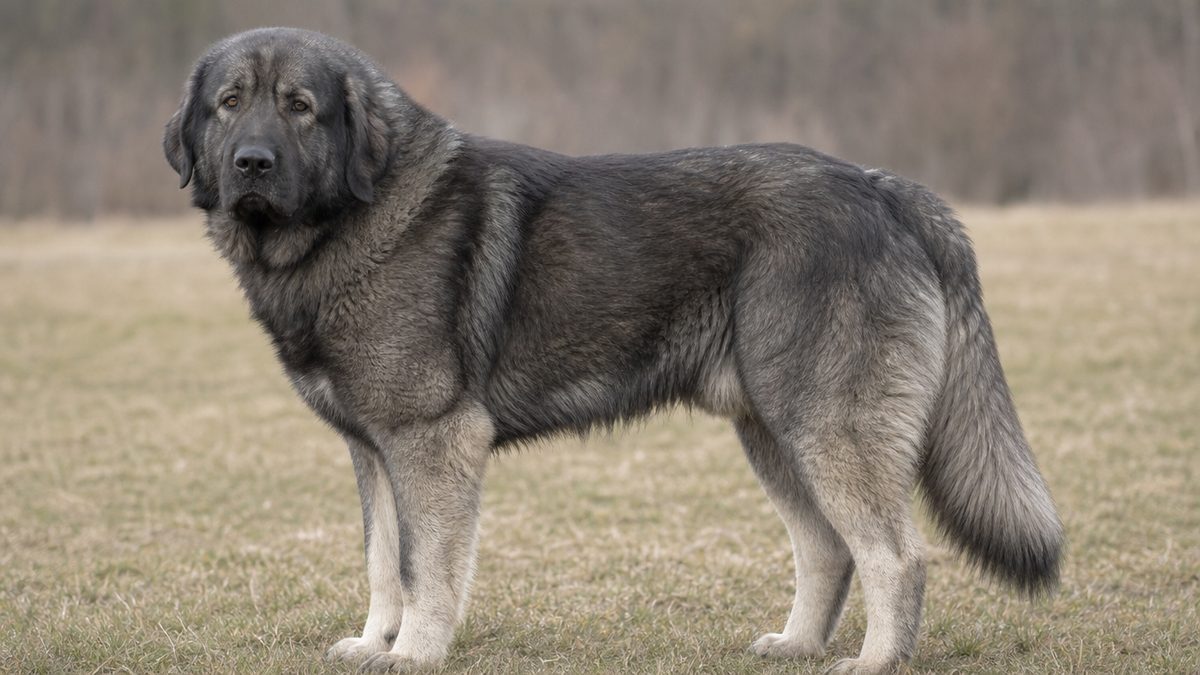
The Sarplaninac is a large solid-coloured livestock guardian of the Sar Planina range, held by the FCI as standard 41, accepted definitively on 24 July 1957 and still filed under the Yugoslav-era name Jugoslovenski ovcarski pas-Sarplaninac.
The breed's name and origin are contested, and this page's job is to report what each document says and when, rather than to adopt anybody's national claim. The FCI is the body both countries belong to, so its documents are the ones set out below.
The register, read on 9 September 2026
| Field | Value |
|---|---|
| Name in the register | JUGOSLOVENSKI OVCARSKI PAS-SARPLANINAC |
| English name | YUGOSLAVIAN SHEPHERD DOG - SHARPLANINA |
| Country of origin | NORTH MACEDONIA, SERBIA |
| Group and section | Group 2, Section 2.2 Molossian type, Mountain type |
| Definitive acceptance | 24 July 1957 |
| Official valid standard published | 24 November 1970 |
| Official authentic language | French |
| Alphabetical index letter | J, not S |
Three things in that table are worth stating plainly. The country-of-origin field names two countries and neither of them alone. The register uses North Macedonia, the country's name since February 2019, while every language edition of the standard still prints the older form: Serbia/Macedonia in English, Serbie/Macedoine in French, Serbien/Makedonien in German and Serbia-Macedonia in Spanish FCI Standard N 41 FCI Standard N 41 FCI Standard N 41. So the register has been updated for the 2019 renaming and the standards have not, including the German edition republished on 29 September 2015. And the breed indexes under the letter J, so a reader looking for Sarplaninac in the FCI's alphabetical index will not find it there.
What the standard's own history says
The FCI's brief historical summary is short and unusually candid. It says the breed is registered with the FCI since 1939 under number 41 under the designation Illirski Ovcar, rendered in the English edition as Yllyrian Shepherd Dog, and that in 1957 the General Assembly of the FCI accepted a motion proposed by the Yugoslavian Federation of Cynology to change the name of the breed to Yugoslavian Shepherd Dog Sharplanina. It then says, in terms, that the origin of the breed remains controversial, suggesting only that it probably came to Europe from Asia during prehistoric migrations.
That last sentence matters more than anything a national club says. The international registry that holds the breed declines to settle its origin, and every page that presents the question as settled is going beyond its own primary source.
Size, coat and colour
The standard's general appearance clause calls the Sharplanina a robust, well-proportioned dog with plenty of bone, of a size well above the average, with a thick, long, rather coarse coat that emphasizes the short-coupled appearance. The standard gives an average height at the withers of 62 cm for males and 58 cm for females, and bars from breeding males under 56 cm and females under 54 cm. Weight is 35 to 45 kg for males in good working condition and 30 to 40 kg for females. The coat measures 10 to 12 cm at the withers and must never be shorter than 7 cm, over an abundant undercoat that is short, dense and of fine texture.
Colour is where this breed is most often confused with its neighbours. The standard says the Sharplanina is a solid coloured dog, that all shades from white to a dark brown that looks almost black are acceptable, that the preferred shade is a greenish grey known as iron grey, and that spotting and white markings are not allowed. Extended white markings and a brindle pattern are disqualifying faults.
The Tornjak's standard disqualifies solid coloured dogs and asks for a parti-coloured dog on a dominant white ground. This breed's standard disqualifies extended white markings and requires a solid colour. Two neighbouring Balkan mountain guardians with exactly opposite colour rules, which is the quickest way to tell a photograph apart.
The naming and origin question, document by document
The FCI's own documents disagree with each other about when this breed became a separate breed, and the disagreement is a property of the sources rather than a mistake by any one of them.
Four FCI documents bear on the question. Read together they give two different dates for the moment the Sarplaninac became distinct from the Karst Shepherd, and they were all current when this page was written.
| Document | What it says | Date on the document |
|---|---|---|
| FCI breed record 41 | Definitive acceptance 24 July 1957; country of origin North Macedonia, Serbia | read 9 September 2026 |
| FCI standard 41, history | Registered with the FCI since 1939 as Illirski Ovcar; renamed in 1957 by a General Assembly motion from the Yugoslavian Federation of Cynology; origin remains controversial | French 24.11.1970, English 03.10.1980 |
| FCI standard 278, history | Breed and standard recognised 2 June 1939 as Illyrian Shepherd at the FCI assembly in Stockholm; completed and re-recognised at Bled in 1948; up to 16 March 1968 the Karst dog carried the same name as the Sarplanina dog, when the Central Society of Yugoslavia named them separately | English 22.08.2001 |
| FCI breed record 278 | Karst Shepherd definitive acceptance 4 February 1969; country of origin Slovenia | read 9 September 2026 |
Where the documents pull apart
FCI 41's register entry and FCI 41's own standard agree with each other: something happened in 1957, the register calls it definitive acceptance and the standard calls it a name change granted by the General Assembly FCI Standard N 41, English edition. The outlier is FCI 278, which dates the separation of the two dogs to 16 March 1968 and attributes it not to the FCI at all but to the Central Society of Yugoslavia, with the Karst Shepherd's own definitive acceptance following on 4 February 1969.
Both accounts can be true of different events. A name can be granted internationally in 1957 and the two populations can be formally separated domestically in 1968. What cannot be done is to quote one date as the answer, which is what the ranking pages do. Where sources disagree, the disagreement is the finding.
A development from February 2026
One thing has changed recently enough that no breed page reports it. North Macedonia now has its own separate breed on the FCI's provisional register: the Macedonian Shepherd Dog Karaman, FCI 378, recognised on a provisional basis on 11 February 2026, with the country of origin given as North Macedonia alone. Its English standard was published on 5 March 2026, the Spanish on 15 May and the French on 22 May, with no German edition yet.
That is a fact rather than an argument, and it is worth knowing because it changes the shape of the question. As of February 2026 the FCI holds one breed whose origin field names both countries and a second, newer breed whose origin field names one of them.
Two defects in the English edition of standard 41
Anyone checking these documents should know that FCI 41's English text is not reliable on numbers, and this page found three problems in it.
- A date conflict inside one document. The English edition's title page is dated 03.10.1980 while all seven of its page footers read 31.10.1980. The register agrees with the title page, giving 3 October 1980 as the English publication date, so the footers are the outlier.
- A percentage turned into a ratio. The authentic French says the body is longer than the height at the withers by 8 to 10 percent in males and 10 to 12 percent in females, and the Spanish agrees. The English renders it as a proportion, the relation is about 8 : 10 for dogs and 10 : 12 for bitches, and the German prints the reciprocal, 10:8 and 12:10 FCI Standard N 41. A ratio of 8 to 10 would make the body shorter than the height, contradicting the same sentence.
- A head proportion that differs by one point. The English and German editions give the skull to muzzle relation as 57 to 43 percent, while the authentic French and the Spanish both give 58 and 42 percent of total head length FCI Standard N 41 FCI Standard N 41 FCI Standard N 41.
The French is the authentic language for this standard, declared as such in the English, German and Spanish editions FCI Standard N 41 FCI Standard N 41, so where the figures differ the French governs. Anyone quoting an 8:10 body ratio for this breed is quoting a translation error rather than the standard.
Sarplaninac price in India, and what the one quoted figure is
There is no Sarplaninac price in India, and the single Indian cost table quoting one prints monthly figures that are a preset row shared unchanged with three other breeds.
India's import policy for pet dogs and cats is restricted, filed under ITC(HS) 01061900, and requires an authorisation from DGFT. The DGFT import FAQ states that dogs for commercial purposes like breeding, as a gift or other purposes are not allowed to be imported, and that new born puppies are not allowed. No lawful route exists to found an Indian breeding population, so no Indian market price follows.
The Indian cost table, tested
One Indian site carries a Sarplaninac cost table giving a cost of buying of Rs 25,000 to Rs 80,000 and average monthly expenses of Rs 5,700 basic and Rs 8,550 premium, split into food Rs 3,000 to Rs 4,500, healthcare Rs 1,500 to Rs 2,250 and grooming Rs 1,200 to Rs 1,800. Two checks show the monthly table is assembled rather than observed.
The arithmetic closes exactly: 3,000 plus 1,500 plus 1,200 is 5,700, and 4,500 plus 2,250 plus 1,800 is 8,550. And the same site prints the identical four numbers on its Tornjak and Saint Bernard pages, while its Pug page prints a different row entirely at Rs 2,200 to Rs 3,750, built from food Rs 1,200 to Rs 1,800, healthcare Rs 300 to Rs 750 and grooming Rs 700 to Rs 1,200, which also sums exactly.
| Breed | Monthly total | Food | Healthcare | Grooming | Cost of buying |
|---|---|---|---|---|---|
| Sarplaninac | Rs 5,700 to 8,550 | Rs 3,000 to 4,500 | Rs 1,500 to 2,250 | Rs 1,200 to 1,800 | Rs 25,000 to 80,000 |
| Tornjak | Rs 5,700 to 8,550 | Rs 3,000 to 4,500 | Rs 1,500 to 2,250 | Rs 1,200 to 1,800 | Rs 30,000 to 80,000 |
| Saint Bernard | Rs 5,700 to 8,550 | Rs 3,000 to 4,500 | Rs 1,500 to 2,250 | Rs 1,200 to 1,800 | Rs 25,000 to 50,000 |
| Pug (control) | Rs 2,200 to 3,750 | Rs 1,200 to 1,800 | Rs 300 to 750 | Rs 700 to 1,200 | Rs 10,000 to 50,000 |
Credit where it is due
The same page gets the thing the Tornjak page gets wrong. It prints the origin as North Macedonia and Serbia, both flags, matching the FCI register exactly, while its Tornjak page drops Bosnia and Herzegovina and shows Croatia alone. So the site is capable of carrying a dual origin and simply fails to on one page. Judge the page in front of you rather than the domain.
Testing the buying figure
Rs 25,000 to Rs 80,000 does not resolve to a converted foreign price. At 84.38 the quotients are 296.3 and 948.1, at 74 they are 337.8 and 1,081.1, and neither pair is a price a seller would print. At a flat 80 they are 312.5 and 1,000, but that test proves little, because any rupee figure ending in three zeros divides cleanly by 80 by construction. These read as round rupee-native numbers, which makes them unsourced rather than converted.
Which of DGFT's permitted import purposes did this dog or its parents arrive under? Breeding and gifting are not among them, and new born puppies are excluded outright.
Monthly cost of ownership for a 40 kg guardian in India
Keeping a Sarplaninac-sized guardian in an Indian metro costs roughly Rs 6,000 to Rs 12,000 a month once food, parasite control and routine veterinary care are counted, and every figure below comes from a live seller or municipal page rather than a preset table.
The standard puts a male at 35 to 45 kg and a female at 30 to 40 kg, which places the breed above the top weight band of the commonest Indian parasite products. Every figure below was read live on 9 September 2026.
| Item | Published price | Source |
|---|---|---|
| Puppy core vaccination course | From Rs 6,499 (list Rs 8,111) | Vetic national page |
| Annual booster | From Rs 3,199 (list Rs 3,806) | Vetic national page |
| Anti-rabies, single dose | Rs 699 | Vetic |
| 9-in-1 DHPPiL | Rs 899 | Vetic |
| Kennel cough | Rs 1,349 | Vetic |
| NexGard Spectra 15 to 30 kg, 3 tablets | Rs 3,308 (MRP Rs 3,375) | Supertails |
| Drontal Plus, 6 tablets | Rs 813 (MRP Rs 838) | Supertails |
| Consultation | Rs 500 to Rs 1,000 | VOSD |
| Boarding, 24 hours, Bengaluru | Rs 899 | PawSpace |
| Delhi pet dog registration, new | Rs 500 | MCD Delhi |
| Chennai pet licence | Rs 50 | Greater Chennai Corporation |
| Microchipping, Chennai | Rs 1,250 | SKS Veterinary Hospital |
Why the template understates a guardian breed
NexGard Spectra covers the 15 to 30 kg band at Rs 3,308 for three tablets, or Rs 1,103 a month, and a 40 kg Sarplaninac sits above that band, so the real figure is higher. Drontal Plus costs Rs 813 for six tablets at one tablet per 10 kg, which is Rs 542 for a single 40 kg deworming. Set those against the Rs 1,500 to Rs 2,250 monthly healthcare line the Indian template prints and the problem is clear: the preset row does not move when the dog gets bigger, because it was never derived from this dog.
The delivery-model spread
The identical 9-in-1 vaccine costs Rs 899 at a clinic chain, while Greater Chennai Corporation's six municipal pet clinics provide treatment and anti-rabies vaccination free of cost. A dog sanctuary's published guide puts a routine consultation at Rs 500 to Rs 1,000. What an Indian owner pays depends on who delivers the service, not on what is in the syringe.
- Register the dog. Delhi charges Rs 500 new and Rs 500 to renew, with a Rs 100 per month late fee and a one-month grace period.
- Licence it in Chennai for Rs 50.
- Microchip it at about Rs 1,250 in Chennai.
- Budget boarding at Rs 899 for 24 hours in Bengaluru, and expect some facilities to decline a guardian breed.
Food dominates and is arithmetic rather than a quoted price. A large-breed adult kibble at Indian retail runs roughly Rs 600 to Rs 700 per kilogram, and a 40 kg dog eats in the region of 450 to 600 g a day, which is about Rs 8,100 to Rs 12,600 a month. That one line already exceeds the entire monthly total the Indian template prints for this breed.
Heat tolerance in India, and why the homeland cannot be measured
The Sarplaninac is unsuited to the Indian plains, and establishing that honestly means reporting a measurement failure first: no NASA POWER grid cell can describe the Sar Planina range, because six points across it collapse into three cells.
NASA POWER returns a grid cell rather than a point, and in steep terrain one cell can cover a mountain and a valley at once. The Sar Planina range is the worst case this site has measured. Six points were queried by explicit latitude and longitude, and every one of the five in or near the range is unusable.
| Point | Real elevation | POWER cell elevation | Error | Cell |
|---|---|---|---|---|
| Popova Sapka, North Macedonia | 1,700 m | 1,111.30 m | -589 m | B |
| Gostivar, North Macedonia | 500 m | 1,111.30 m | +611 m | B |
| Prizren, Kosovo | 412 m | 1,111.30 m | +699 m | B |
| Tetovo, North Macedonia | 468 m | 745.28 m | +277 m | A |
| Skopje, North Macedonia | 240 m | 745.28 m | +505 m | A |
| Belgrade, Serbia | 117 m | 92.76 m | -24 m | C, usable |
Read the cell column rather than the error column and the failure becomes obvious. Cell B returned a byte-identical series for a ski area at 1,700 m, a valley town at 500 m and a city in a different country at 412 m. Within that single cell the error runs in both directions, 589 m too low at one point and 699 m too high at another, a spread of 1,288 m inside one number. Cell A did the same for Tetovo and Skopje, two cities 40 km apart. Two nearby points agreeing is therefore not a check here; it is the symptom.
What this page uses instead
Two baselines, both labelled for what they actually are. Belgrade is the only town-accurate point found in either country named in the FCI's origin field, at an error of 24 m, and it gives a Serbian lowland baseline of 12.45 C annual mean and 71.50 percent relative humidity, with July at 24.38 C and a peak wet bulb of 18.25 C. Cell B is used as a working-altitude baseline attached to no town, because that is honestly all it is: 8.63 C annual mean, 76.50 percent relative humidity, August at 20.15 C and a peak wet bulb of 14.57 C.
| Place | Annual mean C | Annual RH % | Hottest month | Peak wet bulb C |
|---|---|---|---|---|
| Sar Planina working-altitude cell, 1,111 m | 8.63 | 76.50 | August 20.15 | 14.57 |
| Belgrade, Serbia (lowland) | 12.45 | 71.50 | July 24.38 | 18.25 |
| Delhi | 25.60 | 45.56 | June 35.88 | 26.50 |
| Kolkata | 25.81 | 73.93 | May 31.53 | 27.09 |
| Chennai | 27.95 | 72.39 | May 31.51 | 26.11 |
| Bengaluru | 23.74 | 67.94 | April 28.37 | 21.86 |
| Pune | 23.86 | 66.80 | April 28.93 | 22.97 |
The real working habitat is colder than either figure, because the breed's summer pastures sit above the 1,111 m the cell represents. This page publishes no lapse-rate estimate for those pastures, because a correction applied to a cell that is already wrong by hundreds of metres would be a guess dressed as a measurement.
The comparison that matters
Even taking the most conservative reading, the gap is enormous. The working-altitude cell averages 8.63 C against Chennai's 27.95 C, a difference of 19.32 C, and its peak wet bulb of 14.57 C sits 12.52 C below Kolkata's 27.09 C NASA POWER climatology 2001-2020…. Even Bengaluru, the mildest Indian metro here at 23.74 C, is fifteen degrees warmer than the breed's mountain baseline. And the humidity comparison runs the other way, as it does for most European breeds: the mountain cell reports 76.50 percent annual relative humidity against Chennai's 72.39 percent, so the mountain homeland is actually more humid than Chennai and damp air is not the shock. Heat is.
The coat is required by the standard
This is not a coat an owner can manage away. The standard specifies hair of 10 to 12 cm at the withers over an abundant undercoat that is short, dense and of fine texture, and makes hair shorter than 7 cm a disqualifying fault. A correctly built Sarplaninac is therefore obliged to be insulated. Clipping it removes sun protection from a dog with pigmented skin and does not improve cooling.
Size compounds it. Hall 2020 found bodyweight at or above the breed and sex mean carried odds of heat-related illness of 1.42, and dogs over 50 kg carried odds of 3.42. A 35 to 45 kg Sarplaninac does not reach that top band, and the breed is not separately modelled in the paper, so neither figure can simply be assigned to it. The transferable point is the direction: weight and heat compound.
The Prevention of Cruelty to Animals (Dog Breeding and Marketing) Rules 2017, Second Schedule Part IV paragraph 21(1), bars keeping in outdoor facilities, without the attending veterinary practitioner's written approval, dogs not accustomed to local temperatures and breeds that cannot tolerate them, giving long-haired breeds in high temperature locations as its own example. A 12 cm coat in a Chennai May is precisely that case.
Temperament, and which Indian household this could suit
The Sarplaninac is calm, incorruptible and devoted to its own household, and it was bred to make protective decisions without a handler present, which is what makes it a poor fit for almost every Indian home.
The standard's character clause describes a robust, well-proportioned dog of sturdy constitution, even disposition and good temperament, reliable, protective but not snappy, incorruptible and devoted to its master. Its history clause explains what that disposition was for: the original type survived where intensive cattle breeding still prevails and where the dog can still play its original role as a guardian and protector of cattle herds against predatory animals.
Two words in that clause are worth holding onto. Protective but not snappy describes a dog that should not be reactive, and aggressive or overly shy dogs are a disqualifying fault. Incorruptible describes a dog that will not be talked round by a stranger, which is the useful half of the trait on a mountain and the difficult half at an Indian gate.
Who this suits in India
- A farm or a large walled property with genuine livestock or property to guard.
- An experienced owner who has kept an independent guardian breed before.
- A cool upland location. No plains metro is a reasonable home for this coat.
- A household that can introduce every regular visitor deliberately and repeatedly.
Who it does not suit
- Any apartment, on both the space and the strangers questions.
- A first-time owner. A 40 kg dog that makes its own decisions is not beginner work.
- A property with constant unfamiliar foot traffic.
- Anyone expecting an obedient dog in the retriever sense. This breed cooperates rather than complies.
The most useful thing an Indian buyer can understand is that a livestock guardian's calmness is not docility. A dog that is even-tempered and devoted at home can still decide, correctly by its own breeding, that an unfamiliar person at the boundary is a problem. That decision is the breed working as designed, and it is why the socialisation window matters more here than the obedience training does.
Only three PubMed records name this breed, and one of them is a 2023 case report of Oslerus osleri infection diagnosed by CT and bronchoscopy in a 16-month-old dog that the paper describes as a Sarplaninac Shepherd cross, not a purebred. It is a good case report and it is not breed evidence, and this page does not treat it as such.
Training a Sarplaninac, and what this breed resists
Train a Sarplaninac by socialising it exhaustively before sixteen weeks and by building cooperation rather than obedience, because the breed resists being overruled rather than resisting learning.
A livestock guardian was selected for centuries to work at distance from any human and to act on its own judgment. That is the opposite of the selection pressure behind a gundog, and it changes what training means. The standard's own words for the breed are reliable, protective but not snappy, incorruptible. None of those is a word about biddability.
The realistic timeline
| Age | Priority | Indian-specific note |
|---|---|---|
| 8 to 16 weeks | Meet every person who will ever come to the gate | Lawful sale is not before eight weeks under Rule 8(1)(a) of the 2017 Rules |
| 4 to 8 months | Settle on a mat, gate manners, handling for grooming | Keep all sessions before 7 am from March to June |
| 8 to 14 months | Recall while the guarding instinct switches on | Expect a marked change in how the dog treats strangers |
| 14 to 24 months | Consolidation and joint protection | No forced running on hard surfaces; a large breed matures late |
What fails
Three approaches fail reliably. Punishing the guarding response teaches the dog to skip the warning, which produces a dog that acts without notice. Repetitive drilling bores an independent breed and teaches it that the handler is irrelevant. And keeping the puppy at home because the Indian street feels risky produces exactly the suspicious adult the owner was trying to avoid.
Socialise in volume and early. Every domestic worker, security guard, courier, neighbour and relative who will ever enter the property should meet this dog calmly before it is sixteen weeks old. For a guardian breed that is the single highest-value investment available, and it cannot be done retrospectively.
A guardian that alerts once and then settles is doing its job correctly. Mark and reward the settling, never the barking and never the absence of barking, which the dog cannot distinguish from ordinary quiet.
Daily exercise requirement, and what happens without it
A Sarplaninac needs space to patrol rather than structured walks, and in India every minute of it has to be scheduled outside daylight for most of the year.
The FCI standard sets no exercise figure, because a breed standard describes conformation rather than management. What it describes is a working guardian whose original role was protecting cattle herds against predatory animals, which is patrolling work over open ground at low intensity for long periods. The Indian page that does give a figure puts it at 60 to 90 minutes, and gives no source for that either.
Scheduling it in an Indian summer
Delhi's mean June temperature is 35.88 C and Chennai's May mean is 31.51 C NASA POWER climatology 2001-2020…. A 12 cm coat over a dense undercoat cannot work in either. Exertion is the recorded trigger in 74.2 percent of heat-illness events with a known cause, against 12.9 percent environmental and 5.2 percent from vehicular confinement, so scheduling is the main lever an Indian owner actually holds.
- Morning session before 6.30 am from March to June in the plains.
- Evening session after 8 pm, once ground surfaces have cooled.
- Free movement in a secure area rather than forced road walking, which lets a patrolling breed self-regulate its effort.
- Constant shade, moving air and water wherever the dog spends the day.
- No activity at all on the worst days. A missed walk is far safer than a heat-stressed 40 kg guardian.
What under-exercise does
An under-exercised guardian gets heavy and gets more reactive at boundaries. Weight matters directly, since bodyweight at or above the breed and sex mean carried 1.42 times the odds of heat-related illness in Hall 2020, and it loads hips in a breed where hip dysplasia has been reported since 1972. Judge the workload by body condition and by how settled the dog is, not by minutes walked.
One practical warning for Indian cities. This breed's response to an unfamiliar loose dog is not a retriever's, and Indian streets have free-ranging dogs on them. A 40 kg guardian that decides a street dog is a threat is a serious problem on a lead. Walk it where you can control the encounter, and do not walk it off lead.
Grooming a 12 cm mountain coat in Indian humidity
Groom a Sarplaninac by brushing right through the undercoat once or twice a week and daily during the moult, and never clip it, because hair shorter than 7 cm is a disqualifying fault and the coat is the dog's sun barrier.
The coat clause is specific about where the length sits. The head, ears and front of the legs carry short hair, while around the neck, on the rump, at the rear of the legs and on the tail the hair is long, almost flat and somewhat coarse, and under the guard hair there is an abundant undercoat that is short, dense and of fine texture. At the withers the hair should measure between 10 and 12 cm and should not be shorter than 7 cm.
The Indian routine
- Brush once or twice a week normally and daily through the moult, in layers to the skin with a slicker and then an undercoat rake.
- Work hardest on the neck ruff, the rump, the back of the legs and the tail, which is where the standard puts the longest hair and where mats form first.
- Bathe rarely and dry completely with forced air. A dense fine undercoat that stays damp through a monsoon is how hot spots begin.
- Check the skin weekly during the rains and run your hands over neck, ears and groin for ticks at every session.
- Never clip. Hair shorter than 7 cm is disqualifying, and clipping removes sun protection without improving heat loss.
Imported grooming advice needs editing here
European and North American guidance for northern double-coated guardians usually says to towel the dog and let it air dry. That is reasonable where the hottest month at the breed's working altitude averages 20.15 C and unreasonable in a Kolkata August, where the peak wet bulb reaches 27.09 C. Finish the drying.
Tick control is a grooming task rather than a seasonal one in India, and a 12 cm coat hides ticks completely. Indian clinic-based series report a heavy burden among dogs presented at veterinary clinics: a West Bengal study of 584 dogs found Babesia gibsoni in 76.54 percent, with 72.9 percent of the 584 dogs screened carrying two or more pathogens, and a Kerala study of 120 dogs found Babesia in 66.7 percent with a pre-monsoon peak from March to May. Those describe clinic caseloads rather than the general dog population, and either way the response is year-round tick control.
The standard describes the darker hue of the head, neck and body fading gradually into a dirty white or yellowish grey toward the extremities, and says the change must be very gradual and must never give the impression of a spotted pattern. A gradual shading is correct; patches are a fault.
Health, life span and what the genetics study measured
Hip dysplasia is the only condition reported in this breed's own literature, in a 1972 paper, and the most useful modern evidence about the Sarplaninac is a population genetics study of 493 Western Balkan guardian dogs.
The literature on this breed is thin and it is worth saying exactly how thin, with the searches shown. PubMed returns three records for Sarplaninac. One is the 2014 Western Balkan genetics study, one is a 1972 hip dysplasia paper, and one is a 2023 case report whose patient the authors describe as a Sarplaninac Shepherd cross rather than a purebred. Searches for Yugoslavian Shepherd Dog, Illyrian Shepherd and Sharplanina returned zero each, while controls in the same session returned 47 records for Labrador retriever with hip dysplasia. So the absence is real and it was tested across the breed's several names.
Hip dysplasia
The breed's own hip dysplasia paper is Petrovic, Draganovic, Tadic and Misic, Hip dysplasia in the Yugoslavian sheep dog, Sarplaninac, published in Acta Radiologica Supplementum in 1972. It is more than fifty years old and this page quotes no prevalence figure from it, because no modern survey exists to check it against and a half-century-old figure from a different population would mislead. What can be said is that hip dysplasia has been recognised in this breed in the veterinary literature for over five decades, and that it is the condition to screen for.
The Indian page that lists health issues for this breed gives hip dysplasia, bloat, canine distemper, parvovirus, Lyme disease, parasites, leptospirosis and rabies. Five of those eight are infectious diseases that any dog can contract and are not breed traits at all. Hip dysplasia and bloat are the two that genuinely belong on a large guardian's list.
What the population genetics found
Ceh and Dovc genotyped 493 dogs from five breeds with 18 microsatellite markers and sequenced mitochondrial DNA from 94 of them, covering the Karst Shepherd, Sarplaninac and Tornjak. Four results matter here.
- The Sarplaninac had the highest allelic richness of the three at 5.94, ahead of the Tornjak at 5.72 and far ahead of the Karst Shepherd at 3.33. It also had the highest mtDNA haplotype diversity, where the Karst Shepherd had only one haplotype.
- All the breeds could be considered genetically distinct on FST values and on the high percentage of animals correctly assigned.
- The Sarplaninac and the Caucasian Shepherd could not be separated by neighbour-joining, STRUCTURE or DAPC methods, and sat close together in the NeighborNet tree.
- Common ancestry between the Karst Shepherd and the Sarplaninac could not be reconstructed from the microsatellite data, despite pedigree and mtDNA evidence of historical admixture.
That last finding is directly relevant to the naming question earlier on this page. FCI standard 278 says the two dogs carried the same name until 16 March 1968, and the microsatellite data could not recover that shared ancestry. The authors' own conclusion is that the official separation of these breeds strongly affected the resolution of genetic differentiation, and that in small populations relationships are determined not only by relatedness but by stochastic effects. In plain terms, closing three registers around three small populations made them measurably distinct regardless of where they started.
Life span
No reliable breed-specific life span figure exists. The row Yugoslavian Shepherd Dog (Sharplanina) appears in McMillan 2024's Table S5, the 345-row list of every breed the study considered, and is flagged N for inclusion in the survival analysis, so that study publishes no median. The breed was considered and excluded rather than overlooked, which is the decisive answer. The Indian page printing 11 to 13 years cites nothing, and this page publishes no figure rather than borrowing one from a related guardian.
Risks that come with India
Tick-borne disease is the practical risk to a heavily coated dog kept outdoors here, and the coat hides the ticks Venugopal V, Deepa PM, Muhasin Asaf VN. Bloat is the other large-breed concern to plan for, with two smaller meals a day rather than one large one. Neither is a breed-specific finding and both are worth acting on.
Collapse during or after exercise, a distended abdomen with unproductive retching, sudden hind-limb lameness or reluctance to rise, or pale gums with lethargy in a tick-exposed dog. Consult your nearby vet immediately rather than waiting to see whether it settles.
Feeding a mountain guardian in India
Feed an adult Sarplaninac roughly 450 to 600 g of a large-breed dry food a day across two meals, weigh it rather than scooping, and keep the dog lean, because weight compounds both the hip and the heat risk.
No breed-specific feeding study exists for the Sarplaninac, so this section reasons from the standard's own weights: 35 to 45 kg for a male in good working condition and 30 to 40 kg for a female. A dog at the top of that range on a moderate activity level eats in the region of 450 to 600 g of dry food daily.
Life-stage feeding
- Eight weeks to four months: four meals a day of a large-breed puppy food, which controls calcium and growth rate rather than maximising it.
- Four to twelve months: three meals, then two. Fast growth loads joints in a breed with a documented hip problem.
- Twelve months to adult: two meals a day, never one, because a deep-chested guardian fed a single large meal is the classic bloat setup.
- Senior, from about eight years: keep the protein, cut the calories, check the body condition score monthly.
The Indian complications
Heat suppresses appetite. A dense-coated guardian in an Indian plains city commonly eats poorly through May and then over-eats in the monsoon, which produces a weight swing at exactly the wrong time. Feed to body condition rather than to a bowl size, and move the main meal to the cool end of the day. The neck ruff also collects wet food and stays damp in humidity, so rinse and dry it after meals.
Never free-feed a guardian breed. A calm dog with a permanently full bowl in a household that feeds table scraps gains weight quietly, and bodyweight at or above the breed mean carried 1.42 times the odds of heat-related illness in Hall 2020.
What it costs
A large-breed adult kibble at Indian retail runs roughly Rs 600 to Rs 700 per kilogram, so 450 to 600 g a day is about Rs 8,100 to Rs 12,600 a month before treats. That is the largest recurring cost of owning this breed in India and, on its own, it exceeds the entire monthly figure the Indian template table prints for the breed. Buy the largest bag you can store sealed, because Indian humidity spoils opened kibble faster than most owners expect.
Feed two smaller meals, avoid hard exercise for an hour either side of a meal, and use a slow-feeder bowl if the dog gulps. None of this is proven to prevent gastric dilatation volvulus, but all of it is free.
Month by month through the first year
Plan a Sarplaninac puppy's first year around the socialisation window that closes at about sixteen weeks, the adolescent point at which the guarding instinct switches on, and the late skeletal maturity of a 40 kg breed.
| Age | What matters | What to do |
|---|---|---|
| 8 to 10 weeks | Lawful minimum age, settling, first vaccinations | Rule 8(1)(a) of the 2017 Rules bars sale of pups under eight weeks |
| 10 to 16 weeks | The socialisation window, which does not reopen | Introduce every person who will ever come to the gate, calmly and repeatedly |
| 4 to 6 months | Growth and joints | Large-breed puppy food, no forced running, no repeated stairs, no jumping down |
| 6 to 9 months | First Indian summer | All activity outside daylight; shade, water and moving air all day |
| 9 to 14 months | The guarding instinct switches on | Expect challenges to strangers. Manage the gate; never punish the warning |
| 12 to 18 months | Hip screening becomes possible | Ask for both parents' scores before you buy, not after |
| 18 to 24 months | Skeletal maturity | Only now build sustained work |
Why the window matters more here than the training
For a livestock guardian the first sixteen weeks decide the adult dog. A breed described as incorruptible and protective will form its categories of familiar and unfamiliar early and hold them. In an Indian household the number of unfamiliar people who legitimately enter is high, so each of those categories has to become normal before the window closes. Sale below eight weeks is prohibited, so part of that window is always spent at the breeder's and you should ask what they did with it.
Vaccination, parasites and paperwork
Start the core course on the clinic's schedule; one national chain prices a puppy course from Rs 6,499 against a struck-through Rs 8,111, with anti-rabies at Rs 699 and the 9-in-1 at Rs 899 individually. Begin tick and flea cover as soon as the weight band allows. Register the dog once eligible: Rs 500 in Delhi, Rs 50 in Chennai, microchipping about Rs 1,250.
An adult Sarplaninac carries 10 to 12 cm of hair at the withers and never less than 7 cm. A short-coated adult sold to you as heat-adapted is not meeting the standard, whatever the seller says about suiting Indian weather.
Sarplaninac against the guardians Indian buyers cross-shop
Compare the Sarplaninac against the Tornjak, the Karst Shepherd and the Caucasian Shepherd on measured genetics, colour rules and Indian availability, because those are the three axes where the documents actually differ.
| Breed | Allelic richness | Colour rule in its own standard | Country of origin, FCI register |
|---|---|---|---|
| Sarplaninac | 5.94, the highest of the three | Solid colour required; extended white markings and brindle disqualify | North Macedonia, Serbia |
| Tornjak | 5.72 | Parti-colour on a dominant white ground; solid coloured dogs disqualify | Bosnia and Herzegovina, Croatia |
| Karst Shepherd | 3.33, with one mtDNA haplotype | Not compared on this page | Slovenia |
| Caucasian Shepherd Dog | Not separable from the Sarplaninac in that study | Not compared on this page | Not in that study |
Against the Tornjak
These two are the closest cross-shop and the fastest way to tell them apart is colour. The Sarplaninac must be solid, and extended white markings or brindle disqualify it. The Tornjak must be parti-coloured on a usually white ground, and solid coloured dogs disqualify. On genetics the Sarplaninac carries slightly more allelic richness at 5.94 against 5.72 and higher mtDNA haplotype diversity, while the Tornjak showed internal substructuring. Neither result makes one breed better; both are worth knowing.
Against the Karst Shepherd
The Karst Shepherd is the cautionary comparison. Its pedigree data gave a realized effective population size of fewer than 20 animals, its allelic richness was 3.33 and only one mtDNA haplotype was found in it. On gene-pool grounds the Sarplaninac is the healthier of the two populations by a wide margin.
Against the Caucasian Shepherd
This is the comparison the genetics makes awkward. The 2014 study could not separate the Sarplaninac from the Caucasian Shepherd using neighbour-joining, STRUCTURE or DAPC, and the two sat close together in the NeighborNet tree. That does not mean they are the same breed; it means the marker set and sample could not resolve them. It is a finding about the limits of the data as much as about the dogs, and both readings should be given.
The comparison that decides it in India
For an Indian household none of these four is a sensible choice in a plains metro, and the reason is the same in every case: a required undercoat, a long guard coat and a working homeland far colder than any Indian city. A buyer with genuine land and a genuine guarding need will do better with a locally acclimatised dog than with any imported mountain breed.
Mistakes Indian owners actually make with this breed
Five mistakes account for most bad outcomes with a Sarplaninac in India, and the first is treating a contested origin as a settled one.
- Repeating a single national origin claim as fact. The FCI's register names North Macedonia and Serbia together, and the FCI's own standard says the origin of the breed remains controversial.
- Budgeting from the Indian template row. Rs 5,700 to Rs 8,550 a month is a preset shared unchanged with the Tornjak and the Saint Bernard, and food alone for a 40 kg dog exceeds it.
- Clipping the coat for summer. Hair shorter than 7 cm is a disqualifying fault, and clipping removes sun protection without improving cooling.
- Housing the dog outdoors through an Indian summer. Second Schedule Part IV paragraph 21(1) of the 2017 Rules bars exactly that without the attending veterinary practitioner's written approval.
- Skipping socialisation because the street feels unsafe. A guardian that has not met the household's regular visitors before sixteen weeks becomes the reactive adult the owner feared.
A sixth, about the standard's own numbers
Do not quote the English edition of FCI 41 on proportions. Its body-length ratio of 8 : 10 is a translation of the authentic French's 8 to 10 percent and means something different, and its skull-to-muzzle figure of 57 to 43 differs from the French and Spanish 58 and 42. The French governs, because all three other editions declare it the authentic language.
And one about the tail
Bobtails, meaning dogs born with only a stump or no tail at all, are a disqualifying fault in this standard. Indian law reaches the same result from the other direction: the Second Schedule Part II paragraph 6(8) of the 2017 Rules states there shall be no tail docking, ear cropping, de-barking, de-clawing or any other kind of mutilation, and that any change of appearance by artificial means is strictly forbidden. On this point the breed standard and Indian law agree.
English Wikipedia's page for this breed carries a Legislation section. This page makes no claim about foreign breed bans, because the statutes could not be read directly in this session. If you plan to travel with the dog, read the destination country's own legislation rather than a summary of it.
Adoption and responsible sourcing
Adopt a locally acclimatised large dog rather than importing a Sarplaninac, because no Indian population or rescue pipeline exists and none can form while commercial import is prohibited.
A breed with no lawful commercial import route and no Indian breeding population has no surrender pipeline either. There is no Indian Sarplaninac rescue. What Indian shelters do have, in every metro, is large capable dogs already living in the climate the buyer lives in, without a coat their standard forbids you to shorten.
If you are set on this breed
- Approach clubs in both countries the FCI names in the origin field, and ask about rehoming rather than puppies.
- Establish which DGFT permitted purpose your import would fall under before committing money.
- Ask for hip scores on both parents, because hip dysplasia is the one condition reported in the breed's own literature.
- Plan the ports. Pet import is allowed only through the airports and seaports of Delhi, Mumbai, Chennai, Hyderabad, Bengaluru and Kolkata and, since October 2024, Kochi airport Department of Animal Husbandry…. The full route is set out in how to import a dog to India.
- Be honest about the property and the climate. This is a mountain flock guardian.
Four questions for any Indian seller
Which DGFT permitted purpose did this dog or its parents arrive under. What is the FCI-nomenclature pedigree number, given that the Kennel Club of India is India's FCI member body. What is the coat length at the withers, measured against the standard's 10 to 12 cm. And may I see the dam. Verify each answer against the document rather than the seller's word, because every one of those four can be checked. A seller who describes the breed as belonging to one country alone is working from a summary rather than from the register.
The better Indian option
An Indian household with land, a real guarding need and experience of independent dogs is better served by a locally bred guardian already adapted to the heat. Those dogs cost far less in veterinary attention here than an imported mountain breed, and they arrive without a coat the standard requires you to keep. Greater Chennai Corporation's six municipal pet clinics provide treatment and anti-rabies vaccination free of cost, which lowers the barrier further, and a routine consultation elsewhere runs Rs 500 to Rs 1,000.
This page reports published registry, research and price data as editorial content. It does not recommend breeders, link puppy listings or quote a live price as an offer, and it takes no position on the breed's national ownership.
Sarplaninac questions Indian buyers actually ask
What is the Sarplaninac price in India?
No reliable Sarplaninac price in India exists. The one Indian page quoting a figure prints Rs 25,000 to Rs 80,000 inside a cost table whose monthly numbers are a preset row shared with three other breeds, and India's import policy forbids importing dogs for breeding or as a gift, so no domestic market can form.
Which country is the Sarplaninac from?
The FCI's own register names two: its country-of-origin field for standard 41 reads North Macedonia, Serbia. All four language editions of the standard print the older form Serbia/Macedonia. The standard's own history adds that the origin of the breed remains controversial, so the FCI does not settle the question either.
Why does the FCI still call it the Yugoslavian Shepherd Dog?
Because the name has not been changed since 1957. The standard's history says the breed was registered with the FCI in 1939 as Illirski Ovcar, and that in 1957 the FCI General Assembly accepted a motion from the Yugoslavian Federation of Cynology to rename it Yugoslavian Shepherd Dog Sharplanina. That body no longer exists.
Is the Sarplaninac the same as the Karst Shepherd?
Not now, and the FCI dates the split. Standard 278 says that up to 16 March 1968 the Illyrian shepherd of the Karst massif carried the same name as the dog from the Sarplanina massif, and that the Central Society of Yugoslavia then named one the Karst Shepherd and the other the Sarplaninac.
How big do sarplaninacs get?
The standard gives an average height at the withers of 62 cm for males and 58 cm for females, and excludes from breeding males under 56 cm and females under 54 cm. Weight is 35 to 45 kg for males and 30 to 40 kg for females in good working condition.
What colour is a Sarplaninac?
Solid. The standard says the Sharplanina is a solid coloured dog, that all shades from white to an almost black dark brown are acceptable, and that the preferred shade is a greenish grey known as iron grey. Spotting and white markings are not allowed, and extended white markings or brindle are disqualifying.
Can a Sarplaninac handle Indian heat?
No. Its coat measures 10 to 12 cm at the withers over an abundant undercoat, and hair shorter than 7 cm is a disqualifying fault, so the insulation is required by the standard. The mountain cell covering its home range averages 8.63 C across the year, against Chennai's 27.95 C.
How long does a Sarplaninac live?
No reliable breed-specific figure exists. The breed appears in McMillan 2024's Table S5 but is flagged as excluded from the survival analysis, so that study publishes no median for it, and no other population survey was found. Indian pages printing 11 to 13 years give no source.
Does the Sarplaninac have hip dysplasia?
It has been reported in the breed since a 1972 paper in Acta Radiologica by Petrovic and colleagues, titled Hip dysplasia in the Yugoslavian sheep dog, Sarplaninac. No modern prevalence survey of the breed was found, so this page gives no percentage rather than borrowing one from a related guardian breed.
Is the Sarplaninac related to the Caucasian Shepherd?
Genetically they could not be told apart in the one study that tested it. Ceh and Dovc genotyped 493 Western Balkan guardian dogs and reported that the Sarplaninac and Caucasian Shepherd could not be separated by neighbour-joining, STRUCTURE or DAPC methods, and sat close together in the NeighborNet tree.
What does it cost to keep a Sarplaninac in India each month?
Budget roughly Rs 6,000 to Rs 12,000 a month in a metro for a dog of this size, driven mainly by food and parasite control. Do not use the Rs 5,700 to Rs 8,550 figure Indian pages print, because the identical row appears on the Tornjak, Saint Bernard and Leonberger pages of the same site.
Can I import a Sarplaninac into India?
Only as your own pet, not to breed or sell. DGFT permits pet import through the airports and seaports of Delhi, Mumbai, Chennai, Hyderabad, Bangalore and Kolkata, and its FAQ states that dogs for commercial purposes like breeding or as a gift are not allowed and that new born puppies are not allowed. DAHD added a seventh port, Cochin International Airport at Kochi, for pets arriving under the baggage rules in October 2024.
Are Sarplaninac good family dogs?
Devoted to its own family and a poor fit for almost every Indian home. The FCI standard's character clause describes an even disposition and good temperament, reliable, protective but not snappy, incorruptible and devoted to its master, with aggressive or overly shy dogs disqualified. Incorruptible means it will not be talked round by a stranger, and it was bred to make protective decisions without a handler present. It suits a farm or a large walled property with an experienced owner of guardian breeds, and not any apartment or any property with constant unfamiliar foot traffic.
How intelligent is a Sarplaninac dog?
Its standard does not say, and what it does say is more useful than a ranking. The words are reliable, protective but not snappy, incorruptible, and none of them is a word about biddability. A livestock guardian was selected for centuries to work at a distance from any human and act on its own judgment, which is the opposite of the selection behind a gundog. So it understands and decides: repetitive drilling bores it and teaches it the handler is irrelevant, and punishing the guarding response teaches it to skip the warning.
Are Sarplaninac rare?
In India, absent, and Bonbeno prints no world count. India's pet import policy is restricted under ITC(HS) 01061900, dogs for commercial purposes like breeding are not allowed in, and new born puppies are not allowed, so no lawful route exists to found an Indian breeding population and no Indian market price follows. In the Balkans the breed is a working population rather than a rarity: the FCI's own history says the original type survived where intensive cattle breeding still prevails, and a 2014 study genotyped 493 Western Balkan guardian dogs.
Compare with similar breeds
Sarplaninac sits in 1 Bonbeno group. Each one compares it directly against the breeds it is genuinely an alternative to, on the same figures.