
Dog breed profile
Tibetan Mastiff Price in India: The Crore Question, Answered
What a Tibetan Mastiff costs in India, where the 20 crore and 50 crore stories actually came from, what happened to the Chinese market that produced them, and why a Himalayan livestock guardian rates 1 of 5 for heat tolerance on the Indian plains.
Quick answer
The Tibetan Mastiff price in India runs Rs 25,000 to Rs 10,00,000 and above in 2026, and published sources disagree about the registered band by a factor of five. No dog has verifiably sold for 20 or 50 crore. The Guinness record is a single 2011 Chinese sale of $1,513,417, and that market later collapsed. Bonbeno rates heat tolerance 1 of 5.
This guide is general information for Indian pet owners and is not a diagnosis. Always consult a registered veterinarian near you before acting on anything you read here, and treat any sudden change in your dog's condition as urgent.
Tibetan Mastiff at a glance
What a Tibetan Mastiff actually is
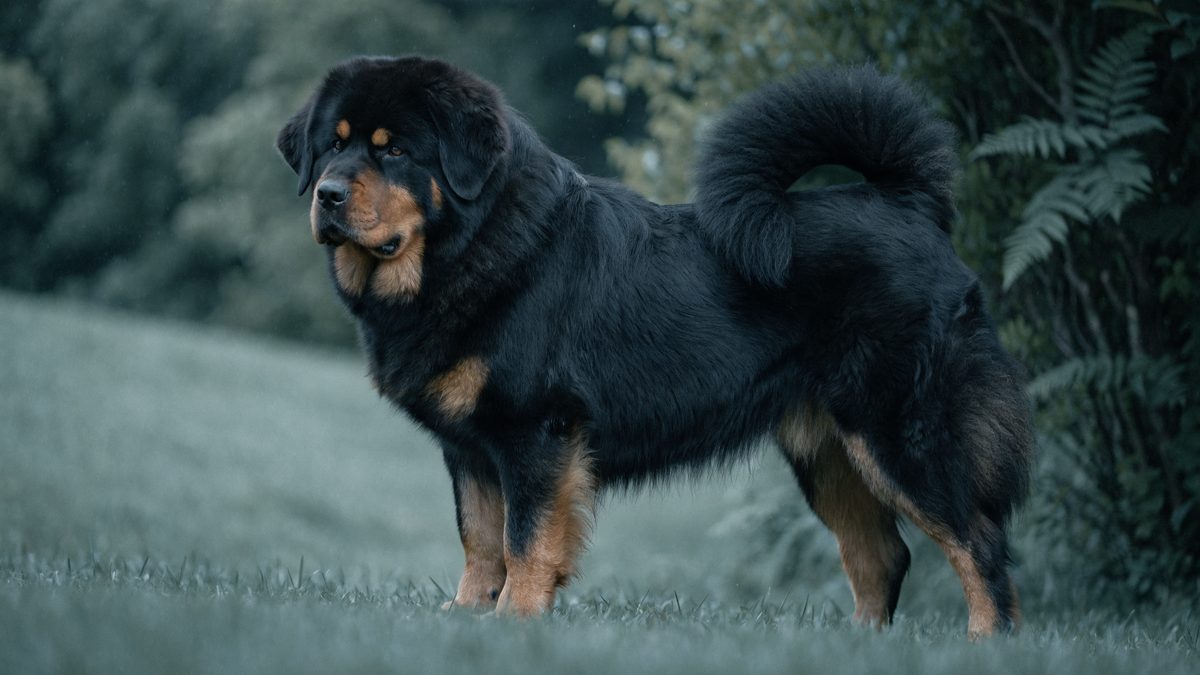
The Tibetan Mastiff is a Himalayan livestock guardian dog, registered by the FCI as the Do-Khyi under Standard 230 in Group 2, Section 2.2, Molossoid breeds of the mountain type, with Tibet (China) as its country of origin and companion, watch and guard work as its listed utilization. It is not a mastiff in the English sense, and the American Kennel Club standard is blunt about size: a large, but not a giant breed.
Start with the name, because it is the first thing sold wrongly in India. European writers applied the word mastiff to this dog and the label stuck, but a better name for the breed would be the Tibetan mountain dog, or, to cover the whole landrace across its range, the Himalayan mountain dog. In Tibetan it is the Do-Khyi, the tied dog or door guard, and the FCI keeps that name at the top of the standard.
This matters commercially. An Indian seller who calls a heavy fluffy dog a Tibetan Mastiff is using a word that carries a global price story. The Himalayan Sheepdog, the Gaddi and the Bhotia are related working dogs from the same mountains that carry no such story, which is exactly why crosses get relabelled upward.
What the two recognised standards say
| Point | AKC, approved 10 February 2012 | FCI-Standard 230, valid 18 March 2015 |
|---|---|---|
| Size framing | "A large, but not a giant breed" | "Powerful, heavy, well built, with good bone" |
| Height, males | Preferred 26 to 29 inches at the withers | 66 cm (26 in) minimum, tolerance 2 cm |
| Height, females | Preferred 24 to 27 inches at the withers | 61 cm (24 in) minimum, tolerance 2 cm |
| Height disqualification | Dogs under 25 in, bitches under 23 in, at 18 months or older | Under minimum height is a severe fault, not an elimination |
| Wrinkle | Heavy wrinkling to be severely faulted | Severe fault: head light or heavily wrinkled; pendulous flews; pronounced dewlap |
| Coat | Double, coarse guard hair, heavy soft undercoat in cold weather which becomes rather sparse in warmer months | Harsh, thick, dense and rather woolly undercoat in cold weather which becomes rather sparse in warmer months |
| Colour | Black, brown, blue/grey, all with or without tan, plus gold. White, cream, wolf sable, brindle and particolours disqualified | Black, blue, gold, sable, with or without tan. White, cream, grey, brown, lilac, brindle, particolour are eliminating faults |
| Maturity | Not specified | Slow to mature, best at 2 to 3 years in females and at least 4 years in males |
| Temperament | Highly intelligent, independent, strong willed, rather reserved, aloof with strangers | Independent, protective, commands respect, most loyal to his family and territory |
Two lines in that table do real work later on this page. The first is the coat clause. Both standards state that the undercoat becomes rather sparse in warmer months, and the AKC adds that dogs are not to be penalised if shown with a summer coat Federation Cynologique Internationale. The breed sheds its insulation seasonally, which is a genuine adaptation and is also the single most misunderstood fact about keeping one in India. The second is wrinkle. Heavy wrinkling is severely faulted by the AKC and listed as a severe fault by the FCI Federation Cynologique Internationale, which puts the Indian Lion Head premium in an awkward place. More on that in the [price](#price) section.
Size, weight and what the numbers mean at home
Published adult weights for the breed are 40 to 70 kg for males and 30 to 55 kg for females, attributed to the AKC. One Indian directory lists a wider 34 to 73 kg band and a height range of 61 to 76 cm. Neither kennel club standard states a weight at all, which is unusual and worth knowing: a breeder quoting you a guaranteed adult weight is quoting a marketing number, not a standard.
Translate that into a household. A 60 kg dog eats like a Great Dane, needs a vehicle that can carry it to a vet, and cannot be physically restrained by an average adult once it decides otherwise. Bonbeno's Great Dane page prices a giant-breed diet from a manufacturer's own feeding table, and this page uses the same method in [feeding](#feeding) so the two are comparable.
Where the breed came from, and what nearly ended it
The FCI traces written mentions of the dog from Aristotle through Marco Polo, who reached Asia in 1271, and records that one of the first Tibetan Mastiffs to reach the West was a male sent to Queen Victoria by Lord Hardinge, then Viceroy of India, in 1847. Edward VII took two back to England in the 1880s, and an early recorded litter was born in the Berlin Zoo in 1898. The Kennel Club adds that King George IV presented a Tibetan Mastiff to the London Zoo in 1828.
The modern population has a much narrower base than that history suggests. The Kennel Club states that the Chinese invasion of Tibet in 1950 brought the compulsory slaughtering of dogs, that only a few Tibetan Mastiffs living in remote areas escaped, and that it was this stock which formed the foundation of the modern breed. A primitive breed with a genetic bottleneck inside living memory is the correct frame for the [health](#health) section, not the folklore about a dog that fought snow leopards.
The Tibetan Mastiff retains a single oestrus per year rather than the two cycles typical of domestic dogs, so puppies are usually born between December and January. That is a real availability constraint. A registered Indian breeder offering fresh litters in every month of the year is either running several bitches on staggered imported lines, or is not selling what the advertisement says.
Lifespan claims need the same caution. Indian pages and directories converge on 10 to 12 years Asia Pets, Tibetan mastiff, The Kennel Club records the breed simply as over 10 years, and the widely circulated 10 to 16 year range is described as unsubstantiated. No large mortality dataset exists for this breed the way it does for Labradors or Golden Retrievers, so treat every published lifespan figure as an estimate rather than a finding.
One last framing point before the money. This is a guardian breed built to work loose at night on a Himalayan pasture, described by the FCI as fit to work in all climate conditions. That phrase was written about a plateau above 4,000 metres. It was not written about Chennai in May, and the rest of this page is largely about the distance between those two places.
Tibetan Mastiff price in India
The Tibetan Mastiff price in India runs from about Rs 25,000 for an undocumented Himalayan working-type dog to Rs 10,00,000 and above for imported show lines. The useful fact is not the range. It is that six published Indian sources disagree about the floor by Rs 1,25,000 and about the ceiling by Rs 15,00,000, and none of them audits the other.
Bonbeno compared every price band published by the pages currently ranking in India for this query. Read them in one table and the disagreement is impossible to miss.
| Source | Lowest published band | KCI registered band | Top published band |
|---|---|---|---|
| Supertails | Rs 25,000 to Rs 80,000, Himalayan working type, no papers | Rs 1,00,000 to Rs 2,50,000 | Rs 5,00,000 to Rs 10,00,000+, imported or Lion Head |
| Mr n Mrs Pet | Rs 1,00,000 to Rs 2,00,000, basic | Rs 2,00,000 to Rs 4,00,000 | Rs 4,00,000 to Rs 8,00,000, champion bloodline |
| Wrap In Fur | Rs 1,50,000 to Rs 3,00,000, pet quality | Rs 3,00,000 to Rs 5,00,000 | Rs 8,00,000 to Rs 20,00,000+, imported |
| Asia Pets | Rs 60,000 | Not stated separately | Rs 3,00,000 |
| Petsworld | Rs 60,000 to Rs 80,000, Delhi NCR | Not stated separately | Rs 1,00,000 to Rs 25,00,000 |
| Basil Pet Care | Rs 2,00,000 | Not stated separately | Rs 5,00,000 |
Three things follow. The KCI band alone spans Rs 1,00,000 to Rs 5,00,000 depending on whose page you land on, a factor of five for the same described product Wrap In Fur, Tibetan Mastiff Price in India…. Two of the three detailed sources also broker puppy sales, which is a commercial interest in the number that neither page discloses Asia Pets, Tibetan mastiff. And nobody publishes a transaction record, a sample size or a date range behind any of these bands. They are asking prices reported as market prices.
City-wise, and why the two city tables disagree
| City | Supertails | Wrap In Fur |
|---|---|---|
| Delhi NCR | Rs 1,50,000 to Rs 8,00,000 | Rs 2,00,000 to Rs 8,00,000 |
| Mumbai | Rs 1,50,000 to Rs 10,00,000 | Rs 2,50,000 to Rs 10,00,000 |
| Bengaluru | Rs 1,00,000 to Rs 5,00,000 | Rs 2,00,000 to Rs 7,00,000 |
| Hyderabad | Rs 80,000 to Rs 3,00,000 | Rs 1,80,000 to Rs 6,50,000 |
| Chennai | Rs 80,000 to Rs 3,00,000 | Rs 1,80,000 to Rs 6,00,000 |
| Kolkata | Rs 70,000 to Rs 2,50,000 | Rs 1,50,000 to Rs 5,50,000 |
| Pune | Rs 70,000 to Rs 2,50,000 | Rs 2,00,000 to Rs 7,00,000 |
| Himachal Pradesh and Uttarakhand | Rs 25,000 to Rs 2,00,000 | Not listed |
| Chandigarh and Punjab | Rs 80,000 to Rs 3,50,000 | Not listed |
The two tables disagree most at the bottom, and the gap is largest exactly where the climate is worst. Chennai and Hyderabad differ by Rs 1,00,000 on the floor and Rs 3,00,000 to Rs 3,50,000 on the ceiling Wrap In Fur, Tibetan Mastiff Price in India…. Treat both as one publisher's estimate. Neither is a survey, and Bonbeno says so rather than presenting a single-source table as settled.
The crore question, traced to its source
No Tibetan Mastiff has ever verifiably sold for 20 crore or 50 crore rupees. Google India surfaces both questions constantly, so here is the actual paper trail, in order.
| Date | What was reported | Reported by | Status |
|---|---|---|---|
| 2010 | "Yangtze River Number Two" sold for about $600,000 and was escorted home by a fleet of Mercedes sedans | AFP, via TIME | Reported, not audited |
| March 2011 | 10 million yuan, £945,000, $1,513,417 for an 11-month-old red Tibetan mastiff, "Big Splash" or Hong Dong, 82 kg, bred by Lu Liang and bought by a coal baron in northern China | Guinness World Records, CBS News | This, and only this, is the Guinness World Record for most expensive dog |
| 18 March 2014 | 12 million yuan, about $1.95 million, for a one-year-old golden or orange-brown puppy at a luxury pet fair in Zhejiang, bought by a property developer from Qingdao | Qianjiang Evening News via AFP, Smithsonian Magazine | Larger in dollars than the record, but never recognised as one |
| 18 March 2014 | 6 million yuan, about $968,000, for a red mastiff at the same event | AFP, via TIME | Reported, not audited |
Two corrections fall straight out of that table. First, the Guinness World Record is the 2011 sale at $1,513,417, not the bigger 2014 one. Indian pages routinely merge the two and then publish a single rupee figure with no exchange-rate date attached. One ranking page converts Big Splash to Rs 9 crore; that is the publisher's own conversion of a 2011 dollar figure, not a reported rupee price.
Second, none of these sales was independently audited. Every one traces to a breeder or an auction house talking to a newspaper. The pattern is visible in the numbers themselves: Smithsonian noted at the time that Chinese buyers could have saved six figures by buying in countries like the United States, where mastiffs sell for $2,200 to $7,000. A market where the same dog costs 300 times more in one country than another is not pricing a dog. It is pricing a signal.
Where India's own 20 crore and 50 crore stories came from
Neither Indian crore story is about this breed. Business Today reported that Rs 20 crore was offered to S Sathish, a breeder in Bengaluru, for a Caucasian Shepherd, and in the very same article priced the Tibetan Mastiff at $3,000 to $5,000. The Rs 50 crore figure came from the same breeder's claim to have imported a wolf and Caucasian Shepherd hybrid called Cadaboms Okami.
The Enforcement Directorate then searched his residence under FEMA. Officers found no documentary evidence he owned the dog, no trace of the rare breed, and no Rs 50 crore transaction in his bank statements. He reportedly told them the animal was not his and that he had posed for photographs with it. Sources put the dog's actual value at not even Rs 1 lakh. Bonbeno's Chippiparai and Indian Spitz pages carry the same correction, and it does not change here.
The Chinese Tibetan Mastiff market that produced those headlines collapsed. By September 2015 China Daily reported some Tibetan mastiffs selling in Xi'an for a few thousand yuan, a price not even close to 1 percent of the previous peak, and quoted a 20-year breeder saying there were more or less only 20 real pure-bred Tibetan Mastiffs in China. The chairman of the Qinghai Tibetan Mastiff Association told Xinhua that about a third of breeders in Tibet had closed and that the annual Qinghai trade had fallen from over 200 million yuan to under 50 million. If a Rs 8,00,000 puppy is an investment, that is what the last investment market did.
What the Indian price is actually tracking
- KCI registration. The registered band is quoted at Rs 1,00,000 to Rs 2,50,000 by one source and Rs 3,00,000 to Rs 5,00,000 by another Wrap In Fur, Tibetan Mastiff Price in India…. KCI registration documents pedigree. It is not a health certificate, it does not mean the parents were screened, and no Indian registry publishes hip or elbow scores the way the OFA does.
- Lion Head styling. Indian sellers price a heavily maned, heavily wrinkled Lion Head type 30 to 60 percent above a Tiger Head at the same tier. Both recognised standards disagree with that premium. The AKC severely faults heavy wrinkling, and the FCI lists a heavily wrinkled head, pendulous flews and a pronounced dewlap among its severe faults Federation Cynologique Internationale.
- Colour. Gold and red-gold command the highest Indian premiums, blue-grey is priced as rare, and black and tan is the affordable default. Every one of those colours is equally correct under both standards, and white, cream, brindle and particolour are disqualifications, not rarities Federation Cynologique Internationale.
- Import claim. Chinese, European and Tibetan champion lines carry the largest premium, up to Rs 20,00,000 on one page. An imported dog should come with an import permit, a quarantine record and an export pedigree. Ask to see all three before the money moves.
Bonbeno could locate no published Kennel Club of India breed standard that formally recognises separate Lion Head and Tiger Head varieties, and the claim appears on one ranking page rather than on a registry document. Neither the AKC standard nor FCI-Standard 230 recognises any sub-variety of this breed Federation Cynologique Internationale. Treat the Lion Head premium as a market preference, priced by sellers, for a look that both international standards penalise.
The lowest Indian band is Rs 25,000 to Rs 80,000 for undocumented Himalayan working-type dogs from Himachal, Uttarakhand and Ladakh. Some of those dogs are genuinely superb. Many are Gaddi, Bhotia or Himalayan Sheepdog crosses sold under a name that sells better, which Bonbeno's Himalayan Sheepdog page documents in detail. Separately, breeding without a certificate of registration from the State Board is an offence under the Prevention of Cruelty to Animals (Dog Breeding and Marketing) Rules, 2017, and pups less than eight weeks in age must not be sold. A price far below the market usually means neither rule was followed.
Bonbeno does not broker puppy sales and publishes no breeder listings. Every figure above is reported from a third party so you can see the disagreement yourself and price it into your own decision.
Monthly cost of owning a Tibetan Mastiff in India
Budget Rs 15,000 to Rs 42,000 a month to keep a Tibetan Mastiff in an Indian plains city, and expect food and cooling to be the two largest lines. The monthly cost is the number that should decide this purchase, because the puppy price is a one-off and this is not.
Two ranking Indian pages publish a monthly total independently, and they land close enough to be worth taking seriously. One puts it at Rs 16,800 to Rs 41,800 excluding emergencies. The other puts it at Rs 15,000 to Rs 40,000 or more. Bonbeno's contribution is to replace the single largest estimate in both with arithmetic you can check.
Food, priced from the manufacturer's own table
Royal Canin India specifies its Giant Adult formula as a complete feed for adult giant breed dogs over 45 kg, over 18 to 24 months old, and publishes a daily ration by bodyweight and activity level. The same product lists on an Indian retailer at Rs 10,592 for 15 kg, which is Rs 706 a kilogram. That is enough to do the sum properly.
| Adult bodyweight | Daily ration, medium activity | Kg per 30 days | Monthly cost at Rs 706 per kg |
|---|---|---|---|
| 45 kg | 457 g | 13.7 kg | Rs 9,680 |
| 55 kg | 531 g | 15.9 kg | Rs 11,250 |
| 65 kg | 602 g | 18.1 kg | Rs 12,750 |
| 75 kg | 670 g | 20.1 kg | Rs 14,190 |
Now compare that with what the ranking pages claim. One says Rs 6,000 to Rs 12,000 a month for premium food. At the Indian shelf price of a complete giant-breed diet, Rs 6,000 a month buys 8.5 kg, which is 283 g a day. The manufacturer's smallest adult row, a 45 kg dog on low activity, is 394 g a day Supertails, Royal Canin Giant Adult Dog Dry…. The published floor is not reachable on a complete giant-breed food, and a buyer who budgets to it will end up feeding something else.
The second page's Rs 8,000 to Rs 20,000 band is closer to reality at the bottom and generous at the top. Either way, plan on Rs 10,000 to Rs 14,000 a month for a properly fed adult, and treat anything under that as a signal to check what is actually in the bowl.
Cooling, the line that has no honest source
Both Indian pages put air conditioning at a large monthly number, Rs 5,000 to Rs 15,000 in the plains from roughly April to October on one, and it is the single most India-specific cost on the page. Bonbeno will not dress that up. No metered study of running an air conditioner for a heavy-coated dog in an Indian home exists, so this figure is an estimate by a retailer, not a measurement.
What is documented is why the cooling is needed. Purina India lists dogs with heavy coats among the breeds at particular risk of heat stroke, alongside short-faced breeds, and notes that a dog can develop heat stroke in as little as 30 minutes of vigorous exercise in hot weather. The UK study of 905,543 dogs found dogs over 50 kg had 3.42 times the odds of heat-related illness compared with dogs under 10 kg, with a 95 percent confidence interval of 1.54 to 7.57. Cooling a Tibetan Mastiff in Delhi is a welfare requirement with an unpriced bill attached.
The full monthly picture
| Line | Supertails | Wrap In Fur | Bonbeno note |
|---|---|---|---|
| Food | Rs 6,000 to Rs 12,000 | Rs 8,000 to Rs 20,000 | Rs 9,700 to Rs 14,200 from the manufacturer's table |
| Air conditioning | Rs 5,000 to Rs 15,000, April to October | Included in general care | No measured source exists. Treat as an unpriced but unavoidable line |
| Professional grooming | Rs 3,000 to Rs 8,000 every 4 to 6 weeks | Rs 2,000 to Rs 5,000 | Higher during the annual coat blow |
| Vet, routine | Rs 800 to Rs 2,000 averaged | Rs 2,000 to Rs 8,000 | Add thyroid monitoring, which the OFA CHIC protocol requires for breeding stock |
| Parasite prevention | Rs 800 to Rs 1,800 | Not itemised | Year-round in most of India |
| Joint supplements from age 4 | Rs 800 to Rs 2,000 | Not itemised | Reasonable given 16.7 percent hip dysplasia in OFA-screened dogs |
| Training | Costed as a first-year item | Rs 2,000 to Rs 5,000 monthly | Sources disagree on whether this is ongoing |
| Total | Rs 16,800 to Rs 41,800 | Rs 15,000 to Rs 40,000+ | Excludes emergencies on both |
Year one, and the lifetime number
First-year setup beyond the purchase price is published at Rs 71,000 to Rs 2,94,000 and above, including a full vaccination course at Rs 4,000 to Rs 8,000, neutering at Rs 6,000 to Rs 15,000, an orthopaedic giant-breed bed at Rs 5,000 to Rs 15,000, professional training at Rs 25,000 to Rs 80,000 and fencing upgrades that can run past Rs 1,50,000. The fencing line is the one buyers skip and then pay for twice, because a territorial guardian that can leave the property is a legal problem, not just a behavioural one.
The same page puts lifetime responsible ownership at roughly Rs 30,00,000 to Rs 60,00,000 over a 10 to 12 year life. Check that against its own monthly figures and the low end does not quite reconcile: Rs 16,800 a month for 11 years is Rs 22,17,600, and adding the Rs 71,000 setup floor gives about Rs 22,90,000, not Rs 30,00,000. The honest floor is closer to Rs 23,00,000, and the ceiling is closer to Rs 56,00,000 on the same arithmetic. Bonbeno prints the working rather than the round number.
Tibetan Mastiffs evolved to hold condition on relatively little food for their size, because feeding a 70 kg dog generously was not economically possible for a nomadic Tibetan household. That is consistent with the manufacturer's ration table, where a 65 kg giant-breed dog eats 602 g a day at medium activity, less than a working sled dog of half the weight. It also means overfeeding is easy. Weigh the food rather than scooping it.
Climate suitability, and why heat tolerance is rated 1 of 5
Bonbeno rates the Tibetan Mastiff 1 of 5 for heat tolerance, the lowest rating on this site. The breed carries two of the risk factors the largest heat-related illness study identified, a bodyweight above 50 kg and a dense double coat, and it was developed on a plateau where the FCI's own history describes it working for nomad herders of the Himalaya.
Take the evidence in the right order, because the internet gets this argument wrong in both directions.
What the research actually establishes
The UK study of 905,543 dogs under primary veterinary care in 2016 remains the largest analysis of canine heat-related illness. It found dogs over 50 kg had 3.42 times the odds of heat-related illness compared with dogs under 10 kg, with a 95 percent confidence interval of 1.54 to 7.57, and dogs above the mean bodyweight for their breed and sex had 1.42 times the odds, 95 percent CI 1.12 to 1.80. Age mattered too: dogs 12 years and older carried 1.75 times the odds of dogs under two.
The breed-level results are the striking part. Against Labrador Retrievers, Chow Chows carried 16.61 times the odds of heat-related illness, 95 percent CI 6.21 to 44.44, the highest ratio in the study and higher than the Bulldog at 13.95. The Chow Chow is the closest thing the dataset has to a heavy double-coated Asian breed, and it is the single most useful comparator for a Tibetan Mastiff owner in India.
The Tibetan Mastiff does not appear among the breeds with published odds ratios in the UK study, because too few were registered in the dataset to analyse. No breed-specific heat risk figure for the Tibetan Mastiff exists anywhere. What exists are two documented risk factors it carries by definition, bodyweight over 50 kg and a heavy coat, and a case fatality rate for heat-related illness of 14.18 percent, 95 percent CI 11.08 to 17.96, across all breeds. Roughly one dog in seven that develops it dies.
Purina India puts the practical version plainly: short-faced breeds and dogs with heavy coats are at particular risk of heat stroke, and a dog can develop it in as little as 30 minutes of vigorous exercise in warm weather.
The coat argument, settled by the standards
Two claims circulate in India and both are half right. One says the double-coated Tibetan Mastiff cannot survive the plains at all. The other says the coat insulates against heat as well as cold, so nothing needs doing. Read the breed standards and the truth sits between them.
Both the AKC and the FCI state that the undercoat becomes rather sparse in warmer months, and the AKC explicitly instructs judges not to penalise a dog shown in summer coat Federation Cynologique Internationale. The breed does shed its insulation seasonally. What it does not do is shed its 60 kg body mass, its dark pigment or its low surface-area-to-volume ratio, and those are what the >50 kg odds ratio is measuring.
So the correct instruction is not despair and not complacency. Brush the dead woolly undercoat out aggressively through the shedding season so air can reach skin, and never shave the coat, because the coarse guard hair also provides sun protection. A shaved Tibetan Mastiff in Chennai is a sunburn risk with no insulation left either way.
City by city, honestly
| Location | Assessment | What it actually requires |
|---|---|---|
| Shimla, Manali, Mussoorie, Darjeeling, Gangtok, Leh | Genuinely suitable | Shade, water, secure fencing. Closest to the breed's native conditions |
| Himachal Pradesh, Uttarakhand, Jammu and Kashmir, Sikkim, Arunachal, Ladakh | Better suited than the plains | Standard hill-station care, plus summer coat management in the valleys |
| Bengaluru | Manageable with good indoor cooling | Fans and air conditioning through the pre-monsoon peak, walks before sunrise |
| Delhi NCR, Chandigarh, Punjab | Difficult. Dry heat with 40 C+ summer afternoons | Continuous daytime cooling roughly March to October |
| Mumbai, Kolkata, Chennai, Hyderabad, Pune | Hardest. Heat plus humidity Wrap In Fur, Tibetan Mastiff Price in India… | Year-round cooling plan, plus active skin and coat management through the monsoon |
Humidity is the part Indian pages under-rate. Panting is evaporative cooling, and evaporative cooling loses efficiency as ambient humidity rises. A humid 33 C afternoon in Chennai or Kolkata is physiologically harder on a heavy-coated dog than a dry 40 C afternoon in Jaipur, even though the thermometer says otherwise. Plan the [grooming](#grooming) routine around the monsoon, not around summer alone.
The rules that actually keep the dog alive
- Walk before sunrise and after dark through summer. Vigorous exercise in heat can produce heat stroke inside 30 minutes.
- Cool the room, not just the dog. Air conditioning through daylight hours is described by Indian sources as a welfare requirement rather than a luxury for this breed in the plains.
- Never leave the dog in a parked car. At an outside temperature of 26 C the inside of a car reaches 32 C in five minutes and 43 C in 25 minutes.
- Watch for the sequence: severe panting, difficulty breathing, heavy salivating, vomiting, diarrhoea, a temperature of 40.5 C or above, blood in urine, then collapse.
- Cool correctly if it happens. Move the dog into shade or air conditioning, spray or sponge with cool but not cold water so it reaches skin, wet the belly and inside the legs, use a fan, and stop cooling at 39.4 C to avoid chilling. Do not plunge the dog into an ice bath, which prevents core temperature falling.
- Go to a vet regardless. Heat stroke in dogs can be fatal and veterinary attention is needed even after the temperature comes down.
One thing genuinely works in your favour. The Tibetan Mastiff's coarse outer coat sheds dirt well and the breed carries less of the heavy-dog odour that a Saint Bernard or Newfoundland of similar size does. That reduces bathing frequency, which matters, because repeated bathing in Indian humidity is itself a route to skin trouble.
Temperament, and who should not buy this dog
The Tibetan Mastiff is a highly intelligent, independent, strong willed and rather reserved dog, aloof with strangers and highly protective of its people and property, and the AKC standard says shyness must be severely faulted as inappropriate for a guardian breed. The FCI adds four words that summarise the whole ownership question: most loyal to his family and territory.
Both standards describe a dog that decides for itself. That is not a training gap to be corrected. It is the working trait that kept livestock alive on an unfenced Himalayan pasture with no human present, and it arrives in your house intact.
The AKC's own breed summary compresses the whole thing into two lines. Watchful, aloof, imposing and intimidating, the ancient Tibetan Mastiff is the guardian dog supreme, and it is mellow and calm around the house, sweetly devoted to family, and aloof and territorial with strangers. Every word of that is a household consequence, and Indian buyers usually read only the first sentence.
The nocturnal guardian, and what it costs you in a gated society
The traditional role was specific. The dog was tied by day while the family was out with livestock and released at night to patrol the camp and deter predators. The behavioural consequence is that a Tibetan Mastiff is typically calm and often sleepy through the day, then becomes alert, active and vocal after dark, with a deep bark that carries much further than most breeds. One Indian directory lists barking at night among its five headline considerations for the breed.
Nocturnal barking is the single most predictable failure point of Tibetan Mastiff ownership in urban India. A dog doing exactly what four thousand years of selection built it to do, in a Bengaluru apartment complex or a Delhi colony where the nearest bedroom window is nine metres away, generates complaints that no amount of obedience training removes. Managing it means keeping the dog indoors at night, or owning enough land that the sound does not reach anyone, or both.
How the breed rates against a household
| Relationship | Published rating | What it means in practice |
|---|---|---|
| Family | 4 of 5 | Deeply bonded and often undemonstrative. Devotion without neediness |
| Children | 3 of 5 | Gentle with its own family's children. A 60 kg dog can knock a toddler over without intent |
| Other pets | 2 of 5 | Same-sex aggression is documented. Opposite-sex pairings work better |
| Strangers | 1 of 5 | Aloof by standard, protective by function Federation Cynologique Internationale |
The children rating deserves unpacking, because it is where Indian buyers are most often misled. A Tibetan Mastiff is usually reliable with the children of its own household. The risk is a visiting child playing roughly with a family child, which a territorial guardian can read as a threat to its charges rather than as a game. That is a supervision rule, not a temperament defect, and it applies at every birthday party for the next twelve years.
Space, and the apartment question answered directly
The Tibetan Mastiff is not appropriate for apartment living, described by one Indian source as one of the firmest breed incompatibilities in the dog world, with a minimum requirement of a large house with a substantial securely fenced garden and rural or semi-rural property as the ideal. The Kennel Club independently lists the breed as needing a large house and a large garden. Two sources on two continents, no disagreement.
The fencing is not decorative. A guardian breed that considers the property line its responsibility will patrol it, and a dog of this size that leaves the property in an Indian residential area is a liability question before it is a behaviour question. Budget the boundary before the puppy.
Who should buy one
- Owners with land, ideally in a hill station or a genuinely rural property with a walled or fenced perimeter.
- Owners with previous large-guardian experience, because both Indian and international sources agree this is not a first-dog breed.
- Owners who want a watchful presence rather than an obedient companion, and who will not be offended when the dog ignores a command it disagrees with.
- Owners who will socialise deliberately, exposing the puppy to visitors, delivery riders, traffic and other dogs during the window when that still shapes behaviour.
Who should not
- Anyone in a flat. The space, the noise and the heat all fail at once.
- First-time dog owners. Indian and international sources are unanimous on this.
- Households in Chennai, Mumbai, Kolkata or Hyderabad without permanent cooling, for the reasons set out in the [climate](#climate) section.
- Anyone buying for status. That is precisely the demand that built and then destroyed the Chinese market for this breed.
The AKC standard distinguishes the two carefully. A Tibetan Mastiff in the show ring may exhibit reserve or lack of enthusiasm, and that is correct. Any sign of shyness is unacceptable and must be severely faulted. If a puppy you are shown cowers, flinches or hides, that is not the breed being typical. That is a temperament fault in a guardian breed that will weigh 60 kg, and it is a reason to walk away.
Training a Tibetan Mastiff, with realistic timelines
To train a Tibetan Mastiff, set the goal at reliable manners inside a managed environment rather than at obedience, and plan for a four-year adolescence. The FCI records the breed as slow to mature, only reaching its best at 2 to 3 years in females and at least 4 years in males, so you are handling a large, opinionated teenager for longer than most breeds are alive as adolescents.
Intelligence is not the constraint. The breed is highly intelligent by both standards and learns fast Supertails, Tibetan Mastiff Price In India…. Compliance is the constraint. This dog was selected to make guardian decisions with no human present, and formal obedience work with Tibetan Mastiffs is described by trainers as only mildly successful with some individuals. Read that as a design specification rather than a warning.
What works
- Positive reinforcement with high-value food. Food motivation exists in this breed but is selective, so the reward has to genuinely beat the alternative.
- Consistent leadership without confrontation. Authority is held rather than asserted, and respect is earned over time rather than commanded.
- Short sessions. The dog disengages when bored or when it decides cooperation is not worthwhile.
- Early socialisation from puppyhood. The window of greatest neurological flexibility runs roughly from three to sixteen weeks.
- Long-horizon relationship building. Judge progress across months, not sessions, because the dog will not finish maturing for years.
What does not
- Punishment-based correction. Tibetan Mastiffs can become dangerous when handled with aggression.
- Repeating a command the dog already understood. It heard you and is deciding whether to comply.
- Expecting off-lead recall in open space. A Tibetan Mastiff in guardian mode is not responsive to recall.
- Assuming obedience class fixes territoriality. It does not. Exposure does.
Dominance-based and punishment-based handling is still widely sold in Indian cities, often to owners of exactly this kind of dog. Applied to a 60 kg territorial guardian, the published guidance is unambiguous: Tibetan Mastiffs can become dangerous when handled with aggression. Verify how a trainer works before the first session. Ask what they do when a dog refuses, and if the answer involves a prong collar, a slip lead correction or an e-collar, find someone else.
Socialisation is the non-negotiable part
A Tibetan Mastiff that has not been systematically socialised to a wide range of people, animals, environments and stimuli from puppyhood develops territorial behaviour that goes past appropriate guardian instinct into genuine danger, and given the size, an unsocialised adult is a serious liability for any Indian owner. The instruction that follows is concrete. Socialise to the specific stimuli your life actually contains: the delivery rider at the gate, the maid arriving at 8 am, the neighbour's child, the security guard's torch at 2 am, the horn of an auto outside the wall.
Do that work between three and sixteen weeks and then keep doing it, because a guardian breed re-evaluates. A dog that accepted the milkman at four months will re-test that judgement at fourteen months when its adult territorial behaviour comes online.
What training costs in India
| Item | Published cost |
|---|---|
| Puppy socialisation class | Rs 10,000 to Rs 25,000 |
| Individual obedience session | Rs 3,000 to Rs 7,000 per session |
| Professional training, first year total | Rs 25,000 to Rs 80,000 |
| Ongoing training and socialisation, per month | Rs 2,000 to Rs 5,000 |
That is real money and it is the cheapest line in the whole budget relative to what it prevents. A Rs 60,000 training programme against a Rs 3,00,000 puppy is 20 percent of the purchase price to substantially reduce the chance of the outcome that ends most guardian-breed ownerships, which is a bite incident followed by rehoming.
A realistic timeline
| Age | What is realistic | What is not |
|---|---|---|
| 8 to 16 weeks | Name response, crate acceptance, handling tolerance, broad socialisation | Reliable recall |
| 4 to 12 months | Lead manners, settle on cue, tolerance of household visitors | Off-lead freedom in open ground |
| 12 to 24 months | Adult territorial behaviour appears. Consolidate, do not add pressure | Assuming the dog is finished. Females peak at 2 to 3 years |
| 2 to 4 years | Settled adult judgement in males | Retrofitting socialisation that was skipped as a puppy |
Judge the outcome by the right measure. A well-trained Tibetan Mastiff is not a dog that heels off-lead in a park. It is a dog that settles when told, accepts a stranger you have vouched for, walks past a street dog without escalating, and lets a veterinarian handle it. Aim there.
How much exercise a Tibetan Mastiff actually needs
The Kennel Club puts the Tibetan Mastiff at up to 1 hour of exercise per day. That is a lower requirement than most Indian buyers expect from a dog this size, and it is one of the few facts about this breed that makes Indian ownership easier rather than harder.
Compare that against the other imported breeds Indians cross-shop. The Kennel Club puts the Siberian Husky at more than two hours a day, and Bonbeno's Siberian Husky page treats that as the defining constraint of keeping one in an Indian city. The Tibetan Mastiff is the opposite case. It is a large dog with a moderate exercise budget, described as moderate indoors and often sleeping through the day before becoming more active at night.
The reason sits in the working history. A livestock guardian conserves energy through the day and patrols at night. It is not a herding dog covering thirty kilometres behind sheep, and it is not a sled dog. It is a stationary deterrent with a very large body, and its energy budget reflects that.
What an hour should contain
- Two lead walks of roughly 25 to 30 minutes each, taken before sunrise and after dark through the Indian summer.
- Free movement in a secure garden, which is not a substitute for the walk but is where most of the day's low-intensity activity happens.
- Scent and problem-solving work, because an independent thinker with nothing to think about becomes a destructive one. Indian cost guides budget Rs 400 to Rs 1,500 a month for toys and enrichment specifically to prevent frustration-driven destructiveness.
- Zero forced running on hard surfaces before the growth plates close, which in a giant breed maturing at 2 to 4 years is later than owners assume.
The Indian complication is timing, not volume
An hour is achievable. An hour in July in Chennai is not, at any time between about 9 am and 7 pm. Vigorous exercise in warm weather can produce heat stroke in as little as 30 minutes, and a dog over 50 kg already carries 3.42 times the odds of heat-related illness of a dog under 10 kg. So the practical constraint is that the whole exercise budget has to fit into two narrow windows at either end of the day for roughly eight months of the year in most Indian metros.
That is the honest reason a Tibetan Mastiff suits a house with land rather than a flat. Not because it needs two hours of running, but because the safe hours to be outdoors are few, and a dog with a garden can take its exercise in fragments across the cool parts of the day rather than depending entirely on you being awake at 5.30 am.
An under-exercised Labrador becomes hyperactive. An under-exercised Tibetan Mastiff becomes bored, then destructive, then more reactive at the boundary. The tell is not zoomies. It is chewing, digging, and a rise in barking at the gate. Add enrichment and structure before you add distance, and keep the dog lean, because a heavy dog in Indian heat is carrying two risk factors instead of one.
One caution about published figures. Indian pages tend to describe the breed's energy as low indoors without stating a daily requirement at all Mr n Mrs Pet, Tibetan Mastiff Puppies…, and one marketplace lists low energy indoors as a selling point for apartment-minded buyers. Low indoor energy is real. It is not the same as low exercise need, and it is certainly not an argument for a flat, which The Kennel Club rules out on housing grounds regardless.
Grooming a double coat through Indian humidity
Groom a Tibetan Mastiff at least twice a week year-round and daily through the annual coat blow, using an undercoat rake rather than a slicker alone. The Kennel Club records the breed's grooming requirement as more than once a week with a medium coat length that sheds, and Indian humidity pushes that upward rather than downward.
The coat is two layers doing two jobs. Coarse, straight, off-standing guard hair sits over a dense, rather woolly undercoat, and both standards note that the undercoat becomes rather sparse in warmer months. Grooming works with that cycle rather than against it.
The year-round routine
- Brush two to three times a week, using an undercoat rake to reach the dense layer rather than only working the top coat.
- Target the mat-prone areas, which are the mane, the armpits, behind the ears and the base of the tail.
- Bathe every six to eight weeks with a shampoo formulated for thick coats, and dry the dog thoroughly, which takes real time on a coat this dense.
- Check ears weekly and trim nails every three to four weeks.
- Never shave. The guard coat provides sun protection, and shaving does not improve cooling in a double-coated dog.
The annual coat blow, which is once a year rather than twice
Unlike most double-coated breeds that blow coat twice a year, Tibetan Mastiffs typically blow the undercoat once annually, usually in spring, which in India means roughly March to May. The shed lasts three to six weeks and the volume is substantial. Daily brushing through that window is not optional, because an undercoat that is loosening and not removed becomes a mat, and a mat on a dog in a Delhi May is an insulated pocket against the skin.
That timing is a useful coincidence. The coat blow lands immediately before the worst of the Indian heat, so a diligent March to May de-shedding programme is also the cheapest heat-management intervention available. Removing dead undercoat improves airflow to skin at exactly the moment it matters most.
A thick double coat traps moisture very effectively. After any rain exposure, dry the dog thoroughly, check skin folds daily for fungal or bacterial infection, and brush more often to prevent damp-coat matting. In exaggerated Lion Head types with heavy facial wrinkling, the folds themselves become warm moist pockets that develop skin fold dermatitis, which is one more reason the standards fault heavy wrinkling American Kennel Club Federation Cynologique Internationale.
What grooming costs in India
| Service | Published cost |
|---|---|
| Full groom, bath plus dry plus brush plus nails | Rs 3,000 to Rs 8,000 |
| Annual coat blow de-shedding session | Rs 5,000 to Rs 12,000 |
| Home grooming kit, one-time | Rs 3,000 to Rs 6,000 |
| Monthly grooming budget, alternate estimate | Rs 2,000 to Rs 5,000 |
The two published monthly figures differ by a factor of roughly two, Rs 3,000 to Rs 8,000 against Rs 2,000 to Rs 5,000 Wrap In Fur, Tibetan Mastiff Price in India…. Both assume professional grooming every four to six weeks. If you do the weekly brushing yourself and use a groomer only for the coat blow and the occasional deep bath, the real annual number lands nearer Rs 20,000 than Rs 60,000.
Two India-specific coat problems nobody lists
- Ticks disappear in the undercoat. India carries heavy tick pressure through most of the year, and a dense woolly layer hides attached ticks from casual inspection. Run fingertips over skin along the neck, in the armpits, between the toes and around the ear base every time you brush, and budget the Rs 800 to Rs 1,800 a month for parasite prevention rather than treating it as optional.
- Show trimming is not a thing in this breed. The AKC states the Tibetan Mastiff is shown naturally and that trimming is not acceptable except to give a clean cut appearance of feet and hocks. An Indian groomer who offers to shape the mane or tidy the britches is doing something the breed standard does not sanction, and on a working coat it is cosmetic damage.
One consolation. The coarse outer guard hairs shed dirt naturally and the breed lacks the large-dog odour that many giants carry, so the bathing interval is genuinely longer than the size suggests. In a humid Indian climate, fewer baths and more brushing is the right trade.
Health, screening and what the OFA data shows
In OFA-evaluated Tibetan Mastiffs, 16.7 percent of 1,403 hip radiographs were dysplastic and 16.3 percent of 889 elbow evaluations were dysplastic. Those are the only large screened datasets that exist for this breed anywhere, no Indian page uses them, and they should set your expectations before a breeder does.
The Orthopedic Foundation for Animals publishes cumulative screening results by breed. Read the Tibetan Mastiff entry in full and it is neither the disaster nor the miracle that Indian marketing claims.
| Test | Total evaluated | Normal | Abnormal or dysplastic |
|---|---|---|---|
| Hips | 1,403 | 1,152 (82.1%) | 235 (16.7%) |
| Elbows | 889 | 742 (83.5%) | 145 (16.3%) |
| Autoimmune thyroiditis | 293 | 232 (79.2%) | 23 (7.8%), plus 38 equivocal (13.0%) |
| Eyes, ACVO exam | 127 | 121 (95.3%) | 6 (4.7%) |
| Basic cardiac | 58 | 58 (100%) | 0 |
OFA also prints a rank against each test, 71 for hips, 30 for elbows, 19 for thyroid and 107 for eyes. The breed page does not state which direction that column runs, so Bonbeno reports the numbers and declines to interpret them. The percentages need no interpretation.
Hips and elbows, and the trend that should worry breeders
Break the hip results down and the severity distribution is reassuring at the top end. Of 1,403 dogs, 139 graded excellent, 813 good and 200 fair, while among the dysplastic 134 were mild, 86 moderate and only 15 severe. Severe hip dysplasia is 1.1 percent of screened Tibetan Mastiffs, which is a genuinely low figure for a breed this heavy.
The trend line is the problem. OFA breaks results by birth year cohort, and the proportion dysplastic went 11.6 percent for dogs born up to 1990, 11.2 percent for 1991 to 1995, 14.7 percent for 1996 to 2000, 20.5 percent for 2001 to 2005, 20.5 percent for 2006 to 2010, 15.6 percent for 2011 to 2015, and 23.9 percent for dogs born between 2016 and 2020, before falling back to 15.2 percent for dogs born from 2021. Elbows followed a similar path, from 10.6 percent dysplastic in the 1996 to 2000 cohort to 21.1 percent in 2016 to 2020.
Two readings are possible and Bonbeno will not pick one for you. Either joint health genuinely deteriorated through the boom years when the breed was worth a fortune in China, or the screening pool changed as more pet owners submitted radiographs alongside show breeders. The cohorts are small enough that both explanations survive. What is not in doubt is that a buyer today should ask for both parents' hip and elbow results, because roughly one screened dog in six fails each.
The CHIC protocol, which is the exact list to ask a breeder for
The OFA, working with the breed's parent club, sets four health screening items for Tibetan Mastiff breeding stock.
- ACVO eye examination, results registered with OFA.
- Hip dysplasia evaluation, either an OFA radiographic hip evaluation or a PennHIP evaluation registered with OFA.
- Autoimmune thyroiditis evaluation from an approved laboratory, registered with OFA.
- Elbow dysplasia evaluation, listed as optional rather than required.
The Kennel Club's own pre-breeding recommendations are narrower and point the same way, listing hip screening and elbow screening under the BVA and KC schemes plus attention to genetic diversity. For an Indian buyer the practical instruction is simple. Verify paperwork, not photographs. A breeder who has done this will have registry certificates with numbers on them, and a breeder who has not will talk about how healthy the line has always been.
Canine inherited demyelinative neuropathy, and the DNA test that does not exist
The breed's signature inherited disease is a recessively inherited hypertrophic neuropathy first described in Tibetan Mastiff dogs in 1981. Affected pups developed generalised weakness with hyporeflexia shortly after weaning, and diagnostic findings in 10 to 18 week old pups included moderate to severe reduction in nerve conduction velocities and widespread demyelination with primitive onion bulb formation, pointing to an inborn defect in the Schwann cell's ability to form or maintain a stable myelin sheath.
The Merck Veterinary Manual describes onset at 7.5 to 10 weeks with rapidly progressive paresis, muscle hypotonia and marked hyporeflexia while sensory function is preserved, and states that the condition may stabilise with some puppies regaining the ability to walk but remaining weak. There is no treatment, and the prognosis is guarded. The condition, usually written as canine inherited demyelinative neuropathy or CIDN, appeared in one of the prominent lines of Tibetan Mastiffs in the early 1980s, and known carriers were bred extensively.
First, no commercial DNA test for CIDN in the Tibetan Mastiff is offered by the major laboratories or registries. The UC Davis Veterinary Genetics Laboratory lists ten tests for this breed and every one of them is a coat trait, a parentage marker or PRA-prcd. The AKC's breed-specific DNA testing recommendation list carries no entry for the Tibetan Mastiff, and The Kennel Club states it does not currently offer a breed-specific DNA testing package for the breed. Second, CIDN is frequently confused online with NDRG1-related polyneuropathy, which does have a known causative variant and a mode of autosomal recessive inheritance, but which is documented in the Greyhound and the Alaskan Malamute rather than in the Tibetan Mastiff. Do not let a breeder show you an NDRG1 clear certificate as proof of CIDN status. They are different conditions.
What follows practically is that CIDN can only be managed by pedigree and by observation. Ask whether any pup in the line has ever shown weakness between seven and eighteen weeks, and watch your own puppy through that window. A pup that becomes weak in the hind limbs shortly after weaning is a neurology referral the same day, not a wait-and-see.
Hypothyroidism, and the breed-specific reference range trap
Thyroid disease is the finding most likely to be mishandled by a general practice vet who has never seen this breed. It is described as fairly common in Tibetan Mastiffs, the OFA data shows 7.8 percent frankly abnormal plus 13.0 percent equivocal across 293 dogs, and autoimmune thyroiditis screening is a CHIC requirement rather than an optional extra.
The trap is interpretation. Tibetan Mastiff thyroid levels naturally read lower than the standard canine reference range, so a normal dog can look hypothyroid on a standard panel. Carry that fact to your vet before the blood draw, not after the prescription. Genuine hypothyroidism presents as unexplained weight gain, lethargy, coat thinning and cold intolerance, and responds well to oral thyroid hormone replacement.
There is an encouraging trend here. The proportion of thyroid-normal dogs by birth cohort rose from 68.4 percent for dogs born 2006 to 2010 to 82.2 percent for 2016 to 2020 and 89.6 percent for dogs born from 2021. That is what a parent club running a mandatory screening protocol looks like when it works.
The rest of the list
| Condition | What is documented | Evidence quality |
|---|---|---|
| Entropion and ectropion | Deep-set eyes and a heavy facial structure predispose the breed to eyelid abnormalities, both surgically correctable | Indian editorial. OFA eye screening shows 4.7 percent abnormal across 127 dogs |
| Progressive retinal atrophy | Listed among documented breed health issues. A PRA-prcd DNA test is available for the breed | Test availability is verifiable. Breed prevalence is not published |
| Skin fold dermatitis | Exaggerated Lion Head lines with heavy wrinkling develop bacterial and yeast infection in the folds | Consistent with both standards faulting heavy wrinkling Federation Cynologique Internationale |
| Gastric dilatation-volvulus | A deep-chested giant breed carries the anatomical risk. Cumulative GDV incidence across 1,637 large and giant breed dogs was 6 percent | Strong evidence for the class, none breed-specific to the Tibetan Mastiff |
| Heat-related illness | Two documented risk factors apply, bodyweight over 50 kg at 3.42 times the odds and a heavy coat | Large study, but the breed itself is absent from the published tables |
| Cardiac disease | 58 Tibetan Mastiffs screened, all normal on basic cardiac evaluation | Sample far too small to draw a conclusion |
Relative to its size, the Tibetan Mastiff is reasonably healthy. Severe hip dysplasia sits at 1.1 percent of screened dogs, eye screening is 95.3 percent normal, the breed is not brachycephalic, and The Kennel Club places it in Breed Watch Category 1, meaning no points of concern specific to the breed have been identified for special attention by judges. The real risks are three: a joint failure rate near one in six on both hips and elbows, a thyroid protocol most Indian vets will not know to run, and an environment the dog was never built for.
On lifespan, be sceptical of every number you read. Indian sources say 10 to 12 years Asia Pets, Tibetan mastiff, The Kennel Club says over 10 years, and the widely quoted 10 to 16 year figure is unsubstantiated. No breed-specific mortality study exists. Anyone quoting you a precise average is quoting a guess.
Feeding a Tibetan Mastiff in India
Feed a Tibetan Mastiff a complete giant-breed formula, weighed rather than scooped, split across two or three meals a day, from a bowl on the floor, and timed well clear of exercise. The floor-level instruction is not a preference. Roughly 52 percent of gastric dilatation-volvulus cases in giant breed dogs were attributed to having a raised feed bowl.
Start with the correction, because the top-ranking Indian page has this backwards
The page currently ranking first in India for this query advises using a raised bowl to reduce air swallowing during eating. The primary evidence says the opposite. In a prospective cohort of 1,637 large and giant breed dogs, cumulative GDV incidence was 6 percent, and the factors significantly associated with increased risk were increasing age, having a first-degree relative with a history of GDV, a faster speed of eating, and having a raised feeding bowl. Approximately 20 percent of GDV cases in large breeds and 52 percent in giant breeds were attributed to the raised bowl.
Bonbeno's Great Dane page reaches the same conclusion from the same study. A 60 kg deep-chested guardian should eat off the floor, slowly, from a slow-feeder if it bolts, with an hour clear of walking in either direction.
How much, in grams
Royal Canin India specifies Giant Adult as a complete feed for adult giant breed dogs over 45 kg, over 18 to 24 months old, and publishes the ration by weight and activity. Use the manufacturer's own table rather than a rule of thumb.
| Adult bodyweight | Low activity | Medium activity | High activity |
|---|---|---|---|
| 45 kg | 394 g | 457 g | 519 g |
| 55 kg | 459 g | 531 g | 603 g |
| 65 kg | 520 g | 602 g | 684 g |
| 75 kg | 579 g | 670 g | 761 g |
| 85 kg | 636 g | 736 g | 836 g |
Note the age clause. Over 18 to 24 months old is the manufacturer's switch point, and the FCI records that this breed only reaches its best at 2 to 3 years in females and at least 4 years in males. Switch on the schedule, not on how adult the dog looks, because a Tibetan Mastiff looks finished long before its skeleton is.
The breed eats less than its size predicts, which cuts both ways
Tibetan Mastiffs adapted to hold condition on relatively little food for their size, because feeding a 70 kg dog generously was not economically possible for a nomadic Tibetan household. They are generally not voracious eaters, and overfeeding is as much a risk as underfeeding.
That has a specific consequence in India. Owners of a dog that picks at its food tend to escalate: they add ghee, chicken, curd, biscuits and paneer to get the bowl finished. The result is a calorie surplus on top of a complete diet, and the UK heat study found dogs at or above the mean bodyweight for their breed and sex carried 1.42 times the odds of heat-related illness, 95 percent CI 1.12 to 1.80. In this breed, in this country, a fat dog is a heat casualty waiting for a hot afternoon.
Body condition, assessed by hand
Almost no Indian household can weigh a 60 kg dog at home, so body condition has to be judged by touch. Run both palms along the ribcage. You should feel ribs easily under a thin covering, see a waist from above, and see the pronounced but not exaggerated tuck-up that the AKC standard describes in the underline. If you have to press to find ribs, the dog is carrying weight it should not.
Do this monthly and write the date down. Weight gain in a heavily coated dog is invisible to the eye for months, which is exactly how giant breeds arrive at the vet already obese.
Life-stage feeding, and the growth phase that matters most
| Stage | What to feed | The rule that matters |
|---|---|---|
| 8 weeks to 6 months | Complete giant-breed growth formula, four meals a day tapering to three | Feed to current weight, never to target weight. Do not push growth |
| 6 to 18 months | Giant-breed growth formula, three meals then two | Avoid high-impact exercise while feeding for growth |
| 18 to 24 months | Switch to Giant Adult on the manufacturer's schedule | Switch by age, not by apparent size |
| 2 to 5 years | Giant Adult, weighed, two or three meals, floor bowl | Reassess the ration each time activity changes with the season |
| 5 years and older | Same, plus joint support at Rs 800 to Rs 2,000 a month | One in six screened dogs is hip dysplastic and one in six elbow dysplastic |
Indian households often want to home-cook for a large dog on cost grounds, and the arithmetic in the [cost of ownership](#cost-of-ownership) section explains why. Bonbeno's position is unchanged from the Great Dane page. A giant breed in a growth phase is the worst possible place to improvise nutrition, and a home-cooked diet across that period needs a veterinary nutritionist rather than a recipe from a forum. Getting calcium and energy density wrong in a dog that will weigh 60 kg produces skeletal problems you cannot undo later.
Two last practical points for India. Water intake rises sharply in heat, so keep more than one large bowl available and refresh it through the day. And never restrict water around meals unless a veterinarian has told you to for a specific reason, because the dehydration risk in an Indian summer outweighs the theoretical one.
Tibetan Mastiff puppy, the first year month by month
Plan a Tibetan Mastiff puppy's first year around three fixed points: the eight-week legal floor for sale, the three to sixteen week socialisation window, and the seven to eighteen week window in which canine inherited demyelinative neuropathy declares itself Merck Veterinary Manual. Everything else is negotiable.
One scheduling quirk shapes the whole Indian version of this timeline, and no ranking page mentions it. The breed retains a single annual oestrus, so puppies are usually born between December and January, and pups less than eight weeks in age must not be sold under Indian law. Do the arithmetic and a legitimately bred Indian Tibetan Mastiff puppy comes home in February or March, which means its first Indian summer arrives when it is three to six months old. Plan the cooling before the puppy, not after.
| Age | What is happening | What you do |
|---|---|---|
| 0 to 8 weeks | With the breeder. First DHPP vaccine falls at 6 to 8 weeks and is the breeder's responsibility | Ask for the vaccination certificate. Selling under eight weeks is an offence |
| 8 to 10 weeks | Homecoming, usually February or March in India. Socialisation window is already open | Crate acceptance, handling tolerance, name response. Meet the household's regular visitors |
| 10 to 12 weeks | DHPP booster plus leptospirosis | Begin structured socialisation to gate sounds, traffic, delivery riders and lifts |
| 7.5 to 18 weeks | The CIDN window. Onset is 7.5 to 10 weeks with rapidly progressive paresis and marked hyporeflexia | Watch hind-limb strength daily. Weakness after weaning is a same-day neurology referral |
| 14 to 16 weeks | DHPP booster plus rabies | Socialisation window closes around 16 weeks. Front-load everything |
| 3 to 6 months | First Indian summer, and the puppy is still growing fast | Cool the room, walk before sunrise and after dark, no forced running |
| 6 months | Neutering is commonly recommended at this point in Indian schedules | Discuss timing with your vet. Giant breeds close growth plates late |
| 6 to 12 months | Rapid skeletal growth on a giant-breed growth diet | Feed to current weight. Avoid stairs, jumps and hard-surface running |
| 12 months | Annual DHPP and rabies booster, full health panel, thyroid screening begins | This is where the thyroid baseline gets set. Tell the vet the breed reads low |
| 12 to 24 months | Adult territorial behaviour appears. The dog re-evaluates people it accepted as a puppy | Consolidate. Do not add pressure. Females peak at 2 to 3 years, males at 4 or later |
Deworming runs every three months through year one, and flea and tick prevention runs year-round in most of India. On a dog with an undercoat this dense, the tick element is not cosmetic. Read the [grooming](#grooming) section for how to actually find them.
The first-summer problem, stated plainly
A three-month-old Tibetan Mastiff in Delhi in May is a small dog with a full undercoat, an immature thermoregulatory system and an owner who has just spent between Rs 1,00,000 and Rs 5,00,000 and wants to show it to people. Resist that. The published guidance is to keep the dog out of daytime heat, keep water constantly available and avoid afternoon walks entirely Purina India, Heat Stroke in Dogs.
The coat blow will not help you in year one either. Tibetan Mastiffs typically blow the undercoat once a year in spring, and a February puppy will not have a meaningful adult undercoat to shed until the following spring. Its first Indian summer is spent in full puppy coat.
Under the Prevention of Cruelty to Animals (Dog Breeding and Marketing) Rules, 2017, a breeder must hold a certificate of registration from the State Board, must maintain health and medical records with a separate vaccination record for every dog and every pup in every litter, and must give the purchaser a copy of the records for the pup sold. Ask for the State Board registration number, the Form V vaccination record, and both parents' OFA or equivalent hip, elbow and thyroid results. A registered breeder will produce all of it. Anyone who will not is telling you something.
Finally, a word on what year one is actually for. You are not training a finished dog. You are laying down the social experience that a guardian breed will draw on for the next decade, during a window that closes at around sixteen weeks and never fully reopens. Spend the money and the calendar there.
Tibetan Mastiff vs Himalayan Sheepdog, and the others Indians cross-shop
Choose a Tibetan Mastiff if you want a documented, registry-recognised guardian with published health screening behind it, and a Himalayan Sheepdog if you want the lighter, faster working mountain dog it is closely related to Orthopedic Foundation for Animals. Indian buyers confuse the two constantly, and sellers rely on that confusion because the Tibetan Mastiff name carries the price story.
The relationship is genuine. The Himalayan Sheepdog is closely related to the slightly larger Tibetan Mastiff and is distinguished by being more protective against people. Wikipedia's own Tibetan Mastiff entry notes that a better name for that breed might be the Tibetan mountain dog or, to cover the landrace across its range, the Himalayan mountain dog. These are two ends of one mountain population that registries drew a line through.
| Factor | Tibetan Mastiff | Himalayan Sheepdog |
|---|---|---|
| Registry status | AKC and FCI recognised. FCI Group 2, Section 2.2 | Not recognised as a breed by any major kennel club |
| Height | Males 66 cm minimum under FCI, AKC preferred 26 to 29 in American Kennel Club | 51 to 76 cm |
| Weight | Males 40 to 70 kg, females 30 to 55 kg | 23 to 41 kg |
| Coat | Double, coarse guard hair over woolly undercoat, heavy mane | Long, thick and harsh double coat |
| Protectiveness toward people | Protective, aloof with strangers | Described as more protective than the Tibetan Mastiff |
| Published health data | 1,403 hip and 889 elbow evaluations on file | None. No registry collects it |
| Indian price band | Rs 25,000 to Rs 10,00,000+ | No published band. The cheapest Tibetan Mastiff tier is described as undocumented Himalayan working type, which is the same supply pool |
| Heat tolerance | Rated 1 of 5 by Bonbeno. Over 50 kg carries 3.42 times the odds of heat-related illness | Also a high-altitude double coat, in a lighter body |
The practical test at the gate is weight and outline. A working mountain dog of 30 kg with a flat-lying coat and visible leg length is a Himalayan-type dog. A 60 kg dog with a lion mane, heavy bone and a curled plumed tail carried over the back is a Tibetan Mastiff or a cross Wikipedia, Himalayan Sheepdog. Bonbeno's Himalayan Sheepdog page carries the full identification detail, including where the Gaddi and Bhotia names sit.
The Rs 25,000 to Rs 80,000 band is described as Himalayan community-sourced working type from Himachal, Uttarakhand and Ladakh, with no documentation. Some of those are real. Many are Himalayan Sheepdog, Gaddi or Bhotia dogs, or crosses, sold under the name that prices better. That is not automatically a bad dog. It is a different dog, at a different adult weight, with a different temperament profile, and you should know which one you are buying.
The other breeds in the same Indian shopping basket
| Breed | Why buyers consider it | The deciding fact |
|---|---|---|
| Caucasian Shepherd | It is the actual dog behind India's Rs 20 crore and Rs 50 crore headlines | The Rs 50 crore claim was debunked by the Enforcement Directorate, which found no ownership evidence and valued the dog at not even Rs 1 lakh |
| Siberian Husky | Another cold-climate double coat sold widely in Indian metros | The Kennel Club puts the husky at more than 2 hours of exercise a day against up to 1 hour for the Tibetan Mastiff The Kennel Club, Tibetan Mastiff |
| Great Dane | Similar adult weight and giant-breed running costs | Both are deep-chested giants where roughly 52 percent of GDV cases were attributed to a raised feed bowl |
| Chow Chow | Heavy Asian double coat with a similar aloof reputation | The Chow Chow carried 16.61 times the odds of heat-related illness against Labradors, 95 percent CI 6.21 to 44.44 |
| Indian Pariah Dog | Free to adopt, native, heat-adapted | It is the only entry on this list that evolved in the climate you actually live in |
Read that last row properly. Bonbeno's Indian Pariah Dog page exists because for most Indian households the honest comparison is not between two Himalayan guardians. It is between a Himalayan guardian and a dog built for the place where the guardian will actually have to live.
If the guarding function is the real requirement, say so and price it honestly. A Tibetan Mastiff will guard, it will do it at night, it will cost Rs 15,000 to Rs 42,000 a month Wrap In Fur, Tibetan Mastiff Price in India…, and it will need the air conditioner run for eight months of the year in most of India. If the requirement is a large impressive dog, that same money buys a great deal of dog with far fewer constraints.
Mistakes Indian Tibetan Mastiff owners actually make
The ten mistakes below are drawn from what the ranking Indian pages publish, what the breed standards say, and what the primary veterinary evidence contradicts. Each one is specific, each one is fixable, and the first three are the expensive ones.
- Buying on the crore story. The Guinness World Record is a single March 2011 sale of 10 million yuan, £945,000 or $1,513,417, for one 11-month-old red dog in China. That market then collapsed so completely that by 2015 some Tibetan mastiffs sold in Xi'an for a few thousand yuan, not even 1 percent of the previous peak. India's own Rs 20 crore and Rs 50 crore stories are about a Caucasian Shepherd, and the Rs 50 crore claim was debunked by the Enforcement Directorate Deccan Herald, Not even Rs 1 lakh. Buy the dog you can keep, at the price you can justify without a headline.
- Using a raised feed bowl. The top-ranking Indian page recommends one. The JAVMA cohort of 1,637 large and giant breed dogs attributed approximately 52 percent of GDV cases in giant breeds to having a raised feed bowl. Put the bowl on the floor.
- Shaving the coat in summer. The guard hair provides sun protection and shaving does not improve heat loss in a double-coated dog. Brush the dead undercoat out instead, daily through the March to May coat blow.
- Budgeting food from the Rs 6,000 figure. At Rs 706 a kilogram for a complete giant-breed diet, Rs 6,000 a month buys 283 g a day, and the manufacturer's smallest adult ration is 394 g a day Royal Canin India. Budget Rs 10,000 to Rs 14,000 and be right.
- Reading a standard thyroid panel at face value. Tibetan Mastiff thyroid levels naturally read lower than the standard canine reference range, so a healthy dog can look hypothyroid on a routine panel. Tell the vet the breed before the blood draw, and remember autoimmune thyroiditis screening is a CHIC requirement for a reason.
- Paying the Lion Head premium. Indian sellers price the heavily maned, heavily wrinkled type 30 to 60 percent above a Tiger Head. The AKC severely faults heavy wrinkling and the FCI lists a heavily wrinkled head, pendulous flews and a pronounced dewlap among its severe faults Federation Cynologique Internationale. Exaggerated lines also develop skin fold infections in Indian humidity.
- Treating KCI papers as a health certificate. Registration documents pedigree. It does not mean the parents were screened for hips, elbows, thyroid or eyes, and no Indian registry publishes screening statistics the way OFA does. Ask for certificates with numbers.
- Accepting an NDRG1 clear certificate as CIDN clearance. NDRG1-related polyneuropathy is documented in the Greyhound and Alaskan Malamute, not the Tibetan Mastiff, and no commercial DNA test for canine inherited demyelinative neuropathy in this breed is offered by UC Davis VGL, the AKC recommendation list or The Kennel Club American Kennel Club The Kennel Club, Tibetan Mastiff. Manage CIDN by pedigree and by watching the seven to eighteen week window.
- Training with force. Tibetan Mastiffs can become dangerous when handled with aggression. A 60 kg territorial guardian is the worst possible dog on which to test a confrontational trainer.
- Reading "adapted for cold weather" as a feature. One Indian marketplace lists exactly that among the reasons the Tibetan Mastiff is right for you. In Chennai, Mumbai, Hyderabad or Kolkata it is the central problem, not a benefit, and dogs over 50 kg already carry 3.42 times the odds of heat-related illness.
Three mistakes that are really planning failures
Bringing the puppy home without the cooling in place. Indian litters are born December to January because the breed has a single annual oestrus, and the eight-week floor means collection lands in February or March. The first summer arrives while the dog is three to six months old. The air conditioner, the shaded run and the water points need to exist before the puppy does.
Under-fencing the property. A guardian breed patrols what it considers its boundary, and Indian cost guides put fencing upgrades at up to Rs 1,50,000 and above. That is not an accessory. A 60 kg dog outside your gate is a legal problem.
Buying into a gated society and hoping. The Kennel Club lists the breed as needing a large house and a large garden, and Indian sources call apartment living one of the firmest breed incompatibilities in the dog world. Add nocturnal barking that no training removes and the outcome is predictable enough that it should be a purchase decision, not a discovery.
The Chinese market did every one of these things at scale and then abandoned the dogs. Sixth Tone reported that the Yushu government announced in July 2016 it had built five dog pounds sheltering around 5,000 stray mastiffs, and that analysis of stray dog faeces found 80 percent of their food came from herders' livestock with the remainder from small wild animals, especially Himalayan blue sheep. One conservationist described the free-roaming dogs as an alien invasive species. An impulse purchase of a guardian breed does not end with the purchase.
Adoption, responsible sourcing and what the last boom did
Adopt where you can and verify hard where you cannot, because no Tibetan Mastiff breed rescue exists in India and the last country to price this breed as an asset ended up sheltering thousands of abandoned ones. Adoption of an adult guardian is a real option in this breed, and it is a better one than most Indian buyers realise.
What happened when a market treated this dog as an investment
The Chinese Tibetan Mastiff boom ran from roughly 2008 to 2013 and its aftermath is documented in detail. China Daily reported in September 2015 that prices had fallen so far that some dogs sold in Xi'an for a few thousand yuan, and quoted a breeder of more than 20 years saying there were more or less only 20 real pure-bred Tibetan Mastiffs in China with the rest mixed-breed. The same breeder had invested 6 million yuan in kennels; a hotelier who bought five mixed-breed mastiffs on a friend's advice invested 100,000 yuan and lost all of it when the animals sickened or died within two years.
The dogs paid for it. Reporting from Yushu in Qinghai describes breeding for purely commercial purposes across the Tibetan regions, breeders tube-feeding dogs with cheese fluid or steroids from around 2005 to make them look bigger, and some pumping animals with silicone or water, greatly damaging the dogs' health. When the market broke, abandonment followed at scale, and by early 2015 the New York Times had reported around 20 mastiffs sent in a truck to a slaughterhouse in northeast China where, at roughly $5 a head, they would have been rendered into hot pot ingredients, imitation leather and glove lining.
The chairman of the Qinghai Tibetan Mastiff Association told Xinhua that about a third of breeders in Tibet had closed and that the annual Qinghai trade had fallen from over 200 million yuan to less than 50 million. Buddhist communities that would not permit culling built shelters instead: Sumang monastery in Maozhuang raised 400,000 yuan, half of it government funded, to house over 1,000 strays across 13 acres, at a running cost of at least 1,000 yuan a day, in a village of 600 households.
Abandoned Tibetan Mastiffs became a conservation problem on the plateau. A conservationist at the Shanshui Conservation Center analysed stray dog faeces and found 80 percent of the diet came from herders' livestock and the remaining 20 percent from small wild animals, especially Himalayan blue sheep. Video footage from 2014 documented three enormous Tibetan mastiffs cornering a snow leopard to steal its kill, a blue sheep, at a time when researchers estimate there are likely no more than 6,390 snow leopards left in the world. This is what happens downstream of a status-symbol dog market.
Bonbeno publishes that history on a price page deliberately. Every Indian article about this breed quotes the record sale. None of them quotes what the record sale led to.
Adopting a Tibetan Mastiff in India
There is no organised Tibetan Mastiff rescue network in India, and no published data on how many are surrendered. What exists is informal: breed-specific groups on social media, general large-dog rescues in Delhi NCR, Bengaluru, Mumbai and Pune, and hill-station rescues in Himachal and Uttarakhand that periodically take in Himalayan guardian types. Bonbeno does not link listings and does not broker placements.
An adult adoption has three genuine advantages in this breed. You can see the finished temperament, which matters enormously in a dog that does not settle until 2 to 4 years. You skip the growth phase, where nutrition mistakes cause permanent skeletal problems. And you can have hips and elbows radiographed before you commit, rather than hoping, in a breed where roughly one screened dog in six is dysplastic on each.
The trade-off is honest too. An adult guardian arrives with its socialisation already set, and the window that shapes it closed at around sixteen weeks. Meet the dog several times, with a behaviourist present, before anything is decided.
If you buy, the verification checklist
- State Board registration certificate. No breeder may carry on breeding activity or house dogs for breeding and sale without a certificate of registration from the State Board under the Prevention of Cruelty to Animals (Dog Breeding and Marketing) Rules, 2017. Ask for the number.
- The pup's own records. Breeders must maintain health and medical records with a separate vaccination record in Form V for every dog and every pup in every litter, and must give the purchaser a copy for the pup sold.
- Age at sale. Pups less than eight weeks in age must not be sold. A breeder offering a six-week-old puppy is breaking the law and telling you how the rest of the operation runs.
- Both parents' hip and elbow results, as OFA radiographic or PennHIP evaluations, or the BVA and KC scheme equivalents.
- Both parents' autoimmune thyroiditis result from an approved laboratory, which is a CHIC requirement for this breed rather than an optional extra.
- An ACVO eye examination on both parents, registered with OFA.
- A straight answer on CIDN. Ask whether any puppy in the line has ever shown weakness between seven and eighteen weeks. There is no DNA test to fall back on American Kennel Club The Kennel Club, Tibetan Mastiff.
- Import paperwork if the dog is described as imported. An import permit, a quarantine record and an export pedigree, all three, before money moves.
A verified breeder will show you the dam, keep the litter in the house rather than in a run, hold puppies past eight weeks rather than pushing them out at six, produce registry certificates with numbers on them, and ask you more questions than you ask them. They will also tell you the breed is wrong for a flat in Chennai, because losing a sale is cheaper than a returned adult guardian. If a seller's first move is to send you photographs and a price, you are talking to a broker, not a breeder.
The question worth asking before any of this
A Tibetan Mastiff is a Himalayan livestock guardian with a double coat, a nocturnal working rhythm, a 60 kg body, an exercise budget of up to an hour a day, a monthly running cost of Rs 15,000 to Rs 42,000, and a heat risk profile that the largest available study says is driven by exactly its size and coat Wrap In Fur, Tibetan Mastiff Price in India… Hall EJ, Carter AJ. In Shimla, Manali, Gangtok or Leh, that is a coherent proposition and a genuinely rewarding dog.
In Chennai in May, it is a welfare decision dressed up as a purchase. Bonbeno's Indian Pariah Dog and Himalayan Sheepdog pages exist for the two honest alternatives, one free to adopt and heat-adapted, the other the working mountain dog this breed is closely related to. Ask which of the three actually fits your house before you ask what a Tibetan Mastiff costs.
Tibetan Mastiff questions Indians actually search
Which dog costs 20 crore?
No dog has verifiably sold for Rs 20 crore. The figure comes from an offer a Bengaluru breeder said he refused for a Caucasian Shepherd, not a Tibetan Mastiff, and the same article priced the Tibetan Mastiff at $3,000 to $5,000. No transaction record was ever published for the Rs 20 crore offer.
Which dog costs 50 crore?
None. The Rs 50 crore claim referred to a wolf and Caucasian Shepherd hybrid a Bengaluru breeder said he imported. The Enforcement Directorate searched his residence, found no documentary evidence he owned the dog, no Rs 50 crore transaction in his bank statements, and sources put the animal's actual value at not even Rs 1 lakh.
What is the price of a Tibetan Mastiff dog?
Published Indian bands run from Rs 25,000 for undocumented Himalayan working-type dogs to Rs 10,00,000 and above for imported show lines. The KCI registered band alone is quoted anywhere between Rs 1,00,000 and Rs 5,00,000 depending on which page you read, so compare at least three sources before you accept a quote.
Are Tibetan Mastiffs really the world's most expensive dogs?
One was. Guinness World Records lists the most expensive dog as an 11-month-old red Tibetan mastiff sold in China in March 2011 for 10 million yuan, £945,000 or $1,513,417. That is a single reported sale from a collapsed market, not a market price, and current Indian prices have no connection to it.
Can a Tibetan Mastiff survive in India's heat?
In hill stations yes, in the plains only with permanent cooling. Dogs over 50 kg carry 3.42 times the odds of heat-related illness compared with dogs under 10 kg, with a 95 percent confidence interval of 1.54 to 7.57, and the overall case fatality rate for heat-related illness was 14.18 percent.
Is the Tibetan Mastiff good for apartments in India?
No. The Kennel Club lists the breed as requiring a large house and a large garden, and Indian sources describe apartment living as one of the firmest breed incompatibilities in the dog world. Add nocturnal barking that no training removes and a flat is the wrong home for this dog.
Why do Tibetan Mastiffs bark so much at night?
Because that was the job. The dog was traditionally tied by day while the family was out with livestock and released at night to patrol the camp against predators, so it is calm through the day and alert, active and vocal after dark, with a deep bark that carries much further than most breeds.
What is the difference between Lion Head and Tiger Head Tibetan Mastiffs?
Indian sellers describe the Lion Head as smaller with an exceptionally long mane and price it 30 to 60 percent above the larger, shorter-coated Tiger Head. Neither the AKC standard nor FCI-Standard 230 recognises any sub-variety, and both severely fault the heavy wrinkling that exaggerated Lion Head lines carry.
How long do Tibetan Mastiffs live?
Indian sources say 10 to 12 years and The Kennel Club records the breed simply as over 10 years. The widely repeated 10 to 16 year range is described as unsubstantiated, and no breed-specific mortality study exists, so treat any precise average you are quoted as an estimate.
What is the monthly cost of owning a Tibetan Mastiff in India?
Two published Indian estimates put it at Rs 16,800 to Rs 41,800 and Rs 15,000 to Rs 40,000 or more, both excluding emergencies. Bonbeno's own arithmetic from the manufacturer's ration table puts food alone at Rs 9,700 to Rs 14,200 a month for a properly fed adult.
Is there a DNA test for canine inherited demyelinative neuropathy in Tibetan Mastiffs?
No. The UC Davis Veterinary Genetics Laboratory lists ten tests for this breed and every one is a coat trait, a parentage marker or PRA-prcd. The AKC recommendation list carries no entry for the breed, and The Kennel Club offers no breed-specific DNA testing package for it.
How much exercise does a Tibetan Mastiff need?
The Kennel Club puts it at up to 1 hour per day, which is less than half the more than 2 hours it specifies for the Siberian Husky. The breed is moderate indoors and more active at night, so the constraint in India is timing rather than volume.
What happened to the Chinese Tibetan Mastiff market?
It collapsed. By September 2015 China Daily reported some Tibetan mastiffs selling in Xi'an for a few thousand yuan, not even 1 percent of the previous peak, and quoted a breeder of over 20 years saying there were more or less only 20 real pure-bred Tibetan Mastiffs left in China.
Is Tibetan Mastiff a friendly dog?
Friendly to its own family and aloof to everyone else, by design. The AKC describes the breed as mellow and calm around the house, sweetly devoted to family, and aloof and territorial with strangers, and its standard says shyness must be severely faulted as inappropriate for a guardian breed. A published Indian rating puts it at 4 of 5 with family, 3 of 5 with children, 2 of 5 with other pets and 1 of 5 with strangers. A 60 kg guardian can read a visiting child's rough play with a family child as a threat, so supervision at every birthday party is the rule for twelve years.
Compare with similar breeds
Tibetan Mastiff sits in 4 Bonbeno groups. Each one compares it directly against the breeds it is genuinely an alternative to, on the same figures.