
Breed profile
Tosa: What Indian Law Actually Says About the Breed It Named Twice
A 2024 Indian circular listed this breed twice under two names. A High Court quashed it within a month. Here is what the instrument said, what the courts did, and what nobody has settled.
Quick answer
No verifiable tosa price in india exists, and the legal position is narrower than either side of the argument claims. India's ferocious-breeds circular of 12 March 2024 named this breed twice, as Tosa Inu and again as Japanese Tosa, and the High Court of Karnataka quashed that circular on 10 April 2024. No Indian law in force today bans owning, breeding or selling a Tosa.
This page summarises published breed-standard text, four peer-reviewed veterinary papers, registry records, Indian statutory instruments and court records for general information. It is not a diagnosis and it is not a treatment plan. A large molossoid carries genuine risks of gastric dilatation and volvulus, of heat-related illness and, in India specifically, of tick-borne disease, and any of those can kill within hours. Consult your nearby veterinarian before acting on anything here, and take any dog with a distended abdomen, unproductive retching, collapse, pale gums or heat distress to a veterinary surgeon immediately.
Tosa at a glance
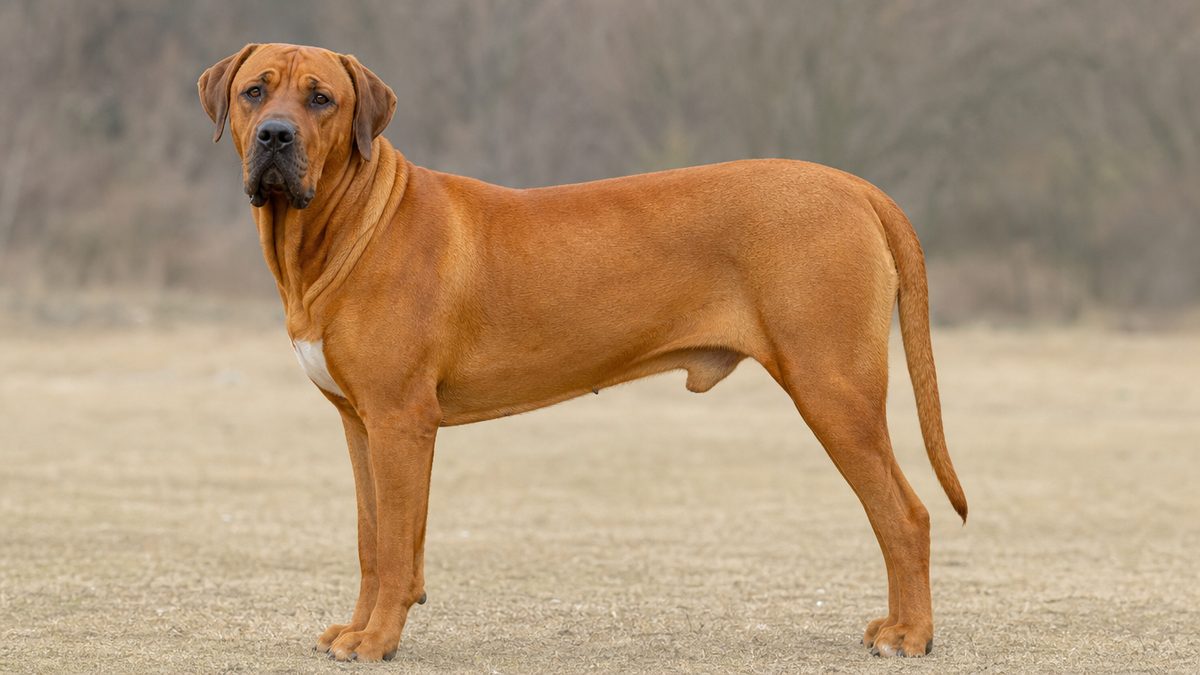
What the Tosa actually is
The Tosa is a large Japanese molossoid that the Federation Cynologique Internationale files as standard 260 in Group 2, Section 2.1, Mastiff type, accepted on a definitive basis on 1 April 1964, and whose own standard describes its utilization in five words: formerly fighting dog, nowadays watchdog FCI-Standard No 260 TOSA.
The breed was made rather than found, and the standard says so. Its own historical summary reads: 'Japan has a long history of dog fighting, beginning in the 14th century. With such a history in the background, this breed was produced as a hybrid of Shikoku-ken and Western breeds'. It names the imports and dates them: Bulldogs in 1872, Mastiffs in 1874, German Pointers in 1876 and Great Danes in 1924, adding that 'According to some accounts, St.Bernards and Bull Terriers were also involved, but it is not known in what years they were used'.
The base was the Shikoku-ken, a native Japanese hunting dog of about 25 kg standing about 55 cm. Everything that makes a Tosa larger and more powerful than that came from Europe, added deliberately over roughly fifty years for one purpose. The breed is genuinely rare outside Japan and Korea, and the FCI holds it in Group 2 alongside 50 other breeds, which is the register a pedigree would have to trace to.
The one-line version
A Tosa is a large short-coated Japanese molossoid built between 1872 and 1924 for organised fighting, with a breed standard that sets a height floor and no ceiling, no measured life expectancy anywhere, four papers in the world's medical literature, and a name that appears twice on an Indian circular a High Court quashed in 2024 McMillan 2024 Supplementary Table S5 CBIC Instruction No 05/2024-Customs dated….
| Point | What FCI Standard 260 says | Why it matters in India |
|---|---|---|
| Group | Group 2, Section 2.1 Molossoid breeds, Mastiff type, without working trial | A guarding molossoid, not a working breed with a trial requirement |
| Utilization | Formerly fighting dog, nowadays watchdog | The standard itself puts the fighting in the past tense |
| Height | Minimum 60 cm for dogs, 55 cm for bitches | A floor, and only a floor |
| Maximum height | Not stated anywhere in the document | Nothing in the standard caps the size |
| Weight | Not stated anywhere in the document | This silence is why the same name covers a 36 kg dog and a 90 kg dog |
| Temperament | Patience, composure, boldness and courage | Aggression and shyness are both disqualifying faults |
| Coat | Short, hard and dense | The one genuine advantage this breed has in Indian heat |
| Colour | Red, fawn, apricot, black, brindle; slight white on chest and feet permitted | A heavily white or particoloured dog is outside the standard |
| Ears | Relatively small, rather thin, set high, hanging close to the cheeks | Cropping is prohibited in India and is not in the standard anyway |
One line in that table is doing more work than the rest. The standard's entire size clause is 'Minimum height at withers for dogs 60 cm, for bitches 55 cm'. There is no maximum height and there is no weight figure of any kind. That single omission is the reason the next section exists.
FCI Standard 260's English text prints 'Nasal bridge staight' for straight, and lists 'Aggresive or overly shy' with one s in its disqualifying faults. Neither changes anything about the breed. Both are worth recording because a primary source is a primary source for what the body said, not an error-free text, and because a reader searching that PDF for the correctly spelled word would find nothing.
The standard sets a floor and no ceiling, and that is why there are two Tosas
A Japanese-bred Tosa weighs 36 to 61 kg and a non-Japanese-bred Tosa weighs 60 to 90 kg, roughly double, and FCI Standard 260 permits both because it states a minimum height and no maximum and no weight at all.
This is the most consequential fact about the breed for an Indian buyer and almost nobody states it. The published account is blunt: 'The Tosa vary considerably in size, with the Japanese-bred dogs tending to be about half the size of those bred outside the country'.
| Type | Weight | Height | What the FCI standard says about it |
|---|---|---|---|
| Japanese-bred | 36 to 61 kg | Not separately stated | Compliant, since it clears the 60 cm minimum |
| Non-Japanese-bred | 60 to 90 kg, occasionally 91 kg | 62 to 82 cm at the withers | Also compliant, because there is no maximum |
| The base breed, Shikoku-Inu | About 25 kg | About 55 cm | A different breed entirely, and where the Tosa started |
Why the difference is not cosmetic
It changes which published risk figures apply to the animal. The largest study of canine heat-related illness, covering 905,543 UK dogs, found that dogs over 50 kg carried 3.42 times the odds of heat-related illness at a 95 percent confidence interval of 1.54 to 7.57, while dogs at or above their breed and sex mean bodyweight carried 1.42 times the odds.
A western-bred Tosa at 60 to 90 kg sits inside that over-50 kg band. A Japanese-bred Tosa at 36 to 61 kg sits mostly below it. Same breed name, same standard, and a materially different heat risk in an Indian summer. Nothing in the pedigree tells you which you have; only the scale does.
The same split runs through everything else. Feeding, joint loading, drug dosing, crate and vehicle sizing, the practicalities of restraining the dog at a veterinary clinic, and whether two adults can lift the animal in an emergency all change between a 40 kg dog and a 90 kg one.
What to do about it
- Weigh the dog rather than reading a size label, and record the weight at every veterinary visit.
- Ask the breeder which type the parents are, and treat 'it is a Tosa' as a non-answer.
- Assume the western type for safety planning if you cannot establish otherwise, because the consequences of underestimating are worse than of overestimating.
- Apply the over-50 kg heat figure only if the dog is actually over 50 kg, rather than because the breed is large.
- Remember that the standard's minimum of 60 cm is a floor and a dog below it is outside the standard, whatever it weighs.
The standard did not ask for a 90 kg dog. It described a large dog with a stately manner and robust build, moderately sprung ribs and a well-drawn-up belly, and set a height floor. Western breeders went further because nothing in the document stopped them. That is a general lesson about breed standards with open ceilings, and this breed is the clearest example of it.
Is the Tosa banned in India? What the documents actually say
No Indian law in force today bans owning, breeding or selling a Tosa. India's circular of 12 March 2024 named this breed twice, the High Court of Karnataka quashed that circular on 10 April 2024, and on 14 June 2024 the Union told the Madras High Court in writing that it 'has lost its effect entirely'.
This is the section this page exists for, so every statement in it is tied to a document read in full, and where a document could not be reached that is said rather than hidden. The breed's legal status in India is neither of the two things most pages claim, and the accurate version takes six steps to state.
First, what the instrument actually was
It was not an Act, a rule or a notification. It was a D.O. letter, number D.O. V-11/1/2024-Anlm-Dadf, dated 12 March 2024, from the Joint Secretary of the Department of Animal Husbandry and Dairying, reproduced in full two days later for customs officers in CBIC Instruction No 05/2024-Customs. The letter recorded that a committee under the chairmanship of the Animal Husbandry Commissioner had identified certain breeds as ferocious and dangerous for human life, recommended they be prohibited for import, breeding, selling as pet dogs and other purposes, asked local bodies not to issue licences, and added that dogs already kept as pets 'shall be sterilized so that further breeding may not happen'.
Second, the breed is named twice
The operative list reads, verbatim: 'breeds (including mixed and cross breeds) like Pitbull Terrier, Tosa Inu ,, American Staffordshire Terrier, Fila Brasileiro . Dogo Argentino , American Bulldog, Boerboel , Kangal, Central Asian Shepherd Dog ( ovcharka ), Caucasian Shepherd Dog ( ovcharka ), South Russian Shepherd Dog ( ovcharka ), Tornjak , Sarplaninac , Japanese Tosa and Akita, Mastiffs ( boerbulls ), Rottweiler, Terriers, Rhodesian Ridgeback, Wolf dogs, Canario , Akbash dog, Moscow Guard dog, Cane corso and every dog of the type commonly known as a Ban Dog (or Bandog)'.
Tosa Inu at entry 2 and Japanese Tosa at entry 14 are the same breed. They are two names for FCI 260 Federation Cynologique Internationale. So is Boerboel at entry 7 and Mastiffs (boerbulls) at entry 15. A list assembled against a breed register would not name one breed twice under two names. A list assembled by collating other jurisdictions' lists would, and that is the most economical explanation of what happened.
Two transcription defects survive in it. 'Tosa Inu ,,' carries a doubled comma, and 'Fila Brasileiro . Dogo Argentino' has a full stop where a comma belongs. A paraphrase would have silently corrected both. Agreement on content between two sources can mean one copied the other; agreement on DEFECTS means both are transcribing the same document.
Third, how many breeds, and why the answer differs
Published counts of 23, 24 and 25 are all in circulation, and all three are arithmetic rather than substance. Counting the entries as printed gives 23 comma-separated entries. Splitting 'Cane corso' from the trailing Bandog clause gives 24, which is the figure the Delhi High Court's reported order uses. Splitting 'Japanese Tosa and Akita' into two gives 25, which is the number the Madras High Court records the committee as having identified Delhi High Court. Nothing turns on which you pick, and a page that presents one as the correct count is presenting a punctuation decision as a legal fact.
Fourth, the four words that were the real problem
Four entries are bare category words the instrument never defines: Terriers, Mastiffs (boerbulls), Wolf dogs and Canario. On their face, 'Terriers' reaches roughly thirty FCI breeds and 'Mastiffs' reaches most of Group 2 Section 2. Neither is defined, neither is limited, and a customs officer or a municipal clerk reading the page would have had to decide for themselves.
That matters for this breed in a specific way. A Tosa is named twice by proper name, so the undefined words add nothing to its position. But a page that checked only proper names would wrongly clear a Bull Terrier, a Tibetan Terrier or any mastiff-type dog, and the undefined words are the reason such a page would be wrong.
Fifth, what the courts did
| Date | Court or body | What the record says | Read in full? |
|---|---|---|---|
| 6 December 2023 | Delhi High Court | In a PIL, records the Union's undertaking that after consulting all stakeholders it will decide the petitioner's representation | Yes, as reproduced in the Karnataka judgment |
| 12 March 2024 | Dept of Animal Husbandry and Dairying | D.O. letter identifying the breeds and directing that existing pets be sterilised | Yes, as reproduced in the customs instruction |
| 14 March 2024 | CBIC | Instruction 05/2024-Customs reproduces the letter in full for customs officers | Yes |
| 27 March 2024 | Kerala High Court | Interim order staying all further proceedings under the circular against two licensed Rottweilers | Yes |
| 28 March 2024 | Madras High Court | Interim stay granted in W.P.No.8927 of 2024 | Recorded in the 14 June order |
| 10 April 2024 | Karnataka High Court | Writ petition allowed; the circular 'stands quashed' | Yes |
| 16 April 2024 | Delhi High Court | Reported as setting the circular aside and directing a public notice | NO. Not reached in this session |
| 2 May 2024 | Dept of Animal Husbandry and Dairying | Public notice inviting objections; comments extended to 30 June 2024 | Recorded in the 14 June order |
| 14 June 2024 | Madras High Court | Records the Union's written statement that the circular 'has lost its effect entirely' | Yes |
The Karnataka High Court's operative order, verbatim: '(i) Writ Petition is allowed. (ii) Circular dated 12-03-2024, issued by the 1st respondent stands quashed. (iii) The quashment of the Circular will not come in the way of the Government acting in accordance with law, bearing in mind the observations made in the course of the order.'
Its Summary of Findings gives three reasons that matter for what happens next. The Union had undertaken before the Delhi High Court to hear all stakeholders and 'It is an admitted fact that none of them are heard'. 'The composition of the Committee is not in consonance with the Rules framed under the Prevention of Cruelty to Animals Act, 1960.' And 'The Circular travels beyond what is found in the Rules'.
Sixth, what this page deliberately does not characterise
The Delhi High Court's order of 16 April 2024 was not reached in this session, and its reasoning is not summarised here. Published legal reporting gives it as *Sikander Singh Thakur v Union of India*, 2024 SCC OnLine Del 2803, a Division Bench setting the circular aside and directing a public notice inviting objections. Outlets differ on whether the date was 16 or 18 April. Bonbeno records the reporting, names the citation, and declines to describe what a court said in an order it did not read.
Nor does this page characterise the outcome of the consultation the Department reopened. The public notice of 2 May 2024 closed for comments on 30 June 2024, and no fresh instrument reached in this session shows what followed.
So what is actually settled
- Settled: the Tosa was named, twice. Entry 2 and entry 14 of the 12 March 2024 list.
- Settled: the circular was quashed. By the High Court of Karnataka on 10 April 2024, in an order read in full.
- Settled: the Union says it has no effect. Recorded in writing by the Madras High Court on 14 June 2024.
- Settled: quashing does not close the door. The Karnataka order expressly preserves the Union's ability to amend the Rules after due process.
- Not settled: what the reopened consultation produced. No fresh instrument was reached here.
- Not settled: what the Delhi High Court reasoned. The order was not read.
- Not settled: state and municipal action. A quashed central circular does not prevent a local body from acting under its own powers, and one panchayat was already doing so in March 2024.
The first is saying the Tosa is banned in India. It is not, and no instrument in force names it. The second is saying the matter is settled and closed. It is not: the Karnataka order expressly preserves an amendment route, the consultation reopened in May 2024, and in October 2025 an Allahabad High Court bench was still hearing a petitioner assert that a neighbour's dog was 'a banned foreign breed'. In that case the dog turned out to be a licensed Maltese. Both errors are common and both are wrong.
What a quashed circular still costs an Indian owner
A quashed central circular does not stop a local body acting, and within a fortnight of the 2024 circular a Kerala panchayat was pursuing the destruction or sterilisation of two licensed Rottweilers under it, which the High Court of Kerala stayed on 27 March 2024.
The Kerala case is worth reading closely, because it is the clearest evidence of what happens between an instrument being issued and a court quashing it. The petitioner asked the court to 'restrain the Respondents from taking up any coercive proceedings including destroying or neutering/sterilizing the Petitioner's two Rottweiler dogs (kept as per Exhibit P-2 and P-3 licences)', and the exhibit those proceedings rested on is identified in the order's own appendix as a true copy of the D.O. letter of 12 March 2024.
Two things follow. The dogs were licensed, with licence numbers and dates recorded in the appendix. And the body acting was a Grama Panchayat, the fifth respondent. So a central departmental letter with no statutory force had reached a village council and produced coercive action against lawfully licensed animals inside fifteen days.
The lag runs the other way too
On 17 October 2025, more than eighteen months after the circular was quashed, a Division Bench of the Allahabad High Court at Lucknow heard a petitioner seeking a mandamus to seize a neighbour's dog because it was 'a banned foreign breed' kept without a licence. Instructions from Nagar Nigam Lucknow showed a licence had in fact been issued, most recently on 29 May 2025, and the court noted that 'The dog itself is a very small breed called Maltese and it is not a ferocious animal.'
So the belief that foreign breeds are banned in India outlived the instrument by a year and a half, and the thing that resolved the dispute was the municipal licence, not the breed's status.
What that means practically for a Tosa owner in India
- Register the dog. In Delhi that is Rs 500 for a new pet dog registration and Rs 500 to renew, with a late fee of Rs 100 per month after a one-month grace period, and the certificate's one-year validity is tied to the anti-rabies vaccination date.
- Or licence it, where your city licenses pet animals generally. Greater Chennai Corporation charges Rs 50 and issued 9,115 pet animal licences during 2024.
- Keep the paperwork current, because in both reported cases the licence was the document that mattered.
- Keep the rabies certificate valid, since the Delhi registration expires with it.
- Insure for third-party liability, which the United Kingdom makes a condition of keeping a Tosa at all and which no Indian rule requires but every large-dog owner should carry.
- Do not rely on the law being on your side being enough. It was on the Kerala petitioner's side too, and she still needed a High Court order to stop the panchayat.
The two court records that bookend this story point the same way. What decides an Indian dispute about a dog is whether the dog is registered, vaccinated and licensed, not what breed it is Municipal Corporation of Delhi. That is a cheaper and more useful thing for an owner to act on than any breed list, and it costs Rs 500 in Delhi or Rs 50 in Chennai.
How a jurisdiction that actually legislated did it
The United Kingdom named the Japanese Tosa in primary legislation in 1991, regulates by physical type rather than by breed label, and runs a court-administered exemption scheme with named conditions, which is a different instrument in every respect from a departmental letter listing breed names.
This comparison is here because it is the most useful way for an Indian reader to see what the 2024 circular was and was not.
| Feature | United Kingdom, Dangerous Dogs Act 1991 | India, D.O. letter of 12 March 2024 |
|---|---|---|
| Instrument | An Act of Parliament | A departmental D.O. letter |
| How the Tosa appears | Named in the Act itself, one of only two types so named | Named twice, as Tosa Inu and as Japanese Tosa |
| Basis of classification | By TYPE, on physical characteristics | By breed name, plus four undefined category words |
| Who decides | A Dog Legislation Officer assessing the individual dog | Not specified |
| Undefined categories | None | Terriers, Mastiffs (boerbulls), Wolf dogs, Canario |
| Route for existing dogs | Court exemption, with named conditions | Sterilisation of dogs already kept as pets |
| Conditions of exemption | Neutering, microchipping, third-party insurance, muzzle and lead in public, secure keeping for life | None specified |
| Status now | In force since 1991, XL Bully added 2023 and 2024 | Quashed on 10 April 2024 |
The distinction that matters most
The UK Act classifies by type, not by breed label, with the assessment made on a dog's physical characteristics by a police officer trained in dog legislation. That has been heavily criticised on its own terms, because judging a dog by its shape is imprecise and catches crossbred animals. But it does one thing the Indian circular did not: it says what a prohibited dog looks like, so that a decision can be made about an individual animal rather than about a word.
The Indian instrument listed names, and four of those names were categories rather than breeds. There was no definition, no assessment procedure, no exemption route and no appeal. The Karnataka High Court's finding that the circular 'travels beyond what is found in the Rules' is a finding about power rather than about drafting, but the drafting is what a reader can see.
What the UK scheme costs a Tosa owner
Worth knowing, because it is the practical shape of breed-specific legislation anywhere. Under the UK Act it is illegal to own, breed, breed from, sell, advertise even as a gift, give away, or allow such a dog to stray. Ownership requires an exemption from a court, which requires proving the dog is not a danger to public safety, that the owner is a fit and proper person, and that the dog is neutered and microchipped, plus third-party insurance covering bodily injury or death caused by the dog. Ongoing conditions include keeping the dog at a listed address, notifying changes, and keeping it muzzled and on a lead in public for its life.
Two of those conditions are worth adopting voluntarily in India whatever the law says: third-party insurance and secure keeping. Neither is required here and both are what a responsible owner of a 60 to 90 kg guarding breed should carry.
The Act's own text was NOT read in this session. Every legislation.gov.uk route tried, including the section page, its snippet view, /data.xml and a point-in-time XML endpoint, returned HTTP 202 with a 2,016-byte interstitial headed 'JavaScript is disabled'. Everything above is taken from an encyclopedia account of the Act, and no clause is quoted from the statute directly. A reader who needs the statutory wording should obtain the Act itself.
The fighting history, and what Indian law says about fighting
The Tosa's own breed standard puts its fighting past in the past tense, and Indian law makes organising a place for animal fighting a cognizable offence while inciting an animal to fight is not, a distinction that is routinely misstated Prevention of Cruelty to Animals Act, 1960.
Deal with the breed first. FCI Standard 260's utilization clause reads, in full: 'Formerly fighting dog, nowadays watchdog'. That is the international registry describing the breed's present function as guarding. Its temperament clause asks for patience, composure, boldness and courage, and its disqualifying faults include being aggressive, being overly shy, and shyness.
The history is not disputed and the standard states it: the breed was produced as a hybrid of Shikoku-ken and western breeds against a background of Japanese dog fighting beginning in the 14th century, with Bulldogs added in 1872, Mastiffs in 1874, German Pointers in 1876 and Great Danes in 1924. Published accounts record a heyday between 1924 and 1933 with more than 5,000 Tosa breeders in Japan, and describe the Tosa as the only dog legally permitted in Japanese dog fighting.
The Indian statute, read at source
Two clauses of the Prevention of Cruelty to Animals Act, 1960 cover fighting, and their exact wording matters.
| Clause | What it prohibits | Cognizable? |
|---|---|---|
| s.11(1)(m)(ii) | Solely with a view to providing entertainment, inciting any animal to fight or bait any other animal | NO |
| s.11(1)(n) | Organising, keeping, using or acting in the management of any place for animal fighting, permitting or offering any place to be so used, or receiving money for admission | YES |
| s.11(1)(l) | Mutilating any animal or killing any animal, including stray dogs, by strychnine injection or other unnecessarily cruel means | YES |
| s.11(1)(o) | Promoting or taking part in a shooting match where animals are released from captivity | YES |
Section 31 settles the cognizability question and it is narrower than most pages claim. Verbatim: 'Notwithstanding anything contained in the Code of Criminal Procedure, 1898 (5 of 1898), an offence punishable under clause (l), clause (n) or clause (o) of sub-section (1) of section 11 or under section 12 shall be a cognizable offence'. Clause (m) is not on that list. So running a fighting venue is cognizable and inciting a dog to fight is not, and writing that dog fighting is simply a cognizable offence in India is wrong.
The penalty, which nobody quotes
Section 11's penalty clause reads, verbatim: 'he shall be punishable, in the case of a first offence, with fine which shall not be less than ten rupees but which may extend to fifty rupees, and in the case of a second or subsequent offence committed within three years of the previous offence, with fine which shall not be less than twenty-five rupees but which may extend to one hundred rupees or with imprisonment for a term which may extend to three months, or with both'.
Those are the figures the 1960 Act carries and they have not been revised. A page that says animal fighting is illegal in India without saying that the first-offence fine tops out at fifty rupees leaves a reader with a false impression of deterrence.
One notable silence
The Prevention of Cruelty to Animals (Dog Breeding and Marketing) Rules, 2017, the instrument that actually governs Indian dog breeding, contains the word 'fight' zero times across all fourteen pages. It says nothing about fighting breeds, nothing about temperament testing and nothing about which breeds may be bred. That silence is precisely what the Karnataka High Court meant by the circular travelling beyond what is found in the Rules.
Owning a Tosa is lawful. Organising, keeping or managing any place for animal fighting is a cognizable offence under s.11(1)(n). Inciting a dog to fight, solely for entertainment, is an offence but not a cognizable one. And a dog that has been fought is not merely a legal problem: the only published study of this breed's most serious infection found that Babesia gibsoni was present in 47.1 percent of Tosas with a fighting history against 1.9 percent of those without.
Tosa price in India, and why no figure appears on this page
No verifiable tosa price in india exists. Neither Indian breed-price site carries a page for the breed, and the one Indian commercial page that ranks for the term could not be read because it sits behind a Cloudflare challenge Bing India organic result set for 'tosa inu….
Evidence the negative properly rather than asserting it from an empty search.
- poodles.in/dog-breeds/tosa returns HTTP 200 with the page title 'Dog Breed Not Found' and 874 characters of text. That is a soft 404 that a status check passes, and reading the title rather than the status code is what exposes it.
- happypet.care/dog-breeds/tosa returns a genuine HTTP 404 titled '404 - Page Not Found'.
- The control passed in the same run. Both sites returned full Tibetan Mastiff guides, of 17,531 and 7,479 characters, so the sites were working and the absence is real.
- One Indian commercial page does rank, mrnmrspet.com, whose search snippet reads 'Tosa Price: Buy KCI registered Tosa puppies for sale in India'. That page returned HTTP 403 behind a Cloudflare challenge titled 'Just a moment...' when retrieved directly, so its contents were not read and no figure from it is quoted anywhere here.
The search worked on this breed, which is unusual for this batch
Worth recording because it changes what the absence means. Bing India's control passed with ten genuine Indian Labrador price pages under 'About 16,200 results', and the query 'tosa inu price in india' then returned a genuine mixed result set under 'About 1,26,000 results'. The set is subject to homonym capture, because TOSA is also the name of a digital-skills certification body and the acronym of the Telangana Orthopaedic Surgeons Association, and because Tosa is a place in Kochi Prefecture. But the engine returned what was asked for rather than substituting it.
So the ten results are a real observation: two certification pages, one orthopaedic association, four international breed pages, one Japanese geography article and exactly one Indian commercial listing. That is what an Indian market for this breed looks like from a working search.
On the 'KCI registered' claim
This page will not evaluate a claim it could not read. What can be said is structural. The Kennel Club of India issues pedigrees against FCI nomenclature, and the Tosa is FCI 260, so a KCI-registered Tosa is a coherent thing for such a dog to be. Whether any particular dog is one is a question for the certificate, and a buyer should ask to see it and to match it against the animal rather than against a website.
The nearest real Indian figure, and its mechanism
The closest comparable large molossoid with a genuine Indian market is the Tibetan Mastiff, and both Indian sites price it at Rs 50,000 to Rs 2,50,000. That is what an Indian price band looks like when a breed is actually traded here, and it is offered as a scale rather than as a Tosa price.
The monthly figures on those same pages are worth exposing while they are open. poodles.in prints monthly food Rs 3,000 to Rs 4,500, health Rs 1,500 to Rs 2,250 and grooming Rs 1,200 to Rs 1,800; happypet.care prints headline monthly totals of Rs 5,700 and Rs 8,550 for the same breed. Add the components: 3,000 plus 1,500 plus 1,200 is Rs 5,700, and 4,500 plus 2,250 plus 1,800 is Rs 8,550. The headline total is the arithmetic sum of three preset lines rather than a measurement, and the two sites also disagree about the same breed's ideal-weather floor by a sign, one printing 15 to 20 C and the other minus 15 to 20 C.
We will not quote a Tosa price in India, will not convert a foreign asking price into rupees and present it as one, and will not repeat a figure from a page we could not open. If you are quoted a puppy price, ask which litter it is for, ask to see the dam in the place the litter was raised, ask for the pedigree certificate and match it to the dog, and weigh both parents. On this breed the weight of the parents tells you more about what you are buying than the price does.
What a Tosa actually costs to keep in India, month by month
Budget roughly Rs 7,000 to Rs 14,000 a month for a Tosa in an Indian metro, and expect food and cooling rather than grooming to dominate, because this is a 36 to 90 kg dog with a coat that needs almost nothing FCI-Standard No 260 TOSA.
No Indian cost figure exists for this breed, so everything below is built from named providers read live on 9 September 2026 and applied to a dog of the published size.
| Line | Published figure | Provider and scope |
|---|---|---|
| Puppy vaccination course | From Rs 6,499 (list Rs 8,111) | Vetic national page, a promotional floor from one chain |
| Annual booster | From Rs 3,199 (list Rs 3,806) | Vetic national page |
| Anti-rabies, single | Rs 699 | Vetic |
| 9-in-1 DHPPiL | Rs 899 | Vetic |
| Kennel cough | Rs 1,349 | Vetic |
| Anti-rabies at a municipal clinic | Free of cost | Greater Chennai Corporation's pet clinics |
| Food, large working breed | Rs 5,000 or more per month | VOSD's own large-breed band |
| Bath, 60 minutes | From Rs 934 (list Rs 1,099) | Vetic Delhi; a haircut at Rs 1,359 is not needed on this coat |
| Consultation | Rs 500 to Rs 1,000 | VOSD, treated here as one data point |
| Boarding, overnight to 24 hours | Rs 899 | PawSpace Bengaluru, festive rates 25 to 30 percent higher |
| Municipal registration, Delhi | Rs 500 new, Rs 500 renewal | MCD, dogs only, late fee Rs 100 per month |
| Municipal licence, Chennai | Rs 50 | Greater Chennai Corporation, 9,115 issued in 2024 |
Three of those repay attention. Delhi's Municipal Corporation registers pet dogs only, ties the one-year certificate to the anti-rabies vaccination date and charges Rs 100 a month late after a one-month grace period. Greater Chennai Corporation licenses pet animals at Rs 50, issued 9,115 licences in 2024 and gives all treatment and anti-rabies vaccination free of cost at its pet clinics. And PawSpace publishes Rs 899 for an overnight stay with festive-season rates 25 to 30 percent higher, food charged separately.
Two lines nobody prices, and both are large
Cooling. A dog this size with a dense coat in a Delhi June, whose mean is 35.88 C, needs cooled indoor space for most of the day for four months of the year. That is a running electricity cost in the thousands of rupees a month during the hot season, and it is the honest largest line in this budget after food.
Third-party liability insurance. Not required in India, required in the United Kingdom as a condition of keeping this breed at all. Any owner of a 60 kg guarding dog in a country with shared corridors, delivery riders and building staff should carry it whether the law asks or not.
- Budget Rs 4,000 to Rs 7,000 a month for food, at the large working-breed band rather than the medium one.
- Budget near zero for grooming, because a short hard dense coat needs a brush and an occasional bath rather than a groomer.
- Budget the summer electricity honestly, because it is the line that decides whether the arrangement is fair to the dog.
- Budget third-party liability cover, which is cheap and which nobody in India sells you unprompted.
- Budget Rs 42 a month for the Delhi registration or Rs 4 for the Chennai licence, both legally required and both the documents that decide disputes.
Greater Chennai Corporation's six pet clinics provide all treatment and anti-rabies vaccination free of cost, and the pet licence is Rs 50. Against Vetic's Rs 699 for a single anti-rabies shot, that is a 12x spread on one identical vaccine. The spread is a function of the delivery model rather than of the drug.
Can a Tosa handle the Indian climate?
A Tosa can live in most of urban India with cooled indoor space and a dawn-and-dusk exercise routine, and how hard that is depends entirely on whether the dog is the 36 to 61 kg Japanese type or the 60 to 90 kg western one Hall EJ, Carter AJ.
Start with the homeland, and with an honest limit. The breed comes from Kochi Prefecture on Shikoku, and NASA POWER cannot measure most of it: the cell for Kochi city reads 306.36 m against a real 10 m, an error of +296.36 m, and Susaki in the same prefecture reads 591.81 m against 5 m. Those are terrain errors of the kind that make a temperature meaningless.
One point in the prefecture is usable. Cape Muroto, at a cell elevation of 92.25 m against a real 10 m, returns an annual mean of 17.91 C, a hottest month of August at 27.49 C, a coolest month of January at 8.32 C and an annual relative humidity of 77.44 percent. Those figures are quoted here as a coastal Kochi Prefecture point, not as the city.
| Point | Cell elevation vs real | Annual mean | Hottest month | Annual humidity |
|---|---|---|---|---|
| Cape Muroto, Kochi Prefecture | 92.25 m vs 10 m | 17.91 C | August, 27.49 C | 77.44 percent |
| Bengaluru | 841.72 m vs 920 m | 23.74 C | April, 28.37 C | 67.94 percent |
| Pune | 635.99 m vs 560 m | 23.86 C | April, 28.93 C | 66.80 percent |
| Delhi | 206.37 m vs 216 m | 25.60 C | June, 35.88 C | 45.56 percent |
| Kolkata | 7.35 m vs 9 m | 25.81 C | May, 31.53 C | 73.93 percent |
| Mumbai | 97.15 m vs 14 m | 26.77 C | May, 31.19 C | 67.39 percent |
| Chennai | 48.95 m vs 6 m | 27.95 C | May, 31.51 C | 72.39 percent |
| Ahmedabad | 46.53 m vs 53 m | 27.57 C | May, 35.06 C | 48.32 percent |
Read the humidity column before the temperature one. Coastal Kochi Prefecture runs 77.44 percent annual relative humidity, which is higher than Chennai's 72.39, Kolkata's 73.93 and Mumbai's 67.39. So Indian monsoon humidity is not a shock to this breed. Its homeland is damper than most of India, and a short hard coat dries quickly in any case, which is why this breed is heat-sensitive rather than humidity-sensitive.
The temperature column is where the problem is. Muroto's annual mean of 17.91 C is 7.7 degrees below Delhi's and 10 degrees below Chennai's, and its hottest month at 27.49 C is 8.4 degrees below Delhi's June. Delhi peaks in June, not May, and Bengaluru and Pune peak in April, with their coolest month in December rather than January, which is worth knowing because most Indian pages print a May peak everywhere.
The weight band decides the risk, and the standard will not tell you the weight
In the largest UK study of canine heat-related illness, covering 905,543 dogs, bodyweight over 50 kg carried 3.42 times the odds at a confidence interval of 1.54 to 7.57, and bodyweight at or above the breed and sex mean carried 1.42 times the odds at 1.12 to 1.80. The Tosa is not among the breeds separately modelled in that paper, so no breed-level odds ratio is quoted here.
But the weight band transfers, and on this breed it transfers unusually cleanly. A western-bred Tosa at 60 to 90 kg is inside the over-50 kg band. A Japanese-bred one at 36 to 61 kg is mostly below it. Since FCI Standard 260 states no weight at all, the only way to know which risk applies to your dog is to weigh it.
- Weigh the dog and apply the over-50 kg figure only if it is genuinely over 50 kg.
- Exercise before 6.30am and after 8pm from April to July in Delhi, Ahmedabad, Hyderabad, Chennai and Kolkata.
- Provide cooled indoor space through the hot months, which for a dog this size is not a luxury.
- Keep the dog lean, because bodyweight at or above the breed mean is the one heat factor entirely under your control.
- Watch for heavy panting with a wide flat tongue, stumbling, brick-red gums or collapse, and treat any of them as an emergency.
Second Schedule Part IV paragraph 21(1) of the Dog Breeding and Marketing Rules 2017 bars keeping in outdoor facilities, without the attending veterinary practitioner's written approval, dogs not accustomed to the temperatures prevalent in the area and dog breeds that cannot tolerate them. A Kochi Prefecture molossoid in an Indian plains summer is squarely within that description. Note the citation form: this is a Second Schedule paragraph and not a Rule, because the Rules stop at 13 and there is no Rule 21.
Temperament, and who should not buy this breed
FCI Standard 260 asks for patience, composure, boldness and courage, and makes aggression, being overly shy and shyness all disqualifying faults, which means a stable temperament is not a nice-to-have in this breed but a requirement of the standard.
Read the disqualification list carefully, because it is the most important part of the standard for a buyer. A Tosa that is aggressive is outside the standard. A Tosa that is shy is outside the standard. The document lists 'Aggresive or overly shy' and separately lists 'Shyness' among its disqualifying faults. On a dog that may weigh 90 kg, that is a safety specification rather than a show technicality.
The temperament clause in full is one sentence: 'The temperament is marked by patience, composure, boldness and courage'. Patience and composure come first, and they describe a dog that does not escalate.
Who should not buy one, in India specifically
- Anyone in an apartment. A 60 cm minimum with no ceiling, a guarding function and shared corridors do not combine.
- Anyone who cannot physically manage the dog. If two adults could not lift or restrain the animal in an emergency, the arrangement fails on the first day it matters.
- Anyone in a household with constant unfamiliar footfall of delivery riders, building staff and visiting children, unless the containment and introduction routine is genuinely reliable.
- Anyone buying for the breed's reputation. A dog bought for what it is rumoured to be will be managed as that rumour, and the standard asks for the opposite.
- Anyone who cannot provide cooled indoor space through an Indian summer, which for a dog of this mass and coat is a welfare requirement rather than a comfort.
- Anyone in a housing society likely to object. The law is on your side and the Kerala case shows that being right does not stop the process starting.
What the published record contains and does not
There is no breed temperament study, no owner survey and no bite-statistics analysis specific to this breed available here. What there is, in the world's medical literature, is a single forensic case report of a fatal Japanese Tosa bite in which an elderly woman died of a vertebral arterial laceration with a C5 vertebral fracture, and in which the offending dog was identified by matching dental casts to the victim's wounds after DNA analysis failed.
That is one case report and it is not a prevalence figure. It is included here because a page about this breed that omitted it would be selecting its evidence, and because the practical lesson from it is about containment and management rather than about temperament.
A well-bred, well-socialised, securely contained Tosa in a competent household is a calm and composed dog, and the standard says so. The risk in this breed is not that it is inherently dangerous; it is that the consequences of a management failure scale with the animal's mass, and this breed's mass is capped by nothing in its own standard.
How to train a Tosa, and what it resists
To train a Tosa, front-load handling, containment and public manners in the first year, because the standard's own temperament is composure rather than eagerness and because everything becomes harder once the dog outweighs the handler.
The training priority on this breed is not obedience for its own sake. It is producing an adult that can be examined by a stranger, restrained safely, walked past a delivery rider without incident and kept where you put it.
| Age | Priority | Why now |
|---|---|---|
| 8 weeks | Earliest lawful sale age in India under Rule 8(1)(a) | Refuse any younger puppy; begin vaccination on the vet's schedule |
| 8 to 12 weeks | Handling, restraint, mouth and foot handling | A dog nobody can examine is a dog nobody can treat |
| 10 to 16 weeks | Socialisation to gate guards, delivery riders, staff, children, lifts and traffic | The window closes early, and this is what determines public safety later |
| 3 to 6 months | Muzzle conditioning as a well-paid, boring game | Start at 20 kg, not at 60 |
| 4 to 9 months | Loose-lead walking, seriously | Pulling stops being a manners problem and becomes a safety one |
| 6 months | Legal note on sale | Rule 8(1)(b) bars sale of dogs over six months without prior sterilisation, except to another licensed breeder |
| 6 to 9 months | Registration and licensing | Delhi MCD Rs 500 or Chennai Rs 50, both tied to the rabies certificate |
| 6 to 18 months | Containment and boundaries | A guarding breed decides its own territory if you do not decide it first |
| 12 to 24 months | Continued handling practice and a settled routine | Adolescence in a molossoid is long, and consistency is the whole method |
What this breed resists
It resists being hurried and it resists being escalated with. A dog whose standard asks for patience and composure will meet pressure with more composure, not with compliance, and a handler who raises the stakes will find the dog raising them too. Reward-based work, short sessions and absolute consistency across every person in the household are what work.
It also resists being trained out of guarding, because guarding is what the standard says the breed is now for. The realistic goal is a dog that defers to you about who is acceptable, not a dog that stops noticing.
Two non-negotiables
- Muzzle training. The United Kingdom requires a muzzle in public for this breed as a condition of exemption. India requires nothing, and a dog that finds a muzzle boring is a dog that can be treated in an emergency and walked through a crowd without incident.
- Containment. Not a gate that latches, a gate that latches and cannot be opened by a dog. The Kerala and Allahabad cases both began with a neighbour, and a dog that stays where you put it does not generate neighbours' complaints.
Four papers exist on this breed in the whole of PubMed and none is a screening study, so everything will be found clinically rather than predicted. A dog that tolerates handling, a muzzle, a car and a table is a dog whose problems get found early. On a 60 kg animal, the alternative is sedation to perform an examination, which is worse for the dog and dangerous for the staff.
Daily exercise, and what happens without it
A Tosa needs an hour or more of daily exercise split across two outings, taken at dawn and dusk for four months of the Indian year, and an under-exercised guarding molossoid becomes a containment problem rather than a barking one.
There is no published exercise requirement for this breed, so the guide is the standard's own description of a large, robustly built dog with a stately manner and a watchdog function, and the ordinary requirements of a molossoid of this mass.
The Indian timing arithmetic
Delhi's June mean is 35.88 C and the afternoon runs above it, while the coastal Kochi Prefecture point this breed comes from peaks at 27.49 C in August. That is an 8.4 degree gap on a monthly mean before the afternoon peak is counted, on a dog that may sit in the weight band carrying 3.42 times the odds of heat-related illness.
- Walk before 6.30am and after 8pm from April to July in the northern plains and through most of the year in Chennai.
- Test the pavement with the back of your hand for five seconds, and remember a heavy dog carries more of its mass close to a hot surface.
- Build stamina slowly in a growing molossoid, because rapid growth and hard exercise together are the classic large-breed joint mistake.
- Substitute scent work and food puzzles at midday rather than skipping the mental work entirely.
- Never exercise hard within two hours of a meal, because gastric dilatation and volvulus is the emergency this body shape is built for.
What under-exercise produces in this breed
Not usually noise. The standard describes composure rather than reactivity, and this is not an alarm-barking breed the way a small watchdog is. What an under-exercised guarding molossoid produces is a dog that patrols, tests boundaries and takes its own decisions about the perimeter. On a 60 kg animal in an Indian residential area, that is the failure mode that matters.
Hall 2020 found that bodyweight at or above the breed and sex mean carried 1.42 times the odds of heat-related illness at a confidence interval of 1.12 to 1.80. On a breed whose standard states no weight at all, there is no published breed mean to measure against, so the practical rule is simpler: keep the dog lean enough that you can feel its ribs under a thin cover, and weigh it monthly.
Grooming and coat care in Indian humidity
Grooming a Tosa means a weekly brush, an occasional bath and a daily hands-on tick check, because FCI Standard 260 describes the coat in four words, short, hard and dense, and that is genuinely the whole of it.
This is the least demanding coat on any breed in this batch, and in India that is a real advantage rather than merely a convenience. A short dense coat dries quickly after a monsoon walk, does not mat, and lets you feel a tick with your hands.
- Brush weekly with a rubber curry or a firm bristle brush, which removes loose coat and stimulates the skin.
- Bathe every six to eight weeks or when genuinely dirty, and dry properly rather than leaving a damp dog in Indian humidity.
- Check the skin folds around the neck, since the standard specifies a muscular neck with a dewlap and any fold traps moisture in a humid climate.
- Inspect for ticks by hand daily after exercise, working ears, neck, dewlap, armpits, groin and between the toes.
- Trim nails monthly, which on a heavy dog affects gait and joint loading rather than just appearance.
- Skip the groomer's haircut entirely; at Vetic Delhi's Rs 1,359 it is a service this coat has no use for.
The Indian tick problem is where this coat earns its keep
Among dogs tested at Indian veterinary clinics, a West Bengal series of 584 screened dogs reported Babesia gibsoni in 76.54 percent and two or more pathogens in 72.9 percent of those screened, a Kerala series of 120 found Babesia species in 66.7 percent with a pre-monsoon peak from March to May, and an Odisha series of 178 found that 75 percent of infected dogs were over 20 kg and 79 percent had a tick history.
That last figure applies directly. A Tosa is well over 20 kg by any reckoning, and the one advantage a short dense coat gives you is that a two-minute hands-on check is genuinely possible. Do it daily and use veterinary parasite control year-round rather than seasonally.
The only substantial veterinary study of this breed anywhere is about that exact parasite. In Aomori Prefecture, 41 of 87 Tosas with a dog-fighting history tested positive against 1 of 54 without, and the authors concluded the pathogen 'might be successfully transmitted during dog fighting'. Bite wounds transmit it. In a country where the same organism is the dominant canine babesial pathogen among tested dogs, a large dog that gets into a fight is at a compounded risk, which is a management argument rather than a breed one.
Health issues: four papers, one of which matters enormously in India
Four papers in the whole of PubMed name the Tosa, no screening scheme covers the breed, no life expectancy has been measured, and the single most useful of the four is a Japanese study showing Babesia gibsoni transmitted through dog fighting at 47.1 percent against 1.9 percent Matsuu A, Kawabe A, Koshida Y, Ikadai H.
Prove the search before believing it. Controls in the same session returned 126 records for 'Labrador retriever hip dysplasia' and 1,109 for 'Labrador Retriever'[tiab], both with sane translations.
| Query | Records | Reading |
|---|---|---|
| 'Tosa Inu'[tiab] | 0 | FALSE ZERO. A paper whose abstract reads 'female Tosa Inu' is indexed but not retrieved |
| 'Japanese Tosa'[tiab] | 0 | False zero on the breed's other common English name |
| 'Tosa ken'[tiab] | 0 | False zero on the Japanese reading |
| 'Japanese Mastiff'[tiab] | 0 | False zero on the third English name |
| Tosa[tiab] | 112 | Homonym capture on a common Japanese surname, not breed literature |
| Tosa[tiab] AND dog[tiab] | 4 | The real literature, all four confirmed on-breed by reading them |
| Japanese script for the breed | 0 | NOT a zero. Blank translation line means the query was voided |
That table is the finding. A writer who searched the breed's own names would have concluded it has no literature at all. All four of its papers are retrievable only through a query that uses neither of the breed's usual names, and the false zero is demonstrable rather than inferred: the pemphigus case report's abstract contains the literal string 'female Tosa Inu' and 'Tosa Inu'[tiab] still returns nothing.
The Babesia gibsoni study, in full
This is the one paper on this breed that changes what an Indian owner should do. Between April 2002 and March 2003, eighteen dogs with acute Babesia gibsoni infection were seen at a Japanese university teaching hospital and 'they were all male dogs of the fighting dog breed Tosa', all with platelet counts below normal.
Blood was then taken from 141 Tosas in Aomori Prefecture and tested by PCR. The result, verbatim: 'Forty-one of 87 dogs (47.1%) with histories of dog fighting, and one dog of 54 without a history of dog fighting were positive for B. gibsoni; that is, 42 of 141 dogs (29.8%) showed a positive result'. The arithmetic closes exactly: 41 of 87 is 47.13 percent, 42 of 141 is 29.79 percent, and both sub-groups sum correctly.
Subclinically infected dogs had significantly lower mean platelet counts and significantly higher anti-platelet IgG than uninfected dogs, and higher anti-erythrocyte membrane IgG, though mean packed cell volumes did not differ significantly. The authors concluded the pathogen 'might be successfully transmitted during dog fighting' and that subclinically infected dogs were at risk of chronic thrombocytopenia, possibly through autoimmune mechanisms.
Babesia gibsoni is transmitted by tick bite and also directly by dog bite. It is the dominant canine babesial pathogen among dogs tested at Indian veterinary clinics, reported at 76.54 percent in a West Bengal series of 584 screened dogs. So India already has heavy environmental exposure, and this breed has a documented bite-transmission route on top of it. A Tosa that gets into a fight in India is exposed twice over, and a subclinically infected dog can look entirely normal while its platelet count falls.
The other three papers
- A fatal bite case report. An elderly woman died of a vertebral arterial laceration with a C5 vertebral fracture from a Japanese Tosa bite. DNA identification of the offending dog failed and the dog was identified by matching dental casts to the wounds.
- Drug-induced pemphigus vulgaris. A 3-year-old female Tosa Inu developed acute blistering and ulceration of the pinnae, nostrils, lips and oral mucosa seven days after polymyxin B ear drops, with biopsy showing suprabasilar cleft formation and acantholysis. It resolved completely on withdrawal plus immunosuppression, with no recurrence over a year, which is why the authors judged it drug induced.
- A cardiac tumour case. A 3-year-old male Tosa with a mobile right-ventricular mass occluding the right atrioventricular ostium in systole, found at necropsy to be a metastatic intracavitary cardiac aortic body tumour with tricuspid valve dysplasia, reported as the first such case in a dog.
Two of those three are single case reports and neither establishes a breed predisposition. They are on this page because four papers is the entire literature and omitting any of them would be selecting evidence.
Life expectancy: there is no figure, and the reason is specific
McMillan 2024 analysed 584,734 UK dogs. Its Table S5 lists 345 breeds, of which 155 were included in the survival analysis and 189 excluded. The Tosa is in that table, flagged N, with Body Size Large and Cephalic Index Mesocephalic. That is a different and more informative answer than absence: the breed was considered and excluded for want of numbers, so no median exists and no page should quote one.
The nearest available figure is a mastiff-group owner survey of 1,036 dogs, which found a median age of death of 8 years, with cancer the commonest cause at 47 percent, old age 16 percent, cardiac problems 8 percent and gastric problems including bloat and volvulus 7 percent. That paper names Bull Mastiffs and English Mastiffs and does not identify the Tosa as included, so it is quoted here as a mastiff-group figure and not applied to this breed.
What the circular's other breeds show is more useful as context. Of the breeds named on India's 2024 list that DO have McMillan medians, the Caucasian Shepherd Dog is 155th of 155 at 5.4 years on 22 deaths, the Presa Canario is 7.7 years on 98 deaths, the Cane Corso 8.1 on 101 deaths and the Mastiff 9.0 on 1,419 deaths, against a crossbred comparator of 12.0 years. Large guarding molossoids as a group live short lives, and that is the honest expectation to bring to this breed even without a figure for it.
- Gastric dilatation and volvulus is the emergency this body shape carries. Feed two or three smaller meals, rest the dog after eating, and know your nearest 24-hour surgical facility before you need it.
- Heat-related illness applies by weight band rather than by breed, at 3.42 times the odds over 50 kg.
- Tick-borne disease applies to every dog in India and doubly to a large one, with 75 percent of infected dogs in an Odisha series over 20 kg.
- Joint disease is the ordinary large-breed risk, and no OFA or scheme data specific to this breed was obtainable in this session.
- There is nothing to screen for by DNA, because no test exists for this breed and no registry collects health data on it.
Feeding a Tosa in India
Feed a Tosa from the large working-breed band, which VOSD puts at Rs 5,000 or more a month, in two or three meals with rest afterwards, and score body condition by hand rather than to a number because the breed standard states no weight at all FCI-Standard No 260 TOSA.
The absence of a weight in the standard is the practical problem. There is no breed target to feed towards, and the published range spans 36 to 90 kg. So the only workable method is to establish your own dog's healthy adult weight and defend it.
- Feel the ribs with flat fingers; you should find them under a thin fat cover without pressing.
- Feel the spine, which on a heavily muscled molossoid should be findable without digging.
- Look from above for a waist behind the ribs, and from the side for the well-drawn-up belly the standard requires.
- Weigh monthly on the same scale, and record it, because on a growing molossoid the trend matters more than any single number.
- Adjust by ten percent at a time and re-score after three weeks rather than switching food.
The two feeding rules that are not optional on this body shape
Split the ration. Two or three meals rather than one, every day, for life. Rest after eating. No hard exercise for at least an hour either side of a meal. Both exist for one reason: gastric dilatation and volvulus, which the mastiff-group survey found accounted for 7 percent of deaths in its category and which kills within hours.
- Budget Rs 4,000 to Rs 7,000 a month, using VOSD's large working-breed band rather than the medium one.
- Store food airtight, because a large sack sits open for weeks in Indian humidity and goes rancid faster than the date suggests.
- Avoid free-feeding, which makes it impossible to notice the appetite drop that is often an illness's first sign.
- Check the water bowl three times a day in April and May, and add water to food through the hot months.
- Grow slowly. A large-breed puppy kept lean has better joints at three years than one kept well covered, and this is the single feeding decision with the longest consequences.
The nearest Indian figure for a comparable dog is the Tibetan Mastiff's, at 2,000 kcal a day for puppies and 2,500 for adults on poodles.in. Treat it as a starting point only. The same page's monthly cost row is the arithmetic sum of three preset lines, and the same site disagrees with its competitor about that breed's ideal-weather floor by a sign. A number from a template is a place to begin, not a ration.
The first year, month by month
A Tosa puppy timeline in India has three jobs: socialise hard before sixteen weeks, get the dog registered and insured, and establish handling and containment while the animal still weighs less than you do Municipal Corporation of Delhi.
| Age | What is happening | What you do |
|---|---|---|
| Before purchase | The moment your questions have leverage | Weigh both parents. Ask which type they are, Japanese or western. Ask to see the pedigree and match it to the dog |
| 8 weeks | Earliest lawful sale age in India under Rule 8(1)(a) | Refuse any younger puppy; begin vaccination on the vet's schedule |
| 8 to 12 weeks | Fear period; handling foundations | Feet, ears, mouth and restraint daily, paid well every time |
| 10 to 16 weeks | Socialisation window closing | Gate guards, delivery riders, staff, children, lifts, traffic, vaccinated dogs |
| 3 months | Vaccination course running | From Rs 6,499 at one chain, or free anti-rabies at a Chennai municipal clinic |
| 3 to 6 months | Muzzle conditioning | Start at 20 kg. A muzzle-trained adult can be treated in an emergency |
| 4 to 9 months | Rapid growth | Keep the puppy lean. Do not force exercise. Split every meal |
| 6 months | Legal note on sale | Rule 8(1)(b) bars sale of dogs over six months without prior sterilisation, except to another licensed breeder |
| 6 to 9 months | Registration and insurance | Delhi MCD Rs 500 or Chennai Rs 50, plus third-party liability cover nobody will offer you unprompted |
| 9 to 18 months | Adolescence in a guarding molossoid | Containment and boundaries get decided now, one way or the other |
| 12 months | Adult vaccination cycle | Annual booster from Rs 3,199, a baseline weight, and year-round tick control |
| 18 to 24 months | Physical maturity | Re-weigh and decide which heat-risk band the adult dog is actually in |
The question to ask before you pay
Which type are the parents. A 40 kg Tosa and an 85 kg Tosa are the same breed under the same standard and different animals to own, feed, restrain, cool and insure. Weighing both parents is a two-minute check that no seller will volunteer and that tells you more than the pedigree does.
Rule 8(1)(a) of the Dog Breeding and Marketing Rules 2017 requires that pups less than eight weeks in age are not sold. Second Schedule Part II paragraph 6(8) forbids tail docking, ear cropping, de-barking, de-clawing and any change of appearance by artificial means. This breed should never be cropped or docked in any case, because FCI 260 describes hanging ears set close to the cheeks and a natural tail reaching the hocks, and a cropped Tosa is both outside the standard and outside Indian law.
The Tosa against the other breeds on that circular
Of the breeds named on India's 2024 circular, four have measured medians in the largest UK longevity study and all four sit near the bottom of it, while the Tosa itself was considered and excluded for want of numbers McMillan 2024 Supplementary Table S5.
| Breed | Median survival | Deaths | Rank of 155 | On the circular as |
|---|---|---|---|---|
| Caucasian Shepherd Dog | 5.4 years | 22 | 155th, the shortest | Entry 10, by name |
| Presa Canario | 7.7 years | 98 | 154th | Entry 20 is the bare word 'Canario' |
| Cane Corso | 8.1 years | 101 | 153rd | Entry 23, by name |
| Mastiff | 9.0 years | 1,419 | 152nd | Entry 15 is the bare word 'Mastiffs (boerbulls)' |
| Tosa | no median | excluded, flagged N | not ranked | Entries 2 and 14, twice |
| Crossbred comparator | 12.0 years | 72,445 | reference | not listed |
Two readings fall out of that table and they point in opposite directions.
- The circular's list is, in part, a list of short-lived breeds. The four with data occupy four of the last five places among 155 breeds. Whatever the instrument's legal defects, it was not naming breeds at random.
- But two of those four are reached only by undefined words. The Presa Canario appears on the circular as the bare word 'Canario', and the Mastiff as 'Mastiffs (boerbulls)'. Neither name is used, so neither breed is actually specified.
- And the Tosa has no data at all. It was in the study's frame and excluded for want of numbers, so no page can say whether this breed lives 5 years or 12.
The comparison an Indian buyer should actually make
Not between the Tosa and other guarding breeds, but between a Tosa and the size of dog you can genuinely house, restrain, cool and insure. The Tibetan Mastiff is the large molossoid with an actual Indian market at Rs 50,000 to Rs 2,50,000 and a 13.3-year median in the same study, though that median rests on only 22 deaths with an upper confidence bound that could not be estimated McMillan 2024 Supplementary Table S3.
And a large Indian street dog costs Rs 500 to adopt, which makes it not merely the most affordable option but the only one whose price is verifiable, and it is adapted to the climate and carries none of the administrative friction this breed's name generates in an Indian housing society High Court of Judicature at Allahabad.
Median survival was measured in a UK primary-care population and does not forecast how long a dog lives in Chennai, where the risk profile includes tick-borne disease at rates a UK dataset never sees. Use these figures to compare breeds against each other, not to predict your own dog.
Mistakes Indian readers and Indian pages actually make with this breed
Six mistakes account for almost everything written wrongly about the Tosa in India, and the first two are opposite errors about the same circular.
- Saying the Tosa is banned in India. It is not. The circular that named it was quashed on 10 April 2024 and the Union told the Madras High Court in writing that it has lost its effect entirely.
- Saying the matter is settled and closed. It is not. The Karnataka order expressly preserves an amendment route, the Department reopened consultation on 2 May 2024, and in October 2025 an Allahabad bench was still hearing a 'banned foreign breed' assertion.
- Publishing a breed count as though it were a fact. Twenty-three, twenty-four and twenty-five are all defensible readings of the same punctuation.
- Reading the Karnataka judgment's list as the circular's list. The judgment's reproduction is abridged and drops six entries, including the bare words Mastiffs, Terriers, Wolf dogs and Canario.
- Quoting a Tosa lifespan. None exists. The breed was considered by McMillan 2024 and flagged N, excluded for want of numbers.
- Quoting a Tosa weight as though the standard gave one. FCI 260 states a minimum height and no weight at all, which is exactly why Japanese and western Tosas differ by a factor of two Wikipedia, Tosa (dog breed).
The research mistake, which is subtler
Searching for this breed by its own name. Every exact-phrase form returns zero: 'Tosa Inu'[tiab], 'Japanese Tosa'[tiab], 'Tosa ken'[tiab] and 'Japanese Mastiff'[tiab]. A careful writer would conclude the breed has no literature. It has four papers, retrievable only through Tosa[tiab] AND dog[tiab], and the false zero is demonstrable because one of those papers has the literal phrase 'female Tosa Inu' in its abstract.
The same trap has a second half. The bare query Tosa[tiab] returns 112 records, which is homonym capture on a common Japanese surname. A writer who trusted that count would report a substantial literature that does not exist. A zero and a three-figure count on the same breed, both meaningless, is the whole lesson.
The one mistake with a physical consequence
Applying a heat figure to the wrong dog. The over-50 kg odds ratio of 3.42 is real and it applies to the animal in front of you only if that animal is over 50 kg. A Japanese-bred Tosa at 40 kg is not in that band. A western-bred one at 85 kg is comfortably inside it. Weigh the dog.
Three things. The Delhi High Court's order of 16 April 2024 was not reached, so its reasoning is not characterised here. The Dangerous Dogs Act 1991's own text was not read, because every legislation.gov.uk route returned a JavaScript interstitial, so nothing is quoted from the statute. And the one Indian commercial page ranking for this breed returned HTTP 403 behind a Cloudflare challenge, so no figure from it appears anywhere.
Adoption, sourcing and the honest question to ask yourself
No breed-specific Tosa rescue exists in India and no Indian population count exists, so the realistic routes are a general rescue that will flag a large molossoid and a breeder who can produce a pedigree and let you weigh both parents.
Bonbeno does not recommend breeders, link puppy listings or quote a live price as an offer. What follows is what a defensible acquisition looks like for this specific breed in this specific country.
Before anything else, four honest questions
- Can you contain it? Not a gate that latches, a boundary a determined 60 kg dog cannot pass. The Kerala and Allahabad cases both started with a neighbour High Court of Judicature at Allahabad.
- Can you cool it? A dense-coated molossoid through a Delhi June at a 35.88 C monthly mean needs cooled indoor space, and that is a recurring bill rather than a one-off.
- Can you restrain it? If two adults in your household could not physically control the dog in an emergency, the answer is no, whatever the training plan says.
- Can you insure it? The United Kingdom requires third-party liability cover as a condition of keeping this breed at all. India requires nothing, which is a reason to arrange it rather than a reason not to.
If you buy
- Weigh both parents and record the figures, because that is the single most informative check available on this breed.
- See the dam with the litter, in the place the litter was raised.
- Ask for the pedigree, then verify it: match the certificate to the dog in front of you rather than to a website. The Kennel Club of India issues pedigrees against FCI nomenclature and the Tosa is FCI 260. An unregistered dog sold as a Tosa is simply a large dog of unknown breeding, which may be a perfectly good animal and is not what you were quoted a price for.
- Assess the parents' temperament against the standard, which disqualifies both aggression and shyness.
- Refuse any puppy under eight weeks, which Rule 8(1)(a) prohibits selling.
- Walk away from any cropped or docked animal, which paragraph 6(8) prohibits and which this breed's standard never describes FCI-Standard No 260 TOSA.
If you adopt
A large molossoid in an Indian shelter is a real possibility and a breed label on a shelter card is a guess. Judge the individual dog: its behaviour with strangers, its response to handling, its weight, its age and its history if any is known. The label matters less than any of those, and it matters less still now that no Indian instrument turns on it.
Register whatever you take home. In both reported Indian cases the document that decided the dispute was the municipal licence rather than the breed Municipal Corporation of Delhi.
The Tosa was built between 1872 and 1924 for a purpose that is illegal in India and that its own breed standard puts in the past tense. What remains is a large, short-coated, composed guarding dog with no measured lifespan, four papers to its name, a standard that caps nothing, and a name that will generate friction in an Indian housing society for years after the circular that named it was quashed. None of that makes it a bad dog. All of it makes it a demanding one, and a reader who has got this far knows more about it than almost anyone who will offer to sell them one.
Tosa questions Indian buyers and owners actually ask
Is Tosa Inu banned in India?
No Indian law in force today bans owning, breeding or selling a Tosa. A departmental circular of 12 March 2024 named the breed twice, as Tosa Inu and again as Japanese Tosa, and the High Court of Karnataka quashed that circular on 10 April 2024. On 14 June 2024 the Union told the Madras High Court in writing that it has lost its effect entirely.
What is the Tosa price in India?
No verifiable tosa price in india exists and none is published here. Neither Indian breed-price site carries a page for the breed, one returning a soft 404 titled Dog Breed Not Found and the other a genuine 404, while both returned full Tibetan Mastiff guides in the same run. The one Indian commercial page that ranks sits behind a Cloudflare challenge and could not be read.
How big does a Tosa get?
That depends on where it was bred, and the breed standard does not settle it. FCI Standard 260 states a minimum of 60 cm at the withers for dogs and 55 cm for bitches, with no maximum height and no weight at all. Japanese-bred dogs run 36 to 61 kg while non-Japanese breeders have focused on 60 to 90 kg animals standing 62 to 82 cm.
How long do Tosas live?
Nobody has measured it. McMillan 2024's Table S5 lists the Tosa and flags it N, meaning the breed was considered and explicitly excluded from a 584,734-dog survival analysis for want of numbers, so there is no median to quote. An owner survey of 1,036 mastiff-type dogs found a median age of death of 8 years, but that paper names Bull Mastiffs and English Mastiffs and does not identify the Tosa as included.
How many breeds were on India's 2024 circular?
Twenty-three, twenty-four or twenty-five, and the difference is punctuation rather than substance. Counting the entries as printed gives 23; splitting Cane corso from the trailing Bandog clause gives 24; splitting Japanese Tosa and Akita into two gives 25. Any page presenting one number as the correct count is presenting a punctuation decision as a legal fact.
Is dog fighting a cognizable offence in India?
Only one of the two fighting offences is. Section 31 of the Prevention of Cruelty to Animals Act, 1960 makes clauses (l), (n) and (o) of section 11(1) cognizable, so organising or keeping a place for animal fighting under clause (n) is cognizable, while inciting an animal to fight under clause (m)(ii) is not. The first-offence fine under section 11(1) is between ten and fifty rupees.
What health problems do Tosas have?
Almost nothing is published, and that is a data gap rather than a clean bill. Only four papers in PubMed name the breed: a Babesia gibsoni study in Japanese fighting Tosas, a fatal bite case report, a drug-induced pemphigus vulgaris case and a cardiac tumour case. No screening scheme covers the breed and no life expectancy has been measured.
Can a Tosa handle Indian heat?
Its short dense coat helps and its mass does not. In the largest UK heat-illness study, dogs over 50 kg carried 3.42 times the odds of heat-related illness. A western-bred Tosa at 60 to 90 kg sits inside that band and a Japanese-bred one at 36 to 61 kg mostly sits below it, so the answer depends on which type you have.
Why does the circular name the Tosa twice?
Because Tosa Inu at entry 2 and Japanese Tosa at entry 14 are two names for the same breed, FCI 260. Boerboel at entry 7 and Mastiffs (boerbulls) at entry 15 duplicate in the same way. A list drafted against a breed register would not name one breed twice; a list assembled by collating other jurisdictions' lists would.
Is the Tosa banned in the UK?
Yes, and the contrast with India is instructive. The Japanese Tosa is one of only two types named in the Dangerous Dogs Act 1991 itself, and the UK regulates by physical type rather than by breed label, with a court exemption scheme requiring neutering, microchipping, third-party insurance and muzzling in public for the dog's life.
Should I register my Tosa with the municipality?
Yes, and it is the single most useful thing you can do. In both reported Indian cases the document that decided the dispute was the municipal licence, not the breed's status. Delhi charges Rs 500 for a new pet dog registration and Rs 500 to renew, tied to the anti-rabies certificate; Greater Chennai Corporation charges Rs 50.
Where can I adopt a Tosa in India?
No breed-specific Tosa rescue exists in India, no Indian population count exists and neither Indian breed-price site carries the breed. If you encounter a large molossoid in an Indian shelter, judge the individual dog rather than the label, and be honest with yourself about whether you can house, restrain, insure and cool a 60 kg guarding dog for a decade.
Why is the Tosa banned?
Where it is banned, the reason is its fighting history and its mass. FCI Standard 260 records the breed as formerly a fighting dog and nowadays a watchdog, built from the 14th century onwards for Japanese dog fighting with Bulldog, Mastiff, German Pointer and Great Dane blood added between 1872 and 1924, and it sets a 60 cm minimum with no ceiling. The UK named the Japanese Tosa in the Dangerous Dogs Act 1991 itself, one of only two types so named; India's 2024 circular listed it twice but was quashed by the Karnataka High Court on 10 April 2024.
Are Tosa dogs aggressive?
Not by the breed's own standard, which makes aggression, being overly shy and shyness all disqualifying faults and asks instead for patience, composure, boldness and courage. No breed temperament study, owner survey or bite-statistics analysis exists for the breed; the medical literature holds a single forensic case report of a fatal bite. The honest framing is that a well-bred, well-socialised, securely contained Tosa in a competent household is calm and composed, and that the consequence of any management failure scales with a mass the standard does not cap.
Are Tosa Inu good family dogs?
Only in a specific kind of household. The standard describes a patient, composed dog, and a well-socialised, securely contained Tosa in a competent home is calm. It does not suit an apartment, any household where two adults could not lift or restrain the animal in an emergency, a home with constant unfamiliar footfall of delivery riders, building staff and visiting children, anyone buying for the breed's reputation, or anyone unable to provide cooled indoor space through an Indian summer for a dog of this mass and coat.
Compare with similar breeds
Tosa sits in 1 Bonbeno group. Each one compares it directly against the breeds it is genuinely an alternative to, on the same figures.