
Dog breed profile
Chow Chow in India: Price, Heat Risk and Full Breed Guide
What a Chow Chow costs in India, why Bonbeno rates it 1 of 5 for heat tolerance, and what the largest study of heat-related illness in dogs found about this breed specifically.
Quick answer
The Chow Chow price in India runs Rs 25,000 to Rs 2,50,000 in 2026, with published sources disagreeing by Rs 40,000 on the pet-quality floor alone. Bonbeno rates heat tolerance 1 of 5. In the largest study of canine heat-related illness, covering 905,543 UK dogs, the Chow Chow had the highest odds of any breed at 16.61 times a Labrador Retriever's. Budget cooling before you budget the puppy.
This guide is general information for Indian pet owners and is not a diagnosis. Always consult a registered veterinarian near you before acting on anything you read here, and treat any sudden change in your dog's condition as urgent.
Chow Chow at a glance
What a Chow Chow actually is, and what the standards say
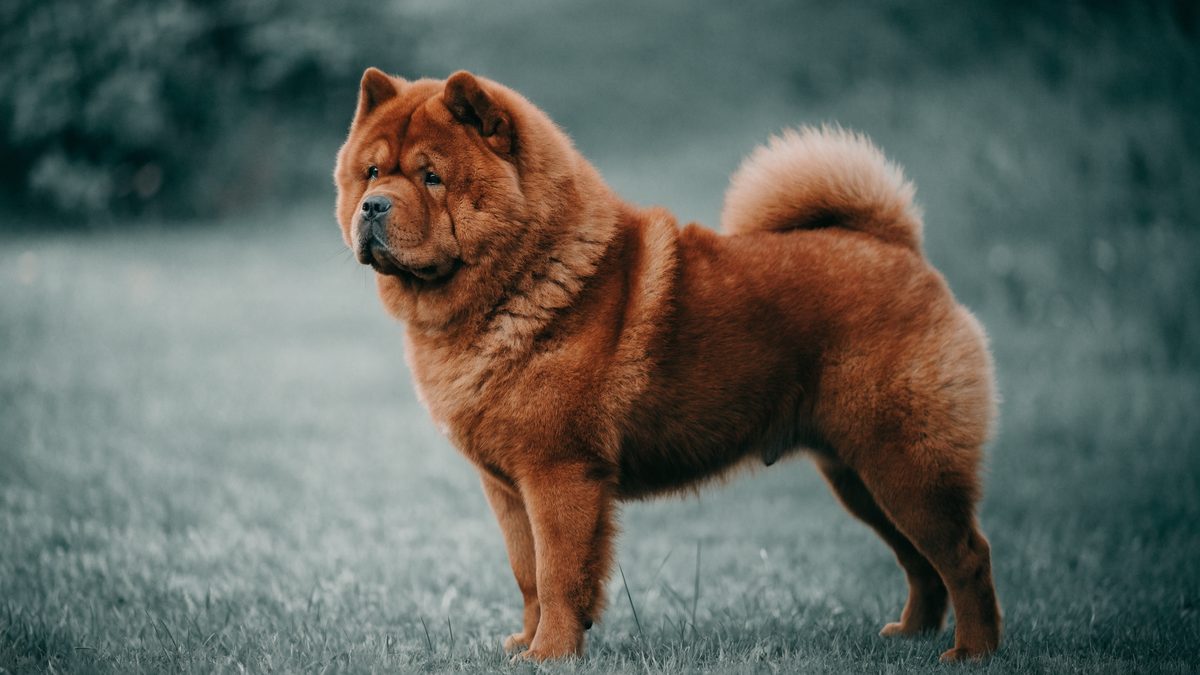
The Chow Chow is a compact, heavy-boned northern Chinese guard and hunting breed of Arctic type, 17 to 20 inches at the withers and 45 to 70 pounds, carrying a profuse double coat, a blue-black tongue, a scowling expression and a uniquely stilted rear gait. Three kennel clubs describe it in almost identical terms, and two of them write a heat clause directly into the breed definition. That clause is the reason this page exists.
Start with the sentence that no Indian page quotes. The Federation Cynologique Internationale standard, the one used across most of Europe and Asia, opens its general appearance section by requiring that the Chow Chow "should always be able to move freely and must not have so much coat as to impede activity or cause distress in hot weather";. The Royal Kennel Club standard in Britain carries the same wording word for word. The people who define what a correct Chow Chow is have written into the definition that this dog's own coat can put it in distress when the weather is hot. A buyer in Chennai or Nagpur should read that line before reading any price.
Size, coat and colour under the three standards
The three recognised standards agree closely on shape and disagree slightly on size. The American Kennel Club gives an average adult height of 17 to 20 inches at the withers and a working weight of 45 to 70 pounds, roughly 20 to 32 kg American Kennel Club. The Royal Kennel Club and the FCI both specify 48 to 56 cm for males and 46 to 51 cm for females, which is 19 to 22 inches and 18 to 20 inches Federation Cynologique Internationale. Those numbers matter in India because a 30 kg dog that cannot be walked for five months of the year is a different management problem from a 12 kg dog that can.
| Point | American Kennel Club, 2020 | Royal Kennel Club, 2025 | FCI Standard 205, 2010 |
|---|---|---|---|
| Height | 17 to 20 in average, both sexes | Males 48-56 cm, females 46-51 cm | Males 48-56 cm, females 46-51 cm |
| Weight | 45 to 70 lb | Not specified | Not specified |
| Coat | Rough or smooth, both double coated | Rough or smooth, dense, straight, stand off | Rough or smooth, profuse, straight, stand-off |
| Colours | Red, black, blue, cinnamon, cream | Black, red, blue, fawn, cream, white | Black, red, blue, fawn, cream, white |
| Parti-colour | Not a listed colour, solid or solid with lighter shadings | Unacceptable | Not in patches or parti-coloured |
| Tongue | Solid blue-black, red or pink is a disqualification | Bluish black ideal | Bluish-black tongue is characteristic |
| Eyes | Entropion or ectropion a serious fault | Clean and free from entropion | Clean eye, free from entropion |
| Heat clause | Laboured or abdominal breathing a serious fault | Must not have so much coat as to cause distress in hot weather | Must not have so much coat as to cause distress in hot weather |
There is no lilac Chow Chow, no chocolate Chow Chow and no parti-coloured Chow Chow in any recognised standard. The Royal Kennel Club lists chocolate and lilac explicitly as non-breed-standard colours and places the breed in Colour Watch Category 3, which covers breeds with more than 10 and up to 30 percent of registrations in non-breed-standard colours, or between 500 and 1,000 such registrations a year. The FCI wording is blunter, requiring whole colours and ruling out patches and parti-colouring. Any Indian listing offering a "white with black markings" or "white with tan markings" Chow Chow is describing a dog that no standard recognises, and one Indian sales page ranking on page one does exactly that while also calling the breed a terrier and describing its coat as curly. The coat is straight and off-standing in both standards The Royal Kennel Club.
The stilted gait, and why it is not a fault
The stilted gait is a required feature of the breed, not a limp. Viewed from the side the hind legs show little apparent angulation, and the hock joint and metatarsals sit directly beneath the hip joint, which is the structure that produces the characteristic shorter, stilted gait unique to the breed. The rear leg moves up and forward from the hip in a straight, pendulum-like line with a slight bounce in the rump. The Royal Kennel Club describes the same movement as relatively short striding, with the hind feet appearing to skim the ground. A first-time Indian owner who takes a healthy Chow Chow to a general practice vet may be told the dog moves stiffly. It does. That is the breed.
The line between correct stilted movement and a joint problem is real, though, and the Royal Kennel Club has flagged it. Chow Chow sits in Breed Watch Category 2, and one of the five points of concern that judges are asked to watch for is incorrect hind conformation and/or poor rear movement. The other four are signs of respiratory difficulty or distress, excessively profuse coat, deep set eyes, and eyelids not in normal contact with the eyeball. Four of those five map onto problems this page covers in detail.
The blue-black tongue, and the myths around it
The blue-black tongue is a pigmentation trait with no medical meaning, and every recognised standard treats it as a marker of type rather than of health. The AKC requires the top surface and edges of the tongue to be a solid blue-black, the darker the better, and disqualifies a tongue that is red or pink or carries one or more spots of red or pink. The FCI calls a bluish-black tongue characteristic of the breed. The Royal Kennel Club adds the practical caveat that some dilution shows in the gums of blues and fawns and is more pronounced in creams and whites. The AKC's own breed page describes the trait as one of the breed's distinctive marks and nothing more.
The tongue does not indicate a bear ancestor, it does not indicate luck or fortune, and it does not indicate purity of breeding on its own. Chow Chow puppies are born with pink tongues that darken over the first weeks, and a spotted tongue in an adult is a show disqualification rather than a health warning. Judge a puppy on its eyelids, its hips, its elbows and its parents' screening paperwork instead.
Where the breed came from, and where the sources disagree
The Chow Chow is one of the oldest recorded dog types, and its exact origin is contested. The AKC dates the breed to artefacts of China's Han Dynasty around 206 BC and notes a bas-relief from 150 to 200 BC that places the Chow as a hunting dog in that period. The Royal Kennel Club traces it to the Han Dynasty as the Han Dog, a guard dog, and records that it was reared on grain as a food source and for its pelt. The UK Chow Chow Breed Council puts the roots at 2,000 to 4,000 years and places the origin in Mongolia rather than China. The FCI attributes the ancestry to China and links the breed to Nordic spitz types with something of the mastiff.
The arrival dates in Britain are better documented. Two Chows were brought to Britain in 1780 by traders from the East India Company, London Zoo imported dogs from China in 1828 under the name Black Mouthed Chinese, and Queen Victoria acquiring one turned the breed fashionable. The Kennel Club recognised the breed in 1894 and the first official breed club formed in 1895 The Chow Chow Breed Council (UK). The FCI records that Chows were not really noticed in Britain until the 1920s, with a number shown at Crufts in 1925. Bonbeno reports both timelines rather than picking one.
Modern classification puts the breed in the Utility group in Britain and in FCI Group 5, Spitz and primitive type, Section 5, Asian Spitz and related breeds. Neither classification is decorative. A spitz-type guard dog bred in a cold northern climate for 2,000 years is a specific thermal machine, and India is not the environment it was built for.
Breed Watch Category 2 has a defined meaning worth knowing before you read the Chow Chow's five points of concern as reassurance. The Royal Kennel Club places every breed into one of three categories, where Category 1 means no visible health concerns linked to conformation, Category 2 means one or more visible health concerns linked to exaggerated conformation that need closer attention and monitoring, and Category 3 means concerns serious enough that a Best of Breed winner must pass a veterinary health check before entering the group. The Chow Chow sits in Category 2 alongside the Shar Pei, the Siberian Husky, the Golden Retriever and the Labrador Retriever.
Chow Chow price in India, and why published sources disagree by Rs 40,000 on the same puppy
The Chow Chow price in India runs from Rs 25,000 to Rs 2,50,000 across published sources in 2026, and the disagreement is not at the luxury end. Five Indian sources put the floor for an unregistered pet-quality puppy anywhere between Rs 25,000 and Rs 65,000, a spread of Rs 40,000 for what all five describe as the same category of dog Mr n Mrs Pet, Chow Chow Puppies For Sale… Happy Pet, Chow Chow, Breed Information Asia Pets, Chow Chow Puppies For Sale…. Bonbeno publishes all five bands rather than averaging them, because the spread itself is the useful information.
| Source | Pet quality | KCI registered | Show or champion line | Stated overall range |
|---|---|---|---|---|
| Wrapinfur, March 2026 | Rs 25,000-45,000 | Rs 80,000-1,20,000 | Rs 1,20,000-2,50,000+ | Rs 25,000 to Rs 2,50,000 |
| Asia Pets, 2026 | Not split by tier | Not split by tier | Not split by tier | Rs 30,000 to Rs 1,00,000 |
| Happy Pet, May 2025 | Not split by tier | Not split by tier | Not split by tier | Rs 40,000 to Rs 1,00,000 |
| Supertails, April 2026 | Rs 45,000-65,000 | Rs 65,000-1,20,000 | Rs 1,20,000-2,50,000+ | Rs 45,000 to Rs 2,50,000+ |
| Mr n Mrs Pet, 2026 | Rs 65,000-90,000 | Rs 90,000-1,20,000 | Rs 1,20,000-1,50,000 | Rs 65,000 to Rs 1,50,000+ |
Read the table by column and the pattern is clear. The four sources that name a KCI registered band all converge on Rs 1,20,000 at the top and scatter between Rs 65,000 and Rs 90,000 at the bottom Mr n Mrs Pet, Chow Chow Puppies For Sale… Wrapinfur, Chow Chow Dog Price in India. The pet-quality floor is where the sources fall apart completely, and that floor is exactly the number a first-time buyer anchors on. A page telling you Rs 25,000 and a page telling you Rs 65,000 cannot both be describing the same market.
Mr n Mrs Pet and Asia Pets are puppy sales platforms that publish a price guide attached to a live inventory, and both list a phone number for current pricing rather than a fixed figure Asia Pets, Chow Chow Puppies For Sale…. Supertails sells food, grooming and pharmacy products alongside its guide. That is not an accusation of dishonesty, it is a reason to read every published Indian price band as a marketing position rather than a market survey. Bonbeno sells none of these things and brokers no sales.
City-wise Chow Chow price in India, where the two city tables disagree
Two Indian sources publish city-level tables, and they disagree on which city is cheapest. Supertails puts Delhi NCR highest at Rs 50,000 to Rs 70,000 for pet quality and Hyderabad lowest at Rs 40,000 to Rs 55,000, and attributes the Delhi premium to buyer density, scarce breeders and import logistics through Delhi airports. Wrapinfur puts Mumbai highest at Rs 60,000 to Rs 2,00,000 and smaller cities lowest at Rs 25,000 to Rs 70,000. Neither table cites a survey method.
| City | Supertails, pet quality | Supertails, KCI registered | Wrapinfur, whole-market range |
|---|---|---|---|
| Delhi NCR | Rs 50,000-70,000 | Rs 80,000-1,35,000 | Rs 50,000-1,50,000 |
| Mumbai | Rs 48,000-68,000 | Rs 75,000-1,30,000 | Rs 60,000-2,00,000+ |
| Bengaluru | Rs 42,000-60,000 | Rs 65,000-1,10,000 | Rs 50,000-1,20,000 |
| Hyderabad | Rs 40,000-55,000 | Rs 62,000-1,05,000 | Rs 45,000-1,00,000 |
| Chennai | Rs 45,000-62,000 | Rs 70,000-1,15,000 | Rs 50,000-1,20,000 |
| Kolkata | Not listed | Not listed | Rs 40,000-90,000 |
| Pune | Rs 43,000-58,000 | Rs 63,000-1,08,000 | Not listed |
Supertails also reports that only 12 to 18 active certified breeders of this breed exist across the whole of India, with 4 to 5 in Delhi NCR and 2 to 3 in Mumbai. That figure carries no source and Bonbeno cannot verify it, so treat it as the seller's estimate. What it does explain, if roughly true, is why the same tier of puppy is quoted at Rs 25,000 in one place and Rs 65,000 in another. A market with under twenty real suppliers and heavy aspirational demand has no reference price at all.
What KCI registration actually buys, and what it does not
KCI registration is a pedigree record, not a health guarantee. The Kennel Club of India registers a litter at Rs 337 per puppy when the breeder files within 60 days of birth, Rs 562 per puppy in the 61 to 120 day window, and refuses the litter entirely after 120 days. Transferring ownership into your name costs a separate Rs 100. The certificate carries the pedigree of the parents and grandparents going back five generations, and the dam and sire must be fitted with KCI-approved microchips.
Compare those figures against the market. A breeder pays Rs 337 to register a puppy and the KCI-registered tier commands between Rs 15,000 and Rs 25,000 more than the pet-quality tier in every published Indian table Wrapinfur, Chow Chow Dog Price in India Dog with Blog, Kennel Club of India. The premium is not paying for the paperwork. It is paying for the claim of verified parentage, which is worth having only if the parents were themselves screened.
- Registration records ancestry. The certificate names the parents and grandparents and goes back five generations.
- Registration does not record hip scores. No KCI category requires a hip or elbow result before a litter is registered.
- Registration does not record eye results. Nothing in the registration path requires an eye examination for entropion.
- Registration does not confer heat tolerance. A KCI-registered Chow Chow carries exactly the same coat and the same thermal problem as an unregistered one.
- Registration is separate from breeder legality. A breeder must hold a certificate of registration from the State Animal Welfare Board to breed or house dogs for breeding and sale, and that is a legal requirement rather than a kennel-club one.
The legal floor under any Indian puppy sale
Indian law sets conditions on every Chow Chow sale, and most buyers have never seen them. Under the Prevention of Cruelty to Animals (Dog Breeding and Marketing) Rules, 2017, no breeder may carry on breeding or house dogs for breeding and sale without a certificate of registration from the State Animal Welfare Board, and that certificate must be displayed prominently in the establishment. The same rules require that pups under eight weeks of age are not sold, that only dogs in good health that have received their inoculations are sold, that each pup sold is micro-chipped with a complete treatment and vaccination record, that pups are not displayed in public places for immediate sale, and that a receipt carrying the microchip number and the buyer's details is issued for every sale.
One clause in those rules is written as though it had the Chow Chow in mind. Rule 8 requires that breeding dogs shall have been tested for genetic defects, including hip dysplasia, progressive retinal atrophy, night blindness, hypothyroidism, entropion, ectropion, overshot and undershot jaw, wry mouth, two or more missing teeth and cryptorchidism. Hip dysplasia and entropion are the two conditions this breed is most screened for worldwide, and Indian law already requires the test. Ask any Indian Chow Chow breeder for those two results in writing. The rules also require the breeder to hand you, in writing, details of feeding, dates of inoculations and de-worming, and the name and address of the attending veterinary practitioner.
Ask for the State Animal Welfare Board registration certificate of the establishment, the microchip number of your puppy, a written vaccination and de-worming record with the attending vet's name and address, a sale receipt carrying that microchip number, and the parents' hip, elbow and eye screening results The Royal Kennel Club, Chow Chow. Four of the five are legal requirements rather than favours. If a seller cannot produce the first four, the price is irrelevant.
One more thing about the price. Two of the informational pages ranking for this query describe puppy delivery by air, road or rail to any Indian city. An eight-week-old double-coated northern breed moved across India by road in summer is being exposed to exactly the conditions that the largest study of canine heat-related illness identifies this breed as least able to handle. Collect the puppy yourself, or do not buy it.
Monthly cost of a Chow Chow in India, and the four bills nobody prices
Published Indian estimates of the monthly cost of keeping a Chow Chow range from Rs 3,000 to Rs 16,900, a spread of more than five times for the same breed in the same country and the same year. The gap is not noise. It is the difference between a page that counts professional grooming every fortnight and a page that does not count it at all.
| Source | Monthly total | Grooming included at | What drives the difference |
|---|---|---|---|
| Mr n Mrs Pet, 2026 | Rs 3,000-7,000 | Trim every 4-6 weeks | Assumes infrequent grooming and no cooling line item |
| Happy Pet, May 2025 | Rs 4,650-6,600 | Rs 1,200-1,800 per month | Basic versus premium lifestyle, no cooling line item |
| Wrapinfur, March 2026 | Rs 7,500-18,000 | Rs 2,000-5,000 per month | Names cooling as a hidden cost but does not budget it |
| Supertails, April 2026 prose | Rs 8,500-14,000 | Every 10-14 days | Professional grooming plus a heat-management line |
| Supertails, April 2026 table | Rs 9,200-16,900 | Rs 3,500-7,000 per month | The same page's own table does not match its own prose |
That last row is worth pausing on. The Supertails guide states a monthly figure of Rs 8,500 to Rs 14,000 in its running text and then totals its own line items to Rs 9,200 to Rs 16,900 in the table directly below. Both numbers appear on the same page. Bonbeno prints both rather than choosing, because a buyer needs to know that the most detailed Indian cost estimate for this breed does not agree with itself.
The grooming cost is the whole argument
Grooming is the single largest recurring expense for this breed in India, and it is where every estimate diverges. Supertails prices professional sessions at Rs 1,200 to Rs 2,500 each at intervals of 10 to 14 days, producing 26 sessions a year and an annual grooming cost of Rs 42,000 to Rs 84,000. Mr n Mrs Pet prices trimming every 4 to 6 weeks, which is roughly nine to twelve sessions a year. The American Kennel Club's own care guidance sits between them, calling for thorough brushing at least twice per week and a monthly bath, with all mats removed and the undercoat brushed or combed right through. The Royal Kennel Club is the strictest of the lot and simply lists grooming for this breed as every day.
Take the two ends seriously. If you groom at home to the Royal Kennel Club standard you will spend little cash and a great deal of time. If you send the dog out every fortnight you will spend between Rs 42,000 and Rs 84,000 a year, which on the lower published price bands exceeds what you paid for the puppy. Learning to groom at home saves Rs 40,000 to Rs 60,000 a year but needs professional-grade tools costing Rs 15,000 to Rs 30,000 up front and 30 to 50 hours of learning.
First-year cost, and the four bills the price pages leave out
Supertails puts the total first year at Rs 1,85,000 to Rs 3,10,000 including the purchase price, and that is the most complete Indian figure published. Its line items include Rs 8,000 to Rs 12,000 for the initial vet check and vaccinations, Rs 12,000 to Rs 25,000 for sterilisation, Rs 8,000 to Rs 15,000 for an eight-week puppy training programme, and Rs 18,000 to Rs 35,000 for heat-management infrastructure in year one. Four costs specific to this breed appear on no Indian page at all.
- Entropion surgery, quoted at Rs 8,000 to Rs 15,000 per correction. Correction is surgical, and two operations are often planned rather than one, because a single aggressive correction risks over-rotating the lid into ectropion.
- Anaesthetic risk loading on every procedure. The breed's own parent club states that Chows are poor risks under anaesthesia and should be handled by a vet the way a Bulldog or any extremely short-muzzled dog would be handled. That applies to neutering, dentals and entropion surgery alike.
- Puppy eyelid tacking before four months. In shar pei and Chow Chow puppies specifically, temporary sutures may be placed to roll the eyelids outward while the puppy grows, with definitive surgery at four to five months if the entropion does not resolve. That is a cost in the first six months, not year three.
- Continuous cooling from March to October. Indoor temperature above 32 C is dangerous for a dog at rest, so air conditioning or fans run continuously through the Indian hot season rather than on demand.
Only one Indian source budgets cooling at all, at Rs 500 to Rs 1,000 a month averaged across the year and Rs 18,000 to Rs 35,000 of first-year infrastructure. Two other sources name cooling as necessary and then omit it from the total Mr n Mrs Pet, Chow Chow Puppies For Sale…. For a breed whose recognised standard warns that its own coat can cause distress in hot weather, cooling is not an optional line.
Set against those numbers, the registration paperwork is trivial. KCI litter registration costs Rs 337 per puppy inside 60 days and transfer of ownership costs Rs 100. The recurring bills, not the papers, are what a Chow Chow costs in India.
Climate suitability: the Chow Chow is the highest heat-risk breed ever measured
Bonbeno rates the Chow Chow 1 of 5 for heat tolerance, and unlike every other rating on this site that number rests on a named breed in a published risk table rather than on inference. In the largest study of heat-related illness in dogs, covering 905,543 UK dogs under primary veterinary care, the Chow Chow had both the highest one-year incidence of any breed at 0.50 percent (95 percent CI 0.21 to 1.16) and the highest odds of any breed analysed, 16.61 times the odds of a Labrador Retriever (95 percent CI 6.21 to 44.44, P less than 0.001). No Indian page carries that figure.
The study is worth describing properly, because its scale is what makes the finding usable. Researchers at Nottingham Trent University and the Royal Veterinary College searched the VetCompass clinical records of 905,543 dogs under UK primary veterinary care during 2016 and confirmed 395 heat-related illness events. The overall incidence was 0.04 percent (95 percent CI 0.04 to 0.05), and the event fatality rate was 14.18 percent (95 percent CI 11.08 to 17.96). Fifty-six of the 395 events killed the dog. Of the 54 deaths where the manner was recorded, 35 (64.81 percent) were euthanasia and 19 (35.19 percent) were unassisted deaths.
In the final multivariable model, nine breeds had significantly higher odds of heat-related illness than the Labrador Retriever. Those nine were the Chow Chow, Bulldog, French Bulldog, Dogue de Bordeaux, Greyhound, Cavalier King Charles Spaniel, Pug, English Springer Spaniel and Golden Retriever. The Chow Chow sat at the top of that list, ahead of the Bulldog at 13.95 and the French Bulldog at 6.49.
| Breed | Odds ratio | 95 percent CI | One-year incidence |
|---|---|---|---|
| Chow Chow | 16.61 | 6.21 to 44.44 | 0.50 percent (0.21-1.16) |
| Bulldog | 13.95 | 8.01 to 24.29 | 0.42 percent (0.30-0.58) |
| French Bulldog | 6.49 | 3.62 to 11.63 | 0.18 percent (0.12-0.25) |
| Dogue de Bordeaux | 5.31 | 1.99 to 14.21 | 0.17 percent (0.07-0.39) |
| Labrador Retriever | Base | Reference breed | Reference breed |
Below those four sit the Greyhound at 4.26 times the Labrador's odds with a one-year incidence of 0.15 percent (95 percent CI 0.07 to 0.29), and the Cavalier King Charles Spaniel at 0.12 percent (95 percent CI 0.08 to 0.18). For scale, the incidence across all brachycephalic breeds combined was 0.08 percent (95 percent CI 0.07 to 0.09), which is one sixth of the Chow Chow figure.
Read the finding honestly, including its limits
The authors themselves flag the width of the Chow Chow confidence interval. They write that the Chow Chow, "another breed with a very thick coat, had the greatest risk of HRI of all the study breeds", and add immediately that "it must be noted the confidence interval for this breed is very wide due to the relatively small sample size";. A 95 percent interval running from 6.21 to 44.44 is genuinely imprecise. What it is not is ambiguous about direction. The entire interval sits far above 1, which means even the most conservative reading leaves the Chow Chow at more than six times the odds of a Labrador.
One internal inconsistency in the paper deserves flagging rather than hiding. Table 2 of the published article gives the Chow Chow odds ratio as 16.61, while the discussion text gives it as 16.17. Bonbeno quotes the table value throughout, because the table is the reported model output. The difference changes nothing about the conclusion.
The authors also state the mechanism. They attribute the Golden Retriever's elevated odds to its thicker coat compared with the similarly sized Labrador, and then name the Chow Chow as the thick-coated extreme. Their closing caution on coat is the sentence that generalises the finding. "Other double coated breeds may also have increased risk, however the current study was under-powered to fully explore these pre-dispositions due to low numbers of these breeds";. Bonbeno's Siberian Husky page quotes that same limitation for the opposite reason, because the Husky is absent from the risk table rather than at the top of it. For the Chow Chow the breed was measured, and it came first.
The Wrapinfur guide scores the Chow Chow as Moderate for climate suitability against Poor for the Siberian Husky, and concludes that in the Indian climate the Chow Chow is generally easier to manage than a Husky. On the only published evidence the ranking is reversed. The Chow Chow topped the risk table in a 905,543-dog study at an odds ratio of 16.61, while the Siberian Husky was modelled in that same table and came out at 1.18, 95 percent confidence interval 0.28 to 5.06, p = 0.822, which is no measurable elevation at all. If you are cross-shopping these two breeds on heat, the data points the other way.
What the breed's own governing bodies say about heat
Two of the three recognised standards contain an explicit heat clause. The FCI and Royal Kennel Club standards both require that the dog must not have so much coat as to impede activity or cause distress in hot weather The Royal Kennel Club. The AKC standard approaches the same problem from the respiratory side and makes laboured or abdominal breathing, excluding normal panting, a serious fault. The Royal Kennel Club's Breed Watch adds signs of respiratory difficulty or distress and excessively profuse coat to the five points judges must watch for in this breed.
The AKC's own care guidance tells owners to avoid exercise during hot periods of the day because the breed does not tolerate high heat or humidity well. The American parent club goes further and names the temperature. It states that the Chow is subject to heat prostration in a hot, closed-in area or in the sun, and is particularly bothered by extremely high humidity, especially if the temperature climbs above eighty degrees, which is 26.7 C. The club's conclusion is that an air-conditioned house, kennel and car are the best prevention. Twenty-seven degrees is a cool morning in most of India for eight months of the year.
Indian temperature bands and what they mean for this dog
| Ambient temperature | Risk level | What it means in practice |
|---|---|---|
| Below 28 C | Low | Normal activity with shade and water |
| 28 to 35 C | Moderate | Shorten walks to 15 to 20 minutes, early morning and late evening only |
| 35 to 42 C | High | Outdoor activity contraindicated. Asphalt reaches 60 C and above |
| Above 42 C | Extreme | Heat stroke possible within 10 to 15 minutes outdoors. Indoor temperatures without cooling can be fatal |
Humidity rewrites that table. A 35 C day at 90 percent humidity is more dangerous than a 42 C day at 20 percent humidity, because panting cools by evaporation and humid air blocks evaporation. Indian ambient temperatures routinely exceed 45 C in the north while coastal humidity approaches 90 percent, and the two hazards do not overlap geographically. A Chow Chow in Chennai, Kolkata or coastal Kerala carries more thermal load than the thermometer shows, and the monsoon does not relieve it.
- Walk only before 7 am or after 8 pm from April to September, and hold the walk to 15 to 20 minutes even then.
- Run air conditioning or fans continuously above 32 C indoors, because indoor temperature above 32 C is dangerous for a dog at rest.
- Use a cooling mat, an elevated bed or a ceramic tile floor, since many dogs seek cool surfaces instinctively.
- Do the 7-second pavement test. Hold the back of your hand on the pavement for seven seconds, and if you cannot, asphalt at 60 C will burn paw pads within about 30 seconds.
- Never confine the dog to a balcony above 30 C, because concrete balconies are heat traps with no airflow and no shade.
- Plan for power cuts, since load shedding peaks exactly when cooling demand peaks.
- Never leave the dog in a parked car. At an outside temperature of 26 C a car interior reaches 32 C in five minutes and 43 C in 25 minutes.
Recognising heat stroke, and one place the sources disagree
Heat stroke is diagnosed at a core temperature of 40.5 C or above, against a normal canine range of 38 to 39.2 C Cornell University College of Veterinary…. Vigorous exercise in hot weather can produce it in as little as 30 minutes. Prolonged elevation damages every organ, commonly causing acute kidney injury, clotting failure and shock, and dogs that survive one episode carry a greater risk of another. Early signs are severe panting, difficulty breathing, heavy salivation, vomiting, diarrhoea and eventual collapse.
Purina India and an Indian veterinary heatstroke guide both instruct owners to wet the dog with cool but not cold water, move air across the wet coat with a fan, and specifically not to plunge the dog into cold water or apply ice, because skin vasoconstriction traps heat in the core. Purina adds that cooling should stop at 39.4 C to avoid overshooting into hypothermia. The Chow Chow Club Inc's own ailments page gives older advice, telling owners to wet the dog with cold water and apply several ice bags. Bonbeno reports the conflict rather than resolving it, and follows the two current veterinary sources. Cool the dog while someone else drives to the clinic.
Two other risk factors from the same 905,543-dog study apply directly to Indian Chow Chows. Dogs above the mean bodyweight for their breed and sex had 1.42 times the odds of heat-related illness (95 percent CI 1.12 to 1.80), and dogs aged 12 years and over had the greatest age-related odds at 1.75 (95 percent CI 1.14 to 2.70). A heavy, ageing, double-coated dog in an Indian summer is stacking three independent risk factors at once. Keep the dog lean, and treat every extra kilogram as a thermal liability rather than a cosmetic one.
The parked car is the smallest risk. The morning walk is the biggest
Indian heat advice concentrates on parked cars, and the same VetCompass dataset shows that is the wrong emphasis. A companion paper by the same authors examined 1,259 heat-related illness events from 1,222 dogs and classified their triggers. Exertional heat-related illness was the predominant trigger at 74.2 percent of the 879 events where a cause was recorded, followed by environmental heat at 12.9 percent and vehicular confinement at just 5.2 percent. The paper's title states the conclusion, that dogs do not die just in hot cars.
Fourteen out of every nineteen heat-related illness events in that dataset were triggered by the dog moving, not by the dog being confined. Never leaving the dog in a car is necessary and it addresses about one event in twenty. The decision that matters more is whether you walk this breed at 8 am in May because the pavement felt bearable to you. Set a temperature rule, not a time rule, and stick to it when the dog looks keen.
One number worth holding loosely is the threshold itself. Cornell puts heatstroke at a body temperature of 105 F, which is 40.5 C, and Purina India uses the same 40.5 C figure, while the American Kennel Club sets it slightly higher at 105.8 F, or 41.0 C Purina India, Heat Stroke in Dogs American Kennel Club. The half-degree gap does not matter to an owner. What matters is the AKC's accompanying warning that heatstroke can develop in minutes, especially in areas of high humidity or in confined spaces, and its cooling instruction, which is tepid or cool but not cold water applied to the underside and wherever the fur sits closest to the skin, followed by a fan for evaporative cooling.
Temperament: neither a guard dog to fear nor a teddy bear to hug
The Chow Chow temperament is defined in its own breed standard as reserved and discerning with strangers, with keen intelligence, an independent spirit and innate dignity producing an aura of aloofness. Both of the stories Indian sellers tell about this breed are wrong. It is not an aggressive dog, because aggression is explicitly unacceptable under the standard, and it is not a cuddly companion, because the standard's word for its default state is aloofness Federation Cynologique Internationale.
Take the aggression claim first, because it does the most damage. The AKC standard states plainly that displays of aggression or timidity are unacceptable in this breed. The FCI standard goes further and lists "aggressive or overly shy" among its disqualifying faults, meaning a Chow Chow showing either trait in the ring is put out of competition. The Royal Kennel Club and FCI both summarise the correct temperament in five words, independent, loyal, yet aloof, and describe the breed as a quiet dog and a good guard. An aggressive Chow Chow is a badly bred or badly socialised Chow Chow, not a typical one.
Now take the teddy bear claim, because it sells more puppies. The AKC's breed description is affectionate but precise. Well-socialised Chows are never fierce or intractable but always refined and dignified, aloof with strangers and eternally loyal to the people they know. That is a description of a dog that tolerates guests rather than greets them. An Indian family buying a fluffy lion-maned puppy on the expectation of a Labrador's sociability has bought the wrong animal, and the mismatch is the most common reason these dogs end up rehomed.
Because of its deep set eyes the Chow Chow has limited peripheral vision and is best approached from the front. That single line from the breed standard explains a large share of Indian street incidents. A child running up from the side, a delivery rider stepping past on a narrow landing, or a stranger reaching over the head from behind is arriving inside a blind spot on a naturally reserved guard breed. Teach visitors to approach from the front, in view, and to let the dog come to them.
What the temperament means inside an Indian household
The behavioural profile that Indian sources report is consistent with the standard, even where their conclusions are not. Supertails describes aloofness with family friends that guests read as unfriendliness, territorial behaviour toward unfamiliar dogs, and a dog that is not reliably food-motivated. Happy Pet answers its own FAQ on safety by saying Chow Chows have territorial behaviour that makes them aggressive at times and that training and early socialisation are what prevent it. Mr n Mrs Pet markets the same breed as calm, family-friendly and majestic. All three are describing a reserved territorial guard dog, and only one of them says so.
- Expect one-family loyalty rather than universal friendliness. The breed is loyal to its own people and aloof with everyone else, by standard.
- Expect a quiet dog. Both the Royal Kennel Club and the FCI describe the Chow Chow as a quiet dog and a good guard, which suits Indian apartment neighbours far better than a vocal northern breed.
- Expect cleanliness. Owners report that Chows housebreak easily, carry little doggy odour and are as fastidious as cats.
- Expect resistance to handling by strangers. A reserved dog that dislikes being reached over is a difficult dog to groom professionally every fortnight, which is exactly what the coat demands.
- Expect dog-to-dog friction on Indian streets. Territorial behaviour toward unfamiliar dogs matters more here than in a UK suburb, because free-roaming dogs are part of the walking route in most Indian neighbourhoods.
Who should buy this breed, and who should not
Buy a Chow Chow if you want a quiet, dignified, protective house dog that asks for moderate exercise and gives loyalty to a small circle. Do not buy one if you want a dog that greets guests, plays with every dog in the park, obeys reflexively, or can be left with a rotating cast of handlers. Happy Pet's own FAQ concedes that the breed's independence and grooming requirements make it difficult for inexperienced dog owners, and that owners with prior dog experience are better suited. Supertails reaches the same conclusion from the training side.
Add one more question to the usual list. If your household cannot keep an indoor space below 32 C from March to October, the temperament question never arises, because the climate question has already answered it Hall EJ, Carter AJ. Temperament fit is the second filter for this breed in India. Thermal fit is the first.
One temperament note applies to children specifically. The breed is powerful, squarely built and heavy-boned at 20 to 32 kg, and its natural response to being startled is to hold its ground rather than move away American Kennel Club. Supervise every interaction between a Chow Chow and a small child, brief the child to approach from the front, and give the dog a room it can leave to. A reserved dog with an escape route is a safe dog. A reserved dog cornered by an excited five-year-old is a bite report waiting to happen.
The teddy bear problem, stated by a vet-written source
Purina UK's breed guide names the mismatch directly. It describes the Chow Chow as generally aloof and reserved, both stubborn and independent, not playful, and in general neither giving nor liking affection, and it may actively object to it, and then adds the sentence that matters. "This can be problematic in a dog who looks like a giant teddy bear". Its vet ratings put the breed at 2 out of 5 for family friendliness, 1 out of 5 for liking other pets, 2 out of 5 for ease of training, and 5 out of 5 for tolerating being alone.
One line in that guide connects temperament to the rest of this page. Purina notes that the thick coat means the dog can get over-heated in hot weather, which can increase any irritability. An Indian owner reporting that their reserved dog became snappy in May is describing a thermal problem before a behavioural one. PetMD makes the complementary point that breed explains only around 9 percent of a dog's behaviour, so treat every Chow Chow as an individual rather than as a stereotype.
Training a Chow Chow: what works, what fails, and the 16-week collision
To train a Chow Chow, use patience, praise and regular practice, start early socialisation and puppy classes, and avoid harsh methods entirely, because the breed is very intelligent but stubborn and a trusting relationship is what makes it comply. Two things separate this breed from a Labrador in an Indian home. It is not reliably food-motivated, and its critical socialisation window closes before its vaccination course finishes.
The American Kennel Club's training guidance for this breed is short and unusually firm. Early socialisation and puppy training classes are recommended to produce a well-adjusted, well-mannered companion, patience and positive consistent reinforcement are the keys to success, and harsh training methods are to be avoided in order to develop a trusting relationship. That last clause is the operative one. With a breed selected for independent guarding rather than biddable retrieving, correction-heavy handling produces avoidance rather than obedience.
The food-motivation problem, and what to use instead
Most Indian dog training advice assumes a food-driven dog, and this breed frequently is not one. Supertails states directly that Chow Chows are not food-motivated and that training therefore requires relationship-based motivation and early establishment of obedience rather than bribery. Happy Pet reaches the same conclusion from the owner side, reporting that stubbornness is normal and that persistence, reinforcement and consistency in method are what overcome an independent character.
- Train in short sessions of 5 to 10 minutes, repeated two or three times a day rather than in one long block.
- Pay in access rather than only in treats. Opening a door, releasing the lead or starting a walk are rewards a dignified breed will work for.
- Keep hand signals inside the visual field. Deep set eyes give this breed limited peripheral vision, so a cue delivered from the side may simply not be seen.
- Socialise the dog to handling early, because a reserved dog that resents being reached over becomes very difficult to groom at the fortnightly interval its coat needs.
- Practise in cool hours only. Between April and September the safe outdoor training windows in most of India are before 7 am and after 8 pm.
The 16-week collision, and how to work around it
Indian owners of this breed face a scheduling conflict that no ranking page names. Supertails puts the socialisation deadline for a Chow Chow at 16 weeks, arguing that exposure to diverse people, dogs and environments before that point is what prevents later aggression and anxiety. The Dog Breeding and Marketing Rules 2017 record that puppy vaccination starts at seven to eight weeks and is usually completed at eighteen weeks. A published Indian vaccination schedule for this breed runs DHPPi at 6 to 8 weeks, a DHPPi booster at 10 to 12 weeks and rabies at 14 to 16 weeks. The window in which you must socialise the puppy closes roughly two weeks before the course that makes it safe to walk on Indian streets is finished.
Socialise inside controlled environments rather than public ones. Carry the puppy through a market, a lift lobby and a stairwell without setting it down. Invite five different adults, of different ages and dress, into the home each week. Introduce the sound of a pressure cooker, a doorbell, a scooter horn and a generator. Arrange meetings only with adult dogs whose vaccination status you can verify. Practise the grooming positions, ears, feet, eyes and tail, every single day. None of that requires the puppy to touch a public pavement Ministry of Environment.
Realistic timelines
Expect a Chow Chow to learn faster than its reputation and to comply more slowly. Housetraining is usually the easy part, since owners report that Chows housebreak easily and are as fastidious as cats. Reliable recall is the hard part, because an independent guarding breed weighs your instruction against its own assessment of the situation. Budget roughly two weeks for reliable house habits, eight to twelve weeks for a sit, a down, a settle and a name response, six months for calm handling of ears, eyes and feet, and a full year before the dog is genuinely reliable with visitors. The Indian market price for a structured eight-week puppy programme runs Rs 8,000 to Rs 15,000.
One warning about trainers. Harsh, dominance-framed methods remain common in Indian dog training, and they are specifically contraindicated for this breed by its own registry. Ask any prospective trainer how they would handle a dog that refuses a cue. If the answer involves a check chain, a prong collar or physically forcing the dog into position, find another trainer. With a reserved breed the cost of a broken trust relationship is not a slower sit. It is a dog that stops offering behaviour at all.
Exercise: a low requirement that Indian summers still make hard to meet
A Chow Chow needs up to one hour of exercise a day, delivered as moderate-paced walks rather than running or rough play, and no high-impact work at all American Kennel Club. That is one of the lowest requirements of any imported breed kept in India. The difficulty is not the volume. It is that the breed's two structural weaknesses, its coat and its elbows, both restrict when and how the hour can be delivered.
The recognised figures cluster tightly. The Royal Kennel Club lists exercise for this breed as up to 1 hour per day. Happy Pet gives an exercise routine of 30 to 60 minutes and a medium energy level. Supertails puts it at 30 to 45 minutes of moderate activity and states plainly that Chow Chows are not high-energy dogs. The AKC describes an active, alert dog with moderate exercise needs that wants daily walks and moderate play with toys, and specifies minimal rough play or high-impact exercise.
Why the AKC's four-walks-a-day advice does not survive an Indian April
The AKC recommends a moderate-paced walk four or more times a day for this breed. In Delhi, Nagpur, Ahmedabad or Hyderabad between April and June there are two usable windows in a 24-hour day, not four. Indian veterinary heat guidance restricts walking to before 7 am and after 8 pm during the April to September season and caps each walk at 15 to 20 minutes even inside those windows. Supertails uses a slightly earlier evening cut-off of 7 pm for the May to July peak and rules out all activity between 11 am and 4 pm. Take the more conservative of the two if you are unsure.
| Season | Outdoor sessions | Session length | Substitute load |
|---|---|---|---|
| October to February, most of India | 2 to 3 walks | 20 to 30 minutes | Little needed, the hour is easy outdoors |
| March and September | 2 walks, before 7 am and after 8 pm | 15 to 20 minutes | One scent game or training session indoors |
| April to June, inland metros | 2 short walks in the same windows | 15 minutes | Two indoor enrichment sessions plus daily grooming handling |
| Monsoon, coastal cities | 2 walks, timed by humidity not temperature | 15 minutes | Full indoor substitution on 90 percent humidity days |
The gap gets filled indoors. A Chow Chow that cannot walk its hour in June needs the equivalent mental load instead, and the good news is that this breed takes it well. Scatter its meal across a room and let it search. Teach one new hand cue a week. Use the daily brushing session as structured handling work rather than a chore. None of that raises core temperature, and all of it satisfies a dog that was bred to think for itself Supertails, Chow Chow Price in India 2026.
The AKC calls for minimal rough play or high-impact exercise in this breed, and the joint data explains why. The Chow Chow is ranked first of all breeds in the Orthopedic Foundation for Animals elbow dysplasia database, with 51.4 percent of 1,781 evaluated dogs recorded as abnormal. High-impact repetition on a dog carrying that background risk is not exercise, it is damage. Walk it, do not run it.
Space, and what happens without the hour
The Royal Kennel Club recommends a large house with a small to medium garden and lists the breed as better suited to country than town. That is a British judgement about noise, space and access rather than about heat, and it translates awkwardly to Indian metros. A Chow Chow can physically live in a flat, because it is quiet, clean and low-energy American Kennel Club. What it cannot do is live in a flat without cooling, since indoor temperatures above 32 C are dangerous for a dog at rest.
Skip the hour repeatedly and two things follow. The first is weight gain, which matters more in this breed than in most, because dogs above the mean bodyweight for their breed and sex carried 1.42 times the odds of heat-related illness in the 905,543-dog UK study (95 percent CI 1.12 to 1.80). The second is joint deterioration, because a heavy dog on dysplastic elbows loses mobility faster. In an Indian summer those two feed each other. A fat Chow Chow overheats sooner, so it walks less, so it gets fatter.
Two further published figures narrow the target. PetMD's veterinary guidance puts it at a couple of 20-minute walks every day and states plainly that Chow Chows are more likely to overheat because of their thick coats and short snout, so short spurts of exercise suit them better. Purina UK gives about an hour daily, rates the breed 2 out of 5 for both exercise needs and energy level, and adds a requirement Indian owners should read twice, that the dog must have somewhere shaded and cool it can retreat to in warm and hot weather. Purina also warns that too much exercise too young leads to bone and joint problems later in life, so a growing Chow Chow's exercise must be monitored closely.
Grooming a double coat in Indian humidity, and why you must never shave it
Brush a Chow Chow thoroughly at least twice a week, bathe it monthly, dry it completely with a cool air dryer, and never shave it American Kennel Club. The Royal Kennel Club sets the bar higher still and lists grooming for this breed simply as every day. Both the rough and the smooth variety carry a full double coat, so the smooth Chow Chow is not a low-maintenance shortcut American Kennel Club.
Understand the coat before you buy tools for it. In the rough variety the outer coat is abundant, dense, straight and offstanding with a rather coarse texture, and the undercoat beneath it is soft, thick and wooly. The coat forms a profuse ruff around the head and neck. The puppy coat is soft, thick and wooly all over. In the smooth variety the outer coat is hard, dense and smooth with a definite undercoat, and there is no obvious ruff or feathering. Neither standard describes a curly coat, so an Indian sales page advertising "dense, curly coats" on this breed is describing something else The Royal Kennel Club.
How often, according to whom
| Source | Brushing | Bathing | Professional session |
|---|---|---|---|
| Royal Kennel Club | Every day | Not specified | Not specified |
| American Kennel Club | At least twice per week, thorough | Monthly | Not specified |
| Happy Pet, India | Three to four times a week | Monthly | Not specified |
| Supertails, India | Daily during the coat blow | Not specified | Every 10 to 14 days, rough coat |
| Mr n Mrs Pet, India | Not specified | Not specified | Trim every 4 to 6 weeks |
The frequency you choose sets the grooming cost, and the two ends are far apart. At Supertails' interval of every 10 to 14 days a rough-coated Chow Chow needs about 26 professional sessions a year at Rs 1,200 to Rs 2,500 each, producing Rs 42,000 to Rs 84,000 annually. At Mr n Mrs Pet's interval of 4 to 6 weeks it is roughly nine to twelve sessions. Home grooming a rough coat takes two to three hours per session and professional-grade tools costing Rs 15,000 to Rs 30,000.
The coat blow, and what shedding actually looks like
Twice a year this breed drops its undercoat in bulk, and Indian owners are consistently unprepared for it. Supertails describes extreme shedding during spring and autumn in a bi-annual coat blow that requires daily brushing throughout. Happy Pet rates the breed's shedding level as moderate, which sits oddly against the same page's own note that Chow Chows are heavy shedders with a double coat requiring brushing at least three to four times a week. The Royal Kennel Club simply records that the breed sheds.
Two grooming failures matter more than the hair on your sofa. The AKC warns that the puppy coat and the coat around the head can become badly matted if not groomed regularly, and that care must be taken to remove all mats and to brush or comb right through the undercoat rather than skating over the top of it. An Indian heat guide adds the consequence, that matted fur traps heat and that regular brushing removes dead undercoat and improves air circulation to the skin. On the highest heat-risk breed in the published literature, a matted undercoat is a thermal problem before it is a cosmetic one.
"Your dog's coat actually acts as an insulator," says Dr. Jerry Klein, Chief Veterinary Officer for the American Kennel Club. "Shaving that coat to reduce shedding or supposedly to keep the dog cool also eliminates that insulating layer of fur, makes the dog susceptible to heat stroke, and can result in improper hair growth and the possibility of follicle damage";. Shaved to the skin, the undercoat regrows faster than the guard hairs and crowds them out, permanently changing the texture and colour of the coat. Indian heat guidance says the same thing in one line: never shave double-coated breeds. Both breed standards also penalise artificial shortening of the coat that alters the natural outline, with the feet the only permitted exception American Kennel Club.
The humidity problem, and the drying rule
Drying is the step Indian owners skip and the one that costs them. The AKC states that it is preferable to use a cool air dryer to thoroughly dry the Chow after a bath. Both halves of that instruction matter here. A hot dryer adds heat load to a breed that already tops the heat-risk table. An incompletely dried dog carries a damp, soft, thick wooly undercoat against the skin in coastal humidity approaching 90 percent, which is the environment skin and ear infections need AlcoVet Healthcare.
- Brush right down to the skin in sections, lifting the outer coat and working the undercoat rather than sweeping the top.
- Bathe monthly and dry completely on cool air, allowing the full time the dense undercoat needs.
- Include eye and ear care in every grooming session, and trim nails on the same schedule.
- Treat fleas and ticks immediately, because the AKC guidance for this coat asks owners to remedy any parasite issue at once. Indian monthly preventatives run Rs 400 to Rs 800.
- Check the eyelids every time you groom. The inward-rolling lid this breed is prone to is easiest to catch when you are already holding the head.
- Never shave, and refuse a groomer who offers a summer shave AlcoVet Healthcare.
One practical Indian note on booking. A reserved breed that dislikes being reached over is a difficult dog on a grooming table, and a fortnightly appointment means 26 encounters a year with a stranger handling its head American Kennel Club. Find one groomer and stay with them. Continuity is worth more than a Rs 300 saving.
Ticks under a profuse coat, the Indian risk nobody links to grooming
The AKC tells owners of this coat to remedy any parasite issue immediately, and Indian data explains why that instruction is not routine housekeeping here. In a PCR survey of 525 dogs across India, co-authored from Bombay Veterinary College, 261 dogs, 49.7 percent (95 percent CI 45.4 to 54.1), were infected with one or more canine tick-borne pathogen. The commonest was Hepatozoon canis at 30 percent (95 percent CI 26.0 to 34.0), followed by Ehrlichia canis at 20.6 percent, Mycoplasma haemocanis at 12.2 percent, Anaplasma platys at 6.5 percent and Babesia vogeli at 5.5 percent. At least six species of canine tick-borne pathogen circulate in India.
Regional work sharpens the picture. In Kerala, molecular evidence of Babesia gibsoni was recorded in 47.3 percent of 150 dogs examined, against only 26.67 percent detected by light microscopy, meaning a routine blood smear missed nearly half the positive animals. In Andhra Pradesh, a study of 442 dogs identified young age under one year, being a kennel dog and the presence of ticks among the risk factors for tick-borne infection, and found lower incidence in the rainy season among dogs that had received a previous acaricidal treatment.
A tick on a smooth-coated dog is visible. A tick on a Chow Chow is buried under an abundant, dense, offstanding outer coat and a soft thick wooly undercoat, most often around the ruff, the ears and the backs of the thighs. The only reliable way to find one is the same brushing-to-the-skin routine the coat needs anyway AlcoVet Healthcare. Run your hands over the whole dog at every session, keep monthly preventatives going at Rs 400 to Rs 800 a month, and treat any lethargy, fever or pale gums after a tick as a same-day veterinary question rather than a wait-and-see.
Health: the number one elbow breed in the world, and the number two eyelid breed
The Chow Chow carries two inherited problems that dominate every other health question about the breed. It is ranked first of all breeds in the Orthopedic Foundation for Animals elbow dysplasia database, with 51.4 percent of 1,781 evaluated dogs abnormal, and it has the second-highest annual prevalence of entropion of any breed in a 2,250,417-dog UK study, at 9.28 percent O'Neill DG, Mustikka MP, Brodbelt DC. Every recognised registry that publishes screening advice for this breed names elbows and eyes first The Royal Kennel Club, Chow Chow.
What the screening registers actually show
| Screening test | Chow Chow rank among all breeds | Evaluations | Result |
|---|---|---|---|
| Elbow dysplasia | 1st, the worst breed in the register | 1,781 | 47.3 percent normal, 51.4 percent abnormal (Grade 1 29.8, Grade 2 16.3, Grade 3 5.3) |
| Eye certification (CAER) | 7th | 743 | 77.9 percent normal, 21.9 percent abnormal |
| Patellar luxation | 23rd | 981 | 93.8 percent normal, 6.2 percent abnormal |
| Hip dysplasia | 46th | 6,462 | 75.9 percent normal, 21.6 percent dysplastic (mild 11.4, moderate 7.6, severe 2.6) |
| Thyroid | 94th | 551 | 90.9 percent normal, 7.4 percent equivocal |
| Degenerative myelopathy DNA | 27th | 123 | 75.6 percent normal, 18.7 percent carrier, 5.7 percent at risk |
OFA statistics come from dogs whose owners chose to submit radiographs, so they describe a screened population rather than the breed as a whole. That selection usually flatters a breed, because breeders screen the dogs they expect to pass. A 51.4 percent abnormal rate in a self-selected sample is therefore a floor, not a ceiling.
Set those numbers against what Indian pages publish. The most detailed Indian guide for this breed gives an unsourced frequency of 8 to 10 percent for hip and elbow dysplasia and a separate 4 to 6 percent for elbow dysplasia, describing the latter as "less common than hip dysplasia". In the OFA registers the relationship is the exact reverse. Elbow dysplasia runs at 51.4 percent abnormal against 21.6 percent dysplastic hips, and the elbow figure is the worst of any breed on the register. An Indian buyer relying on the ranking page would screen the wrong joint.
Entropion, the surgical cost that no Indian price page prices properly
Entropion is an inward rolling of the eyelid that turns eyelid hair against the cornea, causing pain, corneal ulcers, perforation or pigment on the cornea that interferes with vision. It is hereditary, developmental, usually seen in young rapidly growing dogs and typically diagnosed before one year of age, and in most cases both eyes are affected. The Chow Chow is one of the classic predisposed breeds.
The scale of that predisposition was measured properly in 2025. Researchers examined 2,250,417 dogs under UK primary veterinary care and confirmed 3,029 conformational eyelid disorder cases. Across all dogs, annual entropion prevalence was 0.33 percent (95 percent CI 0.32 to 0.34). In Chow Chows it was 9.28 percent (95 percent CI 7.64 to 11.14), second only to the Shar-Pei at 15.41 percent. After multivariable adjustment the Chow Chow had 53.46 times the odds of entropion of a general crossbred dog (95 percent CI 42.66 to 67.00, P less than 0.001). For contrast, the Husky sat at 0.18, meaning strongly protected.
| Source | Population | Chow Chow figure |
|---|---|---|
| VetCompass UK, 2019 data | 2,250,417 dogs, general primary-care population | 9.28 percent annual prevalence (95 percent CI 7.64-11.14), 2nd of all breeds |
| OFA eye register, USA | 742 Chow Chows examined by ophthalmologists | 118 dogs, 15.9 percent, recorded with entropion |
| Supertails, India | No population stated, no source cited | 5 to 7 percent |
The OFA eye data adds detail that no other source gives for this breed. Of 742 Chow Chows examined, only 358 (48.2 percent) were recorded as fully normal, 118 (15.9 percent) had entropion, 12 (1.6 percent) had ectropion, 13 (1.8 percent) had exposure keratopathy syndrome and 211 (28.4 percent) had persistent pupillary membranes running iris to iris. The last of those is usually clinically unimportant, which is why the overall abnormal rate on the certification register is 21.9 percent rather than 51.8 percent.
Two consequences follow for an Indian owner. First, entropion is painful and sight-threatening, and 27 percent of dogs diagnosed with entropion in the UK study carried a concurrent corneal ulceration. Second, correction is surgical, is often planned as two operations rather than one to avoid over-rotating the lid into ectropion, and is usually delayed until the dog reaches adult size at six to twelve months. In shar pei and Chow Chow puppies specifically, temporary sutures may be placed early to roll the lids outward while the puppy grows, with definitive surgery at four to five months if the entropion has not resolved. Supertails quotes Rs 8,000 to Rs 15,000 for surgical correction in India.
The breed's own parent club states that Chows are generally poor risks when anaesthesia is involved and should be treated by a veterinarian the way a Bulldog or any extremely short-muzzled dog would be treated. That applies to entropion correction, sterilisation and dentals alike. Clinical guidance notes that hyaluronic acid injections can temporarily evert the eyelid margin with minimal sedation and are recommended for pets at high general anaesthesia risk. Raise both points with your vet before scheduling anything, and ask specifically about the anaesthetic protocol.
Both breed standards already forbid the underlying fault. The AKC makes entropion or ectropion a serious fault, and the Royal Kennel Club and FCI both require an eye that is clean and free from entropion The Royal Kennel Club Federation Cynologique Internationale. The UK Chow Chow Breed Council records a long-standing predisposition to entropion, work with the Kennel Club and the Animal Health Trust since the early 1980s, a change to the standard from a small almond eye to a medium oval eye, and a specific entropion section now built into the BVA eye assessment. The council reports far fewer dogs affected than before but says the polygenic nature of the trait means the breed cannot be called clear. The American College of Veterinary Ophthalmologists, quoted in the 2025 study, describes entropion in the Shar-Pei and Chow Chow as a particularly severe problem recognised for decades, and names breeder selection for heavy skin folds as a compounding factor.
The full screening list, and what to demand from an Indian breeder
The AKC parent club recommends five tests for this breed. Those are a patella evaluation, a hip evaluation, an elbow evaluation, an ophthalmologist evaluation and a thyroid evaluation. The Royal Kennel Club recommends three as minimum good practice, elbow testing under the BVA/KC scheme, eye testing under the BVA/KC/ISDS scheme and hip testing under the BVA/KC scheme, and states that evidence indicates these conditions are a significant concern in the breed. The UK breed clubs recommended hips, elbows, eyes and a Bronze health assessment at their April 2016 council meeting. The council's own health scheme is voluntary, can be carried out from 15 months of age, and requires the dog to be permanently identified by microchip or tattoo.
Indian law already requires most of this. The Dog Breeding and Marketing Rules 2017 state that breeding dogs shall have been tested for genetic defects including hip dysplasia, hypothyroidism, entropion and ectropion, among others. Three of the five tests the AKC parent club recommends are therefore not optional courtesies in India. They are conditions of lawful breeding.
Lifespan, where the sources disagree openly
| Source | Stated lifespan | Basis given |
|---|---|---|
| Royal Kennel Club | Under 10 years | Breed characteristics data card, no method published |
| American Kennel Club | 8 to 12 years | Breed data card, no method published |
| Asia Pets, India | 8 to 12 years | Breed data card, no method published |
| Happy Pet, India | 11 to 13 years | Breed data card, no method published |
None of those four figures carries a published method, and Bonbeno will not average them. What can be said is that the Royal Kennel Club, the body that registers this breed in Britain and holds its screening data, places the Chow Chow in its shortest-lived band, under 10 years. UK research on 584,734 dogs including 284,734 deceased animals has now produced breed-level longevity estimates across 155 breeds, and the Chow Chow has its own row in it. Median survival is 12.1 years, with a 95 percent confidence interval of 11.7 to 12.5 years, from 395 recorded deaths, and a hazard ratio of 1.05 (0.95 to 1.16) against the crossbred group at p = 0.36, which is not statistically significant. That is the only Chow Chow lifespan estimate on this page carrying a published method, a sample size and a confidence interval, and it sits more than two years above the Royal Kennel Club's shortest-lived band, so it is the figure to carry. No Indian dataset on Chow Chow longevity exists at all. Anyone quoting an Indian life expectancy for this breed is quoting a foreign data card.
Two further conditions belong on an owner's radar without being overstated. The UK breed council lists uveodermatological or VKH-like syndrome, alopecia X, hypothyroidism, cruciate ligament rupture, bloat and torsion, Addison's disease, Cushing's disease and exocrine pancreatic insufficiency among the topics it monitors, and notes that the standard's hindquarter wording was clarified specifically to help reduce the incidence of cruciate ligament problems. The AKC's own health summary for the breed names eyelid entropion, hip dysplasia, elbow dysplasia, allergies and thyroid function. Allergies and ear infections are the conditions Indian humidity is most likely to worsen, and Supertails puts allergy frequency at 12 to 15 percent without citing a source.
Why Chow Chow entropion is harder to fix than other breeds' entropion
The mechanism differs in this breed, and that changes the surgery. In most breeds entropion is caused by loose eyelids, but in Chow Chows it is usually caused by a narrow ocular opening, termed blepharophimosis or micropalpebral fissure, which is the same feature the breed standard describes as an oval eye. Lower eyelids are more often affected in most breeds, while in the Chow Chow the upper eyelids are also often involved. Some Chow Chows show "diamond eye", which is upper lid entropion combined with lower lid ectropion, and excessive brow folds and cheek folds compound it further.
The consequence is stated plainly by the welfare literature. All of these complications mean that entropion in Chow Chows is more difficult to surgically correct than in other dogs, needing more extensive and multiple surgeries, with a correspondingly greater impact on the dog's wellbeing. Correction is done under anaesthesia and involves creating an ocular opening of normal size by cutting at the inner or outer corner of the eye and lining the incision with conjunctiva. Untreated, most affected dogs suffer lifelong pain, and blindness from a permanently held-shut eye or from corneal scarring can persist even after the entropion is surgically corrected.
Look for any tendency in the puppy not to hold its eyes completely open, or to blink repeatedly, and check that there is no discharge from either eye. Some puppies grow out of mild entropion but nobody can predict which ones, so get a veterinary examination. The guidance is blunt about sourcing. Do not purchase a puppy if a parent has or had the condition, and understand that buying an affected animal perpetuates the problem.
The clinical picture in general practice was quantified in the 2025 study. Among dogs with in-turned eyelids, the most common recorded signs were ocular discharge in 47.7 percent, a runny eye in 27.8 percent and squinting in 22.9 percent. Four in ten of those dogs suffered conjunctivitis each year, more than a quarter suffered corneal ulceration each year, and almost one in five, 18.2 percent, were operated on each year to try to correct the eyelid shape. Purebred dogs were 2.6 times more likely to have conformational eyelid problems than crossbreds, while the Border Collie at 0.01 percent, the Whippet at 0.02 percent, the Husky at 0.03 percent and the Greyhound and Lurcher at 0.0 percent were effectively unaffected.
The study's lead author frames the finding in a sentence Indian buyers should read before they buy. "Even though some diseases are so common that they become almost normal for breed, this should never be interpreted as being normal for a dog," says Dr Dan O'Neill, Associate Professor of Companion Animal Epidemiology at the Royal Veterinary College. The researchers add that their figures may still be an underestimate, because many dogs in predisposed breeds are never formally diagnosed when unhealthy eyelids are treated as normal for the breed.
Two further conditions with a documented Chow Chow signal
Gastric carcinoma is rare in dogs overall and over-represented in this breed. Stomach cancer accounts for less than 1 percent of all canine cancer diagnoses, and Chow Chows are at increased risk, with a suspected genetic origin. The signs to act on are decreased appetite, vomiting, diarrhoea and blood in the stool. Gastric dilatation-volvulus is the second, and it is an immediate emergency rather than a slow decline. Feed adults at least two meals a day rather than one large one, do not let the dog exercise directly before or after eating, avoid elevated food bowls, and ask your vet whether a preventive gastropexy is appropriate for your dog.
Purina UK's own list of the most common health problems in this breed adds panosteitis and cruciate disease to the familiar four of hip dysplasia, elbow dysplasia, entropion and coat-related issues. Cruciate rupture is the condition the UK breed council says the standard's hindquarter wording was clarified to help reduce. Given that this breed's rear assembly is built with deliberately little angulation, a Chow Chow that starts limping intermittently on a hind leg deserves an orthopaedic examination rather than rest and a wait Purina UK, Chow Chow.
One more disagreement belongs in the lifespan table above. Purina UK publishes 12 to 15 years for this breed, which is the highest figure any source gives and sits three to five years above the Royal Kennel Club's "under 10 years" band The Royal Kennel Club, Chow Chow. For a benchmark rather than a breed figure, UK life-table work on 30,563 deceased dogs puts life expectancy at age 0 across all companion dogs at 11.23 years (95 percent CI 11.19 to 11.27), with the longest-lived breed studied at 12.72 years and the shortest at 4.53 years. No comparable Indian dataset exists for any breed.
Feeding a Chow Chow in India: keep it lean, because weight is a heat risk
Feed a Chow Chow a complete diet split across two meals a day for an adult and three to four for a puppy, watch the skin for allergy signs at every formula change, and keep the dog lean American Kennel Club. Leanness is not cosmetic in this breed. Dogs above the mean bodyweight for their breed and sex carried 1.42 times the odds of heat-related illness in the 905,543-dog UK study (95 percent CI 1.12 to 1.80).
Start with the calorie and cost figures that Indian sources publish. Happy Pet gives 1,200 kcal per day for puppies and 900 kcal per day for adults, with a macronutrient split of 45 percent carbohydrate, 25 percent protein, 15 percent fat, 5 percent fibre, 5 percent vitamins and 5 percent minerals, referenced to AAFCO nutrient profiles. Monthly food cost lands between Rs 2,250 and Rs 3,000 on that page, between Rs 3,000 and Rs 5,000 on Supertails, and between Rs 3,000 and Rs 7,000 on Wrapinfur Supertails, Chow Chow Price in India 2026 Wrapinfur, Chow Chow Dog Price in India. Confirm the calorie target for your individual dog with your vet, because a 20 kg female and a 32 kg male are different animals.
| Life stage | Meals per day | Priority | Indian watch-point |
|---|---|---|---|
| 8 weeks to 4 months | 3 to 4 | Steady growth, not fast growth | Entropion is a disorder of young rapidly growing dogs, so do not push weight gain |
| 4 to 12 months | 3 falling to 2 | Joint-safe growth rate | The breed with the worst elbow record in the world does not need a fast-growth diet |
| 1 to 7 years | 2 | Weight control | Every extra kilogram raises heat-related illness odds |
| 7 years and over | 2 | Joint support and weight control | Reduced activity in hot months makes silent weight gain easy |
Why obesity is a specific problem in this breed
This is a moderate-exercise dog with a large appetite for rest, which is a combination that produces weight gain. Happy Pet states the mechanism directly, that Chow Chows are moderately active and do not require extensive daily exercise and are therefore prone to obesity and the conditions that follow it, naming glaucoma, arthritis and diabetes. In India the problem compounds, because the safe outdoor window shrinks to two short slots a day for five months of the year.
- Weigh the food. Eyeballing a scoop is how a 24 kg dog becomes a 30 kg dog over one summer.
- Weigh the dog monthly and record it, because coat volume hides body condition on this breed.
- Feed treats from the daily ration rather than on top of it, since Indian training budgets run Rs 200 to Rs 400 a month on treats alone.
- Avoid cooked bones and high-fat foods, and give table scraps sparingly if at all.
- Re-check the label after every formula change, because manufacturers change formulas and this breed reacts on the skin.
Skin, allergies and the Indian humidity factor
The AKC's nutrition guidance for this breed is built around allergy watchfulness. It advises regularly checking the Chow's skin for irritation or other signs of allergy even when you have not changed the commercial diet, because dog food companies frequently change their formulas, and it warns that treats can create allergy and digestive issues too. Many owners choose a low-grain diet. Supertails recommends a high-protein grain-limited diet and asserts that budget brands cause skin allergies and ear infections, though it publishes no source for that claim.
Humidity is the Indian multiplier. A dense wooly undercoat that stays damp in coastal humidity approaching 90 percent is the environment ear and skin infections need, so a food-related skin problem in Mumbai or Kochi presents worse than the same problem in Pune American Kennel Club. Treat any new itch, ear odour or head-shaking as a veterinary question rather than a grooming one.
Alcohol, grapes, onions, avocados, mushrooms, coffee and tea, cherries, fruit seeds, lemon, cinnamon, dairy, salt and sugar all appear on the never-feed list for this breed. Grapes and onions matter most in Indian kitchens, because both are everyday ingredients within reach of a dog that has learned to counter-surf.
One last feeding rule that comes from the heat data rather than the nutrition data. Do not feed a full meal immediately before or immediately after the two usable walking windows in an Indian summer, and do not exercise a Chow Chow straight after eating. Leave a clear gap on both sides. On a breed that already tops the heat-related illness table, there is no reason to stack a full stomach on top of exertion.
Chow Chow puppy timeline: the first year, month by month
The first year of a Chow Chow puppy in India runs on four clocks at once, and they do not line up. Vaccination completes around 18 weeks, the socialisation window closes around 16 weeks, entropion decisions fall between 4 and 12 months, and the dog's first Indian summer arrives whenever it arrives Weir M, Llera R, Ward E. Eyelid Entropion… AlcoVet Healthcare. Plan the year backwards from the summer.
| Age | What must happen | What to watch |
|---|---|---|
| Before 8 weeks | Nothing. Indian law prohibits the sale of pups under eight weeks of age | A seller offering a 6-week Chow Chow puppy is breaking the rules before you have paid |
| 8 weeks, collection | Microchip number, written vaccination and de-worming record, vet's name and address, sale receipt | Collect in person. Refuse air, road or rail delivery in the hot season |
| 8 to 12 weeks | DHPPi and its booster. Start daily handling of ears, eyes, feet and tail | The soft wooly puppy coat mats fastest around the head |
| 10 to 16 weeks | Controlled socialisation indoors and in arms, five new adults a week | The socialisation window closes near 16 weeks, before vaccination finishes near 18 weeks |
| 14 to 16 weeks | Rabies vaccination | Ask the vet to check the eyelids at the same visit |
| 4 to 5 months | Entropion decision point if temporary lid sutures were placed as a puppy | Definitive surgery is done here only if the entropion has not resolved on its own |
| 6 to 8 months | Sterilisation, quoted in India at Rs 12,000 to Rs 25,000 | Raise the breed's anaesthetic risk with your vet before booking |
| 6 to 12 months | Adult size reached, the usual window for entropion correction | Two staged surgeries are often planned rather than one |
| Any age | First Indian summer | Two 15-minute walks a day, continuous cooling indoors above 32 C |
| 12 to 15 months | Baseline joint and eye assessment | Breed-club health testing schemes accept dogs from 15 months of age |
Weeks 8 to 16, the window that decides the adult dog
Everything that makes an adult Chow Chow manageable is installed before 16 weeks. Supertails puts the socialisation deadline for this breed at 16 weeks and argues that exposure to diverse people, dogs and environments before then is what prevents later aggression and anxiety. The vaccination course, meanwhile, starts at seven to eight weeks and is usually completed at eighteen weeks. Waiting for full cover means missing the window entirely.
Handling work is the part Indian owners underrate. This is a reserved breed that will be handled by a professional groomer roughly 26 times a year for the rest of its life if you follow the fortnightly interval. Every day of the first four months should include a minute of ear handling, a minute of foot handling, a minute of eyelid inspection and a minute of brushing, done calmly and paid for with something the puppy values. A Chow Chow that accepts having its face held is a Chow Chow whose entropion gets caught early.
Look for squinting, an eye held shut, excessive tearing or a mucoid discharge, and check whether both eyes are affected, because in most cases they are. Entropion is usually diagnosed in puppies under one year of age and is a disorder of young rapidly growing dogs. Photograph both eyes weekly against the same light. A photo series is the most useful thing you can hand a vet who has not met the dog before.
Paperwork deadlines nobody tells the buyer about
KCI registration has a hard expiry. A litter can be registered at Rs 337 per puppy inside 60 days of birth and at Rs 562 per puppy between 61 and 120 days, and after 120 days the Kennel Club of India will not register the litter at all. If you bought at eight weeks, roughly 56 days, you have about two months to confirm the breeder has filed. Transfer of ownership into your name costs Rs 100 and is required if you ever intend to show the dog.
Ask three questions at collection and write the answers down. Which KCI category is the litter registered under, given that Category 1 means both parents were already registered and Category 3 means they were not. What were the sire's and dam's hip, elbow and eye results, given that Indian rules require breeding dogs to have been tested for hip dysplasia and entropion. And what is the establishment's State Animal Welfare Board registration number, which must be displayed prominently in the premises.
Growth, joints and the first summer
Grow this puppy slowly. It belongs to the breed with the worst elbow record in the OFA register, at 51.4 percent abnormal across 1,781 evaluations, and entropion is described in clinical guidance as a problem of young rapidly growing dogs. The AKC's exercise guidance for the adult breed already calls for minimal rough play or high-impact exercise, and a growing puppy has less margin than an adult. Skip stairs where you can, skip fetch entirely, and keep the puppy on grass or dirt rather than concrete.
Then plan the summer. If the puppy arrives in October you have five cool months to build handling, house habits and confidence before the heat closes the day down. If it arrives in March you have none, and the cooling infrastructure has to be running on day one rather than ordered in May Supertails, Chow Chow Price in India 2026. Indian buyers of this breed should choose their collection month as deliberately as they choose their breeder.
Chow Chow versus the breeds Indian buyers cross-shop
Indian buyers looking at a Chow Chow are usually also looking at a Siberian Husky, a Golden Retriever or a Labrador Retriever, and one Indian page ranking for this query builds its whole conclusion on the Chow Chow versus Husky question. On heat, the two largest published datasets rank these four breeds in an order that most Indian pages get wrong.
| Breed | Odds of heat-related illness vs Labrador, UK 905,543 dogs | Odds of entropion vs crossbred, UK 2,250,417 dogs | What that combination means in India |
|---|---|---|---|
| Chow Chow | 16.61 (95 percent CI 6.21-44.44), the highest of any breed studied | 53.46 (95 percent CI 42.66-67.00) | Highest measured heat risk plus second-highest eyelid risk |
| Golden Retriever | 2.67, attributed by the authors to its thicker coat | Not among the highest or lowest odds reported | Real heat risk, far below the Chow Chow |
| Labrador Retriever | Base, the comparator breed | Not among the highest or lowest odds reported | The reference point for both datasets |
| Husky | Not among the nine breeds with significantly higher odds | 0.18 (95 percent CI 0.05-0.73), strongly protected | Absent from the heat risk table, protected on eyelids |
The Husky's absence from the heat-risk table does not make it a hot-climate dog. The authors of that study state that other double coated breeds may also have increased risk and that the study was under-powered to explore those predispositions because of low breed numbers. What the table does establish is a ranking between breeds that were measured, and the Chow Chow was measured and came first.
The nine breeds with significantly higher odds than the Labrador were the Chow Chow, Bulldog, French Bulldog, Dogue de Bordeaux, Greyhound, Cavalier King Charles Spaniel, Pug, English Springer Spaniel and Golden Retriever. Two things follow for an Indian cross-shopper. The Golden Retriever, which is one of India's most popular imported breeds, is on that list at 2.67 times the Labrador's odds, with the authors attributing the difference to its thicker coat. And the Chow Chow sits six times higher again.
The Chow Chow versus Husky claim, examined
The page currently ranking first on a raw Google India pull for this query publishes a comparison table scoring the Chow Chow Moderate and the Husky Poor on climate suitability, and concludes that in the Indian climate the Chow Chow is generally easier to manage than the Husky. It offers no source for either score. On the published evidence the Chow Chow topped the heat-related illness risk table in a 905,543-dog study at an odds ratio of 16.61, while the Husky was modelled in the same table and showed no significant elevation at 1.18, 95 percent confidence interval 0.28 to 5.06, p = 0.822, so the ranking is reversed.
Where the same page is right is on everything except heat. It scores the Chow Chow calmer, lower in exercise need and less demanding in grooming than the Husky, and those judgements match the registry data. The Royal Kennel Club puts Chow Chow exercise at up to 1 hour a day and describes the breed as a quiet dog. A buyer who wants a calm, quiet, low-exercise dog is right to prefer the Chow Chow on temperament and wrong to prefer it on climate.
Where each breed sits on grooming, cost and screening
| Factor | Chow Chow | What the evidence says |
|---|---|---|
| Daily exercise | Up to 1 hour | Among the lowest of any imported breed kept in India |
| Grooming | Every day, Royal Kennel Club | Rs 42,000 to Rs 84,000 a year at Indian professional rates |
| Noise | Quiet dog, good guard | Better suited to Indian apartment neighbours than a vocal northern breed |
| Screening burden | Five tests recommended by the parent club | Patella, hip, elbow, ophthalmologist and thyroid |
| Elbow risk | Worst breed in the OFA register | 51.4 percent of 1,781 evaluated dogs abnormal |
| Heat risk | Highest measured of any breed | Odds ratio 16.61 against the Labrador |
| Indian price range | Rs 25,000 to Rs 2,50,000 | Sources disagree by Rs 40,000 on the pet-quality floor alone |
Every row of that table is sourced. Exercise and grooming frequency come from the Royal Kennel Club breed data, the annual grooming cost from Indian professional rates, the quiet-dog description from the breed standard, the five recommended tests from the AKC parent club, the elbow figure from the OFA register, the heat odds ratio from the 905,543-dog UK study, and the price spread from the Indian sources compared earlier Mr n Mrs Pet, Chow Chow Puppies For Sale….
The comparison nobody in the market wants to make
Set the Chow Chow against an Indian pariah dog and the arithmetic changes shape. The native Indian dog costs nothing to adopt, carries no imported-bloodline premium, needs no fortnightly professional grooming and evolved in the climate it is being asked to live in. No published epidemiological study assigns it a heat-related illness odds ratio, because no such study has been done in India at all, and Bonbeno will not invent one. What can be said is that the two data-backed risks driving this page, a very thick double coat and a heavily folded facial conformation, are exactly the two features an Indian street dog does not have O'Neill DG, Mustikka MP, Brodbelt DC.
None of this is an argument that a Chow Chow cannot live well in India. It is an argument about where. The one honest summary of the comparison is that this breed asks less of your time than a Husky, less of your patience than a Golden Retriever, and far more of your electricity bill than either.
Twelve mistakes Indian Chow Chow owners actually make
Most Chow Chow problems in India trace back to twelve specific decisions, and eleven of them are made before the dog is a year old. They cluster into three groups, the buying mistakes, the summer mistakes and the veterinary mistakes.
The four buying mistakes
- Treating KCI registration as a health guarantee. Registration records ancestry across five generations and nothing else. No KCI category requires a hip result, an elbow result or an eye examination before a litter is registered. Ask instead for the parents' screening results, which Indian breeding rules already require the breeder to have obtained.
- Paying a premium for a colour that does not exist in the breed. The Royal Kennel Club lists chocolate and lilac as non-breed-standard colours, and both the Royal Kennel Club and FCI standards rule out patches and parti-colouring entirely. An Indian listing selling a "white with black markings" Chow Chow at a premium is charging extra for a fault.
- Anchoring on the cheapest published price. Indian sources put the pet-quality floor anywhere from Rs 25,000 to Rs 65,000, and the cheapest floor comes from a page whose climate advice contradicts the published evidence Hall EJ, Carter AJ. The purchase price is the smallest number in this breed's budget.
- Accepting delivery by air, road or rail. Sales platforms offer nationwide delivery for this breed. Moving an eight-week-old dog of the highest heat-risk breed on record across India in the hot season is the single most avoidable risk on this page Ministry of Environment.
The five summer mistakes
- Shaving the coat to cool the dog. Shaving eliminates the insulating layer, makes the dog susceptible to heat stroke, and can cause improper hair growth and follicle damage, according to the AKC's Chief Veterinary Officer. Indian heat guidance says never shave a double-coated breed. Both breed standards also penalise artificial shortening of the coat American Kennel Club.
- Confining the dog to a balcony. Concrete balconies are heat traps with no airflow and no shade, and confinement above 30 C is dangerous.
- Running the air conditioning only when someone is home. Indoor temperature above 32 C is dangerous for a dog at rest, whether or not anyone is watching.
- Walking at the wrong hour, or on the wrong surface. Restrict walks to before 7 am and after 8 pm from April to September, keep them to 15 to 20 minutes, and use the 7-second pavement test before stepping onto asphalt that reaches 60 C in sun.
- Cooling with ice water in an emergency. Purina India and Indian veterinary guidance both instruct owners to use cool but not cold water and to avoid ice baths and ice packs, because skin vasoconstriction traps heat in the core. The breed's own parent club publishes the older advice to use cold water and ice bags, and Bonbeno flags that conflict rather than hiding it.
The three veterinary and handling mistakes
- Screening the hips and skipping the elbows. The Chow Chow ranks 46th of all breeds for hip dysplasia and 1st for elbow dysplasia, at 21.6 percent dysplastic hips against 51.4 percent abnormal elbows. The most detailed Indian guide for the breed describes elbow dysplasia as less common than hip dysplasia, which is the opposite of what the register shows.
- Waiting for the dog to squint before checking the eyelids. Entropion is usually diagnosed before one year of age, affects both eyes in most cases, and carried a concurrent corneal ulceration in 27 percent of UK cases O'Neill DG, Mustikka MP, Brodbelt DC. Check the lids weekly from eight weeks.
- Booking anaesthesia without flagging the breed. The parent club states that Chows are poor anaesthetic risks and should be handled like an extremely short-muzzled dog. Say that out loud before a sterilisation, a dental or an entropion correction.
Owners who train harshly and owners who let strangers reach over the dog's head are making the same error, which is treating a reserved guard breed as an unreserved companion breed. The AKC tells owners of this breed to avoid harsh training methods in order to develop a trusting relationship, and the breed standard notes that deep set eyes give the Chow Chow limited peripheral vision and that it is best approached from the front. Neither instruction is about dominance. Both are about visibility and trust.
The last mistake, and the most expensive one
The twelfth mistake is buying this breed for an Indian home that cannot cool it. Every other item on this list is recoverable. A shaved coat regrows badly but it regrows. A missed socialisation window can be partly rebuilt with patient adult work. An entropion caught late still has a generally good surgical prognosis. A heat stroke event killed 14.18 percent of the dogs it happened to in a temperate country with no season resembling an Indian May, and survivors carry a greater risk of a second episode.
The honest test is one question. Can your household hold an indoor space below 32 C, continuously, through a power cut, from March to October? Answer that before you compare prices.
Adoption and responsible sourcing: how to verify a Chow Chow seller in India
To adopt or buy a Chow Chow responsibly in India, check the seller against the five legal requirements in the Dog Breeding and Marketing Rules 2017 before you check the price. India publishes no breed-wise shelter or abandonment data, so nobody can tell you how many Chow Chows are surrendered here each year. That absence is itself worth knowing.
What Indian law requires of anyone selling you this dog
Five obligations sit on every Indian dog breeder, and they are enforceable rather than aspirational. No breeder may carry on breeding or house dogs for breeding and sale without a certificate of registration from the State Animal Welfare Board, and that certificate must be displayed prominently in the establishment. The premises must be kept open for inspection by a person authorised in writing by the State Board. Pups under eight weeks of age may not be sold. Every pup sold must be micro-chipped with a complete record of treatment and vaccination. And a receipt must be issued carrying the microchip number of the pup and the buyer's name, address and phone number.
Two further clauses are aimed squarely at buyers of large, high-maintenance breeds. The rules require a breeder to screen prospective purchasers to ascertain their potential to take proper care of the breed, especially if it is a large one, to attend to its grooming, socialising, spatial and veterinary needs, and to bear the expense of its upkeep. They also require the breeder to keep track of every pup produced and sold and to obtain information on its progress and state of health at least once each year.
A breeder who does not ask what your summer cooling arrangement is, who grooms your dog, and what you will do about a Rs 15,000 entropion correction is not screening you as the rules require Supertails, Chow Chow Price in India 2026. On this breed, a seller who asks no questions is the clearest warning sign available.
Verifying a listing, using a real example
Test any listing against its own page. One Chow Chow sales listing ranking for this query markets health-checked, vaccinated puppies from ethical breeders with breed certificates, while the same page's own data panel records Vaccinated: No, and the page's meta description carries a placeholder price of Rs 100. Nothing on that page is illegal. It is simply a reminder that marketing copy and the data panel beside it are written by different people, and that only one of them is checkable.
- Ask to see the State Animal Welfare Board registration certificate and photograph it, since displaying it is a legal requirement.
- Ask for the microchip number in advance and confirm it matches the puppy on the day.
- Ask for the written vaccination and de-worming record with the attending veterinary practitioner's name and address, which the breeder must furnish in writing.
- Ask for the parents' hip, elbow and eye results, given that Indian rules require breeding dogs to have been tested for hip dysplasia, hypothyroidism, entropion and ectropion.
- Ask which KCI category the litter was registered under, because Category 1 means both parents were KCI-registered and Category 3 means they were not.
- Visit the premises, meet the dam, and look at her eyelids and her movement before you look at the puppies.
- Refuse a health certificate that is only a signature. A genuine health certificate names the veterinarian, the date, the microchip number and the findings.
The adoption route, and what India does not publish
Adopting an adult Chow Chow is a real option and a difficult one to execute in India. There is no national Chow Chow breed rescue on the Indian model of the AKC Rescue Network, which in the United States links more than 450 rescue groups and carries a dedicated Chow Chow welfare referral through the breed's parent club. India also publishes no breed-wise shelter intake or abandonment statistics, so the honest answer to "how many Chow Chows are given up in India each year" is that nobody knows, and any page quoting a figure has made it up.
What adoption changes, when it is available, is the risk profile rather than the cost profile. An adult dog's eyelids, elbows and temperament are already visible instead of probabilistic, which on a breed with 51.4 percent abnormal elbows and 9.28 percent annual entropion prevalence is a genuine advantage. The grooming, cooling and veterinary bills are identical to those of a bought puppy.
- Ask a general shelter to flag the breed for you rather than searching for a breed-specific rescue that does not exist in India.
- Ask for the surrender reason in writing. Heat intolerance, grooming cost and guest-directed reactivity are the three most likely, and each has a different management answer.
- Get a veterinary eye and orthopaedic assessment before you commit, because both of this breed's headline problems are visible on examination.
- Budget the same monthly cost as a bought dog. Adoption removes the purchase price and nothing else.
- Take the dog in the cool season if you can choose, so its first summer with you is not also its first week with you.
One closing note on where this breed belongs. Nothing here says a Chow Chow cannot live a good life in India. It says that the good life is expensive, that it is climate-controlled, that it runs on daily grooming, and that it depends on two health screens most Indian buyers have never heard of. If your household can do those four things, this is a quiet, clean, dignified and deeply loyal dog. If it cannot, the kindest number on this page is the one you do not pay.
Chow Chow questions Indians actually search
What is the Chow Chow price in India?
The Chow Chow price in India runs Rs 25,000 to Rs 2,50,000 across five published sources in 2026. Pet-quality floors are quoted anywhere from Rs 25,000 to Rs 65,000 depending on which page you read, KCI registered dogs cluster between Rs 65,000 and Rs 1,20,000, and champion or imported lines run above Rs 1,20,000. Bonbeno publishes all five bands rather than averaging them, because the sources disagree by Rs 40,000 on the entry tier alone.
Which dog is under RS 5000?
No Chow Chow is available under Rs 5,000 from any published Indian source, because the lowest pet-quality floor anyone publishes for this breed is Rs 25,000. Adopting an Indian street dog costs nothing at all and gives you an animal already adapted to the climate. If your budget is Rs 5,000, the honest answer is adoption rather than a discounted imported breed.
Which dog is 20 crore price in India?
No dog sale at Rs 20 crore is documented in any verifiable Indian record, and Bonbeno will not repeat a figure it cannot source. What can be verified is the ceiling for this breed. Published Indian Chow Chow prices top out at about Rs 2,50,000 for imported champion bloodlines, and the recurring costs of grooming and cooling exceed that purchase price within three years.
Is Chow Chow a lucky dog?
No evidence connects the Chow Chow to luck, and the blue-black tongue that the belief usually rests on is a pigmentation trait with no medical or symbolic meaning. Breed standards treat the tongue purely as a marker of type, requiring a solid blue-black surface and disqualifying a tongue that is red or pink. Judge a puppy on its eyelids, elbows and screening paperwork instead.
Can a Chow Chow survive in an Indian summer?
A Chow Chow survives an Indian summer only with continuous indoor cooling, because it is the highest heat-risk breed ever measured. In a study of 905,543 UK dogs it had 16.61 times the odds of heat-related illness of a Labrador Retriever, the highest of any breed analysed, and indoor temperatures above 32 C are dangerous for a dog at rest. Cooling is infrastructure, not a comfort upgrade.
Why is the Chow Chow rated 1 of 5 for heat tolerance?
Bonbeno rates heat tolerance 1 of 5 because the Chow Chow tops the published risk table rather than because of inference from its coat. It recorded both the highest one-year incidence of heat-related illness of any breed at 0.50 percent and the highest odds ratio at 16.61, and the study's authors attribute it directly to the breed having a very thick coat.
What is the monthly cost of a Chow Chow in India?
Published Indian estimates of the monthly cost run from Rs 3,000 to Rs 16,900, a spread of more than five times. The gap is grooming. Estimates that assume professional sessions every 10 to 14 days land above Rs 9,000 a month, while estimates that assume a trim every four to six weeks land below Rs 7,000. Only one Indian source budgets summer cooling at all.
What health problems do Chow Chows have?
Elbows and eyelids dominate. The Chow Chow is ranked first of all breeds in the OFA elbow dysplasia register, with 51.4 percent of 1,781 evaluated dogs abnormal, and second of all breeds for entropion in a 2,250,417-dog UK study at 9.28 percent annual prevalence. Hip dysplasia sits at 21.6 percent dysplastic. The parent club also recommends patella and thyroid evaluations.
How much does entropion surgery cost in India?
Indian sources quote Rs 8,000 to Rs 15,000 for surgical correction of entropion, and you should budget for two operations rather than one. Surgeons often stage the correction to avoid over-rotating the lid into ectropion, and most dogs wait until they reach adult size at six to twelve months. Raise the breed's anaesthetic risk with your vet before scheduling anything.
Are Chow Chows aggressive?
Aggression is explicitly unacceptable in this breed under its own standard, and the FCI lists aggressive or overly shy as a disqualifying fault. The correct temperament is independent, loyal and aloof, meaning the dog ignores strangers rather than confronting them. Its deep set eyes give limited peripheral vision, so it should always be approached from the front rather than the side.
Should I shave my Chow Chow in summer?
Never shave a Chow Chow. The AKC's Chief Veterinary Officer states that shaving eliminates the insulating layer of fur, makes the dog susceptible to heat stroke, and can cause improper hair growth and follicle damage. Indian veterinary heat guidance says the same thing, and both breed standards penalise artificial shortening of the coat. Brush the undercoat out instead.
Does KCI registration mean a Chow Chow puppy is healthy?
KCI registration records ancestry across five generations and nothing about health. No registration category requires a hip result, an elbow result or an eye examination. Indian breeding rules separately require breeding dogs to have been tested for hip dysplasia, hypothyroidism, entropion and ectropion, so ask the breeder for those results in writing rather than relying on the pedigree certificate.
How often does a Chow Chow need grooming in India?
The Royal Kennel Club lists grooming for this breed as every day, the AKC calls for thorough brushing at least twice a week plus a monthly bath, and Indian sources put professional sessions at every 10 to 14 days for a rough coat. Dry the dog completely with a cool air dryer, because a damp undercoat in Indian humidity invites skin and ear infections.
Is a Chow Chow good for first-time dog owners in India?
A Chow Chow suits an experienced owner far better than a first-time one. It is stubborn, frequently not food-motivated, reserved with strangers, and demanding to groom, and Indian sources agree that owners with prior dog experience handle it better. Add the climate requirement and the screening burden, and this is a second or third dog rather than a first.
Where can I adopt a Chow Chow in India?
No national Chow Chow breed rescue exists in India, and no Indian body publishes breed-wise shelter intake data, so nobody can tell you how many are surrendered each year. Ask general shelters to flag the breed for you, get a veterinary eye and orthopaedic assessment before committing, and budget the same monthly cost as you would for a bought puppy.
Compare with similar breeds
Chow Chow sits in 2 Bonbeno groups. Each one compares it directly against the breeds it is genuinely an alternative to, on the same figures.