
Dog breed profile
Alaskan Husky in India: What You Are Actually Being Sold
The Alaskan Husky has no breed standard and no registry recognition anywhere in the world. Here is what that means for an Indian buyer, what the science actually says about the dog, and how to tell what you are being offered.
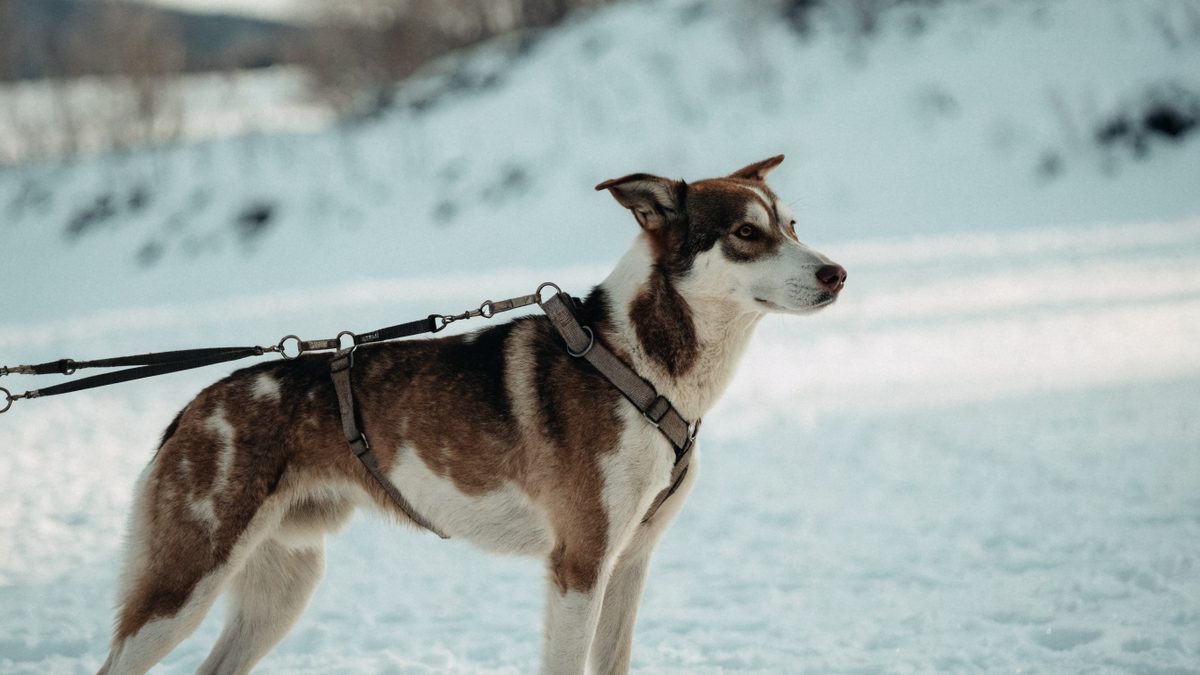
Quick answer
The Alaskan Husky is not a standardised breed. It is a performance-bred sled dog type with no written breed standard and no recognition from the FCI, the AKC, the UKC or the Kennel Club, which Bonbeno confirmed by reading each registry's own breed list. In India that matters more than anywhere else, because a dog sold as an Alaskan Husky is almost always a Siberian Husky or a crossbreed. Bonbeno rates heat tolerance 2 of 5.
This guide is general information for Indian pet owners and is not a diagnosis. Always consult your nearby registered veterinarian before acting on anything you read here, and treat any sudden change in your dog's condition as urgent.
Alaskan Husky at a glance
What an Alaskan Husky actually is
An Alaskan Husky is a performance-bred sled dog type, not a standardised breed, and that distinction is the most important thing on this page. It has no written breed standard, no registry recognition, and no official size, weight or colour. What it does have is a job description, a measurable genetic signature, and a hundred years of breeding decisions made by mushers who cared what a dog could do rather than what it looked like.
Start with the definition that every other fact hangs from. The Alaskan Husky is not an officially recognised breed by any kennel club, nor does it have a formal breed standard. It is instead the product of deliberate selection for sled-dog traits drawn from several other breeds, including aptitude for pulling, endurance, speed, intelligence, appetite and tolerance of extreme weather. A kennel in Fairbanks puts the same point in one line, noting that according to the American Kennel Club the Alaskan Husky is not a purebred, let alone a recognised dog breed, and that huskies are instead defined by their purpose as athlete sled dogs.
That is not a technicality. A breed standard is a written document that tells a buyer what they are buying. Without one, two dogs sold under the same name can differ by 40 pounds, by coat length, by ear carriage and by temperament, and neither seller is lying.
Breed recognition, checked registry by registry
Bonbeno did not take the recognition claim on trust. Every page ranking for this term asserts that no kennel club recognises the Alaskan Husky and none of them shows the check. We read each registry's own published breed list in August 2026 and counted what is in it.
| Registry | What its own list contains | Alaskan Husky listed? |
|---|---|---|
| FCI, Group 5 Section 1 Nordic Sledge Dogs | Five breeds: Canadian Eskimo Dog, Greenland Dog, Samoyed, Alaskan Malamute, Siberian Husky | No |
| United Kennel Club, Northern Breed group | 35 breeds including Alaskan Klee Kai, Alaskan Malamute and Siberian Husky, out of over 300 UKC breeds | No |
| The Royal Kennel Club, Breeds A to Z | Alaskan Malamute and Siberian Husky both listed in the Working group | No |
| American Kennel Club, List of Breeds by Group | Alaskan Malamute in the Working group, Alaskan Klee Kai in the Miscellaneous Class, having entered Foundation Stock Service in October 2020 | No |
| Kennel Club of India | Follows FCI nomenclature; the Siberian Husky is KCI-registrable, and an Indian retail source confirms it | No |
Read the AKC row twice, because it is the strongest single finding. The AKC operates a Foundation Stock Service specifically for rare breeds working toward recognition, and the Alaskan Klee Kai sits in it. The Alaskan Husky does not. It is not recognised, it is not pending, and it is not in the queue. That is a settled position rather than a delay, and it is settled because mushers do not want a standard. One Alaskan musher quoted in the working literature puts it flatly, saying that imposed standards are a useless constraint and that the Alaskan Husky is constantly improved by experimentation.
Size, weight and colour, with the disagreement printed
Because there is no standard, there is no correct answer to how big an Alaskan Husky is. Published sources give four different answers and none of them is wrong, which is exactly what an unregistered population produces.
| Source | Height | Weight | Stated lifespan |
|---|---|---|---|
| Wikipedia, citing Bonham and Coppinger | 20 to 26 in | 35 to 75 lb | Not stated |
| Wisdom Panel, veterinarian reviewed | 20 to 24 in | 40 to 75 lb | 10 to 15 years |
| ASPCA Pet Health Insurance | 23 to 26 in | 35 to 60 lb | 10 to 15 years |
| Racing consensus, panel of Iditarod and sprint champions | Not stated | Females 45 to 50 lb, males 50 to 55 lb | Not stated |
The racing figure is the tightest of the four and the reason is instructive. Mushers converge on 45 to 55 pounds because anything heavier seriously compromises speed, resilience and endurance. That is a performance limit, not an aesthetic one, and it is the closest thing this dog has to a written rule.
A veterinary blog ranking for this comparison states that true Alaskan Huskies are typically either all white or all black. That contradicts every other source. Wikipedia records all colours and patterns of colours across the various lines, and Wisdom Panel states the coat can come in any colour or pattern. There is no colour rule because there is no standard to write one in. Bonbeno flags the error rather than repeating it.
Where the dog came from
Indigenous dogs across Alaska were renowned for strength and stamina but lacked speed, so outcrosses to faster Old World breeds were used to produce quicker teams, with Siberian imports dominating early organised racing in Alaska. From the second half of the twentieth century, as the work shifted from utility to sport, gundog and sighthound blood entered the lines, including Pointers, Greyhounds, German Shorthaired Pointers, Salukis, Borzois, Labradors and Setters. The Iditarod's own education material describes the same process in plainer words, saying mushers took Siberians and made a new breed of racing dog, and naming greyhound for speed, labrador retrievers for friendliness and border collies for intelligence and focus.
So the Alaskan Husky is a mixed population by design. It is also, and this surprises people, a genetically identifiable one. A study of 199 Alaskan sled dogs genotyped at 96 microsatellite markers and compared against 141 purebred breeds found that the Alaskan sled dog has a unique molecular signature, and that the genetic profile alone is enough to separate dogs bred for sprint from dogs bred for distance. The same work identified which ancestry does what: Alaskan Malamute and Siberian Husky contributions are associated with enhanced endurance, Pointer and Saluki with enhanced speed, and the Anatolian Shepherd with a positive influence on work ethic.
That is why a DNA test can return an Alaskan Husky result at all. A later study using a commercial panel of 228,588 markers recorded Alaskan Husky as a named ancestry category, noting it was the first time the type had been denoted in any commercial ancestry panel. An unregistered dog with no standard is nevertheless measurable, which is a genuinely unusual position for any dog type to occupy.
Alaskan Husky price in India, and why no honest range exists
No credible Alaskan Husky price in India exists, and Bonbeno is not going to invent one. There is no registry that can certify the dog, no legal import route for breeding stock, and no published Indian source that quotes a figure for a verified Alaskan Husky rather than for a Siberian Husky. What follows is what the market actually charges for the dog you are most likely being offered under this name.
Three separate facts have to be stated before any number is useful, and the first one is the one Indian buyers almost never hear.
- Nobody can certify an Alaskan Husky in India. The Kennel Club of India follows FCI nomenclature, and the FCI's Nordic Sledge Dogs section contains five breeds, none of them this one. A seller cannot hand you registration papers for a dog type that has no registry anywhere in the world.
- No dog may be imported into India for breeding or commercial purposes. Under the Directorate General of Foreign Trade's published guidelines, import of dogs is allowed only for a pet dog travelling with its owner on a valid pet book, for research organisations with CPCSEA recommendation, and for internal security by the Defence and Police Force, and import of commercial dogs for breeding or any other commercial activity is not permitted. Applications made for trading or breeding purposes are duly rejected.
- The Indian market says so itself. The highest-ranking Indian husky price page states directly that when you see listings for Alaskan Husky, Sibercaan or Indian Husky, these are either different breeds entirely or mixed-breed dogs being marketed under the Husky name. That is a retailer with a commercial interest in husky sales telling you the label is unreliable.
Put those together and the conclusion is uncomfortable but clean. A puppy advertised in Delhi, Mumbai or Hyderabad as an Alaskan Husky is, with very high probability, a Siberian Husky, a Siberian Husky crossbreed, or a mixed-breed dog with northern-looking ears. It is not a working Alaskan sled dog, because there is no lawful commercial pipeline that would put one in an Indian litter.
What the dog you are actually being offered costs
Since the animal on offer is almost certainly a Siberian Husky or a cross, the honest reference is the published Siberian Husky price in India. Bonbeno's Siberian Husky guide compares those bands across sources in full. The headline is that a Siberian Husky puppy is published at Rs 20,000 to Rs 1,50,000 in 2026, with a four-tier structure that starts at Rs 20,000 to Rs 40,000 for unregistered or backyard-bred puppies and runs to Rs 1,50,000 and above for show-quality, rare-coat or imported-bloodline dogs.
| What the listing says | What it usually is | Published Indian band |
|---|---|---|
| Alaskan Husky, no papers | Siberian Husky or husky-type cross from an unregistered breeder | Rs 20,000 to Rs 40,000 |
| Alaskan Husky, KCI papers offered | A KCI-registered Siberian Husky, because that is the only husky KCI registers | Rs 50,000 to Rs 95,000 |
| Alaskan Husky, imported line | Unverifiable. No commercial import route exists | Quoted at Rs 95,000 and above, on trust alone |
| Woolly or giant Alaskan Husky | A long-coated Siberian Husky, a Malamute cross, or a marketing term | No published band |
Bonbeno searched Indian results for this exact query on 16 August 2026 and found no source publishing a price for a verified Alaskan Husky. Nine of the ten organic results were Siberian Husky content, and the remainder were puppy-listing pages and social posts with no methodology. Every Indian figure on this page is therefore a Siberian Husky figure, labelled as such. Where a page quotes you an Alaskan Husky price in India as though the number were specific to this dog, it is either repeating a Siberian Husky band under a different name or making it up.
What a premium claim is actually buying
Sellers price husky-type puppies on coat colour and eye colour, and neither carries any health meaning. Blue eyes are common enough in the general husky population to be unremarkable, with roughly 20 percent of huskies carrying blue eyes and a further 20 percent carrying mixed colouration such as one blue and one brown, the remainder simply having brown eyes. In a working Alaskan line, eye colour has never been a breeding criterion at all, because cosmetic features are not a consideration when the dog is bred for its job.
There is one more thing worth knowing before you pay a premium for pedigree. A Seppala Siberian Sleddog kennel reports genetic results showing that many racing-line AKC Siberian Huskies carry substantial Alaskan Husky ancestry, describing one purchased AKC Siberian Husky that returned 30 percent Alaskan Husky and citing racing lines as high as 50 percent. That is a single kennel's account rather than a published study, and Bonbeno labels it as such. It is worth reporting because it shows the label and the genetics diverging even inside the registry system, which is the whole problem this page is about.
Bonbeno does not broker puppy sales, does not publish breeder listings, and does not recommend sellers. The figures above are reported from a third party so you can price the uncertainty into your own decision.
Monthly cost of keeping a husky-type dog in India
Budget Rs 9,000 to Rs 17,500 a month, and treat that as a Siberian Husky figure applied to a husky-type dog, because no Indian source has ever costed an Alaskan Husky specifically. The largest line is one that appears in no overseas breed guide, which is electricity, and the second largest is food, which runs higher in this dog than the purchase price suggests.
One Indian publisher breaks the monthly cost down line by line for a husky in this country. Bonbeno reproduces it with the caveat attached rather than laundering it into a Bonbeno estimate.
| Line item | Published range | Why it behaves differently here |
|---|---|---|
| Food | Rs 3,000 to Rs 6,000 | 200 to 350 g of quality kibble daily for a 20 to 27 kg adult, at Rs 300 to Rs 700 per kg |
| Grooming | Rs 1,500 to Rs 3,500 | Rs 1,500 to Rs 3,000 per professional session, plus de-shedding tools you will use weekly |
| Electricity for air conditioning, March to October | Rs 3,000 to Rs 8,000 | The line that has no overseas equivalent. Averaged over a year it still adds Rs 2,000 to Rs 5,000 a month |
| Veterinary care, averaged | Rs 1,000 to Rs 3,000 | Routine care runs Rs 5,000 to Rs 10,000 a year before any breed-specific monitoring |
| Toys and enrichment | Rs 500 to Rs 1,500 | Not optional for a dog bred to work. The alternative cost lands on your furniture |
| Stated monthly total | Rs 9,000 to Rs 17,500 | One publisher's estimate, no sample size or collection method stated |
That total carries no methodology. The source does not state how many households it surveyed, in which cities, or when, so it is an estimate rather than a survey result. Bonbeno says so instead of presenting it as settled. The shape of it is not in dispute, because the cooling line is structural and recurs every summer for the dog's entire life.
The food line runs higher in a working line than in a show line
Here is a cost difference specific to this dog rather than to huskies in general. Racing Alaskan Huskies are physiologically capable of consuming and utilising up to 10,000 kcal per day while exercising, and a good appetite is a trait mushers deliberately breed for. A pet in an Indian flat is nowhere near that workload and must never be fed to it, but the appetite is still selected in, which means portion discipline matters more in this dog than in most.
There is a second, quieter reason the food bill can climb. Sled dog operators report that Alaskan Huskies tend to be leaner than Siberians and, because their fur is thinner, they generally have to eat more to stay warm, often sharing a kennel for warmth and wearing coats between runs. In an Indian summer that thermoregulatory penalty reverses and becomes an advantage, which is one of the few genuine points in this dog's favour here.
First-year costs Indian buyers routinely miss
- Air conditioning capacity you may not have. The cooling has to exist before the dog arrives, not after the first heat scare, because indoor temperature above 32 C is dangerous for a dog at rest.
- A DNA test, Rs 8,000 to Rs 20,000 depending on the panel. For this dog it is not a novelty. It is the only instrument that can tell you what you actually bought, and commercial panels do now report Alaskan Husky ancestry as a named category.
- A secure boundary. Fencing, gate discipline and a harness that cannot be backed out of are capital costs for a dog selected across a century for the willingness to keep running.
- Professional training in the first year. An independent working dog in a first-time home usually needs it, and the cost is far lower than the cost of the behaviour it prevents.
- A backup cooling plan for power cuts. Load shedding peaks exactly when cooling demand peaks, so a battery fan, frozen packs and a fallback location are part of the budget.
When we publish cost figures we state the sample size, the cities covered and the collection date. We have none of those for this dog, because no Indian survey of Alaskan Husky ownership exists. So the table above is labelled as one publisher's Siberian Husky estimate applied to a husky-type dog, and not as a Bonbeno finding.
Climate suitability, and why heat tolerance is rated 2 of 5
Bonbeno rates the Alaskan Husky 2 of 5 for heat tolerance, one point above the Siberian Husky and no higher. The extra point is earned by a real difference in the coat, because sprint lines are deliberately bred with shorter coats for heat dissipation. The rating stops at 2 because this is still an arctic working animal, because the coat varies unpredictably, and because in India you cannot verify which line your dog descends from.
Take the coat argument seriously first, because it is the one genuine reason this dog differs from its registered cousin. Distance-type Alaskan Huskies often have denser double coats to contend with cold temperatures and harsh wind, whereas sprint lines have shorter coats to allow for greater heat dissipation during races at high speeds. That is selection for heat shedding, written into the population by mushers who needed dogs to run hard without overheating in the low positive temperatures of a spring race.
Operators who run mixed kennels report the same difference from the other direction. Siberians tend to have thicker fur than Alaskans, many Alaskans having been bred with racing in mind and therefore carrying more hound-like coats, which is why Siberians are preferred for long safaris where dogs may sleep outdoors without shelter. A dog with less undercoat has less insulation to move heat through. In Chennai in May, that is not nothing.
A shorter coat is not heat tolerance. The reference environment for these dogs is a Fairbanks kennel where temperatures drop to 62 C below freezing. Sprint lines were bred to dissipate heat at minus 5 C while running 20 miles per hour, not to rest at 44 C in Nagpur. The physiology underneath is unchanged: a dog cools almost entirely by panting, and panting fails when the air is already hot and humid.
The epidemiology cannot see this dog at all
Here is a finding that no page ranking for this term reports. The largest study of heat-related illness in dogs available anywhere covers 905,543 UK dogs under primary veterinary care in 2016 and identified 395 confirmed heat-related illness events, giving an incidence of 0.04 percent and an event fatality rate of 14.18 percent. Its named risk breeds are Chow Chow, Bulldog and French Bulldog, alongside higher bodyweight relative to the breed and sex mean, age over two years, brachycephalic skull shape and bodyweight over 50 kg.
The Alaskan Husky does not appear in that study, and it structurally cannot. Breed-based epidemiology works by reading the breed field in a clinical record, and a dog with no registry has no breed field to read. It gets recorded as a crossbreed, or as a Siberian Husky, or as whatever the owner said at the desk. So the absence of this dog from every heat-risk table in the world is a data artefact, not a safety finding, and anyone who tells you Alaskan Huskies are not on the risk lists is describing a filing convention.
What the same study does establish is that bodyweight matters independently of breed, which is the actionable half. Indian veterinary guidance is blunter still, noting that obese pets overheat two to three times faster than lean pets. Keeping this dog visibly lean is the single highest-value heat intervention available to an Indian owner, and it costs nothing.
The temperature bands that decide your day
| Ambient temperature | Risk level | What it means in practice |
|---|---|---|
| Below 28 C | Low | Normal activity with shade and water |
| 28 to 35 C | Moderate | Shorten the walk to 15 to 20 minutes, early morning and late evening only |
| 35 to 42 C | High | Outdoor activity contraindicated. Asphalt reaches 60 C and above |
| Above 42 C | Extreme | Heat stroke possible within 10 to 15 minutes outdoors, and indoor temperatures without cooling can be fatal |
Indian veterinary guidance names this dog's coat type directly. Purina India lists dogs with heavy coats such as Huskies alongside short-faced breeds as being at particular risk of heat stroke, sets the clinical threshold at a raised temperature of 40.5 C or above, and warns that vigorous exercise in hot weather can produce heat stroke in as little as 30 minutes. It also gives the stopping rule most owners get wrong, which is to halt active cooling once temperature returns to 39.4 C so the dog is not chilled into hypothermia.
Humidity rewrites that table. A 35 C day at 90 percent humidity is far more dangerous than a 42 C day at 20 percent humidity, because panting works by evaporation and humid air blocks it. Coastal cities during the monsoon are the trap here: Mumbai, Chennai and Kolkata read as moderate on a thermometer and behave as extreme on a dog.
What actually reduces the risk
- Walk only before 7 am or after 8 pm from April to September, and cap the walk at 15 to 20 minutes even inside those windows.
- Run cooling continuously above 32 C indoors. Indoor temperature above 32 C is dangerous for a dog at rest, and a fan across a wet towel is a workable fallback.
- Cool with room-temperature water and moving air, never ice. Ice causes cutaneous vasoconstriction, traps core heat and delays cooling.
- Do the 7-second pavement test. Hold the back of your hand on the pavement for seven seconds. Asphalt at 60 C causes third-degree paw burns within about 30 seconds, and grass runs 10 to 15 C cooler.
- Never confine the dog to a balcony above 30 C. Concrete balconies are heat traps with no shade and no airflow.
- Never shave the coat. The undercoat insulates in both directions, and shaving exposes skin to sunburn and can cause patchy or incorrect regrowth.
Heat stroke is core body temperature above 40 C with clinical signs, and the cascade to organ failure begins between 40 and 41 C. Early signs are frantic unproductive panting above 60 breaths a minute at rest, thick ropey drool, bright red gums, restlessness and an anxious wide-eyed expression. Begin cooling immediately and drive to your nearby vet while cooling continues. Every heat stroke case needs veterinary examination even if the dog looks recovered, because organ failure can present 12 to 72 hours later.
Bengaluru, Pune and the hill stations are the only Indian locations where this dog is a reasonable proposition, and even there the summer plan has to be real. Everywhere else you are running a cooling operation twelve to fifteen years long, and the honest question is not whether it can be done but whether your household will still be doing it in year eight.
Temperament and household fit
An Alaskan Husky's temperament is the least predictable thing about it, and that is a direct consequence of having no breed standard. Behaviour varies greatly because of the wide range of genetic backgrounds inside the type, so the honest description is a set of traits mushers select for rather than a personality you can count on.
Three things are selected hard in every working line, and they are the three that shape life with one in a flat.
- A desire to pull and run. As with all sled dogs, a desire to pull and run is essential and holds high priority in breeding decisions. This is a drive, not a preference, and no amount of training removes it.
- Mental soundness in close quarters. Dogs must live and work packed tightly with other dogs while hooked in a team, be handled by people for care and transport, and perform on trails crowded with spectators and other teams. That produces a dog that is usually excellent with other dogs and poor at being alone.
- Problem solving. Because these dogs work without direct physical feedback from the driver, intelligence and problem solving are highly desired, and dogs are expected to read the trail and the situation through instinct and experience. A dog bred to make its own decisions will make them in your kitchen too.
The pack requirement is the one Indian households underestimate. Working Alaskan Huskies have a strong pack mentality, love being part of a family and prefer not to be alone. A dog left alone for ten hours in a hot flat is the exact animal that ends up on a rescue list, and the behaviour that gets it there is not a disorder. When these dogs do not burn off enough energy they turn their attention to unwanted behaviours such as chewing or digging.
Apartment reality in an Indian city
Bonbeno rates apartment suitability 1 of 5 for this dog. An insurer's breed guide reaches the same conclusion in one sentence, noting huskies do not necessarily make excellent apartment dogs because they can be vocal and quite active indoors. The same source is unambiguous that these dogs are not meant to live tied up outside or shut in a kennel alone all day, and thrive when they can spend time with other dogs and with their family.
Add the Indian constraints and the picture sharpens. The two available exercise windows sit before 7 am and after 8 pm for roughly six months of the year, the cooling has to run through the day, and a vocal dog in a shared building becomes a society problem within weeks. None of that makes a flat impossible. It makes a flat expensive in time.
- Good fit. An experienced, active household in Bengaluru, Pune or a hill station, with a securely fenced boundary and someone home much of the day.
- Poor fit. A first-time owner, a flat with shared walls, a house empty ten hours a day, or a home without reliable backup cooling.
- Watch item. These dogs are powerful and rambunctious with a tendency to jump, so interactions with small children need supervision purely on grounds of size.
- Underrated risk. Intelligence in this type is easy to miss, because independence and stubbornness read as an inability to learn when they are actually a decision not to comply.
Socialise the puppy early and widely, because the exposure window closes long before the dog is physically mature. In an Indian city that means lifts, traffic, groomers, handling, other dogs and building staff, all booked into the cool hours the same way walks are.
Training an Alaskan Husky
Train an Alaskan Husky with reward-based methods, start in puppyhood, and never treat off-lead recall as achieved. This type trains better than a show-line Siberian Husky because mushers select for biddability and problem solving, but the same selection produced a dog that decides for itself when the handler is wrong.
The training advantage is real and it comes from the breeding goal. Mushers list highly trainable alongside strong pack instinct, energy and a healthy appetite as the qualities they look for when assembling teams, and the working literature describes the Alaskan Husky as willing to please, with a strong instinct to pull even in adverse conditions, and easily trained. Bonbeno rates trainability 3 of 5 for this reason, a point above the Siberian Husky.
The disadvantage arrives from the same place. These dogs can be very strong-willed, and the recommended approach is consistent, firm but gentle training begun in puppyhood using treats and favourite toys. An insurer's guide is blunter, calling them bullheaded and independent and stressing that training is an ongoing process rather than a phase.
The one thing that does not train out
Containment is management, not training. The published guidance for this dog is that a fenced yard is a must, that electric fences are not a suitable substitute because a dog that sees something genuinely interesting will ignore the correction, and that the fence must be high because these dogs jump and solid at the base because they dig. The same source warns against ever leaving the dog in the yard unattended or for long periods, because you will return to holes and possibly to an escaped dog.
No published study measures prey drive in Alaskan Huskies as a population, because there is no population registry to sample. What is documented is that sighthound and gundog blood was deliberately introduced into these lines, including Greyhounds, Salukis, Borzois, Pointers and Setters. Those are breeds selected to chase. In an Indian city with street dogs, cats, cattle and traffic, assume the drive is present until your individual dog proves otherwise, and remember that a frightened dog running in 40 C heat can develop heat stroke in minutes.
Realistic timelines
| Skill | Start | Realistic outcome |
|---|---|---|
| Name response | Week 1 home | Reliable indoors in 2 to 4 weeks |
| Sit, down, settle | Week 1 home | 4 to 8 weeks |
| Toilet training | Week 1 home | 4 to 6 months |
| Harness acceptance | Month 2 | Fast. This is the one thing the whole type was built for |
| Loose-lead walking | Month 2 | 6 to 12 months, with maintenance forever, because pulling is the selected trait |
| Crate and alone-time tolerance | Week 1 home | Slow. Pack orientation works against it |
| Reliable recall off-lead | Month 2 | Never treat as reliable in an unfenced space |
Give this dog a job with a beginning and an end. Basic obedience work provides much-needed mental exercise on its own, and in the months when outdoor work is impossible it is the only lever you have. A dog bred to read a trail will find something to solve whether or not you supply it.
How much exercise an Alaskan Husky actually needs
There is no published hourly figure for this dog, because it was never bred to a pet standard, so the honest reference is what the working animal does. Distance teams cover 150 miles a day for ten days or more, sprint teams reach 28 miles per hour, and a competitive kennel dog logs around 3,000 miles a year. Nothing an Indian city offers approaches that, which is why the outlet has to be engineered rather than assumed.
Put the working numbers on the table first, because they set the scale of the problem.
| Measure | Figure | Source |
|---|---|---|
| Sprint team top speed | Up to 28 mph, 45 km/h | Wikipedia |
| Distance race record | 938 miles in 8 days, 3 hours, 40 minutes, 13 seconds including mandatory rests | Wikipedia |
| Loping speed to 30 miles | Over 20 mph | Racing consensus |
| Average speed at 50 to 60 miles | 15 to 17 mph | Racing consensus |
| Sustained distance capability | 150 miles per day for ten days or more | Racing consensus |
| Annual mileage, competitive kennel | Around 3,000 miles including racing and training | Iditarod musher Dee Jonrowe |
No Indian pet owner is being asked to deliver any of that. The point of the table is that the selection pressure behind this dog had no ceiling on distance, so a 30-minute walk does not register with it as exercise. Working guidance for pet owners lands on sledding, skijoring and carting where the climate allows, and long walks and runs where it does not.
The whole daily requirement has to fit before 7 am and after 8 pm for roughly six months of the year. That is the structural fact that breaks households keeping this dog in India, and it is not about willingness. It is about whether two adults can reliably deliver two outings a day, every day, for twelve to fifteen years, with a stand-in for the days one of them travels.
What counts when the outdoors is closed
- Scent work and puzzle feeding indoors. Twenty minutes of nose work tires a working dog more than twenty minutes of walking and runs in an air-conditioned room.
- Harness and drag work in the cool season. A dog built to pull enjoys pulling, and December to February canicross in a north Indian city is genuine work rather than a gimmick.
- Swimming where clean, safe water exists. It delivers load without heat and without joint impact, though not every dog of this type takes to water.
- Structured obedience and trick sessions in short blocks. Mental work substitutes for distance better in this type than in most, because the frustration is cognitive as well as physical.
- Skip the midday walk entirely from March to October. Two cool sessions beat three that include one dangerous one.
One caution specific to hard-working dogs. Elite sled dogs show a significantly higher prevalence of gastric lesions than the general canine population, with 34 of 70 dogs, or 48.5 percent, showing ulceration, erosion or gastric haemorrhage after the 2001 Iditarod. That is a racing-workload finding rather than a pet-dog one, and Bonbeno flags the distinction. It is worth knowing because it shows what sustained extreme exertion does to this dog's gut, which is a reason to build volume gradually rather than to weekend-warrior a dog that has been indoors all summer.
Grooming a variable double coat in Indian humidity
Groom an Alaskan Husky by raking dead undercoat out, never by cutting the coat off, and expect a lighter job than a Siberian Husky demands. Brushing once or twice a week keeps the coat clean and healthy, rising to daily through the seasonal shedding period, and the coat length itself varies by line rather than by any rule.
The baseline schedule is modest. Brushing once or twice a week keeps the coat in good condition, and during periods of seasonal shedding more frequent brushing with a pin brush helps remove the old coat. Nail trims belong in the same routine, because overly long nails cause pain and can lead to problems running or walking. Teeth need brushing a few times a week with dog-safe toothpaste, and ears need checking every few weeks.
Then comes the coat blow. These dogs have a double coat, which means twice a year, typically in spring and autumn, they shed the undercoat in preparation for the changing season, and during that few-week period you should expect to brush daily and run the vacuum just as often. In India the two blows do not line up neatly with spring and autumn, because indoor temperature and light cues differ, so watch the dog rather than the calendar.
The shaving question, answered properly
Do not shave an Alaskan Husky. Because these are double-coated dogs, it is imperative that you do not shave the fur, since the double coat protects the skin from the sun and helps the dog regulate its body temperature, keeping it cool in summer and warm in winter. Indian veterinary guidance says the same without hedging, adding that shaving exposes skin to sunburn and disrupts regrowth so the fur may come back patchy or incorrectly, and that light trimming of a heavily matted dog is acceptable only after veterinary consultation.
The correct summer intervention is the opposite of clipping. Regular brushing removes dead undercoat and improves air circulation to the skin, and matted fur traps heat. If your dog is uncomfortable in May, more brushing is the answer, not the clippers.
Indian humidity adjustments
- Brush to the skin, not across the surface. Surface work leaves dead undercoat sitting against the skin, which is exactly what mats and traps heat.
- Dry the coat completely after every bath. Thick double coats leave these dogs susceptible to mats and hot spots, and a damp undercoat in humid weather is the main driver.
- Watch for a dog scratching one spot repeatedly. Hot spots start where a dog bites or scratches an itch until it is red and inflamed, and the underlying cause may be allergies, dry skin, mats, fleas, ticks or mosquito bites.
- Bath frequency is low by default. Some dogs of this type go months between baths, and the honest trigger is the smell rather than the schedule.
- Never leave shed coat piling up in the resting area. Airflow across a clean floor is part of the cooling plan, not a housekeeping preference.
Bonbeno rates grooming needs 3 of 5 here against 4 of 5 for the Siberian Husky. The reason is structural: many Alaskan lines were bred with racing in mind and carry more hound-like coats, so there is simply less undercoat to move. Distance lines are the exception and can carry a coat as dense as any Siberian's, which is one more reason to know which line you have.
Health problems, screening and lifespan
The Alaskan Husky presents a genuine paradox. It has one documented breed-specific fatal genetic disease, Alaskan Husky Encephalopathy, and at the same time it is markedly less inbred than the registered breed it is confused with, averaging a coefficient of inbreeding of 0.068 against 0.206 in sampled Siberian Huskies. Breeding for work rather than for a written standard produced both results.
Alaskan Husky Encephalopathy, the disease named after a dog with no registry
Alaskan Husky Encephalopathy is a severe, early-onset disorder of the nervous system that causes wide-ranging clinical signs including seizures, behavioural changes and incoordination. It was long assumed to be a mitochondrial disease resembling human Leigh Syndrome, and the study that settled the question found otherwise. Researchers examined 11 affected Alaskan Husky dogs and found no abnormalities in respiratory chain enzyme activities in muscle and liver, and no mutations in the mitochondrial or nuclear genes that cause Leigh Syndrome in people.
A genome-wide association study using eight affected dogs and 20 related but unaffected controls identified SLC19A3 as the positional candidate gene, which controls the uptake of thiamine in the central nervous system through the thiamine transporter protein THTR2. Sequencing found a 4 base-pair insertion and a single-nucleotide change in the second exon of SLC19A3.1, predicted to truncate the functional protein by 279 amino acids.
| Group | Finding |
|---|---|
| Dogs affected with AHE | All homozygous for the SLC19A3.1 mutation |
| Healthy Alaskan Husky controls | 15 of 41 heterozygous carriers, 26 of 41 wild type |
| Dogs of other breeds tested | Mutation not detected in 187 dogs |
Read the last row carefully, because it is the sentence that makes this dog's position strange. A mutation absent from 187 dogs of other breeds, and present in a third of healthy dogs from this one population, is a breed-defining genetic marker by any normal standard. The Alaskan Husky has a disease specific enough to carry its name and still has no registry anywhere in the world.
A later population study using a commercial panel of 228,588 markers across 346 Alaskan sled dogs, 89 Siberian Huskies and 13 Polar Huskies found 20 AHE carriers, every one of them an Alaskan sled dog with Alaskan Husky ancestry, drawn from seven different kennels. The same work identified markers associated with alanine aminotransferase activity, dilated cardiomyopathy, Collie eye anomaly, degenerative myelopathy, ichthyosis and factor VII deficiency across the sledding populations.
The genetic variant associated with lower alanine aminotransferase activity was the most widespread finding in that study, with 48 Alaskan sled dogs and 14 Siberian Huskies homozygous for it and 167 Alaskan sled dogs heterozygous. ALT is a routine liver marker on Indian blood panels. If your dog carries the low-activity variant, a normal-looking ALT result means something different from the same number in another dog, so mention it to your nearby vet if a DNA test has flagged it. Do not act on this yourself; it is a conversation for the person reading the panel.
The inbreeding finding that inverts the usual advice
Indian buyers are taught that papers mean health. This population is the clearest counter-example available. Measured on runs of homozygous markers, Alaskan sled dogs had the lowest coefficient of inbreeding of the three arctic populations studied, averaging 0.068 with a median of 0.053, while the sampled Siberian Huskies averaged 0.206 with a median of 0.197. Polar Huskies sat between them at 0.136.
That is a threefold difference, and it exists precisely because there is no closed stud book. An unregistered population with an open breeding programme keeps outcrossing; a registered breed with a written standard does not. Neither fact tells you whether an individual dog is healthy, and Bonbeno is not arguing that papers are worthless. It is arguing that a registration certificate documents pedigree rather than health, which is a distinction Indian sellers rarely draw.
Working health problems, and which apply to a pet
- Gastric ulceration. Elite sled dogs show a significantly higher prevalence of gastric lesions than the general canine population, at 48.5 percent in one post-race endoscopy study. This is an extreme-workload finding and is not expected in a pet.
- Ski asthma. Working sled dogs can develop temperature-related bronchitis and bronchopulmonary problems from sustained hard running in very cold air. Irrelevant in India, and listed here because overseas guides carry it and Indian readers should know why it does not apply to them.
- Digestive and skin issues. One insurer's claims data from 2015 to 2020 lists the top five conditions in Alaskan Huskies as digestive issues, bladder issues, sensitive skin, hypothyroidism and diarrhoea. That is claims data rather than prevalence, so it reflects what owners paid to treat.
- Mats and hot spots. A direct consequence of the double coat in humid conditions, and largely preventable by brushing.
- Degenerative myelopathy. Flagged as a genetic health condition on this type by a veterinarian-reviewed breed page, with loss of hind limb coordination as the early sign in older dogs.
Lifespan, where the sources agree more than usual
| Source | Figure | What it is |
|---|---|---|
| Wisdom Panel | 10 to 15 years | Veterinarian-reviewed breed page estimate |
| ASPCA Pet Health Insurance | 10 to 15 years | Insurer breed guide estimate |
| Forever Vets | 12 to 15 years | Veterinary practice blog estimate |
| Any mortality dataset | Does not exist | No kennel club records deaths for an unregistered type |
The fourth row is the important one. For the Siberian Husky, Finnish Kennel Club mortality data gives a measured average life expectancy from recorded deaths. For the Alaskan Husky there is no equivalent anywhere, because mortality statistics come from registries and this dog has none. The nearest thing is the Iditarod pre-race examination programme, which analysed 9,746 blood and serum samples from 4,804 endurance-trained sled dogs over seven years and reports dogs ranging from 1 to 12 years of age. That is a working-age distribution, not a lifespan, and Bonbeno will not present it as one.
What to screen for before you commit
- A DNA test on the dog itself. For a type with no pedigree system, this is the only instrument that reports both ancestry and carrier status, and Alaskan Husky is now a named ancestry category on at least one commercial panel.
- Alaskan Husky Encephalopathy carrier status specifically. The mutation is known, the test exists, and a carrier bred to a carrier is the combination that produces affected puppies.
- A full veterinary examination before purchase or adoption, with attention to skin, since sensitive skin ranks in the top five claimed conditions.
- A baseline blood panel, so that later ALT readings have something to be compared against.
- Body condition scored by hand, not by eye. Higher bodyweight relative to the breed and sex mean is an independent risk factor for heat-related illness.
Feeding an Alaskan Husky in India
Feed to body condition and adjust seasonally, because this dog's appetite was selected for a workload it will never do here. Working guidance is explicit that these dogs need their diets adjusted by season, with more protein in the winter months when they are pulling sleds and less in summer when they are not as active.
Start with the selection pressure, because it explains the risk. A good appetite is a highly desirable trait in this type and is emphasised in breeding choices, and a racing dog is physiologically capable of consuming and utilising up to 10,000 kcal per day while exercising. An Indian pet dog with two 20-minute walks is running perhaps one to two percent of that workload with the same appetite intact. The result is predictable and it is the single most common feeding error with this dog.
Published guidance for pets is straightforward. These dogs thrive on a high-quality diet formulated for their life stage, portions should be measured to avoid overfeeding, and treats should stay under 10 percent of daily calories. Indian portion guidance for a husky-type adult of 20 to 27 kg sits at roughly 200 to 350 grams of quality kibble daily, split across two meals, at a food cost of Rs 3,000 to Rs 6,000 a month.
Body condition beats the chart
- Score body condition weekly by hand. Ribs should be easy to feel under light pressure with a visible waist from above. Feed to the dog in front of you, not to a number printed on a bag.
- Treat extra weight as a heat risk, not only a joint risk. Obese pets overheat two to three times faster than lean pets, and higher bodyweight relative to the breed and sex mean was an independent risk factor in the largest heat-related illness study available.
- Cut the ration in summer and restore it in winter. Working diets are adjusted seasonally for exactly this reason, and an Indian summer is the low-activity season here whatever the calendar says.
- Split the ration across two meals and time them away from the hottest part of the day.
- Keep multiple water stations refreshed two to three times a day. Water heats fast in an Indian flat and dehydration dramatically increases heat stroke risk.
Thiamine, and why you must not self-supplement
Alaskan Husky Encephalopathy involves a thiamine transporter, so the obvious wrong conclusion is that thiamine supplements prevent it. They do not. The defect described is in the SLC19A3.1 gene controlling uptake of thiamine into the central nervous system, not a shortage of thiamine in the diet. Feeding more of a vitamin does not fix a transporter that cannot carry it, and dosing a dog with B vitamins on the strength of a web page is how owners delay a real diagnosis.
Feeding quantities depend on the individual dog's age, weight, body condition and activity level, and this type varies more than most. Set the ration with a registered veterinarian near you who has examined your dog, and review it at the start of each summer when activity drops and requirements change. Any dog showing seizures, sudden behavioural change or incoordination needs a veterinary neurological assessment rather than a dietary experiment.
One further note on the gut. Racing sled dogs show a high prevalence of gastric lesions after sustained exertion, which is a workload effect rather than a dietary one. For a pet in India the practical translation is simple: do not take a dog that has been indoors all summer and put it through a hard three-hour session on the first cool morning of November. Build volume across weeks.
The first year, month by month
An Alaskan Husky puppy's first year in India turns on three deadlines, which are the vaccination course, the socialisation window and the first summer. Plan the arrival date around the calendar rather than around the litter, because getting the third one wrong makes the other two irrelevant.
Bring a husky-type puppy home in October or November if you have any choice. That hands the dog the cool months for socialisation, house training and early lead work, and it means the first Indian summer arrives when the puppy is six to eight months old and already settled indoors, rather than at eight weeks old while it is learning everything else at once.
- 8 to 12 weeks. Home, name, toilet routine, handling and crate work. Begin managed socialisation now rather than after the last vaccine, and start building tolerance for being alone from week one, because pack orientation works against it in this type.
- 3 to 4 months. Teething, so mouthing peaks. Introduce the harness early, since harness acceptance is the one thing this whole type was built for. Establish the habit of walking only in the cool windows now, so it is normal by the time it becomes compulsory.
- 4 to 6 months. Vaccination course completes and loose-lead work begins in earnest. Run the DNA test in this window if you have not already, because it is the only way to know what you have and it changes how you plan the next decade.
- 6 to 9 months. Adolescence and the independent streak sharpen together. This is when fence height gets tested and when the first serious escape attempt usually happens, so do not relax the rule that the dog is never loose in an unfenced space.
- 9 to 12 months. The first full coat blow may arrive, and daily brushing goes with it. Build exercise volume gradually toward adult levels, spread across the two cool windows.
- 12 months onward. Adult body condition established and scored weekly by hand. Take a baseline blood panel so later ALT readings have a reference point.
The first summer
Set the cooling plan up before the puppy's first April rather than during it. That means air conditioning working, a cooling mat in place, curtains blocking direct sun through peak hours, water refreshed two to three times a day, and a written fallback for power cuts. A puppy under six months has immature thermoregulation and sits in an elevated risk category on its own, before the coat is counted at all.
Place the back of your hand on the pavement for seven seconds. Asphalt reaches 60 C and above in direct sun and causes third-degree paw burns within about 30 seconds, while grass runs 10 to 15 C cooler in the same sun. Route the walk accordingly, and carry the puppy across unavoidable asphalt sections.
One thing that will not follow a chart is size. With no breed standard, growth curves published for this type are averages across a population that ranges from 35 to 75 lb, so a puppy tracking above or below the line is not necessarily doing anything wrong. Score body condition by hand and let the scale be a secondary reading.
Alaskan Husky vs Siberian Husky, and what an Indian buyer should choose
Choose a Siberian Husky over an Alaskan Husky in India if you want a dog you can actually verify, and choose neither if climate fit is your deciding factor. The Alaskan Husky wins on genetic diversity and loses on everything a buyer can check, which is an unusual scorecard and the reason this comparison is worth printing in full.
The two dogs share ancestry and are constantly confused. The Siberian Husky is a recognised breed with a written standard held by the FCI, the AKC, the UKC, the Kennel Club and the Kennel Club of India Supertails, Husky Dog Price in India. The Alaskan Husky is recognised by none of them. Bonbeno's full Siberian Husky guide covers that breed's price bands, health data and heat rating in detail.
| Factor | Alaskan Husky | Siberian Husky |
|---|---|---|
| Registry recognition | None anywhere | FCI 270, plus AKC, UKC, Kennel Club and KCI |
| Written breed standard | Does not exist | Published and enforceable |
| Height | 20 to 26 in, no rule | Fixed by standard, with disqualifications |
| Weight | 35 to 75 lb, no rule | 40 to 65 lb typical |
| Coat | Double but variable, often shorter and more hound-like | Double and consistently denser |
| Colour | Any colour or pattern | Restricted to the allowed list in the standard |
| Coefficient of inbreeding, sampled | 0.068 average | 0.206 average |
| Named genetic disease | Alaskan Husky Encephalopathy, SLC19A3 | Hereditary cataracts, PRA and others, with club screening protocols |
| Heat tolerance, Bonbeno rating | 2 of 5 | 1 of 5 |
| Trainability, Bonbeno rating | 3 of 5 | 2 of 5 |
| Verifiable in India | No. No registry and no legal breeding import | Yes, through KCI registration |
| Published Indian price | None exists | Rs 20,000 to Rs 1,50,000 |
How to tell them apart in a listing
Appearance alone will not settle it, and honest sources say so. Few people who are not dog breed experts can tell them apart, and mushers running mixed kennels report that some of their Alaskans could easily be mistaken for typical Siberians. What follows are tendencies rather than tests.
- Build. Alaskans are usually leaner with a more pronounced tuck-up, and are generally taller than Siberians while lighter than Malamutes.
- Symmetry of markings. Siberian Huskies are bred to a standard that rewards a consistent look. Working Alaskan lines are not, so an odd, asymmetric or plain coat is more consistent with an Alaskan than a show-quality face is.
- Ears and tail. Some Alaskan lines carry spitz features such as pointed ears and curled tails, while others show hound or gundog heritage with tipped or floppy ears and straight tails. A husky-type dog with soft ears is not defective, it is outcrossed.
- Eye colour proves nothing. Around 20 percent of huskies have blue eyes and a further 20 percent have mixed colouration, in both types.
- The only real test is a DNA test. Alaskan Huskies share a genetic signature and can be identified accurately on DNA breed tests, and the molecular profile can even separate sprint lines from distance lines.
Both inbreeding figures come from one study of 346 Alaskan sled dogs and 89 Siberian Huskies across a set of racing and show kennels. That is a real sample and a good one, but it is a North American working population and not the dogs in an Indian litter. No comparable Indian genetic dataset exists for either dog. Bonbeno prints the source and its limits rather than presenting one study as the settled truth about two populations.
The third option most Indian buyers should consider
Neither dog is a good climate fit for most of India, and there is a native alternative that is. The Indian Pariah Dog carries a short single coat, needs no cooling line in the budget, is free to adopt, and is adapted by natural selection to exactly the heat and humidity that makes both huskies a project. If your reason for wanting a husky is the look, the honest answer is that the look costs Rs 9,000 to Rs 17,500 a month and twelve years of scheduling. If your reason is the working temperament, a well-matched indie or a working breed suited to the climate will give you more dog for less management.
Mistakes Indian buyers make with this dog specifically
The failure modes here are different from the ones on a normal breed page, because most of them start with the label rather than with the animal. These are ranked by how much damage they do, not by how often they are discussed.
- Paying a premium for the word Alaskan. There is no registry to certify it, no legal breeding import route into India, and the leading Indian husky price page states outright that listings using this name are either different breeds entirely or mixed-breed dogs marketed under the Husky name. Any premium attached to the word is a premium on a word.
- Assuming a shorter coat means the dog handles Indian heat. Sprint lines do carry shorter coats bred for heat dissipation during racing, and that buys a fraction of a point, not a licence. Bonbeno rates heat tolerance 2 of 5, and the reference climate for the type is a kennel where temperatures reach 62 C below freezing.
- Shaving the coat for summer. Shaving a double-coated dog removes the layer that protects skin from sun and helps regulate temperature in both directions, exposes skin to sunburn, and can produce patchy or incorrect regrowth. Brush more instead.
- Buying before the cooling exists. Air conditioning, a cooling mat, sun-blocking curtains and a power-cut fallback have to be in place before the dog arrives, because indoor temperature above 32 C is dangerous for a dog at rest.
- Trusting an electric fence. Published guidance is explicit that an electric fence is not a suitable substitute for a physical one, because a dog that sees something genuinely interesting will take the correction and keep going, and that the fence must be high and dig-proof.
- Reading independence as stupidity. Intelligence in this type is easy to underestimate, because independence and stubbornness look like an inability to learn. These dogs are bred to read a trail and make decisions without handler input.
- Feeding to the appetite. Good appetite is a trait mushers deliberately select for, and a working dog burns up to 10,000 kcal a day. Your dog is not working. Measure portions, keep treats under 10 percent of daily calories, and remember that obese pets overheat two to three times faster.
- Leaving the dog alone all day. These dogs have a strong pack mentality and prefer not to be alone, and they are explicitly not meant to live tied outside or shut in a kennel by themselves. In an Indian summer, a frustrated dog on a balcony is also a heat casualty waiting to happen.
- Skipping the DNA test because the seller seemed confident. Alaskan Huskies carry a genetic signature identifiable on breed tests, and a commercial panel now reports the type as a named ancestry. For an unregistered dog this is the only documentation that exists.
- Assuming papers equal health. The sampled Alaskan sled dog population is markedly less inbred than the sampled Siberian Husky population, 0.068 against 0.206. A registration certificate records ancestry, not screening results.
The highest-cost error is buying on the purchase price and meeting the operating cost afterwards. A dog bought for Rs 45,000 that needs Rs 9,000 to Rs 17,500 a month, two outings a day inside two narrow windows, and continuous cooling for eight months of the year is a very different commitment from the one most Indian buyers think they are making. That mismatch, not cruelty, is what fills the rescue lists.
Adoption, verification and responsible sourcing
Adopt rather than buy, and if you do buy, verify the dog rather than the label. For this type the verification problem is unusually stark, because no registry can certify it, no lawful commercial import route supplies it, and the only document that means anything is a DNA result on the animal in front of you.
What Indian law actually permits
The import rules matter more here than on any other breed page, so read them as published rather than as summarised. Under the Directorate General of Foreign Trade's guidelines for the import of pet animals, mammals under ITC (HS) 01061900 are a restricted category, and import of dogs is allowed only for three purposes: a pet dog with a valid pet book and records in the name of the importer, dogs imported by research organisations with the recommendation of CPCSEA, and dogs for internal security by the Defence and Police Force. Import of commercial dogs for breeding or any other commercial activity is not permitted, and applications made for trading or breeding purposes are duly rejected.
Two further details from the same notice are useful when a seller claims an imported line. Import of pet animals is allowed only through the airports and seaports of Delhi, Mumbai, Chennai, Hyderabad, Bengaluru and Kolkata and, since October 2024, Kochi airport, and requires an advance No Objection Certificate from the Animal Quarantine and Certification Service at that port Department of Animal Husbandry…. A breeder claiming imported Alaskan Husky stock is describing a transaction the policy does not allow. The full route is set out in how to import a dog to India.
Ask for a DNA test result on the specific dog, not on a parent and not on a bloodline. Ask what the seller means by Alaskan Husky and listen for whether they can name a line or a working history. Ask to see the dam and to meet her in the place the puppies were raised. Ask for a veterinary health certificate separate from any registration paperwork. If the answer to the first question is a registration certificate, the dog is a Siberian Husky, because that is the only husky an Indian registry registers.
Adopting instead
There is a documented Indian case that shows what the end of this chain looks like. On 29 April 2026 The Hindu reported that over 30 Siberian Huskies aged two to three years had been found abandoned along the Shankarpally to Patancheru road near Bhanur village outside Hyderabad, left in open areas far from habitation with no access to shade or water in peak summer, with at least eight traced and one found dead. The alert came from a local pet owner who noticed their condition. One reported case is not a national abandonment rate, and India publishes no breed-wise shelter intake data, so nobody can honestly tell you how common this is.
Adult husky-type dogs appear regularly in Indian shelters and breed-specific rescues, usually surrendered when a first-time owner underestimated the exercise, the vocalisation or the cooling bill. Adopting an adult removes the two largest unknowns in any puppy purchase, which are adult temperament and early health history, and for a type with no breed standard those unknowns are larger than usual.
- Ask what the dog's heat history is. A husky-type dog that has already lived through Indian summers in a managed home is a known quantity in a way a puppy never is.
- Ask why it was surrendered. Exercise, noise and cost are the usual three, and each one tells you something specific about whether your household is different.
- Get a veterinary examination before you commit, with attention to skin, since sensitive skin sits in the top five claimed conditions for this type.
- Run the DNA test anyway. Knowing whether your rescue is a Siberian Husky, an Alaskan-type dog or a crossbreed changes the exercise plan, the grooming plan and the carrier screening.
- Budget the same operating cost as for a purchased dog. Adoption reduces the purchase price and does not touch the electricity bill.
The honest recommendation
If you are choosing a first dog in an Indian metro, this is not the dog. It is an arctic working animal with no standard, no registry, no verifiable Indian supply chain, a documented breed-specific neurological disease, and a workload expectation shaped by teams that cover 150 miles a day. Those are not reasons to think less of the dog. They are reasons to be honest about what keeping one asks of you.
If you already own one, none of this page is an argument for giving the dog up. It is a specification for keeping it well, and the four things that matter most are continuous cooling above 32 C, a secure physical boundary, real daily work inside the cool windows, and never taking clippers to the coat.
If what you want is a hardy, intelligent, affectionate dog that fits the Indian climate by default, the Indian Pariah Dog is the native answer, free to adopt, and better adapted to the heat than any northern type will ever be. Bonbeno does not sell animals and does not broker puppy sales.
Alaskan Husky questions Indians actually search
What Breed Is An Alaskan Husky Sled Dog?
It is not a breed. The Alaskan Husky is a performance-bred sled dog type with no formal breed standard and no recognition from any kennel club. Bonbeno checked the FCI, UKC, Royal Kennel Club and AKC breed lists in August 2026 and found it in none of them, not even in the AKC's Foundation Stock Service for rare breeds working toward recognition.
How Big Do Alaskan Huskies Get?
There is no correct answer, because there is no breed standard to set one. Published ranges run 20 to 26 inches tall and 35 to 75 lb, while racing mushers converge much tighter at 45 to 55 lb because anything heavier compromises speed and endurance. Expect an athletic, lean dog taller than a Siberian Husky and lighter than an Alaskan Malamute.
Do Alaskan Huskies Shed?
Yes, and twice a year they shed heavily. These dogs carry a double coat and blow the undercoat seasonally, and during that few-week period daily brushing is the realistic schedule. Between blows, brushing once or twice a week is enough, which is a lighter grooming load than a Siberian Husky demands because many Alaskan lines carry shorter, more hound-like coats.
How Long Do Alaskan Huskies Live?
Published estimates cluster at 10 to 15 years, with one veterinary practice quoting 12 to 15 years. No measured mortality dataset exists anywhere, because lifespan statistics come from kennel club records and this type has no registry. Treat every published figure here as an estimate rather than a finding, which is not true of the Siberian Husky.
Are Alaskan Huskies Good With Kids?
Generally yes, with supervision required on grounds of size rather than temperament. These are pack animals that do well in a family setting, and they are usually better suited to households with older children because they are powerful, rambunctious and inclined to jump, so a small child can be knocked over accidentally during ordinary play.
Are Huskies good for apartments in India?
Rarely, and Bonbeno rates apartment suitability 1 of 5 for this type. Published guidance says huskies do not necessarily make good apartment dogs because they are vocal and quite active indoors. Add the Indian constraint that the whole daily exercise requirement has to fit before 7 am and after 8 pm for six months of the year.
How much do Alaskan huskies cost?
No credible figure exists, and Bonbeno will not invent one. No Indian source publishes a price for a verified Alaskan Husky, and the leading Indian husky price page states that listings using this name are either different breeds entirely or mixed-breed dogs marketed under the Husky name. Published Siberian Husky bands run Rs 20,000 to Rs 1,50,000.
Is an Alaskan Husky better than a Siberian Husky in Indian heat?
Marginally, and only if you have a sprint-line dog. Sprint lines carry shorter coats bred for heat dissipation during racing, so Bonbeno rates heat tolerance 2 of 5 against 1 of 5 for the Siberian Husky. Neither dog is heat-tolerant in any meaningful sense, and in India you cannot verify which line your dog descends from.
Can I get a KCI certificate for an Alaskan Husky?
No. The Kennel Club of India follows FCI nomenclature, and the FCI's Nordic Sledge Dogs section lists five breeds, which are the Canadian Eskimo Dog, Greenland Dog, Samoyed, Alaskan Malamute and Siberian Husky. If a seller offers you KCI papers for an Alaskan Husky, the dog on those papers is a Siberian Husky.
How do I know if my husky is an Alaskan Husky?
Run a DNA test, because appearance will not settle it. Alaskan Huskies share a distinct genetic signature and can be identified accurately on breed tests, and one commercial panel now reports Alaskan Husky as a named ancestry category. Research work has even separated sprint lines from distance lines on genetic profile alone.
What is Alaskan Husky Encephalopathy?
It is a severe, early-onset brain disease causing seizures, behavioural changes and incoordination, caused by a mutation in the SLC19A3.1 thiamine transporter gene. Affected dogs are homozygous for it, 15 of 41 healthy Alaskan Husky controls in the identifying study were carriers, and the mutation was absent from 187 dogs of other breeds. See your nearby vet urgently for any seizure.
Can I import an Alaskan Husky into India?
Only as your own pet, and never for breeding or resale. Indian import policy allows dogs in for three purposes only, which are a pet travelling with its owner on a valid pet book, research use with CPCSEA recommendation, and Defence or Police security work. Applications made for trading or breeding purposes are duly rejected.
Is an Alaskan Husky a good family dog?
For an experienced, active household in Bengaluru, Pune or a hill station, with a securely fenced boundary and someone home much of the day, yes. Working Alaskan Huskies have a strong pack mentality, love being part of a family and prefer not to be alone, and they are generally good with older children, with supervision on grounds of size because they are powerful, rambunctious and inclined to jump. They are a poor fit for a first-time owner, a flat with shared walls, a house empty ten hours a day, or a home without reliable backup cooling, and when under-exercised they turn to chewing and digging.
Can Alaska Huskies survive in India?
In Bengaluru, Pune and the hill stations, with a real summer plan; everywhere else you are running a cooling operation for twelve to fifteen years. Bonbeno rates heat tolerance 2 of 5, one point above the Siberian Husky because sprint lines carry shorter coats bred for heat dissipation, but the physiology underneath is an arctic working dog that cools almost entirely by panting, and panting fails in hot, humid air. Purina India names heavy-coated huskies among the breeds at particular heat-stroke risk. Walk only before 7 am or after 8 pm from April to September, run cooling above 32 C indoors, and never shave the coat.
What's the difference between an Alaskan Husky and a Siberian Husky?
Paperwork, coat and genetics. The Siberian Husky is a recognised breed with a written standard held by the FCI, the AKC, the UKC, the Kennel Club and the Kennel Club of India; the Alaskan Husky is recognised by none of them and has no standard, so height runs 20 to 26 inches and weight 35 to 75 lb with no rule. Alaskans are usually leaner, taller and often shorter-coated and more hound-like, and any colour or pattern is allowed. In one study of 346 Alaskan sled dogs and 89 Siberians, the average coefficient of inbreeding was 0.068 against 0.206. Appearance will not settle it; only a DNA test does.
Compare with similar breeds
Alaskan Husky sits in 2 Bonbeno groups. Each one compares it directly against the breeds it is genuinely an alternative to, on the same figures.