
Dog breed profile
Samoyed in India: Price, Heat Tolerance and Full Breed Guide
What a Samoyed costs in India, why Bonbeno rates heat tolerance 1 of 5, the diabetes and kidney findings no Indian page reports, and how to verify a breeder against the law.
Quick answer
The Samoyed price in India runs Rs 45,000 to Rs 6,00,000 in 2026, with published sources disagreeing by a factor of five about the same dog. Bonbeno rates the Samoyed 1 of 5 for heat tolerance. It is an Arctic sledge breed needing more than two hours of exercise a day and daily grooming, and it carries the highest recorded odds of diabetes mellitus of any dog breed.
This guide is general information for Indian pet owners and is not a diagnosis. Always consult a registered veterinarian near you before acting on anything you read here, and treat any sudden change in your dog's condition as urgent.
Samoyed at a glance
What a Samoyed is
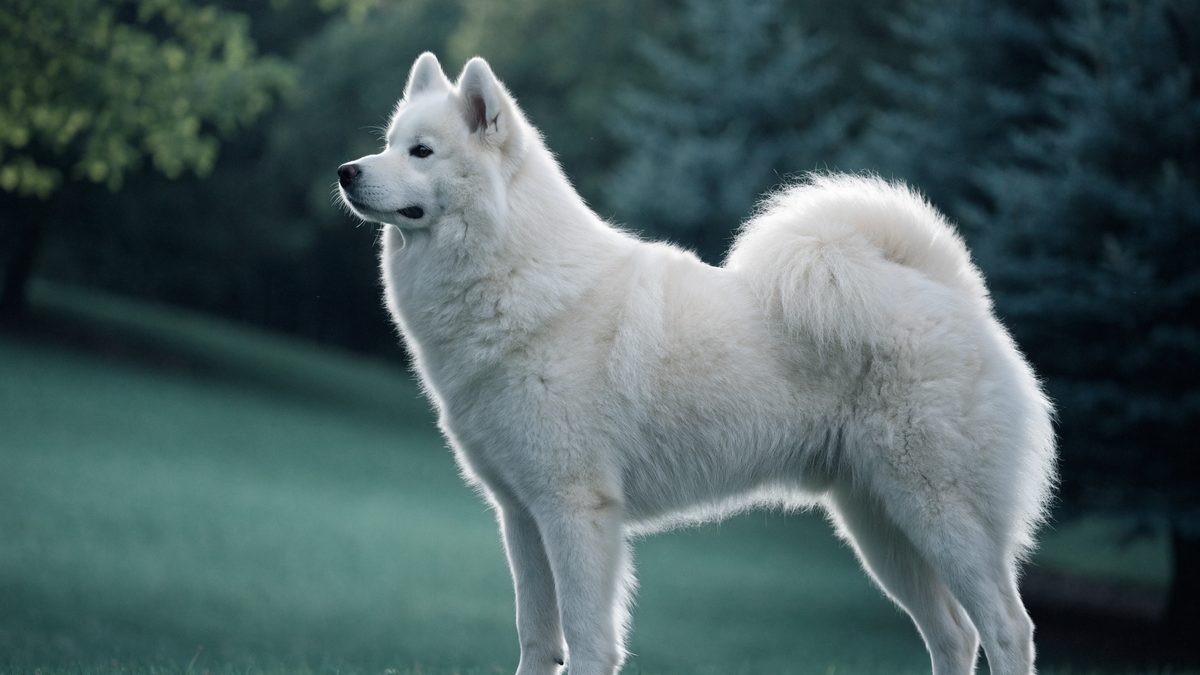
The Samoyed is a medium-sized white Arctic spitz bred by the Samoyede and Nentsy peoples of north-eastern Siberia to herd and guard reindeer, pull loads and hunt, and to sleep inside the shelter as a living heater. Every difficulty the breed presents in an Indian flat traces back to that job description. The coat that survived minus 50 C, the working energy, the near-total absence of guarding instinct and the shedding are not flaws. They are the specification.
Two registries define the breed and they broadly agree. Under the American Kennel Club standard, approved 10 August 1993, males stand 21 to 23.5 inches at the withers and females 19 to 21 inches. The AKC breed page adds the weights the standard itself omits, 45 to 65 pounds for males and 35 to 50 pounds for females, with a life expectancy of 12 to 14 years. The FCI standard, published 4 September 2019 and used across Europe and most of Asia, sets an ideal height of 57 cm for males and 53 cm for females with a tolerance of 3 cm either way, and classifies the breed in Group 5, Spitz and primitive types, Section 1, Nordic sledge dogs.
| Attribute | AKC standard | FCI standard No 212 |
|---|---|---|
| Height, males | 21 to 23.5 in (53 to 60 cm) | 57 cm ideal, tolerance 3 cm (54 to 60 cm) |
| Height, females | 19 to 21 in (48 to 53 cm) | 53 cm ideal, tolerance 3 cm (50 to 56 cm) |
| Weight | Not in the standard. AKC breed page gives 45 to 65 lb (M), 35 to 50 lb (F) | Not stated |
| Coat | Double, soft dense wool undercoat with harsh outer coat standing straight out | Profuse, thick, dense polar coat, double coated |
| Colour | Pure white, white and biscuit, cream or all biscuit. Any other colour disqualifies | Pure white, cream or white with biscuit. Never pale brown |
| Eyes | Dark for preference, almond shaped. Blue eyes disqualifying | Dark brown. Blue or odd eyes are an eliminating fault |
| Group | Working Group | Group 5 Spitz and primitive types, Section 1 Nordic sledge dogs |
| Guarding | Friendly but conservative, not distrustful or shy | Very social and cannot be used as guard dog |
Note what both standards say about eyes, because it has a rupee value in India. Blue eyes are a disqualification under the AKC standard and an eliminating fault under the FCI standard Federation Cynologique Internationale. A blue-eyed white fluffy puppy advertised in India as a premium Samoyed is either not a Samoyed or is a dog no judge in either system would place. That is the opposite of the story a seller will tell you about it.
The smile has a job
The Samoyed smile is a working feature, not a marketing one. The AKC standard requires lips that are slightly curved up at the corners of the mouth, which is what produces the expression. The AKC explains the function directly: the upturned corners keep the dog from drooling, which prevents icicles forming on the face in the cold. The FCI describes the same thing as a combination of eye shape, eye position and the slightly curved corners of the mouth. The dog is not expressing happiness at you. It is carrying an anti-freeze adaptation into a country where the problem was never ice.
Where the breed came from
The Samoyed originates in the Arctic regions of north-eastern Siberia, where the nomadic Samoyede and Nentsy tribes used the dogs to herd and guard reindeer, pull loads and hunt, and sometimes slaughtered them for pelts. The dogs lived inside the shelters with their owners and were used as heaters. Early dogs were sometimes parti-coloured, black and white or brown and white, and the all-white coat is a later selection.
The western breed traces to a small founder group. The British zoologist Ernest Kilburn Scott spent three months among the Samoyed tribes in 1889 and returned to England with a brown male puppy called Sabarka, later importing a cream bitch called Whitey Petchora and a snow-white male called Musti. Another founder, Antarctic Buck, was a survivor of Carsten Borchgrevink's polar expedition, found in Sydney Zoo and brought to the UK by Kilburn-Scott. The first breed standard was written in England in 1909. Samoyeds accompanied Roald Amundsen when he reached the South Pole in 1911, and the Samoyed Club of America has been the AKC parent club since 1923.
For scale on what the coat was built for, the AKC points at Oymyakon in Siberia, where temperatures of minus 60 degrees are common. Delhi in May is a swing of roughly 100 degrees Celsius from that. No amount of acclimatisation closes that gap; management does, and management costs money every month.
One of the two informational pages on page one for this query describes show-quality Samoyeds as having a "tiny size (under 2.5 kg)", says true "toy-sized" Samoyeds are rarer and more expensive, and recommends the breed to apartment households looking for "a small, loving companion" that needs 15 to 30 minutes of exercise. An adult male Samoyed weighs 45 to 65 lb, which is 20 to 29 kg. The claim is out by roughly a factor of ten. If a seller offers you a 2.5 kg adult Samoyed, you are being offered a different dog.
One more piece of framing before the money. The FCI standard states plainly that the Samoyed is very social and cannot be used as a guard dog. The AKC standard describes a disposition that is intelligent, gentle, loyal, adaptable, alert, eager to serve and friendly but conservative, with unprovoked aggressiveness severely penalised. If you are buying a large white dog for security in an Indian housing society, this breed will greet the intruder.
Samoyed price in India
The Samoyed price in India runs Rs 45,000 to Rs 6,00,000 across the published sources, and the single most useful fact about that range is that the sources disagree with each other by a factor of five. Four Indian pages give detailed price tiers. Their top tiers are Rs 1,20,000, Rs 1,60,000, Rs 2,50,000 and Rs 6,00,000 for what each calls the same dog.
Bonbeno read the price bands published by the Indian pages currently ranking for this query and put them side by side. The disagreement is not a rounding difference.
| Source | Headline range | Pet or basic quality | KCI registered | Show or champion | Imported bloodline |
|---|---|---|---|---|---|
| Supertails | Rs 60,000 to Rs 1,50,000 in its FAQ, Rs 80,000 to Rs 2,50,000 in its conclusion | Rs 45,000 to Rs 90,000 | Not tiered separately. Breeding quality Rs 80,000 to Rs 1,50,000 | Rs 1,20,000 to Rs 2,50,000 | Not priced |
| Mr n Mrs Pet | Rs 70,000 to Rs 1,60,000+ | Rs 70,000 to Rs 90,000 | Rs 90,000 to Rs 1,30,000 | Rs 1,30,000 to Rs 1,60,000+ | Not priced |
| Wrapinfur | Rs 80,000 to Rs 3,50,000+ | Rs 80,000 to Rs 1,30,000 | Rs 1,20,000 to Rs 2,00,000 | Rs 2,00,000 to Rs 3,50,000+ | Rs 3,50,000 to Rs 6,00,000+ |
| Premium Pet House | Rs 60,000 to Rs 1,30,000 in the text, Rs 60,000 to Rs 1,20,000 in its own spec table | Not tiered | Not tiered | Not tiered | Not priced |
| Pet India Online | Rs 60,000 to Rs 1,50,000+ | Not tiered | Not tiered | Not tiered | Not priced |
Read the extremes. The cheapest published pet-quality Samoyed, Rs 45,000, is barely half the cheapest published pet-quality Samoyed on another page, Rs 80,000 Wrapinfur, Samoyed Dog Price in India. At the top, one page stops at Rs 1,20,000 and another runs to Rs 6,00,000 and above Wrapinfur, Samoyed Dog Price in India. Two of the five sources also contradict themselves inside their own article, quoting one headline range in the body and a different one in the conclusion or the spec table Premium Pet House, Samoyed Price In India. Nobody is auditing any of this, and no Indian body publishes a Samoyed transaction dataset that could settle it.
City-wise price, and why the two published tables disagree
| City | Supertails | Premium Pet House |
|---|---|---|
| Mumbai | Rs 80,000 to Rs 1,50,000 | Rs 60,000 to Rs 1,00,000 |
| Delhi | Rs 80,000 to Rs 1,50,000 | Rs 65,000 to Rs 1,10,000 |
| Bengaluru | Rs 70,000 to Rs 1,20,000 | Rs 65,000 to Rs 1,20,000 |
| Hyderabad | Rs 70,000 to Rs 1,20,000 | Rs 60,000 to Rs 1,10,000 |
| Chennai | Rs 60,000 to Rs 1,00,000 | Rs 60,000 to Rs 1,10,000 |
| Kolkata | Rs 60,000 to Rs 1,00,000 | Rs 60,000 to Rs 1,10,000 |
| Pune | Rs 50,000 to Rs 90,000 | Rs 55,000 to Rs 1,10,000 |
The two tables agree on Bengaluru and disagree on Mumbai by Rs 20,000 at the floor and Rs 50,000 at the ceiling Premium Pet House, Samoyed Price In India. Neither publisher states a sample size, a collection date or a method. Treat both as one publisher's estimate rather than as a market survey, and treat any single number quoted to you as an anchor rather than as a price.
What the number is actually tracking
- Registration status. A Kennel Club of India registered puppy is quoted at Rs 90,000 to Rs 1,30,000 against Rs 70,000 to Rs 90,000 unregistered on one page, and Rs 1,20,000 to Rs 2,00,000 against Rs 80,000 to Rs 1,30,000 on another Wrapinfur, Samoyed Dog Price in India. KCI registration documents pedigree. It is not a health certificate, it does not mean the parents were screened, and no Indian registry requires the DNA tests this breed needs.
- Claimed import lineage. The single largest premium in the published tables is the imported-bloodline tier at Rs 3,50,000 to Rs 6,00,000+, quoted by one source and by nobody else. Ask for the export pedigree and the microchip number before you accept that a dog is imported.
- Coat and eye colour. One ranking page fields a question about the "blue Samoyed dog price in India" and answers correctly that there is no recognised blue Samoyed colour. Both breed standards go further and disqualify blue eyes outright Federation Cynologique Internationale. Any colour premium in this breed is aesthetic demand, because pure white, cream, white and biscuit and all biscuit are equally correct.
- Season. One source claims winter prices peak 15 to 25 percent above average and summer prices drop 10 to 20 percent below, with a further 10 to 15 percent festive uplift around Diwali and Christmas. No second source confirms the pattern, so treat it as one publisher's observation rather than a market rule.
- Who is publishing. Four of the five sources in the table above either sell puppies, broker them or run a pet commerce business. That is a commercial interest in the number, disclosed here because none of those pages discloses it itself.
The third organic result on the Indian SERP for this query on 15 August 2026 was a B2B marketplace listing offering a "Samoyed" at Rs 8,000 per piece with a minimum order quantity of five pieces. In India, breeding dogs without a certificate of registration from the State Animal Welfare Board is an offence, pups under eight weeks of age must not be sold, every pup sold must be microchipped with a complete record of treatment and vaccination, and pups must not be displayed in public places for immediate sale. A price far below the market, and a dog sold by the piece in bulk, means none of that happened.
The five documents to ask for before you pay
- The breeder's certificate of registration from the State Animal Welfare Board, valid for two years and non-transferable, which the rules require to be displayed.
- The puppy's microchip number, plus the microchip numbers of the sire and dam, which every registered breeder must record.
- Proof the puppy is at least eight weeks old, because selling below that age is prohibited.
- The parents' DNA test results for X-linked hereditary nephritis and XLPRA1, both of which are official Kennel Club DNA testing schemes for this breed.
- The parents' hip scores and an ophthalmologist evaluation, the two screening tests the AKC parent club recommends alongside a cardiac exam.
Bonbeno does not broker puppy sales and does not publish breeder listings. Every figure above is reported from a third party so you can see the disagreement for yourself and price it into your own decision.
Monthly cost of owning a Samoyed in India
Published Indian monthly cost estimates for a Samoyed run from Rs 4,000 to Rs 15,000 or more, a spread of nearly four times for the same dog. The gap is not mostly food. It is that three of the four published monthly tables contain no line at all for the largest India-specific expense this breed creates, which is cooling.
Four Indian pages publish a monthly cost structure for the breed. Laid out together, the differences are structural rather than local.
| Line item | Supertails | Mr n Mrs Pet | Wrapinfur | Pet India Online |
|---|---|---|---|---|
| Food | Rs 3,000 to Rs 8,000 | Rs 1,500 to Rs 3,000 | Rs 4,000 to Rs 7,000 | Rs 3,000 to Rs 6,000 |
| Grooming | Rs 2,000 to Rs 4,000 | Rs 1,000 to Rs 2,000 | Rs 1,000 to Rs 3,000 | Rs 2,000 to Rs 5,000 |
| Veterinary care, averaged | Rs 1,500 to Rs 3,000 | Rs 1,500 to Rs 2,500 per year | Rs 500 to Rs 2,000 | Rs 1,000 to Rs 3,000 |
| Cooling, air conditioning and electricity | Not a line item | Not a line item | Not a line item | Rs 2,000 to Rs 5,000 |
| Toys, treats and accessories | Rs 1,000 to Rs 2,000 | Rs 500 to Rs 1,000 | Rs 1,000 to Rs 3,000 | Not itemised |
| Stated monthly total | Rs 8,000 to Rs 15,000 | Rs 4,000 to Rs 8,000 | Rs 6,500 to Rs 15,000+ | Rs 8,000 to Rs 15,000+ |
Three things in that table should change how you read any Indian Samoyed budget. First, only one of the four sources counts cooling at all, and it is the source that wrote its whole guide around heat. Second, the lowest total, Rs 4,000 to Rs 8,000, comes from the same page that describes the Samoyed as a small apartment dog needing 15 to 30 minutes of exercise, so it is budgeting for an animal that does not exist. Third, one source puts veterinary care at Rs 1,500 to Rs 2,500 per year while the others quote similar numbers per month, which alone accounts for a large part of the gap.
A fifth source does not publish a monthly total but prices feeding alone at Rs 10,000 to Rs 15,000 a month for protein-rich food, which is higher than three of the four complete budgets above. Neither figure can be checked, because no Indian source states a sample size, a city or a collection date.
The first-year numbers most Indian guides leave out
- Grooming tools, Rs 5,000 to Rs 10,000 once. An undercoat rake at Rs 1,500 to Rs 3,000, a pin brush at Rs 800 to Rs 1,500, nail clippers at Rs 500 to Rs 1,000 and a forced-air dryer at Rs 3,000 to Rs 8,000. On a profuse double coat the dryer is the tool that actually matters in Indian humidity.
- Professional grooming, Rs 2,000 to Rs 4,500 a session, every six to eight weeks. A second Indian source quotes Rs 1,500 to Rs 3,000 a session.
- Full puppy vaccination course, Rs 3,000 to Rs 6,000, with annual boosters at Rs 1,500 to Rs 3,000 and flea and tick control at Rs 500 to Rs 1,000 a month. A second source puts first-year medication and vaccination at Rs 3,000 to Rs 4,000.
- Neutering, Rs 8,000 to Rs 20,000 on one source and Rs 8,000 to Rs 15,000 on another, depending on sex and city.
- Professional training, Rs 5,000 to Rs 15,000 for a six to eight week group programme, Rs 10,000 to Rs 25,000 for advanced obedience, or Rs 1,500 to Rs 3,000 per private session. An independent working breed in a first-time home usually needs it.
- Pet insurance, Rs 6,000 to Rs 25,000 a year depending on cover and deductible, with waiting periods of six to twelve months on some conditions. Read the waiting period before you assume a hereditary condition is covered.
- An emergency fund of Rs 50,000 to Rs 1,00,000 in year one. That is one publisher's recommendation and it is a sensible one for a breed with three expensive failure modes.
The most detailed Indian cost guide prices hip dysplasia treatment at Rs 25,000 to Rs 80,000 in one section and hip dysplasia surgery at Rs 80,000 to Rs 2,00,000 in another, roughly 900 words apart. Both numbers are presented as fact. Bonbeno prints both rather than averaging them, and notes that Indian orthopaedic surgery pricing varies by city and by whether the hospital is a corporate chain or an independent clinic.
The cost nobody in India has priced
No Indian page prices insulin. That matters more for this breed than for almost any other, because the Samoyed carries the highest odds of diabetes mellitus of any breed in the UK canine diabetes register, and the standard of care is twice-daily insulin injections for the rest of the dog's life, with the associated monitoring. That is a recurring cost with no end date, and it is missing from every published Indian Samoyed budget including the four in the table above. Bonbeno does not have a verified Indian rupee figure for it, so no number is invented here. Ask your own veterinarian what a year of insulin, syringes, glucose curves and fructosamine testing costs in your city, and add it to the budget as a real probability rather than a footnote.
When we publish cost figures we state the sample size, the cities covered and the collection date. Where published sources disagree, as they do here by nearly four times, we print all of them rather than averaging them into a number that no source supports. Where no reliable figure exists, as with insulin pricing in India, we say so instead of filling the gap.
Climate suitability: why heat tolerance is rated 1 of 5
Bonbeno rates the Samoyed 1 of 5 for heat tolerance, the lowest rating on this site, and the reason is mechanical rather than moral. The FCI standard describes a profuse, thick, dense polar coat on a dog whose ancestors worked where the AKC notes temperatures of minus 60 degrees are common. India routinely exceeds 45 C in the north and 90 percent humidity on the coast. Nothing about that pairing is neutral.
Start with the coat, because it is the whole argument. Both standards describe a double coat with a soft, short, dense wool undercoat and a longer, harsher outer coat that stands straight out from the body, forming a ruff around the neck and shoulders Federation Cynologique Internationale. That structure traps a layer of still air against the skin. In Siberia that is insulation. In Chennai in May it is a barrier between a hot dog and the only cooling mechanism it has, which is evaporation from the respiratory tract.
What the veterinary evidence actually says, and what it does not
Here is where Bonbeno differs from every page ranking for this query. No published epidemiological study identifies the Samoyed as a statistically significant heat-risk breed, because the Samoyed does not appear in the study at all. The largest primary-care analysis available searched the clinical records of 905,543 UK dogs under veterinary care in 2016 and confirmed 395 heat-related illness events. In the final multivariable model, nine breeds had significantly higher odds of heat-related illness than the Labrador Retriever: the Chow Chow, Bulldog, French Bulldog, Dogue de Bordeaux, Greyhound, Cavalier King Charles Spaniel, Pug, English Springer Spaniel and Golden Retriever. The Samoyed is named nowhere in that paper, neither in the risk table nor in the discussion.
That absence is not reassurance, and the authors say so themselves. Explaining why the Chow Chow topped their table, they write that it is "another breed with a very thick coat" and then add the sentence that generalises the finding: "Other double coated breeds may also have increased risk, however the current study was under-powered to fully explore these pre-dispositions due to low numbers of these breeds";. Bonbeno's Chow Chow page quotes that limitation from the other direction, because the Chow Chow is the breed the study did measure.
The Samoyed is missing from the UK heat-risk tables because there were not enough of them in the UK population to measure, not because they were measured and found safe. The mechanism the study identified, a very thick coat impeding heat dissipation, is the defining feature of this breed. Absence of evidence in a study that says it was under-powered is not evidence of absence. Any Indian page that tells you Samoyeds are proven safe in heat, and any page that tells you a specific Samoyed heat-risk multiplier, is inventing the number.
The stakes come from the same dataset. Across UK dogs under primary veterinary care, heat-related illness carried an event fatality rate of 14.18 percent (95 percent CI 11.08 to 17.96) against an overall incidence of 0.04 percent. That is a temperate-climate figure. India publishes no equivalent national veterinary dataset, which is worth stating plainly rather than filling with a guess. What the Indian sources do give you is a named risk category. Purina India lists dogs with heavy coats alongside short-faced breeds as being at particular risk of heat stroke, and an Indian veterinary guide groups double-coated breeds with dark or thick coats as retaining heat and absorbing more solar radiation.
The temperature thresholds that matter in India
| Ambient temperature | Risk level | What it means in practice |
|---|---|---|
| Below 28 C | Low | Normal activity with shade and water |
| 28 to 35 C | Moderate | Shorten walks to 15 to 20 minutes, early morning and late evening only |
| 35 to 42 C | High | Outdoor activity contraindicated. Asphalt reaches 60 C and above |
| Above 42 C | Extreme | Heat stroke possible within 10 to 15 minutes outdoors. Indoor temperatures without cooling can be fatal |
Humidity changes the arithmetic completely. A 35 C day at 90 percent humidity is more dangerous than a 42 C day at 20 percent humidity, because panting works by evaporation and humid air blocks it. A Samoyed in Chennai, Kolkata or coastal Kerala carries more thermal load than the thermometer suggests, and the monsoon does not deliver the relief owners expect. The one Indian source written specifically about this breed puts the practical ceiling lower still, saying Samoyeds cope badly in extreme heat above 35 C and recommending an indoor temperature of 20 to 25 C.
What actually reduces the risk
- Walk only before 7 am or after 8 pm from April to September, and keep the walk to 15 to 20 minutes even in those windows.
- Run air conditioning or fans continuously above 32 C indoors, because indoor temperature above 32 C is dangerous for a dog at rest.
- Keep a cooling mat, an elevated bed or a ceramic tile floor available, since many dogs seek cool surfaces instinctively.
- Do the 7-second pavement test. Hold the back of your hand on the pavement for seven seconds. If you cannot, asphalt at 60 C will burn paw pads within about 30 seconds.
- Never confine the dog to a balcony above 30 C, because concrete balconies are heat traps with no airflow and no shade.
- Plan for load shedding, which peaks exactly when cooling demand peaks. Keep a battery fan, frozen packs and a fallback location.
- Never leave the dog in a parked car. At an outside temperature of 26 C the interior reaches 32 C in five minutes and 43 C in 25 minutes.
A dog's normal body temperature is 100.5 to 102.5 F, and heatstroke is diagnosed when it cannot regulate and the temperature reaches 105 F or higher, which damages every organ if prolonged. Begin cooling immediately with cool but not cold water, wetting the belly and inside the legs so the water reaches skin, and get air moving across the wet coat while someone drives to a clinic. Do not use ice water or ice packs, which constrict skin blood vessels and trap heat in the core. Stop active cooling once the temperature returns to about 39.4 C so you do not overshoot into hypothermia. Dogs that survive one episode are at greater risk of another.
City by city
- Hill stations and the Himalayan belt. Shimla, Manali and Ooty are named by the one Indian breed-specific guide as the places where a Samoyed adapts most successfully. This is the only category where the climate argument genuinely relaxes.
- Bengaluru and Pune. Milder summers make continuous cooling cheaper, though April and May still need it. Both cities also have the best access to veterinary ophthalmology, which matters for a breed with a glaucoma risk.
- Delhi NCR, Jaipur, Ahmedabad, Lucknow. A genuinely cold winter and a brutal April to June that sits squarely in the 35 to 42 C band where outdoor activity is contraindicated.
- Mumbai, Chennai, Kolkata, coastal Kerala. No meaningful winter and monsoon humidity that blocks evaporative cooling even at moderate temperatures. Cooling infrastructure has to be installed before the dog arrives, not after.
One honest caveat on the rating itself. A 1 of 5 does not mean a Samoyed cannot live in India. It means the dog is carrying a permanent thermal handicap that you pay for with electricity, scheduling and vigilance every day from March to October, and that a single failure, one afternoon locked on a balcony or one power cut with nobody home, is the kind of failure that kills.
Temperament and household fit
The Samoyed suits a household with somebody home most of the day, a secure boundary and a tolerance for hair, and it suits almost nobody else. Both breed standards describe a friendly, open, social dog with no guarding instinct. What you live with is an intelligent, mischievous working animal that was bred to sleep pressed against people and that copes badly with being left out of the family.
Three temperament facts drive most rehoming decisions in this breed, and none of them is about aggression.
- It is not a guard dog, by definition. The FCI standard states the breed is very social and cannot be used as a guard dog. The AKC standard describes a disposition that is friendly but conservative, not distrustful or shy, with unprovoked aggressiveness severely penalised. Buyers who want protection have bought the wrong animal.
- It cannot be left alone. The AKC puts it bluntly: a Sammy sentenced to solitary confinement in the yard is a miserable and destructive creature, and these are smart, social, mischievous dogs who demand love and attention. The breed's whole history is of dogs sleeping inside the shelter with the family.
- It roams. The AKC warns that the breed has a strong urge to run away and roam, and that a loose Sammie might travel for miles, putting himself at risk. In an Indian city that means traffic, street-dog confrontations and heat exposure at the same time.
There is a genuine disagreement in the sources about prey drive that is worth flagging rather than smoothing over. The FCI standard says the hunting instinct is very slight. An Indian breeder page says the opposite, that Samoyeds were originally bred to hunt reindeer, that their prey instincts are sharp, and that the dog will chase smaller animals off lead. The AKC does not describe prey drive but does describe the roaming. The practical answer is the same in all three readings: keep the dog on lead outside a fenced boundary.
Apartment reality
The UK Kennel Club lists the ideal home for a Samoyed as a large house with a large garden, and places the breed in the country rather than town column. Two Indian pages say the opposite. One calls the breed "Apartment Friendly: Highly" and states that Samoyeds can live in any apartment. Another marks apartment living as suitable with daily exercise. Bonbeno sides with the kennel club that registers the breed, and rates apartment suitability 2 of 5.
Indian sources also disagree about how vocal the breed is. One says Samoyeds are not infamous for barking and will not bark for no reason. The most detailed Indian cost guide budgets Rs 15,000 to Rs 40,000 for behavioural modification for issues like excessive barking or pulling. In a shared Indian building, plan for the second scenario and be pleasantly surprised by the first.
- Good fit. A household with somebody home most of the day, a fenced boundary or a large terrace with shade, reliable backup cooling, and a hill-station or mild-climate location.
- Poor fit. First-time owners in a hot metro, flats empty ten hours a day, households buying a guard dog, and anybody in the family with a dog-hair allergy.
- Watch item. The breed is rated good with children by every source consulted, but an adult male at 45 to 65 lb is heavy enough to knock a small child over in play.
The Samoyed was developed to work and live in a close group, which is why it is generally sociable with other dogs and people and why isolation hits it hard. A Samoyed left alone all day in a hot flat is the exact animal that ends up on a rescue list, and that is a housing decision rather than a training one.
Training a Samoyed
Train a Samoyed with early structure, short reward-based sessions and no expectation of off-lead reliability, because this is an intelligent, biddable dog that was still selected to make its own decisions on a trail. The AKC's guidance is that Sammies need structure, that you teach them what is expected early, and that you practise it with them often.
The AKC standard credits the breed with intelligence, adaptability and an eager-to-serve disposition, and the AKC breed page adds that these are smart, social, mischievous dogs who need a firm but loving hand. Both are true at once. A Samoyed learns quickly and complies selectively, and the gap between those two things is where owners get frustrated.
Indian sources disagree sharply about how hard this is, which tells you something about who wrote them. One breeder page says a Samoyed needs no more than 15 to 20 repetitions to learn a new command and that you may not need a professional trainer at all. The most detailed Indian cost guide says professional training becomes essential for Samoyeds because of their independent nature and strong-willed personality, and budgets Rs 5,000 to Rs 15,000 for a six to eight week group programme. The same breeder page that calls them fast learners also has a section headed "Stubborn Pets";.
A realistic first-year training timeline
| Age | Priority | India-specific note |
|---|---|---|
| 8 to 12 weeks | Name response, crate as a cool resting place, handling for grooming, toilet routine | Start handling now. A dog that hates being brushed becomes an unmanageable adult in a coat this dense |
| 12 to 16 weeks | Socialise with people, vehicles, lift rides, building noise and other vaccinated dogs | Do it before 7 am. The socialisation window does not pause for summer |
| 4 to 6 months | Lead manners, settle on a mat, recall games on a long line | Indoor sessions in an air-conditioned room count as training and as exercise |
| 6 to 12 months | Alone-time training in small increments, impulse control at the door | Door-bolting plus 42 C outside is the worst combination this breed offers |
| 12 months on | Maintain recall on a long line, add scent work or trick chains for mental load | Mental work substitutes for the walks you cannot take from April to September |
The AKC states that the breed has a strong urge to run away and roam, and that a loose Samoyed might travel for miles. Treat a long line as permanent equipment rather than a training stage, microchip the dog as the Dog Breeding and Marketing Rules require of every sold pup, and keep a current photograph on your phone.
Two India-specific training constraints are worth planning around. First, the safe outdoor windows are narrow for eight months of the year, so most of your training happens indoors, which suits a breed that wants to be with you anyway. Second, a Samoyed in a hot room is a distracted Samoyed. Run the session in the coolest room in the house, keep it to ten minutes, and stop while the dog is still keen.
How much exercise a Samoyed actually needs
The UK Kennel Club puts the Samoyed at more than two hours of exercise per day, which is more than double what most Indian pages publish for the breed. That figure is the single biggest gap between what Indian buyers are told and what the registering kennel club says.
Compare the published numbers directly.
| Source | Stated daily exercise |
|---|---|
| The Kennel Club (UK) | More than 2 hours per day |
| Wrapinfur | 60 to 90 minutes daily |
| Premium Pet House | A 30-minute walk at least twice a day |
| Mr n Mrs Pet | Short walks plus indoor play, 15 to 30 minutes |
The Indian figures fall between one quarter and three quarters of the kennel club number, and the lowest of them belongs to the page that also believes this is a 2.5 kg toy breed The Kennel Club (UK), Samoyed. The AKC frames the same requirement differently, describing daily exercise plus play sessions with the owner in a safely fenced yard or long walks on lead, and noting that the breed enjoys taking part in family activities. This is a working sledge dog by FCI classification, not a lapdog with a big coat.
Fitting two hours into an Indian day
- Split it. One session before 7 am and one after 8 pm, because those are the only windows Indian veterinary guidance considers safe from April to September.
- Cap each outdoor block at 15 to 20 minutes when it is 28 to 35 C, and drop outdoor activity entirely above 35 C.
- Replace the missing hour indoors. Puzzle feeders, scent games, trick chains and short obedience sets carry real load, and the AKC notes the breed needs the mental engagement as much as the physical.
- Use water where you can. A shallow paddling pool of cool water lets the dog work and cool at the same time.
- Never exercise vigorously in the heat. Purina India warns a dog can develop heat stroke in as little as 30 minutes of vigorous exercise in hot weather.
An under-exercised Samoyed does not sulk quietly. The AKC describes the isolated, unoccupied dog as miserable and destructive, and the most detailed Indian cost guide budgets Rs 15,000 to Rs 40,000 for behavioural modification of problems like excessive barking and pulling. Digging, door-scratching, shredded furniture and vocalising at 2 am are the usual Indian apartment symptoms, and they are exercise problems before they are training problems.
One consequence of the heat that no Indian page draws out. If your dog gets two hours in December and forty minutes in May, its calorie need drops with the activity, and a Samoyed that keeps eating a December portion through the summer arrives at October carrying weight. That matters for a breed with the diabetes profile described below, and it is why the feeding section below is built around body condition rather than a fixed cup count.
Grooming a Samoyed in Indian humidity
Groom a Samoyed every day, and never shave it. The UK Kennel Club lists grooming frequency for this breed as every day, which is the most demanding rating it gives, and the AKC describes a profuse double coat that sheds quite a bit all the time and far more during the coat blow that comes once or twice a year.
Indian sources disagree about brushing frequency by a factor of three, and the disagreement matters because under-brushing in a humid climate is not a cosmetic problem.
| Source | Recommended brushing |
|---|---|
| The Kennel Club (UK) | Every day |
| American Kennel Club | Daily brushing |
| Premium Pet House | Preferably every day |
| Pet India Online | 4 to 5 times a week |
| Wrapinfur | 3 to 4 times a week |
Take the daily figure. In Indian humidity, dead undercoat that stays in the coat holds moisture against the skin, and moisture against skin is how hot spots and fungal infection start. One Indian breeder page warns explicitly against letting a Samoyed air-dry after a bath because of fungal growth in the armpits and between the paws, and ear infections. That is why the forced-air dryer at Rs 3,000 to Rs 8,000 is the tool that earns its money in this breed, not the brush.
The coat blow, and what it costs
The Samoyed sheds year-round and then does it properly once or twice a year in the coat blow, when the undercoat comes out in sheets. Indian owners get no seasonal predictability from this, because the shedding trigger is daylight and temperature, and an air-conditioned home in Chennai gives a dog a very different signal from a Shimla winter. Plan for two heavy weeks at unpredictable times, budget an extra professional grooming session, and expect the vacuum to become a daily appliance. One Indian page puts it plainly, saying Samoyed owners keep a vacuum on hand and that the breed is not hypoallergenic in any sense.
Dr. Jerry Klein, Chief Veterinary Officer at the AKC, states that a dog's coat acts as an insulator, and that shaving it to reduce shedding or to keep the dog cool eliminates that insulating layer, makes the dog susceptible to heat stroke, and can result in improper hair growth and follicle damage, while the coat itself protects against sunburn and reduces skin cancer risk. Shaving a double coat down to skin also lets the faster-growing undercoat crowd out the guard hairs, permanently changing coat texture and colour. Indian veterinary guidance says the same, that you never shave double-coated breeds and that regular brushing to remove dead undercoat is the correct summer intervention. The AKC breed standard also treats trimming as a fault, permitting it only on the whiskers and the hair between the toes.
The working routine
- Line-brush daily with a pin brush, working in sections down to the skin rather than skimming the top coat.
- Rake the undercoat out weekly, and daily through a coat blow, so air can reach the skin.
- Bathe every six to eight weeks, and dry the dog completely with a forced-air dryer rather than letting it air-dry.
- Trim nails every three to four weeks, or as needed.
- Clean the ears at every bath, which matters more in monsoon humidity than in a dry climate.
- Book professional grooming every six to eight weeks at Rs 2,000 to Rs 4,500 a session, or Rs 1,500 to Rs 3,000 on a second published estimate.
One correction to a claim you will meet everywhere. Several sources repeat that the Samoyed is self-cleaning or a "Teflon dog" whose stand-off coat sheds dirt easily. The breed's own AKC parent club calls this out directly: "Too many new owners are being sold on Samoyeds being 'easy' to keep clean, they never get dirty, never shed, never have odor and need never be bathed! This is misrepresentation of the breed";. The same page adds that Samoyeds shed as much as a bushel in two combings, and that a wet, soiled Sammy smells like a filthy wet wool blanket. The dry-snow physics behind the Teflon reputation do not transfer to Indian monsoon mud.
Two pieces of parent-club grooming advice matter more in India than they do in the United States. First, trim the hair beneath the pads level with the pads, because long hair there makes the dog slip and walk on the heel pad rather than the toe pads. On Indian marble and tile flooring that is a real injury risk in a 25 kg dog. Second, the sun burns the harsh outer coat and turns it a soiled brown, especially over the back, so the club's instruction is to make sure the dog has ample shade at all times and never to place him where shade is unavailable. In an Indian summer that is a health instruction as much as a cosmetic one.
Samoyed health problems, screening and lifespan
Two inherited conditions define Samoyed health and neither is properly covered on any Indian page. The breed carries the highest odds of diabetes mellitus recorded for any breed in the UK canine diabetes register, and it carries an X-linked kidney disease that kills affected males at about 15 months of age and for which a DNA test exists. Hip dysplasia, eye disease and glaucoma sit behind those two.
Start with what the screening databases actually show. The Orthopedic Foundation for Animals publishes all-breed statistics for the tests owners and breeders submit, and the Samoyed appears in fourteen of those tables.
| Test | Evaluations | Result |
|---|---|---|
| Hips | 20,356 | 87.8 percent normal, 11.1 percent dysplastic (6.2 mild, 4.2 moderate, 0.7 severe) |
| Elbows | 3,086 | 97.1 percent normal, 2.8 percent abnormal |
| Eyes | 14,301 | 95.1 percent normal, 4.8 percent abnormal |
| Hereditary nephritis, DNA | 364 | 100.0 percent normal, no carriers and no affected recorded |
| Progressive retinal atrophy, DNA | 2,056 | 100.0 percent normal |
| Retinal dysplasia / OSD, DNA | 1,837 | 99.2 percent normal, 0.8 percent carrier |
| Patella | 208 | 99.0 percent normal, 1.0 percent abnormal |
| Congenital cardiac | 1,547 | 99.5 percent normal, 0.3 percent abnormal |
| Advanced cardiac | 1,044 | 97.2 percent normal, 1.3 percent abnormal |
| Thyroid | 386 | 87.0 percent normal, 12.2 percent equivocal |
Two cautions on reading that table. It records only dogs whose owners chose to test and chose to publish, which biases it toward responsibly bred lines, and none of the dogs in it are Indian. Use it to rank risks and to know which tests exist, not as a prevalence estimate for the puppy in front of you.
Diabetes mellitus: the finding no Indian page reports
The Samoyed had the highest odds of diabetes mellitus of any breed in an analysis of 1,072 dogs in the UK Canine Diabetes Register Archive, compared against the non-diabetic VetCompass population. In the adult-onset non-dioestrus group, the odds ratio against crossbreeds was 23.5 (95 percent CI 14.2 to 39.0), ahead of the Tibetan Terrier at 11.1 and the Dachshund at 10.9. In the entire-female group the Samoyed odds ratio was 118.7 (95 percent CI 45.8 to 307.5), which the authors themselves say must be treated with caution because the control group mixed sexes and neuter statuses. Ninety-nine breeds were represented in that study and twenty-five had five or more cases.
| Breed | Odds ratio | 95 percent CI |
|---|---|---|
| Samoyed | 23.5 | 14.2 to 39.0 |
| Tibetan Terrier | 11.1 | 7.33 to 16.7 |
| Dachshund | 10.9 | 6.5 to 18.1 |
| Cairn Terrier | 8.3 | 5.69 to 12.2 |
| Labrador Retriever | 1.14 | 0.89 to 1.5 |
| Husky | 0.89 | 0.4 to 2.0 |
Compare that with what the ranking Indian pages tell you. One lists diabetes mellitus among five conditions with the description "Some Samoyeds have a higher risk of developing diabetes" and no figure. Another describes the disease accurately in general terms without saying the breed is the most over-represented one measured. The rest omit it. A buyer reading those pages has no way to know that the single most distinctive health fact about this breed is metabolic rather than orthopaedic.
Canine diabetes is managed, not cured, with twice-daily insulin for the rest of the dog's life plus glucose monitoring. Three things follow. Keep the dog lean, because obesity worsens insulin resistance and a WSAVA body condition score of 5 of 9 is the target. Spaying reduces the dioestrus-driven form of the disease, and the entire-female odds in this breed are the highest reported. And read your pet insurance waiting period before you need it, because Indian policies quoted at Rs 6,000 to Rs 25,000 a year carry six to twelve month waiting periods on some conditions.
X-linked hereditary nephritis: the test to ask for by name
Hereditary nephritis in Samoyeds is a progressive kidney disease that is X-linked, so it is passed from mothers to sons, and affected males typically die by 15 months of age. The mechanism is known precisely. A change in one DNA base pair in the COL4A5 gene reduces the amount of type IV collagen made in the kidney by about 90 percent, so the glomerular basement membrane forms abnormally. It is the same gene involved in Alport syndrome in humans, and the canine disease was first described in a family of Canadian Samoyeds in 1977. Carrier females also lose weight and develop proteinuria, but progress much more slowly and reach renal failure later in life.
The signs start early in affected male puppies: excessive drinking and urination, vomiting, poor appetite, weight loss, lethargy, protein in the urine, blood in the urine, anaemia and then renal failure. There is no curative treatment. Special low-protein, low-salt, low-phosphorus diets and blood-pressure medication are palliative. The best-documented intervention is an ACE inhibitor, and the trial that established it is worth quoting precisely, because it shows the ceiling rather than a cure: treated affected Samoyeds survived 1.36 times longer than affected untreated dogs, with a significant delay in the rise of serum creatinine and a significantly slower rate of increase in proteinuria. Multiplying a fifteen-month life by 1.36 gets you to about twenty months.
The important part for an Indian buyer is that this is preventable at the point of purchase. A DNA test exists, and since January 2023 it has been an official Kennel Club DNA testing scheme for Samoyeds alongside the test for X-linked progressive retinal atrophy 1. The Kennel Club records tested dogs as clear, single affected or double affected, and its published breeding advice explains that a single affected male passes the faulty gene to all his female puppies and none of his male puppies, while a single affected female has a 50 percent chance of passing it to each puppy. The UK Kennel Club lists both DNA tests under Best Practice for the breed, along with hip, elbow and eye screening.
The AKC's recommended health tests from the national breed club are a hip evaluation, a cardiac exam, an ophthalmologist evaluation, a DNA test for retinal dysplasia / oculoskeletal dysplasia 2, and a DNA test for X-linked progressive retinal atrophy 1. That list does not include the hereditary nephritis DNA test. The UK Kennel Club's Best Practice list for the breed does include it. Bonbeno prints both rather than picking one, and notes that only 364 Samoyeds appear in the OFA hereditary nephritis database against 20,356 in the hip database, which tells you how rarely this particular test is submitted. Ask for it anyway. It is a single test that rules out a disease that kills a male puppy inside two years.
Eyes: three separate problems
- X-linked progressive retinal atrophy 1. The photoreceptors break down, vision worsens gradually and can end in total blindness. Because the gene sits on the X chromosome, males are either clear or affected while females can be carriers, and an affected male passes the faulty gene to every daughter. A DNA test is available and is an official Kennel Club scheme test.
- Retinal dysplasia with oculoskeletal dysplasia 2. This is an autosomal recessive collagen disorder producing short-limbed dwarfism together with vitreous dysplasia, retinal detachment and cataracts. The Samoyed mutation is a 1,267 base-pair deletion in COL9A2 on canine chromosome 15, and it is a different locus from the Labrador form. The deletion removes part of the 5' untranslated region, all of exon 1 and part of intron 1, which likely destroys the messenger RNA and leaves no COL9A2 protein at all. Signs can appear as early as 4 to 6 weeks of age, and the forelimbs are most affected, with a short radius and ulna that develop curvature. Carriers can show retinal folds or plaques of dysplastic retina while having a normal skeleton. OMIA states the point that settles the argument for Indian buyers: dogs cannot be reliably identified by clinical signs alone, so a suspected dog should be DNA tested.
- Glaucoma. Current estimates of prevalence in Samoyeds range from 1 to 3 percent, most often diagnosed between 5 and 8 years of age. The form that matters in this breed is closed-angle, so routine pressure checks will not catch it in advance, and gonioscopy is the test used in Europe, where it is required before breeding Samoyeds.
When intraocular pressure rises rapidly there is severe pain, and toxic chemicals build to a level that begins destroying the retinal nerve within four hours. It most often begins at dusk, which is why it is called the five o'clock emergency. The dog will shy away from a hand near the eye, the third eyelid closes and the eye looks bloodshot. Untreated, the median time from the first eye to the second is 8 months, extended to about 3.5 years with medication. Veterinary ophthalmologists exist in only a handful of Indian metros. If you are buying this breed, find the nearest one and save the number before you need it.
Hips: the Samoyed is not the Husky
Indian pages treat white Arctic breeds as interchangeable, and on hips they are not. 11.1 percent of 20,356 OFA-evaluated Samoyeds were dysplastic, against 2.3 percent of 22,662 Siberian Huskies. That is nearly five times the rate in a breed of similar size and similar looks. The Samoyed sits close to the Labrador Retriever at 11.3 percent and the Alaskan Malamute at 11.7 percent, and well below the Golden Retriever at 19.3 percent and the Chow Chow at 21.6 percent. Every Indian source lists hip dysplasia as a Samoyed problem, and on this one they are right Premium Pet House, Samoyed Price In India.
Two practical notes on how hip screening works, because Indian sellers rarely explain it. The UK scheme scores each hip on nine parameters, from 0 to 53 per hip and 0 to 106 for the pair, with a lower score being better, and it recommends breeding only from dogs at or below the published breed median. The dog must be at least one year old and permanently identified by a microchip before it can be submitted, and the X-rays are taken under anaesthesia or heavy sedation. That is why a puppy cannot have a hip score and why the number you should be asking for belongs to the parents, not the puppy in the photograph.
Lifespan
The AKC gives a life expectancy of 12 to 14 years for the breed, and the UK Kennel Club records it simply as over 10 years The Kennel Club (UK), Samoyed. No Indian lifespan data exists for this or any other imported breed, because India publishes no national companion-animal mortality dataset. The largest UK longevity study covers 584,734 dogs including 284,734 deceased, and the Samoyed appears in neither its list of breeds most at risk of early death nor its list of those least at risk. It does have its own row in that study's Supplementary Table S3, which gives a median survival of 13.1 years, 95 per cent CI 12.7 to 13.5, from 336 recorded deaths, at a hazard ratio of 0.75 (0.67 to 0.84) against the crossbred group. That is a full year above the crossbred median and the longest of the four northern spitz breeds in the table, against the Siberian Husky's 11.9, the Akita's 11.4 and the Alaskan Malamute's 11.3. The AKC's 12 to 14 years sits either side of it. An earlier version of this page published no measured figure, because the at-risk lists in the article body are not the study and the per-breed rows are published only in the supplementary tables.
The screening checklist to hand a breeder
- DNA test for X-linked hereditary nephritis on the dam, with the certificate carrying the dog's microchip number.
- DNA test for XLPRA1 on the dam, for the same reason.
- DNA test for retinal dysplasia / OSD2 on both parents, because the condition is autosomal recessive and two carriers can produce affected pups.
- Hip evaluation on both parents, which is the one orthopaedic screen this breed genuinely needs.
- Ophthalmologist evaluation and a cardiac exam on both parents, as the AKC parent club recommends.
- A written record of the parents' age and any history of diabetes in the line, given the odds this breed carries.
If a seller cannot produce those documents, the correct conclusion is not that the dog is unhealthy. It is that nobody has checked, and that you are paying a purebred price for an unscreened animal.
Feeding a Samoyed in India
Feed a Samoyed to body condition rather than to a fixed cup count, and keep it at the lean end of normal for its whole life. The WSAVA body condition scale runs 1 to 9 and defines the ideal at 5, where the ribs are palpable without excess fat covering, a waist is visible from above and the abdomen tucks up when viewed from the side. For a breed with this diabetes profile, that target is not cosmetic.
The AKC's guidance is deliberately unspecific and it is right to be. Feed a high-quality food appropriate to the dog's life stage, watch calorie intake and weight because some dogs get overweight, remember that too many training treats cause obesity, and keep clean fresh water available at all times. That is the whole of what a breed page can honestly say without knowing your dog.
What the Indian sources publish, and where one of them fails badly
| Source | Monthly food cost |
|---|---|
| Premium Pet House | Rs 10,000 to Rs 15,000 |
| Supertails | Rs 3,000 to Rs 8,000 |
| Wrapinfur | Rs 4,000 to Rs 7,000 |
| Pet India Online | Rs 3,000 to Rs 6,000 |
| Mr n Mrs Pet | Rs 1,500 to Rs 3,000 |
The top figure is nearly seven times the bottom one for the same breed in the same country Mr n Mrs Pet, Samoyed Price in India. A useful sanity check comes from the one source that gives a unit price: a 15 kg bag of premium food costs about Rs 6,000 to Rs 12,000 and lasts roughly six to eight weeks for an adult Samoyed, with Indian brands available at Rs 2,000 to Rs 4,000 for similar quantities. That arithmetic supports the middle of the table, not either end.
One Indian breeder page states that an eight-week-old Samoyed puppy weighing 4.5 kg "will need around 14 to 20 kilos of food every week". That is more than three times the puppy's own body weight per day. The same page also publishes a macronutrient split of 30 percent protein, 50 percent carbohydrate and 20 percent fat and a daily requirement of 1,500 to 2,500 calories for an adult, with no source for either. Do not feed from that page. Feed the quantity printed on your food's own label for your dog's weight and life stage, then adjust against body condition every two weeks.
Meal frequency by life stage
| Age | Wrapinfur | Premium Pet House |
|---|---|---|
| 2 to 6 months | 3 to 4 meals a day | 3 to 4 meals a day from 8 weeks |
| 6 to 12 months | 2 to 3 meals a day | 2 to 3 meals a day |
| Adult | 2 meals a day | 2 meals a day |
On frequency the sources agree, which is worth saying because they agree on very little else. Split the daily ration into two meals for an adult and feed both inside the cool part of the day.
Four India-specific feeding adjustments
- Cut the ration when the walks shorten. A Samoyed getting more than two hours a day in December and forty minutes a day in May is burning very different amounts of energy, and the food should follow.
- Weigh the food and score the body every two weeks. Aim for a body condition score of 5 of 9, where the ribs are palpable without excess fat and the waist is visible from above.
- Store kibble in a sealed container away from monsoon humidity. A 15 kg bag open for six to eight weeks in coastal India is a fat-rancidity and mould problem, not just a freshness one.
- Set out multiple water stations and refresh them two to three times a day, because water temperature rises fast in Indian heat and dehydration sharply increases heatstroke risk.
Excessive drinking and excessive urination are the first signs of both diabetes mellitus and hereditary nephritis in this breed. In an Indian April every dog drinks more, so the single most important early warning a Samoyed gives you is the one most likely to be dismissed as "it is just the heat". Track water intake in litres per day rather than by impression, note the baseline in a cool month, and take a sustained rise of more than about a third to a veterinarian for a urine test rather than waiting for weight loss.
Samoyed puppy timeline, month by month
A Samoyed puppy in India needs three things on a schedule: vaccination, socialisation inside the safe temperature windows, and early handling for a coat that will take daily work for the next twelve years. The legal floor is eight weeks, because the Dog Breeding and Marketing Rules prohibit the sale of pups younger than that.
| Age | What happens | What you do |
|---|---|---|
| Before collection | The breeder must be registered, the pup microchipped and the vaccination record complete | Collect the parents' DNA and screening certificates. Never accept delivery by road or air in summer |
| 8 to 10 weeks | Legal minimum sale age. Puppy vaccination course begins | Set up the cool room before the pup arrives. Start two-minute brushing sessions on day one |
| 10 to 16 weeks | Vaccination course completes at a published Rs 3,000 to Rs 6,000 | Socialise hard, before 7 am and after 8 pm only |
| 4 to 6 months | Adult coat starts coming through under the puppy coat | Move to daily line-brushing. Introduce the forced-air dryer at low speed |
| 6 months | Meals drop to two or three a day. Sale of an unsterilised dog over six months is restricted | Discuss neutering timing, at a published Rs 8,000 to Rs 20,000 |
| 6 to 12 months | Energy and roaming urge climb sharply | Build to the kennel club's more than two hours a day, split across two cool windows |
| 12 months | Two meals a day. First full coat blow may arrive at any point | Book the extra grooming session. Score body condition monthly |
| 12 to 24 months | Skeletal maturity. Hip screening becomes meaningful | If you intend to breed, hip and eye screening plus the DNA panel |
The first summer is the dangerous one
A puppy under six months has immature thermoregulation and is listed as an elevated-risk group in Indian veterinary heat guidance. If your puppy's first April to June falls inside its first year, treat cooling as non-negotiable infrastructure rather than a comfort. Indoor temperature above 32 C is dangerous for a dog at rest, and a puppy has less reserve than an adult.
Several Indian sellers offer delivery by air, road or rail to any city. An eight-week-old double-coated Arctic puppy moved across India in a vehicle in May is being exposed to exactly the conditions its coat is least able to handle, and a car interior reaches 43 C within 25 minutes of a 26 C ambient. Collect the puppy yourself, in the early morning, or do not buy it.
One structural point about the timeline. The window in which you can still cheaply prevent this breed's worst outcomes closes before you take the puppy home. Hereditary nephritis, XLPRA1 and RD/OSD2 are all decided at conception and all testable in the parents Goldstein O, Guyon R. Everything after week eight is management.
Samoyed compared with the breeds Indian buyers cross-shop
Indian buyers who search for a Samoyed usually search for a Siberian Husky in the same session, and often end up looking at a Golden Retriever or a Chow Chow. On the two things that separate these breeds in India, heat evidence and inherited disease, they are not close substitutes.
| Breed | OFA hips, percent dysplastic | Named in the UK heat-risk model? | Diabetes odds vs crossbreeds |
|---|---|---|---|
| Samoyed | 11.1 percent of 20,356 | No, absent from the paper | 23.5, the highest measured |
| Siberian Husky | 2.3 percent of 22,662 | No, absent from the paper | 0.89, near neutral |
| Labrador Retriever | 11.3 percent of 324,584 | Yes, used as the reference breed | 1.14, near neutral |
| Golden Retriever | 19.3 percent of 192,822 | Yes, odds 2.67 against the Labrador | Not among the highest-odds breeds |
| Chow Chow | 21.6 percent of 6,462 | Yes, the highest-risk breed in the study | Not among the highest-odds breeds |
Three conclusions fall out of that table and none of them appears on an Indian page. The Samoyed's hip dysplasia rate is nearly five times the Siberian Husky's, so the two white Arctic breeds are not interchangeable on orthopaedics. Neither the Samoyed nor the Husky appears in the published heat-risk tables, and both are absent for the same reason the authors give, that the study was under-powered for double-coated breeds. And on diabetes the Samoyed is in a category of its own, at 23.5 times crossbreed odds while the Husky sits at 0.89.
The three white breeds sold as Samoyeds in India
A fluffy white spitz-type dog in an Indian listing is not necessarily a Samoyed. One of the ranking pages notes in passing that the breed is often confused with the American Eskimo Dog, and the UK Kennel Club records that the Samoyed and the White German Spitz are thought to have influenced the founding of the Japanese Spitz in the early twentieth century. The three look alike in a photograph and are nothing alike as a commitment.
| Breed | Size | Published exercise need | Ideal home |
|---|---|---|---|
| Samoyed American Kennel Club | Medium. Males 21 to 23.5 in, 45 to 65 lb | More than 2 hours per day | Large house, large garden, country |
| Japanese Spitz | Small | Up to 1 hour per day | Small house, small or medium garden, town or country |
| American Eskimo Dog | Toy 9 to 12 in and 6 to 10 lb, miniature 12 to 15 in and 10 to 20 lb, standard 15 to 19 in and 25 to 35 lb | Not published as a single figure | Not published as a single figure |
Use that table as a fraud check. A seller offering a "toy Samoyed" or a "mini Samoyed" is describing something that does not exist in either breed standard, and is most likely describing an American Eskimo Dog, a Japanese Spitz, an Indian Spitz or a cross. Both Samoyed standards define a single medium size with no toy variety Federation Cynologique Internationale.
The one Indian page written specifically about Samoyeds in heat names its own alternatives for buyers who want a fluffy dog with lower maintenance: the Indian Pariah Dog, the Labrador Retriever and Indian spitz-type breeds. Bonbeno agrees with the first of those without reservation. An Indian native dog is heat-adapted by several thousand years of selection, is free to adopt from most shelters, and carries none of the inherited conditions described above.
What Indian Samoyed owners actually get wrong
Nine mistakes account for most of the trouble Indian Samoyed owners run into, and seven of them are decisions made before the dog arrives. They cluster around one root cause, which is buying the smiling face in the photograph rather than the working animal underneath it.
- Buying the expression rather than the dog. The smiling mouth is an anti-drool adaptation for a face that would otherwise grow icicles, not a mood. Underneath it is an energetic Nordic sledge dog that the FCI classifies alongside the working spitz breeds and that the UK Kennel Club puts at more than two hours of exercise a day The Kennel Club (UK), Samoyed.
- Believing the small-apartment claim. Two Indian pages describe the Samoyed as apartment-friendly, one of them calling it "Highly" so Wrapinfur, Samoyed Dog Price in India. The kennel club that registers the breed lists the ideal home as a large house with a large garden in the country. Believe the registry.
- Shaving the coat in April. Shaving a double coat removes the insulating layer, makes the dog susceptible to heat stroke, exposes skin to sunburn and can cause follicle damage and patchy regrowth. Rake the dead undercoat out instead, which is the intervention that actually gets air to the skin.
- Dismissing heavy drinking as "just the heat";. Excessive drinking and urination are the earliest signs of both hereditary nephritis and diabetes in this breed. In an Indian summer that signal is easy to explain away, and this is the breed where you least can afford to.
- Treating KCI registration as a health guarantee. Registration documents pedigree. It does not certify that either parent was screened, and no Indian registry requires the DNA tests that matter here.
- Paying a premium for blue eyes. Blue eyes are a disqualification under the AKC standard and an eliminating fault under the FCI standard. A blue-eyed white puppy sold at a premium as a Samoyed is a red flag about the dog's parentage, not a rarity.
- Air-drying the dog after a bath. In Indian humidity that risks fungal growth in the armpits and between the paws, and ear infections. Dry the dog fully with a forced-air dryer, which is why that Rs 3,000 to Rs 8,000 tool is on the essential list rather than the nice-to-have list.
- Parking the dog on the balcony during the day. Concrete balconies are heat traps with no airflow and no shade, and Indian veterinary guidance says never to confine a pet to one above 30 C.
- Budgeting without cooling. Three of the four published Indian monthly budgets for this breed contain no line for air conditioning or electricity at all Wrapinfur, Samoyed Dog Price in India. That is the largest India-specific cost the breed creates, and the one budget that does count it puts it at Rs 2,000 to Rs 5,000 a month.
If your Samoyed collapses, pants frantically, drools ropey saliva or shows bright red gums on a hot day, do not drive first and cool later. Cool the dog immediately with cool but not cold water on the belly and inside the legs, get air moving across the wet coat, and keep cooling while somebody else drives. Do not use ice water or ice packs, which constrict the skin's blood vessels and trap heat in the core. Every heat-related illness case needs veterinary examination even if the dog looks recovered, because organ damage can appear 12 to 72 hours later, and survivors carry a higher risk of a second episode.
One mistake is a reading error rather than a care error, and it is worth naming because it runs through the whole Indian corpus on this breed. Pages assert either that the Samoyed is extremely heat-vulnerable or that its coat insulates it against heat too, and neither claim carries a citation. The honest position is narrower and more useful. The largest study of heat-related illness in dogs did not include enough Samoyeds to measure them, and its authors say so. You are managing a well-understood mechanism without a breed-specific number, which is a reason for more caution rather than less.
Adopting a Samoyed in India, and how to verify a breeder
Adopt before you buy, and if you buy, verify the breeder against the law rather than against their website. India publishes no breed-wise shelter data, so nobody can tell you how many Samoyeds are in Indian rescue. What is documented is the legal standard every Indian breeder must meet, and it gives you a checklist that most sellers will fail.
The adoption route
Three routes exist for taking on a Samoyed without buying a puppy. Breed-specific rescue is the first, and the AKC parent club for the breed, the Samoyed Club of America, maintains rescue group listings. The UK Kennel Club's equivalent is its Find a Club service, which reaches breed clubs and rescue contacts. The third route is the least discussed and the most common in India: adult Samoyeds rehomed privately by owners who bought into a summer and could not fund it. Watch local rescue groups and city pet-parent networks between April and June, which is when those listings appear.
Bonbeno will not publish a figure for how many Samoyeds are surrendered in India each year, because no such figure exists. India has no national companion-animal register and no breed-wise shelter dataset, and any page quoting a number for this is guessing. Saying that plainly is more useful than filling the gap.
Taking on an adult Samoyed: the five checks
- A urine test and a blood glucose reading, before anything else. This is the breed with the highest recorded odds of diabetes mellitus, and proteinuria is the marker for hereditary nephritis in carrier females.
- An ophthalmologist examination, because glaucoma in this breed is usually diagnosed between five and eight years of age and is closed-angle, so it gives little warning.
- A body condition score. Aim for 5 of 9, with ribs palpable without excess fat and a visible waist from above. Many rehomed Samoyeds arrive over-conditioned because their exercise collapsed before their food did.
- A skin and coat check under the undercoat, not on top of it. Matted, undried coat in a humid Indian climate hides hot spots and fungal infection.
- A hip assessment if the dog is over two years old, given an 11.1 percent dysplastic rate in OFA-evaluated Samoyeds.
If you buy, this is the legal standard
The Prevention of Cruelty to Animals (Dog Breeding and Marketing) Rules, 2017, notified on 23 May 2017, set out what a legitimate Indian breeder must do. Use it as a verification checklist rather than as background reading.
- Registration. Every breeder must hold a certificate of registration from the State Animal Welfare Board. It is valid for two years, is non-transferable, and must be displayed prominently.
- Inspection. A registered breeder's establishment must be inspected at least once each year, with a written report to the State Board.
- Minimum age. Pups under eight weeks of age must not be sold.
- Microchip and records. Every pup sold must be microchipped, with a complete record of treatment and vaccination, and the breeder must record the microchip numbers of the sire and dam.
- No public display. Pups must not be displayed in public places for the purpose of immediate sale.
- Paperwork on handover. A receipt must be provided to each purchaser and retained with the microchip number, and the breeder must furnish written feeding details.
- Unsold pups. A pup not sold within six months must be rehabilitated through an Animal Welfare Organisation.
Add the breed-specific layer on top of the legal one. Ask the breeder to screen the parents and to show you the certificates for X-linked hereditary nephritis and XLPRA1, both official Kennel Club DNA schemes for this breed, plus RD/OSD2, a hip evaluation, an ophthalmologist evaluation and a cardiac exam American Kennel Club. A verified certificate carries the dog's microchip number or registered name; one that does not is not accepted by the Kennel Club and should not be accepted by you.
If the cooling budget, the two hours a day, the daily grooming and the screening paperwork add up to more than you want to take on, the answer is not a cheaper Samoyed. A cheaper Samoyed is an unscreened Samoyed. The answer is a different dog. The Indian Pariah Dog and India's other indie dogs are heat-adapted, widely available through shelters for a nominal fee, and free of every inherited condition described on this page. Bonbeno says that without any commercial interest, because we do not sell pet food, products or animals and we do not broker puppy sales.
Samoyed questions Indians actually search
Can a Samoyed live in India?
Yes, with continuous cooling, disciplined scheduling and a real budget, but Bonbeno rates the breed 1 of 5 for heat tolerance. Indian veterinary guidance says indoor temperature above 32 C is dangerous for a dog at rest, that walks belong before 7 am and after 8 pm from April to September, and that outdoor activity is contraindicated above 35 C. Hill stations and mild-climate cities are the only places where the argument relaxes.
What is the price of Samoyed?
Published Indian prices run Rs 45,000 to Rs 6,00,000 and above in 2026, depending entirely on which page you read. Pet quality is quoted at Rs 45,000 to Rs 90,000 by one source and Rs 80,000 to Rs 1,30,000 by another, KCI registered at Rs 90,000 to Rs 2,00,000, and a claimed imported bloodline at Rs 3,50,000 to Rs 6,00,000 by a single source.
Is Samoyed Dog available in India?
Yes. Samoyeds are sold by breeders and pet marketplaces across Indian metros, and seven of the ten page-one Google results for this query in August 2026 were sales listings, marketplace pages or user threads rather than editorial guides. Buying legally means the breeder holds a State Animal Welfare Board certificate of registration, the pup is at least eight weeks old and microchipped, and a sale receipt carrying the microchip number is issued.
Which dog costs 20 crore?
No Samoyed sells anywhere near Rs 20 crore in India. The highest published Samoyed price band in the country is Rs 3,50,000 to Rs 6,00,000 and above for a claimed imported bloodline, quoted by one source and by nobody else. Crore-level figures in Indian media concern one-off status purchases of rare imported mastiff-type dogs and are individual transactions, not a market rate for any breed.
Is Samoyed suitable for India?
It is suitable for a specific Indian household rather than for India generally. That household has continuous cooling, somebody home most of the day, more than two hours a day for exercise split across two cool windows, time for daily grooming, and the budget for screening and possible lifelong diabetes management. The UK Kennel Club lists the ideal home as a large house with a large garden in the country.
Do Samoyeds need AC in India?
In most of India, yes, for roughly eight months of the year. Indian veterinary guidance states that air conditioning or fans must run continuously above 32 C indoors, and only one of the four published Indian monthly budgets for this breed includes cooling at all, at Rs 2,000 to Rs 5,000 a month. Plan for load shedding with a battery fan and frozen packs.
How much exercise does a Samoyed need daily?
The UK Kennel Club puts it at more than two hours per day, which is higher than every Indian page. Indian sources publish 60 to 90 minutes, two 30-minute walks, or as little as 15 to 30 minutes. This is a Nordic sledge dog under FCI classification, and under-exercise shows up as barking, digging and destruction rather than as a calm dog.
Do Samoyeds shed a lot?
Yes, constantly, and then far more during the coat blow that comes once or twice a year. The breed's own AKC parent club says Samoyeds shed as much as a bushel in two combings and calls the never-sheds marketing a misrepresentation of the breed. Daily brushing is the kennel club recommendation, not a nice-to-have.
Should I shave my Samoyed in summer?
No. The AKC's Chief Veterinary Officer states that shaving a double coat removes the insulating layer, makes the dog susceptible to heat stroke, and can cause follicle damage and improper regrowth, while the coat protects against sunburn and lowers skin cancer risk. Rake the dead undercoat out instead so air reaches the skin, which is the opposite of clipping the coat off.
What health problems do Samoyeds have?
Two dominate. The Samoyed has the highest odds of diabetes mellitus of any breed in the UK canine diabetes register, at 23.5 times crossbreed odds, and it carries an X-linked hereditary nephritis that kills affected males by about 15 months and for which a DNA test exists. Behind those sit hip dysplasia at 11.1 percent of OFA-evaluated dogs, X-linked progressive retinal atrophy, oculoskeletal dysplasia 2 and glaucoma.
How long do Samoyeds live?
The AKC gives 12 to 14 years and the UK Kennel Club records the breed simply as over 10 years. No Indian lifespan data exists for this or any other imported breed, because India publishes no national companion-animal mortality dataset. Bonbeno does not repeat the breed-specific median figures circulating on aggregator sites, because they could not be verified against the published study.
Is there a toy or mini Samoyed?
No. Neither the AKC standard nor the FCI standard recognises a toy, mini or teacup Samoyed, and both define one medium size with males at 21 to 23.5 inches. One page ranking in India describes show-quality Samoyeds as being under 2.5 kg, which is roughly a tenth of the AKC weight for an adult male. A dog sold as a toy Samoyed is most likely a Japanese Spitz, an American Eskimo Dog, an Indian Spitz or a cross.
Are Samoyeds good for first-time dog owners in India?
Rarely. A first-time owner in an Indian metro takes on four hard problems at once: continuous cooling for eight months, more than two hours of daily exercise inside narrow safe windows, daily grooming of a profuse double coat, and a screening burden that has to be handled before purchase. If any one of those is uncertain, an Indian indie dog is the better decision.
Compare with similar breeds
Samoyed sits in 2 Bonbeno groups. Each one compares it directly against the breeds it is genuinely an alternative to, on the same figures.