
Dog breed profile
Alaskan Klee Kai in India: The Small Spitz Sold as a Mini Husky
The Alaskan Klee Kai is a deliberately created American companion breed from the 1970s, recognised by the United Kennel Club since 1997 and now in the American Kennel Club's Miscellaneous Class. It is not a miniature Siberian Husky, and in India it is not lawfully purchasable at all.
Quick answer
The Alaskan Klee Kai is a small American companion breed created in Alaska between the early 1970s and 1988, not a shrunken Siberian Husky. It stands 12 to 17 inches, has been United Kennel Club recognised since 1997, and entered the American Kennel Club Miscellaneous Class on 25 June 2025. Bonbeno rates heat tolerance 3 of 5 for India, and finds no verifiable Indian market for the breed.
This guide is general information for Indian pet owners and is not a diagnosis. Always consult your nearby registered veterinarian before acting on anything you read here, and treat any sudden change in your dog's condition as urgent.
Alaskan Klee Kai at a glance
What an Alaskan Klee Kai actually is
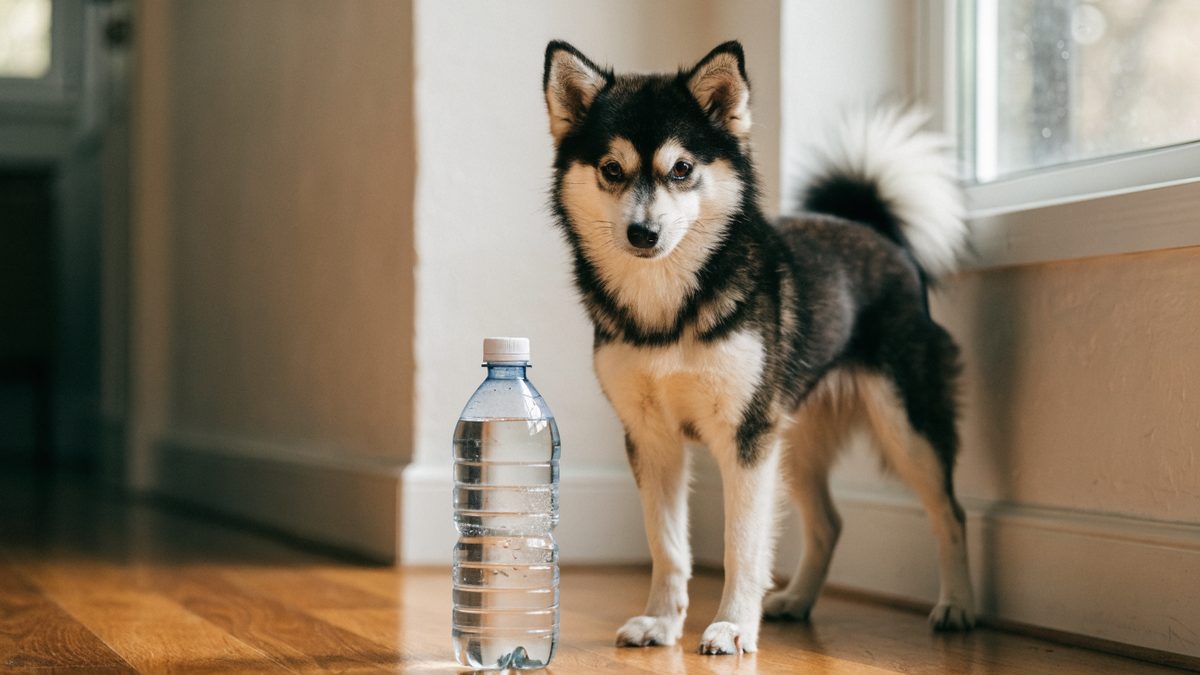
An Alaskan Klee Kai is a small American companion breed deliberately created in Alaska between the early 1970s and 1988, and it is a separate breed rather than a size variant of any husky. It stands 12 to 17 inches at the withers, carries a symmetrical dark facial mask over a white lower face, and has a written breed standard held by two registries. The word people reach for, miniature husky, is a sales phrase and not a breed fact, and untangling that is the single most useful thing this page can do for an Indian reader.
Start with the origin, because every other fact depends on it. The Alaskan Klee Kai was developed in Alaska by Linda Spurlin and her family to be a companion-sized version of a northern spitz-type dog, and from the early 1970s through 1988 the Spurlins selected for appearance and soundness before making the dog available to others. Mrs Spurlin originally called the breed simply the Klee Kai, and the name was changed to Alaskan Klee Kai in 1995 to denote its place of origin. The name itself comes from Alaskan Athabaskan words meaning little dog.
The founding cross is documented in unusual detail for a modern breed. A genetic diversity report prepared by the University of California Davis Veterinary Genetics Laboratory with Niels C. Pedersen records that the breed was purportedly the result of a limited number of crosses between only 9 dogs, comprising several Siberian and Alaskan Huskies, a Schipperke and an American Eskimo Dog. The programme began with a mixed-breed rescue named Curious, acquired in Oklahoma, which appeared to be the product of a purebred Alaskan Husky mated to a small dog of unknown ancestry. That is the entire ancestral pool of the breed, and it explains most of what follows in the health section.
Breed recognition, checked registry by registry
Bonbeno did not take the recognition claim from any breed-profile page, because most of them are now wrong. We read each registry's own published material in August 2026 and recorded what it says.
| Registry | Status | Date and evidence |
|---|---|---|
| United Kennel Club | Fully recognised, Northern Breed Group | Recognised 1 January 1997, standard revised 1 January 2019 |
| American Kennel Club | Miscellaneous Class, one step short of full recognition | Accepted into the Foundation Stock Service October 2020, approved at the November 2024 board meeting to compete in the Miscellaneous Class effective 25 June 2025, and now listed first under Miscellaneous Class in the AKC's List of Breeds by Group |
| American Rare Breed Association | Recognised | Officially recognised in 1995, before the UKC |
| Federation Cynologique Internationale | Not listed at all | Group 5 Section 1 Nordic Sledge Dogs contains five breeds and none is this one, and the alphabetical K listing runs from Kai to Kuvasz with no Klee Kai |
| Kennel Club of India | No route exists | KCI is FCI's member national organisation for India and registered 33,880 pure-bred dogs with its studbook in 2025. With no FCI breed number there is no standard for KCI to register against |
Read the AKC row carefully, because the internet has not caught up with it. Wikipedia's own infobox still presents the breed as carrying a UKC standard and an AKC standard side by side without stating the class, and the largest United States classifieds site still tells buyers the breed was recognised by the United Kennel Club in 1997 though not yet by the American Kennel Club. That was correct until June 2025 and is now out of date. Bonbeno's own Alaskan Husky guide recorded the Klee Kai as sitting in the Foundation Stock Service, and this page corrects that entry too.
The AKC publishes an eligibility rule for the Foundation Stock Service that decides this argument in writing. The FSS is not open to rare breeds that are a variation of an AKC-registrable breed or the result of a combination of two AKC-recognized breeds, and the rule names size, over and under, as one of the differences it excludes. The Siberian Husky and the Alaskan Malamute are both AKC-registrable. If the Alaskan Klee Kai were a small Siberian Husky, it would have been refused. It was admitted in October 2020 and advanced to the Miscellaneous Class in 2025, which is the AKC deciding, on its own published criteria, that this is a distinct breed.
What the standard actually describes
The AKC standard sets height at 12 to 17 inches at the withers, with over 17 and a half inches a disqualification, and specifies that weight and bone are in proportion to the overall dog rather than fixed by a number. The AKC breed page publishes a working range of 6 to 25 lb. The head is a broad-based wedge with a moderate, slightly sloping stop, and the muzzle from stop to nose is equal to or slightly shorter than the skull from occiput to stop. That last clause matters more than it looks, and the climate section returns to it.
The most distinctive feature is the mask. The standard requires symmetrical and distinctive dark and white contrasting markings, with white required inside the ears, on the lower face and jaw, the sides of the muzzle, cheeks, throat, chest, abdomen, legs, feet, around the vent and under the tail. The full mask, the most desired pattern, carries dark colour continuously down the top of the muzzle to the nose with white markings above the eyes. Asymmetrical markings are so severely penalised as to eliminate a dog from competition, and any solid coat colour lacking distinct contrasting markings is a disqualification. Only three coat colours are registrable: black and white, gray and white, and red and white.
Size varieties, and where the registries disagree
Here is a real conflict between the two recognising registries, and no ranking page prints it. The UKC divides the breed into three competition varieties by height, and shows them in order. The AKC standard sets one continuous range and names no varieties at all.
| Registry | How size is handled | Bands |
|---|---|---|
| United Kennel Club | Three named varieties, shown separately in conformation | Toy up to and including 13 in; Miniature over 13 up to and including 15 in; Standard over 15 up to and including 17 in |
| American Kennel Club | One continuous range, no varieties | 12 to 17 in, disqualification over 17.5 in |
| UC Davis VGL, describing the population | Three size ranges that do not breed true | Dogs of all three sizes may occur in the same litter |
That third row is the practical one for a buyer. Because the three sizes appear within a single litter, a seller promising a toy-size adult is making a prediction rather than a guarantee, and the AKC standard fixes no adult weight at all. Any Indian listing that prices a puppy by promised adult size is selling certainty that the breed does not supply.
How to tell a Klee Kai from a small Husky in one look
- Look at the mask first. A Klee Kai must carry a symmetrical facial mask with a solid dark nose bar and contrasting white below, and the absence of a distinct mask is a disqualification. Siberian Husky markings are not held to that requirement.
- Look at the tail. The Klee Kai tail is well furred and carried in a loose natural curl falling to the centre of the back or draped to one side. A straight low-carried brush tail is a different dog.
- Look at the head shape. Skull and muzzle taper together to form a broad-based wedge, which reads narrower and foxier than a husky head.
- Check the colour against the list of three. Black and white, gray and white, red and white, and nothing else is registrable. A solid white or solid black dog is not a Klee Kai by either standard.
- Ignore eye colour entirely. The eyes may be any colour or combination of colours, so blue eyes prove nothing and justify no premium.
One caution the UKC standard puts in writing and no marketing page repeats. Because the Alaskan Klee Kai is a breed developed through miniaturisation, the standard tells judges to watch for faults inherent in that process, especially given a small gene pool, and it names bulging eyes, unacceptable temperament and extremely fine bone. A registry warning about the consequences of shrinking a dog is a stronger statement about this breed than anything a seller will tell you.
Alaskan Klee Kai price in India, and why no honest figure exists
No verifiable Alaskan Klee Kai price in India exists, and the figures that circulate come from puppy-listing pages rather than from any transaction record, breed club or registry. The top-ranking Indian page claims Rs 4,50,000 to Rs 8,50,000 and republishes that same band unchanged across every city it covers. Bonbeno reports what those pages say, shows exactly why the claims cannot be checked, and does not manufacture a range of its own.
Three facts have to sit on the table before any Indian number means anything, and Indian buyers are told none of them.
- No Indian registry can register this breed. The FCI nomenclature has no Alaskan Klee Kai in Group 5 Section 1 and none in its alphabetical K listing. The Kennel Club of India is FCI's member national canine organisation for India, so there is no FCI breed standard for a KCI pedigree to be issued against.
- No dog may be imported into India for breeding or commercial purposes. Under DGFT Trade Notice 22/2022-23, import of dogs is allowed only for a pet dog travelling on a valid pet book in the importer's name, for R&D organisations with CPCSEA recommendation, and for internal security by the Defence and Police Force, and import of commercial dogs for breeding or any other commercial activity is not permitted. Applications made for trading or breeding purposes shall be duly rejected.
- The breed's own clubs point elsewhere. The Alaskan Klee Kai Association of America tells prospective owners to buy a UKC-registered dog and calls the United Kennel Club the only legitimate registry that recognises the breed, noting only that some breeders also register with the American Rare Breed Association. Neither route runs through India.
Put those together and the conclusion is uncomfortable but clean. There is no lawful commercial pipeline that could put a verified Alaskan Klee Kai into an Indian litter, and no Indian body that could certify one if it did.
What the Indian listing pages actually publish
Bonbeno opened the pages that rank for this query in India and read them line by line. The highest-ranking one states that the average price of an Alaskan Klee Kai puppy in India ranges between INR 4,50,000 to INR 8,50,000 and above, and breaks that into three tiers.
| Claimed tier | Claimed price | What it can be verified against |
|---|---|---|
| Basic Quality | Rs 4,50,000 to Rs 6,50,000 | Nothing. No registry, no pedigree, no health testing named |
| KCI Registered, described as carrying Kennel Club of India certification and verified lineage | Rs 6,50,000 to Rs 7,50,000 | Not possible. The FCI nomenclature contains no Alaskan Klee Kai, and KCI is an FCI member organisation |
| Champion Bloodline, described as from imported or award-winning parents | Rs 7,50,000 to Rs 8,50,000 | Not possible commercially. Import for breeding is not permitted |
| Every city page, from Hyderabad to Pune | Rs 4,50,000 to Rs 8,50,000 | Identical band republished for all eight cities, which is a template rather than a market observation |
First, its grooming FAQ states that Alaskan Klee Kai have dense, curly coats that need trimming every 4 to 6 weeks to prevent matting. The breed has a straight-guard-hair double coat, and both recognising standards penalise trimming anywhere except around the foot United Kennel Club. That paragraph was written for a curly-coated breed. Second, its answer on why to buy from the site tells the reader they can get purebred and vaccinated Alaskan Klee Kai puppies through its verified and responsible Corgi breeders. Third, its maintenance answer ends by saying Alaskan Klee Kais typically cost less to maintain than Standard ones, a sentence with no antecedent anywhere on the page. Bonbeno is not calling anyone dishonest. We are showing that the price band sits inside auto-generated copy that was not written about this breed.
The listings themselves are the second problem. That page returned five Alaskan Klee Kai entries in total, in Gurgaon, Bangalore, Delhi and Chandigarh, every one labelled Pet Quality, with the price replaced by a View Price link that routes to a sign-up form. The second Indian page ranking for the query publishes no price at all and no listings, only a breed dropdown and a phone number. So the published Indian range is not attached to a single visible transaction.
What the breed costs where a real market exists
The United States has an actual Alaskan Klee Kai market, and its numbers are visible. The largest US classifieds site listed 16 Alaskan Klee Kai puppies and states an average purebred cost of approximately $1,434, with the individual asking prices on those listings running from $1,000 to $2,500. Bonbeno is deliberately not converting those into rupees, because the useful contrast is not arithmetic. The US figures are attached to named dogs with dates, locations and visible prices. The Indian figures are attached to five listings whose prices are hidden behind a sign-up wall.
That same US market shows how the mini-husky framing works commercially. Five of those 16 listings are titled Toy Size Mini Husky or Tiny Size Mini Husky rather than by the breed name, another is titled Miniature Husky Boy, and four more advertise ICA registration rather than UKC papers. The breed's own association is explicit that the United Kennel Club is the registry to look for. A dog sold as a mini husky on non-UKC paperwork is being marketed on a resemblance rather than on a pedigree, and that is the same trade an Indian buyer is being offered at four times the price.
Bonbeno searched Indian results for this term on 16 August 2026 and found no source publishing a checkable price for a verified Alaskan Klee Kai in India. The only Indian figures available come from two puppy-listing sites, one of which hides its prices and republishes an identical band across every city, and neither of which names a registry that could certify the dog. Bonbeno therefore publishes no Indian price range for this breed. Where a page quotes you a precise Alaskan Klee Kai price in India, ask it which registry issued the papers, and check the answer against the FCI nomenclature yourself.
If what you actually want is the northern look at a price that can be checked, the honest comparison is the Siberian Husky, which is FCI-listed, KCI-registrable and genuinely traded here. Bonbeno's Siberian Husky guide compares those published bands across sources in full, and the headline is Rs 20,000 to Rs 1,50,000 in 2026 depending on registration and coat. Bonbeno does not broker puppy sales, does not publish breeder listings and does not recommend sellers. The figures above are reported from third parties so you can price the uncertainty into your own decision.
Monthly cost of keeping an Alaskan Klee Kai in India
One published Indian estimate puts the monthly cost of an Alaskan Klee Kai at Rs 5,000 to Rs 10,000, and Bonbeno reproduces it with the caveat attached rather than laundering it into a Bonbeno figure. No Indian survey of Alaskan Klee Kai households exists, because there is no verified Indian population to survey. What can be reasoned about honestly is the shape of the bill, and for a small double-coated northern dog in India the shape is unusual.
The single Indian figure available comes from the same listing page whose grooming advice describes a curly coat, which is reason enough to label it rather than trust it. It states that monthly expenses for an Alaskan Klee Kai range from INR 5,000 to INR 10,000, covering quality food, grooming, vet visits and routine care. The page states no sample size, no cities and no collection date, so it is an estimate rather than a survey result.
When Bonbeno publishes a cost figure we state the sample size, the cities covered and the collection date. We have none of those for this breed in India, because no verified Indian population exists to sample. So the number above is labelled as one listing site's estimate and not as a Bonbeno finding, and the table below sets out which lines are structural rather than what they add up to.
Which cost lines behave differently for this breed
| Line item | How it behaves for this breed | Why |
|---|---|---|
| Food | Genuinely low, and the one real saving over a husky | An adult sits at 6 to 25 lb against a Siberian Husky's 20 to 27 kg feeding basis |
| Cooling | The largest structural line, and it does not shrink with the dog | Indoor temperature above 32 C is dangerous for a dog at rest, and you cool a room, not an animal |
| Grooming | Closer to a husky's than to a small dog's | A dense undercoat that blows twice a year still has to be raked out, and the coat is never clipped |
| Routine veterinary care | Ordinary, until something breed-specific appears | Small-dog dosing keeps costs down, but the screening list below is longer than most |
| Health screening in year one | Higher than for a common breed | The club's own recommendations run to five separate evaluations |
| Containment hardware | A capital cost most owners discover late | The breed is described by its parent club as an independent-thinking problem solver with a penchant for escape by digging, climbing, squeezing through small openings, or opening gates and crates |
The cooling line is where small-dog intuition fails hardest. A Klee Kai eats a fraction of what a husky eats, so a buyer reasonably assumes the whole bill scales down. It does not, because air conditioning is charged by room and by month rather than by kilogram of dog, and Indian veterinary guidance treats continuous indoor cooling above 32 C as a requirement rather than a comfort. From March to October in most Indian cities that line is identical whether the dog weighs 8 kg or 25 kg.
First-year costs Indian buyers routinely miss
- A patella evaluation and an ACVO eye examination. Both are on the breed club's recommended screening list, and a boarded veterinary ophthalmologist is available in only a handful of Indian cities.
- A thyroid panel from an approved laboratory. Autoimmune thyroiditis screening is the first item the club lists, and it is not part of a routine Indian annual check.
- A DNA test covering Factor VII deficiency. The club lists it as optional, but carrier status cannot be read off a clotting assay, because heterozygote and wild-type activity values overlap.
- Escape-proofing before arrival, not after. Gate latches, mesh on balcony railings and a harness that cannot be backed out of are cheaper than the first escape.
- A backup cooling plan for power cuts. Load shedding peaks exactly when cooling demand peaks, so a battery fan, frozen packs and a fallback location belong in the budget.
One line that is genuinely smaller than for a husky is worth naming, because this page is not an argument that the breed is impossible. A dog of 8 to 11 kg can be carried across hot pavement, fits in a car footwell with a cool mat, and can be physically restrained by one adult when a street dog appears. Those are real advantages over a 25 kg northern dog in an Indian city, and they are the honest half of the small-size case.
Climate suitability, and why heat tolerance is rated 3 of 5
Bonbeno rates the Alaskan Klee Kai 3 of 5 for heat tolerance, two points above the Siberian Husky, and the reasoning is worked from the dog's body plan rather than copied from its larger relatives. The coat is a genuine arctic double coat and that caps the rating. The head is not brachycephalic and the body is small, and those two facts sit on the favourable side of everything the largest heat-illness study measured. No study has ever included this breed, so 3 is a reasoned inference and Bonbeno labels it as one.
Take the evidence in order, starting with what is actually measured. The largest study of heat-related illness in dogs anywhere covers 905,543 UK dogs under primary veterinary care in 2016 and identified 395 confirmed events, giving an incidence of 0.04 percent and an event fatality rate of 14.18 percent. Its significant risk factors were breed, with Chow Chow, Bulldog and French Bulldog named, higher bodyweight relative to the breed and sex mean, and being over two years of age, and it separately found that dogs with a brachycephalic skull shape and dogs weighing over 50 kg were at greater risk.
Working the rating out, factor by factor
| Factor | Where this breed sits | Effect on the rating |
|---|---|---|
| Skull shape | Not brachycephalic. The standard sets the muzzle equal to or slightly shorter than the skull, so the panting airway is full length | Favourable, and it is the strongest single point |
| Bodyweight over 50 kg | 6 to 25 lb, at the far opposite end of the threshold | Favourable |
| Coat type | Double coat with a soft, dense undercoat, the category Purina India names alongside short-faced breeds as being at particular heat stroke risk | Strongly unfavourable, and this is the cap |
| Bodyweight relative to the breed mean | Owner-controlled, and easy to get wrong in a breed with no fixed adult weight | Neutral, and the owner decides it |
| Humidity | Body size gives no protection at all, because panting fails when the air is already saturated | Unfavourable in every coastal Indian city |
| Breed-specific evidence | None. The breed appears in no heat-illness dataset published anywhere | The reason this rating is an inference and not a finding |
So the argument runs like this. Two of the three factors the largest study isolated, skull shape and extreme bodyweight, point favourably for this dog, and one of them is decisive: a full-length muzzle means panting works mechanically, which is precisely what a Bulldog or a Pug cannot manage. That is why the Klee Kai does not belong at 1 of 5 with the Siberian Husky. It stops at 3 because the coat is real, because Indian veterinary guidance names heavy-coated dogs directly, and because in an Indian summer the ambient temperature routinely exceeds the dog's own body temperature, at which point coat and size stop being the variables that matter.
A small dog does not carry a smaller heat reserve in any useful sense, and Bonbeno is not claiming it does. A 9 kg dog heats through faster than a 25 kg dog once cooling fails, which is the mirror image of the same physics. What the small body buys is a working airway on a normal muzzle and a much easier rescue: you can carry this dog indoors, into a car, or under a tap, and you cannot carry a Malamute. Treat 3 of 5 as meaning manageable with a real plan, not as meaning suited to the climate.
The temperature bands that decide your day
| Ambient temperature | Risk level | What it means in practice |
|---|---|---|
| Below 28 C | Low | Normal activity with shade and water |
| 28 to 35 C | Moderate | Shorten the walk to 15 to 20 minutes, early morning and late evening only |
| 35 to 42 C | High | Outdoor activity contraindicated. Asphalt reaches 60 C and above |
| Above 42 C | Extreme | Heat stroke possible within 10 to 15 minutes outdoors, and indoor temperatures without cooling can be fatal |
Humidity rewrites that table completely. A 35 C day at 90 percent humidity is far more dangerous than a 42 C day at 20 percent humidity, because panting works by evaporation and humid air blocks it. Mumbai, Chennai and Kolkata during the monsoon read as moderate on a thermometer and behave as extreme on a dog, and no amount of small body size changes that arithmetic.
Purina India adds the clinical thresholds. It sets a raised temperature at 40.5 C or above as a sign of heat stroke, lists obesity, excessive humidity, intense exercise, old age and lack of acclimatisation among the risk factors, and warns that vigorous exercise in hot weather can produce heat stroke in as little as 30 minutes. It also gives the stopping rule most owners get wrong, which is to halt active cooling once the temperature returns to 39.4 C so the dog is not chilled into hypothermia.
What actually reduces the risk
- Walk only before 7 am or after 8 pm from April to September, and cap the walk at 15 to 20 minutes even inside those windows.
- Run cooling continuously above 32 C indoors. Indoor temperature above 32 C is dangerous for a dog at rest, and a fan across a wet towel is a workable fallback.
- Cool with room-temperature water and moving air, never ice. Ice causes cutaneous vasoconstriction, traps core heat and delays cooling.
- Do the 7-second pavement test. Hold the back of your hand on the pavement for seven seconds. Asphalt at 60 C causes third-degree paw burns within about 30 seconds, and grass runs 10 to 15 C cooler.
- Never confine the dog to a balcony above 30 C. Concrete balconies are heat traps with no shade and no airflow.
- Never leave the dog in a parked car. At 26 C outside, a car interior reaches 32 C in five minutes and 43 C in 25 minutes.
Heat stroke is core body temperature above 40 C with clinical signs, and the cascade to organ failure begins between 40 and 41 C. Early signs are frantic unproductive panting above 60 breaths a minute at rest, thick ropey drool, bright red gums, restlessness and an anxious wide-eyed expression. Begin cooling immediately and drive to your nearby vet while cooling continues. Every heat stroke case needs veterinary examination even if the dog looks recovered, because organ failure can present 12 to 72 hours later.
City by city, Bengaluru, Pune and the hill stations are where this dog is a reasonable proposition without heroics. Delhi and Jaipur are survivable with disciplined summer scheduling and reliable cooling, because the dry heat at least leaves panting working. Mumbai, Chennai and Kolkata are the hardest, not because of the peak temperature but because the humid months remove the dog's only cooling mechanism for weeks at a time.
Temperament and household fit
An Alaskan Klee Kai is alert, energetic, curious and talkative, and reserved with unfamiliar people and situations. That last trait is the one that decides whether the breed works in an Indian household, because a reserved dog in a building with lifts, guards, deliveries and constant strangers needs deliberate socialisation rather than good intentions. This is a devoted companion for the right home and a poor impulse buy for almost everyone else.
The AKC standard describes the temperament in one paragraph and it is worth reading as written. The breed is intelligent, alert, curious and talkative, enjoys being physically and mentally challenged, and has an energetic eagerness to participate in a broad array of activities. The same paragraph adds that the Alaskan Klee Kai may have a sensitive and reserved nature, so positive reinforcement and proper socialisation from an early age is important. A registry writing socialisation into a conformation standard is unusual, and it is a signal.
The UKC standard adds the watchdog side. Loyalty and alertness make the Alaskan Klee Kai a great watchdog, good at giving alarm, and it may be territorial despite its small size, while remaining devoted to its owners and aloof with strangers. Extreme shyness is a disqualification in that standard, alongside viciousness, which tells you the difference between correct reserve and a temperament fault.
The talking, and why it matters in a flat
This breed is vocal in a specific and unusual way. The parent club records that Alaskan Klee Kai talk, producing howling, grumbling, yodelling, purring and chirping to express themselves. Owners find it charming. A neighbour sharing a wall in a Mumbai or Bengaluru apartment block, at 6 am, does not.
Bonbeno rates apartment suitability 3 of 5 for this reason and not for reasons of space. The dog is physically small enough for any Indian flat. What it is not is quiet, and Indian housing societies act on noise complaints faster than on almost anything else. If you live in a shared building, the honest question is not whether the dog fits but whether you can meet its exercise and enrichment needs well enough that it does not spend the day announcing itself.
Escape is a design feature, not a training failure
The parent club describes Alaskan Klee Kai as independent-thinking problem solvers with a penchant for escape by digging, climbing, squeezing through small openings, or opening gates and crates. Read that list again, because each item defeats a different containment strategy. A dog that can open a crate is not contained by a crate. A dog that squeezes through small openings is not contained by a gate that stops a Labrador.
- Good fit. An active household in Bengaluru, Pune or a hill station, with someone home much of the day, a secured boundary, and tolerance for a dog that comments on everything.
- Poor fit. A first-time owner, a home empty for ten hours, a flat with thin shared walls, or a household without reliable backup cooling.
- Watch item. Reserve with strangers reads as fear to visitors who reach for the dog anyway. Manage introductions rather than apologising for them.
- Underrated risk. Balconies. A dog that climbs and squeezes through small openings plus an unmeshed Indian balcony railing is a predictable fall, and this is a genuinely small dog.
- Children. The size that makes the breed apartment-friendly also makes it easy for a small child to injure, so supervise in the direction people rarely expect.
Socialise the puppy early and widely, because the exposure window closes long before the dog is physically mature. In an Indian city that means lifts, generators, traffic, festival noise, building staff, groomers, handling and other dogs, all booked into the cool hours the same way walks are. A reserved breed that missed its socialisation window does not become confident later; it becomes a dog that barks at the lift for twelve years.
How to train an Alaskan Klee Kai, and what it resists
To train an Alaskan Klee Kai, use short reward-based sessions, start socialisation the week the puppy arrives, and treat recall as a skill you manage rather than one you finish. This is a quick learner that is also a headstrong one, and the two published descriptions of its trainability disagree in a way that tells you exactly where the work sits. Nothing here fixes the prey drive, so the leash and the fence stay non-negotiable for the dog's whole life.
Two primary sources describe the same dog and reach different emphases, and printing both is more useful than picking one. The American Kennel Club calls the breed perceptive, says it loves learning new things, and lists it as well suited to agility, racing, obedience, rally, scent work, weight pull, dock diving and carting, plus therapy work, service work and diabetic and gluten detection. The University of California Davis diversity report describes the same population as extremely active, highly intelligent and easily trained, but with a tendency to be head strong, and adds that they require good socialisation with other humans and dogs.
Both are true, and the resolution is that this breed learns the behaviour quickly and then decides separately whether to perform it. You are not teaching a dog that struggles to understand. You are negotiating with one that understood on the third repetition and is now weighing its options.
The sensitivity clause, written into the breed standard
Read what the registries put in writing, because a temperament instruction inside a conformation standard is unusual. The AKC standard states that the Alaskan Klee Kai may have a sensitive and reserved nature, so positive reinforcement and proper socialisation from an early age is important. The AKC breed page repeats it, calling for a gentle hand, positive reinforcement, proper early socialisation and training throughout their lives. The UKC standard makes extreme shyness a disqualification alongside viciousness.
That combination rules out a whole category of training that is still common in Indian dog training, and Bonbeno will say so directly. Correction-based handling, prong collars, alpha-rolling and shouting are the wrong tools for a sensitive, reserved breed, and on this dog they produce avoidance rather than compliance. The registries are not being sentimental. They are telling you the method that works.
What this breed genuinely resists
- Off-leash recall. The AKC states plainly that the breed is curious, clever, fast and sneaky, may have a high prey drive, and must be kept on a leash or in a securely fenced area at all times when outside of the home. Treat that as a permanent instruction, not a puppy-stage one.
- Containment. The parent club describes independent-thinking problem solvers with a penchant for escape by digging, climbing, squeezing through small openings, or opening gates and crates, and UC Davis calls them good chewers, diggers and jumpers, not always easily contained in a home or yard.
- Repetition drills. A dog that learns fast and bores fast will disengage from a fifth identical repetition, so change the task before it does.
- Being talked at. The breed talks back, producing howling, grumbling, yodelling, purring and chirping, and escalating your volume simply escalates the conversation.
- Forced greetings. Reserve with unfamiliar people is standard-described behaviour, and a stranger who reaches over the dog's head converts caution into a lasting association.
A realistic Indian training timeline
| Period | Priority | The Indian constraint |
|---|---|---|
| Weeks 8 to 16 | Socialisation above everything else. Lifts, generators, building staff, traffic noise, handling, other vaccinated dogs | The exposure window closes on its own schedule and does not wait for cooler months. Do it indoors and in the cool hours rather than postponing it |
| Weeks 8 to 16 | Name, marker word, hand feeding, crate as a rest place, tolerance of grooming and paw handling | Handling tolerance is what makes coat raking and paw checks possible later, and both matter more here than in a cold climate |
| Months 4 to 6 | Loose-lead walking, sit and down, a settle on a mat, and a rock-solid harness routine | Walks are capped at 15 to 20 minutes in the 28 to 35 C band, so train indoors and bank the outdoor time for the cool window |
| Months 6 to 12 | Impulse control at thresholds, door and gate discipline, and a reliable stationary behaviour when the lift opens | Indian flats put a stranger at the door several times a day, which is either daily socialisation practice or daily rehearsal of barking |
| Months 12 onward | Scent work, trick chains, food puzzles and a job. Recall practised for life, always on a long line | Indoor scent games are the single best hot-weather substitute, because they tire the dog without heat load |
From April to September an Indian owner loses most of the usable outdoor day, and a bored Klee Kai does not sit quietly through it. The AKC's own framing is that the breed enjoys being physically and mentally challenged and loves learning new things, and the mental half is available at 2 pm in May when the physical half is not. Scatter feeding, snuffle mats, shaping games, scent work and a rotated toy set are not enrichment extras for this breed in India. They are the primary summer exercise plan, and the exercise section sets out how much they can honestly replace.
Two Indian-specific training problems no global page covers
Free-roaming street dogs are the first. A small, reserved, prey-driven northern dog on an Indian street will meet loose dogs regularly, and no amount of obedience prevents that encounter. What helps is a harness the dog cannot back out of, a short lead in traffic, walking routes chosen for sightlines, and a trained hand-target that lets you move the dog behind you without dragging it. Practise the manoeuvre before you need it.
The second is noise. Festival firecrackers, construction and generator sets arrive without warning in most Indian cities, and this is a breed the standard already flags as sensitive. Build a den the dog chooses voluntarily, pair loud seasons with food, and speak to your nearby vet well before the season rather than on the night. A dog that learned at fourteen weeks that sudden noise predicts chicken is a different animal at three years from one that learned nothing.
Daily exercise an Alaskan Klee Kai actually needs
No registry publishes a daily exercise figure in minutes for the Alaskan Klee Kai, and Bonbeno will not invent one. What the American Kennel Club does publish is a requirement stated as a condition rather than a duration, that the breed is not suitable for people who cannot spend time with their dogs. Bonbeno rates exercise needs 4 of 5, high for the size, because the northern working ancestry did not shrink when the body did. In India the binding constraint is not the dog's capacity but the number of usable hours in the day.
Start with what the AKC actually says, because it is a sentence most listing pages skip. The breed page states that AKK are not suitable for people who cannot spend time with their dogs, and that exercising together both physically and mentally strengthens the bond between dog and owner and helps to avoid potential destructive behaviour. The University of California Davis report calls the population extremely active. Neither source converts that into a number, which is why every page that quotes you a tidy minute figure for this breed is quoting itself.
The activities the AKC does name give a better sense of scale than minutes would. It lists camping, hiking, climbing, swimming, boating, kayaking and paddle boarding, and adds that for owners in a more urban setting or with a more sedate lifestyle, daily walks or a game of fetch can also provide great exercise. Read that second clause carefully. The AKC is describing a flexible dog, not a low-energy one, and the flexibility runs out when the walks stop.
The Indian arithmetic that decides everything
Here is the calculation no global breed page performs. Indian veterinary guidance caps outdoor activity at 15 to 20 minutes in the 28 to 35 C band and treats the 35 to 42 C band as contraindicated for outdoor activity altogether. Purina India warns that vigorous exercise in hot weather can produce heat stroke in as little as 30 minutes. From roughly March to October in most Indian cities, that leaves an active northern dog two usable windows a day, before about 7 am and after about 8 pm, each capped at around 20 minutes.
| Season | Realistic outdoor time | What has to make up the difference |
|---|---|---|
| November to February, most of India | Two walks of 30 to 45 minutes, plus play. The dog is comfortable and this is the easy half of the year | Nothing. Bank the training and the long walks now |
| March to May, dry heat belt including Delhi and Jaipur | Two windows of 15 to 20 minutes at the edges of the day | Indoor scent work, food puzzles, shaping sessions and stair-free indoor fetch |
| June to September, humid coastal cities including Mumbai and Chennai | The least of the year. Panting fails when air is saturated, so a moderate thermometer reading is not permission | Almost all of it moves indoors, under cooling |
| Year round, Bengaluru, Pune and hill stations | Close to a full programme most months, with summer afternoons still avoided | Least substitution needed anywhere in India |
Bonbeno is not claiming a puzzle feeder equals a run, and no evidence supports that trade. What the AKC does state is that the breed enjoys being physically and mentally challenged, and mental work is the half that stays available at 2 pm in May. Treat indoor enrichment as the way you get through the hot months without a destructive dog, not as a permanent replacement for movement. If your city gives you no cool window for weeks at a stretch, that is a reason to reconsider the breed rather than a problem to schedule around.
What happens without it
The failure mode is documented by the breed's own club rather than inferred. The parent club describes independent-thinking problem solvers with a penchant for escape by digging, climbing, squeezing through small openings, or opening gates and crates, and UC Davis records them as good chewers, diggers and jumpers, not always easily contained in a home or yard. An under-exercised Klee Kai does not become a quiet dog that sleeps more. It becomes a project manager.
- Escape attempts intensify. Gates, crates and balcony gaps are tested rather than accepted.
- Vocalisation rises. The breed already howls, grumbles, yodels, purrs and chirps, and boredom gives it a reason to.
- Chewing and digging start. UC Davis names both as breed traits, and an Indian flat offers sofa corners and potted plants instead of yard.
- Weight climbs. The AKC flags that some dogs are prone to excessive weight gain, and Purina India lists obesity among the heat stroke risk factors, so an under-exercised summer compounds itself.
- Reactivity worsens. A reserved breed with unspent energy meets the lift and the delivery rider with less tolerance, not more.
Safe ways to move this dog in an Indian city
Swimming is on the AKC's own activity list and is the single best hot-weather option where clean, supervised water is genuinely available, which in India is a real qualifier rather than a formality. Otherwise, split the daily requirement into more, shorter outings rather than one long one, keep every session inside the cool windows, and use the seven-second pavement test before you step out, because asphalt at 60 C burns paws within about 30 seconds while grass runs 10 to 15 C cooler.
Two rules never bend. Keep the dog on a leash or in a securely fenced area at all times outside the home, because the AKC names the prey drive explicitly. And never use exercise to tire a dog into tolerating heat, since the fatigue and the heat load are the same variable. Stop on the dog's signals, not on the clock, and call your nearby vet if heavy panting does not settle within a few minutes of coming indoors.
Grooming a double coat in Indian humidity
Groom an Alaskan Klee Kai by brushing weekly, raking the undercoat hard during the two annual sheds, bathing only a few times a year, and never clipping the coat. The American Kennel Club states that this coat insulates from cold and heat and protects the skin from the sun, which is precisely why the Indian summer clip that groomers offer is the wrong answer. Shedding, not bathing, is the real workload, and Indian humidity adds a skin problem the northern literature never has to discuss.
The AKC describes the coat exactly. The Alaskan Klee Kai is a double coated breed with a short dense undercoat and a longer outer coat of guard hairs, and that coat not only helps insulate them from the cold and heat, it also helps protect the skin from the sun. The UKC standard describes the same structure, a soft dense undercoat under a straight guard coat. Nothing about it is curly, and nothing about it is meant to be cut.
A shaved double coat does not cool a dog. It removes the layer the AKC identifies as insulating against heat and shielding skin from sun, on an animal that will then stand under Indian sun with bare skin. The AKC standard also states that the Alaskan Klee Kai is shown in its natural state and the only trimming permissible is around the foot area, and specifically bars trimming of the whiskers. The AKC grooming guidance adds a plain instruction, avoid using any tools with blades. If an Indian groomer offers a summer clip for comfort, decline it. Cooling is done with air conditioning, shade and timing, and the climate section sets out the thresholds.
Shedding, which is the actual job
Expect the undercoat to be shed, or blown, twice a year, and the AKC records that some owners quip that it lasts for six months at a time. That quip is the honest version of the workload. Between blows, weekly brushing and combing keeps the coat and skin in good condition and reduces the hair around the house. During a blow, weekly is not enough and daily raking is closer to the truth.
Indian conditions shift the timing rather than the amount. A dog living under air conditioning through a long hot season gets a less distinct seasonal cue than one living through an Alaskan winter, and many Indian owners of northern breeds report a longer, less defined shed instead of two sharp ones. Bonbeno flags that as owner-reported pattern and not as a measured finding, because no study has examined shedding cycles in this breed in a tropical climate.
| Task | Frequency | Why it matters here |
|---|---|---|
| Brush and comb through to the skin | Weekly, daily during a coat blow | Packed undercoat traps heat and moisture against skin, which is the opposite of what you want in June |
| Undercoat rake | Through each shed | Removing dead undercoat improves airflow to the skin and is the only legitimate way to make the coat cooler |
| Bath | A few times a year. The coat naturally repels dirt and the breed lacks the usual dog odour | Over-bathing in humid cities strips the coat and invites skin trouble rather than preventing it |
| Dry completely after any bath or monsoon soaking | Every time, without exception | A dense undercoat holds water for hours, and a permanently damp undercoat in monsoon humidity is where hot spots and fungal skin disease start |
| Cool blow-dry to lift loose hair and dirt | As needed. The AKC recommends a strong cool blow-dryer | Cool, not warm. A heated dryer on a double-coated dog in an Indian summer adds heat load for no benefit |
| Nail trim | Regularly, to prevent foot problems | Indoor summer months mean less natural wear on hard surfaces, so nails outrun the schedule |
| Ear, paw and skin check | Weekly, and after every walk in the monsoon | Ticks, grass seeds and interdigital moisture are Indian problems the northern literature does not cover |
The monsoon skin problem
Four months of high humidity change what grooming is for. In a dry climate brushing is mostly about hair on the sofa. In Mumbai in August it is about whether the skin under a dense undercoat ever dries. A double-coated dog that is walked in the rain, towelled superficially and left to air dry keeps a damp layer against the skin for hours, and that is the setting for hot spots, yeast overgrowth and secondary bacterial infection.
- Dry to the skin, not to the touch. Push your fingers through the coat at the shoulder and the base of the tail, and if it is cool and damp there, the dog is not dry.
- Check the armpits, groin and between the toes. These stay wet longest and are where irritation appears first.
- Keep tick prevention current year round. Tick-borne disease pressure in most Indian cities does not follow the northern seasonal pattern, so speak to your nearby vet about a schedule that fits your area.
- Treat a persistent scratch as a veterinary question, not a grooming one. Recurrent skin and ear irritation can reflect allergy, which UC Davis names as a rising problem in this breed.
- Never seal a damp dog into a crate. Airflow is part of drying.
The highest-ranking Indian listing page for this breed advises that Alaskan Klee Kai have dense, curly coats that need trimming every 4 to 6 weeks to prevent matting. Every clause of that is wrong for this breed. The coat is a straight-guard-hair double coat, the AKC standard permits trimming only around the foot area, and the AKC grooming guidance says to avoid tools with blades entirely. An Indian owner who follows that page will pay a groomer every six weeks to damage the coat that is protecting their dog from the sun.
Alaskan Klee Kai health problems, screening and lifespan
The Alaskan Klee Kai has a published life expectancy of 13 to 16 years, stated identically by the American Kennel Club and by the breed's AKC parent club, and no mortality study of the breed exists anywhere to test that figure. The inherited risks are documented better than for most rare breeds, because the whole breed descends from roughly nine founders and two organisations have measured the consequences. Bonbeno reports the Orthopedic Foundation for Animals screening data in full, including a finding on dentition that ranks this breed second of every breed OFA lists. None of this is a diagnosis, and anything you notice in your own dog belongs with your nearby vet.
Take lifespan first, because it is the number buyers ask for and the one most easily faked. The AKC breed page publishes a life expectancy of 13 to 16 years, and the Alaskan Klee Kai Club of America health statement approved by its board on 30 September 2024 opens with the same range, describing the breed as generally healthy with a life expectancy of 13 to 16 years. Two independent organisations agreeing is worth something. What neither offers is a mortality dataset, a sample size or a method, so 13 to 16 years is a published expectation rather than a measured survival figure.
Bonbeno did not borrow the Siberian Husky's lifespan, health screening rates or disease prevalences for this page, and no figure on it comes from a husky dataset. They are different breeds with different founder populations, and substituting one for the other is exactly the error the mini-husky framing encourages. The only cross-breed number used anywhere on this page is a size-class benchmark, stated as such. Life expectancy tables built from 13.53 million dogs put small-size dogs at 13.53 years at birth, which sits just inside the club's claimed band and makes it plausible without confirming it. Treat that as context for the size class, not as evidence about this breed.
The OFA screening data, read row by row
Bonbeno pulled the Orthopedic Foundation for Animals breed statistics directly and matched every row to its own table header before taking a figure, because OFA's tables share a near-identical layout and a misread column produces a real-looking number for the wrong thing. Every row below is printed against the breed name ALASKAN KLEE KAI in OFA's own table.
| Evaluation | Dogs evaluated | Result | What it means |
|---|---|---|---|
| Patella | 1,131 | 98.5 percent normal, 1.5 percent abnormal (Grade 1 1.0, Grade 2 0.4, Grade 3 0.2) | The largest dataset OFA holds for the breed, and the most reassuring one |
| Thyroid | 1,057 | 86.8 percent normal, 2.3 percent compatible with autoimmune thyroiditis, 0.3 percent autoimmune thyroiditis, 10.7 percent equivocal | The 10.7 percent equivocal share is the figure to watch, because equivocal means retest rather than clear |
| Congenital cardiac | 754 | 99.6 percent normal, 0.3 percent equivocal, 0.1 percent abnormal | Reassuring, and it covers the patent ductus arteriosus risk named below |
| Eyes, headline verdict | 705 | 99.0 percent normal, 1.0 percent abnormal | True, and incomplete on its own. See the finding below |
| Basic cardiac | 335 | 100.0 percent normal | Small sample, no abnormal results recorded |
| Dentition | 126 | 54.0 percent normal, 46.0 percent abnormal | Ranked second of every breed in OFA's dentition table |
| Factor VII deficiency DNA | 122 | 94.3 percent normal, 5.7 percent carrier, 0.0 percent affected | Ranked sixth of the breeds OFA lists for this test |
| Hips | 107 | 95.3 percent normal (56.1 excellent, 39.3 good), 4.7 percent dysplastic, all graded mild | The smallest sample here, so treat it as indicative only |
These are cumulative counts of results owners and breeders chose to submit, not a prevalence survey of the breed. Owners are more likely to register a passing result than a failing one, so every normal percentage above should be read as an optimistic bound rather than a population rate. The breed code was confirmed against the breed name printed in OFA's own tables rather than guessed, because a guessed code returns a complete, plausible table for a different breed entirely.
The dentition finding, which no other page publishes
Of 126 Alaskan Klee Kai dentition evaluations submitted to OFA, 46.0 percent were abnormal, placing the breed second of every breed in that table behind the Manchester Terrier at 46.8 percent. That is not a rounding artefact of a small sample sitting near the top of a long list. It is a rate roughly comparable to the highest OFA records anywhere.
There is a plausible line of descent, and Bonbeno offers it as an observation rather than a proven cause. The Schipperke is one of the founding breeds named in the University of California Davis diversity report, and the Schipperke sits fourth in the same OFA dentition table at 45.1 percent abnormal. A miniaturised breed built partly from a high-dentition-fault founder inheriting that fault is consistent with what UC Davis says generally, that most AKK health problems appear to have been acquired by descent from founding breeds. The UKC standard independently warns judges to watch for faults inherent in miniaturisation given a small gene pool. Missing or crowded teeth in a short jaw is a practical matter for an owner, not only a show fault, so have your vet check the bite at every visit.
The eye result is better on the headline than in the detail
OFA's headline eye verdict for the breed reads 99.0 percent normal across 705 examinations. OFA's detailed findings table for the same 705 dogs records only 600, or 85.1 percent, as carrying no finding at all. Both numbers are correct and they answer different questions. The headline reports whether the examining ophthalmologist judged the dog abnormal for breeding purposes. The detail reports what was actually seen.
| Finding | Dogs affected | Percent |
|---|---|---|
| No finding recorded | 600 | 85.1 |
| Distichiasis, eyelids | 39 | 5.5 |
| Cataract, significance unknown | 24 | 3.4 |
| Punctate cataract, anterior cortex | 12 | 1.7 |
| Persistent pupillary membranes, iris to iris | 8 | 1.1 |
| Incipient cataract, anterior cortex | 8 | 1.1 |
| Corneal dystrophy, epithelial or stromal | 7 | 1.0 |
| Punctate cataract, capsular | 7 | 1.0 |
Distichiasis, extra eyelashes growing towards the eye, is the single commonest finding at 5.5 percent, and it ranges from harmless to genuinely irritating depending on the lash. Cataract entries of various kinds together account for a further several percent. An Indian buyer told the breed is 99 percent clear on eyes is being told the truth and not the whole of it, and an ACVO examination is on the parent club's recommended list for exactly this reason.
Factor VII deficiency, the one condition with a published study
Factor VII deficiency is a mild inherited bleeding disorder and it is the only Alaskan Klee Kai condition with a dedicated peer-reviewed paper. Kaae, Callan and Brooks studied 18 client-owned Alaskan Klee Kai after a dog presented with severe bleeding following trauma, and diagnosed the deficiency in 6 of them, with a median Factor VII activity of 5 percent against a reference range of 50 to 150 percent. Every affected dog was homozygous for the same mutation found in Factor VII deficient Beagles, a G to A transition substituting glycine 96 with glutamic acid.
The study found an overlap in Factor VII activity values between heterozygote and wild-type dogs that precluded accurate detection of carriers without genetic screening, and concluded that plasma activity accurately identifies affected dogs but that DNA testing is required to identify carriers. That has a direct consequence for an Indian buyer. A clotting panel from a local laboratory cannot tell you whether a puppy carries this, and a breeder who offers a blood report in place of a DNA result is offering the wrong test. It also matters before surgery, because the paper advises considering the deficiency in Alaskan Klee Kai with prolonged prothrombin times. Tell your nearby vet the breed before any planned procedure, including a routine spay or neuter.
What nine founders did to the gene pool
The University of California Davis Veterinary Genetics Laboratory measured the genetic diversity of the breed directly, and the results explain the shape of its health list. Across 33 short tandem repeat loci in an initial 370 dogs, mean observed heterozygosity was 0.573, which the report calls somewhat low and similar to a breed such as the Akita that also started from a small founder population. Only about half the alleles across those loci were contributing the bulk of the diversity. Among 365 dogs the laboratory identified 11 DLA class I and 8 class II haplotypes, low compared with larger breeds and typical of small-founder breeds.
The starkest measure is what was lost on the way. Adjusted against village dogs from the Middle East, South East Asia and the Island Pacific, the most genetically diverse population studied, mean internal relatedness for the breed sits around 0.30, and the report states that the bulk of Alaskan Klee Kai would now be considered products of full-sibling matings if they were village dogs.
The report is careful to add the other half, and so is Bonbeno. Present-day breeders are doing well with what they have. The population as a whole sits at Hardy-Weinberg equilibrium with an F value near zero, which UC Davis says can only occur when mate selection is close to random, and it credits breeders with an excellent job of avoiding inbreeding. Low diversity is a founder inheritance here, not evidence of current bad practice.
Conditions named as inherited by descent
- Hepato-portal shunts, the liver shunt. UC Davis states the breed suffers inordinately from these, as many small breeds do. A liver shunt typically shows as a poorly growing puppy, dullness after meals or neurological signs, and it needs veterinary investigation rather than a wait-and-see.
- Patellar luxation. Named by UC Davis as a breed problem and recorded by OFA at 1.5 percent abnormal across 1,131 evaluations. Screening is on the parent club list.
- Cryptorchidism and umbilical hernias. Both named among the conditions the breed suffers inordinately from.
- Patent ductus arteriosus. A congenital heart defect more commonly seen in small breeds and named for this one, which is what the congenital cardiac examination is looking for.
- Autoimmune thyroiditis leading to hypothyroidism. UC Davis calls it increasingly recognised in the breed and typically the first autoimmune disorder associated with excessive inbreeding, and it heads the parent club's screening list.
- Allergies, skin, food and respiratory. Named as rising alongside autoimmune disease and tied to loss of diversity in the immune system. This is the one most likely to surface first in a humid Indian city.
- Severe pancreatitis. Reported in the breed as it is in Yorkshire Terriers and Schnauzers, possibly linked to post-prandial hyperlipidemia.
- Pyometra. Reported as a problem in the breed.
The screening list, and what of it you can actually get in India
The parent club recommends five evaluations for all breeding stock, and dogs meeting them receive a Canine Health Information Center number. Note the club's own qualifier, that for CHIC certification results do not all need to be normal but must all be in the public domain. A CHIC number therefore proves disclosure, not health, and a buyer should read the results rather than the number.
| Screening | What it covers | Getting it done in India |
|---|---|---|
| Autoimmune thyroiditis, OFA evaluation from an approved laboratory | The commonest autoimmune disorder in the breed | Hardest. OFA's approved-laboratory requirement effectively means shipping serum abroad, and it is not part of a routine Indian annual check |
| Patellar luxation, OFA evaluation | Kneecap stability, graded 1 to 4 | Straightforward. Any competent small-animal vet can perform the manual examination |
| Cardiac evaluation, congenital or advanced | Patent ductus arteriosus and other congenital defects | Available in metro cities. Ask specifically for auscultation by a cardiologist and echocardiography if a murmur is heard |
| Eye examination by a boarded ACVO ophthalmologist | Distichiasis, cataract and the findings tabled above | Boarded veterinary ophthalmologists practise in only a handful of Indian cities, so plan travel |
| Factor VII deficiency DNA test, optional | Carrier and affected status for the mutation Kaae and colleagues characterised | A cheek swab posted to an overseas laboratory, and the only test that answers the carrier question |
For a double-coated northern dog living in India, the largest single health threat is not on the screening list. It is heat. Heat stroke is core body temperature above 40 C with clinical signs, the cascade to organ failure begins between 40 and 41 C, and organ failure can present 12 to 72 hours after an episode that looked survived. In the largest study of the condition, covering 905,543 dogs, event fatality was 14.18 percent. Purina India adds that vigorous exercise in hot weather can produce heat stroke in as little as 30 minutes. Screen for the inherited conditions, and then build the summer routine that prevents the acquired one. This page is general information and not a diagnosis, so consult your nearby vet about your own dog, and treat any sudden change in its condition as urgent.
What the other breed pages tell you about health, and what they leave out
Bonbeno compared its own health coverage against the consumer breed pages ranking for this term, because a reader deciding whether to trust this page deserves to know what is new here. The pattern is consistent. The consumer pages converge on the same four conditions, and not one of them publishes a screening number.
| Page | What it covers on health | What it does not publish |
|---|---|---|
| Wag | Organises the breed's health around four conditions, patellar luxation, juvenile cataracts, liver disease and Factor VII deficiency | No prevalence figure, no sample size and no OFA data for any of the four |
| Embark | Lists the health conditions its own DNA test screens for in the Alaskan Klee Kai | A test panel rather than breed data. Nothing on how common any result is in the breed |
| Showsight, written by the Alaskan Klee Kai Club of America | A club-voice account of breed health alongside appearance, temperament, grooming and exercise | No screening statistics, and it predates the 2024 club health statement |
| Hill's Pet Nutrition | A standard breed profile | Its breed body copy renders client-side, so the served markup exposes only shell headings |
| This page | Eight OFA evaluation categories with sample sizes, the UC Davis diversity measurements, and the Factor VII study findings | No mortality study, because none exists for this breed anywhere |
The four conditions the consumer pages name are real and they appear on Bonbeno's list too. The difference is that a reader who wants to know how common patellar luxation actually is in this breed can find 1.5 percent abnormal across 1,131 OFA evaluations here, and cannot find any figure at all there. Juvenile cataract is the one worth a second look, since OFA's detailed eye findings record cataract entries of several kinds across 705 examined dogs, led by cataract of unknown significance at 3.4 percent.
Feeding an Alaskan Klee Kai in India
Feed an Alaskan Klee Kai to its body condition rather than to a breed weight chart, because this breed has no fixed adult weight to feed towards. The AKC standard sets weight and bone in proportion to the dog instead of by number, the AKC breed page gives a working span of 6 to 25 lb, and three size ranges can appear in a single litter. That makes every gram-per-day chart written for this breed guesswork. In India the stakes on getting it right are higher than elsewhere, because obesity is a named heat stroke risk factor.
The AKC's own nutrition guidance is deliberately general and worth quoting as written. The Alaskan Klee Kai should do well on a high-quality dog food, whether commercially manufactured or home-prepared with your veterinarian's supervision and approval, and the diet should be appropriate to the dog's age, whether puppy, adult or senior. It adds that some dogs are prone to excessive weight gain, so watch calorie consumption and weight level, that treats can be an important training aid but too many cause obesity, and that clean, fresh water should be available at all times.
Why a breed feeding chart cannot exist for this dog
Three published facts make the usual approach impossible, and no Indian page mentions any of them. The AKC standard fixes no adult weight, specifying only that weight and bone are in proportion to the overall dog. The AKC breed page publishes a range of 6 to 25 lb, which is a fourfold span. And the University of California Davis report records that dogs of all three size ranges may occur in the same litter.
So a Klee Kai puppy has no predictable adult weight, and feeding it towards a number you were quoted at eight weeks is feeding it towards a guess. Feed to what you can see and feel instead. A dog in good body condition has ribs you can feel easily under a thin fat cover, a visible waist when viewed from above and a tucked abdomen from the side. Check it fortnightly with your hands, because a double coat hides a rising waistline for months. Where you are unsure, ask your nearby vet to score the dog and show you what that score feels like on your own animal.
Obesity is not a cosmetic problem on a northern dog in a tropical country. Purina India lists obesity directly among the risk factors for heat stroke, alongside excessive humidity, intense exercise, old age and lack of acclimatisation. The largest study of heat-related illness in dogs, covering 905,543 animals, found bodyweight above the breed and sex mean to be a significant risk factor. Those two findings converge on the same instruction for this breed in India. Keeping the dog lean is heat management, and the summer months when exercise is restricted are exactly when weight creeps up.
The fat question, which is breed-specific here
One condition on this breed's list changes how you think about rich food. UC Davis records that severe pancreatitis appears to affect the breed, as it does Yorkshire Terriers and Schnauzers, and notes it may be related to genetic problems such as post-prandial hyperlipidemia, a rise in blood fats after eating that may involve a single gene mutation.
That has a practical Indian consequence, because the table scraps most commonly offered to a dog here are fatty. Ghee-rich leftovers, fried snacks, mutton fat, biryani and festival sweets are the routine offenders, and on a breed flagged for pancreatitis they are a poor bet rather than a treat. Keep the diet consistent, avoid sudden high-fat meals, and if your dog ever shows repeated vomiting, a hunched posture or abdominal pain after eating, treat it as a same-day veterinary matter rather than an upset stomach.
| Life stage | Approach | The Indian adjustment |
|---|---|---|
| 8 to 16 weeks | Age-appropriate puppy food, three to four small meals a day, kept identical to what the puppy ate before it moved | Change food only after the puppy has settled, and never in the same week as vaccination or a house move |
| 4 to 12 months | Down to three meals, then two. Weigh and body-condition score fortnightly, since the adult size is genuinely unknown | Appetite drops in hot weather. Feed the larger meal in the cool part of the day rather than forcing the hot-afternoon one |
| Adult | Two meals daily, treats counted inside the daily ration rather than added to it | Restricted summer exercise means the same bowl now delivers surplus calories. Cut the ration when you cut the walks, not after the weight arrives |
| Senior, from roughly 8 years | Senior-appropriate diet, weight watched more closely as activity falls | With a published life expectancy of 13 to 16 years, the senior stage here is long, so plan for years of it rather than months |
Water, and why it needs its own paragraph in India
The AKC's instruction that clean, fresh water should be available at all times reads as boilerplate in a temperate country and is a genuine daily task here. A double-coated dog loses water through panting all day in an Indian summer, and panting is its only meaningful cooling route once ambient temperature approaches body temperature. Refill and rinse bowls more than once a day, put a second bowl in the room the dog actually rests in, and carry water on every walk from March onward.
- Feed measured meals, not a topped-up bowl. Free feeding removes the only early signal you have that the dog is off its food.
- Count the training treats. A breed this food-motivated earns a lot of them, and the AKC warns directly that too many cause obesity.
- Skip the summer clip and keep the diet lean instead. Weight is the heat lever you can safely pull. The coat is not, as the grooming section explains.
- Avoid high-fat table food entirely, given the pancreatitis history in the breed.
- Get any home-prepared diet checked. The AKC conditions home preparation on your veterinarian's supervision and approval, and an Indian home diet built on rice and roti is easy to get wrong on calcium, protein and micronutrients for a growing dog.
Alaskan Klee Kai puppy, month by month through the first year
An Alaskan Klee Kai puppy's first year has three deadlines that do not move, the socialisation window that closes around sixteen weeks, the health screenings the parent club recommends, and the first Indian summer. Everything else can be rescheduled. This timeline assumes you already have the dog, since the price section explains why no lawful Indian purchase route exists, and the likeliest legitimate case is a pet imported on its owner's pet book.
One warning belongs at the top rather than in month nine. Purina India lists lack of acclimatisation among the risk factors for heat stroke. A puppy meeting its first Indian summer is, by definition, unacclimatised, and it is also a double-coated northern dog. Whichever month your puppy arrives, work backwards from the hot season and make sure cooling, timing and the emergency plan are settled before it starts rather than during it.
| Age | What matters most | What to get done |
|---|---|---|
| Before arrival | Escape-proofing, because this is the breed trait that causes the first emergency | Mesh balcony railings, fix gate latches, choose a harness the dog cannot back out of, and check every gap. The parent club names digging, climbing, squeezing through small openings and opening gates and crates |
| 8 to 10 weeks | Settling, and keeping food and routine identical to what the breeder used | First veterinary visit, weight recorded, vaccination and deworming schedule agreed with your nearby vet. Ask for a patella and heart check at this visit |
| 8 to 12 weeks | The socialisation window, which is open now and will not reopen | Lifts, stairwells, building staff, traffic sound, generator noise, car travel, handling of paws, ears and mouth. Indoors and in cool hours if the season demands it, but not postponed |
| 12 to 16 weeks | Widening exposure while the window is still open, and the sensitive nature the standard names | Vaccinated dogs of different sizes, the vet clinic for a non-event visit, the groomer's table for a dry run, and the harness worn indoors before it is worn out |
| 4 to 6 months | Teething, and the dentition risk this breed carries | Check the bite as adult teeth come in. OFA records 46.0 percent of evaluated Alaskan Klee Kai as abnormal on dentition, so retained puppy teeth and crowding need a vet's eye, not a wait |
| 6 months | The Factor VII question, before any surgery | Run the DNA test before a spay or neuter. A clotting panel cannot identify a carrier because heterozygote and wild-type values overlap, and the paper advises considering the deficiency in this breed when prothrombin time is prolonged |
| 6 to 9 months | Adolescence, when the headstrong half of the temperament arrives | Recall gets worse, not better. Move to a long line, keep sessions short and rewarding, and do not switch to corrections on a breed the standard calls sensitive |
| 9 to 12 months | The first coat blow, and the first full hot season | Rake the undercoat out daily while it sheds, and refuse any offer to clip it |
| 12 months onward | The formal screening set, once the dog is grown | Patella evaluation, cardiac evaluation and an ACVO eye examination, with thyroid testing as the club recommends |
Do not predict the adult size, and do not let anyone else
A Klee Kai puppy's adult size is genuinely unknown, and this is the point where Indian buyers are most often misled. The University of California Davis report records that toy, miniature and standard size dogs may occur in the same litter, and the AKC standard fixes no adult weight at all. A seller promising a toy-size adult is selling a forecast, and the AKC's published span runs from 6 to 25 lb.
Practically, that means you buy the crate, the harness and the carrier for the dog you have rather than the dog you were promised, and you re-measure every couple of months. It also means a puppy that keeps growing past the promised size is normal and not a fraud you can prove, which is one more reason the paperwork question in the adoption section matters more than the size question.
First, postponing socialisation to the cool season. The window closes on the puppy's schedule, not the weather's, and a reserved breed that missed it stays reserved. Second, treating the first summer as something to get through rather than to plan, when lack of acclimatisation is itself a listed heat stroke risk factor. Third, waiting for a problem before finding a vet who knows the breed. Register with a clinic in the first fortnight, tell them the breed carries a documented Factor VII deficiency risk, and have the after-hours number saved before you need it.
Vaccination and parasite pressure, the Indian version
The core vaccination schedule for a puppy in India is a conversation with your nearby vet rather than a number this page should print, because it depends on local disease pressure, the mother's status and the products your clinic stocks. What is worth stating is that the parasite side of the calendar is heavier here than in the sources this breed's care advice usually comes from. Tick-borne disease, fleas and intestinal worms run on a longer season in most Indian cities, and a dense undercoat makes a tick easy to miss.
Build the weekly skin, ear and paw check into the grooming routine from week one, so that by six months the puppy tolerates being handled all over. That single habit makes tick checks, coat raking, nail trims and the eventual ACVO examination straightforward instead of a fight, and it is the highest-return five minutes in the whole first year.
Alaskan Klee Kai vs Siberian Husky vs Alaskan Husky
The Alaskan Klee Kai is a separate breed from the Siberian Husky and from the Alaskan Husky, and the three differ on the one thing an Indian buyer can actually check, which is registry status. The Siberian Husky is FCI-listed and therefore registrable with the Kennel Club of India. The Klee Kai is not in the FCI nomenclature at all. The Alaskan Husky is not a breed in any registry anywhere. Those three positions produce three completely different buying situations in India, and the marketing phrase miniature husky flattens all of them into one.
Begin with the relationship, because it is real and it is the reason the confusion persists. The Alaskan Klee Kai was built partly out of huskies. The University of California Davis report records that the breed was purportedly the result of a limited number of crosses between only 9 dogs, comprising several Siberian and Alaskan Huskies, a Schipperke and an American Eskimo Dog, and that the programme began with a rescue named Curious that looked like a small Alaskan Husky. So the Klee Kai has husky ancestry. Having husky ancestry is not the same as being a husky, in the way that having a parent is not the same as being that parent.
| Alaskan Klee Kai | Siberian Husky | Alaskan Husky | |
|---|---|---|---|
| Is it a breed with a written standard | Yes. Standards held by the UKC since 1997 and by the AKC | Yes, and it is FCI-listed in Group 5 Section 1, Nordic Sledge Dogs | No. No registry recognises it and no standard exists |
| FCI status, which decides Indian registration | Absent. Not in Group 5 Section 1 and not in the alphabetical K listing | Listed | Absent |
| Can the Kennel Club of India register it | No. KCI is FCI's member body for India, and there is no FCI standard to register against | Yes | No |
| Size | 12 to 17 inches, 6 to 25 lb American Kennel Club | Substantially taller and several times heavier. See the Siberian Husky guide | No standard, so published ranges vary. See the Alaskan Husky guide |
| What it was bred for | Companionship, deliberately, from the early 1970s to 1988 | Sled work, over centuries | Sled speed, as a performance crossbred type |
| Published life expectancy | 13 to 16 years Alaskan Klee Kai Club of America | Lower than this breed's published band | No breed-level figure exists |
| Bonbeno heat tolerance rating for India | 3 of 5 | 1 of 5 | 1 of 5 |
| Verifiable Indian price | None. See the price section | Yes. Rs 20,000 to Rs 1,50,000 in 2026 depending on registration and coat | None |
Testing the miniature husky claim clause by clause
The phrase does real commercial work, so it deserves a direct test rather than an opinion. Bonbeno checked each part of what it implies against a primary source.
| The implied claim | The evidence | Verdict |
|---|---|---|
| It is a Siberian Husky, made smaller | The AKC's Foundation Stock Service is closed to breeds that are a variation of an AKC-registrable breed, and the rule names size, over and under, among the excluded differences. The Klee Kai was admitted in October 2020 and advanced to the Miscellaneous Class effective 25 June 2025 | False, and refuted by the registry's own admission criteria |
| It will look like a small husky | The standard requires a symmetrical facial mask, makes absence of distinct contrasting markings a disqualification, and permits only three colour varieties American Kennel Club. The tail is carried in a loose curl | Partly. The masking and tail requirements are stricter than a husky's |
| It will be an easier, smaller version of the same dog | Exercise needs stay high for the size, the escape drive is club-documented, and the coat still blows twice a year | Misleading. The body shrank and the maintenance did not |
| A miniature husky and a Klee Kai are the same purchase | On the largest US classifieds site, five of 16 Alaskan Klee Kai listings are titled as Toy Size or Tiny Size Mini Husky, one as Miniature Husky Boy, and four advertise ICA registration rather than UKC papers. The breed's own association names the United Kennel Club as the registry to look for | False, and the phrase is doing the work of hiding the paperwork question |
| It is a recognised husky variety in India | The FCI nomenclature contains no Alaskan Klee Kai, so no KCI pedigree can exist, while the top-ranking Indian page advertises a KCI Registered tier at Rs 6,50,000 to Rs 7,50,000 | False, and it is the version of the claim that costs Indian buyers money |
Miniature husky is a description of what a dog looks like, and the Alaskan Klee Kai is a name for what a dog is. The American Kennel Club decided the question in writing when it accepted a breed into a programme that explicitly excludes size variants of breeds it already registers, and it advanced that breed to the Miscellaneous Class in 2025. Anyone selling you a miniature husky is either selling an Alaskan Klee Kai under a name that avoids the registry question, or selling something else entirely.
Which of the three suits an Indian home
For most Indian buyers the honest ranking is short. If you want a northern-looking dog you can verify, register and price, the Siberian Husky is the only one of the three with an FCI listing, a KCI route and a published Indian price band, and Bonbeno still rates its heat tolerance 1 of 5. If what attracted you was the smaller size, the Klee Kai genuinely delivers that, at 12 to 17 inches, with better heat mechanics than either husky and no lawful way to buy one here.
If someone offers you an Alaskan Husky, understand that you are being offered a type rather than a breed, with no standard and no registry anywhere. And if what you actually want is a small, alert, vocal companion that suits an Indian flat, the useful question is not which husky to buy. It is whether a northern double coat is the right coat for your city at all, which the climate section answers city by city.
Mistakes Indian owners make with this breed
The commonest Alaskan Klee Kai mistake in India happens before the dog arrives, when a buyer accepts the phrase miniature husky and never asks which registry issued the papers. The rest follow a pattern, and it is a specific one. Almost every error on this list comes from treating a small dog as a small version of an easier problem, whether that is cooling, exercise, grooming or containment. Each entry below names the correction and the source it rests on.
| The mistake | Why it happens | The correction |
|---|---|---|
| Buying on the phrase miniature husky | It is the phrase the listings use. One Indian page even headlines the feature as Husky Look, Compact Size | Ask which registry issued the papers. The breed's own association names the United Kennel Club as the one to look for |
| Accepting a KCI Registered claim | It is advertised as a paid tier at Rs 6,50,000 to Rs 7,50,000 and sounds like the Indian gold standard | It cannot exist. The FCI nomenclature has no Alaskan Klee Kai and KCI is an FCI member body |
| Shaving or clipping the coat for summer | It looks like kindness, and groomers offer it | The coat insulates against heat and shields skin from sun, and the standard permits trimming only around the foot |
| Following the top-ranking Indian page on grooming | It ranks first, so it reads as authoritative | It describes a dense, curly coat needing trimming every 4 to 6 weeks. This breed has a straight-guard-hair double coat |
| Assuming a small dog means a small cooling bill | Food costs do scale down with size, so the whole budget seems to | Cooling is charged by room, not by kilogram, and indoor temperature above 32 C is dangerous for a dog at rest |
| Assuming a small dog means low exercise | Toy-size marketing implies a lap dog | The AKC states the breed is not suitable for people who cannot spend time with their dogs, and UC Davis calls it extremely active |
| Letting the dog off leash in a park | It is small, it seems recallable, and everyone else does it | The AKC instructs owners to keep the dog on a leash or in a securely fenced area at all times outside the home, naming a high prey drive |
| Leaving an Indian balcony unmeshed | Balconies read as safe enclosed space | The parent club names climbing and squeezing through small openings as breed escape methods, and this is a genuinely small dog |
| Postponing socialisation to the cool season | Summer makes outings hard, and delay feels reasonable | The standard calls the breed sensitive and reserved and requires socialisation from an early age. Do it indoors instead of later |
| Accepting a clotting panel as a Factor VII clearance | A blood report looks like proof, and it is cheaper and locally available | Heterozygote and wild-type activity values overlap, so DNA testing is required to identify carriers |
| Paying extra for blue eyes | Blue eyes are the husky association buyers are chasing | The standard states the eyes may be any colour or combination of colours, so eye colour justifies no premium and proves nothing |
| Buying a promised toy-size adult | Sellers price by promised size and buyers believe the forecast | All three size ranges may occur in the same litter, and the standard fixes no adult weight |
The mistake that is hardest to undo
Buying the dog into the wrong city is the one no later effort corrects. Every other item on that table has a fix available next week. A double-coated northern dog living in Chennai or Mumbai through four months of saturated air is in a situation that discipline improves and does not solve, because panting works by evaporation and humid air blocks it.
Bonbeno rates heat tolerance 3 of 5 for this breed rather than the Siberian Husky's 1 of 5, and the climate section shows exactly why, but 3 of 5 means manageable with a real plan rather than suited to the climate. If your plan depends on uninterrupted air conditioning in a city with load shedding, the plan has a hole in it, and the honest time to notice is before the dog arrives.
Treating a heat episode as something the dog walked off is the most dangerous single mistake on this page. Organ failure can present 12 to 72 hours after an episode the dog appeared to recover from, and event fatality in the largest study of heat-related illness was 14.18 percent. Cool with room-temperature water and moving air rather than ice, which causes vasoconstriction and traps core heat, stop active cooling at 39.4 C so the dog is not chilled into hypothermia, and get to your nearby vet the same day even if the dog looks fine.
The question that prevents most of this list
Ask one question before money changes hands, and ask it in writing. Which registry issued this dog's papers, and may I see them. A seller who answers United Kennel Club has given you something checkable. A seller who answers Kennel Club of India has given you an answer that the FCI nomenclature contradicts. A seller who answers with a registry acronym you have not heard of has told you something too, since four of 16 US listings for this breed advertise ICA registration rather than UKC papers. And a seller who will not answer has answered.
Adoption and responsible sourcing in India
You cannot adopt an Alaskan Klee Kai in India, because there is no Indian population of the breed to surrender and no rescue that handles it. That is the honest answer, and it is more useful than a list of shelters that have never seen one. What this section does instead is set out the verification a legitimate acquisition survives, the Indian law that governs any breeder here, and the genuinely available alternative for someone who wanted a small, alert, characterful dog rather than a specific pedigree.
Three established facts close the Indian purchase route, and they are set out with sources in the price section. The FCI nomenclature contains no Alaskan Klee Kai, the Kennel Club of India is FCI's member national organisation for India, and DGFT policy permits import of a dog only as a pet on a valid pet book in the importer's name, for R and D with CPCSEA recommendation, or for Defence and Police use, while applications for trading or breeding purposes shall be duly rejected. No lawful commercial supply chain can form under those conditions, so no Indian breeding population exists, so nothing enters rescue.
The law any Indian dog breeder operates under
If a seller in India tells you they breed this dog, the Prevention of Cruelty to Animals (Dog Breeding and Marketing) Rules, 2017 apply to them regardless of what breed they claim. The Rules require a breeder to apply to the State Animal Welfare Board for registration in respect of each establishment used for breeding or housing dogs for breeding, on payment of a non-refundable fee of five thousand rupees. The State Board then has the establishment inspected by a team comprising an authorised representative of the Board and a veterinary practitioner, and fixes a maximum holding capacity for the establishment to avoid overcrowding.
Two provisions matter most to a buyer. A certificate of registration is valid for two years and is non-transferable. And no establishment used for breeding or housing dogs for breeding may be granted any licence by the local authority unless the breeder holds a certificate of registration from the State Board. So the question to ask an Indian seller is short. Show me your State Animal Welfare Board registration certificate, and let me check the date on it.
Bonbeno read the Indian pages ranking for this breed. The top-ranking one returned five Alaskan Klee Kai entries in total, in Gurgaon, Bangalore, Delhi and Chandigarh, every one labelled Pet Quality, with the price replaced by a View Price link routing to a sign-up form. The second published no price and no listings at all, only a breed dropdown and a phone number. Neither names a registry that could certify the dog. Whatever is behind those forms, it is not a documented Alaskan Klee Kai with checkable papers, and Bonbeno does not link puppy listings or recommend sellers.
What responsible sourcing looks like where the breed exists
For a reader acquiring the dog abroad and importing it as a pet on their own pet book, the verification is well defined and worth doing in this order.
- Confirm the registry before anything else. The Alaskan Klee Kai Association of America directs buyers to a UKC-registered dog and names the United Kennel Club as the legitimate registry for the breed, noting some breeders also register with the American Rare Breed Association. Papers from an unfamiliar acronym are a different product.
- Ask for the sire and dam health results, not a summary. The AKC's own guidance is to purchase from breeders doing the evaluations and to confirm the health screening of the sire and dam.
- Read the CHIC results rather than the CHIC number. The parent club states that for CHIC certification results do not all need to be normal, but must all be in the public domain. The number proves disclosure, and only the results prove health.
- Check all five recommended screenings. Autoimmune thyroiditis, patellar luxation, cardiac, an ACVO eye examination and the optional Factor VII DNA test.
- Insist on DNA for Factor VII, never a clotting panel. Carrier status cannot be read from activity values because heterozygote and wild-type ranges overlap.
- Ask about genetic diversity testing. The breed is enrolled with the UC Davis Veterinary Genetics Laboratory for exactly this, and a breeder who tests is managing a documented nine-founder bottleneck rather than ignoring it.
- Verify the import route yourself. Entry is limited to a pet travelling on a valid pet book in the importer's name, and breeding or trading applications are rejected. Anyone offering to arrange a commercial import is describing something the policy does not allow.
Rescue routes that do exist
Breed rescue for the Alaskan Klee Kai exists only where the breed does. The AKC points owners to its parent club, the Alaskan Klee Kai Club of America, and notes more than 450 AKC Rescue Network groups across the United States, and the parent club is the correct first contact for a surrendered dog there. None of that reaches India, and a reader in Pune will not find a Klee Kai in a Pune shelter.
Work backwards from what actually attracted you. If it was the size, Indian shelters are full of small dogs that suit a flat and cost nothing to acquire. If it was the alert, talkative, watchful character, that is common in Indian pariah-type dogs and in the Indian Spitz, both of which are already acclimatised to the heat that this page spends four sections warning you about. If it was specifically the masked northern look, be honest that you are buying an appearance, then price in the coat, the cooling bill, the escape-proofing and the absence of any registry that can verify what you bought. Bonbeno is not telling you what to want. We are telling you which parts of the want can be verified in India, and for this breed the answer is almost none of them.
The one-page verification checklist
| Question | A good answer | A warning sign |
|---|---|---|
| Which registry issued the papers | United Kennel Club, with the registration shown | Kennel Club of India, which the FCI nomenclature makes impossible |
| May I see the parents' health results | The five screenings, with the actual findings | A verbal assurance the line is healthy, or a CHIC number with no results attached |
| Was Factor VII tested by DNA | A DNA report naming carrier or clear status | A blood clotting panel offered as equivalent |
| How big will this puppy get | Honestly, that it cannot be known | A guaranteed toy adult size, priced accordingly |
| Are you registered with the State Animal Welfare Board | A current certificate, dated within two years | No certificate, or a refusal to show it |
| How was this dog brought into India | As a pet on the owner's own pet book | Any account involving commercial import for breeding or sale |
Alaskan Klee Kai questions Indian buyers actually ask
What is the average price of a Alaskan Klee Kai in India?
No verifiable average exists. The top-ranking Indian listing page claims INR 4,50,000 to INR 8,50,000 and republishes that identical band across all eight of its city pages, which is a template rather than a market observation, and its own listings hide their prices behind a sign-up form. Bonbeno therefore publishes no Indian price range for this breed.
How much does a Klee Kai dog cost?
Where a real market exists the numbers are visible. The largest United States classifieds site lists an average purebred cost of approximately $1,434, with individual asking prices on its 16 current listings running from $1,000 to $2,500. Those figures attach to named dogs with dates and locations, which is what makes them checkable.
Are Alaska Klee Kai rare?
Yes, genuinely rare rather than marketed as rare. The entire breed descends from roughly 9 founding dogs, it entered the American Kennel Club Foundation Stock Service only in October 2020 and the Miscellaneous Class in June 2025, and the Federation Cynologique Internationale does not list it at all, which is why no Indian registry can register one.
How big do Alaskan Klee Kais get?
The AKC standard sets 12 to 17 inches at the withers, with over 17 and a half inches a disqualification, and the AKC breed page gives a working weight span of 6 to 25 lb. No adult weight is fixed anywhere in the standard, and dogs of all three size ranges can appear in the same litter, so a promised toy adult size is a forecast rather than a guarantee.
Are Alaskan Klee Kai dogs hypoallergenic?
No. This is a double coated breed with a short dense undercoat and a longer outer coat of guard hairs, the undercoat is shed or blown twice a year, and the AKC records that some owners quip it lasts six months at a time. Weekly brushing and combing is the minimum, and no double-coated northern breed is a low-allergen dog.
Are Alaskan Klee Kai high maintenance?
Yes, on three fronts. Coat care runs to weekly brushing and daily raking during a shed, the AKC states the breed is not suitable for people who cannot spend time with their dogs, and the parent club describes independent-thinking problem solvers that escape by digging, climbing, squeezing through small openings, or opening gates and crates. In India, cooling becomes a fourth.
How much does it cost to maintain a Alaskan Klee Kai in India monthly?
One Indian listing page estimates INR 5,000 to INR 10,000 a month covering food, grooming, vet visits and routine care, but states no sample size, no cities and no collection date, so Bonbeno reports it as that site's estimate rather than as a finding. The largest structural line here is cooling, which is charged by room and does not shrink with the dog.
Do Alaskan Klee Kai require professional grooming?
No, and professional clipping actively harms this coat. The AKC standard states the breed is shown in its natural state with trimming permissible only around the foot area, and AKC grooming guidance says to avoid using any tools with blades. Weekly brushing at home, a few baths a year and regular nail trims cover the routine entirely.
Should I buy or adopt a Alaskan Klee Kai?
In India, neither route is genuinely open. Import of dogs for breeding or any commercial activity is not permitted under DGFT policy, so no lawful supply chain exists, and because there is no Indian population of the breed there is nothing in rescue either. If the small alert companion is what you want, Indian shelters can supply that today.
Where can I buy a Alaskan Klee Kai puppy from?
Bonbeno does not recommend sellers or link puppy listings. What the breed's own association says is that buyers should look for a United Kennel Club registered dog, since the UKC is the registry it names as legitimate for the breed. No Indian registry can issue papers for this breed, so any Indian pedigree claim fails that test.
Where can I find a healthy Alaskan Klee Kai puppy in India?
You cannot verify one, which is the honest answer. Health verification for this breed rests on five parent-club screenings plus a Factor VII DNA test, all recorded against a registry that does not operate here, and the FCI nomenclature contains no Alaskan Klee Kai for the Kennel Club of India to register against. Unverifiable is not the same as unhealthy, but you are buying without evidence.
Is an Alaskan Klee Kai a Mini Husky?
No, and the American Kennel Club settled this in writing. Its Foundation Stock Service is closed to breeds that are a variation of an AKC-registrable breed, and the rule names size differences explicitly. The Alaskan Klee Kai was admitted anyway in 2020 and advanced to the Miscellaneous Class in 2025, which is the AKC ruling it a distinct breed on its own published criteria.
Can an Alaskan Klee Kai handle the Indian climate?
Bonbeno rates heat tolerance 3 of 5, two points above the Siberian Husky. The dog is not brachycephalic and its full-length muzzle means panting works mechanically, and at 6 to 25 lb it sits opposite the bodyweight threshold the largest heat-illness study identified. The arctic double coat caps the rating there, and humid coastal cities remain the hardest posting.
Is the Alaskan Klee Kai recognised by the American Kennel Club?
Partly, and most pages online are out of date on this. The breed entered the AKC Foundation Stock Service in October 2020, was approved at the November 2024 board meeting to compete in the Miscellaneous Class effective 25 June 2025, and now appears first under Miscellaneous Class in the AKC list of breeds by group. That is one step short of full recognition.
How long do Alaskan Klee Kai live?
The published life expectancy is 13 to 16 years, stated identically by the AKC breed page and by the parent club health statement approved in September 2024. Neither offers a mortality dataset, sample size or method, so treat 13 to 16 years as a published expectation rather than a measured survival figure. No mortality study of this breed exists anywhere.
What health problems do Alaskan Klee Kai have?
Factor VII deficiency, patellar luxation, liver shunt, cryptorchidism, umbilical hernia, patent ductus arteriosus, pancreatitis, autoimmune thyroiditis and allergies are named as inherited by descent from the founding breeds. OFA screening records 46.0 percent of evaluated dogs abnormal on dentition, second of every breed listed. Discuss any of this with your nearby vet rather than acting on a web page.
Are Alaskan Klee Kai good pets?
For the right household, yes. The AKC standard describes an alert, energetic, curious dog that is reserved with unfamiliar people and situations and may have a sensitive nature, so positive reinforcement and socialisation from an early age are essential. The UKC standard adds that loyalty and alertness make it a good watchdog that stays devoted to its owners and aloof with strangers. In an Indian flat with lifts, guards and daily deliveries that reserve needs deliberate socialisation, and the breed's talkative habit is why Bonbeno rates apartment suitability 3 of 5.
Do Alaska Klee Kai bark a lot?
The breed is vocal in an unusual way rather than a plain barker. The parent club records that Alaskan Klee Kai talk, producing howling, grumbling, yodelling, purring and chirping to express themselves, and the UKC standard describes a dog that is good at giving alarm. A reserved dog that missed its socialisation window can spend years barking at the lift, and boredom raises vocalisation further, which is why a shared-wall Indian apartment is where the breed's voice becomes a neighbour complaint.
Compare with similar breeds
Alaskan Klee Kai sits in 1 Bonbeno group. Each one compares it directly against the breeds it is genuinely an alternative to, on the same figures.