
Dog breed profile
Pembroke Welsh Corgi in India: Corgi Price, Spine Risk and Full Breed Guide
What a Corgi costs in India across six published sources that disagree sevenfold, what the genetics actually say about the short legs and the spine, why the widely repeated 1-in-4 disc disease figure does not survive checking, and what Indian law says about that famously missing tail.
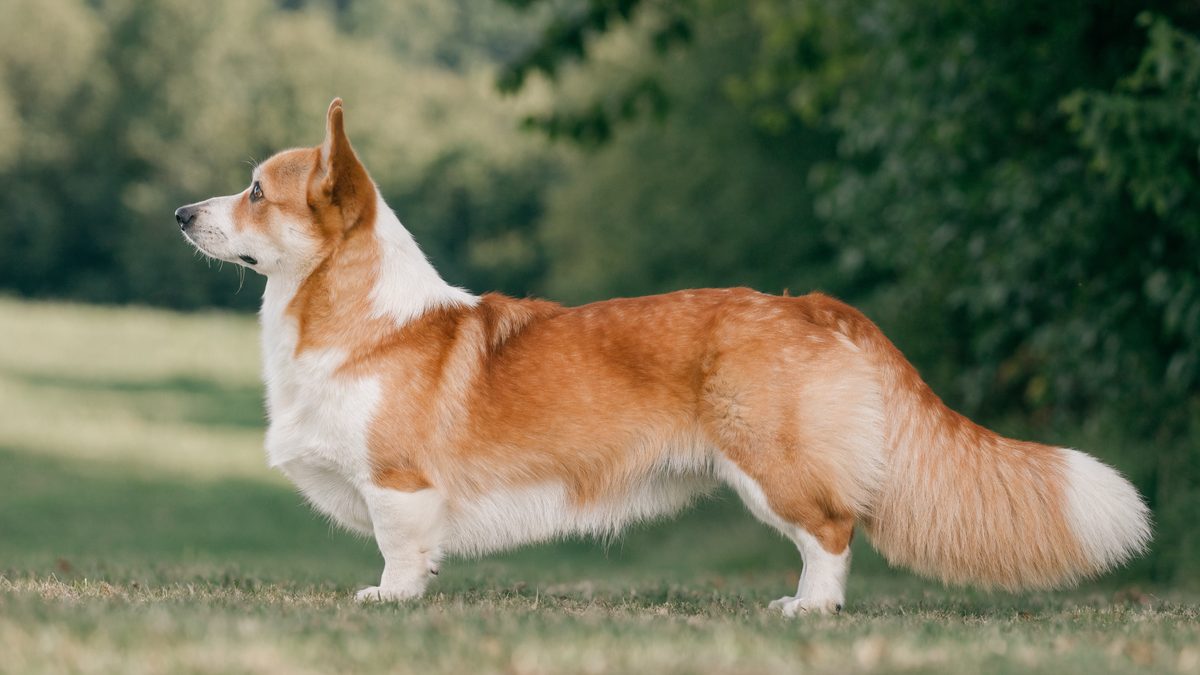
Quick answer
The corgi price in India runs Rs 35,000 to Rs 2,50,000 in 2026, and six published sources disagree by roughly sevenfold about the same breed. Bonbeno rates the Pembroke Welsh Corgi 2 of 5 for heat tolerance. It is a chondrodystrophic double-coated herding dog with real exercise needs, heavy shedding, a genuine voice, and a spine whose risk almost every Indian page reports with a number that no dataset supports.
This guide is general information for Indian pet owners and is not a diagnosis. Always consult a registered veterinarian near you before acting on anything you read here, and treat any sudden change in your dog's condition as urgent.
Pembroke Welsh Corgi at a glance
What a Pembroke Welsh Corgi is
The Pembroke Welsh Corgi is a small Welsh cattle-herding dog built low to the ground by a genetic mutation, and that single sentence explains most of what follows on this page. The FCI classifies it in Group 1, Sheepdogs and Cattle Dogs, Section 2 Cattledogs, with Great Britain as country of origin. It is a working dog in a compact body, not a lap dog with short legs, and the difference decides whether it works in an Indian flat.
Under the American Kennel Club standard the Pembroke stands 10 to 12 inches at the withers and weighs up to 30 pounds for dogs and 28 pounds for bitches, with the preferred show-condition dog around 27 pounds and the bitch around 25. The FCI standard, which is the one that governs a KCI-registered dog in India, gives the same height in metric at approximately 25 to 30 cm and sets weight at 10 to 12 kg for males and 9 to 11 kg for females.
The proportion is the defining measurement and almost no Indian page quotes it. The AKC standard requires that the distance from the withers to the base of the tail be approximately 40 percent greater than the distance from the withers to the ground. That is what makes the outline. The standard then immediately warns that exaggerated lowness interferes with the desired freedom of movement and should be penalised. A corgi is meant to be long and low, not flat to the floor.
| Attribute | American Kennel Club | Royal Kennel Club | FCI-Standard No. 39 |
|---|---|---|---|
| Height at withers | 10 to 12 in | Approximately 25 to 30 cm (10 to 12 in) | Approximately 25 to 30 cm |
| Weight | Not over 30 lb dogs, 28 lb bitches | Dogs 10 to 12 kg, bitches 9 to 11 kg | Males 10 to 12 kg, females 9 to 11 kg |
| Ears | Erect, firm, medium, tapering to a rounded point | Pricked, medium sized, slightly rounded | Pricked, medium sized, slightly rounded |
| Eyes | Oval, medium, set somewhat obliquely, brown | Well set, round, medium size, brown | Well set, round, medium size, brown |
| Coat | Medium length, thick weather-resistant undercoat, coarser longer outer coat | Medium length, straight with dense undercoat, never soft, wavy or wiry | Medium length, straight with dense undercoat, never soft, wavy or wiry |
| Tail | "Docked as short as possible without being indented" | "Previously customarily docked short". Undocked and natural bobtail both described | Natural. "Natural bobtails may occur, when the tail can be of any length" |
| Standard dated | Approved 13 June 1972, reformatted 28 January 1993 | Last updated 1 April 2025 | Valid 16 June 2022 |
The tail, and why it is a legal question in India
Read the tail row again, because it is the one place where the three standards flatly contradict each other and where Indian law overrules all three. The American standard still instructs that the tail be docked as short as possible without being indented, allowing a natural dock or a tail up to two inches. The FCI standard describes no docking at all and simply notes that natural bobtails may occur, in which case the tail can be of any length. The Royal Kennel Club records that the Pembroke was traditionally docked but that the differentiation from the Cardigan no longer exists since the docking ban, and that some breeders have worked hard to produce natural bobtails instead.
Second Schedule Part II para 6(8) of the Prevention of Cruelty to Animals (Dog Breeding and Marketing) Rules, 2017, notified on 23 May 2017, states that "there shall be no tail docking, ear cropping de-barking, de-clawing, branding, dyeing, injecting substances to enhance visual appeal, performing a surgery or procedure to camouflage or hide any defect or infirmity or any other kind of mutilation of any body part of the pup and any change of appearance by artificial means is strictly forbidden". The Animal Welfare Board of India had already advised in September 2011 that non-therapeutic tail docking and ear cropping amount to mutilation and cruelty under the Prevention of Cruelty to Animals Act, 1960, and is therefore a punishable offence. The Madras High Court overturned that ban in 2013, the AWBI appealed, and in July 2019 the court confirmed that these mutilations are prohibited by law in view of the 2017 and 2018 Rules. A docked Pembroke puppy sold in India today is the product of an illegal procedure.
This matters more for the Pembroke than for almost any other breed, because the Pembroke is on both of the relevant lists. Beauty Without Cruelty India records the Pembroke Welsh Corgi among the traditionally docked breeds and separately among the breeds carrying the C189G natural bobtail mutation in the T-box transcription factor T gene, with the plain warning that not all puppies are born with natural bobtails and those that are not are often subjected to docking. The Royal Kennel Club has recorded naturally bobbed tails on registration certificates since October 2008, and requires veterinary certification on practice headed paper before it will do so.
The practical consequence for an Indian buyer is a single question to a seller. Ask whether the puppy's short tail is natural, and ask for the veterinary certification that says so. Indian listings on page one of this exact search still describe the Pembroke tail as "naturally short or docked", as though the two were interchangeable. They are not. One is a gene and the other is an amputation performed on a newborn, and only one of them is legal here.
Pembroke or Cardigan, and why it is not a style choice
The Pembroke Welsh Corgi and the Cardigan Welsh Corgi are two separate and distinct breeds, and the AKC says so in those words. They were allowed to interbreed freely at one time, and the Kennel Club recognised them as two separate breeds in 1934, the same year the AKC recognised the Pembroke. The word corgi itself is thought to come from the Celtic cor, meaning dwarf, and gi, meaning dog.
| Point of difference | Pembroke | Cardigan |
|---|---|---|
| Tail | Traditionally docked, natural bobtails occur, undocked tail set in line with the topline | "Has always been undocked", long and bushy |
| Ears | Pricked, medium sized, slightly rounded | Larger and more rounded than the Pembroke's |
| Body and front | Not quite as long in body, straighter front legs | Longer bodied, front legs slightly bowed |
| Colour | Self red, sable, fawn, black and tan with white. Any other colour unacceptable | Includes brindle and blue merle |
| Ancestry | Keeshond, Schipperke, Pomeranian, Samoyed, Chow Chow, Norwegian Elkhound and Finnish Spitz, with little Dachshund character | The older of the two, once called the Yard Dog because nose to tail tip measured a Welsh yard of 102 cm |
| Vulnerable native breed status | No The Royal Kennel Club, Breeds A to Z | Yes |
| Degenerative myelopathy, OFA at-risk | 53.8 percent of 5,432 | 15.5 percent of 1,021 |
That last row is the reason this comparison sits in the overview rather than being filed away as trivia. Two breeds that look similar enough for Indian sellers to mix up their descriptions carry very different frequencies of the same mutation, and the Pembroke carries three and a half times the Cardigan's rate on the same register. The health section below explains why that number is far less alarming than it sounds, but the point stands. These are different dogs.
The gene that made the shape
The short legs are a genuine dwarfism, not a matter of selective breeding for proportion. The Pembroke Welsh Corgi Club of America states it plainly: the breed is a true dwarf, chondrodysplastic breed, and despite its smaller size the Pembroke is proportionally built just like a larger, normal-sized dog. Two separate FGF4 retrogenes are responsible for short-limbed phenotypes in dogs, one on chromosome 18 and one on chromosome 12, and the most severe disproportionate dwarfism appears in breeds that carry both.
The Corgi is one of those breeds. A 2022 review of the effects of FGF4 retrogenes on canine morphology names the Dachshunds and Corgis as the examples of breeds with the shortest legs, which carry both retrogenes at high allele frequencies. In the 569-dog surgical cohort that first quantified this, the Pembroke Welsh Corgi carried the chromosome-12 retrogene at an allele frequency of 0.92 and the chromosome-18 retrogene at 1.00.
The corgi has been in this literature from the beginning. The 2009 Science paper that first identified an expressed FGF4 retrogene showed it strongly associated with chondrodysplasia, the short-legged phenotype that defines at least 19 dog breeds including the dachshund, the corgi and the basset hound. Eight years later, a second genome-wide analysis found a different FGF4 retrogene on chromosome 12 that segregated with limb length and carried an odds ratio of 51.23 for intervertebral disc disease (95 percent CI 46.69 to 56.20). The short legs and the disc risk are the same evolutionary event, twice over.
Bonbeno's Dachshund page establishes this correction from the same body of evidence, and it applies to the Corgi for the same reason. The spinal risk in a chondrodystrophic breed comes from the genetics of the short legs, not from the length of the back. Chondrodystrophy is defined by dysplastic, shortened long bones and premature degeneration and calcification of the intervertebral discs, produced by one mutation. Every Indian corgi page attributes the risk to the long body. The causal factor is the legs, and that changes what you screen for, because you screen the discs rather than measure the back.
Where the breed came from, and why it is famous
The Pembroke is the younger of the two Corgi breeds and traces its origin to 1107 AD, with its direct ancestors brought across the channel by Flemish weavers whom Henry I of England induced to settle in Wales. Both Corgi breeds were traditionally used as heelers, driving cattle by day and guarding them at night. The low stature was functional, keeping the dog under the kick line of the cattle it was driving.
The modern fame is royal and then internet. The Royal Kennel Club attributes the Pembroke's greater popularity in part to royal patronage received since the reign of King George VI and carried on by Queen Elizabeth II. The AKC ranks the breed 16 of 210 on its 2025 popularity list. In India the demand is driven by social media rather than by any working role, and that gap between the image and the animal is the single largest problem this page exists to close.
One more note on what the standard actually asks for, because it contradicts the marketing. The AKC standard names fluffies a very serious fault, defined as a coat of extreme length with exaggerated feathering on ears, chest, legs, feet, underparts and hindquarters, and adds that trimming such a coat does not make it any more acceptable. The Corgi is to be shown in its natural condition with no trimming permitted except to tidy the feet and, if desired, remove the whiskers. An Indian seller advertising a fluffy corgi at a premium is charging extra for a disqualifying fault.
Corgi price in India 2026, and why the sources disagree
The corgi price in india runs Rs 35,000 to Rs 2,50,000 across the six published sources that rank for this query in 2026, a spread of roughly sevenfold for the same breed. No single number is correct, and the honest answer is to show you the whole range with the source attached to each figure so you can see who is quoting what.
Bonbeno does not sell dogs, does not broker puppy sales and does not publish breeder listings. What follows is reported editorial content about published price claims, not an offer and not a recommendation of any seller.
| Source and date | Quoted range | What it is measuring |
|---|---|---|
| Asia Pets listing | Rs 35,000 | One live listing, a 50-day-old male, red and white, KCI eligible |
| Supertails corgi guide, April 2026 | Rs 45,000 to Rs 1,50,000 and above | Three quality tiers, sourced to breeder interviews and marketplace listings |
| Supertails dog price list 2026 | Rs 60,000 to Rs 2,00,000 | The same publisher, a different page, a wider band |
| Mr n Mrs Pet blog, October 2025 | Rs 75,000 to Rs 2,50,000 | Three tiers. The same site brokers puppy sales |
| Mr n Mrs Pet listing page | Rs 90,000 to Rs 1,70,000 and above | The same publisher again, a third band, with 73 puppies listed |
| Puppiezo live listings | Rs 79,999 to Rs 1,02,499 | Eight individually named eight-week puppies with per-dog asking prices |
Two things in that table deserve a moment. One publisher quotes three different ranges across two of its own pages, from a Rs 45,000 floor on the corgi guide to a Rs 60,000 floor on the price list, and Mr n Mrs Pet moves its own floor from Rs 75,000 on the blog to Rs 90,000 on the listing page Supertails, Dog Price List in India 2026 Mr n Mrs Pet, How Much Does a Pembroke… Mr n Mrs Pet, Pembroke Welsh Corgi Puppies…. And the two sources publishing the highest bands are both sites that also sell puppies. That is not an accusation of dishonesty. It is a reason to weight the live per-puppy listings, which cluster tightly between Rs 79,999 and Rs 1,02,499, more heavily than the editorial bands that sprawl across two lakh.
What the quality tiers actually buy
Every Indian source uses the same three-tier ladder, and the tiers are marketing categories rather than measured grades. Set them side by side and the disagreement is obvious.
| Tier | Supertails | Mr n Mrs Pet blog | Mr n Mrs Pet listing |
|---|---|---|---|
| Pet or basic quality | Rs 45,000 to Rs 60,000 | Rs 75,000 to Rs 1,20,000 | Rs 90,000 to Rs 1,20,000 |
| KCI registered | Rs 60,000 to Rs 85,000 | Rs 1,20,000 to Rs 1,80,000 | Rs 1,20,000 to Rs 1,40,000 |
| Show or champion bloodline | Rs 85,000 to Rs 1,50,000 and above | Rs 1,80,000 to Rs 2,50,000 and above | Rs 1,40,000 to Rs 1,70,000 |
A KCI-registered corgi costs Rs 60,000 on one page and Rs 1,80,000 on another. Both pages rank for the query you just typed. Kennel Club of India registration documents pedigree, not health. It certifies that the parents were registered purebreds. It does not certify hips, it does not certify eyes, and there is no Indian equivalent of the OFA or the BVA schemes that would let you check. The premium you pay for papers is a premium for lineage documentation and show eligibility, and nothing else.
City-wise prices, and what to make of them
Two sources publish city tables and they do not agree either. Supertails puts KCI-registered corgis at Rs 70,000 to Rs 1,00,000 in Delhi NCR and Rs 52,000 to Rs 72,000 in Chennai, a metro gap of roughly Rs 18,000 to Rs 28,000. Mr n Mrs Pet's city table is almost flat, quoting Rs 90,000 to Rs 1,70,000 in Delhi, Mumbai, Jaipur, Pune and Lucknow, and Rs 95,000 to Rs 1,70,000 in Hyderabad, Bangalore and Chennai.
| City | Supertails, KCI-registered tier | Mr n Mrs Pet, all tiers |
|---|---|---|
| Delhi NCR | Rs 70,000 to Rs 1,00,000 | Rs 90,000 to Rs 1,70,000 |
| Mumbai | Rs 68,000 to Rs 95,000 | Rs 90,000 to Rs 1,70,000 |
| Bangalore | Rs 60,000 to Rs 85,000 | Rs 95,000 to Rs 1,70,000 |
| Hyderabad | Rs 55,000 to Rs 80,000 | Rs 95,000 to Rs 1,70,000 |
| Chennai | Rs 52,000 to Rs 72,000 | Rs 95,000 to Rs 1,70,000 |
| Pune | Rs 62,000 to Rs 88,000 | Rs 90,000 to Rs 1,70,000 |
Read the Hyderabad and Chennai rows across. One source says a KCI-registered corgi there costs Rs 55,000 and the other says the floor is Rs 95,000. City-wise price tables in Indian pet content are largely constructed rather than surveyed, and Bonbeno prints both rather than picking the tidier one.
The listing that should stop you
On page one of this exact search sits a listing for a 50-day-old male Pembroke Welsh Corgi at Rs 35,000, offered with free hand-delivery anywhere in India. Rule 8(1)(a) of the Prevention of Cruelty to Animals (Dog Breeding and Marketing) Rules, 2017 requires every breeder to ensure that pups less than eight weeks in age are not sold. Eight weeks is 56 days. A puppy advertised at 50 days is being offered six days below the statutory minimum, and the advertisement is not hidden on a classifieds site, it is indexed against the country's main corgi price query. Check the stated age before you check anything else.
The rest of the same Rules are worth knowing before you make a call. Rule 8 also requires that dogs over six months not be sold without first being sterilised unless the buyer is another licensed breeder, and that only dogs in good health that have been given the medical inoculations are sold. Rule 6 forbids inbreeding within the first four generations and incest breeding outright, bars mating a female after the age of eight years, and requires the breeder to hold a full record of previous litters. Those are the questions a serious Indian buyer asks, and almost nobody does.
Ignore the tier label. Ask five things instead. What is the puppy's age in days, and is it at least 56. Can you see the dam with the litter where the puppies were raised. Is the tail natural, and is there veterinary certification of a natural bobtail. Have the parents' hips been evaluated under any recognised scheme, and can you see the certificate. Is there a written health certificate dated close to handover The Royal Kennel Club, Breeds A to Z. A puppy at Rs 90,000 from a breeder who can answer all five is better value than one at Rs 45,000 from a breeder who can answer none, because the difference lands later as orthopaedic bills.
One further Indian-market note. The Google India results for this query carry related searches for a teacup corgi and a mini corgi, and neither is a recognised variety of the breed. The AKC standard states that obvious oversized specimens and diminutive toylike individuals must be very severely penalised, and the Royal Kennel Club adds the general warning that a dog might be larger or smaller than the measurements given without that making it a separate type. A seller offering a teacup or mini corgi at a premium is charging you extra for something the breed standard explicitly penalises.
Monthly cost of keeping a Corgi in India
The monthly cost of keeping a Pembroke Welsh Corgi in India runs Rs 3,000 to Rs 13,700 across the published Indian estimates, and the honest middle for a metro household is Rs 6,000 to Rs 9,000. The purchase price is the smallest number in this section. Over a twelve to fifteen year life the recurring spend is several times what you pay the breeder.
Start with what the two main Indian sources publish, because they disagree with themselves as well as with each other.
| Source | Monthly estimate | What it covers |
|---|---|---|
| Mr n Mrs Pet listing FAQ | Rs 3,000 to Rs 7,000 | Food, grooming, vet visits, routine care |
| Mr n Mrs Pet blog | Rs 5,500 to Rs 8,000 | Food Rs 3,000 to Rs 5,000, vet Rs 1,000 to Rs 2,000, grooming Rs 500 to Rs 1,500, miscellaneous Rs 1,000 to Rs 2,000 |
| Supertails, basic budget | Rs 3,500 to Rs 5,100 | Food, averaged preventive vet, grooming every eight weeks, toys and treats |
| Supertails, comfortable budget | Rs 5,500 to Rs 8,850 | Adds insurance, supplements and grooming every six weeks |
| Supertails, premium budget | Rs 8,100 to Rs 13,700 | Adds prescription food, bloodwork, orthopaedic support and training classes |
The same publisher puts the corgi's monthly cost at Rs 3,000 on one page and Rs 8,000 on another Mr n Mrs Pet, How Much Does a Pembroke…. Use the comfortable band. A corgi kept on the Rs 3,000 budget is a corgi being fed cheap food and skipping the grooming that a double coat in Indian humidity genuinely needs.
First-year total, and the line items Indians actually forget
Supertails puts the complete first year at Rs 95,000 to Rs 2,15,000 including the puppy, and breaks it into eleven line items. That structure is sound. Two of its numbers deserve challenging and one deserves adding.
| Line item | Published range | Bonbeno note |
|---|---|---|
| Puppy purchase | Rs 45,000 to Rs 85,000 | The live listings sit higher, Rs 79,999 to Rs 1,02,499 |
| Vaccination, three-series plus rabies | Rs 2,500 to Rs 4,000 | Reasonable for a metro clinic |
| Deworming, four rounds | Rs 1,000 to Rs 1,800 | Reasonable |
| Microchip and ID registration | Rs 600 to Rs 1,500 | Worth doing. A corgi is small, fast and worth stealing |
| Orthopaedic screening | Rs 2,000 to Rs 4,500 | Ask what is actually being screened. There is no Indian hip scheme |
| Food, twelve months | Rs 19,200 to Rs 36,000 | The single item most worth spending on, because weight control is the whole game |
| Professional grooming, six to eight week cycle | Rs 9,600 to Rs 21,600 | Optional if you brush properly at home. Never accept a clip |
| Flea and tick prevention, twelve months | Rs 3,600 to Rs 7,200 | Year-round in humid coastal cities, not seasonal |
| Training classes | Rs 5,000 to Rs 15,000 | Buy this. A herding breed without training becomes a heel-nipping problem |
| Bedding, crate, toys, collar, leash | Rs 4,000 to Rs 10,000 | Add a harness rather than a collar for lead pressure |
| Emergency veterinary buffer | Rs 5,000 to Rs 25,000 | Too low for this breed. See the note below |
The item Indian buyers under-budget is cooling. A double-coated dog in a Delhi or Ahmedabad summer needs the fan or the air conditioner running through the afternoon for roughly five months of the year, and Indian veterinary guidance treats indoor temperature above 32 C as dangerous for a dog at rest. That is an electricity line, not a pet line, and it does not appear in any published Indian corgi budget. The item everybody over-budgets is professional grooming. A Pembroke coat is not clipped and must not be clipped, so what you are buying at Rs 1,200 to Rs 1,800 a session is a bath, a blow-out and an undercoat rake. A rake, a slicker and twenty minutes several times a week at home does most of that for the price of the tools.
The contingency this breed actually needs
Supertails publishes Indian treatment costs for spinal disease at Rs 15,000 to Rs 60,000 per episode, with MRI at Rs 15,000 to Rs 25,000, CT at Rs 8,000 to Rs 12,000, decompressive surgery at Rs 40,000 to Rs 75,000 for complex cases, and physiotherapy at Rs 1,500 to Rs 3,000 per session. Those figures are unsourced but they are the only Indian numbers published anywhere, and they are the right order of magnitude for a metro referral hospital.
The probability those numbers apply to your dog is far lower than the same page implies, and the health section below sets out why. But the arithmetic still matters. A single decompressive spinal surgery costs roughly as much as the puppy did. Budget a Rs 75,000 contingency you never touch rather than a Rs 25,000 buffer you will exhaust in one bad week, and consider pet insurance early, because insurers price a chondrodystrophic breed on its known risks and often exclude the spine after the first claim.
Two costs no Indian page lists at all are worth planning for. Sterilisation runs a few thousand rupees at a metro clinic and is compulsory before resale of a dog over six months under the 2017 Rules. And a ramp or a set of pet steps for the sofa and the bed costs one to four thousand rupees and is the cheapest orthopaedic intervention available to you.
For an honest comparison, Supertails' own price list puts an adopted Indian street dog at Rs 0 to Rs 3,000 to acquire. The recurring costs of food, vaccination and parasite control are broadly similar for any small-to-medium dog. What differs is the inherited risk you are buying into, and that is what the health section prices.
Heat tolerance, humidity and the Indian summer
Bonbeno rates the Pembroke Welsh Corgi 2 of 5 for heat tolerance. This is a double-coated dog bred for the Welsh hills, and the AKC's own exercise guidance for the breed says to avoid extreme heat and always provide plenty of cool fresh water after exercise. A corgi can live well in almost any Indian city with disciplined scheduling and continuous indoor cooling, and it will suffer in every one of them without.
Be precise about the risk category first, because Indian pages inflate it. The corgi is not brachycephalic. It has a normal muzzle, an unobstructed airway and a fully functional panting mechanism, unlike the Pug or the Bulldog. Purina India's list of breeds at particular risk of heat stroke names short-faced dogs such as Boxers, Bulldogs, Pugs and Pekingese, and separately dogs with heavy coats such as Huskies and Newfoundlands. The Pembroke sits in the second group, not the first, and the second group is the milder one.
Indian veterinary guidance lists the factors that push a dog into the elevated-risk category regardless of breed, and three of them apply to a typical Indian corgi. Obesity, because adipose tissue insulates and reduces heat dissipation, with overweight pets overheating two to three times faster than lean ones. Dark or thick coats, with double-coated breeds specifically named as retaining heat. And age extremes, with puppies under six months carrying immature thermoregulation. A fat corgi puppy in a Delhi May is carrying all three at once.
| Ambient temperature | Published risk level | What it means for a double-coated corgi |
|---|---|---|
| Below 28 C | Low risk, normal activity | Walk, play and train freely. This is a Bangalore or Pune winter morning |
| 28 to 35 C | Moderate risk, reduce activity | Shorten walks to 15 to 20 minutes, early morning or late evening only |
| 35 to 42 C | High risk, outdoor activity contraindicated | No outdoor exercise. Asphalt reaches 60 C and burns paws in seconds |
| Above 42 C | Extreme, life-threatening exposure | Heatstroke possible within 10 to 15 minutes outdoors. Indoor cooling is not optional |
A 35 C day at 90 percent humidity is more dangerous than a 42 C day at 20 percent humidity, because panting relies on evaporation and high humidity prevents evaporative cooling. Mumbai, Chennai and Kolkata during the monsoon are therefore harder on a corgi than a dry Delhi peak, even though the thermometer says the opposite. If you keep a corgi in a humid coastal city, judge the risk by how the air feels rather than by the forecast number.
City by city, where a corgi actually works
The honest Indian answer varies by city and by month, and no ranking page gives it in that form. What follows is Bonbeno's reading of the published temperature thresholds applied to Indian conditions, not a survey.
| City or region | The hard months | What the household has to supply |
|---|---|---|
| Bangalore, Pune, Hyderabad | April to early June | Fans and shade for most of the year, air conditioning for roughly two months |
| Mumbai, Chennai, Kochi | March to October, humidity rather than heat | Continuous air movement, obsessive coat drying, and ear checks after every wet walk |
| Delhi NCR, Lucknow, Jaipur | April to July, then again in September | Air conditioning through the afternoon for five months, and a written plan for power cuts |
| Ahmedabad, interior Rajasthan and Gujarat | March to July | The hardest Indian posting for this breed. Cooling infrastructure is the deciding factor |
| Kolkata, Guwahati, Bhubaneswar | April to September, heat plus humidity together | Both problems at once. Treat monsoon months as seriously as summer ones |
| Shimla, Dehradun, Darjeeling, Gangtok | Almost none | The easiest Indian climate for a corgi. Coat care becomes the only real job |
The daily schedule that makes it work
- Walk before 7 am and after 8 pm from April to September. Indian veterinary guidance names those as the only safe windows during summer, and adds that even a 7 am walk can become dangerous by 7.30 am as the temperature climbs.
- Run the seven-second pavement test before every walk. Place the back of your hand on the pavement for seven seconds, and if you cannot hold it comfortably it is too hot for paws. A corgi's belly sits four inches off that pavement, so it takes radiant heat that a taller dog does not.
- Keep indoor temperature below 32 C with air conditioning, ceiling fans or coolers, and position a fan across a wet towel if you have no air conditioner.
- Give the dog a cool floor. Ceramic or marble tile, a cooling mat or an elevated bed. Many dogs seek tile out instinctively, and a corgi will splay flat on it, which is the position the internet finds adorable and which is actually thermoregulation.
- Refresh water two or three times daily in heavy ceramic bowls, because water temperature rises fast in Indian heat and a dehydrated dog overheats sooner.
- Never confine the dog to a balcony when the temperature is above 30 C. Balconies are heat traps with no shade and no airflow, and Indian apartments do this constantly.
Know the early signs, because stage one heat stress is reversible with immediate cooling and stage three is not. Watch for panting above 60 breaths a minute at rest against a normal 15 to 30, thick ropey saliva, bright red gums against a normal pale pink, restlessness and seeking cool surfaces, and a pulse above 180 beats a minute. Purina India adds severe salivating, vomiting, diarrhoea, a temperature at or above 40.5 C, and ultimately collapse.
If you suspect heat stroke, move the dog into shade or air conditioning, wet the whole body with room-temperature water making sure it reaches the skin, focus on the groin, armpits, belly and paw pads, and put a fan on the dog, because evaporation does the cooling rather than the water itself Purina India, Heat Stroke in Dogs. Do not plunge the dog into cold water or put ice on it. Ice causes the skin's blood vessels to constrict, which traps core heat and slows cooling. Stop active cooling once the temperature reaches about 39.4 C so you do not overshoot into hypothermia, and go to a veterinarian regardless, because delayed organ damage can appear 12 to 72 hours later AlcoVet Healthcare.
Two India-specific hazards close this section. Power cuts eliminate cooling exactly when demand peaks, so keep a battery fan, frozen bottles and a fallback plan. And traffic, because a ten-minute car trip that becomes a two-hour standstill with the engine off turns a car into a lethal box within fifteen minutes. Purina India puts the arithmetic starkly: at an outside temperature of 26 C the inside of a car reaches 32 C in five minutes and 43 C in 25 minutes.
Temperament, and the gap between the meme and the dog
A Pembroke Welsh Corgi is a bold, outgoing, opinionated herding dog in a small body, and the FCI standard describes exactly that: bold in outlook, workmanlike, outgoing and friendly, never nervous or aggressive. The AKC standard adds that the outlook is bold but kindly, never shy nor vicious, and directs judges to dismiss any excessively shy Pembroke from the ring. Nothing in either document describes a lap dog.
The internet image of this breed is a fluffy backside and a sploot on a tiled floor. The working reality is a cattle dog that was bred to drive livestock by nipping at heels and to stay low enough to duck a kick. Both facts are true. The problem in India is that buyers arrive having seen only the first one, and a herding instinct in a flat with running toddlers is not what they signed up for.
The three traits that decide whether this works
- Vocal. This is an alert breed and it will tell you about the lift, the delivery, the neighbour's cat and the pressure cooker. The AKC's own trait panel places the breed toward the vocal end of the barking scale and toward the vigilant end of the watchdog scale. In an Indian apartment block with shared walls, this is the single most common reason a corgi becomes a problem for the household rather than for the dog.
- Food-motivated to a fault. Every source that describes training this breed mentions food, and the AKC notes that positive reward-based training works best. The same drive is why an Indian corgi so often ends up overweight, which in a chondrodystrophic breed is not a cosmetic issue. Feed with a measuring cup, not by eye.
- Independent-minded. The AKC puts it precisely: Pembrokes often have a mind of their own, but they are energetic, willing and highly intelligent partners who respond well to training. Read both halves. The trainability is real, and so is the opinion.
Herding instinct, children and heel-nipping
The heel-nipping is instinct, not aggression, and it needs redirecting rather than punishing. A corgi that circles and nips at a running child is doing the job it was bred for on the only livestock available. The AKC's trait panel rates the breed well toward the good-with-children end and notes that early socialisation and puppy classes are strongly recommended, with the window between 7 weeks and 4 months named as the period that decides how well-adjusted the adult will be.
For an Indian household, three rules make this manageable. Teach the children not to run in circles indoors, because motion triggers the behaviour. Give the dog a legitimate outlet for the same drive through a flirt pole, a herding ball or a structured fetch game. And interrupt calmly and redirect rather than scolding, because a scolded corgi becomes a sneaky corgi rather than a quiet one.
A Pembroke will announce a visitor from three rooms away and will then greet them. The FCI standard describes a temperament that is outgoing and friendly and never aggressive, and the Royal Kennel Club records the breed as bold in outlook and workmanlike. If you want a guard dog, this is the wrong breed at any price, and any Indian seller marketing a corgi as a protective or security dog is describing a different animal. One listing on page one of this search does exactly that, calling the Pembroke suitable for families looking for a loyal and protective companion.
Who should buy this breed, and who should not
- Good fit. A household with someone home for much of the day, in a flat or small house, that wants an engaged, funny, trainable dog and can commit to an hour of exercise, several brushing sessions a week and disciplined portion control for twelve to fifteen years.
- Good fit. An owner who genuinely enjoys training, because this breed rewards it. Pembrokes compete in agility, herding, obedience and tracking, and the AKC lists all four as activities the breed excels at.
- Poor fit. A building with strict noise rules and unforgiving neighbours, unless you are prepared to train a quiet cue from week one.
- Poor fit. A household that works ten-hour days with nobody home. This is a social breed that was never designed to be alone all day, and a bored corgi redecorates.
- Poor fit. A buyer who wants a low-maintenance small dog. Indian listings market the Pembroke as low maintenance with a coat that is easy to groom. The AKC describes a thick weatherproof double coat that sheds a fair amount daily and far more in late spring and early summer, needing a daily once-over with a comb and a slicker brush. Those two claims cannot both be true.
- Poor fit. A household in an extreme-heat district with no reliable cooling, for the reasons the climate section sets out.
One temperament note specific to Indian conditions. A corgi is small enough to be picked up and big enough to object, and it is confident enough to try to manage a household. Set the rules in the first month, keep them consistent across everyone in the family including grandparents and domestic staff, and you get a delightful dog. Negotiate them, and you get a small, loud, opinionated dog that has worked out exactly who feeds it biscuits.
How to train a Corgi, and what this breed resists
To train a Pembroke Welsh Corgi, use food, keep sessions short and start in the socialisation window, because this is a highly intelligent breed with a mind of its own that responds well to positive, reward-based training. The breed learns fast. It also decides fast whether a rule is worth following, and that is where Indian owners lose ground.
Set the timeline first, because it is the thing every buyer asks and nobody publishes honestly. The AKC names the window between 7 weeks and 4 months as the period in which gentle exposure to a wide variety of people, places and situations decides how well-adjusted the adult dog will be. Under Indian law the puppy cannot legally come home before eight weeks, so in practice you have roughly ten weeks of prime socialisation window from the day the puppy arrives.
| Age | What you are working on | What success looks like |
|---|---|---|
| 8 to 12 weeks | Name, house training, crate, handling, gentle exposure to lift, traffic noise, doorbell, staff and visitors | Comes when called indoors, sleeps in the crate, tolerates paw and ear handling |
| 12 to 16 weeks | Sit, down, a quiet cue, loose-lead walking on a harness, bite inhibition | Reliable sit and down for food, walks without dragging, mouthing has stopped |
| 4 to 6 months | Recall in a garden or enclosed space, settle on a mat, redirecting heel-nipping to a toy | Recall works with distraction, the dog can lie down while the family eats |
| 6 to 12 months | Proofing every cue outdoors, structured exercise, ramp training for sofa and bed | Cues hold in a park, the dog uses the ramp by default |
| 12 months onward | Maintenance, plus a real job. Agility, herding, obedience or tracking | A tired, satisfied dog that is not inventing work for itself |
What works
- Food, weighed out of the daily ration. This breed will work all day for kibble. Take the training treats out of the measured daily food rather than adding them on top, because the calories are the reason so many Indian corgis are overweight by their second birthday.
- Short sessions, several times a day. Five minutes before each meal beats one twenty-minute block. A corgi disengages when it decides the game is finished.
- A quiet cue from week one. Train the dog to bark once and then stop on cue, and reward the silence rather than the bark. In an Indian apartment this is the single most valuable thing you will teach.
- A job. The AKC lists agility, herding, obedience and tracking as activities many Pembrokes enjoy and excel at. Even a scent game with treats hidden around a flat satisfies more of this dog than a longer walk does.
- Puppy classes. The AKC recommends early socialisation and puppy training classes for the breed in as many words. In a metro this costs Rs 5,000 to Rs 15,000 for a first-year course and it is the best money in the budget.
What this breed resists
Three things reliably go wrong, and none of them is a training failure so much as a mismatch between what the owner expects and what the dog was bred to do.
- Repetition without payoff. A Pembroke that has performed a cue three times for nothing stops performing it. Vary the reward, keep the rate high while learning, then thin it out unpredictably.
- Harsh correction. The standard describes a bold but kindly temperament and directs that an excessively shy Pembroke be dismissed from the ring. Heavy-handed correction produces exactly that shyness, and it is a fault in the breed for a reason.
- Being told not to herd. You cannot delete the instinct. You can only give it a legal target. Redirect to a toy, a flirt pole or a herding ball every single time, and the nipping fades because the dog has somewhere better to put it.
Teach the puppy to use a ramp or steps onto the sofa and the bed while it is small enough to think it is a game, well before any spine problem exists. Retraining an adult corgi that has jumped off furniture for four years is much harder, and the exercise section explains why the target is high jumps rather than all movement. Buy the ramp with the crate, not after the first scare.
One India-specific point. Household staff, grandparents and visiting relatives will feed this dog, and a food-motivated herding breed learns whose rules can be broken within about a week. Write the house rules down, put the daily measured food in one labelled container, and make it clear that nothing outside that container goes into the dog. That single system fixes both the training consistency problem and the obesity problem at once.
How much exercise a Corgi needs daily
A Pembroke Welsh Corgi needs up to one hour of daily exercise, which is the figure the Royal Kennel Club publishes for the breed. That is more than most Indian buyers expect from a dog with legs this short, and less than a working retriever needs. The number that matters more is what happens to the hour when the temperature makes the middle of the day unusable.
The AKC describes the Pembroke as a strong, athletic little dog developed to herd cattle and other livestock, happiest when it has a job, benefiting from moderate daily exercise and doing well on long walks or slow jogs. Indian sources go lower. Mr n Mrs Pet publishes 30 to 45 minutes of daily routine and Supertails publishes 60 minutes. Take the higher figure and treat the Royal Kennel Club's up-to-one-hour as the specification.
| Source | Daily requirement | What it is based on |
|---|---|---|
| Royal Kennel Club | Up to 1 hour per day | Breed characteristics panel for the Welsh Corgi (Pembroke) |
| American Kennel Club | Moderate daily exercise, long walks or slow jogs | Breed care guidance, no number given |
| Supertails, India | 60 minutes | Editorial estimate |
| Mr n Mrs Pet, India | 30 to 45 minutes | Editorial estimate |
| Puppiezo, India | Moderate to high activity, high energy level | Listing panel, no number given |
Fitting an hour into an Indian day
From April to September in most of the country, the hour has to fit before 7 am and after 8 pm. That is the real constraint, and it is why so many Indian corgis are under-exercised without their owners noticing. A practical split is 30 to 35 minutes of walking in the morning window, 20 minutes of walking in the evening window, and 10 to 15 minutes of indoor mental work in between.
- Sniff walks over speed walks. Twenty minutes of a dog reading a wall exhausts a herding brain more than forty minutes of marching. It also keeps the pace low, which matters for a short-legged dog on hot ground.
- Indoor scent games during the unusable hours. Hide measured kibble around the flat and let the dog find it. This is free, it burns the food you were going to feed anyway, and it satisfies a working breed.
- Structured fetch on a soft surface, not tile. A corgi sprinting and braking on a polished Indian floor is a joint and spine problem waiting to happen, and it is also how dogs blow cruciate ligaments.
- A flirt pole or herding ball for the instinct itself. This is the outlet that stops the heel-nipping, and ten minutes of it is worth a lot of walking.
- Puppies get short, gentle sessions, multiple times a day, rather than one long walk. Growth plates close late in the first year and a chondrodystrophic breed has no margin for over-exercising a growing skeleton.
The AKC states plainly that a Pembroke's short legs will not allow it to keep up with a bicycle rider. This is not a stamina question, it is a stride-length question, and a corgi asked to run alongside a cycle is running at close to its maximum for the whole distance. There is corroborating evidence from a related breed: the Dachshund charity that runs the UK screening programme cites a Scandinavian study in which exercise accompanying a cyclist increased the risk of disc calcification, while moderate use of stairs reduced it. Skip the bicycle.
What happens without the hour
An under-exercised herding dog does not become calm. It becomes inventive. The failure modes are predictable and every one of them gets reported by Indian owners as a behaviour problem rather than as an exercise problem. Barking at every corridor sound. Chewing skirting boards and charger cables. Herding the children, the cat and the vacuum. Digging at bedding. And weight gain, because a food-motivated dog with nothing to do eats.
The weight is the one that compounds. Indian veterinary guidance notes that obese pets overheat two to three times faster than lean pets, and the health section below sets out the evidence linking body condition to disc disease. Under-exercising a corgi in an Indian summer therefore makes the heat problem worse and the spine problem worse at the same time, from a single cause.
This is the finding that should change what Indian corgi owners do, and it comes from the largest lifestyle survey ever run on a closely related chondrodystrophic breed. In DachsLife 2015, dogs that exercised for less than 30 minutes per day were at increased odds of disc disease, while dogs that exercised for more than one hour per day, and dogs their owners considered highly or moderately active, were at decreased odds. In the same dataset, against a baseline of dogs described as not at all active, highly active dogs had an odds ratio of 0.140 (95 percent CI 0.07 to 0.27) and moderately active dogs 0.264, both at p below 0.001. The authors' own explanation is that dogs which exercise and jump regularly may develop more adequate musculature supporting the spine. Set that against the Indian guidance of 30 to 45 minutes a day and the message is uncomfortable. The commonest Indian recommendation sits inside the band that was associated with the worse outcome.
Jumping, stairs and what the evidence actually supports
Almost every corgi page tells you to stop the dog jumping on and off furniture and to ban stairs. Supertails publishes exactly that, recommending ramps instead of jumping and describing jump prevention as critical before age three. The blanket version of that advice does not survive contact with the data, and Bonbeno's Dachshund page sets out the full evidence for a closely related chondrodystrophic breed.
In DachsLife 2015, a survey of 2,031 dogs, animals that were not allowed to jump on and off furniture had 3.16 times the odds of disc disease (95 percent CI 2.47 to 4.05), and dogs with no stairs each day had 1.46 times the odds (1.10 to 1.96) compared with dogs that used a flight of stairs daily. The 43,517-dog Dog Aging Project analysis found regular staircase use among the factors associated with reduced odds of disc disease. Both papers flag reverse causality, and the DachsLife authors also offer the alternative that dogs which regularly jump may develop more adequate musculature supporting the spine.
The defensible instruction is therefore narrower than the slogan. The breed charity that ran that survey states it by life stage: a mature dog that is well-muscled and in ideal body condition should be capable of tolerating the normal activities of day-to-day living, while puppies up to 12 months, dogs over 7 years, and any dog already diagnosed with disc degeneration or a previous incident are at higher risk and should be managed. Sudden shocks from jumping down do put extra stress on the spine, but the majority of reported cases are not directly attributable to a single event such as running down stairs or jumping off furniture.
So provide a ramp for the high jumps such as a bed, restrict jumping for puppies, seniors and previously affected dogs, keep every dog fit and lean, skip the bicycle, and do not respond to the fear of injury by confining a healthy adult corgi to one room. A muscled dog is better protected than an immobilised one.
Grooming a double coat in Indian humidity
To groom a Pembroke Welsh Corgi in India, brush the double coat with a comb and slicker several times a week, rake the dead undercoat out during the twice-yearly moult, dry the dog completely after every wet walk, and never shave it. The Royal Kennel Club lists grooming for this breed as more than once a week and confirms that it sheds. The AKC is blunter, describing a daily once-over as what actually keeps the hair off your furniture.
The coat is a thick, weatherproof double coat: a soft light undercoat covered by a coarser outer coat. The breed standards agree on the structure. The AKC specifies a short, thick, weather-resistant undercoat with a coarser, longer outer coat, medium in overall length, with a slightly thicker and longer ruff around the neck, chest and shoulders, and body coat lying flat. The Royal Kennel Club and the FCI both require medium length, straight, with a dense undercoat, never soft, wavy or wiry Federation Cynologique Internationale.
One page-one Indian listing markets the Pembroke as low maintenance with a short double coat that is easy to groom and sheds moderately, and then in its own FAQ states that Pembroke Welsh Corgis have dense, curly coats that need trimming every 4 to 6 weeks to prevent matting. Both claims are wrong and they contradict each other. The coat is straight and never wavy or wiry under two of the three standards Federation Cynologique Internationale, and the AKC standard permits no trimming except to tidy the feet and, if desired, remove the whiskers. If a groomer tells you a corgi needs a four-weekly trim, find a different groomer.
The shedding, honestly
The AKC states that the breed sheds a fair amount on a daily basis and even more in late spring and early summer. That timing lands squarely on the Indian pre-monsoon heat, which is when the moult and the cooling problem collide. The AKC's routine is a daily once-over with a comb and a slicker brush to remove shed hair before it is all over the house, baths during shedding season to loosen dead hairs, complete drying before brushing begins, and a rake to strip out the undercoat.
| Task | Frequency | Why |
|---|---|---|
| Comb and slicker brush over the whole coat | Several times a week, daily during the moult | Removes shed hair before it reaches your floor and stops undercoat packing down |
| Undercoat rake, especially rear, ruff and trousers | Weekly, daily in the moult | Opens the coat so air reaches the skin, which is the correct summer intervention |
| Bath | Every 6 to 8 weeks, more during the moult | Loosens dead hair. Dry completely before brushing |
| Complete drying after any wet walk | Every time | A wet undercoat in humid air is where Indian skin and coat problems start |
| Ear check and clean | Weekly | The AKC lists weekly ear checks for infection as breed care |
| Nail trim | Every 3 to 4 weeks | Long nails change the foot angle on a dog already carrying an unusual front |
| Tick and flea check | After every outdoor walk | Year-round in humid Indian cities, not seasonal |
Never shave the coat
This is the one grooming decision that can genuinely harm the dog, and Indian groomers offer it every summer. Dr. Jerry Klein, the AKC's Chief Veterinary Officer, states that a dog's coat acts as an insulator, and that shaving it to reduce shedding or supposedly to keep the dog cool eliminates that insulating layer, makes the dog susceptible to heat stroke, and can result in improper hair growth and the possibility of follicle damage. The coat also protects against sunburn and reduces the risk of skin cancer.
There is long-term cosmetic damage too. When a double coat is shaved to the skin the undercoat grows back faster and can crowd out the slower-growing guard hairs, changing the texture and colour of the coat and leaving it patchy. Indian veterinary guidance agrees, telling owners never to shave double-coated breeds and to brush regularly instead so that air circulates to the skin. Raking the dead undercoat out is the opposite of clipping the coat off, and it is the intervention that actually works.
The instinct behind the shave is not stupid. A packed, matted undercoat genuinely does trap heat, and Indian guidance is explicit that matted fur traps heat. The fix is to remove the dead undercoat rather than the whole coat. Twenty minutes with a rake twice a week in April will do more for your dog's comfort than a clipper ever will, and it costs nothing after the first purchase.
Monsoon and coastal humidity
The monsoon is the hardest season for this coat and almost no Indian corgi page treats it seriously. A dense undercoat that stays damp is a warm, dark, wet environment against the skin, which is where hot spots, fungal disease and ear infections begin. Three habits handle it.
- Dry to the skin, not to the touch. Towel first, then a cool blow-dryer or a fan, working against the lie of the coat until the undercoat is dry. A corgi that feels dry on the surface is usually still wet underneath.
- Check ears after every wet walk. Erect ears drain better than drop ears, which is one genuine advantage this breed has, but a wet coat around the ear base still holds moisture against the canal.
- Keep the sleeping area clean, dry and ventilated, which is exactly what Indian veterinary guidance recommends during monsoon months. A damp bed undoes everything else.
Two practical Indian notes to finish. Furniture and clothing. A corgi at 10 to 12 kg produces a genuinely surprising volume of hair, and Supertails puts the annual cost of furniture protectors and a decent vacuum at Rs 4,000 to Rs 10,000. Budget it. Professional grooming. If you use a groomer, book a bath, blow-out and undercoat rake, and put in writing that the coat is not to be clipped. A double-coated dog can come back from an Indian summer grooming appointment shaved, and the coat may never return to its correct texture.
Health issues, inherited risk and lifespan
Two inherited conditions dominate Pembroke Welsh Corgi health and both sit in the spinal cord: intervertebral disc disease, which comes packaged with the short legs, and degenerative myelopathy, which was discovered in this breed. A third, hip dysplasia, is worse on the OFA register than in the German Shepherd. What follows corrects the two numbers Indian pages repeat most often, because neither survives checking.
The 1-in-4 disc disease claim, and what the data says
Supertails publishes that intervertebral disc disease affects 1 in 4 to 5 Corgis in their lifetime, and separately that veterinary orthopaedic specialists report 1 in 4 Corgis experience at least one significant spinal issue if preventive care is neglected. Neither claim carries a source. The largest owner-reported dataset that exists says something very different.
| Source | Figure for Pembroke Welsh Corgis | What it is measuring |
|---|---|---|
| Dog Aging Project, 43,517 dogs | 1.51 percent lifetime prevalence, 5 of 331 (95 percent CI 0.49 to 3.49) | Owner-reported disc disease in a US nationwide cohort. Tenth highest of the breeds with 200 or more dogs |
| Dog Aging Project, Dachshund comparison | 15.34 percent, 83 of 541 | The same measure in the breed the Corgi is usually compared with |
| Batcher surgical cohort, 569 cases | 11.11 percent surgery prevalence, 6 of 54 in the repository | Proportion of Pembrokes in a teaching-hospital DNA repository that had had decompressive spinal surgery. Seventh of 61 breeds |
| Supertails, India | 1 in 4 to 5, and separately 1 in 4 | Unsourced editorial estimate |
Those two credible figures, 1.51 percent and 11.11 percent, differ by roughly sevenfold, and the difference is methodological rather than contradictory. The Dog Aging Project figure is what owners across an entire country report about their own dogs, most of which never see a neurologist. The Batcher figure is the proportion of dogs in a veterinary teaching hospital's DNA repository that went to surgery, and a referral hospital's dog population is not the general population. The truth for a typical Indian pet corgi sits far closer to the low number than to the high one, and nowhere near 1 in 4.
It does not mean the Corgi has no spinal risk. It means the risk is roughly one tenth of the Dachshund's on the same measure, and roughly one twentieth of what Indian pages imply. Against an all-breed baseline of about 1.2 percent lifetime owner-reported disc disease in the same 43,517-dog dataset, the Pembroke's 1.51 percent is modestly elevated rather than catastrophic. Buy the breed with your eyes open, keep the dog lean and muscled, and stop budgeting for a spinal surgery that is far more likely not to happen.
The genetics, which are not modest at all
The genotype data tells a much starker story than the disease data, and reconciling the two is the most interesting thing on this page. Chondrodystrophy is caused by an FGF4 retrogene on canine chromosome 12, and the same insertion that shortens the limbs also causes premature degeneration and calcification of the intervertebral discs. A second retrogene on chromosome 18 shortens limbs without the same disc effect, and breeds carrying both show the most severe disproportionate dwarfism Bannasch D, Batcher K, Leuthard F.
| Measure | Pembroke Welsh Corgi | Dachshund, for comparison |
|---|---|---|
| 12-FGF4RG (CDDY, the disc-disease retrogene) allele frequency | 0.92 | 0.99 |
| 18-FGF4RG (CDPA, short legs only) allele frequency | 1.00 | 0.99 |
| Embark-tested dogs clear of CDDY/IVDD | 3.7 percent | Not reported on the same page |
| Embark-tested dogs at risk, homozygous | 68.4 percent | Not reported on the same page |
| Embark-tested dogs at risk, heterozygous | 27.7 percent | Not reported on the same page |
| Median age at spinal surgery | 7.0 years | 6.5 years |
Read the Embark rows together. 96.3 percent of Embark-tested Pembroke Welsh Corgis carry at least one copy of the CDDY/IVDD variant, and the mode of inheritance is dominant. One copy is enough. Only 3.7 percent test clear, which means breeding decisions in this breed cannot be made on this variant alone, exactly as Embark states.
The retrogene's effect is real and large where it is measured. In mixed-breed cases and controls, the chromosome-12 retrogene was associated with disc herniation in a dominant manner with an odds ratio of 18.42 (95 percent CI 7.44 to 50.26, p below 0.001), and the relative risk for disc surgery varied from 5.5 to 15.1 within segregating breeds. The retrogene also lowers the age of onset and increases radiographic disc calcification in an additive way.
Nearly every Pembroke carries the variant, yet only about one in sixty-six owners reports disc disease in a lifetime Demographic and lifestyle characteristics…. That is not a contradiction. It means the retrogene sets a floor of risk that the breed cannot escape, and that other factors decide who actually goes down: body condition, musculature, activity level, age and luck. It also means no breeder anywhere can sell you a Corgi that is free of this risk, and a seller who claims otherwise is either uninformed or lying. What you can do is manage the modifiable half, which is weight and muscle.
Degenerative myelopathy, the condition discovered in this breed
Canine degenerative myelopathy is a fatal, progressive neurodegenerative disease of the spinal cord, and the mutation behind it was found in Pembroke Welsh Corgis. The 2009 genome-wide association study used DNA from 38 DM-affected Pembroke Welsh Corgi cases and 17 related clinically normal controls, mapped the signal to chromosome 31, and identified a G to A transition in the superoxide dismutase 1 gene producing an E40K missense mutation. Homozygosity for the A allele was associated with DM in five breeds, the Pembroke Welsh Corgi first among them, and the authors identified canine DM as the first recognised spontaneously occurring animal model for amyotrophic lateral sclerosis.
Bonbeno's German Shepherd page carries the SOD1 evidence for that breed, where a UK referral study found penetrance to be relatively high if not complete. The Pembroke picture is genuinely different, and the breed's own parent club publishes the correction.
| Dataset | Clear | Carrier | At risk | What the population is |
|---|---|---|---|---|
| OFA register, 5,432 evaluations | 14.5 percent | 31.6 percent | 53.8 percent | Dogs submitted to OFA, mostly by breeders. Second highest breed on the register |
| Mars and Genoscoper data cited by the parent club | 12.2 percent | 35.1 percent | 52.7 percent | Commercial DNA testing across the breed |
| Japan, 122 randomly selected corgis without DM signs | 9.0 percent | 42.6 percent | 48.4 percent | Random sample, mutant allele frequency 69.7 percent |
| Embark database | 32.4 percent | 41.1 percent | 26.0 percent | Consumer DNA cohort that opted into research, North American |
Three of the four datasets cluster around half the breed testing at risk, and the Embark cohort sits well below them at 26 percent Bell JS, DVM, adjunct Professor of clinical… Chang HS, Kamishina H, Mizukami K Embark Veterinary. Bonbeno prints all four rather than averaging them, because the spread is itself information about how differently self-selected screening populations behave from random ones.
Two further findings put the genotype in proportion. A 2014 survey of the breed distribution of the SOD1 alleles found the c.118A allele in cross-bred dogs and in 124 different canine breeds, and concluded from samples collected with relatively low ascertainment bias that homozygotes are at a much higher risk of developing DM than heterozygotes are. It also found 8 dogs with histopathologically confirmed DM that were heterozygotes with no other variants in their SOD1 coding regions, so a single copy is not a guarantee of safety either. And the University of California Davis genetics laboratory notes that DM is inherited with incomplete penetrance and a complex mode of inheritance, with other genetic and environmental factors involved.
The specific modifier is worth naming, because it explains an otherwise odd entry on the OFA register. A published study describes an allele of the SP110 nuclear body protein gene as a possible modifier of the SOD1 allele in Pembroke Welsh Corgis, with at-risk dogs carrying the SP110 allele at higher risk than at-risk dogs without it, while calling for further study. That is what OFA's separate degenerative myelopathy risk-modifier table measures, and the Pembroke Welsh Corgi ranks first on it, with 77 evaluations giving 79.2 percent normal, 18.2 percent carrier and 2.6 percent abnormal. Seventy-seven dogs is far too small a sample to act on, and saying so is more useful than quoting the percentage as though it were settled.
Clinically, the picture is well described. The standard veterinary review sets out an adult-onset fatal neurodegenerative disease that begins as upper motor neuron spastic paraparesis and general proprioceptive ataxia in the pelvic limbs and progresses to flaccid lower motor neuron tetraparesis, with the SOD1 missense mutation identified as a risk factor and the condition compared to some forms of human amyotrophic lateral sclerosis. Affected dogs may fully lose the ability to walk 6 months to 2 years after signs begin.
Dr Jerold Bell, adjunct Professor of clinical genetics at the Cummings School of Veterinary Medicine at Tufts University, wrote the parent club's explanation of DM in this breed. In the only controlled study of breed frequencies of clinical DM, a UC Davis analysis of the Veterinary Medical Database for 1990 to 1999, 0.6 percent of Pembroke Welsh Corgis were diagnosed with DM, roughly 1 in 167 dogs. Because the SOD1 mutation is far more common than the disease, only about 1.1 percent of Pembroke Welsh Corgis testing homozygous at risk will become clinically affected, and 98.9 percent never will. DM is complexly inherited: a clinically affected dog must also carry a mutation in another gene or genes that has not yet been identified. By itself, the SOD1 result is a poor predictor of clinical disease in this breed.
That leads to advice most Indian sellers have never heard. The parent club recommends that Pembroke breeders not use SOD1 results to make breeding decisions unless there are confirmed DM-affected close relatives, because 87.8 percent of the breed tests as either carrier or at risk, and breeding only to the 12.2 percent clear dogs would cause a severe and possibly disastrous restriction of the breed gene pool. A SOD1 test can rule out a clinical diagnosis of DM but cannot confirm one.
Know the clinical picture anyway, because you may meet it. Signs usually begin between 8 and 14 years, with an average age of onset in Pembroke Welsh Corgis of 11 years. It starts as weakness of the hind legs, scuffing of the hind toes and crossing of the hind legs, progressing to dragging, over 6 months to 2 years. It is not painful. There is no treatment that alters the progression, and a confirmed diagnosis can only be made by pathological examination of the spinal cord.
The parent club states plainly that several common disease processes in Pembroke Welsh Corgis, including spinal disc disease, can cause similar clinical signs to DM. Telling them apart needs advanced imaging. An MRI in an Indian metro costs Rs 15,000 to Rs 25,000 and a CT Rs 8,000 to Rs 12,000, and outside the largest cities neither may be available at all. If your ageing corgi starts scuffing its hind toes, the difference matters enormously, because disc disease is often treatable and DM is not. Ask for referral to a veterinary neurologist rather than accepting a diagnosis made on a hunch.
Hip dysplasia, where the Corgi is worse than the German Shepherd
This is the finding most likely to surprise an Indian buyer. On the Orthopedic Foundation for Animals register, the Pembroke Welsh Corgi has 17,424 hip evaluations of which 21.8 percent are dysplastic, with 76.3 percent normal, split 3.3 percent excellent, 43.4 percent good and 29.6 percent fair. Of the dysplastic dogs, 17.9 percent are mild, 3.6 percent moderate and 0.3 percent severe.
| Breed | Evaluations | Normal | Dysplastic |
|---|---|---|---|
| Cardigan Welsh Corgi | 4,133 | 73.7 percent | 24.2 percent |
| Pembroke Welsh Corgi | 17,424 | 76.3 percent | 21.8 percent |
| German Shepherd Dog | 146,632 | 77.2 percent | 20.4 percent |
| Golden Retriever | 192,822 | 78.3 percent | 19.3 percent |
| Labrador Retriever | 324,584 | 87.5 percent | 11.3 percent |
| Dachshund | 504 | 94.8 percent | 4.6 percent |
A small herding dog sits above the German Shepherd and the Golden Retriever on the breed's own screening register, and twice the Labrador. That is not a fluke of the current dataset either. A peer-reviewed study of 399 Pembroke Welsh Corgis published in 2012 noted that OFA ranked the breed among the top 50 for hip dysplasia prevalence at 18.4 percent as of May 2011, and diagnosed hip dysplasia in 31 percent of the Corgis over two years of age in its own sample. The OFA figure has since risen to 21.8 percent.
The same study found something useful about how the disease shows up in this breed. Every one of the 399 Corgis had a distraction index above 0.30, mean 0.66, which is high joint laxity, yet only 6.8 percent had conventional osteoarthritis. Circumferential femoral head osteophytes were present in 74.4 percent, and their presence increased the odds of hip dysplasia by 8.9 times. The authors concluded that Corgis have a low frequency of conventional osteoarthritis despite laxity that would predict it in large breeds. Practically: a corgi can have radiographically dysplastic hips and walk normally for years, which is why hips are screened rather than diagnosed by watching the dog.
The OFA Canine Health Information Center lists exactly two screening requirements for the Pembroke Welsh Corgi: hip dysplasia, satisfied by either an OFA radiographic hip evaluation or a PennHIP evaluation registered with OFA, and an ACVO eye examination registered with OFA. A CHIC number also requires the dog to be permanently identified by microchip or tattoo, and results do not all have to be normal, they only have to be in the public domain. The AKC's national breed club recommends the same two tests, and the Royal Kennel Club lists hip testing under the BVA and KC Hip Dysplasia Scheme as Best Practice for the breed. No Indian hip scheme exists, so a breeder who has screened at all will have done it privately or imported the parent.
The rest of the inherited risk profile
- Von Willebrand disease type I. A recessive bleeding disorder in which affected dogs have low von Willebrand factor levels. The Pembroke sits fifth on OFA's von Willebrands register, with 724 evaluations giving 91.3 percent normal, 8.3 percent carrier and 0.4 percent abnormal. Embark's cohort is close, at 82.8 percent clear, 16.3 percent carrier and 0.7 percent at risk. The AKC lists it among the conditions responsible breeders screen for. It matters most before any surgery, including a routine spay.
- Eye disease. OFA records 10,279 eye evaluations for the breed with 94.4 percent normal and 5.6 percent abnormal. Progressive retinal atrophy of the rcd3 type appears in the breed but is very rare, with a clear rate above 99 percent in Embark's data. The annual ophthalmologist examination is mandatory under the breed's own health scheme for a reason.
- Exercise-induced collapse. A recessive DNM1 mutation, with 85.3 percent of Embark-tested Pembrokes clear, 13.9 percent carriers and 0.6 percent at risk. Rare, but worth knowing if a young corgi collapses after hard exercise rather than after heat exposure.
- X-linked severe combined immunodeficiency, Corgi variant. An X-linked recessive IL2RG mutation specific enough to this breed that the variant carries its name. Very rare, above 99 percent clear.
- Heart. Reassuring. OFA records 644 basic cardiac evaluations at 100 percent normal and 642 congenital cardiac evaluations at 100 percent normal, though a much smaller advanced cardiac sample of 69 dogs shows 8.7 percent abnormal. Cardiac screening is listed among the tests breeders may choose rather than among the mandatory ones.
- Patellar luxation. Also reassuring for a small breed. 909 OFA evaluations give 99.1 percent normal and 0.9 percent abnormal, all grade 1.
- Elbows. 2,498 OFA evaluations at 94.1 percent normal and 5.5 percent abnormal, which is mild by comparison with the German Shepherd's 18.7 percent.
- Thyroid. A small sample of 50 evaluations, 82 percent normal with 18 percent equivocal and no recorded autoimmune thyroiditis. Too few dogs to draw a conclusion, and worth saying so.
Obesity, which compounds everything above
Obesity is not a separate health issue in this breed. It is the multiplier on the two that matter. Overweight dogs overheat two to three times faster than lean ones, which worsens the Indian heat problem directly. And in the DachsLife analysis of a closely related chondrodystrophic breed, activity level showed one of the strongest associations in the whole survey, with highly active dogs at an odds ratio of 0.140 against inactive dogs. A fat, unfit corgi carries more risk on both axes at once.
Supertails puts obesity prevalence in Indian corgis at very high and notes that the breed is prone to overeating. That is editorial rather than measured, and the measured evidence is more interesting. In the largest UK study of overweight status in dogs, covering 22,333 dogs followed for a year, 7.1 percent were recorded as overweight and eight breeds showed increased odds against crossbreds: the Pug at 3.12 times, the Beagle at 2.67, the Golden Retriever at 2.58, the English Springer Spaniel at 1.98, the Border Terrier at 1.72, the Labrador Retriever at 1.70, the Cavalier King Charles Spaniel at 1.50 and the Cocker Spaniel at 1.32.
The Pembroke Welsh Corgi is not on that list. That is worth saying plainly, because it means the Indian claim of very high breed obesity is not supported by the best available data. Two other findings from the same study apply directly to Indian corgi households anyway: dogs aged 6 to under 9 years had the highest risk at 2.99 times that of dogs under 3, and neutered males had the highest risk of all at 1.90 times entire females. Weight gain in this breed is a management outcome rather than a breed destiny, and the feeding section below sets out the body condition test to use.
Lifespan
| Source | Figure | What it is measuring |
|---|---|---|
| American Kennel Club | 12 to 13 years | Breed expectation |
| Royal Kennel Club | Over 12 years | Breed characteristics panel |
| Pembroke Welsh Corgi Club of America | 12 to 15 years | Parent club statement |
| Puppiezo and Asia Pets, India Asia Pets, Pembroke Welsh Corgi Puppy… | 12 to 15 years | Indian listing panels, unsourced |
| Mr n Mrs Pet, India | 12 to 15 years | Indian listing specification table, unsourced |
| VetCompass UK life tables, all dogs | 11.23 years at age 0 (95 percent CI 11.19 to 11.27) | Life table built from 30,563 recorded deaths in UK primary veterinary care |
Note what is missing from that table. No breed-specific recorded-death dataset for the Pembroke Welsh Corgi was found. The UK life-table paper that gives breed-level figures for many breeds does not publish one for this breed, so every corgi lifespan number in circulation, Indian or otherwise, is a breed-club expectation rather than a measured outcome. The all-dog UK figure of 11.23 years is the only recorded-death anchor available, and the breed clubs' 12 to 15 sits above it Pembroke Welsh Corgi Club of America.
There is no Indian equivalent of VetCompass, no Indian hip or spine registry, no Indian insurance morbidity series and no Indian breed health survey for the Pembroke Welsh Corgi. Every prevalence, genotype and lifespan figure on this page comes from US, UK or Japanese populations. Indian conditions plausibly change some of them, particularly skin, ear and parasite disease, and heat-related emergencies, and nobody knows by how much. That gap is worth naming rather than papering over, and it is the reason this page reports ranges and sources rather than a single confident number.
Feeding a Corgi in India, and the weight problem
To feed a Pembroke Welsh Corgi in India, weigh the daily ration, split it into two measured meals, count every treat against it, and keep the dog inside the standard weight band of 10 to 12 kg for males and 9 to 11 kg for females. This is the section that matters most, because weight is the one inherited-risk multiplier you fully control.
Start with the target. The FCI standard sets 10 to 12 kg for males and 9 to 11 kg for females. The AKC allows up to 30 pounds for dogs and 28 for bitches but states that the preferred medium-sized dog of correct bone and substance weighs approximately 27 pounds, with bitches approximately 25. Indian listings quote 10 to 14 kg for males and 9 to 13 kg for females, which at the top end is above every standard. Use the FCI numbers, because those are the ones that apply to a KCI-registered dog.
Life-stage feeding
| Life stage | Meals per day | What to prioritise |
|---|---|---|
| 8 to 12 weeks | 4 | The breeder's food, changed slowly over 7 to 10 days. Switching food too quickly is a common cause of stomach upset at this age |
| 3 to 6 months | 3 | A small or medium breed puppy formula. Do not over-supplement calcium in a chondrodystrophic breed |
| 6 to 12 months | 2 | Watch the waistline monthly. This is when Indian corgis start to get heavy |
| 1 to 7 years | 2 measured meals | Adult small or medium formula. Weigh the ration. Treats come out of it, not on top of it |
| 7 years onward | 2 | Reduce calories as activity falls. Joint support and a body condition check at every vet visit |
On food cost, the Indian sources converge more than they do on anything else. Supertails puts monthly food at Rs 1,600 to Rs 2,200 on a budget brand, Rs 2,200 to Rs 3,000 on a high-quality brand and Rs 3,000 to Rs 4,200 on premium imported or prescription diets, and the first-year food total at Rs 19,200 to Rs 36,000. Mr n Mrs Pet publishes Rs 3,000 to Rs 5,000 a month. A realistic Indian metro figure for a 11 kg corgi on a decent commercial diet is Rs 2,000 to Rs 3,000 a month.
The 43,517-dog Dog Aging Project analysis found that being on a commercial diet was among the lifestyle factors associated with reduced odds of owner-reported disc disease, alongside higher daily active time and regular staircase use. That is an association rather than proof of cause, and the likely mechanism is simply that a measured commercial ration is easier to keep balanced and portion-controlled than a home diet. In Indian households where the dog is fed roti, rice and leftovers alongside its kibble, the calorie count is invisible and the weight goes up. If you feed home food, weigh it and have the recipe checked by a veterinarian.
The body condition test, which beats the weighing scale
A number on a scale means little without a shape to go with it. Use the standard three-point check every fortnight, and do it with your hands rather than your eyes, because a double coat hides a great deal.
- Ribs. You should feel each rib easily under a thin layer of fat, with light pressure, the way you feel the back of your own hand. If you have to press, the dog is overweight.
- Waist from above. Looking down at a standing corgi, there should be a visible narrowing behind the ribs. A straight-sided outline from chest to hip means the dog has gained.
- Tuck from the side. The belly should rise from the ribcage toward the hind legs. On a long, low dog this is subtle, so compare against photographs of the same dog taken monthly rather than against a mental impression.
In the 43,517-dog Dog Aging Project analysis, dogs with a history of being overweight had 1.67 times the odds of owner-reported disc disease (95 percent CI 1.38 to 2.01, p below .001), a finding that held after correcting for spay and neuter status. Indian veterinary guidance separately reports that overweight pets overheat two to three times faster than lean pets. So an overweight corgi in India carries elevated disc risk and elevated heat risk at the same time, from the same cause. There is no other single intervention available to an Indian owner that lowers two inherited-risk multipliers at once.
Practical Indian feeding rules
- Weigh the daily ration once a week and portion it into a labelled container. Nothing goes into the dog that did not come out of that container. This is the single system that survives grandparents, guests and household staff.
- Use kibble from the ration as training treats. A food-motivated herding breed will work for its own dinner, and this removes the largest hidden calorie source in most Indian homes.
- Keep the water cool and refreshed two to three times a day, especially in summer, because water temperature rises fast and a dehydrated dog overheats sooner.
- Feed the second meal after the evening walk, not before, so the dog is not exercising on a full stomach.
- Never feed the Indian favourites. Grapes, raisins, onions, chocolate and anything containing xylitol are the standard exclusions, and Indian sellers publish the same list on their own pages. Almonds, avocado, cherries, lemon, salt and sugar appear on the same list.
- Reweigh the dog monthly at the vet or on a bathroom scale, holding the dog and subtracting your own weight. A one-kilogram gain on an 11 kg dog is a nine percent gain, which on a human frame would be a stone.
One last note about supplements, because Indian budgets get raided for them. Supertails suggests joint supplements at Rs 800 to Rs 1,500 a month and orthopaedic support in its premium tier. The evidence is not encouraging. In DachsLife 2015, dogs supplemented with glucosamine or chondroitin were at increased odds of disc disease on univariable analysis, which the authors treat as reverse causality, since owners tend to start supplements after a problem appears. Do not read that as supplements causing harm. Read it as a warning that a supplement is not a substitute for keeping the dog lean and muscled, and spend the money on better food and a ramp instead.
The first year, month by month
The first year with a Pembroke Welsh Corgi in India runs from a legal minimum collection age of eight weeks through the socialisation window, the first summer, the first monsoon and the first adult moult. What follows is a month-by-month plan built around the dates that are fixed by law, by biology and by the Indian calendar.
Rule 8(1)(a) of the 2017 Rules requires every breeder to ensure that pups less than eight weeks in age are not sold. Eight weeks is 56 days. If a seller offers you a corgi puppy at 45 or 50 days, as one page-one Indian listing does at Rs 35,000, the sale is below the statutory minimum and the puppy has been taken from its litter before it finished learning bite inhibition from its siblings. Walk away, and ask the next breeder for the whelping date in writing.
| Age | Physical and health | Behaviour and training | India-specific |
|---|---|---|---|
| 8 to 10 weeks | Collection at 56 days or later. Continue the breeder's food, changing over 7 to 10 days. Vaccination course underway, deworming rounds continuing | Name, crate, house training, gentle handling of paws, ears and mouth | Puppies under six months have immature thermoregulation and are an elevated heat-risk category on their own |
| 10 to 16 weeks | Complete the core vaccination course by about 16 weeks. Microchip and register | The socialisation window is open. Gentle exposure to people, places and situations decides the adult dog | Introduce the lift, the doorbell, traffic noise, household staff and the building watchman deliberately |
| 4 months | Adult teeth coming in. Chewing peaks | Start a quiet cue. Redirect heel-nipping to a toy every time | Buy the ramp now and train it as a game before the dog is heavy enough to matter |
| 5 to 6 months | Growth slows. Do not over-exercise a growing chondrodystrophic skeleton | Recall in an enclosed space. Settle on a mat while the family eats | First real summer. Walks move to before 7 am and after 8 pm |
| 6 to 8 months | Discuss sterilisation timing with your veterinarian. Baseline weight recorded | Proof every cue outdoors. Structured fetch on soft surfaces only | First monsoon. Decide now where the dog toilets when the balcony floods, and buy ear cleaner before you need it |
| 8 to 10 months | The first serious moult. Undercoat comes out in sheets | Daily brushing becomes non-negotiable rather than optional | Humidity plus dead undercoat is where Indian skin problems start. Rake, do not shave |
| 10 to 12 months | Approaching adult weight. Target 10 to 12 kg for males, 9 to 11 kg for females | Transition to adult food. Recheck the daily ration against the new weight | First hip evaluation can be discussed. There is no Indian scheme, so ask what your vet can actually do |
| 12 months onward | Annual health check, annual ophthalmologist examination | Give the dog a job: agility, herding, obedience or tracking | Reassess the cooling plan before the next summer, including a power-cut fallback |
What to have ready before the puppy arrives
- A crate sized for an adult corgi, placed in the coolest room of the flat, not the balcony.
- A harness, not a collar, for lead work. Lead pressure on a collar sits directly over the neck of a dog whose spine you are trying to protect.
- A ramp or steps for the sofa and the bed, bought at the same time as the crate. Indian setup estimates put a ramp at Rs 1,500 to Rs 4,000.
- An undercoat rake, a slicker brush and a metal comb. These three tools replace most professional grooming for this breed.
- A cooling mat or a cleared patch of tile, plus a second water bowl.
- A kitchen scale and a labelled food container, because the weight problem is easier to prevent than to reverse.
- A veterinarian identified in advance, ideally one who has seen a chondrodystrophic breed before and knows where the nearest MRI is.
The socialisation window between 7 weeks and 4 months closes permanently, and the habits set in the first six months around food, furniture and noise are the ones that hold for twelve years. Everything else on this page can be fixed later. Those two cannot, so front-load the effort. A corgi that was properly socialised and taught a quiet cue before six months is a different animal in an Indian apartment from one that was not.
Corgi vs Cardigan, Dachshund, Beagle and the Indian Pariah Dog
Choose a Pembroke Welsh Corgi if you want a trainable, funny, medium-energy herding dog and can supply an hour a day, a brush and portion control. Choose the Cardigan Welsh Corgi if the spinal and neurological genetics worry you more than availability does. Choose an Indian Pariah Dog if climate, cost and expected health are the deciding factors, because on all three the native dog wins.
Pembroke against the Cardigan, on the numbers
The two Corgi breeds have been separate since 1934, and the differences that matter to an Indian buyer are not the ears and the tail. They are on the health registers.
| Measure | Pembroke Welsh Corgi | Cardigan Welsh Corgi |
|---|---|---|
| OFA hip evaluations | 17,424 | 4,133 |
| Hips dysplastic | 21.8 percent | 24.2 percent |
| Elbows abnormal | 5.5 percent of 2,498 | 5.4 percent of 1,373 |
| Degenerative myelopathy, at risk | 53.8 percent of 5,432 | 15.5 percent of 1,021 |
| Eyes abnormal | 5.6 percent of 10,279 | 2.4 percent of 1,895 |
| Patellae abnormal | 0.9 percent of 909 | 3.4 percent of 117 |
The hips and elbows are effectively level. The eyes and the DM register are not. The Pembroke carries three and a half times the Cardigan's rate of at-risk SOD1 genotypes and more than twice its rate of abnormal eye examinations. Set against that, the DM number is far less alarming than it looks, because only about 1.1 percent of at-risk Pembrokes ever develop clinical disease, and the Cardigan carries its own screening burden as a vulnerable native breed with a mandatory PRA-rcd3 DNA requirement for imported dogs and overseas sires on the Royal Kennel Club register since 6 January 2025.
There is one further practical difference for an Indian buyer. The Cardigan has always been undocked, so a Cardigan puppy with a full tail raises no questions, while a Pembroke with a short tail requires you to establish whether it is a natural bobtail or an illegal amputation Beauty Without Cruelty India. Availability runs the other way. The Pembroke has always been the more popular of the two, and Indian listings carry Pembrokes in volume and Cardigans occasionally.
Corgi against the breeds Indian buyers cross-shop
Supertails publishes a comparison of Indian ownership costs across six compact breeds, and it is a useful frame even where the numbers are editorial. Bonbeno adds the health column that no Indian page includes.
| Factor | Pembroke Welsh Corgi | Dachshund | Beagle | Indian Pariah Dog |
|---|---|---|---|---|
| Indian purchase price, KCI tier Supertails, Dog Price List in India 2026 | Rs 60,000 to Rs 85,000 | Rs 40,000 to Rs 55,000 | Rs 50,000 to Rs 75,000 | Rs 0 to Rs 3,000 to adopt |
| Published monthly cost | Rs 5,200 to Rs 8,500 | Rs 3,500 to Rs 6,000 | Rs 4,700 to Rs 7,200 | Comparable food and vaccination costs |
| Published first-year total | Rs 95,000 to Rs 2,15,000 | Rs 68,000 to Rs 1,47,000 | Rs 78,400 to Rs 1,85,100 | Lowest of the four |
| Chondrodystrophic | Yes, both FGF4 retrogenes | Yes, both retrogenes | Carries the chromosome-12 retrogene at 1.00 | No, normally proportioned |
| Lifetime owner-reported disc disease | 1.51 percent | 15.34 percent | 6.60 percent | Not measured, no Indian dataset exists |
| OFA hips dysplastic | 21.8 percent | 4.6 percent | Not compared here | Not on the register |
| Coat and shedding | Double coat, sheds daily and heavily twice a year | Smooth, long or wire, lower volume | Short, moderate | Short, well adapted to Indian heat |
| Heat tolerance | 2 of 5 on Bonbeno's scale | Better than the Corgi | Better than the Corgi | The best of the four by a distance |
Read the disc disease row carefully, because it is the one most Indian buyers get backwards. The Corgi's owner-reported disc disease rate is one tenth of the Dachshund's and less than half the Beagle's, despite the Corgi carrying nearly the same retrogene load as the Dachshund. If a long low body worries you, the Corgi is the safer of the two long low breeds on the only large owner-reported dataset available.
Now read the hip row, because that is the one Corgi buyers get backwards in the other direction. The Corgi's hip dysplasia rate on the OFA register is nearly five times the Dachshund's. The Dachshund page on this site treats the spine as the defining risk. For the Corgi, the hips deserve equal billing, and hip evaluation is one of only two mandatory tests under the breed's own health scheme.
The native alternative, stated plainly
If your deciding factors are climate, cost and expected health, the Indian Pariah Dog wins on all three. It is adapted to Indian heat and humidity by descent rather than by management, it costs Rs 0 to Rs 3,000 to adopt, it carries no chondrodystrophic spine and no breed-club screening burden, and adoption removes a dog from a shelter rather than adding demand to a breeding market.
That is not an argument against the Pembroke Welsh Corgi. If you want this specific temperament, a small, bold, endlessly trainable herding dog with a genuine sense of humour, no Indian native breed substitutes for it. It is an argument for making the choice with the trade-offs visible, which is what a directory is for. If you are choosing between an Indie and a Corgi purely on looks, choose the Indie. If you are choosing on temperament and can supply the hour, the brush, the ramp and the cooling, the Corgi is a workable Indian dog.
Mistakes Indian Corgi owners actually make
The failure modes for this breed in India are specific, documented and mostly avoidable, and the first three on this list are things the ranking pages themselves recommend. These are ranked by how much damage they do rather than by how often they are repeated.
- Buying a docked puppy, and paying for an illegal procedure. Second Schedule Part II para 6(8) of the 2017 Rules forbids tail docking outright, the Animal Welfare Board of India called it mutilation amounting to cruelty and a punishable offence in September 2011, and the Madras High Court confirmed in July 2019 that these mutilations are prohibited by law in view of the 2017 and 2018 Rules. Docking is done by cutting off the blood supply with a rubber ligature or by cutting the tail off, without anaesthesia, almost immediately after birth or before the pup is a fortnight old. Indian listings still describe the Pembroke tail as "naturally short or docked" as though the choice were cosmetic. Ask for the whelping date and the veterinary certification of a natural bobtail, and check the tail before you check the papers.
- Under-exercising the dog because the legs are short. Indian guidance publishes 30 to 45 minutes a day against the Royal Kennel Club's up to one hour. In the largest lifestyle survey of a closely related chondrodystrophic breed, dogs exercising under 30 minutes a day were at increased odds of disc disease and dogs exercising over an hour were at decreased odds, with highly active dogs at an odds ratio of 0.140 against inactive ones. Short legs are not a reason to walk less. They are a reason to walk on cool ground.
- Letting the dog get fat, then treating obesity as cosmetic. Overweight dogs had 1.67 times the odds of owner-reported disc disease in a 43,517-dog analysis, and overweight pets overheat two to three times faster than lean ones. This is the one modifiable factor that reduces two inherited risks at once. Weigh the food. Count the treats. Photograph the dog from above every month.
- Treating "never stairs, never furniture" as settled prevention. Supertails recommends jump prevention as critical before age three. Two large datasets found the opposite association. Dogs not allowed to jump on and off furniture had 3.16 times the odds of disc disease (95 percent CI 2.47 to 4.05), and dogs with no stairs each day had 1.46 times the odds (1.10 to 1.96), against dogs that used a flight of stairs daily. The Dog Aging Project found regular staircase use among the factors associated with reduced odds. Both papers flag reverse causality, and the breed charity's own position is life-staged: manage puppies under 12 months, dogs over 7 years and any previously affected dog, and let a well-muscled adult in ideal body condition live normally. Provide a ramp for high jumps such as a bed, and do not confine a healthy adult to one room out of fear.
- Shaving the coat in summer. The AKC's Chief Veterinary Officer states that shaving eliminates the insulating layer, makes the dog susceptible to heat stroke, and can cause improper hair growth and follicle damage. Indian veterinary guidance says never shave double-coated breeds and brush regularly instead. Rake the dead undercoat out. That is the intervention that actually cools the dog.
- Accepting a trim because a groomer offered one. The AKC standard permits no trimming except to tidy the feet and remove the whiskers. An Indian listing page nonetheless states that the Pembroke has a dense curly coat needing trimming every four to six weeks. That description belongs to a different breed entirely.
- Buying a puppy under eight weeks. Rule 8(1)(a) requires that pups less than eight weeks in age are not sold, and a page-one listing advertises a 50-day-old corgi. Under-age puppies miss bite inhibition learning from littermates, and the breeder who breaks this rule is unlikely to be following the rest.
- Paying a premium for a fluffy, a teacup or a mini. The AKC standard names fluffies a very serious fault and directs that diminutive toylike individuals be very severely penalised. Every one of these is a fault sold as a feature.
- Assuming KCI papers mean health screening. They do not. Kennel Club of India registration documents pedigree. The breed's own health scheme requires a hip evaluation and an ACVO eye examination, and no Indian scheme exists to deliver either. Ask for the actual certificates rather than the pedigree.
- Buying a "DM clear" puppy at a premium and thinking the problem is solved. The parent club's position, written by a Tufts clinical geneticist, is that 98.9 percent of at-risk Pembrokes never develop clinical DM, that the SOD1 result is by itself a poor predictor of disease, and that breeders should not use it to make breeding decisions unless there are confirmed affected close relatives. A seller charging extra for a clear result is charging for a test the breed's own club says is being over-interpreted.
- Confining the dog to a balcony during the day. Balconies are heat traps with no shade and no airflow, and Indian veterinary guidance names this specifically as an India-specific hazard. Never do it above 30 C.
- Ignoring the noise until the neighbours complain. This is a vocal, alert breed. A quiet cue taught in the first four months costs nothing. A noise complaint in an Indian housing society costs a great deal more.
- Missing the difference between disc disease and degenerative myelopathy in an ageing dog. The parent club states that spinal disc disease can mimic DM. One is often treatable and one is not. If an older corgi starts scuffing its hind toes, ask for referral rather than accepting a guess.
If you do nothing else on this page, do these. Keep the dog lean and muscled, because that lowers disc risk and heat risk together. Give it the full hour of daily exercise in the cool windows AlcoVet Healthcare. Brush the double coat properly and never shave it. And buy from a seller who can show you the dam, the whelping date, the hip evaluation and a health certificate Embark Veterinary.
Adoption, responsible sourcing and how to verify a seller
Adopt first, and if you buy, verify. Pembroke Welsh Corgis do turn up in Indian rescue, usually as adults surrendered when the shedding, the noise or the exercise requirement turned out to be real, and the breed's own parent club in the United States runs a dedicated rescue programme because the same thing happens there. An adult corgi from rescue skips the two hardest years and tells you what you are getting.
The adoption route in India
There is no Indian Pembroke Welsh Corgi breed rescue, and no Indian shelter publishes breed-wise intake data, so the honest position is that nobody knows how many corgis are surrendered in India each year. What exists is a network that works well enough if you use it patiently.
- Metro rescue groups and foster networks. Most Indian city rescues run breed-specific waiting lists informally. Register your interest and wait rather than searching once and giving up.
- Municipal and NGO shelters, which rehome healthy dogs for a nominal fee, often with vaccination and sterilisation already done.
- Owner-surrender listings on social media. Ask why the dog is being rehomed, and take the answer seriously if it is shedding, barking or exercise, because those are the things this page has spent 10,000 words telling you are real.
- Adopt an indie instead. Supertails' own price list puts an adopted Indian street dog at Rs 0 to Rs 3,000, and the Indian Pariah Dog is better adapted to Indian heat than any imported breed on this site.
You skip the socialisation window, the house training and the chewing, and you can see the adult coat, the adult weight and the adult temperament before you commit. Ask the rescue for a body condition assessment and, if the dog is over seven, for a neurological once-over, since dogs over 7 years are in the higher-risk group for spinal problems and clinical DM typically appears from 8 years with an average onset at 11 in this breed.
If you buy, this is what the law already requires
India regulates dog breeding, and almost no Indian buyer knows the rules well enough to hold a seller to them. The Prevention of Cruelty to Animals (Dog Breeding and Marketing) Rules, 2017 were notified on 23 May 2017. The relevant provisions are short and easy to quote back.
| Provision | What it says | What you ask for |
|---|---|---|
| Rule 8(1)(a) | Pups less than eight weeks in age are not sold | The whelping date in writing |
| Rule 8(1)(b) | Dogs over six months are not sold without first being sterilised, unless sold to another licensed breeder | Proof of sterilisation for any older dog |
| Rule 8(1)(d) | Only dogs in good health that have been provided the medical inoculations are sold | The vaccination and deworming record, and a dated health certificate |
| Second Schedule Part II para 6(8) | No tail docking, ear cropping, de-barking, de-clawing, branding, dyeing or any other mutilation, strictly forbidden | Veterinary certification if the tail is naturally bobbed |
| Second Schedule Part II paragraph 6(3) | No inbreeding within the first four generations and no incest breeding | The pedigree, and the record of the dam's previous litters |
| Second Schedule Part II para 6(4) and 6(5) | Female dogs are not mated after the age of eight years, with age certified by a veterinary practitioner | The dam's age, certified |
| Second Schedule Part II para 6(9) | Breeding to create new breeds of dogs or unusual looks is strictly prohibited | Nothing marketed as teacup, mini or a novel colour |
| Rule 7 | State Boards may inspect a registered breeder's establishment at least once a year | The breeder's registration |
The seven-question verification script
- "What is the puppy's date of birth?" Anything under 56 days on collection day is below the statutory minimum.
- "Can I see the mother with the litter, where they were raised?"; Not a video call from a different address. A seller who offers free hand-delivery anywhere in India but cannot show you the whelping room is a broker, not a breeder.
- "Is the tail natural, and do you have veterinary certification?"; The Royal Kennel Club requires veterinary certification on practice headed paper before it will record a bobtail. Ask for the Indian equivalent.
- "Have the parents had hip evaluations, and can I see the certificates?"; Hip evaluation is one of only two mandatory tests under the breed's own health scheme, and the Royal Kennel Club lists hip testing as Best Practice.
- "Has either parent had an eye examination by an ophthalmologist?"; The other mandatory test, and the AKC's national breed club recommends it.
- "What is the dam's age and how many litters has she had?"; Females may not be mated after eight years and the breeder must hold a full record of previous litters.
- "What happens if the dog develops a health problem?" Read the answer carefully. Several Indian sellers offer a replacement guarantee if the puppy dies within a stated window. A dog is not a phone. A replacement clause tells you how the seller thinks about the animal.
Bonbeno checked the corgi listings ranking for this query in August 2026. One advertises a 50-day-old puppy. One describes a Pembroke with the Cardigan's long bushy tail and larger rounder ears in its own listing copy. One markets the breed as low maintenance with an easy coat on the page and as needing a four-weekly trim in the FAQ. One corgi buying guide warns readers not to fall for "those icy blue eyes", which is copy written for a different breed and left in place. None of that proves cruelty. It does show how much of the Indian corgi market is templated content over a phone number, and it is why the verification script above is worth using.
What Bonbeno will and will not do
Most Indian breeders assume the international schemes are closed to them, and they are not. The OFA states that for dogs residing outside the US or Canada, owners may submit their own country's equivalent health screening results for listing on the OFA website, reviewed case by case with fees applying, and may then request a CHIC number if all the requirements are met. An Indian breeder who takes hip radiographs and an ophthalmologist's report can therefore put a Pembroke on a public international register. Almost none do. If you find one who has, you have found a breeder worth buying from.
Bonbeno does not sell animals, does not broker puppy sales, does not accept payment from breeders and does not publish breeder listings. Every price on this page is reported from a published third-party source so you can see the disagreement yourself rather than being handed one number. If a page tells you what a corgi costs and also sells you one, read it with that in mind. Two of the sources on this page do exactly that, and they are labelled where they appear.
If you have already bought a corgi, nothing here is an argument for giving the dog up. It is a specification for keeping one well in India, and the four things that matter most are a lean body, a full hour of exercise in the cool windows, a properly brushed and never-shaved coat, and a veterinarian who knows what chondrodystrophy means.
Corgi questions Indians actually search
How much does Corgi cost in India?
A corgi costs Rs 35,000 to Rs 2,50,000 in India depending on which published source you read, and the sources disagree sevenfold. Live per-puppy listings cluster much tighter at Rs 79,999 to Rs 1,02,499. The lowest figure, Rs 35,000, is attached to a 50-day-old puppy, which is below the eight-week legal minimum sale age.
Can a Corgi live in India?
Yes, with disciplined scheduling and indoor cooling, and Bonbeno rates the breed 2 of 5 for heat tolerance. A corgi is double-coated but not flat-faced, so it pants normally and sits in the milder of the two heat-risk groups. The requirements are walks before 7 am and after 8 pm from April to September, indoor temperature below 32 C, constant cool water, and never shaving the coat.
Which dog is under 10,000 rupees?
Indian native breeds and indie dogs are the honest answer under Rs 10,000, mostly through adoption rather than purchase. Published price lists put an adopted Indian street dog at Rs 0 to Rs 3,000. No responsibly bred Pembroke Welsh Corgi falls in this band, and the lowest published corgi price anywhere in India is Rs 35,000 on a listing that breaches the minimum sale age.
Which dog is 20 crore price in India?
No corgi sells anywhere near that, and no breed has a 20 crore market rate in India. Published Pembroke Welsh Corgi prices top out at Rs 2,50,000 for show and champion bloodlines. Crore-level figures reported in Indian media concern individual status purchases of rare imported dogs, and they are single transactions rather than a price band for any breed.
Do Corgis really get IVDD 1 in 4 times?
No, and that figure is unsourced. The largest owner-reported dataset in existence, covering 43,517 dogs, puts lifetime disc disease in Pembroke Welsh Corgis at 1.51 percent, against 15.34 percent in Dachshunds. A veterinary teaching hospital's DNA repository showed 11.11 percent of its Pembrokes had undergone spinal surgery, but a referral hospital population is not the general population.
What is the difference between a Pembroke and a Cardigan Welsh Corgi?
They are two separate breeds, recognised as such in 1934. The Cardigan is longer bodied with slightly bowed front legs, larger rounder ears, brindle and blue merle colours, and has always been undocked. The Pembroke is more popular. On the OFA register the Pembroke shows 53.8 percent at-risk degenerative myelopathy genotypes against the Cardigan's 15.5 percent.
Why do Corgis have no tail in photos, and is docking legal in India?
Tail docking is strictly forbidden in India under Second Schedule Part II para 6(8) of the Prevention of Cruelty to Animals (Dog Breeding and Marketing) Rules, 2017, and the Madras High Court confirmed the prohibition in 2019. The American breed standard still calls for the tail docked as short as possible, which is why almost all stock photography shows a stump. Pembrokes also carry a genuine natural bobtail mutation, so ask for veterinary certification.
How much exercise does a Corgi need?
Up to one hour a day, which is the Royal Kennel Club figure for the breed. Indian sources publish 30 to 45 minutes, which is lower than the evidence supports. In the largest lifestyle survey of a closely related chondrodystrophic breed, dogs exercising under 30 minutes a day had increased odds of disc disease and dogs exercising over an hour had decreased odds.
Are Corgis suitable for apartments in India?
Yes, with training. The Royal Kennel Club lists the ideal home as a small house with a small or medium garden, which is a much easier specification than the working breeds carry. Size is not the constraint in an Indian flat. Noise is, because this is a vocal alert breed, so teach a quiet cue in the first four months.
Should I shave my Corgi in summer?
No. The AKC's Chief Veterinary Officer states that shaving eliminates the insulating layer of fur, makes the dog susceptible to heat stroke, and can cause improper hair growth and follicle damage. The correct summer intervention is raking the dead undercoat out so air circulates to the skin, which is the opposite of clipping the coat off.
Are Corgis good for first-time dog owners in India?
Yes for a first-time owner who enjoys training, and no for one who wants a low-effort small dog. The breed is highly intelligent, food-motivated and responds well to reward-based training. It also sheds heavily, needs a full hour of exercise, is genuinely vocal, and carries inherited hip and spinal risk that needs managing for twelve to fifteen years.
Do Corgis get degenerative myelopathy, and should I pay extra for a DM-clear puppy?
The mutation was discovered in this breed, and roughly half of Pembrokes test at risk. But the breed's own parent club, in an explanation written by a Tufts clinical geneticist, states that only about 1.1 percent of at-risk dogs ever become clinically affected and that 98.9 percent never do. It also advises breeders not to make breeding decisions on the SOD1 result alone.
How long do Corgis live?
Breed clubs publish 12 to 13 years and 12 to 15 years, and Indian listings copy the 12 to 15 figure. No breed-specific recorded-death dataset for the Pembroke Welsh Corgi was found, so every published corgi lifespan figure is an expectation rather than a measured outcome. The UK life table for all dogs gives 11.23 years at age zero as the only recorded-death anchor.
Is a teacup or mini Corgi a real thing?
No. Neither is a recognised variety of the breed, and the AKC standard directs that diminutive toylike individuals be very severely penalised alongside obvious oversized specimens. Indian sellers advertising a teacup or mini corgi at a premium are charging extra for something the breed standard explicitly penalises, and the 2017 Rules prohibit breeding to create unusual looks.
Compare with similar breeds
Pembroke Welsh Corgi sits in 4 Bonbeno groups. Each one compares it directly against the breeds it is genuinely an alternative to, on the same figures.