
Breed profile
Dikkulak: A Turkish Regional Type, Not a Recognised Breed
A small erect-eared watchdog of north-eastern Turkey, described in one study of 61 dogs and registered by nobody.
Quick answer
The Dikkulak dog is not a recognised breed. Dikkulak means erect ear in Turkish, and it names a small regional watchdog type of Kars, Ardahan, Igdir, Agri and Erzurum that no kennel club and no Turkish state register recognises. One study, of 61 dogs measured in January 2011, is the entire measured record, giving a mean of 10.6 kg and 27.8 cm at the shoulder. It is not sold in India and no Indian price exists.
This guide is general information for Indian pet owners and is not a diagnosis. Always consult a registered veterinarian near you before acting on anything you read here, and treat any sudden change in your dog's condition as urgent.
Dikkulak at a glance
What a Dikkulak actually is
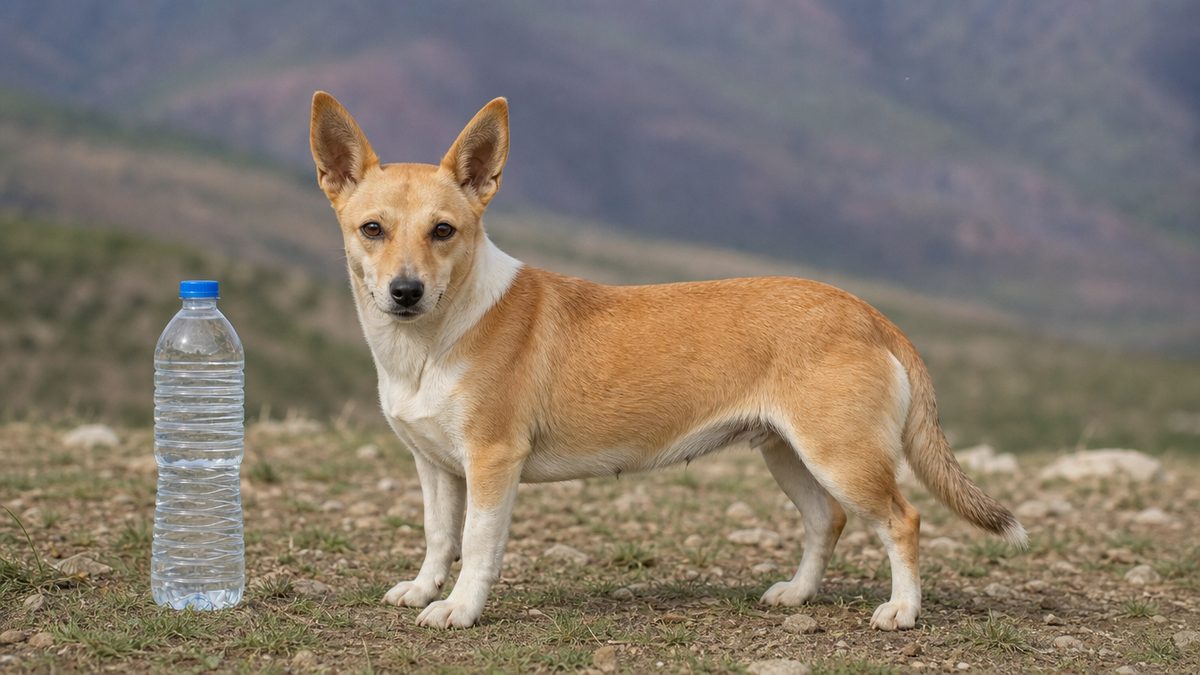
A Dikkulak is a small, compact, erect-eared, short-coated watchdog of five provinces in north-eastern Turkey, and the Turkish scientific literature calls it a type rather than a breed. The paper that describes it uses the phrase yoresel bir tip, a regional type, and the paper's own title separates native dog breeds from native dog types. That distinction is the single most important fact on this page.
The characteristics, as measured
Sixty-one of these dogs have been weighed and measured, once. In January 2011, researchers from Igdir University and Ankara University surveyed 38 males and 23 females across Agri, Ardahan, Erzurum, Igdir and Kars, and recorded a mean live weight of 10.6 kg, a mean shoulder height of 27.8 cm, a mean height at the rump of 29.1 cm, a mean body length of 46.3 cm and a mean heart-girth circumference of 50.9 cm. Those nine numbers are the whole quantitative record for this dog.
The shape they describe is distinctive. A body length of 46.3 cm on a 27.8 cm dog gives a ratio of 1.67 to 1, so these are long, low animals on short legs, standing slightly higher behind than in front. The coat colour spread was white in 18 dogs, black in 14, piebald in 12, brown in 11 and tan in 6, which sums exactly to the 61 dogs surveyed. No single colour defines the type, and the coat is short rather than the long profuse double coat most spitz type dogs carry.
A watch dog, and the distinction is deliberate
These dogs are watchdogs rather than guard dogs, and the study draws that line itself. Its introduction defines a watch dog as one that warns about unwanted people and a guard dog as one that attacks without always warning, then places the Turkish dog firmly in the first category. The 2012 review is blunter, noting that because they are small they cannot perform a protection role, so they try instead to warn the owner by barking and deter the stranger. A dog that weighs 10.6 kg is not holding off a wolf.
That job explains the temperament that gets reported. The dogs are described as vocal, alert, wary of strangers and unsuitable as pets, needing to be outside with space to move. In their home villages they are kept tethered or loose inside an enclosed yard.
The history, which is mostly absent
There is no documented history for this dog, and that absence is worth stating plainly rather than filling. No origin account, no founding date, no named founder, no historical record and no archaeological claim appears in any source this page could open. That is unusual for a Turkish dog. The Kangal has an FCI standard with a written historical summary, the Tarsus Catalburun attracts origin stories reaching back to the Seven Sleepers and a seventeenth-century Louvre painting, and the Turkish literature carries a full comparative survey of eleven native breed and type names. The erect-eared dog gets one paragraph in that survey and one short paper of its own.
What the literature does record is decline. Breeders in the home provinces report that numbers are steadily falling, and the 2012 review lists the type among Turkish native dogs it describes as endangered or nearly extinct. Turkish Wikipedia repeats the same observation and traces it to the same source.
The paper everything rests on is called Native Dogs Breeds and Types of Turkey. Its abstract slips between the two words, listing the Dikkulak among dog breeds in one sentence and describing it as a regional type in the body. Where a source is inconsistent with itself, this page follows the more specific statement, which is the body text, and says so rather than picking the more flattering one.
The name is a description, and one of its synonyms belongs to another dog
Dikkulak translates as erect ear, from dik meaning upright and kulak meaning ear. It is a physical description before it is a name, and the Turkish sources treat it that way. The 2012 survey records that the same dogs are called Dikkulak, Civikulak or Zagar depending on which district you are standing in. A label that changes across a few hundred kilometres is doing the work of an adjective, not of a breed name.
Civikulak, the second name, means nail ear, and it describes the same pointed upright carriage. Both words pick out the trait that separates these dogs from the large livestock guardians of the same villages, whose ears hang. The FCI standard for the Kangal specifies an ear that is medium sized, triangular, rounded at tip and pendant. So in a district where the default dog has drop ears, calling the little one the erect-eared one is a perfectly natural thing for people to do, and it tells you almost nothing about pedigree.
Zagar names two different dogs, and the state register picks one
The third synonym, Zagar, belongs to a dog Turkey has actually registered, and it is not this one. The same 2012 review that describes the Dikkulak carries a separate entry for the Izci Kopegi Zagar, a scent-trailing hare-hunting dog of Thrace, Bursa, Manisa, Izmir, Aydin, Denizli, Mugla and Afyon. Its figures are nothing like the erect-eared dog's.
| Dikkulak / Civikulak / Zagar | Izci Kopegi Zagar | |
|---|---|---|
| Region | Ardahan, Kars, Igdir, Agri, Erzurum (north-east) | Thrace, Aegean and western Anatolia |
| Shoulder height, male | 27.9 cm | 52.2 cm |
| Shoulder height, female | 27.7 cm | 48.8 cm |
| Live weight, male | 10.1 kg | 19.5 kg |
| Live weight, female | 10.5 kg | 17.6 kg |
| Job | Yard watchdog | Hare hunting |
| In Turkey's national breed register | No | Yes, Ek-42, added 2011 |
The registered Zagar stands nearly twice as tall at the shoulder and weighs nearly twice as much, works a different job, and lives at the opposite end of the country. Turkey's register settles which one holds the name officially: the Izci Kopegi Zagar was added as Ek-42 by the amendment of 25 August 2011. The erect-eared dog of Kars is not in the register under that name or any other.
This matters because the error is one step away for any reader or answer engine. Dikkulak is also called Zagar. Zagar is a registered Turkish breed. Therefore Dikkulak is a registered Turkish breed. Every step is sourceable and the conclusion is false. Of the pages currently ranking for this term, only creatures.com flags the ambiguity at all, correctly noting that Zagar also names a separate registered scent-hound. It does not connect that to the register entry, which is where the point becomes checkable.
Even the Kangal's name is recent
Turkish dog names move around more than outside readers expect, and the flagship breed proves it. The 2012 review states that Kangal is not the original name, that it came into use in the 1980s, and that the original name was Karabas Kopegi, the black-head dog. The FCI standard, published in 2018, says the breed name seems to come from the town of Kangal in Sivas.
So a Turkish dog name being descriptive, recent or regionally variable is normal rather than suspicious. What separates the Kangal from the Dikkulak is not the age of the name. It is that somebody did the work of defining a type, writing a standard and getting it recognised, and for the erect-eared dog nobody has.
Translate it first. Kangal is a town, Akbas means white head, Karabas means black head, Catalburun means forked nose, Malakli refers to the jowls, and Dikkulak means erect ear. Names that translate into a body part or a colour are descriptions that a community applied, and they may or may not have a defined population behind them. Then check the register.
Registry recognition: four registers checked, four blanks
No register anywhere lists the Dikkulak. Four were checked directly for this page, each with a control to prove the check worked, and the dog is absent from all four. Absence is only worth reporting when the search is shown to function, so every result below is paired with something the same query did find.
| Register | Dikkulak | Control that did return |
|---|---|---|
| Turkey's national breed register, Teblig 2004/39 | Absent | Kangal at Ek-29, Izci Kopegi Zagar at Ek-42, plus 72 other annexes |
| KIF breed database, 460 breeds | Absent | Dachshund, Dobermann and 17 other D-letter breeds |
| KIF Group 11, breeds unrecognised by the FCI | Absent | Kars Coban Kopegi, Aksaray Malaklisi, Deltari Ilir, Mongol Bankhar |
| FCI nomenclature, letter D | Absent | 25 D-letter breeds from Dachshund to Dunker |
| FCI provisional register | Absent | 21 breeds, most recently four admitted on 2 November 2026 |
Turkey registers exactly two dogs, and this is not one of them
Turkey's national breed register contains two dogs across all seventy-four of its annexes. The Yerli Hayvan Irk ve Hatlarinin Tescili Hakkinda Teblig, number 2004/39, entered the Resmi Gazete on 12 December 2004 and exists to enter native breeds on the Milli Tescil Listesi, the national registration list. Its consolidated Article 4 names every registered breed and line from Ek-1 to Ek-74. The dogs are Kangal at Ek-29, added in 2006, and Izci Kopegi Zagar at Ek-42, added on 25 August 2011. Everything else is cattle, buffalo, sheep, goats, poultry, rabbits, bees, pigeons and two cats, the Van Kedisi at Ek-30 and the Ankara Kedisi at Ek-36.
The register is live and still growing. Its most recent amendment, published in the Resmi Gazete of 25 October 2022, added Yalova Kivircigi at Ek-73 and the Yigilca honeybee ecotype at Ek-74. So the blank against the Dikkulak is not a stale list. It is a register that has been updated fifteen times, that will admit a companion animal when the case is made, and that has never admitted this dog.
The register's text was read twice, from two independent copies, before being relied on here. Bonbeno first read the consolidated Article 4 in the Istanbul Veterinary Chamber's republication of the Teblig, then re-read it on the government's own Mevzuat Bilgi Sistemi. The two agree on the annex list. A register that decides whether a breed exists in Turkish law is worth checking twice.
Turkey's kennel club has a bucket for unrecognised breeds, and the Dikkulak is not in that either
KIF, the Kopek Irklari ve Kinoloji Federasyonu, is Turkey's national kennel body and the FCI's member for Turkey, which it states on every page of its site. Its current breed database carries 460 entries in a single A to Z index, and it grades them. The Kangal sits in FCI Group 2 with the breed code KAN, a link to FCI Standard 331 and a note that a breed club exists. Kars Coban Kopegi sits in what KIF labels Grup 11, FCI Tarafindan Taninmayan Irklar, meaning breeds not recognised by the FCI, with a blank breed code and no standard text.
That Group 11 bucket is the important test, because it is where a national kennel club puts the dogs it acknowledges but cannot register internationally. It holds Turkish natives including Akbas Coban Kopegi, Anadolu Sultan Tazisi and Kars Coban Kopegi, and foreign unrecognised types including the Albanian Deltari Ilir and the Mongol Bankhar. The database's D section runs to nineteen breeds and includes obscure regional entries such as Deli Orman Kopoyu alongside the Dachshund and the Dobermann. A Dikkulak entry would sit comfortably in that company. There is not one.
Bonbeno's Aksaray Malaklisi guide reports that KIF's Yerli Irklar register names three Turkish native breeds and that the Malakli is not among them. That was accurate when it was written and the position has moved. KIF has rebuilt its website, the old Yerli Irklar page now returns HTTP 404, and the current database does carry an Aksaray Malaklisi entry with the breed code AKM, placed in Grup 11. That is not FCI recognition, and it is not entry on the national register, which still lists only two dogs. It is a real change and that page needs updating. This page records the disagreement rather than quietly differing.
The FCI, checked on the right pages
The FCI does not list the Dikkulak in either of its registers. The definitive nomenclature under D returns 25 breeds, from Dachshund through Dobermann and Dogo Argentino to Dunker, and the Dikkulak is not among them. The provisional register, which is a separate document at a separate address, lists 21 breeds numbered 351 to 378 and admitted four new ones on 2 November 2026, including the Macedonian Shepherd Dog Karaman and the Sabueso Fino Colombiano. No Turkish breed appears on it.
That FCI position also answers the India question, because the Kennel Club of India is the FCI's Indian member and issues pedigrees against FCI nomenclature. A breed the FCI does not name cannot receive an FCI-referable Indian pedigree. No document naming a Dikkulak can be a kennel-club registration, anywhere, today.
The entire evidence base: one study, 61 dogs, one month
Everything published about this dog traces back to a single six-page paper. Yilmaz and Ertugrul measured 61 dogs in January 2011 and published Some Morphological Traits of the Zagar (erect-ear) Dog in Turkey in the Igdir University Journal of the Institute of Science and Technology, volume 1, issue 2, pages 107 to 112. Its opening line states that it is the first study to document the morphology of this dog. Fifteen years on it is still the only one.
What the study did
- Surveyed 38 males and 23 females across five provinces of eastern Turkey, Agri, Ardahan, Erzurum, Igdir and Kars.
- Weighed each dog on a portable spring scale and took heights, lengths and girths with a measuring stick and a graduated tape.
- Grouped the dogs into ages 1 to 2, 3 to 4 and 5 to 7 years, with ages taken from what the owners said rather than from records.
- Analysed the results in Minitab 15 using ANOVA for region and age and a t-test for sex.
Two findings from it are genuinely useful for anyone keeping such a dog. Sex made no statistically significant difference to any trait, so males and females are the same size here, which is unusual. And growth finishes early: the 1 to 2 year group differed significantly from both older groups on height, rump height, body length, heart girth, chest depth and chest width, with only minor change after two years.
The arithmetic checks out, which is worth saying
The paper's numbers reconcile. Its coat colour counts of 18 white, 14 black, 12 piebald, 11 brown and 6 tan sum to exactly 61, matching the stated sample, and the percentages of 29.5, 23.0, 19.7, 18.0 and 9.8 sum to 100.0. Dividing each count by 61 reproduces each printed percentage. Bonbeno checks this on every source because self-refuting percentages are the cheapest fabrication detector there is, and this paper passes.
One reported result deserves more attention than the paper gives it. Head length correlated with nothing: 0.04 with shoulder height, 0.17 with rump height, 0.12 with body length and 0.05 with heart girth, none of them significant, while every other pair of body measurements correlated strongly, up to 0.85 for height against chest depth. In a population bred to a written breed standard you would expect head size to track body size. The paper records the finding and does not comment on it. Bonbeno reads it as consistent with a varied local population rather than a uniform one, and flags that as our inference rather than the authors'.
Where the comparison figures came from
The study's headline conclusion, that these dogs closely resemble the Welsh Corgi and the Swedish Vallhund, rests on comparison data the authors took from Wikipedia. Its reference list contains three English Wikipedia pages, akc.org, cardigancorgis.com, Google Earth, a Minitab manual, a 2007 PhD thesis and a 2005 cynological association publication. Neither the FCI standard for the Pembroke nor the one for the Vallhund appears. The Vallhund weights the paper compares against, 9 to 14 kg, are not in that breed's FCI standard, which states no weight at all.
The authors were clear about what should happen next, closing with a call for full DNA-based research to establish whether the Turkish, Welsh and Swedish dogs descend from a common ancestor. No such study surfaced in any register or database checked for this page.
PubMed returns a true zero, and the controls prove it
PubMed holds no record of this dog under any of its three names. A search for Dikkulak returns 0 results and the query-translation line reads simply Dikkulak, so nothing was rewritten or dropped. Civikulak returns 0 with the same clean translation. A broadened search for erect-ear dog and Turkey returns 0 even after PubMed expanded Turkey to include its MeSH terms, and a zero that survives the engine widening the query is a stronger negative than a narrow one.
Zagar dog returns 5, and that number is a trap. The translation collapses to zagar in all fields, and opening the five records shows three papers by the Slovenian veterinary author Zagar Z on mast cell tumours, tyrosine kinase inhibitors and pulmonary carcinomas, plus two heartworm papers. None is about a dog called Zagar. Controls run in the same session came back sane, with 124 for Labrador and hip dysplasia, 19 for Kangal and dog, and 13 for Bergamasco and dog, so the database was working.
The Kars Shepherd Dog is bred in the same five provinces as the Dikkulak, and in November 2025 it got a full paper in Veterinary Medicine and Science from Kafkas University in Kars itself, covering 21 bitches and 57 puppies with fertility, growth and morphological data. Its authors open by saying there is not enough information about the Kars Shepherd. If the big guardian of these villages is considered under-studied after a 2025 international paper, the little watchdog of the same villages, with one local paper from 2011, is in a different category altogether.
Dikkulak price in India: there is none, and here is the proof
No Dikkulak is offered for sale in India at any price. An India-located commercial search for this dog returned no Indian seller, no Indian listing and no Indian price in india figure. The same search returned several Indian Kangal price pages, so the query was working and the absence is the dog's rather than the search's. Any rupee figure you meet for a Dikkulak was made up.
The control matters more than the zero. Searching for a Dikkulak puppy for sale in India surfaced Indian Spitz sellers, Indian Kangal price guides and general Indian dog marketplaces, but the only Dikkulak result was a foreign aggregator. A search that finds Indian sellers of one Turkish dog and none of another has told you something about the second dog, not about itself.
That aggregator is worth naming, because it is the page an Indian buyer will land on. Its title reads Dikkulak Dog: Breed Facts, Prices and Breeders, and it ranked in an India-located commercial query. Its own marketplace blocks read no active listings, no herdbook records, no public profiles and no breeders listed. Its featured listings beside a dog query include a pullet in Texas. The page is honest in its body text, which is more than most, and its title still promises a market that its own database says does not exist.
How Bonbeno tests a suspicious Indian dog price
Indian breed pages routinely publish rupee figures that are a US dollar price run through one exchange rate, so every figure gets divided before it gets quoted. The Dikkulak has no figures to test. The nearest dog that does is the Kangal, and running the test on it shows both the method and what a genuine Indian price band looks like.
| Published figure | At 84.38 | At 74 | At 80 |
|---|---|---|---|
| Rs 60,000 | 711.07 | 810.81 | 750 |
| Rs 1,50,000 | 1,777.67 | 2,027.03 | 1,875 |
| Rs 80,000 (Delhi low) | 948.09 | 1,081.08 | 1,000 |
| Rs 90,000 (Mumbai low) | 1,066.60 | 1,216.22 | 1,125 |
| Rs 1,60,000 (Mumbai high) | 1,896.18 | 2,162.16 | 2,000 |
| Rs 75,000 (Bangalore low) | 888.84 | 1,013.51 | 937.50 |
Not one of those six figures divides cleanly at 84.38 or at 74, and the five that divide cleanly at 80 prove nothing. One thousand divided by 80 is 12.5, so any rupee figure ending in three zeros passes at 80 by construction. Read the quotients instead. They are 750, 1,875, 1,000, 1,125, 2,000 and 937.50. No seller anywhere prices a dog at 1,875 dollars or 937 dollars 50 cents. This band is rupee-native and rounded, not converted, which makes it a real if soft Indian asking range rather than a translated American one.
A second Indian retailer's Kangal page shows how these bands are typed rather than calculated. Its city list prints Delhi as Rs. 8,000 to Rs. 150,000 while every other city on the same list starts between Rs 60,000 and Rs 90,000. A Rs 8,000 Kangal in Delhi is not a price, it is a dropped zero, and the other retailer's table gives Delhi as Rs 80,000 to Rs 1,50,000. A single mistyped digit in a price table is the clearest evidence you will get that a human typed it and nobody checked it. Treat every Indian breed price as a claim to be tested rather than as a figure to be quoted.
The published Kangal band runs Rs 60,000 to Rs 1,50,000 overall, with Delhi at Rs 80,000 to Rs 1,50,000, Mumbai at Rs 90,000 to Rs 1,60,000 and Bangalore at Rs 75,000 to Rs 1,50,000. Bonbeno reports that as a published range, not as a recommendation, and does not broker sales.
What you are actually being offered
A dog sold in India as a Dikkulak is another dog with a Turkish name on it. Given the measured type is a 10.6 kg, 27.8 cm, erect-eared, short-coated animal, the realistic candidates an Indian seller could produce are an Indian Spitz, a small Indian Pariah Dog cross, or a Pomeranian cross. None of those is a bad dog. Paying an import premium for one under a Turkish name is the problem.
One Indian listing site attaches the figure Rs 98,999 to whichever puppy is in stock, and Bonbeno has now caught it on ten separate breed pages including breeds that site does not stock at all. It does not divide to a round dollar figure at any rate, so it is not even a conversion. It is a rupee-native charm price. Treat any suspiciously specific five-figure rupee number ending in 999 as a shop's house price point rather than as information about a breed.
For Indian breeds and for undocumented types alike, the honest version of a price section is a sourcing section. Where no market exists, saying so is the answer, and the [adoption](#adoption) section below sets out what to do instead.
Cost of ownership: what is knowable, and what nobody can honestly quote
Bonbeno publishes no rupee running cost for the Dikkulak, because no Indian owner has ever been surveyed keeping one. What can be stated is the cost structure a 10.6 kg short-coated dog imposes in India, and which of its lines are driven by facts we do have. Every line below is labelled knowable or not knowable, and the not-knowable ones stay blank rather than getting filled with a plausible number.
| Cost line | What drives it | Verified figure for this dog |
|---|---|---|
| Food | Bodyweight. Mean live weight is 10.6 kg, at the light end of the Indian dog-food market | No |
| Grooming | Coat type. Short coat, no long double coat, so low | No |
| Core vaccination | Indian schedule, starting at seven to eight weeks | No |
| Parasite control | Regional tick and flea pressure, not breed | No |
| Heat management | Origin climate against Indian climate, and the gap here is large | No |
| Purchase | No Indian market exists | No, and none can exist |
| Lawful import for breeding | Prohibited outright | Not applicable |
The two lines that are genuinely knowable
Bodyweight sets the food budget, and 10.6 kg is the one solid number this dog has. The measured mean was 10.6 kg overall, 10.1 kg for males and 10.5 kg for females, with no statistically significant difference between the sexes. That places it beside a Pembroke on the shelf, since the Pembroke standard gives 10 to 12 kg for males and 9 to 11 kg for females. You would feed it as a small dog, not as a working guardian, and the food line lands far below what a Kangal at 48 to 60 kg would cost to run.
Vaccination timing is set by Indian law rather than by breed. The Dog Breeding and Marketing Rules 2017 state at Second Schedule Part III paragraph 8(9) that all pups shall be vaccinated, which can start at the age of seven to eight weeks and is usually completed at the age of eighteen weeks. That applies to any pup sold in India regardless of type, and it is the one care cost on this page with a citable Indian source behind it.
The line nobody can quote, and why we leave it blank
There is no Indian purchase price, no Indian veterinary cost series, no lifespan figure and therefore no lifetime cost for this dog. Sibling pages on this site carry rupee ranges because those breeds are sold here and the figures are published and checkable. Publishing a comparable table for the Dikkulak would mean copying a small-dog figure from another breed and attaching a Turkish name to it, which is the exact substitution this site refuses to make.
The one cost that is real and specific is the cost of the mistake. An Indian buyer persuaded that a rare Turkish import is on offer is in the price territory that Turkish dogs command here, where a published Kangal band runs Rs 60,000 to Rs 1,50,000. Paying anywhere in that band for a dog with no register, no pedigree and no verifiable origin is the whole exposure, and it is avoidable by asking one question about paperwork.
If you already keep a small watchdog-type dog
The running costs that actually apply are generic to small dogs in India and are covered properly on pages for breeds that exist here. Groom a short coat weekly rather than professionally, budget parasite control by your city rather than by breed, and treat heat management as equipment rather than as a service. The Indian Spitz and Indian Pariah Dog guides carry the Indian rupee figures this page cannot honestly carry, and both describe dogs that are hardy in this climate in a way an eastern Anatolian upland dog is not.
A cost table for a dog nobody in India keeps would be a guess dressed as research, and it would be indistinguishable from the generated pages this guide spends its length warning about. Leaving the column empty is the finding. If a verified Indian figure for this type ever appears, it will be added here with its source.
Heat tolerance in India: Bonbeno rates this type 2 of 5
Bonbeno rates the Dikkulak 2 of 5 for Indian heat tolerance. The heat tolerance case rests on two facts pulling opposite ways. The coat is short and the dog is light at 10.6 kg, which are both genuine advantages over Turkey's big double-coated guardians. Against that, the five provinces it comes from sit between 1,970 and 2,187 metres and run annual mean temperatures of 3.8 to 5.5 degrees Celsius, so nothing in this dog's background has met an Indian summer.
The origin figures come from NASA POWER queried by explicit latitude and longitude, using the coordinates the 2011 study printed for its own survey sites NASA POWER climatology API. The elevations the service returned, 1,970 m for Kars, 2,059 m for Ardahan and 2,187 m for Erzurum, confirm the query landed on the right high-plateau locations rather than somewhere else with a similar name. The wet-bulb column is Bonbeno's own calculation from POWER's monthly mean temperature and relative humidity, not a figure POWER publishes.
| Location | Elevation (m) | Annual mean (C) | Peak wet-bulb month | Mean temp that month (C) | Humidity that month (%) | Peak wet-bulb (C) |
|---|---|---|---|---|---|---|
| Kars, Turkiye | 1,970 | 5.5 | July | 18.0 | 60.6 | 13.3 |
| Ardahan, Turkiye | 2,059 | 3.8 | July | 15.8 | 71.8 | 12.6 |
| Erzurum, Turkiye | 2,187 | 4.3 | July | 16.9 | 60.5 | 12.3 |
| Bengaluru | 842 | 23.7 | May | 27.0 | 63.8 | 21.9 |
| Pune | 636 | 23.9 | June | 25.6 | 80.3 | 23.0 |
| Mumbai | 97 | 26.8 | June | 28.7 | 79.5 | 25.8 |
| Chennai | 49 | 27.9 | May | 31.5 | 64.5 | 26.1 |
| Delhi | 206 | 25.6 | July | 32.3 | 62.7 | 26.5 |
What the gap actually measures
Delhi's peak wet-bulb runs 13.2 degrees Celsius above Kars's, and Chennai's runs 12.8 above. Wet-bulb matters more than air temperature for a dog because dogs shed heat by panting, which is evaporative, and evaporation stalls as humidity rises. A dog whose ancestors never met a wet-bulb reading above about 13 degrees is being asked to work in air where it sits above 26. On annual mean temperature the gap is starker still: Chennai at 27.9 degrees against Kars at 5.5 is a difference of 22.4 degrees.
Bengaluru is the mildest Indian option and it is still 8.6 degrees of wet-bulb above the origin. That is the honest ceiling. There is no Indian city where this type would find familiar conditions, and choosing a hill station rather than a metro narrows the gap without closing it.
Indian heat is also a declared hazard rather than a background condition. The India Meteorological Department declares a heat wave when a plains station reaches at least 40 degrees Celsius or a hilly station at least 30, with a departure from normal of 4.5 to 6.4 degrees, and a severe heat wave above 6.4 degrees, and the season runs March to June. A regional upland watchdog would meet that season every year of its life here.
Exertion is the trigger, not the parked car
The danger to a working watchdog in India is exercise, not confinement. In a UK primary-care study of 905,543 dogs, 1,259 heat-related illness events were recorded from 1,222 dogs, and 380 of those events had no trigger noted. Of the 879 events that did have a recorded trigger, 652 were exertional, which is 74.2 percent, against 113 environmental at 12.9 percent and 46 from vehicle confinement at 5.2 percent. Exertional cases occurred year-round and carried a 7.6 percent fatality rate.
That finding transfers to any dog because it is about the mechanism rather than about a breed, and Bonbeno claims nothing more from it here. This study modelled UK breeds and the Dikkulak is absent from it entirely, so none of its breed-specific odds ratios apply to this dog and none is quoted.
Turkey's own kennel club disagrees with the FCI about Anatolian heat
A disagreement worth publishing sits inside the documents for the neighbouring breed. The FCI standard for the Kangal describes it as capable of enduring extremes of heat and cold. KIF, writing in Turkish for Turkish owners, says the opposite in plainer terms, noting that the Kangal sheds much of its coat entering the warm season and adding that it can be said these dogs do not much like very hot and humid weather.
Both statements are official, one from the international registry and one from the national kennel club, and they do not agree. Bonbeno's reading is that heat endurance in a standard means enduring a dry Anatolian summer at altitude, not a humid Indian coastal one, which is exactly the distinction the wet-bulb column above makes numerically. Where a breed document was written for another climate, it needs translating rather than copying.
Indian sellers say the opposite of what Turkey says, and they say it about the breed they are selling. An Indian retail page answering the question whether Indian weather is safe for Kangals replies that yes, Kangal dogs can adapt very well to Indian weather. KIF, writing in Turkish, says the breed does not much like very hot and humid weather. One of those two statements is written by the people who keep the breed at home and the other by someone selling it here. Weigh them accordingly.
Walk it before sunrise and after dark from March to June, never at midday, and stop at the first sign of laboured panting rather than at the first stumble. Provide constant shade and water. Treat any collapse, dark red gums or vomiting in heat as an emergency and go to a veterinarian immediately rather than waiting to see whether it settles.
Temperament: a sentinel, and unsuitable as a pet by its own describers
The people who documented this dog say plainly that it is not a pet. The study states that Zagar dogs are not suitable as pet dogs, that they need to be outside with plenty of space to move around, and that they are not friendly to strangers. That is the assessment of the only researchers who have handled a meaningful number of them, and it is the starting point rather than a caveat at the end.
The working picture is consistent across the sources. These dogs are alert and vocal, they bark loudly to announce an arrival, and they watch rather than confront. Turkish Wikipedia adds that they distinguish someone they know from a stranger and that they do not attack people but do bark. The 2012 review makes the size argument explicit, noting that because they are small they cannot perform a protection role and so try to warn the owner and deter the stranger by barking.
Who this type suits
- Rural households with a yard or compound the dog can patrol and a tolerance for noise.
- Experienced owners who understand that wariness is the selected trait rather than a training failure.
- Properties where an announcement is genuinely wanted at every gate opening, day and night.
Who this type does not suit
- Apartment households in any Indian metro, because a dog bred to announce will announce every lift arrival and every delivery.
- First-time owners, because there is no breed club, no mentor network and no published behavioural guidance anywhere to fall back on.
- Families wanting a companion, because the source that describes the type says it is unsuitable as one.
- Anyone expecting Corgi temperament from a Corgi silhouette, which the ranking pages invite and the documents do not support.
There is no temperament data, and no mechanism to produce any
No behavioural study of this dog exists, so every statement above is a field observation rather than a measurement. That is a structural problem rather than an accident. Temperament data comes from registries running temperament tests, from breed clubs collecting owner surveys, and from standards that can disqualify a dog for character. This type has none of the three.
The contrast with the neighbouring breed is exact. The FCI standard for the Kangal describes it as steady and bold without aggression, naturally independent, loyal to owners but wary of strangers when on duty, and it lists aggressive or overly shy dogs among its disqualifying faults. A dog that fails that clause cannot win, which is a real if imperfect selective pressure against bad character. Nothing comparable can operate on a regional type that no kennel club recognises.
So temperament in this dog is whatever the last few generations of village dogs happened to be, varying by household and district, with nothing standardising it. That is normal for a landrace and it is precisely why a landrace cannot be bought sight-unseen on the strength of a breed description.
A small, compact, erect-eared dog that lives outdoors, barks at everything unfamiliar, likes its own people and dislikes yours. If that description appeals, an Indian Pariah Dog does the same job, is available from any Indian shelter, and comes with the enormous advantage of being adapted to the climate it will live in.
Training: managing a dog selected to bark, and a clause Indian owners must know
Train this type by managing what triggers the barking rather than by trying to remove the barking. Announcing is the job the dog was kept for, so a handler working against it is working against generations of selection. No obedience record, no working-trial result and no published training guidance exists for this dog anywhere, so everything below is drawn from what the type was selected to do and from Indian law.
De-barking is illegal in India, and this dog makes that clause bite
Indian law forbids de-barking outright, and the Dikkulak is exactly the dog someone would consider it for. The Prevention of Cruelty to Animals (Dog Breeding and Marketing) Rules 2017, at Second Schedule Part II paragraph 6(8), state that there shall be no tail docking, ear cropping, de-barking, de-clawing, branding, dyeing, injecting substances to enhance visual appeal, performing a surgery or procedure to camouflage or hide any defect or infirmity or any other kind of mutilation of any body part of the pup, and that any change of appearance by artificial means is strictly forbidden.
Note the clause reference. It is a paragraph of the Second Schedule, cited here as Second Schedule Part II paragraph 6(8) rather than as Rule 6(8), because the Rules' own Rule 6 is a different provision headed requirements to be met by breeders and establishments. Anyone looking it up under the wrong form will not find it.
The practical consequence is direct. A vocal outdoor watchdog in an Indian apartment block generates complaints within weeks, and the surgical shortcut is not available. Behaviour work and management are the only lawful routes, which makes the housing decision the training decision.
Tethering is regulated too, and the traditional method assumes it
In its home provinces this dog is kept tethered or loose inside an enclosed area. Indian law permits tethering only under conditions. Second Schedule Part IV paragraph 22 of the 2017 Rules, headed dogs on tethers, permits dogs to be kept on tethers only in outside housing facilities meeting the requirements of the rules, requires the tether to be attached to the front of the dog's shelter structure or to a post in front of it, and requires it to allow the dog convenient access to the shelter and to food and water containers. Reproducing the Anatolian village arrangement in India means meeting that paragraph, not improvising a chain in a yard.
What actually works with a sentinel type
- Socialise hard and early, because wariness of strangers is the selected trait and structured exposure is the only counterweight to it.
- Train an alternative behaviour to barking, such as going to a mat on a doorbell, rather than punishing the bark itself.
- Manage the sight lines, because a dog that can see the gate will announce the gate. Screening the fence removes more barking than any command.
- Reward the first bark and interrupt the tenth, which keeps the alarm function the dog is for while capping the duration.
- Verify progress against the household's actual complaints rather than against a training milestone list, because none exists for this type.
Realistic timelines, honestly bounded
No timeline for this type can be published, because no one has recorded one. The one structural fact the study supplies is that growth is finished at about two years, with the 1 to 2 year age group differing significantly from older dogs and only minor change afterwards. That tells you when the dog is physically mature and nothing at all about when it is trained.
Where sibling pages on this site quote a socialisation window or a settling period, those figures come from breeds with clubs, trials and owner surveys behind them. Borrowing one and attaching it here would be inventing a number, so this page does not.
Village practice for this type is containment rather than training, which is a reasonable answer on a farm in Kars and an inadequate one in an Indian city. Before you copy any care instruction from a breed's home region, ask what climate, what housing and what law it assumes. On this dog, all three differ.
Exercise: a real requirement with no published number attached
No daily exercise figure exists for this type, and this page will not invent one. What the sources say is qualitative and consistent. The dogs are described as unsuitable as pets because they need to be outside and to have plenty of space to move around. That is a requirement for room and freedom rather than for a number of minutes on a lead, and the two are not interchangeable.
The distinction matters practically. A dog that patrols a compound all day is self-exercising on its own schedule, and it is doing the surveillance work it was bred for at the same time. A dog taken on two structured walks and confined between them gets the movement and none of the job. For a sentinel type, the second arrangement produces the barking, pacing and gate-fixation that owners then describe as a behaviour problem.
In India, the heat sets the window
From March to June an Indian owner has roughly two usable exercise windows a day, before sunrise and after dark. The India Meteorological Department declares a heat wave when a plains station reaches at least 40 degrees Celsius, or a hilly station 30 degrees, with a departure from normal of 4.5 to 6.4 degrees, and the season runs March to June. A dog whose home provinces average 3.8 to 5.5 degrees annually has no acclimatisation to draw on.
Exertion is the trigger that actually kills dogs in heat. In the UK primary-care study, of the 879 heat-related illness events that had a trigger recorded, 652 were exertional, which is 74.2 percent, ahead of 113 environmental at 12.9 percent and 46 from vehicle confinement at 5.2 percent. Exertional cases occurred year-round and carried a 7.6 percent fatality rate. The lesson transfers directly: the walk is the risk, not the parked car, and in India the walk has to move to the cool hours.
A structural question nobody has answered
The measured proportions raise an orthopaedic question that has never been investigated. Mean body length of 46.3 cm on a mean shoulder height of 27.8 cm is a ratio of 1.67 to 1, and the dogs stand higher at the rump than at the withers. Long backs on short legs are the shape associated with intervertebral disc disease in several recognised breeds.
No disc-disease data exists for this type and none is quoted here. Bonbeno will not print a Dachshund or a Corgi disc-herniation rate against a Turkish landrace, because a figure imported onto a population the study never examined is fabrication with a citation attached. What can be said without borrowing anything is that the shape invites the question, that jumping down from height and stair repetition are worth limiting on any long-backed dog as a precaution, and that a veterinarian rather than a breed page should assess any individual dog.
What to actually do
- Provide a securely fenced area the dog can patrol, which suits the type far better than lead walks.
- Walk before sunrise and after dark from March to June, and stop at the first laboured panting rather than at the first stumble.
- Limit repeated jumping down from furniture and vehicles, as a precaution on a long-backed dog rather than because of any measured risk.
- Carry water on every outing between March and June, and take shade breaks rather than pushing through.
- Watch the dog's own pace, because a sentinel type will keep working past the point at which it should stop.
If a dog of this shape is ever in your care in India, treat the exercise plan as a heat plan. The origin climate makes acclimatisation an active project rather than an assumption, and the [climate](#climate) section above gives the wet-bulb numbers that set the ceiling.
Grooming in Indian humidity, and the one trait that genuinely helps here
Grooming load for this type is low, and the erect ear is the single feature that would actually protect it in an Indian monsoon. The coat is short, so brushing rather than professional grooming is the whole routine. The ears stand upright, and upright ears carry measurably less ear-disease risk than hanging ones, which matters more in India than almost anywhere.
The coat is short, which is unusual for a spitz
These dogs carry short hair, not the long profuse double coat most spitz breeds have. The study describes short-haired coats of any colour including pied, and records white in 18 dogs, black in 14, piebald in 12, brown in 11 and tan in 6 across the 61 measured. A short single-layer coat means weekly brushing, no clipping, no de-shedding appointments and no matting risk in humidity. For an Indian owner that removes most of the grooming budget a long-coated breed imposes.
The contrast with the neighbouring guardian is stark. The FCI standard for the Kangal specifies hair of 3 to 7 cm with a thick harsh guard coat and dense undercoat, longer and thicker on the neck, shoulders and thighs. That is a coat built for a plateau winter and a real management problem in a coastal Indian summer. The small erect-eared dog of the same villages carries nothing like it.
Why the erect ear matters so much in India
Ear carriage is a measured risk factor, and erect is the low-risk end. A UK primary-care study drew a random sample of 22,333 dogs from a population of 905,554 under veterinary care in 2016 and found a one-year otitis externa prevalence of 7.30 percent, with a confidence interval of 6.97 to 7.65. Against breeds with erect ear carriage as the baseline, breeds with pendulous ears carried 1.76 times the odds, confidence interval 1.48 to 2.10, and breeds with V-shaped drop ears carried 1.84 times the odds, confidence interval 1.53 to 2.21. The authors conclude that breed and breed-associated ear conformation are important predisposing factors.
Indian humidity turns that background risk into a season. A cross-sectional study at Palampur in Himachal Pradesh screened 2,476 dogs between June 2022 and July 2023, diagnosed 81 with otitis externa for a hospital prevalence of 3.27 percent, and found 48 of those 81 cases, 59.25 percent, fell in the rainy season of July and August, against 15 cases or 18.51 percent in the April to June summer. Both of those reconcile against 81 when you divide them out.
The same Palampur paper reports 53 of 81 cases in pendulous-eared breeds at 69.13 percent and 25 at 30.86 percent in erect-eared breeds. Those numbers cannot all be right. 53 divided by 81 is 65.4 percent, not 69.13, and 69.13 percent of 81 would be 56 cases. The two counts also sum to 78 rather than 81. The seasonal rows in the same paper divide correctly, so this page uses those and takes its ear-conformation figure from the UK study instead. Recomputing a percentage from its own counts takes seconds and it caught this.
The practical routine
- Brush the short coat once a week with a rubber curry, which is the whole coat routine.
- Check the ears weekly and after any swim or bath, because an erect ear is lower risk rather than no risk.
- Dry the ear canal properly rather than letting the dog air dry, which is the single care instruction most often copied unchanged from temperate-climate breed clubs and is wrong in an Indian monsoon.
- Watch for head shaking, pawing at the ear and odour from June to September, the months the Indian data flags.
- Bathe rarely, because a short-coated dog with no odour problem does not need frequent bathing and frequent bathing is itself a moisture route into the ear.
Never treat an ear yourself on the strength of a breed page. Otitis externa has multiple primary causes and the treatment depends on which one, so an examination comes before any drop goes in. See a veterinarian.
The two VetCompass papers cited on this page describe the same 2016 UK cohort and give slightly different totals, 905,543 dogs in the heat-illness study and 905,554 in the otitis study O'Neill DG, Pegram C and colleagues.…. The eleven-dog difference changes nothing, and it is noted here because Bonbeno reads the figures rather than copying them between pages.
Health, screening and lifespan: three honest blanks and one legal collision
No lifespan figure, no screening scheme and no published list of health issues exists for the Dikkulak. Those are three separate absences, each verified rather than assumed, and this page prints none of them borrowed from another breed. What does exist is an Indian legal requirement that this type structurally cannot satisfy, which is the most useful health-related thing that can honestly be said about it.
The three blanks, and how each was checked
| Question | Result | Control in the same session |
|---|---|---|
| Any veterinary literature? | PubMed returns 0 for Dikkulak and 0 for Civikulak, with the query-translation line showing no rewrite in either case | Labrador with hip dysplasia returned 124 |
| Any under a third name? | Zagar dog returns 5, and all five are the Slovenian surname Zagar or heartworm papers, none about a dog of that name | Kangal with dog returned 19, Bergamasco with dog returned 13 |
| Any published lifespan? | None found in any source, including the two Wikipedia articles | Not applicable, an absence across all sources |
| Any hip, elbow or eye screening scheme? | None, because screening schemes are run by registries and no registry lists this dog | KIF publishes a breed code and FCI standard for the Kangal |
A breed with no register cannot have a screening scheme, and that is a mechanism rather than an oversight. Hip and elbow scoring, eye certification and DNA test panels are administered by kennel clubs and breed clubs against a defined population. The Dikkulak appears in neither FCI list, in KIF's 460-breed database, nor in Turkey's national breed register Kopek Irklari ve Kinoloji Federasyonu Yerli Hayvan Irk ve Hatlarinin Tescili…. There is no body that could run a scheme and no studbook to run it against.
What Indian law requires, and why it cannot be met
Indian law requires genetic-defect testing before breeding, and lists the defects. The Prevention of Cruelty to Animals (Dog Breeding and Marketing) Rules 2017, at Second Schedule Part III paragraph 8(10), states verbatim that the dogs shall have been tested for genetic defects, including hip dysplasia, progressive retinal atrophy, night blindness, hypothyroidism, entropion, ectropion, overshot, undershot jaw when incisors do not touch or mesh, wry mouth, two or more missing teeth, unilateral cryptorchid or full cryptorchid males. The word including makes that list illustrative rather than closed.
A breeder in India could not lawfully breed this type, because the testing the clause requires has no baseline to be read against. Hip dysplasia scoring needs a breed-specific scoring population. Progressive retinal atrophy testing needs to know which mutation segregates in the breed. Neither exists here. That is not a technicality. It is the practical reason the [adoption](#adoption) section concludes that no lawful breeding population can form.
Bonbeno extracted the fourteen-page gazette text and counted. Across the whole document, patella appears 0 times, BAER 0 times and deaf 0 times, and dental appears 0 times. The word hearing appears once and refers to an appeal hearing before the Secretary, Animal Husbandry, not to an auditory test. So there is no Indian patella-grading requirement and no dental requirement, and anyone told otherwise is being sold something. The only dentition hook is the two or more missing teeth item inside paragraph 8(10).
The numbers we refuse to borrow
The nearest measured dog is the Kars Shepherd, from the same five provinces, and a 2025 study of 21 bitches and 57 puppies at Kafkas University reports a stillbirth rate of 27.9 percent and a mean litter size of 5.03. Those figures belong to a 40 kg livestock guardian and are not transferred to a 10.6 kg watchdog here. Reproductive rates vary enormously with size, and borrowing across that gap would produce a confident, cited, wrong number.
The same refusal applies to lifespan. Small dogs as a group outlive giant ones, which is a statement about small dogs rather than a promise about this one. Anyone quoting a precise life expectancy for a Dikkulak is inventing it, and both Wikipedia articles, to their credit, quote none Turkish Wikipedia, Dikkulak.
This guide therefore carries no lifespan. That is the honest outcome, and it will change only when someone measures it.
Feeding: score the body, because there is no target weight to hit
Feed a dog of this type to body condition rather than to a target weight, because no target weight exists. A recognised breed gives you a standard to weigh against. The Pembroke standard says 10 to 12 kg for males and 9 to 11 kg for females, so a Pembroke owner has a number. This type has a measured population mean of 10.6 kg and no standard at all, which makes body condition scoring the only usable tool.
What the measured data does give you
Three facts are usable. Mean live weight was 10.6 kg overall, with males at 10.1 kg and females at 10.5 kg and no statistically significant difference between the sexes on any trait, so there is no reason to feed males and females differently by size. Growth is essentially complete at two years, with the 1 to 2 year group differing significantly from both older groups and only minor change afterwards. And the population mean sits within small-breed territory, so small-breed portioning applies rather than working-dog portioning.
That 10.6 kg mean is a population average, not a goal for an individual dog. The study surveyed a varied local population with a spread of sizes and made no attempt to define an ideal. Feeding a particular dog towards 10.6 kg because a paper reported that mean would be reading a description as a prescription.
Body condition scoring, which is what to use instead
- Feel the ribs through a thin fat cover without pressing hard, which is the target on any dog regardless of breed.
- Look from above for a visible waist behind the ribs.
- Look from the side for an abdominal tuck rising from the chest to the groin.
- Weigh the dog monthly and track the trend rather than the number, since the direction matters more than the value when no standard exists.
- Adjust portions by 10 percent at a time and reassess after a fortnight rather than making large changes.
A long-backed dog carries extra weight badly, so condition matters more here than on a square-built dog of the same mass. Mean body length of 46.3 cm on a 27.8 cm shoulder height is a ratio of 1.67 to 1, and abdominal weight on that frame loads the spine rather than the legs.
Indian availability, and one honest gap
Small-breed dry food is the easiest category to buy in India, stocked by every metro retailer and most tier-two cities, so nothing about feeding a 10 kg dog here is difficult. Life-stage products for puppy, adult and senior are widely available in the same weight band. There is no supply problem to solve.
There is, however, no published feeding study, no breed-club feeding guidance and no energy-requirement data for this type, so this page gives no gram figures. Manufacturer feeding charts are calculated by bodyweight and life stage rather than by breed, which means they work perfectly well for a dog with no breed. Use the chart for the dog's actual weight, then correct by body condition.
What the homeland does, and whether it transfers
Village feeding practice in eastern Anatolia is not documented for this type in any source this page could open, so nothing is reported about it. Where sibling guides on this site describe a traditional cereal mash or a herder's diet, those come from sources that recorded them. For the Dikkulak, no such record was found, and inventing a rustic diet to fill the space would be exactly the failure this page spends its length documenting elsewhere.
Whatever the diet, the timing of the first weeks is fixed. The 2017 Rules require at Rule 8(1)(a) that pups less than eight weeks in age are not sold, and at Second Schedule Part III paragraph 8(9) that all pups shall be vaccinated, which can start at the age of seven to eight weeks and is usually completed at eighteen weeks. A pup arriving in your home before eight weeks was sold unlawfully, whatever breed name came with it.
The first year, and the two milestones that are actually documented
Only two developmental facts are documented for this type, and both come from the one study. Growth is essentially complete at two years, and the 1 to 2 year age group measured significantly smaller than both older groups on shoulder height, rump height, body length, heart girth, chest depth and chest width. Everything else below is either Indian law, which applies to any pup, or clearly labelled as another breed's data.
What Indian law fixes, whatever the dog is called
- Eight weeks is the earliest a pup may lawfully be sold. Rule 8(1)(a) of the 2017 Rules requires every breeder to ensure that pups less than eight weeks in age are not sold.
- Seven to eight weeks is when vaccination may begin, and eighteen weeks is when it is usually completed, under Second Schedule Part III paragraph 8(9).
- No tail docking, ear cropping, de-barking or de-clawing at any age, under Second Schedule Part II paragraph 6(8), which forbids them alongside branding, dyeing and any change of appearance by artificial means.
- Individual health records must be kept for all animals above the age of eight weeks.
Neonatal milestones from the neighbouring breed, clearly labelled
The closest measured developmental data comes from the Kars Shepherd, bred in the same five provinces, in a 2025 study of 21 bitches and 57 puppies at Kafkas University in Kars. These are Kars Shepherd figures and not Dikkulak figures, and they are given here because early neonatal milestones are broadly species-typical while growth curves are not.
| Milestone | Kars Shepherd mean | Transfers to a small dog? |
|---|---|---|
| Eyelids first open | 14.02 days | Broadly, yes |
| External ear canal first opens | 16.95 days | Broadly, yes |
| First deciduous teeth erupt | 25.21 days | Broadly, yes |
| First permanent teeth erupt | 12.51 weeks | Broadly, yes |
| Birth weight | 0.51 kg | No |
| Weight at 3 months | 12.10 kg | No |
| Weight at 6 months | 21.89 kg | No |
| Weight at 12 months | 40.63 kg | No |
The scale difference makes the point better than any warning. A Kars Shepherd puppy weighs 12.10 kg at three months old, which is more than the 10.6 kg mean of a fully grown adult of this small type. A three-month-old guardian puppy from the same village already outweighs the adult watchdog. Applying that growth curve to a small dog would produce a catastrophically overfed animal, which is why the right-hand column says no four times.
The first year, as far as it can honestly be described
Months two and three are the socialisation months, and for a type selected to be wary of strangers they are the whole game. Structured, positive exposure to people, traffic, other dogs and household noise does more for the adult dog than anything that follows. Months four to six bring the permanent teeth, at around 12.5 weeks for the first of them in the neighbouring breed, and the beginning of territorial barking in a watchdog type.
Months six to twelve are where the Indian heat calendar first bites, because a young dog going through its first March to June has no acclimatisation and the exercise window narrows to before sunrise and after dark. Months twelve to twenty-four are still growth, since the study found the 1 to 2 year group measurably smaller than older dogs on six separate traits.
Sibling guides on this site carry growth charts because those breeds have breed-club growth data behind them. For this type the only growth information in existence is that the dogs are smaller before two years and stable after. Printing a twelve-row weight table would mean scaling another breed's curve and presenting the result as this dog's, which is precisely the fabrication mechanism the rest of this page documents.
Dikkulak compared with the Corgi, the Vallhund and the Kangal
The Dikkulak matches the Welsh Corgi Pembroke on measured size, misses the Swedish Vallhund on both height and coat colour, and shares nothing but a country with the Kangal. The one study that measured these dogs concluded they bear a very close resemblance to the Vallhund and the Corgi. Read against the two FCI breed standards rather than against Wikipedia, that conclusion holds for one of the pair and breaks for the other.
| Dog | Shoulder height | Live weight | Ear carriage | Registry status |
|---|---|---|---|---|
| Dikkulak (measured, n=61) | 27.8 cm mean | 10.6 kg mean | Erect | None anywhere |
| Welsh Corgi Pembroke | 25-30 cm | 10-12 kg male, 9-11 kg female | Pricked | FCI 39, definitive since 1963 |
| Swedish Vallhund | 33 cm male, 31 cm female (ideal) | Not stated in the standard | Pricked | FCI 14 |
| Kangal Shepherd Dog | 72-78 cm male, 65-73 cm female | 48-60 kg male, 40-50 kg female | Pendant | FCI 331, KIF code KAN |
| Kars Shepherd (at 12 months) | 69.34 cm mean | 40.63 kg mean | Not recorded | KIF Group 11, unrecognised by FCI |
The Corgi comparison survives the check. The Dikkulak's measured mean of 27.8 cm sits inside the Pembroke's standard range of 25 to 30 cm, and its 10.6 kg sits inside the Pembroke's 10 to 12 kg for males and 9 to 11 kg for females Yilmaz O, Ertugrul M. Some Morphological…. On size alone, a Dikkulak would pass for a Pembroke.
The Vallhund comparison does not. The Vallhund standard gives an ideal shoulder height of 33 cm for males and 31 cm for females, with a tolerance of 2 cm above or 1 cm below, so the lowest height the standard permits is 30 cm. The Dikkulak mean of 27.8 cm falls below that floor, and so does every age group in the study, the oldest of which averaged 28.5 cm. The Vallhund standard also states no weight at all, which matters because the 9 to 14 kg figure the study compared against came from Wikipedia rather than from the breed's own standard FCI-Standard No 14.
Coat colour breaks the Vallhund resemblance outright
Forty-four of the 61 measured dogs carried a coat colour the Vallhund standard treats as a severe or a disqualifying fault. The study recorded white in 18 dogs, black in 14, piebald in 12, brown in 11 and tan in 6. The Vallhund standard lists black and white coat colour among its disqualifying faults, and white markings exceeding 30 percent of the base colour among its severe faults. White plus black is 32 dogs, piebald adds 12, and 32 plus 12 is 44 of 61, which is 72.1 percent. The study's own authors noticed half of this, writing that in having white and piebald colours the Turkish dogs differ from both comparators. They did not follow it through to the conclusion it forces.
One measured proportion sides with Anatolia, not with Europe
The measured dogs stand higher at the rump than at the withers, and both European comparators forbid that. Height at rump averaged 29.1 cm against 27.8 cm at the withers, a difference of 1.3 cm. The Pembroke standard requires a level topline and the Vallhund standard requires a level back FCI-Standard No 14. The Kangal standard, from the same country as the Dikkulak, requires the croup to sit a bit higher than the withers and lists a lower croup as a fault. On the one structural trait where the three standards disagree, the measured Turkish dogs follow the Anatolian pattern.
Body proportion points the same way. Mean body length of 46.3 cm against 27.8 cm at the withers is a ratio of 1.67 to 1, while the Vallhund standard specifies 2 to 3, which is 1.5 to 1 FCI-Standard No 14. These dogs are proportionally longer than the standard they are said to resemble.
Dikkulak means erect ear, and the Kangal, Turkey's flagship breed, has drop ears. The FCI standard describes the Kangal ear as medium sized, triangular, rounded at tip and pendant. So the name of this small dog is a contrast drawn against the big one from the same villages. It describes what the dog is not as much as what it is, which is a fair warning about how much identity a descriptive name can carry.
For an Indian reader the practical comparison is simpler. If you want a small, compact, erect-eared, short-coated watchdog and you live in India, the Indian Spitz is the dog you can actually verify, feed and register, and the Pembroke Welsh Corgi is the short-legged spitz type with a real breed standard behind it. The Dikkulak is not an option here, and the rest of this page explains why.
Nine mistakes Indian readers make with the Dikkulak
The commonest mistake is treating Dikkulak as a breed name. It is a description, and every error below follows from that first one. These are the specific ways the available information misleads an Indian buyer, listed with the evidence that corrects each.
- Reading a description as a name. Dik kulak is Turkish for erect ear. The same dogs are called Civikulak, meaning nail ear, in other districts, and the study that measured them found the name varies by region. A word that changes from village to village is not doing the work a breed name does.
- Treating Zagar as a clean synonym. Zagar is applied to this dog in the literature, but the Zagar that Turkey actually registers is a different animal. The Izci Kopegi Zagar entered the national breed register at Ek-42 in 2011, and it is a hare-hunting scenthound of Thrace and the Aegean standing 52.2 cm at the shoulder and weighing 19.5 kg, against 27.8 cm and 10.6 kg for the erect-eared dog Yilmaz O, Ertugrul M. Some Morphological…. Anyone who reasons that the Dikkulak is state-registered because Zagar is has landed on the wrong dog.
- Mistaking repetition for corroboration. English Wikipedia, Turkish Wikipedia and the aggregator pages all describe this dog confidently, and all of them trace to one research group. Every one of English Wikipedia's four references is a work by Orhan Yilmaz and co-authors, and Animalia's single listed reference is that Wikipedia article. Four sources agreeing is not four sources when three of them are quoting the first.
- Assuming an aggregator checked anything. Animalia's related-breeds block for this small erect-eared spitz type offers the Golden Retriever, the Rottweiler, the Hovawart and the Maremmano-Abruzzese Sheepdog, and does not list the Corgi or the Vallhund, which are the only two breeds the actual literature compares it to. That is a generated page, not a researched one.
- Expecting a pedigree to exist. No kennel club anywhere recognises this dog. It is absent from the FCI definitive list under D, which carries nineteen other breeds, absent from the FCI provisional register, and absent from KIF's 460-breed database including the Group 11 bucket KIF keeps for breeds the FCI does not recognise. A certificate naming this breed cannot be what it claims.
- Trusting any price. No Indian seller offers this dog, so any rupee figure attached to it is invented. The pages that rank for the term include one titled Dikkulak Dog: Breed Facts, Prices and Breeders whose own marketplace block reads no active listings, no herdbook records and no breeders.
- Reading a Corgi silhouette as a Corgi temperament. The dogs are described as wary of strangers, vocal, and unsuitable as pets because they need to be outdoors with space to move. A short-legged outline does not import a companion temperament, and buying the shape while expecting the personality is how an alert watchdog becomes a barking problem in a flat.
- Assuming a small dog is heat-safe. The five provinces where these dogs were measured sit between 1,970 and 2,187 metres and run an annual mean of 3.8 to 5.5 degrees Celsius. Size is not the variable that protects a dog in an Indian summer, and exertion is: in a UK primary-care study, 652 of the 879 heat-related illness events with a recorded trigger, 74.2 percent, were exertional.
- Waiting for health guidance that does not exist. There is no lifespan figure, no screening scheme, no inherited-disease list and no veterinary literature for this dog. PubMed returns zero records for Dikkulak and zero for Civikulak, with the query-translation line showing no rewrite in either case, against 124 for a Labrador control run in the same session.
Ask any page about this dog which register it checked. Not which book, not which website, which register. Turkey's national breed register is public and currently runs to seventy-four annexes, the FCI nomenclature is public, and KIF's breed list is public. A page that describes a rare dog in confident detail without naming one of them is describing something it did not verify.
None of this makes the dogs unreal. Small, hardy, erect-eared regional watchdogs plainly exist in Kars and Ardahan, they bark, they guard a yard rather than a flock, and 61 of them were weighed and measured in January 2011. What does not exist is the standardised, unrecognised but definable breed that the ranking pages imply. Keeping those two statements apart is the whole job here.
Adoption and responsible sourcing: what to do instead
Adoption is the only responsible route to a small watchdog in India, because the Dikkulak cannot be lawfully or honestly sourced here at all. Indian import policy closes the commercial door, no register anywhere can certify the breed, and the dogs themselves number too few in their home provinces to export. Each of those three is checkable, and together they finish the question.
Indian import policy leaves no route
Indian law lets you bring in a dog you already own and almost nothing else. DGFT Trade Notice 22/2022-23 classifies dogs under ITC(HS) 01061900 as Restricted, and its Policy Condition 7 permits import only for a pet dog with a valid pet book in the importer's own name, for research by an R&D organisation with CPCSEA recommendation, or for internal security by the Defence and Police Force. Policy Condition 8 states that import of commercial dogs for breeding or any other commercial activity is not permitted, and the notice adds that applications for trading or breeding purposes, or applications made on behalf of another person or entity, shall be duly rejected. Entry runs through seven named ports, Delhi, Mumbai, Chennai, Hyderabad, Bengaluru, Kolkata and, since October 2024, Kochi Department of Animal Husbandry…. The full route is set out in how to import a dog to India.
Put that beside the registry position and the picture closes. There is no lawful commercial import, and there is no body that could issue papers naming this dog, because it appears in neither FCI list Federation Cynologique Internationale and not in KIF's breed database. Between those two facts, no lawful breeding population of Dikkulaks can form in India.
How to verify a dog someone calls a Dikkulak
- Ask which register issued the paperwork, then read the breed name printed on it. No FCI pedigree can say Dikkulak, and no KIF pedigree can either.
- Read the seller's own spec card against the measured record. A dog offered as a Dikkulak that stands well above 30 cm is not matching the only body measurements that exist.
- Check the age before anything else. Rule 8(1)(a) of the Dog Breeding and Marketing Rules 2017 requires every breeder to ensure that pups less than eight weeks in age are not sold.
- Treat the dog as a mixed-breed of unknown background until proven otherwise, which for a rare type with no register is the honest default rather than an insult.
What to adopt instead
Adopt an Indian dog that is genuinely available, genuinely suited to the climate and genuinely in need of a home. The Indian Pariah Dog is erect-eared, short-coated, heat-adapted and present in every Indian shelter, and it does the alert-and-announce job the Dikkulak was kept for without any of the sourcing problems. The Indian Spitz is the small erect-eared house dog Indian families actually keep. Municipal shelters, the Blue Cross network and local rescues rehome both, and adoption fees run far below any imported-dog figure.
Whichever you take, socialise early and deliberately. The traits recorded for the Dikkulak, wariness of strangers and a readiness to bark, are the traits Indian apartment life punishes hardest, and they are the ones that respond to structured early exposure. A dog selected for suspicion is a project you manage rather than a temperament you inherit and hope about.
What would actually help these dogs
Conservation of this type is Turkish work, not Indian. A Turkish veterinary and animal-science paper on another unregistered native, the Tarsus Catalburun, sets out the sequence plainly: where breed registration has not been done, the morphological and physiological characteristics must first be determined and an ideal type established phenotypically and genotypically, and only then should registration follow. That paper also records what happens without it, because a Selcuk University study found significant morphological differences among dogs all called Catalburun.
The Dikkulak has had step one done once, on 61 dogs, in a single month of 2011, and the study's own closing recommendation was a DNA-based investigation that does not appear to have followed. Turkey has shown it will register a native breed when the work is done, adding the Izci Kopegi Zagar to the national list in 2011. Nothing comparable has happened for the erect-eared dog, and no amount of Indian interest changes that.
You cannot, and that is the useful answer rather than a disappointing one. There is no Indian seller, no lawful import route for breeding stock, and no register to check a pedigree against. A page that told you otherwise would be selling you a different dog with a Turkish name attached.
Dikkulak questions, answered from the registers
What does the name Dikkulak mean?
Dikkulak is Turkish for erect ear, from dik meaning upright and kulak meaning ear. It is a description before it is a name. The same dogs are called Civikulak, meaning nail ear, in other districts, and Zagar in others again, which is why the Turkish literature treats it as a regional type rather than a breed.
Is the Dikkulak a recognized breed?
No. Four registers were checked directly and it is absent from all of them. Turkey's national breed register contains exactly two dogs across seventy-four annexes, the Kangal and the Izci Kopegi Zagar, and this is neither. It is also missing from KIF's 460-breed database, from the FCI definitive list under D, and from the FCI provisional register.
Is a Dikkulak the same as a corgi?
No, though the measured size overlaps almost exactly. The mean of 27.8 cm and 10.6 kg sits inside the Welsh Corgi Pembroke standard of 25 to 30 cm and 10 to 12 kg for males. The Corgi has an FCI standard, a studbook and definitive recognition dating from 1963. The Dikkulak has one study and no register anywhere.
Does the Dikkulak make a good pet?
The researchers who measured these dogs say it does not. Their paper states that Zagar dogs are not suitable as pet dogs, that they need to be outside with plenty of space to move around, and that they are not friendly to strangers. That is the assessment of the only people who have handled a meaningful number of them.
Is the Dikkulak a guard dog?
No, it is a watchdog, and the source draws that line itself. The study defines a watch dog as one that warns and a guard dog as one that attacks without warning, then places this dog in the first category. The 2012 review is blunter, noting that because they are small they cannot perform a protection role and instead bark to warn the owner.
Can I buy a Dikkulak outside Turkey?
Realistically no, and in India specifically no. An India-located commercial search returned no Indian seller while the Kangal control in the same result set returned several Indian price pages. Indian import policy classifies dogs as Restricted and states that applications for trading or breeding purposes shall be duly rejected.
How big does a Dikkulak get?
Small. The only measurements in existence give a mean live weight of 10.6 kg and a mean shoulder height of 27.8 cm across 61 dogs, with no statistically significant difference between males and females on any trait. Body length averaged 46.3 cm, so these are long, low dogs on short legs.
Is the Dikkulak the same as the Zagar?
Not the one Turkey registers. Zagar is applied to this dog in the literature, but the Izci Kopegi Zagar entered the national breed register at Ek-42 in 2011 and is a hare-hunting scenthound of Thrace and the Aegean standing 52.2 cm and weighing 19.5 kg. That is nearly twice the erect-eared dog on both measures, in a different job at the opposite end of the country.
What is the Dikkulak price in India?
There is none, and any rupee figure you meet was invented. No Indian seller offers this dog. For scale, an Indian retailer's published Kangal band runs Rs 60,000 to Rs 1,50,000, and Bonbeno reports that as a published range rather than a recommendation. Bonbeno does not broker sales and does not link puppy listings.
Can a Dikkulak survive the Indian climate?
It has no background for it. The five provinces where these dogs were measured sit between 1,970 and 2,187 metres with annual mean temperatures of 3.8 to 5.5 degrees Celsius, and peak wet-bulb readings of 12.3 to 13.3 degrees. Delhi peaks at 26.5 and Chennai at 26.1, so even Bengaluru, the mildest Indian option, sits 8.6 degrees of wet-bulb above the origin.
How long does a Dikkulak live?
Nobody knows, and this page publishes no figure. There is no lifespan study, no breed-club survey and no veterinary literature. PubMed returns zero records for Dikkulak and zero for Civikulak with no query rewrite, against 124 for a Labrador control run in the same session. Anyone quoting a precise life expectancy is inventing it.
Are there any health tests for a Dikkulak?
None exist, and Indian law makes that a practical problem. Second Schedule Part III paragraph 8(10) of the Dog Breeding and Marketing Rules 2017 requires breeding dogs to have been tested for genetic defects including hip dysplasia and progressive retinal atrophy. Screening schemes are run by registries against a defined population, and no registry lists this dog, so there is nothing to test against.
Compare with similar breeds
Dikkulak sits in 2 Bonbeno groups. Each one compares it directly against the breeds it is genuinely an alternative to, on the same figures.