
Dog breed profile
American Foxhound in India: Price, Registries and Reality
There is no American Foxhound market in India, and the page says so with the registry records and the import law that explain why. Plus what the top Indian listing is actually selling you.
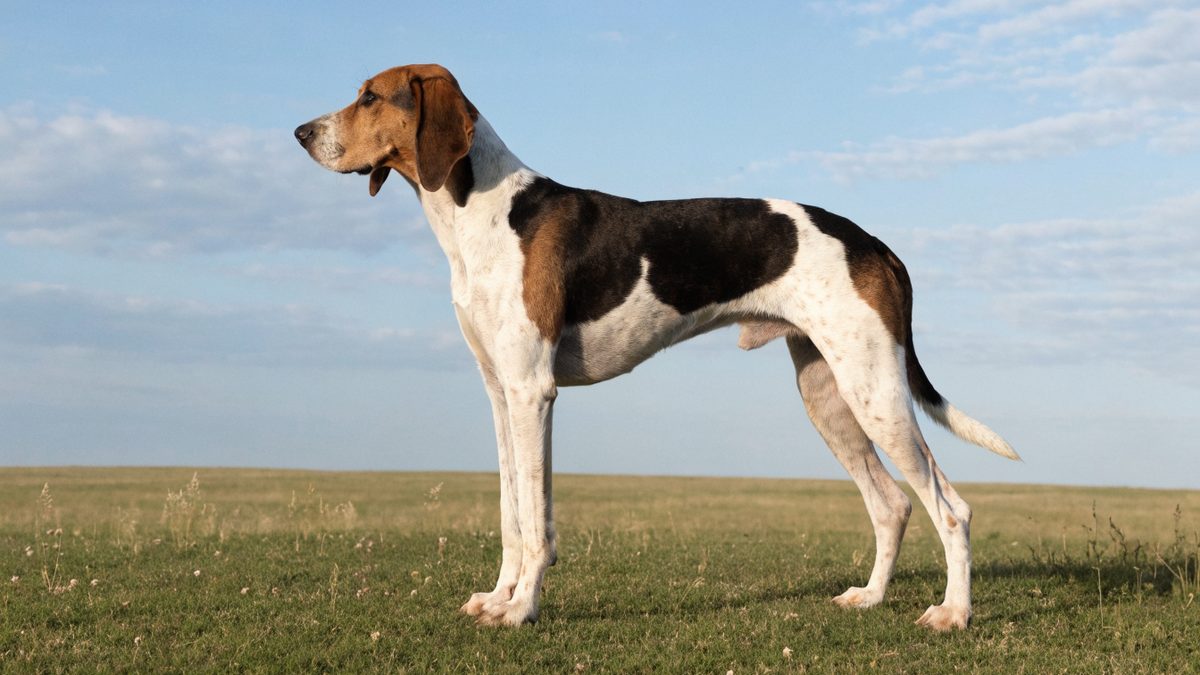
Quick answer
No verified American Foxhound price in India exists, because there is no Indian market for the breed to price. India's top result sells no Foxhound at all, and DGFT Trade Notice 22/2022-23 makes dogs a Restricted import and rejects breeding or trading applications outright. Bonbeno rates the American Foxhound 2 of 5 for heat tolerance in Indian conditions.
This guide is general information for Indian pet owners and is not a diagnosis. Consult your nearby vet, a registered veterinarian, before acting on anything you read here, and treat any sudden change in your dog's condition as urgent.
American Foxhound traits, rated for India
What an American Foxhound actually is
An American Foxhound is a tall, lean pack hound bred in colonial Virginia and Maryland to run fox at distance in front of mounted riders, and almost every other fact about the breed follows from that job. It is a scent hound with a nose that works independently of a handler, a voice built to be heard across open country, and a body built for hours of sustained running rather than for a walk around a block.
The American Kennel Club recognised the breed in 1886, which makes it one of the oldest breeds developed in the United States. The current AKC standard was approved on 11 January 2011 and became effective on 1 March 2011. It describes a hound with ears set on moderately low and long enough that when drawn out they reach nearly, if not quite, to the tip of the nose, large eyes set well apart with an expression the standard calls gentle and pleading, fox-like feet with well-arched toes, and a tail set moderately high and carried gaily with a very slight brush. The coat is a close, hard hound coat of medium length, and the colour section is one line long: any colour.
The single most useful sentence in the standard is the one about the chest. It should be deep for lung space and narrower in proportion to depth than the English hound, with 28 inches of girth in a 23-inch hound being good. That is the breed's own standard defining it against its cousin, and it is the shape of a distance runner rather than a heavyweight.
Three registries, three different dogs on paper
The three registries that publish a breed standard do not agree on how tall this hound is, and the AKC is the outlier. The AKC standard allows dogs from 23 to 28 inches and bitches from 21 to 26 inches. The FCI standard, valid since 2 November 1979 and published in its current form on 5 March 1998, allows dogs 22 to 25 inches, or 56 to 63.5 cm, and bitches 21 to 24 inches, or 53 to 61 cm. The United Kennel Club, whose standard was revised on 1 January 2009, prints exactly the same range as the FCI.
The AKC's own breed page then contradicts the AKC's own standard. It gives average height as 22 to 25 inches for males and 21 to 24 inches for females, which is the FCI and UKC range, not the range in the standard the AKC publishes. A reader who wants one number will not get one. Bonbeno prints all three rather than averaging them.
| Source | Dogs | Bitches | Weight |
|---|---|---|---|
| AKC Official Standard, effective 2011 | 23 to 28 inches | 21 to 26 inches | Not specified |
| AKC breed page, average sizes | 22 to 25 inches | 21 to 24 inches | 65 to 70 lb dogs, 60 to 65 lb bitches |
| FCI-Standard N 303 | 22 to 25 inches, 56 to 63.5 cm | 21 to 24 inches, 53 to 61 cm | Not specified |
| UKC standard, revised 2009 | 22 to 25 inches | 21 to 24 inches | Not specified |
Note what none of them specifies. Neither the AKC standard, the FCI standard nor the UKC standard sets a weight, because a working pack hound is judged on condition rather than on a number Fédération Cynologique Internationale United Kennel Club. The 65 to 70 pound figure on the AKC breed page is the only published weight from a registry, and it is described there as an average rather than a requirement.
Where the breed came from, with a date
The foundation stock has a landing date. The Masters of Foxhounds Association of North America records that the earliest documented importation of hounds to the country was on 30 June 1650, when Robert Brooke arrived in Maryland with his family, 28 servants and his hounds. By 1900 the American Foxhound was the product of breeding those descendants with hounds that continued to arrive, mainly from England, Ireland and France. George Washington kept 36 Foxhounds, and the AKC lists six of their names, including Sweet Lips, Searcher and Drunkard.
That history matters for one practical reason. This is not a breed that was designed and then found a job. It was assembled, over 250 years, by people who culled anything that could not keep running, and the traits an Indian apartment finds difficult are the traits that survived that selection.
The American Foxhound ranked 188th of 202 breeds in the AKC's published registration statistics for 2025. In the 2024 list it was 193rd of 201. Both figures come from the AKC's own full ranking tables, not from a summary. One caveat we will print rather than hide: the AKC's breed page renders the same rank as '188 of 210' while the published 2025 table it comes from ends at 202 entries Melanie Haid, The Most Popular Dog Breeds…. The rank is identical either way. The breed is rare in the register even in the country that created it, and the reason is in the next section: its real population is not registered by a kennel club at all.
Registry recognition, and the stud book that holds the real population
Four bodies register the American Foxhound, and three of them are kennel clubs that barely see it. The AKC recognised the breed in 1886, the United Kennel Club in 1905 and the Fédération Cynologique Internationale on a definitive basis on 2 November 1979, but the working population of the breed lives in a fourth register that no ranking page mentions, the Masters of Foxhounds Association Foxhound Stud Book.
Start with the kennel clubs, because that is where the rarity figure comes from. AKC recognition dates to 1886 and the breed sits in the Hound Group. UKC recognition dates to 1905 and the breed sits in the UKC's Scenthound Group. The FCI lists the breed as number 303, Group 6 Scent hounds and related breeds, Section 1.1 Large-sized hounds, country of origin United States of America, breed status recognised on a definitive basis, and subject to a working trial.
That last clause is easy to skim past and it is the most revealing thing on the FCI record. The FCI classifies the American Foxhound as a working breed subject to a working trial, which is the federation's way of saying the breed is defined by what it does in the field, not by what it looks like standing still.
The register that actually holds the breed
The Masters of Foxhounds Association of North America was formed in 1907 and is the governing body of organised mounted hunting with hounds in the United States and Canada. It recognises 128 member hunts, and among its stated main activities is to register eligible foxhounds in the Foxhound Stud Book and improve the breed of foxhounds. Those hunts keep hounds in kennels in working packs, and their hounds are recorded there rather than with the AKC.
That resolves what looks like a contradiction. A breed can be 188th of 202 in AKC registrations and still exist in real numbers, because the AKC ranking measures pet and show registrations and this breed's population is largely outside that system. The rarity figure is true, and it does not mean the breed is dying. It means almost nobody registers one as a companion dog.
| Body | Recognised | Classification | What it means in India |
|---|---|---|---|
| American Kennel Club | 1886 | Hound Group | Nothing directly. An AKC pedigree is not an Indian registration |
| United Kennel Club | 1905 | Scenthound Group | Nothing directly. UKC papers are not recognised by the KCI on their own |
| Fédération Cynologique Internationale | 2 November 1979, definitive | Group 6, Section 1.1, with working trial | This is the one that matters. FCI recognition is what makes a KCI route possible at all |
| Masters of Foxhounds Association | Stud Book maintained since the association formed in 1907 | 128 recognised hunts | Where the working population actually is, and it is not a source of pet puppies |
Is there a Kennel Club of India route?
Yes, on paper, and it is narrower than it sounds. The Kennel Club of India is the FCI's national member for India, so an FCI-recognised breed such as the American Foxhound is in principle registrable. The practical route is the KCI's import registration, and the club publishes the checklist. It demands the single dog registration form, the export pedigree in original, the airway bill in original, the air ticket in original from the country of import to the final destination, the boarding pass with payment, the DGFT licence, customs clearance, quarantine clearance, a pet passport and a notarised affidavit.
Read that list again as a description of a person rather than a form. It describes somebody who flew into India on a specific flight with a specific dog, holding a licence issued by the Directorate General of Foreign Trade. It does not describe a breeder importing founding stock, and the next section explains why that second person cannot exist lawfully.
How big is the register they would be joining? The FCI's own statistics for the Kennel Club of India record 33,880 pure-bred dogs registered with the studbook in 2025, from 7,412 litters, against 38,592 in 2024 and a peak of 89,571 in 2021. The KCI has 80 member clubs and 342 individual members, and has registered 1,425,001 pure-bred dogs in total since the studbook was created.
The Kennel Club of India does not publish a per-breed breakdown of its registrations that we could open, so we cannot tell you how many American Foxhounds sit on the Indian register. It may be a handful. It may be none. We are not going to print a number we did not read. If a seller shows you a KCI certificate for this breed, the thing to ask for is the import paperwork behind it, because per the club's own checklist there has to be some.
American Foxhound price in India: there is no Indian price
No verified American Foxhound price in India exists, because no Indian market exists to set one. We ran an India-located search for the exact term on 19 August 2026, opened every result that would load, and found not one American Foxhound offered for sale anywhere in the country. What we found instead was four different kinds of nothing, and they are more useful to a buyer than any rupee figure would be.
This is the section where a directory is most tempted to invent something. A band like Rs 45,000 to Rs 1,20,000 would look plausible next to the Beagle, would rank, and would be entirely made up. So here is what the India SERP actually returns, result by result.
| Result | What it actually is | A real Indian Foxhound for sale? |
|---|---|---|
| puppiezo.com, position 1 | Breed shell page. Availability carousel holds a Maltipoo, two Poodles, a Cane Corso, a Goldendoodle, a Rottweiler and a Doxiepoo | No |
| amazon.in, position 2 | A printed breed book | No |
| etsy.com, position 3 | Foxhound digital downloads and art | No |
| asiapets.in, position 4 | Marketplace page reading 'Showing 0 results' | No |
| call4dog.com, position 6 | A page that returns 'Could not connect to database' | No |
| supertails.com and wrapinfur.com, positions 7 and 8 | General Indian dog price lists for other breeds | No |
| wamiz.co.uk, position 10 | A United Kingdom breed profile quoting pounds | No |
| mrnmrspet.com, position 11 | An American Bully sales page, a different breed | No |
| barkjunction.com, top Bing India result | An article quoting rupee figures with no seller, no city and no source | No |
| petzlover.com, Bing India | Claims 18+ listings. Returned HTTP 403 behind a CAPTCHA when opened | Could not verify |
The top result is selling you a Maltipoo
Google India's first result for this query is a Puppiezo page titled American Foxhound Puppies For Sale, and its meta description reads 'American Foxhound Price in Delhi: Buy healthy, KCI registered puppies from certified breeders. Limited availability, reserve your Foxhound today!';. The Rs 98,999 that appears in the search snippet is real. It just does not belong to a Foxhound.
The page's 'Available American Foxhound Puppies For Sale' block is empty. Underneath it sits an 'Other Available Pets' carousel holding eight named puppies: Fizey a Maltipoo at Rs 98,999, Kuzo a Poodle at Rs 92,599, Dugu a Poodle at Rs 92,599, Kazuka a Cane Corso at Rs 94,999, Doir a Goldendoodle at Rs 1,20,000, Samy a Maltipoo at Rs 98,999, Tugi a Rottweiler at Rs 76,499 and Yoki a Doxiepoo at Rs 98,999. The Rs 98,999 attached in search results to 'American Foxhound Price in Delhi' is the price of Fizey, an eight-week-old Maltipoo.
We checked whether that was a one-off. The same site's English Foxhound page carries the identical template and the identical eight puppies in the identical order, at the identical prices, with its own meta description promising 'English Foxhound price in India: Buy puppies online from KCI registered breeders';. Two breeds, one shell, zero Foxhounds. The site's own footer lists the breeds it actually stocks, and neither Foxhound appears on it.
The second marketplace prints its own answer
Asia Pets ranks fourth for the term with a page headed Foxhound Puppies for Sale in India. The listing count on that page reads 'Showing 0 results';. Below the zero, under a line reading 'Here are available pets of the same breed from other locations', it offers a Chihuahua, a Yorkshire Terrier and a Toy Pom. Three toy dogs, presented as the same breed as a 30 kg running hound.
The same page does something else worth noticing. It does not distinguish the American Foxhound from the English Foxhound at all. Its breed dropdown carries a single generic 'Foxhound' entry, and its breed box publishes one lifespan of 10 to 13 years, one weight of 27 to 34 kg and one height of 53 to 64 cm under that single name. If a marketplace does not separate the two breeds in its own catalogue, it is not sourcing either of them.
The rupee figures that do exist, and what backs them
One Indian article does publish numbers, and Bing India's AI summary has already promoted them into an answer. BarkJunction, published 31 January 2025 under the byline 'admin', states that a puppy from a reputable breeder costs Rs 30,000 to Rs 50,000, and that adopting a Foxhound from a rescue or shelter typically costs Rs 5,000 to Rs 15,000. Bing India reproduces the first of those two figures verbatim as its AI-generated answer to the query.
Neither figure names a breeder, a shelter, a city or a transaction. The article's only listed reference is the Wikipedia entry for the breed. And there is a tell inside it. The same page gives the American Foxhound a weight of 45 to 65 pounds, which is not the AKC's figure for this breed at all. The AKC's range for this breed starts at 65 pounds for dogs and 60 pounds for bitches, while 45 to 65 pounds is the AKC's published weight range for a different breed entirely, the American English Coonhound.
The second rupee source could not be opened. Bing India's snippet for PetzLover advertises 18 or more American Foxhound listings across India at prices ranging from 500 to 55,000 US dollars. The page itself returned HTTP 403 behind a CAPTCHA verification screen when we tried to read it, so we take no figure from it. A dollar range spanning a factor of 110 on an Indian marketplace would not have survived checking anyway.
What the breed costs where a market genuinely exists
For scale, here is a real published purchase band from a country where a few of these hounds are kept. The UK profile Wamiz quotes £350 for a non-Kennel Club registered dog and £1,050 for a Kennel Club registered one, with estimated upkeep of £60 to £100 a month. The same page states plainly that the breed is very rarely kept as a pet in the UK, and that the American Foxhounds who do live there have generally been imported to boost hunting stock.
We report that as a UK consumer-site estimate and nothing more. Converting it into rupees would produce a number no Indian buyer can act on, because there is no lawful route to bring a puppy of this breed into India for sale. That is not our opinion, it is the import policy, and it is the next section.
Treat it as a misdescribed dog until the paperwork says otherwise. The realistic possibilities are a Beagle grown large, an English Foxhound, a Coonhound type, a hound crossbreed or a well-marked Indian pariah cross. Ask which registry issued the papers, what breed name is printed on them, and to see the DGFT licence and airway bill that the Kennel Club of India's own import checklist requires Directorate General of Foreign Trade. A seller who cannot produce those has not imported anything.
Indian import rules, and why no supply chain can form
Indian import rules make a commercial American Foxhound trade unlawful, and that single fact explains the empty listings better than any market analysis. Dogs are a Restricted import under India's tariff schedule, entry is permitted for exactly three purposes, and breeding and trading are not among them. Read the notice rather than a summary of it, including this one.
The governing document is Trade Notice No. 22/2022-23, issued by the Directorate General of Foreign Trade in the Ministry of Commerce and Industry on 19 December 2022 and signed by Md. Moin Afaque, Deputy Director General of Foreign Trade. It sets out the import policy for ITC (HS) code 01061900, Mammals: Other, which covers pet cats and dogs. The import policy for that line is one word: Restricted.
Policy Condition 7 then lists the only purposes for which a dog may enter India, and the list is short.
- Pet dog with a valid pet book and relevant records or documents in the name of the importer.
- Dogs imported by R&D organisations for conducting research, with the recommendation of the CPCSEA.
- Dogs for internal security use by the Defence and Police Force.
Policy Condition 8 closes the door on everything else. It states that the import of commercial dogs for breeding or any other commercial activities other than the purposes mentioned above is not permitted. Paragraph 6 of the same notice repeats the point in operational language: any applications for trading or breeding purposes, or applications made on behalf of some another person or entity, shall be duly rejected.
What the pet route actually allows
A returning resident can bring a dog, and the conditions are specific. Import as passenger baggage without a DGFT authorisation is allowed only to a person transferring their residence to India after two years of continuous stay abroad, only for cats and dogs, and only for up to two pets. Anything else needs a DGFT import authorisation, and where the stay abroad was under two years, or the animal is not travelling as baggage, an authorisation is required as well. Applicants are advised to start at least two months before travel.
Entry is also geographically limited. Import of pet animals is allowed only through the airports and seaports of Delhi, Mumbai, Chennai, Hyderabad, Bengaluru and Kolkata and, since October 2024, Kochi airport, with quarantine at the government quarantine station of those ports where required Department of Animal Husbandry…. An advance No Objection Certificate must be obtained from the Regional Officer or Quarantine Officer seven days before travel, relaxable up to three days. The full route is set out in how to import a dog to India.
| Permitted purpose | Who it covers | Can it create Indian puppies for sale? |
|---|---|---|
| Pet dog with valid pet book in the importer's name | One returning traveller and their own dog | No. It is one animal, imported as personal property |
| R&D with CPCSEA recommendation | Research organisations | No, and no laboratory uses this breed |
| Defence and Police internal security | Government forces | No, and no Indian force works foxhounds |
| Commercial import for breeding or trade | Nobody. Explicitly not permitted | No. Applications shall be duly rejected |
The loop closes at the Kennel Club of India
Now put the DGFT notice beside the Kennel Club of India's own paperwork. The KCI's checklist for registering a dog as import status requires the export pedigree in original, the airway bill in original, the air ticket in original from the country of import to the final destination, the boarding pass, the DGFT licence, the customs clearance document, the quarantine clearance document, a pet passport and a notarised affidavit.
Every one of those documents describes a single named traveller arriving with a single named dog. There is no version of that form that a kennel could fill in for a breeding pair, because the DGFT licence it demands cannot lawfully be issued for breeding The Kennel Club of India. Between those two documents, a lawful Indian breeding population of American Foxhounds cannot be founded. That is the whole explanation for the empty search results, and it is available to anyone willing to open two PDFs.
If you are asking what an American Foxhound costs in India, the useful answer is not a number. It is that the question has no lawful subject. Somebody who genuinely wants this dog and can give it what it needs is looking at emigrating with it, not buying it here. Somebody who wants a friendly, biddable, short-coated hound that is actually available in India has better options, and the Indian Pariah Dog is the first of them.
Monthly cost of keeping an American Foxhound in India
No Indian monthly cost figure for this breed rests on an actual Indian American Foxhound, because there are none to survey. What can be reasoned honestly is the cost structure, which is unusual: this is a large dog whose grooming bill is close to zero and whose real spending sits in places most Indian cost lists never mention.
Two published monthly figures exist and both need labelling. BarkJunction puts quality dog food at Rs 3,000 to Rs 6,000 a month, routine veterinary care at Rs 5,000 to Rs 15,000 a year, supplies at Rs 5,000 to Rs 10,000 upfront and professional training at Rs 5,000 to Rs 20,000. The UK profile Wamiz estimates upkeep at £60 to £100 a month. Neither is a survey, and the Indian one is calibrated to the wrong dog: the same article states the breed weighs 45 to 65 pounds when the AKC's range starts at 60 pounds for bitches and 65 for dogs. A food budget built for a 20 kg hound will not feed a 30 kg one.
Where the money actually goes with this breed
The grooming line is the cheapest on this site. The AKC's grooming guidance for the breed is a short, once-a-week session with a bristle brush, a rubber grooming mitt or a hound glove, and it adds that the Foxhound should not need to be bathed unless he gets into something particularly messy. An Indian owner of a Lhasa Apso or a Golden Retriever spends more on one salon visit than this hound needs in a year.
The exercise line replaces it, and it is the line nobody budgets for. The AKC asks for at least a solid hour or two of exercise every day, and in most Indian cities that means driving to open ground before dawn for eight months of the year, because the India Meteorological Department's heat wave season runs from March to June and peaks in May. Fuel, or a daily cab, or a paid walker who will actually run a hound rather than stroll it, is the recurring cost this breed creates.
The third line is parasite prevention, and it is not optional for a dog that spends hours in vegetation. A survey of 525 dogs across four Indian cities found 261 of them, or 49.7 percent, carrying at least one tick-borne pathogen by PCR, with Hepatozoon canis at 30 percent and Ehrlichia canis at 20.6 percent, and potential tick vectors found on 278 dogs, or 53 percent of those examined. Co-infection with more than one pathogen occurred in 39 percent of cases.
| Line | What drives it | How well evidenced |
|---|---|---|
| Food | A 27 to 32 kg working-built adult, fed as two measured meals rather than free-fed | Weak. The only Indian figure is calibrated to a lighter dog |
| Grooming | One weekly brush with a hound glove. Rare baths | Strong, and it is close to free |
| Exercise logistics | One to two hours daily, off-pavement, in a cool window World Health Organization India | Reasoned, not surveyed. This is the real recurring cost |
| Tick and flea prevention | Half of Indian dogs sampled carried a tick-borne pathogen | Strong evidence for the risk, no Indian price survey for this breed |
| Secure fencing or gate discipline | A scent hound that cannot be recalled off a trail | Strong. The AKC makes it a safety instruction, not a preference |
| Routine veterinary care | Vaccination, deworming, dental | Weak for this breed specifically. No Indian cohort exists |
Notice what is missing from that table. There is no health-screening line, because the national breed club recommends no health tests at all, and there is no line for a breed-specific condition, because no register holds enough American Foxhounds to publish a rate. That is not a saving. It means an owner is budgeting blind rather than budgeting low.
Other pages will give you a tidy first-year figure for this breed in India. Every one of those totals is built on a purchase price that does not exist, for a dog that cannot lawfully be bought here. Bonbeno publishes the cost structure and labels the confidence, and leaves the total blank until somebody can show us a real Indian American Foxhound with real bills behind it.
Heat tolerance in India: Bonbeno rates this breed 2 of 5
Bonbeno rates the American Foxhound 2 of 5 for heat tolerance in Indian conditions, and the rating is low despite the coat rather than because of it. The dog's construction is genuinely well suited to a hot country. Its purpose is not, and the published evidence says purpose beats construction.
First half: the build is a real advantage
Everything about this hound's body helps in heat. The coat is a single close, hard hound coat of medium length with no undercoat described in any of the three standards Fédération Cynologique Internationale United Kennel Club. The dog is lean and short-coated, with a chest that is deep for lung space but narrower in proportion to depth than the English hound's. The muzzle is straight, square-cut and of fair length, which means a full-length airway and none of the panting handicap that defines a flat-faced breed.
That matters, because flat-faced dogs carried greater odds of all three types of heat-related illness than mesocephalic dogs in the largest study of the question. An American Foxhound standing in the shade in Chennai in April is in a far better position than a Pug or a Tibetan Mastiff. Nothing about how this dog is built makes ambient Indian heat dangerous to it.
Second half: exertion is what actually causes heat illness
Here is the finding that decides the rating. A VetCompass study of 905,543 dogs under UK primary veterinary care in 2016 identified 1,259 heat-related illness events in 1,222 dogs, and classified them by trigger. Exertional heat-related illness was the predominant trigger at 74.2 percent of the 879 events where a cause was recorded. Environmental heat accounted for 12.9 percent and confinement in a vehicle for 5.2 percent.
Three quarters of heat illness happened because a dog was exercising. Not because it sat outside, and not because it was shut in a car. The paper's own title makes the point: dogs do not die just in hot cars.
Now the part that closes the argument for a lean running hound. The study's final model found seven breeds with higher odds of exertional heat-related illness than the Labrador Retriever, and the list includes the Greyhound alongside the Chow Chow, Bulldog, French Bulldog, English Springer Spaniel, Cavalier King Charles Spaniel and Staffordshire Bull Terrier. The Greyhound is the leanest, shortest-coated, most athletic running dog in the register. Being built like a runner did not protect it. Running is what put it there.
The American Foxhound is not a Greyhound and the study contains no Foxhound data at all, so this is reasoning by mechanism rather than by breed figure, and we are labelling it as such. But the mechanism is the point. A dog whose exercise requirement is one to two solid hours every day is a dog with maximum exposure to the trigger that causes three quarters of heat illness.
The bind, stated plainly
You cannot solve this by exercising the dog less. The AKC states that without its hour or two the breed becomes bored and destructive, and that Foxhounds can develop unwanted behaviours if not given enough exercise. So the owner faces a genuine trade-off rather than a management tip: deliver the exertion and accept the heat exposure, or withhold it and accept a large frustrated hound in a flat.
The Indian calendar makes that trade-off tight. The India Meteorological Department declares a heat wave when a station's maximum temperature reaches at least 40 C in the plains or at least 30 C in hilly regions, five to six heat wave events occur every year over the northern parts of the country, the season runs from March to June and sometimes into July, and the peak month over India is May. For coastal stations the criterion is a departure of 4.5 C or more from normal with an actual maximum of 37 C or more. WHO also notes that the threshold at which temperature becomes hazardous varies with other factors including humid conditions and wind, which is why a 34 C evening in Mumbai can be harder work for a panting dog than a 40 C evening in Jaipur.
| City type | The constraint | Realistic verdict |
|---|---|---|
| Delhi, Jaipur, Nagpur, Ahmedabad | Extreme dry heat from March to June, with a genuinely cool pre-dawn window | Workable for four to five months a year, and dawn-only for the rest |
| Mumbai, Chennai, Kolkata, Kochi | Lower peak temperature, but humidity that does not drop at night and shrinks the cool window to almost nothing | The hardest fit. Evaporative cooling is degraded exactly when the dog needs it |
| Pune, Bengaluru | Mild for most of the year, with a short hot spell | The only realistic Indian cities for this breed, and even here summer needs care |
| Shimla, Ooty, Gangtok, Darjeeling | Hilly-region heat wave threshold sits at 30 C | Genuinely suitable on climate. Availability, not weather, is the blocker |
Not 1, because the coat, the airway and the lean frame are real advantages, and an owner running this hound at 5.30 am in Pune in December is doing nothing risky. Not 3, because the breed's defining activity is the documented trigger behind 74.2 percent of heat events, and across most of India the window in which that activity is safe covers a minority of the year. A breed you have to stop doing its job for eight months has poor heat tolerance in practice, whatever its coat says. Discuss any heat episode with your nearby vet immediately, because heat stroke is a same-day emergency.
American Foxhound temperament, and who should not want one
The American Foxhound temperament is the best thing about the breed and the least relevant to whether you should keep one. The AKC's three-word summary is independent, easy-going and sweet-tempered, and Foxhounds raised in the home are described as wonderfully mild-tempered, devoted and easygoing companions who get along well with children. Nobody rejects this dog because of its character. They reject it because of its voice, its range and its need for company.
Start with what the breed is good at socially. It was selected for centuries to work shoulder to shoulder with 20 or 30 other hounds and a string of horses, which means aggression toward other dogs was culled out of it generations ago. The AKC describes good-natured hounds who get on well with kids, dogs and even cats. The UK profile agrees on dogs specifically, noting she is good with other dogs as she is bred to work with them.
Where the sources disagree, and we print both
The two most detailed profiles contradict each other on strangers. The AKC's own summary word is easy-going, and the breed's standard-derived expression is described as gentle and pleading American Kennel Club. Wamiz, by contrast, says she is generally suspicious towards strangers, can get protective or defensive, and is very territorial, and therefore makes for a great intruder alarm.
We do not average those. A pack hound bred to be handled by strangers on horseback is not a natural guarding breed, and the AKC's reading fits the working history better. But Wamiz is describing dogs kept in ones and twos in British homes rather than in kennels, and a socially under-exposed hound of any breed becomes wary. The practical instruction is the same either way: socialise the puppy hard and early, and do not buy this breed expecting a guard dog.
The voice is the deal-breaker in an Indian flat
This is the loudest breed on this site and the AKC says so admiringly. It records that the American Foxhound has achieved great renown for his musical voice, and that his bays and howls can carry for miles. Wamiz is blunter, calling her a real howler and naming that as one reason she is not a common pet.
A sound designed to be audible to a rider a kilometre away, produced in a 900 square foot flat with shared walls, is not a training problem. It is a physics problem. Apartment living with this breed means your neighbours hear a hunting horn made of dog, several times a day, and no amount of positive reinforcement makes a foxhound quiet.
| Situation | Verdict |
|---|---|
| A Mumbai or Bengaluru flat in a shared-wall building | No. The voice alone ends it, before the exercise requirement is even discussed |
| A first-time dog owner | No. The AKC calls training these independent souls a steep challenge for novice owners |
| A household out at work nine hours a day | No. A pack animal left alone all day, with an hour of unspent running in it, will find a project |
| A family with young children and space | Good, on temperament. Mild-tempered, devoted and good with children |
| A farm, estate or hill-station property with secure fencing | The only setting where the breed makes sense, and even then availability is the blocker |
| A runner who wants a training partner | Good on paper. Read the heat section first, because the cool window is short |
If the temperament is what attracted you, you can have it. Gentle, sociable, child-tolerant, non-guarding and short-coated is a description that fits the Indian Pariah Dog and a great many Indian shelter dogs, all of which are available today, cost nothing to acquire and are already adapted to the climate. You lose the nose and the voice. In an Indian city, both of those are losses worth taking.
Training an American Foxhound: recall is the whole problem
To train an American Foxhound, train everything except recall and then manage recall as a safety problem for the dog's whole life. The AKC states the position without hedging: as scenthounds, it may never be safe to have them off-leash, because their noses can lead them into trouble. That is not a training failure. It is the breed working correctly.
Bonbeno's Beagle and Basset Hound guides both reach the same conclusion, because it is the defining feature of the whole scenthound group: these dogs were selected to work a trail independently of a handler, so a scent reliably beats a voice. What is worth adding here is that the American Foxhound is the extreme case of it, and the reason is measurable in distance.
Why the Foxhound version is worse than the Beagle version
A Beagle was bred to be followed on foot by people walking. An American Foxhound was bred to be followed on horseback. The Masters of Foxhounds Association governs mounted hunting with hounds, and the AKC notes the breed has always worked closely alongside horses. A pack that could be kept in touch with by a rider at a gallop is a pack that was selected to open up a gap and keep going.
So the two breeds fail differently. A Beagle that catches a scent in a Pune lane is usually two streets away. An American Foxhound that catches a scent was engineered to be several kilometres away, and to still be running. The AKC puts it in its own words: American Foxhounds can be extremely difficult to call back once they get on a scent.
The second difference is leverage. Both breeds love food, and the AKC warns that Foxhounds love to eat and can be prone to getting overweight, so treats work as a teaching tool. But the AKC's training guidance for this breed leads with patience and persistence rather than with food, calling the hounds easygoing and amiable but also stubborn and independent, and recommending obedience classes. Where the Beagle page tells you the nose competes with your voice, this page tells you the nose competes with your voice across open country, and the horse is gone.
Realistic timelines
| Skill | Start | Realistic outcome |
|---|---|---|
| Name response indoors | Week 1 home | 2 to 3 weeks with food rewards |
| Sit, down, settle | Week 1 home | 4 to 8 weeks. Slower than a Beagle, and not because the dog is slow |
| Accepting handling of ears, feet and mouth | Week 1 home | 2 to 4 weeks, and worth more than any trick |
| Toilet training | Week 1 home | 4 to 6 months |
| Loose-lead walking on a 30 kg hound | Month 2 | 6 to 12 months, with permanent maintenance |
| Settling alone for short periods | Week 2 home | Months of graded work. A pack animal never finds this easy |
| Quiet on cue | Month 3 | Partial at best. Baying is the breed working |
| Reliable recall off-lead in an open area | Month 2 | Never treat as achieved |
Socialise for the country you are actually in
Socialise the puppy before the window closes, and design the exposure around Indian conditions rather than around a hunt field. That means traffic, horns, delivery riders, lift doors, security guards, other dogs across a shared landing, being handled by a stranger, and walking on hot-adjacent surfaces at a safe hour. If you will ever need to muzzle-train or crate this dog for a vet visit, do it now while it is 8 kg rather than at 30 kg.
Scent work is the single highest-value activity for this breed and it runs indoors in an air-conditioned room during a heat wave. Hide food, let the dog find it, build up to searching a whole room, then a whole floor. Twenty minutes of nose work tires a scent hound more than twenty minutes of walking, and it uses the exact instinct that otherwise drags you down a road. The AKC also lists tracking, rally and coursing ability tests as outlets that exercise mind and body together.
How much exercise an American Foxhound actually needs
An American Foxhound needs at least a solid hour or two of exercise every day, and the AKC says so in exactly those words. That is the highest daily requirement Bonbeno has recorded for any hound, and the reason is in the job description: Foxhounds were bred specifically to spend long hours chasing after prey.
The UK profile puts it higher still, calling a couple of hours of exercise a day plus plenty of mental stimulation essential, and adding that this dog's reason for being is the thrill of the hunt. Even the Indian shell listing that sells no Foxhounds prints an exercise routine of one to two hours daily against the breed. On this one point, everybody agrees.
An hour of what, exactly
Not an hour of walking. A hound built to gallop behind horses gets very little out of a lead walk at human pace, which is why the AKC pairs its exercise line with canine sports such as tracking, rally and coursing ability tests, and describes the breed as a great companion on long walks or hikes rather than on a stroll. The exercise has to have distance, or a scent job, or both.
And it has to happen behind a fence or on a lead. The AKC's instruction is unambiguous: because they were bred to hunt and chase animals and to follow a scent, they should only be allowed loose in areas that are securely fenced, and any walks must be taken on a leash. In an Indian city that sentence means something specific. A hound that slips a collar at 6 am in Gurugram is running toward traffic, street dog territory and, within an hour, dangerous surface heat.
What happens when the hour does not happen
The AKC is direct about the failure mode. Without its exercise the dog may become bored and destructive, and hounds can develop unwanted behaviours if not given enough exercise. Wamiz answers its own destructiveness question with a single word, absolutely, conditional on the dog's energy needs not being met.
The AKC also offers the most optimistic sentence written about this breed anywhere, and it deserves reading carefully. If they get all the activity they need, they can fit in pretty much anywhere. That is a conditional, not a promise, and in most of India the condition is the part that fails. From March to June, when the heat wave season runs and peaks in May, the safe window for one to two hours of hard running is roughly 5 am to 6.30 am and nothing else.
| Season | Usable window | What actually fits in it |
|---|---|---|
| November to February | Dawn and after dark, both usable | The full hour or two. This is the breed's good season |
| March to June, heat wave season | Pre-dawn only, roughly 60 to 90 minutes | One session. Evening running is off the table in the plains |
| Monsoon, June to September | Wider, but wet ground and vegetation | Distance is possible. Tick exposure rises sharply |
| October | Dawn and late evening | Most of the requirement, with care on humid days |
The instinct when the mornings get hot is to walk the dog for longer in the evening instead. That is the wrong direction. Exertional heat-related illness accounted for 74.2 percent of heat events in the largest trigger study, so extending duration into a warmer part of the day increases exactly the exposure that matters. Shorten and cool the session instead, and move the load indoors into scent games.
Grooming an American Foxhound in Indian humidity
Grooming an American Foxhound takes about ten minutes a week, which makes it the lowest-maintenance coat on this site. The AKC's guidance is a short, once-a-week session with a bristle brush, a rubber grooming mitt or a hound glove, and it adds that the Foxhound should not need to be bathed unless he gets into something particularly messy outdoors.
The coat is doing a job, which is why it needs so little help. All three standards describe a close, hard hound coat of medium length Fédération Cynologique Internationale United Kennel Club, and the AKC explains that the hard texture protects the dog from the underbrush he courses through while hunting. Shedding is described as light, seasonal, and worse if the dog is not brushed regularly.
Nothing about that changes in Indian conditions, which is genuinely good news and rare on this site. There is no undercoat to blow, no matting risk, no professional groomer bill and no clipping schedule. A weekly hound glove and regular nail trimming, which the AKC names for all breeds, covers the coat entirely.
The ears are the part that needs Indian attention
The standard describes ears set on moderately low, long enough to reach nearly to the tip of the nose when drawn out, hanging close to the head with the forward edge slightly in-turning, and with almost the entire absence of erectile power. That is a warm, closed, poorly ventilated ear canal, and it sits on a dog that pushes through vegetation.
The AKC's health note follows from the shape rather than from breed data: long-eared breeds can develop ear infections, and a Foxhound's ears should be checked regularly to remove foreign matter and avoid a buildup of wax. Wamiz also lists ear infections among the breed's possible health problems.
Bonbeno's Beagle and Basset Hound pages carry measured otitis externa prevalence figures from large primary-care studies, and it would be easy to reprint one of them here because the ear shape is similar. We are not going to. No otitis externa prevalence has ever been published for the American Foxhound, because no cohort study holds enough of them, and a borrowed percentage would be a fabrication wearing a citation. What we can tell you is the mechanism and the routine: check the ears weekly in dry months and after every session in wet vegetation, and daily through the monsoon if the dog swims or works in long grass.
Two more small jobs complete the routine. The AKC notes that regular brushing keeps the hound's teeth healthy, and nails on a dog that runs on soft ground rather than pavement wear down less than owners expect. Neither is breed-specific, and neither costs anything.
| Task | Frequency | Time |
|---|---|---|
| Bristle brush or hound glove over the coat | Once a week | 5 to 10 minutes |
| Ear check, wipe visible debris only | Weekly, daily in monsoon | 1 minute |
| Tooth brushing | Most days | 2 minutes |
| Nail trim | As required, roughly monthly | 5 minutes |
| Tick check after every off-pavement session | Daily in season | 3 minutes |
| Bath | Only when genuinely dirty | Rare |
American Foxhound health issues, screening and lifespan
Nobody can tell you the American Foxhound's rate of any disease, and every page that gives you one has made it up. This section states that three times, in three different ways, because the honest answer to the health question for this breed is a set of blanks and the blanks are themselves informative.
Blank one: the breed's own club recommends no screening at all
The AKC publishes what each hound parent club recommends breeders should screen for. The American Foxhound entry reads, in full: Recommended Health Tests from the National Breed Club: No recommended health tests. There is no link to an Official Breed Club Health Statement and no parent club website link beside it, which sets it apart from most of the group.
Set that against the neighbours on the same page. The Beagle's club recommends five items, including hip evaluation, cardiac exam, ophthalmologist evaluation, thyroid evaluation and a Musladin-Lueke Syndrome DNA test. The Basset Hound's club recommends five, including four DNA tests. Most tellingly, the Harrier, which is essentially a foxhound built one size down, recommends hip evaluation and ophthalmologist evaluation.
Eight of the 33 hound breeds on that page recommend nothing, and the American Foxhound is one of only three that also carries neither a published health statement nor a parent club link, alongside the American English Coonhound and the Plott Hound. Absence of recommended tests is not evidence of a healthy breed. It is evidence that nobody is systematically looking.
Blank two: there is no OFA table to read
The Orthopedic Foundation for Animals is where a buyer would normally check breed-level hip dysplasia rates. Its own FAQ explains the threshold: breeds are not included in the OFA statistics tables until a minimum number of individuals have been evaluated, and for hips each breed must have at least 100 evaluations in the database, with at least 50 for every other database.
We queried OFA's Disease Statistics by Breed application directly on 19 August 2026 and could not retrieve a returned table for this breed. So this page publishes no OFA percentage for the American Foxhound. We could have guessed a breed code and pulled something, and that is precisely the trap: a guessed OFA code returns a real, complete, plausible table for a completely different dog. An unverified number with a citation attached is worse than a blank.
Blank three: there is no measured lifespan
The lifespan figures in circulation are registry estimates and consumer-site estimates, not cohort measurements, and they do not agree with each other. The AKC gives 11 to 13 years. Wamiz gives 11 to 13 years in one field and then states that her average life expectancy is 12 years in another on the same page. The Indian shell listing prints 11 to 13 years for the American Foxhound and 8 to 10 for the English Foxhound Puppiezo, English Foxhound Puppies…, while the AKC gives the English Foxhound 10 to 13.
The largest study of breed longevity available covers 584,734 UK dogs, including 284,734 deceased, across 155 breeds. We could not confirm the American Foxhound among those 155, and pack hounds kept in working kennels are generally absent from primary-care companion-dog datasets in the first place. So we report the registry estimate as an estimate and print no measured figure.
What is actually named, without a rate attached
Two conditions are named by the AKC. It states that a responsible breeder will screen breeding stock for conditions such as hip dysplasia and thrombocytopathy, which it describes as a blood disorder. The UK profile names the same two and adds Pelger-Huet, another blood disorder, plus ear infections. None of those four sources gives a prevalence, an odds ratio or a sample size for any of them.
| Condition or figure | Who names it | Prevalence published? |
|---|---|---|
| Hip dysplasia | AKC, as something a responsible breeder screens for | No. The breed carries no OFA table Orthopedic Foundation for Animals |
| Thrombocytopathy, a platelet disorder | AKC and Wamiz | No |
| Pelger-Huet anomaly, a blood disorder | Wamiz only | No |
| Ear infections | AKC, from ear shape rather than data | No. We will not borrow the Beagle's figure |
| Obesity | AKC, Foxhounds love to eat and can be prone to getting overweight | No breed figure. Managed by feeding and exercise |
| Life expectancy 11 to 13 years | AKC estimate | Not a cohort measurement |
| Recommended screening protocol | National breed club: none | Not applicable. There is no protocol |
The two Indian risks that do have numbers
Where breed data is silent, country data is not. First, tick-borne disease. A survey of 525 dogs across four Indian cities found 261 of them, or 49.7 percent, infected with at least one tick-borne pathogen by PCR, with Hepatozoon canis at 30 percent, Ehrlichia canis at 20.6 percent, and co-infection with more than one pathogen in 39 percent of cases. Potential tick vectors were found on 278 of the dogs examined, or 53 percent. A hound working long grass carries above-average exposure to all of that.
Second, heat. Exertional heat-related illness was the trigger in 74.2 percent of heat events in a study of 905,543 dogs, and the seven breeds with elevated odds included the Greyhound. Neither of those numbers is breed-specific to the Foxhound, and both are directly relevant to how this dog is kept in India. We label them as mechanism rather than as breed prevalence.
Treat every rupee-denominated health claim about this breed on an Indian site as unsourced until proven otherwise, keep body condition and tick prevention as the two levers you actually control, and consult your nearby vet, a registered veterinarian, before acting on anything here. If you ever do own one of these hounds in India, ask your vet to record what you find, because the breed's evidence base is thin enough that individual case records genuinely matter.
Feeding an American Foxhound in India
Feed an American Foxhound two measured meals a day rather than leaving food down, because the AKC's own nutrition guidance for this breed warns that Foxhounds love to eat and can be prone to getting overweight. On a dog whose entire value is sustained running in a hot country, every extra kilogram is both a performance cost and a heat cost.
The AKC's position is short and applies cleanly in India. The breed should do well on a high-quality dog food, whether commercially manufactured or home-prepared with your veterinarian's supervision and approval, the diet should be appropriate to the dog's life stage, treats are an important training aid but too many cause obesity, and clean fresh water should be available at all times. Wamiz adds the working version of the same point: with adequate exercise and a moderate diet she should maintain her sporty form.
What lean looks like on this breed, and why owners get it wrong
The standard describes a chest that is deep for lung space but narrower in proportion to depth than the English hound, with a three-inch flank allowing springiness and a loin that is broad and slightly arched. A correctly conditioned American Foxhound therefore looks narrow from the front and tucked from the side, and Indian visitors will tell you the dog is underfed.
They are usually wrong. Use body condition rather than the bathroom scale. Ribs should be easily felt under a thin layer of covering, a waist should be visible looking down, and there should be an abdominal tuck from the side. Wamiz notes the breed appears lanky when in good shape and becomes, in its words, a bit of a whopper if allowed to pile on the pounds.
| Stage | What changes | Indian note |
|---|---|---|
| 8 weeks to 6 months | Large-breed puppy food, three to four meals a day, age-appropriate per the AKC | Large-breed puppy formulas are widely stocked in Indian metros |
| 6 to 14 months | Down to two meals. Growth is still finishing on a 22 to 25 inch frame | The adolescent appetite arrives with the hot season. Do not free-feed |
| Adult | Two measured feedings rather than free-feeding all day | Adjust downward on days the run does not happen because of heat |
| Senior | Age-appropriate diet, per the AKC's life-stage instruction | Activity drops before appetite does. Recheck condition monthly |
| Training days | Treats count as calories, not as extras | Take the treat allowance out of the meal, not on top of it |
There is no breed-specific formula for an American Foxhound and no Indian brand makes one, which is fine, because there is no breed-specific nutritional requirement published for it either. A good large-breed adult food fed to condition is the whole answer. Anyone selling you a Foxhound-specific diet in India is selling you a label, given that the breed is not here.
Clean fresh water at all times is the AKC's instruction for every dog, and in a country with a March to June heat wave season peaking in May it is the cheapest safety measure available. Carry water on every session, offer it before the dog asks, and never let a run start with a dog that has not drunk. Discuss any change in appetite, drinking or weight with your nearby vet rather than adjusting food on guesswork.
American Foxhound puppy: the first year, month by month
An American Foxhound puppy grows into a 22 to 25 inch, 27 to 32 kg running hound inside twelve months, and the year divides cleanly into three jobs: socialise early, build distance slowly, and never once let the dog rehearse running away. This timeline assumes the rare lawful case, a dog imported as an accompanied pet under a DGFT authorisation, because there is no other way a puppy of this breed is in India.
| Age | What is happening | What you do about it |
|---|---|---|
| 8 to 12 weeks | Socialisation window open. Vaccination course under way | Handle ears, feet and mouth daily. Introduce lifts, stairwells, traffic noise, guards and delivery riders. Start crate and name work |
| 3 to 4 months | Chewing, testing, first real pulling. Toilet training in progress, and the AKC-typical timeline runs 4 to 6 months | Fit a properly adjusted harness now, at 10 kg, not at 30 kg. Begin short scent games indoors |
| 4 to 6 months | Adolescent recall collapses. The nose starts winning arguments | Move all off-lead work behind a secure fence, permanently. Book obedience classes, which the AKC recommends for this breed |
| 6 to 9 months | Frame lengthens fast. Appetite climbs. Two measured meals from here | Build duration gradually toward the adult requirement rather than starting at it. Check body condition monthly |
| 9 to 12 months | Voice matures. Baying becomes carrying rather than yapping | If you live with shared walls, this is the month the decision you made a year ago arrives |
| 12 months and on | Adult requirement applies: at least one to two solid hours daily | Fix the year-round schedule around the cool window, not around your convenience |
The three things to get right, in order
- Socialise before 16 weeks. The AKC calls early socialisation and puppy training classes important for the breed, and an under-socialised hound is where the suspicious-towards-strangers reading in the UK profile comes from Wamiz UK, American Foxhound breed profile.
- Never allow a successful escape. Every time a young hound gets loose, follows a scent and enjoys it, the behaviour is reinforced by the thing it was bred for. The AKC's rule is a fence or a lead, with no third option.
- Build the distance, do not switch it on. One to two hours describes an adult dog. A growing puppy gets frequent short sessions and a lot of scent work instead, and the volume rises across the second half of the year.
Two Indian-specific additions belong in the first year. Microchip and register the dog properly, because a scent hound is the breed most likely to need identifying at a distance from home. And start tick prevention from the first vet visit rather than the first tick, given that potential tick vectors were found on 53 percent of dogs in a four-city Indian survey.
A puppy that arrives in March walks into the Indian heat wave season, which runs to June and peaks in May. That is the worst possible overlap with the socialisation window, because the hours when a puppy most needs to meet the world are exactly the hours it cannot safely be outside. Plan an arrival in October or November if you have any control over the date, and if you do not, do your socialisation indoors and at dawn and accept that it will take longer.
American Foxhound vs English Foxhound vs American English Coonhound
The American Foxhound is confused with two breeds in particular, and both confusions are avoidable in one paragraph. The English Foxhound is a heavier, shorter-legged, flatter-backed pack hound from Britain with a much broader chest. The American English Coonhound is a taller but lighter American night-hunting hound that trees raccoon rather than running fox. All three are separate breeds with separate standards and separate AKC recognition dates.
The AKC states the visual test itself. You can tell the American Foxhound apart from their British cousin by length of leg, because the American's legs are longer and more finely boned, and by the American's slightly arched loin. The two standards back that up precisely. The American standard asks for a loin that is broad and slightly arched, while the English standard requires that the topline of the back should be absolutely level.
The chest measurement is the cleanest single discriminator, because both standards give a number for the same purpose. The American standard says the chest should be narrower in proportion to depth than the English hound, with 28 inches of girth in a 23-inch hound being good. The English standard says the chest should girth over 31 inches in a 24-inch hound. Three extra inches of girth on one extra inch of height is a different animal.
The feet finish the job. The American standard specifies fox-like feet with well-arched toes. The English standard specifies feet that should be round and catlike. And the English standard describes a cosmetic practice the American one does not mention at all: most English hounds are rounded, which means about one and a half inches is taken off the end of the ear.
| American Foxhound | English Foxhound | American English Coonhound | |
|---|---|---|---|
| AKC recognised | 1886 | 1909 | 2011 |
| Height, dogs | 22 to 25 in on the AKC breed page, 23 to 28 in in the standard American Kennel Club | 24 in | 24 to 26 in |
| Weight | 65 to 70 lb dogs, 60 to 65 lb bitches | 60 to 75 lb | 45 to 65 lb |
| Life expectancy, registry estimate | 11 to 13 years | 10 to 13 years | 11 to 12 years |
| AKC popularity rank, 2025 | 188 of 202 | 187 of 202 | 182 of 202 |
| Chest girth in the standard | 28 in on a 23-in hound | Over 31 in on a 24-in hound | Deep chest, no figure given |
| Feet | Fox-like | Round and catlike | Not compared here |
| Topline | Loin broad and slightly arched | Absolutely level | Not compared here |
| The job it was bred for | Run fox at distance ahead of mounted riders | Pack hunting in Britain, rarely a house pet | Work dusk to dawn after raccoon, and tree it |
| Standard approved | 11 January 2011 | 1935 | Not compared here |
Why the confusion matters in India specifically
Because the Indian pages selling these dogs cannot tell them apart either. Asia Pets lists a single generic Foxhound with one lifespan, one weight and one height covering both breeds. Puppiezo runs both breeds off the same template with the same eight non-Foxhound puppies in the availability carousel Puppiezo, English Foxhound Puppies…. And BarkJunction gives the American Foxhound a 45 to 65 pound weight, which is the AKC's published range for the American English Coonhound, not for this breed at all.
There is one more relative worth naming, because it is the closest thing to an American Foxhound in miniature. The Harrier is a smaller pack foxhound whose breed club, unlike this one, does recommend hip and ophthalmologist evaluation. If you meet a foxhound-shaped dog in India that seems small, Harrier is a likelier answer than a young American Foxhound.
In India, the realistic identity of a dog offered as an American Foxhound is a large Beagle, a hound crossbreed, a coonhound type or a well-marked pariah cross. The three checks that settle it in a minute are leg length against body depth, whether the loin arches or lies flat, and whether the feet are fox-like or round. None of those requires a pedigree, and all three are printed in standards you can open yourself American Kennel Club.
Ten mistakes Indian buyers make with this breed
Almost nobody in India owns an American Foxhound, so the mistakes worth listing are buying mistakes rather than owning mistakes. Every one below is checkable against a document, and the first four are made before any money changes hands.
- Believing the price in the search snippet. The Rs 98,999 attached to the top India result is the price of a Maltipoo puppy in the same page's availability carousel, not a Foxhound. Open the page and read the carousel before you believe a number Google shows you.
- Treating an AI answer as a source. Bing India's AI summary answers this query with Rs 30,000 to Rs 50,000, and the page behind that figure names no breeder, no city and no transaction, and lists Wikipedia as its only reference. An answer engine repeating an unsourced blog does not make the number real.
- Assuming a KCI certificate settles it. The Kennel Club of India can register an imported dog, but its own checklist requires the export pedigree, the airway bill, the air ticket, the boarding pass and the DGFT licence. Ask for those documents rather than for the certificate.
- Not knowing that breeding imports are barred. DGFT Trade Notice 22/2022-23 states that import of commercial dogs for breeding or any other commercial activity is not permitted, and that applications for trading or breeding purposes shall be duly rejected. Anybody claiming an Indian breeding line of this breed is describing something that could not lawfully be founded.
- Confusing the breed with the English Foxhound. They differ on leg length, loin shape, chest girth and foot shape, and the standards give numbers for all of it American Kennel Club. Two Indian sellers run both breeds off one template Puppiezo, English Foxhound Puppies….
- Confusing it with the American English Coonhound. That breed is taller and lighter, was recognised in 2011 rather than 1886, and hunts raccoon at night. At least one Indian price page has already published the coonhound's weight range against this breed.
- Reading low registration numbers as low demand rather than a different register. The breed sits 188th of 202 in AKC registrations, but its working population is recorded in the Masters of Foxhounds Association stud book across 128 recognised hunts. Rare on one register does not mean rare in the world.
- Reading a short coat as heat-proof. The coat and airway genuinely help, and exertional heat-related illness still accounted for 74.2 percent of heat events in the largest trigger study, with the lean, short-coated Greyhound among the breeds carrying elevated odds. This is an energetic running breed, and running is the risk.
- Underestimating the voice in a flat. The AKC records that the breed's bays and howls can carry for miles, and a UK profile names howling as a reason it is not a common pet. A vocal pack hound behind shared walls is a neighbour problem no trainer can solve.
- Assuming no recommended health tests means a healthy breed. The national breed club recommends none, and publishes no health statement, while OFA's inclusion threshold of 100 hip evaluations means there is no breed table to consult. Silence is not a clean bill of health.
Two of those deserve a second look, because they are the ones that cost money rather than dignity. The first is the KCI paperwork point. A certificate is a piece of paper that says a club recorded a dog; the import chain is what proves where the dog came from, and this is the one breed where that distinction decides whether the animal is what you were told Directorate General of Foreign Trade.
The second is the health blank. On a Beagle or a Basset Hound, an Indian buyer can ask a breeder for specific screening results and check them against published breed rates. On this breed there is nothing to check against, so the only protections available are the physical examination, the vet's opinion and the paperwork trail Orthopedic Foundation for Animals, FAQs.
Every error on this list starts from the same assumption, that a breed with Indian search results must have an Indian market. It does not. Ten pages rank for this query and not one of them has a dog. Once you accept that, the rest of the decisions get much easier Puppiezo, American Foxhound Puppies… Call4Dog, American Foxhound Puppy.
Adoption and responsible sourcing for an American Foxhound
There is no American Foxhound adoption route in India, and there is barely one anywhere outside North America. The honest guidance splits in two: what to do if you specifically want this breed, and what to do if what you actually want is a friendly, short-coated, child-tolerant hound you can bring home this month.
If you specifically want this breed
Rescue for the American Foxhound is an American institution and it is where surrendered hounds go. The AKC operates more than 450 AKC Rescue Network groups across the United States, alongside breed clubs in every state. Outside that system the supply thins out immediately: the UK profile for the breed, on a site that carries live adoption listings, states that there are no American Foxhound adoption profiles at the moment.
So the lawful Indian path is narrow and it runs backwards. A person already living abroad who adopts or acquires the dog there, keeps it for the period their circumstances require, and then relocates to India can bring it in as an accompanied pet with a valid pet book in their own name, through one of the seven permitted ports Department of Animal Husbandry…. That is the route the Kennel Club of India's import checklist is written for. It is not a route you can start from Bengaluru.
Verifying a dog somebody claims is one
If a seller or a shelter in India tells you they have an American Foxhound, five checks settle it, and none of them costs anything.
- Ask which registry issued the papers and what breed name is printed on them. AKC, UKC and FCI all recognise the breed, and all three issue documents that name it United Kennel Club Fédération Cynologique Internationale.
- Ask to see the DGFT import authorisation and the airway bill. The KCI's own checklist requires both for an imported dog, so a genuinely imported hound has them.
- Check the loin. The American Foxhound's is broad and slightly arched; the English Foxhound's topline is absolutely level American Kennel Club.
- Check the feet. Fox-like with well-arched toes on this breed, round and catlike on the English American Kennel Club.
- Check the proportions. The AKC's own shorthand is that the American's legs are longer and more finely boned than its British cousin's.
If the answer to the first two is vague, stop. Bonbeno does not recommend breeders and does not link puppy listings, and on this breed in this country there is nothing we could responsibly point you toward even if we did.
What to adopt instead, and why it is not a consolation prize
Read back what people say they want from this breed: gentle with children, sociable with other dogs, not a guard dog, low grooming, short coat, happy to run. Every one of those describes dogs sitting in Indian shelters today. The Indian Pariah Dog matches the description almost line for line and is already adapted to the climate that this page spends 800 words warning you about. If it is specifically the running you want, the Mudhol Hound and the Rampur Greyhound are Indian distance dogs with actual Indian availability.
If it is the nose and the pack sociability, the Beagle is the scenthound India genuinely keeps, and Bonbeno's guide to it carries the large-cohort health data this page could not give you. What none of those substitutes ask you to do is import a dog under a licence that cannot be issued for the purpose you want it for.
A small number of families relocating to India will arrive with this hound, and that is a lawful and legitimate situation. If it is yours, the three things that matter most are a secure boundary you have personally tested, a dawn exercise schedule fixed around the heat season Hall, E.J., Carter, A.J. and O'Neill, D.G., and a relationship with a nearby vet who knows the dog before anything goes wrong. Ask them to record what they see, because the breed's Indian evidence base currently consists of nothing at all.
American Foxhound in India: questions people actually search
What is the American Foxhound price in India?
There is no verified American Foxhound price in India, because no Indian market exists. An India-located search on 19 August 2026 returned no Foxhound of either kind for sale. The top result's Rs 98,999 belongs to a Maltipoo puppy in the same page's carousel, and the marketplace ranking fourth prints 'Showing 0 results' for the breed.
Is the American Foxhound available in India?
No. Every reachable Indian result for the breed is a shell page, a broken page, a general price list or a marketplace with zero listings. Asia Pets returns no results and offers a Chihuahua, a Yorkshire Terrier and a Toy Pom as pets of the same breed, which is a fair summary of the whole Indian supply picture for this hound.
Can I import an American Foxhound to India?
Only as your own pet, and only in narrow circumstances. DGFT Trade Notice 22/2022-23 makes dogs a Restricted import and permits entry for a pet dog with a valid pet book in the importer's name, CPCSEA-recommended research, or Defence and Police use. Import for breeding or trading is not permitted and such applications shall be duly rejected.
Is an American Foxhound good for an Indian apartment?
No, and this is the clearest verdict on the page. The breed needs at least one to two hours of daily exercise, becomes destructive without it, and produces bays and howls the AKC says can carry for miles. A pack hound bred to be heard across open country does not belong behind shared walls in an Indian flat.
Can an American Foxhound handle Indian heat?
Partly. Bonbeno rates it 2 of 5. The single close coat, lean frame and full-length muzzle are genuine advantages against ambient heat. The problem is exertion: 74.2 percent of heat-related illness events in a study of 905,543 dogs were exertional, and this breed's entire purpose is sustained running.
What is the difference between an American Foxhound and an English Foxhound?
Leg length, loin and chest. The AKC says the American's legs are longer and more finely boned and its loin is slightly arched, while the English standard demands an absolutely level topline. The American standard specifies 28 inches of chest girth on a 23-inch hound; the English asks for over 31 inches on a 24-inch hound. American feet are fox-like, English feet round and catlike.
Why is the American Foxhound so rare if it is one of the oldest American breeds?
Because its population is registered somewhere else. The breed ranked 188th of 202 in AKC registrations for 2025 and 193rd of 201 in 2024, but the AKC list measures companion and show registrations. The working population sits in the Masters of Foxhounds Association Foxhound Stud Book across 128 recognised hunts.
How long does an American Foxhound live?
The AKC estimates 11 to 13 years, and that is a registry estimate rather than a measured figure. No large cohort study publishes a life expectancy for this breed, the sources that do quote one disagree with each other, and Bonbeno will not print a number dressed as measured when none exists.
Are American Foxhounds easy to train?
They learn readily and comply selectively. The AKC calls them easygoing and amiable but also stubborn and independent, recommends obedience classes, and states that as scenthounds it may never be safe to have them off-leash. Treat recall as permanent management rather than as a skill you will finish teaching.
Do American Foxhounds need health testing before breeding?
The national breed club recommends none at all, which is unusual even within the hound group. The AKC's hound health table lists no recommended health tests for this breed and links to no parent club health statement, while the Beagle's club recommends five items and the closely related Harrier's recommends hip and eye evaluation.
How much does a dachshund cost in India?
This question is on this page because Bing India's People also ask box returns it for the query 'american foxhound price in india'. Three of the four questions it serves are about the Dachshund and one about the Siberian Husky, and none is about the American Foxhound. For Dachshund pricing, read Bonbeno's separate Dachshund guide, which researches that breed's Indian market properly rather than borrowing a figure here.
How long do dachshunds live in India?
Another verbatim question from the same Bing India related-questions box, and again not about this breed. Bonbeno does not publish a lifespan for a breed on a page that has not researched it, so the answer lives in our Dachshund guide. What the substitution tells you is that the related-questions engine has no stored American Foxhound questions for an Indian searcher.
How many types of dachshunds are there?
The AKC registers the Dachshund as one breed rather than splitting it by variety, unlike the Poodle and the Manchester Terrier, which appear separately in its breed list as Standard, Miniature and Toy. The coat and size varieties are covered in Bonbeno's Dachshund guide. This question appears here only because Bing India serves it against an American Foxhound query.
How much does a Siberian Husky cost?
Bonbeno does not price a breed on a page that has not researched its market, so this question belongs in our Siberian Husky guide rather than here. It appears on this page because it is the fourth verbatim entry in Bing India's related-questions box for the American Foxhound price query, which is itself the most useful market signal on this page.
Compare with similar breeds
American Foxhound sits in 2 Bonbeno groups. Each one compares it directly against the breeds it is genuinely an alternative to, on the same figures.