
Dog health: respiratory
Tracheal Collapse in Dogs: The Goose-Honk Cough, the Grades and What It Costs in India
The honking cough in a small Indian house dog, separated from kennel cough and heart disease, graded the way a fluoroscopy report grades it, and priced at four Indian government veterinary hospitals.
Quick answer
Tracheal collapse in dogs is a progressive flattening of the C-shaped cartilage rings of the windpipe that produces a dry, harsh, goose-honking cough, and although there is no cure, ongoing medical management improves clinical signs and quality of life. It is mostly a small-breed disease of the second half of life, with a median age at diagnosis of 10.0 years in 11,061 Yorkshire Terriers. Heat, humidity, smoke and pressure on the neck all worsen the cough, so a harness is the free intervention.
This guide is general information for Indian pet owners and is not a diagnosis. Always consult a registered veterinarian near you before acting on anything you read here, and treat any sudden change in your pet's condition as urgent.
Signs of Tracheal collapse
The 10 signs to watch for are listed below. Any one of them is a reason to consult your nearby vet; none of them is a diagnosis.
- A dry, harsh, honking cough that sounds like a goose or a hairball
- Coughing set off by excitement, eating, drinking or pulling against a collar
- Coughing that is worse in hot or humid weather, and often worse at night
- A cough that has been building over months or years, not days
- Wheezing on breathing in, or noisier breathing after a short walk
- Exercise intolerance, stopping on a walk the dog used to finish easily
- Retching or gagging at the end of a coughing fit
- A cough triggered easily when the throat is pressed gently
- Blue or grey gums or tongue during a coughing fit
- Fainting or collapse after excitement or a bout of coughing
Breeds on this site that document this condition
Each breed page below carries the figure for this condition with its denominator and its source. The 9 breeds listed are the ones on this site that document it, not a ranking of risk.
India has one published canine tracheal collapse series, 24 dogs at Kerala Veterinary and Animal Sciences University hospitals, and it is not indexed in PubMed, so every database search returns zero while the paper sits in the open on a Kerala university journal. In it the Labrador Retriever was the commonest breed at 8 of 24 dogs and the Pomeranian second at 6 of 24, half the dogs were cyanotic at presentation against one in ten in a Korean referral series, and the drug the trial found most effective is one an American owner reference calls difficult to obtain. Heat and humidity are on Cornell's list of factors that worsen the cough, which makes the Indian summer part of the disease. A chest film costs Rs 100 at Madras Veterinary College in Chennai and Rs 400 for a dog at Bihar Animal Sciences University in Patna, and none of the four government fee tables read for this page prices fluoroscopy at all.
What tracheal collapse is, and which dogs get it
Tracheal collapse is the progressive flattening of the C-shaped cartilage rings that hold a dog's windpipe open, and almost every dog it happens to is small.
Cornell's Riney Canine Health Center describes it as a progressive disease of the trachea that causes chronic coughing, common in toy and small breed dogs such as Yorkshire Terriers, Pomeranians and Toy Poodles that are middle-aged or older. There is no cure for tracheal collapse, but ongoing medical management can improve clinical signs and quality of life.
The anatomy explains the name. In dogs the cartilage rings do not completely encircle the windpipe but cover about 83 percent of the circumference, and a thin membrane of tissue completes the circle. When the rings lose strength and rigidity, or the membrane slackens and sags into the airway, the rings flatten as the dog breathes and the narrowed airway makes it harder for air to reach the lungs.
The cough is not a symptom of the disease so much as an engine of it. Veterinary Partner sets out the loop plainly. The softening cartilage, which is what tracheomalacia means, lets the loose dorsal membrane move as air passes, the tickling sensation of the membrane touching the tracheal lining generates coughing, the coughing creates more inflammation and secretion, and the enzymes involved in inflammation further soften the cartilage. Most commonly the collapse is at its worst right where the trachea enters the chest.
Which breeds, and how good the evidence is for each
The MSD Veterinary Manual's professional respiratory overview gives the sharpest breed statement in the literature. Tracheal collapse is most common in toy and miniature breeds of dogs, Yorkshire terriers are one half to two thirds of reported cases, and the condition is rare in cats and in large or giant breed dogs. The largest single-breed dataset that exists puts a number on that. Among 11,061 Yorkshire Terriers seen at one American hospital, 739 dogs, or 6.7 percent, had severe tracheal collapse syndrome, with a median age at diagnosis of 10.0 years and an interquartile range of 8.0 to 13.0 years.
VCA's breed list is the one an Indian reader should read twice, because four of the six names are dogs that fill Indian flats. It names chihuahuas, Pomeranians, Shih Tzus, Lhasa Apsos, toy poodles and Yorkshire terriers, and adds that while collapse is seen more often in these breeds it can occur in dogs of any size or breed. Swedish insurance records covering roughly 450,000 dogs across 327 breeds put the Pomeranian among the five breeds with the highest incidence of upper respiratory tract disorders, alongside the English bulldog, Japanese chin, Norwich terrier and pug.
| Breed | Seoul, 110 dogs, fluoroscopy-confirmed | Kerala, 24 dogs, radiograph-confirmed |
|---|---|---|
| Maltese | 34 dogs, 30.9 percent, the largest group | not recorded in the series |
| Pomeranian | 25 dogs, 22.7 percent | 6 dogs, 25 percent |
| Poodle | 17 dogs, 15.4 percent | not recorded in the series |
| Chihuahua | 8 dogs, 7.2 percent | not recorded in the series |
| Yorkshire Terrier | 6 dogs, 5.4 percent | not recorded in the series |
| Shih Tzu | 3 dogs, 2.7 percent | 1 dog, 4.16 percent |
| Miniature Pinscher | 1 dog, 0.9 percent | 1 dog, 4.16 percent |
| Pug | not recorded in the series | 2 dogs, 8.33 percent |
| Labrador Retriever | not recorded in the series | 8 dogs, 33.33 percent, the largest group |
| Mixed breed | 5 dogs, 4.5 percent | 4 dogs, 16.66 percent |
Read the two columns against each other rather than averaging them. The Korean series is a university referral caseload in a country where the Maltese is a very popular pet, and the Kerala series is a university hospital caseload in a state where the Labrador Retriever is Shamly TM, Ajithkumar S, Madhavan Unny N. Breed popularity inflates both counts, which is exactly why a single ranking list of affected breeds is less useful than two lists that disagree.
The breed does not only change the odds, it changes where the windpipe gives way. In the peer-reviewed account by a Tufts emergency and critical care specialist, collapse in Yorkshire terriers is commonly associated with tracheal malformation and cervical collapse, in Pomeranians it is often seen with intrathoracic collapse, and Pugs are commonly affected with lower airway disease as well as intrathoracic collapse, magnified by the other problems of brachycephalic dogs. The same article makes a point that reframes the whole diagnosis, that isolated tracheal collapse without lower airway disease is an uncommon cause of cough, and that in dogs with airway disease multiple sites are commonly affected at once.
Age is the other filter. VCA records that tracheal collapse occurs most frequently in middle-aged to senior dogs, 4 to 14 years of age, though some younger dogs are affected. In the Seoul series the age range ran from 2 to 19 years and 101 of the 110 dogs, or 91.8 percent, were older than eight. The Kerala dogs were younger, with a mean age of occurrence of 8.33 years. At the other end, clinical signs may be seen as early as 6 months of age, which is why a young dog with a honking cough is still worth examining rather than dismissing.
Is the honking cough kennel cough, a collapsing trachea or heart disease?
To tell a honking cough apart at home, start with how long it has been going on, how big the dog is and what set it off, because those three answers separate the common causes before any test is run.
The three main causes sound alike on purpose. The classic sign of tracheal collapse is a persistent, harsh and dry cough sometimes described as a goose-honking cough, and the same goose-honk phrase is used for the cough of kennel cough in dogs, which is why one page cannot answer both questions. What differs is the shape of the story around the cough rather than the noise itself.
| Cause | How it starts | What else fits | What settles it |
|---|---|---|---|
| Tracheal collapse | Builds over months or years in a middle-aged small dog | Set off by excitement, eating, drinking, heat, humidity, smoke or a collar | Fluoroscopy or tracheobronchoscopy, because a still film can miss it |
| Kennel cough | Arrives suddenly, days after the dog met other dogs | The dog is otherwise bright and eating, and the cough is self-limiting in most dogs | History and examination, with a swab panel only in an outbreak |
| Mitral valve disease and other heart disease | Gradual, often with a murmur already on file | Exercise intolerance, an enlarged heart pressing on the trachea | Echocardiography, which the 110-case series recommends in every suspected collapse |
| Reverse sneeze | Sudden brief episodes, often on a lead or after excitement | The dog extends its neck and pulls air in, then is completely normal again | A description or a phone video shown to the veterinarian |
Heat and humidity belong on the tracheal collapse row and on no other row here. Cornell lists stress, excitement, physical activity, heat and humidity, inhaled irritants such as smoke, and pressure on the neck among the things that make the cough worse, and MSD says signs worsen with an increase in heat, excitement and after exercise. An Indian owner whose small dog honks most in May and least in December is describing a trachea, not an infection.
The heart overlap is larger than most owners expect, and it is measured. In the 110-dog Seoul series, 55.4 percent of the dogs had myxomatous mitral valve disease at ACVIM stage B or higher and 26 percent had pulmonary hypertension, with 25 dogs at stage B1, 28 at stage B2 and 8 at stage C. The authors therefore recommend that every dog with a high clinical suspicion of tracheal collapse has an echocardiogram to screen for both. Veterinary Partner adds the mechanical version of the same point, that an enlarged heart can press on the trachea and unmask a collapse that was quiet until then.
There is a clinical rule of thumb for telling a heart cough from an airway cough, and it is worth knowing before the appointment. A cough caused by an enlarged left atrium pressing on the mainstem airways, or by pulmonary oedema, generally comes with a louder murmur, a fast heart rate and often recent weight loss, while a cough caused by respiratory disease usually comes with an absent or coincidental murmur, a sinus arrhythmia and no recent weight loss. The same article lists the conditions that commonly travel with tracheal collapse as a mitral valve heart murmur, obesity and dental disease, which is why a full mouth examination belongs on the same visit as the chest films. Our page on periodontal disease in dogs and cats covers that third one.
Do not buy a cough syrup and treat a honking cough at home, and do not keep walking the dog on a neck collar while you decide. The cough of tracheal collapse is generated by the airway wall touching itself, so every untreated coughing fit inflames the trachea further and the inflammation softens the cartilage further. If the gums or tongue turn blue, if breathing becomes difficult, or if the dog faints, that is a respiratory emergency and the dog needs a veterinarian immediately. Use our directory of registered veterinarians to find one, and note the clock time the episode began. Whether any of this applies to your animal is your own veterinarian's call, not a web page's.
One examination finding does a lot of work and costs nothing, but it does not do the job owners think it does. A cough can often be elicited easily by gently palpating the throat of dogs with tracheal collapse, and exactly the same is true of kennel cough. A positive tracheal pinch tells your veterinarian the cough comes from the windpipe. It does not tell anyone which windpipe problem it is. The Seoul authors went further and suggested palpation may not be essential in these patients at all, because it has limited diagnostic value and can set off a paroxysm of coughing in some dogs.
The short-nosed breeds add a second airway problem on top of the first. In a Cambridge study of 898 dogs across fourteen brachycephalic breeds, few Affenpinschers were BOAS affected, yet 26 percent of the 69 Affenpinschers examined showed signs of tracheal collapse with a characteristic honking cough. A Pug or a Shih Tzu that honks may be doing so for two reasons at once, which is covered on our page on BOAS in dogs, and the practical consequence is that the examination has to look at the nose and the throat as well as the windpipe.
The four grades of tracheal collapse, and where the windpipe gives way
Tracheal collapse is graded 0 to 4 by how much of the tracheal lumen is lost at its narrowest point, and the grade is measured on a moving image rather than a still one.
The Seoul fluoroscopy series states the scale in one line. Severity was assessed as the percentage of maximal reduction in luminal diameter, with grade 0 at 0 percent, grade 1 at 25 percent, grade 2 at 50 percent, grade 3 at 75 percent and grade 4 at 100 percent. A Japanese stenting group describes the same four discrete stages, I to IV, based on the degree of reduction of the lumen diameter in the dorsoventral direction.
| Grade | Loss of tracheal lumen | What that means for the dog |
|---|---|---|
| 0 | 0 percent | A normal windpipe at that point in the breathing cycle |
| 1 | 25 percent | The dorsal membrane is sagging inward and the rings are still round |
| 2 | 50 percent | Half the airway is gone at that site, which is the usual threshold for calling collapse severe on a film |
| 3 | 75 percent | Only a quarter of the channel is left when the dog breathes hard |
| 4 | 100 percent | The walls meet, and this is the grade that the salvage procedures are aimed at |
Grade alone is not the whole description, because the trachea does not collapse evenly along its length. In those 110 dogs, collapse was found in the cervical trachea in 55 dogs, 50.0 percent, at the thoracic inlet in 106 dogs, 96.3 percent, in the intrathoracic trachea in 103 dogs, 93.6 percent, and at the carina in 108 dogs, 98.1 percent, with the collapse least severe in the neck and most severe at the carina in every breed group examined. Bronchial collapse was present in 75 of the 110 dogs, 68.1 percent, and it was commonest in the Maltese at 27 of 34 dogs, 79.4 percent, and least common in the Chihuahua at 2 of 8. Veterinary Partner is blunt about what that last group faces, because dogs whose tracheomalacia extends into the bronchi have the worst prognosis and the worst coughing.
The grade does not tell you how bad the cough will be
This is the finding no ranking page carries, and it changes what a grade on a report means to an owner. In the same 110 dogs, the fluoroscopic findings of collapse location and grade did not correlate with cough severity, at p = 0.350. Chronic cough was present in 108 of the 110 dogs, 98.1 percent, while cyanosis appeared in 11 dogs, 10.0 percent, respiratory distress in 10, 9.1 percent, syncope in 9, 8.2 percent, and exercise intolerance in 6, 5.5 percent. What the grade did track was body shape. Collapse grade was related to a high body condition score at p below 0.007 and to low bodyweight at p below 0.001, and 97.2 percent of the dogs carried a body condition score of 4 or above.
The practical reading is that a grade 4 report on a quiet dog and a grade 2 report on a dog that coughs all evening are both normal findings, and that the number on the report is a description of the airway rather than a prediction of the next year. What your own veterinarian does with it depends on the dog in front of them.
How tracheal collapse is diagnosed, and why a normal X-ray does not rule it out
To diagnose tracheal collapse, a veterinarian combines the breed and the history with imaging that captures the windpipe while it moves, because the trachea collapses at only one phase of the breathing cycle.
Cornell sets out the three tests and their limits. X-rays are often taken to look for collapse or for other causes of coughing, but they may miss it because an X-ray is a snapshot in time and the trachea can collapse during either inhalation or exhalation. Fluoroscopy, or moving X-rays, shows the trachea through both phases and identifies where the collapse is happening and how severe it is. Bronchoscopy, under general anaesthesia, lets the clinician look directly at the airway as the dog breathes and collect fluid samples to check for infection.
Three separate studies now measure how often a plain film gets it wrong, and the answer is often enough to matter. In the Seoul series, where every diagnosis was confirmed on fluoroscopy, only 71 of the 110 dogs, 64.5 percent, had their collapse confirmed on radiography, leaving 39 dogs whose films did not show what the moving images did. In a Thai study of 29 dogs imaged both ways, radiography detected a lower degree of collapse than fluoroscopy at the carina at p below 0.001, the two methods showed only slight agreement at the cervical region at a kappa of 0.20, and no agreement elsewhere. In an American series of 78 dogs whose grade IV collapse had already been confirmed at tracheobronchoscopy, radiography found severe collapse at the thoracic inlet in 68 dogs, 87.2 percent, but at the carina in only 9 dogs, 11.5 percent, and 11 of the 78 dogs, 14.1 percent, showed mild or no collapse on film despite grade IV disease on the scope.
One honest footnote on the first of those figures, because the paper disagrees with itself. Its results table records tracheal collapse confirmed radiographically in 71 of 110 dogs and prints 64.5 percent, while its discussion section prints 64.1 percent for the same statement. The count of 71 out of 110 is the one to quote, because it carries its own denominator.
Which test a clinic reaches for is also measurable. A survey of 180 veterinary specialists across 22 countries found that most respondents routinely used radiography, tracheobronchoscopy and fluoroscopy to diagnose tracheal collapse, and routinely performed airway sampling, a sedated airway examination and an echocardiogram to rule out the conditions that travel with it. At Illinois, an internal medicine specialist puts it more directly and says the use of fluoroscopy is becoming the standard for diagnosing tracheal collapse, because it is typically done while the patient is awake. Tennessee calls tracheoscopy the gold standard while warning that it requires anaesthesia and that some dogs with severe collapse have trouble recovering from the procedure.
- Ask for inspiratory and expiratory films, not one film, because the cervical trachea collapses on breathing in and the intrathoracic trachea on breathing out.
- Ask whether the clinic has fluoroscopy or can refer for it, since a normal radiograph does not exclude the disease.
- Ask for an echocardiogram in the same visit, because more than half the dogs in the 110-case series had mitral valve disease at stage B or higher.
- Ask about the bronchi, since bronchial collapse was present in 68.1 percent of those dogs and it changes the outlook.
- Ask for liver values, because 92 percent of 26 dogs with tracheal collapse had abnormal liver function results against a comparison group of 42 dogs without it.
A weight and a body condition score belong on the same visit sheet as the imaging, because they are the two numbers most likely to move the outcome. Every dog that is examined for a chronic cough should also be weighed, and an owner who weighs the dog monthly at home arrives with a trend rather than a guess.
What India's only published tracheal collapse series found, and why no database shows it
India has exactly one published case series on canine tracheal collapse, 24 dogs treated at Kerala Veterinary and Animal Sciences University hospitals, and it is invisible to every literature search because it is not indexed in PubMed.
The study is a comparative therapeutic trial rather than a prevalence survey. Twenty-four dogs presented with cough, dyspnoea, tachypnoea, syncope, cyanosis and nasal discharge to veterinary hospitals under Kerala Veterinary and Animal Sciences University, and were split into two groups of twelve, each further divided into brachycephalic and normocephalic subgroups, with twelve apparently healthy dogs as controls. Every dog was assessed on left lateral radiographs of the neck and thorax, with the tracheal diameter to thoracic inlet ratio, the thoracic tracheal diameter to third rib ratio and the vertebral heart score all measured.
The breed distribution is the finding, and it contradicts the global picture head on. The Labrador Retriever was the commonest breed in the Kerala series at 8 of 24 dogs, 33.33 percent, followed by the Pomeranian at 6 dogs, 25 percent, mixed breeds at 4 dogs, 16.66 percent, the Pug at 2 dogs, 8.33 percent, and one dog each, 4.16 percent, of Shih Tzu, terrier, Miniature Pinscher and Cocker Spaniel. Set that against MSD, which records the condition as rare in large or giant breed dogs. The Kerala authors did not treat their result as an anomaly and noted it agreed with a 2007 American retrospective that also documented tracheal collapse in Labrador retrievers.
The bodyweights say the same thing in kilograms. The mean bodyweight of the affected brachycephalic dogs was 10.65 kg and of the affected normocephalic dogs 32.09 kg. The authors explicitly record that this disagrees with a 2019 Korean study, which reported a mean bodyweight of 4.51 kg in its brachycephalic dogs, and the Seoul 110-case series a few years later found a mean of 4.68 kg across its whole cohort. Two caseloads on two continents are describing dogs that differ in mean bodyweight by a factor of nearly seven, and neither is wrong about its own hospital.
The Indian dogs arrived sicker than the Korean ones
Compare the presenting signs and the difference is stark. In the 24 Kerala dogs, cough, tachypnoea and nasal discharge were each present in all 24 dogs, 100 percent, cyanosis in 12 dogs, 50 percent, dyspnoea in 10 dogs, 41.66 percent, and syncope in 2 dogs, 8.33 percent. In the 110 Seoul dogs, cyanosis appeared in 10.0 percent, respiratory distress in 9.1 percent and syncope in 8.2 percent. Half the Indian dogs were blue at presentation against one in ten of the Korean dogs. These are two referral caseloads rather than two populations, so the honest reading is about how late these dogs reach a hospital, not about Indian dogs being different animals.
Radiography localised the problem consistently. Collapse was at the cervico-thoracic junction in 75 percent of the Kerala dogs, 18 of 24, with reduced tracheal ratios at day 0, and cardiomegaly was seen in most of the dogs on their vertebral heart scores. That matches Veterinary Partner's observation that the collapse is most commonly at its worst right where the trachea enters the chest and the Seoul finding of collapse at the thoracic inlet in 96.3 percent of dogs.
There is a drug finding here that only shows up when you read an Indian paper and an American one side by side. Veterinary Partner records that stanozolol, an anabolic steroid, improved symptoms in many patients, with over 50 percent of dogs in one study completely ceasing to cough and another 30 percent improving, but that it is no longer marketed in the United States, is available only through compounding pharmacies and has become difficult to obtain. The Kerala trial used an oral stanozolol product sold under the brand name Menabol as its first-line arm. In other words, the drug an American owner reference describes as hard to get is the drug an Indian university hospital put twelve dogs on in a controlled comparison.
The outcome of that comparison is the second half of the finding. After 31 days, only three dogs in the stanozolol group still coughed, two of six brachycephalic and one of six normocephalic, while all twelve dogs in the prednisolone acetate group had mild or moderate cough. Tracheal lumen diameter increased significantly in the stanozolol group and the collapse at the cervico-thoracic junction was unchanged in the prednisolone acetate group. The asymptomatic period after treatment was 8 months for the brachycephalic stanozolol dogs and 4 months for the normocephalic ones, against 15 days and 1 month respectively for the two prednisolone acetate subgroups. No dose from that paper is reproduced here, because the quantity is the decision of the veterinarian treating your dog.
The Kerala series exists and no database will find it for you. A Europe PMC search of the MED corpus, which mirrors PubMed, run on 27 September 2026 for tracheal collapse or collapsing trachea together with dog, dogs or canine and an Indian author affiliation, returned zero records. Two controls passed in the same session. The identical query with parvovirus in place of tracheal collapse returned 83 records, and the same tracheal collapse query without the India clause returned 121. The NCBI E-utilities endpoint, which would have run the India[tiab] and India[ad] searches, was returning a Search Backend 500 to a bare control query on this attempt, so those two instruments could not be run today. The Journal of Veterinary and Animal Sciences is published by Kerala Veterinary and Animal Sciences University and is not indexed in that corpus, which is why a zero count here means a coverage gap rather than an absence of Indian work.
How tracheal collapse is treated, in general terms
Tracheal collapse is treated medically first, and the published response rates to medical management alone run from 71 to 93 percent, so surgery is where treatment ends rather than where it starts.
Cornell lists what medical management may include, and the list is of drug classes rather than quantities. Cough suppressants, sedatives or anti-anxiety medications, corticosteroids, bronchodilators, and antibiotics if infections occur. Any underlying condition that is making the signs worse, such as obesity or heart disease, has to be addressed at the same time. This page names no quantity for any of those drugs, on purpose. The amount is set by the veterinarian examining your dog, and a number on a reference page is the number an owner will use.
The numbers behind medical management are better than most owners expect. In a retrospective study of 100 dogs with collapsing trachea, 71 percent responded to medication and management of secondary factors such as obesity and irritants in the air, 7 percent had disease so severe that they died within one month of diagnosis, 6 percent had severe additional disease problems, and the remaining 16 percent were considered candidates for surgical treatment. In the 110-dog Seoul series, chronic cough improved in 86.6 percent of cases after weight reduction, environmental changes and pharmacotherapy. Reviewing the wider literature, the same authors record that 71 to 93 percent of dogs respond favourably to medical management over a 12-month period, with 50 percent able to taper off medication altogether.
Weight is the intervention with the best published response rate, and it is free
Tennessee puts weight loss first and puts a number on it. The most important part of long-term medical management is weight loss, many toy breed dogs with tracheal collapse are overweight, and 70 percent of these dogs will improve dramatically once they have slimmed down. The Seoul data explains why. A body condition score of 4 or above was present in 97.2 percent of the 110 dogs, and the grade of collapse on fluoroscopy was related to a high body condition score at p below 0.007. MSD's owner page says the same in one line, that weight loss for obese or overweight dogs is critical in the management of tracheal collapse, alongside exercise restriction and reduction of excitement and stress. Our page on obesity in dogs and cats covers how to weigh and score a small dog at home.
What no drug does is restore the windpipe. Illinois states it plainly, that none of the prescribed medications helps to return rigidity to the tracheal rings, and that because this is a progressive disease medical management will eventually stop being enough. Cornell says most dogs with tracheal collapse continue to have progressive signs throughout life, and that the prognosis depends on the severity of the disease and the response to medical management. That is the frame to hold. You manage the symptoms and the aggravating factors, and you buy years of comfortable life doing it.
The first job is to break the coughing cycle rather than to fix the trachea. Tennessee describes the sequence, with a cough syrup used at higher or more frequent amounts for only a few days to a week so the dog and its airway get some rest, oral steroids added if the syrup is not enough and then gradually weaned, a short course of antibiotics if the airway is infected, a bronchodilator if the small airways look involved on the films, and a sedative or tranquilliser kept at home for fireworks, thunderstorms and visitors. In India that last item matters more than the brochure implies, because Diwali and wedding-season crackers are predictable dates on which a dog with a collapsing trachea will have a bad night. Ask your own veterinarian what to keep at home before the season, not during it.
Tracheal stent surgery and external rings, and what the published numbers say
A tracheal stent is considered when medical management stops working or the dog is having respiratory emergencies, and every published series reports that it improves signs without ending them.
Cornell describes the threshold and the two honest caveats. A surgical procedure may be considered when dogs do not respond to medical management or when they experience respiratory emergencies, the procedure places a stent inside the trachea to help prevent collapse, it is performed by a board-certified veterinary surgeon, it is not without potential risks, and medical management often needs to continue afterwards. Tennessee adds the rule that keeps dogs off the table unnecessarily, that stents are usually not placed in dogs whose only sign is coughing, and are instead reserved for dogs having bouts of exercise intolerance at a walk, cyanosis or collapse.
| Procedure and series | What improved | What went wrong |
|---|---|---|
| External ring prostheses, the 1996 series reported by Veterinary Partner | Improvement in 75 to 85 percent of patients, with a median survival of 25 months | 5 percent mortality, 10 percent needing a permanent tracheostomy within 24 hours, 11 percent developing laryngeal paralysis and a further 9 percent needing a permanent tracheostomy later |
| Self-expanding mesh stent, 24 dogs, results published January 2004 | 96 percent showed improvement, and after the immediate post-surgical period 30 percent were free of signs and 61 percent markedly improved | Two dogs died within the first week from placement complications, one bled, and 4 percent continued to have signs |
| Endoluminal self-expanding stents, 52 dogs stented between 2009 and 2014 | Not reported as a response rate; the study measured complications requiring another stent | Stent fracture in 13 of 52 dogs, 25 percent, obstructive tissue ingrowth in 10 of 52, 19 percent, and progressive tracheal collapse in 6 of 52, 12 percent |
| Cross-and-hook braided stents, 22 dogs, 2018 to 2021 | All 22 dogs survived the procedure, cough was lost or mildly improved in every dog, and median survival was 879 days at a median follow-up of 990 days | Two of the 22 dogs, 9.1 percent, needed two or more stents |
| Dumon silicone stents, 12 dogs with grade IV collapse, 2019 to 2023 | 5 of 12 were alive at the end of the study, and survival after placement ran from 97 to 1,310 days with a median of 810 | Complications in 9 of 12 dogs, 75 percent, including granulation tissue growth in 3, uncontrollable cough in 2, migration in 1 and deformation in 1 |
Read down the right-hand column before the left one. The complication rates are not small, they are measured in single-service caseloads at referral centres, and the largest of those series found that only stents of one nominal diameter fractured and that dogs with tracheal malformations carried a higher risk of thoracic inlet fracture and tissue ingrowth. Tennessee is direct about the trade. Because an intraluminal stent is essentially a foreign body, it is expected to cause coughing, particularly in the first one to three months, and some dogs cough for the rest of their lives after placement.
Today's Veterinary Practice puts the same conclusion in its take-home points in one line, that surgery may be palliative but does not return the trachea to normal and does not always decrease or resolve cough. On survival, the figure worth carrying is modest and honest. The average lifespan of dogs undergoing stent placement is about 2 years, though many dogs live longer than 4 years. Tracheal stenting is not a cure for tracheal collapse, only another means of managing it, and MSD calls both stenting and external ring placement salvage procedures, noting that neither treatment will eliminate the clinical signs completely.
What none of that tells an owner in India
Bonbeno found no published Indian tracheal stent case and no Indian rupee price for the procedure, and prints no figure where none exists. The same controlled Europe PMC search that found no Indian-affiliated record on tracheal collapse at all also returns none on stenting, while its two controls passed. What can be said is what Indian government veterinary hospitals publish about their own equipment. The Veterinary Clinical Complex at Orathanadu, run by the same Tamil Nadu Veterinary and Animal Sciences University, lists a computerized radiographic system, portable colour Doppler ultrasound, echocardiography, a C-arm and video endoscopy in its Special Diagnostic Unit, and a C-arm is the machine fluoroscopy is done on. Madras Veterinary College lists Radiology and Computed Tomography among its referral units of Surgery and prices endoscopy on its own fee table. Neither page prices fluoroscopy and neither mentions tracheal stenting. If you are told a stent is the next step, ask the specialist directly what the stent, the anaesthesia, the imaging and the follow-up films will cost before you agree, and ask how many they have placed.
What the tests for tracheal collapse cost in India
A chest film at an Indian government veterinary hospital costs between Rs 30 and Rs 400 depending on which institution you walk into, and none of the four whose published rate tables were read for this page prices fluoroscopy at all.
| Institution | Chest film | Other lines that matter for this disease |
|---|---|---|
| Madras Veterinary College Teaching Hospital, Chennai, under Tamil Nadu Veterinary and Animal Sciences University | X RAY, Rs 100 | ECHO Rs 300, ENDOSCOPE Rs 500, CONTRAST Rs 500, CT SCAN plain Rs 2,000, and small animal registration Rs 100 valid for 7 days |
| ICAR-IVRI Referral Veterinary Polyclinic, Izatnagar | Plain radiography, Rs 150 for pets, plus tax | Echocardiography Rs 350, endoscopy Rs 600, abdominal ultrasonography Rs 250, and a separate line reading X-Ray, Ultrasound or Laparoscopy at Rs 100 |
| Bihar Animal Sciences University Veterinary Clinical Complex, Patna | X-ray for a dog or cat, Rs 400 | The same table prices an X-ray for a bovine, ovine, caprine or equine patient at Rs 100, so the dog is the expensive animal here |
| Government veterinary institutions, Union Territory of Chandigarh | X-Ray fee, Rs 30 per film | The fee line itself carries the words radiology wing not functioning |
| Greater Chennai Corporation pet clinics | No fee published | The corporation states that its Pet Clinics provide all the treatment and anti-rabies vaccination free of cost for pet animals |
Every rupee figure above was divided by 84.38 and by 74 before it was published, which is the test for a converted dollar price wearing an Indian label. Rs 30 gives 0.36 and 0.41, Rs 100 gives 1.19 and 1.35, Rs 150 gives 1.78 and 2.03, Rs 400 gives 4.74 and 5.41 and Rs 2,000 gives 23.70 and 27.03. None of those lands on a round dollar figure, so these are Indian prices set by Indian institutions rather than a US list in disguise.
The spread is the finding, not any single figure. The same chest film ranges from Rs 30 to Rs 400 across four government institutions, a factor of more than thirteen, and the cheapest of the four prints beside its own fee that the radiology wing is not functioning. A private clinic will not be on this list at all, because none of the private chains publishes a radiograph price the way these institutions do. Take the government figures as a floor and ask your own clinic for its number before the visit.
One rate card disagrees with itself, which is worth knowing before you argue at a counter. The IVRI table prices Plain Radiography at Rs 150 for pets at line 40 and then prices X-Ray, Ultrasound or Laparoscopy at Rs 100 for pets at line 46, both in the same list of charges effective from July 2022 and both plus tax as applicable. Registration at the same polyclinic is Rs 50 for a dog or cat in normal hours, Rs 150 after 12:30 PM and Rs 300 after 5:00 PM and on holidays, so the hour you arrive changes the bill by a factor of six before a single image is taken.
Government veterinary hospitals in India charge by the clock and close early. The Madras Veterinary College Teaching Hospital runs 08.00 AM to 01.00 PM Monday to Friday and 08.00 AM to 11.30 AM on Saturdays, Sundays and government holidays, and its pharmacy dispenses drugs and fluids free of cost on an average annual budget of Rs 25,00,000. IVRI charges Rs 50 for a dog or cat registration in normal hours and Rs 300 after 5:00 PM and on holidays. A cough that has been building for months can wait until the morning slot. A dog with blue gums cannot, and should go to the nearest open clinic whatever it costs. Find one through our directory of registered veterinarians.
What none of these tables prices is the test the specialists actually want. Fluoroscopy appears nowhere in the Madras Veterinary College fee structure, nowhere in the IVRI charges for diagnostic imaging services and nowhere in the Chandigarh fee list ICAR-Indian Veterinary Research Institute Chandigarh Administration, even though Illinois says fluoroscopy is becoming the standard for diagnosing this disease and a Thai comparison found plain radiography and fluoroscopy in outright disagreement outside the neck. The equipment does exist in the Indian government system, because TANUVAS Orathanadu lists a C-arm in its diagnostic unit. The price does not appear to be published anywhere, so this page prints none.
Collar and harness, and the other free things that reduce the coughing
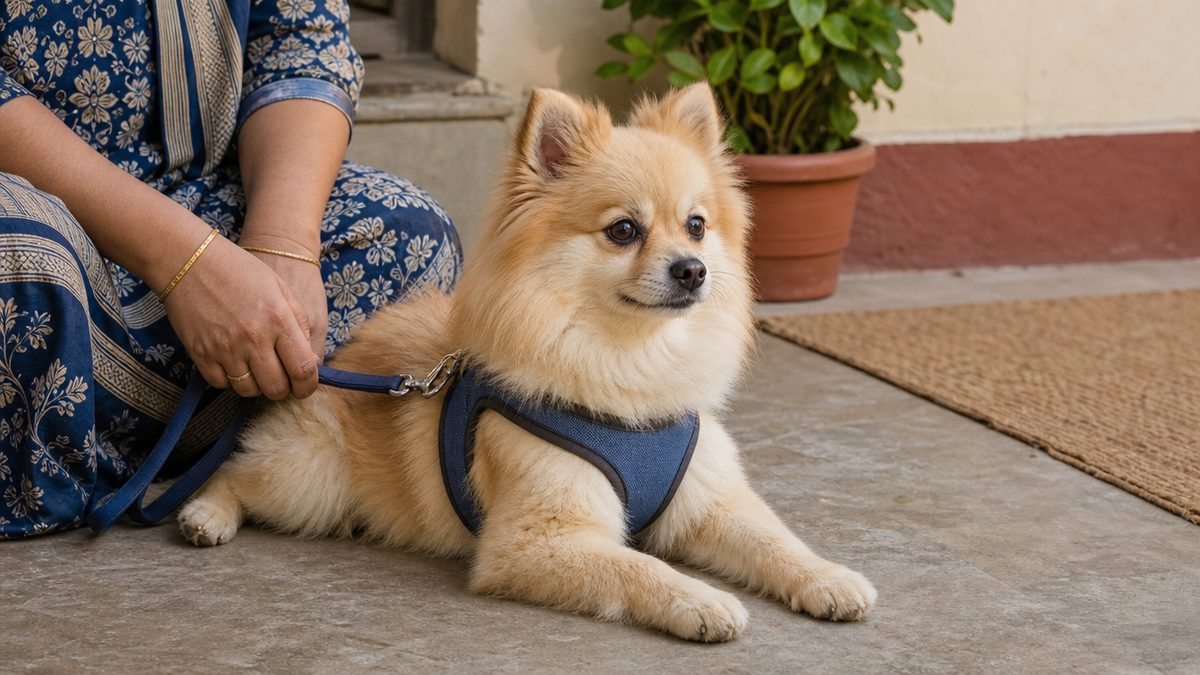
To cut the coughing of tracheal collapse for nothing, take the collar off the dog's neck for lead work, put the dog in a body harness, and keep the dog lean, because neck pressure and a high body condition score are the two aggravating factors an owner controls completely.
Cornell's list of what makes the cough worse reads like a description of an Indian city. Stress, excitement, physical activity, heat and humidity, inhaled irritants such as smoke, and pressure on the neck all exacerbate coughing. Its lifestyle advice is the mirror image of that list, namely switching from neck collars to harnesses, avoiding respiratory irritants like cigarette smoke, and avoiding hot and humid environments. VCA gives the same instruction and adds that the cough may worsen at night, with excitement, during hot or humid weather, immediately after eating or drinking, or when there is pressure on the trachea such as from a collar.
- Switch the lead to a body harness today and keep the collar for the identity tag only. Pressure on the neck is a named trigger for the cough, and a harness costs a few hundred rupees against a disease that has no cure.
- Weigh the dog on a kitchen scale once a month and write the number down. Seventy percent of overweight toy breed dogs with tracheal collapse improve dramatically once they have slimmed down.
- Move both walks out of the heat, because heat and humidity are on the list of factors that worsen the cough and MSD records that signs worsen with an increase in heat and after exercise.
- Stop burning things in the room the dog sleeps in. Inhaled irritants such as smoke are a named aggravating factor, and that covers cigarettes, agarbatti, mosquito coils and kitchen smoke equally.
- Plan for the excitement you can see coming. Stress and excitement are triggers, and a sedative kept at home for fireworks, thunderstorms and visitors is part of standard management.
- Treat any new infection as urgent rather than routine, because development of kennel cough or another respiratory infection is one of the events that turns a silent collapsed trachea into a coughing one.
One peer-reviewed source disagrees with the harness advice, and the disagreement is narrower than it first looks. Today's Veterinary Practice states that using harnesses instead of collars is not clearly beneficial in preventing progression of collapse, while adding that not putting additional pressure on the dog's neck seems like common sense. Read that against Cornell, which lists the switch from neck collars to harnesses as a standard lifestyle adjustment and names pressure on the neck as a factor that exacerbates coughing. The two are arguing about different things. Nobody has shown that a harness slows the disease down; both agree it removes a trigger for the cough that is happening today. On the same page, the one management step that source calls clear is weight loss, which it says will decrease cough in overweight dogs. A harness costs a few hundred rupees and has no downside, so the honest advice is to use one and not to expect it to change the grade on the next fluoroscopy report.
Heat, humidity and Indian air
Heat and humidity appear on Cornell's aggravating list and on no comparable list for kennel cough, which makes the Indian calendar part of the disease rather than background. A small dog whose cough is worst in May and quietest in December is behaving exactly as the literature predicts, and the same logic runs through our guides on heat safety for dogs in India and monsoon care for dogs in India. Lift the walk out of the afternoon, keep a fan or cooler on the dog's sleeping spot, and do not let a coughing dog work itself up in a hot stairwell.
The dogs this disease selects are the dogs Indian cities keep in flats. VCA's list of the breeds most often affected runs chihuahuas, Pomeranians, Shih Tzus, Lhasa Apsos, toy poodles and Yorkshire terriers, which is close to a roll call of the toy breeds sold in Mumbai, Delhi, Bengaluru, Hyderabad, Pune and Kolkata. Lifts, corridors and lobbies are where a small dog meets other dogs, gets excited and pulls against whatever is around its neck, and both excitement and pressure on the neck are on Cornell's list of what makes the cough worse. Those shared spaces are also where an ordinary respiratory infection finds its next dog, and the development of kennel cough or another respiratory infection is one of the events that brings out signs in a previously quiet trachea. Our guide on keeping a pet in an Indian apartment covers the building side of that. The airway side is simpler, because you can carry a small dog through the lift lobby and you can stop strangers riling it up at the gate.
Smoke, dust and the air in Indian cities
Inhaled irritants such as smoke are a named aggravating factor for this cough, and India is a hard country in which to avoid them. IQAir's ranking of 143 countries and regions places India sixth on annual average PM2.5 for 2025, at 48.9 micrograms per cubic metre, against 8.7 for the United Kingdom and 7.3 for the USA, which puts India in the band that page labels as exceeding the WHO guideline by 7 to 10 times. Bonbeno has not found a study measuring what that air does to a dog with a collapsing trachea, and will not pretend one exists. What can be said is that Cornell's instruction to avoid respiratory irritants is harder to follow in Delhi in November than in the places the instruction was written, and that the sources inside the house, cigarettes, agarbatti, mosquito coils and cooking smoke, are the ones an owner can actually remove.
A collapsing trachea can be silent for years and then be unmasked by something ordinary. Veterinary Partner lists the events that bring out signs in a dog that had none, which are obesity, anaesthesia involving the placement of an endotracheal tube, development of kennel cough or another respiratory infection, increased respiratory irritants in the air, and heart enlargement pressing on the trachea. Three of those five are avoidable or manageable at home. If your small dog is booked for a dental or a sterilisation, tell the clinic it has a history of honking, because the breathing tube is on that list.
Living with a collapsing trachea, life expectancy and when to go now
Most dogs with tracheal collapse live with it for years, continue to cough at least some of the time, and die of something else, and the published life expectancy figures all come from surgical caseloads rather than from medically managed dogs.
Cornell's outcome section is the most useful paragraph on the disease. Most dogs with tracheal collapse will continue to have progressive signs throughout their life, the prognosis depends on the severity and the response to medical management, many dogs with mild disease respond well, some individuals eventually stop responding and require surgery, and dogs with additional underlying conditions such as heart disease may have a poorer long-term outcome. VCA frames the same thing from the owner's side, saying that even with good control most dogs will continue to experience at least some coughing throughout their lives.
On life expectancy the honest answer is that nobody has published a survival curve for medically managed dogs, and the numbers in circulation are surgical. Tennessee reports that the average lifespan of dogs undergoing stent placement is about 2 years, though many live longer than 4, and the stent series above report median survivals of 879 days and 810 days in 22 and 12 dogs respectively De Lorenzi D, Maggi G, Bertoncello D. Those are dogs sick enough to be stented. For the rest, the most relevant figure is that the median age at diagnosis in 11,061 Yorkshire Terriers was 10.0 years, which is to say most affected dogs are already in the last third of a toy breed's life when the diagnosis is made.
One organ needs watching alongside the airway. A study of 26 dogs with tracheal collapse compared against 42 dogs without it found abnormal liver function results in 92 percent of the affected dogs, improving in the dogs that received a stent, and concluded that oxygen deprivation from the collapse had caused significant liver disease in many of them. VCA repeats the practical consequence, that any dog with tracheal collapse should have its liver function monitored closely.
- Blue or grey gums or tongue, at any hour, which Cornell calls a respiratory emergency.
- Fainting or collapse during or after a coughing fit.
- Difficulty breathing rather than coughing, or a dog that cannot settle.
- Exercise intolerance at a walking pace, which is one of the thresholds at which stenting is considered.
- A cough that suddenly changes, becomes productive, or comes with fever or loss of appetite, because dogs with collapsed tracheas cannot clear infection from their lower airways efficiently.
A dog in that kind of distress needs oxygen and sedation rather than a car journey spent wondering, so ring ahead, say the words tracheal collapse, and go. Veterinary Partner describes the emergency management plainly, that tranquillisation relieves the anxiety that perpetuates the heavy breathing and coughing, that oxygen therapy and cough suppressants help, and that a dog at that point should be rushed to emergency veterinary care. Our directory of registered veterinarians lists clinics by city.
Everything above is the published picture rather than a plan for your dog. A grade on a report, a body condition score, an echocardiogram result and the age of the animal all change what the right next step is, and the person who can weigh those together is the veterinarian who can put hands on your dog. Read our guide to senior dog care in India for the wider routine around an older small dog, book the weight check, switch the lead to a harness this week, and take the rest to a clinic.
Common questions about tracheal collapse in dogs
Can my dog live with a collapsed trachea?
Yes, most dogs do. In a retrospective study of 100 dogs with collapsing trachea, 71 percent responded to medication and management of secondary factors such as obesity and irritants in the air, 6 percent had severe additional disease problems, and 16 percent were judged candidates for surgery. Only 7 percent had disease so severe that they died within one month of diagnosis.
Can tracheal collapse cause sudden death?
It can become life threatening, which is why the coughing cycle has to be broken. Tennessee records that during coughing the weakened airway walls slam together, causing inflammation and trauma that stimulate more coughing, and that if the cycle is not broken the airway can become temporarily obstructed, leading to respiratory distress and even death. Blue gums or fainting means an emergency visit now.
How do I fix my dog's collapsed trachea?
You manage it rather than fix it, because Cornell states there is no cure for tracheal collapse while ongoing medical management improves clinical signs and quality of life. That means cough suppressants, sedatives, corticosteroids, bronchodilators and antibiotics where infection occurs, plus weight loss, a harness in place of a neck collar, and avoiding smoke, heat and humidity.
What are the four stages of collapsed trachea in dogs?
The grades run 0 to 4 by how much of the tracheal lumen is lost at its narrowest point. Grade 0 is 0 percent, grade 1 is 25 percent, grade 2 is 50 percent, grade 3 is 75 percent and grade 4 is 100 percent. In 110 dogs graded on fluoroscopy, the grade did not correlate with cough severity at p equal to 0.350.
What is the best treatment for tracheal collapse in dogs?
Medical management with weight control is the first-line treatment and it works for most dogs. In 110 fluoroscopy-confirmed cases, chronic cough improved in 86.6 percent after weight reduction, environmental changes and medication, and the literature those authors reviewed puts the response rate at 71 to 93 percent over 12 months, with half the dogs able to taper off medication.
How much does it cost to fix a dog's collapsed trachea?
No Indian source publishes a tracheal stent price, so this page prints none. What is published is the cost of the tests that diagnose it. At Madras Veterinary College in Chennai a chest X-ray is Rs 100, an echocardiogram Rs 300, endoscopy Rs 500 and a plain CT scan Rs 2,000, with small animal registration at Rs 100 valid for seven days.
Does a harness really help a dog with a collapsing trachea?
Yes, and it is the cheapest thing an owner can do. Cornell names pressure on the neck among the factors that exacerbate the coughing of tracheal collapse, and lists switching from neck collars to harnesses as standard lifestyle management, alongside avoiding respiratory irritants such as cigarette smoke and avoiding hot and humid environments. Keep the collar for the identity tag only.
Which breeds in India get tracheal collapse?
India's only published series, 24 dogs treated at Kerala Veterinary and Animal Sciences University hospitals, found the Labrador Retriever commonest at 8 dogs, 33.33 percent, then the Pomeranian at 6 dogs, 25 percent, mixed breeds at 4 dogs and the Pug at 2 dogs, with one each of Shih Tzu, terrier, Miniature Pinscher and Cocker Spaniel.