
Dog health: dermatology
Hot spots on dogs and pyoderma in India: depth decides the treatment, and topical comes before antibiotics
A hot spot is the shallowest of three depths of pyoderma, and depth is what decides whether a dog needs an antibiotic at all. This page separates surface, superficial and deep disease, publishes four Indian hospital series and four Indian isolate studies with their denominators, prices the two tests the 2025 guideline gates treatment on from two Indian government rate cards, and prints no dose anywhere.
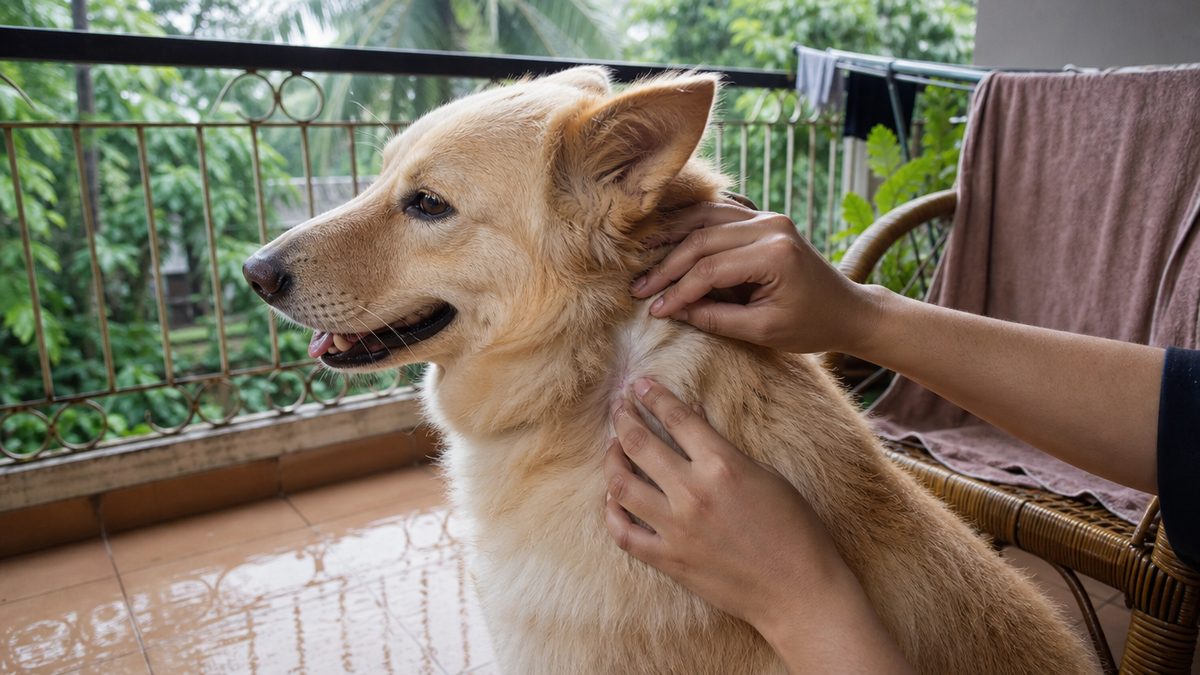
Quick answer
Hot spots on dogs are the shallowest form of pyoderma, a bacterial skin infection that the 2025 ISCAID guideline sorts into surface, superficial and deep. For surface and superficial disease, topical antimicrobial therapy alone is the treatment of choice and systemic antibiotics are held back. Clipping, cleaning and an antiseptic do most of the work on a hot spot. In India, 12 of 59 Staphylococcus pseudintermedius isolates from canine pyoderma carried mecA, and cases peak in the monsoon.
This guide is general information for Indian pet owners and is not a diagnosis. Always consult a registered veterinarian near you before acting on anything you read here, and treat any sudden change in your pet's condition as urgent.
Signs of Canine pyoderma, including hot spots
The 10 signs to watch for are listed below. Any one of them is a reason to consult your nearby vet; none of them is a diagnosis.
- A red, wet, oozing patch that appeared within hours
- Hair matted flat over a sore the dog will not leave alone
- Constant licking, chewing or rubbing of one spot
- Small raised bumps or pus-filled spots on the skin
- Expanding rings of scale with a red edge, called epidermal collarettes
- Redness and a strong smell inside a facial, lip or tail fold
- Crusts, scabs and patchy hair loss over the back or belly
- Skin that flinches, yelps or snaps when touched
- Small spots appearing around a larger sore
- Draining tracts or purple lumps that bleed when crusts lift
Breeds on this site that document this condition
Each breed page below carries the figure for this condition with its denominator and its source. The 10 breeds listed are the ones on this site that document it, not a ranking of risk.
India changes four things about pyoderma in dogs. First the season: at Navania in Udaipur, 14 of 32 superficial pyoderma cases fell in the rains (43.75 percent) against 12 in summer and 6 in winter, with July and August the two heaviest months, while demodectic mange in the same caseload peaked in summer instead. Second the denominators: four Indian hospital series put pyoderma at 17.32 percent of 1,287 skin cases at Nagpur, 15.61 percent of 205 at Udaipur, 7.5 per cent overall at Thrissur and 80.00 percent of 60 non-parasitic dermatoses at Surat, and each counted something different. Third the resistance: 12 of 59 Staphylococcus pseudintermedius isolates from canine pyoderma in Junagadh carried mecA, 20.34 percent, the pooled Asian MRSP estimate is 30.7 percent, and fewer than half of 427 surveyed South Indian dog owners had heard of antibiotic resistance at all. Fourth the price: the two tests the current guideline gates treatment on cost Rs 150 each plus tax at ICAR-IVRI Izatnagar, less than one bottle of medicated shampoo, so the cost argument against culture does not hold here.
What a hot spot is, and why pyoderma is really three diseases stacked by depth
A hot spot is the shallowest form of pyoderma, a bacterial infection of the skin, and the depth of the infection decides the treatment, the timeline and whether any antibiotic is needed at all. The 2025 ISCAID guideline sorts canine pyoderma into surface, superficial and deep, and puts pyotraumatic dermatitis, the hot spot, at the surface alongside skin fold dermatitis and bacterial overgrowth. Superficial pyoderma is infection inside the hair follicle, which is why it shows as papules, pustules and epidermal collarettes. Deep pyoderma has broken out of the follicle into the dermis, which is why it shows draining tracts and bleeding crusts instead.
| Depth | What it is called | What it looks like | What the guideline says to use |
|---|---|---|---|
| Surface | Pyotraumatic acute moist dermatitis, the hot spot; intertrigo, meaning skin fold dermatitis; bacterial overgrowth syndrome | Erythema, exudation, alopecia, itch; in folds, redness and malodour | Topical antimicrobial therapy alone, and systemic antimicrobials avoided |
| Superficial | Superficial bacterial folliculitis; exfoliative superficial pyoderma; impetigo; mucocutaneous pyoderma | Papules, follicular pustules, epidermal collarettes, crusts, scales | Topical antimicrobial therapy alone as the treatment of choice, with systemic drugs held back for when topical fails |
| Deep | Widespread or localised furunculosis and cellulitis, including pyotraumatic folliculitis and acral lick dermatitis | Draining tracts, haemorrhagic crusts, purple papules, ulceration, swelling | Systemic antimicrobials with adjunctive topical treatment, and culture with susceptibility testing always strongly recommended |
The hot spot earns its own name because of how fast it arrives. Pyotraumatic dermatitis has a rapid onset, often within hours, and presents as an exudative, localised lesion that is itchy or often frankly painful, caused by the dog's own self-trauma. The classic sites are the cheek, the neck, the lateral thigh and the rump. A Swedish prospective series of 44 dogs found lesions most often on the cheek, neck and lateral thigh, with a significant correlation between breed and site at P less than 0.0001.
Pyoderma is a symptom of something else, and the 157-dog audit shows what
Pyoderma almost never starts on its own, so the useful question is what is underneath it. The ISCAID authors state plainly that all the surface pyodermas are secondary to inflammatory underlying primary conditions, such as atopic skin disease or friction between apposed folds of skin. A Munich retrospective of 157 dogs with recurrent pyoderma found at least one primary disease in 107 of them. Allergy was the primary cause in 63 dogs, environmental allergy was the commonest single cause at 45 dogs, and hypothyroidism accounted for 12 and hyperadrenocorticism for 6. Sixteen of the 157 had demodicosis.
That is why this page keeps pointing somewhere else. If your dog's skin keeps getting infected, the thing to chase is the skin allergy (atopic dermatitis) in dogs that the Munich audit put at the top of the list, or mange in dogs where a deep scraping settles it, or the dog ear infection that is the ear-shaped version of the same secondary-infection problem. An Indian recurrent-pyoderma series from Tirupati reported exactly this spread of underlying causes in its own dogs, listing demodicosis, Malassezia dermatitis, flea infestation, hypothyroidism, a keratinisation disorder, and two mixed combinations with tick infestation.
One organism does most of it, and its name matters for what comes later
Staphylococcus pseudintermedius causes most canine pyoderma, and it is a commensal that already lives on the dog. It is the predominant pathogen of superficial pyoderma and resides normally on canine skin and mucosal surfaces, switching from commensal to pathogen when genetic, environmental and immunological factors let it. Superficial bacterial folliculitis is the commonest form of pyoderma in dogs and the single biggest reason antimicrobials are prescribed in small animal practice.
The Indian cultures agree. At Nagpur Veterinary College, Staphylococcus accounted for 96.77 percent of the isolates from 223 pyoderma cases and Escherichia coli for the remaining 3.22 percent, which is 30 staphylococcal isolates against one of E. coli. In the Swedish hot spot series, 27 of the 44 lesions were cultured and 25 grew Staphylococcus intermedius, the name used for this organism before it was split, while two grew nothing. A Bikaner series of 71 PCR-confirmed staphylococcal pyoderma cases found that 63.38 percent were monomicrobial and 36.62 percent polymicrobial, with S. pseudintermedius and S. aureus dominant in both, sometimes alongside E. coli, Pseudomonas aeruginosa or Klebsiella pneumoniae.
When a hot spot needs the clinic rather than a home clean-up
Take a dog to the vet when the sore is more than a day old, when anything is draining, or when you cannot touch the area without hurting the dog. Cornell's Dr. William Miller, professor emeritus of medicine, puts the line at 24 hours: if the sore is older than that an infection is likely and a trip to the veterinarian is in order, while a genuinely new spot on a dog with no history of recurrence may respond to careful home care. The same page warns that these lesions are painful and that a dog may react badly when the area is touched.
The other reason to go is that a hot spot can be hiding something deeper. Skin lesions of pyotraumatic dermatitis can resemble pyotraumatic folliculitis and furunculosis, a form of deep pyoderma, and the guideline instructs that hair around the lesion may need clipping so the skin can be examined for satellite lesions. Papules, pustules, haemorrhagic crusts, swelling and furuncles around the edge of the lesion indicate haematogenous spread and deep pyoderma, which needs a completely different treatment approach. The 44-dog Swedish series showed that the two can be difficult to separate clinically and even on histopathology.
A hot spot is not an emergency in the sense that bloat or heat stroke is, so there is no ambulance to call. It is still a same-day problem when the lesion is oozing pus or blood, when there are separate small spots appearing around the main one, when the skin is hot and swelling rather than just red, when the dog is off its food or flat, when the sore sits under a drop ear or beside the tail base where an ear infection or an anal sac problem may be driving it, or when the dog cries or snaps when you go near it. Satellite papules and pustules around a lesion mean deep pyoderma and a different treatment plan, and Cornell records anal gland infections and ear infections as common triggers whose lesions are easy to miss under a furry tail or a hanging ear. Find a clinic through the vet directory and take the dog in. Nothing on this page replaces the examination, and your own veterinarian decides what your dog gets.
What an owner sees first is usually one of a short list, and the Indian numbers put those signs in order. Among 223 dogs with pyoderma at Nagpur, papules were recorded in 141 (63.22 percent), erythema in 140 (62.7 percent), pustules in 126 (56.77 percent), alopecia in 126 (56.5 percent) and pruritus in 126 (56.50 percent). Epidermal collarettes, the expanding rings of scale that are the most specific sign of superficial pyoderma, appeared in 82 of the 223 (36.77 percent).
Where the lesions sit is a clue to what is driving them. The Nagpur series recorded the dorsum as the commonest site at 111 of 223 dogs (49.77 percent), followed by the abdomen at 97 (43.49 percent), the head at 70 (31.39 percent) and the hind limbs at 67 (30.04 percent). Groin lesions appeared in 45 dogs (20.17 percent) and axillary lesions in 37 (16.59 percent), and the authors attribute the pattern to humidity and warmth, to skin folds and to skin rich in sebaceous glands.
How common pyoderma is in Indian clinics, and what each Indian number actually counted
Pyoderma accounts for roughly one in six to one in eight canine skin cases in the Indian hospital series that publish a denominator, and the spread between them is a spread in what each one counted rather than a spread in the disease. At Nagpur Veterinary College, 1,287 of 11,657 dogs registered between June and December 2023 had skin disease (11.04 percent), and 223 of those 1,287 had pyoderma (17.32 percent). At Navania in Udaipur, 205 of 987 dogs presented over twelve months had a dermatological affection (20.77 percent), and 32 of those 205 had superficial pyoderma (15.61 percent). None of these is a population prevalence, because every one of them is a share of a clinic caseload.
| Study and place | What was screened | Pyoderma finding | What kind of figure it is |
|---|---|---|---|
| Kale 2024, Veterinary Clinical Complex, Nagpur Veterinary College, Maharashtra | 11,657 dogs registered June to December 2023 | 1,287 with skin disease (11.04 percent); 223 of those with pyoderma (17.32 percent) | A share of the skin caseload at one teaching hospital over seven months |
| Khinchi 2019, College of Veterinary and Animal Science, Navania, Udaipur, Rajasthan | 987 dogs presented July 2017 to June 2018 | 205 with a dermatological affection (20.77 percent); 32 with superficial pyoderma (15.61 percent of those) | A share of the skin caseload over one full year, so every season is represented once |
| Krupa Rose Jose 2023, Mannuthy and Kokkalai, Thrissur, Kerala | Dogs at two small animal dermatology units, 178 pyoderma cases analysed | Overall prevalence of pyoderma reported as 7.5 per cent | A prevalence the authors report without printing the screened denominator in the abstract |
| Sindha 2015, Nandini Veterinary Hospital, Surat, Gujarat | 210 freshly registered dogs with dermatological afflictions | 60 non-parasitic dermatoses (28.57 percent), of which pyoderma was 80.00 percent | A share of the non-parasitic skin cases only, so parasitic disease is excluded from the denominator |
Read the fourth row carefully, because it is the one most likely to be quoted wrongly. The Surat figure of 80.00 percent is 80 percent of the 60 non-parasitic cases, not 80 percent of the 210 dermatology cases, and mange and tick disease were removed from that denominator before the percentage was taken. Worked back against the full 210, bacterial skin infection was about a fifth of the dermatology caseload, which sits close to the Nagpur and Udaipur numbers rather than far above them.
The rains do lift pyoderma, and the same Indian study shows what they do not lift
Pyoderma peaks in the monsoon in the one Indian study that counts every season in a single caseload. At Navania in Udaipur, 14 of 32 superficial pyoderma cases fell in the rainy season (43.75 percent), 12 in summer (37.50 percent) and 6 in winter (18.75 percent). Month by month, July and August carried five cases each, the two highest months of the year, and November carried none. The authors tie that directly to humid climatic conditions.
The same paper is useful because of what did not follow the rain. Demodectic mange in the identical caseload peaked in summer at 18 of 45 cases (40.00 percent) against 15 in the rains, so the monsoon rule is a bacterial and fungal rule rather than a skin-disease rule. Dermatomycosis was the most rain-loaded diagnosis of all at 12 of 23 cases (52.17 percent). If you want the month-by-month routine that follows from this, the monsoon care guide for dogs in India carries it.
What the Indian breed tables measure, and why they are not risk tables
An Indian hospital breed table tells you which breeds that city owns, not which breeds are predisposed. The Labrador Retriever headed the Nagpur table at 82 of 223 pyoderma cases (36.77 percent), followed by non-descript dogs at 52 (23.3 percent), the Doberman at 30 (13.4 percent), the German Shepherd at 22 (9.8 percent) and the Golden Retriever at 16 (7.17 percent). At Udaipur the Labrador again led at 9 of 32 (28.12 percent), with the German Shepherd at 7 (21.87 percent), the Pug at 6 (18.75 percent), the Pomeranian at 5 (15.62 percent) and the Beagle at 3 (9.37 percent). The Udaipur authors say so themselves, noting that breed predilection varies with the breed composition of the local dog population and with the popularity of individual breeds.
The Nagpur paper's running text gives the non-descript count as 30 and the Doberman count as 22, while its Table 2 gives 52 and 30. Only the table sums correctly: 82 plus 52 plus 30 plus 22 plus 16 plus 7 plus 6 plus 8 is 223, the stated total, and every percentage in that table reproduces from its own count. The prose version sums to 193 and cannot be right. This page therefore quotes Table 2. The same paper's conclusion also gives the Labrador share as 36.58 percent where the table gives 36.77 percent, and 82 of 223 is 36.77 percent.
Sex is where the Indian studies genuinely disagree, and both readings are published. Nagpur found more males, at 119 of 223 (53.36 percent) against 104 females (46.63 percent), and Udaipur found a much stronger male skew of 23 of 32 (71.87 percent) against seven females. Thrissur found the opposite, with females at 53.37 percent against males at 46.63 percent. Age is where they agree, with Nagpur putting the peak at one to two years (74 of 223, 33.33 percent), Udaipur at one to three years (13 of 32, 40.62 percent) and Thrissur at one to three years (46.07 percent).
Where the Indian evidence was gathered, and where it was not
Not one of the four Indian hospital series on this disease was measured in a metro. They come from the Veterinary Clinical Complex at Nagpur Veterinary College in Maharashtra, from Navania near Udaipur in Rajasthan, from Mannuthy and Kokkalai in Thrissur district in Kerala, and from Nandini Veterinary Hospital in Surat in Gujarat. Nothing in that set was measured in Mumbai, Delhi, Bengaluru, Kolkata, Hyderabad, Pune or Ahmedabad, and that matters, because monsoon timing, absolute humidity and the mix of breeds people actually keep differ sharply between those cities and the four towns above.
The Indian isolate studies sit in the same band of places. They were run at Junagadh, Navsari and Sardarkrushinagar in Gujarat Parasana DK, Kalyani IH, Kachchhi AV Chaudhari SS, Chauhan HC, Sharma KK, at Bikaner in Rajasthan, at Tirupati in Andhra Pradesh and at Madras Veterinary College in Chennai Rajeev R, Kannan P, Sundaram S, Mohan SB. The only work in this whole set from Karnataka is about people rather than dogs, the standardised patient study of 279 pharmacies in Udupi district and the survey of 427 dog owners run from Manipal. A reader in a coastal metro should treat every Indian figure on this page as transferable in kind rather than in size.
One Indian study went past the dog and looked at the household, which is the part an owner can change. The Thrissur team found statistically significant differences between affected and unaffected animals in housing system, bathing practices, kennel hygiene, and access to oral coat conditioners and feed supplements, alongside the usual age and breed effects. Most of the affected dogs, 52.25 percent, were housed outdoors in a separate kennel, 68.54 percent were bathed regularly and 36.52 percent were groomed at least once a month.
Antimicrobial resistance is the real story on this page, and India has its own numbers
Roughly one in five Staphylococcus pseudintermedius isolates from Indian canine pyoderma cases is methicillin-resistant in the one Indian study that reports the denominator, and the pooled Asian estimate is higher still. At Kamdhenu University in Junagadh, Gujarat, 12 of 59 S. pseudintermedius isolates from canine pyoderma carried mecA on PCR, 20.34 percent, alongside one methicillin-resistant S. schleiferi subspecies coagulans of six and one methicillin-resistant S. aureus of two. Across Asia, a 2026 meta-analysis of 14 studies pooled MRSP at 30.7 percent with a 95 percent confidence interval of 21.3 to 42.1. Methicillin resistance matters because it is not one drug: it removes the whole beta-lactam class, including every penicillin and cephalosporin.
| Study and place | What was cultured | Resistance finding |
|---|---|---|
| Shobha 2024, Kamdhenu University, Junagadh, Gujarat | 108 isolates from 80 canine pyoderma cases, 75 confirmed as Staphylococcus by PCR, of which 59 were S. pseudintermedius | 12 MRSP (20.34 percent of the 59); 29 of 59 S. pseudintermedius multidrug resistant (49.15 percent); resistance to penicillin-G 46.27 percent, amoxicillin-clavulanate 38.81 percent, enrofloxacin 32.84 percent, cefpodoxime and oxytetracycline 28.36 percent each |
| Sanwal 2026, RAJUVAS, Bikaner, Rajasthan | 71 PCR-confirmed staphylococcal pyoderma cases, June to December 2024, identified by MALDI-TOF | Both major Staphylococcus species showed high resistance to beta-lactams and third-generation cephalosporins; polymicrobial cases were significantly associated with recurrence, longer duration, tissue invasion and allergic skin disease |
| Parasana 2025, Kamdhenu University, Navsari, Gujarat | Five S. pseudintermedius isolates from canine pyoderma, whole genome sequenced | All five resistant to amikacin, ampicillin, cefpodoxime, cephalexin, erythromycin and trimethoprim; 4 of 5 still sensitive to clindamycin; 15 resistance genes, one plasmid, two insertion sequences and one integrative conjugative element detected |
| Chaudhari 2022, Sardarkrushinagar, Banaskantha, Gujarat | 165 clinical samples from canine skin and mucous membrane affections, yielding 88 Staphylococcus isolates (53.33 percent) | Only 10 of 88 isolates (11.36 percent) were susceptible to gentamicin and 24 (27.27 percent) to penicillin; 21 phenotypic MRSA and 12 MRCoNS, with mecA confirmed in 6 of the 21 and 2 of the 12 |
Two more Gujarat laboratories put numbers on the same problem from different angles. At Kamdhenu University in Navsari, five S. pseudintermedius isolates from canine pyoderma were whole genome sequenced, and all five were resistant to amikacin, ampicillin, cefpodoxime, cephalexin, erythromycin and trimethoprim, while four of the five were still sensitive to clindamycin. That sequencing found 15 antimicrobial resistance genes, one plasmid, two insertion sequences and one integrative conjugative element in just five isolates, which is the machinery by which resistance moves between bacteria. At Sardarkrushinagar in Banaskantha, 165 clinical samples from canine skin and mucous membrane affections yielded 88 Staphylococcus isolates (53.33 percent), of which only 10 (11.36 percent) were susceptible to gentamicin and 24 (27.27 percent) to penicillin. That study found 21 phenotypic MRSA and 12 methicillin-resistant coagulase-negative staphylococci but confirmed mecA in only 6 of the 21 and 2 of the 12, a gap its authors read as evidence of additional resistance mechanisms beyond the gene being tested for.
The Indian literature on this is thinner than the Indian clinical work, and the search behind that statement is recorded rather than asserted. A Europe PMC title-and-abstract search for pyoderma with dog or canine and India returned zero records on 27 September 2026, while the same search scoped to author affiliation returned eleven, and a Staphylococcus pseudintermedius affiliation search returned another eleven. The control query run through the identical route in the same session, scoped the same way for hip dysplasia and Labrador, returned 110 on-topic canine papers, so the zero is a real absence in the title-and-abstract index rather than a broken instrument. India has the clinical work; what it does not have is much of it indexed where a title search will find it.
The Junagadh study also caught something that should worry anybody reaching for a human topical. One S. pseudintermedius isolate showed low-level mupirocin resistance on an E-test, 1.49 percent of the 67 major coagulase-positive isolates, in a country where mupirocin is not a first-line canine drug at all. Mupirocin is one of the topical antibiotics the ISCAID guideline explicitly asks clinicians to deprioritise in favour of antiseptics.
The pooled Asian estimate, and what pooling hides
The Asian pooled figure should be read with its heterogeneity attached. Across the 14 studies pooled, 1,045 MRSP strains were detected from 2,721 isolates, a crude proportion of 38.4 percent, and the random-effects pooled estimate was 30.7 percent (95 percent CI 21.3 to 42.1) with an I-squared of 92.44 percent. An I-squared that high means the studies are not measuring one number, so the honest statement is a wide band rather than a point. The same analysis pooled methicillin-susceptible S. pseudintermedius at 27.9 percent (95 percent CI 18.8 to 39.3) and found no statistically significant difference between the two, at p equal to 0.853.
Three of the studies in that Asian pool are Indian. The review names work from Chennai on virulence genes and antimicrobial susceptibility of S. pseudintermedius from canine skin infection, a 2024 Indian paper on clonal spread and resistance patterns of meticillin-resistant S. pseudintermedius in canine pyoderma samples, and an Indian dissertation on antimicrobial resistance profiling of staphylococcal pyoderma. From the Indian data in that pool, resistance to trimethoprim-sulfamethoxazole was reported at 30 percent and to streptomycin at 16.6 percent, with no gentamicin resistance recorded.
Among MRSP isolates across Asia, the drugs that still worked were not the ones most Indian owners have in the cupboard. Pooled MRSP resistance was lowest for streptomycin at 4.8 percent, amoxicillin-clavulanic acid at 6.4 percent and chloramphenicol at 7.1 percent, and highest for oxacillin at 33.7 percent, clindamycin at 26.0 percent and doxycycline at 25.4 percent. For methicillin-susceptible isolates the picture inverts, with amoxicillin-clavulanic acid at 2.6 percent and oxacillin at 2.7 percent resistance. Which of those two tables applies to your dog is exactly what a culture tells you.
The global picture is that MRSP is not one lineage sitting still. A 2026 analysis of 2,654 isolates found the clonal structure shifted after 2013, with the historically dominant CC71 declining in Europe, CC68 in North America and CC45 in Asia, while CC551 emerged globally and CC363 and CC1631 emerged in Asia. Resistance to non-beta-lactams rose sharply in North America, with chloramphenicol going from 6 percent to 59 percent, stayed largely stable in Europe and decreased in Asia.
What actually selects for resistance in a dog, measured
Repeated antibiotic courses, not the dog's breed, are what predict a resistant infection. A Cordoba study of 105 staphylococcal isolates from 23 healthy dogs, 24 with first-time pyoderma and 27 with recurrent pyoderma on long-term antibiotics found that 78 percent of isolates were resistant to at least one agent, 32 percent were multiresistant and 10.4 percent were methicillin-resistant. The recurrent group carried four times the probability of a methicillin-resistant isolate compared with the healthy and first-time groups combined (95 percent CI 1.18 to 17.9). Multiresistant isolates came more often from urban dogs than rural ones, at odds ratio 3.79 (95 percent CI 1.09 to 13.17), and every methicillin-resistant isolate in the study came from an urban dog.
The guideline's own risk list reads the same way. ISCAID names previous MRSP infection, repeated courses of systemic antimicrobials, frequent visits to veterinary clinics, and previous attendance at referral hospitals as the well-recognised risk factors, and makes its recommendation to culture strong rather than conditional when any of them are present. Pyoderma caused by a meticillin-resistant organism is clinically indistinguishable from pyoderma caused by a susceptible one, so the only way to know is the laboratory.
The Indian over-the-counter question, and the study that complicates the easy answer
India's non-prescription antibiotic trade is real, but the best-measured Indian rate is lower than the stereotype and this page publishes both readings. A standardised patient study in Udupi district sent trained actors into 279 pharmacies and completed 1,522 interactions across diarrhoea, upper respiratory infection and acute fever presentations; antibiotics were dispensed in 4.34 percent of adult interactions (95 percent CI 3.04 to 6.08) and 2.89 percent of child interactions (95 percent CI 1.8 to 4.4). The authors describe that rate as low and substantially lower than previously published standardised patient studies in other regions of India.
The interview evidence from another state points the other way, and both are worth having. Pharmacists in 15 stand-alone pharmacies across a metropolitan city and a tier-2 city in Tamil Nadu readily admitted selling prescription drugs including antibiotics without a valid prescription, and the authors record that not a single pharmacist they interviewed knew the causes of antibiotic resistance. The honest summary is that dispensing rates vary sharply by district and by how they are measured, while dispenser knowledge of resistance is poor wherever it has been asked about.
The veterinary-side survey is the one that matters most here, and it has only just been published. A cross-sectional telephone survey of 427 dog owners in a South Indian district found that most were aware of antibiotics, fewer than half were aware of antibiotic resistance, and 4 percent were aware of antibiotic stewardship. Awareness tracked education, area of residence and years of experience as an owner, and the majority believed that antibiotic use in their dog would not affect them indirectly, which the authors note is contradicted by the evidence.
One Indian retail detail cuts against the assumption that everything is freely available. The chlorhexidine and ketoconazole shampoo most widely listed for Indian dogs carries a prescription flag on its retail page and the retailer states that a vet will call to verify the order. That is the medicated shampoo, not the antibiotic, which tells you something about where the friction sits in the Indian market.
Do not start, stop or repeat an antibiotic on your own, and do not finish a leftover course from the last episode. Every extra course selects for the resistant organism, measurably: dogs on long-term antibiotics for recurrent pyoderma carried four times the probability of a methicillin-resistant staphylococcus compared with healthy and first-time cases in the same study, and repeated courses of systemic antimicrobials sit at the top of the guideline's MRSP risk list. A methicillin-resistant infection looks exactly like a susceptible one on the dog, so guessing does not work. If the same skin infection is back for the third time, the answer is a culture and a hunt for the primary disease, not a stronger drug bought over a counter. Your own veterinarian decides what your dog gets and for how long.
How a vet diagnoses pyoderma, and the two tests that gate everything else
Diagnosis runs on two tests, and the 2025 guideline makes the first one non-negotiable. Cytology should be performed in all cases before antimicrobials are used, because it is what confirms that bacteria are involved at all and what shows whether the organisms are cocci or rods. Bacterial culture with susceptibility testing is the second, and the guideline reserves it: it is not needed for surface pyoderma because only topical treatment should be used there, and it is always strongly recommended for deep pyoderma.
Identifying pyoderma by eye alone does not work, which is exactly why cytology exists. Observing follicular inflammation is not confirmatory for bacterial involvement, since folliculitis also occurs with demodicosis, dermatophytosis and a range of immune-mediated skin disorders, so cytological evidence of bacteria and inflammation has to be obtained while those are ruled out. In practice that means an impression smear or a tape strip read in the clinic, which is why the guideline calls the skin an unusually good opportunity for antimicrobial stewardship.
- History and a look at the whole dog, because pyoderma is secondary and the primary disease is what the visit is really for, with at least one primary disease found in 107 of 157 recurrent cases in the Munich audit.
- Cytology of the lesion, in every case, before any antimicrobial is given.
- Skin scrapings and a hair pluck, to exclude Demodex and dermatophytes, which produce the same follicular picture. An Indian deep pyoderma case at Madras Veterinary College used a trichogram that showed trichorrhexis with every hair in telogen phase alongside the cytology.
- Clipping the hair around the lesion, which on a hot spot is both a diagnostic step and a treatment step, because satellite papules and pustules at the edge change the diagnosis to deep pyoderma.
- Bacterial culture and susceptibility testing, when the pyoderma is deep, when topical therapy has failed, or when any MRSP risk factor is present.
- A work-up for the primary disease, which for a young dog means an allergy work-up with deep skin scrapings and for a middle-aged or older dog means hormonal testing and ruling out fleas, on the Munich authors' own reading of their 157 cases.
Culture is never the wrong test, even if it is often the unnecessary one. Bacterial culture for canine pyoderma is never contraindicated and is encouraged in chronic or recurrent cases and in dogs that have had repeated antibiotic therapy; a washout of 48 to 72 hours after antibiotics is desirable but samples may be collected at any time regardless of current topical or systemic treatment. Culture is also what identifies a multidrug-resistant organism so that a practice can put infection control in place.
What cytology and a culture cost in India, from two government rate cards
Both gating tests are cheap at Indian government veterinary hospitals, which matters more than it sounds. The ISCAID guideline makes an unusual request of the profession, that laboratories and practices price culture and susceptibility testing reasonably in order to encourage its use. At the ICAR-Indian Veterinary Research Institute Referral Veterinary Polyclinic in Izatnagar, the pets rate card effective from July 2022 lists cytology at Rs 150 and an antibiotic sensitivity test at Rs 150, each plus tax, with a skin scraping test at Rs 100 and dog registration at Rs 50. At the Madras Veterinary College Teaching Hospital in Chennai, the published fee structure prices haematology, biochemistry, urine or culture at Rs 50, with small animal registration at Rs 100 valid for seven days.
| Item | ICAR-IVRI Izatnagar, pets rate, from July 2022 | Madras Veterinary College, Chennai |
|---|---|---|
| Registration | Rs 50, rising to Rs 150 after 12:30 pm and Rs 300 after 5:00 pm and on holidays | Rs 100, valid for seven days |
| Cytology | Rs 150 plus tax | Not separately listed on the published fee structure |
| Antibiotic sensitivity test | Rs 150 plus tax | Culture priced at Rs 50 within the combined haematology, biochemistry, urine or culture line |
| Skin scraping test | Rs 100 plus tax | Not separately listed on the published fee structure |
| Histopathology | Rs 150 plus tax | Not separately listed on the published fee structure |
Run every rupee figure through the currency test before quoting it anywhere. Rs 150 divides to about USD 1.78 at 84.38 to the dollar and about USD 2.03 at 74, and Rs 50 to about USD 0.59 and USD 0.68, which are Indian public-hospital prices rather than converted dollar list prices. A private urban clinic will charge more, and neither institution publishes a private-sector comparison, so this page does not invent one.
Treating a hot spot, where clipping and cleaning do most of the work
To treat a hot spot, clip the hair over and around the lesion, clean the area to remove debris and biofilm, and apply a topical antiseptic once or twice daily for about a week while somebody works out what caused it. That is the guideline's own worked example for pyotraumatic dermatitis, which also asks the clinician to approach the lesion carefully because it may be painful and to consider pain relief first, and to consider a short course of an anti-inflammatory to bring down the inflammation, pain and itch. The last step in that example is the one owners skip, which is to investigate and manage the underlying primary cause, including reviewing ectoparasite prevention and examining the ears and anal sacs.
- Assume it hurts before you touch it. The guideline instructs approaching the lesion carefully and considering systemic or local pain relief, and notes that analgesia should be considered specifically to make topical therapy possible on pyotraumatic dermatitis. Cornell says the same in owner language, that these lesions are painful and to stop if the dog shows discomfort.
- Clip, including the surrounding area. Clipping is step two of the guideline's own approach, and Cornell's tip explains why it matters to the dog: hairs touching the inflamed area stimulate more licking and chewing, and long coats trap the ooze.
- Clean the skin to remove debris and biofilm. The guideline lists this as its own step, and explains elsewhere that active ingredients may be inactivated by organic material including biofilm.
- Apply a topical antiseptic once or twice daily for about a week. Antiseptics such as chlorhexidine are prioritised over topically used antibiotics such as fusidic acid and mupirocin, and gels or sprays suit a localised hot spot after the discharge and crust have been cleaned off.
- Stop the licking. Cornell's first tip is an Elizabethan collar or a light wrap, on the grounds that dogs are their own worst enemies with these sores and that licking spreads the lesion and delays healing. Every dog in the 44-case Swedish series wore one.
- Find the cause before the lesion comes back. Atopic dermatitis, other hypersensitivities, ectoparasites, ear disease, anal sac disease, arthritis, injection site reactions and adverse topical drug reactions are the inciting causes the guideline lists for pyotraumatic dermatitis.
The trial that put topical level with systemic, and the case series behind it
Topical treatment matched systemic treatment head to head on hot spots twenty years ago, and the result still stands in the current guideline. A randomised controlled trial in 104 dogs with acute moist dermatitis compared a topical gel combining fusidic acid with betamethasone valerate against a systemic regimen of injected dexamethasone with oral clavulanate-potentiated amoxicillin; 69 percent of the topical group and 79 percent of the systemic group achieved a good or complete response at seven days, and no significant difference was detected between them. Staphylococcus was the organism most often isolated on day zero and no resistance to either agent was encountered in that trial.
The Swedish prospective series adds the part the trial does not show, which is how much of the result is mechanical. All 44 dogs received a saline wash once or twice daily, an Elizabethan collar and an astringent alongside their systemic course, and 44 of 44 improved within seven to ten days, with five needing an added anti-inflammatory Holm BR, Rest JR. An earlier randomised trial in 40 dogs that shaved, washed and creamed every animal reported full recovery in all five treatment groups, including the two groups whose cream contained no antibiotic at all.
On that evidence the guideline is explicit. Systemic antimicrobial therapy should be avoided in cases of surface pyoderma given the location and the direct accessibility of the organisms, and the efficacy of topical therapy alone was equivalent to systemic therapy in dogs with pyotraumatic dermatitis. Bacterial culture and susceptibility testing are not needed for surface pyoderma, because only topical treatment should be used.
Where Cornell and the guideline disagree, and it is worth knowing which is which
Two respectable sources give owners different advice about what to put on a hot spot, so this page prints both. Cornell's owner page suggests cleaning with a mild soap or an antibacterial cleaner such as chlorhexidine and then applying a first-aid cream from the human shelf, naming a triple-antibiotic cream and a low-strength hydrocortisone cream. The 2025 ISCAID guideline asks clinicians to prioritise topical antiseptics over topically used antibiotics, and to choose a topical antibiotic only on the basis of cytology results when one is genuinely needed. The two agree on the antiseptic and on clipping; they part company on reaching for a human antibiotic cream, and the resistance argument is on the guideline's side.
Cornell's third tip is the one that decides whether any of this is an owner's job. If the sore is more than 24 hours old, an infection is likely and a trip to the veterinarian is in order; if it is new and the dog has no history of recurrent hot spots, careful home care may work. Cornell also says to leave a healthy scab alone once the redness goes, because peeling it off delays healing.
Treating superficial and deep pyoderma, in general terms, and what changed in 2025
For superficial pyoderma the current guideline puts topical antimicrobial therapy alone first and holds systemic drugs back, which reverses what most Indian pages still advise. Topical antimicrobial therapy alone is the treatment of choice for surface and superficial pyodermas, and systemic antimicrobials should be reserved for deep pyoderma and for superficial pyoderma when topical therapy is not effective. That recommendation carries the guideline's strongest grade for surface pyoderma, SOR A. It is dated: the evidence base was a systematic review of English-language treatment studies up to 23 December 2023, graded with SORT criteria and settled through a Delphi-style process.
This is a genuine reversal, and dating it matters. The 2014 ISCAID guideline that came before it was built around systemic drugs, sorting them into three tiers, making antimicrobial susceptibility testing mandatory before a tier-two drug and reserving tier three for highly resistant infections with its use strongly discouraged. The 2025 document keeps that stewardship logic and moves the starting point, concluding that the accessibility of the skin offers excellent, achievable opportunities for antimicrobial stewardship. The same authors published a shorter synopsis of the identical recommendations for clinicians who will not read the full document.
Most of what an Indian owner finds on the first page of Google has not caught up with that. Of the pages ranking on the two queries this page was written against, all opened on 27 September 2026, the MSD Veterinary Manual professional article is the only one that names Staphylococcus pseudintermedius and meticillin resistance at all, and it does say that topical therapy should be the sole treatment for surface or superficial pyoderma in most cases. The PetMD hot spot article, ranked first on the bare query, and the VCA hot spot article beside it are practical owner pages, but neither mentions resistance, cytology or culture anywhere in its visible text VCA Animal Hospitals, Hot Spots in Dogs. The one India-hosted page in the India ranking set is a homeopathic supplement seller whose protocol opens sensibly with cleaning the area and a medicated shampoo, then routes the reader to its own homeopathic products, and mentions neither resistance nor cytology.
The practical shape of topical therapy is a bath with contact time rather than a quick rinse. For widespread superficial lesions the guideline sets a chlorhexidine shampoo at least two to three times per week with a 10 to 15 minute contact time before you rinse, and for localised lesions a chlorhexidine wipe, spray or foam once daily. It adds two things owners get wrong: clipping long-coated or plush-coated dogs so the product reaches skin, and keeping ectoparasite prevention in place while avoiding spot-on preparations during frequent shampooing because washing can reduce their efficacy. Reassessment comes at two to three weeks.
The trial that made topical-alone defensible, including against resistant organisms
A randomised, blinded, antibiotic-controlled trial found topical chlorhexidine as effective as an oral antibiotic in superficial pyoderma. Thirty-one dogs were treated topically with a chlorhexidine digluconate shampoo twice weekly plus a solution once daily for four weeks, against twenty treated orally with amoxicillin-clavulanic acid for the same period. Staphylococcus pseudintermedius was isolated from 48 of the dogs, including eight meticillin-resistant strains, and no significant differences in pyoderma or pruritus scores appeared between the groups at any point except day one. Treatment with the chlorhexidine products resolved the clinical signs in all dogs, including those infected with MRSP.
Newer topical work keeps landing in the same place. A prospective, randomised, blinded split-body study in 15 client-owned dogs found no significant difference between a chlorhexidine mousse and a topical ethyl alcohol gel on global lesion scores at 14 and 28 days, or on the relative abundance of S. pseudintermedius measured by next-generation sequencing. A prospective open-label pilot of a sodium hypochlorite and salicylic acid shampoo used three times weekly for four weeks as sole therapy, in dogs recruited because they had cultured meticillin-resistant staphylococci or had already failed antibiotics, reported significantly improved bacterial counts, clinical assessments and owner scores at two and four weeks. A 2023 review sets out the logic behind all of this, that systemic antibiotics should be limited to severe pyoderma to reduce microbial pressure, and that chlorhexidine, benzoyl peroxide and ethyl lactate have decades of use with low resistance profiles.
What a systemic course looks like when one is genuinely needed
When systemic therapy is justified, the guideline sets the length and then insists on a recheck. Systemic therapy with adjunctive topical treatment runs initially for two weeks in superficial pyoderma and three weeks in deep pyoderma, followed by re-examination to assess progress and to manage the primary causes. First-choice drugs are expected to work against the majority of meticillin-susceptible S. pseudintermedius, and for every other drug laboratory testing should confirm susceptibility and rule out a safer alternative first.
The older rule that a course must run three weeks and at least a week past clinical resolution is under active challenge. A 2022 commentary signed by nine dermatologists and infectious disease clinicians argues that with antimicrobial resistance rising and evidence-based medicine in wider use, that dogma needs reevaluating. The systematic review underneath all of this identified only 17 full-length peer-reviewed controlled trials of systemic antimicrobials in canine pyoderma, with outcomes specific to superficial disease in nine and to deep disease in five, and heterogeneity so wide that meta-analysis was inappropriate.
That review does say which systemic drugs have the better evidence, in general terms and without any amount attached. It found a good level of evidence for high efficacy of injected cefovecin in superficial pyoderma and of oral amoxicillin-clavulanic acid in deep pyoderma, and a fair level of evidence for moderate to high efficacy of oral amoxicillin-clavulanic acid, clindamycin, cefadroxil, trimethoprim-sulphamethoxazole and sulfadimethoxine-ormetoprim in superficial pyoderma. This page prints no dose for any of them, because the amount is a decision for the veterinarian examining the animal.
Deep pyoderma, and one Indian case that shows the shape of it
Deep pyoderma is the version that takes months and always earns a culture. It is diagnosed on draining tracts, haemorrhagic crusts, purple papules, ulceration or swelling with cytological confirmation, clipping of long or matted hair is often needed to see the lesions at all, and in some cases a biopsy or needle aspiration from below intact skin is required. Culture with susceptibility testing is always strongly recommended for deep pyoderma.
An Indian clinical article from Madras Veterinary College published on 30 June 2025 shows what that looks like in a real dog. An eleven-month-old male Bullykutta, a breed Indian owners will recognise, was presented with a skin infection that had recurred over four months with the latest episode running past a month, showing hard adherent crusts, erythema, alopecia, scaling and draining tracts of blood-oozing lesions on the dorsum. Skin scrapings were negative for mites and no fleas were found; impression cytology showed cocci, clusters of bacilli and neutrophilic infiltration; culture grew Staphylococcus and Pseudomonas species; and susceptibility testing showed sensitivity to one cephalosporin and resistance to the others tested. Treatment started with one antibiotic class, was switched to another after recurrence, and the combination of a ten-day course with omega fatty acid supplements and adjunctive topical therapy resolved the lesions and prevented further recurrence. If you own this breed, the Bully Kutta breed page is the place to start.
Meticillin resistance does not make a pyoderma untreatable, and the guideline says so with a caveat about time. The prognosis for pyoderma associated with meticillin-resistant staphylococci is considered good, although one study reported a longer time to resolution, probably because those infections are already chronic by the time they are identified. Crucially, while these organisms have often acquired multiple additional resistances and many are resistant to most veterinary antimicrobials, topically used agents, both antiseptics and topical antibiotics, have remained effective.
Skin fold dermatitis, the version that is built into the dog
Skin fold dermatitis is surface pyoderma inside a fold, and it is the one form of this disease that conformation creates rather than an allergy. Moisture and skin secretions trapped between apposed surfaces let the resident bacteria and yeast overgrow. The largest study of it, a VetCompass cohort of 905,553 dogs under UK primary veterinary care during 2016 at 887 clinics, confirmed 974 cases from a manually checked random sample of 3,307 of 11,375 candidates and put the one-year period prevalence at 0.37 percent (95 percent CI 0.35 to 0.39).
Head shape is the single biggest driver in that dataset. Prevalence was 1.02 percent (95 percent CI 0.94 to 1.12) in brachycephalic breeds against 0.26 percent (0.23 to 0.29) in mesocephalic and 0.22 percent (0.16 to 0.30) in dolichocephalic breeds, and brachycephalic conformation carried 4.51 times the odds of a mesocephalic one (95 percent CI 3.90 to 5.22). Short coats carried 3.61 times the odds of long coats (95 percent CI 2.61 to 5.00), and spaniel types 2.11 times the odds of non-spaniel types (95 percent CI 1.79 to 2.48). Eight breeds met the paper's definition of an ultra-predisposition, meaning odds more than four times higher than the broad comparator.
Where the fold sits differs by breed, which tells an owner where to look. Across the 974 cases, the commonest recorded locations were the lip at 358 (36.76 percent), the facial fold at 214 (21.97 percent), the vulva at 138 (14.17 percent), the nasal fold at 88 (9.03 percent), the tail at 56 (5.75 percent) and the periocular fold at 34 (3.49 percent). In the English Cocker Spaniel, 118 of that breed's 127 cases were lip fold (92.91 percent); in the Pug, 39 of 94 were nasal fold (41.49 percent); in the English Bulldog, 68 of 151 were facial (45.03 percent) and 34 were tail fold (22.52 percent).
In that UK primary care dataset, systemic antibiotics were prescribed in 42.30 percent of skin fold dermatitis cases while bacterial culture was performed in less than 2 percent and any laboratory test supported the diagnosis in only 4.21 percent. Skin fold dermatitis is surface pyoderma, and for surface pyoderma the current guideline says systemic antimicrobial therapy should be avoided and culture is not needed because only topical treatment should be used. The authors themselves call this the widespread use of systemic antibiosis without documented diagnostic justification, and estimate that 0.16 percent of all dogs in UK primary care received a systemic antimicrobial for skin fold dermatitis in a single year. If your dog's folds are being treated with repeated oral antibiotics and nobody has ever taken a swab or looked down a microscope, that is the conversation to have with your vet.
Fold care itself is mechanical and daily, and the guideline's worked example is short. Clean the affected skin to remove debris and biofilm, then apply antiseptic therapy, typically a chlorhexidine wipe once or twice daily or the same active as a solution or spray, with wipes and gels chosen because they reach into the depth of a fold. If rods rather than cocci dominate on cytology, the guideline suggests adding an agent with Gram-negative activity. Frequent application, at least once and typically twice daily, is what makes it work.
Two breeds on this site sit at opposite ends of that table, and the contrast is the useful part. The English Bulldog, the breed the UK Kennel Club registers simply as the Bulldog, had the highest annual prevalence of any breed at 6.05 percent (95 percent CI 5.15 to 7.06) and 49.07 times crossbred odds in the final model (95 percent CI 37.79 to 63.70). The Pomeranian, a far commoner dog in Indian homes, recorded zero cases among 6,210 dogs in the same year, yet was the breed with the highest share of pyoderma cases in the Surat hospital series at 20.83 percent. Fold disease and follicular disease are not the same problem, and a breed can be safe from one and exposed to the other.
What this costs in India, from pages that print a price
A cytology and a susceptibility test together cost Rs 300 plus tax at ICAR-IVRI Izatnagar, and a medicated shampoo costs Rs 359 for a 200 ml bottle on an Indian retail page, which makes the guideline-recommended route the cheap one. The IVRI pets rate card effective from July 2022 lists cytology at Rs 150 and an antibiotic sensitivity test at Rs 150, each plus tax as applicable. Madras Veterinary College prices haematology, biochemistry, urine or culture at Rs 50. Those are government teaching-hospital prices, and a private urban clinic will charge more.
| Item | Listed price | Where the price comes from | Dollar check at 84.38 and 74 |
|---|---|---|---|
| Dog registration at ICAR-IVRI Izatnagar | Rs 50, or Rs 150 after 12:30 pm and Rs 300 after 5:00 pm and on holidays | IVRI Referral Veterinary Polyclinic services page, rates with effect from July 2022 | USD 0.59 and USD 0.68 at the base rate |
| Cytology, pets rate at ICAR-IVRI | Rs 150 plus tax | Same rate card, clinical laboratory investigations table | USD 1.78 and USD 2.03 |
| Antibiotic sensitivity test, pets rate at ICAR-IVRI | Rs 150 plus tax | Same rate card, listed as ABST | USD 1.78 and USD 2.03 |
| Skin scraping test, pets rate at ICAR-IVRI | Rs 100 plus tax | Same rate card | USD 1.19 and USD 1.35 |
| Culture at Madras Veterinary College, Chennai | Rs 50 | MVC Department of Clinics hospital fee structure, combined haematology, biochemistry, urine or culture line | USD 0.59 and USD 0.68 |
| Chlorhexidine and ketoconazole medicated shampoo, 200 ml | Rs 359, MRP Rs 366, printed unit price Rs 179 per 100 ml | Supertails product page, read 27 September 2026, prescription required | USD 4.25 and USD 4.85 |
| The same shampoo, 100 ml | Rs 194, MRP Rs 197, printed unit price Rs 194 per 100 ml | Same page, same day | USD 2.30 and USD 2.62 |
Buy the larger bottle if you are going to bathe two or three times a week for three weeks. The retail page prints both unit prices itself, Rs 179 per 100 ml on the 200 ml bottle against Rs 194 per 100 ml on the 100 ml bottle, so the small bottle is the dearer way to buy the same active. The same page carries a prescription flag and states that a veterinarian will telephone to verify the order, which is worth knowing before you plan around a same-day delivery.
Set those numbers against what the guideline is actually asking for. ISCAID makes the unusual request that laboratories and practices price culture and susceptibility testing reasonably in order to encourage its use, because that testing is essential to rationalising systemic therapy. On the IVRI card that test costs the same as the cytology, Rs 150, and less than a single bottle of medicated shampoo Supertails, Intas Conaseb antibacterial…. The cost argument against culture does not survive contact with an Indian government rate card.
No Indian rate card found in this research puts a price on a full canine dermatology work-up, on MRSP strain typing, or on a private-clinic bacterial culture, and this page does not estimate one. Madras Veterinary College does run a Dermatology referral unit and lists dermatology among its faculty disciplines, but its published fee structure prices no dermatology line at all. What is published is narrow and specific: registration, cytology, antibiotic sensitivity, skin scraping and histopathology at ICAR-IVRI Izatnagar, and a single combined laboratory line covering haematology, biochemistry, urine or culture at Madras Veterinary College. Ask your own clinic for its rate before the visit rather than taking a number off a blog.
Preventing hot spots and the next pyoderma, through an Indian year
To prevent hot spots, keep parasites off the dog year round, dry the coat properly after every wetting, check the ears and the tail base on a schedule, and treat the underlying allergy rather than waiting for the skin to break down again. Cornell puts external parasite management first, calling it the most important preventive step, and asks owners to check the ears daily and to lift the tail at least once a week to look for inflammation or evidence of licking. The guideline adds the clinical version of the same idea, that proactive topical therapy using antiseptics may help prevent recurrences.
- Dry the dog properly, not partly. A thick coat that does not dry fully after swimming, wading or a warm rain is the classic setup, and any matted area holds moisture against the skin. Cornell suggests a towel for a short-coated dog and brushing plus a dryer for a long or double coat, and removing mats as you find them.
- Keep ectoparasite prevention running all year. The guideline names adequate ectoparasite prophylaxis as part of the superficial pyoderma plan, and warns that spot-on preparations may lose efficacy during frequent shampoo therapy, so the route may need changing while a course is running. The tick prevention guide for dogs in India has the product routine.
- Look under the ear and beside the tail. Ear infections, often from wet ears, can seed a hot spot under the ear, and this is likelier in a drop-eared dog; anal gland infections stimulate licking and chewing that produce a hot spot which is easy to miss under a furry tail.
- Lift the humidity load where you can. Superficial pyoderma at Udaipur peaked in the rains at 14 of 32 cases (43.75 percent), with July and August the two heaviest months, and the authors attribute it directly to humid climatic conditions. The monsoon care guide carries the month-by-month version.
- Fix the bathing and housing routine, which Indian data says matters. The Thrissur study found significant differences between affected and unaffected dogs in housing system, bathing practices, kennel hygiene and access to oral coat conditioners and feed supplements. The home grooming guide sets out the bath and brush routine.
- Treat the primary disease, because that is what recurrence is. At least one primary disease was found in 107 of 157 dogs with recurrent pyoderma, and allergy accounted for 63 of them.
There is no vaccine and no screening scheme for this, and saying so is not a gap in the page. The ISCAID guideline sets out diagnosis, topical therapy, systemic therapy and infection control, and nowhere proposes a vaccine, a registry or a breeding scheme for pyoderma. What exists instead is proactive topical antisepsis for dogs that keep relapsing, and for fold disease the uncomfortable structural answer that the authors of the VetCompass study give, which is to review the breed standards of the eight ultra-predisposed breeds and remove any wording that encourages the conformation.
A word on what causes hot spots in Indian conditions, because heat is only half of it. Cornell notes hot spots occur at any time of year although warm weather brings more cases, and names allergies and external parasites as the primary causes. The Indian series put the seasonal weight on the rains rather than the dry heat, with 43.75 percent of superficial pyoderma cases in the monsoon at Udaipur against 37.50 percent in summer, and the Nagpur authors attribute their lesion distribution to humidity and warmth acting on skin folds and on areas rich in sebaceous glands.
Living with a dog whose skin keeps getting infected
A dog that gets pyoderma more than twice in a year has an undiagnosed primary disease until proven otherwise, and chasing the primary disease is what ends the cycle. The Munich audit of 157 recurrent cases found at least one primary disease in 107 dogs, and its authors set out a simple age rule: in young dogs an allergy work-up combined with deep skin scrapings will reach the diagnosis in most cases, and in dogs whose pyoderma began in middle or old age hormonal testing and ruling out fleas come first. An Indian series from Tirupati of dogs with more than three episodes in a year found demodicosis, Malassezia dermatitis, flea infestation, hypothyroidism, seborrhoea, and two mixed combinations with tick infestation underneath them.
Recovery is not instant even when the right thing is being done. In that Indian series improvement appeared at nine to nineteen days in recurrent superficial pyoderma and at seventeen to twenty-one days in recurrent deep pyoderma. One dog relapsed at 45 days, and the cause was the hypothyroidism that laboratory testing confirmed after the antibiotic course had finished, which is the whole lesson of the paper in one sentence. The guideline builds the same logic into its timetable by making re-examination at two or three weeks part of the plan rather than an optional extra.
- Ask what the primary disease is, and if nobody has named one after two episodes, ask again.
- Ask whether a cytology was done this time, since the guideline expects one in every case before antimicrobials.
- Ask for a culture at the third episode, because repeated courses of systemic antimicrobials are a named MRSP risk factor and the recurrent group in the Cordoba study carried four times the probability of a resistant isolate.
- Ask whether topical therapy alone was tried, given that it is the guideline's treatment of choice for surface and superficial disease and matched an oral antibiotic in a controlled trial that included MRSP-infected dogs.
- Ask what the plan is between episodes, since proactive topical antiseptic use is the guideline's stated preventive option.
Can people catch it, and the honest answer for a household
Staphylococcus pseudintermedius is primarily a dog organism, but the boundary is not absolute and the household question deserves a straight answer. It is rare in other species yet has been identified in cats, horses and humans, there are reports of human infections, and indistinguishable isolates have been confirmed in pets and their owners. Because multidrug-resistant staphylococci spread between dogs, between host species and into their environments, the guideline says infection control and the potential for zoonotic transmission both require consideration.
The guideline's practical advice is about hand hygiene and about who to ask. Rigorous hand hygiene and reduced exposure to infectious material are what it recommends, it notes that the presence of meticillin-resistant S. aureus rather than MRSP suggests a probable human source, and it advises that awareness of exposure matters most for people with co-morbidities or other risk factors. Anybody worried about their own risk should consult their own medical practitioner, who can weigh it against their medical history, rather than relying on a veterinary page.
Organisms beyond Staphylococcus, and why Indian clinics are starting to see them
Not every Indian canine skin infection is a staphylococcus, and the newer Indian work is finding organisms that change the drug list entirely. A TANUVAS study at Madras Veterinary College collected 300 skin swabs from dogs with dermatological ailments and identified Stenotrophomonas maltophilia in 15 of them, 5 percent, the first such report from canine dermatological infections. All 15 isolates were resistant to cefpodoxime and aztreonam, 9 were strong biofilm producers and 6 moderate, and resistance genes detected included blaNDM in 33.3 percent and blaKPC in 33.3 percent. That is a culture-only finding; no clinical examination identifies it.
None of this changes the first move on a fresh hot spot, which stays mechanical. Clip, clean, apply an antiseptic, stop the licking, and get the primary disease named Cornell University College of Veterinary…. What it changes is the second and third episode, where a swab is worth more than a stronger antibiotic, and where the dog skin allergy page and the mange page are more likely to hold the answer than this one.
What Google India asks about hot spots and pyoderma in dogs
How do you treat hotspots on dogs?
To treat a hot spot, clip the hair over and around the lesion, clean the skin to remove debris and biofilm, then apply a topical antiseptic such as chlorhexidine once or twice daily for about a week, with pain relief considered first because the lesion often hurts. Stop the licking with a collar, and have the underlying cause found.
Why is my dog getting random hot spots?
They are not random. Surface pyoderma is always secondary to something inflammatory underneath, and the inciting causes listed for pyotraumatic dermatitis are atopic dermatitis and other hypersensitivities, ectoparasites, ear disease, anal sac disease, arthritis, injection site reactions and adverse topical drug reactions. Recurrence means the primary disease has not been found yet.
How to clear up a hotspot on a dog?
Clear it by clipping, cleaning and applying a topical antiseptic, and by stopping the dog reaching it. In a randomised trial of 104 dogs with acute moist dermatitis, a topical gel and a systemic regimen gave good or complete responses in 69 percent and 79 percent at seven days with no significant difference between them.
What happens if a dog's hot spot is left untreated?
It spreads, because licking and chewing increase the inflammation and enlarge the sore. Cornell advises that once a spot is more than 24 hours old an infection is likely and a veterinary visit is needed, and that worsening redness, heat, swelling or oozing means a vet may need to prescribe medication rather than home care continuing.
What is the best treatment for pyoderma in dogs?
It depends on depth. The 2025 ISCAID guideline makes topical antimicrobial therapy alone the treatment of choice for surface and superficial pyoderma, and reserves systemic antimicrobials for deep pyoderma and for superficial cases where topical therapy has not worked. Cytology comes before any antimicrobial, and culture guides every systemic choice.
Will pyoderma in dogs go away on its own?
Not reliably, and not while the primary disease is still there. A Munich review of 157 dogs with recurrent pyoderma found at least one underlying primary disease in 107 of them, allergy in 63, hypothyroidism in 12 and demodicosis in 16, so treating only the skin leaves the cause running and the infection returns.
What triggers pyoderma?
Damage to the skin barrier lets a resident organism take over. Staphylococcus pseudintermedius already lives on healthy canine skin and mucosa, and switches from commensal to pathogen when local trauma, scratching, poor grooming, seborrhoea, parasites, hormonal disease or allergy reduce the skin's defences, which is why pyoderma is treated as a secondary problem.
Can dog pyoderma spread to humans?
Rarely, but the boundary is not absolute. Staphylococcus pseudintermedius is primarily a dog organism, yet it has been identified in humans, human infections have been reported, and indistinguishable isolates have been confirmed in pets and their owners. Rigorous hand hygiene is the practical answer, and anyone with health risks should ask their own doctor.
What is MRSP in dogs?
MRSP is methicillin-resistant Staphylococcus pseudintermedius, which resists every beta-lactam including penicillins and cephalosporins. In a Gujarat canine pyoderma series, 12 of 59 S. pseudintermedius isolates carried mecA, 20.34 percent. A resistant infection looks identical to a susceptible one on the dog, so only a laboratory culture tells them apart.
How much does pyoderma treatment cost in India?
At ICAR-IVRI Izatnagar the pets rate card effective July 2022 lists cytology at Rs 150 and an antibiotic sensitivity test at Rs 150, each plus tax, with a skin scraping at Rs 100 and registration at Rs 50. Madras Veterinary College prices culture at Rs 50. Private clinics charge more and do not publish rates.
Does a hot spot always need antibiotics?
No. The guideline states that systemic antimicrobial therapy should be avoided in surface pyoderma given the direct accessibility of the organisms, and that culture is not needed there because only topical treatment should be used. Topical therapy alone was equivalent to systemic therapy in dogs with pyotraumatic dermatitis in the trial evidence reviewed.
Is pyoderma in dogs worse during the monsoon in India?
Yes, on the Indian evidence that counts a full year. At Navania in Udaipur, 14 of 32 superficial pyoderma cases fell in the rains (43.75 percent) against 12 in summer and 6 in winter, with July and August the heaviest months at five cases each. Demodectic mange in the same caseload peaked in summer instead.