
Dog health: dermatology
Skin allergies (atopic dermatitis) in dogs in India: the diagnosis of exclusion, and which drugs are sold here
Every page ranking in India for this query sells something. None of them says the one thing a veterinarian would say first, which is that atopic dermatitis is not a test result but what is left after fleas, mites, infection and food have been ruled out. This page publishes the exclusion sequence as a numbered list, the Indian denominators with what each one counted, Favrot's criteria with their real sensitivity, and a build-time check of which of oclacitinib, lokivetmab and cyclosporine are actually marketed in India. It prints no dose for anything.
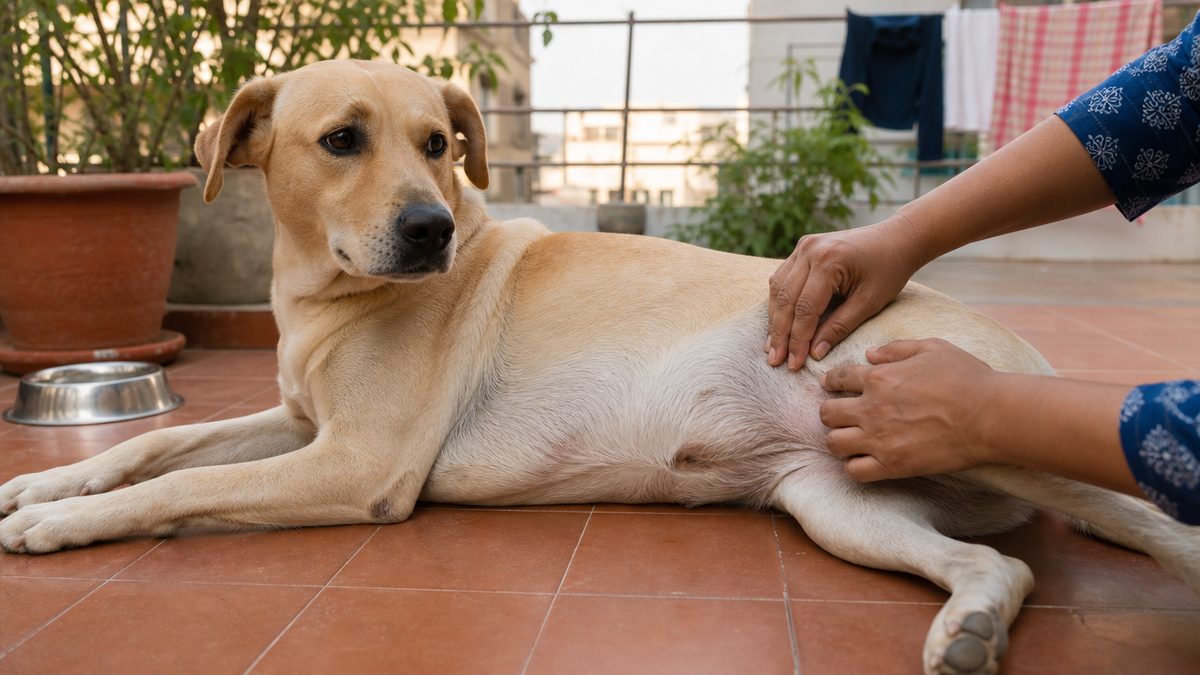
Quick answer
A dog skin allergy called atopic dermatitis is a diagnosis of exclusion, reached by ruling out fleas, other mites, skin infection and food before anything else, because no single test confirms it. The commonly quoted prevalence of 3 to 15 percent is not based on reliable epidemiological data. In India fleas are perennial rather than seasonal, an elimination diet runs eight weeks, and oclacitinib and lokivetmab reach Indian buyers through pharmacies while Zoetis India's own catalogue lists neither.
This guide is general information for Indian pet owners and is not a diagnosis. Always consult a registered veterinarian near you before acting on anything you read here, and treat any sudden change in your pet's condition as urgent.
Signs of Canine atopic dermatitis
The 10 signs to watch for are listed below. Any one of them is a reason to consult your nearby vet; none of them is a diagnosis.
- Licking, chewing or biting the front feet
- Rubbing the face on furniture, carpet or the floor
- Red, inflamed skin on the inside of the ear flaps
- Ear infections that clear on treatment and come back
- Scratching the armpits, the groin and the belly
- Repeated yeast or bacterial skin infections
- Itching that began before the dog turned three
- Darkened, thickened skin where the dog rubs most
- Itch that settles on steroids and returns when they stop
- Skin that stays itchy all year rather than only in one season
Breeds on this site that document this condition
Each breed page below carries the figure for this condition with its denominator and its source. The 9 breeds listed are the ones on this site that document it, not a ranking of risk.
India changes five things about a dog skin allergy. First the parasite step: fleas are a perennial problem in subtropical and tropical zones rather than a seasonal one, and the tropical guideline instructs that flea prevention be done throughout the year, so the first exclusion step never ends here. Second the denominator: the only recent Indian hospital figure is from Nagpur Veterinary College, where 1,287 of 11,657 dogs registered between June and December 2023, 11.04 percent, had skin disease, and 223 of those 1,287 had pyoderma. Third the evidence base: PubMed holds one canine atopic dermatitis record naming India in its title or abstract and eight with an Indian author affiliation, of which four are genuinely on topic, and one author appears on three of the four. Fourth the drugs: oclacitinib listed at Rs 2,864 for a ten-tablet strip and lokivetmab at Rs 5,500 for one pack on Indian pharmacies on 24 September 2026, both prescription-gated, while Zoetis India's own catalogue lists five therapeutic areas and no dermatology category at all. Fifth the cost shape: the whole exclusion work-up at ICAR-IVRI Izatnagar sums to Rs 450 plus tax, so diagnosis is cheap here and treatment is not.
What a dog skin allergy is, and why nobody knows how common it is
A dog skin allergy, in the sense a veterinarian means by atopic dermatitis, is an inherited tendency to become inflamed and itchy in response to ordinary environmental proteins. Canine atopic dermatitis is multifactorial and immunologically complex, involving genetic factors, epidermal barrier dysfunction, microbiome changes, immune dysregulation and allergic sensitization. At present there is no cure for canine atopic dermatitis, and treatment is aimed at controlling the pruritus, the associated inflammation and the infections, repairing the skin barrier and managing the diet.
The word atopic carries the whole problem. An atopic dog is not allergic to one thing you can remove from the house; it is a dog whose skin barrier leaks and whose immune system over-responds to what gets through. Indian work has measured both halves of that on Indian dogs. At DUVASU in Mathura, eleven dogs with atopic dermatitis and three healthy dogs had their skin barrier genes quantified, and the atopic dogs showed significantly higher filaggrin expression and significantly lower involucrin expression than the healthy dogs, alongside significantly higher circulating TNF-alpha, IL-31 and IL-13. An earlier study from the same laboratory, on 17 dogs diagnosed with atopic dermatitis against six healthy dogs, found significantly higher circulating IL-17, IL-31 and total IgE, and significantly higher total leukocyte, neutrophil and eosinophil counts.
The prevalence figure everyone quotes has no population study behind it
The honest answer to how common a dog skin allergy is in the general dog population is that nobody has measured it. The commonly quoted estimate of 3 to 15 percent is not based on reliable epidemiological data, and the American College of Veterinary Dermatology task force concluded that the actual incidence and prevalence of canine atopic dermatitis in the canine population is not well known. The task force paper that established this said the same thing in its own words, that neither the incidence nor the prevalence of atopic dermatitis in the general canine population has been studied. Every figure below is therefore a share of some clinic's caseload, and the clinic decides the number.
| Figure | Population it was measured in | What kind of number it is |
|---|---|---|
| 3 to 15 percent | The general canine population, as usually quoted | Not based on reliable epidemiological data, on the ACVD task force's own assessment |
| 4.7 percent of 31,484 dogs | Dogs presented for skin problems at 52 US veterinary practices | A share of dogs examined, the largest denominator in this row set |
| 12.7 percent | Of the 18.8 percent of dogs presented for dermatological disorders at the Small Animal Clinic, University of Montreal | A share of a dermatology caseload, not of all dogs |
| 25.65 percent | All dogs examined at a Brazilian teaching hospital, in a retrospective study reporting an upward trend | A teaching-hospital caseload, which the review warns does not represent the general canine population |
| 1.99 percent of 1,304 dogs | Staffordshire Bull Terriers under UK primary veterinary care in 2016 | A one-year breed prevalence in a primary-care population |
| 8.0 cases per 1,000 | Insured dogs in Sweden, the fifth-highest breed incidence, quoted inside the Staffordshire study | An insured-population incidence, carried in from an earlier paper |
Read those six rows as six different questions, not six answers to one question. The spread from 3 percent to 25.65 percent is almost entirely the population, and the Montreal figure shows why: 12.7 percent of dogs presented for a skin problem is a completely different statement from 12.7 percent of dogs. No ranking page prints this disagreement, and PetMD, which ranks first on both Google India queries this page targets, contains no percentage at all across about 3,163 words.
The one Indian denominator, and what it does and does not say
India has one recent hospital denominator for skin disease as a whole, and it is worth knowing exactly what it counted. At the Veterinary Clinical Complex of Nagpur Veterinary College, 11,657 dogs were registered between June 2023 and December 2023, and 1,287 of them, 11.04 percent, were positive for skin diseases. Of those 1,287 dogs with skin disease, 223, or 17.32 percent, were affected with pyoderma. That is a bacterial skin infection figure rather than an allergy figure, and it matters here because pyoderma is what an untreated allergic dog gets. The arithmetic closes: 1,287 divided by 11,657 is 11.04 percent, and 223 divided by 1,287 is 17.32 percent.
One caution about that paper, found by checking its own numbers. Its breed table lists Labrador Retriever 82, Non-descript 52, Doberman 30, German shepherd 22, Golden retriever 16, Pug 7, Pomeranian 6 and husky 8, which sums exactly to 223 and reproduces every printed percentage. Its running text gives the non-descript count as 30 and the Doberman count as 22, which does not sum to 223 and does not reproduce the printed percentages. The table is the internally consistent version and the prose is not, so the table is what this page uses. Either way it is a caseload composition and not a risk table. Labrador Retrievers top it because Labrador Retrievers are what Indian cities keep, exactly as the Staffordshire study found Labradors the most common single breed in its own UK sample at 1,462 of 22,333 dogs.
Where India's evidence on this disease was actually gathered
Not one of the Indian studies behind this page was done in the cities where most of India's pedigree dogs live. The skin-disease denominator comes from Nagpur in Maharashtra, the two cytokine studies from Mathura in Uttar Pradesh Kanwal S, Singh SK, Soman SP, Choudhury S, the diet trial from Bhubaneswar in Odisha and the 2010 treatment paper from Izatnagar near Bareilly. Mumbai, Delhi, Bengaluru, Chennai, Kolkata, Hyderabad and Pune appear in none of them. Karnataka and Tamil Nadu contribute no canine atopic dermatitis series at all, and the only thing Chennai contributes to this page is a fee table from the Madras Veterinary College Teaching Hospital in Tamil Nadu. A reader in a coastal metro is therefore working from an inland evidence base, in a humid climate the inland studies did not measure, and should treat the figures here as the closest available signal rather than as a local measurement.
Do not let anyone put an itchy dog on a steroid before a veterinarian has looked for mites, fleas and infection. A steroid will make almost any itchy dog look better for a fortnight, which is precisely why it destroys the diagnosis. Corticosteroid-responsive pruritus is one of Favrot's criteria for atopic dermatitis, so a response tells you nothing on its own, and scabies, demodicosis and pyoderma all improve superficially on steroids while getting worse underneath. The guidelines are explicit in the other direction too, that because most dogs with atopic dermatitis respond to oral glucocorticoids, a failure of rapid clinical benefit should prompt clinicians to reconsider alternative diagnoses or secondary complications such as skin infections, ectoparasitism or nonatopic food reactions. The order is scrape first, then treat. Your nearby veterinarian decides what goes on your dog, and this page prints no dose for anything.
The exclusion sequence, the five things a vet rules out before atopy
To reach a diagnosis of atopic dermatitis a veterinarian must first exclude everything else that makes a dog itch, because there is no test that confirms it. The ICADA guidelines state plainly that the diagnosis of canine atopic dermatitis is based on meeting clinical criteria and ruling out other possible causes with similar clinical signs. That is what a diagnosis of exclusion means, and it is the single thing no page ranking for this query in India says.
The evaluation of a pruritic dog requires a step-by-step thought process that should lead to a definitive diagnosis, and the ICADA guidelines set out four numbered steps before allergy is even considered. The basic sampling methods that rule out most of the common differentials are flea combing, skin scraping, hair plucking and cytological examination of skin and ear samples. Every one of those is a five-minute bench test, none of them needs a laboratory, and together they cost less in an Indian government teaching hospital than a single bottle of shampoo. The five steps below are the guideline's four plus the one the guideline assumes, which is that somebody actually treats the secondary infection.
- Rule out fleas first, with treatment rather than with looking. A flea infestation is associated with increased flea counts, whereas in dogs with flea allergy dermatitis this may not be the case, so a clean comb proves nothing. To exclude flea allergy when fleas or flea faeces cannot be found, the guidelines require an effective flea control programme, and a recent study cited in them suggests dogs should be on flea prevention for at least three months before a case is accepted into an atopic dermatitis study.
- Rule out the other ectoparasites, and be willing to treat a negative scrape. Sarcoptes scabiei var canis and Cheyletiella can be difficult to find, so a response to an antiparasitic trial treatment may be necessary to rule these parasites out, and a positive pinnal pedal reflex is associated with Sarcoptes and justifies trial therapy. The reason this matters more than it sounds is that sarcoptic mites cross-react with house dust mites in allergy testing, so an undiagnosed scabies dog can produce a house-dust-mite-positive allergy test and be handed the wrong diagnosis.
- Rule out staphylococcal pyoderma and Malassezia overgrowth, by cytology. Bacterial skin infections caused by Staphylococcus pseudintermedius are common in dogs with atopic dermatitis, and the initial clinical impression should be confirmed by examining cytological samples taken by impression smear or acetate tape impression. In studies of canine atopic dermatitis the presence of any number of Malassezia organisms should warrant a trial therapy, to determine what role low numbers are playing in the dog's itch.
- Rule out a cutaneous adverse food reaction, with a strict elimination diet. Reactions to food components can present clinically as canine atopic dermatitis or serve as a flare factor in it, so dogs with a food reaction may be clinically indistinguishable from atopic dogs. In any case with year-round clinical signs, a food reaction can only be ruled out by effective strict elimination diet trials, since accurate diagnostic commercial tests are not currently available.
- Only then apply the clinical criteria, and only then consider allergy testing. Allergy tests should be used once a clinical diagnosis of canine atopic dermatitis has been made, with the primary purpose of identifying potential causative allergens that may be avoided or treated with immunotherapy. Using any one approach in isolation can result in misdiagnosis, and the guidelines say so directly.
Two of those steps have a page of their own on this site, which is where a reader with a scratching dog should probably go first. Our page on mange in dogs in India covers step two, the mite that a scraping finds and an allergy work-up misses, and it carries the Indian denominators for both forms. Our page on ear infections in dogs in India covers the commonest way atopy announces itself, and it carries four Indian hospital series of its own. A Greek series of 91 spontaneous atopic dermatitis cases found otitis externa in 43 of them and bacterial pyoderma in 30, the two commonest conditions associated with the disease. Nearly one atopic dog in two arrives at the clinic because of its ears.
The exclusion sequence is not a formality, and the evidence for that is how often it changes the answer. Across 22 studies carrying data on 825 dogs with cutaneous adverse food reactions, the commonest presentations were recurrent bacterial skin infections, otitis externa and atopic dermatitis. A dog that looks exactly like an atopic dog, in the exact distribution of an atopic dog, with the exact ear disease of an atopic dog, can be a food-reaction dog, and only eight weeks of a diet tells you which. Skipping the sequence does not save time; it buys a lifetime of drugs for a dog that needed a different bag of food.
Why fleas come first, and why the flea rule bites harder in India
Fleas come first in the exclusion sequence because flea allergy dermatitis is commoner than atopy, cheaper to exclude, and perennial in India rather than seasonal. The prevalence of fleas and the hypersensitivities that follow them depends on the geographical area, and fleas can be a perennial problem in subtropical and tropical climate zones, seasonal in more temperate zones and practically non-existent in arid, high-elevation or cold climates. India sits in the first of those three categories, and every ranking page on this query was written for the second.
The tropical guideline says the same thing as an instruction rather than an observation. In tropical areas, the prevention of flea infestations must be done throughout the year. That single line rewrites the flea-control advice on every temperate page a Indian owner will read, and it is the reason the flea-exclusion step is longer here than in Britain. Our guide to tick prevention for dogs in India covers the licensed products and the routine, and the same routine is what the first step of this work-up requires.
Flea allergy dermatitis is a reaction to flea saliva, not to flea numbers, which is why a dog can be intensely itchy with almost no fleas on it. Some animals develop an allergic dermatitis due to certain allergenic components present in the fleas' saliva as well as individual factors of each patient. Ctenocephalides felis is the most common flea found on dogs and cats around the world, especially in urban areas. The arithmetic of the life cycle explains why a household infestation is so hard to see and so hard to clear. A female Ctenocephalides begins laying eggs within 24 to 36 hours of her first blood meal and can lay 40 to 50 eggs a day on her host, and nearly 95 percent of the flea life cycle occurs in the environment, in eggs, larvae and pre-emerged fleas in their cocoons.
The distribution is the discriminator, and it is hidden inside Favrot's criteria
Flea allergy and atopy itch in different places, and that difference is the cheapest diagnostic tool an owner has. The skin lesions and pruritus associated with flea allergy dermatitis are most commonly found at the lumbosacral area, the tail base and the caudomedial thighs. Adult fleas and flea faeces are most frequently found on the neck, the lumbosacral area and the abdomen, and the faeces have a comma-shaped form and a reddish colour because of the flea's blood diet. Atopic dermatitis goes the other way, and two of Favrot's eight criteria are the negatives, a non-affected dorso-lumbar area and non-affected ear margins. In other words, the criteria for atopy contain the flea-allergy pattern as an exclusion. A dog whose itch is worst over the rump is telling you which disease to test for first.
The honest complication is that a dog can have both. Many atopic dogs may suffer from concurrent flea allergy dermatitis, which may complicate the clinical diagnosis. That is why the flea step is a treatment step rather than an observation step, and why all other dogs and cats in the household need to be on effective flea control as well. Clearing the fleas does not rule atopy in or out by itself; it removes one variable so the next test means something.
One Indian point on flea control products, and it is about what is actually on the shelf rather than what the guidelines prefer. For cats and dogs there are topical products such as fipronil and imidacloprid, or oral therapies such as spinosad and the isoxazolines, and the tropical guideline stresses respecting the dosage range and the application measures indicated by a veterinarian. Virbac India lists Effipro spray for fleas and ticks in its Indian catalogue alongside its medicated shampoos, so the topical route is available here. Environmental work matters too, since treatment must be accompanied by measures focused on potentially infested areas such as sleeping areas, carpets and furniture, with frequent vacuuming and products such as methoprene.
Food allergy in dogs, and how an elimination diet is actually done
To rule out food allergy in dogs a veterinarian runs a strict elimination diet for at least eight weeks and then challenges the dog with its old food, because no blood, saliva or hair test can do it. The best diagnostic procedure to identify adverse food reactions in small animals remains an elimination diet with subsequent provocation trials. Testing for serum food-specific IgE and IgG showed low repeatability and, in dogs, a highly variable accuracy.
Eight weeks is not a round number somebody picked. A critically appraised topic assembled the cumulative remission curve for 209 dogs with cutaneous adverse food reactions and found that after three weeks of a diet change approximately half of dogs had achieved a marked reduction of their signs, that from five weeks onward signs had returned to normal in more than 85 percent, that this rose to over 95 percent by eight weeks, and that fewer than 5 percent of dogs needed up to 13 weeks. Its conclusion is that for diagnosing food reactions in more than 90 percent of dogs and cats, elimination diet trials should last at least eight weeks. A four-week trial that fails has told you nothing, because a quarter of the dogs that would have responded had not responded yet.
What you feed matters as much as how long. The most likely food allergens contributing to canine adverse food reactions are beef, dairy products, chicken and wheat, and the same review recommends that food challenges begin with beef and dairy products. An elimination diet should ideally use ingredients the dog has never eaten, but most commercially available diets contain a wide range of ingredients and by-products, and most over-the-counter diets as well as some prescription elimination diets may be contaminated with traces of other food components. Hydrolysed diets break the protein down so the immune system is less likely to recognise it, but their protein source is usually chicken or soy, so some dogs allergic to chicken or soy may not respond to them.
The Indian hydrolysed diet, and the small print on its own label
India has at least one veterinary hydrolysed elimination diet on sale, and reading its label is a useful exercise in exactly the trap above. Virbac India sells VETERINARY HPM Hypoallergy Dog A2 in a 3 kg bag, describing it as formulated with hydrolysed fish protein, as suitable as an elimination diet to diagnose food allergies or intolerances, and as carrying a single-source protein and carbohydrate content that helps diagnose intolerances with elimination trials. Its own composition list, on the same page, reads potato starch, hydrolysed fish protein at 24 percent, poultry fats, lignocellulose, minerals, hydrolysed pork and poultry proteins, beet pulp and the rest. So the page markets a single hydrolysed protein source and the composition declares three hydrolysed animal proteins including poultry. The declaration is the honest part, and it is also the part a chicken-reactive dog's owner needs to read before starting eight weeks on it.
How common is a food reaction among itchy dogs, then? The answer depends on which dogs you count, and a systematic review of 22 canine studies put numbers on every version of the question. Among dogs presented to their veterinarian for any diagnosis the prevalence was 1 to 2 percent; among those with skin diseases it ranged between 0 and 24 percent; in dogs with pruritus it was 9 to 40 percent; in dogs with any type of allergic skin disease 8 to 62 percent; and in dogs already diagnosed with atopic dermatitis, 9 to 50 percent. Read that last range twice. Up to half of the dogs already carrying an atopic dermatitis diagnosis may have a food component nobody excluded.
| Step | What it involves | Why, and from where |
|---|---|---|
| Pick a diet the dog has never eaten | A commercial or home-cooked novel protein, or a hydrolysed diet | Most over-the-counter diets and some prescription elimination diets may be contaminated with traces of other food components |
| Feed it exclusively | No treats, no table food, no flavoured chews, no shared plates | Poor owner and patient compliance is a common problem and a documented pitfall of diet trials |
| Run it for eight weeks minimum | Not four, not six | Over 95 percent of 209 dogs with food reactions were in remission by eight weeks, against about half at three weeks |
| Have the vet examine the dog, not just ask you | A recheck appointment at the end of the trial | Some owners may not recognise a partial response or be aware of lesions still present when a dog appears to have improved |
| Challenge with the original diet | Put the old food back and watch | Dietary involvement is confirmed if there is a relapse of clinical disease when the original diet is re-introduced |
| Challenge single ingredients, beef and dairy first | One ingredient at a time, back to the novel diet between each | Beef, dairy, chicken and wheat are the commonest canine food allergens, and challenges should begin with beef and dairy |
| If a commercial diet fails, try home-cooked | A second attempt with a properly formulated home-cooked diet | Home-cooked diets are considered the most limited-ingredient diets if done properly |
India's own contribution to this literature is a diet trial, and it is the single most useful Indian paper on this page. In Bhubaneswar, Odisha, between July and December 2023, 24 atopic dermatitis-affected pet dogs, all being fed poultry meat and egg, were moved to a vegetable-based diet for 60 days, with 48 apparently healthy controls split between a meat-and-egg diet and a vegetable diet. The study's stated objective was to achieve clinical recovery via alteration of the gut microbiome, and at day 0 the atopic dogs carried Escherichia coli and Clostridioides difficile with lower amounts of beneficial bacteria such as Lactobacillus, while at day 60 those pathogens had declined significantly. Sixty days is inside the eight-week window the international evidence asks for, so an Indian owner reading this has a locally run trial of roughly the right length, on Indian dogs, eating what Indian dogs eat. Our dog diet chart for India covers what that baseline diet usually is before anybody changes it.
Favrot's criteria, the clinical tool that comes after the exclusions
Favrot's criteria are a scored list of clinical features that raises or lowers the probability of atopic dermatitis once the other causes have been excluded. They were developed from a large case series of confirmed cases of canine atopic dermatitis, using statistical analysis to identify the clinical features with maximum association with the disease Hensel P, Santoro D, Favrot C, Hill P. Two sets exist, with different sensitivity and specificity, and a clinician picks the set that suits the question being asked.
The criteria are a probability tool, not a test, and the guideline that publishes them says so in the strongest terms available. It is crucial to remember that these criteria should not be used in isolation as a diagnostic test for canine atopic dermatitis, and they should be applied alongside the other guidelines. Set 1 with five criteria fulfilled gives a sensitivity of 85.4 percent and a specificity of 79.1 percent; the same set with six criteria fulfilled gives a sensitivity of 58.2 percent and a specificity of 88.5 percent. Set 2 with five criteria fulfilled gives a sensitivity of 77.2 percent and a specificity of 83 percent, and with six criteria a sensitivity of 42 percent and a specificity of 93.7 percent.
Those four pairs contain the whole argument for why atopy is a diagnosis of exclusion. The most sensitive setting still misses about one atopic dog in seven, and the most specific setting misses more than half of them. A tool that at best captures 85.4 percent of true cases while wrongly capturing about one in five non-cases is a useful clinical aid and a hopeless standalone test, which is precisely how the guideline frames it.
| Criterion | In Set 1 | In Set 2 |
|---|---|---|
| Age at onset under 3 years | Yes | Yes |
| Mostly indoor dog | Yes | Yes |
| Corticosteroid-responsive pruritus | Yes | No |
| Chronic or recurrent yeast infections | Yes | No |
| Alesional pruritus at onset, meaning itch before any lesion | No | Yes |
| Affected front feet | Yes | Yes |
| Affected ear pinnae | Yes | Yes |
| Non-affected ear margins | Yes | Yes |
| Non-affected dorso-lumbar area | Yes | Yes |
| Reliability at 5 criteria fulfilled | Sensitivity 85.4 percent, specificity 79.1 percent | Sensitivity 77.2 percent, specificity 83 percent |
| Reliability at 6 criteria fulfilled | Sensitivity 58.2 percent, specificity 88.5 percent | Sensitivity 42 percent, specificity 93.7 percent |
Two criteria on that list deserve an Indian reading. Mostly indoor is a criterion because indoor living raises the risk, and dogs living indoors have a higher frequency of developing canine atopic dermatitis. In an Indian metro flat, mostly indoor describes almost every pedigree dog in the building, so the criterion is satisfied by nearly the whole population it is meant to discriminate within. Age at onset under three years is the sturdier one, and it holds across populations. In Hungary, of 600 dogs diagnosed with atopic dermatitis, the age of onset was between four months and three years in 66.6 percent. In Greece, the age at onset of clinical signs in 91 dogs ranged from 2 months to 8 years with a median of 2.5 years.
Allergy testing does not diagnose the disease, and the numbers say why
Allergy testing identifies allergens for immunotherapy after the diagnosis is made, and it cannot make the diagnosis. Allergen-specific IgE serology only measures circulating allergen-specific IgE, does not take into account other allergic pathways, and often shows positive reactions in non-allergic dogs. Intradermal testing has the opposite failure, and it is estimated that between 10 and 30 percent of dogs with a clinically confirmed canine atopic dermatitis may show a negative intradermal test. A test that is positive in healthy dogs and negative in up to three affected dogs in ten is an allergen-identification tool, and the guideline classes it as exactly that.
Which allergens turn up is a local question, and the two European series that answered it disagree usefully. In Hungary, positive intradermal reactions were most common to Dermatophagoides farinae followed by human dander, and dogs living in the garden suburb of Budapest were more sensitive to house dust mites, fleas and moulds while dogs from the west of the country were more sensitive to weeds. That is a within-country difference of a few hundred kilometres. India has published no equivalent, which is the absence the next section records.
Dog skin allergy treatment in general terms, and what each drug class does
Dog skin allergy treatment is multifaceted rather than a single prescription, and the international guidelines say interventions should be combined for a proven or likely optimal benefit, with plans varying between dogs and, for the same dog, between times when the disease is at different stages. The guidelines separate acute flares from chronic management, because the two need different things. This page names drug classes and what they do, and prints no dose for anything; the veterinarian in front of your dog sets that.
For an acute flare, the guideline sequence is to search for and eliminate the cause of the flare, bathe with mild shampoos, and control pruritus and skin lesions with interventions that include topical or oral glucocorticoids or oclacitinib. For chronic disease, the first steps are identifying and avoiding flare factors and ensuring adequate skin and coat hygiene and care, which might include more frequent bathing and possibly increasing essential fatty acid intake. The medications currently most effective in reducing chronic pruritus and skin lesions are topical and oral glucocorticoids, oral cyclosporine, oral oclacitinib and, where available, injectable recombinant interferons.
One line in those guidelines separates symptom control from disease control, and it is the line most product pages omit. Allergen-specific immunotherapy and proactive intermittent topical glucocorticoid applications are the only interventions likely to prevent or delay the recurrence of flares of atopic dermatitis. Everything else on the shelf treats the itch the dog has today. Two interventions change what happens next month, and one of them, immunotherapy, has no published Indian record at all.
| Class | What the guidelines say it does | Where it sits in the plan |
|---|---|---|
| Oral glucocorticoids (prednisolone, prednisone, methylprednisolone) | Likely to improve clinical signs of dogs with severe or extensive disease, with adverse effects normally proportional to drug potency, dosage and duration | Acute flares and short courses. Long-acting injectable glucocorticoids are not recommended for flares |
| Topical glucocorticoids (for example a hydrocortisone aceponate spray) | A one to two week daily application significantly improved lesions and pruritus in atopic dogs in a small study | Flares, and proactive intermittent use is one of only two interventions likely to delay recurrence |
| Oclacitinib, a Janus kinase inhibitor | Reduces pruritus and clinical signs significantly better than placebo, and as well as or better than prednisolone at the 14 day point | Acute flares and chronic control. Short-term adverse effects appear minor |
| Cyclosporine, a calcineurin inhibitor | Effective for chronic disease, but slower than glucocorticoids and oclacitinib, and unsuitable for managing an acute flare because of its slow onset | Chronic control only. It can be combined with oral prednisolone for the first three weeks to speed onset |
| Type 1 antihistamines (for example cetirizine, chlorpheniramine, hydroxyzine) | Might provide a small and limited benefit in some dogs, and are more likely to help in mild disease. Approximately 25 percent of clients who gave them reported them at least very effective in one retrospective survey | Preventatively, before a flare, rather than during one. They are listed under interventions likely to be of little or no benefit for an acute flare |
| Allergen-specific immunotherapy | One of only two interventions likely to prevent or delay the recurrence of flares | Long-term disease modification, after allergy testing has identified the allergens Hensel P, Santoro D, Favrot C, Hill P |
| Lokivetmab, a caninised monoclonal antibody against interleukin-31 | Not in the 2015 guidelines at all, because it postdates them. A 12-month Zoetis-authored continuation study of 75 completing dogs reported 78 percent achieving a 50 percent reduction in owner-scored pruritus at day 180 and 69 percent at day 365 | Chronic itch control by injection. The study's four authors all give Zoetis LLC as their affiliation |
That last row needs its caveat stated rather than buried. In the continuation study, 95 dogs from eight clinics entered and 75 completed, after 45 dogs had already been removed during the initial phase and seven owners declined to continue. So the 78 percent and 69 percent figures describe dogs pre-selected for having responded, which is a fair way to study long-term maintenance and an unfair way to read as a first-line response rate. The same study reports that 23 dogs developed a skin infection requiring treatment during the year, of which 16 that completed the study were treated for 31 separate infections, with a maximum of three in any single dog. Controlling the itch does not stop the pyoderma.
Why treatment fails, and why that is usually a diagnosis problem
A dog that does not respond quickly to a steroid or to oclacitinib probably does not have uncomplicated atopic dermatitis. The guidelines say that because most signs of canine atopic dermatitis are expected to respond to oral glucocorticoids or oclacitinib, clinicians should reconsider alternative diagnoses or the presence of secondary complications such as skin infections, ectoparasitism or nonatopic food reactions if there is no rapid clinical benefit. Treatment failure is therefore information, and the information it usually carries is that the exclusion sequence was cut short.
The combination question also has a guideline answer, and it is a caution rather than a recipe. The prolonged concomitant administration of oral glucocorticoids, cyclosporine or oclacitinib in any combination is not recommended, because of the theoretical higher risk of immunosuppression predisposing to potentially severe opportunistic infections of the skin or other organs. There is no consensus on the need for laboratory monitoring during prolonged cyclosporine or oclacitinib administration, though such tests should be performed if signs of systemic illness develop. Dogs on long-term oral glucocorticoids should be monitored periodically with urinalyses and urine cultures because of the increased risk of urinary tract infection.
Four things sit beside the prescription, and three of them are the owner's job rather than the clinic's. Ask which of them applies to your dog before you leave the consulting room.
- Treat the secondary infection separately, because staphylococcal pyoderma and Malassezia overgrowth are common in atopic dogs and need their own cytology and their own treatment.
- Keep the flea control running all year, since in tropical areas flea prevention must be done throughout the year and every dog and cat in the house has to be covered.
- Bathe with a mild shampoo and ask about essential fatty acids, both of which are named in the guidelines and one of which has a published glucocorticoid-sparing effect.
- Ask whether allergen-specific immunotherapy is an option, because with proactive intermittent topical glucocorticoids it is one of only two interventions likely to prevent or delay the recurrence of flares.
Which of oclacitinib, lokivetmab and cyclosporine are actually marketed in India
Oclacitinib and lokivetmab both reach Indian buyers, as prescription-only items through pet pharmacies, and neither appears anywhere in Zoetis India's own product catalogue. That gap is the single most useful thing on this page, because it means an Indian owner can buy the drug but cannot read an Indian label for it, and a veterinarian prescribing it is working from a foreign datasheet.
The manufacturer check ran first. Zoetis India's Companion Animal page lists exactly five therapeutic areas, which are Anti-Infective, Ectoparasiticide, Endoparasiticide, Nutritional and Vaccine. There is no dermatology category. A full map of the zoetis.in URL inventory the same day returned 68 URLs, whose entire companion-animal set is Cisaflux under ectoparasiticides, Revolution and Plozin under endoparasiticides, Pet Tabs under nutritionals, and Defensor and three Vanguard vaccines. Apoquel, Cytopoint, oclacitinib and lokivetmab appear zero times across that whole inventory.
An absence found by an instrument is worth nothing without a control, so the identical instrument was pointed at another Zoetis country site the same day. Zoetis UK's Dogs Product List returns Apoquel and CYTOPOINT by name among its products for dogs, alongside Simparica, Librela, Convenia and the Versican vaccines. The map finds these brands on a Zoetis country site when they are there. So the Indian absence is a fact about the Indian catalogue rather than an artefact of the method.
Elanco India was the second check, because the guide-page work in September 2026 recorded that Elanco had no Indian product pages. On 24 September 2026 the Indian locale at elanco.com/en-in returned HTTP 200 and rendered a cookie banner, the Elanco logo and the string 'footer error', with no product catalogue; elanco.com/en-in/products returned HTTP 404; and a map of the Indian locale returned an empty link list. That is what happened on that attempt, and it is recorded as such rather than as a claim about the company.
The retailer half of the Indian SERP is worth naming too, because it is where most Indian searchers land. The collection page ranking fourth on the India query sells allergy medicine for dogs and cats across about 3,490 words and names oclacitinib, Apoquel, lokivetmab and Cytopoint zero times in the whole page, carrying no percentage either. A buyer who reads only that page will not learn that the two drugs with the best evidence exist, let alone that they need a prescription.
| Drug and class | On the manufacturer's Indian site | On an Indian pharmacy, with the price read that day |
|---|---|---|
| Oclacitinib (Apoquel), a Janus kinase inhibitor | Absent. Zoetis India lists five therapeutic areas and no dermatology category | Present and prescription-gated. Supertails listed a ten-tablet strip at Rs 2,864 against a maximum retail price of Rs 3,015, with the line 'This product requires a prescription' |
| Lokivetmab (Cytopoint), an anti-interleukin-31 monoclonal antibody | Absent from the same catalogue and the same 68-URL inventory | Present and prescription-gated. Animeal listed a single 1 mL pack at Rs 5,500, marked Prescription Required, with the note that it cannot be sold online and must be booked, and an expiry of February 2027 or later |
| Cyclosporine, a calcineurin inhibitor | No veterinary dermatology product on the Zoetis India, Elanco India or Virbac India Indian catalogues opened on this date Elanco India locale. On 24 September 2026… Virbac India, VETERINARY HPM Hypoallergy… | Not found on the Indian pet-pharmacy pages opened for this page. Ask your veterinarian what is actually obtainable in your city |
| Topical and dietary management | Present. Virbac India's Indian catalogue carries Allermyl and other medicated shampoos, Allerderm spot-on and the Hypoallergy A2 hydrolysed diet | Widely available through Indian pet retail |
| Allergen-specific immunotherapy | No Indian manufacturer page found | No Indian published record. PubMed returns zero canine intradermal-testing or immunotherapy records with an Indian affiliation, against 204 unfiltered |
Run the exchange-rate test on both rupee figures before believing they are Indian prices rather than converted dollar list prices. Rs 2,864 is USD 33.94 at 84.38 and USD 38.70 at 74, and Rs 5,500 is USD 65.18 at 84.38 and USD 74.32 at 74 Animeal, CYTOPOINT injection for dogs…. Neither converts to a round dollar figure at either rate, and both sit alongside Indian maximum retail prices on the same pages, so both read as genuine Indian retail rather than as a converted list.
The Indian research gap this exposes
India has published on interleukin-31 in atopic dogs and has never published on the drug that blocks it. The DUVASU Mathura group measured significantly raised circulating IL-31 in 17 Indian dogs with atopic dermatitis against six healthy controls in 2019, and confirmed raised IL-31 again in eleven atopic dogs against three healthy controls in 2021 Kanwal S, Singh SK, Soman SP, Choudhury S. Lokivetmab is a caninised monoclonal antibody against exactly that molecule. So the mechanism is documented on Indian dogs while the treatment has no Indian trial, no Indian label and no Indian manufacturer page.
The size of the Indian evidence base is worth stating plainly, because it explains the rest. Searched on 24 September 2026, PubMed holds one canine atopic dermatitis record mentioning India in its title or abstract and eight with an Indian author affiliation, of which four are genuinely about canine atopic dermatitis. Those four are the Odisha diet trial, the two DUVASU cytokine studies and a 2010 treatment paper from the Indian Veterinary Research Institute at Izatnagar on pentoxifylline combined with polyunsaturated fatty acids, whose record carries no abstract in either PubMed or Europe PMC Chaudhary SK, Singh SK, Kumari P, Kanwal S Kanwal S, Singh SK, Soman SP, Choudhury S Singh SK, Dimri U, Saxena SK. One author, S K Singh, appears on three of the four. India's published canine atopic dermatitis literature is essentially two research groups.
There is no published Indian record of intradermal allergy testing or allergen-specific immunotherapy in dogs. Searched on 24 September 2026 through NCBI E-utilities with the query translation read back, intradermal testing or allergen-specific immunotherapy combined with dog, dogs or canine returned 0 records with India in the title or abstract and 0 with an Indian author affiliation. The controls passed in the same session: the same query without a country filter returned 204 records, an Indian-affiliation canine dermatology query returned 96, and a general Indian-affiliation canine query for 2024 to 2026 returned 335. So the instrument works and the absence is real in the indexed literature. It does not mean no Indian clinic offers these services, and it does not mean your dog cannot have them. It means nobody has published what happens when they do, so ask your veterinarian what is available in your city rather than assuming either way.
Home remedies for dog skin allergies, coconut oil, and what the trials support
Home remedies for dog skin allergies can make a dog more comfortable and cannot diagnose or control the disease, and the honest split is narrower than the Indian search results suggest. The interventions with guideline backing at home are bathing with mild shampoos, essential fatty acid intake, and rigorous year-round flea control Tropical Council for Companion Animal…. Coconut oil, neem, turmeric, apple cider vinegar and yogurt do not appear in the international treatment guidelines at all.
Start with what Google India is actually asking, because the box is unambiguous about it. Of the eight People Also Ask questions captured on 24 September 2026, four are home-treatment or home-remedy questions, including one about coconut oil, one about Ayurvedic treatment and one about cetirizine. The page that ranks seventh on the India query answers all of them and cites nothing. Pet Vet Care India's home-remedy article runs about 1,040 words under headings including Oatmeal Bath Bliss, Coconut Oil Magic, Neem Leaf Rinse, Turmeric Paste Power, Apple Cider Vinegar Spray, Yogurt and Honey Mask and Cooling Aloe Vera Gel, and contains no percentage, no named study, no citation and no drug name.
This page does not repeat those recommendations, and the reason is method rather than snobbery. The 2015 international treatment guidelines graded every intervention by quality of evidence and strength of recommendation across the whole published literature, and coconut oil, neem, turmeric and apple cider vinegar are absent from the graded list. Absence from a graded review is not proof that something is useless; it is proof that nobody has tested it well enough to grade. Publishing an ungraded remedy next to a graded one, as though they carried the same weight, is the thing the ranking pages do and this page will not.
What home care genuinely does, and it is more than nothing
Four things an owner does at home have real guideline support, and three of them are unglamorous. Bathing with mild shampoos is part of the recommended management of an acute flare, and more frequent bathing is part of the first step in chronic management. Increasing essential fatty acid intake is named alongside it, and an essential fatty acid supplement is one of only two combined approaches with a published oral glucocorticoid-sparing effect. Year-round flea control is not optional in a tropical country. And feeding the elimination diet exclusively, with no treats and no shared plates, is entirely an owner's job, since poor owner and patient compliance is a documented common problem in diet trials.
One caution about bathing that cuts the other way, and it comes from the mange literature rather than the allergy literature. A heavily bathed dog can be infested with Sarcoptes and still produce a negative skin scraping, because regular bathing removes the crusts and scales the mites live in. Our page on mange in dogs in India sets that out in full, and it is one more reason the scraping happens before the bathing routine starts rather than after it.
Antihistamines, including cetirizine, and what 25 percent means
Antihistamines help a minority of dogs a little, and they work better before a flare than during one. The 2015 guidelines record that oral type 1 antihistamines might provide a small and limited benefit in some dogs, that they should preferably be given before a flare occurs to block the effects of histamine, and that because of their limited efficacy they are likely to be more beneficial in dogs with mild disease. Approximately 25 percent of clients who gave oral antihistamines to their atopic dogs reported these to be at least very effective in a retrospective survey. A randomised trial found two oral antihistamines mildly improved pruritus and skin lesions, while an oral antihistamine did not prevent skin lesions in an experimental model of acute atopic dermatitis in house dust mite sensitised dogs.
Read the 25 percent honestly. It is an owner's impression in a retrospective survey, not a controlled result, and the same guideline section files antihistamines under interventions likely to be of little or no benefit to treat acute flares. There is also no evidence supporting the use of topical type 1 antihistamine formulations for canine atopic dermatitis. Whether a human antihistamine is appropriate for your dog, and at what amount, is a veterinary decision and not a chemist's, and this page prints no amount for any drug.
Comb the dog over a wet white surface and look for comma-shaped reddish specks, which are flea faeces, most often on the neck, the lumbosacral area and the abdomen. Photograph where the itch is worst, because distribution over the rump points at fleas while front feet and ear flaps point at atopy. Write down when the itching started and whether the dog was under three at the time, because age at onset under three years is a criterion on both of Favrot's sets. Wash the bedding. Do not start a steroid, do not start an antibiotic left over from last time, and do not start the new diet yet, because a diet trial started before the fleas and the infection are dealt with will produce an uninterpretable answer eight weeks from now. Take the notes and the photographs to the appointment.
What the work-up and the drugs cost in India, from pages that print a price
The cost of treatment in India splits cleanly in two, and the split is the most practical finding on this page. Excluding the other causes is cheap, because Indian government teaching hospitals publish rate cards and a skin scraping on them costs about as much as a bus fare. Controlling the disease afterwards is not cheap, because the drugs that work are imported, prescription-gated and priced in thousands of rupees.
Every figure below was read off a page opened on 24 September 2026, and every rupee figure was divided by 84.38 and by 74 to check it is not a converted dollar list. None of them converts to a round dollar value, and the government figures are gazetted Indian rates, so all of them read as genuine Indian prices.
One ranking page does publish a cost, and it is the wrong country's. PDSA's page carries a Cost heading, and across about 1,691 words it contains no percentage, no rupee figure and no mention of India, so the figure an Indian reader takes from it is a British charity's British price. That is the gap this section exists to close, and it is closed with government rate cards rather than with an estimate.
| Item | Price in rupees | Where it is published |
|---|---|---|
| Registration for a dog or cat, normal hours | Rs 50, rising to Rs 150 after 12:30 PM and Rs 300 after 5:00 PM or on holidays | ICAR-IVRI Izatnagar, Referral Veterinary Polyclinic, with effect from July 2022, plus tax as applicable |
| Skin scraping test, pets rate | Rs 100 | ICAR-IVRI Izatnagar, same rate card |
| Cytology, pets rate | Rs 150 | ICAR-IVRI Izatnagar, same rate card |
| Antibiotic sensitivity test, pets rate | Rs 150 | ICAR-IVRI Izatnagar, same rate card |
| Haematology, full blood count, pets rate | Rs 250 | ICAR-IVRI Izatnagar, same rate card |
| Small animal registration, valid seven days | Rs 100 | TANUVAS Madras Veterinary College Teaching Hospital, Chennai, hospital fee structure |
| Haematology, biochemistry, urine or culture | Rs 50 | TANUVAS Madras Veterinary College Teaching Hospital, same fee structure |
| Outdoor registration for a dog or cat, OPD, valid ten days | Rs 200, or Rs 300 for the emergency session, valid five days | Bihar Animal Sciences University, Patna, Veterinary Clinical Complex |
| Oclacitinib, a ten-tablet strip of the larger tablet strength | Rs 2,864 against a maximum retail price of Rs 3,015; two strips Rs 5,608 against Rs 6,030; four strips Rs 10,613 against Rs 12,060 | Supertails, listed 24 September 2026, prescription required |
| Lokivetmab, one 1 mL pack | Rs 5,500 | Animeal, listed 24 September 2026, prescription required and not sold online without booking |
Add the first five rows and the entire ICAR-IVRI diagnostic work-up for an itchy dog, meaning registration, a skin scraping, cytology and an antibiotic sensitivity test, comes to Rs 450 plus tax. That is a derived sum rather than a printed figure, and it is flagged here as one. Set it against a single ten-tablet strip of oclacitinib at Rs 2,864, and the ratio is roughly six to one. A reader who has been told that the diagnosis is expensive and the treatment is where you save money has been told the opposite of what the Indian rate cards say.
TANUVAS is worth naming for a second reason beyond its fee table. Its Madras Veterinary College Teaching Hospital lists Dermatology as one of its named referral units of Medicine, alongside Cardiology, Nephrology, Critical Care, Endoscopy and the Infectious Disease unit. Its laboratory runs bacteriology, fungal, virology and cytology sections. So a referral dermatology service does exist in the Indian public system, at a hospital that charges Rs 100 for a seven-day registration.
The costs nobody publishes, said as absences
Three Indian prices could not be found for this page and are recorded as missing rather than guessed. No Indian clinic publishes a rate for intradermal allergy testing or for allergen-specific IgE serology, which is unsurprising given that PubMed holds zero Indian canine records on either. No Indian source opened for this page prices a course of allergen-specific immunotherapy. And no Indian source prices veterinary cyclosporine, which was not found on the Indian pet-pharmacy pages opened here. Virbac India's Hypoallergy A2 diet is sold in India but its product page carries no price, so the cost of the eight-week diet trial is also unpriced here.
One structural cost is easy to underestimate and cheap to plan for. The elimination diet runs for at least eight weeks to catch over 95 percent of food-reaction dogs, the flea control that precedes it runs year-round in the tropics, and neither is a one-off purchase. Budget the exclusion sequence as a season rather than as a visit.
Living with an atopic dog through an Indian year
Living with an atopic dog means managing a chronic disease rather than finishing a treatment, because there is no cure for canine atopic dermatitis and the goal is control of the itch, the inflammation and the infections. Two things make that easier over a decade. The first is knowing which flares are the disease and which are a new infection. The second is not restarting the diagnosis from scratch every time the dog scratches.
Secondary infection is the part that recurs, and it is the part that responds. In the 12-month lokivetmab study, 23 of the enrolled dogs developed a skin infection needing treatment even while their itch was controlled, and the 16 completing dogs among them were treated for 31 separate episodes of staphylococcal pyoderma or Malassezia dermatitis of the skin or the ears. An atopic dog that suddenly smells, oozes or shakes its head has probably acquired an infection on top of a controlled allergy, and that is a cytology question with a short answer rather than a reason to change the allergy plan.
Ears are where most of those episodes land, and they are also where most atopic dogs are first noticed. Otitis externa was one of the two commonest conditions associated with atopic dermatitis in the Greek series, present in 43 of 91 dogs, alongside bacterial pyoderma in 30 of 91. Across the 825 dogs with cutaneous adverse food reactions in the international review, otitis externa was again one of the three main presentations. Our page on ear infections in dogs in India covers the Indian seasonality, the four Indian hospital series and why the eardrum decides what may safely go into the canal.
The seasonal question, and why India makes it harder
Whether a dog's itch is seasonal or non-seasonal changes the work-up, and India blurs the distinction that European guidelines rely on. An elimination diet trial is required for patients with perennial pruritus or concurrent gastrointestinal signs, which is how the guidelines decide who needs a diet trial at all. In a temperate country, pollen seasons come and go and a dog that itches only in spring is easy to classify. In India, fleas are perennial rather than seasonal Tropical Council for Companion Animal…, house dust mites do well in warm humid conditions, and the monsoon adds its own bacterial and fungal load. A larger share of Indian atopic dogs will therefore meet the perennial-pruritus test and need the diet trial, not because their allergy is different but because their exposure never stops. Our guide to monsoon care for dogs in India covers the wet-season skin and ear routine.
The other Indian complication is bathing frequency. Indian households bathe dogs far more often than temperate guidance assumes, partly because of dust and partly because of heat. Bathing has genuine guideline support in atopic dermatitis, and it also removes the crusts a scraping needs and washes off topical flea products, which is why the guidelines recommend systemic and oral adulticides in the case of repeated shampooing to prevent wash-off of topical flea control products. Frequent bathing is not wrong here; it just changes which flea product works.
Age, breeding, and the one thing that is genuinely heritable
Atopic dermatitis starts young and it runs in families, and both facts have measured backing. Age at onset under three years is a criterion on both of Favrot's sets, 66.6 percent of 600 Hungarian cases began between four months and three years, and the median age at onset in the Greek series of 91 dogs was 2.5 years. A Swiss birth cohort of 107 West Highland White Terriers followed to three years estimated the heritability of the disease at 0.31 on the observed scale, with maternal allergic status carrying an odds ratio of 3.3 and male sex significant in multivariate analysis at an odds ratio of 2.4. A buyer looking at a puppy from a predisposed breed has a fair question for the breeder about whether the dam is allergic.
Finally, a word about what a good year looks like. It is not a year with no itch. In the 12-month continuation study, the overall mean owner-scored pruritus was 22 mm on a 100 mm scale across the whole study, with 35 of 75 dogs holding a mean below 20 mm. Previous research cited in that paper found that 88 percent of 314 apparently healthy dogs score 19 mm or below on the same scale. So a well-managed atopic dog sits close to, but not quite inside, the normal range, and the target is a dog that sleeps through the night rather than a dog that never scratches.
Six questions are worth asking at an annual recheck, and they are different from the questions asked at the first visit. Ask them in this order.
- Is this a flare of the allergy or a new infection, since 23 of the dogs in the 12-month lokivetmab study developed a skin infection needing treatment while their itch was controlled.
- Has the flea control actually been unbroken, because fleas are perennial here and nearly 95 percent of the flea life cycle sits in the environment rather than on the dog.
- Was a food reaction ever properly excluded, since up to 50 percent of dogs already diagnosed with atopic dermatitis in some series turned out to have one.
- Are the ears part of this, given that otitis externa was present in 43 of 91 dogs in the Greek atopic series.
- Can the drug burden come down, because immunotherapy, emollient shampoos and essential fatty acid supplements might allow a reduction in what is needed to maintain remission.
- Should this dog be bred from, since heritability was estimated at 0.31 in a birth cohort of 107 West Highland White Terriers and maternal allergic status carried 3.3 times the odds.
What Google India asks about dog skin allergies
How can I treat my dog's skin allergy at home?
At home you can bathe with a mild shampoo, keep year-round flea control going, increase essential fatty acid intake and feed the elimination diet exclusively, all of which the international guidelines support. You cannot diagnose the disease at home, because atopic dermatitis is reached by excluding fleas, mites, infection and food, and that needs a skin scraping and cytology at a clinic.
Can allergy to dogs go away?
Google mixes two questions under this one. A person's allergy to dogs is a human medical question for a doctor. A dog's own atopic dermatitis does not go away, because there is no cure for it and management aims at controlling the pruritus, the inflammation and the infections rather than at ending the disease.
What are the most effective treatments for dog allergies?
The medications most effective at reducing chronic pruritus and skin lesions are topical and oral glucocorticoids, oral cyclosporine, oral oclacitinib and, where available, injectable recombinant interferons. Only two interventions are likely to prevent or delay the recurrence of flares, which are allergen-specific immunotherapy and proactive intermittent topical glucocorticoid application. A veterinarian chooses and doses every one of them.
How to get over dog allergies?
A person who is allergic to a dog needs a doctor rather than a vet, and Google is mixing the two intents on this query. For the dog's own allergy there is control rather than recovery. Flare factors are identified and avoided, skin and coat hygiene is kept up, and medication holds the itch down over years.
What medicine can I give my dog for skin allergies?
Give your dog only what a veterinarian prescribes after the work-up is done. In India both oclacitinib and lokivetmab are sold as prescription-only items through pet pharmacies, and neither appears in Zoetis India's own Companion Animal catalogue, so no Indian manufacturer label exists for either. Cyclosporine was not found on the Indian pharmacy pages opened for this page.
Can coconut oil relieve dog itching?
Coconut oil does not appear anywhere in the graded international treatment guidelines for canine atopic dermatitis, which reviewed the published evidence and graded every intervention by quality and strength. That is not proof it is useless; it is proof nobody has tested it well enough to grade. Bathing with mild shampoos and essential fatty acid intake do have guideline support.
What are the Ayurvedic treatments for dog skin allergies?
Indian pages recommend neem rinses, turmeric paste, apple cider vinegar, oatmeal baths and coconut oil. The page ranking seventh on this Google India query carries seven such remedies across about 1,040 words with no percentage, no named study and no citation. None of them appears in the international treatment guidelines. Ask your veterinarian before putting anything on broken skin.
Is cetirizine good for dog allergies?
Oral type 1 antihistamines might provide a small and limited benefit in some dogs, and they work better given before a flare than during one. About 25 percent of owners in a retrospective survey called them at least very effective. They are likelier to help mild disease, and the guidelines file them under interventions of little benefit for acute flares.
How long does an elimination diet take for a dog?
At least eight weeks. Among 209 dogs with cutaneous adverse food reactions, roughly half had a marked reduction of signs by three weeks, more than 85 percent had returned to normal by five weeks, over 95 percent by eight weeks, and fewer than 5 percent needed up to 13 weeks. A four-week trial that fails has proved nothing.
Is Apoquel available in India?
Oclacitinib reaches Indian buyers through pet pharmacies as a prescription item, and on 24 September 2026 a ten-tablet strip listed at Rs 2,864 against a maximum retail price of Rs 3,015. Zoetis India's own Companion Animal catalogue lists five therapeutic areas and carries no dermatology category, so there is no Indian manufacturer page to check a label against.
How much does a dog skin allergy work-up cost in India?
At ICAR-IVRI Izatnagar, on the rate card effective July 2022, registering a dog costs Rs 50 in normal hours, a skin scraping test Rs 100, cytology Rs 150 and an antibiotic sensitivity test Rs 150, all plus tax as applicable. Those four sum to Rs 450, against Rs 2,864 for one ten-tablet strip of oclacitinib.