
Cat breed profile
Scottish Fold Cat Price in India and the Full Breed Guide
What a Scottish Fold actually costs in India, why published prices disagree by twelve times, what the gene behind the folded ear does to the rest of the skeleton, and what four national registries and three governments decided about it.
Quick answer
Scottish Fold cat price in India runs Rs 25,000 to Rs 3,00,000 in 2026, a twelve-fold spread across published Indian sources. One fact should shape the decision before the price does. The folded ear is caused by a dominant TRPV4 variant that also disrupts cartilage and bone throughout the skeleton, which is why the GCCF has never recognised the breed and why the Netherlands banned keeping folded-ear cats born from January 2026.
This guide is general information for Indian pet owners and is not a diagnosis. Always consult a registered veterinarian near you before acting on anything you read here, and treat any sudden change in your cat's condition as urgent.
Scottish Fold at a glance
What a Scottish Fold actually is
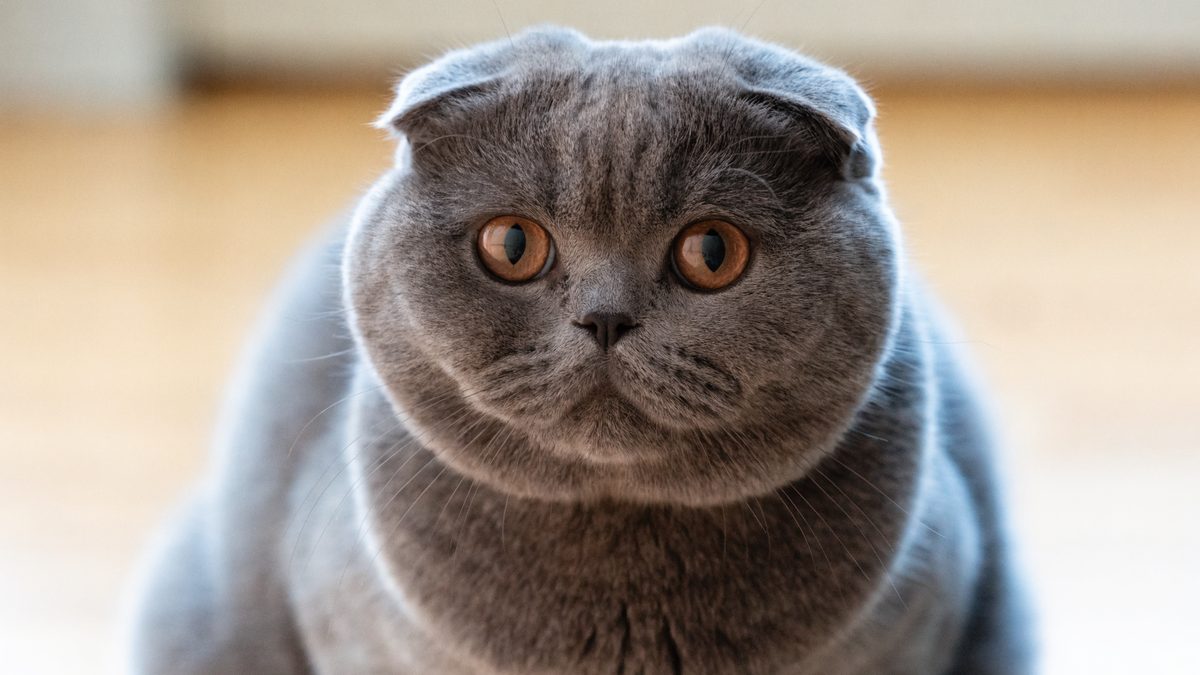
A Scottish Fold is a medium-sized domestic cat whose ears fold forward because the cartilage cannot hold them upright. That single sentence contains the whole breed. The fold is not a decoration sitting on top of an otherwise ordinary cat, it is the visible edge of a cartilage disorder that runs through the rest of the skeleton, and every price, every registry decision and every care instruction on this page follows from it.
Every Scottish Fold alive traces back to one white barn cat. Susie was found on a farm near Coupar Angus in Perthshire in 1961, her ears folded forward, and a local shepherd and cat fancier named William Ross noticed her. The Cat Fanciers' Association records the founders of the breed as William and Mary Ross and states that all bona fide Scottish Fold cats trace their pedigree to Susie. The Rosses began registering their cats with Britain's Governing Council of the Cat Fancy in 1966, and in the early 1970s the GCCF stopped registering folds. Three kittens descended from Susie were sent to a research centre in Massachusetts in 1970 for a study of the mutation, the research was abandoned, the cats were rehomed, and the breed was rebuilt in the United States.
The gene was identified in 2016. A team led by Barbara Gandolfi genotyped 44 Scottish Fold and 54 control cats, ran a genome-wide association analysis, and found that the dominantly inherited folded ear and the osteochondrodysplasia are both associated with a p.V342F substitution, written c.1024G>T, in TRPV4. TRPV4 codes for a calcium-permeable ion channel that sits in chondrocytes, osteoblasts and osteoclasts, the cells that build and maintain cartilage and bone. The change was not found in 648 unaffected cats. One gene, one letter, and it does two jobs at once.
The folded ear and the skeletal disease are the same thing. They are not two separate risks where you might get one and dodge the other. The UC Davis Veterinary Genetics Laboratory reports the result for a cat carrying one copy as Affected, and for a cat carrying two copies as Affected, with severe bone and joint issues. There is no genotype in this breed that gives you folded ears without the variant.
What the breed looks like against the written standard
The CFA standard describes a medium, rounded cat, even from shoulder to pelvic girdle, standing firm with a well padded body and medium bone, with a well rounded head, firm chin and jaw, well rounded whisker pads and large, well rounded eyes separated by a broad nose. Folded ears fold forward and downward, and the standard prefers the smaller, tightly folded ear over a loose fold and a large ear, set in a caplike fashion to expose a rounded cranium. TICA describes the same cat in one word, round, and notes that the folded ear comes from an incompletely dominant gene that produces both folded and straight-eared cats in the same litter.
Size figures disagree slightly across the registries and the Indian-facing sources, so both are printed below rather than averaged. Purina India gives males 3 to 4.5 kg and females 2 to 3.5 kg. TICA gives 7 to 10 pounds, which is roughly 3.2 to 4.5 kg, for a medium-sized cat. Neither is a large cat, and any Indian seller quoting you a 7 kg adult Scottish Fold is describing something else.
| Attribute | What the record shows | Source |
|---|---|---|
| Origin | One barn cat, Susie, found near Coupar Angus, Scotland, 1961 | BBC / CFA Cat Fanciers' Association. Scottish Fold… |
| Cause of the fold | Dominant c.1024G>T, p.V342F variant in TRPV4 | Gandolfi et al. |
| Inheritance | Autosomal dominant, variable penetrance of the skeletal signs | Labgenvet / UC Davis Veterinary Genetics Laboratory |
| When the ears fold | Kittens are born straight-eared; folding starts around 3 to 4 weeks | UC Davis VGL |
| Proportion of a litter that folds | About 50 percent, from a fold to straight mating | TICA |
| Adult weight | Males 3 to 4.5 kg, females 2 to 3.5 kg | Purina India |
| Adult weight, alternative figure | 7 to 10 pounds, medium-sized | TICA |
| Life expectancy claimed | 11 to 15 years (Indian pages), 11 to 14+ years (TICA) | Happy Pet / TICA The International Cat Association. Scottish… |
| Allowable outcross breeds, CFA | British Shorthair, American Shorthair | CFA registration |
| Recognised by GCCF (UK) | No, and no intention to recognise | GCCF welfare statement |
| Recognised by FIFe | No. FIFe does not permit breeding cats with osteochondrodysplasia | QUEN fact sheet |
| Recognised by CFA and TICA | Yes, with fold-to-fold matings excluded | CFA / TICA The International Cat Association. Scottish… |
Fold, Straight, Highland and the names Indian sellers use
Four names describe one gene pool and you will meet all four in Indian listings. A Scottish Fold carries one copy of the variant and has folded ears. A Scottish Straight is the straight-eared littermate, carries no copy, and has no folded ear and no osteochondrodysplasia risk from this variant. A Highland Fold, also sold as Scottish Fold Longhair, is the same breed and the same variant with a long coat. A Foldex is a Fold crossed with an Exotic, and UC Davis lists it among the breeds appropriate for the same test. Two of these four are the same animal at very different prices, which is the commercial fact under the whole Indian market for this breed.
- Check the ear first, in person, in daylight. Folded ears fold forward and downward and sit flat in a caplike fashion against a rounded cranium. Upright ears mean a Scottish Straight, whatever the listing says.
- Check the kitten's age against the fold. Kittens are born with straight ears and folding begins around three to four weeks. A six-week kitten sold as a guaranteed fold with straight ears is a guess, not a fact.
- Handle the tail gently and feel it. TICA warns that the tail should be handled gently and is known to develop stiffness that can cause pain if manhandled. A short, thick, inflexible tail is a clinical sign, not a cosmetic quirk.
- Look at the feet. The CFA standard requires neat, well rounded toes, five in front and four behind, and disqualifies splayed toes and an incorrect number of toes. Misshapen toes producing smaller feet are one of the most consistent effects of the variant.
- Watch the cat move across a room. A stiff, stilted gait, reluctance to jump, or swelling behind the hocks are the presenting signs Malik and colleagues recorded in Scottish Folds aged five months to six years.
- Ask for the DNA result, not the ear photo. The test is a cheek swab and reports N/N, N/SF or SF/SF. An honest breeder has it. Nobody in this market has to guess.
One more piece of context frames everything below. Purina India, which sells cat food in this country and has no reason to talk anyone out of a breed, states on its own Indian breed page that Scottish Folds are not an active breed and that this may be because of pain involved in movement, and that the cats can suffer painful degenerative joint disease throughout their lives as joints stiffen and bones fuse. That is on a .in domain, in plain language, right now. None of the pages ranking for the price query say it.
Scottish Fold cat price in India
Scottish Fold cat price in India runs Rs 25,000 to Rs 3,00,000 across published Indian sources in 2026, a twelve-fold spread. The low end is a straight-eared or unregistered kitten and the high end is an imported show-quality fold. Nobody in this market publishes a single number that is true, so the table below prints what each source actually says and the section explains what moves the figure.
Seven Indian sources publish a Scottish Fold price and no two agree. Wrapinfur, which Google's own AI Overview cites for this query, says most kittens cost Rs 40,000 to Rs 1,50,000 and that imported and show-quality kittens can exceed Rs 2,50,000. GoodPaws and Happy Pet both quote Rs 70,000 to Rs 2,00,000 Happy Pet Care. Scottish Fold cat guide. Fluffyn quotes Rs 25,000 to Rs 70,000 from verified breeders. Supertails, the largest pet retailer in the ranking set, puts the breed at Rs 30,000 to Rs 70,000. Pet India Online splits it into pet quality at Rs 60,000 to Rs 90,000 and show quality at Rs 90,000 to Rs 1,50,000 and above.
| Source | Low end | High end | What the figure covers |
|---|---|---|---|
| Fluffyn | Rs 25,000 | Rs 70,000 | Kittens from what it calls verified breeders |
| Supertails | Rs 30,000 | Rs 70,000 | Breed-wise price table, no quality split |
| Wrapinfur, headline | Rs 40,000 | Rs 1,50,000 | Most kittens |
| Wrapinfur, pet quality | Rs 40,000 | Rs 80,000 | Standard kittens with basic vaccinations |
| Wrapinfur, premium bloodline | Rs 80,000 | Rs 1,20,000 | Kittens with certified lineage papers |
| Wrapinfur, imported | Rs 1,20,000 | Rs 2,50,000+ | Directly imported from Europe or Russia |
| Wrapinfur, rare colours and show | Rs 1,50,000 | Rs 3,00,000+ | Rare colour or show quality |
| Wrapinfur, Scottish Straight | Rs 25,000 | Rs 60,000 | Straight-eared littermates |
| Pet India Online, pet quality | Rs 60,000 | Rs 90,000 | Pet quality |
| Pet India Online, show quality | Rs 90,000 | Rs 1,50,000+ | Show quality |
| GoodPaws | Rs 70,000 | Rs 2,00,000 | Rs 1,40,000 to Rs 2,00,000 from verified breeders |
| Happy Pet | Rs 70,000 | Rs 2,00,000 | Cost of buying |
Read that table as a picture of an unregulated market rather than as a price guide. Fluffyn's ceiling is Rs 70,000 and GoodPaws' floor is Rs 70,000, so the two sources do not overlap at all except at a single point. When two pages describing the same breed in the same country in the same year share exactly one rupee value in common, the honest conclusion is that neither is reporting a market price. They are reporting the asking prices of whichever sellers they spoke to.
Scottish Fold price by city in India
Only one Indian source publishes a city-wise breakdown, so it stands alone rather than being averaged with anything. Wrapinfur puts Mumbai highest and Kolkata lowest, with a Rs 50,000 gap at the top end between the two. Fluffyn agrees on direction without publishing numbers, noting that Mumbai and Bangalore breeders tend to price higher than other cities.
| City | Published range |
|---|---|
| Mumbai | Rs 55,000 to Rs 1,60,000 |
| Delhi NCR | Rs 50,000 to Rs 1,50,000 |
| Bangalore | Rs 50,000 to Rs 1,40,000 |
| Hyderabad | Rs 45,000 to Rs 1,30,000 |
| Pune | Rs 45,000 to Rs 1,30,000 |
| Chennai | Rs 45,000 to Rs 1,20,000 |
| Kolkata | Rs 40,000 to Rs 1,10,000 |
Five things that actually move the price
- The ear. This is the whole pricing model. A folded-ear kitten and its straight-eared littermate come from the same mating, share the same parents and the same coat, and Wrapinfur prices them at Rs 40,000 to Rs 80,000 and Rs 25,000 to Rs 60,000 respectively. Fluffyn is explicit that price depends on ear fold quality, and that kittens with tighter, triple-fold ears are priced at the higher end. You are paying a premium of tens of thousands of rupees for the cartilage defect to be more pronounced.
- Import claims. The Rs 1,20,000 to Rs 2,50,000 band is defined entirely by the phrase 'directly imported from Europe or Russia'. Import is the one claim in this market that is documentable, so ask for the documents rather than the story.
- Papers. The Rs 80,000 to Rs 1,20,000 band is described as kittens with certified lineage papers. Ask which registry issued them. The GCCF does not register this breed at all and has no intention of doing so, and FIFe does not recognise it, so a paper claiming either is not what it appears to be. CFA and TICA do register the breed The International Cat Association. Scottish….
- Coat colour. Rare colours and show quality push the top band to Rs 1,50,000 to Rs 3,00,000 and above. Both registries accept the breed in effectively every colour and pattern, so colour rarity is a marketing construct rather than a standard requirement The International Cat Association. Scottish….
- Coat length. A Highland Fold, the long-coated variety, is the same breed with the same variant and a higher grooming requirement. It is priced as a separate rarer product in Indian listings without being a separate animal.
A cheek-swab DNA test at the UC Davis Veterinary Genetics Laboratory costs USD 47 for the Scottish Fold variant alone, or USD 71 bundled with the PKD1 test, with a turnaround of at least 15 business days. At Rs 90 to the dollar that is roughly Rs 4,200 and Rs 6,400. Against a Rs 70,000 kitten the combined test is under 10 percent of the purchase price, and it is the only figure in this section that tells you something about the specific animal rather than about the seller's ambition.
What the price does not buy you
The price bands published in India describe appearance, paperwork and provenance. Not one of them describes the cat's genotype, its radiographs, or its parents' joint status. Wrapinfur says ethical breeders carefully plan pairings and conduct health screening to reduce risks associated with inherited skeletal disorders, and Fluffyn says a verified breeder will be transparent about health testing, but neither page names a test, a laboratory, a result format or a price. The CFA does name it, on its own breed page, calling DNA testing of paramount importance in order to confirm that each possible pairing is appropriate. That sentence should be the first thing you quote to a seller.
Is the Indian price high or low? The US comparison
Two American price guides ranking on this same query give a useful yardstick. Petful puts adoption at USD 100 to USD 300, a pet-quality breeder kitten at USD 1,000 to USD 2,500, and show or breeding stock at USD 2,500 to USD 3,500 and above, with live breeder listings in mid-2026 running USD 2,550 to USD 3,300. Catster gives USD 300 to USD 500 for adoption and up to USD 3,000 from a breeder. At Rs 90 to the dollar, a USD 1,000 to USD 2,500 US pet-quality kitten is roughly Rs 90,000 to Rs 2,25,000, which sits neatly inside the upper half of the published Indian range. India is not a cheap market for this breed. It is priced at rough parity with the United States, in a country with a fraction of the per-capita income and none of the breeder oversight.
Petful also prices the Scottish Straight separately at USD 300 to USD 800 and calls it the value pick, describing it as the same breed and temperament without the fold and without the skeletal disease. That is a US commercial price guide making the same argument this page makes, unprompted.
One last framing number for the Indian market as a whole. Cat ownership here is growing far faster than dog ownership. The Government of Canada's sector analysis, drawing on Euromonitor data, puts India's pet cat population at 2.37 million in 2020, 4.48 million in 2025 and a projected 4.89 million in 2026, a compound growth rate of 13.6 percent against 5.9 percent for dogs. A market growing that fast, with no registry enforcement and no import scrutiny at the retail end, is precisely the environment in which a breed banned elsewhere becomes a premium product here.
Monthly cost of owning a Scottish Fold in India
Budget Rs 3,000 to Rs 15,000 a month to keep a Scottish Fold in India, depending on food tier and city, and budget a second, separate line for joint care that no Indian page currently includes. The routine costs are ordinary cat costs. The breed-specific costs are radiographs, pain management and specialist consultations, and they arrive on their own schedule rather than yours.
Four Indian sources publish monthly figures and the range between them is wide but not wild. Wrapinfur's line items add to Rs 5,300 to Rs 15,000 a month. Pet India Online gives a total of Rs 7,000 to Rs 15,000 and above. Fluffyn gives Rs 3,500 to Rs 6,500. GoodPaws gives Rs 3,000 to Rs 7,000. For context on what an ordinary cat costs in this country, Supertails puts a budget-tier cat at Rs 2,300 to Rs 4,600 a month and a premium-tier cat at Rs 9,000 to Rs 21,700.
| Line item | Wrapinfur | Fluffyn | Happy Pet | Pet India Online |
|---|---|---|---|---|
| Food | Rs 2,500 to 6,000 | Rs 2,000 to 3,500 | Rs 1,500 to 2,000 | not split out |
| Litter | Rs 800 to 2,000 | included in upkeep | not split out | not split out |
| Grooming | Rs 500 to 2,000 | Rs 500 to 1,200 | not split out | Rs 1,500 to 3,000 |
| Veterinary | not split out | Rs 800 to 2,000 | Rs 500 to 700 | Rs 2,000 to 6,000 |
| Treats and supplements | Rs 500 to 1,500 | not split out | not split out | not split out |
| Insurance, optional | Rs 500 to 2,000 | not split out | not split out | not split out |
| Miscellaneous | Rs 500 to 1,500 | not split out | not split out | not split out |
| Published monthly total | Rs 5,300 to 15,000 | Rs 3,500 to 6,500 | not totalled | Rs 7,000 to 15,000+ |
Notice which line moves most between sources. Food varies by roughly four times and grooming by six, but veterinary care varies by twelve, from Rs 500 at the low end to Rs 6,000 at the high end Pet India Online. Scottish Fold India…. That is the line the breed acts on, and it is the one Indian pages estimate least confidently.
The line items nobody budgets for
Only one Indian source puts a number on joint care. Fluffyn tells buyers to budget an additional Rs 5,000 to Rs 10,000 annually for X-rays or specialist consultations if joint issues arise. That is a reasonable starting figure and it is worth understanding what it does and does not cover. Radiographs in this breed are not a single event. Malik and colleagues diagnosed osteochondrodysplasia from characteristic radiological findings across the tarsal, carpal, metatarsal and metacarpal bones, the phalanges and the caudal vertebrae, which means a diagnostic study covers several views of several regions rather than one plate. The Australian VetCompass work found the median age at clinical diagnosis was 20 months, so this is a young-cat cost rather than a retirement cost.
- A baseline radiographic series, ideally before or around the first birthday. Radiographic changes are visible from as young as seven weeks in affected cats, so a baseline gives you something to compare against later rather than a first look at a cat that is already lame.
- A pain-relief trial rather than a wait-and-see. Cats Protection recommends putting the cat on pain relief to see whether it becomes more active, which confirms that it has been doing less because of pain. This is cheap, fast and the single most useful diagnostic step an owner can request.
- Long-term analgesia, if the trial works. This becomes a recurring monthly cost that runs for the rest of the cat's life, because there is no cure for the condition and it is progressive.
- Weight management, which is free and non-negotiable. Excess weight places additional stress on joints and bones, and TICA notes that Folds are good eaters and not as active as other breeds, which is a combination that produces overweight cats.
- Specialist access, which is a geography problem in India. Orthopaedic radiograph interpretation and feline pain management are not evenly distributed across Indian cities. Budget for a referral, and find the referral before you need it.
Cats Protection states that Scottish Folds are more expensive to care for and insure than moggies or other breeds with fewer health concerns. Petful's US guide makes the same point in numbers, budgeting USD 200 to USD 1,500 a year for breed-specific joint care covering supplements, pain relief, X-rays and arthritis management that most cats never need, and noting that insurance premiums run higher for a breed with a known inherited condition. Indian pet insurance is still thin and pre-existing and hereditary condition exclusions are common. Read the exclusions before you assume a policy covers a condition the cat was born with, because a dominant inherited skeletal disorder is exactly the category insurers write out.
First-year cost, built from the published figures
Add the purchase price to twelve months of upkeep and the first-year figure lands somewhere between roughly Rs 61,000 and roughly Rs 3,80,000 depending entirely on which end of each published range you land on. The arithmetic is simple. Fluffyn's floor of Rs 25,000 for the kitten plus twelve months at Rs 3,000 gives Rs 61,000 GoodPaws. Scottish Fold: breed info. GoodPaws' ceiling of Rs 2,00,000 plus twelve months at Rs 15,000 gives Rs 3,80,000 Wrapinfur. Scottish Fold Cat Price in India…. Add vaccination at Rs 800 to Rs 1,500 for the FVRCP and rabies course, the DNA panel at roughly Rs 6,400 for the fold and PKD1 tests together, and Fluffyn's Rs 5,000 to Rs 10,000 joint-care allowance. Anyone quoting you a single first-year number for this breed in India is guessing.
Can a Scottish Fold handle the Indian climate
A Scottish Fold copes with Indian heat better than a Persian and worse than an Indian domestic shorthair, and its heat tolerance is a middling three out of five. The coat is the smaller problem. The real climate issue in this breed is that heat and joint pain produce the same behaviour, a cat that stops moving, and in an Indian summer you cannot tell them apart by watching.
Start with what an Indian summer now looks like in numbers. During the April to May 2026 season, Banda in Uttar Pradesh recorded the season's highest observed temperature at 47.6 degrees Celsius on 27 April, roughly 8 degrees above the climatological norm, with Akola in Maharashtra at 46.9 degrees on the same day. Those are outdoor readings, and an indoor cat in a top-floor Indian flat without air conditioning sits in a materially cooler but still demanding environment for weeks at a stretch.
The coat is manageable. The short-coated Scottish Fold has a dense, plush, even coat, short to medium-short in length, standing away from the body due to density. That is more coat than a Siamese and far less than a Persian, and it sheds lightly year round with heavier periods in spring and autumn. The long-coated Highland Fold is a different proposition and carries a real grooming and heat penalty in humid Indian cities.
Pet India Online notes that Scottish Folds move around less on hot days. Purina India notes that Folds are not an active breed and that this may be because of pain involved in movement. Put those two sentences together in a Chennai May and you have an owner watching a cat that has stopped jumping, with two possible explanations and no way to distinguish them by eye. This is why the pain-relief trial that Cats Protection describes matters more here than in a temperate country. If the cat becomes more active on analgesia, it was pain. If it does not, it was the weather.
Head shape, and why it varies more than you would expect
Not every Scottish Fold has the same face, and the flatter ones carry a heat cost. Cats Protection lists brachycephalic airway obstruction syndrome among the breed's problems, noting that some Scottish Folds are classed as brachycephalic, which means shorter noses that can lead to severe breathing problems, along with more dental problems and eye issues such as ulcers. The CFA standard pushes against this, disqualifying a palpable nose break outright, and the GCCF's general position is that selective breeding for extreme brachycephaly produces anatomical deformities. In practice, a moderate Scottish Fold with a normal muzzle handles Indian heat like any short-coated cat. A very flat-faced one does not, and in a 45-degree April that difference is not cosmetic.
Folded ears in Indian humidity, where the sources disagree
Two camps say opposite things about the folded ear and infection, and both are printed here rather than reconciled. The RSPCA's Australian knowledgebase states plainly that the tightly folded ears do not appear to be any more prone to infections than those of cats with upright ears. TICA says the same, that the ears of a Scottish Fold do not make them more susceptible to ear infections than any other breed. Against that, Cats Protection lists an increased risk of ear disease among the breed's other health problems, Fluffyn says ear cleaning is particularly important because folded ears trap more debris and wax than straight-eared breeds, and GoodPaws says the folded structure creates a warm, dark environment prone to ear infections.
| Source | Position |
|---|---|
| RSPCA Australia | No increased risk observed |
| TICA | No more susceptible than any other breed |
| Cats Protection | Increased risk of ear disease listed |
| Fluffyn | Folded ears trap more debris and wax |
| GoodPaws | Warm, dark environment prone to infection |
The useful position for an Indian owner sits between the two. No study establishes a higher infection rate in this breed, so do not panic-buy ear drops. But a monsoon in Mumbai or Kochi is not a British winter, and humidity plus a physically obstructed pinna is a reasonable case for checking the ear weekly and cleaning it only when your vet says it needs it. Over-cleaning a healthy feline ear canal causes more problems than it prevents.
The Indian floor problem
Indian homes create a specific trap for a cat with sore joints. The coolest surface in a Chennai or Ahmedabad flat in May is bare stone, tile or kota, and that is exactly where a cat will choose to lie. It is also the hardest and least forgiving surface for a cat with distal-limb arthritis. The softest surfaces in the house, the mattress and the sofa, are the hottest and usually the ones that require a jump to reach. Pet India Online is the only ranking page that even names joint-friendly surfaces as a consideration, and this is where that advice becomes concrete.
- Give the cat a cool, soft option rather than making it choose. A thin cotton dhurrie or a folded chatai over a stone floor in the coolest room keeps the cooling and removes the hardness. A gel cooling mat under a thin cover does the same job.
- Remove the jump, do not remove the height. Cats want elevation, and a Scottish Fold with sore hocks should not be earning it in one leap. A stool, a stack of books or a low step turns a 90 cm jump into two 45 cm steps.
- Watch the litter tray height in summer. A cat that is reluctant to step over a high-sided tray will start eliminating beside it, and Happy Pet lists changes in litter box behaviour among the signs to watch. A low-entry tray fixes a problem that reads like a behaviour issue.
- Keep water away from the food bowl and keep it moving. Cats drink less when water sits next to food, and TICA suggests placing the water bowl at least three feet from any food and notes that Folds love running water, so a fountain is a genuine hydration tool in an Indian summer.
- Air conditioning helps but is not compulsory. Pet India Online's assessment is that air conditioning is useful but not a requirement every time, with ventilation, shade during the hottest hours and fresh water doing most of the work. Nights are the new problem: the IMD flagged nights running 3.1 to 5.0 degrees warmer than usual across much of the country in the 2026 season, and a cat that cannot cool down overnight never recovers.
On cold, the honest answer is that the evidence is thin. Owners of arthritic cats commonly report that stiffness looks worse in cool weather, and it is a reasonable precaution in a Shimla or Srinagar winter to keep a heated or well-insulated bed available, but no controlled study in cats establishes that ambient temperature changes the progression of osteochondrodysplasia. Treat it as comfort management, not treatment.
Temperament, household fit and the calmness question
Scottish Folds are described everywhere as calm, sweet, quiet and unusually people-oriented, and by every account they genuinely are affectionate cats that follow their people from room to room. One caveat sits under all of it, and it comes from the welfare bodies rather than from critics on the internet. Some of what gets sold as temperament in this breed may be pain.
The registries and the breed sources agree on the picture. The CFA calls them comfortable, charming homebodies who enjoy but do not crave human interaction, quiet but not placid, willing to play fetch, patient with children, and prone to sitting up straight like a prairie dog when something interests them. TICA describes intelligent, inquisitive cats that are loyal to their family, follow people from room to room, learn tricks, love running water, and often sit up in what fold owners call the Buddha sit. Purina India describes a mellow, loving breed that adapts easily to new environments, usually bonds to one person, and follows that person around like a loyal puppy.
Both registries add the same warning. The CFA says Folds do not do well being left alone for long periods. TICA says they prefer the company of their humans, other cats and cat-friendly dogs rather than being left alone for hours at a time. That is a real constraint for a two-income Indian household where the flat is empty from nine to seven.
Cats Protection puts it directly. Scottish Folds are often thought to have calm and laid back personalities and are praised for their mild temperament, and sadly these behaviours may actually be caused by the pain they are experiencing, and a reluctance to move, jump and play. Purina India, on an Indian domain, says the same thing in one line: Folds are not an active breed, and this may be because of pain involved in movement. Neither body claims this is proven for every cat. Both say it is the first thing to rule out.
The honest position is that nobody has run the study. There is no controlled work comparing activity levels or temperament scores in Scottish Folds against straight-eared littermates while blinding assessors to ear phenotype, which is precisely the design that would settle it. What exists is a mechanism that makes the hypothesis plausible, a documented painful joint disease affecting the distal limbs, and two welfare organisations independently reaching the same conclusion. Treat calmness in this breed as a question to answer rather than a feature you paid for.
The communication problem in a multi-cat Indian home
Cats talk with their ears and tails, and this breed has less of both. The CFA notes that Folds can be reserved with strangers and other cats, who may consider their folded ears a sign of hostility. The QUEN veterinary fact sheet makes the same point more formally, that cats communicate strongly through ear and tail posture to signal excitement, attention, defence and aggression, and that folded ears and an altered, immobile tail impair this communication and restrict species-typical behaviour and social interaction with cats and humans. A German administrative court reached the same finding in a 2019 ruling, that with folded ears this form of expression is no longer possible.
The German Animal Welfare Federation states the consequence directly: because the folded ears are permanently pinned by genetic cartilage damage, other cats interpret them as fear or aggression, which leads to misunderstandings between animals and therefore more frequent bites and scratches, and Scottish Folds also cannot use their tails to communicate or balance as nature intended.
That has a concrete consequence in Indian homes, where a resident community cat, a rescued desi cat or a second pedigree is common. Flattened ears in a normal cat mean back off. A Scottish Fold's ears look like that permanently. Introductions in this breed should be slower, more heavily scent-based and more carefully supervised than you would bother with for a straight-eared cat, because the resident cat is reading a signal the Fold never sent.
Who this cat suits, and who it does not
| Situation | Fit | Why |
|---|---|---|
| Someone home most of the day | Good | Both registries warn against long periods alone The International Cat Association. Scottish… |
| Families with children | Good, with supervision | CFA and TICA both describe even temperaments and patience with children The International Cat Association. Scottish… |
| Apartment living | Good on temperament, conditional on health | Calm, indoor-oriented and low energy, but joint monitoring is the real commitment |
| First cat, buyer on a fixed budget | Poor | Cats Protection notes higher care and insurance costs than other breeds |
| Multi-cat household | Conditional | Impaired ear and tail signalling makes introductions harder Cat Fanciers' Association. Scottish Fold… |
| Buyer who wants a lively, athletic cat | Poor | Not as energetic as other breeds and needs to be engaged deliberately |
| Buyer who wants a very quiet flat | Good | Purina India rates vocalisation as quiet; GoodPaws calls the voice soft and moderate |
| Buyer unwilling to commit to lifelong monitoring | Not suitable | The condition is progressive and incurable |
Pet India Online, the one page in the ranking set that engages with the ethics, frames the fit test in a way worth repeating. It says the breed suits you if you prefer a mellow lap cat, are prepared for treatment and prioritise indoor living, and does not suit you if your budget is limited or you want a pet without the hassle of managing it. That is a fair summary and it is more honest than anything on the pages ranking above it.
None of this means a Scottish Fold cannot be a happy cat. Many are, many owners love them deeply, and a great number of Indian owners bought one without ever being told any of the above, because nobody selling them said it. If that is you, the health, feeding and mistakes sections below are written for you rather than at you.
Litter training, handling and enrichment for a Scottish Fold
To train a Scottish Fold, start with the litter tray in the first week, add daily handling of the tail and paws in the first month, and build enrichment that works at floor level rather than at ceiling height. This breed is genuinely trainable, and one training goal matters more here than in any other cat. You are teaching a cat to let you feel for pain it will otherwise hide.
Both registries confirm this is a cooperative, teachable cat. The CFA says Folds are quite intelligent and can be trained to do basic tricks, and will readily engage in a game of fetch. TICA recommends challenging their brain by teaching them tricks and providing puzzle toys to test their intelligence, and notes that some learn to open cabinet doors and that many eat and drink with their paws. Purina India calls the breed playful, curious and intelligent. None of that changes in India. What changes is what you use the trainability for.
Litter training, and the tray height nobody mentions
Litter training a Scottish Fold kitten is ordinary cat work with one breed-specific adjustment. Cats arrive already knowing to bury waste in a loose substrate, so the job is confinement, placement and cleanliness rather than instruction. Give the kitten a small, quiet room for the first few days with the tray, food and water in it, keep the tray at least a couple of metres from the food, and scoop daily.
- Buy a low-entry tray, not a high-sided one. A cat with sore hocks will avoid a tray it has to climb into, and the first sign is elimination beside the tray rather than in it. Happy Pet lists changes in litter box behaviour among the signs that something is wrong, and in this breed a joint problem presents as a litter problem more often than owners expect.
- Run one more tray than you have cats. Two trays for one cat, three for two. In a small Mumbai or Bengaluru flat this is the cheapest insurance against a house-soiling problem you will spend months undoing.
- Keep the tray on the ground floor of the cat's world. A tray on a bathroom step or behind a raised threshold adds a climb. Move it before the cat decides against it.
- Use unscented clumping litter and change brands slowly. Cats reject substrate changes far more readily than food changes, and a rejected substrate reads as a training failure when it is a preference failure.
- Scoop before you go to work, not after. In Indian heat a tray degrades within hours, and a cat that finds it unusable at noon has picked a new spot by evening.
Handling training, the one that actually matters in this breed
This is the training goal that separates a well-managed Scottish Fold from a cat suffering quietly. Cats hide pain, and this breed hides it inside a temperament everyone reads as calm. TICA is explicit that the tail should be handled gently, that Folds are known to develop stiffness that can cause pain if manhandled, and that a cat showing stiffness or pain when the tail is manipulated should be taken to a veterinarian immediately to check for arthritis. You cannot run that check on a cat that will not let you touch its tail.
- Pair handling with food from week one. Touch a paw, give a treat. Touch the base of the tail, give a treat. Ten seconds a day, every day. The goal is a cat that offers its limbs rather than tolerating them being taken.
- Learn what normal feels like on your own cat. Run your hand down the tail slowly and feel for thickening, rigidity or a change in flexibility. The CFA standard requires a tail that is medium to long, flexible and tapering, and disqualifies a tail lacking in flexibility due to abnormally thick vertebrae. That is the show ring's language for the same thing you are feeling for at home.
- Never force it, and stop before the cat objects. A cat that learns handling means discomfort will hide harder, which is the opposite of what you need.
- Practise the carrier before you need it. Leave it open in the room with a blanket in it. A cat that walks into its own carrier turns an emergency vet trip into a five-minute job.
- Weigh the cat monthly on a kitchen scale. Weight change is the earliest objective signal you will get, it costs nothing, and it lets your vet monitor a trend rather than guess at one appointment.
Enrichment that does not cost the cat its joints
TICA is blunt that Scottish Folds are good eaters and not as energetic as other breeds, and therefore need to be engaged on a regular basis to be active, using their love of human interaction and attention. The instruction is right and the standard implementation, tall cat trees and high shelves, is wrong for a cat whose distal limbs are the affected part of the skeleton.
| Usual advice | Better version for a Scottish Fold | Why |
|---|---|---|
| Tall cat tree with big jumps | Stepped platforms, 30 to 40 cm apart | Keeps vertical access without repeated high-impact landings on affected distal limbs |
| Laser pointer chases | Wand toy dragged along the floor | Ground-level stalking, no leaping, and it ends in a catch rather than in frustration |
| Food bowl | Food puzzle and scatter feeding | TICA recommends puzzle toys, and slow feeding helps the weight problem the breed is prone to |
| Free access to a high windowsill | A step or stool to the same windowsill | Same view, half the impact |
| Rough tail-and-belly play | Gentle body handling and trick training | TICA warns explicitly against manhandling the tail |
| Leaving the cat alone all day with toys | Two short interactive sessions plus a food puzzle | Both registries warn against long periods alone The International Cat Association. Scottish… |
Trick training is the most useful enrichment you can offer this cat, because it is mentally demanding and physically cheap. Sit, target a stick with the nose, come when called, and step onto the weighing scale are all reachable within a few weeks with a clicker and a jar of treats, and every one of them makes veterinary care easier later. A cat that will step onto a scale on cue and let you handle a paw has effectively given you a home monitoring programme.
How much exercise a Scottish Fold actually needs
Give a Scottish Fold 30 to 60 minutes of low-impact activity a day, split across two or three short sessions. That figure comes from the Indian care guides and it is realistic for the breed. The harder question is not how much exercise this cat needs but why it does so little of it on its own, and the answer decides what you do next.
Happy Pet's Indian care guide sets the exercise routine at 30 to 60 minutes and rates the breed's energy level as moderate. Pet India Online rates activity level low to moderate and recommends gentle play with interactive toys, with an explicit warning not to stress the cat too much because of joint disorders. TICA frames it as an obligation on the owner rather than the cat, saying Folds are not as energetic as other breeds and therefore need to be engaged on a regular basis to be active. All three land in the same place. This cat will not exercise itself.
In most breeds, a cat that plays for twenty minutes and then settles is a calm cat. In this one, that pattern is the first thing a vet would want to interrogate, because Cats Protection and Purina India both attribute the breed's reputation for being laid back at least partly to pain and a reluctance to move, jump and play Purina India. Scottish Fold cat breed…. If your Scottish Fold used to chase a wand for fifteen minutes and now stops at four, that is a clinical observation, not a personality change. Write down the date.
What happens without it
Two things, and they compound. The first is weight. TICA warns that Folds tend to be good eaters and are not as active as other breeds, so special care should be taken with nutrition to prevent them from becoming overweight. The second is joint load. Wrapinfur, of all the Indian sources, puts this most usefully, noting that maintaining a healthy weight is particularly important because excess weight places additional stress on joints and bones. A heavy Scottish Fold is a cat carrying extra load on the exact joints the variant has already compromised, and the extra load makes it move less, which adds more weight.
Pet India Online names obesity as a health issue in the breed and attributes it directly to reduced activity. That is the loop to break, and you break it at the food bowl and the play session together rather than at either one alone.
A workable daily pattern in an Indian flat
- Two wand sessions of 10 to 15 minutes, morning and evening. Drag the toy along the floor and around furniture legs rather than flicking it overhead. Let the cat catch it three or four times in each session, because a hunt that never ends in a catch is frustrating rather than satisfying.
- One food puzzle at the largest meal. This converts eating into twenty minutes of low-impact work and directly addresses the weight problem TICA flags.
- Five minutes of trick or target training. Mentally tiring, physically free, and it builds the handling tolerance the health section depends on.
- Scatter a portion of the daily kibble across the floor. Foraging at ground level is exactly the right kind of movement for this breed.
- Schedule play for the cool hours in summer. In an Indian April, 11 am to 4 pm is not play time for any cat, and for one with sore joints it produces a refusal you will misread as worsening disease.
Adapt the load to the cat rather than the breed. A Scottish Fold with no radiographic changes and a flexible tail can play like any other cat. One with a stiff, thickened tail and a stilted gait needs shorter, gentler sessions and a vet conversation about pain relief before you push activity at all. Malik and colleagues recorded reluctance to jump and a stiff, stilted gait among the presenting signs in affected cats aged five months to six years, which is a reminder that the cat refusing to play may be the youngest one in the house.
Grooming a Scottish Fold coat in Indian humidity
Brush a short-coated Scottish Fold once a week and comb a Highland Fold two or three times a week, and the coat is handled. This is one of the easier pedigree coats to keep in India. The parts of the grooming routine that need attention in this breed are the nails, the ears and the self-grooming the cat may stop doing.
The coat is short to medium-short, dense, plush, even and soft, standing away from the body because of its density rather than lying flat. TICA describes light shedding year round with heavier periods in spring and autumn, recommends a weekly brush for shorthaired Folds and a comb through several times a week for longhaired ones, and suggests monthly bathing to remove loose hair and keep the coat clean. Purina India lists grooming as weekly. Happy Pet rates the breed low shedding and says the routine should cover coat, ears, nails, teeth and overall hygiene.
In Indian conditions the practical adjustment is frequency during the shed, not technique. A dense plush coat in Chennai humidity mats less than a Persian's but sheds into every fan-blown corner of the flat from February to April. Twice a week with a rubber curry brush through those weeks removes most of it, and it doubles as the daily body handling the training section asks for.
| Task | Frequency | Note |
|---|---|---|
| Brush, short coat | Weekly, twice weekly in shedding season | TICA baseline |
| Comb, Highland Fold long coat | 2 to 3 times a week | Longhaired Folds may need combing several times a week |
| Bath | Monthly, or less if the coat stays clean | TICA suggests monthly bathing to remove loose hair |
| Nail check and trim | Every 2 to 3 weeks | Part of the standard routine, and more important in a cat that scratches less |
| Ear check | Weekly, visual | Clean only on veterinary advice, given the disagreement over infection risk Fluffyn. Scottish Fold price in India 2026 |
| Teeth | Daily brushing if the cat accepts it | Cats Protection links brachycephalic conformation to more dental problems |
| Tail and limb handling check | Weekly | TICA advises immediate veterinary attention if stiffness or pain appears |
Nails, and why they matter more in this breed
A cat keeps its claws in shape by scratching, and a cat that hurts scratches less. The variant most consistently produces smaller feet resulting from misshapen toes, and reduced activity is a documented feature of the breed. Put those together and the practical consequence is a claw that outgrows its wear rate and, in the worst case, curls into the pad. No study has measured this specifically in Scottish Folds, so treat it as a mechanism worth guarding against rather than an established breed statistic. The guard is free. Look at every claw on every foot once a fortnight, and trim the tips.
Ears, handled without over-handling
The sources genuinely disagree on whether the folded ear raises infection risk, and the climate section prints that disagreement in full. The routine that satisfies both camps is a weekly look rather than a weekly clean. Lift the fold gently, look at the canal opening, and check for discharge, redness, a bad smell or the cat shaking its head or scratching at the ear. If the ear is clean and the cat is comfortable, do nothing. Fluffyn's advice that ear cleaning is particularly important in this breed is worth following only when there is something to clean, because routine flushing of a healthy canal disrupts it.
The grooming sign that is really a health sign
Watch how well the cat grooms itself, and specifically where. A cat that cannot comfortably twist to reach its lower back, hindquarters or the base of its tail develops a dull, greasy or scurfy patch in exactly those places, while the front half of the coat stays immaculate. In an ordinary cat that pattern points to obesity or age. In a Scottish Fold, with a documented disorder of the spine and distal limbs and a warning from TICA about tail stiffness and pain, it points at the tail base first. Happy Pet lists overgrooming among the signs to watch; undergrooming a specific region is the more informative one here, and it is easy to miss because the cat looks fine from the front.
One last practical note for Indian owners of Highland Folds. A long, dense coat in a humid coastal city needs a comb that reaches the undercoat, not a slicker that skates over the top. Mats form first behind the ears, in the armpits and around the tail base, and the tail base is precisely the area you should already be checking weekly for a different reason. One routine, two jobs.
Scottish Fold health, the TRPV4 gene and what the studies actually found
Every folded-ear Scottish Fold carries a dominant TRPV4 variant that disrupts cartilage and bone throughout the skeleton, and that variant is the same thing that folds the ear. How severely any individual cat is affected varies enormously, researchers disagree about how bad it is in cats with one copy, and this section prints what each study actually measured rather than picking the conclusion that suits.
The disorder has a name, Scottish Fold osteochondrodysplasia, usually shortened to SFOCD. Gandolfi and colleagues described it as a dominantly inherited osteochondrodysplasia involving malformation of the distal forelimbs, distal hindlimbs and tail, with progressive joint destruction. The mechanism is now reasonably well understood. TRPV4 codes for a calcium-permeable ion channel expressed in chondrocytes, osteoblasts and osteoclasts, where correct activity is essential for cell differentiation and tissue homeostasis. The mutant channel reaches the cell surface poorly, has higher basal activity and responds excessively to hypotonic conditions, which is thought to alter how cartilage cells read mechanical signals.
The clinical picture, described most fully by Malik and colleagues, includes lameness, reluctance to jump, a stiff stilted gait, short misshapen distal limbs, swelling of the plantar tarsometatarsal regions and short, thick, inflexible tails. On radiographs the findings are irregularity in the size and shape of the tarsal, carpal, metatarsal and metacarpal bones, the phalanges and the caudal vertebrae, narrowed joint spaces, and progressive new bone formation around the joints of the distal limbs with diffuse osteopenia of adjacent bone, with a plantar exostosis behind the calcaneus in advanced cases.
Homozygous versus heterozygous, and where researchers disagree
Nobody disputes that a cat with two copies is badly affected. Breeding two folded-ear cats together produces homozygotes with severe skeletal disease, which is why every registry that recognises the breed prohibits fold-to-fold matings and why the CFA insists that responsible breeders only breed fold-eared cats to straight-eared cats. Labgenvet states the rule plainly: the homozygous animal should be avoided, so fold cats should only be bred to non-fold cats.
The real argument is about cats with one copy, which is what almost every pet Scottish Fold in India is. Five studies have looked, they used different designs, and they did not all land in the same place.
| Study | Design | Cats | Finding |
|---|---|---|---|
| Malik et al., Australian Veterinary Journal, 1999 | Retrospective cases from five clinics plus a radiographic survey of a cattery | 6 clinical cases aged 5 months to 6 years, plus 4 found by screening | In all nine cases with pedigree information the cats came from a fold to normal-ear mating. Concluded that all Scottish Fold cats suffered from osteochondrodysplasia of some degree and that the best solution would be to avoid using fold-eared cats for breeding |
| Takanosu et al., Journal of Small Animal Practice, 2008 | Three-generation pedigree analysis, folded ears mated to normal ears | Pedigree of presumed heterozygotes | All cats with folded ears developed osteochondrodysplasia in the distal fore and hindlimbs. Severity differed in every cat; severe cases showed clinical signs, mild cases were clinically unaffected. Unlike earlier studies, the tail was not affected |
| Gandolfi et al., Osteoarthritis and Cartilage, 2016 | Genome-wide association plus functional work in transfected cells | 44 Scottish Folds, 54 controls, 648 unaffected cats | Identified the causal variant, TRPV4 c.1024G>T p.V342F. The variant was absent from all 648 unaffected cats |
| Rorden et al., Human Genetics, 2021 | Genotyped, controlled, four reviewers blinded to ear phenotype | 22 cats: 10 folded ears, all heterozygous; 12 straight ears, none carrying the variant | Each reviewer on average gave a numerically worse severity score to folded-ear cats, but the radiological signs in heterozygotes were much milder than previously published. The authors framed it as added information for a complicated debate rather than a resolution |
| Velie et al., BMC Veterinary Research, 2023 | Retrospective study of Australian veterinary electronic patient records, 1992 to 2018 | 1,131 Scottish Fold and 117 Scottish Shorthair cats | 12 of 1,131 Scottish Folds, or 1.1 percent, had a clinical diagnosis. 69 cats, or 5.7 percent of the sample, were identified as suspected cases. Median age at clinical diagnosis was 20 months. The authors noted cases were missed because record detail varies |
| Sartore et al., Journal of Feline Medicine and Surgery, 2023 | Genotyping by sequencing plus orthopaedic and radiographic examination, with follow-up at 1.5 years | 17 cats: 12 Scottish Folds, 5 Scottish Straights | All and only the Folds carried the mutant allele, heterozygous. Only 1 of 12 showed clinical signs of SFOCD, and no cat showed new skeletal changes at follow-up. The authors concluded the variant is supposedly not the only cause or risk factor |
Two things are true at once and both matter. First, the older pedigree and case work found skeletal changes in every folded-ear cat examined, including heterozygotes Takanosu M, Takanosu T, Suzuki H. Second, the newer, better-controlled work found those changes to be milder and less consistently clinical than that earlier literature implied Sartore S, Moretti R, Piras LA, Longo M. The reconciliation most consistent with all of it is that carrying one copy of the variant reliably changes the skeleton, but how much it hurts any individual cat, and when, is not predictable from the genotype. Rorden and colleagues said as much, calling it a complicated debate rather than a settled one. Anyone who tells you either that every Scottish Fold is crippled or that heterozygotes are fine is arguing past the evidence.
Sample size is the reason to be careful in both directions. Rorden studied 22 cats and Sartore 17 Sartore S, Moretti R, Piras LA, Longo M. Those are small groups, and Sartore's 1.5-year follow-up covered three cats. Velie's Australian VetCompass study is much larger at 1,131 Scottish Folds, and its 1.1 percent clinical diagnosis rate is the lowest figure anyone has published, but its authors were explicit that cases were missed because the detail within electronic patient records is variable. A record-based prevalence is a floor, not a measurement, because it counts only what a vet typed.
Context: arthritis is common in all cats, and that cuts both ways
Degenerative joint disease is not rare in ordinary cats. Slingerland and colleagues radiographed 100 client-owned cats aged six years and over and found osteoarthritis in at least one joint in 61 percent of them, and in more than one joint in 48 percent, most often in the shoulders, elbows, hips and tarsal joints. That figure is a genuine argument against panic. It is not an argument that this breed is normal, for two reasons. The distribution is different, because SFOCD concentrates in the distal limbs and tail rather than the proximal joints Takanosu M, Takanosu T, Suzuki H. And the timing is different: Slingerland's cats were six or older, while the median age at clinical SFOCD diagnosis in the Australian data was 20 months and radiographic changes are visible from as young as seven weeks.
Takanosu and Hattori published two cross-breed cases in 2020, and one of them is the most under-reported fact about this breed. Case 1 was a Scottish Fold crossed with a Munchkin, with limbs resembling the Munchkin and ears folded forward like a Fold. Case 2 was a Scottish Fold crossed with an American Curl, and its ear pinnae were curled backwards like an American Curl rather than folded forward. Both cats showed severe exostosis in the hind leg on radiographs taken around one year of age, and both were dominant homozygous for TRPV4 c.1024G>T. In other words, the second cat carried two copies of the fold variant and did not look like a Scottish Fold at all. The authors concluded that cross breeding with Scottish Folds could produce unknown phenotypes and should be avoided. If you are buying a designer cross in India, the ear no longer tells you anything and only a DNA test does.
What four registries and three governments decided
The record here is specific, dated and easy to check, which is why it belongs on a page about buying one.
| Body | Position | Detail |
|---|---|---|
| GCCF (United Kingdom) | Does not recognise the breed | Stopped registering folds in the early 1970s on health grounds and has maintained the ban since. Its welfare statement lists the Scottish Fold among breeds not recognised, alongside other folded or curled ear varieties, and states it takes a stance against random mutations altering natural physical morphology in any way that could impair welfare Governing Council of the Cat Fancy.… |
| FIFe (Federation Internationale Feline) | Does not recognise the breed | Does not permit the breeding of cats with osteochondrodysplasia and explicitly does not recognise the Scottish Fold |
| CFA (United States) | Recognises the breed | Requires fold to straight breeding only, calls DNA testing of paramount importance, permits British Shorthair and American Shorthair as the only outcrosses, and disqualifies kinked, foreshortened or inflexible tails and splayed or incorrect toes |
| TICA (international) | Recognises the breed | States the breed is not recognised in Scotland due to concerns about joint issues, and that Folds have a form of degenerative joint disease caused by the same thing that causes the ear to fold |
| British Veterinary Association | Names the breed as extreme conformation | Lists Scottish Fold cats alongside flat-faced dogs as breeds with extreme features that have grown in popularity, and holds that animals showing extremes of conformation that negatively affect health should not be bred. Its then-president told the BBC in 2017 that all cats with the folded ear appearance have the mutation and will all, to some degree, have an incurable, painful and lifelong disease |
| RSPCA Australia | Does not support breeding the breed | Considers it unethical to breed from animals with a genetic mutation known to cause painful deformities, and does not support breeding a Scottish Fold even to a cat without folded ears |
| Victoria, Australia | Prohibited by code of practice | Affected Scottish Fold cats cannot be bred under the Prevention of Cruelty to Animals Act 1986 code of practice for the breeding of animals with heritable defects that cause disease |
| Netherlands | Keeping banned from 1 January 2026 | The government states that from 1 January 2026 it is prohibited to keep hairless cats and cats with folded ears as pets. Existing cats must be microchipped and may be kept until they die, but owners may not get another and may not enter the cat in shows or competitions from 2026 |
| Norway | Breeding ruled unlawful | In 2023 the national food safety authority responded to a 2021 request from the Norwegian animal welfare society by stating that breeding cats with folded ears is against the Animal Welfare Act, under Section 25 |
| Scotland | Licensing conflict | Cats Protection states that commercial cat breeding in Scotland is licensed and that breeding Scottish Fold cats likely breaches conditions for licensed breeders |
| India | No restriction | No Indian instrument addresses the breed. Wrapinfur's answer, that Scottish Folds can legally be owned in India, is correct as far as it goes |
Polycystic kidney disease, where the numbers disagree by eight times
PKD is the second inherited condition to take seriously, and it arrives through the outcross. The heritable feline form is caused by an autosomal dominant PKD1 variant, and UC Davis lists the Scottish Fold and Scottish Straight among the breeds appropriate for testing because they descend from Persian-influenced lines, alongside the British Shorthair, Exotic Shorthair, Highland Fold and Foldex. A cat with one copy is affected and will develop the disease, though severity cannot be predicted, and two copies are presumed lethal.
Two Japanese studies produce very different Scottish Fold numbers, and the difference is instructive rather than contradictory.
| Study | Sample | Scottish Fold result | Why the sample matters |
|---|---|---|---|
| Sato et al., Journal of Veterinary Medical Science, 2019 | 377 cats whose blood was sent in by referring veterinarians for PKD1 evaluation; 150 carried the variant | 54 percent, the highest of any breed in the study, above Persian at 46 percent and American Shorthair at 47 percent | These cats were referred for PKD testing, so the sample is enriched for suspicion. It measures the rate among cats someone already worried about |
| Shitamori et al., Journal of Feline Medicine and Surgery, 2023 | 1,281 cats visiting the Veterinary Medical Center of the University of Tokyo | 6 of 87 Scottish Folds, or 6.89 percent, behind Exotic Shorthair at 33.33 percent and Persian at 10.81 percent | A hospital population rather than a referred-for-testing population. Broader, larger, and much closer to a real background rate |
| Population baseline | Cat population as a whole | Approximately 6 percent, against 37 to 38 percent in Persians worldwide | Sets the floor the breed figures should be read against |
The practical reading for an Indian buyer is straightforward. Do not quote 54 percent as the Scottish Fold's PKD rate, because that number came from a testing queue. Do take the risk seriously enough to test, because even the conservative hospital figure of 6.89 percent is at or above the general cat population baseline, and PKD1 is one of the few inherited feline diseases you can rule in or out for the price of a cheek swab. UC Davis bundles it with the fold test for USD 71.
Panel testing is no longer exotic, which removes the usual excuse. The largest DNA-based study of domestic cats to date genotyped 11,036 individuals, 10,419 of them pedigreed, through commercial panel testing, mapping how disease and trait variants are distributed across breeds and finding evidence that DNA testing has already been used effectively to reduce disease-associated variants within certain pedigreed cat populations over time. Breeders who test are not a rare or heroic category. An Indian seller who cannot produce a result in 2026 has chosen not to.
Hypertrophic cardiomyopathy, and how thin that evidence is
Indian pages state that HCM is elevated in Scottish Folds. GoodPaws says it is elevated and that cardiac screening of breeding animals is important, and Happy Pet lists it among the breed's conditions. Here is what actually sits behind that claim. A 2025 review in Veterinary Sciences lists the Scottish Fold among breeds predisposed to HCM, in a list that also includes the Maine Coon, Ragdoll, Persian, Sphynx, Birman, American and British Shorthair, Cornish Rex, Himalayan, Chartreux and Bengal. That is a review-article listing rather than a breed prevalence study, and no HCM prevalence figure for the Scottish Fold appears anywhere Bonbeno could find. There is also no validated DNA test for HCM in this breed; the two variants with enough evidence for routine testing are specific to the Maine Coon and the Ragdoll.
That does not mean ignore the heart. It means the right instrument is an echocardiogram rather than a genetic test, and TICA's advice to have Folds checked for both hypertrophic cardiomyopathy and polycystic kidney disease is sound. It also means an Indian seller who charges a premium for HCM-clear DNA papers on a Scottish Fold is selling you a document that does not correspond to a validated test.
Life expectancy, and why the number you keep reading is not data
Indian pages give 11 to 15 years GoodPaws. Scottish Fold: breed info and Wrapinfur gives the same. TICA gives 11 to 14 years and more. Every one of those is a breed-community estimate. Bonbeno could not locate a published life table or mortality study giving a life expectancy for the Scottish Fold from any veterinary records database, and the large feline life-expectancy work that does exist does not report this breed separately. So the honest statement is that no measured life expectancy for the Scottish Fold exists in the literature, and the figures in circulation should be read as expectations rather than findings. That cuts both ways: there is no published evidence that Scottish Folds die young as a breed, and no published evidence that they live a normal span either.
Pain, and what actually helps
This is the part written for someone who already owns one of these cats. Chronic pain in cats is quiet, and this breed's reputation for being calm makes it quieter still. Three approaches have published evidence behind them, and none is a cure, because the condition is progressive and incurable.
- A pain-relief trial, first. Cats Protection recommends putting the cat on pain relief to see whether it becomes more active, which confirms it has been doing less because of pain, alongside imaging such as radiographs. This is the cheapest and most informative step, and it converts an argument about temperament into an observation.
- Pentosan polysulfate and oral glycosaminoglycans. In Malik's series, clinical signs were ameliorated by subcutaneous pentosan in two of the three cats in which it was trialled, and one of those also benefited from an oral glycosaminoglycan preparation. That is three cats, published in 1999, so treat it as a documented option worth discussing rather than an established protocol.
- Palliative radiation therapy, where a facility exists. Fujiwara-Igarashi and colleagues treated three Scottish Folds with osteochondrodysplasia using six fractionated doses of 1.5 Gy on a Monday-Wednesday-Friday schedule, a total dose of 9 Gy. Clinical signs resolved within two weeks to one month, no acute complications such as alopecia or moist desquamation occurred, one cat was monitored for 60 months and readily walked, ran and jumped, and no late complications appeared. The authors were careful about what it did not do: pain did not completely resolve in any of the three, and all three still experienced pain when the affected limbs were stretched. Three cats, one centre in Japan, and radiotherapy for cats is available at very few Indian sites.
- Anti-nerve growth factor therapy, with the effect size stated honestly. Frunevetmab is a felinised monoclonal antibody for osteoarthritis pain in cats. In the pivotal randomised, placebo-controlled, double-blind study, 275 client-owned cats received frunevetmab at a nominal 1.0 mg/kg subcutaneously on days 0, 28 and 56, 182 on drug and 93 on placebo. It beat placebo on owner-scored outcomes at days 28 and 56 and on veterinarian-assessed joint pain at days 56 and 84, with a number needed to treat of 9 and a standardised effect size of 0.3 at day 56. Skin disorders occurred significantly more often on drug, in 32 of 182 cats against 8 of 93 on placebo. That is a real but modest effect, the trial was in general feline osteoarthritis rather than in Scottish Folds specifically, and availability in India should be checked with your vet rather than assumed.
- Weight control, every day, free. Excess weight adds load to already compromised joints, and it is the one intervention that needs no prescription, no referral and no import.
Reluctance to jump onto a surface the cat used to reach. A stiff or stilted walk, especially first thing in the morning. Swelling behind the hocks. A tail that has become thick, short-feeling or hard to move. Pain or objection when the tail or a paw is handled. Reduced grooming over the lower back and tail base. Eliminating beside the litter tray rather than in it. Hiding away and a reduced appetite. International Cat Care lists exactly this set, including accidents outside the litter tray when climbing into the tray is painful, grooming less than normal, hiding, and difficulty jumping up or down from furniture. Malik's series recorded most of them as presenting signs, and TICA advises taking the cat to a veterinarian immediately if stiffness is noticed or the cat appears to be in pain when the tail is manipulated. In this breed none of these is a phase.
Home modifications that make a real difference
International Cat Care publishes the most practical owner guidance available on this condition, and it costs almost nothing to implement. Provide comfortable beds in accessible low-level locations or with steps up to them. Raise the food and water bowls so the cat does not have to bend sore joints to eat. Use a litter tray with low sides so it is easier to get in and out. Provide ramps to favourite sleeping spots, and put rugs on slippery floors. In an Indian home, that last one matters more than it sounds, because polished granite, vitrified tile and marble are exactly the surfaces a cat with compromised distal limbs cannot grip.
iCatCare is also clear about what treatment can and cannot do. There is no treatment for the disease itself, so the goal is pain management with appropriate medication plus changes at home, and diagnosis rests on breed, physical examination and radiographs. Its position, stated jointly with the British Veterinary Association, is that it is unethical to continue breeding cats with a genetic mutation known to cause significant painful disease, because the rationale for breeding them was purely human pleasure.
One closing point on severity, because it is the question every owner asks. RSPCA Australia states that welfare impacts can be severe, that cats with severe disease are often suffering immensely and require euthanasia sometimes early in life, and that visual deformities are less severe in cross-bred cats with the arthritis milder or slower to progress in some, while others still suffer significant disease from as early as six months. That is the worst case honestly stated. Against it sits Sartore's finding that only one of twelve heterozygous Folds showed clinical signs and none developed new changes over eighteen months. Both are in the record. Your cat is one animal, not a percentage, and the only way to know which end of that range it sits at is to look.
Feeding a Scottish Fold in India: diet and nutrition
Feed a Scottish Fold a meat-first diet portioned to hold it at a lean body condition, and treat the weighing scale as the most important piece of feeding equipment you own. Diet and nutrition matter more in this breed than in most, for one reason that has nothing to do with taste. Every extra 200 grams is extra load on joints the TRPV4 variant has already compromised.
Start with the energy numbers Indian care guides publish. Happy Pet gives roughly 250 kcal a day for kittens and 300 kcal for adults, on a diet centred on real meat such as chicken, salmon or rabbit as the first ingredient. TICA states the general rule for all cats, that they are obligate carnivores requiring a good quality meat protein-rich diet, and adds the breed-specific caution that Folds tend to be good eaters and are not as active as other breeds, so special care should be taken to prevent them from becoming overweight. Treat 300 kcal as a starting estimate rather than a prescription; a 3 kg indoor neutered female needs less than a 4.5 kg intact male, and the scale tells you which way to adjust.
| Source | Monthly food spend | What it assumes |
|---|---|---|
| Happy Pet | Rs 1,500 to Rs 2,000 | Breed-specific care guide |
| Fluffyn | Rs 2,000 to Rs 3,500 | Premium food, mix of wet and dry |
| Wrapinfur | Rs 2,500 to Rs 6,000 | Premium cat food |
| Supertails, any cat, budget tier | Rs 800 to Rs 1,500 | Dry plus wet, budget brands |
| Supertails, any cat, premium tier | Rs 3,000 to Rs 6,000 | Dry plus wet, premium brands |
| Supertails, kitten under one year | Rs 1,000 to Rs 5,000 | Higher protein requirement |
Wet food is not a luxury in an Indian summer
Fluffyn recommends a mix of wet and dry food on the grounds that wet food aids hydration and helps prevent urinary issues. That advice is worth more in Ahmedabad in May than in London in May. Cats evolved to get most of their water from prey and are poor voluntary drinkers, and a cat living on dry kibble in a 45-degree April is running a hydration deficit that shows up as urinary problems before it shows up as anything else. TICA's practical tips are worth copying exactly: place the water bowl at least three feet from any food, because a strong food smell reduces drinking, and consider a filtered drinking fountain because Folds love running water.
Life-stage feeding, month by month
- 8 weeks to 6 months. Kitten food, four small meals a day, free access to water. Growth is the phase where you set the body condition habit, and a fat kitten is not a healthy one.
- 6 to 12 months. Drop to three meals. Neutering usually happens in this window and drops energy requirement noticeably, so cut the portion at the time of the surgery rather than three months later when the weight has already arrived.
- 12 months to 7 years. Adult food, two meals plus a food puzzle. Weigh monthly and adjust in small steps. This is also the window in which SFOCD most often becomes clinically apparent, with a median diagnosis age of 20 months in the Australian data.
- 7 years and over. Reassess with your vet twice a year rather than annually. Happy Pet notes that biannual checkups in older cats help catch arthritis, kidney disease or thyroid issues early, and in this breed the arthritis question is not hypothetical.
- Any age, if PKD1 status is positive or unknown. Kidney disease changes feeding entirely, and the diet is prescribed by your vet rather than chosen from a shelf. This is one more reason to test rather than guess.
Body condition, which beats any weight target
A number on a scale means little without a reference, and breed weight ranges are wide: Purina India gives males 3 to 4.5 kg and females 2 to 3.5 kg. Use your hands instead. You should be able to feel the ribs easily under a thin layer of fat without pressing, see a visible waist when looking down at the cat, and see a tucked abdomen from the side. If you cannot feel ribs, the cat is carrying weight it should not be, and in a Scottish Fold that is a joint problem rather than a cosmetic one.
Glucosamine and chondroitin supplements are sold hard to Indian owners of this breed. The published evidence in cats is thin. What does exist in the Scottish Fold literature specifically is Malik's 1999 series, in which subcutaneous pentosan polysulfate ameliorated clinical signs in two of three cats trialled, and one of those also benefited from an oral glycosaminoglycan preparation. That is three cats. RSPCA Australia describes dietary supplements as something owners use to try to slow the condition's development, which is careful wording. Supplements are not a substitute for a pain-relief conversation with your vet, and no supplement changes the genotype.
What not to feed
Happy Pet's list for this breed is the standard feline list and it holds. Never feed caffeine, chocolate, alcohol, grapes or raisins, and be cautious with dairy, which many adult cats do not digest well. Add the Indian household specifics that list omits: onion and garlic, which appear in almost every leftover curry and damage feline red blood cells; cooked bones from chicken; and heavily salted or spiced human food. A Fold that has learned to eat with its paws off your plate, which TICA notes many do, is a Fold that will help itself to a bowl of biryani the moment you look away.
One last feeding decision belongs to the owner rather than the cat. Happy Pet lists obesity, dental problems, gastrointestinal issues and urinary tract infections among the health issues to watch in this breed, and Pet India Online attributes obesity in Folds directly to reduced activity. Every one of those is more manageable through portion control and hydration than through anything you can buy later.
Scottish Fold kitten: month by month through the first year
A Scottish Fold kitten is born with straight ears, folds them at three to four weeks, can show radiographic changes by seven weeks, and reaches the age band in which osteochondrodysplasia is most often diagnosed somewhere between its first and third birthday. This timeline puts the breed's own clock next to the ordinary kitten calendar, because the two do not line up.
| Age | Ordinary kitten milestone | Scottish Fold specific |
|---|---|---|
| Birth | Eyes closed, entirely dependent | Ears are straight. Every fold kitten is born this way |
| 3 to 4 weeks | Weaning starts, first solid food | The fold appears. UC Davis puts ear folding at around 3 to 4 weeks; TICA says around three weeks and that about 50 percent of a litter will fold The International Cat Association. Scottish… |
| 7 weeks | Play, litter use, social learning | The earliest age at which radiographic changes have been documented in affected cats, with homozygous carriers affected earlier than heterozygous ones QUEN Qualzucht-Database. Fact Sheet Cat… |
| 8 to 10 weeks | First vaccination | FVRCP course begins; Indian guides put the vaccination course at roughly Rs 800 to Rs 1,500 |
| 12 to 14 weeks | Second vaccination, rabies | Booster and rabies |
| 13 weeks | Ready to leave the mother | The GCCF's standard for its own registered breeders is that kittens are not separated from their mothers before 13 weeks and are vaccinated before going to new homes. Use that as your benchmark whatever the seller says |
| 3 to 6 months | Rapid growth, boisterous play | The lower bound of the recorded clinical diagnosis window. Velie and colleagues placed clinical diagnosis between 3 and 29 months of age |
| 6 months | Neutering usually discussed | RSPCA Australia and Cats Protection both recommend neutering Scottish Folds specifically so the mutation is not passed on Cats Protection. Scottish Fold cats |
| 6 to 12 months | Adolescent, energy peaks | The age from which RSPCA Australia notes some cross-bred folds already suffer significant disease |
| 20 months | Full adult | Median age at clinical SFOCD diagnosis in the Australian VetCompass data |
Weeks 1 to 8, before the kitten is yours
You will not own the kitten during this window, but it is the window in which the two facts you most need are established. First, whether the ears fold at all, which decides whether you are buying a Scottish Fold or a Scottish Straight. Second, whether the breeder has run the DNA test. UC Davis explicitly frames the point of testing as confirming the presence and number of copies of the fold mutation in young kittens, so that knowledge of genotype status informs potential risk of future health problems. A breeder who tests at eight weeks can tell you N/SF or SF/SF. A breeder who does not is asking you to buy an unknown.
SF/SF. A kitten with two copies of the fold variant came from a fold-to-fold mating, which every registry that recognises the breed forbids Laboratoire de Genetique Veterinaire, and UC Davis describes those cats as prone to severe bone, cartilage and joint issues. If a litter contains an SF/SF kitten, the breeding programme is not what it claims to be, and that tells you something about every other kitten in the litter too.
Months 2 to 4, settling in
Confine the kitten to one room for the first few days, keep the litter tray low-sided and close, and start the handling routine on day one rather than day thirty. Ear care starts here too: get the kitten used to having the fold lifted and the canal looked at weekly while it is small and easy to hold, so that at three years old it is a routine rather than a fight. Vaccination follows the standard Indian schedule, and the FVRCP and rabies courses land in this window.
Socialisation matters more in this breed than the calm reputation suggests. Both registries warn that Folds do not cope with long periods alone The International Cat Association. Scottish…, and a kitten that learns in months two to four that being alone is survivable is a very different adult from one that never does. If your household empties at nine every morning, build that into the kitten's routine deliberately, in short doses, before it becomes an eight-hour surprise.
Months 4 to 12, the window that decides what you are dealing with
This is the year that tells you which end of the severity range your cat sits at, and it is the year most Indian owners spend simply enjoying a kitten. Do both. Three habits, none expensive, cover it.
- Film the cat once a month. Thirty seconds of it walking across a room and jumping onto a familiar surface. Gait changes are gradual and invisible day to day, and a vet comparing month one against month ten sees what you cannot.
- Weigh monthly and write it down. Growth curve first, then a flat line. A sudden flattening or a sudden climb both mean something.
- Feel the tail every week. You are checking for the CFA disqualifications, which are also the clinical signs: a kinked tail, a foreshortened tail, and a tail lacking flexibility due to abnormally thick vertebrae. The breed standard and the disease share a vocabulary, which is the single most useful accident in this whole subject.
Discuss a baseline radiographic series with your vet before the first birthday if there is any doubt. Changes are visible from seven weeks in affected cats, and Cats Protection lists imaging such as radiographs among the useful steps for an owner of this breed. A clean baseline is genuinely reassuring, and an abnormal one at ten months is far more useful than the same finding first discovered at four years, because it changes what you do about weight, jump heights and pain relief for the entire rest of the cat's life.
Scottish Fold vs British Shorthair, Scottish Straight and Persian
The Scottish Straight is the closest alternative to a Scottish Fold, because it is literally the same cat from the same litter without the variant. The British Shorthair is the closest alternative in appearance, because it is one of only two breeds the CFA permits as an outcross. Both cost less in India, and neither carries the TRPV4 variant.
Google's own related searches for this query show what Indian buyers cross-shop. The strip alongside the Scottish Fold results carries British Shorthair cat price in India, Persian cat price in India and Ragdoll cat price in India, plus several variants asking simply for a cat under Rs 2,000, Rs 3,000 or Rs 5,000. That is the real decision set, so the table below uses it.
| Breed | Published Indian price | Carries the fold variant | Main breed-specific health issues | Climate adaptation in India |
|---|---|---|---|---|
| Scottish Fold | Rs 25,000 to Rs 3,00,000 Wrapinfur. Scottish Fold Cat Price in India… | Yes, one copy in every folded-ear cat | Osteochondrodysplasia in every folded-ear cat; PKD1 through Persian-line ancestry Veterinary Genetics Laboratory | Moderate. Short dense coat, no structural cooling problem in moderate-headed cats |
| Scottish Straight | Rs 25,000 to Rs 60,000 | No, straight-eared littermates do not carry it | PKD1 risk remains through the same ancestry; no TRPV4 osteochondrodysplasia | Same as the Fold, same coat, same body |
| British Shorthair | Rs 20,000 to Rs 60,000 | No | PKD1 and HCM are both listed breed concerns Gaia de Sousa F, Mendes ACR, Carvalho LP | Moderate. Dense coat, sturdy build, no folded ear |
| Persian | Rs 12,000 to Rs 50,000 | No | PKD1 in an estimated 37 percent or more of the breed, plus brachycephalic problems | Poor. Long coat plus a flat face is the hardest combination for an Indian summer |
| Ragdoll | Rs 25,000 to Rs 60,000 | No | HCM, with a breed-specific variant that does have a validated DNA test | Moderate to poor. Semi-long coat, large frame |
| Indian domestic shorthair | Rs 0 to Rs 2,000 | No | None inherited as a breed. Ordinary feline risks only | Best of the set. Adapted to the climate you actually live in |
Scottish Fold vs Scottish Straight, the comparison that matters most
These two cats can be siblings. They share parents, coat, body type, temperament, colour range and price bracket at the lower end, and TICA notes that the Scottish Straight is identical with the same sweet open expression but with straight ears. The only differences are the ear and the variant, and one causes the other. A straight-eared littermate carries no copy of the TRPV4 variant and therefore has no TRPV4-driven osteochondrodysplasia at all.
The Indian price gap between the two is the clearest signal in this market. Wrapinfur prices folded-ear pet-quality kittens at Rs 40,000 to Rs 80,000 and straight-eared littermates at Rs 25,000 to Rs 60,000. Wrapinfur's own framing is that for families primarily seeking a loving companion rather than a show-quality cat, Scottish Straights can often provide a more affordable option. It is right, and it undersells the point: the cheaper cat is also the one without the disorder.
Scottish Fold vs British Shorthair, the lookalike problem
In India these two get confused constantly, and the confusion runs in both directions. The British Shorthair is one of only two breeds the CFA permits as a Scottish Fold outcross, along with the American Shorthair, which means a large share of Scottish Fold pedigrees contain recent British Shorthair ancestry. The two share the round head, the dense plush coat, the copper eyes and effectively the same colour range. The reliable difference is the ear: a British Shorthair's ears stand fully upright and are set well apart, while a Scottish Fold's fold forward and downward and sit flat in a caplike fashion.
A cattery advertising Maine Coons, British Shorthairs and Scottish Folds together, which is exactly what the Instagram account ranking on page one for this query advertises, is working from an overlapping gene pool where a straight-eared kitten from a fold litter can plausibly be sold as either a Scottish Straight or a British Shorthair. Neither is a lie about the health of the cat, because neither carries the variant. But a British Shorthair commands a different price to a Scottish Straight, and the buyer has no way to verify which they got without a pedigree from a registry that issues one. Ask which registry, then check that the registry actually recognises the breed on the paper.
Scottish Fold vs Persian, for the Indian buyer weighing both
These two are opposite trade-offs. The Persian is cheaper to buy in India at Rs 12,000 to Rs 50,000, carries no skeletal disorder, and is far worse suited to Indian heat because a long coat and a flat face combine badly. It also carries a very high PKD1 burden, with an estimated 37 percent or more of Persians affected worldwide. The Scottish Fold costs more, tolerates the climate better, needs a fraction of the grooming, and carries a lifelong skeletal condition the Persian does not have. If your deciding factor is grooming and heat, the Fold wins. If it is inherited disease, neither wins and the Indian domestic shorthair does.
Which brings up the comparison nobody sells you. An Indian domestic shorthair costs Rs 0 to Rs 2,000, carries no breed-linked inherited disease, is already adapted to the climate, and is available from every shelter in every Indian city. Supertails' own table describes it as independent, adaptable, low grooming and best for first-time parents. That is not a moral argument, it is the specification sheet.
Mistakes Indian Scottish Fold owners actually make
The most common mistake with this breed in India is reading its stillness as a personality. The rest of the common mistakes follow from the same root, because the fold is treated as a look rather than as a clinical finding, and so is everything that comes with it. Twelve specific errors, each with the correction.
- Calling the cat calm and stopping there. Cats Protection and Purina India both flag that the breed's laid-back reputation may reflect pain and reluctance to move, jump and play. The correction: ask your vet for a pain-relief trial once, early. If activity increases, you have your answer and a treatment plan. If it does not, you have a genuinely calm cat and one less thing to worry about.
- Paying extra for a tighter fold. Fluffyn states that price depends on ear fold quality and that kittens with tighter, triple-fold ears are priced at the higher end, and the CFA standard itself prefers the smaller, tightly folded ear over a loose fold. The correction: understand what the premium buys. The fold is produced by cartilage that cannot hold its shape, so a tighter fold is a more pronounced expression of the same defect, not a better cat.
- Believing fold to straight breeding removes the disease. Two Indian pages state that homozygous cats suffer osteochondrodysplasia and that pairing a Fold with a Straight avoids it. The correction: that is half right. Fold-to-fold breeding produces severely affected homozygotes and every registry forbids it. But Malik's and Takanosu's work found skeletal changes in every folded-ear cat examined, heterozygotes included Takanosu M, Takanosu T, Suzuki H, and the BVA's position is that all cats with the folded ear will to some degree have an incurable, painful and lifelong disease. Fold to straight reduces severity, it does not remove the condition.
- Treating a lineage certificate as registry recognition. Indian listings price kittens with certified lineage papers at Rs 80,000 to Rs 1,20,000. The correction: ask which registry. The GCCF does not register this breed and has no intention of doing so, and FIFe does not recognise it. Papers claiming either are not what they appear to be. CFA and TICA do register it The International Cat Association. Scottish….
- Skipping the DNA test because the kitten looks fine. The correction: the test costs USD 47 alone or USD 71 with PKD1, on a cheek swab, and it tells you the genotype of the specific animal rather than the seller's opinion of it. Against a Rs 70,000 kitten that is a rounding error, and UC Davis frames the whole purpose as informing potential risk of future health problems.
- Playing rough with the tail. The correction: TICA warns that the tail should always be handled gently and that Folds are known to develop stiffness that can cause pain if manhandled. Tell children this on day one, in those words.
- Buying a tall cat tree. The correction: the variant hits the distal forelimbs, distal hindlimbs and tail, which are exactly the structures that absorb a landing. Give the cat height in short steps rather than long jumps.
- Free-feeding a cat that barely moves. TICA notes Folds are good eaters and not as energetic as other breeds, and Pet India Online links obesity in the breed directly to reduced activity. The correction: portion the food, weigh the cat monthly, and remember that excess weight loads the joints the variant already compromised.
- Cleaning the ears every week because a blog said so. The correction: RSPCA Australia and TICA both report no increased infection risk from the folded ear, even though Indian pages advise routine cleaning GoodPaws. Scottish Fold: breed info. Look weekly, clean when your vet says there is something to clean.
- Waiting for a limp. The correction: Malik's cases presented with reluctance to jump and a stiff, stilted gait rather than obvious lameness, and Takanosu found that cats with mild disease were clinically unaffected while still carrying skeletal changes. Absence of a limp is not absence of the condition.
- Blaming the weather for everything from March to June. The correction: heat genuinely reduces activity in this breed, and 2026 saw peaks of 47.6 degrees in Banda, so the excuse is plausible. That is exactly why it is dangerous. Test the hypothesis with a pain-relief trial rather than waiting for October.
- Assuming insurance will cover it. Cats Protection notes this breed is more expensive to care for and insure than moggies or breeds with fewer health concerns. The correction: read the hereditary and pre-existing condition exclusions before you buy the policy, not after the first radiograph.
None of the above is a reason for guilt, and most Indian owners were told none of it at the point of sale. Three things put you ahead of almost every Scottish Fold owner in the country, and all three are free or nearly so. Weigh the cat monthly and write it down. Handle the tail and paws gently every week and note any change. Ask your vet, once, whether a pain-relief trial is worth running. Cats Protection recommends exactly that combination of regular checks, close monitoring and a pain-relief trial for owners who already have one.
Legal status in India, responsible sourcing and adopting a Scottish Fold
Scottish Folds are legal to own and to breed in India, because no Indian instrument addresses the breed at all. That is a description of a regulatory gap rather than an endorsement, and it is the single biggest difference between the Indian market and the markets where this breed originated. This section covers the legal status honestly, gives you a verification checklist for any seller, and sets out the adoption route.
Legal status, stated precisely
Wrapinfur's answer to the question is correct: Scottish Fold cats can legally be owned in India. Bonbeno found no Indian statute, rule or code of practice that restricts owning, breeding, importing or selling the breed. Nothing here is legal advice, and the position could change, but as of August 2026 there is no Indian restriction to report.
Set that against what other jurisdictions decided, with dates, because Indian buyers are rarely shown it.
| Jurisdiction | What applies | Since |
|---|---|---|
| India | No restriction on owning, breeding or selling | No instrument addresses the breed |
| Netherlands | Keeping folded-ear cats as pets is prohibited. Existing cats must be microchipped and may be kept until they die; owners may not acquire another and may not enter the cat in shows or competitions | 1 January 2026 |
| Norway | The national food safety authority stated that breeding cats with folded ears is against the Animal Welfare Act, under Section 25 | Opinion issued 2023, on a 2021 request |
| Victoria, Australia | Affected Scottish Folds cannot be bred under the code of practice for the breeding of animals with heritable defects that cause disease, made under the Prevention of Cruelty to Animals Act 1986 | Code of practice in force |
| Scotland | Commercial cat breeding is licensed, and Cats Protection states that breeding Scottish Folds likely breaches conditions for licensed breeders | Licensing regime |
| Rest of the United Kingdom | Breeding is not banned, but the GCCF will not register the breed and Cats Protection is campaigning for a breeding ban Governing Council of the Cat Fancy.… | GCCF refusal since the early 1970s |
| Germany | An administrative court found in 2019 that folded ears permanently prevent a normal form of feline expression, causing permanent damage. The German Animal Welfare Federation reports that Scottish Folds have been banned in individual cases, for example in Bavaria, but that the vague statutory definition of torture breeding makes each case a separate evidential exercise | VG Ansbach, 4 March 2019 |
| European Union | In June 2025 a broad majority in the European Parliament voted for new rules under which it becomes illegal to deliberately breed animals with torture-breeding traits | Parliament vote, June 2025 |
Indian listings charge Rs 1,20,000 to Rs 2,50,000 for kittens described as directly imported from Europe or Russia. Read that against the Dutch position. From 1 January 2026 the Netherlands prohibits keeping folded-ear cats, and Norway's authority has ruled the breeding unlawful. A European supply chain for this breed is contracting rather than expanding, which makes any Indian claim of a fresh European import worth documenting rather than assuming. Ask for the export paperwork, the health certificate and the import clearance, and verify them against the cat in front of you.
A verification checklist for any Indian seller
Bonbeno does not recommend breeders, does not link kitten listings and does not broker sales. What follows is a list of questions with correct answers, so you can run the check yourself.
- What is the kitten's TRPV4 genotype, and can I see the laboratory report? The correct answer is a report naming a laboratory and giving N/N, N/SF or SF/SF. SF/SF means a fold-to-fold mating happened. No report at all means nobody knows.
- Which registry issued the pedigree, and is this breed registered by it? CFA and TICA register the breed. The GCCF and FIFe do not QUEN Qualzucht-Database. Fact Sheet Cat…. A paper from a body that does not recognise the breed is a red flag about everything else in the transaction.
- What are both parents' PKD1 results? The test is available and cheap, the disease is dominant, and one copy means the cat is affected. A breeder using Persian-derived lines without testing is not screening.
- Have the parents had an echocardiogram, and when? There is no validated DNA test for hypertrophic cardiomyopathy in this breed, so an echo is the only real screen and it needs repeating rather than doing once.
- Can I see the parents, in person, walking? You are looking for a stiff or stilted gait, reluctance to jump and short thick tails in the adults. Photographs do not show gait, and video can be anyone's.
- How old is the kitten and when did it leave its mother? The GCCF's own benchmark for responsible breeding is that kittens are not separated before 13 weeks and are vaccinated before going to new homes. Use it as your minimum whether or not the seller registers anywhere.
- Has the litter been vet-checked, and by whom, with a contact number? A breeder who cannot name the vet is not offering a check you can verify.
- Will you take the cat back if I cannot keep it? The answer separates people who breed cats from people who sell them.
The adoption route in India
Adopting is possible and it is a genuinely different transaction. Wrapinfur lists Scottish Fold adoption at Rs 5,000 to Rs 25,000 in India, which is a rehoming or transfer fee rather than a purchase price. Petful's US guide notes the same pattern from the other side, that folds are uncommon in shelters but do appear, and that an adopted cat is usually an adult already vetted and neutered. No Indian shelter network publishes breed-level intake data, so nobody can tell you how many Scottish Folds are in Indian rescue at any moment, and Bonbeno will not invent a figure.
What surrender looks like elsewhere is worth knowing, because India is roughly where those countries were a decade ago. The German Animal Welfare Federation reports that owners of Scottish Folds often feel overwhelmed by the hereditary disease or cannot afford the veterinary costs, and many then surrender the cat to a shelter. Its Hamburg member association alone took in 20 stray Scottish Folds in 2022, and its shelters in Bremen, Cottbus and Essen report an ever-increasing number. The same source notes that as a sought-after pedigree animal, Scottish Folds are frequently victims of illegal trade, bred abroad and sold online by dubious sellers to inexperienced owners. Every element of that description already applies to the Indian market described at the top of this page.
- Register your interest with city rescue networks rather than searching once. Pedigree cats move fast when they appear, and the people who get them are already on a list.
- Ask veterinary clinics in your city. Rehoming in India is often informal and vets hear first, particularly for a breed that arrives in the clinic for joint problems.
- Take the medical history with the cat. An adult Scottish Fold with radiographs already on file is more valuable to you, not less, because you start with information instead of a guess.
- Ask specifically about pain management already in place. An adult cat on analgesia for degenerative joint disease is a cat someone was managing properly, and stopping abruptly is the wrong first move.
- Consider the straight-eared littermates in rescue too. A Scottish Straight is the same cat without the variant, and it is usually the one nobody enquires about.
- If you adopt an adult Fold, adopt the routine with it. Weigh it, handle the tail weekly, and take the iCatCare home modifications list to the vet at the first appointment so the plan starts on day one rather than after the first limp.
An Indian domestic shorthair costs Rs 0 to Rs 2,000, carries no breed-linked inherited disease, is adapted to Indian heat, and is described even by the largest Indian pet retailer as independent, adaptable, low grooming and best for first-time parents. Cats Protection's advice to anyone considering this breed is to look at the cats already in rescue and let a rehoming team match one to the household. That advice transfers to India unchanged.
The last word belongs to the people who write policy on this. RSPCA Australia's position is that it is unethical to breed from animals with a genetic mutation known to cause painful deformities and disease, and it does not support breeding Scottish Folds at all, including fold to straight, given the risk of affected kittens even in mixed litters. The BVA's position is that animals showing extremes of conformation that negatively affect health should not be used for breeding, and it names Scottish Fold cats explicitly. Cats Protection would advise against getting one. Those are the recommendations on the record, they are all published by organisations that make no money from cat sales, and an Indian buyer deciding today deserves to have read them. What you do next is your decision, and if you already share your home with one of these cats, the useful parts of this page are the health, feeding and mistakes sections rather than this one.
Scottish Fold questions Indians actually search
How much does a Scottish Fold cat cost in India?
Indian sources publish Rs 25,000 to Rs 3,00,000 for a Scottish Fold in 2026, a twelve-fold spread. Fluffyn's floor is Rs 25,000 and GoodPaws and Happy Pet both top out at Rs 2,00,000, while Wrapinfur puts rare-colour and show kittens above Rs 3,00,000. No source publishes a single defensible number, so treat any one figure you are quoted as that seller's asking price.
Is Scottish Fold available in India?
Yes. Scottish Folds are sold in India by catteries and kitten marketplaces in Delhi NCR, Mumbai, Bangalore, Hyderabad, Chennai, Pune and Kolkata, with published city-wise prices for all seven. Some listings advertise imported lines from Europe or Russia at a large premium, and those claims are documentable, so ask to see the import and health paperwork rather than taking the description on trust.
How much does a Scottish Fold cat cost?
It depends entirely on the ear. Indian listings price folded-ear pet-quality kittens at Rs 40,000 to Rs 80,000 and their straight-eared littermates, sold as Scottish Straights, at Rs 25,000 to Rs 60,000, from the same parents in the same litter. The premium buys a more pronounced expression of a cartilage defect rather than a healthier or better-bred cat.
Which cat is the lowest price?
The Indian domestic shorthair, at Rs 0 to Rs 2,000 according to Supertails' 2026 breed price table, which is the lowest figure in that table by a wide margin. It also carries no breed-linked inherited disease, needs the least grooming, and is already adapted to Indian heat, which is why the same table lists it as the best option for first-time cat owners.
How much does a cat cost in India?
Supertails puts monthly upkeep for any cat in India at roughly Rs 2,500 to Rs 6,000, with a budget tier at Rs 2,300 to Rs 4,600 a month and a premium tier reaching Rs 9,000 to Rs 21,700. Purchase prices in the same table run from Rs 0 for a desi cat to Rs 80,000 for a Bengal, before you add vaccination, neutering and any breed-specific screening.
What is the 3 most expensive cat?
No reliable published ranking of the most expensive cat breeds in India exists, and the figures circulating online are collected from seller listings rather than measured. Within Supertails' Indian breed table the highest range is the Bengal at Rs 30,000 to Rs 80,000, but Scottish Fold, Persian and Ragdoll listings elsewhere exceed that, so the ranking changes with whichever sellers a page happened to survey.
What is the 3-3-3 rule of cats?
The 3-3-3 rule is a rehoming rule of thumb, widely repeated by shelters, describing roughly three days for a new cat to decompress, three weeks to learn the routine and three months to settle fully. Bonbeno found no peer-reviewed study behind it, so treat it as expectation-setting rather than a clinical timeline, and use those first three months to build the handling routine this breed needs.
Are Scottish Fold cats legal in India?
Yes. Bonbeno found no Indian statute, rule or code of practice restricting the owning, breeding, importing or selling of Scottish Folds, so the legal status in India is unrestricted as of August 2026. That is a regulatory gap rather than an endorsement, because the Netherlands banned keeping folded-ear cats from 1 January 2026 and Norway's food safety authority ruled in 2023 that breeding them breaches its Animal Welfare Act.
Why are Scottish Fold cats banned in some countries?
Because the gene that folds the ear also disrupts cartilage and bone across the skeleton. The Netherlands prohibits keeping folded-ear cats from January 2026, stating that the defect affects cartilage development and causes painful joint problems. Norway ruled the breeding unlawful in 2023, Victoria in Australia prohibits breeding affected cats under a code of practice, and the GCCF and FIFe have never recognised the breed.
Do all Scottish Fold kittens have folded ears?
No. Every Scottish Fold kitten is born with straight ears, and the fold appears at around three to four weeks in the kittens that inherited the variant. TICA puts the proportion at about 50 percent of a litter from the fold-to-straight mating that every registry requires. The straight-eared littermates are called Scottish Straights and do not carry the TRPV4 variant at all.
Are Scottish Folds healthy cats?
Every folded-ear Scottish Fold carries one copy of a dominant TRPV4 variant that causes osteochondrodysplasia, so UC Davis reports both one-copy and two-copy cats as affected. How severely any individual cat is affected varies enormously, older pedigree studies found skeletal changes in every folded-ear cat examined, and newer blinded work found those changes milder than expected. The condition is progressive and has no cure.
Do Scottish Folds have joint pain?
Many do, and the breed hides it well. Malik's case series recorded lameness, reluctance to jump, a stiff stilted gait and short thick inflexible tails in affected cats aged five months to six years. Cats Protection and Purina India both suggest the breed's calm reputation may partly reflect pain, and recommend a pain-relief trial to see whether the cat becomes more active.
What is the lifespan of a Scottish Fold cat?
Indian pages give 11 to 15 years and TICA gives 11 to 14 years and more, but every one of those is a breed-community estimate. Bonbeno could not locate a published life table or mortality study reporting a measured life expectancy for the Scottish Fold from any veterinary records database, so treat the figures in circulation as expectations rather than findings.
Are Scottish Fold cats good for first-time owners?
On temperament, yes. They are calm, quiet, affectionate, good with children and suited to apartment living. On commitment, no. Cats Protection notes they are more expensive to care for and insure than other breeds, the joint condition needs lifelong monitoring, and a first-time owner is the least likely to recognise a Scottish Fold hiding pain behind a reputation for being laid back.
Are Scottish Fold cats rare in India?
They are uncommon but not hard to find, and the search results reflect that. Google returned only about 165 results for this query in August 2026, page one is dominated by kitten marketplaces and cattery social accounts, and the second-ranked result is a five-year-old Reddit thread from someone who could not find a single Indian cattery selling the breed. Supply now exists, mostly through private catteries.
Do Scottish Fold cats shed a lot?
No, shedding is light. TICA describes light shedding year round with heavier periods in spring and autumn, and recommends a weekly brush for the short coat and a comb through several times a week for the Highland Fold long coat. In India the practical adjustment is twice-weekly brushing through the February to April shed rather than a change in technique.
What is the difference between a Scottish Fold and a Scottish Straight?
One gene. The Scottish Straight is the straight-eared littermate from the same parents, with the same coat, body, colour range and temperament, and TICA describes it as identical with the same sweet open expression but with straight ears. It carries no copy of the TRPV4 variant, so it has none of the TRPV4-driven osteochondrodysplasia, and Indian listings price it lower.
Do Scottish Fold cats need special ear care?
Less than Indian pages suggest. RSPCA Australia and TICA both report that the folded ear does not make these cats more prone to ear infections than any other breed, while Cats Protection lists increased ear disease risk and Indian guides recommend routine cleaning. The position that fits both is a weekly visual check, lifting the fold to look, and cleaning only when your vet says there is something to clean.
Compare with similar breeds
Scottish Fold sits in 1 Bonbeno group. Each one compares it directly against the breeds it is genuinely an alternative to, on the same figures.