
Dog health: emergency
Snake Bite in Dogs in India: The Big Four, the First Hour and What Antivenom Costs
Cobra, krait, Russell's viper, saw-scaled viper. What each venom does to a dog, the first hour that decides the outcome, the five things owners do that make it worse, and the Government of India ceiling price for a vial of antivenom.
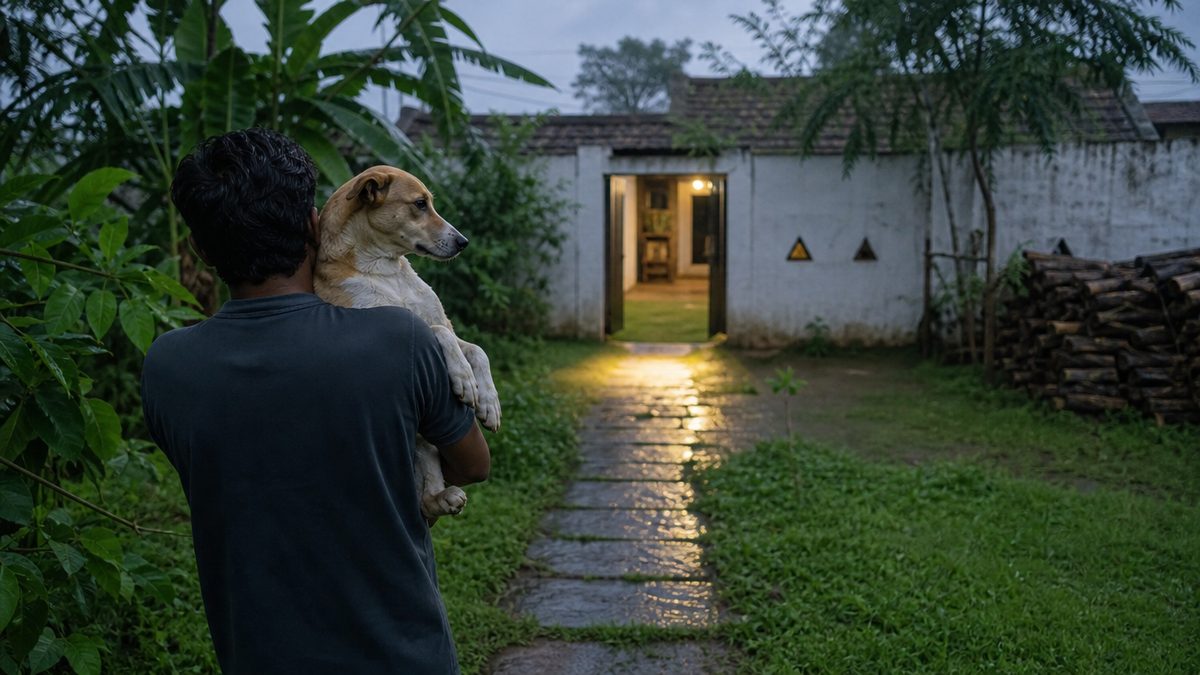
Snake bite in dogs is an emergency. Go to a veterinary clinic now, and call ahead, if you see any of these signs.
- Any suspected snake bite, whether or not you can find a mark
- Collapse, even if the dog gets up and seems normal again
- Drooling, drooping eyelids, weakness or an unsteady walk
- Fast, noisy or laboured breathing, or a swollen muzzle or throat
- Bleeding from the bite, the nose, the gums or into the urine
- Vomiting, bloody diarrhoea or sudden severe abdominal pain
- A dog found unresponsive outdoors at night in snake country
Quick answer
A snake bite in dogs is an emergency in India, because four species, the cobra, krait, Russell's viper and saw-scaled viper, cause about 90 percent of the country's snakebites. Keep the dog still, drive to a veterinary hospital, and do not use a tourniquet, cut the wound or wash it National Centre for Disease Control. Fang marks are found in only 51 percent of confirmed bites, and a krait bite can take 16 hours to show itself. Your nearby vet decides everything for your dog.
This guide is general information for Indian pet owners and is not a diagnosis. Always consult a registered veterinarian near you before acting on anything you read here, and treat any sudden change in your pet's condition as urgent.
Signs of Snake bite in dogs
The 12 signs to watch for are listed below. Any one of them is a reason to consult your nearby vet; none of them is a diagnosis.
- Sudden collapse, sometimes followed by getting up and seeming normal again
- Frothy drooling, or a sudden flood of saliva
- Drooping eyelids, a fixed stare or widely dilated pupils
- Weakness, wobbling, or dragging the back legs
- Fast, shallow or noisy breathing while at rest
- Painful swelling on the muzzle, jaw, neck or a paw
- Two puncture marks oozing blood on a swollen patch of skin
- Vomiting, bloody diarrhoea or sudden severe abdominal pain
- Blood in the urine, or urine that looks dark brown
- Bleeding from the nose, the gums or the bite itself
- Trembling, muscle twitching or reduced blinking
- Found recumbent outdoors and unable to lift its head
Breeds on this site that document this condition
Snake bite is an injury, not an inherited disease, so no breed is more or less susceptible to venom and no screening scheme exists anywhere in the world. The cards below therefore carry caseload share from the only published canine series with real counts, a Korean study of 70 dogs, and its authors attribute the small-breed skew to which breeds are popular in South Korea rather than to breed risk. What decides a dog's exposure in India is where it lives, sleeps and works, not what it is.
India's big four, the spectacled cobra, common krait, Russell's viper and saw-scaled viper, cause about 90 percent of the country's snakebites, and the only antivenom sold in India is the polyvalent product raised against those four species. The Government of India caps its price, and from 25 March 2026 the ceiling has been Rs 681.24 for a 10 ml vial of the lyophilised polyvalent. India's National Action Plan for Prevention and Control of Snakebite Envenoming, launched in March 2024, tells state animal husbandry and veterinary services departments to stock polyvalent anti-snake venom at veterinary hospitals and dispensaries and at Mobile Veterinary Unit level, and those units are dispatched on the 1962 toll-free number. A krait bite can take up to 16 hours to show itself, which is the single most dangerous fact on this page for an Indian owner.
What a snake bite in dogs is, and which snakes cause it in India
A snake bite in dogs is a puncture that may or may not inject venom, and in India four species cause roughly 90 percent of the bites that matter. Everything else on this page follows from which of those four bit your dog, because a neurotoxic bite and a haemotoxic bite are two different emergencies with two different clocks.
India has more than 310 snake species, most of them harmless. The national action plan counts 66 species labelled venomous or mildly venomous and 23 recognised as medically important, and says four of them produce the great majority of life-threatening bites. The Indian veterinary papers do not agree on the count. A Mumbai Veterinary College case report puts it at nearly 216 snake species in India with 60 considered poisonous, while a 2025 report from Mhow says 52 species are identified as poisonous. Three published Indian figures, three different numbers, and the one that matters for a dog owner is the same in all of them, which is four.
The scale of the problem in India is human first. Central Bureau of Health Intelligence reporting for 2016 to 2020 puts the average at around 3 lakh snakebite cases and about 2,000 deaths a year in people, and the same document records that only 23 percent of snakebite deaths in India occur in hospitals. Community-level research puts the true toll far higher: a nationally representative mortality survey gave a direct estimate of 45,900 deaths in 2005, over 30 times the Government of India's official figure, and verbal-autopsy work now suggests as many as 1.2 million Indians died of snakebite between 2000 and 2019, an average of 58,000 a year. Globally the World Health Organization counts 5.4 million people bitten each year and 81,410 to 137,880 deaths.
No equivalent count exists for dogs anywhere in India, and this page says so rather than borrowing one. What exists instead is a set of individual Indian case reports and one reference point from abroad: an estimated 150,000 animals, mostly dogs and cats, are bitten by snakes in the United States every year. Treat that as evidence that companion animals get bitten in large numbers, not as an Indian rate.
A bite is not always an envenoming
Not every bite delivers venom, and the difference decides the whole case. A bite that injects no venom is called a dry bite, and it is recognised by the absence of local swelling and systemic signs. In one viper series, 20 percent of bites were dry and a further 25 percent were classed as mild. The trouble is that you cannot tell a dry bite from a slow one in the first hour, which is why every source on this page says to go to a clinic and let the dog be watched rather than to wait and see at home.
How much venom goes in is not fixed either. The amount injected in a single bite rises with ambient temperature and can reach as much as one gram of dry weight, and bites may contain no venom at all. Severity tracks the size of the snake directly and the size of the dog inversely, so the same snake does more to a Pomeranian than to a Rottweiler. Smaller body size in dogs is associated with increased mortality, and an Israeli series identified body weight under 15 kg among the risk factors for death.
Where dogs get bitten, and why that matters
Dogs get bitten on the face. Dogs are most frequently bitten on the head, then the legs, then the rest of the body, and in the Korean series of 70 dogs the split was 74 percent head and 23 percent limbs. An Israeli viper series recorded 80 percent head and neck, 20 percent limbs. Cats are different, usually bitten on the front legs.
That anatomy is the reason a dog bite is more dangerous than it sounds. A swollen muzzle or throat sits on the airway, and the Indian case reports show it happening: a mongrel in Bangalore rural district presented with swelling on the floor of the buccal cavity, and a non-descript dog in Mhow arrived with swelling across the face, jaw and neck and two fang marks on the lower mandible. It is also why the head is where you should look first when you suspect a bite.
The big four, and why a krait bite is not the same emergency as a viper bite
India's big four snakes are the spectacled cobra, the common krait, Russell's viper and the saw-scaled viper, and together they cause about 90 percent of Indian snakebites. Two of them carry neurotoxic venom and two carry haemotoxic venom, and the two groups damage a dog in entirely different ways on entirely different timetables.
The national action plan names them precisely: the spectacled cobra (*Naja naja*), Russell's viper (*Daboia russelii*), the common krait (*Bungarus caeruleus*) and the saw-scaled viper (*Echis carinatus*). It also records the clinical split that a vet works from, which is neuroparalytic signs after a cobra or krait bite, and vasculotoxic signs of bleeding, tissue necrosis and kidney injury after a Russell's viper or saw-scaled viper bite. An Indian veterinary case report puts the same division in one line, that both cobra bites, which are neurotoxic, and viper bites, which are haemotoxic, are commonly reported in Indian dogs, with year-round incidence in different regions.
The mechanisms differ at the molecular level, and that is why the signs differ. Cobra venom exerts potent postsynaptic neurotoxic effects that interfere with neuromuscular transmission, producing respiratory distress, muscle weakness, hypersalivation and rapid collapse. Viper envenomation instead produces haemorrhage, coagulopathy, renal dysfunction and significant local tissue damage. Viper venom carries haemorrhagins that damage endothelial cells, driving vascular permeability, bleeding and fluid leaking into inflamed tissue, alongside phospholipase A2 that both promotes and blocks clotting.
| Snake | Venom type | What the venom does | What an owner is most likely to see in a dog |
|---|---|---|---|
| Spectacled cobra, Naja naja | Neurotoxic | Postsynaptic neurotoxins block transmission at the neuromuscular junction | Frothy salivation, weakness, an unsteady walk, recumbency and laboured breathing, usually with swelling and fang marks at the bite |
| Common krait, Bungarus caeruleus | Neurotoxic | Neuroparalysis that can be delayed by up to 16 hours after the bite | Often nothing at all at first, then drooping eyelids, trouble swallowing, severe abdominal pain and vomiting, with little or no swelling to show for it |
| Russell's viper, Daboia russelii | Haemotoxic and vasculotoxic | Haemorrhage, consumption of clotting factors and platelets, kidney injury and local necrosis | A painful swollen limb or face, oozing from the bite, blood in the urine or stool, and bruising that spreads |
| Saw-scaled viper, Echis carinatus | Haemotoxic and vasculotoxic | Bleeding, tissue necrosis and kidney injury, from a much smaller snake | The same bleeding picture as Russell's viper, often after a bite the owner never saw happen |
Read the table with one caveat in mind. The syndrome descriptions in India's national action plan are written about human patients, and the canine detail beside them comes from Indian case reports of one or two dogs each Shivhare M, Rajput J. Therapeutic…. No Indian study has measured how many bitten dogs show which syndrome, so the table is a guide to what to look for, not a prediction.
The krait is the one that fools people
The krait is dangerous because it gives you nothing to react to. India's national action plan states that delayed onset of systemic envenoming is classically seen in krait bites, where the onset of neuroparalysis may be delayed by up to 16 hours after the bite. Elapid bites, unlike viper bites, normally cause no swelling at the injection site at all, which delays or confounds the diagnosis. So a dog can be bitten at 10 pm, look completely normal at midnight, and be unable to lift its head at dawn.
That combination has a second consequence. Kraits are nocturnal and bites frequently happen at night in the dark or in undergrowth, which makes identifying the snake from a description unreliable. India's own plan resolves it simply: withholding emergency treatment until the species is identified is unnecessary. Nobody needs to know which snake it was before the dog is seen.
The literature a vet reaches for does not cover the krait
This is the gap that made this page worth writing. The most current comparative review of snake envenomation in veterinary medicine, published in January 2026, covers cytotoxins, neurotoxins, coagulopathy, rattlesnakes, tiger snakes, brown snakes, puff adders and spitting cobras across dogs, cats, horses, cattle, sheep and camelids. Searched for the genus *Bungarus*, it returns zero matches. The global veterinary manual that ranks second on this query organises its whole treatment section around North American crotalids, North American elapids and Australian elapids. Neither is wrong; both are written for a different continent.
So an Indian owner reading the pages that rank is reading about the wrong snakes. The Australian emergency service that ranks on the Indian query writes about eastern brown snakes and tiger snakes and tells owners to apply a firm bandage above, below and over the bite, advice built around Australian elapid venoms and Australian antivenoms, neither of which exists in India. The Indian answer is the polyvalent product described further down this page, and the Indian instructions are different.
The first hour: what to do, and the five things that kill dogs
To handle the first hour after a snake bite in dogs, keep the dog still, get it to a veterinary hospital at once, and do nothing to the wound itself National Centre for Disease Control. Irreversible effects of venom begin immediately after envenomation, so the hour is spent travelling, not treating.
Every source on this page agrees on the shape of the first hour, and the global veterinary manual states it most bluntly, that owners should not spend time on first aid other than to keep the animal quiet and limit its activity. Movement is the mechanism. Muscle activity in a bitten limb pushes venom into the circulation, which is why India's national plan tells a human victim to immobilise the bitten limb with a splint and to remove rings and other tight objects that could act as a tourniquet once swelling starts.
The eight steps below are the ones the Indian national action plan and the veterinary manual give, in the order they give them.
- Stop the dog moving. Keep the animal quiet and limit its activity, and carry it rather than walking it if you can lift it.
- Call the clinic now and say it is a snake bite. Snakebite with envenomation is a true emergency in which rapid examination and appropriate treatment are paramount, so ring the emergency clinic while somebody else carries the dog to the car. Find a registered veterinarian near you.
- Leave the bite alone. India's national plan states that washing the wound requires rubbing the skin, which can accentuate systemic venom absorption and worsen local tissue damage, and its instruction is not to touch or wash the bite mark area.
- Take the collar off if the bite is on the head or neck, because that area swells, and dogs are bitten on the head more often than anywhere else.
- Support the bitten limb rather than binding it. Immobilise it with a splint made from any rigid object, and remove anything constricting from above the bite.
- Photograph the snake from a distance if it is still there and safe, or remember what it looked like; do not waste time on this if it is difficult.
- Transport the dog, keeping it as still as you can. A dog that is carried moves less venom than a dog that walks to the car.
- Tell the vet the time. The hour the bite happened is the single most useful thing you can hand over, because a krait bite can take up to 16 hours to declare itself.
A tourniquet, a cut, suction, ice and chasing the snake are the five ways an owner turns a survivable bite into a bad one. The veterinary manual lists ice, cold packs and sprays, incision and suction, tourniquets, electric shock, hot packs and simply waiting until problems develop as measures that are ineffective and can be potentially harmful. India's national plan is harsher on tourniquets specifically, recording that they impede venous and arterial blood flow and lead to limb ischemia, gangrene and potentially amputation, and that they should be avoided. It adds a detail an owner would never guess: if a tourniquet has already been tied, do not remove it in the field, because it should come off only where an intravenous line and resuscitation are ready. On cutting, the plan is unambiguous, that wound incisions do not significantly improve outcomes, can cause harm and must be avoided. And do not go after the snake: snakes do not attack unless handled, threatened, trapped, cornered or stepped on, and the Australian service that ranks on this query says the same, not to pick up, capture or kill it.
Where the three authorities actually disagree
The pages an Indian owner is likely to read give three different instructions for the bite site itself, and none of them flags the conflict. The veterinary manual says bite sites should be shaved and the wounds cleansed thoroughly with germicidal soap. The Australian emergency service tells owners to apply a firm bandage above, below and over the site of the bite. India's own national action plan says not to touch or wash the bite mark area at all.
Those are reconcilable once you know who each is talking to. The manual is describing what a clinician does after the dog is on the table, not what an owner does on a verandah. The Australian bandage is pressure immobilisation, developed for Australian elapid venoms that travel by lymphatic flow, and the same plan that rejects tourniquets treats pressure pads and pressure immobilisation as a separate question with its own evidence. India's instruction is the one written for the person standing over the animal with no equipment. When in doubt, do less and drive faster, and let the veterinarian decide the rest for your dog.
The Indian case reports show the wound being cleaned in the clinic, not at home. A mongrel in Karnataka had the fang-mark area washed with potassium permanganate solution after arrival at a veterinary dispensary, and a Doberman in Telangana had the site cleaned and dressed with povidone iodine after being admitted. In both cases the dog was already in professional hands.
How long before a bitten dog gets sick, and why the honest answer is uncomfortable
A dog can show the first signs of a snake bite within minutes or not for the better part of a day, because onset depends on the snake Bruchim Y, The Hebrew University…. Neurotoxic signs can progress to generalised flaccid paralysis and respiratory arrest within 30 minutes to a few hours, while a krait bite may take up to 16 hours to declare itself.
Those two numbers are the whole answer, and they come from the same Indian document. At the fast end, neurotoxic envenoming can move from normal to respiratory arrest inside half an hour. At the slow end, the delayed onset classically seen in Indian krait bites can run to 16 hours. A viper series in dogs and cats records the middle case, that the onset of clinical signs following envenomation may be delayed for several hours, and quantifies how misleading that is: 40 percent of severe human envenomings were graded as mild or without clinical signs on admission.
The Indian canine reports show the range in practice. A Doberman bitten by a cobra in Telangana was already recumbent when it reached the District Veterinary Hospital at Karimnagar. A non-descript dog bitten on the evening of 27 April in Madhya Pradesh was presented the following day, restless with mild respiratory distress and a platelet count of 62 thousand per cubic millimetre. In the Korean series of 70 dogs, the mean time between the bite and reaching hospital was 9.7 hours, with a standard deviation of 4.1 hours, across the 58 dogs where it was known.
Collapse followed by apparent recovery is a recognised sign, not a reprieve. The Australian emergency service lists it first among the signs of a snake bite in a dog and describes it as an immediate collapsing event followed by apparent recovery and seeming normal. India's national plan records the same trap from the other direction, that vomiting or sudden temporary loss of consciousness within minutes of a bite may indicate systemic envenoming. A dog that goes down and gets back up needs a veterinary hospital now, not observation at home.
Why you cannot rule it out by looking for fang marks
Fang marks are missing about as often as they are present. In a study of dogs with confirmed viper envenomation, skin marks consistent with a snakebite were identified in only 51 percent of the dogs. Half of the dogs that had definitely been bitten showed nothing a hand could find. Elapid bites make it worse, because they normally produce no swelling at the injection site to draw your eye to the right patch of fur.
In the Korean series only 35 of 70 owners, exactly half, saw the bite happen. That is the realistic situation: an owner who did not see it, on a dog with no visible mark, deciding whether this is serious. India's plan gives the rule for exactly that case, that snakebite envenoming should be considered as a differential diagnosis when a patient presents with shock, unconsciousness, bleeding, paralysis, respiratory failure or unexplained abdominal pain with no clear history of a bite.
So treat sudden unexplained collapse, drooling, weakness or bleeding in a dog that has been outdoors in snake country as a possible bite and go, rather than searching the coat for punctures. Your nearby vet can rule it out far faster than you can.
How a vet confirms it, and the bedside test that costs a clean glass tube
To confirm a snake bite in dogs a veterinarian works from the history, the clinical signs and blood work, because no rapid test names the species. The single most useful test in India is the 20-minute whole blood clotting test, which separates a haemotoxic bite from a neurotoxic one at the bedside.
The 20-minute whole blood clotting test, written 20WBCT, is described by India's national action plan as a simple, rapid and inexpensive bedside test to screen for coagulopathy in patients without overt bleeding, and it is also used to monitor whether antivenom is working. It rests on the fact that whole blood generally clots when exposed to glass. The tube must be new, clean, dry glass, because plastic, polystyrene, polypropylene, glass washed with detergent or soap, or anything coated with an anticoagulant can produce false positives.
Its accuracy is published and imperfect. Most clinical validation studies put the 20WBCT at a sensitivity of 82 to 89 percent and a specificity of 82 to 98 percent, and one study reported that the test might miss one of every five patients with coagulopathy. A negative result is therefore reassurance, not clearance.
An Indian veterinary team used it on a dog and published the result. The Doberman at Karimnagar had a normal blood clotting time of 12 minutes by the 20WBCT method, which alongside the frothy salivation, recumbency and respiratory distress supported cobra envenomation rather than a viper bite. That is the test doing exactly the job it exists for, on a dog, in a district veterinary hospital.
The blood picture in the Indian reports is consistent enough to be useful. Every one of them records raised white cell counts, and most record a fall in haemoglobin and packed cell volume Kumar A, Rohi RR, Pawar P, Yadav R Kandula S, Anush D, Sai Charitha V. The Mhow dog bitten by a Russell's viper showed the haemotoxic signature most clearly, with platelets at 62 thousand per cubic millimetre on day zero rising to 208 thousand by day seven. Two of the reports record raised alanine aminotransferase and creatinine, which the authors attribute to the hepatotoxic and nephrotoxic action of the venom.
What the laboratory is looking for
The seven tests below are the ones the Indian case reports, the Korean series and the viper lecture actually used, and what each one is for.
- Clotting time by the 20WBCT, the cheapest and fastest way to separate a bleeding bite from a paralysing one.
- A complete blood count with a blood smear, because echinocytes, which are spiky red cells, appeared in 28 of the 45 Korean dogs whose smears were read, or 62 percent, and were the study's most striking finding.
- Platelet count, because consumption of platelets is part of the viper picture and recovery of the count tracks recovery of the dog.
- Packed cell volume and haemoglobin, since anaemia was found in 21 of 70 Korean dogs, or 29 percent.
- Kidney values, because acute kidney injury is associated with increased mortality in envenomated dogs, and appeared in 2 of the 70 Korean dogs Kim D, Kim S, Kim JK, Lim JH, Choi G.
- Liver enzymes, raised in the Indian dogs and attributed to the venom itself.
- An electrocardiogram where the dog is unstable, because cardiac troponin was raised in 65 percent of dogs envenomed by a viper, and those dogs had arrhythmias far more often, 58 percent against 19 percent.
Neither Indian government rate card this page opened lists a coagulation test at all Bihar Animal Sciences University, Patna. That is worth knowing rather than worrying about, because the 20WBCT needs no laboratory and no reagent, only a clean dry glass tube and twenty minutes.
Antivenom in India: what the product is, who is meant to hold it, and what a vial costs
Antivenom in India is one product, a polyvalent anti-snake venom raised in horses against the big four, and it is the same medicine whether the patient is a person or a dog National Centre for Disease Control. The Government of India caps its price, and on 25 March 2026 the ceiling was set at Rs 681.24 for a 10 ml vial of the lyophilised polyvalent and Rs 438.96 for the liquid.
Start with what the product actually is, because no ranking page says. In India, horses are hyper-immunised against the venom of the four common poisonous snakes, the big four of cobra, krait, Russell's viper and saw-scaled viper, to produce polyvalent anti-snake venom. India's national action plan confirms there is nothing else on the market, stating that the exclusive antivenom available in India is formulated to counteract the venom of these species. It puts the product's reach at effective in 80 percent of snakebite cases, and the World Health Organization lists snake antivenoms among its essential medicines.
There is no separate veterinary antivenom in India. The Indian canine case reports name the human manufacturers by name: a Labrador Retriever and an Alsatian cross in Bangalore were treated with lyophilised polyvalent anti-snake venom from the Serum Institute of India, and dogs in Bangalore rural district and in Mumbai were treated with polyvalent product from Bharat Serums and Vaccines Kumar A, Rohi RR, Pawar P, Yadav R. A Karnataka veterinary officer set out the reasoning in print, that polyvalent anti-venom was preferred because it protects against the venom of the big four.
Do Indian veterinary clinics stock it, and what can honestly be said
Two things can be established from documents, and a third cannot. What is established first is that Indian government veterinary facilities do give it: the five Indian case reports this page opened were written at a veterinary dispensary in Doddaballapur, the Veterinary College at Hebbal in Bangalore, the Teaching Veterinary Clinical Complex at Mumbai Veterinary College, the Veterinary Clinic Complex at Mhow in Madhya Pradesh and the District Veterinary Hospital at Karimnagar in Telangana, and every one of them administered polyvalent anti-snake venom.
What is established second is that stocking it is a stated government objective rather than a finished fact. India's National Action Plan for Prevention and Control of Snakebite Envenoming, launched in March 2024, tells state agriculture and state animal husbandry or veterinary services departments to ensure provision of polyvalent snake venom anti-serum at veterinary hospitals and dispensaries with proper storage facility and training. Under production and use of antivenom it tells them to ensure adequate supply and production of anti-snake venom for livestock and pet animals. Under emergency care it goes further, asking states to ensure emergency services for snakebite in animals through Mobile Veterinary Units and veterinary hospitals and to ensure the availability of anti-snake venom at Mobile Veterinary Unit level. Those units are the doorstep service the Department of Animal Husbandry and Dairying runs through the 1962 toll-free number.
No public register says which Indian veterinary hospitals, dispensaries or private clinics hold anti-snake venom in stock today, and this page does not guess. The national action plan makes stocking it an action for state animal husbandry departments rather than recording it as done, and no state or central list of stocking veterinary facilities could be found on 24 September 2026. A PubMed search on the same day, run as (snake bite[tiab] OR snakebite[tiab] OR envenomation[tiab]) AND (dog[tiab] OR dogs[tiab] OR canine[tiab]) AND India[tiab], returned 2 records and both are artefacts: one is a health-services paper on standard treatment guideline webinars that lists dog and snake bites among its topics, the other a 2007 West Bengal study of traditional medicine that mentions snakebite as a reason people visit healers. The affiliation search India[ad] returned 6, all artefacts too, including two Indian red scorpion venom studies and a paper on drones in public health. Three controls passed on the same instrument in the same session: the query without India returned 235 records, dogs plus India[tiab] returned 1,019 and dogs plus India[ad] returned 2,739. So phone your own clinic and ask before you need to know, and ask the nearest government veterinary hospital too.
The price, from the Government of India rather than a seller
Anti-snake venom is a scheduled formulation in India, which means the National Pharmaceutical Pricing Authority fixes a ceiling price and nobody may sell above it. The figures below are read from the NPPA price lists published by the Drugs Control Department of the Government of Kerala, which carry the gazette notification number and date for every line.
| Formulation | Unit | Ceiling price, notification 1547(E) of 26 March 2024 | Ceiling price, notification S.O. 1575(E) of 25 March 2026 |
|---|---|---|---|
| Snake venom antiserum, lyophilised polyvalent, as licensed | 1 vial of 10 ml | Rs 665.26 | Rs 681.24 |
| Snake venom antiserum, soluble or liquid polyvalent, as licensed | 1 vial of 10 ml | Rs 428.67 | Rs 438.96 |
Both rows are rupee ceiling prices set by an Indian regulator, not converted dollar figures. Divided by 84.38 they come to 8.07 and 5.20 US dollars, and divided by 74 to 9.21 and 5.93, and none of those lands on a round dollar value. The 2024 figures in the middle column are from the earlier list, notified as 1547(E) on 26 March 2024, and the revision between them is the annual adjustment a scheduled formulation gets, worth Rs 15.98 on the lyophilised vial over two years National Pharmaceutical Pricing Authority.
That price is for the medicine alone. How much of it a dog needs is a decision for the veterinarian in front of the animal, and the Korean series states plainly that there is no evidence-based protocol available for antivenom administration or dosage in dogs. India's national plan notes the same variables for animals, that the amount needed turns on the severity of the signs, the time since the bite, the type and size of the snake and the size of the animal, with a smaller body needing more rather than less. The global veterinary manual is blunt about the consequence, that severe envenomation may need several vials and that this is frequently cost-prohibitive in veterinary patients.
Cost is not a footnote here, it is part of the outcome. Human mortality after viper envenoming runs between 0.5 and 2 percent while canine mortality may reach 15 percent, and the viper lecture attributes part of that gap to different antivenin protocols arising from lower availability and financial constraints in veterinary medicine. India is the one country where the medicine itself is cheap by regulation, which makes the gap a supply and stocking problem rather than a price problem.
What treatment looks like, and the three-way disagreement about steroids
Treatment for a snake bite in dogs is antivenom where it is indicated, plus fluids, wound care, antibiotics and close monitoring, and this page names drug classes and never an amount Kim D, Kim S, Kim JK, Lim JH, Choi G. Antivenom is the only direct and specific means of neutralising snake venom; everything else supports the dog while the venom is cleared.
The Indian case reports read almost identically once you line them up. All five gave polyvalent anti-snake venom intravenously with fluids Suchitra BR, Anilkumar MC Kumar A, Rohi RR, Pawar P, Yadav R Shivhare M, Rajput J. Therapeutic… Kandula S, Anush D, Sai Charitha V. All five gave a broad-spectrum antibiotic, and four gave tetanus toxoid, on the reasoning that a snake's fangs are contaminated with bacteria Kumar A, Rohi RR, Pawar P, Yadav R. The Telangana team added atropine and B-complex vitamins to a cobra case, and the Madhya Pradesh team added vitamin K, vitamin C and liver support to a Russell's viper case. Your nearby vet sets all of it, including which of these a particular dog needs.
Antivenom is associated with survival, and the size of that association is smaller than most owners expect. In the Korean series of 70 dogs, 53, or 76 percent, received antivenom and 17, or 24 percent, did not, and giving it was associated with increased survival at p = 0.008. Mortality was 6 percent among the dogs that received antivenom against 12 percent among those that did not. The authors are careful about what that shows, since 28 of the 70 dogs were lost to follow-up.
Steroids, where three bodies of evidence point three ways
The steroid question has no settled answer and every Indian owner should know that before a clinic raises it. Five of the six dogs in the Indian case reports this page opened were given a corticosteroid, usually dexamethasone or betamethasone, and one report states the reasoning, that a steroid was preferred over an antihistamine because antihistamines can at times potentiate the toxic action of the venom Kumar A, Rohi RR, Pawar P, Yadav R Suchitra BR, Anilkumar MC. The sixth, the Telangana cobra case, used no steroid at all and the dog recovered in three days. The Korean series found glucocorticoid administration associated with increased survival, p = 0.030. And a retrospective study of 327 dogs with snakebite found glucocorticoid therapy significantly associated with mortality, p = 0.002.
| Source | Population | What it found about steroids |
|---|---|---|
| Five Indian case reports, 2009 to 2025 | Six dogs in total, across Karnataka, Maharashtra, Madhya Pradesh and Telangana | Five of the six were given a corticosteroid, the sixth was not, and all six recovered; no comparison group existed |
| Korean retrospective series, 2022 | 70 dogs at three hospitals, 2008 to 2021 | Glucocorticoid administration was associated with increased survival, p = 0.030 |
| Israeli retrospective study cited in the WSAVA 2018 viper lecture | 327 dogs with snakebite | Glucocorticoid therapy was significantly associated with mortality, p = 0.002 |
Those three findings are not reconcilable from the outside, and the honest reading is that the question is open. The teaching hospital behind the viper lecture resolved it by restricting steroids to cases of severe laryngeal swelling, noting that they may slow antivenom activity and raise infection risk while also reducing swelling that could otherwise close an airway. Six recovered Indian dogs are six data points, not evidence of benefit, because none of the reports had an untreated comparison group Kandula S, Anush D, Sai Charitha V. This is your veterinarian's call and nobody else's, and a page cannot make it.
Breathing support, and what it is worth
A neurotoxic bite is fatal because it stops the breathing, and a ventilator is the answer to that. Dogs and cats mechanically ventilated for envenomation tend to have a good prognosis, with survival rates between 82 percent and approximately 92 percent. That is the strongest single number on this page in favour of getting to a facility that can support breathing, and it is also the number that tells you which facility to aim for at 2 am.
Hospital stays are shorter than owners fear. The median hospitalisation in the Korean series was 2.5 days across 68 dogs. The Indian reports match it: the Doberman at Karimnagar improved within 12 to 18 hours and had recovered completely by the third day, the two Bangalore dogs were active and normal after five hours with antibiotics continued for five days, and the Mhow dog recovered completely after seven days.
What a snake bite costs in India, from two government rate cards
A snake bite workup at an Indian government veterinary hospital costs about Rs 950 to Rs 1,780 in laboratory tests, plus Rs 50 to Rs 300 to register the dog and Rs 200 a day if it is admitted Bihar Animal Sciences University, Patna. The antivenom itself is priced separately by the Government of India at Rs 681.24 a vial for the lyophilised polyvalent.
Two Indian institutions publish their charges line by line, which is why this page can price the condition at all. The Referral Veterinary Polyclinic at ICAR-IVRI, Izatnagar publishes charges with effect from July 2022 plus tax, and the Veterinary Clinical Complex at Bihar Animal Sciences University in Patna publishes its own for canine and feline patients. Neither list includes medicines, fluids, oxygen or antivenom.
| Item | ICAR-IVRI Izatnagar | BASU Patna |
|---|---|---|
| Registration, dog or cat | 50 normal, 150 after 12:30 pm, 300 after 5 pm and on holidays | 200 for the 9 am to 1 pm window, 300 for the 2 pm to 8 pm emergency window |
| Complete blood count | 250 | 300 |
| Kidney function | 200 (BUN and creatinine) | 700 |
| Liver function | 300 | 600 |
| Glucose | 100 | 80 |
| Sodium, potassium and chloride | Not listed | 350 |
| Routine urine examination | 100 | 100 |
| Fluid therapy | 150 | Not listed |
| Electrocardiogram | Not listed | 500 |
| Ultrasound scan | 250 for abdominal ultrasonography | 500 |
| Admission, per animal per day | Not listed | 200 |
| Blood transfusion | Not listed | 2,500 a unit, with the donor arranged by the owner |
| Clotting test of any kind | Not listed | Not listed |
| Anti-snake venom | Not listed | Not listed |
Adding the same five tests at each hospital gives two different totals, and the arithmetic below is this page's addition of published line items rather than a figure either institution prints. A blood count, a kidney panel, a liver panel, glucose and a urine examination come to Rs 950 at IVRI before tax and registration and to Rs 1,780 at BASU before its Rs 200 or Rs 300 registration. Divided by 84.38 those are 11.26 and 21.10 US dollars, and divided by 74 they are 12.84 and 24.05, none of them a round dollar value, so both are genuine Indian rate-card prices.
The blood transfusion line is the one to read twice on a viper bite. BASU charges Rs 2,500 a unit for a canine or feline transfusion and requires the owner to arrange the donor. A Russell's viper bite is the classic reason a dog would need one, since viper venom consumes clotting factors and platelets and causes haemorrhage, and the Mhow dog's platelet count fell to 62 thousand per cubic millimetre before recovering. Finding a donor dog at midnight is not something to start thinking about at midnight.
Both government hospitals close, and the big four are most active when they are shut. BASU registers canine emergencies only between 2 pm and 8 pm, and IVRI charges Rs 50 in normal hours, Rs 150 after 12:30 pm and Rs 300 after 5 pm or on a holiday. Krait bites classically happen at night and can take up to 16 hours to show themselves. Save the number of a 24-hour private clinic and the 1962 doorstep veterinary line before the monsoon, not during it, and use the vet directory to find one near you.
What could not be sourced matters as much as what could. No Indian private emergency clinic publishes an itemised price for snake bite treatment in a dog that this page could open and cite on 24 September 2026, so no private figure appears here. Neither government rate card prices antivenom, a clotting test or ventilation. Treat the government numbers as a floor for a subsidised teaching hospital, and remember that the largest cost in a severe case is the one nobody prints, which is the hospital stay with breathing support behind it. If you want the wider picture on paying for emergencies in India, read pet insurance in India.
Keeping snakes away from a dog in India, and when the risk peaks
To reduce snake bite risk for a dog in India, remove what attracts snakes to the house, keep the dog off unlit ground at night, and tighten all of it before the monsoon. Snakes do not attack unless they are handled, threatened, trapped, cornered or stepped on, so almost every bite is an encounter a dog walked into.
The monsoon is the season to plan around. India's national action plan records that snakebite risk is worsened during the monsoons, when heavier outdoor activity coincides with snake breeding, and that hatchlings of several species, including cobras, emerge during the monsoon. Flooding compounds it, because snakes in flood-inundated areas can be forced out of their burrows and wander in search of warmer, drier ground, including houses, roads and fields. The rest of the monsoon routine for a dog is in monsoon care for dogs in India.
The plan's own prevention list is written for people, and most of it transfers to a dog directly because a dog lives on the same ground. The nine measures below are taken from it.
- Control rodents first. Rodent control should be the top priority to keep snakes away, since rats are what brings them in.
- Clear the cover. Clear heaps of rubbish, building materials and termite mounds near the premises and close rat holes.
- Cut the grass and low bushes so snakes cannot hide close to where animals are kept.
- Move the firewood and the feed. Store firewood away from the house so snakes cannot hide in it, and keep animal feed away from the house or in a closed space because it attracts rodents.
- Seal the gaps. Close holes in and around the house, put netting on windows, and avoid a large gap beneath a door.
- Keep plants and creepers off doors and windows, because snakes climb cover to get in.
- Check the shed. Monitor animal sheds and kennels for snakes, rodents and holes.
- Carry a torch after dark and never walk a dog where the ground is not visible.
- Do not house poultry or small livestock indoors, since a snake will come in hunting them.
Two Indian details deserve their own line. The first is that most bites in the case reports happened in ordinary domestic space rather than in forest: two Bangalore dogs were usually put in the garden and the owner knew there was a snake problem there, the Mumbai German Shepherd was taken to a park in the evening, and a Karnataka mongrel was bitten during a fight it picked with the snake. The second is that curiosity is the risk factor, not the breed.
No vaccine, no screening test, and one honest reason why
No screening scheme, registry or DNA test exists anywhere for snake bite risk in dogs, and no snake-bite vaccine is licensed in India. Snake bite is an injury, not a heritable disease, so there is nothing to screen for. The nearest thing to a breed-level statistic anywhere in the world is the Agria Djurforsakring Swedish insurance dataset, which reports morbidity per 10,000 dog-years-at-risk across roughly 180 breeds, and even it folds snake bite together with insect bite in a single Injury category and suppresses any category in which fewer than eight dogs had a compensable event. A combined snake-and-insect figure from a country with one venomous snake cannot be turned into an Indian breed risk, and this page does not try.
Free-ranging and community dogs carry the exposure that owned dogs mostly avoid, for the plain reason that they sleep on the ground the snakes cross. The site's guide to free-ranging dogs in India covers how those populations live, and the Indian Pariah Dog page covers the dog most likely to be in that position. Nobody has measured snake bite incidence in either group.
The Indian record: five case reports, one national plan, and why a literature search comes back empty
India's published veterinary record on snake bite in dogs is five case reports covering six dogs, from Karnataka, Maharashtra, Madhya Pradesh and Telangana, and not one of them is indexed in PubMed Kandula S, Anush D, Sai Charitha V. That single fact explains why every ranking page treats India as a blank.
The reports are real, recent and specific. Two of them were published in 2025 Kandula S, Anush D, Sai Charitha V, and together the five describe two Karnataka dogs bitten in a garden, a Mumbai German Shepherd bitten in an evening park, a Karnataka mongrel that fought a snake, a Madhya Pradesh dog bitten by a Russell's viper and a Telangana Doberman bitten by a cobra, written up by the Department of Veterinary Medicine at PVNR Telangana Veterinary University in Hyderabad.
| Published | Where the dog was treated | The dog | What the venom did | Outcome |
|---|---|---|---|---|
| 2009, Veterinary World 2(2):66-67 | Veterinary College, Hebbal, Bangalore, Karnataka | A Labrador Retriever and an Alsatian cross, two dogs kept in a garden | Frothy salivation and recumbency in both; the Labrador passed blood in the urine an hour into treatment | Active and normal after five hours, recovered by one week |
| 2010, Veterinary World 3(5):234 | Veterinary Dispensary, Hanabe, Doddaballapur, Bangalore rural district, Karnataka | A two-year-old male mongrel that had fought the snake | Swelling on the floor of the mouth, depression, hypersalivation, raised haematocrit and leucocytosis | Recovered and eating again, with treatment continued for five days |
| 2016, Scholars Journal of Agriculture and Veterinary Sciences 3(2):103-104 | Teaching Veterinary Clinical Complex, Mumbai Veterinary College, Goregaon | A two-year-old male German Shepherd bitten in an evening park | Frothy salivation, pupillary dilation, bloody diarrhoea and a swollen left forepaw with fang marks | Signs reduced by the next day, feeding normally by day three, recovered in a week |
| 2025, The Haryana Veterinarian 64(1):135-136 | Veterinary Clinic Complex, Mhow, NDVSU Jabalpur, Madhya Pradesh | A four-year-old male non-descript dog, bitten the previous evening | Russell's viper: swelling of face, jaw and neck, two fang marks on the lower mandible, platelets at 62 thousand per cubic millimetre | Complete recovery after seven days, platelets back to 208 thousand |
| 2025, Indian Journal of Veterinary Medicine 45(2):44-45 | District Veterinary Hospital, Karimnagar, Telangana | A two-year-old male Doberman, presented recumbent | Cobra: frothy salivation, respiratory distress, two fang marks on the left shoulder, normal clotting time at 12 minutes by the 20WBCT | Improving within 12 to 18 hours, complete recovery by the third day |
Six dogs and six survivals is not a survival rate. Case reports are written because a case went well or taught something, so a run of good outcomes in them tells you what treatment looks like and nothing about how often it works. The one Indian veterinary paper that offers a survival figure, an unreferenced line saying approximately 80 percent of pets survive a snake bite if treated quickly, gives no population and no source, so this page records it as a claim rather than a rate.
Why the standard literature search finds nothing
The reason is indexing, not absence. Checked against PubMed on 24 September 2026, the journal *The Haryana Veterinarian* returns 0 records, the *Indian Journal of Veterinary Medicine* returns 0 records, and the *Scholars Journal of Agriculture and Veterinary Sciences* returns 0 records. *Veterinary World* is indexed and returns 3,715 records, but neither of its two canine snakebite papers from 2009 and 2010 is among them. So a vet or a writer searching PubMed for Indian canine snakebite evidence finds artefacts, concludes there is none, and writes a page about Australian brown snakes.
That is worth stating plainly because it changes what an absence means. There is no Indian canine snakebite *series*, with a denominator, anywhere; that absence is real. But there is an Indian canine snakebite *literature*, and it sits in journals the standard instrument cannot see.
What the Government of India has committed to
India launched its National Action Plan for Prevention and Control of Snakebite Envenoming in March 2024, with the goal of halving snakebite deaths and disabilities by 2030, and it is explicitly a One Health plan covering human health, wildlife and animal health together. The animal component is short and unusually concrete. It asks state animal husbandry and veterinary services departments to identify risk areas near animal settlements and put up signage with first-aid and emergency contact details, to monitor animal sheds for snakes and rodents, to clear grass and low bushes near animal barns, and to run joint training of health and veterinary professionals on managing snakebite in humans and in animals.
The plan also names where the burden sits and who is answerable for it. It records that Andhra Pradesh, West Bengal, Tamil Nadu, Maharashtra, Odisha and Karnataka are among the Indian states where snakebites most frequently occur, and it requires state nodal officers from the health department, the veterinary department and wildlife or forestry to write a joint state action plan together. Those officers are real posts at real addresses, seated at institutions such as Madras Medical College in Chennai and Arogya Soudha in Bangalore, which makes a state animal husbandry department a place an owner or a rescue can actually write to about antivenom stock.
The delivery mechanism already exists. The Department of Animal Husbandry and Dairying runs Establishment and Strengthening of Veterinary Hospitals and Dispensaries with Mobile Veterinary Units, which deliver veterinary services at the doorstep through the 1962 toll-free number, and the national plan asks states to ensure anti-snake venom is available at Mobile Veterinary Unit level. Whether that has happened in your district is a question worth asking your nearest government veterinary hospital before the monsoon rather than during it.
Recovery, and what the survival numbers actually say
Most dogs that reach a veterinary hospital after a snake bite recover, and the published canine mortality range runs from 1 percent to 30 percent depending on the snake, the country and which dogs got counted. The single number that best predicts a good outcome is how quickly the dog was seen.
Line the reported rates up with their populations and the spread makes sense. Across 70 dogs at three Korean hospitals the overall mortality was 7 percent, and among the 42 hospitalised dogs with follow-up data 37, or 88 percent, survived to discharge while 5, or 12 percent, died. For dogs envenomed by the Palestine viper the reported literature rate is 3.7 to 6 percent, while the same source notes canine mortality after viper bites may reach 15 percent against 0.5 to 2 percent in humans. Cats sit higher again, between 6 and 22 percent. None of those is an Indian figure and none of them was measured against the big four.
A dog is not cured by antivenom in the sense of the damage being undone, because antivenom neutralises circulating venom rather than repairing tissue that the venom has already destroyed, and it remains the only direct and specific means of neutralising snake venom. What recovery looks like in practice is the venom being mopped up while the dog's own kidneys, clotting system and muscles repair themselves over days.
What to watch for in the week after
Organ damage declares itself after the crisis, not during it. The seven things below are worth watching for, and any one of them is a reason to call the clinic back.
- Drinking and urinating more, or less, because acute kidney injury is associated with increased mortality in envenomated dogs.
- Dark, brown or bloody urine, the sign that appeared in the Bangalore Labrador an hour into treatment and was attributed to the haematotoxic action of the venom.
- Bruising, nosebleeds or bleeding gums, the visible face of a clotting problem that viper venom causes by consuming platelets and clotting factors.
- Pale gums and lethargy, since anaemia was found in 21 of the 70 Korean dogs, or 29 percent.
- A bite site that turns black, weeps or smells, because local necrosis and bacterial infection are recognised complications.
- Breathing that stays fast or noisy at rest, which on a neurotoxic bite means the paralysis is not finished.
- Any return of weakness or an unsteady walk after the dog seemed to have recovered.
Ventilation is the intervention that turns a neurotoxic bite around, and its numbers are good. Dogs and cats mechanically ventilated for envenomation tend to have a good prognosis, with survival between 82 percent and approximately 92 percent, which the review attributes to the underlying process being reversible with antivenom. Knowing which clinic within reach of your house can ventilate a dog is a more useful piece of preparation than any first-aid kit.
Two other Indian emergencies are timed in the same way and worth knowing alongside this one. Heat stroke in dogs is the other condition where the first ten minutes decide the outcome, and rabies in dogs and cats in India is the other reason a bite of any kind sends an Indian household to a clinic the same day. This page is the medicine; your nearby veterinarian is the one who decides what any of it means for your animal.
Common questions about snake bite in dogs
How do I know if a dog has been bitten by a snake?
You often cannot know by looking, so judge by the signs and the setting. Skin marks consistent with a snakebite were found in only 51 percent of dogs with confirmed viper envenomation, and elapid bites usually leave no swelling at all. Treat sudden collapse, drooling, weakness or bleeding in a dog that has been outdoors as a possible bite and go.
Can a dog heal from a snake bite?
Yes, most dogs that reach a veterinary hospital do heal. Published canine mortality ranges from 1 to 30 percent depending on the snake and the country, and in a Korean series of 70 dogs overall mortality was 7 percent, with 37 of 42 hospitalised dogs followed up surviving to discharge. Speed to the clinic matters more than anything you do at home.
What will happen if a snake bites a dog?
It depends which snake. Cobra and krait venom is neurotoxic and blocks the nerve signals to muscle, producing drooling, weakness, collapse and failing breath. Russell's viper and saw-scaled viper venom is haemotoxic, causing bleeding, clotting failure, kidney injury and tissue death around the bite. Roughly one bite in five injects no venom at all.
How long does it take for dogs to react to a snake bite?
Anywhere from half an hour to most of a day. Neurotoxic signs can progress to generalised flaccid paralysis and respiratory arrest within 30 minutes to a few hours, while India's national plan records that krait bites classically show delayed onset, with neuroparalysis appearing up to 16 hours after the bite. A normal-looking dog at midnight is not a cleared dog.
What is the best treatment for snake bites on dogs?
Antivenom plus supportive care is the only treatment with direct evidence behind it, because antivenom is the only direct and specific means of neutralising snake venom. Around it a clinic gives intravenous fluids, pain relief, antibiotics, wound care and, where the breathing fails, mechanical ventilation. Your nearby veterinarian decides which of those your dog needs and how much.
How long can a dog survive after a snake bite?
There is no safe waiting window, because neurotoxic envenoming can reach respiratory arrest within 30 minutes to a few hours. Dogs that survive are usually hospitalised briefly: median hospitalisation was 2.5 days across 68 dogs in the Korean series, and the Indian case reports describe recovery between three and seven days.
How much does it cost to treat a dog with a snake bite?
In India the medicine itself is price-capped. The Government of India ceiling is Rs 681.24 for a 10 ml vial of lyophilised polyvalent antiserum and Rs 438.96 for the liquid, set by notification S.O. 1575(E) of 25 March 2026. A workup at a government veterinary hospital adds roughly Rs 950 to Rs 1,780 in tests, plus registration and Rs 200 a day if the dog is admitted.
Can a dog recover from a snake bite without antivenom?
Some do, and the odds are worse. In the Korean series 17 of 70 dogs received no antivenom, and mortality among them was 12 percent against 6 percent in the 53 dogs that did receive it, with antivenom administration associated with increased survival. Polyvalent antivenom is not optional care, and a dry bite is only recognisable in hindsight.