
Cat health: infectious
Panleukopenia in Cats (Cat Parvo) in India: Kitten Survival Odds, the Test and the Vaccine
Feline panleukopenia is the disease Indian cat owners call cat parvo, and it is the one infection where a day of waiting changes the arithmetic. Published survival runs from 20.3 percent of 177 shelter cats to 51.1 percent of 244 cats at a university clinic, which is far worse than the 90 percent a puppy with canine parvo gets. In Chennai, 83 of 180 clinically suspected cats tested positive by PCR. This page gives the survival figures with the population named on each, explains what a positive and a negative on the canine parvo kit your clinic will actually run each mean, prices the whole case from three Indian government rate cards, and sets the vaccination rule out from the guideline rather than from a package.
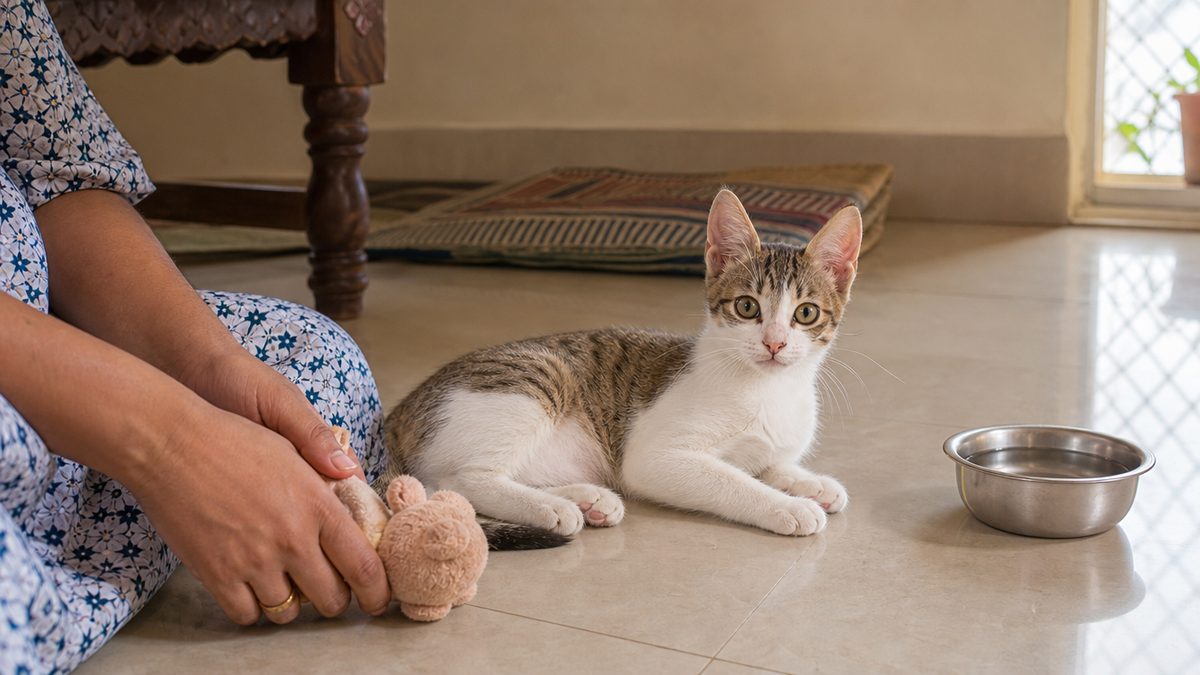
Feline panleukopenia is an emergency. Go to a veterinary clinic now, and call ahead, if you see any of these signs.
- Any vomiting or refusal of food in an unvaccinated kitten
- A kitten that has not eaten for twelve hours
- Gums that are pale, grey or tacky to the touch
- Cold ears and paws, or a temperature below normal
- Collapse, or a kitten that cannot lift its head
- Sunken eyes, or skin that stays tented when pinched
- A second cat in the house falling ill the same week
- Any of these in a cat whose kitten course is unfinished
Quick answer
Panleukopenia in cats is a parvovirus infection that destroys the gut lining and the white blood cells, and it kills far more often than canine parvo does in puppies. Published survival runs from 20.3 percent of 177 shelter cats to 51.1 percent of 244 cats at a university clinic, against as high as 90 percent for hospitalised puppies. In Chennai, 83 of 180 suspected cats tested positive. The vaccine costs Rs 580 at a Chennai government teaching hospital.
This guide is general information for Indian pet owners and is not a diagnosis. Always consult a registered veterinarian near you before acting on anything you read here, and treat any sudden change in your pet's condition as urgent.
Signs of Feline panleukopenia
The 9 signs to watch for are listed below. Any one of them is a reason to consult your nearby vet; none of them is a diagnosis.
- A sudden high fever with a complete refusal of food
- Repeated vomiting, often a day or two after the fever
- Profound depression, with the cat hiding and barely moving
- Diarrhoea that is often absent, and usually carries no blood
- Fast dehydration, with sunken eyes and tacky gums
- A painful belly that reacts to gentle handling
- A body temperature that has fallen rather than risen
- Sudden death in a kitten, with no warning phase at all
- A wobbling, tremoring gait in kittens infected before birth
Breeds on this site that document this condition
Feline panleukopenia is an infection rather than an inherited disease, so no breed screening scheme exists anywhere in the world and no breed is protected from it. The 180-cat Chennai series tested breed directly and found no significant association with a positive result, and its authors note that previous studies have similarly reported none. Only one of its breed rows carries a real within-breed denominator, the Persian at 8 of 20, and the two cards below it report a pooled group of 27 cats of mixed pedigree, which the authors themselves warn must not be read as breed susceptibility. Read all three as small groups of already-sick cats at clinics in one city, never as population prevalence or as a ranking of risk by breed.
India has a decade of its own evidence on this virus and almost none of it reaches owners. In Chennai, 83 of 180 clinically suspected cats were PCR positive, vaccinated cats sat at 0.41 times the odds of a positive, and the northeast monsoon carried an adjusted odds ratio of 17.11 against summer. A national screen found 12 of 106 faecal samples positive across several regions and recorded a feline parvovirus infection in a vaccinated cat. In Mizoram, 12 of 26 cats that died of suspected disease were confirmed by PCR and eight of those twelve had been vaccinated, on a series with no denominator of vaccinated cats behind it. The first Indian VP2 sequence, the complete Indian genome and the 180-cat series all came out of Madras Veterinary College, whose teaching hospital sells the panleukopenia-containing trivalent at Rs 580 and dispenses drugs and fluids free of cost. A parvovirus PCR is Rs 600 and an inpatient day for a cat Rs 200 at the Patna veterinary clinical complex, and fluid therapy for a pet is Rs 150 plus tax at ICAR-IVRI Izatnagar. The virus has also been found in a Kerala leopard and in four free-ranging Bengal tiger cubs in South India, clustering with domestic cat isolates from the same landscape.
What feline panleukopenia is, how it spreads, and which cats get it
Feline panleukopenia is an infection with feline parvovirus, a tiny, shell-hard DNA virus that kills the fastest-dividing cells in a cat's body, which are the white blood cells forming in the bone marrow and the cells that replace the lining of the small intestine. The name is Greek and it is a description of the blood picture rather than of the gut, from pan for all, leuko for white and penia for an insufficient amount. Indian owners know it as cat parvo, and that lay name is close to the truth: canine parvovirus evolved out of this virus, not the other way round, and the current canine strains CPV-2a, CPV-2b and CPV-2c can all infect cats and cause the disease.
How panleukopenia spreads is the part that catches indoor cats. Transmission is faecal-oral, and indirect contact through fomites is the commonest route, which is why shoes and clothing put an indoor-only cat at risk. Infectious virus is abundant in every secretion and excretion during the acute illness, including vomit, saliva, urine and faeces, and a sick cat sheds at up to a thousand million infectious units in a single gram of faeces. A pregnant queen passes it to her kittens before they are born.
The virus outlives everything about the animal that shed it. Without proper disinfection it stays viable in the environment and can persist for up to one year under favourable conditions, and Cornell records that it survives indoors for many months and even survives freezing outdoors. That is the single fact that explains why this disease behaves the way it does in Indian shelters, catteries and multi-cat flats.
This is a re-emerging disease rather than a solved one, and the reason is human. A 2019 review of the condition records that feline panleukopenia has re-emerged in Australia in shelter cats in association with failure to vaccinate, and that parvoviruses can remain latent in mononuclear cells after infection. The same guideline that names the European shelters, rescue homes and catteries where it came back also names the United States and Australia. Where vaccination coverage drops in a dense cat population, this virus returns.
Which cats get it, measured rather than asserted
Age is the strongest risk factor and the studies converge on a window rather than a number. Cats that develop clinical viral enteritis are usually between 4 weeks and 2 years old, a German four-shelter study found feline panleukopenia significantly more likely in young cats between 4 weeks and 2 years, and the Mizoram post-mortem series found the most severe disease in cats under one year, 8 of its 12 confirmed cases. Kittens are the population that dies.
One large Indian series complicates the age story and is worth reading carefully. Among 180 clinically suspected cats in Chennai, PCR positivity ran 15 of 39 under 3 months, 19 of 43 at 3 to 6 months, 24 of 42 at 6 to 12 months, 21 of 46 at 1 to 3 years and 4 of 10 above 3 years, and age was not significantly associated with a positive result. Those are cats already sick enough to be tested, so the figure says how often a clinic's suspicion was right, not how many cats in Chennai carry the virus. The authors read the flat age curve as a sign that clinically susceptible cats occur across all ages when vaccination is incomplete or irregular.
Vaccination status separates the populations far more cleanly than age does. In the same Chennai series, 60 of 123 unvaccinated cats were positive against 23 of 57 vaccinated cats, an adjusted odds ratio of 0.41 with a 95 percent confidence interval of 0.17 to 0.97. The German shelter study found the disease significantly more likely in unvaccinated cats, and the ABCD guideline concludes that vaccination is the single most important measure for reducing risk in a shelter.
Sex turned up as a real association in India and it is not what most owners expect. Female cats in the Chennai series had 50 of 86 positive against 33 of 94 males, an adjusted odds ratio of 2.65 with a confidence interval of 1.35 to 5.21. That finding sits in one southern Indian clinic population and has not been reproduced elsewhere, so treat it as a signal to be tested rather than a rule.
Indian cities are where the disease is said to sit, although nobody has counted it properly. The clinic chain whose page ranks first on the Indian cost query states that feline panleukopenia is infrequent in most developed countries and quite common in Mumbai, Bengaluru, Kolkata and Delhi-NCR, and attributes that to a rising cat population combined with low CRP vaccination rates. No denominator sits under that sentence and no survey supports it, so read it as a large Indian clinic network describing its own caseload. The nearest thing to a measured Indian figure is the Chennai series, and the nearest thing to a national one is a screen of 106 faecal samples from several geographical regions that found 12 positive Mukhopadhyay HK, Nookala M, Thangamani NR.
Multi-cat households are where the arithmetic turns ugly fastest. A lethal outbreak in a group of 12 unvaccinated cohabiting adult cats in Italy ran a peracute course with a haemorrhagic pattern and killed every one of the 3 cats it affected, and prompt biosecurity plus vaccination stopped it there. In four German shelters holding 150 cats, panleukopenia occurred in 42 of them, 28.0 percent, while 73 of 150 were shedding parvovirus, 48.7 percent, with one of the four shelters recording no cases at all.
Do not wait overnight to see whether a kitten that has stopped eating picks up by morning. The whole acute illness seldom lasts longer than 5 to 7 days and the median survival time after hospital admission in the largest shelter cohort was 3 days, which means a night of waiting can be a third of the time the animal has. Telephone a veterinarian the same day, say the words feline panleukopenia so the clinic can take your cat in through a side door rather than a waiting room, and let the veterinarian examining your cat decide what it needs. Find one through our directory of registered veterinarians.
The first signs of panleukopenia in cats, and why the absence of blood fools people
The first signs of panleukopenia in cats are a high fever, profound depression and a complete refusal of food, and vomiting usually follows one to two days after the fever starts. Diarrhoea comes later than owners expect and sometimes never comes at all. Unlike canine parvoviral enteritis, diarrhoea is not always present in feline panleukopenia, and when it does occur it usually does not contain blood. An owner waiting for the bloody stool they read about on a dog page is waiting for a sign that may never arrive.
The Chennai series counted the signs in Indian cats and put vomiting first. Vomiting was recorded in 72 of its 83 confirmed cats, 86.75 percent, alongside severe dehydration, diarrhoea, anorexia and leukopenia. The Mizoram cats that died showed severe depression, a fever between 40.00 and 42.22 degrees Celsius, anorexia, vomiting, diarrhoea and severe dehydration. Acute cases in the clinical reference run a fever of 40 to 41.7 degrees Celsius, and the vomiting is typically bilious and unrelated to eating.
The incubation period is short, and the two authorities give slightly different windows rather than one number.
| Source | Window given | What kind of statement it is |
|---|---|---|
| MSD and Merck Veterinary Manual, professional version | Usually 2 to 7 days, but in some cases up to 14 days | A clinical reference for veterinarians, with the outer bound stated |
| European Advisory Board on Cat Diseases guideline | No single incubation figure given; the guideline instead stresses that virus stays infectious in the environment for weeks or even months | A European expert guideline, answering a different question |
| Vetic Pet Clinic, the page ranking first on the Indian cost query | No incubation period given; the page says a cat almost always stops eating within 24 to 48 hours of the first signs | An Indian clinic chain's owner-facing article |
Read the widest window. A kitten that met an infected cat, or a contaminated patch of floor, a fortnight ago is still inside the range the professional reference allows. Any unexplained refusal of food in an unvaccinated kitten is a same-day question for a vet rather than something to watch.
The signs that mean the situation has already turned
Four findings from the outcome studies run against intuition and are worth holding. A body temperature below 37.9 degrees Celsius at admission raised the risk of not surviving in a 177-cat shelter cohort, alongside lethargy and low body weight. Hypothermia and low blood sugar develop alongside septic shock rather than before it. Death in the non-survivor group of a 79-cat shelter series was preceded by the clinical signs of circulatory shock. And in a 244-cat university series, the leukocyte and platelet counts at presentation, plus the blood albumin and potassium, predicted the outcome while the severity of the visible clinical signs did not.
A cold, quiet kitten is therefore a worse sign than a hot, distressed one, and what the animal looks like from across the room is a poorer guide than what its blood shows. That is an argument for going in and having the blood run, not for watching at home.
Sudden death without any warning phase is common enough to be listed as a clinical sign in its own right. Peracute cases are common in kittens found outside or living in shelters, where sudden death may be the first thing anyone notices, and Cornell lists sudden death as a sign most often observed in kittens under 5 months of age. In a shelter, one kitten after another in an affected litter typically develops severe signs across several days.
How panleukopenia is diagnosed, and what the canine parvo kit actually tells you
To diagnose panleukopenia a veterinarian runs a faecal antigen test in the clinic, confirms a negative with PCR where the suspicion is strong, and reads the white blood cell count European Advisory Board on Cat Diseases. The kit an Indian clinic will actually run is a canine parvovirus kit, and that is not a shortcut. Point-of-care tests are marketed for feline parvovirus or canine parvovirus or both, and all of them are able to detect feline parvovirus antigen.
That cross-reaction was measured rather than assumed. A prospective German study ran five commercial in-house kits against electron microscopy on 200 faecal samples, 148 from healthy cats and 52 from cats with diarrhoea, found 10 cats positive for feline parvovirus and every one of them had diarrhoea, and concluded that in-house canine parvovirus tests can be used to detect the feline virus. The kits were not equal. Positive predictive values were 100.0 percent for the Witness Parvo, 100.0 for the Snap Parvo and 100 for the Speed Parvo, against 57.1 for the SAS Parvo and 38.9 for the Fastest Parvo Strip, while negative predictive values ran 97.4 to 98.9 percent across all five.
What a positive means, and what a negative does not
A positive faecal antigen test in a sick cat is close to conclusive, including a faint one. The clinical reference states that specificity of the ELISA is generally very high at 94 to 100 percent and that both strong and weak colour changes should be considered positive results. A 145-cat shelter study reached the same conclusion from its own data, reporting specificity of 96 to 100 percent across every sample and test type and concluding that positive faecal results including weak positives are highly likely to be true positives in clinically affected animals.
A negative is a different matter entirely, and this is the number that should change what an owner does. Sensitivity of the patient-side test is only 50 to 80 percent, depending on how much virus is being shed, and shedding is intermittent. The shelter study measured it directly and got worse figures still.
| Sample and test | Sensitivity | Cats tested | 95 percent confidence interval |
|---|---|---|---|
| Faeces, canine parvovirus SNAP ELISA | 55 percent | 102 | 32 to 77 |
| Anal or rectal swab, same SNAP ELISA | 30 percent | 55 | 7 to 65 |
| Anal or rectal swab, PCR | 77 percent | 55 | 46 to 95 |
| Vomit, PCR | 100 percent | 17 | 16 to 100 |
Two practical things fall out of that table and neither appears on a ranking page. A rectal swab nearly halves the sensitivity of the same kit against a real stool sample, 30 percent against 55 percent, so bringing a fresh stool sample to the clinic is worth doing. And a negative result in a cat with the right signs is unreliable and should be followed by PCR, which the guideline says in the same words, because faecal shedding is intermittent and the kit goes negative when the viral load is not high. Vomit is a more reliable medium than a rectal swab for antigen detection too.
The recently vaccinated false positive, and how big it really is
Four sources give four different windows for how long a recent vaccination can make the test read positive, and this page prints all four rather than picking one. The modified live vaccine virus is itself shed in faeces, so it can register on both the antigen kit and on PCR.
| Source | Window stated | Evidence behind it |
|---|---|---|
| Vetic Pet Clinic, India | 5 to 12 days | Stated without a citation on the page |
| MSD and Merck Veterinary Manual | Within 14 days | Stated in the diagnosis section, alongside a specificity of 94 to 100 percent |
| Neuerer and colleagues, five-kit comparison | Up to 2 weeks | A prospective study of 200 faecal samples |
| ABCD guideline | At least 4 weeks, on antigen and on PCR | Cited to a 2019 study of shedding after vaccination |
| Jacobson and colleagues, the only study to measure the rate | 1 weak positive antigen test in 165 samples from 37 cats, on day 7 | PCR found vaccine virus in 9 of 165 samples from 8 of 37 cats, 21.6 percent of cats, on days 3 and 7 only |
The measured study is the one that changes the advice. Among 37 shelter cats vaccinated and then sampled on the day of vaccination and on days 3, 7, 14 and 21, exactly one of 165 samples gave a weak positive antigen result, on day 7, while PCR picked up vaccine virus in 9 samples from 8 cats, and none of the 11 cats revaccinated on day 14 was PCR positive on day 21. So the false positive that everyone warns about is common on PCR and rare on the kit, which is the opposite of how the warning is usually repeated. The authors' own conclusion is that PCR cannot tell vaccine virus from subclinical infection, so shelters should limit PCR testing to cats with a high index of suspicion rather than screening.
The blood count does the work the kit cannot. The virus destroys white cells as they form, so neutropenia develops before lymphopenia and a visibly reduced white cell fraction on a blood smear confirms a presumptive diagnosis. The white blood cell count is also the prognostic number: in 244 cats, the relative risk of death with a leukocyte count below 1,000 per microlitre was 1.77 times that of cats between 1,000 and 2,500, and 1.85 times that of cats above 2,500. Antibody testing answers a different question and belongs before a vaccination rather than beside a sick cat, because a cat carrying feline parvovirus antibodies is already protected against infection.
Can you save a kitten with panleukopenia? The survival figures, with a denominator on every one
You can save a kitten with panleukopenia, and roughly half of treated cats in a well-resourced clinic survive, but the honest answer depends entirely on where the kitten is. The panleukopenia survival rate runs from 20.3 percent of 177 shelter cats to 51.1 percent of 244 cats at a university teaching clinic Kruse BD, Unterer S, Horlacher K. A shelter outbreak is not a home kitten with an owner and a bank balance, and quoting one figure for both is the commonest error on this subject.
| Survival or mortality | Cats | Setting and what was counted |
|---|---|---|
| 51.1 percent survived | 244 | University teaching clinic in Munich, 1990 to 2007, owned cats, cats vaccinated within 3 weeks of admission excluded |
| 20.3 percent survived to discharge | 36 of 177 | Italian shelter cats hospitalised for supportive treatment, 2011 to 2013, median survival time after admission 3 days |
| 34.2 percent survived | 27 of 79 | American adoption-guarantee shelter in an endemic area over 10 months, symptomatic cats only, most under 6 months old |
| 100 percent died | 3 of 12 | An Italian household of 12 unvaccinated cohabiting adult cats, peracute haemorrhagic outbreak, every affected cat died |
| Over 90 percent mortality in kittens | No denominator published | The ABCD guideline's own summary statement for kittens, given without a series under it |
| Mortality 25 to 100 percent by severity | No denominator published | A 2014 review's range, given as a function of how severe the clinical signs are |
The two figures in that table without a denominator are guideline summaries rather than series, and they are printed because they are what an owner will be quoted. A 2014 review states that mortality ranges from 25 to 100 percent depending on the severity of the clinical signs, which is a range wide enough to be useless at the bedside. The same review records that feline parvovirus can be isolated from both healthy and diseased cats, and that canine parvovirus was detected in roughly 10 percent of German feline samples against reports of up to about 80 percent of diseased cats in Southeast Asia.
Four things fall out of that table that no ranking page prints. The gap between the best and the worst modern figure is not marginal, it is two and a half fold, 51.1 percent in an owned-cat teaching clinic against 20.3 percent in a shelter cohort Porporato F, Horzinek MC. The ABCD guideline splits the difference in its own key points and says plainly that diseased cats have a poor prognosis and that less than 50 percent will survive even after intensive care treatment.
The comparison with the dog disease is the one Indian owners most need, and it is brutal. The clinical reference sets them side by side: for cats hospitalised for supportive treatment, survival of 20 to 51 percent has been reported, and those rates do not include cats that died peracutely, while reported survival for puppies hospitalised for canine parvoviral enteritis is as high as 90 percent, or 80 percent on an outpatient protocol. An owner who has watched a neighbour's puppy pull through parvo and assumes the same odds for a kitten is out by a factor of two or more. Our page on parvo in dogs in India carries the canine figures with their own denominators.
Age does not change the odds once a cat is already ill, which is the opposite of what everyone assumes. The same Munich cohort split by age found no statistically significant difference in outcome between cats under 6 months and cats of 6 months or more, and 43.3 percent of the 244 cats were older than 6 months. What the age of the cat changes is the chance of catching it, not the chance of dying once it has. The one laboratory difference the authors did find was a lower haematocrit on presentation in the younger group.
A panleukopenia diagnosis is the single heaviest predictor of death in a nursery full of kittens. Among 1,353 kittens under 8 weeks old reared in one New York City kitten nursery during 2017, a diagnosis of panleukopenia raised the risk of dying or being euthanased thirteen-fold, tied with being in the lightest weight group and ahead of weight loss at more than nine-fold, upper respiratory infection at almost four-fold, anorexia at three-fold and diarrhoea at almost two-fold.
What actually moves the odds
Five variables recur across these series and they are the ones worth acting on.
- Time to presentation. The whole acute illness seldom runs longer than 5 to 7 days and the median survival after admission in the shelter cohort was 3 days Porporato F, Horzinek MC, so the hours spent deciding are a large fraction of the total.
- Body temperature and weight at arrival. A rectal temperature below 37.9 degrees Celsius, signs of lethargy and low body weight at admission each raised the risk of not surviving.
- The white blood cell count, but on the right day. Leukocyte counts on days 3, 4 and 7 of hospitalisation predicted the outcome while the count at admission did not, which the authors themselves called remarkable and contrary to the existing literature. The Munich cohort found the opposite, with lower leukocyte and platelet counts at presentation in the cats that died, and this page prints the disagreement rather than resolving it.
- Blood albumin and potassium. A serum albumin below 30 grams per litre or a serum potassium below 4 millimoles per litre each raised the likelihood of a fatal outcome in the 244-cat series, and both are cheap tests in India.
- Getting past day five. Vetic's own page states that a cat surviving at least 5 days on supportive care has a high chance of recovery, which matches the Munich and Italian series in direction, and the clinical reference lists a rebound in the white cell count and the return of appetite as the positive prognostic indicators.
No Indian series we could open on 23 September 2026 published a survival or case-fatality rate with its own denominator for cats treated in India, and the absence is a controlled one rather than an assumption. A PubMed search of panleukopenia against cat, cats and feline and India in title or abstract returned 13 records, 11 of them genuinely Indian, and every one is a molecular, pathological or prevalence study rather than an outcome series. The Chennai study counted positives, not outcomes; the Mizoram study counted only cats that had already died; the national screen counted samples. The control search on survival and prognosis returned 72 records in the same session, so the instrument was working. India has the case volume to produce this study and has not published it.
Treatment for feline panleukopenia in general terms, and who decides what your cat gets
Treatment for feline panleukopenia is supportive rather than antiviral, which means the veterinary team keeps the cat alive while its own immune system clears the virus. There is no medicine that kills this virus and no cure for the infection itself, and the clinical reference says so plainly while setting out what does help. Restoring fluid and electrolytes, given intravenously or into the bone in very small kittens, is the most important part of symptomatic treatment. This page names no amount of any drug, because how much of what your cat receives is a decision for the veterinarian examining it.
Each part of the standard of care is doing a specific job. Intravenous fluids replace what is pouring out of a gut that can no longer hold water and correct the shock that kills. Blood glucose is monitored in kittens and supplemented when it falls. A broad-spectrum antibiotic with proven activity against gram-negative and anaerobic bacteria is given because the intestinal barrier has failed and gut bacteria are crossing into the blood DeTar L, peer reviewed by Carnevale J.…. Anti-nausea medicine is given so that feeding can start, and feeding is not a comfort measure.
Feeding early is one of the few things that has changed in this disease in thirty years. Oral intake should be restricted only if vomiting persists, feeding should continue as long as possible and restart as soon as possible, and any diet the cat will accept beats no food at all. The clinical reference is blunter still, instructing that small amounts be offered frequently even in the face of mild, intermittent, persistent vomiting, because feeding promotes healing of the gut lining and re-establishes the mucosal barrier.
Intestinal worms are a comorbidity rather than a coincidence and they are treated at the same time. Many cats with panleukopenia also carry a parasite burden, especially those from shelters, so faecal examination and appropriate worming is an important consideration, and broad-spectrum worming should start once vomiting is controlled. Our cat deworming schedule for India covers the routine version.
The adjuncts that get offered, and what the evidence says about each
Four add-on treatments circulate and each has been tested. Reading them in order saves an owner both money and hope.
- Recombinant feline interferon omega. In a retrospective study it did not lead to increased survival rates, and the ABCD guideline records that the mortality in that study was very high at 80 percent. The clinical reference states it has not proved effective in field trials. Some ABCD members still use it in severely ill cats and find it useful, and the guideline does not recommend it for prophylaxis.
- Filgrastim, the drug that pushes the bone marrow to make white cells. Only one uncontrolled case study exists and no peer-reviewed studies.
- Short oligonucleotides, which reduce parvovirus replication in the test tube. In living cats they gave no significant improvement in survival, clinical scores, leukocyte or red cell counts, viral load or faecal shedding at any time point compared with control cats.
- Passive immunisation with antibody serum, either from a recovered cat or as a commercial equine product. Evidence of efficacy is not well documented, and the ABCD guideline warns that a cat given passive antibody must not be vaccinated for three weeks afterwards because the antibody binds the vaccine and cancels it.
One adjunct is genuinely promising and it is borrowed from the dog disease. A proprietary canine parvovirus monoclonal antibody has reduced treatment times in dogs and has shown signs of promise for cats. The traffic has run the other way too, and unsuccessfully: a randomised, placebo-controlled, double-blinded trial gave commercially available feline anti-parvovirus antibodies to 15 dogs with canine parvovirus against 16 on placebo, and found no significant difference in clinical signs, recovery time, blood parameters, mortality, faecal virus load or shedding, although the feline antibodies fully neutralised canine parvovirus in the test tube.
A severely affected cat is rehydrated, warmed and monitored around the clock, and none of that exists in a house. Transfusion of plasma or whole blood is used where the cat is severely anaemic or has lost too much protein Feline panleukopenia virus. In appropriately selected mild cases, outpatient therapy with fluids under the skin, antimicrobials and anti-nausea medicine can succeed, which is a veterinary protocol delivered partly outside a hospital rather than a home remedy. There is no natural or home remedy for this infection and the Indian page that ranks first on the cost query says so in those words.
A cat with feline panleukopenia should be kept in isolation with strict barrier nursing to prevent spread on hands, clothing and equipment, and the ABCD guideline puts that before the treatment list rather than after it. Telephone the clinic before you arrive so your cat can be taken in away from the waiting room. At home, keep every other cat away from the patient, its tray, its bowls and its bedding, and change your own clothes and footwear between them. A veterinarian may also have to raise euthanasia where disease is severe, resources are limited or the risk of spread to a vulnerable group is high, and that conversation is a legitimate part of good care rather than a failure.
What a panleukopenia case costs in India, itemised from three government rate cards
A panleukopenia case at an Indian state veterinary teaching hospital costs roughly Rs 1,300 for a first day of registration, a parvovirus PCR, a blood count and an inpatient bed, against Rs 1,249 for a single dose of the vaccine that prevents it at a private chain Vetic Pet Clinic, Cat Vaccination Near Me. Not one page ranking on the Indian cost query prints a rupee figure of any kind, including the page that ranks first on it. The figures below come from each institution's own published fee page.
Start with Patna, because that card prices the whole workup. At the Veterinary Clinical Complex of Bihar Veterinary College, outdoor registration for a cat is Rs 200 in the morning outpatient window and Rs 300 in the afternoon emergency window, a parvovirus PCR is Rs 600, a feline complete blood count is Rs 300, and an inpatient day for a cat is Rs 200. Every one of the four laboratory values that predicted death in the 244-cat series is on the same card. The leukocyte and platelet counts sit inside the complete blood count at Rs 300, albumin inside the total protein panel at Rs 160 and potassium inside the electrolyte panel at Rs 350, so the whole prognostic set is Rs 810 Bihar Animal Sciences University.
| Line item | Published fee | Institution |
|---|---|---|
| Outdoor registration, canine and feline, 9 am to 1 pm, valid 10 days | Rs 200 | Veterinary Clinical Complex, Bihar Veterinary College, BASU, Patna |
| Outdoor registration, emergency window, 2 pm to 8 pm, valid 5 days | Rs 300 | Veterinary Clinical Complex, BASU Patna |
| PCR based diagnosis, Parvo | Rs 600 | Veterinary Clinical Complex, BASU Patna |
| Complete blood count, equine, feline and canine | Rs 300 | Veterinary Clinical Complex, BASU Patna |
| Total protein, albumin, globulin and A to G ratio | Rs 160 | Veterinary Clinical Complex, BASU Patna |
| Sodium, potassium and chloride | Rs 350 | Veterinary Clinical Complex, BASU Patna |
| Glucose | Rs 80 | Veterinary Clinical Complex, BASU Patna |
| Faecal examination, dog, cat and wild animals | Rs 100 | Veterinary Clinical Complex, BASU Patna |
| Indoor charge, canine or feline, per animal per day | Rs 200 | Veterinary Clinical Complex, BASU Patna |
| Blood transfusion, canine and feline, per unit of blood, donor arranged by the owner | Rs 2,500 | Veterinary Clinical Complex, BASU Patna |
| Post-mortem examination, canine or feline | Rs 1,000 | Veterinary Clinical Complex, BASU Patna |
| Fluid therapy, pets | Rs 150 plus tax | Referral Veterinary Polyclinic, ICAR-IVRI, Izatnagar, charges in force from July 2022 |
| Registration, dog or cat, normal hours | Rs 50 plus tax | Referral Veterinary Polyclinic, ICAR-IVRI, Izatnagar |
| Haematology, complete blood count, pets | Rs 250 plus tax | Referral Veterinary Polyclinic, ICAR-IVRI, Izatnagar |
| Small animal registration, valid 7 days | Rs 100 | Teaching Hospital, Madras Veterinary College, TANUVAS, Chennai |
| Haematology, biochemistry, urine or culture | Rs 50 | Teaching Hospital, Madras Veterinary College, TANUVAS |
| CRP, the feline trivalent containing the panleukopenia fraction | Rs 580 | Teaching Hospital, Madras Veterinary College, TANUVAS |
The most important line in that table is the fluid therapy. Fluid replacement is the treatment for this disease, and ICAR-IVRI at Izatnagar prices fluid therapy for a pet at Rs 150 plus tax, with registration at Rs 50 in normal hours, Rs 150 after 12:30 in the afternoon and Rs 300 after 5 in the evening and on holidays. A blood transfusion, which a severely anaemic cat may need, is Rs 2,500 per unit at Patna with the donor arranged by the owner.
Chennai adds a line that changes the whole calculation and it is not a fee at all. The pharmacy unit of the Department of Clinics at the Madras Veterinary College Teaching Hospital functions with an average annual budget of Rs 25,00,000 wherein drugs and fluids are procured and dispensed free of cost for the treatment of animals brought to the hospital. At the same hospital, small animal registration is Rs 100 and valid for seven days, and the whole laboratory line, haematology or biochemistry or urine or culture, is Rs 50.
That hospital is also where India's evidence on this virus was produced, which makes the price worth knowing twice over. The first Indian VP2 sequence of feline parvovirus was submitted to GenBank from Madras Veterinary College, the complete Indian genome came from the same department, and the 180-cat series was run there.
The arithmetic that should decide it
Set prevention beside treatment and the case makes itself. The panleukopenia vaccine is not sold on its own in India; it is the P inside the combined CRP, Tricat or FVRCP injection, so the price of that shot is the price of panleukopenia cover. At the Chennai government teaching hospital, that shot is Rs 580. At a private national chain it starts at Rs 1,249 a dose, printed on that chain's own page as ₹1249, with the three-visit kitten course starting at ₹3,999 against a struck-through ₹5,065 and the adult annual pair at ₹1,899. The government price is 46.4 percent of the private one for the same antigen.
Every rupee figure on this page was divided by 84.38 and by 74 before publication. Rs 580 resolves to 6.87 and 7.84 dollars, Rs 600 to 7.11 and 8.11, Rs 150 to 1.78 and 2.03, Rs 1,249 to 14.80 and 16.88, and Rs 2,500 to 29.63 and 33.78. None of them lands on a round foreign figure, so none of this is a converted dollar list being passed off as an Indian price.
Two honest caveats belong on any Indian price. These are the fees the institutions publish on their own websites, they exclude what a case actually consumes in a private setting where nursing, isolation and medicines dominate the bill, and access rather than price is the real constraint, because a teaching hospital in Patna, Bareilly or Chennai keeps its own hours ICAR-Indian Veterinary Research Institute. The private figures are self-published starts-at floors by the businesses charging them. Our pet insurance guide for India covers whether any of this is claimable.
The feline panleukopenia vaccine, what it costs, and why the 16-week dose decides everything
The feline panleukopenia vaccine is core for every cat on earth, without exception or geography. The WSAVA Vaccination Guidelines Group defines core vaccines for cats in all parts of the world as those protecting against feline parvovirus, feline calicivirus and feline herpesvirus-1. Indian clinics sell all three in one injection written on the card as CRP, Tricat, Feligen or FVRCP, and the panleukopenia vaccine cost is therefore the price of that combined shot. The full schedule with its Indian products and prices sits in our cat vaccination schedule for India; this section covers only what is specific to this disease.
One biological fact drives the whole timing rule. A kitten absorbs maternally derived antibody from its mother's first milk, that antibody protects it for a while, and the same antibody blocks the kitten from responding to a vaccine Feline panleukopenia virus. Because the level varies substantially within and between litters, nobody can say which week a given kitten becomes able to respond, and Cornell puts the practical limit plainly, that maternal immunity deteriorates at an unknown rate and cannot really be relied on beyond 6 to 8 weeks of age.
So the guideline stacks doses across the uncertainty rather than guessing. WSAVA recommends multiple core doses every 2 to 4 weeks with the final dose delivered at 16 weeks of age or older, and states that where a kitten can only ever receive a single vaccination, for example because of cost constraints, that vaccination should be with the core vaccines at 16 or more weeks of age. Revaccination at or after 26 weeks is advised rather than waiting until 12 to 16 months, to immunise the minority still blocked at the 16-week dose. One well-timed dose beats three badly timed ones.
Where the schedules diverge, and where an Indian package stops early
Three bodies and one Indian clinic chain do not agree on when kitten vaccination ends, and the spread is about eight weeks.
| Source | Start | Interval | Endpoint |
|---|---|---|---|
| WSAVA 2024 vaccination guidelines | 6 to 8 weeks of age | Every 2 to 4 weeks, never more often than every 2 weeks | Final dose at 16 weeks or older, then again at 26 weeks or older |
| ABCD guideline for feline panleukopenia | 8 to 9 weeks of age | A second dose 3 to 4 weeks later and a third 3 to 4 weeks after that | The third dose at a minimum of 16 weeks of age, then an additional dose at 10 to 16 months of age |
| AAHA and the Feline Veterinary Medical Association, as the clinical reference summarises them | 6 weeks of age | Every 3 to 4 weeks | 16 to 20 weeks of age, revaccination considered at 6 months to 1 year, then every 3 years |
| Vetic, private Indian clinic chain, published package | 60th day of life, CRP | CRP again on the 90th and 120th day, anti-rabies interleaved | 120th day, which is about 17 weeks, with no 26-week dose in the package |
The European guideline reaches the same 16-week endpoint by a different route and states why in one sentence. In general maternally derived antibody will have waned by 12 weeks of age to a level that allows an active response, which is why an initial dose at 8 to 9 weeks and a second 3 to 4 weeks later is commonly recommended, but some kittens carry antibody at titres high enough to persist beyond week 12, such that vaccination at 12 weeks can fail to induce protection. The ABCD therefore asks for three doses, the third at a minimum of 16 weeks of age, and says that third dose is of particular importance for kittens from breeding catteries or cat shelters and for kittens born to queens with high antibody titres. After the primary course, all cats should receive an additional dose at 10 to 16 months of age to catch those that did not respond.
The Indian package is the interesting row. Vetic books CRP on days 60, 90 and 120 of life, which puts its last panleukopenia dose at about 17 weeks, and the package carries no 26-week dose. Read against WSAVA, the 120-day dose does land after 16 weeks, which is the important part, but the 26-week catch-up that the guideline asks for is not in the box. Ask your own veterinarian about that extra dose rather than assuming the package covers it.
For a shelter or a rescue the rules change completely and the guidance is unusually specific. In high-risk shelter, rescue or community settings, a modified live vaccine is given to every cat immediately on intake and ideally again two weeks later, and kittens are vaccinated every 2 weeks from 4 weeks of age until they are 20 weeks old. The ABCD guideline says kittens should be vaccinated from 4 weeks of age in the face of an outbreak and otherwise from 6 weeks, with rare exceptions covering all cats over 4 to 6 weeks regardless of housing status. Even an incomplete immune response before exposure may improve the chance of survival.
Which product, and how long the protection lasts
The live product is the one that works properly against this virus, and that is not a marketing preference. Modified live vaccines are recommended because of their faster onset, greater ability to overcome maternal antibody and greater likelihood of conferring sufficient immunity, and WSAVA records that inactivated panleukopenia vaccines typically do not provide protection as long-lasting as the modified live vaccine does. Killed products have their place, being preferred for pregnant queens in low-risk homes, and a live product must not be given to a pregnant queen at all.
Protection, once it takes, is remarkable. In an experimental setting, cats that respond to panleukopenia vaccination maintain solid immunity for at least seven years, the latest time point tested, and possibly for life, even without any repeat vaccination or natural challenge. The ABCD accordingly recommends subsequent revaccinations at intervals of three years or more, unless special conditions apply or antibody testing is performed instead, and the clinical reference says the same after the first-year revaccination. A cat that has recovered from the infection also carries robust, potentially lifelong immunity.
Antibody titre testing exists and it has a real limit worth knowing before paying for it. Titre kits are commercially available and can substitute for repeated scheduled vaccination in adult cats and help assess a population during an outbreak, and WSAVA supports serological testing more than four weeks after the last kitten dose at 16 weeks or older. The catch is the point-of-care format, and one study measured it in shelter cats. A canine point-of-care assay had only 28 percent sensitivity for feline panleukopenia antibodies, which the authors said rendered it inappropriate for use in cats, and the feline point-of-care assay had 49 percent sensitivity and a negative predictive value of 74 percent for the same antibody, although both were highly accurate for herpesvirus and calicivirus. A laboratory titre is the meaningful version, and the ABCD recommends antibody testing before vaccination rather than after it, because a cat that already has feline parvovirus antibodies is protected against infection and does not need revaccinating at that point.
In the Chennai series of 180 clinically suspected cats, vaccinated cats had 0.41 times the odds of a positive test that unvaccinated cats had, with a 95 percent confidence interval of 0.17 to 0.97. The authors are careful that this is not a direct estimate of vaccine effectiveness, because the records did not say which product, how many doses, at what age or how long before the sample. It is still the only Indian number of its kind, it held although the local strains were 98.1 to 98.5 percent identical to the vaccine reference strain rather than identical, and it points the same way as everything else on this page. Vaccinate the cat, and place the last kitten dose at or after 16 weeks.
What is different in India: monsoon peaks, vaccinated cats dying, and a virus in the tigers
The Indian difference is not that panleukopenia is exotic here. It is that India has a decade of its own molecular evidence, a strong monsoon signal, a post-mortem series in which two thirds of the confirmed dead cats had been vaccinated, and the virus loose in its wild felids, and that none of it reaches the pages Indian owners read. A PubMed search on 23 September 2026 returned 13 records for panleukopenia, cats and India in title or abstract, 11 of them genuinely Indian studies.
The Indian record starts in Chennai in 2014. Samples from cats with signs suspected of panleukopenia were confirmed by molecular methods and virus isolation, the partial VP2 gene was submitted to GenBank for the first time in India as accession JQ684660.1, and the field isolates showed 99 percent homology with other sequences already in the database. Southern India followed in 2022 with a phylodynamic study of domestic cats and cats from rescue shelters that confirmed both feline parvovirus and canine parvovirus circulating in cats, found three mutations not reported before at amino acid positions 303, 441 and 554, and identified one recombination event in a cat. The complete Indian genome arrived in 2024 from the same Chennai department.
The national picture came from a screen across several regions. Of 106 faecal samples from diarrhoeic and healthy domestic cats collected across different geographical regions of India, 12 were positive for canine parvovirus or feline parvovirus, 11.3 percent, and the study identified two new canine CPV-2a strains from Mumbai and Puducherry and three feline strains from Thrissur in Kerala and from Goa. Its own conclusion carries a warning Indian owners should hear: the study found canine parvovirus in both diarrhoeic and healthy cats, and it recorded a feline parvovirus infection in a vaccinated cat. Mizoram then produced the first Indian report of the canine CPV-2c variant in cats, from 38 faecal samples screened at 36.84 percent positivity.
The monsoon signal, which no foreign page can carry
Season was the strongest association in the Chennai data by a wide margin. Against summer, the adjusted odds of a positive test were 3.59 during the southwest monsoon with a confidence interval of 1.26 to 10.20, and 17.11 during the northeast monsoon with an interval of 3.86 to 75.80, while winter was not significant. In raw counts that is 6 of 28 in summer, 8 of 24 in winter, 52 of 104 in the southwest monsoon and 17 of 24 in the northeast monsoon. The northeast monsoon runs October to December in Chennai, and the confidence interval on that figure is very wide, so read the direction rather than the multiple.
The authors name the mechanism they think is behind that, and they name their own limits in the next breath. Increased humidity, moderate temperatures, the congregation of animals, movement into shared shelters and greater exposure to contaminated surroundings may all have contributed to the seasonal pattern. The study covered only one year and included only clinically suspected cats at selected veterinary facilities, so the authors say the seasonal association should be interpreted cautiously and confirmed by longer-term, multicentre surveillance. A humid monsoon month is a reason to finish a course early rather than a forecast for an individual cat.
The practical reading is about scheduling rather than about hiding. A kitten's course should not be allowed to drift into the rains, so ask your vet to place the 16-week and 26-week doses where neither is delayed into the northeast monsoon. Our monsoon care guide covers the wider seasonal picture.
The Mizoram finding, and what it does and does not mean
One Indian series should be read before anyone tells you a vaccinated cat is safe. Twenty-six cats that died after clinical disease suspected of panleukopenia in Aizawl between March 2022 and August 2023 were post-mortemed, 12 were confirmed positive by PCR on the VP2 gene, and eight of those 12 had been vaccinated against the disease with a commercial trivalent product while four had not. All were mixed-breed local cats, and the most severe disease was in the cats under one year, 8 of the 12.
That is a real finding and it is also a selected one, so this page states both sides. Every cat in that series was already dead, which is the strongest possible selection for treatment failure, and the study records no vaccination dates, no dose counts and no denominator of vaccinated cats in the area, so it cannot yield a failure rate. Set against it, the Chennai study found vaccinated cats at 0.41 times the odds of a positive test across 180 living cats, and the Munich cohort noted that of its vaccinated cats, not one had received a vaccine later than 12 weeks of age as a kitten, which is the authors' explanation for why vaccination status did not predict their outcomes. Timing, not the vaccine, is the likeliest reading.
The Indian genome paper adds the genuine uncertainty rather than resolving it. Its authors report that the strain circulating in India is evolving rapidly with unique antigenic variations between field virus, canine parvovirus and vaccine strains, which they say may be a major cause of vaccine failure in vaccinated cats. That is a conclusion drawn from one genome and it is a prediction, not a measured failure rate. The Chennai sequences were 98.1 to 98.5 percent identical to the vaccine reference strain, with seven unique nucleotide variations and eight amino acid substitutions in VP2, and the measured vaccinated odds ratio held anyway.
The virus in India's wild cats, which is not a footnote
India is one of the few countries where this cat virus has been documented moving into endangered wild felids. In Wayanad, Kerala, feline parvovirus and canine parvovirus sequences were recovered from the heart blood of a necropsied leopard for the first time anywhere in the world and from rectal swabs of three sympatric, clinically ill domestic dogs, and the closest relatives of the leopard sequence were in domestic cats from a neighbouring state. In 2026, feline panleukopenia virus was confirmed by PCR in four free-ranging Bengal tiger cubs in South India, with VP2 sequences clustering with domestic cat and wild carnivore isolates from the same landscape.
That gives vaccinating a house cat in a Nilgiris or Wayanad town a second reason that has nothing to do with the cat. The virus is hardy, it is endemic in the domestic population that surrounds a reserve, and the spillover direction runs from the settlement into the forest Mirza V, Adarsh AM, Manjunath V. The disease is also not restricted to cats among the small carnivores, since feline parvovirus infects raccoons, mink and foxes as well as every member of the cat family.
After it is over: how long a cat stays infectious, disinfection, and bringing another cat home
A cat that survives panleukopenia keeps shedding virus after it looks well, and the published figures for how long disagree by a factor of six. The clinical reference records virus detectable in the faeces of survivors for up to 6 weeks after recovery, although most stop shedding after 2 weeks; Cornell gives up to six weeks and says to keep the cat away from unvaccinated cats for that whole time; and the Indian page ranking first on the cost query says up to 7 days. One study measured it.
Forty cats and kittens with confirmed panleukopenia in a Toronto shelter were sampled on days 0, 3, 7, 14 and 21 after diagnosis. Median viral copy numbers fell below the diagnostic cut-off by day 7, and of the 16 kittens followed, 13 were PCR positive on day 3, 6 on day 7, 1 on day 14 and none of the 12 followed to day 21. The antigen kit tracked the fall much faster than the virus did, positive in 12 of 16 kittens on day 0 and only 3 of 16 on day 3, and the authors concluded that a negative kit result, the resolution of diarrhoea and the resolution of systemic signs are all unreliable as proxies for whether a cat is still shedding. Their recommendation is to isolate a recovered cat for at least 14 days after diagnosis.
So the honest position is that the Indian page's 7 days is shorter than any measured figure, 14 days is the number a shedding study supports, and 6 weeks is what the two clinical references say for the outer bound DeTar L, peer reviewed by Carnevale J.…. Where the sources disagree, ask your own veterinarian to set the interval for your household, because it depends on who else lives there and whether they are vaccinated.
How to disinfect, and what does not work
Ordinary household cleaning does not touch this virus. Feline parvovirus is non-enveloped and highly resistant to physical factors and chemical substances, it may remain infectious in a contaminated environment for weeks or even months, and susceptible animals can still be infected after a seemingly thorough disinfection of the premises. The Indian clinic page says the same in owner language, that common household disinfectants cannot kill the virus. What does work is a short, specific list.
- Sodium hypochlorite, ordinary household bleach. The clinical reference names a 1 in 32 dilution of 6 percent aqueous household bleach with a contact time of 10 minutes, and the ABCD guideline lists sodium hypochlorite among the agents that readily inactivate the virus.
- Potassium peroxymonosulfate, at a 1 in 100 dilution with a contact time of 10 minutes.
- Accelerated hydrogen peroxide, at a 1 in 16 dilution with a contact time of 5 minutes.
- Peracetic acid, aldehydes such as formaldehyde, and sodium hydroxide, which the European guideline names as efficacy-tested against this virus, including as a solution or a dry fog for whole-room disinfection.
- Quaternary ammonium products are the trap. They may carry label claims against parvoviruses and have been found ineffective in multiple field studies.
Two practical rules come with that list. Contaminated surfaces and equipment must be cleaned of organic material before any disinfectant is applied, and the product needs its stated contact time to work. Ask your veterinarian which product and which dilution to use on which surface in your home, because bleach damages many household materials and a diluted product left for thirty seconds has done nothing. Assume soil, unsealed floors and porous furnishings cannot be fully decontaminated, which is why the guideline says only successfully vaccinated cats should enter a shelter or cattery that has had an outbreak. Disinfect the tray, the bowls and the carrier first, because those are the fomites the virus travels on.
Cerebellar hypoplasia, the kittens that survive differently
A queen infected while pregnant passes the virus to her unborn kittens, where it destroys the rapidly dividing cells of the fetal cerebellum and leaves it underdeveloped, a condition called cerebellar hypoplasia. The result is a permanent, characteristic wobbling gait with tremors when the kitten moves DeTar L, peer reviewed by Carnevale J.…. Infection in a pregnant queen also causes embryonic resorption, fetal mummification, abortion, stillbirth and difficult birth, and the virus can still be found in the cerebellum of such kittens weeks after birth. Retinal cells can be damaged the same way.
The news about those kittens is genuinely good and worth giving in full. Cornell records that kittens with congenital cerebellar hypoplasia can live happy, fulfilled lives, that the condition is non-progressive, non-contagious, does not shorten life expectancy and is completely painless, and that such cats can be neutered as usual with no greater anaesthetic risk. What they need is an adjusted house: kept strictly indoors, given soft padded areas, kept away from stairs and high surfaces, and offered high-sided litter trays with a wide low entrance plus wide shallow raised bowls so they can eat without falling forward. Our indoor cat safety guide covers the rest of that house.
Bring in an adult cat whose panleukopenia vaccination is complete and documented, not a kitten, and give the house a full clean with one of the products above before it arrives European Advisory Board on Cat Diseases. There is no cure for a contaminated environment and the guideline is explicit that animals can still be infected after an apparently thorough disinfection, which is why the recommendation is that only successfully vaccinated cats enter such a place. Set the interval with your own veterinarian rather than from a number on a page, because it depends on the surfaces involved. The good news is that a cat which has recovered, or which has responded to the vaccine, is protected for years and possibly for life DeTar L, peer reviewed by Carnevale J.…. Our guides on bringing a kitten home and adopting a cat in India cover the ordinary version.
Questions people ask Google India about panleukopenia in cats
What are the first signs of panleukopenia in cats?
A high fever, profound depression and a complete refusal of food come first, with vomiting following one to two days after the fever starts. Do not wait for bloody diarrhoea. Unlike canine parvo, diarrhoea is not always present in feline panleukopenia, and when it does occur it usually carries no blood at all.
Can a cat survive panleukopenia?
Yes, but the odds depend on where the cat is treated. Of 244 cats at a Munich university clinic, 51.1 percent survived, while only 36 of 177 shelter cats, 20.3 percent, survived to discharge in an Italian cohort. The European guideline puts it plainly, that less than half survive even after intensive care.
Can a vaccinated cat get panleukopenia?
Yes, and India has the numbers on both sides. In a 180-cat Chennai series, 23 of 57 vaccinated cats still tested positive, although vaccinated cats sat at 0.41 times the odds of unvaccinated ones. Breakthrough usually reflects an incomplete course or a last dose given too early rather than a useless vaccine.
Can humans catch panleukopenia from cats?
No. The European Advisory Board on Cat Diseases states that the host range of these viruses appears restricted to carnivores and that there are no reports of human infections. People matter only as carriers, because the virus travels on hands, clothing and shoes, so wash and change before touching another cat.
How much does the feline panleukopenia vaccine cost?
It is not sold on its own, so you pay for the combined trivalent written as CRP, Tricat or FVRCP. The Madras Veterinary College Teaching Hospital in Chennai prices CRP at Rs 580. A private national chain starts the same vaccine at Rs 1,249 a dose, with a three-visit kitten course from Rs 3,999.
Can you save a kitten with panleukopenia?
Often, and the number depends on the setting rather than on the kitten. Published survival runs from 20.3 percent of 177 shelter cats to 51.1 percent of 244 cats at a teaching clinic. Age itself does not change the odds once a cat is ill, because outcome did not differ between cats under and over six months.
Can a fully vaccinated cat get panleukopenia?
Yes, and one Indian series shows it starkly. Of 12 cats in Mizoram confirmed by PCR after death, eight had been vaccinated with a commercial trivalent. That series counted only cats that had already died, so it yields no failure rate, and in the Munich cohort not one vaccinated cat had received a dose after 12 weeks of age.
What temperature kills panleukopenia?
No source we opened publishes a temperature, and the reliable controls are chemical rather than thermal. The virus is non-enveloped and highly resistant to physical factors, persists for up to a year indoors and survives freezing outdoors. Use bleach, potassium peroxymonosulfate, accelerated hydrogen peroxide or peracetic acid, with the stated contact time.
How long is a recovered cat still infectious?
The published answers differ by a factor of six, so this page prints all of them. A shedding study found median viral copies below the cut-off by day 7 and no positives at day 21, and recommended isolating for at least 14 days after diagnosis. The clinical references give up to 6 weeks as the outer bound.
Does a negative parvo test rule out panleukopenia in a cat?
No, and the gap is large enough to matter. In 145 shelter cats, the canine parvovirus SNAP kit had 55 percent sensitivity on faeces and only 30 percent on a rectal swab, while specificity was 96 to 100 percent. A negative result in a cat with the right signs should be followed by PCR.