
Cat health: urinary
Chronic Kidney Disease in Cats: The IRIS Stages, What Changes at Each One, and What It Costs in India
Chronic kidney disease is the commonest cause of death in older cats, and the number that governs everything on this page is the IRIS stage. This page sets out the 2026 IRIS boundaries for a cat in creatinine and in SDMA, what each stage means for the animal and for the person paying, the four published median survival times for stage 3 and how far apart they are, the diet trials with their denominators, what a kidney panel costs on two Indian government rate cards and at a private Indian chain, what a renal diet sold in India costs per month, why no Indian price list carries an SDMA test, the nine cat breeds with a published kidney denominator, and the AA amyloidosis that takes the oriental breeds by a different route than most pages suggest.
Quick answer
Kidney disease in cats is staged from 1 to 4 by the International Renal Interest Society on fasting blood creatinine and SDMA, and the stage decides everything that follows. Cornell puts chronic kidney disease at up to 40 percent of cats over 10. Median survival after diagnosis in UK primary care was 388 days, and a renal diet roughly doubled median survival in three tabulated trials. In India a kidney panel costs Rs 200 to Rs 1,249, and no Indian price list carries an SDMA test.
This guide is general information for Indian pet owners and is not a diagnosis. Always consult a registered veterinarian near you before acting on anything you read here, and treat any sudden change in your pet's condition as urgent.
Signs of Chronic kidney disease in cats
The 10 signs to watch for are listed below. Any one of them is a reason to consult your nearby vet; none of them is a diagnosis.
- Drinking noticeably more water than the cat used to
- Passing more urine, so litter clumps get bigger or more frequent
- Losing weight slowly over months, often while still eating
- Eating less, or walking away from a full bowl
- Lethargy, hiding more, and an unkempt coat from less grooming
- Vomiting, often on and off over weeks rather than once
- Bad breath, sometimes with ulcers in the mouth
- Dehydration, with skin that stays tented when gently lifted
- Pale gums, which point to the anaemia of advancing disease
- Sudden blindness or bumping into furniture, from high blood pressure
Breeds on this site that document this condition
Each breed page below carries the figure for this condition with its denominator and its source. The 9 breeds listed are the ones on this site that document it, not a ranking of risk.
No published Indian prevalence study, clinical series or survival cohort for feline chronic kidney disease could be found on 24 September 2026, on either PubMed instrument, with passing positive and negative controls in the same session, so every prevalence and survival figure on this page comes from a UK, American, Italian or Iranian population. What is Indian here is the money and the availability. Two government veterinary teaching hospitals publish feline rates, ICAR-IVRI at Izatnagar pricing a kidney function test at Rs 200 and Bihar Animal Sciences University at Patna pricing one at Rs 700, and a private chain prices the same test at Rs 1,249. Neither government card lists an SDMA test or a blood pressure reading, and the reason is the reagent, since the in-clinic SDMA kit sells in India at Rs 32,578 for ten tests. Royal Canin publishes an Indian veterinary-exclusive renal range and Indian sellers price the 2 kg dry bag at Rs 2,565 and twelve 85 g wet pouches at Rs 2,240. Heat matters twice over, because dehydration both harms the cat and pushes creatinine up in a cat whose kidneys are fine.
What chronic kidney disease in cats is, and how many cats have it
Chronic kidney disease in cats is the slow, irreversible loss of working kidney tissue, and it is the commonest cause of death in cats past middle age. Renal disorder was the single most frequent cause of death in cats aged five and over in a study of 4,009 confirmed deaths drawn from 118,016 cats at 90 English practices, at 13.6 percent, ahead of non-specific illness at 12.6 percent and neoplasia at 12.3 percent.
The kidneys do not announce the loss. Most cats investigated have chronic tubulointerstitial nephritis and renal fibrosis on histology, which the ISFM consensus panel describes as the end phase of a variety of potential underlying causes that may include toxic insults, hypoxia, chronic glomerulonephritis, chronic pyelonephritis, upper urinary tract obstructions and potentially viral infections. In most individual cats the original insult is never identified, which is why the page you are reading is about staging and management rather than about finding a cause to remove.
Age is the one risk factor everybody agrees on. Cornell's feline centre puts chronic kidney disease at up to 40 percent of cats over the age of 10 and 80 percent of cats over the age of 15, and states plainly that age is the only known risk factor for its development in cats. The ISFM consensus reaches a similar place by a different route, recording that the disease may affect 30 to 40 percent or more of cats over 10 years of age, a figure it attributes to Lulich and colleagues in 1992 rather than to any modern prevalence study.
Why the published prevalence runs from 1.2 percent to 50 percent
The spread between the published numbers is forty-fold, and it is a spread in populations rather than in cats. The largest measurement is a VetCompass study of 353,448 cats attending 244 UK primary care clinics between 1 January 2012 and 31 December 2013, which estimated the prevalence of recorded chronic kidney disease at 1.2 percent, with a 95 percent confidence interval of 1.1 to 1.3 percent. That is a count of cats whose vet wrote the diagnosis in the notes, across every cat of every age that walked through the door.
The smallest population gives the largest number. Marino and colleagues randomly selected cats from four age bands at a single feline-only practice and screened all of them with blood chemistry, urinalysis and kidney imaging rather than waiting for a diagnosis to be recorded. Of the 86 cats fully evaluated, 50 percent, 43 of 86, were positive for chronic kidney disease. The authors say themselves that the cats were selected at random within each of four age groups from one feline-only practice, so the prevalence may not represent the prevalence in the general population.
Read the two together and the useful conclusion is about detection, not about risk. A figure of about 4 percent in UK first-opinion practice, which the ISFM panel cites while noting that chronic kidney disease was the seventh most common specific diagnosis made, is what routine practice finds. Half is what deliberate screening finds in the same kind of animal. The gap between those two numbers is the disease sitting undiagnosed in cats whose owners have not been offered a senior panel.
| Study and population | Figure | How cats were counted |
|---|---|---|
| VetCompass, 353,448 cats at 244 UK primary care clinics, 2012 to 2013 | 1.2 percent, 95 percent CI 1.1 to 1.3 | Diagnosis recorded in the clinical record, all ages |
| UK first-opinion practice, cited by the ISFM consensus panel | About 4 percent, the seventh commonest specific diagnosis | Diagnosis recorded in the clinical record, all ages |
| Marino 2014, 86 cats randomly selected from four age bands at one feline-only practice | 50 percent, 43 of 86 | Every cat actively screened with chemistry, urinalysis and imaging |
| Marino 2014, the same screening applied to cats aged 15 to 20 | 80.9 percent, 17 of 21 | Every cat actively screened |
| Cornell Feline Health Center, cats over 10 and cats over 15 | Up to 40 percent and 80 percent | Summary figure, no denominator published on the page |
| Marino 2014, 128 cats recruited to degenerative joint disease studies | 68.8 percent, 88 of 128 | Screened cohort already selected for painful joints |
Age does not explain everything, and the Marino data are blunt about that. Prevalence was 37.5 percent, 9 of 24, in cats aged under 5, then 40.9 percent, 9 of 22, from 5 to 9.9, then 42.1 percent, 8 of 19, from 10 to 14.9, before rising to 80.9 percent, 17 of 21, in the cats aged 15 to 20. Four in ten cats under five years old, in a screened population, already had measurable kidney disease. That is the single most useful sentence on this page for an owner who thinks kidney disease is a problem for next decade.
Irreversible, progressive, and manageable are three different words
Chronic kidney disease is progressive and there is no definitive cure for it. Nephrons that have been replaced by fibrous tissue do not come back, so the honest frame is that treatment slows an irreversible process and manages what the failing kidney can no longer do. That is not the same as untreatable. The ISFM panel sets the goal as improving quality of life in cats at stages 3 and 4 and slowing progression at stages 2 and 3, and cats fed a renal diet in the three trials the panel tabulates lived roughly twice as long as cats on a maintenance food.
Signs and symptoms, and the day to stop waiting
Watch the water bowl and the litter tray, because drinking more and passing more urine are the first things a kidney-failing cat does that an owner can actually see. The IRIS pocket guide lists polyuria, polydipsia, weight loss, decreased appetite, lethargy, dehydration, vomiting and bad breath as the signs, and says in the same breath that early stage chronic kidney disease can be subclinical.
A third of diagnosed cats have no signs at all at the moment of diagnosis. In the VetCompass cohort, 66.6 percent of cats with chronic kidney disease had clinical signs when the diagnosis was made, which means one cat in three was caught on a blood or urine test done for another reason. Cornell makes the same point from the clinic floor, that in the early stages it is very common for a cat to show no signs.
The physical examination can also be normal early on. The IRIS pocket guide lists palpable kidney abnormalities, visible weight loss, dehydration, pale mucous membranes, uraemic ulcers in the mouth and evidence of hypertension such as retinal haemorrhage or retinal detachment as the findings a veterinarian looks for, while noting that the examination can be normal in early disease. A cat that looks well on the table is not a cat with normal kidneys.
Chronic kidney disease is not a same-hour emergency in the way a blocked bladder or heat stroke is, which is why this page carries no emergency banner. Some of its complications are. Take a cat to a veterinarian the same day, or find one through the vet directory, if it is straining in the tray and producing little or no urine, if it has passed no urine at all for a day, if it collapses, cries constantly or cannot stand, if it vomits repeatedly and will not hold water down, if it has a seizure, or if its vision changes suddenly. Sudden blindness matters because roughly 60 percent of cats with chronic kidney disease also develop hypertension, and high blood pressure can cause sudden changes in vision, disorientation, weakness or heart problems. A cat that has stopped eating for more than a day is seen the same week at the latest.
The sign that is easiest to misread
Drinking more looks like a healthy habit and it is the opposite. As the kidneys lose the ability to concentrate urine, cats begin to urinate greater volumes and drink more water to compensate, and the loss of proteins and vitamins in the urine contributes to abnormal metabolism and loss of appetite. The practical version for an Indian flat is that the tray gets heavier and the bowl empties faster, often weeks before the cat looks unwell. Weigh the cat on the same kitchen scale every month and write the number down, because weight loss is the sign most often noticed last and measured never.
Bad breath in an old cat is not always dental. Uraemic ulcers in the mouth and the smell that comes with them are on the IRIS list of physical findings in advancing disease, and the 2023 AAHA senior care guidelines put hyporexia and anorexia among the common signs of chronic disease in a senior animal. A senior cat whose breath has changed needs a chemistry panel as well as a dental examination.
IRIS staging: the four stages, the numbers behind them, and what changes at each
IRIS staging assigns a cat to one of four stages on fasting blood creatinine, fasting blood SDMA or preferably both, measured on at least two occasions in a hydrated, stable patient, and then substages it on proteinuria and blood pressure. Ask your veterinarian which stage your cat is, and write the creatinine and the SDMA next to it, because every decision below hangs on those two numbers.
The boundaries moved this year. The IRIS Board reissued CKD Staging, CKD Treatment Recommendations for dogs and cats, and AKI Grading as 2026 revisions, keeping most of the diagnostic framework from the 2023 guidelines while formalising anaemia management with clearer triggers, listing HIF-PH inhibitors alongside darbepoetin and transfusion, and clarifying the time frames for assessing hypertension by severity. A page that quotes a 2019 or 2023 staging table is not wrong about the cat in front of you, but it is no longer current.
| IRIS stage | Blood creatinine | Blood SDMA | What the stage means |
|---|---|---|---|
| Stage 1 | Under 1.6 mg/dl, under 140 micromoles per litre | Under 18 micrograms per decilitre | No azotaemia. Some other renal abnormality is present, such as inadequate urinary concentrating ability with no non-renal cause, abnormal kidney palpation or imaging, renal proteinuria, an abnormal biopsy, or creatinine or SDMA rising over serial samples |
| Stage 2 | 1.6 to 2.8 mg/dl, 140 to 250 micromoles per litre | 18 to 25 micrograms per decilitre | Mild renal azotaemia. Clinical signs are usually mild or absent. The lower end of the range sits inside many laboratories' reference intervals |
| Stage 3 | 2.9 to 5.0 mg/dl, 251 to 440 micromoles per litre | 26 to 38 micrograms per decilitre | Moderate renal azotaemia. Many extrarenal signs may be present. No signs means early stage 3; many or marked systemic signs justifies calling it late stage 3 |
| Stage 4 | Above 5.0 mg/dl, above 440 micromoles per litre | Above 38 micrograms per decilitre | Severe azotaemia, with increasing risk of systemic clinical signs and uraemic crises |
Stage 1 is a diagnosis made without azotaemia, which is what most owners find hardest to accept. IRIS states that a persistently elevated blood SDMA concentration above 14 micrograms per decilitre may be used to diagnose early chronic kidney disease, and its pocket guide sets out the alternative route, which is a urine specific gravity under 1.035 in a cat plus either abnormal kidney imaging or persistent renal proteinuria with a urine protein to creatinine ratio above 0.4. A cat can be stage 1 with a perfectly normal creatinine.
When creatinine and SDMA disagree, the cat moves up
IRIS writes the discrepancy rules out explicitly for cats, and they promote rather than demote. A cat whose creatinine says stage 1, under 1.6 mg/dl, but whose SDMA is persistently above 18, is staged and treated as stage 2. A cat whose creatinine says stage 2, 1.6 to 2.8 mg/dl, with SDMA persistently above 25, is staged and treated as stage 3. A cat whose creatinine says stage 3, 2.9 to 5.0 mg/dl, with SDMA persistently above 38, is staged and treated as stage 4. Where the two markers stay discordant after a retest, IRIS advises considering the patient's muscle mass, retesting both in 2 to 4 weeks, and then assigning the higher stage.
The two substages, which are where treatment decisions are made
Substaging is not optional detail. A cat is substaged by proteinuria on the urine protein to creatinine ratio, with a feline UP/C under 0.2 non-proteinuric, 0.2 to 0.4 borderline proteinuric and above 0.4 proteinuric, ideally measured on at least two urine samples collected over at least two weeks. IRIS notes that veterinarians might offer treatment for cats with persistent borderline proteinuria, given the association with progressive kidney disease.
Blood pressure is the second substage and it carries a risk label. For all cats, IRIS sets a systolic pressure under 140 mmHg as normotensive with minimal risk of future target organ damage, 140 to 159 as prehypertensive with low risk, 160 to 179 as hypertensive with moderate risk, and 180 or above as severely hypertensive with high risk. The classification should rest on multiple systolic readings, preferably on separate clinic days, or at least two hours apart within one visit.
The two bodies do not agree on where hypertension starts, and the disagreement is worth publishing rather than resolving. The 2016 ISFM consensus records that hypertension in cats is usually defined as a systolic pressure persistently above 160 to 180 mmHg, and its own risk table advises no treatment below 160, treatment above 160 only if target organ damage is present, and treatment at 180 and above. The IRIS 2026 table starts labelling risk at 140. Both are current documents from serious bodies, they are ten years apart, and a cat reading 150 is described differently by each.
One breed breaks the creatinine scale, and IRIS says so in the staging document itself. Healthy Birman cats have been found to have higher serum SDMA and higher serum creatinine values than other breeds, taking up to 20 percent of healthy individuals outside laboratory reference intervals. If you own a Birman, a single high creatinine is not a diagnosis, and the breed section below carries the study behind that warning.
Diagnosis and testing: what each test sees, and how late creatinine sees it
Diagnosis and testing in a cat rests on four things measured together, which are blood creatinine, blood SDMA, urine specific gravity and the urine protein to creatinine ratio, with systolic blood pressure taken at the same visit. IRIS requires the whole picture in a stable patient, because a dehydrated or sick cat can look a stage worse than it is.
Creatinine is the test every Indian laboratory runs and it is the one that sees the damage last. Cornell puts it precisely, that creatinine concentrations in the blood do not generally rise until a cat has lost almost 75 percent of its renal function, while SDMA elevations are detectable when about 40 percent of kidney function is lost. A first abnormal creatinine is therefore late news rather than early news.
Two things distort creatinine in opposite directions, and both matter in a thin old cat. Dehydration can push creatinine and blood urea nitrogen up even when the kidneys are working normally, and muscle mass affects creatinine, so a very thin cat may show normal creatinine despite reduced kidney function. SDMA is less affected by dehydration and by muscle mass, which is exactly why it is useful in the cat that has already lost condition.
What SDMA is honestly good for
SDMA is a supporting test rather than a screening test, and the guideline says so. The ISFM consensus panel concluded that although SDMA cannot currently be recommended as a single screening test for chronic kidney disease, its measurement may be helpful in supporting a diagnosis or in staging, especially in cats with marked loss of muscle mass. IRIS has since built SDMA into the staging table and recommends using both serum creatinine and SDMA, describing the two as complementary surrogate markers of glomerular filtration rate.
Two caveats travel with the SDMA number. IRIS states that its recommendations are based on published literature using the proprietary IDEXX technology, that it is not known whether other assays give equivalent results, and that the methodology has not yet been standardised across the laboratories offering it worldwide. It also records that data are emerging on conditions where SDMA rises without any reduction in filtration and with an unaffected creatinine, lymphoma in dogs and cats being one example.
The urine tests that nobody runs
Urine specific gravity is the cheapest test on this page and it carries a stage-1 diagnosis on its own. IRIS sets a feline urine specific gravity under 1.035 as one of the two findings that together diagnose early disease, while noting that some cats can produce hypersthenuric urine in the face of renal azotaemia. The ISFM panel adds that dipsticks are inappropriate for assessing feline proteinuria and that the urine protein to creatinine ratio is the measurement that matters.
The VetCompass data show how rarely any of this is actually done. Among UK cats diagnosed with chronic kidney disease in primary care, only 32.6 percent had serum creatinine investigated or monitored, only 14.9 percent had a urine protein to creatinine ratio measured and only 25.6 percent had a blood pressure measurement recorded, while 63.8 percent were prescribed a proprietary renal diet. More cats were put on the diet than were ever substaged. Ask for the UP/C and the blood pressure by name.
Proteinuria is worth asking for because it predicts survival better than almost anything else on the panel. In the study the ISFM panel tabulates, cats with a urine protein to creatinine ratio under 0.2 had a median survival of about 1,000 days, against about 500 days for a ratio of 0.2 to 0.4 and about 400 days for a ratio above 0.4. Around 50 to 66 percent of cats with chronic kidney disease are non-proteinuric and around 20 percent are overtly proteinuric, so most cats will get good news from the test.
- Ask for fasting creatinine and SDMA together, on at least two occasions in a hydrated, stable cat, because IRIS stages on both and prefers both.
- Ask for urine specific gravity, since a feline value under 1.035 with abnormal imaging or renal proteinuria diagnoses stage 1 before creatinine moves.
- Ask for the urine protein to creatinine ratio by name, on two samples at least two weeks apart, because only 14.9 percent of diagnosed UK cats ever got one.
- Ask for systolic blood pressure, taken on repeat readings, because it sets the second substage and because about 60 percent of cats with the disease become hypertensive.
- Ask for serum phosphorus, since the treatment target changes at every stage and the whole diet argument rests on it.
- Ask for a packed cell volume, because anaemia of varying severity is seen in 30 to 65 percent of cats with chronic kidney disease.
Treatment and management, stage by stage
Treatment is supportive and symptomatic, and IRIS sets out what is added at each stage rather than one protocol for every cat. The aim is to improve quality of life, especially at stages 3 and 4, and to slow progression, especially at stages 2 and 3. Nothing below is a prescription, and your veterinarian chooses every drug and every dose for the cat in front of them.
Chronic kidney disease has no definitive cure, so every line of treatment is aimed at slowing an irreversible process and replacing what the kidney no longer does. That framing matters when a seller offers a supplement that promises to restore kidney function, because nothing in the IRIS treatment recommendations does that either.
| IRIS stage | What is added | Phosphorus target |
|---|---|---|
| Stage 1 | Use nephrotoxic drugs with caution, correct prerenal and postrenal problems, fresh water at all times, monitor trends in creatinine and SDMA, investigate and treat the underlying disease and complications, treat hypertension if systolic pressure is persistently above 160 or there is end-organ damage, treat persistent proteinuria with a renal therapeutic diet and medication when UP/C is above 0.4 in a cat | Under 4.6 mg/dl, under 1.5 millimoles per litre |
| Stage 2 | Everything from stage 1, plus a renal therapeutic diet, treatment of hypokalaemia in cats, and treatment of inappetence and nausea where present | Under 4.6 mg/dl, under 1.5 millimoles per litre |
| Stage 3 | Everything from stage 2, plus treating metabolic acidosis, considering treatment of anaemia, treating vomiting, inappetence and nausea, and increased enteral or subcutaneous fluids where needed to maintain hydration | Under 5.0 mg/dl, under 1.6 millimoles per litre |
| Stage 4 | Everything from stage 3, plus considering a feeding tube for nutritional and hydration support and for ease of medicating | Under 6.0 mg/dl, under 1.9 millimoles per litre |
Phosphate control, which is the part doing the work
Phosphate restriction is probably what buys the extra time, not protein restriction. The ISFM panel is explicit that while moderate protein restriction helps reduce the signs of uraemia, there is little evidence that protein restriction alone has a major effect on progression, whereas hyperphosphataemia is known to be associated with progression and phosphate restriction may reduce the severity of renal pathology, so phosphate restriction is thought to be mainly responsible for the improved longevity seen. Where diet alone cannot hold the phosphorus target, intestinal phosphate binders are added.
Potassium, acid and blood
Three complications arrive quietly and each has a cheap test. Feline chronic kidney disease drives potassium loss in the urine, and hypokalaemia may cause or contribute to lethargy, inappetence, constipation and muscle weakness, although the ISFM panel notes it has not been identified as a risk factor for progression or outcome. Metabolic acidosis has been reported in over half of cats with stage 4 disease. Anaemia of varying severity is seen in 30 to 65 percent of cats with the disease and has been identified as a risk factor for progression.
Blood pressure and proteinuria
Antihypertensive treatment protects the eyes, and the target is modest. The ISFM panel's position is that management of hypertension aims at preventing target organ damage, that treatment generally aims to bring systolic pressure below 150 to 160 mmHg, and that monotherapy with an ACE inhibitor or atenolol is not effective in most hypertensive cats. Cornell notes that hypertension and urinary protein loss are generally treated with oral medication, including the angiotensin II receptor blocker telmisartan, available in a liquid form approved for controlling blood pressure in cats.
Reducing proteinuria is not the same as extending life, and the evidence says so. In a large multicentre European study, telmisartan significantly decreased proteinuria at every time point across six months, yet a survival benefit from blocking the renin-angiotensin-aldosterone system has not been demonstrated in cats. The panel lists underpowered trials, short trial duration and species differences in pathophysiology among the possible reasons. Treating proteinuria is still standard, and it should be described to you as protecting the kidney rather than as adding months.
Do not restrict protein in a cat that has not been staged. The 2023 AAHA senior care guidelines state that healthy pets and early renal cases should not require protein restriction, that quality and quantity should be carefully managed in later IRIS stages, and that protein restriction is to be considered at IRIS stage 2 and recommended at IRIS stage 3. A senior cat losing muscle on a low-protein food it was put on without a creatinine is being harmed by the diet, not helped by it. The ISFM panel makes the same point from the other side, warning that energy requirements of cats over 13 may increase and that severe protein restriction may lead to loss of lean tissue.
Renal diets, the trials behind them, and what they cost in India
A renal diet is the one intervention with survival data behind it, and in the three trials the ISFM consensus panel tabulates, cats on a renal diet lived roughly twice as long as cats on a normal diet. That is why it sits above every supplement on this page, and why it is the first thing to ask your veterinarian about once a cat is staged.
| Study | Median survival on a normal diet | Median survival on a renal diet |
|---|---|---|
| Elliott and colleagues | 264 days | 633 days |
| Plantinga and colleagues | 210 days | 480 days |
| Ross and colleagues | About 730 days | Not reached during the study |
The three trials disagree on the absolute numbers and agree on the direction. Elliott reports 264 days against 633, Plantinga 210 against 480, and Ross about 730 days on the normal diet with the renal-diet median not reached by the end of the study. The ISFM panel's summary of them is that renal diets have been shown to reduce the clinical signs of uraemia and to significantly prolong longevity, which it calls a strong rationale for their use.
What is actually in a renal diet
A renal diet is defined by two restrictions and several additions. Feline renal diets typically contain 6 to 7 g of protein per 100 kcal, above the 5 g per 100 kcal recommended allowance for an adult cat but below the 9 to 10 g per 100 kcal commonly seen in maintenance foods, and they carry much less phosphate than a maintenance diet. On top of that they are formulated with increased calorie density, sodium restriction, potassium supplementation, alkalinisation, and supplementation with B vitamins, antioxidants and omega-3 fatty acids.
A renal food is defined by what it is formulated to do, and the ISFM consensus panel lists the features that separate it from an ordinary bag. The six below are the ones an owner can check on a label or ask a veterinarian about by name.
- Restricted phosphorus, which is the feature thought to be mainly responsible for the improved longevity seen on renal diets.
- Moderately restricted protein, 6 to 7 g per 100 kcal against the 9 to 10 g per 100 kcal of a maintenance food, enough to reduce uraemic signs without stripping lean tissue.
- Increased calorie density, so a cat eating less still holds its weight.
- Potassium supplementation, because feline chronic kidney disease drives potassium loss in the urine.
- Alkalinising agents, for the metabolic acidosis reported in over half of cats with stage 4 disease.
- Added omega-3 fatty acids and antioxidants, which Royal Canin's Indian page lists as EPA and DHA with an antioxidant complex and a low phosphorus level.
Expect the cat to object. The ISFM panel notes that renal diets are generally less palatable than maintenance diets, probably at least partly because of their lower protein content, which leads to poor acceptance and is made worse by the inappetence of more advanced disease. Where a cat cannot be transitioned to a renal diet at all, phosphate binders can be used with a maintenance diet, though their efficacy is likely to be compromised by the quantity of phosphate in that food.
The renal diet sold in India, named and priced
Royal Canin publishes an Indian product page for a feline renal range, and it is a veterinary exclusive formula rather than something to pick off a shelf. The company's own Indian page for Renal Feline Dry describes it as a complete dietetic feed for adult cats formulated to support renal function in case of chronic kidney disease, containing EPA and DHA, a complex of antioxidants and a low phosphorus level, with alkalinising agents for the metabolic acidosis of the disease and an aromatic profile designed for appetite, and it tells owners to ask their veterinarian whether it is the right product. The page lists one size, a 2 kg bag.
Two Indian sellers price it. On 24 September 2026, Amazon.in listed Royal Canin Renal Feline 2 kg dry at Rs 2,565.00, in stock, and Tata 1mg listed Royal Canin Veterinary Diet Renal with Chicken wet food, 85 g pouches in a pack of 12, from Royal Canin India Pvt Ltd at Rs 2,240 against an MRP of Rs 2,340, inclusive of applicable taxes. Neither figure divides cleanly by 84.38 or by 74, so neither is a converted dollar list republished as an Indian price.
| Product and seller | Listed price | Per unit, worked out here |
|---|---|---|
| Royal Canin Renal Feline, 2 kg dry, Amazon.in | Rs 2,565.00 | Rs 128.25 per 100 g, the seller's own per-unit line |
| Royal Canin Veterinary Diet Renal with Chicken wet, 12 pouches of 85 g, Tata 1mg | Rs 2,240, MRP Rs 2,340 | About Rs 187 per 85 g pouch, and about Rs 2.20 per gram of food |
| A cat eating one 85 g pouch a day for 30 days | Six packs of 12 at Rs 2,240 would not be needed; 30 pouches is two and a half packs | About Rs 5,600 a month on wet renal food alone, worked out here from the 1mg price |
The monthly figure is the one to sit with before agreeing to a plan. A cat fed entirely on the wet renal diet at the 1mg price runs to roughly Rs 5,600 a month on food, which is arithmetic done here on that seller's listed price rather than a number any page prints. The 2 kg dry bag at Rs 2,565 is the cheaper route per gram, and it is also the drier one, which matters in a disease where water intake is part of the treatment. Discuss the mix with the veterinarian who staged the cat, and price both before you start.
Most diagnosed cats do get the diet, which is the encouraging part of the VetCompass record. A proprietary renal diet was the most frequently prescribed management in UK primary care, given to 63.8 percent of cats diagnosed with chronic kidney disease. It was prescribed far more often than a urine protein to creatinine ratio was measured, at 14.9 percent, which is an odd order of operations given that IRIS ties the diet decision to the substage.
Subcutaneous fluids at home, and what they do and do not achieve
Subcutaneous fluids keep a cat hydrated, and that is the claim the guidelines actually make for them. IRIS places increased enteral or subcutaneous fluids at stage 3, where they may be required to maintain hydration, and carries them forward into stage 4. Neither IRIS nor the ISFM panel lists them as something that slows the disease itself.
Home administration is normal practice rather than an extreme measure. The ISFM consensus panel describes repeated subcutaneous fluid therapy as something that can be used on an outpatient basis or by owners at home to maintain hydration, most commonly in cats with advanced stage 3 and stage 4 disease, and says it should be considered case by case. Cornell adds that many owners can learn to perform this at home with guidance from their veterinarian.
The monitoring instruction matters more than the technique. The ISFM panel's condition on home fluids is that cats should be carefully monitored to ensure there is clinical benefit and to avoid overhydration. A cat that is not visibly better for the fluids is a cat whose plan needs revisiting, not a cat that needs more of them. This page prints no volume, no frequency and no fluid type, because those are set by the veterinarian who has examined the animal and knows its heart and its blood pressure.
There is a second route many owners have never been offered. The ISFM panel states that water can also be given through a feeding tube, that this may be preferable to subcutaneous fluids in many cases, that a feeding tube is suitable for long-term maintenance of hydration and is a more physiological approach, and that it also allows nutritional support when needed. IRIS puts a feeding tube on the stage 4 list for nutritional and hydration support and for ease of medicating.
The delivery kit carries its own risk. Fluids can be given through a needle and giving set or through an indwelling subcutaneous catheter, and the ISFM panel flags that the catheter carries a risk of becoming blocked or infected. The fluid itself is a clinical choice, not a shopping choice: the panel notes that although a balanced electrolyte solution is often used, a hypotonic solution may be preferable to reduce the sodium load. Never buy fluids on a shopkeeper's advice and never reuse a needle. Ask your own veterinarian to demonstrate the technique on your cat before you do it alone.
Get the water in by mouth first
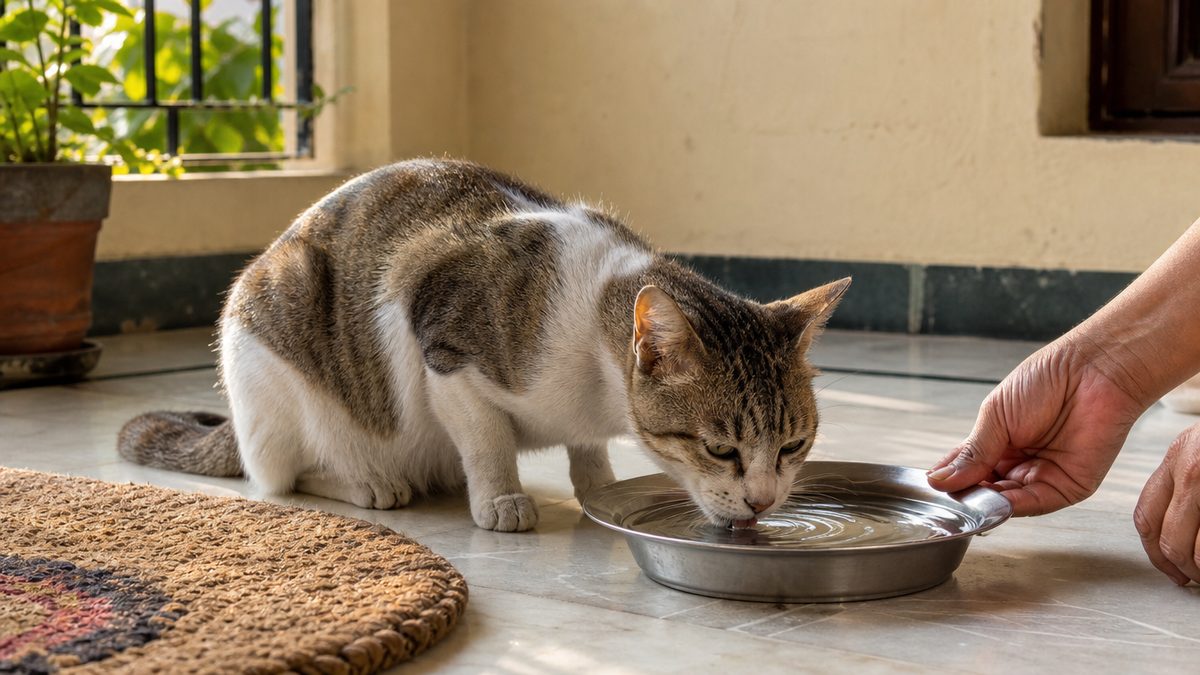
Voluntary drinking is free and it comes before anything with a needle. The ISFM panel's advice is free access to good quality water at all times, a variety of water sources including flavoured waters and running water such as a pet fountain, and feeding a wet diet rather than a dry one wherever possible because it increases water intake. Water can be added to food where dehydration is a concern, provided the intake of other nutrients is maintained.
In an Indian flat the practical version is more bowls in more rooms, changed more often in summer, away from the food and away from the litter tray, and wide enough that the whiskers do not touch the sides. Fresh water available at all times is on the IRIS list from stage 1 onward, before any other intervention. If the cat prefers a dripping tap, let it have the dripping tap.
What it costs in India, from two government rate cards and a private chain
A kidney panel in India costs from Rs 400 on a government teaching-hospital rate card to about Rs 2,050 at a private chain, depending on whose door you walk through, and every line below comes from a price list published by the institution charging it. Two government teaching hospitals and one private chain print their feline rates, and none of the three lists an SDMA test or a blood pressure measurement.
| Line item | ICAR-IVRI Izatnagar | BASU Patna Veterinary Clinical Complex | Vetic Pet Clinic, private chain |
|---|---|---|---|
| Registration, canine and feline | Not on the laboratory card | Rs 200 outpatient, Rs 300 emergency | Not published |
| Complete blood count | Rs 250 | Rs 300 | Rs 799 |
| Kidney function test | Rs 200, listed as BUN and creatinine | Rs 700 | Rs 1,249 |
| Creatinine alone | Rs 100 | Rs 100 | Not listed separately |
| Blood urea nitrogen alone | Rs 100 | Rs 100 | Not listed separately |
| Phosphorus | Rs 100 | Rs 120 | Not listed separately |
| Routine urine examination | Rs 100 | Rs 100 | Not listed separately |
| Sodium, potassium and chloride | Not on the card | Rs 350 | Not listed separately |
| Total protein, albumin, globulin and A:G ratio | Not on the card | Rs 160 | Not listed separately |
| Abdominal ultrasound, canine and feline | Not on the laboratory card | Rs 500 | Not published |
| Serum amyloid A | Not on the card | Rs 1,000 | Not listed separately |
| SDMA | Not on the card | Not on the card | Not on the list |
| Systolic blood pressure | Not on the card | Not on the card | Not on the list |
Added up from the line items, the cheapest complete first workup on the IVRI card is Rs 400 for the kidney function test at Rs 200, the routine urine examination at Rs 100 and phosphorus at Rs 100, or Rs 650 with a complete blood count at Rs 250, plus tax as applicable. The same four lines at BASU Patna come to Rs 920 without the blood count and Rs 1,220 with it, before the Rs 200 registration. Those two sums are this page's arithmetic on the cards' own printed lines rather than a package price either institution advertises.
The private figure is roughly double and buys speed. Vetic Pet Clinic's published feline pricing lists a complete blood count at Rs 799, a kidney function test at Rs 1,249 and a liver function test at Rs 1,249, and states that pricing is largely consistent across its locations. None of the rupee figures in this section divides evenly by 84.38 or by 74, so none is a converted dollar list.
Why no Indian price list carries an SDMA test
The SDMA test is missing from Indian rate cards because the reagent is expensive per cat. Netmeds lists the Bionote Vcheck SDMA Test Kit, a pack of ten in-clinic tests for veterinary professionals used with the Vcheck analyser, at an MRP of Rs 32,578.00 inclusive of all taxes. That is about Rs 3,258 of reagent for a single cat before the analyser, the clinician's time or any margin, worked out here from the pack price. Against a Rs 100 creatinine on either government card Bihar Animal Sciences University, the reason the test is absent is arithmetic rather than ignorance.
That absence has a real clinical consequence and IRIS names it. IRIS recommends using both serum creatinine and SDMA because they are complementary, and the discrepancy rules that move a cat up a stage depend on having both numbers. An Indian cat staged on creatinine alone can be one stage below where IRIS would put it, and the cats most likely to be mis-staged are the thin ones, because muscle loss drags creatinine down while SDMA is not affected by muscle mass.
The running cost, not the diagnosis cost
Budget for the year rather than the visit. A cat monitored on the BASU lines twice a year, with a kidney function test, routine urine and phosphorus each time, comes to Rs 1,840 in laboratory fees plus registration, which is arithmetic here on that card. Set against that, wet renal food at the 1mg price runs to roughly Rs 5,600 a month, so the food is the dominant cost and the testing is the cheap part. The 2023 AAHA senior care guidelines say directly that some owners will not pursue diagnostics for reasons that include financial constraints, and that the veterinarian's job is then to explain what symptomatic treatment can do for quality of life rather than to withhold care. Have that conversation at the first visit, not the last.
Breeds at risk, and the nine cat breeds with a published kidney denominator
Most cats in Indian homes are domestic shorthairs with no breed risk to speak of, and the breed figures below come from UK, Iranian and Italian pedigree populations rather than from Indian clinics. Read them as reasons to screen a particular cat earlier, not as a ranking of danger. Every card on this page names the study its number came from.
Two breeds showed up positive in the Marino screening study, and the numbers are small enough to be honest about. Of the 19 purebred cats in that randomly selected cohort of 86, five of seven Siamese, 71.4 percent, and three of six Maine Coon cats, 50 percent, were positive for chronic kidney disease, while all of the Abyssinians in the randomly selected group tested negative. Seven cats and six cats are not populations, and the authors present them as demographics rather than as breed prevalences.
The Persian is the breed with the strongest death data. In a VetCompass study of Persians under first opinion care in the UK, renal disease was the most common grouped cause of death at 102 of 435 cats with a stated cause, 23.4 percent, ahead of neoplasia at 8.5 percent and mass-associated disorder at 8.0 percent. Nearly a quarter of Persian deaths are kidney deaths, in a breed that carries an inherited kidney disease with a genetic test available for it.
Polycystic kidney disease is the mechanism behind that figure, and it has been measured outside the UK too. Of 76 Persian and Persian-related cats submitted for ultrasound screening at the Small Animal Hospital of the University of Tehran between April 2014 and May 2015, 36.8 percent were found to have polycystic kidney disease. The same study found that for each year of increasing age, the probability of detecting cysts on ultrasound rose about 2.62 times, which is why a clear scan in a kitten settles nothing.
The Ragdoll has a 2025 mortality figure of its own. Among 133 Ragdolls that died during a VetCompass study year, kidney disorder was the most common cause of death at group-level precision, 21.18 percent with a 95 percent confidence interval of 12.49 to 29.86, ahead of poor quality of life at 12.94 percent. Median age at death for the Ragdoll in that study was 12.85 years.
The Birman, where the test is wrong before the cat is ill
Birmans fail the creatinine test while healthy, and two studies measured it. A UK survey of 106 clinically healthy Birman cats from 19 different households, aged from eight weeks to 12 years, found that 18 of the 22 cats under six months, 82 percent, and 29 of the 84 adults, 35 percent, had creatinine concentrations above the reference range. An Italian study then measured both markers in 50 clinically healthy Birmans against 46 cats of other breeds and found that in 20 of 50 Birmans, 40.0 percent, serum creatinine exceeded both the laboratory's own reference interval and the 1.6 mg/dl threshold that classifies a cat as IRIS stage 2.
SDMA behaved better in the same cats. The concentration of SDMA exceeded the pre-existing reference interval in only 10 of 50 Birmans, 20.0 percent, and the authors concluded that SDMA may be a better marker of chronic kidney disease in Birman cats than creatinine when non-breed-specific reference intervals are used. They published a breed-specific SDMA reference interval of 3.5 to 18.7 micrograms per decilitre. IRIS carries the same warning in its 2026 staging document.
Breed longevity is a weaker signal than breed cause-of-death, and the VetCompass longevity table shows why. Among breeds with at least 10 study animals, median age at death ran from Birman at 16.1 years with 12 cats and Burmese at 14.3 with 31, through Siamese at 14.2 with 31, Persian at 14.1 with 70 and crossbred at 14.0 with 3,621, down to Ragdoll at 10.1 with 21, Abyssinian at 10.0 with 11 and Bengal at 7.3 with 15. A breed can die young of something other than its kidneys, and a long-lived breed simply has more years in which to develop the disease.
Where the Persian's mutation went
The British Shorthair inherited its kidney risk through the Persian, and a case series says so directly. Polycystic kidney disease in cats is caused by an autosomal dominant mutation in the polycystin-1 gene, most often found in Persian and Persian-related breeds, and the breeds that used the Persian in their foundation carry it with them. The practical consequence for an Indian buyer of a British Shorthair, an Exotic Shorthair or a Himalayan is that the kidney question belongs in the purchase conversation, not in the cat's tenth year.
None of these figures was measured in India, and no page should pretend otherwise. The populations behind them are UK primary care, an Iranian teaching hospital, an Italian referral series and a North Carolina feline practice. What transfers is the biology and the screening advice; what does not transfer is the breed mix, because the cat in most Indian homes is a domestic shorthair that appears in none of these breed tables.
AA amyloidosis, the breed-linked route to kidney failure, and the breeds it does not take that way
AA amyloidosis reaches the kidney in the Abyssinian and the Somali and reaches the liver in the Siamese and the Oriental, and confusing the two is the commonest error on pages that list them together. The predisposed breeds are Abyssinian and Somali along with Siamese and Oriental, in all of which hereditary forms of AA amyloidosis are recognised.
In Abyssinian and Somali cats the kidney is the target organ and the timeline is short. The continuous failure of the kidneys until the age of five years, caused by a high degree of medullary and glomerular amyloid deposits, is the main cause of death of affected cats in those two breeds. A young Abyssinian or Somali in renal failure is a different clinical problem from a fifteen-year-old domestic shorthair with the same creatinine, and it is the one case on this page where age is not the risk factor.
In Siamese and Oriental cats the amyloid goes somewhere else entirely. The organs mostly affected are the liver and the thyroid gland, with variable other organs and tissues involved, and the main cause of death is rupture of the liver with blood loss into the abdominal cavity and hypovolaemic shock. The disease is lethal, with a variable age at death between one and seven years. A Siamese or Oriental Shorthair owner should be watching for sudden collapse and pale gums, not only for the water bowl.
| Breed group | Where the amyloid goes | What kills the cat | Typical age at death |
|---|---|---|---|
| Abyssinian and Somali | Renal medulla and glomeruli, with a high degree of deposition | Continuous failure of the kidneys | Up to about five years |
| Siamese and Oriental | Liver and thyroid gland mostly, other organs variably | Rupture of the liver with blood loss into the abdomen and hypovolaemic shock | Between one and seven years |
The Abyssinian tissue pattern was mapped in detail forty years ago and it is still the clearest description available. In 15 related Abyssinian cats with familial amyloidosis, there was interstitial medullary amyloidosis in the kidneys of all 15, but only 11 had detectable glomerular involvement, and the thyroid glands, stomach and colon were affected in all cats examined. The kidney is hit first and hardest, and the medulla rather than the glomerulus is where the deposit sits.
Why there is no DNA test to ask a breeder for
The inheritance is polygenic, which is precisely why no commercial screening test exists. A segregation analysis of 17 clinically affected cats found a complex mode of inheritance, a polygenic component together with a major locus showing Mendelian inheritance, with heritability estimated from the pedigree data at 0.56 plus or minus 0.09, and the hereditary form in Oriental cats is autosomal with neither onset nor progression influenced by sex.
The 2023 genome-wide association study narrowed the search without ending it. Researchers genotyped 20 affected mixed Siamese and Oriental cats from a cattery and 48 healthy controls from the same breeds on the Illumina Infinium Feline 63 K iSelect DNA array carrying 62,897 markers, and found eight significantly associated single nucleotide polymorphisms on feline chromosomes A1, D1, D2 and D3. The genomic regions harbouring those markers contain 55 genes, three of which are associated with amyloidosis in humans or mice, one being SAA1, which encodes a member of the Serum Amyloid A family and the precursor protein of Amyloid A.
The Abyssinian work reached the same conclusion from a different direction. A multi-omic study screened whole-genome sequences of two affected Abyssinians against 195 controls of other breeds from the 99 Lives initiative, detected 35,960 genomic variants, and concluded that the familial amyloid renal form in Abyssinians is not a simple monogenic trait, that amyloid deposition is not triggered by mutated amyloidogenic proteins but by a mix of proteins coded by wild-type genes, and that the form is biochemically classifiable as AA amyloidosis. Two independent teams, two breeds, the same answer, which is that a single-gene test is not coming soon.
What a breeder can actually tell you, and one Indian test
Pedigree still carries information even without a test, and one Italian study shows how unevenly the disease sits between lines. In a five-year longitudinal study of 23 Abyssinian cats from two catteries, familial amyloidosis was not identified in cattery A at all, whereas 7 of 14 cats from cattery B had it. Ask an Abyssinian or Somali breeder what their lines have died of and at what age, because that is the only screening instrument available.
Serum amyloid A is measurable in India, and it is worth knowing what it can and cannot do. Bihar Animal Sciences University's Veterinary Clinical Complex prices a serum amyloid A test at Rs 1,000. The longitudinal Abyssinian study found that serum amyloid A concentrations were not significantly different between the two catteries or between cats with and without familial amyloidosis, despite frequent peaks in the affected cattery, while urinary serum amyloid A was significantly higher in the affected cattery, especially in the terminal phases. A single normal serum amyloid A result does not clear a cat.
Prevention and screening: what the evidence supports, and what it does not
You cannot prevent chronic kidney disease in a cat, and any page that tells you otherwise is selling something. Cornell states that the only known risk factor for its development in cats is age. What you can do is find it one or two stages earlier than it would otherwise be found, which is where every extra month on this page comes from.
Screening has an age and a frequency, and both are published. The ISFM consensus panel suggests serial annual or bi-annual assessment of serum creatinine or SDMA together with urine specific gravity in cats over 7 years of age, to determine changes over time and allow earlier or more certain diagnosis. It adds that a persistent and substantial increase of more than 15 percent in serum creatinine from a cat's own previous baseline is itself likely to indicate reduced renal function, which is an argument for testing a healthy cat once so there is a baseline to compare against.
The senior guideline puts the same tests on a schedule. The 2023 AAHA senior care guidelines ask for a complete blood count, a chemistry panel including urea, creatinine and SDMA where available, and a urinalysis every 6 to 12 months in a senior cat, with total thyroxine strongly recommended annually and blood pressure strongly recommended annually and every 6 to 12 months in healthy geriatric cats. On the BASU card that panel is priced line by line and the whole thing is affordable twice a year.
How to prevent kidney disease in cats naturally, answered honestly
The schedule below is what the two guidelines ask for, in the order a cat moves through it. Take it to the clinic and ask for the lines by name.
- Get one baseline while the cat is well, because the ISFM panel treats a persistent rise of more than 15 percent in a cat's own serum creatinine as evidence of reduced function, and that comparison needs a starting number.
- From age 7, book a health check every 6 months, with body weight, body condition and blood pressure recorded each time, which is where the ISFM guideline starts regular monitoring.
- From age 7, add serial creatinine or SDMA with a urine specific gravity annually or twice a year, which is the ISFM screening recommendation for the older cat.
- Once the cat is senior, run the full panel every 6 to 12 months, meaning a complete blood count, a chemistry panel including urea, creatinine and SDMA where available, and a urinalysis.
- Add total thyroxine annually and blood pressure annually, both strongly recommended, with blood pressure every 6 to 12 months once the cat is geriatric.
- Write every number down and keep them together, because the trend in creatinine and SDMA over serial samples is itself a stage 1 diagnostic finding.
Four things are worth doing and none of them is a supplement. Fresh water available at all times is on the IRIS treatment list from stage 1 onward; feeding a wet diet rather than a dry one increases water intake; nephrotoxic drugs are to be used with caution, which means never giving a human painkiller to a cat; and screening from age 7 finds the disease while there is still something to slow. None of those four is claimed by any source to prevent the disease, and this page does not claim it either.
The supplement evidence is thin and the guidelines say so in plain words. Cats with chronic kidney disease do have evidence of increased oxidative stress compared with healthy cats, and dietary antioxidant therapy with vitamins E and C and beta-carotene may reduce it, but whether this results in any renoprotective effect remains to be determined. One retrospective study suggested that renal diets with the highest omega-3 fatty acid content were associated with the longest survival times, yet a causal relationship could not be established and feeding a renal diet may not alter fatty acid profiles at all.
Sodium restriction is the one where the popular advice runs against the evidence. Dietary sodium restriction is recommended for people with chronic kidney disease, but the ISFM panel records that evidence for a beneficial effect in older cats with and without the disease is generally lacking, and that very restricted sodium intake may be deleterious. A low-salt home diet assembled from human advice is not a treatment, and a cat on one is not being protected.
The second organic result on the Indian query 'kidney disease cat treatment india' on 24 September 2026 was a Supertails collection page headed 'Buy Cat Kidney Care Supplements Online in India'. That page contains no mention of IRIS, no creatinine and no staging. The intervention with survival data behind it is a renal diet, where three tabulated trials show roughly double the median survival, and it is a veterinary exclusive product your vet has to authorise. Spend the money there first. If a seller's page makes a claim about kidney function, ask which trial, in how many cats, and against what control.
How to lower creatinine in cats
Creatinine is a reading, not a disease, and the only honest way to move it is to treat the cat. Correcting dehydration is the first thing that changes the number, because dehydration raises creatinine and blood urea nitrogen even when the kidneys are working normally. Beyond that, the interventions IRIS lists are a renal therapeutic diet, phosphorus control, treatment of hypokalaemia, acidosis, anaemia and nausea, and fluids to maintain hydration, and none of them is presented as a way to drive creatinine down to a target. A product that promises to lower creatinine is promising to change a measurement rather than to help an animal.
What is different in India, and the Indian data that does not exist yet
No published Indian clinical series on feline chronic kidney disease could be found on 24 September 2026, and this section records the search rather than asserting the absence. Everything else on this page that is Indian is a price, a product or a rate card, because those are the Indian facts that do exist.
Both PubMed instruments were run and both came back empty of feline kidney data. A title and abstract search combining chronic kidney disease, renal failure or azotemia with cat, cats or feline and India returned exactly 5 records. Not one of the five is about feline chronic kidney disease.
| PubMed ID | What the record actually is | Why it matched |
|---|---|---|
| 41448351 | A Kerala case series of microfilaruria caused by Dirofilaria repens and Brugia in one cat and two dogs | A cat with a trauma-induced urethral obstruction, filarial rather than renal |
| 40734883 | A human cross-sectional study of urine albumin-creatinine ratio in patients with chronic obstructive pulmonary disease, in Cureus | The COPD Assessment Test is abbreviated CAT |
| 37425322 | A human prospective study of renal injury and biomarkers in the MyoCite myositis cohort at Lucknow | Human nephrology with an Indian affiliation |
| 19902839 | A study of melamine-induced pathology in penaeid shrimp fed adulterated feeds, in Diseases of Aquatic Organisms | Shrimp, not cats |
| 16225695 | A laboratory study of curcumin against cyclosporine-induced renal dysfunction in rat kidneys | Rats, not cats |
The affiliation instrument was run as a second search and it found different papers, none of them feline either. Searching the same clinical terms against an Indian author affiliation returned 53 records, which on inspection are human and rodent nephropathy pharmacology from Indian institutions, plus the same Kerala filariasis case series. Narrowing to papers with cats or feline in the title and a renal term anywhere, against an Indian affiliation, returned 3 records, and those three are about parvovirus, feline immunodeficiency virus and distemper in big cats.
The controls passed, so the absence is a real absence rather than a broken search. In the same session, a positive control searching feline chronic kidney disease in the title and abstract returned 81 records, a second positive control for dog and India returned 468, and a negative control on a nonsense term returned 0. The instrument was working. There simply is no published Indian feline chronic kidney disease prevalence study, clinical series or survival cohort to cite, and every prevalence and survival figure on this page therefore comes from a UK, American, Italian or Iranian population.
The absence of Indian data is a gap in the literature, not a reason to think Indian cats are spared. The biology of a nephron does not change at a border, and the risk factor every source agrees on, age, applies identically in Chennai and in Cambridge. What the absence does mean is that nobody can tell you what proportion of Indian cats over ten have this disease, and anyone who quotes such a figure to you is quoting a foreign study without saying so.
Heat, water and the Indian summer
Dehydration is the Indian variable that matters most, because it both worsens the cat and corrupts the test. Dehydration raises creatinine and blood urea nitrogen even in a cat with normal kidneys, and IRIS requires that staging be done in a hydrated, stable patient on at least two occasions. A cat tested at the end of a May afternoon in Delhi or Nagpur can be staged a level worse than it is, which is an argument for a morning appointment and a repeat before any plan is settled.
The practical Indian adjustments are cheap and they change with the city and the season. A top-floor flat in Mumbai, Chennai or Kolkata stays humid enough through the monsoon that a cat simply stops walking to a distant bowl, while Delhi, Hyderabad, Pune, Bengaluru and Ahmedabad deliver dry heat that pushes fluid loss the other way, and both roads end at the same dehydration that raises creatinine in a cat whose kidneys are fine. Put more bowls in more rooms and change the water more often in summer, because the ISFM panel asks for free access to good quality water at all times and a variety of water sources including running water. Move a share of the diet to wet food, which increases water intake and, at the Indian price for the wet renal product, costs roughly 187 rupees a pouch. Keep the cat indoors and cool through the afternoon, and weigh it monthly.
Where to get the tests done
Two government veterinary teaching hospitals publish feline rates that any owner can read before walking in. ICAR-IVRI at Izatnagar prices a kidney function test covering blood urea nitrogen and creatinine at Rs 200, a routine urine examination at Rs 100 and phosphorus at Rs 100 in its pets column, plus tax. Bihar Animal Sciences University in Patna prices a kidney function test at Rs 700, routine urine at Rs 100, phosphorus at Rs 120 and an abdominal ultrasound for a cat or dog at Rs 500, after a Rs 200 outpatient registration. Neither card carries an SDMA line or a blood pressure line, and the SDMA absence has a price behind it. Neither institution is in Maharashtra, Karnataka or Tamil Nadu, so an owner in Mumbai, Bengaluru or Chennai is reading them as a benchmark rather than as a local price list, and should ask their own clinic for the same lines by name before agreeing to a panel.
Life expectancy and survival, pain at the end of life, and the euthanasia decision
Median survival after a diagnosis of chronic kidney disease in UK primary care was 388 days, with an interquartile range of 88 to 1,042 days, measured across cats diagnosed in a population of 353,448. That single number, just over a year at the middle with a quarter of cats living beyond about three years, is the most generalisable prognosis figure published for this disease.
Stage changes the answer more than anything else, and the published stage-3 figures disagree by a factor of five. The ISFM consensus panel tabulates four studies of IRIS stage against prognosis, and their stage 3 medians are 778 days, about 500 days, 154 days and 263 days. Any page that answers the stage-3 question with one number has picked a study and not told you.
| Study, as the guideline lists it | IRIS stage 2 | IRIS stage 3 | IRIS stage 4 |
|---|---|---|---|
| Boyd and colleagues | 1151 days | 778 days | 103 days |
| King and colleagues | Not reached | About 500 days | About 70 days |
| Syme and colleagues | 504 days | 154 days | 57 days |
| Geddes and colleagues | 490 days | 263 days | 20 days |
Read that table as a range rather than as a prediction. A cat diagnosed at stage 3 in one of those cohorts had a median of about five months and in another a median of more than two years, and the cohorts differ in referral population, in era and in how completely the cats were treated. The honest sentence to take to a veterinarian is that stage 3 medians in the published literature run from roughly 150 to 780 days, and that the substages are what narrow it for your cat.
Proteinuria narrows it further, and cheaply. Cats with a urine protein to creatinine ratio under 0.2 had a median survival of about 1,000 days, against about 500 days at 0.2 to 0.4 and about 400 days above 0.4. A test that only 14.9 percent of diagnosed UK cats ever received separates a cat with nearly three years from a cat with about one.
Is end stage kidney failure in cats painful
The disease is not classically painful in the way a fracture is, and it is genuinely uncomfortable, which is a distinction worth holding. Uraemic toxins act on the central chemoreceptor trigger zone to produce nausea, vomiting and inappetence, and the ISFM panel calls inappetence a significant quality-of-life concern for owners. Uraemic ulcers in the mouth are on the IRIS list of physical findings in advancing disease, and mouth ulcers hurt.
Cats Protection, one of the pages ranking for this query, describes the end of life in concrete terms, saying that the symptoms associated with the disease can cause overall discomfort, that in acute kidney failure cats may cry constantly or collapse because of significant pain caused by swelling of the kidneys, and that at the end stage an owner might notice an arched back, weak back legs or trouble walking. Nausea, dehydration, hypokalaemia causing muscle weakness, acidosis and anaemia are all treatable individually, and treating them is what palliative care for this disease consists of.
Do cats with CKD have good days and bad days
Yes, and the stage definitions build that variability in. IRIS notes that where systemic signs are absent a case can be considered early stage 3, while many or marked systemic signs justify calling the same creatinine late stage 3, which is the guideline acknowledging that two cats with identical numbers can look very different. Cats also move between stages over time, most commonly upward, though some stabilise or even improve with treatment.
Track the good days rather than remembering them. Weigh the cat on the same scale every two weeks, count how many days a week it eats a full meal, and note whether it is grooming. Those three lines over two months tell a veterinarian more than any single consultation, and they are what turn a euthanasia decision from a guess into a judgement. The 2023 AAHA senior care guidelines are explicit that advanced age alone is not a contraindication to treatment and that the focus in palliative patients may need to shift from a balanced diet to simply getting the animal to eat something.
Five things are worth writing down each week, and none of them needs a clinic. They are the lines a veterinarian will ask for when the euthanasia question finally arrives.
- Weight on the same scale, because weight loss is one of the signs IRIS lists and the one owners notice last.
- Full meals eaten in the week, since inappetence is what the ISFM panel names as a significant quality-of-life concern for owners.
- Vomiting episodes, which are driven by uraemic toxins acting on the chemoreceptor trigger zone and are treatable in their own right.
- Water drunk and litter clumps passed, the pair that first signalled the disease and that still track hydration.
- Grooming and hiding, because an unkempt coat and lethargy are on Cornell's list of what the accumulation of waste products does to how a cat feels.
Have the end-of-life conversation at the diagnosis, not at the crisis. Median survival after diagnosis is 388 days, so there is usually time to decide in advance what you will and will not do, what you can afford month after month, and which signs will mean it is time. The 2023 AAHA guidelines note that some owners will not pursue diagnostics for reasons including financial constraints, and that the veterinarian's role is then to explain what symptomatic treatment can achieve for quality of life rather than to withhold care. A vet who knows your budget on day one can build a plan you will actually finish. The decision belongs to you and the veterinarian who has examined your cat, and nobody on the internet, including this page, can make it for you.
Questions Indian cat owners ask about kidney disease
Can a cat live with kidney disease?
Yes, and often for a long time. Median survival after diagnosis in UK primary care was 388 days, with an interquartile range of 88 to 1,042 days, so a quarter of diagnosed cats lived beyond about three years. The spread is wide because stage at diagnosis and substage drive it, and because a cat caught on a screening panel starts earlier than one caught when it stopped eating.
What are the first signs of kidney disease in cats?
Drinking more and passing more urine come first, followed by weight loss, a smaller appetite, lethargy, dehydration, vomiting and bad breath. The IRIS pocket guide lists exactly those and warns in the same paragraph that early stage disease can be subclinical, with a normal physical examination. One diagnosed cat in three has no signs at all when the blood test finds it.
How is kidney failure in cats treated?
Treatment is staged rather than uniform. IRIS adds a renal therapeutic diet and treatment of low potassium, nausea and inappetence at stage 2, then metabolic acidosis, anaemia, vomiting and extra enteral or subcutaneous fluids at stage 3, then a feeding tube for support at stage 4, with a phosphorus target that loosens from under 4.6 to under 6.0 mg/dl as the stage rises.
How to prevent kidney disease in cats naturally?
You cannot prevent it, because the only known risk factor for its development in cats is age, and Cornell says so plainly. What works is water in several places, wet food as a real share of the diet, never giving a cat a human painkiller, and blood and urine screening from age seven so the disease is found while there is still function to protect.
What is the average life expectancy for a cat with Stage 3 kidney disease?
There is no single number, and the four studies the ISFM consensus panel tabulates give stage 3 medians of 778 days, about 500 days, 154 days and 263 days. That is a five-fold spread across four published cohorts that differ in referral population and era. Ask instead for your cat's substage, because proteinuria separates a median near 1,000 days from one near 400.
How to keep cat kidneys healthy?
Keep the cat hydrated, keep it off nephrotoxic drugs and keep it screened. Fresh water available at all times sits on the IRIS treatment list from stage 1, alongside using nephrotoxic drugs with caution and correcting anything prerenal or postrenal. Add serial creatinine, SDMA and urine specific gravity from age seven, and weigh the cat on the same scale every month.
Is end stage kidney failure in cats painful?
It is uncomfortable rather than sharply painful for most cats, and the discomfort is treatable. Uraemic toxins act on the brain's chemoreceptor trigger zone to cause nausea, vomiting and inappetence, which the ISFM panel calls a significant quality-of-life concern, and uraemic mouth ulcers genuinely hurt. Nausea, dehydration, low potassium, acidosis and anaemia are each treated separately, and that is what palliative care here means.
Do cats with CKD have good days and bad days?
Yes, and the staging system builds that in. IRIS says a cat with no systemic signs can be called early stage 3 while a cat with the same creatinine and marked signs is late stage 3, which is the guideline admitting that identical numbers look different on different days. Track weight, full meals a week and grooming rather than trusting memory.
How to get a cat with kidney disease to drink more water?
Offer more sources rather than a bigger bowl. The ISFM consensus advises free access to good quality water at all times and a variety of sources, including flavoured waters and running water such as a pet fountain, and says feeding a wet diet rather than dry is important because it increases intake. Water can be added to food where dehydration is a concern, if other nutrients stay adequate.
How much does kidney disease treatment cost for a cat in India?
The testing is cheap and the food is not. A kidney function test costs Rs 200 at ICAR-IVRI Izatnagar and Rs 700 at Bihar Animal Sciences University in Patna, with routine urine at Rs 100 and phosphorus at Rs 100 or Rs 120, while a private chain charges Rs 1,249 for the same panel. Wet renal food runs to thousands of rupees a month.
How to lower creatinine in cats?
Treat the cat rather than the number. Correcting dehydration is what moves creatinine fastest, because dehydration raises it even in a cat with normal kidneys, and muscle loss lowers it in a cat whose kidneys are failing. Beyond hydration, a renal diet, phosphorus control and treatment of the complications are the interventions, and none targets a creatinine figure.