
Breed profile
Teddy Roosevelt Terrier in India: Price, Legs and Heat
The short-legged Rat Terrier, recognised by the American Kennel Club only in December 2025, with short legs that are not the chondrodystrophy variant, two registries that disagree about merle, and no Indian market at all.
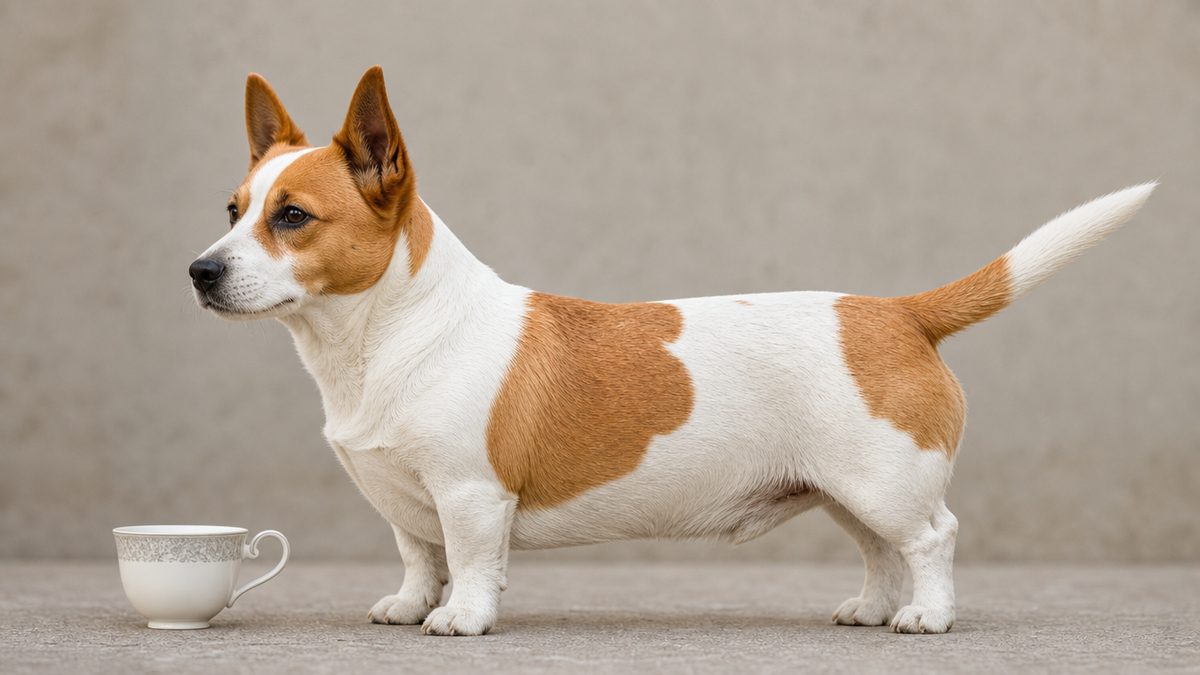
Quick answer
No Teddy Roosevelt Terrier price in India exists. The largest Indian dog price table has no row for the breed, no Indian breeder lists it, and every Indian search result for the term returns American breeders or database pages. The breed was recognised by the American Kennel Club only on 30 December 2025. Bonbeno rates it 2 of 5 for heat tolerance in India.
This page reports published veterinary research and registry screening data. It is not a diagnosis and it is not a treatment plan. Screening statistics describe populations, not the animal in front of you. Consult your nearby vet before acting on anything here, and treat these as same-day problems: a cloudy, red or painful eye, a puppy that does not respond to sound, a hind-limb lameness that does not resolve within a day, and any dog in distress in the heat.
Teddy Roosevelt Terrier at a glance
What a Teddy Roosevelt Terrier is, and the proportion that defines it
The Teddy Roosevelt Terrier is a short-legged, strongly built small hunting terrier, rectangular in shape, standing at least 8 and no more than 12 inches at the withers under its United Kennel Club standard. The defining measurement is not height but proportion: the front leg should be 40 percent of wither height at maturity.
That proportion is the whole breed and it is worth understanding before anything else. The standard specifies a body longer than tall at a ratio of 10:7, measured from point of shoulder to point of buttocks against withers to ground, and makes a leg length of 50 percent or greater in a mature dog a serious fault. So the dog is short-legged by a stated ratio rather than by a gene, which the health section shows is not a distinction without a difference.
The history is in the registry's own words
The UKC standard tells the story plainly and it names four other breeds in this batch. The Teddy Roosevelt Terrier is an American breed descended from terriers brought over by English miners and other working class immigrants, probably including crosses between the Smooth Fox Terrier, the Manchester Terrier, the Bull Terrier, the Beagle, the Whippet, the Italian Greyhound and the now extinct white English Terrier. These dogs were used as ratters and became known as Rat Terriers.
Then comes the split. Two types of Rat Terrier evolved, distinguished primarily by leg length, and the short-legged ones developed a devoted following and were named in honour of President Theodore Roosevelt. That is the entire relationship between this breed and the Rat Terrier, stated by the registry that recognised both, and it is why the two pages on this site read as a pair.
| Point | United Kennel Club, 2023 | American Kennel Club, 2025 |
|---|---|---|
| Recognised | 1 January 1999 | 30 December 2025 |
| Group | Terrier | Terrier |
| Height | 8 to 12 in, eliminating fault under 7 or over 13 | 8 to 14 in |
| Weight | Varies with the individual dog | 8 to 25 lb |
| Life expectancy | 15 to 16 years | 14 to 16 years |
| Merle | Disqualification | Registrable marking, code 035 |
| Tail | Docked preferred, natural accepted | Not specified on the breed page |
| Rear dewclaws | Must be removed | Not specified on the breed page |
Two rows in that table are genuine disagreements rather than differences of emphasis. A 13.5-inch dog sits inside the AKC's stated range and is an eliminating fault at the UKC, and merle is a UKC disqualification while the AKC's own breed page lists Merle Markings as a registrable marking at code 035 American Kennel Club. For an Indian buyer that matters, because merle is fashionable here and carries a price premium, and a merle Teddy Roosevelt Terrier cannot be shown under the standard that has governed the breed since 1999.
Two sentences in the UKC standard tell you what this breed is for. Honorable scars resulting from field work are not to be penalized, and broken or missing teeth resulting from field work are not to be penalized. A standard that expects its dogs to come back marked is describing a job rather than an appearance.
The recognition trap, and why 2025 rankings do not list this breed
The Teddy Roosevelt Terrier was recognised by the American Kennel Club on 30 December 2025, alongside the Basset Fauve de Bretagne and the Russian Tsvetnaya Bolonka, taking the AKC's roster to 205 breeds. Its absence from the 2025 popularity ranking means it was recognised too late to appear, not that it is unrecognised.
That distinction is worth spelling out because the naive reading is exactly backwards. The AKC's 2025 popularity table ranks 202 breeds and this one is not in it. A reader who checks that table and concludes the breed is unrecognised has drawn the opposite of the truth from a correct observation. The same article states in its own text that the AKC has recognised 205 breeds since 1884, that 202 were counted in the 2025 statistics, and that three breeds recognised in 2026 will debut in the 2026 statistics.
| Body | Status | Date | What it means |
|---|---|---|---|
| United Kennel Club | Full breed standard | 1 January 1999 | Standard and register, both from one body |
| American Kennel Club | Fully recognised | 30 December 2025 | The 205th AKC breed; first ranked in 2026 |
| AKC Earthdog events | Approved to compete | 8 August 2016 | Nine years before full recognition |
| FCI | Not recognised | The only US breed in Group 3 is the American Staffordshire Terrier 286 |
The two-condition test, applied honestly
A breed exists as a breed when two things are true: a published standard defines it, and a register records its animals. The Teddy Roosevelt Terrier satisfies both from a single body and has done since 1999. The United Kennel Club publishes a full official breed standard, revised 2 January 2023, running from head to gait with named disqualifications, and offers single registration on the same page.
That matters because the UKC also operates a category where those two conditions come apart. Its Bloodlines Listing Service group holds breeds the UKC will register while stating that no breed standard exists, and a breed in that group has a register without a standard. The Teddy Roosevelt Terrier is not one of them. It sits in the Terrier Group with a complete standard, and since December 2025 it also has an AKC standard and register behind it American Kennel Club. The two-condition test is satisfied twice over.
The FCI answer is different and it governs India. The FCI holds no Teddy Roosevelt Terrier, and the only United States breed anywhere in FCI Group 3 is the American Staffordshire Terrier at number 286. Since the Kennel Club of India is India's FCI member and issues pedigrees against FCI nomenclature, there is no ordinary KCI pedigree route for this breed, and any Indian seller claiming one should be asked to show it.
Searching this breed alongside KCI does not return Indian results. KCI is also the airport code for Kansas City International, and American breeder pages offering to Meet at KCI mean the airport. A search result that pairs this breed with KCI is almost certainly American, and reading it as evidence of an Indian pedigree is a mistake the abbreviation invites.
Teddy Roosevelt Terrier price in India, which does not exist
No Teddy Roosevelt Terrier price in India exists in any form. The largest Indian dog price table, which carries roughly 155 breeds including the Rat Terrier, the Toy Fox Terrier and the American Hairless Terrier, has no row for this breed at all. No Indian breeder lists it.
That is a finding rather than a gap, and it is the single most useful thing this page can tell an Indian reader. Bonbeno searched the term on an India-located search on 8 September 2026 and opened every result that would load. What came back was American breeder pages, the American Kennel Club, the United Kennel Club, Wikipedia, breed databases and dog-show judging panels. Not one Indian seller, not one Indian rescue, not one Indian listing.
| Source type | What it is | Indian relevance |
|---|---|---|
| Pet House NCR price table | 155 Indian breed rows | No Teddy Roosevelt Terrier row |
| Good Dog breeder profiles | American breeders in Missouri and Kansas | None; the KCI they name is an airport |
| American Kennel Club | The breed page and the 2026 recognition article | Authoritative, not Indian |
| United Kennel Club | The full breed standard | Authoritative, not Indian |
| Dog-show judging panels | US all-breed show assignments | None |
Why an absent price is better news than an invented one
Every other page in this batch has had to unpick a rupee figure that turned out to be a converted American one. The Rat Terrier's Rs 51,800 on that same table divides by 74.00 into exactly USD 700, the Toy Fox Terrier's Rs 59,200 into USD 800, and the Smooth Fox Terrier's Rs 66,600 into USD 900. The table's four Indian breeds refuse to divide at any rate, and it prints the Caravan Hound's floor as Rs 8,ooo with two letter o characters instead of zeros, which is a person typing rather than a script converting.
This breed simply has no row in that table, which means nobody has converted anything for it yet. So if a rupee figure is ever quoted to you for a Teddy Roosevelt Terrier in India, it has no source at all, not even a bad one. Ask what Indian sale it is based on and watch what happens.
What an Indian buyer is actually being offered instead
Two substitutions are likely and both are worth naming. The first is the Rat Terrier, which is the long-legged type of the same original stock, is genuinely on Indian price lists, and is what a seller with nothing else will reach for. The second is any small white-and-tan terrier cross, because the Teddy Roosevelt Terrier's markings are its least distinctive feature and its proportions are the thing a buyer cannot check from a photograph.
The proportion is checkable in person and it takes ten seconds. Measure from the point of the elbow to the ground, and from the withers to the ground. In a mature Teddy Roosevelt Terrier the first should be about 40 percent of the second, and 50 percent or more is a serious fault. A dog whose legs are half its height is not this breed whatever the seller calls it.
Live dogs are a Restricted import into India under ITC(HS) 01061900. DGFT Trade Notice 22/2022-23 permits entry only for a pet with a valid pet book in the importer's name, for research with a CPCSEA recommendation, or for Defence and Police use, and states that applications for trading or breeding purposes shall be duly rejected. Combine that with the FCI absence and no lawful commercial supply chain for this breed can form in India.
What this breed would cost per month in India
Budget roughly Rs 3,200 to Rs 6,500 a month in monthly expenses for a Teddy Roosevelt Terrier in an Indian metro. There is no Indian purchase price to report, but the running costs are real, published and checkable, and they are what an owner actually pays.
| Line | Realistic monthly figure | Where it comes from |
|---|---|---|
| Food, small-breed dry | Rs 1,100 to Rs 1,700 | Royal Canin Mini Adult at Rs 84 per 100 g in a 4 kg bag |
| Vaccination, annualised | Rs 267 | Booster from Rs 3,199 a year, divided by 12 |
| Parasite control | Rs 350 to Rs 700 | Monthly tick, flea and worm cover for a dog of 6 kg |
| Grooming | Rs 0 to Rs 200 | A bath from Rs 934 at a Delhi clinic, needed a few times a year |
| Vet consultation, annualised | Rs 250 to Rs 600 | Two to four routine visits a year |
| Eye monitoring | Rs 250 to Rs 600 | An annual check, given the primary lens luxation carrier rate |
| Municipal registration | Rs 4 to Rs 42 | Rs 500 a year in Delhi, Rs 50 in Chennai Greater Chennai Corporation |
| Realistic total | Rs 3,200 to Rs 6,500 | Excludes boarding, insurance and illness |
The grooming line is genuinely near zero
The American Kennel Club calls this breed very low maintenance and easy to groom, a seasonal shedder needing only weekly brushing with a soft brush or rubber curry mitt plus the occasional bath. That makes this an affordable dog to keep. The Rs 1,359 haircut and the Rs 1,869 complete bath and styling on a Delhi clinic's price list are services this breed will never need, and over a sixteen-year life that is well over Rs 1,00,000 not spent.
Put some of that into the eye line instead. OFA records 17.0 percent of 306 tested Teddy Roosevelt Terriers as carriers of the primary lens luxation allele and 0.3 percent at risk, and lens luxation is a surgical emergency when it happens. An annual eye check costs a fraction of an emergency and it is the most useful recurring spend on this breed.
- Buy the 4 kg food bag. Unit prices run Rs 94, Rs 84 and Rs 73 per 100 g at 2 kg, 4 kg and 8 kg, and a 6 kg dog will not finish the biggest bag before an Indian summer degrades it.
- Vaccinate as a course in year one, priced from Rs 6,499 against Rs 8,111 of components at one national chain.
- Register the dog where registration exists. Delhi charges Rs 500 with a Rs 100 monthly late fee; Chennai charges Rs 50 and runs six free municipal pet clinics.
- Do not budget for a groomer. Budget for an ophthalmologist instead.
Heat tolerance in India, measured against the breed's own registry town
The Teddy Roosevelt Terrier scores 2 of 5 for heat tolerance in Indian plains cities. Kalamazoo, Michigan, where the United Kennel Club is based and recognised this breed in 1999, has a hottest month averaging 22.49 C. Chennai's coolest month averages 24.09 C, which is 1.6 degrees warmer than that United Kennel Club.
Every figure below comes from NASA POWER, queried by explicit latitude and longitude over the 2001 to 2020 window, with the returned cell elevation echoed and checked. The Kalamazoo cell reads 247.44 m against a real ground level near 230 m, and all the Indian cells sit within 90 m of the truth, so none of these is a mountain-cell artefact.
| Place | Annual mean C | Hottest month | Coolest month | Annual mean RH % |
|---|---|---|---|---|
| Kalamazoo, Michigan | 9.18 | July, 22.49 | January, minus 4.61 | 79.4 |
| Delhi | 25.60 | June, 35.88 | January, 13.61 | 45.6 |
| Kolkata | 25.81 | May, 31.53 | January, 17.31 | 73.9 |
| Chennai | 27.95 | May, 31.51 | January, 24.09 | 72.4 |
| Mumbai | 26.77 | May, 31.19 | January, 23.19 | 67.4 |
| Pune | 23.86 | April, 28.93 | December, 19.62 | 66.8 |
| Bengaluru | 23.74 | April, 28.37 | December, 20.22 | 67.9 |
The humidity argument is the wrong argument
Indian damp is not what threatens this dog. The American Midwest runs 79.4 percent annual relative humidity, higher than Chennai's 72.4, Kolkata's 73.9, Mumbai's 67.4, Bengaluru's 67.9, Pune's 66.8 and Delhi's 45.6. What India adds is not moisture, it is roughly 18 degrees of heat on top of comparable moisture.
Frame the risk as exertional heat. The largest study available found 652 of the 879 events with a recorded trigger, 74.2 percent, were exertional, against 113 environmental and 46 from vehicular confinement, in a cohort of 905,543 UK dogs. A terrier the AKC describes as having seemingly boundless energy is the temperament that study is about.
The short legs change one practical thing
A dog whose front leg is 40 percent of its wither height carries its whole body low, which means it lives in the layer of air closest to hot Indian concrete. That is worse for heat than for a longer-legged terrier of the same weight, and it is the one respect in which the breed's defining proportion works against it here. Check the pavement with the back of your hand before every hot-weather walk, and use grass or shaded ground where you can.
- Walk before 7 am and after 7 pm from March to October in Chennai, Mumbai and Kolkata, and from April to September in Delhi.
- Treat April as the peak in Bengaluru and Pune, not May, and June as the peak in Delhi.
- Use the hallway. The AKC specifically suggests short walks in hallways as exercise during inclement weather, which in India means the hot afternoon rather than the rain.
- Cool the neck, groin and paws with room-temperature water, never ice, if the dog will not settle after panting hard.
The AKC says plainly that Teddy Roosevelt Terriers do not do well in kennels, consistently tied up, or as outside-only dogs where they are isolated from people. Indian law says something adjacent: Second Schedule Part IV paragraph 21(1) bars keeping in outdoor housing facilities, without the attending veterinary practitioner's written approval, dogs not accustomed to local temperatures and breeds that cannot tolerate them. A breed club and a statute pointing the same way is unusual, and it should settle the question.
Temperament, and the strongest claim in this batch to being the friendly one
The Teddy Roosevelt Terrier is described by its own standard as a devoted companion with a class clown mentality that gets along well with children, cats and other dogs when raised with them, and can be reserved with strangers. That is an unusually warm description for a working terrier standard.
The American Kennel Club's account matches and adds a useful qualifier. The sturdy Teddy Roosevelt Terrier is a fearless hunter yet a loyal, fun-loving and sensible companion, lively and affectionate with its family but somewhat of a one-person dog, and it gets along with other dogs without belligerence and has retained its prey drive without obsessive compulsion. Read that last clause carefully: the prey drive is real and it is described as less compulsive than in some terriers, which is a difference of degree rather than of kind.
One of the four questions Google gets asked is which terrier is friendliest
Google's People also ask box for this breed on 8 September 2026 carried four questions: the pros and cons of ownership, which is the friendliest terrier, how much a Teddy Roosevelt Terrier costs, and whether they are barkers. On the published descriptions this breed has a genuine claim to the friendliest answer, and it is worth saying so rather than dodging it. A standard that uses the phrase class clown mentality and a registry that says gets along without belligerence are describing a terrier that is easier to live with than most.
- Suits a household that wants a terrier without the sparring, which the standard describes as not spanned nor sparred.
- Suits a family with children, provided the dog is raised with them, which the standard specifies.
- Suits an apartment, which both registries agree on, provided the exercise happens.
- Suits an owner who will be present, because the AKC says the breed does badly kennelled, tied up or isolated outdoors.
- Does not suit a home with hamsters, rabbits or birds, because a ratting terrier's prey drive is not a training problem.
- Does not suit an owner expecting instant maturity, since the standard says the breed is slow maturing and does not reach full maturity until 2 to 3 years.
The barking answer is in the standard rather than in opinion. With a strong protective nature and well-developed pack instincts, he will vocally announce the presence of any strange animal or human. That is alert barking, it is what the dog was kept for, and training changes how long it lasts rather than whether it starts.
In an Indian apartment complex with open stairwells, service ducts, street cats and monkeys, a small terrier off lead is a dog that will chase something into traffic. Use a harness and a lead in every shared space and treat an ungrilled balcony as an open door. The breed being less obsessive than some terriers is not the same as being safe off lead.
Training, and the one line the standard puts in writing
To train a Teddy Roosevelt Terrier, use rewards and never a correction. The United Kennel Club standard states it outright: his eagerness to please and intelligence make him very easy to train; a heavy hand is strongly discouraged.
It is rare for a breed standard to give a training instruction at all, and this one gives the same instruction twice over. The AKC adds that the breed's intelligence, intuitiveness and eager-to-please mentality make them easy to train, that they thrive on praise, and that they excel in agility and obedience. Two registries independently describing a dog as easy to train and sensitive to harshness is about as clear a signal as this material ever gives.
The four things to teach first, in order
- Recall to a whistle, because a terrier locked onto a street cat will not hear its name and a whistle cuts through traffic.
- Settle on a mat, because it is the antidote to the alert barking the standard describes.
- Handling tolerance, because you will be checking eyes, knees and ears on this dog for sixteen years.
- Crate comfort, which the AKC notes the breed accepts, unlike kennelling.
Socialise deliberately between eight and sixteen weeks and socialise to Indian conditions specifically. A Teddy Roosevelt Terrier raised without exposure to horns, firecrackers, construction noise, building watchmen and lift doors becomes a dog that announces all five. Carry the puppy out in a bag before its vaccination course finishes so it meets the street without standing on it.
Give the slow maturation its due. The standard says the breed does not reach full maturity until 2 to 3 years, which is later than most small dogs and is worth knowing when an eighteen-month-old still behaves like an adolescent. It is not a training failure, it is the timetable.
Earthdog and companion sports. The AKC has approved the breed for Earthdog events since 8 August 2016, nine years before it granted full recognition, and both registries name agility and obedience. In an Indian flat that translates into fifteen minutes of shaping and scent games each evening doing more for behaviour than an extra kilometre of walking.
Daily exercise, and the hallway option
A Teddy Roosevelt Terrier needs daily walks or fenced play plus indoor work, which in an Indian metro means about 45 to 60 minutes split across the two coolest windows. The AKC describes an energetic breed with seemingly boundless energy.
The useful part of the AKC's guidance is how flexible it is about where the exercise happens. It names play in a preferably fenced backyard, walks several times a day, and indoor activities like hide-and-seek, chasing a ball rolled along the floor, or learning new tricks, and it adds that in an apartment even short walks in the hallways can give your dog some exercise, especially during inclement weather. In India the inclement weather is the heat, and that sentence becomes a summer plan rather than a monsoon one.
| Season | Morning | Evening | Indoors |
|---|---|---|---|
| Cool months, Nov to Feb | 30 min walk plus play from 7 am | 30 min walk | 15 min trick or scent work |
| Hot months, Mar to Jun | 25 min before 6.30 am | 25 min after 7.30 pm | 30 min hallway walk, hide-and-seek, floor ball |
| Monsoon, Jul to Sep | 20 min between showers | 20 min walk | 35 min indoor games and training |
Do not substitute distance for thinking. A ratting terrier that has walked five kilometres and solved nothing is a fitter dog with the same unspent brain, and in an Indian summer the walk is the part you have to cut. Puzzle feeders, a snuffle mat, hide-and-seek and five minutes of shaping cost nothing in heat load and do more for apartment peace than an extra kilometre.
Watch the joints while the dog grows. This is a slow-maturing breed with a short-legged build, so avoid repeated hard landings from furniture during the first year, put a ramp at the sofa, and keep flooring non-slip where the dog turns at speed. The OFA patella record is perfect at 238 evaluations with none abnormal, and there is no reason to spend that advantage carelessly.
Exertional heat illness accounted for 652 of the 879 triggered events in the largest study available, against 46 from vehicular confinement. The danger is the game you are enjoying, not the car you left. Stop when the tongue widens and spatulates, when the dog seeks shade unprompted, or when it lies down mid-game. Any dog still distressed after ten minutes in shade with water needs a vet the same hour.
Grooming, which is about five minutes a week
Grooming a Teddy Roosevelt Terrier takes about five minutes a week. The American Kennel Club calls the breed very low maintenance and easy to groom, a seasonal shedder requiring only weekly brushing with a soft brush or rubber curry mitt, plus the occasional bath.
The coat is short, dense, medium-hard to smooth, with a sheen. There is nothing to clip and nothing to strip. One small clause in the standard is worth knowing before a groomer touches the dog: whiskers may not be trimmed or removed. Indian salons routinely trim whiskers as part of a tidy-up, and on this breed that is a show fault as well as a sensory loss for the dog.
- Brush weekly with a soft brush or rubber curry mitt, which the AKC specifies for this breed.
- Bathe occasionally, which in an Indian city means roughly every four to six weeks and more through the monsoon.
- Leave the whiskers alone, because the standard forbids trimming or removing them.
- Check the ears regularly to avoid a buildup of wax and debris, which the AKC names as a cause of infection.
- Dry the ear canal after every bath, because Indian humidity leaves a warm damp canal for days.
- Trim nails as needed with a clipper or grinder to avoid overgrowth, splitting and cracking.
The white coat and the Indian sun
The standard requires that the dog must always have some white, of any size and located anywhere, and makes absence of white an eliminating fault. Many Teddy Roosevelt Terriers are predominantly white, which means thin, lightly pigmented skin across the back and muzzle. On an Indian terrace at midday that is a genuine burn risk. Keep the dog off open roof space between 10 am and 4 pm, and speak to your nearby vet before applying any sunscreen, because several human formulations contain zinc oxide, which is toxic to dogs if licked.
Ear care is where overseas advice fails in India. Guidance written for a temperate climate routinely says to towel a dog and let it air dry. In an Indian monsoon that leaves a warm, damp canal for days. Dry actively, every time, and treat head shaking, odour or brown discharge as a reason to see a vet rather than to buy a drop off a shelf.
A Delhi clinic chain prices a dog haircut from Rs 1,359 and a complete bath and styling from Rs 1,869. This breed needs neither for its whole life. Over sixteen years at one professional groom every eight weeks that is well over Rs 1,00,000 you will not spend, and the honest place to put it is the annual eye check.
Health issues, and four tests the breed club names by name
The national breed club recommends four specific tests and OFA has a published table for every one of them: a patella evaluation, a cardiac exam, a primary lens luxation DNA test and a chondrodystrophy DNA test. The eye test is the one that matters most, and the chondrodystrophy result is the most interesting.
Run the club's four recommendations against OFA's own tables and the picture is unusually clean for a breed this rare.
| Recommended test | Evaluations | Result | Comparison |
|---|---|---|---|
| Patella evaluation | 238 | 100% normal, none abnormal | All breeds 3.5% abnormal |
| Cardiac exam, basic | 145 | 100% normal | All breeds 99.7% normal |
| Cardiac exam, congenital | 88 | 100% normal | All breeds 98.9% normal |
| Primary lens luxation, DNA | 306 | 17.0% carriers, 0.3% at risk | All breeds 27.9% carriers |
| Chondrodystrophy CDDY/IVDD, DNA | 140 | 99.3% clear, none at risk | All breeds 10.7% at risk |
The patella row deserves a moment. Zero abnormal across 238 evaluations, ranking the breed 173rd in a table where a low rank number is bad, is the best orthopaedic record of any breed in this batch. The largest general-practice study of patellar luxation put population prevalence at 1.30 percent across 210,824 English dogs and named eleven predisposed breeds, and this one is not among them. For a short-legged small dog that is a genuinely good result.
The eye is the real risk, and it is the one to test for
Primary lens luxation is this breed's main inherited eye problem, with 17.0 percent of 306 tested dogs carrying the allele and 0.3 percent at risk. The mode is autosomal recessive, so a carrier is not at risk and two carriers bred together are the problem. The lens detaches from its suspensory fibres and moves, raising pressure inside the eye and causing pain and vision loss quickly, which is why it is a surgical emergency rather than a wait-and-see.
Compare it across the family and the pattern is instructive. The Rat Terrier sits at 30.4 percent carriers on 1,640 tests and the Toy Fox Terrier at 28.2 percent on 710, against this breed's 17.0 percent on 306 Orthopedic Foundation for Animals. All three are the same original American ratting stock and all three carry the allele, with this breed carrying it least in the tested populations.
Two absences that should not be read as clean bills
OFA publishes no hips row, no elbows row, no eyes examination row and no BAER hearing row for this breed. That is a threshold effect rather than a health finding: OFA requires 100 hip evaluations, and 50 for its other databases, before it publishes a breed at all. No row means nobody has submitted enough, not that no dog has ever been affected.
The hearing absence is worth flagging specifically, because the UKC standard treats deafness as serious. Unilateral or bilateral deafness is a disqualification in this breed, which is an unusual thing for a standard to disqualify and implies the registry considers it a real risk. There is no published BAER frequency to attach to that, so the honest position is to ask a breeder whether the litter was BAER tested rather than to quote a number.
A cloudy, red or visibly painful eye, or a dog squinting or rubbing one eye, is a same-day emergency in a breed with this carrier rate, because lens luxation costs vision fast. A puppy that does not startle at a sudden sound behind it should be BAER tested rather than assumed inattentive. Take either to a veterinarian rather than watching it for a week.
The short legs, and the gene they are not
This breed's short legs are not the chondrodystrophy variant associated with intervertebral disc disease. OFA records 140 Teddy Roosevelt Terriers at 99.3 percent clear of CDDY, 0.7 percent carrier and none at risk, against a Dachshund figure of 67.8 percent at risk.
Start with why anyone would assume otherwise. Short legs on a small dog look like a Dachshund's, and in the Dachshund the short legs and the disc disease share a cause: the CDDY variant, which OFA tests as CHONDRODYSTROPHY (CDDY/IVDD). So the reasonable expectation is that a short-legged terrier carries the same risk. The data says it does not.
| Breed | Rank | Tests | Clear | Carrier | At risk |
|---|---|---|---|---|---|
| Dachshund | 1 | 118 | 3.4% | 28.8% | 67.8% |
| French Bulldog | 2 | 254 | 5.9% | 32.7% | 61.4% |
| Boykin Spaniel | 3 | 136 | 57.4% | 25.0% | 17.6% |
| Poodle | 5 | 1,113 | 82.4% | 10.2% | 7.4% |
| Teddy Roosevelt Terrier | 13 | 140 | 99.3% | 0.7% | 0.0% |
| All breeds | 5,255 | 68.1% | 21.2% | 10.7% |
Two things follow and both are useful. The breed's own parent club recommends the chondrodystrophy test, which is why 140 results exist at all, and the answer that came back is that the population tested is essentially clear of the variant. A breed club that tests for a risk and then publishes a clean result is doing exactly what a breed club should.
So what does make the legs short? The standard says a proportion
The United Kennel Club standard does not name a gene. It names a measurement. The length of the front leg, measured from point of elbow to the ground, should be 40 percent of wither height at maturity, the body should be rectangular at a 10:7 ratio of length to height, and leg length of 50 percent or greater in a mature dog is a serious fault. That is a conformational specification, achieved by selection, and it is what distinguishes this breed from the Rat Terrier.
Be precise about the limits of the evidence here, because it is easy to overclaim. OFA publishes no chondrodysplasia CDPA row for this breed at all, and CDPA is the separate variant associated with short legs without the disc-disease risk. So the honest statement is narrow: the disc-disease variant has been tested for and is essentially absent, and no published data exists on the other one. What causes the short legs is not settled by any figure on this page.
Do not manage a Teddy Roosevelt Terrier as though it were a Dachshund. The published evidence does not support a Dachshund-level disc risk in this breed, and the OFA patella record of zero abnormal across 238 evaluations points the same way. Ordinary small-dog care applies: a ramp at the sofa, non-slip flooring, and a lean body condition. What does not apply is the specific back-injury caution that belongs to genuinely chondrodystrophic breeds.
Lifespan, and why both published figures are estimates
Both registries give this breed the longest life expectancy in this batch. The United Kennel Club standard says 15 to 16 years and the American Kennel Club says 14 to 16 American Kennel Club. Neither figure comes from a study, because no study has ever measured this breed.
Bonbeno checked that directly rather than assuming it. The largest UK longevity study covers 344 breeds in its supplementary roster, each flagged Y or N for inclusion, and searching that roster for Teddy, Roosevelt, Rat and Feist returns nothing at all. The breed is not in the included list and it is not in the excluded list either, which means the study's UK veterinary dataset simply never contained it as a named breed.
That parse is verifiable rather than asserted. The same extraction reproduces the source's own misspelling, Japenese Terrier, flagged N, which is the kind of defect a faithful transcription carries and a paraphrase silently fixes. So the absence is a real absence rather than a search artefact.
| Source | Figure | Evidence behind it |
|---|---|---|
| United Kennel Club standard | 15 to 16 years | A breed-standard statement, no study cited |
| American Kennel Club | 14 to 16 years | A breed-page range, no study cited |
| McMillan et al. 2024 | No data of any kind | Absent from all 344 breeds in the study roster |
What the comparable terriers actually measured
Since this breed has no measurement, the useful thing is to say what similar terriers scored in the study that did the measuring. Border Terrier 14.2 years from 2,427 deaths, Lakeland Terrier 14.2 from 601, Parson Russell Terrier 13.8 from 1,176 and Jack Russell Terrier 13.3 from 13,497, against a crossbred median of 12.0. Small working terriers as a group do very well in that table.
So the 14 to 16 year claim is plausible rather than proven, and it sits at or slightly above the top of the measured terrier range. That is a fair way to present it: a breed-club figure, consistent with what related breeds actually achieve, and never measured for this breed. What should not happen is a page quoting 16 years as though somebody had counted.
The study drew on UK primary-care veterinary records. This is an American breed that the Kennel Club does not recognise and that the American Kennel Club itself recognised only in December 2025. A breed with no British register and almost no British population will not appear in a British dataset, and that explains the absence without needing any further theory.
Feeding a 6 kg terrier in India
Feed a Teddy Roosevelt Terrier measured portions twice a day to a visible waist, at roughly 110 to 150 grams of a quality small-breed dry food for an active adult near 6 kg. The AKC notes that some dogs of this breed are prone to getting overweight, so watch the calories rather than trusting the bag.
Weigh the food rather than scooping it. On a 6 kg dog the difference between 110 and 150 grams is invisible in a bowl and is 36 percent more calories, and the same dog needs materially less in a Chennai May than in a Delhi January because the exercise has to shrink with the heat. Reassess the portion every time the season changes.
| Stage | Meals per day | Approximate daily food | Focus |
|---|---|---|---|
| 8 to 16 weeks | 4 | Puppy formula, fed to the pack chart | Steady growth, never a round belly |
| 4 to 8 months | 3 | Puppy formula, adjusted every fortnight | Lean growth |
| 8 to 12 months | 2 | Transition to adult over ten days | Body condition over the number on the bag |
| Adult | 2 | About 110 to 150 g of small-breed dry food | A visible waist seen from above |
| 1 to 3 years | 2 | Keep reassessing; the breed is still maturing | The standard says full maturity comes at 2 to 3 years |
| Senior, 10 years and over | 2 | The same weight, lower calorie density | Muscle and joints across a 16-year life |
The slow maturation changes the feeding timetable
Most small dogs are done growing by a year. This one is not, because its own standard says full maturity comes at 2 to 3 years. That does not mean feeding puppy food to three, which would make the dog fat. It means continuing to reassess body condition monthly through the second year rather than fixing a portion at twelve months and forgetting it.
Buy the middle bag
Small bags cost more per kilogram and large bags go stale in Indian humidity. Royal Canin Mini Adult on 8 September 2026 ran at Rs 94 per 100 g in a 2 kg bag, Rs 84 in a 4 kg bag and Rs 73 in an 8 kg bag on the retailer's own unit labels. A 6 kg dog eating 130 grams a day takes 31 days on a 4 kg bag and 62 on an 8 kg bag, so the 4 kg pack plus an airtight container is the right answer and it costs about Rs 40 a month more than the biggest bag.
Inappetence for more than one meal in an Indian summer is a symptom rather than a preference, particularly in a dog that has been exercised that day. Keep two water bowls in different rooms through the hot months, refill rather than top up, and add water to the evening meal from March to June.
Month by month through the first year in India
Plan a Teddy Roosevelt Terrier puppy's first year around four fixed points: the eight-week legal minimum, the vaccination course, the socialisation window closing near sixteen weeks, and the first Indian summer Vetic Pet Clinic, dog vaccination pricing.
| Age | What happens | Indian cost or note |
|---|---|---|
| 8 weeks | The earliest lawful age to take a puppy home | Rule 8(1)(a) of the 2017 Rules bars sale below eight weeks |
| 8 to 12 weeks | Vaccinate on schedule while socialisation begins in a carrier | Course from Rs 6,499 across seven visits |
| 8 to 10 weeks | Ask whether the litter was BAER tested | Deafness is a UKC disqualification in this breed |
| 12 to 16 weeks | Street walks begin once the vet clears them | Anti-rabies Rs 699, kennel cough Rs 1,349 |
| 6 months | Ear carriage may still be unstable | The standard says dogs under one year should not be penalised for it |
| 6 to 9 months | Recall to a whistle consolidates | Municipal registration due Greater Chennai Corporation |
| 12 months | Annual booster and first adult eye check | Booster from Rs 3,199 |
| 2 to 3 years | Full maturity, physical and mental | Later than most small breeds; the standard says so |
The ear question that panics new owners
Ears in this breed may be carried erect, semi-erect or button when at attention, without preference, though matching carriage is strongly preferred, and the standard adds a note that ear carriage may not stabilise until a dog is mature and that dogs under one year of age should not be penalised for variations. So a puppy with one ear up and one down at five months is normal and needs nothing done to it. Hanging ears and cropped ears are both disqualifications in the adult.
Time the arrival if you can. A puppy that reaches an Indian metro in October has five cool months before its first March, and one arriving in April has none. If timing is out of your hands, keep the first summer's outdoor work short and early, and use the hallway plan the AKC itself suggests for the rest.
- Book the vaccination course as a package, priced from Rs 6,499 against Rs 8,111 of components at one national chain.
- Ask about BAER testing before you commit, since deafness disqualifies under the standard that has governed the breed since 1999.
- Measure the legs at collection, because the 40 percent proportion is the one thing you can check yourself.
- Photograph the puppy from above every month to build your own body-condition record, which matters more than a weight.
How this breed compares against the terriers Indians can actually get
Set the Teddy Roosevelt Terrier beside its relatives and one number stands out: a perfect patella record and the lowest primary lens luxation carrier rate of the three American ratting terriers. What it does not have is any Indian availability at all.
| Breed | Patella abnormal | PLL carriers | AKC rank 2025 | Indian list price |
|---|---|---|---|---|
| Teddy Roosevelt Terrier | 0.0% of 238 | 17.0% of 306 | Not ranked; recognised Dec 2025 | No row |
| Rat Terrier | 3.2% of 1,817 | 30.4% of 1,640 | 84 | Rs 51,800 |
| Toy Fox Terrier | 5.5% of 346 | 28.2% of 710 | 106 | Rs 59,200 |
| Smooth Fox Terrier | 1.4% of 625 | No published row | 144 | Rs 66,600 |
| Manchester Terrier | 1.0% of 299 | No published row | 131 | Rs 1,18,400 |
Read the last column and the decision makes itself for most Indian buyers. This breed has no Indian price, no Indian listing and no lawful commercial import route Directorate General of Foreign Trade. Its screening record is the best in the group and it is not obtainable, which is a frustrating combination and an honest one.
Against the Rat Terrier, which is the practical alternative
The Rat Terrier is the same original stock with longer legs, and it is the breed an Indian buyer can realistically pursue. It has a far deeper OFA record with 1,817 patella evaluations against 238 and 1,640 primary lens luxation tests against 306, and it carries the allele at 30.4 percent against this breed's 17.0. It also has an Indian price-table row and this breed does not. The two share a documented thyroid problem: a 2007 paper found the Toy Fox Terrier thyroid peroxidase mutation in Rat Terrier puppies and concluded it had crossed in from Toy Fox Terriers recently.
Against an Indian street dog, which is the comparison nobody makes
An Indie of similar size costs nothing to acquire, is adapted to the climate it will live in, and carries no breed-specific mutation panel. What it cannot give you is predictability, which is the whole case for a purebred. For this breed there is a blunter point: there is nothing to buy in India, so the realistic choice is not between this dog and an Indie but between an Indie and a long wait. That is a fair thing for an encyclopedia to say.
The Teddy Roosevelt Terrier is one of the better-screened small terriers available anywhere, with a perfect published patella record, a clear chondrodystrophy result and a friendly standard. It is also unavailable in India, unrecognised by the FCI, and therefore outside the ordinary KCI pedigree route. If you want this dog in India you are looking at a personal import under the pet-book route, and nothing else is lawful.
Indian law, dewclaws, and the import route
This breed sits well against Indian law on the tail and badly on one small clause. Its standard says a docked tail is preferred but a natural tail or natural bob tail are accepted, and it also says rear dewclaws must be removed, which Indian law forbids.
Take the tail first, because it is the good news. Unlike the fox terriers, whose standards require docking, this one accepts a natural tail outright. The United Kennel Club goes further and states in the standard itself that, as an international registry aware that cropping and docking are forbidden in some countries, no dog in any UKC event including conformation shall be penalised for a full tail or natural ears. That is a registry writing an accommodation for exactly the situation an Indian owner is in.
| Point | UKC standard | Indian law | Verdict |
|---|---|---|---|
| Tail docking | Preferred, natural accepted | Forbidden, Second Schedule Part II para 6(8) | No conflict; keep it natural |
| Ear cropping | Disqualification | Forbidden, same clause | Standard is stricter |
| Rear dewclaw removal | Must be removed | De-clawing forbidden, same clause | Collision |
| Front dewclaw removal | May be removed | Forbidden, same clause | Leave them on |
| Congenital missing teeth | Serious fault | Two or more missing teeth named in Part III para 8(10) | Aligned |
| Close breeding | Not addressed | In-breeding within four generations prohibited, para 6(3) | Law is stricter |
The dewclaw row is the one genuine collision and it is worth stating precisely. Second Schedule Part II paragraph 6(8) forbids de-clawing along with tail docking, ear cropping and any change of appearance by artificial means. The UKC standard requires rear dewclaw removal. So an Indian-bred Teddy Roosevelt Terrier that complies with Indian law cannot fully comply with the show standard, and the UKC's own accommodation clause covers tails and ears rather than dewclaws.
The practical answer for an Indian owner is straightforward: leave the dewclaws on. A pet dog loses nothing by it, the law is unambiguous, and a breeder who removed them has broken a clause that names the procedure explicitly. Note the citation form too: this is a Second Schedule paragraph, not a Rule, because the Rules run 1 to 13 with no gaps.
One useful absence in the statute
The mandatory genetic-defect testing clause, Second Schedule Part III paragraph 8(10), names hip dysplasia, progressive retinal atrophy, night blindness, hypothyroidism, entropion, ectropion, overshot and undershot jaw, wry mouth, two or more missing teeth and cryptorchidism, and its list opens with the word including. The words patella, patellar, luxation, BAER and deaf appear nowhere in the whole gazette. So the two things this breed's own club tests for hardest, the lens and the knee, are the two Indian law does not name, and deafness is a disqualification under the breed standard that the statute never mentions.
Live dogs are a Restricted import under ITC(HS) 01061900. DGFT Trade Notice 22/2022-23 permits entry only for a pet with a valid pet book in the importer's name, for research with a CPCSEA recommendation, or for Defence and Police use, and states that applications for trading or breeding purposes shall be duly rejected. For registration afterwards, the Kennel Club of India's checklist requires the original export pedigree and the airway bill, though with no FCI recognition the KCI route for this breed is not straightforward.
Six mistakes an Indian buyer could make with this breed
This breed is not sold in India, so the mistakes below are mostly errors of inference rather than of ownership. Each is cheap to avoid and each comes from the gap between a summary and a document.
- Concluding the breed is unrecognised because it is missing from the 2025 AKC ranking. It was recognised on 30 December 2025, too late to be counted.
- Managing it as a Dachshund because the legs are short. OFA records 99.3 percent clear of the CDDY disc-disease variant across 140 tests.
- Paying a premium for a merle. Merle is a disqualification under the UKC standard, even though the AKC lists it as a registrable marking.
- Reading a KCI result as Indian. KCI is also Kansas City International Airport, and American breeder pages offer to meet buyers there.
- Accepting a rupee price. No Indian price exists in any form, so any figure quoted has no source at all.
- Trimming the whiskers at an Indian salon. The standard says whiskers may not be trimmed or removed.
The mistake behind the other five
All five come from treating a summary as a document. The AKC popularity table is correct and its implication is wrong; the OFA table title distinguishes CDDY from CDPA and a reader who skips it will conflate them; and a three-letter abbreviation means two different things on two continents. In every case the fix is the same: open the source that the summary came from and read what it actually says.
One check applies to this breed more than any other in this batch. Measure the dog. The front leg at 40 percent of wither height and a body ratio of 10:7 are the two things that make a Teddy Roosevelt Terrier a Teddy Roosevelt Terrier, and they are checkable with a tape measure by someone who has never seen the breed before.
You cannot get the grooming wrong. A short, dense coat needing weekly brushing with a soft brush or rubber curry mitt is close to error-proof, and the only rule that catches people out is leaving the whiskers alone. Put the attention you would have spent on a groomer into the annual eye check instead.
Adoption and responsible sourcing
For this breed in India, adoption is not the preferred route, it is effectively the only route to a comparable dog. There is no Indian breeding population, no Indian listing and no lawful commercial import, so what remains is rescue, a personal import, or a different breed.
The realistic Indian routes
- A small Indie from a city shelter, which matches this breed's profile of small, alert, intelligent, playful and already heat-adapted, at no purchase price.
- A short-legged terrier cross from rescue, which turns up regularly and often looks strikingly like this breed.
- A Rat Terrier from an Indian source, which is the same original stock with longer legs and does appear on Indian price lists.
- A lawful personal import under the pet-book route, which is narrow, slow and the only compliant way to bring one in.
Almost everything people want from this breed is available without it. Small size, a short coat, near-zero grooming cost, high trainability, alertness and apartment suitability are in Indian rescue this week, from dogs born in the climate they will live in, and you can adopt one today rather than waiting for an import that may never come. What rescue cannot give you is the screening record, and this breed's record is genuinely good, which is a real reason to want it and not a reason to buy something mislabelled as it. Read every OFA figure on this page against the breed's own code, TRT, taken from OFA's own markup rather than guessed, and note that the underlying study is McMillan and colleagues 2024.
If you import, ask for these five things
- Both parents' primary lens luxation DNA results, because 17.0 percent of tested dogs carry the allele and two carriers must never be bred together.
- Both parents' patella evaluations and cardiac exams, which the national breed club recommends.
- Both parents' chondrodystrophy results, which the club also recommends and which the breed passes well.
- Confirmation the litter was BAER tested, since deafness is a disqualification under the UKC standard.
- The original export pedigree and the airway bill, which the Kennel Club of India requires for any imported dog.
Refuse a puppy under eight weeks wherever it comes from. Rule 8(1)(a) of the 2017 Rules prohibits the sale of pups less than eight weeks in age, and that one is a genuine Rule rather than a Second Schedule paragraph. On a slow-maturing breed the argument for taking a puppy early is even weaker than usual.
A breeder worth importing from will produce the four club-recommended test results without being asked, confirm the BAER status of the litter, tell you plainly that the dog is heat-sensitive in an Indian summer, and know that rear dewclaw removal is unlawful where the puppy is going. Nobody quoting you a rupee price for this breed in India has any of that, because there is no Indian source for the price in the first place. Bonbeno takes no commission from any breeder and recommends none.
Teddy Roosevelt Terrier questions Indian buyers actually ask
What are the pros and cons of owning a Teddy Roosevelt Terrier?
The pros are the longest published life expectancy in this group at 14 to 16 years, a coat needing only weekly brushing, an excellent patella record of zero abnormal across 238 OFA evaluations, and genuine apartment suitability. The cons are a strong prey drive, an unresolved eye risk with 17 percent of tested dogs carrying the primary lens luxation allele, and no Indian supply whatsoever.
Which is the friendliest terrier?
On the published descriptions, this one has a strong claim. The United Kennel Club standard describes a devoted companion with a class clown mentality that gets along well with children, cats and other dogs when raised with them, and the American Kennel Club says the breed gets along with other dogs without belligerence and has retained its prey drive without obsessive compulsion.
How much is a Teddy Roosevelt Terrier?
There is no Indian price at all. The largest Indian dog price table has no row for this breed, no Indian breeder lists it, and every Indian search result for the term returns American breeders, database pages or dog-show judging panels. Any rupee figure quoted to you for this breed has been invented, because there is nothing for it to be based on.
Are Teddy Roosevelt Terriers barkers?
Yes, and the breed standard says so directly. The United Kennel Club standard states that with a strong protective nature and well-developed pack instincts, this dog will vocally announce the presence of any strange animal or human. That is alert barking rather than nuisance barking, and training changes the duration rather than the first bark.
Is the Teddy Roosevelt Terrier a recognised breed?
Yes, by two registries, and one of them recognised it only recently. The United Kennel Club has held a full breed standard since 1 January 1999. The American Kennel Club recognised it on 30 December 2025 alongside the Basset Fauve de Bretagne and the Russian Tsvetnaya Bolonka, taking its roster to 205 breeds. Its absence from the 2025 popularity ranking reflects that timing, not a lack of recognition.
What is the difference between a Teddy Roosevelt Terrier and a Rat Terrier?
Leg length, and the split is documented in the registry's own history. The UKC standard records that two types of Rat Terrier evolved, distinguished primarily by leg length, and that the short-legged ones were named in honour of President Theodore Roosevelt. The UKC standard sets the front leg at 40 percent of wither height at maturity and makes 50 percent or more a serious fault.
Do the short legs mean disc problems like a Dachshund?
The available evidence says no. OFA's chondrodystrophy table, which tests the CDDY variant associated with intervertebral disc disease, records 140 Teddy Roosevelt Terriers at 99.3 percent clear, 0.7 percent carrier and none at risk, against a Dachshund figure of 67.8 percent at risk. Short legs in this breed are a proportion the standard specifies, not that gene.
Do the two registries agree about this breed?
Not on two points. The United Kennel Club disqualifies merle outright, while the American Kennel Club's own breed page lists merle markings as a registrable marking with code 035. And the UKC caps height at 12 inches with an eliminating fault over 13, while the AKC breed page gives 8 to 14 inches, so a 13.5-inch dog is acceptable to one registry and eliminated by the other.
What health tests should a breeder show me?
Four, and the national breed club names all of them: a patella evaluation, a cardiac exam, a primary lens luxation DNA test and a chondrodystrophy DNA test. OFA's own tables show why the third matters most, with 17.0 percent of 306 tested dogs carrying the primary lens luxation allele and 0.3 percent at risk.
Can a Teddy Roosevelt Terrier be shown legally in India?
Its tail can be natural, and its rear dewclaws cannot be removed. The UKC standard says a docked tail is preferred but that a natural tail or natural bob tail are accepted, and the UKC adds that no dog in any UKC event shall be penalised for a full tail or natural ears. The same standard says rear dewclaws must be removed, and Indian law forbids de-clawing.
How long do Teddy Roosevelt Terriers live?
The United Kennel Club standard gives 15 to 16 years and the American Kennel Club gives 14 to 16, which would make this the longest-lived breed in this group. No research study has ever measured it. The largest UK longevity study covering 344 breeds contains no Teddy Roosevelt Terrier row of any kind, so both figures are breed-club estimates rather than measurements.
Why do searches for this breed and KCI return American results?
Because KCI is also the airport code for Kansas City International. A search combining this breed with KCI returns American breeder pages offering to meet buyers at KCI, meaning the airport, rather than anything to do with the Kennel Club of India. It is a coincidence of abbreviations, and it is worth knowing before you read a search result as evidence of an Indian pedigree.
Compare with similar breeds
Teddy Roosevelt Terrier sits in 2 Bonbeno groups. Each one compares it directly against the breeds it is genuinely an alternative to, on the same figures.