
Dog breed profile
Black and Tan Terrier: Extinct, Renamed, or Absorbed?
Britain's default terrier colour became a breed name, then four Kennel Club decisions took the name away again. One line was renamed, one was absorbed, one died out. No registry lists it, no breeder sells it, and in India the name appears only in a classifieds menu.
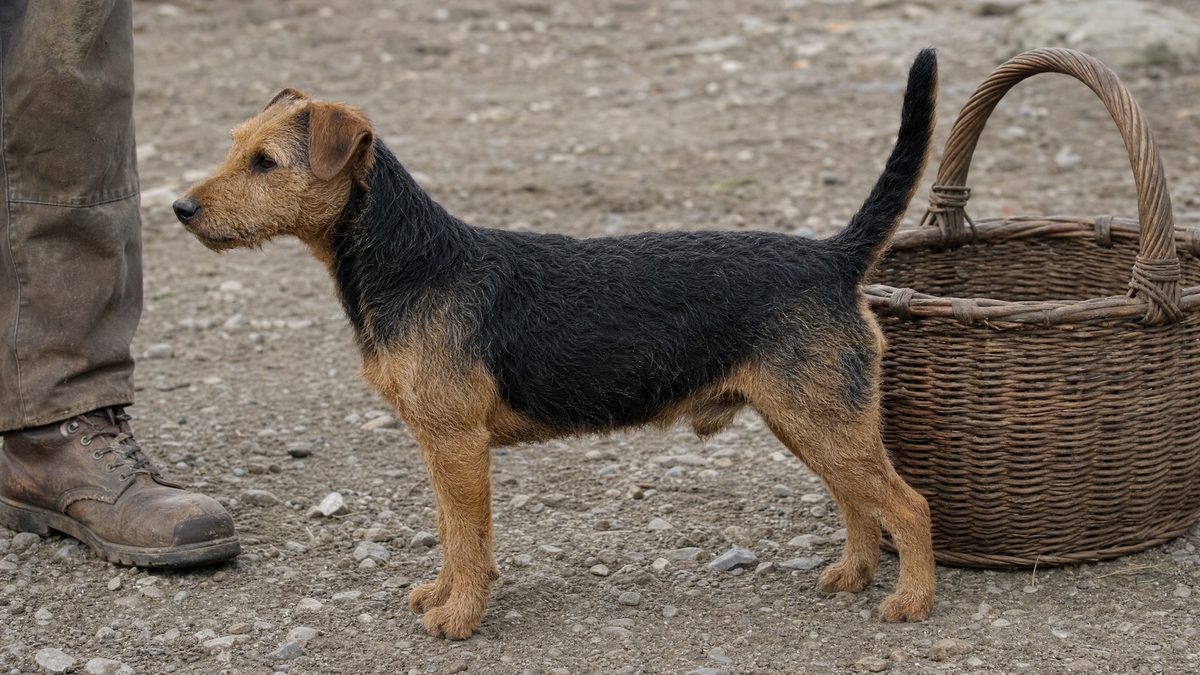
Quick answer
The Black and Tan Terrier is an extinct British working terrier type that no kennel club recognises today. Its smooth line was renamed the Manchester Terrier in 1924 and the English Toy Terrier (Black and Tan) in 1960, while its rough line was absorbed into the Welsh, Lakeland and Airedale breeds. No living population, no breeder and no Indian price exists under this name.
This guide is general information for Indian pet owners and is not a diagnosis. No breed-specific veterinary literature exists for the Black and Tan Terrier, so nothing here should be read as a health profile for an individual dog. Consult a registered veterinarian who has examined your dog before acting on anything you read here.
Black and Tan Terrier at a glance, rated for India
What the Black and Tan Terrier was, and why you cannot buy one
The Black and Tan Terrier was a working type of British terrier, not a single standardised breed, and no kennel club anywhere in the world recognises that name today. No living population exists under it, no breeder sells it, and no registry will issue a pedigree for it. What the name meant depended entirely on who was using it and in which decade, which is the reason the question is hard.
Start with what is not in dispute. The common terrier of Britain around 1800 was black and tan, and every period source Bonbeno opened says so independently. Rawdon Lee, Kennel Editor of The Field, wrote in 1894 that 'the common terrier of a hundred years ago was for the most part black and tan in colour, with white on his chest and on his feet';. W. D. Drury's British Dogs, writing nine years later, adds that Daniel's Rural Sports of 1802 'makes special mention of the elegant and sprightly Smooth-coated Terrier, black in body, and tanned on the legs';. The colour was the default, not a distinction.
A type, not a breed with a standard
The name covered dogs that varied enormously. Wikipedia's entry, which sits at position one for this term, describes a weight range of 9 to 20 lb, a coat that was 'usually wire-haired, could be smooth or woolly', and a colour list running to nine entries including blue, liver, sandy and white. That is not a breed description. It is a description of a landrace with a colour label attached, and it is a fair summary of what the nineteenth century actually meant by the words.
Robert Leighton, writing in 1910, is more specific and more useful, because he names regional strains rather than a single dog. He records a wire-haired black and tan terrier once common in Suffolk and Norfolk, another 'in Shropshire a well-known breed of wire-hair terriers, black and tan, on very short legs, and weighing about 10 lb. or 12 lb., with long punishing heads and extraordinary working powers';, and a Yorkshire strain kept by Squire Thornton near Pickering that was 'tan in colour with a black stripe down the back'. Three counties, three different dogs, one colour name.
| Source and date | The dog described | Coat | Size given |
|---|---|---|---|
| Leighton, 1910, Suffolk and Norfolk | Rabbiting terrier, 'may now be extinct' | Wire-haired | Not given |
| Leighton, 1910, Shropshire | Very short-legged, long punishing head | Wire-haired | 10 to 12 lb |
| Leighton, 1910, Yorkshire (Thornton strain) | Tan with a black dorsal stripe | Wire-haired | Not given |
| Lee, 1894, the show dog | Smooth, elegant, bred for markings | Smooth | Toys to 7 lb, large 16 to 20 lb |
| Wikipedia, 2026 | Broad type, nine colours listed | Wire, smooth or woolly | 9 to 20 lb |
The one thing every source agrees on
Every account converges on function. These were working terriers kept to kill rats and to go to ground after fox, badger and otter, and appearance came a distant second. Lee is blunt about it. Few sporting districts 'are or were without their own special strain of terriers, in which appearance was of little object so long as gameness predominated'. A dog that was game was a good dog, whatever it looked like.
The rat pit is where the smooth version became famous and then became a show dog. London alone had at least seventy rat pits at the height of the sport, and the London Museum holds a painting of one of them, Rat-Catching at the Blue Anchor Tavern, Bunhill Row, Finsbury, dated 1850 to 1852The English Toy Terrier (Black & Tan) Club.
There is nothing to buy. The Black and Tan Terrier is not listed by the Federation Cynologique Internationale, by the Royal Kennel Club, by the American Kennel Club or by the Orthopedic Foundation for Animals, all four of which Bonbeno read in full on 21 August 2026The Royal Kennel ClubOrthopedic Foundation for Animals. There is no breed club, no breed standard, no studbook and no living population under the name. Anything advertised to you as a Black and Tan Terrier is a different dog wearing an old label, and the price section below names which dogs those usually are.
Is the Black and Tan Terrier extinct, renamed, or absorbed? All three answers have sources
The honest answer is that the question has no single correct answer, because the name covered more than one dog and each of them ended differently. One line was renamed and survives under a new name. One line was absorbed into breeds that outcrossed away from it. One line simply died out and left nothing. Anyone who tells you it is simply extinct, or simply the Welsh Terrier, is compressing three different histories into one.
Bonbeno went to the registries and the period sources rather than to the ranking pages, and the three answers below each rest on a document.
Answer one, renamed: the smooth dog is now the Manchester Terrier
The smooth-coated show Black and Tan Terrier was renamed, and the renaming is documented by the breed clubs that lived through it. The English Toy Terrier (Black & Tan) Club records that the Kennel Club created a category specifically for the Black and Tan Terrier in 1880, split off the smaller dogs as 'Black and Tan Terriers (Miniature)' in 1903, and that 'it would not be until 1924 that the larger Black and Tan Terriers were officially renamed the Manchester Terrier';. The Canadian Manchester Terrier Club dates the equivalent North American step to 1923, when 'the Manchester Terrier Club of America was recognized, reflecting the breed's change of name';. On this line the breed did not die. It changed labels.
Answer two, absorbed: the rough dog was bred into other breeds
The rough or wire-haired working dog was absorbed rather than renamed, and the Royal Kennel Club says so in its own words on the Welsh Terrier page. 'The broken coated black and tan terriers of the 18th century were influential behind many terrier breeds and the huntsmen of Wales stayed true to this colour, adding Irish Terrier and Airedale and later the Lakeland to reduce size and add some refinement in the development of breed type';. Read that carefully. The registry is describing an ancestral population that was crossed into something else, not one that was simply relabelled.
Answer three, extinct: the regional strains that left nothing
Some strains genuinely vanished. Leighton in 1910 was already writing in the past tense about the Suffolk and Norfolk wire-haired black and tan, saying 'it may now be extinct, or, if not extinct, probably identified with the Welsh Terrier';. He was equally unsure about the Elterwater Terrier. Wikipedia records the breed status as extinct and lists it among extinct terriers and extinct British dog breeds.
| Which dog | What happened to it | Who says so | How strong is the evidence |
|---|---|---|---|
| Smooth show Black and Tan Terrier | Renamed Manchester Terrier, 1923 in the USA and 1924 in the UK | English Toy Terrier (Black & Tan) Club; Canadian Manchester Terrier Club | Strong. Two breed clubs, dated, and the modern registry still names the old dog in its ancestry |
| Miniature Black and Tan Terrier | Split off in 1903, renamed English Toy Terrier (Black and Tan) on 1 April 1960 | English Toy Terrier (Black & Tan) Club | Strong. The club itself changed its own name to match |
| Rough working black and tan terrier | Absorbed into the Welsh, Lakeland, Airedale and fell terrier lines | Royal Kennel Club; American Kennel Club; Leighton | Moderate. Asserted by registries, hedged in their own wording, and never tested genetically |
| Regional strains, Suffolk, Norfolk, Shropshire, Elterwater | Died out with nothing traceable left | Leighton, writing in 1910 | Weak by nature. A negative recorded by a contemporary, and unverifiable now |
No dog alive today is registered anywhere as a Black and Tan Terrier. Two modern breeds carry the old name inside their own histories, the Manchester Terrier and the English Toy Terrier (Black & Tan), and a third group of breeds claims descent from the rough version. If you want the closest thing that legally exists, read the Airedale Terrier page. If you were offered a puppy under this name in India, read the price section before you pay anything.
What the nineteenth-century books actually say, read rather than summarised
The nineteenth-century dog books are available in full text, so Bonbeno read three of them end to end instead of quoting a summary of a summary. They change the picture. The contemporaries were arguing about exactly the question modern pages present as settled, and the most authoritative of them concluded that the Old English black and tan terrier was not a variety at all.
Three books carry the load here, and all three are free to read. Rawdon B. Lee's Modern Dogs (The Terriers), 1894, is the first book ever devoted entirely to terriers and its author was Kennel Editor of The Field. W. D. Drury's British Dogs, third edition 1903, prints the Black-and-tan Terrier Club's own official description. Robert Leighton's Dogs and All About Them, 1910, surveys the regional working strains.
Lee, 1894: 'no variety at all'
Lee devotes a full chapter to the Black and Tan Terrier and a separate one to the Welsh Terrier, and he is openly sceptical of both names. On the attempt to establish the older name as a show breed he is scathing. 'A few years ago an Old English Terrier Club was formed, and it sought to bring out of various country districts that hardy, hard-bitten game dog common thereto, and which was used for work. So far this club has done its work but moderately';. He then reports something no modern page mentions. Judges at those special classes kept awarding the prizes to Airedales and Welsh Terriers, and 'a case has been known where a dog was by the judges given honours in both its own class as an Airedale terrier and in that for the so-called old English variety, which is no variety at all';.
That single sentence is the most important primary quotation on this page. A contemporary expert, judging the dogs in front of him, concluded that the Old English black and tan terrier had no separate existence as a breed by 1894.
Lee on where the show dog came from
On the smooth dog Lee is equally direct. 'The original fox terrier was a black and tan terrier';, he writes, before adding that the modern show version descended from those working dogs 'crossed probably with some lighter built dog, maybe with a small greyhound'. Drury, nine years later, reaches the same conclusion by a different route, noting 'the great length of head, the tendency to show a tucked-up flank, and a something in the general contour, gives one the impression that Greyhound blood is in the breed; and if so it was probably obtained through the Whippet';. The modern FCI standard for the Manchester Terrier still says exactly that: 'it is likely that there is some Whippet in his ancestry';.
Drury, 1903: the breed was 'really an old English Terrier'
Drury records the naming mess as it stood in 1903, and it does not match the tidy story told today. 'The Black-and-tan is frequently called the Manchester Terrier, and for many years it was so designated by the Kennel Club in their Stud Book; but for some time past this definition has been dropped, and the breed now appears under the heading of Black-and-tan Terriers. This is as it should be, as this dog is really an old English Terrier';. The Kennel Club had therefore used the Manchester name, dropped it, and would pick it up again twenty-one years later.
One famous dog, three incompatible descriptions
Tiny the Wonder is the most cited individual black and tan terrier in history, and three sources describe him differently. The London Museum, which holds the painting, calls him 'a black and tan Manchester terrier' weighing only 2.5 kg and says he could kill 200 rats in under an hour, on 28 March 1848 and again on 27 March 1849. The English Toy Terrier club gives 5.5 lb and the same 200 rats in under an hour, but calls him 'a Black and Tan Terrier in miniature, predecessor to the modern English Toy Terrier'. The Canadian Manchester Terrier Club calls him 'a five pound bull and terrier cross' who killed 100 rats in five and a half minutes.
The weights agree closely, since 5.5 lb is 2.49 kg. The breed and the record do not. Note also that the museum is applying a name, Manchester Terrier, that did not exist as a registered breed until 1924, to a dog that ran in 1848. That single retro-labelling is how the whole confusion propagates, and it happens in a national museum's own caption.
One source Bonbeno could not read
Vero Shaw's The Illustrated Book of the Dog, 1881, contains a chapter on the Black and Tan Terrier at Chapter XIII, page 107, and the English Toy Terrier club reproduces two of its plates. Bonbeno tried three separate archive.org identifiers for the full text on 21 August 2026 and every one returned an HTTP 500 error. No claim on this page rests on Vero Shaw, and the book is named here only so a reader who wants a fourth period source knows it exists.
The Kennel Club decisions that moved the name, and where the dates disagree
Four Kennel Club decisions between 1880 and 1960 took the name Black and Tan Terrier off the register and replaced it with three other names. Setting them out in order explains almost every confusion on the internet about this breed, and it also exposes a date conflict that no ranking page acknowledges.
The sequence below is assembled from the two breed clubs closest to the dogs and from the registry itself. Read it once and the arguments make sense.
| Date | What was decided | Source |
|---|---|---|
| 1873 | The Kennel Club is founded. Its early Stud Books carry no classification for Black and Tan Terriers at all | English Toy Terrier (Black & Tan) Club |
| 1879 | Birmingham committee offers special prizes for black and tans with uncut ears; continued three years, no take-up | Rawdon Lee, 1894 |
| 1880 | The Kennel Club introduces a category specifically for the Black and Tan Terrier | English Toy Terrier (Black & Tan) Club |
| 1884 | The original Black and Tan Terrier Club is established | Rawdon Lee, 1894 |
| 1885 or 1886 | A class for Welsh or Old English wire-haired black and tan terriers enters the Stud Book. The date is disputed | Rawdon Lee, 1894; David Hancock; Royal Kennel Club |
| 1888 | The Welsh Terrier appears in the Stud Book under that name alone | Rawdon Lee, 1894 |
| 1898 | The Kennel Club bars cropped dogs from competing, and both black and tan varieties decline | Drury, 1903; Royal Kennel Club |
| 1903 | The smaller dogs are recognised separately as Black and Tan Terriers (Miniature) | English Toy Terrier (Black & Tan) Club |
| 1923 | The Manchester Terrier Club of America is recognised, reflecting the change of name in North America | Canadian Manchester Terrier Club |
| 1924 | The larger Black and Tan Terriers are officially renamed the Manchester Terrier in the UK | English Toy Terrier (Black & Tan) Club |
| 1934 | The Toy Black and Tan Terrier becomes the Toy Manchester Terrier in North America | Canadian Manchester Terrier Club |
| 1 April 1960 | The Black and Tan Terrier (Miniature) becomes the English Toy Terrier (Black and Tan) | English Toy Terrier (Black & Tan) Club |
The disputed date, and why it matters
Three credible sources give three different accounts of the single most quoted event in this breed's history. David Hancock writes that at the Bangor Show of 1885 Welsh fanciers approached the Kennel Club, and that 'in November 1885, to satisfy both parties the KC agreed to enter in the Stud Book the classification Welsh Terrier or the Old English wire-haired Black and Tan Terrier, Class 53';. Rawdon Lee, writing in 1894 as a contemporary, says instead that 'when the Kennel Club authorities at Cleveland-row consented to its entry in their Stud Book in 1886, the classification of Welsh or old English wire-haired black and tan terriers was given';. The Royal Kennel Club today says only that 'the first breed club was formed in 1885 in Pwllheli when the first breed show was held';.
Bonbeno cannot settle this and does not pretend to. Lee is the nearest witness and gives 1886 for the Stud Book entry; Hancock gives November 1885 for the same decision and names a class number; the registry names 1885 for the club rather than the class. They may all be describing different events in the same eighteen months, which is the most likely reconciliation, but no primary Stud Book page was available to Bonbeno to check it. Treat any page that states one date flatly, without noting the others, as having copied rather than checked.
How the English name was deleted
The most consequential decision is the one nobody records as a date. Lee describes it plainly. The north of England fanciers 'attempted to establish a club to promote the old English hard-haired black and tan terrier, and failed so to do';, while the Welsh succeeded, and having succeeded 'they contrived to persuade the Kennel Club to abolish the name of old English terrier altogether; and, be the animal of Northumberland, Cumberland, Westmoreland, Durham, Devon, or Yorkshire extraction, his nativity has no locus standi, and Welsh he must be to the end of his days'.
This is the trap. The English name was removed from the Stud Book because one lobby organised a club and the other did not, and Lee says so in 1894 while the dust was still settling. Dogs of Cumberland and Yorkshire extraction were thereafter registered as Welsh. Nothing happened to the dogs. Something happened to the paperwork, and a century of breed histories has read the paperwork as though it were biology.
Registry status today: four registers read in full, and the breed is in none of them
No kennel club or health registry lists the Black and Tan Terrier. Bonbeno read four registers in full on 21 August 2026 rather than searching them, confirmed the breed names printed inside each returned document, and ran a control on each. The breed is absent from all four, and the controls all passed.
The FCI
FCI Group 3 covers Terriers and lists 34 breeds across four sections, 15 large and medium sized, 12 small sized, 4 bull type and 3 toy. Bonbeno read the published group page in full. There is no Black and Tan Terrier in it. The control is the rest of the list, which reads correctly: Airedale Terrier 7, Bedlington Terrier 9, Border Terrier 10, Fox Terrier (Smooth) 12, Lakeland Terrier 70, Manchester Terrier 71, Welsh Terrier 78, Kerry Blue Terrier 3. The document is the right document, and the breed is absent from it.
Worth recording, because it is exactly how a careless check goes wrong. The URL fci.be/en/nomenclature/terriers-3.html looks like the Group 3 list and returns HTTP 200. It serves the Kerry Blue Terrier standard page, breed number 3. An agent checking for our breed there would have found no mention of it and reported a correct conclusion from entirely the wrong page. The real group list lives at /en/nomenclature/3-Terriers.html, and the heading printed inside it reads 'Group3 : Terriers';.
The Royal Kennel Club
The Royal Kennel Club's breed standards index lists every breed it recognises across all seven groups. The Terrier group holds 27 breeds and the Toy group holds the English Toy Terrier (Black & Tan). There is no Black and Tan Terrier, and no Old English Terrier, anywhere on the page. The control is that Manchester Terrier, Welsh Terrier, Airedale Terrier and Lakeland Terrier are all present and correctly grouped.
The OFA
The Orthopedic Foundation for Animals publishes roughly 292 disease statistics tables covering every breed it holds data for. Bonbeno pulled the full dump, saved it and searched it case-insensitively. A search for black and tan terrier returns zero rows. Two controls matter here. The word LABRADOR returns 109 rows, so the dump loaded. And the string BLACK AND TAN returns 34 rows, every one of them the Black and Tan Coonhound, which is precisely why a non-zero count proves nothing on its own.
PubMed
PubMed returns three records for the phrase Black and Tan Terrier, and all three are noise. The database rewrote the query, exploding the word black into the MeSH heading for Black or African American, and the three results are a paediatric COVID-19 mortality database analysis, a Canadian Veterinary Journal paper on subungual squamous cell carcinoma, and a paper about benchmarking document-similarity detection. The controls passed in the same session: Labrador Retriever returned 1,106 records with a clean translation, Airedale Terrier 38, Manchester Terrier 6, Welsh Terrier 6 and Lakeland Terrier 2, none of them rewritten. The honest count for this breed is zero.
| Register | Result for this breed | Control run in the same session | Control result |
|---|---|---|---|
| FCI Group 3 Terriers | Absent from 34 breeds | Airedale 7, Manchester 71, Welsh 78 | All present, correctly numbered |
| Royal Kennel Club breed standards | Absent from all seven groups | Manchester, Welsh, Airedale, Lakeland | All present |
| OFA disease statistics | 0 rows, case-insensitive | LABRADOR; BLACK AND TAN | 109 rows; 34 rows, all Coonhound |
| PubMed | 3 records, all unrelated | Labrador Retriever; Airedale Terrier | 1,106 and 38, clean translations |
The Kennel Club of India publishes no breed list on its site. When Bonbeno checked kennelclubofindia.org on 21 August 2026 it served a forms-download page and nothing else, so no claim is made here about what the KCI would or would not recognise.
Which modern breeds claim descent, and exactly who is making each claim
Six modern breeds are commonly said to descend from the Black and Tan Terrier, and the claims are not equally well supported. Two are made by the national registry itself in its own breed histories. Two rest on a single 1910 book. Two rest on nothing Bonbeno could trace to any document at all. Sorting them is the most useful thing this page does.
The table below records who asserts each descent, in what words, and whether the assertion carries a source. Nothing here has been genetically tested, for reasons the next section explains.
| Breed | The claim, and who makes it | Rests on |
|---|---|---|
| Manchester Terrier | 'Again the old Black and Tan terrier can claim some part in its ancestry, but with an input of Whippet blood', Royal Kennel Club breed page | Registry assertion, hedged. Supported independently by Drury 1903 and by the naming record |
| English Toy Terrier (Black & Tan) | 'Britain's oldest native Toy breed and, along with its larger cousin the Manchester Terrier, traces its roots back to old English Black and Tan Terriers', its own breed club | Breed club assertion. Supported by the club's own dated renaming record from 1903 to 1960 |
| Welsh Terrier | 'An early name for the breed was the Welsh Black and Tan Rough Coated Terrier', Royal Kennel Club. The AKC separately calls the Old English Black and Tan Terrier 'the granddaddy' of the Welsh, Lakeland and Airedale | Registry assertion. But the same RKC page records Irish Terrier, Airedale and Lakeland being added later, so the modern dog is not the old one relabelled |
| Airedale Terrier | 'He is undoubtedly the product of the Otterhound and the old Black and Tan wire-haired terrier', Leighton 1910 | A single 1910 book. The FCI standard for the Airedale mentions Waterside Terriers and names neither the Otterhound nor the black and tan |
| Lakeland Terrier | Named by the AKC alongside the Welsh and Airedale as sharing the same 'granddaddy'; Hancock says the old dog is 'partly represented today by the Lakeland' | Registry assertion plus one specialist author. No dated document found |
| Yorkshire Terrier | 'They already possessed the foundation in the old English Black and Tan wire-haired Terrier', Leighton 1910 | A single 1910 book, and Leighton himself calls it a reconstruction of the process |
What the FCI standards do not say
This is the check that separates a registry assertion from a registry consensus, and it is not flattering. Bonbeno read the FCI standards for the Airedale Terrier, the Welsh Terrier, the Manchester Terrier and the English Toy Terrier in full. Not one of the four mentions the Black and Tan Terrier. The Welsh Terrier standard offers a completely different origin story, suggesting the Welsh and Lakeland 'may well have had a common origin prior to the Roman invasion of Britain'. The Airedale standard credits Waterside Terriers from the valleys of the Wharfe, Calder and Aire and says nothing about ancestry beyond that. The Manchester standard names only the Whippet. The English Toy Terrier standard carries no historical summary at all.
So the position is this. The British and American registries assert descent in their breed-history prose; the international registry's own written standards do not. Both are talking about the same dogs. Bonbeno therefore treats the Airedale, Lakeland and Yorkshire links as unverified rather than false, because an unsupported claim from a serious body is not the same thing as a wrong one.
How the AKC words it, and why the wording matters
The American Kennel Club's Welsh Terrier page says that 'an ancient breed called the Old English Black and Tan Terrier is thought to be the granddaddy of these and some other British terriers'. That is a hedge, and a properly placed one. The AKC is reporting a belief rather than a finding, which is more honest than most of the pages that copy it and drop the hedge.
If you want the best-evidenced link, it is the Manchester Terrier and the English Toy Terrier, and the reason is bureaucratic rather than biological. Those two breeds can point at Kennel Club registers that carried the words Black and Tan Terrier as their own official name until 1924 and 1960 respectively. That is a continuous documentary chain, not an inference. Every other descent claim on this page is an inference, and some of them are good ones.
What DNA can and cannot settle about an extinct ancestor
No genetic study supports or refutes descent from the Black and Tan Terrier, and none can, because there is no reference sample. Genomic work compares living populations against each other. An ancestral type with no surviving population and no preserved tissue cannot be entered into that comparison at all, so every descent claim on this page remains historical rather than genetic.
The largest published survey of modern dog breed development is Parker and colleagues, Cell Reports 2017, which assembled genomic data from 1,346 dogs representing 161 breeds and built a 23-clade cladogram using identity-by-state distance and genome-wide haplotype sharing. It is the study any serious question about breed relationships has to start from.
What that study can do
It dates admixture events, and it does so well enough to check against history. The authors report that all of the bull and terrier crosses map to the terriers of Ireland and date to 1860 to 1870, and note that this 'coincides perfectly with the historical descriptions' of dog contests in Ireland during that era of breed creation. That is the method working exactly as intended, and the paper cites Lee 1894 for the historical side, which is the same book quoted throughout this page.
What it cannot do here
The published text of that paper names a single Terrier clade, represented in its figures by the Irish Terrier, and it does not discuss the Welsh, Lakeland, Airedale or Manchester results in prose at all. More fundamentally, no amount of haplotype sharing between living terriers can tell you whether their common ancestor was called a Black and Tan Terrier. Shared ancestry is measurable; the name of the ancestor is a historical question, and it is settled by stud books rather than by sequencers.
So when a page tells you that DNA proves the Welsh Terrier descends from the Black and Tan Terrier, ask it which study, which sample, and which reference population. Bonbeno found no such study.
Recorded because it is the commonest way this kind of page gets a fabricated citation. While tracing an Indian tick-borne disease survey, Bonbeno guessed a PubMed Central identifier that returned a real, complete, correctly formatted article: a study of Escherichia coli formate dehydrogenases with hydrogen oxidoreductase activity. Nothing failed. The server returned HTTP 200 and the document was genuine, simply about something else entirely. The correct identifier was then resolved through the NCBI link service, and the survey cited further down this page is the one Bonbeno actually opened and read. Never cite an identifier you guessed.
Black and Tan Terrier price in India: there is no price, and that is the finding
No Indian seller publishes a price for a Black and Tan Terrier, because no Indian seller has one. Bonbeno searched Indian results for the term on 21 August 2026 and every result was about a different breed. The useful question is therefore not what it costs. It is what you are actually being shown when a page uses this name.
One more control, run because search engines fail silently. Bing with its region set to India loaded a genuine results page for this term, reporting about 5,720 results with Wikipedia at position one, and it carried no People Also Ask block and no related-questions module at all. Google's India-localised results page returned HTTP 429 with a reCAPTCHA the same afternoon. The searches below therefore ran, and their emptiness is real.
The control matters here, because a zero can be a blocked search wearing a results page. The query price in india for this breed returned ten Indian results and all ten worked normally: Yorkshire Terrier at Rs 70,000 to Rs 1,40,000 or more, Jack Russell Terrier at Rs 20,000 to Rs 35,000 on one page and Rs 65,000 to Rs 1,20,000 on another, Bull Terrier at Rs 45,000 to Rs 1,50,000, plus Black Russian Terrier and English Toy Terrier breed pages. The search engine was working. There was simply no Black and Tan Terrier in it.
The Indian price index that has no entry for it
Supertails publishes an Indian dog price list covering 40 breeds with city-wise bands for Delhi, Mumbai, Bangalore, Chennai, Hyderabad and Pune. Exactly two terriers appear on it, the Bull Terrier at Rs 25,000 to Rs 70,000 and the Scottish Terrier at Rs 30,000 to Rs 80,000. No Black and Tan Terrier, no Manchester Terrier, no Welsh Terrier, no Airedale, no English Toy Terrier. The control on that document is the Labrador Retriever at Rs 8,000 to Rs 80,000 and the adopted Indie at Rs 0 to Rs 3,000, both of which read correctly, so it is the right list and the breed is not on it.
Where the name does appear in India
One place, and it is worth understanding. PetzLover's Indian site carries Black and Tan Terrier in the 'Dog Breeds Available Near You' navigation on its terrier listing pages, sitting between American Hairless Terrier and Border Terrier. That navigation appears identically on the Rat Terrier page, the Australian Terrier page, the Lucas Terrier page and the Jack Russell pages. It is an auto-generated breed shell, not an inventory. Bonbeno tried twice to open the dedicated Black and Tan Terrier listing page and both attempts, including one through a stealth proxy, returned HTTP 403 behind a CAPTCHA wall, so no claim is made here about whether that page holds any listings.
The nearest thing with an Indian price on it
One Indian breed guide does publish a purchase band for a descendant. HappyPet gives the Manchester Terrier at Rs 30,000 to Rs 60,000. Bonbeno ran the currency test on it, because Indian pages routinely publish a United States dollar figure passed through one exchange rate. Divide by 84.38 and Rs 30,000 becomes 355.53 dollars and Rs 60,000 becomes 711.06 dollars. Neither is a round dollar amount, so that band shows no sign of being a converted American price. It reads as a genuine rupee estimate, and it is the only one Bonbeno found.
| Source | What it offers under or near this name | Published figure |
|---|---|---|
| Supertails price list, 40 breeds | Nothing. Two terriers listed, neither is this one | Not listed |
| PetzLover India | A breed name in site navigation on other breeds' listing pages | No price observable, page CAPTCHA-walled |
| HappyPet India | Manchester Terrier, a documented descendant | Rs 30,000 to Rs 60,000 |
| Mr n Mrs Pet | Yorkshire Terrier, described as Black & Tan in colour | Rs 70,000 to Rs 1,40,000 or more |
| Lazy C Ranch, United States, ranking position 9 | Black and tan Jack Russell hunt terriers | No price on the page |
A Champdogs forum thread from May 2004 argues for thirty posts about whether the 'Irish Black and Tan Terrier' is a breed. A specialist short-legged Jack Russell breeder writes that they are crossbred, that 'the irish are pumping them out by the load to sell to unsuspecting people at mega prices as a rare breed', and that buyers are being charged £1,000 to £2,000 per puppy. Owners in the same thread insist the dogs breed true. Nobody produced a pedigree. Twenty-two years later the pattern is the same, and if a rupee price ever attaches to this name in India, it will attach to a dog with exactly that kind of paperwork behind it.
Indian law closes both routes: you cannot import one, and you cannot recreate one
Two separate Indian instruments matter to anyone who wants this dog, and between them they close the question. The import rules permit dogs into India only as a personally owned pet, for research, or for internal security, and reject trading applications outright. The 2017 breeding Rules then prohibit breeding to create new breeds, which is what recreating an extinct type is.
Import: restricted, and commercial applications are rejected
India makes dogs a Restricted item under ITC (HS) 01061900. Policy Condition 7 of the Trade Notice allows import only for a pet dog with a valid pet book and relevant records in the name of the importer, for R&D organisations with a CPCSEA recommendation, or for internal security by the Defence and Police Force. Policy Condition 8 states that import of commercial dogs for breeding or any other commercial activity is not permitted, and paragraph 6 says applications for trading or breeding purposes 'shall be duly rejected';.
Two further constraints from the same notice. Import of pet animals is allowed only through the airports and seaports of Delhi, Mumbai, Chennai, Hyderabad, Bengaluru and Kolkata and, since October 2024, Kochi airport, and pet owners are advised to start the import authorisation application at least two months before travel. Up to two pets may come as passenger baggage without a DGFT authorisation, but only for a person transferring residence to India after two years of continuous stay abroad. The full route is set out in how to import a dog to India.
Registration: the paperwork a nonexistent breed cannot produce
If a dog did arrive, the Kennel Club of India's checklist for registering it as import status asks for an export pedigree in original, an airway bill in original, the air ticket, the boarding pass, the DGFT licence, customs clearance, quarantine clearance, a pet passport and a notarised affidavit. An export pedigree is issued by a foreign kennel club for a breed that foreign kennel club recognises. No kennel club anywhere recognises this breed, so there is no body that could issue the first document on the list.
Recreation: prohibited in terms
This is the point nobody makes, and it is decisive for the small number of Indian enthusiasts who talk about bringing the old type back. The Prevention of Cruelty to Animals (Dog Breeding and Marketing) Rules, 2017 state at Second Schedule, Part II, paragraph 6(9) that 'Breeding to create new breeds of dogs or unusual looks shall be strictly prohibited';. Bonbeno extracted the gazette text and searched it directly rather than quoting a summary, because this document has repeatedly been misquoted.
A breeding programme that assembles black and tan fell-type dogs and calls the result a revived Black and Tan Terrier is creating a breed. Whatever its intentions, it runs straight into that clause.
| Provision | Where it sits | What it says |
|---|---|---|
| Sale below eight weeks | Rule 8(1)(a) | Every breeder shall ensure that pups less than eight weeks in age are not sold |
| Sale above six months | Rule 8(1)(b) | Dogs over six months are not sold without first being sterilised, unless sold to another licensed breeder |
| Docking and cropping | Second Schedule Part II, para 6(8) | No tail docking, ear cropping, de-barking, de-clawing, branding, dyeing, or any change of appearance by artificial means. Strictly forbidden |
| Creating breeds | Second Schedule Part II, para 6(9) | Breeding to create new breeds of dogs or unusual looks shall be strictly prohibited |
| Close matings | Second Schedule Part II, para 6(3) | In breeding and incest breeding are prohibited; only out breeding and line breeding are permitted |
| Genetic testing | Second Schedule Part III, para 8(10) | Dogs shall have been tested for genetic defects including hip dysplasia, progressive retinal atrophy, night blindness and hypothyroidism |
The nineteenth-century Black and Tan Terrier was a cropped dog. Lee called cropping a 'needless mutilation' in 1894 and said it broke the dog's spirit; the Kennel Club barred cropped dogs from competition in 1898, and the Royal Kennel Club records that the ban 'brought a decline in the breeds popularity' because uncropped ears looked wrong to people who had known the cropped versionThe Royal Kennel Club, Manchester Terrier. In India ear cropping is prohibited outright under paragraph 6(8). Any Indian image or seller showing a cropped black and tan terrier is showing you something that cannot lawfully be produced here.
Monthly cost of ownership: what can honestly be costed for a dog nobody sells
No monthly cost can be quoted for a Black and Tan Terrier, because there is no dog to cost. What can be costed is the small-to-medium terrier a reader who came here will realistically end up with, and two Indian sources publish figures for exactly that. Both are given below, along with the gap between them, because they disagree by more than double.
Two Indian sources publish monthly running costs a reader can check. They are not close to each other, and the spread is the useful part.
| Cost line | HappyPet, Manchester Terrier specific | Supertails, small breed generic |
|---|---|---|
| Food | Rs 1,200 to Rs 1,800 | Rs 1,500 to Rs 2,500 |
| Veterinary | Rs 300 to Rs 750 | Rs 500 to Rs 1,000 routine |
| Grooming | Rs 700 to Rs 1,200 | Rs 1,500 to Rs 3,000 |
| Treats and toys | Not itemised | Rs 300 to Rs 800 |
| Flea, tick and deworming | Not itemised | Rs 300 to Rs 600 |
| Monthly total | Rs 2,200 basic to Rs 3,750 premium | Rs 4,000 to Rs 8,000 |
The gap is large enough that a reader budgeting from one number will be wrong. HappyPet's premium figure of Rs 3,750 sits below Supertails' basic figure of Rs 4,000, and Supertails' upper bound of Rs 8,000 is more than double HappyPet'sSupertails, Dog Price List in India 2026. Neither source publishes a method. Budget against the higher set and treat the lower set as a floor, and add the two lines HappyPet does not itemise at all.
The Indian line item both estimates under-weight
Tick and flea control is not a small recurring cost in India, it is the load-bearing one. A survey of 525 dogs across Delhi, Mumbai, Sikkim and Ladakh found 261 of 525, or 49.7 percent, infected with at least one tick-borne pathogen, with Hepatozoon canis at 30 percent, Ehrlichia canis at 20.6 percent, Mycoplasma haemocanis at 12.2 percent, Anaplasma platys at 6.5 percent and Babesia vogeli at 5.5 percent. Concurrent infection with more than one pathogen occurred in 39 percent of cases. Divide it out yourself: 261 divided by 525 is 49.71 percent, which is what the paper reports.
Against a near coin-flip risk of infection, Supertails' Rs 300 to Rs 600 a month for flea and deworming is the least optional line on the table, and HappyPet omitting it entirely is the clearest sign that its total is too low.
Bonbeno will not publish a purchase price for this breed, an insurance premium for it, or a lifetime cost, because all three would be invented. If you want real numbers for a dog you can actually obtain in India, the Airedale Terrier, Jack Russell Terrier and Yorkshire Terrier pages carry sourced Indian figures, and the Indian Pariah Dog page carries the cheapest and hardiest option of the four.
Indian climate: an ideal weather band of 10 to 24 degrees meets a 40 degree heat wave threshold
Every dog in this family was bred for a cold, wet, upland British climate, and the one Indian breed page that publishes a temperature preference for a descendant puts the ideal band at 10 to 24 degrees Celsius. India's own heat wave threshold for the plains starts at 40 degrees. That gap of sixteen degrees is the whole climate argument, and no page currently ranking for this term makes it.
HappyPet's Manchester Terrier spec card gives Ideal Weather 10 to 24 degrees Celsius. India Meteorological Department criteria, as published by WHO India, declare a heat wave when a station's maximum temperature reaches at least 40 degrees for the plains or at least 30 degrees for hilly regions, with heat waves typically running March to June and peaking in May, and on average five or six heat wave events a year over the northern parts of the country.
Read those two facts together. A plains city is not merely above this dog's stated ideal band on a hot day. It is sixteen degrees above the top of it before India will even call the day a heat wave.
| Figure | Value | Source |
|---|---|---|
| Stated ideal weather band, Manchester Terrier | 10 to 24 degrees C | HappyPet India |
| Heat wave threshold, Indian plains | 40 degrees C maximum | IMD via WHO India |
| Heat wave threshold, hilly regions | 30 degrees C maximum | IMD via WHO India |
| Severe heat wave, actual maximum criterion | 45 degrees C and above | IMD via WHO India |
| Coastal heat wave description threshold | 37 degrees C with a 4.5 degree departure | IMD via WHO India |
| Heat wave events per year, northern India | Five to six on average | IMD via WHO India |
The apartment contradiction on the same spec card
The same HappyPet page that sets the ideal band at 10 to 24 degrees also lists Ideal Space: Apartment. Both statements can be true only in an air-conditioned flat. In an unconditioned one-bedroom in Chennai or Nagpur in May, a heat-sensitive short-coated dog on a tiled floor with no ventilation is not living in its ideal band for weeks at a time. Take the temperature figure as the real constraint and the apartment figure as marketing.
The black coat problem nobody prices in
Colour is the defining feature of this family and it works against the dog in India. A jet black saddle absorbs more solar radiation than a light coat over the same body area, which is why the practical rule for any black and tan dog in an Indian city is not a shorter walk but a differently timed one. Walk before sunrise and after dark from March to June, when IMD says the heat wave season runs. Test the pavement with the back of your hand before you step onto it.
Where in India this family of dogs is least badly matched
Nowhere in India is a good match, but the hills are a materially different proposition from the plains. IMD sets the hill threshold at 30 degrees rather than 40, which tells you how much cooler those stations run. Shimla, Darjeeling, Ooty, Munnar and the Nilgiris sit far closer to a British working terrier's design brief than Delhi, Ahmedabad or Hyderabad do. That is a real difference, not a rounding one.
The rough-coated dogs in this family carry a hard, wiry jacket that Hancock describes as 'hard, wiry, stiff and coconut-matting in texture'. That coat insulates against heat as well as cold and shields the skin from direct sun. Clipping it off in an Indian summer removes the shield and does not remove the heat, and the coat frequently grows back soft. Manage the heat with timing, shade and water instead.
Temperament: what the period sources and the surviving standards actually describe
The Black and Tan Terrier was selected for one behavioural trait above all others, which the period writers call gameness: the willingness to keep working on a rat, a fox or a badger while being hurt. Everything else about its character, in every source Bonbeno read, is downstream of that. The three surviving standards that descend from it still say so.
The clearest single line comes from the Black-and-tan Terrier Club's own 1903 description of General Appearance, printed in full by Drury. 'A Terrier, calculated to take his own part in the rat pit, and not of the Whippet type';. That is a temperament specification disguised as a conformation clause.
What the working men said
Lee is contemptuous of the show ring and precise about what gameness actually meant. 'By gameness I do not mean partiality to fighting and cat-killing, and standing being cut up piece-meal without flinching or whimpering, but killing vermin and going to ground after fox, or badger, or otter';. That distinction still matters when someone sells you a terrier as brave.
Hancock records a hunt terrier-man's view of the black and tan rough coat specifically: he 'only ever used and owned terriers in this jacket because they can operate in all weather, always seem to have excellent temperaments and live long active lives';. Hancock also cites Alys Serrell's With Hound and Terrier in the Field, 1904, in which she kept several black or grizzle and tans and 'never found a bad coat in black and tan dogs';. That is one experienced field opinion, not a study, and it is offered as such.
What the surviving standards say
Three FCI standards descend from this stock and each describes the same dog from a different angle.
| Breed | Standard wording, quoted |
|---|---|
| Welsh Terrier, FCI 78 | 'Affectionate, obedient and easily controlled. Happy and volatile, rarely of shy nature. Game and fearless but definitely not aggressive although at all times able to hold his own when necessary' |
| Manchester Terrier, FCI 71 | 'Keen, alert, gay and sporting; discerning and devoted' |
| English Toy Terrier (Black & Tan), FCI 13 | 'Toy with Terrier characteristics. Alert, remembering that historically he could acquit himself satisfactorily in the rat pit. Never unduly nervous' |
Notice what all three have in common. Alert, game, and not nervous. Notice also what none of them promises: tolerance of other small animals, or of other dogs of the same sex. Leighton's account of the Welsh Terrier is unusual in this family for saying they 'are not quarrelsome, show very little jealousy one of another in working, can therefore easily be used, exercised, and kennelled together, being much better in this respect than any of the other breeds of terriers'. He is explicitly contrasting them with the rest of the group.
Who this family of dogs suits in India, and who it does not
It suits a household that wants an alert, small, short-to-medium-coated dog with real drive, that has secure boundaries, and that will not be upset when the dog kills a rat or a squirrel. It does not suit a household with free-roaming rabbits, hamsters or birds, a household that wants a dog which ignores other dogs on a narrow apartment corridor, or a first-time owner who reads 'small' as 'easy'. HappyPet rates the Manchester Terrier's need for attention high and its energy level high, with a 30 to 60 minute daily exercise routine.
Training a coloured working terrier, and the one instruction that has not changed since 1894
To train any dog from this family, start from what it was selected to do and stop expecting it to ignore that. These were dogs bred to make decisions alone, underground, out of sight of the handler. The training consequence is direct: recall away from prey is the single hardest behaviour to get and the one worth almost all of your first year.
The FCI Welsh Terrier standard calls the breed 'affectionate, obedient and easily controlled';, and that is genuinely true in a living room. It is not true fifteen metres from a monitor lizard in a Bengaluru park. Train for the second situation and the first looks after itself.
Four things that work with this type
- Pay recall more than the environment pays chasing. Use meat, not kibble, and pay every single recall for the first six months. A terrier that has been paid poorly once will run the numbers next time.
- Give the prey drive a legal outlet. Flirt-pole work, scent games and a dig box channel the same instinct into something you control. Suppressing it entirely produces the dug-up sofa.
- Socialise early and deliberately with other dogs. The standards call these dogs game and able to hold their own, which is exactly the temperament that needs early, calm, repeated exposure to other dogs rather than avoidance.
- Train in short sessions before the heat arrives. Five minutes at 6 am beats twenty minutes at 11 am, and in a plains city from March to June the second option is not available at all.
The instruction from 1894 that still applies
Lee's warning is about the handler, not the dog, and it has aged well. He observed that show breeding had 'distracted attention from the hardy, intelligent, maybe cross-bred terrier, to what is generally a more effeminate creature, though maybe handsomer in markings and narrower in the chest';. The modern equivalent is buying a terrier for its colour and then being surprised by its brain. This family of dogs was selected for initiative, and initiative in a bored dog is indistinguishable from destruction.
Realistic timelines
| Window | Realistic goal |
|---|---|
| Weeks 8 to 16 | Name response, crate comfort, house training, first vaccination course. Indian law fixes the earliest legal sale at eight weeks |
| Months 4 to 6 | Reliable indoor recall, loose lead in a quiet street, calm passing of other dogs at distance |
| Months 6 to 12 | Outdoor recall with mild distraction, settled travel, tolerance of the groomer and the vet table |
| Months 12 to 24 | Recall under real prey distraction. This is the one that takes two years, and some dogs never fully get it |
| Lifelong | Never off lead near traffic or livestock unless you have proofed the recall to the point of boredom |
Timing. If the walk happens before sunrise, the dog is not overheated, the streets are quiet, and every training repetition is worth more. IMD's heat wave season runs March to June and peaks in May, so build the early-morning habit in winter when it is easy and you will already have it when you need it.
Exercise: 30 to 60 minutes on paper, and what actually happens without it
Plan on 30 to 60 minutes of real exercise a day for any dog in this family, split across at least two sessions, with the first one before sunrise for most of the Indian year. That is the figure the one Indian breed guide publishes for the Manchester Terrier, and the Royal Kennel Club's own band for the same breed is up to one hour per day.
Two sources agree closely. HappyPet gives an exercise routine of 30 to 60 minutes with energy level rated high. The Royal Kennel Club's Manchester Terrier characteristics panel gives up to one hour per day, with size small, size of home small house, and size of garden small to medium. Those are compatible numbers, and they are lower than most working terriers because the smooth line was refined away from field work more than a century ago.
The rough-coated side is a different number
The rough-coated dogs in this family were kept to run with hounds all day. Leighton's account of the Welsh Terrier working with the Ynysfor Otterhounds describes a dog kept and worked alongside a pack, not a dog walked around a block. If what you actually acquire is a fell-type or Airedale-type dog under this name, budget closer to 90 minutes and expect to need a job for the dog as well as a walk.
Splitting the day in an Indian city
- Session one, before sunrise. The longest walk of the day. Pavement cool, streets quiet, dog able to work.
- Session two, indoors, mid-afternoon. Scent games, a food puzzle, a five-minute training block. Mental work substitutes for distance far better in this group than in a retriever.
- Session three, after dark. A second real walk once the pavement has released its heat.
- Weekly, one longer outing. A hill, a beach at low tide, a fenced field. Terriers stop inventing problems when they get one genuinely tiring day a week.
What under-exercise looks like in this family
It looks like digging, barking, and redirected prey drive. HappyPet's own stress list for the Manchester Terrier names excessive barking, pacing, changes in appetite and increased laziness, and the first two are the classic terrier under-stimulation signature rather than a disease sign. The dog is not anxious about nothing. It is unemployed.
A game terrier will keep working past the point where it is safe, which is precisely the trait it was bred for. In a plains city where IMD declares a heat wave at 40 degrees and the season peaks in May, the handler has to stop the session, because the dog will not. Watch for heavy panting that does not settle within two minutes of shade and water, and end the walk at that point rather than at the end of the route.
Grooming: two completely different coats under one breed name
Grooming this family depends entirely on which of the two historic coats you are holding, and the sources describe them as opposites. The smooth line needs a rubber mitt once a week. The wiry line needs hand-stripping two or three times a year and will go soft and lose its weatherproofing if you clip it instead.
Wikipedia's summary of the historic type says the coat was 'usually wire-haired, could be smooth or woolly';. That is not vagueness. It is an accurate description of a working population that was never selected for a single coat.
The smooth line, and a shedding claim that does not survive checking
The Royal Kennel Club's Manchester Terrier panel gives coat length short, grooming once a week, and sheds yes. HappyPet's Indian page for the same breed gives shedding level low shedding, and explains that 'they lack an undercoat, reducing their seasonal shedding'. Both can be true at once, since a single-coated dog sheds continuously at a low rate rather than in seasonal blowouts, but a reader shown only the second sentence will expect a dog that does not shed, and will be wrong.
Small smooth black and tan dogs are frequently sold in India as allergy-friendly. There is no such dog. Vredegoor and colleagues measured Can f 1 in hair and homes across 196 dogs of so-called hypoallergenic breeds against 160 control dogs. The hypoallergenic group came back higher, not lower: 2.26 against 0.77 micrograms per gram in hair and 27.04 against 12.98 in coat, with no difference in airborne allergen. Their conclusion is quoted exactly: 'There is no evidence for the classification of certain dog breeds as being hypoallergenic'. Note also that none of the four FCI standards in this family says anything at all about reduced sheddingFCI Standard No 13.
The wiry line, and why clipping ruins it
Hancock describes the true terrier coat as 'hard, wiry, stiff and coconut-matting in texture', and complains that 'so many Welsh and Lakeland Terriers have developed woolly, fluffy pelage, neither weatherproof nor traditional';. Leighton, describing the Welsh Terrier's jacket, says that when the harsh outer coat sits over 'a dense undercoat, one has, for a terrier used to work a good deal in water, an ideal covering, as waterproof almost as the feathers on a duck's back';. Clippers cut the harsh outer hairs and leave the soft ones, so a clipped wiry coat loses exactly the property both writers are describing.
An Indian grooming schedule that respects both coats
| Task | Smooth line | Wiry line |
|---|---|---|
| Brush or mitt | Rubber mitt weekly | Slicker and comb twice weekly |
| Coat maintenance | None needed | Hand-strip two or three times a year, or roll the coat monthly |
| Bath | Every six to eight weeks or when actually dirty | Every eight to twelve weeks; over-bathing softens the jacket |
| Ear check | Weekly, and after every swim or monsoon soaking | Weekly, and after every swim or monsoon soaking |
| Tick check | Daily during and after monsoon | Daily during and after monsoon |
| Nails | Every three to four weeks | Every three to four weeks |
The tick line is not padding. Across 525 Indian dogs, 49.7 percent carried at least one tick-borne pathogen, and on a black coat an engorging tick is genuinely hard to see. Work by feel down the ears, the neck, between the toes and under the tail rather than by eye, and do it on the floor in good light after every walk in long grass.
Health and lifespan: no data exists for this breed, and here is how that was established
There is no health profile for the Black and Tan Terrier, because there is no population to profile. PubMed holds zero genuine records, the OFA holds zero rows, and no breed club exists to collect anything. What can honestly be given is the published health data for the breeds that carry its ancestry, which is what the rest of this section does.
Two absences were established with controls rather than assumed. PubMed returns three records for the phrase and none of them is about a dog of this name, because the database rewrote the query; the controls in the same session returned 1,106 records for Labrador Retriever and 38 for Airedale Terrier with clean translations. The OFA disease statistics dump contains zero rows for the breed under a case-insensitive search, while LABRADOR returns 109 rows and the string BLACK AND TAN returns 34, all of them the Coonhound.
Lifespan: what can and cannot be said
No lifespan figure exists for this breed and Bonbeno publishes none. What does exist is the largest longevity study ever run on companion dogs. McMillan and colleagues analysed 584,734 unique UK dogs, including 284,734 deceased, across 155 recognised purebreds, and reported a median of 12.0 years for the crossbred group, 12.7 years for females and 12.4 years for males overall.
Two breeds in this family land near the top of that study. Lakeland Terrier, median 14.2 years, hazard ratio 0.7 with a confidence interval of 0.6 to 0.7, and Border Terrier, median 14.2 years, hazard ratio 0.5, both named among the breeds least at risk from early death. Those are two of the coloured working terriers that descend from the same rough black and tan stock. For comparison, the Royal Kennel Club gives the Manchester Terrier's lifespan simply as 'over 12 years';, and Wisdom Panel gives the English Toy Terrier 12 to 14 years.
| Breed or group | Median life expectancy | Source |
|---|---|---|
| Lakeland Terrier | 14.2 years, HR 0.7 (0.6 to 0.7) | McMillan 2024, 155 breeds |
| Border Terrier | 14.2 years, HR 0.5 (0.5 to 0.6) | McMillan 2024, 155 breeds |
| All crossbred dogs | 12.0 years | McMillan 2024 |
| All female dogs | 12.7 years | McMillan 2024 |
| All male dogs | 12.4 years | McMillan 2024 |
| Manchester Terrier | Over 12 years | Royal Kennel Club |
| English Toy Terrier (Black & Tan) | 12 to 14 years | Wisdom Panel |
| Black and Tan Terrier | No figure exists | None |
One detail worth knowing about that study, because it affects how much weight to give it. Of the 155 purebreds, 47.1 percent (73 breeds) had a longer median than crossbreds, 25.8 percent (40 breeds) had a shorter median, and 27.1 percent (42 breeds) did not differ significantly. Divide it out: 73 of 155 is 47.10 percent, 40 of 155 is 25.81 percent and 42 of 155 is 27.10 percent, and the three add to 155. The arithmetic holds. Note also that Scientific Reports published an Author Correction to this paper on 16 April 2024, so quote the corrected version.
It is tempting to read 14.2 years for the Lakeland Terrier as the ancestral type's lifespan. Resist it. Those figures describe a modern, closed, registered population under UK veterinary care, and a landrace working terrier of 1850 shared almost none of those conditions. The correct statement is narrower and still useful: the small coloured working terriers that descend from this stock are among the longest-lived dogs in the largest study available, which is a reason to look at them rather than a fact about their ancestor.
Screening data for the descendants, pulled from the OFA and the Royal Kennel Club
The four breeds that carry this ancestry do have published screening data, and it names the conditions an Indian buyer should ask about. The figures below were taken from the OFA statistics tables on 21 August 2026, with the sample size printed next to every percentage because these registers move as evaluations are added.
The Royal Kennel Club recommends specific pre-breeding tests for two of these breeds. For the Manchester Terrier it names a DNA test for von Willebrand disease type 1, eye testing under the BVA/KC/ISDS scheme, a DNA test for juvenile dilated cardiomyopathy, and a DNA test for xanthinuria type II. For the Welsh Terrier it names a DNA test for primary lens luxation. Those recommendations map exactly onto the numbers below.
| Test | Breed | Evaluations | Result |
|---|---|---|---|
| Hips | Manchester Terrier | 185 | 1.6 percent dysplastic, 97.8 percent normal |
| Hips | Welsh Terrier | 184 | 13.0 percent dysplastic, 86.4 percent normal |
| Hips | Airedale Terrier | 7,344 | 11.5 percent dysplastic, 87.3 percent normal |
| Von Willebrands | Manchester Terrier | 406 | 19.2 percent carrier, 0.5 percent affected, ranked 4th of all breeds |
| Juvenile dilated cardiomyopathy | Manchester Terrier | 219 | 2.3 percent carrier, 0 percent affected, ranked 1st of the two breeds listed |
| Primary lens luxation | Welsh Terrier | 511 | 20.7 percent carrier, 0.6 percent affected, ranked 12th |
| Thyroid | Airedale Terrier | 82 | 12.2 percent compensative autoimmune thyroiditis, ranked 2nd of all breeds |
| Thyroid | Manchester Terrier | 346 | 89.3 percent normal |
| Eyes | Airedale Terrier | 377 | 9.8 percent abnormal |
| Eyes | Manchester Terrier | 489 | 5.7 percent abnormal |
| Patella | Manchester Terrier | 299 | 1.0 percent abnormal |
| Elbow | Airedale Terrier | 947 | 8.6 percent abnormal |
The two numbers that matter most to a buyer
Nineteen point two percent of 406 Manchester Terriers tested were von Willebrand carriers, which places the breed fourth on the OFA's whole-database ranking for that disease behind the Doberman Pinscher, Boykin Spaniel and Kerry Blue Terrier. Von Willebrand disease is a bleeding disorder, so it is the test that matters before any surgery, including a routine spay.
Twenty point seven percent of 511 Welsh Terriers tested were primary lens luxation carriers, with 0.6 percent affected. PLL causes acute glaucoma and can blind a dog quickly, and it is the reason the registry names that specific DNA test for this breed.
How to read the hip numbers without being misled
The Airedale's 7,344 evaluations make its 11.5 percent a solid figure. The Welsh Terrier's 13.0 percent rests on 184 evaluations, and the Manchester Terrier's 1.6 percent on 185, which is a small enough base that a handful of new results moves the number. OFA requires 100 hip evaluations for a breed to appear at all, so these two barely clear the threshold. Quote the sample size whenever you quote the percentage, and re-check the register rather than trusting a figure copied from a blog.
Ask for the actual certificates, by test name, for both parents. For a Manchester-type dog that is vWD1, JDCM, xanthinuria type II and an eye certificate. For a Welsh-type dog it is PLL. Indian law separately requires that breeding dogs 'have been tested for genetic defects, including hip dysplasia, progressive retinal atrophy, night blindness, hypothyroidism' and several conformation faults, at Second Schedule Part III paragraph 8(10) of the 2017 Rules. A seller who cannot produce paperwork is not meeting the standard the law already sets.
Feeding: judge by body condition, because the published size range spans a factor of five
Feed any dog in this family by weekly body condition rather than by a chart, because the historic size range runs from under 3 kg to over 9 kg and the modern descendants sit at very different points on it. A daily calorie figure copied from a breed page is meaningless until you know which of those dogs you actually have in front of you.
Nutrition advice on breed pages is usually written around one weight. That cannot work here, and the numbers below show why.
Look at how far apart the published sizes are. Wikipedia gives the historic type as 9 to 20 lb, or 4.1 to 9.1 kg. The 1903 club standard set weight 'for Toys, not exceeding 7 lb; for the large breed, from 16 lb. to 20 lb.';. The FCI standard for the English Toy Terrier gives an ideal 25 to 30 cm and 2.7 to 3.6 kg; the FCI Manchester Terrier standard gives an ideal height of 41 cm for males and 38 cm for femalesFCI Standard No 71, Manchester Terrier. The Welsh Terrier standard Leighton printed in 1910 set 15 inches and about 20 lb.
| Dog | Height | Weight |
|---|---|---|
| English Toy Terrier (Black & Tan), FCI 13 | 25 to 30 cm | 2.7 to 3.6 kg |
| Manchester Terrier, FCI 71 | 41 cm male, 38 cm female | Not specified in the standard |
| Welsh Terrier, 1910 club standard | 15 inches at the shoulder | About 20 lb |
| Historic type, Wikipedia summary | Not given | 4.1 to 9.1 kg |
| 1903 club standard, toy variety | Not given | Not exceeding 7 lb |
| 1903 club standard, large variety | Not given | 16 to 20 lb |
The one Indian calorie figure that exists
HappyPet publishes a daily calorie estimate for the Manchester Terrier of 600 kcal for puppies and 450 kcal for adults, with a macronutrient split of 30 percent protein, 20 percent fats, 40 percent carbohydrates, 3 percent fibre and 5 percent vitamins and minerals, and a monthly food budget of Rs 1,200 to Rs 1,800. Treat that as a starting point for a 6 to 8 kg dog and adjust from there. It cannot be right for a 3 kg English Toy Terrier and it cannot be right for a 20 kg Airedale.
How to actually feed one in India
- Weigh the dog fortnightly and record it. A 300 g gain on a 4 kg dog is a 7.5 percent change, which is invisible by eye and significant to the joints.
- Run the rib check weekly. You should feel the ribs easily under a thin layer, see a waist from above, and see an abdominal tuck from the side.
- Split the ration into two meals and never feed a large meal immediately before or after hard exercise.
- Fix water first in summer. From March to June, when IMD says the heat wave season runs, appetite drops before the dog shows any other sign of heat stress.
Foods to keep off the list in an Indian kitchen
HappyPet's unsafe list for this breed names alcohol, almonds, avocado, cherries, cinnamon, coffee and tea, dairy, fruit seeds, garlic, grapes, lemon, milk products, mushrooms, onions, salt and sugar. In practice the two that catch Indian households out are onion and garlic, which are in almost every leftover curry, and milk products, which are offered to dogs here as a kindness. Both belong on the do-not-feed list.
The first year, month by month, anchored on the dates Indian law actually fixes
Build the first year of any terrier puppy in India around three fixed points that come from law and veterinary practice rather than from breed lore: eight weeks as the earliest legal sale, the vaccination course that starts at six to eight weeks and finishes around eighteen weeks, and the socialisation window that closes long before either of those feels finished.
Two of those three anchors are written into the 2017 Rules, and Bonbeno quotes them from the gazette text it extracted directly. Rule 8(1)(a) requires that 'pups less than eight weeks in age are not sold', and Second Schedule Part III paragraph 9 states that 'all pups shall be vaccinated which can start at the age of seven-eight weeks, and are usually completed at the age of eighteen weeks';.
| Age | What should be happening |
|---|---|
| Before 8 weeks | The puppy stays with its litter. A seller offering one earlier is breaking Rule 8(1)(a) |
| 8 to 10 weeks | Home, crate introduced, name response, house training started. Core vaccination already begun at 6 to 8 weeks |
| 10 to 12 weeks | Second vaccination. Carried outings to see traffic, autos, cattle, other dogs at a safe distance |
| 12 to 16 weeks | Rabies plus the third core dose. Handling practice for ears, feet and mouth, every single day |
| 16 to 20 weeks | Course completed around 18 weeks. First real walks, deliberately before sunrise from March onwards |
| 5 to 7 months | Adult teeth in. Chewing peaks. Recall work in a fenced space. First groomer visit for a wiry coat |
| 7 to 9 months | Adolescence. Recall gets worse before it gets better. Do not stop paying it |
| 9 to 12 months | Adult food transition, exercise up towards the full 30 to 60 minutes |
| 12 months onward | Sterilisation discussion with your vet. Note Rule 8(1)(b) requires dogs over six months to be sterilised before sale unless sold to another licensed breeder |
The socialisation window is the one you cannot redo
Everything on that table can be caught up later except the early exposure. In an Indian city the specific list is autos and horns, cattle on the road, cats, other dogs on a narrow stairwell, the lift, the delivery rider at the gate, and the sound of a pressure cooker. Socialise the puppy to all of them before sixteen weeks, calmly and at a distance the puppy can cope with, and carry it if the vaccination course is not finished.
Two things not to do in the first year
Do not crop the ears, whatever a seller tells you the historic breed looked like. Ear cropping is strictly forbidden under Second Schedule Part II paragraph 6(8) of the 2017 Rules, and the Kennel Club barred cropped dogs from competition in 1898. Do not over-exercise a growing terrier on hard surfaces either; the Welsh Terrier's OFA hip figure of 13.0 percent dysplastic across 184 evaluations is a reminder that small does not mean immune.
Weekly handling practice. Ears opened and looked into, feet held, nails touched with clippers without cutting, mouth opened. Ten seconds each, every week, paid with food. A terrier that accepts this at twelve weeks is a terrier your vet can examine at ten years, and in a family whose descendants need eye screening, DNA blood draws and regular ear checks, that pays for itself many times over.
Head to head: what you are actually being offered instead
Since the Black and Tan Terrier itself cannot be bought, the only useful comparison is between the dogs that get sold under or beside its name. Four of them are real registered breeds with published data. Two are colour variants of other breeds being marketed as rare. The table separates them.
The first four rows are breeds you can verify through a registry. The last two are what the search results actually push at you.
| Dog | Registry status | UK registrations 2025 | Published Indian price | Screening test named by the registry |
|---|---|---|---|---|
| Manchester Terrier | FCI 71, RKC recognised, vulnerable native breed | 74 | Rs 30,000 to Rs 60,000 | vWD1, JDCM, xanthinuria II, eyes |
| Welsh Terrier | FCI 78, RKC recognised, vulnerable native breed | 190 | None published | Primary lens luxation |
| English Toy Terrier (Black & Tan) | FCI 13, RKC recognised, vulnerable native breed | 52 | None published | Not listed on the RKC panel |
| Airedale Terrier | FCI 7, RKC recognised, on the At Watch list | 420 | None on the Supertails index | Not listed on the RKC panel |
| Black and tan Jack Russell type | Not a recognised breed or colour | Not registrable as such | None published | None |
| 'Irish Black and Tan Terrier' | Not recognised by any registry | Not registrable | None published in India | None |
Every registration figure in that table comes from the Royal Kennel Club's own quarterly statistics for the terrier group, 2025 full year. The vulnerable native breed status comes from the RKC's ten-year vulnerable breed table.
How small these populations actually are
The numbers deserve a second look. The whole UK registered 74 Manchester Terriers in 2025, and 52 English Toy Terriers, against 5,375 Staffordshire Bull Terriers and 3,181 Border Terriers in the same table. The English Toy Terrier has fallen from 102 registrations in 2016 to 52 in 2025, a halving in a decade. Divide it out: 52 divided by 102 is 50.98 percent, so slightly more than half the 2016 figure survives.
That is what makes any Indian offer of these breeds worth a second question. A breed producing fewer than a hundred puppies a year in its home country does not have an export pipeline to India, and India's own import rules reject applications made for trading or breeding purposes outright.
The two rows at the bottom of the table
Position nine on page one for this term is a Texas ranch selling 'Black & Tan Jack Russell Hunt Terriers';, described on its own page as 'the solid colored Jack Russell's from England and Ireland'. Position three is a Facebook group whose description says it is for fanciers of miniature Jack Russell Terriers 'which are also called the black and tan terriers and Hunt Terriers worldwide'. Neither is a Black and Tan Terrier in any registry sense. Both are the same modern dog with the historic name attached to it, and the Jack Russell Terrier page covers what that dog is actually like.
A small, alert, hard-coated, high-drive terrier that can be obtained lawfully in India, with published health data and a real Indian price, is the thing you were actually looking for. The Jack Russell Terrier is the closest live equivalent by temperament and job. The Airedale Terrier is the closest by direct documented descent. The Bedlington Terrier is the closest for a reader who wants a rarer working terrier with a real standard. The Indian Pariah Dog is the only one of the four that evolved in the climate it has to live in.
Every surviving breed in this family is itself on a watch list
Five breeds that carry this ancestry appear on the Royal Kennel Club's vulnerable native breeds list, and every one of them has roughly halved in United Kingdom registrations over the last decade. The old Black and Tan Terrier did not vanish and leave thriving heirs. It left heirs that are counted annually to see whether they survive.
The figures below come straight from the Royal Kennel Club's ten-year vulnerable breed table, which records registrations for every year from 2016 to 2025.
| Breed | UK registrations 2016 | UK registrations 2025 | 2025 as a share of 2016 |
|---|---|---|---|
| Welsh Terrier | 401 | 190 | 47.4 percent |
| Manchester Terrier | 191 | 74 | 38.7 percent |
| Lakeland Terrier | 220 | 93 | 42.3 percent |
| English Toy Terrier (Black & Tan) | 102 | 52 | 51.0 percent |
| Bedlington Terrier | 411 | 188 | 45.7 percent |
Divide them out and check the arithmetic yourself. 190 of 401 is 47.38 percent, 74 of 191 is 38.74 percent, 93 of 220 is 42.27 percent, 52 of 102 is 50.98 percent and 188 of 411 is 45.74 percent. The Manchester Terrier has fallen furthest, to just over a third of its 2016 figure in nine years.
The Airedale Terrier sits on the separate At Watch list rather than the vulnerable native breed list, at 420 registrations in 2025 against 473 in 2023. It is the healthiest population in the family and it is still being monitored.
What that means for an Indian buyer
Three practical consequences follow, and they are the reason this section exists rather than being a curiosity.
- There is no export surplus. A breed producing 74 puppies a year across an entire country is not exporting to India, whatever a listing says.
- Waiting lists are the norm, not a sales tactic. The English Toy Terrier club reports that most breeders have long waiting lists at roughly 100 registrations a year.
- Genetic diversity is the live concern. The Royal Kennel Club names 'prioritising genetic diversity' as a Good Practice pre-breeding step for both the Manchester Terrier and the Welsh Terrier, which is what a registry says when a gene pool is small.
The Black and Tan Terrier is described everywhere as the ancestor of half the British terrier group, which makes it sound like a founder whose line succeeded. On the registration numbers, four of its named descendants are officially vulnerable and one more is at watch. The most numerous terriers in Britain today, the Staffordshire Bull Terrier at 5,375 and the Border Terrier at 3,181 in 2025, are not the ones the histories credit to this ancestor.
What Indian readers get wrong about this breed, and what the sources actually show
Six mistakes account for almost everything written about the Black and Tan Terrier online, and each one is correctable against a document. They are listed here in the order a buyer usually meets them.
Mistake 1: treating it as one breed
It was never one breed. Leighton names distinct wire-haired black and tan strains in Suffolk and Norfolk, in Shropshire at 10 to 12 lb on very short legs, and in Yorkshire with a black dorsal stripe, and a completely separate smooth show breed existed alongside them. Lee, judging the show classes, concluded the Old English variety was 'no variety at all';. The correct mental model is a colour label over a working population, not a breed.
Mistake 2: saying it is simply extinct
Wikipedia records the status as extinct and it is not wrong about the rough working strains. But the smooth line was renamed rather than lost, and two breed clubs publish the dates: 1924 for the Manchester Terrier and 1 April 1960 for the English Toy Terrier (Black and Tan). Extinct and renamed are both true, about different dogs.
Mistake 3: saying the Welsh Terrier is the same breed under a new name
The strongest version of this claim comes from Leighton in 1910, who wrote of the Welsh Terrier that 'there is no doubt that he is in reality identical with the old black and tan wire-haired dog which was England's first terrier';. That is a real primary statement and it deserves quoting. But the Royal Kennel Club's own account of the same breed records Irish Terrier, Airedale and later Lakeland being added afterwards 'to reduce size and add some refinement';. A dog with three later outcrosses in it is a descendant, not the same dog.
Mistake 4: quoting a single date for the Stud Book class
Hancock says November 1885 and names Class 53. Lee, writing as a contemporary in 1894, says 1886. The Royal Kennel Club dates the first breed club to 1885 in PwllheliRawdon B. Lee, A History and Description…The Royal Kennel Club, Welsh Terrier. Any page that gives one of those three flatly has copied rather than checked.
Mistake 5: reading a search result count as evidence
PubMed returns three records for the phrase and OFA returns 34 rows for the string BLACK AND TAN. Open them and the three are a paediatric COVID-19 paper, a veterinary oncology paper and a database benchmarking paper, and all 34 OFA rows are the Black and Tan Coonhound PubMed, NCBI E-utilities search…Orthopedic Foundation for Animals. A non-zero count is not coverage. Both absences were confirmed against controls in the same session.
Mistake 6: assuming a rare-breed price signals authenticity
The Champdogs thread from 2004 shows the pattern fully formed twenty-two years ago: dogs sold as a rare black and tan breed at £1,000 to £2,000 per puppy, a specialist breeder calling them crossbred, owners insisting they breed true, and no pedigree produced by anyone in thirty posts. High price and rarity are marketing inputs, not evidence.
Paying a premium for a name no registry issues papers for. There is no export pedigree available for this breed, because there is no kennel club anywhere that could write one, and the Kennel Club of India's import checklist asks for an export pedigree in original as its first substantive line. A dog sold to you in India as a Black and Tan Terrier cannot be registered as one, here or anywhere else.
Adoption and responsible sourcing: the only route that ends with a real dog
Adopt, because there is nothing to buy. No shelter in India holds a Black and Tan Terrier, and no shelter anywhere does, but Indian shelters hold thousands of small, alert, black and tan dogs that will do everything the historic breed did and cost a fraction of what a fake pedigree costs.
This is not a consolation paragraph. The dog described throughout this page, a small hardy vermin-killing terrier selected for gameness rather than looks, is closer to an Indian street dog than to anything on a show bench. Lee's own definition of the type is 'that hardy, hard-bitten game dog common thereto, and which was used for work' whose breeders cared about appearance not at all. That describes the Indian pariah population precisely.
What adoption costs against what a purchase costs
Supertails puts adoption of an Indian street dog at Rs 0 to Rs 3,000 across its national table, and Rs 0 to Rs 2,500 in the most expensive of its six cities. The nearest published purchase price for a documented descendant is Rs 30,000 to Rs 60,000 for a Manchester Terrier. The gap is between ten and sixty times.
How to source responsibly if you do buy a descendant
- Ask which breed, by registry number. Manchester Terrier is FCI 71, Welsh Terrier is FCI 78, Airedale Terrier is FCI 7, English Toy Terrier (Black & Tan) is FCI 13. A seller who cannot name the number is not selling a registered breed.
- Ask for the export pedigree in original if the dog is claimed as imported, alongside the DGFT licence, customs clearance, quarantine clearance and pet passport. The Kennel Club of India requires all of them to register an imported dog.
- Ask how it entered India. Commercial import for breeding is not permitted and applications for trading or breeding purposes shall be duly rejected, so there is one narrow lawful route and it does not begin with a classified listing.
- Ask for the named screening certificates for both parents: vWD1, JDCM, xanthinuria II and eyes for a Manchester type, PLL for a Welsh type.
- Refuse any puppy under eight weeks, which Rule 8(1)(a) of the 2017 Rules prohibits outright.
- Refuse any cropped or docked dog. Both are strictly forbidden under Second Schedule Part II paragraph 6(8).
Do the arithmetic on any rupee figure you are shown
If a price ever does appear against this name in India, run the currency test before anything else. Divide the rupee figure by 84.38. If it resolves to a round United States dollar amount, such as 500 or 800 or 1,500, the number was manufactured by passing an American price through one exchange rate rather than by anyone actually selling a dog here. Bonbeno ran that test on the only Indian band it could find, Rs 30,000 to Rs 60,000 for the Manchester Terrier, and got 355.53 and 711.06 dollars, which are not round figures, so that band passed.
Nobody can sell you a Black and Tan Terrier, and that is the single most useful sentence on this page. If you want the working temperament, adopt an Indian street dog and give it a job. If you want a registered terrier with published health data and a lawful route into India, the Airedale Terrier and Jack Russell Terrier pages give you real Indian numbers to work from. If you want the history, everything on this page came from documents you can open yourself, and the citation list at the foot of it is the whole reading list.
Black and Tan Terrier questions, answered from the registries and the period sources
What is a black and tan terrier?
A black and tan terrier was the ordinary British working terrier of the eighteenth and nineteenth centuries, kept to kill rats and to go to ground after fox and badger. It was a type rather than a standardised breed, and it appeared in wire, smooth and woolly coats across several English counties and Wales.
Is the Black and Tan Terrier extinct?
Partly. Wikipedia lists the breed status as extinct and the rough regional working strains did die out. The smooth show line did not die; it was renamed the Manchester Terrier in 1924 and, for the miniature variety, the English Toy Terrier (Black and Tan) on 1 April 1960.
Is the Black and Tan Terrier the same breed as the Welsh Terrier?
Not quite, and the sources disagree. Robert Leighton wrote in 1910 that the Welsh Terrier is in reality identical with the old black and tan wire-haired dog. The Royal Kennel Club's own history of the same breed records Irish Terrier, Airedale and later Lakeland blood being added afterwards, which makes the modern dog a descendant rather than the same animal.
Which modern breeds descend from the Black and Tan Terrier?
Six are commonly named: the Manchester Terrier, the English Toy Terrier (Black and Tan), the Welsh Terrier, the Airedale Terrier, the Lakeland Terrier and the Yorkshire Terrier. The first two have a documented naming chain in Kennel Club registers. The other four rest on registry prose or on single books from 1910, and none has been tested genetically.
How much does a terrier cost in India?
It depends entirely on the breed. Supertails puts the Bull Terrier at Rs 25,000 to Rs 70,000 and the Scottish Terrier at Rs 30,000 to Rs 80,000, while HappyPet gives the Manchester Terrier at Rs 30,000 to Rs 60,000. An adopted Indian street dog costs Rs 0 to Rs 3,000.
How much does a terrier puppy cost in India per month to keep?
Two Indian sources disagree by more than double. HappyPet puts monthly running costs for a Manchester Terrier at Rs 2,200 basic to Rs 3,750 premium. Supertails puts a generic small breed at Rs 4,000 to Rs 8,000 a month. Budget against the higher figure, because the lower one omits tick and flea control entirely.
Can I buy a Black and Tan Terrier in India?
No. No Indian seller publishes a price for one and no kennel club anywhere issues pedigrees for the breed, so nothing can be registered under the name. A classifieds site does list it in its breed navigation menu, but that is an auto-generated shell that appears identically on other breeds' listing pages.
Could someone recreate the Black and Tan Terrier in India?
Not lawfully. The Prevention of Cruelty to Animals (Dog Breeding and Marketing) Rules 2017 state at Second Schedule Part II paragraph 6(9) that breeding to create new breeds of dogs or unusual looks shall be strictly prohibited. A programme assembling black and tan dogs into a revived breed runs directly into that clause.
What did the Black and Tan Terrier look like?
Small and plain. Wikipedia gives 9 to 20 lb with a coat usually wire-haired but sometimes smooth or woolly. The 1903 club standard set toys at not exceeding 7 lb and the large variety at 16 to 20 lb, with jet black and rich mahogany tan, pencilled toes and a thumb mark above each foot.
How long did the Black and Tan Terrier live?
No lifespan figure exists for this breed and Bonbeno publishes none. For its descendants, the largest UK longevity study, covering 584,734 dogs and 155 breeds, gives the Lakeland Terrier a median of 14.2 years and the Border Terrier 14.2 years, both among the breeds least at risk from early death.
Is a black and tan terrier hypoallergenic?
No dog is. Vredegoor and colleagues measured Can f 1 across 196 dogs of so-called hypoallergenic breeds against 160 controls and found the hypoallergenic group higher, not lower, with no difference in airborne allergen. None of the four FCI standards in this family claims reduced shedding either.
Can a black and tan terrier handle the Indian climate?
Only with management. The one Indian breed page that publishes a temperature preference for a descendant sets the ideal band at 10 to 24 degrees Celsius, while India does not declare a heat wave on the plains until a station reaches 40 degrees. Walk before sunrise from March to June and never shave the coat.
Do yorkies stay black and tan?
Yorkshire Terrier puppies are born with decided black and tan colouring and most lighten to steel blue and tan with age, which is why the question is asked so often. Leighton records that the Yorkshire Terrier's foundation was the old English Black and Tan wire-haired Terrier, so the colour is inherited from the same source.
How many Manchester Terriers and English Toy Terriers are left?
Very few. The Royal Kennel Club registered 74 Manchester Terriers and 52 English Toy Terriers (Black and Tan) in the whole of the United Kingdom in 2025, against 5,375 Staffordshire Bull Terriers. Both are on the vulnerable native breeds list, and the English Toy Terrier has halved since 2016.
What kind of terrier is black and tan?
Historically, the Black and Tan Terrier itself, the ordinary British working terrier of the eighteenth and nineteenth centuries, a type rather than a standardised breed, kept to kill rats and go to ground after fox and badger. Today the name survives in two registered breeds with a documented naming chain, the Manchester Terrier and the English Toy Terrier (Black and Tan), which Kennel Club registers carried as Black and Tan Terrier until 1924 and 1960 respectively. The Welsh, Airedale, Lakeland and Yorkshire Terriers are also claimed as descendants on weaker evidence.
What is a small black and brown terrier breed?
The English Toy Terrier (Black and Tan), which the 1903 Black and Tan Terrier club standard defined as the toy variety not exceeding 7 lb, in jet black and rich mahogany tan with pencilled toes and a thumb mark above each foot; the same standard set the large variety, today's Manchester Terrier, at 16 to 20 lb. Both are now on the Royal Kennel Club's vulnerable native breeds list, with 52 English Toy Terriers and 74 Manchester Terriers registered in the whole of the United Kingdom in 2025.
Compare with similar breeds
Black and Tan Terrier sits in 3 Bonbeno groups. Each one compares it directly against the breeds it is genuinely an alternative to, on the same figures.