
Breed profile
Saarloos Wolfdog: the wolf cross India cannot buy, and should not
A Dutch German Shepherd and wolf cross recognised by the FCI as standard 311, carrying the highest measured wolf ancestry of any registered breed, two recessive diseases at double-digit frequencies, and no verifiable Indian market.
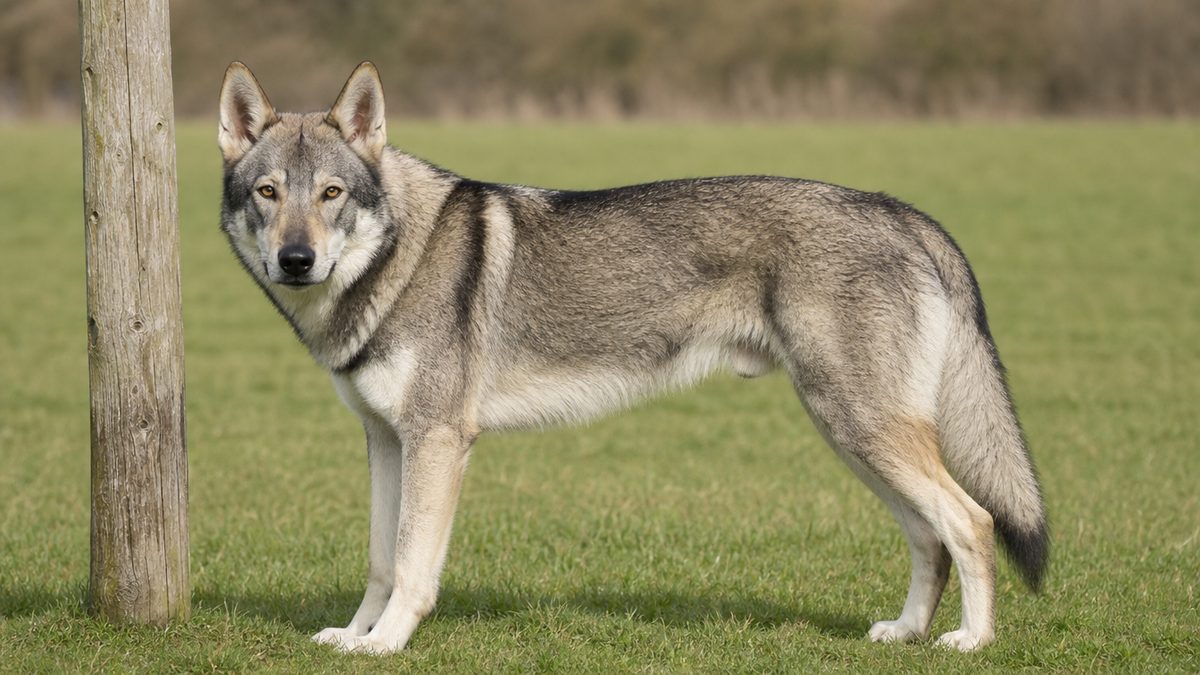
Quick answer
The Saarloos Wolfdog is a Dutch breed created from a German Shepherd Dog and a female wolf, holding FCI standard 311 since 18 November 1981. It carries the highest genome-wide wolf ancestry measured in any registered breed, 18 to 33 percent, though that figure rests on two dogs. No verifiable Indian price exists, and its heat tolerance is the lowest this site rates.
This page reports published veterinary research, registry documents and legal instruments for general information. It is not veterinary advice and cannot diagnose any individual animal. Carrier frequencies describe screened populations, not your dog. If a dog of this type shows an unsteady gait, tremors, failing sight or a change in behaviour towards people, consult your nearby veterinarian promptly rather than waiting, because two of the conditions on this page present exactly that way.
Saarloos Wolfdog at a glance, rated for India
What a Saarloos Wolfdog is, and what FCI standard 311 actually requires
A Saarloos Wolfdog is a Dutch breed built from a German Shepherd Dog and a female wolf, and the Federation Cynologique Internationale has held it as standard 311 on a definitive basis since 18 November 1981.
The register puts it in Group 1, Sheepdogs and Cattledogs (except Swiss Cattledogs), Section 1 Sheepdogs, without a working trial, with the country of origin given as the Netherlands and English named as the official authentic language. That last detail matters more than it looks, because this site has repeatedly found FCI figures drifting between language versions, and here the English text is the one that governs rather than a translation of something else.
The standard is unusually candid about what the breed is for. Under UTILIZATION it says the dog was not bred with any aim for a particular utilization, and that it possesses qualities enabling it to be a faithful and reliable companion and house dog. A registry that declines to claim a job for a breed is telling you something, and the history section explains how the breed lost the one it was designed for.
Size and weight, and the number the standard does not give
Males stand 65 to 75 cm at the withers and females 60 to 70 cm, with slight deviations upwards permissible. The standard prints no weight at all, in any of its nine pages. English Wikipedia nonetheless states that the breed weighs up to 100 lb, roughly 45 kg, and attaches no source to it. This guide follows the document: a Saarloos Wolfdog is described by height, and any weight you are quoted is somebody's estimate rather than a standard's requirement.
| Feature | What the standard requires | What it rules out |
|---|---|---|
| Height, males | 65 to 75 cm, slight deviations upwards permissible | No lower floor is offered |
| Height, females | 60 to 70 cm, slight deviations upwards permissible | No lower floor is offered |
| Weight | Not stated anywhere in the standard | Any quoted weight is not from this document |
| Eyes | Yellow, almond shaped, set slightly oblique | Brown is undesirable; round or protruding eyes are a fault |
| Ears | Medium, firm, pricked, triangular, rounded tips, set at eye level | Ears set too high, pointed, or turned outwards |
| Tail | Broad, profusely coated, set on low, reaching at least to the hocks | A curled tail or one carried over the back |
| Colour | Two varieties: black-tipped game colour, also called wolf-grey, and brown-tipped game colour | Any coat colour other than those permitted is a disqualification |
| Proportion | Longer than its height at the withers; muzzle and skull equal in length | A body too deep or too short |
Read that colour row against the encyclopaedia entry and a second disagreement appears. The standard describes two colour varieties and then mentions white and white cream only inside its pigment clause, which says the nose, eye rims, lips and nails should be black in a wolf-grey, white and white cream dog. Wikipedia lists three colours, wolfgrey, forestbrown and white, and calls white an accepted colour. Both statements point at the same document. Only one of them matches it, and a buyer being offered a white dog as a recognised colour variety should know which.
Coat and colour, described as two garments rather than one
The coat section is written as a seasonal swap rather than a single description. In winter the undercoat predominates and forms a profuse covering over the whole body with a distinct collar at the neck; with the summer coat the guard hair of the topcoat predominates instead. The standard then adds a line that decides the grooming section below: it is essential that the belly, the inner side of the upper thighs and the scrotum are covered by hair. This is a double-coated dog specified down to the parts most breeds leave bare.
The English-language ranking set describes this dog's coat as short and dense, which is not what the standard says, and gives it a weight the standard does not contain. Where this page and a breed directory disagree on a measurement, the standard is quoted here in its own words and the PDF is linked, so you can check rather than choose.
History: one man, one wolf named Fleuri, and the year everyone gets wrong
The Saarloos Wolfdog began with a single documented cross between a named German Shepherd Dog and a named female wolf, and the FCI standard dates that cross to 1932.
The standard's own history is worth quoting closely, because it is short and every clause is load-bearing. Leendert Saarloos, 1884 to 1969, loved nature and dogs, found that dogs had become too humanised, and set out as a lover of the German Shepherd Dog to breed the natural qualities back into that breed in order to produce a better working dog. For that reason he crossed the German Shepherd Dog male Gerard van der Fransenum, a dog of classical Prussian type, with Fleuri, a female wolf which originated from the Siberian branch of the European type, in 1932.
Breeding back to the father gave a basic population of animals with one quarter wolf's blood. Through an experimental phase with strict selection a new breed evolved, called the European Wolfsdog. Selected animals worked as guide dogs for the blind at first, but as the proportion of wolf blood increased the useful ability inherited from Gerard was gradually lost, and it became obvious that the breed suited neither working nor guide work. The standard's closing sentence is the honest one: the legacy of Leendert Saarloos is not a working dog but a dog with attributes close to nature.
1932 or 1935, and how to settle it in one click
English Wikipedia dates the cross to 1935 and cites the FCI standard for it. The FCI standard prints 1932. The citation is real, the link works, and the number does not match the document behind it. The ranking set is split on the same point: Dogster's own list of little-known facts opens by saying the breed was first developed in 1932. Where a source and its own footnote disagree, this guide follows the footnote.
| Claim | Where it appears | What FCI standard 311 says |
|---|---|---|
| The wolf cross happened in 1935 | English Wikipedia, citing the FCI standard | 1932 |
| The wolf was a Siberian grey wolf from Siberia | English Wikipedia | A female wolf which originated from the Siberian branch of the European type |
| The dog weighs up to 100 lb | English Wikipedia, uncited | No weight is given anywhere |
| Three colours are recognised, including white | English Wikipedia | Two colour varieties; white appears only in the pigment clause |
| The breed is roughly one quarter wolf | Dogster | Breeding back to the father gave a population with one quarter wolf's blood |
Recognition, and the name that honours the man
The Dutch Kennel Club recognised the breed in 1975 and named it Saarlooswolfhond after its founder, six years after his death; the standard closes that paragraph with the line 'Honour to him to who honour is due'. The FCI followed on 18 November 1981, and the current standard was published on 3 November 2014 and reissued in English on 29 May 2015 Federation Cynologique Internationale.
A breed assembled from one dog and one wolf in one decade has a gene pool shaped by that arithmetic, and the health section below is the bill for it. The Dutch breed club now reports an average inbreeding coefficient of about 35 percent measured on DNA, against a threshold of 10 percent, and says plainly that it is much higher than that of most other dog breeds.
Wolf ancestry: the one number worth knowing, and the sample it rests on
Genome-wide, the Saarloos Wolfdog carries 18 to 33 percent wolf ancestry, the highest figure published for any registered breed, and that estimate comes from exactly two dogs.
The measurement is from a global study of grey wolf phylogeography that genotyped 697 individuals, among them 83 Asian, 108 European and 119 North American wolves, 160 free-ranging dogs, 180 pure-bred dogs, three Czechoslovakian wolfdogs and two Saarloos wolfdogs. Its result for the two wolfdog breeds is printed in one sentence: wolf ancestry of 11 to 12 percent in the Czechoslovakian Wolfdog and 18 to 33 percent in the Saarloos Wolfdog. A separate clustering analysis in the same paper gives assignment values to the wolf cluster of 0.15 to 0.17 for the Czechoslovakian breed and 0.23 to 0.34 for this one.
Two things follow and they pull in opposite directions. The Saarloos genuinely does carry two to three times the Czechoslovakian breed's wolf ancestry, which is the reverse of the impression most English-language writing gives. And the range 18 to 33 is fifteen points wide because it describes two animals, so it is a finding about the breed's position rather than a figure to quote to a decimal.
| Study | Saarloos dogs sampled | What it measured | Result |
|---|---|---|---|
| Pilot and colleagues, Scientific Reports 2019 | 2 | Wolf ancestry proportion | 18 to 33 percent, against 11 to 12 percent for the Czechoslovakian Wolfdog |
| Pilot and colleagues, Scientific Reports 2019 | 2 | Assignment to the wolf cluster | 0.23 to 0.34, against 0.15 to 0.17 |
| Bacova and colleagues, Genes 2025 | 20 | Inbreeding and runs of homozygosity | Higher inbreeding coefficient and longer runs of homozygosity than the Czechoslovakian Wolfdog |
| Bacova and colleagues, Genes 2025 | 20 | Genetic proximity to the German Shepherd | The Czechoslovakian Wolfdog sits closer to the German Shepherd than this breed does |
A 2025 paper with twenty dogs, and what it adds
The largest genomic look at this breed so far compared 20 Saarloos Wolfdogs and 46 Czechoslovakian Wolfdogs against 12 German Shepherds and 20 wolves, treating the last two as the ancestral populations of roughly 70 to 90 years ago. Its conclusions are specific. Hybridisation did increase genetic variability and did soften the effects of inbreeding in both breeds. But the Saarloos genome showed a higher coefficient of inbreeding and longer runs of homozygosity than the Czechoslovakian one, reflecting significant inbreeding during its development, and the Czechoslovakian breed sits genetically closer to the German Shepherd, most likely because more German Shepherds were used in making it.
The authors close with a recommendation that belongs on any page about this breed: maintain genetic diversity, minimise inbreeding, select unrelated individuals from diverse lineages, and avoid additional uncontrolled crossings with wild wolves. A registered wolfdog breed is not an invitation to add more wolf.
One quarter is a pedigree fraction from the 1930s. Eighteen to 33 percent is a genome-wide estimate from 2019. They can both be right, because a genome is not shuffled evenly and selection since 1932 has favoured the wolf-like parts. Anyone who tells you the two figures contradict each other has not read either. Anyone who tells you the breed is 'one third wolf' has read only the top of the range, and on two dogs.
Which registries hold this breed, tested with controls on every document
The Saarloos Wolfdog clears the two conditions of breedhood comfortably and in several places at once: a written standard and a studbook both exist, and unlike most breeds on this site they are held by national kennel clubs rather than by a private club.
Recognition is a documentary question, so the registers were opened rather than summarised. The FCI holds standard 311 on a definitive basis since 18 November 1981, with the Dutch Kennel Club as the country of origin's body and the standard's authentic language given as English. That answers the Indian question indirectly but decisively, because India is a full FCI member represented by the Kennel Club of India, so Indian pedigrees are issued against FCI nomenclature.
The American Kennel Club admitted it in April 2026
The AKC's own news log records the decision: '4/13/2026: From the April Board Meeting, three new breeds was added to the Foundation Stock Service Program, Silken Windhound, Saarloos Wolfhond, Old Danish Pointer'. The breed now sits in the 18-strong Herding Group block of the FSS list. Foundation Stock Service is a recording service rather than full recognition, and the AKC's own guidelines say why it took so long: since July 2022 a breed must have been recognised by an acceptable registry for 40 years with three-generation dogs. FCI acceptance in 1981 put this breed over that line in 2021.
One small defect in that AKC page is worth recording, because this site checks arithmetic as a habit. The page states that there are currently 88 breeds in the FSS programme, while its own seven group counts sum to 89: 17 sporting, 20 hound, 20 working, 4 terrier, 2 toy, 8 non-sporting and 18 herding. The discrepancy changes nothing about this breed and it is the kind of thing worth knowing before you quote a registry's headline total.
The United Kennel Club holds it too, under a misspelling
The UKC's Herding Dog Group carries 43 breeds and one of them is Saarloosewolfdog, spelled with an extra e that appears in neither the Dutch name nor the FCI's. That is not a trivia point. A registry search for the correct spelling returns nothing, which is exactly how a false absence gets manufactured, and this site has met the same trap on other registers. The same UKC group also holds the Czechoslovakian Vlcak and the White Shepherd, which is a useful in-document control that the index rendered.
| Register | Holds the Saarloos Wolfdog? | Filed as | Control on the same document |
|---|---|---|---|
| FCI, definitive list | Yes, standard 311 since 18 November 1981 | SAARLOOSWOLFHOND | The record prints group, section, origin and authentic language |
| Dutch Kennel Club | Yes, recognised 1975 and named for its founder | Saarlooswolfhond | The FCI names the Netherlands as country of origin |
| American Kennel Club | Foundation Stock Service only, since April 2026 | Saarloos Wolfhond | Silken Windhound and Old Danish Pointer added the same day |
| United Kennel Club | Yes, Herding Dog Group | Saarloosewolfdog, with an extra e | Czechoslovakian Vlcak and White Shepherd in the same 43-breed group |
| Kennel Club of India | Indirectly, through FCI nomenclature | Not separately listed | India is a full FCI member represented by the KCI |
A note on reading letter indexes
The FCI's own letter index is language-dependent, and an absence read off one letter is not an absence. Its English letter W index returns nine breeds, from the Weimaraner to the Whippet, and prints WESTFALISCHE DACHSBRACKE in German on the same English page. A reader looking for a wolfdog under W would find none and conclude the wrong thing. Search the register, not the letter.
Is a Saarloos Wolfdog legal in India? What can be read at source, and what cannot
The legal status of a registered wolf-derived breed in India is unsettled, and this page will not pretend otherwise, because the consolidated text of the Wild Life (Protection) Act could not be retrieved from any government address this session tried.
Four addresses were attempted on 9 September 2026 and all four failed: the India Code bitstream paths returned 404, the India Code successor host returned a 502 gateway error, the Ministry of Environment copy failed certificate verification and a second ministry path returned 404. The playbook rule this site works to is that you do not assert a legal conclusion you have not read at source, so no clause of that Act is quoted here, in either direction. What follows is what was read, in full, at the document.
CITES excludes the domestic dog from the Convention, in writing
The CITES appendices in force from 21 May 2023 list Canis lupus twice. The populations of Bhutan, India, Nepal and Pakistan are in Appendix I; all other populations are in Appendix II. Both entries carry the same annotation, verbatim: 'Excludes the domesticated form and the dingo which are referenced as Canis lupus familiaris and Canis lupus dingo, respectively, which are not subject to the provisions of the Convention'. So an Indian wolf sits at the Convention's highest level of control, a European wolf one level down, and the domestic dog outside the Convention altogether.
The four-generation rule everyone quotes is American law
Search for wolfdog legality and you will be told, confidently, that anything beyond the fourth generation counts as a domestic dog. That rule is real and it is United States law. Title 50 of the US Code of Federal Regulations, section 23.43, headed 'What are the requirements for a wildlife hybrid?', defines recent lineage as 'the last four generations of a specimen's ancestry (direct line of descent)', and exempts a hybrid between a CITES species and a non-CITES species from CITES paperwork where there are no purebred CITES specimens in the previous four generations. It is a documentation rule for import and export, not a keeping rule, and it is not Indian.
Applied to this breed the arithmetic is not close. The last purebred wolf in the line was Fleuri, bred in 1932. Ninety-four years and dozens of generations later, no registered Saarloos Wolfdog has a purebred CITES specimen anywhere near its previous four generations. Under that American import law it is a dog. Indian import law contains no equivalent test that this session could read, and the difference matters because import law is what an officer at a port actually applies.
What the Indian trade instrument does contain
One Indian government document on this subject was reachable and machine-readable, and it is worth reading precisely. The Directorate General of Foreign Trade publishes Appendix 1, 'List of Wild Life entries in Wild Life (Protection) Act, 1972', as part of the ITC(HS) export policy schedule. Across 27 pages and 31,130 extracted characters it lists the Indian Wolf, printed as 'Canis lupas pallipes', the Tibetan Wolf Canis lupus chanco, the Jackal Canis aureus and the Wild dog or dhole Cuon alpinus.
| Term searched | Occurrences | What they are |
|---|---|---|
| Canis | 3 | Indian Wolf, Tibetan Wolf and Jackal entries |
| hybrid | 1 | Heliophorus hybrida, a butterfly |
| domestic | 0 | The word does not appear |
| familiaris | 0 | The domestic dog is never named |
| dog | 2 | Wild dog or dhole, and the dog-faced water snake |
So the instrument that governs India's wildlife trade lists wolves, names no hybrid rule for animals at all, and never mentions the domestic dog. It settles nothing about a registered breed, and saying so is more useful than a confident sentence in either direction.
If you are seriously considering a wolf-derived breed in India, write to the State Chief Wild Life Warden for your state and ask for a written view before you commit to anything, and keep the reply. That is a free, dated document from the office that would actually decide the question, and it is worth more than every wolfdog legality page on the internet combined. Do not treat this page as a substitute for it.
One more limit belongs on the record. No state law and no municipal by-law specific to wolf-derived breeds was found in this research, which is a limit of the search rather than proof that none exists. Indian municipal pet rules are poorly indexed and change without notice, and in practice a housing society's own rules will reach an owner long before any statute does.
Saarloos Wolfdog price in India: there is not one, and here is the proof
No verifiable saarloos wolfdog price in india exists, and this page publishes no rupee figure for the dog itself, because every number attached to the breed in English is quoted in US dollars or pounds sterling.
Start with the strongest available Indian evidence, which is an absence with a control beside it. Supertails publishes India's fullest breed price list, covering the top 40 breeds with city-wise costs. Searched in full, the strings 'Saarloos' and 'Wolfdog' occur zero times in it, while the in-document controls 'German Shepherd' occurs 15 times and 'Labrador' 30 times. That is an Indian retailer assembling the widest breed list it can and having nothing at all to say about this dog.
What the ranking pages actually quote, and why none of it converts
The English-language ranking set does carry a puppy price, in the wrong currency. Hepper's dedicated cost page gives adoption at USD 500 to 1,000 and a breeder puppy at USD 800 to 3,500. Wamiz, filing the breed under a third English name as the Saarloos Wolfhound, gives running costs of GBP 60 to 90 a month. Neither is an Indian observation, and this site has documented answer engines taking exactly such a figure, dividing it by an exchange rate and printing the result as an Indian price in the same breath as saying no Indian price exists. This page does not convert them, and you should distrust any page that does.
| Source | Figure | Currency | Is it an Indian price? |
|---|---|---|---|
| Hepper, cost page | 500 to 1,000 | US dollars | No. Adoption fee, United States |
| Hepper, cost page | 800 to 3,500 | US dollars | No. Breeder puppy price, United States |
| Wamiz UK | 60 to 90 per month | Pounds sterling | No. Running cost, United Kingdom |
| Supertails, top 40 Indian breeds | Breed absent | Not applicable | The breed is not on the list |
| Indian classified listings | None found | Not applicable | No India-located search returned a usable result set |
Why no Indian listing check could be completed, stated honestly
This is the part most pages would quietly skip. Bing India was the only search engine that answered at all on 9 September 2026, and for this breed it was substituted four times over. The query 'saarloos wolfdog price in india' returned About 58 results and ten YouTube Help pages in eight languages. 'saarloos wolfdog' returned About 77 results and ten Google Forms Help pages. 'saarlooswolfhond' returned About 52 results and ten Windows 10 tutorials. 'saarloos dog breed' returned About 155,000 results and ten Microsoft sign-in pages.
Two controls passed in the same session and the same minute. 'labrador retriever price in india' returned About 16,200 results and ten genuine Indian Labrador pages, twice. 'czechoslovakian wolfdog' returned 9,770 results and ten real breed pages, and 'wolfdog price in india' returned 51,700 results and ten real wolfdog pages. So the engine was working and the token saarloos was the trigger. That isolation matters for one reason above all: it means no absence of Indian supply can be claimed from those zeros. A broken query proves nothing about a market.
If somebody offers you one, the questions are documentary and short. Which register issued the pedigree, and can you see the FCI or Dutch Kennel Club papers? Under what import authorisation did the parents enter India, given that DGFT permits pet imports only in narrow circumstances and rejects applications made for trading or breeding? And has the dog been tested for the two recessive diseases below? A seller who cannot answer the first two is not selling this breed, whatever the puppy looks like.
There is one number a buyer can anchor on, and it is a comparison rather than a price. India's own market prices the German Shepherd, this breed's founding parent, at Rs 20,000 to Rs 75,000 in the same list that omits the Saarloos entirely, and the prose beneath that row says a standard puppy starts at Rs 20,000 while show-quality dogs reach Rs 50,000, which is a disagreement inside one page worth noticing. A wolf-derived breed with no Indian supply chain will never be cheaper than that, and the puppy price is the smallest number in this guide anyway.
Cost of ownership in India for a 65 to 75 cm dog, priced from live rate cards
The recurring cost of ownership for a dog this size in India is knowable even though its purchase price is not, because vaccination, parasite control, registration and boarding are published prices that apply to any large dog.
Every figure below was read from the seller's own page on 9 September 2026, and each one is what that seller charges rather than a market average. Retail prices in India move quickly. Municipal fees do not.
| Item | Published price | Source and caveat |
|---|---|---|
| Puppy vaccination course | From Rs 6,499 | Vetic, six visits at days 30, 45, 75, 90, 105 and 120, against a struck-through Rs 8,111. A promotional floor from one chain |
| Annual booster | From Rs 3,199 | Vetic, against a struck-through Rs 3,806 |
| Anti-rabies, single dose | From Rs 699 | Vetic |
| Consultation | Rs 500 to 1,000 | VOSD. Treat as one data point, because a general insurer publishes the identical range |
| Tick, flea and worm cover | Rs 3,308 for three months | Supertails, NexGard Spectra 15 to 30 kg, MRP Rs 3,375. That is Rs 1,102.67 a month and a dog over 30 kg needs the larger pack |
| Pet dog registration, Delhi | Rs 500 new, Rs 500 renewal | MCD, valid one year, late fee Rs 100 per month with a one-month grace period |
| Boarding, Bengaluru | Rs 899 for 24 hours | PawSpace, with day care to ten hours at Rs 799 |
| Professional training | Rs 5,000 to 15,000 | Supertails, quoted for the German Shepherd and applicable here |
The three lines that are larger for this breed than for a Labrador
- Cooling. A dog whose standard requires an undercoat covering the belly and inner thighs does not tolerate an Indian summer without air conditioning or at least a high-volume fan, and in Bengaluru that runs into load-shedding between March and May. Budget the electricity, not just the appliance.
- Containment. An untiring trotter with a wolf-like avoidance of strangers needs fencing and a secure gate rather than a leash and good intentions. This is a capital cost most Indian apartment owners cannot pay at any price.
- Screening. Two recessive diseases at double-digit frequencies mean DNA testing is not optional, and DNA tests are the one veterinary cost that is cheaper abroad than in India.
Two further Indian lines are worth planning for before you need them. Boarding a large, reserved dog is harder to arrange than boarding a Labrador, and a Bengaluru home-boarding service publishes Rs 899 for a stay of up to 24 hours and Rs 799 for day care up to ten hours. Book it before you need it, because a facility that has never handled a wolf-like breed will say no at short notice. Against that, one cost is genuinely lower than the ranking pages assume: grooming a double coat is brushing rather than clipping, and Indian salon prices of Rs 300 to 2,000 quoted for a bath and tidy do not apply to a dog that must never be shaved. What this coat costs is time and a good undercoat rake, twice a year, every year.
Greater Chennai Corporation's six municipal veterinary clinics provide treatment and anti-rabies vaccination free of cost, and its pet licence costs Rs 50 against Delhi's Rs 500 registration. If you live in Chennai the rabies line in the table above can be zero, which is worth knowing before you pay a private chain's promotional floor.
Heat tolerance: Chennai's coolest month is warmer than this breed's hottest
The Saarloos Wolfdog rates 1 of 5 for heat tolerance in Indian conditions, the lowest rating this site gives, and the comparison that earns it is a single line: the homeland's July mean is 18.34 degrees Celsius while Chennai's coolest month averages 24.09 NASA POWER climatology 2001-2020 for twelve….
The homeland baseline was taken at Dordrecht, the Dutch city where Leendert Saarloos bred, by explicit latitude and longitude, 51.8133 north and 4.6901 east. NASA POWER returns a cell elevation of 3.51 m against a real elevation of about 2 m, an error of 2 m, so the cell genuinely describes the town. Its climatology for 2001 to 2020 gives an annual mean of 10.27 C, an annual relative humidity of 83.98 percent, a July mean of 18.34 C and a January mean of 2.60 C.
| Place | Cell elevation | Annual mean | Hottest month | Coolest month |
|---|---|---|---|---|
| Dordrecht, Netherlands | 3.51 m | 10.27 C | July, 18.34 C | January, 2.60 C |
| Delhi | 206.37 m | not applicable | June, 35.88 C | January, 13.61 C |
| Chennai | 48.95 m | not applicable | May, 31.51 C | January, 24.09 C |
| Mumbai | 97.15 m | not applicable | May, 31.19 C | January, 23.19 C |
| Bengaluru | 841.72 m | not applicable | April, 28.37 C | December, 20.22 C |
| Pune | 635.99 m | not applicable | April, 28.93 C | December, 19.62 C |
Read the last two columns together. Every Indian city in that table is hotter in its coolest month than Dordrecht is in its hottest, except Delhi, which is colder in January and then 17.5 degrees hotter in June. Bengaluru and Pune, the two cities Indian buyers reach for when a northern breed comes up, peak in April rather than May and bottom out in December rather than January, which matters if you are planning a coat-management calendar around the wrong months.
Humidity is not the problem, and saying so is the useful part
Dordrecht runs 83.98 percent annual relative humidity, which is higher than Chennai, Mumbai, Bengaluru or Pune. A breed from the Rhine delta is not going to be surprised by damp air. What it has never met is heat and damp together: the highest wet-bulb figure its homeland reaches is about 15.5 C in July, computed from the mean temperature and mean humidity, and that is a number an Indian coastal city passes before breakfast for most of the year. Frame the risk as wet-bulb load, not as monsoon.
Why no Swiss or hill-station figure appears here
Two temptations were resisted. The first is to reach for the hill stations as an Indian analogue: NASA POWER's cells for Manali, Shimla, Ooty, Darjeeling and Gangtok are wrong by 700 to 1,935 m in both directions, so a hill-station figure would be an artefact rather than a climate. The second is Switzerland, which comes up because one of this breed's own outcross partners is Swiss. Bern's cell reads 752.22 m against a real 540 m and Zurich's 566.56 m against a real 408 m, errors of 212 and 159 m, so no Swiss figure is published on this page at all.
The largest study of canine heat-related illness, on 905,543 UK dogs, found 395 confirmed events with a fatality rate of 14.18 percent, and identified higher bodyweight relative to the breed and sex mean, an age over two years and a bodyweight over 50 kg as risk factors. Neither 'Saarloos' nor 'wolfdog' appears anywhere in that paper's full text, while the controls 'German Shepherd' and 'Siberian Husky' each appear once, so no breed-level odds ratio exists for this dog and none is invented here. What transfers is the bodyweight finding, and a 65 to 75 cm dog carried heavy is exactly the animal it describes.
Temperament, in the breed standard's own words rather than a directory's
The FCI standard describes a lively dog bursting with energy, with evidence of a proud independent character, known to foremost obey his own will.
That sentence is the whole page in miniature, and it is worth reading beside what the standard says next. Towards his master the dog is devoted and reliable to a high degree. Towards strangers he might be reserved and usually does not seek contact. And then the line that decides whether this breed suits an Indian household at all: the reserved and wolf-like manner of avoiding unknown situations is typical for the Saarloos Wolfdog.
A registry calling avoidance typical rather than faulty is unusual, and it is a warning written in the politest possible register. This is a dog whose normal, correct, standard-compliant response to a stranger at the gate is to withdraw. In a Delhi flat with a shared lift, a maid, a cook, a delivery rider and a plumber, the dog meets an unknown situation several times a day.
What the standard treats as a disqualification
The disqualifying faults are short and two of them are behavioural: aggressive or overly shy dogs, and any dog clearly showing physical or behavioural abnormalities. Reserved is correct. Shy is disqualifying. The difference between those two words is the entire judgement a buyer has to make about an eight-week-old puppy, and it is why the socialisation window discussed below is not optional advice.
A temperament problem that is actually a disease
One behavioural change in this breed has a genetic cause and an owner should know it before they meet it. Affected dogs in the 2024 PCYT2 study showed adult-onset neurological deficits including gait abnormalities, hind limb weakness, tremors, ataxia, cognitive decline and behavioural changes such as aggression towards the owner. A previously devoted adult dog that begins to threaten its own person is not being dominant and does not need firmer handling. It needs a neurological examination and a DNA test.
| Household | Verdict | Why |
|---|---|---|
| First-time dog owner | No | A dog described by its own registry as obeying its own will is not a first dog |
| Indian apartment with shared spaces | No | Daily unknown situations against a standard that calls avoidance typical |
| House with a secure garden, adult household | Possible | The reserve is manageable when the dog can withdraw rather than be cornered |
| Home with toddlers | Not advised | Withdrawal has no exit route in a room a small child controls |
| Working or sport home wanting obedience titles | Poor fit | The standard removes the working trial and says the working ability was lost |
| Experienced northern-breed owner in a hill town | The best available case | Still constrained by the climate section above |
No published study measures prey drive in this breed, and this page will not invent a rating for it. What the standard supports is a dog bred away from work and towards attributes close to nature, in a country with free-roaming cattle, cats and community dogs. Treat recall around moving animals as unproven in the individual dog in front of you until you have proved it, on a long line, repeatedly.
Training: build the habit of checking in, because obedience drill will not hold
To train a Saarloos Wolfdog, spend the first twelve weeks on socialisation and the rest of its life on voluntary check-ins, because the breed standard itself says the dog is known to foremost obey his own will.
This site rates the breed 2 of 5 for trainability by obedience drill, and that is not a criticism of the dog. It is a description of what the registry asked for. The FCI removed the working trial from this breed's classification, and its own standard records that the useful ability inherited from the founding German Shepherd was gradually lost as the proportion of wolf blood rose Federation Cynologique Internationale. A breed deliberately bred away from biddability is not going to be biddable, and buying one and then complaining it is not trainable in the German Shepherd sense is a category error.
The socialisation window, and why twelve weeks is the number
Published breed guidance is unanimous that this dog needs thorough socialisation before the twelfth week of age to produce prosocial behaviour, and the standard supplies the reason: wolf-like avoidance of unknown situations is the breed's typical response, so the set of situations a puppy learns to treat as known is the set it will accept as an adult. In India that window collides with the vaccination schedule, because a puppy course that starts on day 30 and finishes on day 120 is not complete until roughly week 17.
The resolution is not to choose between them. It is to socialise off the ground and out of the traffic: carry the puppy, use a car, use the lift, sit on a balcony above a busy street, invite people into the house rather than taking the dog into a park. The exposures that matter for this breed are people, surfaces, sounds and vehicles, not other dogs, and almost all of them can be arranged without putting an unvaccinated puppy on Indian ground.
- Weeks 8 to 12: register the household. Every regular visitor a flat has, one at a time, at a distance the puppy chooses, paying for approach rather than demanding it.
- Weeks 8 to 12: register the city. Auto-rickshaw horns, temple bells, pressure cookers, lifts, marble floors, metal stairs, monsoon rain on a tin awning.
- Weeks 12 to 20: register the vet. Three visits that involve no needle, so the clinic is not learned as the place where things happen to you.
- Months 4 to 12: build the check-in. Pay attention offered voluntarily, on a long line, outdoors, before you ask for anything at all.
- Months 6 to 18: proof recall against movement. Cattle, cats and community dogs, at distance, on a line, for as long as it takes.
What Indian law says about the training equipment you may be offered
Two clauses in the Prevention of Cruelty to Animals (Dog Breeding and Marketing) Rules, 2017 are worth knowing before a trainer suggests hardware. Second Schedule Part II paragraph 6(8) forbids tail docking, ear cropping, de-barking, de-clawing, branding, dyeing, injecting substances to enhance visual appeal and any other mutilation, and states that any change of appearance by artificial means is strictly forbidden. And in the housing provisions, dogs with a vicious or aggressive disposition must be housed separately and sedation shall not be used to control behaviour of such dogs. A reserved breed is not an aggressive one, but the second clause is the answer to anyone who proposes chemistry instead of training.
A well-raised Saarloos Wolfdog is reliable with its own people and polite at a distance with everyone else. It is not a dog that will work a crowded Indian market on a loose lead, and no amount of training makes it one. If that is what you want, the German Shepherd is the breed this one was made from and it is available, registrable and priced in rupees.
Daily exercise: an untiring trotter in a country with four usable hours
A Saarloos Wolfdog needs distance at a steady pace rather than bursts, because its own standard describes a typical untiring trotter that can easily cover great distances at his own pace and barely tires by his natural movement.
The standard goes further than most, explaining that at an untiring trot the dog shows no great reach of limb, because too much reach and too much drive would spoil the energy-conserving movement that is a model for the breed. That is a description of an animal built to travel cheaply for hours. It is not a description of a dog that will be satisfied by twenty minutes on a lead around a colony park.
The Indian constraint is the clock, not the distance
In Delhi the June mean is 35.88 C and in Chennai the May mean is 31.51 C. For a heat-sensitive double-coated dog those means, not the extremes, are what rule out the middle of the day for most of the year. The usable window in an Indian plains city runs from first light to about an hour after sunrise, and again in the last hour of daylight, and in May that is genuinely all there is.
- Dawn, 45 to 90 minutes of steady trotting, on a long line in a secure space, is the core of the day and it is not optional.
- Evening, 30 to 45 minutes, later than feels necessary, because tarmac holds heat long after the air has cooled.
- Indoors through the middle of the day, with scent work, food puzzles and settle training substituting for movement rather than being added to it.
- No structured running before 14 months, because a dog that finishes at 65 to 75 cm is still closing growth plates well past its first birthday.
- Never a muzzle-and-march compromise in the heat, because panting is the only cooling system this dog has.
Containment, which is the part Indian buyers underestimate
A reserved dog with an efficient trot and a wolf-like reaction to unknown situations is a dog that leaves. What holds it is fencing, a self-closing gate and a household habit of checking the latch, not a lead and good intentions. In practice this rules out the flat with a shared corridor, the house with a servant entrance that stands open, and the farm with a boundary wall that a 70 cm dog can clear. If you cannot fence it, you cannot keep it, and that sentence is worth more than any exercise schedule.
Of the 395 confirmed heat-related illness events in the largest study of the condition, the fatality rate was 14.18 percent. Exertion in warm conditions is the commonest trigger recorded in that literature, and it is the one an owner fully controls. If you take one rule from this page, take this one: move the walk, do not shorten it.
Grooming a double coat in Indian humidity, and the one thing you must never do
To groom a Saarloos Wolfdog in India, brush the undercoat out on a calendar rather than on the weather, and never shave the dog, because the standard specifies a coat that covers the belly, the inner thighs and the scrotum.
The standard describes two coats rather than one. In winter the undercoat predominates and combines with the guard hair of the topcoat to form a profuse covering over the whole body with a distinct collar at the neck. With the summer coat the guard hair predominates instead. Temperature changes in autumn and winter influence the undercoat, but the disposition to grow it should always be present. This is a double-coated dog that swaps garments twice a year.
Why the Indian plains break the seasonal signal
A coat that changes on a temperature cue needs a temperature cue. A Chennai year runs from 24.09 C in January to 31.51 C in May, a swing of 7.4 degrees, against Dordrecht's swing of 15.7 degrees from 2.60 to 18.34 NASA POWER, climatology point API. In practice a Saarloos Wolfdog in an Indian coastal city does not shed cleanly in two bursts. It sheds untidily all year, holds dead undercoat against the skin, and that trapped layer is where damp-climate skin problems begin.
- Twice weekly, all year, with an undercoat rake rather than a slicker, working down to the skin on the ruff, breeches and behind the ears.
- Daily for three weeks, twice a year, on whatever dates you choose, because the dog will not choose them for you in an Indian climate.
- Dry the dog actively after every bath, ears included, rather than letting it air dry, because air drying is northern-hemisphere advice that does not transfer to a monsoon.
- Check the belly and inner thighs weekly, which is where the standard requires hair and where hot spots start.
- Bath rarely, because stripping the coat's oils in humid weather makes the skin problem worse rather than better. The coat is hardy against cold and rain, and it is not hardy against trapped damp underneath it.
Never shave a double coat, and here is the specific reason for this breed
The topcoat is the sun barrier and the undercoat is the insulation, and a shaved double coat regrows unevenly with the undercoat first, which leaves the dog hotter rather than cooler and permanently so in some individuals. For this breed there is an extra consideration: the standard's colour clause is written around black-tipped and brown-tipped game colour with pale wolf markings on the underside, and a clipped coat loses the tipping that produces it. A groomer who offers a summer cut for a wolfdog has not understood the coat.
Cooling comes from evaporation and airflow, not from removing hair. A raised mesh cot bed under a fan does more for a double-coated dog in Chennai than any grooming decision, costs less than one salon visit at the Rs 300 to 2,000 range Indian sources quote, and does not have to be repeated.
Health: two recessive diseases at double-digit frequencies, and a 35 percent inbreeding coefficient
The Saarloos Wolfdog's health profile is dominated by two recessive diseases that its own breed clubs now test for as a matter of course, pituitary dwarfism through LHX3 and PCYT2 deficiency, and by an average inbreeding coefficient of about 35 percent Christen M, Oevermann A, Rupp S, Vaz FM Algemene Vereniging Liefhebbers….
Unusually for a rare breed, the numbers here are real and they come from research groups rather than from clubs describing themselves. That makes this the one section where a buyer can screen properly. Set against that, the wider clinical literature on the breed is thin: a single case report of spontaneous intraventricular tension pneumocephalus in a ten-month-old male is a curiosity rather than a breed risk, and it sits beside the dwarfism and PCYT2 work as one of only a handful of papers that name this dog at all Search audit run against PubMed on 9….
Pituitary dwarfism: the same mutation as the German Shepherd
Utrecht University examined two client-owned Saarloos dwarfs alongside four Czechoslovakian Wolfdog dwarfs and found the same 7 base-pair deletion in intron 5 of LHX3 that causes dwarfism in German Shepherd Dogs. It then screened clinically healthy dogs used for breeding: 239 Saarloos Wolfdogs and 200 Czechoslovakian Wolfdogs. The carrier frequency was 31 percent in the Saarloos and 21 percent in the Czechoslovakian breed. The paper's own conclusion is that if all breeding animals were genetically tested and a correct breeding policy implemented, the disease could be eradicated completely. The same Utrecht group had already published the problem in Dutch four years earlier, in a paper naming the German Shepherd, the Saarloos wolf dog and the Czechoslovakian wolf dog together and pointing breeders at genetic testing, so this has been actionable since 2010.
PCYT2 deficiency: blindness, then neurological decline, then aggression
The newer and harder finding is from 2024. Eleven Saarlooswolfdogs with a syndrome of blindness and neurodegeneration were investigated: early adult-onset retinal degeneration followed by adult-onset gait abnormalities, hind limb weakness, tremors, ataxia, cognitive decline and behavioural changes including aggression towards the owner. Whole genome sequencing found a private homozygous missense variant, PCYT2 c.4A>G, and genotyping confirmed all eleven affected dogs were homozygous, with an allele frequency of 9.9 percent in the population tested.
Three further details matter to a buyer. Inheritance is autosomal recessive, so carriers look completely normal. The same genotyping found three additional homozygous young dogs with no overt clinical signs, one of which turned out on examination to have early-stage progressive retinal atrophy and expanded cerebrospinal fluid spaces on MRI. And affected dogs showed ether lipid accumulation, confirming a functional enzyme deficiency rather than an association. This is a proven disease with a DNA test, not a suspicion.
| Test | What it detects | Published frequency |
|---|---|---|
| Dwarfism (LHX3) | A 7 base-pair deletion in intron 5, recessive | 31 percent carriers of 239 healthy breeding dogs |
| PCYT2 | The c.4A>G variant behind retinal and neurological degeneration | 9.9 percent allele frequency in the tested population |
| Degenerative myelopathy | The SOD1 risk variant, tested as standard by the Dutch club | No breed-specific figure published |
| Hip radiographs | Hip dysplasia | No breed-specific published rate this session could reach |
| Elbow radiographs | Elbow dysplasia | Named by the Dutch club as the commonest abnormality it finds |
| ECVO eye examination | Cataract and inherited eye disease | Two cataract cases reported across the outcross programme |
The Dutch breed club reports that the average inbreeding coefficient of Saarloos Wolfdogs tested on Embark is around 35 percent, against a threshold of 10 percent, and says in its own words that this is much higher than that of most other dog breeds. Two recessive diseases at 31 percent and 9.9 percent are not bad luck. They are what a gene pool that narrow produces, and they are why the outcross programme in the next section exists.
The outcross programme: a breed club rebuilding its own gene pool in public
Since 2014 the Dutch Saarloos club has run a Dutch Kennel Club approved outcross programme, and by its own count 7 lines have produced 122 outcross dogs in the F1, F2 and F3 generations.
This is the most unusual thing about the breed and almost nothing written in English mentions it. The Algemene Vereniging Liefhebbers Saarlooswolfhonden adopted its first plan of action in May 2012 under the title 'Guarantee for a healthy Saarloos wolfdog', and published a new version covering 2026 to 2033 on 30 October 2025, marked approved by the Dutch Kennel Club on 4 February 2026 Algemene Vereniging Liefhebbers…. The English edition runs to nine pages and it is worth reading in full if you are considering this breed anywhere in the world.
What the club reports, in its own words
- The goal was met. The inbreeding percentage has fallen far below 0.5 percent per generation, genetic variation has increased in selected lines, and fertility and litter size have both increased.
- Carrier rates fell. The percentage of carriers of degenerative myelopathy and pituitary dwarfism has decreased to acceptable percentages, partly through breeding policy.
- Elbows are the weak point. Elbow dysplasia abnormalities are the commonest finding in the outcross dogs, and the club attributes them to the Saarloos side because they appear in almost every line. Two cataract cases were also recorded.
- Breed type came back quickly. The club notes that the breed-typical character and behaviour return fast, which is the answer to the objection that outcrossing destroys a breed.
- Not everyone agrees. The plan records that some breeders and enthusiasts resist the policy for fear of losing breed type, and that there have been individual incidents and legal disputes.
| Partner | Kind of partner | Litters recorded 2022 to 2025 |
|---|---|---|
| Siberian Husky | FCI-recognised breed | One F3 litter of 8 puppies in 2022 and one of 3 in 2024 |
| Northern Inuit Dog | Look-alike, no FCI recognition | One F3 litter of 7 puppies in 2022 |
| Norwegian Elkhound | FCI-recognised breed | One F3 litter of 6 puppies in 2024 |
| White Swiss Shepherd Dog | FCI-recognised breed, standard 347 | Line running, tracked on the club's own page |
| Ibizan Hound | FCI-recognised breed | Line running |
Two structural details are worth carrying away. A look-alike dog with no FCI pedigree enters the appendix to the main studbook in the G-0 register, and the offspring of another breed's male mated to a registered Saarloos enter the G-1 register; once in that appendix, offspring can compete in all shows and take all qualifications. And the club quotes a Wageningen University finding that changes how the whole exercise should be read: the effect of an outcross on inbreeding is one-off, and with every backcross onto a purebred animal the effect halves, so it has to be repeated rather than done once.
Because it is the clearest published example anywhere of a kennel club opening a closed studbook to fix a health problem, with numbers attached and dissent recorded. Whatever you conclude about owning this breed, that document is the model any Indian breed club facing a narrow gene pool should be reading.
Feeding: life stage, body condition, and the one figure that is not published
Feed a Saarloos Wolfdog to body condition rather than to a chart, because the FCI standard gives no weight for the breed at all and every feeding calculator you will meet needs one).
That absence is the practical starting point. A 65 to 75 cm dog has a plausible adult weight range wide enough that a portion calculated from the wrong end of it is out by a third. The workable substitute is the same one good large-breed practice uses everywhere: ribs easily felt under a thin layer of fat, a visible waist from above and a tucked abdomen from the side, checked weekly with your hands rather than monthly with your eyes.
The growth window that actually matters
A dog finishing at 65 to 75 cm grows for well over a year, and large-breed puppies fed generously grow faster rather than bigger, with the joints paying for it. The single most useful rule is to keep a growing Saarloos Wolfdog lean to the point that visitors comment, and to feed a food formulated for large-breed growth rather than an adult food in larger portions. Given that the Dutch club names elbow dysplasia as the commonest abnormality it finds in this breed's lines, the joints are not a theoretical concern.
- Weeks 8 to 16: four meals a day, large-breed puppy formulation, portions adjusted weekly against body condition rather than against the bag.
- Months 4 to 8: three meals a day, and the first serious temptation to overfeed, because the dog is visibly growing and looks hungry.
- Months 8 to 14: two meals a day, still on a growth formulation, still lean.
- Adult: two meals a day rather than one, because a deep-chested dog of this size sits in the body shape most associated with gastric dilatation and volvulus.
- Never free-feed, because a dog you cannot weigh needs an owner who can see what it ate.
Indian availability and the honest cost
Large-breed growth diets are available in every Indian metro and the arithmetic is ordinary: a dog of this size eats through a 15 kg bag in roughly six weeks, and the parasite-control line is a firmer number than the food line. NexGard Spectra for a 15 to 30 kg dog costs Rs 3,308 for three tablets, or Rs 1,102.67 a month, and a Saarloos Wolfdog will usually need the pack above that. Deworming and tick cover are not optional in an Indian climate, and they are a bigger recurring line than most owners plan for.
Nothing in the breed standard or the veterinary literature supports feeding this breed differently from any other large dog, and its genome is mostly dog. Raw feeding in an Indian summer, with an unbroken cold chain and ambient temperatures above 30 C for months, adds a bacterial risk that a northern European kitchen does not face. If you want to feed raw, take that decision with your nearby veterinarian and not because of the word wolf.
Month by month through the first year in Indian conditions
The first year of a Saarloos Wolfdog in India runs on two clocks that do not agree: a socialisation window closing at twelve weeks and a vaccination course finishing at about seventeen Federation Cynologique Internationale).
| Age | What is happening | What it costs or constrains in India |
|---|---|---|
| Under 8 weeks | Legally unsaleable. Rule 8(1)(a) of the 2017 Rules prohibits selling pups under eight weeks | A seller offering a six-week puppy is breaking a rule, and has told you about everything else |
| 8 to 12 weeks | The socialisation window the whole temperament depends on | Vaccination is incomplete, so socialise off the ground: carried, in a car, indoors, on a balcony |
| Day 30 to 120 | Vetic's published puppy course runs six visits over that span | From Rs 6,499 as a promotional floor, plus anti-rabies from Rs 699 |
| 3 to 4 months | First Indian summer, if the litter was born in winter | The dog has an undercoat it has never needed. Air conditioning or a cot bed and a fan |
| 4 to 6 months | DNA screening is due if the breeder has not done it | Dwarfism, PCYT2 and degenerative myelopathy, which the Dutch club treats as mandatory |
| 6 months | Rule 8(1)(b) bars sale of a dog over six months without sterilisation, unless to a licensed breeder | Relevant if you are rehoming rather than buying a puppy |
| 6 to 9 months | Adolescence, when the reserve towards strangers hardens | This is when a badly socialised dog becomes a shy dog, and the window has closed |
| 9 to 14 months | Growth plates still closing on a 65 to 75 cm frame | No structured running, no forced stairs, keep it lean |
| 12 months | Registration renewal in Delhi, Rs 500, tied to the anti-rabies date | Late fee Rs 100 per month after a one-month grace period |
| 12 to 18 months | Recall against moving animals is proofed or it is not | Long line, cattle and community dogs at distance, for as long as it takes |
Two dates on that table come from Indian law rather than from a breeder's preference, and they are worth quoting exactly. The Prevention of Cruelty to Animals (Dog Breeding and Marketing) Rules, 2017 require at Rule 8(1)(a) that pups less than eight weeks in age are not sold, and at Rule 8(1)(b) that dogs over six months in age are not sold without first being sterilised, unless they are being sold to another licensed breeder.
A published Indian puppy course starting on day 30 and finishing on day 120 leaves the socialisation window closing before immunity is complete. Do not choose between them. Almost every exposure this breed needs is a person, a surface, a sound or a vehicle, and all of those can be arranged indoors, in a car or in your arms. What cannot be recovered later is the window itself.
Head to head against the wolf-like dogs an Indian buyer is really choosing between
Compare the Saarloos Wolfdog against the Czechoslovakian Wolfdog, the German Shepherd, the Siberian Husky and the White Swiss Shepherd and one difference dominates: three of those four have a functioning Indian supply chain and this one has none.
| Breed | Registry position | Measured wolf ancestry | Heat rating | Verified Indian supply |
|---|---|---|---|---|
| Saarloos Wolfdog | FCI 311 definitive 1981; AKC FSS 2026; UKC herding group | 18 to 33 percent, on two dogs | 1 of 5 | None found |
| Czechoslovakian Wolfdog | FCI 332 definitive 1999; AKC Miscellaneous Class | 11 to 12 percent, on three dogs | 1 of 5 | None found |
| German Shepherd Dog | FCI 166, recognised worldwide, KCI registrable | Not a wolf cross | 2 of 5 | Widespread, Rs 20,000 to 75,000 |
| Siberian Husky | FCI 270, recognised worldwide | Not a wolf cross | 1 of 5 | Widespread and heavily mis-sold |
| White Swiss Shepherd Dog | FCI 347 definitive 2011 | Not a wolf cross | 2 of 5 | Very limited |
Against the Czechoslovakian Wolfdog, its nearest relative
These two breeds get conflated constantly and they differ in three measurable ways. The Saarloos came first, from a Dutch cross in 1932 rather than a Czechoslovak army programme in 1955. It carries two to three times the genome-wide wolf ancestry, 18 to 33 percent against 11 to 12. And it carries the shared LHX3 dwarfism mutation at a higher rate: 31 percent of 239 healthy Saarloos breeding dogs against 21 percent of 200 Czechoslovakian ones. Anyone who tells you the Saarloos is the gentler or healthier of the two has not read either study.
Against the German Shepherd, which is half of it
The honest comparison is unflattering to the wolfdog on every practical axis. The German Shepherd is FCI recognised, registrable through the Kennel Club of India, available in every Indian metro at Rs 20,000 to Rs 75,000, trainable to a standard the Saarloos standard explicitly says this breed lost, and rated 2 of 5 rather than 1 of 5 for heat Federation Cynologique Internationale. What the wolfdog offers instead is the appearance and a genuinely different temperament, and only one of those is a reason to buy a dog.
Against the White Swiss Shepherd, which is now part of it
There is a relationship here that almost no page notices. The White Swiss Shepherd Dog is one of the five partners in the Dutch outcross programme, so a proportion of registered Saarloos Wolfdogs now alive carry White Swiss Shepherd ancestry within three generations AVLS, 'Zwitserse Witte Herder' outcross…. If you are cross-shopping the two breeds, you are looking at two dogs that are being deliberately mixed at one end.
If you want a large, intelligent, wolf-coloured dog in an Indian city, a well-bred German Shepherd gives you most of it, legally, at a knowable price, with a veterinarian who has seen the breed before. The Saarloos Wolfdog is a specialist animal for a cool climate, a secure property and an owner who reads breeding documents for pleasure. Wanting one is not the same as being able to keep one well.
Eight mistakes Indian buyers make about this breed, and what the documents say instead
Most errors about the Saarloos Wolfdog in India come from reading a breed directory rather than the standard, and each one below can be settled by opening a single document.
- Believing the wolf cross happened in 1935. The FCI standard prints 1932. English Wikipedia prints 1935 and cites the standard for it.
- Quoting a weight. The standard gives none. A figure of up to 100 lb circulates with no source attached to it.
- Treating one quarter and 18 to 33 percent as rival claims. One is a pedigree fraction from the 1930s and the other a genome-wide estimate from two dogs. Both can be true.
- Assuming the Czechoslovakian Wolfdog is the wolfier of the two. It is not, by a factor of two to three.
- Converting a dollar price into rupees. Every price on the English ranking set is USD or GBP, and this site has repeatedly caught answer engines converting exactly those figures and printing the result as an Indian market rate.
- Reading a zero-result Indian search as an absence of Indian supply. Four Bing India queries for this breed were substituted outright while three controls passed in the same session, so those zeros measure the engine.
- Shaving the coat for the Indian summer. The standard requires hair on the belly, inner thighs and scrotum, and a clipped double coat regrows undercoat first.
- Reading a sudden change in an adult dog's behaviour as dominance. Aggression towards the owner is a listed sign of PCYT2 deficiency, alongside failing sight and an unsteady gait, and there is a DNA test for it.
One mistake that Indian sellers make, not buyers
Watch for a dog offered as a Saarloos on the strength of its appearance. The breed's own club runs a formal look-alike route precisely because unregistered dogs resemble it, and those dogs enter a separate G-0 register rather than becoming Saarloos Wolfdogs. A wolf-grey dog with pricked ears and yellow eyes is a description, not a pedigree. Ask which register issued the papers and check the number against that register.
Creating a Saarloos-type line in India would run into Second Schedule Part II paragraph 6(9) of the Prevention of Cruelty to Animals (Dog Breeding and Marketing) Rules, 2017, which reads in full: 'Breeding to create new breeds of dogs or unusual looks shall be strictly prohibited';. Owning an individual dog is not what that clause reaches. Repeating Leendert Saarloos's experiment here is.
Adoption and responsible sourcing: what an Indian reader can actually do
Adopting a Saarloos Wolfdog in India is not a realistic route, because no verified Indian population exists to surrender from, and the honest advice is to adopt the dog that is actually in front of you instead.
Every Indian city has shelters full of dogs that will meet an Indian summer better than this breed, cost a fraction of the vaccination course quoted above and need a home now. That is not a consolation prize offered at the end of a breed page. For this particular breed in this particular country it is the only route that stands up, and the rest of this section is about what to do if you are determined anyway.
If you are importing, read the instrument rather than a forum
Two separate rules govern a dog entering India and they are constantly conflated. The commercial route runs on the DGFT's restricted-import policy under ITC(HS) 01061900, and personal pet import under the baggage rules runs on the Livestock Importation Act, 1898. This session could not retrieve the current trade notice at its published address, so no port list and no policy condition is quoted here from memory. What can be said is that the DGFT's own wildlife appendix, which is reachable, names no animal hybrid rule at all. Read the live instrument for whichever route applies to you, and get the answer in writing.
The four questions that separate a breeder from a seller
- Which register issued the pedigree, and can you see it? The FCI holds this breed as standard 311 and the Dutch Kennel Club as the country of origin's body.
- Have both parents been tested for dwarfism and PCYT2? A carrier bred to a carrier produces affected puppies, and the published frequencies are 31 percent and 9.9 percent Christen M, Oevermann A, Rupp S, Vaz FM.
- Are hips, elbows and eyes screened? The breed's own club names elbow dysplasia as the commonest abnormality it finds.
- Is the puppy at least eight weeks old? Rule 8(1)(a) of the 2017 Rules prohibits selling younger, and a seller who breaks it has answered every other question for you.
A fifth question is worth asking even though it has no legal force. Ask whether the dog comes from an outcross line, and if so which generation. The Dutch club sells outcross puppies on a special purchase contract that binds the owner to the plan of action, to attend inspection days, to complete medical examinations and to be prepared to breed if the advice is positive. A buyer in India could not realistically meet those obligations, and a breeder who does not mention them is not operating inside the programme.
If what draws you is the wolf-like look, the Indian pariah dog has the erect ears, the almond eye, the efficient trot and 4,000 years of adaptation to exactly the climate you live in, and shelters in every Indian city are full of them. If what draws you is the breeding science, the Dutch club's plan of action is free to read and is a better education than any puppy.
Saarloos Wolfdog questions Indian readers actually ask
How much wolf is in a Saarloos Wolfdog?
Two answers circulate and they measure different things. The pedigree answer is one quarter, which is what breeding the first cross back to the German Shepherd father produced in the 1930s. The genome answer is 18 to 33 percent, from a global wolf study that genotyped two Saarloos wolfdogs, and the honest reading is that the range is wide because the sample is two.
How much does a Saarloos Wolfdog cost?
No verifiable saarloos wolfdog price in india exists. The breed does not appear on India's fullest published dog price list, which covers 40 breeds and names the German Shepherd 15 times, and every price on the English-language ranking set is quoted in US dollars or pounds sterling. Converting one of those into rupees would manufacture a number, so this page publishes none.
Are wolfdogs legal in India?
Nobody can answer that from a document this session could reach, and that is the honest position. CITES excludes the domesticated form of Canis lupus from the Convention entirely, and the four-generation test people quote about wolfdogs is United States law rather than Indian law. Ask your State Chief Wild Life Warden in writing before you act.
Can a Saarloos Wolfdog handle Indian heat?
Poorly, and the arithmetic is blunt. Its homeland runs an annual mean of 10.27 degrees Celsius with a July mean of 18.34, while Chennai's coolest month averages 24.09 and Delhi's hottest reaches 35.88. The coldest month an Indian plains city offers is warmer than the hottest month this dog was built for.
Is the Saarloos Wolfdog a good family dog?
The breed standard answers this without flattery. It describes a proud independent character known to foremost obey his own will, devoted to its own person, reserved with strangers and usually not seeking contact, with wolf-like avoidance of unknown situations called typical. That is a specialist's dog rather than a family dog.
What health tests does a Saarloos Wolfdog need?
The Dutch breed club's own plan names them: degenerative myelopathy, dwarfism and PCYT2 as mandatory DNA tests, plus hip and elbow radiographs and an ECVO eye examination, with an Embark profile on top. Elbow dysplasia is the commonest finding the club reports in its outcross litters.
What is PCYT2 deficiency in Saarloos Wolfdogs?
It is a recessive disease mapped in 2024 in eleven affected dogs, caused by the variant PCYT2 c.4A>G. Affected dogs lose sight in early adulthood and then develop gait abnormalities, hind limb weakness, tremors, ataxia, cognitive decline and aggression towards the owner. The allele frequency in the tested population was 9.9 percent.
How is the Saarloos Wolfdog different from the Czechoslovakian Wolfdog?
Three ways that matter. The Saarloos came first, in the Netherlands in the 1930s rather than Czechoslovakia in 1955. It carries roughly two to three times the genome-wide wolf ancestry, 18 to 33 percent against 11 to 12. And it was never bred for work, while the Czechoslovakian breed was made for army patrol.
Do Saarloos Wolfdogs shed a lot?
Twice a year, heavily, and the standard explains why. The winter coat is dominated by undercoat and the summer coat by guard hair, so the dog swaps garments rather than thinning one. In an Indian city that seasonal signal is muddled, which is why brushing has to run on a calendar rather than on the weather.
Is the Saarloos Wolfdog recognised by the Kennel Club of India?
Indirectly, and only on paper. India is a full FCI member represented by the Kennel Club of India, so FCI nomenclature is the register Indian pedigrees are issued against, and the breed holds FCI standard 311. Whether any Saarloos Wolfdog has ever been registered in India is a different question, and no evidence of one was found.
How long do Saarloos Wolfdogs live?
No published life expectancy figure exists for this breed. It is absent from the large UK life-table papers this site normally leans on, and the Dutch club's plan reports health screening rather than longevity, so no life expectancy can be quoted. Any single figure you see for this breed's lifespan is a guess with a decimal point on it.
Why do Saarloos Wolfdogs cost so much abroad?
Scarcity and a controlled register, not quality. The Dutch population is small enough that its own club runs an outcross programme to hold the increase in inbreeding below 0.5 percent per generation, and outcross puppies are sold on a special contract with breeding obligations attached. A price set inside a closed system tells you about the system.
Are wolfdogs safe as pets?
The Saarloos standard's answer is avoidance rather than aggression, and it says so in plain words: devoted and reliable to a high degree towards its master, reserved with strangers and usually not seeking contact, with the wolf-like manner of avoiding unknown situations called typical, while aggressive or overly shy dogs are disqualified. So the normal, correct response to a stranger at the gate is to withdraw. Two cautions belong beside that: socialisation must happen before the twelfth week, and the recessive PCYT2 disease mapped in 2024 produces adult-onset blindness, neurological decline and aggression towards the owner in affected dogs.
Compare with similar breeds
Saarloos Wolfdog sits in 1 Bonbeno group. Each one compares it directly against the breeds it is genuinely an alternative to, on the same figures.