
Breed profile
Ratonero Murciano in India: Price, Heat and Status
A small Murcian farm ratter that has been measured, counted and described in detail by its own regional canine association, and is still absent from the Spanish state list that two of its closest cousins now sit on.
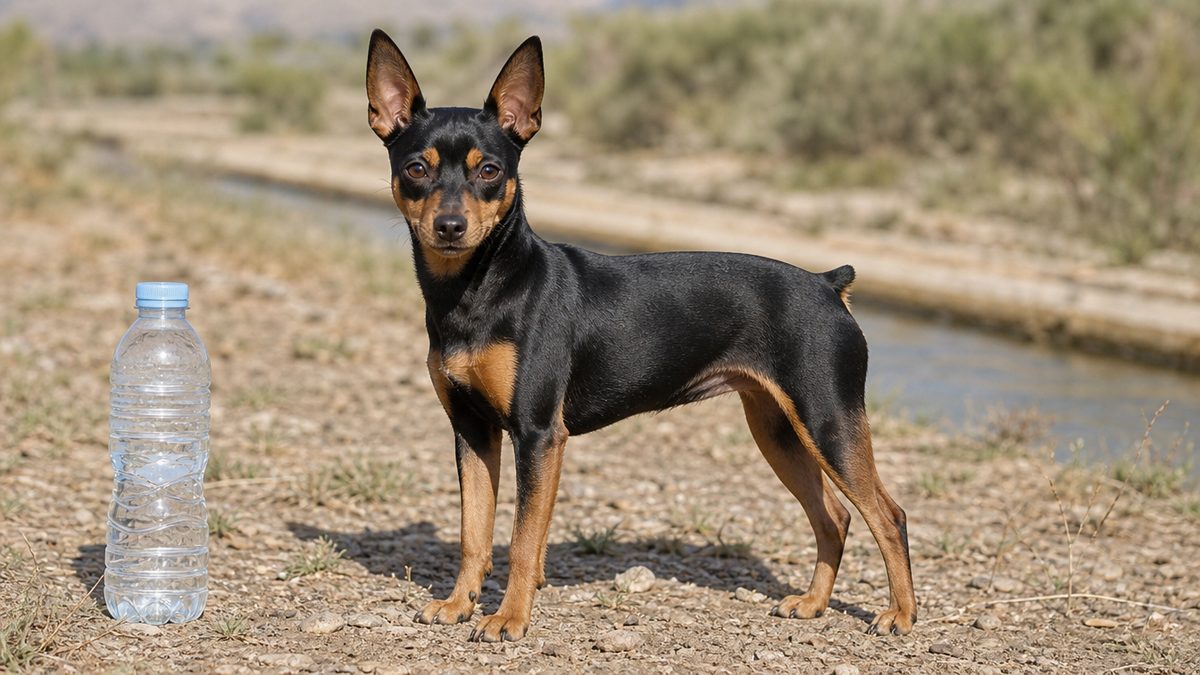
Quick answer
No Ratonero Murciano price in India exists, and the breed has no Indian presence at all. Its real interest is where it sits in Spain: its own regional canine association has measured 63 dogs and published their heights, weights and coat frequencies, while the state list of Spanish canine breeds still does not carry its name and the association itself calls it pending recognition.
This page is reference information and not veterinary advice. The Ratonero Murciano has no clinical literature at all, so every health statement here is a general canine fact or an inference from the breed's size and work, and each is labelled as such. For anything concerning your own dog, consult your nearby vet.
Ratonero Murciano traits, rated for India
What the Ratonero Murciano is, and where it sits in Spanish recognition
The Ratonero Murciano is a small farm ratter from the Region of Murcia, and its position is unusual for a breed this well documented: it has been measured in detail by its own regional canine association and is still not on Spain's national list of canine breeds.
Start with what the breed's own body says about its status, because it is refreshingly direct. The Asociacion Canina de la Comunidad Autonoma de Murcia opens its phenotypic and morphological study with the words *una raza canina pendiente de reconocimiento oficial*, a canine breed pending official recognition. That is not a hedge. It is the position, stated by the organisation that would benefit most from overstating it.
The state document confirms it. The Anexo to Real Decreto 558/2001 lists 33 Spanish canine breeds, and it does carry three ratters: the Ca Rater Mallorqui, the Gos Rater Valencia and the Ratonero-Bodeguero Andaluz. It does not carry the Ratonero Murciano, and nor does any of the five orders and decrees that have amended that annex between 2005 and 2020.
The association describes itself as *entidad oficialmente reconocida segun RD 558/2001*. So the association holds official recognition under the decree while the breed does not appear in the decree's annex. Those are two different things and conflating them is easy. What ACCAM's recognition means is that it is competent to keep genealogical books for breeds it is authorised for; what the annex omission means is that the Ratonero Murciano is not among the breeds Spain has declared a raza canina espanola.
The recognition ladder, and how far its cousins have climbed
This is the most useful thing this page can show, because it is datable and it has moved recently. Spain's small ratting breeds are not all in the same place, and two of them have advanced within the last four years.
| Breed | FCI status | In the RD 558/2001 Anexo? | State prototype printed? | Authorised studbook keeper |
|---|---|---|---|---|
| Ratonero Bodeguero Andaluz | Provisional, FCI 371, admitted 3 September 2024 | Yes | Yes | RSCE, under the Junta de Andalucia |
| Gos Rater Valencia | Provisional, FCI 370, admitted 21 June 2022 | Yes | Yes | Sociedad Canina de Valencia, under the Generalitat |
| Ca Rater Mallorqui | None | Yes | Yes | Asociacion Club Espanol del Perro Ratero mallorquin |
| Ratonero Murciano | None | No | No | None. ACCAM runs a breed club |
| Villanuco de Las Encartaciones | None | No | No | None |
The FCI's letter-R index returns 11 breeds and does include RATONERO BODEGUERO ANDALUZ, whose record URL resolves to ANDALUSIAN TERRIER, SHERRY TERRIER 371. So the index files Spanish ratoneros under R under their Spanish names, which means a Ratonero Murciano would appear there if the FCI held it. It does not. The Gos Rater Valencia is likewise filed under its English name VALENCIAN TERRIER, number 370. Searching either under the word ratonero at the FCI will find one of the two and miss the other.
The dog itself, measured rather than described
Most rare-breed pages describe a dog from photographs, because there is no breed standard to quote. There is no breed standard for this dog either, and that is precisely what its association is working towards. What there is instead, and what no English page uses, is a real dataset. ACCAM's study gathered 80 specimens and studied 63 of them, excluding in advance any dog showing serious heritable defects such as prognathism or, in males, cryptorchidism or monorchidism, so that only animals fit to be considered future breeding stock were included. Of the 63, 59 were adults over a year old, three were juveniles of eight to ten months and one was a two-month puppy. The sex split was 47 females and 16 males.
| Measure | Males | Females |
|---|---|---|
| Mean height at withers | 35.25 cm | 32.79 cm |
| Mean weight | 6.18 kg | 5.53 kg |
| Ears fully erect | 100 percent of the whole sample | 100 percent of the whole sample |
| Thin, tight lips | 100 percent of the whole sample | 100 percent of the whole sample |
| Coat length | About 1.5 cm, smooth | About 1.5 cm, smooth |
| Dewclaws, front or rear | None observed | None observed |
The head has parallel craniofacial axes, a marked stop, oval eyes, erect ears and a scissor bite, with roughly two thirds of the dogs matching that description in full, and no dog in the sample showing either divergent or convergent axes. Round and somewhat prominent eyes appeared in 36.51 percent and are noted as an undesirable trait; a pincer bite was seen in barely one animal; the dorsolumbar line and croup follow a straight axis.
Coat colours, and an arithmetic check on the source
The study gives coat frequencies to two decimal places, which is unusual enough to be worth checking. The commonest is tricolour at 39.68 percent, then black and tan at 28.57, then bicolour at 14.28, then solid black at 9.52 and solid cinnamon at 7.94.
39.68 plus 28.57 is 68.25, which is exactly the combined figure the study prints for tricolour and black and tan together. The remaining three coats sum to 31.74, against the 31.75 the study prints for all other coats, a difference of one hundredth attributable to rounding. All five together come to 99.99 percent. The sample arithmetic closes too: 47 females plus 16 males is 63, and 59 adults plus three juveniles plus one puppy is 63. A source whose own numbers reconcile is a source worth quoting.
The breed carries several local names, and knowing them helps if you are searching Spanish sources: ratonero, ratero de huerta, perro de las gentes del campo and perro de la huerta. Its densest population is in the comarca of the Alto Guadalentin, especially around Lorca.
Put together, the picture is of a compact, square little dog that was kept to hunt vermin around a farm rather than to be looked at, and whose association is now trying to recover a population that nobody had previously counted. Anyone shown a dog under this name can verify very little, because there is no register to check it against; what can be checked is whether the animal matches the measured means, and those at least exist. That is more than most breeds at this stage of recovery can offer.
Ratonero Murciano price in India, and why the search returns nothing useful
No Ratonero Murciano price in India exists, and unusually for this batch the breed does not even attract a fabricated one, because it is too obscure to have been swept into the Indian price-content machinery.
We ran the informational query on Google India on 9 September 2026, on an engine whose Labrador Retriever control passed in the same session with genuine Indian breed pages and a live People Also Ask box. The Indian result set for this breed contained no puppy listing, no rupee price and no Indian seller of any kind. What it contained was Wikipedia, Animalia, a dog-scanner app, DogZone, two stock-photo sites and ACCAM's own Spanish page.
Adobe Stock and Shutterstock both rank for this breed with the same product: a *Ratonero Murciano de Huerta dog portrait isolated on white, digital art illustration of hand drawn*. That is the merchandise pattern in its early form. On more searched rare breeds it becomes a poster, a mug or a paperback with a rupee price attached, and a reader in a hurry records that price as the breed's. Here the market has not got that far.
There is also no lawful route. India's import policy for pet dogs is restricted and permitted only with a DGFT authorisation, and the guidance states in consecutive clauses that dogs for commercial purposes like breeding, as a gift or for other purposes are not allowed to be imported, and that new born puppies are not allowed.
- Import authorisation is applied for under ITC(HS) code 01061900.
- Applications route through the Department of Animal Husbandry, Dairying and Fisheries for a no-objection certificate, then a monthly inter-ministerial Exim Facilitation Committee.
- Entry is only through the airports and seaports of Delhi, Mumbai, Chennai, Hyderabad, Bengaluru and Kolkata and, since October 2024, Kochi airport. The full route is set out in how to import a dog to India.
- An advance no-objection certificate must be obtained from the port's Regional or Quarantine Officer seven days before arrival.
- The only realistic lawful route is a dog already owned abroad for at least two years, entering on transfer of residence.
A warning about searching this breed in India at all
Two separate instrument problems attach to Spanish breeds on Indian search engines and both have been recorded on this site. First, the token Spanish has been observed hijacking Indian result sets, with queries about a Spanish breed returning Spanish-language-learning material under a plausible result count. Second, a class of contaminated content exists in which language-teaching sites publish generated Indian prices for Spanish breeds as vocabulary exercises. Neither fired on this breed's query, and we say so, but a reader who searches variants will meet them.
An English aggregator gives this breed as 12 to 14 years, 13 to 20 pounds or 6 to 9 kg, and 30 to 45 minutes of exercise per day. The weight band is the tell. ACCAM measured 6.18 kg in males and 5.53 kg in females across 63 dogs. A 6 to 9 kg band takes the measured mean as its floor and adds three kilograms of headroom that nothing in the study supports. Where a breed has been measured, prefer the measurement to the aggregator.
The cost of ownership for a six-kilogram dog in India
The cost of ownership for a dog of this size in India is the lowest in this Spanish batch, and it is worth setting out plainly, because at about six kilograms the Ratonero Murciano sits in the cheapest band of every Indian line item.
We price components from named Indian providers rather than assembling a monthly total for a breed with no Indian population, and every figure below was checked against the 84.38, 80 and 74 divisors to confirm it is a rupee-native price rather than a converted dollar one.
| Line | Indian figure | Source |
|---|---|---|
| Puppy core vaccination course | Starts at Rs 6,499 on the national page | Vetic, 50-plus clinics |
| Annual booster | Starts at Rs 3,199 | Vetic |
| Anti-rabies, single dose | Rs 699 | Vetic |
| 9-in-1 DHPPiL, single dose | Rs 899 | Vetic |
| Deworming, per dose | About Rs 125.67 for one tablet at one per 10 kg | Drontal Plus via Supertails |
| Grooming, bathing in Delhi | From Rs 934 | Vetic Delhi rate card |
| Municipal registration, Delhi | Rs 500 new, Rs 500 renewal | MCD Delhi |
| Municipal licence, Chennai | Rs 50 | Greater Chennai Corporation |
| Boarding, under 5 kg, per 24 hours | Rs 550 at one Bengaluru operator | Operator listing |
The identical 9-in-1 vaccine costs Rs 600 at a Goa government veterinary hospital including the certificate, from Rs 899 at a Vetic clinic and from Rs 1,999 through a vet-at-home service that also charges a Rs 699 visit fee. That is a 3.3 times spread on one drug, and a twelve times spread on anti-rabies across the same three routes. For a six-kilogram dog, the delivery model you pick will dominate your veterinary bill entirely.
Two Indian municipal facts are worth more than any breed price. Greater Chennai Corporation issued 9,115 pet licences in 2024 at Rs 50 each and runs six municipal pet clinics providing treatment and anti-rabies vaccination free of cost. Delhi's MCD has issued 18,958 pet dog certificates since 2021 and rejected 71 of 1,006 applications in FY 2026-27. For a small dog in Maharashtra, Karnataka or Tamil Nadu, a municipal clinic is often the cheapest competent option available.
The one cost that scales with the temperament rather than the size
Containment of prey drive. A ratter that gets out after something is a ratter in traffic. For a small dog that means a secured balcony, a closing front door and a harness that cannot be backed out of, and those are cheap. They are also the difference between a manageable dog and a lost one.
Heat tolerance and the Indian climate
The Ratonero Murciano has the best heat prospects of any breed in this Spanish group, and the reason is measurable: its homeland is the hottest and driest of the six, and the gap to Indian conditions is the narrowest.
Before the numbers, the caveat, because two of the three Murcian points we tried are not usable.
NASA POWER's cell for Lorca, where the breed is densest, reports an elevation of 553.86 m against a real town elevation of about 331 m, an error of +222.86 m. Its cell for Murcia city reports 298.65 m against a real 43 m, an error of +255.65 m. Both cells are picking up the sierras that surround the huerta, so both read too cold for the valley floor. Alcantarilla returns the same cell as Murcia city and is therefore not an independent reading either. We publish neither.
The point that survives is Cartagena, on the Murcian coast about 50 km from Lorca, whose cell reports 123.68 m against a real 10 m, an error of +113.68 m, inside the tolerance this project uses. That cell gives an annual mean of 18.40 C at 69.0 percent relative humidity, a hottest month of August at 26.36 C, a coolest month of January at 11.75 C, and a peak Stull wet bulb of 21.65 C in August.
| Place | Cell elevation | Annual mean T2M | Annual mean RH2M | Hottest month mean | Peak Stull wet bulb |
|---|---|---|---|---|---|
| Cartagena, Murcia | 123.68 m | 18.40 C | 69.0 percent | 26.36 C (Aug) | 21.65 C (Aug) |
| Bengaluru | 841.72 m | 23.74 C | 67.8 percent | 28.37 C (Apr) | 21.86 C (May) |
| Pune | 635.99 m | 23.86 C | 66.7 percent | 28.93 C (Apr) | 22.97 C (Jun) |
| Hyderabad | 494.59 m | 26.09 C | 60.2 percent | 33.30 C (May) | 23.35 C (Jun) |
| Mumbai | 97.15 m | 26.77 C | 67.3 percent | 31.19 C (May) | 25.77 C (Jun) |
| Chennai | 48.95 m | 27.94 C | 72.4 percent | 31.51 C (May) | 26.11 C (May) |
| Delhi | 206.37 m | 25.57 C | 45.5 percent | 35.88 C (Jun) | 26.50 C (Jul) |
| Kolkata | 7.35 m | 25.80 C | 73.8 percent | 31.53 C (May) | 27.09 C (Jun) |
Read the Bengaluru row again
Cartagena's peak wet bulb of 21.65 C and Bengaluru's of 21.86 C are 0.21 C apart NASA POWER climatology 2001 to 2020…. That is the closest match between a European homeland and an Indian city anywhere in this batch, and it is not a coincidence of two nearby cells: they are two entirely separate queries, thousands of kilometres apart, at 123.68 m and 841.72 m respectively.
The relative humidity figures agree as well: Cartagena at 69.0 percent against Bengaluru's 67.8 and Pune's 66.7 NASA POWER climatology 2001 to 2020…. So for the Indian plateau cities, this dog's homeland is a genuinely close analogue in the terms that matter physiologically.
Chennai at 26.11 C, Kolkata at 27.09 C and Delhi at 26.50 C sit four and a half to five and a half degrees of wet bulb above Cartagena's peak. That is a real gap, even for the most heat-tolerant breed in this group. The honest verdict is city-specific rather than country-wide: plateau yes, coastal plains with care, and no dog of any breed left outside on a still humid afternoon.
Indian law provides the rule for the outdoor case whatever the breed. Second Schedule Part IV paragraph 21(1) bars keeping in outdoor facilities, without the attending veterinary practitioner's written approval, dogs not accustomed to the temperatures prevalent locally. Paragraph 15 separately requires the temperature within indoor housing to be ambient and comfortable depending on the breeds of dogs housed inside, which puts the assessment on the keeper breed by breed.
Temperament and household fit
The Ratonero Murciano is described by its own association as lively and cheerful with a streak of restlessness, brave, sociable with people and loyal to its owner, and energetic in guarding work.
The description comes from ACCAM's photographic annex, where the character is set out alongside images of dogs at work: of a lively and cheerful character though with traits of restlessness, showing courage and boldness, sociable in dealing with humans and faithful and grateful to its owner; in defence and guarding tasks it acts with energy and determination; at rest it is peaceful, trusting and sure of itself; and when alert its gaze is fixed and penetrating.
That is a farm dog's character list rather than a companion dog's, and it explains the direction the breed has been moving. ACCAM notes that although the dog still shows excellent aptitude for rodent control, its census and popularity have been increasing recently as it integrates as a companion animal in urban settings.
What that means in an Indian home
- Expect alerting. A dog that guards a granary tells you when something changes. In a flat, that is the lift, the doorbell and the corridor.
- Expect prey drive. The breed was kept to kill rats and weasels, and that sequence does not switch off in an urban home.
- Expect confidence, not nervousness. The character description is bold and self-assured, which is easier to live with than a fearful small dog but harder to interrupt.
- Expect a busy dog. Restlessness is in the association's own description, so a dog left with nothing to do will find something.
- Do not expect a lap dog, even at six kilograms.
An Indian household in a plateau city with a secure balcony, no small pets, tolerance for barking at arrivals, and a wish for a small dog that is neither fragile nor fussy. That is a real and common profile, which is what makes this breed's unavailability worth stating clearly rather than leaving the reader hopeful.
Training a small ratter, and what the breed resists
To train a Ratonero Murciano you build the recall and the settle early and manage the prey sequence forever, because a ratter in pursuit is not taking instructions.
There is no published training literature specific to this breed and we will not invent any. What follows applies to the type, and is labelled as such, but the type is well enough defined by ACCAM's measurements and character notes to make the advice concrete.
- Build the recall away from a moving small animal, on a long line, before six months rather than after.
- Teach a settle on a mat as a trained behaviour, because a dog described as restless does not learn stillness on its own.
- Manage the balcony, the gate and the front door rather than trusting obedience under arousal.
- Reward quiet at the door from week one, since alerting is self-reinforcing and becomes permanent quickly.
- Socialise heavily between eight and sixteen weeks, which India's rules make convenient by noting that puppy vaccination can start at seven to eight weeks and is usually complete by eighteen.
The docking question, which this breed answers unusually
ACCAM's study reports something specific about tails, and it needs care. 68.75 percent of the studied dogs were anurous from birth, that is naturally tailless, and in the remaining 31.25 percent near-total amputation of the tail was described as very frequent, with the tail set high over the croup.
Second Schedule Part II paragraph 6(8) of the Prevention of Cruelty to Animals (Dog Breeding and Marketing) Rules, 2017 reads: *There shall be no tail docking, ear cropping de-barking, de-clawing, branding, dyeing, injecting substances to enhance visual appeal, performing a surgery or procedure to camouflage or hide any defect or infirmity or any other kind of mutilation of any body part of the pup and any change of appearance by artificial means is strictly forbidden*. The gazette prints it without a comma after *ear cropping*, and we quote it as printed. There is no breed exception. Note the important distinction on this page though: the docking here is a reported practice in the population, not a requirement in a written standard, because this breed has no written standard. A naturally tailless dog raises no question at all under 6(8); a surgically shortened one does. Cite it as Second Schedule Part II para 6(8) and never as Rule 6(8).
One further Indian clause reaches any small closed breeding population. Paragraph 6(3) prohibits in breeding, defined as breeding between relatives of the second to fourth grade in straight or side line within the first four generations, giving uncle to niece, nephew to aunt, cousin to cousin and grandparent to grandchild as examples, and prohibits incest breeding between parents and children or brother and sister. Paragraph 6(4) adds that female dogs shall not be mated after the age of eight years. A recovery programme working from 63 assessed dogs would have to plan matings against those limits from the start.
Daily exercise requirement
A Ratonero Murciano needs short frequent outings and real mental work rather than distance, and in India the outings move to the cool hours while the mental work stays indoors.
Ratting is burst work. A dog built for it wants several short bouts of high interest rather than one long walk, and an English aggregator's figure of 30 to 45 minutes a day is a reasonable order of magnitude even though we would not treat it as sourced.
- Two or three short outings a day beat one long one for a small busy dog.
- Walk before sunrise and after dark from March to October in the coastal plains, and more freely than that on the plateau.
- Use scent games and food puzzles indoors as the main daily workload rather than as a supplement.
- Give the dog something legitimate to chase, because the alternative chooses itself.
- Keep outings short on still humid afternoons regardless of what the thermometer says.
The one breed in this batch where the plateau reading actually helps
Because Cartagena's peak wet bulb of 21.65 C and Bengaluru's of 21.86 C are within 0.21 C of each other, and Pune's 22.97 C is only 1.32 C above the homeland, a dog of this origin on the Indian plateau is closer to home than any other breed in this group. That is a real operational difference: on the plateau, a morning walk in April is not an extreme event for this dog in the way it would be for an Atlantic breed.
Small dogs board cheaply, with one Bengaluru operator listing Rs 550 per 24 hours for animals under five kilograms. Indian boarding listings also carry a Bengaluru-specific warning about generator backup for air conditioning during BESCOM load shedding from March to May. Ask about the generator before you ask about the rate.
Grooming and coat care in Indian humidity
Grooming a Ratonero Murciano is a five-minute weekly job, because the study measured a smooth coat of about one and a half centimetres across all 63 dogs.
ACCAM records the hair as smooth and ultra-short at about 1.5 cm, with a generalised black nose, and gum mucosa that is light in 63.49 percent of dogs against dark in 36.51 percent. Those two figures sum to 100, another small confirmation that the dataset reconciles.
A rubber mitt once a week and a bath when the dog is genuinely dirty is the whole routine. The Indian issues are not coat issues.
The three things that would need attention in India
- Ticks. A 1.5 cm smooth coat makes ticks easy to find, which is a genuine advantage, but finding is not preventing.
- Sun. A very short coat over a small body burns, especially on a tricolour or bicolour dog with white on the muzzle and ears. Avoid direct midday sun rather than relying on the coat.
- Erect ears in the monsoon. Upright ears drain far better than folded ones, so this breed has less ear trouble than most, but a wet dog still needs a weekly look.
- Nails, because a dog on Indian tile does not wear them down the way one on dry Murcian ground did.
Indian studies of dogs tested at veterinary clinics report heavy burdens: 56 of 178 dogs positive for Ehrlichia canis in Odisha, Babesia in 80 of 120 dogs in Kerala with a pre-monsoon peak from March to May, 51 of 442 positive by PCR in Andhra Pradesh, and in West Bengal 72.9 percent of the 584 dogs screened carrying two or more pathogens. Those studies sampled clinically suspected dogs or clinic caseloads rather than random populations, so the correct framing is among dogs tested at veterinary clinics. Parasite control matters far more here than grooming does.
Indian grooming prices come from rate cards rather than packages: haircut from Rs 1,359 and bathing from Rs 934 in Delhi, against a wider Rs 300 to Rs 2,000 market range. For a coat this short, most of that spend is optional.
Health issues, screening and life span
No health issues have been published for the Ratonero Murciano, and the search that establishes it produced one of the cleanest homonym cases on this site: in Spanish, ratonero is also the word for a buzzard.
We searched with controls in the same session and read the query translation line on every query, running singular and plural forms separately because PubMed's title and abstract field does not stem plurals.
| Query | Records | What they actually are |
|---|---|---|
| "Ratonero Murciano"[tiab] | 0 | Quoted-phrase-not-found warning returned |
| Ratonero[tiab] | 0 | Bare term, nothing at all in title or abstract |
| Ratoneros[tiab] | 0 | Plural run separately |
| "Murciano de Huerta"[tiab] | 0 | The full local name |
| "Murcian ratter"[tiab] | 0 | The English descriptive name |
| ratonero, unquoted all-fields | 1 | A 1979 anatomical study of the eyeball of the common buzzard |
| Labrador Retriever[tiab], control | 1,109 | Control passed |
| "Spanish Water Dog"[tiab], control | 9 | Control passed |
In Spanish, ratonero is the ordinary word for a buzzard: the common buzzard is the *ratonero comun*, *Buteo buteo*. The only record the unquoted search returns is Martin Roldan and Blanquez Layunta's 1979 anatomical and structural study of the eyeball of the common buzzard, *Buteo buteo buteo*, in *Anatomia Histologia Embryologia*. So the one paper in the world's largest biomedical database matching this breed's name is about a bird of prey. That is homonym capture in its purest form: the instrument worked perfectly and the query was ambiguous.
Screening databases
The breed holds no OFA code. We read 435 canine breed codes out of OFA's own data-name markup, with Labrador Retriever LR, Bulldog BU and Beagle BE passing as in-document controls, and there is no Ratonero, no Murciano and no Murcian entry of any kind. The only ratter OFA holds is the Prague Ratter, code PRT. OFA's own publication threshold is 100 hip evaluations, or 50 for its other databases, but a breed with no code has not reached the point of being counted at all.
What the breed's own study did screen for
This is where the Ratonero Murciano is better documented than most breeds at its stage. ACCAM's study excluded in advance any dog showing serious heritable defects, naming prognathism, superior or inferior, and in males cryptorchidism or monorchidism. It records no prognathism in any studied dog, which follows from the exclusion rather than telling us the population rate, and we say so rather than reporting it as a prevalence finding.
It also flags one structural trait as undesirable: round, somewhat prominent eyes in 36.51 percent of the sample. Prominent eyes are a genuine welfare consideration in a small dog, because they are more exposed to trauma and to drying, and in a dusty Indian environment that matters more than it does in a Murcian farmyard.
ACCAM reports apparently little sexual dimorphism: despite very significant weight differences between males and females at p less than 0.01, only thoracic perimeter, posterior croup width and height at the tail insertion were clearly distinct. It also cautions that an apparent age effect on most measurements is probably not real, since the breed scarcely grows after one year of age, and attributes the pattern instead to better feeding and care in the younger cohort. A study that argues against its own apparent result is a study worth reading.
On life span we publish nothing sourced. An English aggregator gives 12 to 14 years, which is unremarkable for a small dog, but there is no cohort study, no registry median and no club survey behind it, and we are not going to launder an aggregator's figure into a fact.
Feeding a six-kilogram working dog in India
Feed a Ratonero Murciano to a measured condition rather than to a band, because this is one of the few rare breeds where a real mean weight exists: 6.18 kg in males and 5.53 kg in females.
Those means come from 63 weighed dogs, on a scale accurate to half a kilogram. ACCAM adds a caution worth carrying: weight appears to be rising considerably in young dogs of one to two years, probably because of better care and more correct feeding. In other words the historical mean was a working weight, not necessarily an optimal one.
- Weigh the daily ration rather than scooping it, because at six kilograms a small error is a large percentage.
- Split into two meals and keep both away from the hottest hours.
- Use food as the training currency for a busy dog, and subtract it from the ration rather than adding to it.
- Assess condition by hand monthly, since a 1.5 cm coat shows outline but hides gradual gain.
- Keep fresh water in more than one place through the Indian summer, and refresh it twice daily.
Drontal Plus is dosed at one tablet per 10 kg at about Rs 125.67 per tablet, so a dog at the study's mean takes one tablet per deworming. Combined monthly tick and worm products are sized by weight band, so check the band against your own dog rather than against the breed mean, and re-price before you commit, because Indian retail figures in this category have gone stale inside days in our own records.
We publish no monthly Indian food total. A monthly kibble figure is arithmetic rather than a quoted price, and running it for a breed with no Indian population would give a number with nothing behind it.
Month by month through the first year
The first year of a small ratter is a socialisation and impulse-control project, and for this breed the timeline anchors to Indian rules and to one useful growth fact from the breed's own study.
That growth fact is worth having, because it is rare for an unrecognised breed to have one. ACCAM states that the Ratonero Murciano scarcely grows after one year of age, which is why it discounts the apparent age effect in its own measurements. So the adult size is set early, and a dog still visibly growing at fourteen months is unlikely to be this breed.
| Age | What should be happening | Anchor |
|---|---|---|
| Under 8 weeks | The puppy stays with its dam. India prohibits sale of pups under eight weeks | Rule 8(1)(a), 2017 Rules |
| 7 to 8 weeks | Core vaccination can begin | Second Schedule Part III, 2017 Rules |
| 8 to 16 weeks | Heaviest socialisation window: lifts, doorbells, traffic, visitors, other dogs | Behavioural |
| By 18 weeks | Core vaccination course usually complete | Second Schedule Part III, 2017 Rules |
| At sale | Every pup sold must be micro-chipped with records maintained | Rule 8(1)(e), 2017 Rules |
| Over 6 months | Not to be sold without prior sterilisation unless to another licensed breeder | Rule 8(1)(b), 2017 Rules |
| 6 to 12 months | Recall and settle established before adolescent prey drive peaks | Behavioural |
| 12 months | Adult size essentially reached, per the breed's own study | ACCAM morphological study |
The door habit forms in the first six months
A dog kept for centuries to announce arrivals learns the job from the world rather than from you: it barks, the arrival happens, the bark is rewarded. Answer the door before the dog does, and reward quiet from the first week. With this type that single habit is worth more over a lifetime than any other training decision you will make.
Where the Ratonero Murciano sits among Spain's ratters
The Ratonero Murciano sits physically between the two Spanish ratters that hold the most recognition, and administratively below both, and its own association put a number on the first half of that sentence.
ACCAM's comparative conclusion is precise and is the single most useful comparison anyone has published for this breed: compared with other breeds similar in origin or format, the Ratonero Murciano shows a greater height than the Ca Rater Mallorqui but less than the Gos Rater Valencia; its weight is likewise intermediate, at around six kilograms, against up to eight for the Gos Rater Valencia and no more than four for the Ca Rater Mallorqui.
It adds a structural difference. In the Ca Rater Mallorqui and the Gos Rater Valencia the width of the skull is almost equal to its length, whereas in the Ratonero Murciano there is a small variation. Its conclusion is that among the ratters of Spain's Mediterranean side, the Murciano sits by its morphological characteristics between the Ca Rater Mallorqui and the Gos Rater Valencia.
| Breed | Typical weight | Skull width against length | Recognition |
|---|---|---|---|
| Ca Rater Mallorqui | No more than 4 kg | Almost equal | In the Spanish annex with a state prototype |
| Ratonero Murciano | Around 6 kg, measured mean 6.18 and 5.53 | Small variation between the two | Pending official recognition |
| Gos Rater Valencia | Up to 8 kg | Almost equal | In the annex, and FCI provisional 370 since 2022 |
The Villanuco de Las Encartaciones, the Basque ratter, is described in the opposite terms: it shows some similarity to the Ca Rater Mallorqui and the Gos Rater Valencia but is phenotypically less similar to them than they are to each other. So of Spain's two unrecognised ratters, one falls inside the recognised pair on its measurements and the other falls outside them. Two independent sources, opposite placements, and neither breed has a written standard.
The origin claim, and what can and cannot be checked
ACCAM's introduction traces the breed's morphology to ancient Carthaginian, Roman, Egyptian and Muslim dogs, notes sixteenth-century writings describing the *canis villaticus* as the dog of country people in Murcia, and proposes that the ratting instinct was reinforced by dogs the English brought on their ships during the eighteenth and nineteenth centuries to protect cargo from rats, crossing with local Murcian dogs. It is candid that the written information is very poor while the oral tradition is relatively abundant.
It also notes a resemblance between the Ratonero Murciano and other Mediterranean ratters, and beyond them the Japanese Terrier and the Brazilian Terrier, which it reads as evidence that English maritime trade distributed dogs of this type worldwide. That is a hypothesis, offered as one, and no genetic study exists to test it.
Two entries in the study's bibliography are dated 1982 in the author-year while citing the *Memoria I Symposium nacional de las razas caninas espanolas, Cordoba 19-21 de Marzo de 1997*. A 1982 paper cannot appear in a 1997 symposium volume, so one of the two dates is wrong in each entry. It is a bibliography error rather than a data error, and none of the figures this page uses depends on those two references, but a reader tracing the sources should know.
Mistakes readers make with this breed
The commonest mistake with the Ratonero Murciano is searching its name and reading about a buzzard, and the second is taking an aggregator's weight band over the breed's own measurements.
Five errors, and the check that settles each
- Searching ratonero and reading a bird. In Spanish it is the ordinary word for a buzzard, and the only record the term returns in PubMed is a 1979 study of *Buteo buteo*. Add *perro* or *dog* to any Spanish-language search.
- Taking 6 to 9 kg as the breed weight. ACCAM measured 6.18 kg in males and 5.53 kg in females across 63 dogs. The wider band is an aggregator's, not a measurement.
- Confusing the association's recognition with the breed's. ACCAM is officially recognised under RD 558/2001; the breed is not in the decree's annex Real Decreto 558/2001, de 25 de mayo.
- Assuming a tailless dog was docked. More than two thirds of the studied dogs were born tailless, which raises no question at all under India's paragraph 6(8).
- Reading absence from the FCI as absence from everything. The FCI's R index holds 11 breeds and includes the Ratonero Bodeguero Andaluz but not this one, while the breed nonetheless has a club, a study and a 1997 recovery programme.
The single-registry mistake, which is the important one
It would be easy to write that this breed is unrecognised and leave it there. That would be reading one register and calling it the world. The accurate picture needs three separate readings and they do not agree.
| Instrument | What it says about the Ratonero Murciano |
|---|---|
| Anexo to Real Decreto 558/2001 | Absent. Not one of the 33 Spanish canine breeds |
| RSCE official-studbook table | Absent. Not one of the 25 breeds with an authorised keeper, although that table does carry the Ca Rater, the Gos Rater Valencia and the Ratonero Bodeguero Andaluz |
| RSCE list of ethnic groups working towards recognition | Absent. The eight listed are Carea Castellano-Manchego, Podenco Orito, Lobito Herreno, Dogo Espanol, Can de Chira, Ratonero Palmero, Presa Navarro and Pastor del Osu |
| ACCAM, officially recognised under RD 558/2001 | Present. Runs a breed commission, a club and a recovery programme since 1997, and has published a full morphological study |
Three national instruments say nothing about this breed, and a fourth body, itself officially recognised under the same decree, has measured 63 dogs and published their heights, weights and coat frequencies Real Sociedad Canina de Espana. A page that checked only the RSCE would report a breed with no organisation behind it. A page that checked only ACCAM would report a breed on its way to recognition. Both would be wrong, and the true position is the disagreement between them.
Adoption and responsible sourcing
You cannot adopt a Ratonero Murciano in India, and the honest advice is to notice that what you liked about it is a type India already has in large numbers.
There is no Indian population, no Indian breeder, no Indian rescue holding the breed and no lawful import route into a pet home. Even in Spain the breed is concentrated in one comarca and is only now being taken up in cities.
What you actually wanted
Read the description back. A small, short-coated, confident, low-maintenance dog with real drive, that copes with heat better than most European breeds and does not need a garden. That is a good description of a great many dogs currently in Indian shelters.
- Indian pariah dogs, at the smaller end, are alert, short-coated, heat-adapted and free to adopt.
- Indian Spitz, widely available, is a small alert companion breed with a long Indian history.
- Local shelter adults come with a known temperament, which for a high-drive small dog is more useful than any breed description.
- Foster first, because a busy vocal dog is a lifestyle fit rather than a specification.
- Ask about prey drive specifically if you keep birds, rabbits or a cat, since that is the trait this whole page describes.
The Real Sociedad Canina de Espana publishes the test a population has to meet to become a recognised breed: a common project in the form of a racial standard, its individuals registered generation by generation in a book of origins, and a notable level of homogenisation and stability in both phenotype and genotype. ACCAM's study is explicitly a contribution to the second and third of those, having been begun in 1997 as a line of research to help define the breed's future racial standard. The missing piece is the standard itself, and the register that follows it.
For the record, the breed's public milestones are dated. The first gathering of Ratoneros Murcianos took place at Caravaca de la Cruz in 2004, during the national and international canine exhibition held there, and the largest concentration for study purposes was at the I Feria Canina de Lorca in 2008. Research into specimens attributed to the breed had begun in 1997, covering the Vega Alta del Segura, the Noroeste, the Alto and Bajo Guadalentin and the Altiplano.
Ratonero Murciano questions, answered from the study
What dog did Julius Caesar have?
Google returned this question in this breed's own results box, and there is a reason it belongs here. No personal dog of Caesar's is recorded. What is recorded is that Roman writers described large war dogs encountered in Britain, and that Roman dogs of several types spread across the empire. This breed's own association traces its morphology partly to Carthaginian, Roman, Egyptian and Muslim dogs, and is candid that the written evidence is very poor while the oral tradition is abundant.
Why are telomian dogs rare?
Google returned this question in the Ratonero Murciano's box and it concerns a different breed entirely, a Malaysian village dog. The general answer applies to both: a breed stays rare when its original job disappears, its population sits in one small geographic area, and no organised register exists to record and connect the remaining animals. The Ratonero Murciano meets two of those three conditions and has an association working on the third.
What dog breed is a Rat-Cha?
A Rat-Cha is a crossbreed rather than a breed: a Rat Terrier crossed with a Chihuahua, sold under a portmanteau name. It is not related to the Ratonero Murciano, which is a landrace Spanish farm ratter measured at 35.25 cm and 6.18 kg in males. Worth noting for Indian readers that India's own rules prohibit breeding to create new breeds of dogs or unusual looks, at Second Schedule Part II paragraph 6(9).
What is the least wanted dog?
In India the answer is not a breed at all. It is the adult indie or pariah dog, which is the animal most often passed over in shelters in favour of a puppy or a recognisable breed name. Those dogs are already adapted to Indian heat, need no import authorisation and cost nothing to adopt. Anyone drawn to a small hardy ratter from Murcia has a far easier route to the same qualities.
What is the Ratonero Murciano price in India?
There is no Ratonero Murciano price in India. The breed has no Indian population and no Indian breeder, and India's pet import policy bars import for commercial purposes, as a gift or for other purposes, and bars newborn puppies. The Indian search result set for this breed contains no puppy listing and no rupee price at all, only encyclopedia entries and two stock-photo listings.
How big is a Ratonero Murciano?
Its own regional association measured 63 dogs and reported a mean height at the withers of 35.25 cm in males and 32.79 cm in females, with mean weights of 6.18 kg and 5.53 kg. English aggregators give a wider 6 to 9 kg band, which takes the measured mean as its floor and adds headroom the study does not support.
Is the Ratonero Murciano a recognised breed?
Not yet. Its own association describes it as a canine breed pending official recognition. It is absent from the 33 breeds in the Anexo to Real Decreto 558/2001, absent from the Real Sociedad Canina table of official studbooks, absent from that body's list of ethnic groups working towards recognition, and absent from the FCI's letter-R index, which does contain the Ratonero Bodeguero Andaluz.
Why do so many Ratonero Murcianos have no tail?
Because most are born that way. The breed's own morphological study found 68.75 percent of the dogs it examined were anurous from birth, and reported that in the remaining 31.25 percent near-total amputation of the tail was very common. India's Second Schedule Part II paragraph 6(8) forbids tail docking outright, with no breed exception, so a naturally tailless dog raises no question here while a surgically shortened one does.
Can a Ratonero Murciano handle Indian heat?
Better than any other breed in this Spanish group. Its nearest measurable homeland cell, Cartagena, peaks at a Stull wet bulb of 21.65 C, which is within 0.21 C of Bengaluru's 21.86 C and 1.32 C below Pune's. The coastal plains are a different matter: Chennai at 26.11 C and Kolkata at 27.09 C sit four and a half to five and a half degrees above the homeland peak.
What health problems does the Ratonero Murciano have?
None have been published. Every PubMed query form returned zero, and the only unquoted hit is a 1979 anatomical study of the eyeball of the common buzzard, because ratonero is also the Spanish word for a buzzard. Controls passed in the same session. The breed holds no OFA code among 435 canine codes. Its own study flags one trait as undesirable: round, somewhat prominent eyes in 36.51 percent of the dogs examined.
How long does a Ratonero Murciano live?
Nobody has published a figure we would stand behind. An English aggregator gives 12 to 14 years, which is unremarkable for a dog of this size, but there is no cohort study, no registry median and no breed-club survey behind it. We would rather print no life span than launder an aggregator's number into a citation.
Is the Ratonero Murciano the same as the Ratonero Bodeguero Andaluz?
No, and the difference is now formal. The Ratonero Bodeguero Andaluz is in Spain's national annex with a printed state prototype, has the Real Sociedad Canina as its authorised studbook keeper under the Junta de Andalucia, and was admitted to the FCI's provisional register as number 371 on 3 September 2024 under the English names Andalusian Terrier and Sherry Terrier. The Ratonero Murciano holds none of those.
Compare with similar breeds
Ratonero Murciano sits in 2 Bonbeno groups. Each one compares it directly against the breeds it is genuinely an alternative to, on the same figures.