
Breed profile
Podenco Valenciano in India: Recognition, Heat, Price and Health
A Valencian rabbit-hunting podenco whose own founding order credits it with legendary resistance to extreme heat, and which sits in Spain's national breed annex without a national standard printed beside it.
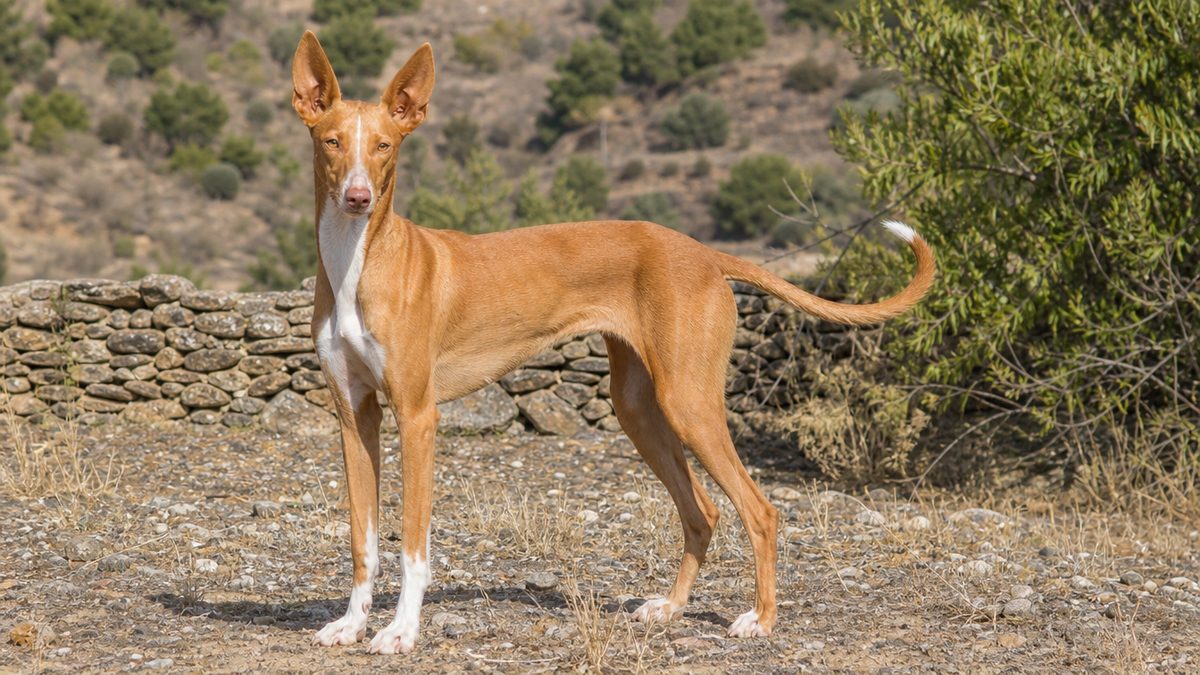
Quick answer
No verifiable Podenco Valenciano price in India exists, and the breed has no Indian presence. Its status is more interesting than its market: the Generalitat Valenciana recognised its racial and functional standard and created its studbook in 2015, and Spain listed it nationally in 2016 without printing a national standard beside it, which is why the annex holds 33 breeds and only 26 racial prototypes.
This page is reference information, not veterinary advice. The Podenco Valenciano appears in no peer-reviewed veterinary literature at all, so every health statement here is either a general canine fact or an inference from the breed's build and work, and it is labelled as such. Tell your nearby vet what type of dog this is before any procedure, because a lean, low-body-fat hunting dog is not a Labrador and your vet will want to know that.
Podenco Valenciano traits, rated for India
What the Podenco Valenciano is, and the standard Spain never printed
The Podenco Valenciano is a Valencian rabbit-hunting dog that holds an official racial standard from the Generalitat Valenciana and a place in Spain's national list of canine breeds, and it is the clearest case on this site of a breed that is nationally listed without a national standard.
Start with the strange fact, because it is checkable in two minutes. The annex to Real Decreto 558/2001 opens with the line that the Spanish canine breeds are those set out below, and then lists 33 names, the Podenco Valenciano among them. The same annex then prints racial prototypes for only 26 of them, and the decree's own index at page 2 enumerates exactly which 26. Seven listed breeds, this one included, have no national standard text at all.
The reason is in the amending instruments rather than in any commentary. The decree's annex has been amended seven times, by the Orden of 2 August 2001, Orden APA/807/2004, Real Decreto 1557/2005 with a corrección de errores in 2006, Orden ARM/573/2010, Orden AAA/251/2012, Orden AAA/1357/2016 and Orden APA/698/2020, and the Boletín Oficial del Estado's consolidated text lists all seven on its own face. Compare the wording of the ones that added breeds.
| Instrument | What it says it is adding | Prototype printed |
|---|---|---|
| Orden of 2 August 2001 | Five breeds, expressly con sus prototipos raciales | Yes, for all five |
| Orden APA/807/2004 of 24 March | Five breeds, expressly con sus prototipos raciales | Yes, for all five, including the Ratonero Valenciano |
| Orden AAA/1357/2016 of 29 July | Three breeds, with no mention of prototypes at all | No, for any of the three |
| Orden APA/698/2020 of 21 July | One breed, the Valdueza | No |
The 2016 article is one sentence long and it is the whole explanation. It reads that the Spanish pure canine breeds Podenco Paternino, Podenco Valenciano and Perro Leonés de Pastor are incorporated into the annex of Real Decreto 558/2001, and it never uses the phrase *con sus prototipos raciales* that the 2001 and 2004 orders both useOrden APA/807/2004, de 24 de marzoMinisterio de Agricultura. So the omission is in the instrument, not in the consolidation. The most recent amendment, Orden APA/698/2020 of 21 July, behaves the same way: it adds exactly one breed, the Valdueza, in a single sentence with no prototype.
The standard exists, it is just Valencian
This breed is not standardless. The Generalitat Valenciana's Orden 6/2015 of 3 November 2015, of the Conselleria de Agricultura, Medio Ambiente, Cambio Climático y Desarrollo Rural, recognised the racial and functional standard of the *gos coniller valencià* and created its genealogical book, alongside a single database for registering the Comunitat Valenciana's native breeds. So the standard lives in the Valencian gazette rather than in the Boletín Oficial del Estado.
That order made this the fourth animal with its own studbook in the Comunitat Valenciana, after the *gos rater valencià*, the *gallina de Chulilla* and the *oveja guirra*. The Real Sociedad Canina de España's own table of official Spanish genealogical books confirms the arrangement, filing the breed as Podenco Xarnego Valenciano with the Sociedad Canina de Valencia as keeper and the Generalitat Valenciana as authorising government.
Orden AAA/1357/2016 does two separate things. Its artículo primero replaces Annex I of Real Decreto 2129/2008, which is the *Catálogo Oficial de Razas de Ganado de España*, the livestock catalogue. Its artículo segundo amends the dog annex of Real Decreto 558/2001. One instrument touching both is exactly why reports and even official statements describe dogs as being added to a livestock catalogue that contains no dogs at all. The dog list is RD 558/2001's annex; the livestock catalogue is a different document.
Three official names, and a fourth in the studbook table
The same dog is called *gos coniller valencià* in Valencian, *xarnego valencià* regionally, and *podenco valenciano* in the Castilian the national annex usesReal Decreto 558/2001, de 25 de mayo. The RSCE studbook table adds a fourth compound, Podenco Xarnego Valenciano. Anyone searching a database for this breed needs all of them, which is precisely why the literature search on this page ran more than one form.
The FCI has never held it, and the absence was tested
Read the register rather than a breed page. The FCI's group 5 index, which is where podencos live, returns zero for valenciano and zero for valencia with the diacritics stripped, while returning PODENCO CANARIO (329) and PODENCO IBICENCO (89) on the same document as in-document controls. The complete 20-entry provisional register likewise holds no podenco, with GOS RATER VALENCIA (370) and RATONERO BODEGUERO ANDALUZ (371) present as controls.
For an Indian reader that has a direct consequence. India is a full FCI member represented by the Kennel Club of India, so a breed with no FCI standard has no route to an Indian pedigree either.
Podenco Valenciano price in India, and why none exists
There is no verifiable Podenco Valenciano price in India, and no Indian listing for the breed was found at any position. Bonbeno publishes no rupee figure for this breed.
The shape of the result set is the finding. Searching for this breed returns an encyclopedia entry, Spanish cynology and hunting blogs, a Valencian veterinary college news item, a legal-database record of the 2015 order and the Boletín Oficial del Estado itself. There is no Indian seller anywhere in it, which is a different situation from most breeds on this site, where a fabricated Indian price exists and has to be dismantled.
Verify that for yourself before believing any figure anyone quotes you, because the check is quick and it is the same check on every rare breed: open the ranking pages and ask which of them is an Indian seller with stock. On this breed, none is. That also makes the breed neither cheap nor expensive in India, because it has no Indian price at all.
Three structural facts close the question rather than merely describing it. The breed has no FCI standard, so no internationally portable pedigree exists for it. Its studbook is a regional Spanish conservation register kept by the Sociedad Canina de Valencia under the Generalitat Valenciana. And India's import policy bars bringing dogs in for commercial purposes like breeding. No lawful supply chain can form from those three.
One instrument limitation, stated plainly
The ranked set above was harvested through a search tool whose geography is the United States rather than India. By the time this breed was researched, Bing India was serving a bot challenge reading One last step, Please solve the challenge below to continue, and DuckDuckGo was answering HTTP 202 with a stub for every query including the control. It is a real ranked set and it is not an India-geo ranked set, and the difference changes what the list proves.
A rupee band for a rare European breed that resolves to a round number of euros or dollars at 74, 80, 84.38 or anything near 91 was produced by multiplication rather than observed in India. This site has repeatedly caught Indian pages and AI answers doing exactly that, sometimes in the same answer that says no Indian price exists. And a figure that survives every division test can still simply have been invented in rupees, so a clean division is not a clean bill of health.
What an Indian reader can budget for is real, published and rupee-denominated: the cost of keeping a lean, medium, short-coated working dog in an Indian city. That is the next section, and for this breed it is unusually low.
What a Podenco Valenciano costs to keep in India
A Podenco Valenciano would be among the cheapest foreign breeds to run in India. A short close coat needs no professional grooming, and a lean dog in the middle weight bands sits inside the standard parasiticide and boarding tiers.
The two lines that matter for a hunting dog in India are parasite cover and deworming, and both are published. NexGard Spectra's 15 to 30 kg pack is Rs 3,308 for three tablets, about Rs 1,103 a month, combining afoxolaner 75 mg with milbemycin oxime 15 mg. Drontal Plus works out at Rs 125.67 a tablet dosed one per 10 kg, so a 15 kg dog needs one and a half tablets and a 20 kg dog two, about Rs 251 a dose.
| Line | Published Indian figure | Notes for this breed |
|---|---|---|
| Anti-rabies, single | Rs 699 at a Vetic clinic, Rs 100 at a Goa government hospital | Not weight-banded. Delivery model drives the spread |
| 9-in-1 DHPPiL | From Rs 899 at a Vetic clinic, Rs 600 at a Goa government hospital | A 3.3 times spread on one identical vaccine |
| Kennel cough | Rs 1,349 | Worth doing before boarding |
| Deworming | About Rs 251 a dose at 20 kg | Two Drontal Plus tablets at Rs 125.67 each |
| Monthly tick, flea and worm cover | About Rs 1,103 | Essential for a dog that works through scrub |
| Grooming | Bathing from Rs 934 in Delhi | There is nothing to clip or trim. This is the lowest grooming budget in this cluster |
| Overnight boarding | Rs 899 for 24 hours in Bengaluru | Warn the facility that this is a jumper before you book |
| Municipal registration | Rs 500 in Delhi, Rs 50 in Chennai | Chennai's six municipal clinics treat and vaccinate free |
Grooming costs almost nothing. A short close coat with no undercoat to manage means a rubber mitt once a week and a bath from Rs 934 a few times a year, and no clip, strip or trim at all. Money that would go to a groomer for a coated breed is better spent here on monthly parasiticide.
Where the money actually goes with a podenco
- Fencing, and then better fencing, because a rabbit dog that jumps and climbs will find the weak point in an Indian compound wall
- A long line and a well-fitted harness, which is the only honest way to exercise a high-prey-drive dog off a pavement
- Travel out of the city, because the exercise this breed needs does not exist inside a metro
- Skin and paw care after work, since a thin-skinned lean dog collects cuts in scrub
- Identification and microchipping, because this is a breed that goes missing rather than one that gets stolen
Municipal fees are flat regardless of breed. Delhi charges Rs 500 to register a pet dog and Rs 500 to renew, with a Rs 100 per month late fee, and has issued 18,958 certificates since 2021. Chennai charges Rs 50 for a pet licence, issued 9,115 in 2024, and runs six municipal pet clinics providing treatment and anti-rabies vaccination free of cost. Boarding in Bengaluru runs Rs 599 for four hours, Rs 799 for a ten-hour day and Rs 899 overnight.
Can a Podenco Valenciano handle the Indian climate
The Podenco Valenciano is the best heat-adapted breed on any page in this Spanish cluster, and it still faces a four to five degree wet-bulb gap in an Indian plains city. Its own founding order credits it with a legendary endurance for extreme heat, and this section tests that against numbers.
The claim is worth quoting because it comes from the instrument rather than from marketing. The Valencian order of 3 November 2015 describes an autochthonous breed of great prestige, especially as a hunting dog, possessing great hearing and sight, a portentous and unbeatable sense of smell, and a legendary endurance for withstanding extreme heat, along with dynamism, intelligence and liveliness. That is a state gazette making a heat-tolerance claim about a breed, which almost none of them do.
Testing it needs the homeland's actual climate, and here the measurement is harder than on any other page in this batch.
Five points were queried by explicit latitude and longitude, with the cell elevation echoed on every one. Valencia city and Valencia port share a single 388.86 m cell against real elevations of 15 m and 2 m, errors of plus 373.9 m and plus 386.9 m. Alzira returns 474.02 m against a real 20 m, plus 454.0 m. Castellon returns 266.02 m against 27 m, plus 239.0 m. Sueca and Gandia, about 30 km apart, return a byte-identical series from one 106.96 m cell, errors of plus 95.0 and plus 85.0 m. Two nearby cells agreeing exactly is not a check, it is the symptom: it means one cell was queried twice. The 106.96 m cell is used below because it is the least wrong available, and its error is stated rather than hidden.
On that cell, the Valencian coastal plain runs an annual mean of 18.09 C at 70.62 percent relative humidity, with a hottest month of August at 26.05 C and a peak Stull wet bulb of 21.69 C, against POWER's own T2MWET of 22.68 C for the same month. Choosing the Valencia city cell instead would have given 16.46 C, 63.41 percent and a 19.67 C wet bulb, so the choice of wrong cell moves the answer by more than a degree and a half of air temperature and seven points of humidity. That is worth knowing before trusting any single figure for this region.
| Place | Cell elevation and error | Annual mean | Annual humidity | Hottest month | Peak wet bulb |
|---|---|---|---|---|---|
| Valencian plain, Sueca and Gandia cell | 106.96 m, plus 85 to plus 95 | 18.09 C | 70.62 % | August, 26.05 C | 21.69 C, August |
| Valencia city cell, for contrast | 388.86 m, plus 373.9 | 16.46 C | 63.41 % | July, 26.20 C | 19.67 C, August |
| Delhi | 206.37 m, minus 9.6 | 25.57 C | 45.51 % | June, 35.88 C | 26.50 C, July |
| Chennai | 48.95 m, plus 43.0 | 27.94 C | 72.39 % | May, 31.51 C | 26.11 C, May |
| Mumbai | 97.15 m, plus 83.2 | 26.77 C | 67.28 % | May, 31.19 C | 25.77 C, June |
| Kolkata | 7.35 m, minus 1.7 | 25.80 C | 73.84 % | May, 31.53 C | 27.09 C, June |
| Bengaluru | 841.72 m, minus 78.3 | 23.74 C | 67.84 % | April, 28.37 C | 21.86 C, May |
| Pune | 635.99 m, plus 76.0 | 23.86 C | 66.68 % | April, 28.93 C | 22.97 C, June |
Now the honest verdict, which supports the direction of the claim and not its comfort. The Valencian plain's peak wet bulb of 21.69 C is within 0.17 C of Bengaluru's 21.86 C and within 1.3 C of Pune's 22.97 C. On the plateau, this breed is genuinely close to home, which no other breed in this cluster can say. Against Chennai's 26.11 C and Kolkata's 27.09 C it is 4.42 and 5.40 degrees short, which is a real gap and not a small one.
So the reasonable reading is that a Podenco Valenciano is a plausible Bengaluru or Pune dog and a difficult Chennai, Kolkata, Mumbai or Delhi one. That is a more favourable answer than this site can give for any Spanish mastiff, water dog or hound, and it is still not a recommendation to keep one on the coastal plains.
The risk that heat tolerance does not remove
Exertional heat illness is about behaviour as much as physiology. Hall 2020 recorded 1,259 heat-related illness events from 1,222 dogs, of which 879 had a recorded trigger, and 652 of those 879, or 74.2 percent, were exertional. A hunting dog with a strong prey drive will chase in conditions it should not, and a heat-adapted dog is more likely to be given the chance because its owner believes it is fine.
Bodyweight is the other measured factor and it applies here too. A bodyweight at or above the breed and sex mean carried 1.42 times the odds of heat-related illness, 1.12 to 1.80. A lean breed kept lean has already taken that risk factor off the table, which is one more reason not to let a podenco get heavy.
Indian law addresses outdoor housing directly, and this is one of the few breeds on this site where the first limb rather than the second is the live question. Second Schedule Part IV paragraph 21(1) bars outdoor housing without the attending veterinary practitioner's written approval for dogs not accustomed to the temperatures prevalent in the area, for breeds that cannot tolerate them, and for sick, infirm, aged or young animals. A newly arrived Mediterranean dog is not yet accustomed, whatever its breed's reputation.
Podenco Valenciano temperament and household fit
The Podenco Valenciano is described in its founding order as dynamic, intelligent and lively, and it is a hunting dog before it is anything else. The household question is not whether it is friendly but whether you can contain it and occupy it.
Take the description from the order. It records a breed of great prestige as a hunting dog, with great hearing and sight, a portentous sense of smell, legendary heat endurance, and dynamism, intelligence and liveliness. Its stated purpose is rabbit hunting in all its forms, in dry lands, scrubland areas and ravines across the Mediterranean arc.
Physically this is a light, athletic, alert dog rather than a placid one, and it is far less heat-sensitive than any other breed in this Spanish cluster. That combination is what makes it interesting for India and what makes it hard to contain.
Read the sense list carefully, because it is the practical point. This is not a sighthound that chases what it sees and stops when the quarry is out of view. A podenco hunts on sight, scent and hearing together, which means a rabbit that has gone behind a wall is still being hunted. A fenced Indian garden is not automatically secure against a dog that can hear and smell what it can no longer see.
Who this breed suits
- Households in Bengaluru, Pune or a hill station, where the wet-bulb load is genuinely within reach of the breed's homeland
- Owners with secure, high, dug-in fencing rather than a boundary wall and a gate
- People who will exercise on a long line and accept that off-lead freedom is a project rather than a default
- Homes with no small pets, because a dog selected for centuries to catch rabbits and moles is not going to unlearn it
- Anyone who wants a low-grooming, low-cost, heat-capable dog and can supply 90 minutes a day
It suits fewer households than that list implies, and the limiting factor is containment. A lively, intelligent, high-prey-drive dog that jumps well is the profile most likely to be lost in an Indian city, and a lost podenco is very hard to recover because it keeps moving.
Everything above comes from one regional order as reported by a professional veterinary body, plus general knowledge of podenco types. PubMed returns zero records for the breed against a control returning 126 in the same session. Treat the temperament description as the order's account rather than as measurement, and judge the individual dog in front of you.
Training a Podenco Valenciano, and the recall problem
Train a Podenco Valenciano with food, a long line and realistic expectations. The breed is intelligent and quick to learn, and it was selected for centuries to make its own decisions about a rabbit, which is what every recall has to compete with.
Socialise first, between eight and sixteen weeks, in the cool hours, and treat it as the most important work of the first year. In an Indian city the list needs auto-rickshaws, delivery riders, lift doors, cattle in the road, temple bells, firecrackers, other dogs and, critically, cats and chickens if the household will ever meet them.
Then build the long-line habit before you need it. A podenco should be on a ten to fifteen metre line in any unfenced Indian space for the first two years, and arguably for life. That is not a failure of training, it is an acknowledgement that a dog hunting on three senses at once will follow something you cannot see, hear or smell.
The five things worth teaching, in order
- Name response and a marker word, in the first fortnight, because everything else is built on them
- A settle on a mat, which is what gives a lively hunting dog an off switch indoors
- A recall paid better than anything the dog was heading for, practised only on a line
- An emergency stop, which is the behaviour that works when a recall does not
- A quiet cue, because a dog bred to bark at intruders will use it in an Indian building
Use food and keep sessions short. This breed learns fast, which is a mixed blessing: it also learns quickly that a recall shouted from a distance has no consequence, and that a gap in a fence works. Consistency matters more here than duration.
Give the prey drive somewhere legitimate to go. A flirt pole, a chase-and-retrieve game with a rag on a line, and scent work in the garden all satisfy the same instinct without a rabbit. A dog whose drive has an outlet is far less likely to build its own.
Its founding order credits the breed with legendary heat endurance, and 74.2 percent of the heat-illness events with a recorded trigger in Hall 2020 were exertionalConsell Valencià de Col·legis de…. Those two facts together are a warning rather than a reassurance: a dog that copes well with heat at rest will still be pushed past its limit by its own chase, and its owner is more likely to allow it.
Daily exercise a Podenco Valenciano actually needs
A Podenco Valenciano needs about 90 minutes a day, and at least some of it has to be free running rather than lead walking. This is a dog selected for hunting rabbits across dry lands, scrubland and ravines, and a pavement walk does not touch it.
The job description is the exercise prescription. The breed's founding order places it hunting rabbits in dry lands, scrubland areas and ravines throughout the Mediterranean arc, selected for that over centuries. Terrain of that kind means climbing, jumping, sudden acceleration and long searching, and none of it happens on a lead.
The practical Indian problem is where. Safe free running for a high-prey-drive dog needs genuinely secure fencing, which most Indian parks and compounds do not have, so the honest answer for most owners is a long line plus a weekly trip to somewhere enclosed.
A realistic Indian week
- Two sessions a day of 40 to 50 minutes, before about 7 am and after about 8 pm from March to October
- Three or four flirt-pole or chase-and-retrieve sessions a week, which satisfy the drive in ten minutes
- One weekly session in genuinely secure fenced ground where the dog can run flat out
- Scent games indoors on the many Indian days when the outdoor plan fails
- A long line every time, in every unfenced space, without exceptions for good behaviour
Under-exercise in this breed shows up as escaping rather than as chewing. A bored podenco tests the boundary, and having found a way out once it will use it again. Owners often read that as a fencing problem when it is a workload problem with a fencing symptom.
Growth limits are ordinary for a lean medium breed. Keep forced exercise low until about four months, avoid repetitive jumping onto hard surfaces through the first year, and let the puppy stop when it wants to. Skeletal maturity in a dog of this build arrives around twelve to fifteen months, and the jumping ability arrives before the joints are ready for it.
Do not run this dog in the Indian afternoon on the strength of its heat reputation. The wet-bulb arithmetic in the climate section is the constraint, and it does not care what the breed is famous for.
Grooming a Podenco Valenciano in India
The Podenco Valenciano has the lowest grooming requirement of any breed in this Spanish cluster. A short close coat on a lean dog needs a rubber mitt once a week, and the real work is checking skin, ears and feet after the dog has been in cover.
There is genuinely almost nothing to do to the coat. A short, close, sleek coat sheds moderately, holds no undercoat worth raking, and needs no clip, strip or trim at any point in the dog's life. A rubber curry mitt once a week removes the loose hair, and a bath is needed only when the dog is actually dirty.
The work that does matter is inspection rather than grooming. A lean, thin-skinned dog that hunts through scrub collects scratches, thorns and grass seeds, and in Indian humidity a scratch that stays damp is where a skin infection begins. Check the whole dog by hand after every outing in cover, not by looking at it.
| Task | Dry season, November to February | Hot season, March to June | Monsoon, July to October |
|---|---|---|---|
| Coat | Rubber mitt weekly | Weekly | Twice weekly, and dry the dog after rain |
| Full-body skin check | After outings in cover | After outings in cover | After EVERY outing, feeling for cuts and thorns |
| Ears | Weekly | Weekly | Every few days; erect ears ventilate well, which is an advantage here |
| Bathing | When actually dirty | When actually dirty | Only when necessary, then dry properly |
| Feet and nails | Monthly | Monthly | Monthly, checking between the toes for softened skin |
| Tick check by hand | Weekly | Weekly | Twice weekly, since a short coat makes them findable but not obvious |
| Sun exposure | Not an issue | Watch thin-coated areas on a light dog | Not an issue |
Erect ears are an advantage worth naming. Unlike the Sabueso Espanol's low-set corkscrew leathers, a podenco's upright mobile ear ventilates freely, which materially lowers the otitis risk that dominates ear care for drop-eared breeds in an Indian monsoon. Check them, but the daily intervention a heavy pendulous ear needs is not required here.
Sun is the one grooming-adjacent risk that increases in India. A lean dog with a thin close coat has less protection over the muzzle, ear tips and belly than a coated breed does, and a light-coloured individual in Indian sun is a candidate for solar dermatitis on unpigmented skin. Shade and timing solve it; sunscreen intended for dogs is a question for your own vet rather than a page.
The cost consequence is the best in this cluster. A bath from Rs 934 at Delhi rates a handful of times a year is the entire salon budget, and there is no trim to pay for. Put the saved money into monthly parasite cover at about Rs 1,103, which for a dog working through scrub is not optional.
Podenco Valenciano health, and an evidence vacuum
The Podenco Valenciano has no veterinary literature, no measured lifespan, no OFA row and no national racial prototype to read faults from. Everything below is either a general canine fact or an inference from build and work, and each one is labelled.
Prove the absence before relying on it. Run on 9 September 2026 with the control query Labrador retriever hip dysplasia returning 126 records in the same session, PubMed gives 0 for "Podenco Valenciano"[tiab], with a clean unrewritten query translation and no collapse into an author search. The broader "Podenco"[tiab] returns 10 records and none of them concerns this breed, while "Podenco Andaluz"[tiab] returns exactly one, so the Andalusian is the only Iberian podenco with any literature at all.
The survival data is an absence rather than an exclusion. McMillan 2024's supplementary Table S5 lists 345 breeds and contains no row at all for the Podenco Valenciano, while Spanish Hound, Spanish Mastiff, Spanish Greyhound and Spanish Water Dog all appear. A breed flagged N was considered and excluded; this one was never in the frame. Either way there is no median lifespan and this page publishes none.
The Orthopedic Foundation for Animals could not be read. Its disease-statistics page returned HTTP 200 with 1,752 characters of visible text ending in Searching Database, Please wait and zero rows, and a LABRADOR control returned zero on the same fetch, which makes it an instrument failure rather than an absence.
The missing national standard has a health consequence
This is where the paperwork question from the overview stops being academic. For most breeds on this site, the racial prototype in the national annex is where a reader can find the faults the breed's own authorities police: entropion, ectropion, malocclusion, missing teeth, unsound movement. The Podenco Valenciano has no national prototype at all, because the 2016 order that listed it added noneReal Decreto 558/2001, de 25 de mayo. The Valencian order of 2015 does carry a racial and functional standard, and its text was not retrievable in this session, so this page cannot tell you what faults it names.
| Question | What the evidence says | What this page publishes |
|---|---|---|
| Median lifespan | No row in McMillan 2024's 345-breed table | No figure at all |
| Inherited disease | Zero peer-reviewed papers naming the breed | No claim in either direction |
| Hip or elbow rates | No OFA row obtainable; the control also failed | General canine risk only |
| Screening scheme | None published that this research could reach | Stated as an absence, not filled in |
| Fault list | No national prototype exists; the Valencian standard text was not retrievable | Stated as a limit of the research |
| Heat tolerance | A claim in the breed's founding order, tested here against wet-bulb data | Published as a claim plus a measured comparison |
Indian law asks for testing regardless of what any registry requires. Second Schedule Part III paragraph 8(10) requires that dogs used for breeding shall have been tested for genetic defects, including hip dysplasia, progressive retinal atrophy, night blindness, hypothyroidism, entropion, ectropion, overshot, undershot jaw, wry mouth, two or more missing teeth and cryptorchidism. The word including makes that list illustrative rather than closed.
The Indian risks, which are measured even though the breed is not
Tick-borne disease is the dominant question for any dog working through Indian cover. A survey of 584 dogs in West Bengal found Babesia gibsoni in 76.54 percent and two or more pathogens in 72.9 percent of the 584 dogs screened. An Odisha series of 178 dogs found Ehrlichia canis in 56 of 178, or 31.46 percent, with 75 percent of infected dogs over 20 kg and 79 percent carrying a tick history. Both sampled clinic caseloads rather than random populations, so read them as describing dogs presented for testing.
Trauma is the second, and for a hunting podenco in India it may be the first. A dog that jumps, climbs and chases into traffic is exposed to road injury in a way a settled companion breed is not, and secure containment is a health intervention rather than a convenience.
One general point about lean, low-body-fat dogs is worth raising with your own vet rather than acting on from a page. Body composition affects how some drugs distribute, and a vet who knows the dog is a lean hunting type rather than a Labrador can plan accordingly. There is no study of anaesthesia in this breed, so this page makes no numerical claim about it.
Feeding a Podenco Valenciano in India
Feed a Podenco Valenciano to a lean body condition on two meals a day and expect the dog to look thinner than most Indian owners are comfortable with. A working podenco carries visible muscle definition and very little fat, and that is correct rather than a problem.
Portion by weighed grams against the manufacturer's chart for the dog's actual weight, and correct by feel every fortnight. There is no national racial prototype giving a weight for this breed, so your own scale is the reference.
Score by hand weekly, and know what right looks like. On a lean hunting type you should see the last rib or two, see a pronounced waist from above and a clear tuck from the side, and feel the spine easily. Visitors will tell you the dog is underweight. Your vet is the person to ask, not the visitor.
Leanness is also a heat intervention. Hall 2020 found bodyweight at or above the breed and sex mean carried 1.42 times the odds of heat-related illness, 1.12 to 1.80. For a breed whose selling point is heat endurance, letting it get heavy removes the advantage it was bred for.
Practical rules
- Split the ration into two adult meals or three to four puppy meals, with an hour of rest either side
- Increase in a working week and cut in an Indian hot season when the exercise stops, rather than holding it constant
- Use the dog's own kibble for training and scent games so the daily total stays honest
- Keep water available and expect intake to climb steeply from March onward
- Secure food storage, because a hunting dog that finds food will eat it
Storage matters as much as the food itself in India. Buy pack sizes you will finish in a few weeks, decant into an airtight container, keep the sack off the floor and discard anything musty. Aflatoxin from mould on maize and groundnut in humid storage is a genuine hazard for any breed, and the monsoon is when a stored sack goes wrong without warning.
One breed-specific caution about scavenging. A dog selected to hunt rats and moles is a dog with an appetite for things it finds, and in an Indian city that includes rodenticide-poisoned rodents and roadside waste. Recall, a long line and a muzzle where necessary are food-safety tools as much as control ones.
Podenco Valenciano puppy timeline, month by month
A Podenco Valenciano's first year has two Indian legal fixed points and one breed-specific priority. No puppy may lawfully be sold in India below eight weeks, vaccination runs from seven or eight weeks to about eighteen, and containment has to be solved before the dog is physically able to test it.
Both legal points come from the gazette rather than from custom. Rule 8(1)(a) of the Prevention of Cruelty to Animals (Dog Breeding and Marketing) Rules 2017 requires that pups less than eight weeks in age are not sold, and Second Schedule Part III paragraph 8(9) states that all pups shall be vaccinated, which can start at seven to eight weeks and is usually completed at eighteen weeks.
| Age | What matters most | What to avoid |
|---|---|---|
| 8 to 10 weeks | Legal earliest sale. Vaccination begins. Handle every part of the body daily | Buying below eight weeks, which is unlawful rather than merely unwise |
| 10 to 16 weeks | The socialisation window, in the cool hours, including cats and poultry if relevant | Waiting for the vaccination course to end, which wastes the window |
| 16 to 18 weeks | Vaccination completes. Long line goes on and stays on outdoors | Off-lead freedom, which teaches a podenco that leaving works |
| 4 to 6 months | Fencing audited and fixed before the dog can jump it. Recall built on a line | Assuming a small puppy's boundary is an adult dog's boundary |
| 6 to 9 months | Prey drive appears in earnest. Redirect it into a flirt pole and chase games | Letting the dog rehearse chasing cats, bikes or livestock even once |
| 9 to 12 months | Jumping ability arrives before the joints are finished. Keep landings soft | Repetitive jumping onto concrete and stairs |
| 12 to 15 months | Skeletal maturity. Free running in secure ground can extend | Letting the dog gain weight as growth slows |
Audit the fencing at four months, not at nine. A podenco that has never got out is far easier to keep in than one that has, because the first successful escape is a lesson the dog remembers and repeats. Look for gaps under gates, climbable corners, stacked objects near walls and any boundary under about six feet.
This is a breed that goes missing by its own initiative rather than by theft, and a missing podenco travels. Register the dog with the municipality, which costs Rs 500 in Delhi and Rs 50 in Chennai, and get it microchipped and the details kept current. Both are cheap and both matter more for this breed than for most.
Podenco Valenciano against the podencos it is confused with
Four Iberian podencos are routinely confused with one another, and they differ sharply on paperwork. Two have FCI standards and international pedigrees; the Podenco Valenciano has neither, and holds a Valencian standard plus a bare listing in Spain's national annex instead.
| Breed | FCI standard | Spanish national annex | Racial prototype in that annex | Studbook keeper |
|---|---|---|---|---|
| Podenco Valenciano | None | Yes, since Orden AAA/1357/2016 | No, the 2016 order added none | Sociedad Canina de Valencia, under the Generalitat Valenciana |
| Podenco Ibicenco, Ibizan Hound | 89, definitive | Yes, as Ca Eivissenc | Yes, printed at page 25 | Associacio del Ca Eivissenc, under the Govern Illes Balears |
| Podenco Canario | 329, definitive | Yes | Yes, printed at page 22 | Club Espanol del Podenco Canario, under the Gobierno de Canarias |
| Podenco Andaluz | None | Yes | Yes, printed at page 49 | Real Sociedad Canina de Espana, under the Junta de Andalucia |
The Podenco Andaluz row is the instructive one, because it isolates the variable. Like the Valenciano it has no FCI standard, and unlike the Valenciano it does have a racial prototype printed in the national annex, because it was added by an earlier order that added prototypes. So the missing prototype is not a consequence of the breed being FCI-unrecognised; it is a consequence of which order admitted it.
If it is the podenco you want
The Ibizan Hound is the internationally recognised option, FCI 89, with a published standard, two coat varieties and a pedigree route that works through any FCI member. The Podenco Canario is FCI 329 and closer in size and job to the Valenciano. The Podenco Andaluz is the nearest comparison of all, a Spanish rabbit podenco with a national prototype and no FCI number.
For an Indian household
None of the four is obtainable in India through a lawful commercial route. The realistic alternatives are Indian and better adapted: the Chippiparai is a lean Tamil Nadu hunting dog with the same physical type and none of the import problem, and the Indian Pariah Dog suits almost every household that thinks it wants a podenco. Both are already living in Indian heat rather than being asked to adapt to it.
Mistakes people make about this breed
Five mistakes recur about the Podenco Valenciano, and the most consequential one for an Indian owner is reading a heat-tolerance reputation as heat-proofing. The others are about paperwork and containment.
- Treating legendary heat endurance as a licence to exercise at midday, when the wet-bulb gap against Chennai is still 4.42 degrees
- Calling the breed unrecognised, when a Valencian order recognised it in 2015 and Spain listed it nationally in 2016
- Expecting to find its standard in the Spanish national annex, which lists the breed and prints no prototype for it
- Assuming a garden wall contains a podenco, when the dog hunts on hearing and scent as well as sight
- Confusing it with the Ibizan Hound, which is a different breed with an FCI standard and a different studbook
The heat mistake deserves the most space because it is the one that hurts a dog. The claim in the founding order is real and this page quotes it. What it describes is a Mediterranean summer, and the best measurable Valencian summer wet bulb is 21.69 C against Chennai's 26.11 C and Kolkata's 27.09 CNASA Langley Research Center POWER…. A dog that is genuinely tough in a 21.69 C wet bulb is not thereby tough in a 27 C one, and 74.2 percent of triggered heat-illness events are exertional.
The paperwork mistakes, and how to check them yourself
Both recognition errors are settled by opening one document each. The annex to Real Decreto 558/2001 lists the Podenco Valenciano among 33 Spanish canine breeds, and its own index shows that only 26 racial prototypes are printed. Orden AAA/1357/2016's artículo segundo shows why, by adding three breeds in a sentence that never mentions prototypes, unlike the 2001 and 2004 orders which both say *con sus prototipos raciales*.
The FCI question is settled the same way. Group 5 returns zero for this breed with in-document controls passing on Podenco Canario 329 and Podenco Ibicenco 89, and the complete provisional register holds no podenco at all. That is an absence read from the whole register rather than from one letter index, which is the only kind worth publishing.
Use all the names when you search. This dog is gos coniller valencia, xarnego valencia, podenco valenciano and, in the Real Sociedad Canina de Espana's own studbook table, Podenco Xarnego ValencianoConsell Valencià de Col·legis de…. A database query on one form will miss records filed under another, which is why the literature search on this page ran more than one and reported the zero for each.
Adoption, sourcing and the Indian import position
You cannot lawfully import a Podenco Valenciano into India in order to buy one, and there is no Indian breeding population. Adoption of a dog already in India is the honest route, and for this breed's physical type India has close equivalents.
Read the import position from the instrument. The Directorate General of Foreign Trade's own FAQ states that the import policy for pet dogs and cats is restricted and permitted only with a DGFT authorisation under ITC(HS) code 01061900, and lists the permitted purposes exhaustively: research by R&D organisations with a CPCSEA recommendation, internal security by the Defence and Police Force, a therapy or emotional support dog with a medical certificate, and a dog that has been the applicant's own pet for at least two years where the applicant is transferring residence to India after two years of continuous stay abroad.
It then closes the commercial route outright. Dogs for commercial purposes like breeding or as a gift or for other purposes are not allowed to be imported, and new born puppies are not allowed. Import without authorisation is available only to a person shifting residence permanently to India under the customs baggage rules, capped at two pets, and only through the airports and seaports of Delhi, Mumbai, Chennai, Hyderabad, Bengaluru and Kolkata and, since October 2024, Kochi airport Department of Animal Husbandry…. The full route is set out in how to import a dog to India.
What a rarity claim about this breed can honestly say
Any population figure for the Podenco Valenciano would come from one register kept by one association under one autonomous community, and there is no second register to check it against. The breed has no FCI studbook, no national breed club acting as keeper on the Spanish list, and no presence in the largest canine survival dataset. So this page says the breed is uncommon and regional rather than putting a number on it, and any page that does put a number on it should be asked which register the number came from.
What to do instead
- Adopt an Indian dog of the same physical type, which every metro shelter holds and which is already adapted to the local wet-bulb load
- Consider the Chippiparai, a lean Tamil Nadu hunting breed that answers the same want without an import
- Consider the Indian Pariah Dog, which needs no cooling budget and raises no legal question
- Register whatever dog you get. Delhi charges Rs 500, Chennai Rs 50, and Chennai's six municipal clinics treat and vaccinate free
- Ask any seller of any breed for the vaccination record and the parents' health testing, both of which Indian law already requires of a breeder
If your interest is genuine rather than acquisitive, the most useful thing you can do from India is read the instruments rather than the summaries. The national annex and the amending orders are public on the Boletín Oficial del Estado, and almost nothing written about this dog in English has opened eitherOrden AAA/1357/2016, de 29 de julio. The Valencian order that actually carries the breed standard is the one document this research could not retrieve, and finding it would be the next step for anyone who wants to go further.
Podenco Valenciano questions, answered from the gazettes
Is the Podenco Valenciano a recognised breed?
Yes, in Spain, at two levels. The Generalitat Valenciana recognised its racial and functional standard and created its genealogical book by Orden 6/2015 of 3 November 2015, and the Spanish state added it to the annex of Real Decreto 558/2001 by Orden AAA/1357/2016 of 29 July 2016. It has no Federation Cynologique Internationale standard.
Why does Spain list this breed without a standard?
Because the order that added it did not add one. The 2016 order says only that the three Spanish pure canine breeds Podenco Paternino, Podenco Valenciano and Perro Leones de Pastor are incorporated into the annex, with no mention of racial prototypes, whereas the 2001 and 2004 orders each said the breeds were included con sus prototipos raciales. So the annex lists 33 breeds and prints 26 prototypes.
What is the Podenco Valenciano price in India?
No verifiable Podenco Valenciano price in India exists, and no Indian listing for the breed was found at any position. The breed has no FCI standard, no Indian breed club, and no lawful commercial import route into India. Bonbeno publishes no price for it.
Can a Podenco Valenciano handle Indian heat?
Better than any other breed in this Spanish cluster, and still not comfortably. Its own founding order describes a legendary endurance for extreme heat, and the arithmetic supports the direction but not the conclusion: the best measurable Valencian summer wet bulb is 21.69 C against Chennai's 26.11 C and Kolkata's 27.09 C.
What is the difference between a Podenco Valenciano and an Ibizan Hound?
The Ibizan Hound is FCI standard 89, the Podenco Ibicenco, an internationally recognised breed with a published FCI standard, two coat varieties and a global show presence. The Podenco Valenciano has no FCI standard at all, its standard is a Valencian regional instrument, and its studbook is kept by the Sociedad Canina de Valencia under the Generalitat Valenciana.
What else is this breed called?
Three names are in official use for the same dog. Gos coniller valencia is the Valencian form, xarnego valencia is the common regional name, and podenco valenciano is the Castilian name the national annex uses. The Real Sociedad Canina de Espana's own studbook table files it as Podenco Xarnego Valenciano, which is a fourth form again.
How long do Podenco dogs live?
Nobody has measured it. The breed has no row at all in McMillan 2024's 345-breed supplementary table, so it is absent rather than excluded, and PubMed returns zero records for it against a control returning 126 in the same session. Bonbeno publishes no lifespan for this breed.
What is a Podenco dog used for?
Rabbit hunting, in every form of it. The breed is described in its founding order as an autochthonous breed of great prestige, especially as a hunting dog, valued for its hearing, sight and scent together, and selected over centuries for hunting rabbits in dry lands, scrubland and ravines across the Mediterranean arc.
Who keeps the Podenco Valenciano studbook?
The Sociedad Canina de Valencia keeps it, under the authority of the Generalitat Valenciana. That is the same arrangement as for the Gos Rater Valencia, and it means any population figure for the breed comes from one regional register rather than from a national one.
Can you import a Podenco Valenciano into India?
Not to buy one. India's pet import policy is restricted and permits import only with a Directorate General of Foreign Trade authorisation, for research with CPCSEA recommendation, Defence and Police use, a therapy or emotional support dog, or your own pet of at least two years on transfer of residence. Dogs for commercial purposes like breeding are not allowed to be imported.
Is a podenco a sighthound?
Not exactly, and the distinction matters for how it is exercised. Podencos hunt with sight, scent and hearing together rather than by sight alone, which is why the breed's own description emphasises all three senses. Practically, that means a podenco will follow a scent as readily as it will chase a moving rabbit, and a fenced garden is not automatically secure.
Should a Podenco Valenciano's tail be docked?
No. There is no national racial prototype for this breed that could require it, and Second Schedule Part II paragraph 6(8) of the Prevention of Cruelty to Animals (Dog Breeding and Marketing) Rules 2017 prohibits tail docking, ear cropping, de-barking and de-clawing outright in India, along with any change of appearance by artificial means.
Are Podenco dogs good pets?
Friendly ones, but hunting dogs before they are anything else. The Podenco Valenciano's founding order describes a breed of great prestige as a hunting dog, dynamic, intelligent and lively, with great hearing and sight and a portentous sense of smell. The household question is not whether it is friendly but whether you can contain it and occupy it: it hunts on sight, scent and hearing together, so a fenced garden is not automatically secure, and a home with rabbits, rodents or other small pets is the wrong home. Bengaluru, Pune or a hill station suit it better than the coast.
Compare with similar breeds
Podenco Valenciano sits in 2 Bonbeno groups. Each one compares it directly against the breeds it is genuinely an alternative to, on the same figures.