
Breed profile
Lapponian Shepherd: A Retired Breed Name, and the Dog It Actually Means
The English form of Lapin paimenkoira, a Finnish kennel breed of the 1940s better known as the Kukonharju dog, renamed in 1967 and today registered as the Finnish Lapphund. No breed carries the name now, and no Indian price for it exists.
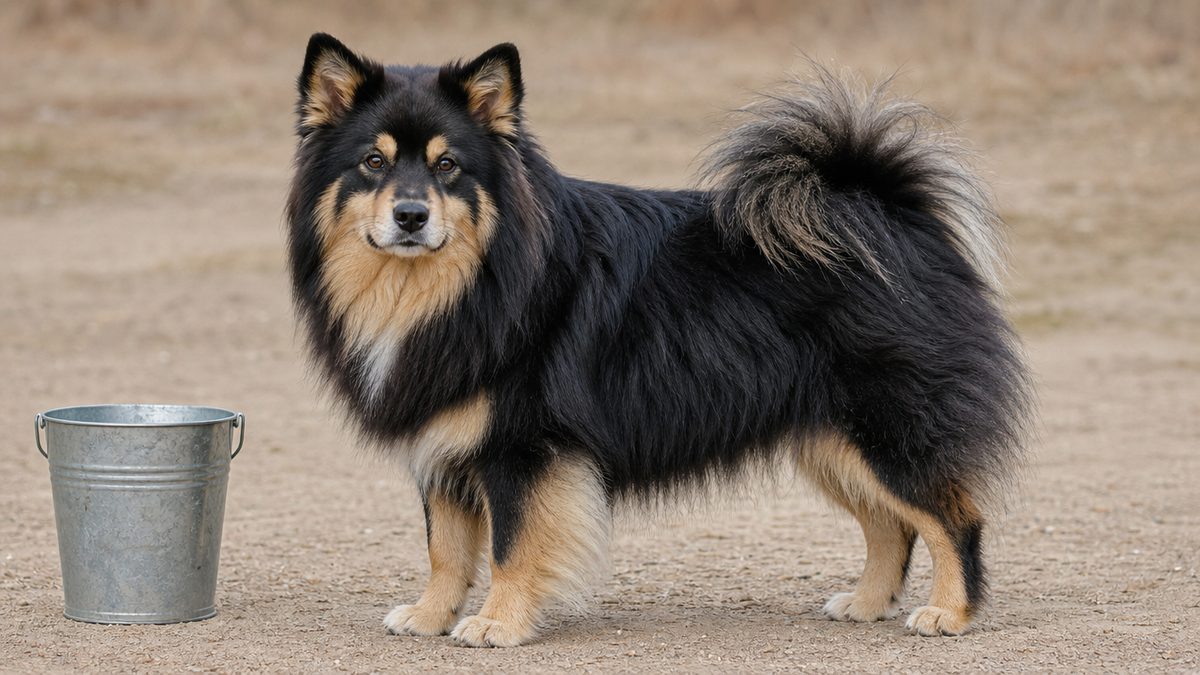
Quick answer
No Lapponian Shepherd price in India exists, because no living breed carries that name. Lapponian Shepherd is the English form of Lapin paimenkoira, a Finnish kennel breed created in the 1940s and better known as the Kukonharju dog, whose name the Finnish Kennel Club changed to lapinkoira in 1967. Those dogs stayed in the register and are today the Finnish Lapphund, FCI standard 189.
This page reports registry statistics and published veterinary research for general information. It is not a diagnosis, a screening result or a treatment plan. Heat-related illness in an arctic double-coated dog develops fast in Indian conditions and is a veterinary emergency, and any suspected eye disease in these Lapland breeds needs a veterinary ophthalmologist rather than a general opinion. Consult a registered veterinarian about your own dog before acting on anything here.
Lapponian Shepherd at a glance
What the Lapponian Shepherd actually is
The Lapponian Shepherd is a retired Finnish breed name rather than a living breed. It is the English form of Lapin paimenkoira, a kennel breed created in the 1940s and better known as the Kukonharju dog, whose name the Finnish Kennel Club changed to lapinkoira in 1967.
The etymology is the whole story here, so start there rather than with a description of a medium-sized dog. This one has to open by settling a question, because the honest answer to "what is a Lapponian Shepherd" is that no register anywhere holds a breed under that name today.
Three checks establish it, and all three were run for this page rather than assumed.
- The FCI has no such breed. Its breeds nomenclature letter index for L contains eight entries, of which exactly one is a Lapland breed: LAPINPOROKOIRA (284), the Lapponian Herder. No Lapponian Shepherd appears.
- The Finnish Kennel Club does not list it among Finland's native breeds. Fetching that index in both languages found lapinporokoira five times and suomenlapinkoira four times in Finnish, and Lapponian Herder and Finnish Lapponian Dog five times each in English, while lapinpaimenkoira and Lapponian Shepherd each appeared zero times. The control terms returning results on the same page is what makes that a real absence rather than a failed query.
- The veterinary literature holds nothing under the name. PubMed returned zero records for "Lapponian Shepherd", "Lapponian Shepherd Dog", "Lapponian Dog", "Lapinkoira" and "lapsk vallhund", with controls passing in the same session.
So where did the name go?
It was changed, deliberately, and the Finnish breed society records exactly when and why. Its history page states that the name lapinkoira was used of a Finnish breed for the first time in 1967, when the name of the breed called Lapin paimenkoira, born in the 1940s and better known as the Kukonharju dog, was changed to lapinkoira.
The reason it gives is the detail that makes the whole page make sense. **The breed had nothing to do with reindeer herding, so the word *paimen*, meaning shepherd or herder, was dropped from its name.** The dogs themselves did not go anywhere: the same Kukonharju animals stayed in the register, now recorded simply as lapinkoiras.
That breed is the one the Fédération Cynologique Internationale registers today as standard 189, SUOMENLAPINKOIRA, English name Finnish Lapponian Dog, accepted on a definitive basis on 22 August 1955 and known in Britain, America and India as the Finnish Lapphund.
| What someone means | Is it a breed today? | Where to look |
|---|---|---|
| The 1940s Finnish breed Lapin paimenkoira, the Kukonharju dog | No. The name was changed in 1967 | Its dogs are in the Finnish Lapphund register, FCI 189 |
| A loose English label for the Lapponian Herder | The Herder is real; the label is not its name | FCI 284, LAPINPOROKOIRA |
| A translation of the FCI's own French, German or Spanish name for breed 284 | Yes, but it is a translation, not an English breed name | FCI 284, whose French name is Berger Finnois de Laponie |
Ask for the FCI breed number on the pedigree. For a Lapland dog there are three answers that make sense: 189 for the Finnish Lapphund, 284 for the Lapponian Herder and 135 for the Swedish Lapphund. A seller who cannot produce a number, or who maintains that the Lapponian Shepherd is its own separately registered breed today, does not have what the advertisement says.
The 1940s line, and the two dates a year apart
The Lapponian Shepherd name was created in the 1940s in southern Finland, and it was retired in 1967, one year after the Lapponian Herder was separated as a breed of its own.
Genetics supports the broad outline of the story even where the documents disagree on dates. A 2018 SNP analysis found the Karelian Bear Dog and the reindeer-herding Lapphund and Lapponian Herder to be closely related and to share origins with north-eastern Eurasian Laika breeds rather than with Elkhounds, which makes the reported 1930s cross between Lapland reindeer dogs and the Karelian Bear Dog entirely plausible. A 2024 study of 100 to 200 year old dog furs from North Swedish clothing separately confirmed that the Lapphund breeds arose from the local dog population and identified MSRB3, a gene tied to ear morphology, under selection across them. The confusion that surrounds this name comes from two events happening a year apart, in the same kennel club, to closely related dogs. Reading them separately dissolves almost all of it.
1966: the Lapponian Herder becomes its own breed
FCI Standard 284's own history is explicit: "Acceptance to the breed register was started in the 1950's. At that time the modern Finnish Lapphund and the Lapponian Herder were still recognized as the same breed. The Lapponian Herder was separated into its own breed 10.12.1966, as it had been noted that two different reindeer herding breeds existed". The Finnish Kennel Club's own breed page agrees on the year, recording that the breed's characteristics were confirmed in 1966.
1967: the parent name is retired
FCI Standard 189's history covers the other half: "The first standard of the Lapponian Herder was established by the Finnish Kennel Club in 1945. The breed's name was changed into Lapponian Dog in 1967. ... The breed name was again changed into Finnish Lapponian Dog in 1993";.
The Finnish society says the same thing in Finnish, and more precisely, naming the breed that was renamed: the 1940s breed Lapin paimenkoira, the Kukonharju dog, became lapinkoira in 1967. Two independent documents, one Finnish and one international, agree on the year and on the nature of the event.
| Date | Event | Source |
|---|---|---|
| 1940s | Lapin paimenkoira created in southern Finland; the Kukonharju kennel becomes its most productive breeder | Finnish breed society history |
| 1945 | First standard established by the Finnish Kennel Club | FCI-Standard 189, breed history |
| 10 December 1966 | The Lapponian Herder is separated into its own breed | FCI-Standard 284, breed history |
| 1967 | Lapin paimenkoira is renamed lapinkoira; the word for shepherd is dropped; the same dogs stay in the register | Finnish breed society history, and FCI-Standard 189 |
| 13 November 1970 | The FCI accepts the Lapponian Herder on a definitive basis internationally | FCI nomenclature register |
| 1981 | Paimensukuisen Lapinkoiran Seura is founded to preserve the herding-descended Lapland dog lines | The society's own home page |
| 1993 | The breed name changes again, to Finnish Lapponian Dog | FCI-Standard 189, breed history |
Read that way, anyone who writes that "the breeds split in 1967" has merged two events. The separation of the Lapponian Herder is dated 10 December 1966 by the standard that governs it. The 1967 date belongs to the renaming of the other breed, and it is a renaming rather than a split.
Paimensukuisen Lapinkoiran Seura ry was founded in 1981 to preserve the Lapland dog lines descended from the natural population used for reindeer herding, and to keep the type, structure and temperament of the old herding dog of Fell Lapland. That is the same moment English sources say the Kukonharju type finally disappeared, which is worth noticing: a preservation society forms when people believe something is being lost.
Where the English and Finnish accounts disagree
English Wikipedia calls the Lapponian Shepherd an extinct breed that vanished in the early 1980s, while the Finnish breed society describes a renaming in which the same dogs stayed in the register, and this page publishes both rather than choosing.
Almost everything written in English about this name traces back to one Wikipedia stub, so it is worth reading carefully and then checking against a Finnish source.
What Wikipedia says
The article describes the Lapponian Shepherd (Finnish *lapinpaimenkoira*) or Cockhill's Finnish Lapphound (*Kukonharjunkoira*) as "an extinct dog breed originating from Finland", adding that "despite its name, it did not come from Lapland, but from the southern parts of the country".
Its history says that in the 1930s Lapponian reindeer-herding dogs were taken to southern Finland and crossed with the long-haired Karelian Bear Dog; that the result was registered in 1945 as the Lapponian Shepherd; that the Finnish Lapphund and Lapponian Herder were soon added under the same breed name so all three crossed with each other; that in 1967 the Finnish Kennel Club split the Lapponian Shepherd into two breeds, the Finnish Lapphund and the Lapponian Herder, without taking Cockhill's Finnish Lapphound into account; and that it vanished in the early 1980s but survives behind modern Finnish Lapphund bloodlines.
What the Finnish society says
The society's own history page describes the same 1967 moment differently. It says the name lapinkoira was used of a Finnish breed for the first time in 1967, when the name of the 1940s breed Lapin paimenkoira, better known as the Kukonharju dog, was changed to lapinkoira, and that although the name changed, the same Kukonharju dogs stayed in the register, now simply as lapinkoiras.
Elsewhere on the same page it describes the Kukonharju dog as a long-coated parallel form that already existed alongside the Lapponian Herder when the Herder emerged in the 1960s, and notes that it was not of clear reindeer-dog origin, although that was not much talked about.
| Question | English Wikipedia | Finnish breed society |
|---|---|---|
| What happened in 1967 | The Lapponian Shepherd was split into two breeds | The name Lapin paimenkoira was changed to lapinkoira |
| What happened to the dogs | Cockhill's line was not taken into account and later vanished | The same Kukonharju dogs stayed in the register under the new name |
| Why the name changed | Not stated | The breed had nothing to do with reindeer herding, so paimen was dropped |
| Relationship to reindeer work | Descended partly from Lapland reindeer dogs | Not of clear reindeer-dog origin |
| Status today | Extinct since the early 1980s | Not addressed as extinction; the register absorbed the dogs |
Which one does the FCI support?
The FCI's own standard 189 sides with the renaming account in its wording: "The breed's name was changed into Lapponian Dog in 1967";. It describes a name change, not a split, and it makes no mention of a third line being left behind. Meanwhile FCI 284 dates the Herder's separation to 10 December 1966, a year before Wikipedia's split.
Both accounts can be true at once, and that is the most likely reading. A registry can retire a name and re-register the dogs under a new one, while a distinctive type within that population is absorbed and effectively disappears over the following fifteen years. Wikipedia is describing the fate of a type; the society is describing the fate of a register entry.
Wikipedia's article is a flagged stub resting on three references, and none could be opened for this page. Its first reference, a Paimensukuisen Lapinkoiran Seura page, now returns HTTP 404, and the Internet Archive is unreachable from this environment by direct request, by proxy and by fetch tool. The second is a 2008 Desmond Morris breed dictionary and the third a kennel essay, neither available online. So the extinction claim rests on sources this page could not read, and it is reported as Wikipedia's claim rather than as fact.
How one stub became the whole internet's answer
Two of the pages ranking for this breed reproduce Wikipedia's opening sentence word for word, and a third contradicts it while running a breeder directory whose every counter reads zero.
When a name has no living breed behind it, the vacuum fills with generated content. This one is a clean worked example, and checking it took about five minutes.
The verbatim copies
Two ranking pages were fetched and searched for Wikipedia's exact opening string, "is an extinct dog breed originating from Finland". Both contain it verbatim. Siwalu Software's Dog Scanner page reproduces the sentence including both Finnish names, and OC Pets Health Library reproduces it including the Finnish IPA pronunciation transcription copied straight out of the Wikipedia article.
A pronunciation guide is the tell. It is the kind of detail nobody retypes and everybody pastes, and its presence identifies the source with no ambiguity.
The site that says the opposite, and sells it anyway
Creatures.com takes the other position entirely, stating that "Lapponian shepherd is usually an English alternate name for the Lapponian Herder, the Finnish Lapinporokoira";. That is a living-breed claim, directly contradicting the extinct-breed claim two of its competitors copied.
What the page is actually doing matters more than which side it takes. Its title reads "Lapponian Shepherd Dog: Breed Facts, Prices & Breeders". It offers a marketplace, a herdbook, public profiles and a breeder directory, and a Dog Gestation Calculator. All four of its counters read zero: for sale 0, herdbook 0, profiles 0, breeders 0. It has no prices and no breeders, on a page whose title promises both.
| Page | Position taken | What it is really doing |
|---|---|---|
| English Wikipedia | Extinct breed, vanished early 1980s | A flagged stub whose three references could not be opened |
| Siwalu Dog Scanner | Extinct breed | Reproduces Wikipedia's opening sentence verbatim |
| OC Pets Health Library | Extinct breed | Reproduces the same sentence verbatim, including the IPA transcription |
| Creatures.com | A living alternate name for the Lapponian Herder | Runs a marketplace, herdbook and breeder directory with all four counters at zero |
| Indian price pages | No position; the breed is absent | Rank for the words shepherd and price in india, and sell other breeds |
To be fair to the last of those, one sentence on it is sound advice: it tells readers searching under this name to check the registry or breeder terminology first, because paperwork may say Lapinporokoira or Lapponian Herder instead. That is correct. It sits on a page that simultaneously offers to sell a breed it says is a different breed, and whose stock is empty.
Take one distinctive sentence from the first result and search for it in quotation marks, or simply fetch two competing pages and look for the same string. If several sites carry a phrase word for word, including a pronunciation guide or a bracketed transcription, you are reading one source repeated rather than four independent ones. Then look for a counter, a herdbook or a breeder list, and check whether it contains anything at all.
Lapponian Shepherd price in India, and what the search actually returns
No Lapponian Shepherd price in India exists, and the reason is simple: no living breed carries the name, so nothing is being sold under it.
The finding here is stronger than the usual rare-breed absence, because the search does not even attempt the breed.
An India-located search for the exact phrase "lapponian shepherd price in india" returned ten organic results on 2 September 2026. Not one concerned any Lapland breed. They were about the German Shepherd, the Anatolian Shepherd, the Central Asian Shepherd, the Dutch Shepherd and the Belgian Shepherd, plus two generic Indian dog price lists.
The engine matched shepherd and price in india and discarded Lapponian. That is not a broken instrument, because the results are coherent and on-token for the words it did use. It is the search telling you that there is nothing in the Indian index under this breed name.
| Result | Breed actually offered | Price quoted |
|---|---|---|
| TradeIndia | German Shepherd | From Rs 15,000 |
| Puppiezo | Anatolian Shepherd Dog | Rs 35,000 to Rs 45,000 |
| AsiaPets | Central Asian Shepherd | Not stated in the result |
| Supertails | German Shepherd | Rs 18,000 to over Rs 1,00,000 |
| Creature Companions | Dutch Shepherd | Rs 60,000 to Rs 85,000 |
| Mr n Mrs Pet | Belgian Shepherd | Rs 75,000 to over Rs 3,00,000 |
Those figures are real quotations from those pages for those breeds. None of them is a Lapponian Shepherd price, and this page does not present any of them as one.
The second engine substituted the query entirely
Bing behaved differently and worse. With an India country parameter, the control query "labrador retriever price in india" returned About 26,400 results and ten genuine Indian Labrador price pages, so the instrument was working. In the same session, "lapponian shepherd dog" returned About 50 results and ten Chinese-language Zhihu and Baidu threads about WAD files.
Dropping the country parameter was tried once. The Labrador control still passed, while "lapponian shepherd dog breed" returned About 31,900 results and ten YouTube-to-MP4 converter sites. A control that succeeds while the target query returns something unrelated is a query-token hijack rather than a broken engine, and no absence is claimed from those result sets.
Anybody in India quoting you a price for a Lapponian Shepherd is quoting for something else, and the most likely something else is a German Shepherd, which is what the search engine itself substitutes. Ask which FCI number the pedigree names. For a Lapland dog the honest answers are 189, 284 or 135, and none of them is called a Lapponian Shepherd.
What one of these dogs would actually cost to keep in India
The true cost of ownership starts with cooling, and no Indian page for any Lapland breed includes that line at all.
Since there is no breed to price, the useful question is what the living breeds behind this name cost to keep. That budget is buildable from categories rather than from a template, and doing it honestly means marking which lines have no published figure.
For the two living Lapland breeds, Bonbeno found no reliable Indian cost data at all. The Indian pages that publish monthly figures for the Lapponian Herder print numbers that are byte-identical to the same sites' Whippet pages, a short-coated English sighthound with the opposite grooming load. Those figures are size-band defaults, not observations, and this page will not reuse them.
| Line | Basis | Confidence |
|---|---|---|
| Puppy purchase | No verifiable Indian figure for any Lapland breed; imported dogs would carry freight, quarantine and paperwork on top | None. Do not budget from a published Indian number |
| Cooling and electricity | Cooled indoor space for roughly eight months a year in most Indian metros | High that it is needed, none on the rupee amount |
| Food | A 20 kg active working dog on a complete diet | Moderate. The published Indian food figures are template constants |
| Routine veterinary care | Annual vaccination course, year-round tick and flea prevention, deworming | High that it is needed, and higher here than in Finland because of tick-borne disease pressure |
| Coat maintenance | A slicker, an undercoat rake and a high-velocity dryer, bought once | High. A profuse double coat needs equipment more than salon visits |
| Eye screening | Annual ophthalmologist examination, given the retinal conditions documented in these breeds | High that it is needed; specialists are scarce outside major metros |
| Joint screening | Hip and elbow radiographs if the dog is ever bred | Only relevant to breeding, and Finland scores both at scale |
The line every Indian page omits
A dog whose homeland grid cell averages minus 0.84 degrees Celsius across the year cannot regulate itself through an Indian summer by panting. In practice that means air conditioning, or at minimum a cooled room, running for much of the day, for most of the year in Chennai, Mumbai, Delhi, Kolkata and Hyderabad. The electricity cost depends on your tariff and your building, so this page gives no rupee figure for it. It is still the largest recurring line in the real budget, and it appears on none of the pages that rank for these breeds.
Before you trust any Indian cost table for any breed, open the same site's page for an unrelated breed of the same stated size and compare the food, veterinary and grooming lines. If they match to the rupee, you are reading a size-band default. That test is what disqualified the only Indian cost figures available for these Lapland breeds.
Heat tolerance, measured against the homeland
Whichever living breed this name leads you to, its homeland's warmest month is cooler than India's coolest metro month, and that single comparison settles the climate question.
Breed pages describe Nordic dogs as heat-sensitive without saying by how much. This section queries NASA POWER by explicit latitude and longitude and reports the grid-cell elevation with every figure, because POWER returns a grid cell rather than a point.
The homeland reference is Inari, in the Finnish Lapland reindeer country. At 68.906 N, 27.029 E the cell returns an elevation of 237.75 m against a real town elevation near 119 m, an overstatement of about 119 m, which at the standard lapse rate is under one degree of error. The cell is usable, and checking it matters because a wrong homeland baseline corrupts the comparison as badly as a wrong Indian one.
| Place | Cell elevation vs real | Annual mean | Warmest month mean | Highest recorded |
|---|---|---|---|---|
| Inari, Finnish Lapland | 237.75 m vs ~119 m | -0.84 C | 13.6 C (July) | 28.08 C |
| Sodankyla, Finnish Lapland | 227.84 m vs ~179 m | -0.41 C | 14.6 C (July) | 29.47 C |
| Chennai | 48.95 m vs ~6 m | 27.95 C | 31.5 C (May) | 42.70 C |
| Mumbai | 97.15 m vs ~14 m | 26.77 C | 31.2 C (May) | 44.91 C |
| Delhi | 206.37 m vs ~216 m | 25.60 C | 35.9 C (June) | 48.79 C |
| Kolkata | 7.35 m vs ~9 m | 25.81 C | - | 46.81 C |
| Bengaluru | 841.72 m vs ~920 m | 23.74 C | 28.4 C (April) | 40.38 C |
| Pune | 635.99 m vs ~560 m | 23.86 C | 28.9 C (April) | 43.20 C |
Two comparisons do all the work. Inari's warmest month averages 13.6 degrees Celsius while Chennai's coolest month averages 24.1 degrees, so India's mildest metro month is 10.5 degrees warmer than Lapland's hottest. And the highest temperature the Inari cell recorded in twenty years is 28.08 degrees, which is essentially Chennai's annual mean of 27.95.
The hill stations, where the raw data misleads
Hill stations are the only Indian places worth considering, and they are exactly where POWER's cells are furthest from the towns. Ooty's cell sits at 784.64 m against a town near 2,240 m, so it is 1,455 m too low and returns a far-too-warm 23.50 degrees. Manali's cell sits at 3,984.73 m against a town near 2,050 m, 1,935 m too high, returning an implausible minus 0.56 degrees.
Correcting for the elevation error at about 6.5 degrees per 1,000 metres gives rough estimates, labelled as estimates, of about 14.0 degrees annual mean for Ooty, 12.7 for Shimla, 13.7 for Darjeeling and 12.0 for Manali. Every one of those still sits 13 to 15 degrees above the homeland. Leh, at roughly 3.9 degrees corrected, is the closest place in India to this climate, and it is a high-altitude cold desert with thin veterinary infrastructure.
What the heat research supports, and what it does not
The largest published study of canine heat-related illness followed 905,543 UK dogs and found 395 confirmed events with a case fatality rate of 14.18 percent, and reported that dogs at or above the mean bodyweight for their breed and sex carried an odds ratio of 1.42, 95 percent confidence interval 1.12 to 1.80. A companion paper on the same cohort found that of 879 events with a recorded trigger, 652 were exertional, which is 74.2 percent.
Neither paper modelled any Lapland breed, and this page claims only the transferable bodyweight factor and the exertional trigger split. An odds ratio imported onto a breed the authors never studied would be fabrication wearing a citation.
Second Schedule Part IV paragraph 21(1) of the Dog Breeding and Marketing Rules 2017 bars keeping in outdoor facilities, without the attending veterinary practitioner's written approval, "dogs that are not accustomed to the temperatures prevalent in the area or region in question" and "dog breeds that cannot tolerate the temperatures prevalent in the area or region in question, such as long-haired breeds in high temperature locations";. A long-coated Lapland dog in an Indian summer is the textbook case that clause describes.
Health, and the comparison nobody publishes
Finland publishes screening results for both living Lapland breeds, and putting them side by side shows the Lapponian Herder has notably better hips than the Finnish Lapphund.
A retired breed name has no health issues of its own. What it has is two descendant populations whose records Finland puts in public, and comparing them is genuinely useful to anyone choosing between them.
Both sets below come from KoiraNet, the Finnish Kennel Club's breeding database, filtered by breed code and by year of birth from 2000 to 2026, pulled on 2 September 2026.
| Measure | Finnish Lapphund (189) | Lapponian Herder (284) |
|---|---|---|
| Registered births, 2000-2026 | 30,569 | 6,850 |
| Hips scored | 10,405 (34 percent) | 2,719 (39.7 percent) |
| Hips graded C, D or E | 3,980, which is 38.25 percent | 662, which is 24.35 percent |
| Elbows scored | 6,943 | 2,379 |
| Elbows at any grade of dysplasia | 498, which is 7.17 percent | 110, which is 4.62 percent |
| Patella examinations | 4,445 | 1,463 |
| Patella abnormal at any grade | 103, which is 2.32 percent | 15, which is 1.03 percent |
| Recorded deaths | 4,717 | 1,254 |
| Mean age at death | 11 years 2 months | 10 years 8 months |
| Deaths recorded as age | 1,334 at a mean of 14 years 2 months | 325 at a mean of 13 years 11 months |
The elbow and patella rows come from the same KoiraNet pull as the hips. Every column reconciles internally. The Finnish Lapphund's five hip grades sum to exactly 10,405 and the Lapponian Herder's to exactly 2,719, so neither table has a part exceeding its whole.
The finding worth carrying away
The Lapponian Herder has materially better hips than the Finnish Lapphund: 24.35 percent dysplastic against 38.25 percent, on screening rates that are, if anything, higher in the Herder. It also comes out ahead on elbows and on patellas. No page in either breed's search results publishes that comparison, and it is the single most decision-relevant number for someone choosing between the two.
Rarity is worth quantifying rather than asserting. Finland registered 292 Lapponian Herders in 2025 from 50 litters, and the breed's gene-pool effective population runs at 213 per four-year generation, while the mean inbreeding coefficient of registered litters has fallen from 6.91 percent in 2000 to 2.04 percent in 2026. The Lapphund's larger death record buys it a more reliable lifespan picture. Its mean age at death of 11 years 2 months across 4,717 deaths is dragged down by dogs that died young; the 1,334 recorded as dying of age reached a mean of 14 years 2 months. Read the two together rather than either alone.
The inherited conditions these breeds share
- Progressive retinal atrophy. A 2007 study mapped the Finnish Lapphund's retinal atrophy locus near GALK1 on chromosome 9 and found that Swedish Lapphund cases shared the marker genotype while Lapponian Herder cases did not, so the three Lapland breeds do not all carry the same retinal disease.
- An IFT122 variant. A 2021 Helsinki study of 10 affected and 34 unaffected Lapponian Herders identified a missense variant on chromosome 20 and noted that it was also found in Finnish Lapphunds, in which its clinical relevancy needs further study.
- Pompe disease. A 2013 study reported affected dogs homozygous for the GAA c.2237G>A mutation and stated that three related Scandinavian breeds carry it; its competing-interests statement records a commercial DNA test covering the Finnish Lapphund, Swedish Lapphund and Lapponian Herders.
Second Schedule Part III paragraph 8(10) of the 2017 Rules requires that breeding dogs "shall have been tested for genetic defects, including hip dysplasia, progressive retinal atrophy, night blindness, hypothyroidism, entropion, ectropion, overshot, undershot jaw...". Hip dysplasia and progressive retinal atrophy are precisely the two conditions these Lapland breeds are screened for in Finland, so anyone breeding them in India without both tests is outside the Rules.
Temperament of the dogs behind the name
Both living Lapland breeds are described in their standards as calm, friendly and willing to work, and the practical difference for an Indian household is how much noise and how much coat comes with that.
A retired name has no temperament of its own, so read the standards of the two breeds it leads to.
FCI 189 describes the Finnish Lapphund as intelligent, courageous and calm. FCI 284 describes the Lapponian Herder as docile, calm, friendly, energetic and willing to work, and adds that it barks readily when working. Both standards disqualify aggressive or overly shy dogs, so unstable temperament is a formal fault rather than a quirk.
What both descriptions share is a herding spitz shaped to work at a distance from its handler and to make its own decisions. That produces a dog that is pleasant to live with, quick to learn, and persistent about being employed.
Who these dogs suit
- Households in genuinely cool Indian locations with fenced outdoor space, not a metro balcony.
- Owners who already train dogs and want a partner for herding, agility, obedience or scent work.
- Families who can exercise a working dog properly at dawn and after dark, every day, through the hottest eight months.
- Homes where a vocal dog will not create a neighbour dispute.
- Owners willing to run cooling for most of the year and to treat that as a fixed cost.
Who should not buy one
- Buyers chasing a name they read on a content-farm page rather than a breed they have researched.
- Apartment households in Chennai, Mumbai, Kolkata, Delhi or Hyderabad, where the climate data gives no comfortable month.
- Anyone who wants a quiet dog, because these breeds moved livestock with their voices.
- Anyone who cannot guarantee cooled indoor space through an Indian summer.
- Anyone unwilling to dry a heavy double coat properly after every monsoon soaking.
Calm and friendly is what both standards say, and neither tolerates aggression. The practical caution is mechanical: a medium herding dog that moves stock by nudging and barking can knock a small child over without meaning to. Supervise early interactions and teach the dog that people are not livestock.
Training, and the Indian scheduling problem
Train these Lapland breeds in short, frequent, reward-based sessions inside the two cool windows an Indian day allows, because heat, not aptitude, is what defeats most Indian owners.
Aptitude is not the constraint. Finland admits the Lapponian Herder to working trials, and its kennel club credits that with part of the breed's rising registration numbers. The Finnish Lapphund is widely worked in obedience and agility. These are trainable dogs.
The constraint is the clock. Every session and every walk has to fit before sunrise or after dark, and those windows collide with commuting. Households that fail with Nordic working breeds in India nearly always fail on scheduling.
What works
- Reward-based marker training, because a dog bred to solve problems solves them faster for a reward than under pressure.
- Short sessions of five to ten minutes, several times a day, rather than one long drill.
- Real jobs rather than obedience for its own sake: scent games, purposeful retrieves, carrying and tidying tasks.
- Recall on a long line from the first week, because a herding spitz that learns to ignore a recall at distance is very hard to fix.
- A quiet cue taught early, understanding that it manages barking rather than removing it.
What does not work
- Harsh corrections, which produce a dog that stops offering behaviour.
- Long repetitive drills, which a problem-solving dog will edit to make interesting.
- Training in the middle of an Indian day, because a hot dog cannot learn and the session teaches it that training is unpleasant.
- Leaving the dog to entertain itself, which is how barking becomes self-rewarding.
| Period | Priority | Indian constraint |
|---|---|---|
| Weeks 8-16 | Socialisation to people, traffic noise, surfaces and handling; crate and toilet routine | Socialise indoors and at dawn; the window does not pause for summer |
| Months 4-6 | Recall on a long line, loose-lead walking, quiet cue, settle on a mat | Sessions before 7 am and after 7 pm, kept short |
| Months 6-12 | Impulse control, distance work, first structured sport or scent work | Adolescent energy peaks when outdoor time is most restricted |
| Months 12-18 | Proofing recall around distractions; herding, agility or obedience | Plan indoor enrichment for the eight difficult months |
One legal point belongs here. India's 2017 Rules make de-barking an offence alongside tail docking, ear cropping and de-clawing, under Second Schedule Part II paragraph 6(8), which forbids those procedures and "any change of appearance by artificial means";. For breeds that bark as part of their working repertoire, that is worth knowing before anyone proposes a surgical answer to a training problem.
Exercise requirements, and what happens without them
Plan on 60 to 90 minutes of real activity daily, split across the two cool windows, and expect noise rather than destruction when that is not delivered.
Both living Lapland breeds were built for sustained movement rather than sprinting. FCI 284 says the trot is tireless, and the Finnish Lapphund was worked over the same open ground. The exercise has to match that shape: steady movement, not ten minutes of fetch.
Work the timing from the climate figures rather than a rule of thumb. Chennai's coolest month averages 24.1 degrees and its warmest 31.5, so no month there permits midday work. Delhi's January mean of 13.6 degrees is genuinely comfortable and its June mean of 35.9 is dangerous, which gives a Delhi owner roughly four workable months and eight constrained ones.
| Slot | Content | Duration |
|---|---|---|
| Pre-dawn, daily | Steady lead walk or off-lead trot on grass, plus a short training set | 35-45 minutes |
| Post-sunset, daily | Second walk with sniffing time, or a scent game in a cooled room | 25-35 minutes |
| Twice weekly | Structured sport: herding where available, agility, obedience or nosework | 30-45 minutes |
| Daily, indoors | Food puzzles, shaping sessions and chew work through the hot hours | 15-20 minutes |
| Monsoon substitution | Indoor work when the ground is wet, followed by proper drying if the coat gets soaked | As needed |
Under-exercise in these breeds does not usually look like a chewed sofa. It looks like noise, because a herding spitz with no work barks at whatever is available. It also shows as fence patrolling, herding children or ankles, and an inability to settle indoors.
Indian pavement holds heat long after the air has cooled, and paw pads burn before an owner notices. Put the back of your hand flat on the ground for seven seconds before an evening walk. If you cannot hold it there, neither can the dog.
Grooming a profuse double coat in Indian humidity
Brush to the skin two or three times a week with an undercoat rake, daily through a moult, and dry the coat completely after every soaking, because damp undercoat in Indian humidity causes more trouble than the shedding does.
The two breeds behind this name differ most in coat, and the difference decides how much work an Indian owner is signing up for.
FCI 189 describes the Finnish Lapphund's coat as profuse, with males carrying an abundant mane, an outer coat that is long and harsh over a soft dense undercoat. FCI 284 gives the Lapponian Herder an outer coat of medium length or long, straight, rather erect and harsh, over a fine dense undercoat. The Lapphund carries meaningfully more coat, and since the Lapponian Shepherd name historically belonged to the long-coated line, the heavier end is the relevant one here.
The good news is what neither coat needs. No trimming, no stripping, no clipping and no scissoring. A groomer has very little legitimate work to do, and the real spend is equipment rather than salon appointments.
The routine that matters here
- Brush to the skin two or three times a week with a slicker and an undercoat rake, working in sections rather than skimming the top coat.
- Move to daily brushing through a moult, when a Nordic double coat drops undercoat in sheets.
- Bathe rarely and only when genuinely dirty, because frequent bathing strips weather resistance from the outer coat.
- Dry the coat completely to the skin after every bath and every monsoon soaking, using a high-velocity dryer rather than a towel and time.
- Protect the ears before a bath and dry the canals afterwards.
- Check between the toes and under the tail weekly through the monsoon, where damp collects unseen.
Why the Finnish advice does not transfer
Northern clubs write coat guidance for northern air. In Finnish Lapland the Inari cell's relative humidity runs above 90 percent for much of the year, but at temperatures near or below freezing, where a coat dries because the air is cold and the dog moves indoors to heat. In an Indian monsoon the humidity is comparable and the temperature is twenty-five degrees higher, which is the condition in which a dense undercoat stays wet for hours.
So the standard northern instruction to towel a dog and let it air dry, sound in Lapland, is wrong in Mumbai in July, where mean humidity reaches 90 percent at a mean temperature of 26.6 degrees. Dry the dog actively. This is one of the few places where following overseas breed-club advice literally would leave an Indian dog worse off.
A double coat insulates in both directions and the guard hairs block direct sun from skin that has never been exposed to it. Clipping does not meaningfully improve heat loss and can permanently change how the coat regrows. Manage heat with cooled space, timing and water instead.
Feeding and nutrition, and the missing weight figure
Feed to body condition rather than to a printed gram figure, because neither FCI standard behind this name gives a weight at all.
Feeding and nutrition for these breeds have to start with what is not known. FCI-Standard 189 gives an ideal height of 49 cm for males and 44 cm for females with a tolerance of 3 cm, and no weight. FCI-Standard 284 gives 51 cm and 46 cm with a tolerance of plus or minus 3 cm, and no weight either. Any feeding chart for these dogs that starts from a stated kilogram figure is starting from somebody's estimate.
Read condition instead
- Feel the ribs through the coat with flat fingers; you should find them easily under a thin fat cover without pressing.
- Look down at the standing dog; a waist should be visible behind the ribcage.
- Look from the side; the belly should tuck up rather than run level.
- Weigh monthly through the first year and quarterly afterwards, on the same scale.
- Re-check after every moult, because a heavy coat hides weight gain for months.
| Stage | Approach | Indian note |
|---|---|---|
| 8 to 16 weeks | Four meals a day of a complete growth diet for medium breeds | Keep bowls out of direct sun; discard uneaten wet food within the hour in humid weather |
| 4 to 8 months | Three meals; avoid over-supplementing calcium, which does not protect joints | Appetite drops in heat and that is normal; do not force the ration up |
| 8 to 18 months | Two meals; move to adult food when growth plateaus rather than on a fixed date | Feed the larger meal in the cool window, after the evening walk has settled |
| Adult | Two meals adjusted to actual workload | Working weeks and idle monsoon weeks need different amounts |
| Senior, from about 8 years | Two meals; monitor muscle as well as weight | Twice-yearly veterinary checks matter, with cancer accounting for 777 of 4,717 recorded Finnish Lapphund deaths |
Water is its own line. A double-coated dog in Indian heat loses water fast through panting, and dehydration compounds heat risk directly. Keep several bowls in cool spots, refresh them at least twice daily in summer, and carry water on any walk longer than fifteen minutes.
No published evidence supports a particular commercial diet for these breeds. Feed a complete food, watch the dog's condition, and treat grain-free or breed-specific claims as unproven until a study says otherwise.
The first year, and the questions to ask before it starts
Indian law sets the earliest collection date at eight weeks, and the socialisation window closes at about sixteen weeks regardless of the season.
Rule 8(1)(a) of the Prevention of Cruelty to Animals (Dog Breeding and Marketing) Rules 2017 requires that "pups less than eight weeks in age are not sold";. A seller offering a six-week-old puppy is breaking the law, and that single sentence is the most useful thing on this page when you are talking to one. Rule 8(1)(b) adds that dogs over six months are not sold without first being sterilised, unless the sale is to another licensed breeder.
| Age | What matters | The Indian complication |
|---|---|---|
| Before collection | Confirm the puppy is at least eight weeks; ask for both parents' hip, elbow, eye and DNA results | Ask which FCI number the pedigree names: 189, 284 or 135 |
| 8-10 weeks | Settling, crate introduction, toilet routine, first vaccinations | Keep the puppy in a cooled room; small puppies overheat faster than adults |
| 10-14 weeks | Peak socialisation: people, surfaces, sounds, car travel, grooming handling | Do it indoors and at dawn; postponing to a cooler season means missing the window |
| 14-16 weeks | Vaccination course completed; first careful outdoor exposure | Test pavement temperature with the back of your hand every time |
| 4-6 months | Recall on a long line, loose-lead walking, quiet cue, first rake sessions | Teething coincides with summer for most litters; keep chews indoors |
| 6-9 months | Adolescence; recall degrades and barking increases; hold the routine | Energy peaks when outdoor time is shortest |
| 9-12 months | Structured activity: nosework, obedience or agility foundations | First full monsoon; establish the drying routine before the coat is soaked |
| 12-18 months | Growth plateaus; adult feeding; first adult eye examination | Book a veterinary ophthalmologist, not a general check, given the retinal conditions in these breeds |
The five questions
- Which FCI breed number is on the pedigree? For a Lapland dog the answers are 189, 284 or 135.
- What were both parents' hip and elbow scores? Finland grades and publishes these routinely.
- Which specific DNA variants were tested, and at which laboratory, and what were both parents' results?
- When was the last ophthalmologist examination, separate from any DNA certificate?
- How old is the puppy, in writing? Decline anything under eight weeks.
The critical period closes at roughly sixteen weeks whatever the season. A puppy that arrives in April in Chennai needs the same exposure as one arriving in December, so the work moves indoors and into the pre-dawn hour. A summer puppy kept inside because of heat becomes a fearful adult, and that is not recoverable at eight months.
The three Lapland breeds, and which one you actually want
Three living FCI breeds come out of the Lapland herding culture, and their own standards separate them on colour, coat and tail carriage more reliably than any photograph does.
If the Lapponian Shepherd name brought you here, one of these three is the dog you were looking for. Outside the FCI the picture is thinner: the American Kennel Club records only the Lapponian Herder, in its Foundation Stock Service since April 2017 with a Herding Group designation, and notes that Finland calls it the Lapinporokoira. That breed's FCI register entry is the one to check against a pedigree. All three were read from their own FCI standards for this page.
| Finnish Lapphund | Lapponian Herder | Swedish Lapphund | |
|---|---|---|---|
| FCI number | 189 | 284 | 135 |
| Register name | SUOMENLAPINKOIRA | LAPINPOROKOIRA | SVENSK LAPPHUND |
| Country of origin | Finland | Finland | Sweden |
| Definitive FCI acceptance | 22 August 1955 | 13 November 1970 | 19 January 1955 |
| Current standard | 30 September 2016 | 11 February 2026 | 10 November 2011 |
| Male ideal height | 49 cm | 51 cm | 48 cm |
| Female ideal height | 44 cm | 46 cm | 43 cm |
| Tolerance as printed | a tolerance of 3 cm | plus or minus 3 cm | allowance for plus or minus 3 cm |
| Colour | All colours are permitted, basic colour dominant | Black in shades, greyish or dark brown with lighter markings; blue, sable and fawn disqualify | Usually solid black; bronzing typical as bear-brown shades |
| Coat | Profuse; males with an abundant mane | Medium or long, straight, rather erect and harsh | Profuse double coat standing straight out from the body |
| Hip dysplasia, Finnish screening | 38.25 percent of 10,405 | 24.35 percent of 2,719 | Not pulled for this page |
The colour test settles most cases
Read the colour row twice, because it is the fastest discriminator available. FCI 189 permits all colours in the Finnish Lapphund. FCI 284 disqualifies blue, sable and fawn in the Lapponian Herder. FCI 135 describes the Swedish Lapphund as usually solid black with bronzing FCI-Standard N° 284. A cream, red or wolf-sable Lapland dog cannot be a correct Lapponian Herder whatever the seller calls it.
The tail test works on a photograph
FCI 284 says the Lapponian Herder's tail hangs in repose and may not raise over the back, and it lists a curled tail as a fault. The Finnish Lapphund carries its tail curved over the back. That is one glance, and it separates the two Finnish breeds at twenty paces.
Which to choose, on the evidence
Both are hardy dogs by any northern measure, and neither is hardy in the sense an Indian buyer needs. If you want the dog the Lapponian Shepherd name historically belonged to, that is the Finnish Lapphund. If you want the easier coat in Indian humidity and the better published joint health, that is the Lapponian Herder, which comes out ahead on hips, elbows and patellas in the Finnish register. If neither is findable and you live in an Indian metro, the answer to the underlying question is probably neither.
If what appeals is an intelligent, athletic, vocal, trainable medium dog that will work all day, an Indian pariah or Indie dog delivers most of that specification and is already adapted to this heat, humidity and parasite load. It is the only dog discussed anywhere on this page that you can meet tomorrow and take home the same week.
What goes wrong when people chase this name
Five common mistakes follow from searching for a breed that no register holds, and four of them happen before any dog changes hands.
1. Believing the name identifies a breed you can buy
It does not. No FCI standard, no breed number and no Finnish Kennel Club native-breed entry exists under it Suomen Kennelliitto. A buyer who goes shopping for a Lapponian Shepherd has no way to verify what they are being handed, which is exactly the condition sellers of mislabelled dogs rely on.
2. Treating a copied sentence as corroboration
Two ranking pages reproduce Wikipedia's opening sentence verbatim, one of them including the Finnish IPA transcription OC Pets Health Library. Reading three pages that agree feels like verification and is not. Check whether the agreement is a shared string before you treat it as independent confirmation.
3. Taking a price from a page that ranks for the wrong words
Every Indian price result for this query is for a different breed. The German Shepherd figures, the Anatolian Shepherd figures and the Dutch Shepherd figures are all real prices for real breeds, and none of them describes a Lapland dog. Copying one across is how a fabricated price enters circulation.
4. Assuming the two Finnish breeds are interchangeable
They differ on colour rules, coat volume, tail carriage and, most consequentially for a buyer, on published joint health: 24.35 percent hip dysplasia in the Lapponian Herder against 38.25 percent in the Finnish Lapphund Suomen Kennelliitto. Choosing between them on looks alone discards the one number that should drive the decision.
5. Under-estimating the coat in an Indian monsoon
The long-coated line this name belonged to carries a profuse jacket and, on males, an abundant mane. In Mumbai in July, at 90 percent mean humidity and 26.6 degrees, that coat does not dry on its own. Owners who follow northern air-drying advice literally end up treating skin and ear problems all monsoon.
Second Schedule Part III paragraph 8(10) of the 2017 Rules requires breeding dogs to have been tested for genetic defects "including hip dysplasia, progressive retinal atrophy, night blindness, hypothyroidism, entropion, ectropion, overshot, undershot jaw...". Hip dysplasia and progressive retinal atrophy are exactly what these Lapland breeds are screened for in Finland. Breeding them in India without both tests is outside the Rules, not merely unwise.
Adoption, and the honest alternative
You cannot adopt a Lapponian Shepherd anywhere, because the name has held no breed since 1967, and you are very unlikely to adopt either living Lapland breed in India.
Adoption is a real section on every Bonbeno breed page rather than a closing disclaimer, and here it has an unusually clean answer.
There is nothing to adopt under this name. The register retired it in 1967 and the dogs were re-recorded as lapinkoiras. Under the living names, Finland registered 292 Lapponian Herders in 2025 and the Finnish Lapphund is the larger of the two, but neither has a verifiable Indian population, and a breed with no population produces no rescues, no rehomes and no surrenders.
If you want one of the living breeds
- Expect to import, and expect that to be the slowest and largest part of the process rather than the price.
- Work through the Finnish route, because Finland is where both the breeding populations and the public health data are.
- Ask for both parents' KoiraNet records, which are public and show hip, elbow, patella and eye results for the actual dogs.
- Confirm the pedigree names FCI 189 or 284, and not a name that no register holds.
- Plan the climate management before the dog arrives, not after.
If what you want is the dog behind the description
Strip away the origin story and these breeds are medium, athletic, intelligent, vocal, trainable working dogs that think for themselves, need an hour or more of daily work, and were shaped by an environment nothing like India. That specification describes a great many dogs already sitting in Indian shelters.
Indian pariah dogs, commonly called Indies, match on every axis that matters here and are already adapted to the heat, humidity, parasite load and tick-borne disease pressure this page has spent several sections describing. They are also the only option discussed here that you can assess in person before committing.
| Route | Realistic timeline | What you can verify before committing |
|---|---|---|
| Adopt an Indian pariah or shelter dog | Days to weeks | Temperament, size, age and health, in person |
| Adopt a Lapponian Shepherd | Impossible | Nothing. No register has held the name since 1967 |
| Adopt a Finnish Lapphund or Lapponian Herder in India | No verifiable route found | Nothing, because no Indian population exists |
| Import from Finland | Many months | Both parents' public KoiraNet records and the FCI pedigree number |
| Buy from an Indian seller quoting a price for a Lapponian Shepherd | Immediate, and that is the warning | Ask for the FCI number and expect the conversation to stop |
If this page has told you that the breed you were searching for has not existed under that name since 1967, and pointed you at the two that do, it has done its job. If you still want one, you now know to ask for FCI 189 or 284 on the pedigree, both parents' hip and eye results from Finland's public register, and a named list of DNA variants tested. Those three questions protect a buyer far better than any price comparison.
Lapponian Shepherd questions, answered from the registers
What is the Lapponian Shepherd price in India?
No Lapponian Shepherd price in India exists, because no living breed carries the name. An India-located search for the exact phrase returns ten results about the German Shepherd, Anatolian Shepherd, Central Asian Shepherd, Dutch Shepherd and Belgian Shepherd, none of them a Lapland breed. Any Indian seller quoting a price for a Lapponian Shepherd is selling something else.
Is the Lapponian Shepherd a real breed?
It was a real breed name and it is no longer in use. Lapin paimenkoira was a Finnish kennel breed created in the 1940s, better known as the Kukonharju dog, and the Finnish Kennel Club changed its name to lapinkoira in 1967. The dogs stayed in the register under the new name, which is why the Finnish Lapphund exists today.
Is the Lapponian Shepherd extinct?
That depends on what you mean, and the sources disagree. English Wikipedia calls it an extinct breed that vanished in the early 1980s. The Finnish breed society's own history says the 1967 event was a name change and that the same dogs remained registered afterwards. Both can be true if the name was retired while the bloodline was absorbed.
Is the Lapponian Shepherd the same as the Lapponian Herder?
No, and this is the most common confusion. The Lapponian Herder is a living FCI breed, standard 284, separated into its own breed on 10 December 1966. The Lapponian Shepherd name belonged to a different Finnish line whose name changed in 1967 and whose dogs became the Finnish Lapphund, FCI standard 189.
Why is it called a shepherd if it did not herd sheep?
The Finnish word paimen means shepherd or herder, and the breed was named for ancestors that came from Lapland. The Finnish breed society records that the breed itself had nothing to do with reindeer herding, which is exactly why the word paimen was dropped when the name changed in 1967.
Does the FCI recognise the Lapponian Shepherd?
No. The FCI's breeds nomenclature letter index for L holds eight breeds and only one Lapland entry, LAPINPOROKOIRA (284), the Lapponian Herder. There is no FCI standard, no breed number and no country sponsorship under the name Lapponian Shepherd anywhere in the register.
Is the Lapponian Shepherd on the Finnish Kennel Club's list of native breeds?
No. Fetching both the Finnish and English versions of that list on 2 September 2026 found lapinporokoira five times, suomenlapinkoira four times, Lapponian Herder five times and Finnish Lapponian Dog five times, while lapinpaimenkoira and Lapponian Shepherd each appeared zero times. The control terms returning results on the same page is what makes that absence real.
Which breed should I look at instead?
The Finnish Lapphund if you want the long-coated dog the name historically belonged to, and the Lapponian Herder if you want the shorter-coated reindeer herder. Both are FCI-recognised, both have public Finnish health data covering tens of thousands of dogs, and both are poorly suited to most Indian climates.
Can these Lapland breeds cope with Indian heat?
Not comfortably anywhere in mainland India. The homeland cell at Inari in Finnish Lapland averages minus 0.84 degrees Celsius across the year and its warmest month averages 13.6 degrees, while Chennai's coolest month averages 24.1 degrees. India's mildest metro month is more than ten degrees warmer than Lapland's hottest.
How healthy is the breed the name points to?
Finland publishes it openly rather than estimating. Across Finnish Lapphunds born from 2000 to 2026, 10,405 of 30,569 registered dogs were hip-scored and 3,980 were graded C, D or E, which is 38.25 percent. Recorded deaths number 4,717 at a mean age of 11 years 2 months.
Why do so many websites say the same thing about this breed?
Because they are copying one Wikipedia stub. Two of the ranking pages reproduce its opening sentence word for word, including the Finnish pronunciation guide, which was confirmed by exact string match. A fourth site contradicts the stub while running a breeder directory and a herdbook whose counters all read zero.
What should I ask a seller who offers me a Lapponian Shepherd?
Ask for the FCI breed number on the pedigree. There are only three answers that make sense for a Lapland dog: 189 for the Finnish Lapphund, 284 for the Lapponian Herder and 135 for the Swedish Lapphund. A seller who cannot produce a number, or who insists the breed is its own separate registered breed today, does not have what they are advertising.
Does Indian law say anything relevant here?
Yes, on two counts. Rule 8(1)(a) of the Dog Breeding and Marketing Rules 2017 forbids selling pups under eight weeks old, and Second Schedule Part III paragraph 8(10) requires breeding dogs to have been tested for genetic defects including hip dysplasia and progressive retinal atrophy, which are exactly the two conditions these Lapland breeds carry.
Can I adopt one in India?
Not under this name, and almost certainly not under either of the living ones. No verifiable Indian population of any Lapland breed exists, so there is nothing to surrender into rescue. Indian shelters do hold large numbers of indigenous dogs that are athletic, trainable and already adapted to this climate.
Is a Lapponian Herder a good family dog?
Pleasant to live with and persistent about being employed. FCI 284 describes the Lapponian Herder as docile, calm, friendly, energetic and willing to work, adds that it barks readily when working, and disqualifies aggressive or overly shy dogs, so unstable temperament is a formal fault. It is a herding spitz shaped to work at a distance and decide for itself, which makes it quick to learn and noisy, and its Lapland homeland averages below freezing across the year, so it is poorly suited to most Indian climates.
Are Finnish Lapphunds good pets?
On temperament, yes. FCI 189 describes the Finnish Lapphund as intelligent, courageous and calm, and like the Lapponian Herder it disqualifies aggressive or overly shy dogs. It is the long-coated, larger-population breed of the two, with public Finnish health data covering tens of thousands of dogs and 1,334 dogs recorded as dying of old age at a mean of 14 years 2 months. The practical objection in India is coat and climate: Lapland's warmest month averages 13.6 degrees against Chennai's coolest at 24.1.
Are Lapponian herders rare?
Yes. Finland registered 292 Lapponian Herders in 2025 from 50 litters, the breed's effective population runs at 213 per four-year generation, and the mean inbreeding coefficient of registered litters has fallen from 6.91 percent in 2000 to 2.04 percent in 2026. The Finnish Lapphund is the larger of the two living Lapland breeds. Neither has a verifiable Indian population, and a breed with no population here produces no rescues, no rehomes and no surrenders.
Compare with similar breeds
Lapponian Shepherd sits in 1 Bonbeno group. Each one compares it directly against the breeds it is genuinely an alternative to, on the same figures.