
Conformation
Hairless dog breeds
Two different mutations, one welfare arithmetic, and a sun routine in place of the grooming bill nobody quotes.
Quick answer
A hairless dog breed is one whose coat has been removed by a single inherited mutation, and dogs carry two different ones. The FOXI3 variant sequenced in the Chinese Crested, Xoloitzcuintle and Peruvian Hairless Dog is semidominant, its homozygote dies before birth, and it takes most of the permanent teeth with it. The American Hairless Terrier's recessive SGK3 variant does neither. Four rarer names here are presumed to carry FOXI3 and have never been tested. Indian law lists two or more missing teeth as a genetic defect a breeding dog must be tested for, and in India every guide builds its care plan around sun on bare skin.
The breeds
Two mutations make a dog hairless, and only one of them costs the teeth and a quarter of the litter. Every guide here says which one it has, or that nobody has checked.
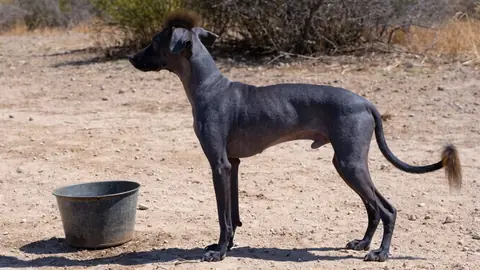 Abyssinian Sand TerrierOne female dog mounted in a glass case in Hertfordshire, with no recorded country, no year and no collector, is the entire...
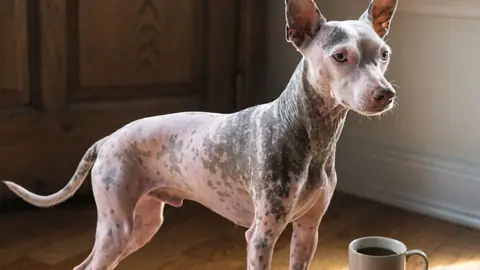 American Hairless TerrierWhat an American Hairless Terrier would cost in India if one existed, why the recessive SGK3 mutation makes this the only...
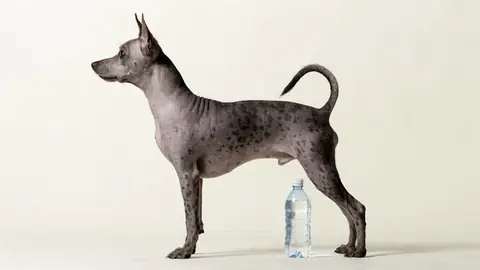 Argentine PilaWhy no Argentine Pila price in India exists, why the hairless gene every website names for this breed has never actually been...
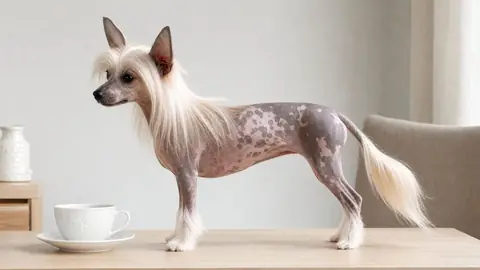 Chinese Crested DogEvery hairless Chinese Crested alive carries one copy of a lethal allele, because the dogs that carried two were never born. That...
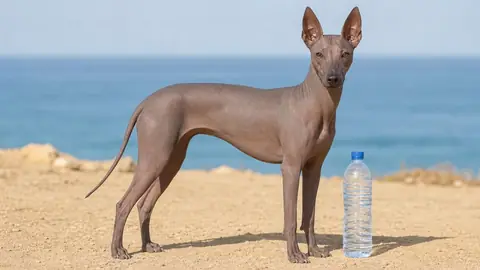 Ecuadorian Hairless DogThe rarest hairless dog in the world, and the one nobody has ever genotyped. Here is what the FOXI3 evidence does and does not...
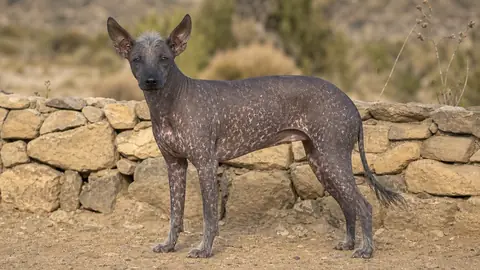 KhalaThe rare South American hairless dog that three good sources place in three different countries, read off the genetics literature...
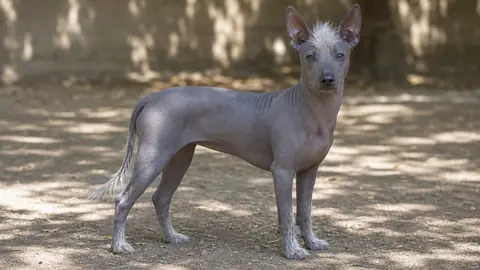 Peruvian Hairless DogOne gene decides the coat, the teeth and how many puppies are born alive. Peru wrote a law about the dog. India has never seen...
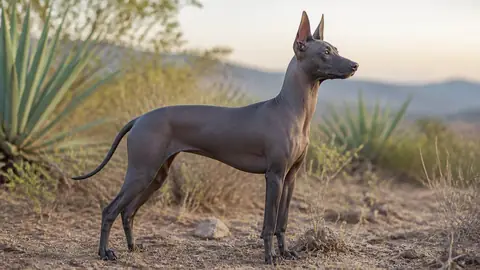 XoloitzcuintleA 3,000-year-old Mexican breed with a mapped hairlessness mutation, real screening data, and a skin that Indian sun treats very...
Compare the breeds side by side
To compare these 8 breeds directly, read across the table rather than down the guides. Heat tolerance is a Bonbeno rating out of 5 for Indian conditions, and the reasoning behind each one sits on the breed's own page.
| Breed | Heat tolerance | Published price, India |
|---|---|---|
| Abyssinian Sand Terrier | 2 of 5 | Rs 98,999, printed three times on one page for two Maltipoos and a Doxiepoo |
| American Hairless Terrier | 2 of 5 | None. No Indian listing carries a price for a real dog of this breed |
| Argentine Pila | 2 of 5 | None. No Indian listing for this breed exists at all, and the two auto-listing marketplaces return 404 |
| Chinese Crested Dog | 2 of 5 | Rs 15,000 to Rs 85,000, a factor of 5.7 |
| Ecuadorian Hairless Dog | 3 of 5 | See page |
| Khala | 3 of 5 | See page |
| Peruvian Hairless Dog | 3 of 5 | None. The only rupee figures in the Indian result set are craft items on a 659-result Etsy page |
| Xoloitzcuintle | 2 of 5 | None sourced. The rupee figures returned are merchandise |
What matters in this group
The points below are what the evidence on these 8 guides actually supports, not what the category is assumed to mean.
- Hairlessness in dogs is not one condition. In the Chinese Crested, the Xoloitzcuintle and the Peruvian Hairless Dog it is a 7 base-pair duplication in the first exon of FOXI3, mapped in 2008 from those three breeds together and inherited as a semidominant trait. A 1985 note on the Chinese Crested established that the homozygote is a prenatal lethal, so every hairless dog of that breed is an obligate heterozygote, and the Peruvian guide quotes the 2017 finding that the lack of homozygotes in either breed suggests the mutation is embryonic lethal. The Xoloitzcuintle guide reports the same semidominant inheritance and stops short of the lethality claim, because no source it consulted measured it. The American Hairless Terrier carries a different gene on a different chromosome, a four-base TTAG deletion in exon 4 of SGK3 that is recessive, so two hairless dogs can be mated with nothing lost, and the laboratory that runs the test records no adverse effect on dentition or fecundity, though nobody has counted the breed's teeth at population scale. That is the whole welfare arithmetic. A hairless-to-hairless FOXI3 mating loses about a quarter of its conceptions before birth. A hairless-to-coated mating loses none and still produces half hairless puppies.
- Only three of these eight dogs have ever been genotyped for the variant, and the guides say so in their own words. The 2008 mapping sampled Mexican, Peruvian and Chinese Crested hairless dogs, the 2017 haplotype work covers the same three, and the commercial FOXI3 test is validated for exactly those three breeds, at 56 US dollars and about twelve business days. The Khala, the Argentine Pila, the Ecuadorian Hairless Dog and the Abyssinian Sand Terrier appear in the peer-reviewed literature once each, in a single list sentence, and no sample from any of them has been analysed. The Argentine Pila guide uses the word inferred rather than identified, resting on the breed researcher's own statement that the gene is lethal in homozygotes and incompletely dominant, and on a dentition that matches the sequenced breeds. The Ecuadorian guide's rule is to say untested rather than negative, because two genes on two chromosomes produce a bald dog by opposite routes and the genotype cannot be read off a photograph. The Abyssinian name rests on one museum mount at Tring with no recorded country, year or collector, and the guide calls it a type rather than a living breed.
- The teeth go with the hair, and Indian law has a word for that. Museum skulls carrying the FOXI3 variant showed loss of the permanent canines, premolars and to some extent incisors in both jaws, with the first two molars stripped of their distal and lingual cusps. The standards write that phenotype in. FCI 288 says the hairless Chinese Crested should not be penalised for absence of full dentition, FCI 234 states that genetically the absence of hair is closely linked to the absence of teeth, FCI 310 accepts one or more missing teeth in the hairless Peruvian while making more than one missing tooth a disqualifying fault in the coated variety, and the AKC faults missing teeth in the Powderpuff only. In the Chinese Crested owner survey, 20 of 21 missing-premolar reports came from hairless dogs. Second Schedule Part III paragraph 8(10) of the Dog Breeding and Marketing Rules 2017 requires breeding dogs to have been tested for genetic defects including two or more missing teeth. The clause requires testing rather than exclusion, no court has read it against a hairless breed, and no Indian breeder of these dogs exists to test it. Six of the eight guides still put the collision in writing, because a buyer should hear it before the purchase.
- Sun on bare skin is what every guide's Indian care plan is built around, and the disagreement between them is about the homeland rather than the dog. The Khala guide cites a monthly mean UV index of 13.84 over Chennai in March 2019 against the WHO extreme threshold of 11 and gives the breed the site's lowest sun rating. The Chinese Crested is mesocephalic and outside the skull-shape group that dominates heat illness, so its 2 of 5 for heat is a skin rating, built on ten of eleven Indian cities running an annual mean above London's sunniest month and on a 991-beagle study in which 36.6 percent of outdoor-housed dogs developed solar dermatosis on bare unpigmented belly skin. The American Hairless Terrier guide puts four metros above UV index 10 from March to July, and the Argentine Pila's own researcher reports skin cancer thinning the population at home, light-coloured dogs first and now the deeply black ones. The Peruvian and Ecuadorian guides add the correction. Coastal Peru returns a higher mean surface UV than most Indian cities at 88 percent humidity, and Santa Elena's peak matches Chennai's, so what India adds for those two is heat and a longer exposure window, and sun stays a management question rather than a latitude one.
- None of the eight has a verifiable Indian price. The Chinese Crested, the only one with an Indian presence, has published bands running from Rs 15,000 to Rs 1,50,000 and above across five sources, with no dog behind any of them, and the other seven guides found merchandise, a 404, a shell listing or a different animal where the breed should have been. Commercial import is closed as well, because DGFT Trade Notice 22/2022-23 rejects applications for trading or breeding, and the Kennel Club of India registers an import only against an export pedigree, which no register issues for the Khala, the Pila, the Ecuadorian or the Abyssinian name. Peru adds its own lock, obliging every breeding centre to keep the best specimen of each litter in the country. So the practical decision narrows to two questions. Ask a breeder what the sire and dam were, hairless or coated, and how many puppies were born against how many were expected, because a hairless-to-hairless pairing is a choice to lose a quarter of the litter. Then weigh the coated variety honestly. A Powderpuff is the same breed on the same certificate, carries no lethal allele, keeps its teeth, needs no sun routine, and Indian sellers price it lower.
Membership is generated from the breed data itself, not typed by hand, so this list cannot drift from the guides it points at and fills in as more publish. The 8 guides here cite 326 sources between them.
This page is a directory of published Bonbeno guides, generated from their data rather than written as clinical guidance, so no veterinarian reviewed this page itself. Each linked guide carries its own veterinary review and its own health sections. Breed level evidence describes populations, and your animal is an individual, so consult your nearby vet before acting on anything you read here.
Common questions
How does Bonbeno decide which breeds belong on this page?
Membership is generated from each breed's own published data rather than chosen by an editor. The group is defined by a shared trait rather than a rating, so its members are named in the site's own cluster definition and each one is checked against the published guide before it appears. A breed appears here the moment its guide publishes and meets that rule, and never before, which is why no link on this page can point at a guide that does not exist.
What is a Bonbeno heat tolerance rating?
It is a 1 to 5 rating of how well a breed copes with Indian conditions, where 5 is best. Almost no international breed reference publishes one, and in a country where summer temperatures pass 45 C it is the most decision-relevant trait there is. It is Bonbeno's own judgement, built from published heat-illness evidence where that exists and stated as inference where it does not.
Are the prices on this page current?
Each price is read from that breed's own guide, where it is compared across published Indian sources and cited. Published Indian breed prices disagree widely between sellers, sometimes by more than a lakh for the same breed, so treat the figure here as the lowest band Bonbeno found and read the guide for the full range.
Does Bonbeno sell or broker any of these dogs?
No. Bonbeno does not sell pet food, products or animals and does not broker puppy or kitten sales. Nothing on this page is a listing, and no breeder or seller can pay to appear on it.