
Breed profile
Ecuadorian Hairless Dog: The Rarest Hairless Dog, and What India Should Know
The rarest hairless dog in the world, and the one nobody has ever genotyped. Here is what the FOXI3 evidence does and does not cover, why no registry lists it, and why every Indian page offering one is generated rather than written.
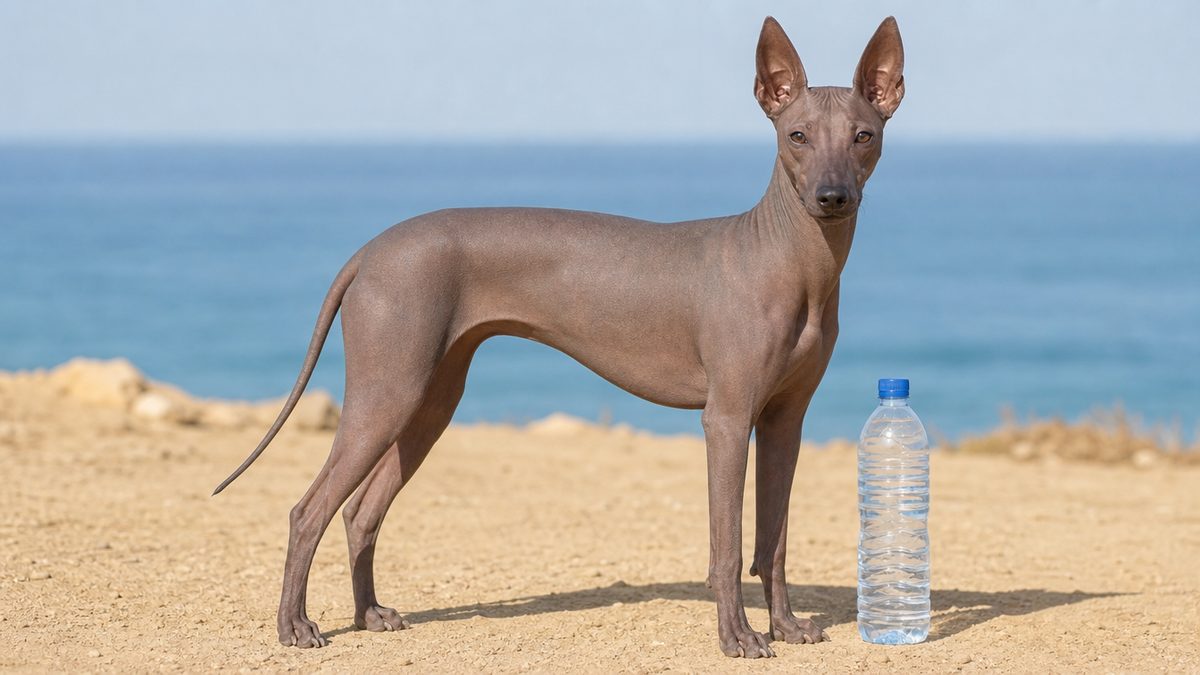
Quick answer
The Ecuadorian Hairless Dog is sold nowhere in India, recognised by no kennel club, and has never appeared in a published genetic study. The 15 to 18 inch height and the missing premolars both trace to one Spanish Wikipedia article whose cited paper contains neither. The FOXI3 variant behind the Xolo, the Peruvian and the Chinese Crested is semi-dominant and kills homozygous embryos, but no Ecuadorian dog has ever been tested for it.
This guide is general information for Indian pet owners and is not a diagnosis. Always consult a registered veterinarian near you before acting on anything you read here, and treat any sudden change in your dog's condition as urgent.
Ecuadorian Hairless Dog at a glance
What the Ecuadorian Hairless Dog actually is
The Ecuadorian Hairless Dog is a hairless dog population associated with the Santa Elena peninsula on Ecuador's Pacific coast, described in one encyclopaedia article, recognised by no kennel club, and never sampled in any published genetic study. In Spanish it is the perro calvo dorado ecuatoriano, the Ecuadorian golden bald dog.
Start with the single article that everything else copies. Spanish Wikipedia says the dog originates on the Santa Elena peninsula in Ecuador, that it is now considered the rarest of the bald dogs, that it is characterised by an almost total absence of hair on body and head, that it is long-legged and reaches a height of 15 to 18 inches, and that one of its curiosities is the absence of premolar teeth. Fifteen to eighteen inches is 38 to 46 cm, which is exactly the metric range the top-ranking English page prints, so the two are not independent.
The four claims in circulation, and what stands behind each
| Claim | Where it comes from | Does the cited source contain it |
|---|---|---|
| Origin on the Santa Elena peninsula | Spanish Wikipedia lede | Cited to an archived hobby page, not to a study |
| Rarest of all hairless breeds | Spanish Wikipedia, quoting the same hobby page | Yes, as that page's own opinion |
| 15 to 18 inches, long legs | Spanish Wikipedia body | No measurement study is cited anywhere |
| No premolars, shorter tail, skin turns golden at sunset | Spanish Wikipedia history section | Cited to Parker 2017, which contains the word premolar zero times |
| A cross between the Peruvian and the Xolo | An archived hobby page, quoted as some authors say | Attributed, unnamed, unevidenced |
That fourth row is the one to sit with. Spanish Wikipedia attaches its distinguishing-features sentence to Parker and colleagues' 2017 Royal Society paper, a real and excellent piece of work. Read as raw text, that paper uses the word premolar zero times, never mentions Valdivia, never mentions the Santa Elena peninsula, and names this dog exactly once. A working link is not a supporting source, and this is the clearest example of that failure Bonbeno has found.
Size and weight, stated honestly
No breed standard exists, so no size and weight figures are authoritative. What circulates is 38 to 46 cm and 9 to 12 kg. Both sit inside the FCI's Peruvian Hairless Dog standard, which defines a medium size of 41 to 50 cm and 8 to 12 kg and a small size of 25 to 40 cm and 4 to 8 kg. A slender, long-legged, medium-small dog is the fair description; a precise range is not available and this page does not print one as though it were.
The pre-Columbian claim deserves the same treatment. Spanish Wikipedia points to numerous figurines of the Valdivia culture showing domestication of these animals as early as about 4500 BC, and its bibliography lists Erwin Patzelt's 1989 *Fauna del Ecuador*, published by the Banco Central del Ecuador. Figurines are real evidence of dogs, and coastal Ecuador has a genuinely deep archaeological record. They are not evidence of a continuous breed, and nothing published connects a 6,500-year-old figurine to a living population.
The name problem, and the Wikipedia article that does not exist
There is no English Wikipedia article on this breed, and at least one veterinary business has published a breed guide crediting one. The URL en.wikipedia.org/wiki/Ecuadorian_Hairless_Dog is a redirect, and it lands on the generic Hairless dog article.
Fetching that URL on 27 August 2026 returned, at HTTP 200, a page whose own title is Hairless dog. The article is about hairlessness in dogs generally. It mentions this breed twice, once in a sentence reading that the Argentine Pila, the Hairless Khala from Bolivia and the Ecuadorian Hairless Dog are not registered hairless dog breeds, and once as a bare bullet in a list.
Now read what a Dubai veterinary clinic publishes under the title Ecuadorian Hairless Dog, Breed Guide. Its entire body text is the generic hairless-dog definition, opening that a hairless dog is a dog with a genetic disposition for hairlessness and hair loss and that there are two known types, a dominant and a recessive one. Its source line credits Wikipedia, Ecuadorian Hairless Dog, under CC BY-SA 4.0, plus Wikidata, compiled by the clinic and updated 15 June 2026.
The clinic has cited an article that has never existed, and reproduced a different article's opening paragraph as a breed guide. Nothing about the page looks broken. It loads, it is well formatted, it credits its sources, and it is published by a real veterinary practice. This is what generated content looks like when it is done tidily, and it is exactly the pattern the playbook warns about: right chrome, wrong body.
How many names does one dog need
- Perro calvo dorado ecuatoriano is the Spanish name and the only one attached to an actual encyclopaedia entry.
- Ecuadorian Hairless Dog is the English name used by the ranking pages and by Parker 2017's list sentence.
- Perro Sin Pelo del Ecuador is the name Justdial's generated Indian category page uses, and it appears in none of the Spanish sources.
- Ecuadorian golden bald dog is the literal translation, and the golden part refers to skin colour rather than coat.
The golden description traces to one line in an archived hobby page, The canine information library, which Spanish Wikipedia quotes: one of the most naked-skinned and also rarest of all hairless dog breeds, with a golden coloured skin and long legs, and which some authors say may be a cross between the Peruvian Hairless dog and the Mexican Xoloitzcuintli. That page was archived on 27 December 2018 and could not be retrieved during this build, so the quotation above is Spanish Wikipedia's reproduction of it rather than Bonbeno's own reading. Saying which is which matters, because that single sentence is the origin of most English-language copy about this dog.
The naming muddle has one practical consequence. If you cannot pin the name, you cannot search the registers, and a search that was never really run is not evidence of anything. Every absence reported on this page was therefore run under multiple names, in more than one language, with a control alongside it.
The hairless genotype: what is known, and what has never been tested here
No Ecuadorian dog has ever been genotyped for hairlessness. The variant behind the Xoloitzcuintle, the Peruvian Hairless Dog and the Chinese Crested is a semi-dominant FOXI3 mutation, and the honest statement for this breed is untested rather than negative.
The mechanism itself is settled, and it is worth stating precisely because it is the substance of this page. Canine ectodermal dysplasia is inherited as a single-gene semi-dominant trait, mapped to canine chromosome 17 by microsatellites in 2005 and then to a 102 kilobase interval by genome-wide association. The causal mutation is a 7 base pair duplication in exon 1 of the forkhead box transcription factor gene *FOXI3*, producing a frameshift, a premature stop codon and the loss of 95 percent of the normal protein.
One gene, two organs. *FOXI3* is expressed specifically in developing hair and teeth, which is why the same mutation costs the dog both, and why dogs carrying it often have missing teeth and, less commonly, malformations of the ear. Drogemuller and colleagues put it in a single sentence in their abstract: Mexican and Peruvian hairless dogs and Chinese crested dogs are characterised by missing hair and teeth.
Three breeds were sequenced. This is not one of them
A SNP haplotype spanning 102 kilobases shows that the *FOXI3* mutation in the Chinese Crested, the Xolo and the Peruvian Hairless Dog came from the same ancestral source, despite their reportedly diverse origins. That is a strong result and it is tempting to extend it down the coast to Ecuador. It cannot be extended, because no Ecuadorian animal was in the sample. The commercial laboratory test built on that work states its own scope plainly: the mutation was found in Chinese Crested, Peruvian Inca Orchid and Mexican Xoloitzcuintle breeds, and its validated breed list names those three.
There are two hairless genes in dogs, and they behave oppositely
| FOXI3 route | SGK3 route | |
|---|---|---|
| Breeds | Chinese Crested, Xolo, Peruvian Hairless | American Hairless Terrier only |
| Chromosome | 17 | 29 |
| Mutation | 7 bp duplication, exon 1 | 4 base deletion (TTAG), exon 4 |
| Inheritance | Semi-dominant | Recessive |
| Homozygotes | Embryonic lethal | Live, and are healthy |
| Teeth | Dentition commonly affected | Not a feature |
| Coat at birth | Born hairless | Born with sparse fuzz, lost in weeks |
This table is the reason the genotype cannot be read off a photograph. Two different genes, on two different chromosomes, produce a bald dog by two different routes, with opposite inheritance and opposite consequences for a litter. An Ecuadorian dog could in principle sit on either route, or on a third nobody has looked for. Anyone who tells you which one it is, without a laboratory report, is guessing.
Nobody has shown that the Ecuadorian Hairless Dog lacks the FOXI3 variant, because nobody has looked. The question is entirely answerable: the test costs 56 US dollars and takes twelve business days, and ancient-DNA extraction has already recovered this exact variant from century-old museum skulls. It has simply never been asked of an Ecuadorian dog.
Why a hairless litter loses a quarter of itself before birth
A hairless to hairless mating in a FOXI3 breed loses about 25 percent of the litter before birth, because the double dose of the variant is lethal in the prenatal stage. That single fact changes what a breeder can honestly promise a buyer.
Work the cross out rather than taking it on trust. Where Hr is the hairless allele and N the normal one, every hairless dog in a FOXI3 breed is Hr/N, because Hr/Hr never survives. Cross two of them and Mendel gives 25 percent Hr/Hr, 50 percent Hr/N and 25 percent N/N. The laboratory's own inheritance table prints exactly that, with the note that the 25 percent totally hairless HrHr die before birth.
| Mating | Conceived | Born alive | Share of live puppies hairless |
|---|---|---|---|
| Hairless x hairless | 25% lethal, 50% hairless, 25% coated | Three quarters of those conceived | 2 in 3, about 66.6% |
| Hairless x coated | 50% hairless, 50% coated | All | 1 in 2, 50% |
| Coated x coated | 100% coated | All | None |
Check the arithmetic, because it is the sort that gets quoted wrong. Of 100 conceptions from a hairless to hairless mating, 25 do not reach term, leaving 75 born. Fifty of those 75 are hairless, which is 66.6 percent, and 25 are coated, which is 33.3 percent. English Wikipedia prints those same two figures for hairless-to-hairless matings, arrived at independently, and the two sources agree to the decimal.
What that means for a buyer, not a breeder
- Verify that the litter's coated puppies are being placed as pets, not destroyed. They carry no copy of the variant and are healthy dogs.
- Screen the parents before the mating rather than after, since the loss is designed into the cross and is not bad luck.
- Protect yourself from the smaller-litter markup, because a breeder losing a quarter of every litter has a commercial reason to raise the price and a duty to explain why.
- Verify that neonatal survival is being reported, since the laboratory notes that neonatal deaths are more common in hairless pups than among their coated littermates.
The FCI's Peruvian standard shows how a registry handles this openly. Its preamble describes the breed as kept as a peculiarity because of its genetic nature, the procreation of dogs with and without hair in the same litter, and it builds the coated variety into the register deliberately: coated dogs registered for the first time must be the product of crossing two hairless dogs already in the studbook, and crosses between two coated dogs are prohibited. That is a registry designing around a lethal allele in public.
No such structure exists for the Ecuadorian dog, because no register exists. Whatever matings happen, happen without a studbook, without a mandatory test and without anyone counting the losses. That is not an accusation against any individual; it is what the absence of a breed registry means in practice.
Recognition: checked register by register, with controls
No kennel club recognises the Ecuadorian Hairless Dog, and the checks below were each run with a control that returned a result in the same session. An absence nobody tested is not a finding, so every one here is paired with a query that worked.
The FCI is the decisive register for this question, because Ecuador is inside it. The FCI has 101 members and contract partners and recognises 364 breeds, and its Americas and Caribbean section lists twenty full members, with Ecuador represented by the Asociacion Ecuatoriana de Registros Caninos in Quito and Peru by the Kennel Club Peruano.
The register check, and its control
| Check | Result | Control run in the same session | Control result |
|---|---|---|---|
| FCI nomenclature, names beginning with E | 16 breeds listed, none this one | FCI nomenclature, names beginning with P | 27 breeds listed, including PERRO SIN PELO DEL PERU at standard 310 |
| PubMed, Ecuadorian hairless dog | 0 records | PubMed, hairless dog | 26 records |
| PubMed, perro sin pelo ecuatoriano | 0 records | PubMed, Labrador retriever hip dysplasia | 126 records |
| PubMed, Ecuadorian hairless dog | 0 records | PubMed, Ecuador dog genetics | 65 records |
| Indian for-sale listings, this breed | None from any Indian seller | Indian for-sale listings, Chinese Crested | Live listing pages returned |
Read the first row as a matched pair. The same index, on the same site, on the same afternoon, returns a full list of sixteen E-breeds and a full list of twenty-seven P-breeds, and the Peruvian sibling is present on the second Federation Cynologique Internationale. So the instrument works and the absence is real, which is a different and much stronger statement than a page that failed to load.
The literature absence is real, and the query was broadened
PubMed returned zero for this breed and it did not return zero by being too narrow. Its query translation widened the search, expanding Ecuadorian into a supplementary concept plus its variants and dog into the MeSH term, and still found nothing. A broadened query that returns zero is a stronger negative than a strict one. The same session returned 26 records for hairless dog, 8 for FOXI3 dog, 3 for Peruvian hairless dog and 126 for the Labrador control, so the surface was working normally.
Two of them state the recognition position correctly. English Wikipedia says the Argentine Pila, the Hairless Khala and the Ecuadorian Hairless Dog are not registered hairless dog breeds, and the World Animal Foundation's list article says the same. What none of them says is that Ecuador is a full FCI member with a national kennel club in Quito that could sponsor a standard exactly as Peru did, and simply has not. That is the difference between a country with no machinery and a country that has never used it.
One nuance is worth keeping. Spanish Wikipedia does not merely say the dog is unregistered; it says it is not considered an official breed but a variant of the Peruvian dog. That is a stronger claim than non-recognition and it is unsourced, so this page reports it as what the Spanish-language encyclopaedia asserts rather than as an established fact. Without a single genotyped Ecuadorian animal, the relationship to the Peruvian is untested in both directions.
Price in India: there is no price, and here is the proof
There is no Ecuadorian Hairless Dog price in India because no Indian seller offers one. A search restricted to India returns not a single for-sale listing, and the control run in the same session for another hairless breed returns live Indian listing pages, so the zero is a finding rather than a broken query.
Run the control first, because a zero on a rare breed is exactly the answer you were expecting and therefore the one most likely to fool you. Searching Indian results for Chinese Crested puppies returns working Indian marketplaces: AsiaPets publishes a Chinese Crested listing page for India, and its breed dropdown carries roughly 180 entries including Mexican Hairless, Chippiparai, Rajapalayam and Mudhol Hound. The Ecuadorian Hairless Dog is not among them. So the Indian listing surface exists, indexes rare breeds, indexes hairless breeds, and does not carry this one.
What the Indian result set actually contains
One Indian domain does rank for the breed name, and reading it is more useful than any price would be. Justdial publishes an auto-generated category, Pet Shops For Ecuadorian Hairless Dog in Nadia, under category id nct-13797923. It returns ten shops, in Bhubaneswar, Varanasi, Raebareli, Jabalpur, Rajahmundry, Jhansi, Hoshangabad, Bhopal, Agra and Hathras. Nadia is a district in West Bengal and not one of the ten shops is in it.
| What the page promises | What the page contains |
|---|---|
| Pet shops for this breed in Nadia | Ten shops, none in Nadia, spread across seven states |
| Shops specialising in the breed | Their own listed categories are Pet Shops For Dog, Pet Shops For Labrador Dog, Pet Shops For Persian Cat, Pet Shops For Rabbit |
| Networking with other owners of the breed | Generated prose, offering organised meet-ups for owners |
| Breed-specific shows and competitions | For a dog no registry in the world will show |
| The breed name Perro Sin Pelo del Ecuador | A name that appears in none of the Spanish-language sources |
Nothing on that page errors. It returns HTTP 200, it has real businesses with real phone numbers and real reviews, and it reads fluently. The breed name has simply been substituted into a template that generates one page per breed crossed with one per district. Treat it as evidence about Justdial's page generator, never as evidence about this dog's availability.
The only published price, and why it does not transfer
One number exists anywhere in the world: a German platform lists a puppy price of 2,000 to 3,500 euros. The same page, in the same session, showed Puppies (0) and Breeders (0), and states in its own words that there are no verified breeders of this breed on the platform yet. A price band attached to zero available animals is a placeholder, not a market rate, and Bonbeno does not convert it into rupees because converting a placeholder produces a more convincing placeholder.
That page's lifetime cost figures deserve the same caution. It estimates about 170 euros a month, about 5,640 euros in the first year and about 31,340 euros across a 13.5-year life, and labels them explicitly as average German prices as of July 2026. Those are German costs for a German owner. They tell an Indian reader nothing, and the price in india for this dog remains what it has been throughout: not applicable, because no lawful transaction is possible.
Importing one is not a route, and Indian law says so directly
You cannot lawfully import this dog into India to buy, breed or sell it. Dogs are a Restricted import under ITC(HS) 01061900, and the governing trade notice states that applications for trading or breeding purposes shall be duly rejected.
The DGFT's Trade Notice 22/2022-23 of 19 December 2022 sets out three permitted purposes and nothing else. Policy Condition 7 allows a pet dog with valid pet book and relevant records or documents in the name of importer, dogs imported by research organisations with the recommendation of CPCSEA, and dogs for internal security by the Defence and Police Force. Policy Condition 8 states that import of commercial dogs for breeding or any other commercial activities other than those purposes is not permitted.
- Import as passenger baggage is limited to people transferring residence to India after two years of continuous stay abroad, and only cats and dogs qualify under those baggage rules.
- Verify the port before you plan anything, because entry is allowed only through the airports and seaports of Delhi, Mumbai, Chennai, Hyderabad, Bengaluru and Kolkata and, since October 2024, Kochi airport Department of Animal Husbandry….
- Screen the paperwork early: an advance No Objection Certificate from the Animal Quarantine and Certification Station officer at that port is required, on top of the DGFT authorisation.
- Protect your timeline by starting at least two months before travel, which is the notice's own advice.
Why that closes the question rather than complicating it
Two independent facts have to hold before a breed can establish itself in a country: a lawful way in, and a register that will record it. This dog has neither. The import route bars trading and breeding outright, and there is no FCI standard for the Kennel Club of India to issue pedigrees against, because the breed is absent from the FCI's 364. Between them, no lawful supply chain can form, which is why the zero listings above are not a temporary market gap.
A person who has genuinely lived in Ecuador for more than two years, already owns the dog, holds a valid pet book in their own name and is moving to India can bring that individual animal through one of the seven named ports with a DGFT authorisation where required and an AQCS No Objection Certificate. That is one dog, once, belonging to its existing owner. It is not a supply route and it cannot become one. The full route is set out in how to import a dog to India.
There is an ethical layer under the legal one. A dog with no coat, moved from a place whose monthly mean never leaves the 23 to 26 degree band to a place with a 22-degree annual swing, is being asked to absorb a change it has no physiological buffer for. Indian law happens to gesture at exactly this: the Second Schedule Part IV para 21 of the Dog Breeding and Marketing Rules 2017 bars keeping in outdoor facilities dogs that are not accustomed to the temperatures prevalent in the area or region in question, without the written approval of the attending veterinary practitioner.
What a hairless dog costs to keep in India
The recurring cost of a hairless dog in India is not grooming; it is skin care, shade management and vet time. Bonbeno publishes no rupee total for this breed, because no Indian owner base exists to derive one from, and an invented total would be worse than none.
Say what is knowable and stop there. The cost structure of a hairless dog differs from a coated dog's in four specific places, and each of those differences is real regardless of which hairless breed you have. Everything else, from food to vaccination to boarding, is ordinary Indian dog cost and is covered on breeds where Bonbeno has actual Indian figures, such as the Indian Pariah Dog and the Indian Spitz.
| Cost line | Coated dog | Hairless dog | Why |
|---|---|---|---|
| Grooming salon | Recurring | Near zero | There is no coat to clip, brush or de-shed |
| Skin products | Occasional | Continuous | Barrier and emollient products become daily consumables |
| Dermatology consults | As needed | Budget for them | Sun damage and dermatitis are the breed's defining risks |
| Clothing | Rare | Routine | Sun-protective covering by day, warmth in a north Indian winter |
| Dentistry | Standard | Elevated | FOXI3 dentition is commonly incomplete and what remains needs care |
The grooming saving is real and it is smaller than people think
You do save the salon bill. What replaces it is a daily routine: inspect, clean, moisturise where your vet advises it, and cover before going out. That is time rather than money for most owners, but it is time every single day, and it does not pause during exam season or a work trip. Any page that lists Care Level: Regular brushing for this dog has simply not updated a coated breed's template, which is precisely what the top-ranking page does.
The cost nobody budgets for
Budget for dermatology rather than grooming. Ultraviolet-associated disease in dogs runs as a spectrum from actinic dermatitis through actinic keratosis, a precursor lesion, to squamous cell carcinoma, and it develops in exactly the sparsely haired or hairless regions such as the nose and ventrum. On a dog that is hairless everywhere, every region is that region. The financially significant events in this dog's life are therefore likely to be skin biopsies and lesion removals, not haircuts.
One more line that is genuinely cheap and genuinely worth it. If you own any FOXI3 hairless breed and intend to breed, the laboratory test is 56 US dollars with a twelve business day turnaround. Against the cost of a lost litter and a misled buyer, that is the least expensive item on the whole page.
Indian climate against the homeland, measured
The Santa Elena peninsula is mild and, above all, thermally monotonous, and that is the fact that matters for India. NASA POWER queried by explicit latitude and longitude puts the homeland's monthly means between 23.3 C and 25.7 C across the entire year, a spread of just 2.4 degrees.
Every figure here was pulled from NASA POWER's 2001 to 2020 climatology by coordinate rather than by place name, and the service returned the exact coordinates requested in each case, so no wrong-city substitution is possible. That precaution matters on this site because slug-based climate pages have repeatedly served the wrong location at HTTP 200.
| Place | Annual mean C | Coldest month mean C | Hottest monthly max C | Peak wet-bulb C | Peak month |
|---|---|---|---|---|---|
| Santa Elena, Ecuador | 24.4 | 23.3 | 34.4 | 23.1 | March |
| Bengaluru | 23.7 | 20.2 | 40.4 | 21.9 | May |
| Mumbai | 26.8 | 23.2 | 44.9 | 25.8 | June |
| Chennai | 28.0 | 24.1 | 42.7 | 26.1 | May |
| New Delhi | 25.6 | 13.6 | 48.8 | 26.5 | July |
| Kolkata | 25.8 | 17.3 | 46.8 | 27.1 | June |
Bengaluru is the only Indian metro milder than the homeland
Compare the peak wet-bulb column, because that is the number that decides whether a dog can shed heat at all. Santa Elena tops out at 23.1 C in March. Bengaluru's peak is 21.9 C, which sits 1.2 degrees below it, and Bengaluru's altitude of 842 m is why. Every other metro exceeds the homeland: Mumbai by 2.6 degrees, Chennai by 3.0, Delhi by 3.4 and Kolkata by 4.0. For a dog whose thermal experience has a 2.4-degree annual range, a four-degree step up in the humid heat ceiling is a large change.
Delhi's winter is the problem nobody mentions
The heat tolerance conversation hides the more obvious risk. Delhi's January mean is 13.6 C, which is 9.7 degrees colder than the coldest month this dog has ever been shaped by, and its January wet-bulb is 7.6 C. A dog with no coat and no undercoat has no passive defence against that. In practice a north Indian winter means indoor housing and clothing from November to February, which is the opposite of what the phrase tropical breed suggests to most buyers.
The largest study of its kind reviewed 905,543 UK dogs under primary veterinary care in 2016 and identified 1,259 heat-related illness events from 1,222 dogs. Of the 879 events with a recorded trigger, 652, or 74.2 percent, were exertional, against 113 environmental and 46 from vehicular confinement. Read that as an instruction: the controllable variable is the afternoon walk, not the weather forecast. For a hairless dog in India it also means the walk you move to 6 am is protecting the skin as well as the core temperature.
One honest correction to the intuitive story. Indian sun is not more intense than Ecuadorian sun. Santa Elena's peak monthly ultraviolet index is 2.42 in March, against 2.40 for Chennai in April, 2.53 for Mumbai in May and 2.54 for Bengaluru in April. The homeland sits at 2.2 degrees south of the equator and gets equatorial ultraviolet all year. The Indian risk is not a stronger sun; it is a longer, hotter exposure window and a dog kept in it.
Sunburn and solar dermatosis: the concrete Indian version
Sun damage is the defining welfare problem of any hairless dog kept in India, and it is cumulative rather than dramatic. The path runs from repeated erythema through actinic dermatitis and actinic keratosis to squamous cell carcinoma, and it happens over years rather than over an afternoon.
Name the disease properly, because owners look for sunburn and miss the real diagnosis. Ultraviolet exposure is a recognised risk factor for dermal haemangiosarcoma and dermal squamous cell carcinoma in dogs, and these sit within a spectrum of ultraviolet-associated solar dermatoses alongside actinic dermatitis and actinic keratosis, the last being a precursor of squamous cell carcinoma. Animals with sensitive, sparsely haired and lightly pigmented skin are at higher risk, which describes a pale hairless dog exactly.
What the evidence on sunscreen actually says
There is almost none, and Indian pages selling dog sunscreen do not mention that. A 2026 review of this exact question found that currently there is just one study on the effectiveness of sunscreen use in dogs, which found that sunscreen did reduce sunburn and pigmentation in cross-bred Mexican hairless dogs, and that because of the study's short duration it did not assess whether sunscreen prevented actinic keratosis and skin cancer. That study is Kimura and Doi, published in Veterinary Dermatology in 1994.
| Measure | Evidence position | Practical form in India |
|---|---|---|
| Avoid peak ultraviolet hours | Recommended first in the review | Walk before 7 am and after 6 pm, year round |
| Shade | Recommended first in the review | Required by Indian law for outdoor facilities anyway |
| Sun-protective clothing | Recommended first in the review | Light woven cover, not a synthetic coat that traps heat |
| Non-nanoparticle zinc oxide sunscreen | Appears safe when ingestion is prevented | Nose and ventrum, where covering is impractical |
| Organic chemical filters | Safety unclear, limited data in humans and animals | Avoid without veterinary direction |
The regulatory position supports that ordering. The United States Food and Drug Administration has proposed that only two inorganic filters, zinc oxide and titanium dioxide, be classified as generally recognised as safe and effective, with all currently available organic filters falling into the categories that need more safety data. For a dog that will lick whatever you apply, that distinction is not academic.
Indian law requires shade and never once says sunburn
This is a genuine gap and it is checkable. Across all fourteen gazette pages of the Prevention of Cruelty to Animals (Dog Breeding and Marketing) Rules 2017, the word sunburn appears zero times. What the Rules do require is shade: Second Schedule Part IV para 21(2) states that outdoor facilities must include, in addition to roofed shelters, one or more separate outside areas of shade, large enough to contain all the animals at once and protect them from the direct rays of the sun.
Three minutes, once a day, in good light. Run your hands over ears, muzzle, the bridge of the nose, the belly and the inner thighs, which are the thinnest and least pigmented areas. You are feeling for new roughness, crusting, a scaly patch that does not resolve, or a sore that will not heal. Any of those, photographed and dated, is what a dermatology referral should start from. Skin care on a hairless dog is inspection first and product second.
Temperament: nothing has been measured, and here is what was copied instead
No temperament study, survey or breed-club assessment exists for this dog. Every personality description in circulation traces to the FCI's Peruvian Hairless Dog standard, reworded, and this page treats it as that rather than as a finding about Ecuadorian dogs.
Put the two texts side by side. FCI Standard 310 describes the Peruvian as noble and affectionate at home with those close to him, at the same time lively and alert, and possibly wary of strangers, and separately specifies an intelligent expression in the eyes. The top-ranking Ecuadorian page describes a dog that is intelligent, alert, affectionate with the family but reserved towards strangers, with a high hunting drive. Three of four descriptors match, in order.
The same page contradicts itself twice
- It states the dog is by no means shy, but open and friendly towards strangers, and in a table on the same page rates Openness to Strangers as cautious and slow to thaw.
- It states his prey drive is rather low, which makes training easier, and lists the breed character as including a high hunting drive.
- It rates Shedding as regular, with dog hair on clothes now normal, for an animal it describes as having no fur and bare skin.
- It files the breed under Same FCI group as the Kai Ken and Shikoku, when the FCI does not list this breed at all.
A page that says both open and friendly towards strangers and cautious, slow to thaw is not describing a dog. It is assembling one from templates, which is consistent with its own note that the health section is AI-assisted and its owner testimonials are paraphrased. Read it as a specimen of how a rare breed's reputation gets manufactured, and take nothing about temperament from it.
What can be said responsibly
Only structural things, and they hold for hairless dogs generally rather than for this one. A dog with no coat seeks warmth, which is why hairless breeds across the Americas have a long documented history as bed companions and sources of warmth. A dog that must live largely indoors in Indian conditions will be a close-contact dog by circumstance whatever its inclinations. And a rare dog attracts attention in public, which means a household that cannot socialise a puppy patiently through staring and touching is the wrong household regardless of breed.
Bonbeno's position is that no household-fit recommendation can honestly be made here. The reader who wants a documented temperament, from a registry with an actual standard behind it, should read the Peruvian Hairless Dog page instead, where the description is at least attached to the dog it was written about.
Training a hairless dog, with the honest caveats
Train a hairless dog exactly as you would train any small primitive-type dog, and adjust for two things only: heat and touch. No breed-specific training evidence exists for this dog, so anything more specific than that would be invented.
Start with when, not how. India's binding training constraint is timing, because exertional heat illness dominates the clinical picture: of the 879 heat-related illness events with a recorded trigger in a study of 905,543 UK dogs, 652, or 74.2 percent, were exertional. A UK dataset understates the Indian problem rather than overstating it. So train in the first hour after sunrise or the last hour before dusk, and treat any midday session in April or May as a decision you have made about your dog's core temperature.
Touch conditioning is the breed-specific part
A hairless dog is handled far more than a coated dog, so handling has to be trained rather than assumed. Daily skin inspection, product application and clothing on and off add up to several hundred handling events a year, and a dog that resents them will make the whole sun-protection routine collapse. Condition the behaviour early and deliberately.
- Train a settle on a mat first, because every other handling behaviour is built on it.
- Socialise the puppy to being touched on the belly, ears and muzzle, which are the areas you will inspect most often.
- Protect the association by pairing clothing with going out rather than with restraint.
- Verify progress the boring way, by counting how many days in a row the full skin check took under three minutes.
What no one can tell you
Whether this dog is easy or difficult to train is unknown, and the confident claims are borrowed. The position-one page rates Trainability as strong-willed, has its own ideas and will test limits, in a table that also rates Care Level as regular brushing for a hairless dog. That is a generic primitive-breed template. Meanwhile the FCI's Peruvian standard, which is the likely source text, classifies the breed under Group 5 Section 6, dogs of primitive type, without working trial, meaning no working assessment is part of its evaluation at all.
Recall and a reliable stay matter more on a hairless dog than on a coated one, because you will need to call the dog out of direct sun, off hot paving, and away from a stranger reaching to touch bare skin. If you can only invest in one behaviour, invest in recall, and proof it in the exact conditions where it will be needed.
Exercise: the requirement is modest and the timing is not negotiable
Two short walks a day plus indoor enrichment covers a small hairless dog, and in India when you walk matters far more than how far. The risk is not under-exercise; it is a well-meant long walk at the wrong hour.
Set the schedule by surface temperature and ultraviolet, not by the calendar. Chennai's hottest monthly maximum is 42.7 C and Delhi's is 48.8 C, and peak ultraviolet in Bengaluru and Mumbai runs to 2.54 and 2.53 on the monthly index, slightly above the 2.42 peak of the dog's homeland. Paving that is comfortable at 6 am is not the same surface at 11 am, and a dog with no coat over its trunk absorbs radiant load directly.
| Window | Activity | Why |
|---|---|---|
| Before 7 am | The main walk, 20 to 30 minutes | Lowest ultraviolet and lowest surface temperature |
| Mid-morning | Indoor scentwork or training games | Meets the mental need without sun exposure |
| Afternoon | Rest indoors, out of window sun | Glass does not remove the exposure, it removes the breeze |
| After 6 pm | The second walk, 15 to 20 minutes | Cooler surfaces, and the day's skin check follows it |
| April to June | Halve outdoor time, double indoor work | Exertional heat illness is the dominant trigger in the data |
The evidence behind that last row is the strongest single number on Indian dog welfare that exists anywhere. Exertional heat-related illness accounted for 652 of the 879 events with a recorded trigger, 74.2 percent, followed by environmental at 113 events and vehicular confinement at 46. The lesson generalises: what harms dogs is the activity, not the ambient temperature on its own, and the activity is the part an owner controls completely.
Indoor work is not a consolation prize
A small primitive-type dog needs problems more than distance. Scatter-feed part of the daily ration across a room, rotate three or four puzzle feeders, and put ten minutes of shaping into the afternoon. On the hottest twelve weeks of an Indian year this becomes the main workload, and a household that cannot commit to it will end up walking the dog at noon because the dog is unbearable indoors.
Grooming in Indian humidity, when there is no coat
Grooming a hairless dog means skin care, not coat care, and Indian humidity changes what that looks like. There is nothing to brush, nothing to de-shed and no undercoat to blow, so every minute goes into the skin instead.
Ignore any guide that reaches for a brush. Among hairless dog breeds the coat routine collapses to zero and is replaced by three jobs: keep the skin clean, keep it neither dry nor occluded, and inspect it daily. The one specific complication the laboratory notes for FOXI3 dogs is that toenails may be long and brittle, so nail work becomes a more frequent item than it is on a coated dog.
The Indian humidity problem, stated plainly
Humidity works against you in two opposite directions and the fix is different for each. In a Chennai or Kolkata monsoon, annual relative humidity sits at 72 and 74 percent respectively, and skin that stays damp under clothing macerates. In a Delhi summer, relative humidity falls to 23 percent in May, and bare skin dries and cracks. The same dog needs a drying, airing routine in one city and a moisturise routine in the other, and an owner who moves between them has to switch.
| Condition | Typical Indian setting | What the skin does | Routine |
|---|---|---|---|
| Hot and humid | Chennai, Kolkata, Mumbai monsoon | Stays damp, macerates under clothing | Air-dry fully before dressing, lighter woven fabrics, more frequent checks in skin folds |
| Hot and dry | Delhi, Jaipur, April to June | Dries, flakes, cracks at pressure points | Vet-advised emollient, avoid harsh shampoos, watch elbows and hocks |
| Cool and dry | North India, December to February | Chills fast, no insulating layer | Indoor housing, warm clothing, keep skin products lighter |
| Mild year round | Bengaluru, Pune | The least demanding case | Standard daily check, minimal intervention |
Bathing, and the mistake imported from overseas guides
Bathe rarely and dry completely. Overseas hairless-breed guides written for temperate climates often recommend frequent bathing to manage skin oil, which in an Indian monsoon leaves a dog damp for hours in ambient humidity above 80 percent. The general Indian rule Bonbeno applies across coated breeds, that a dog left to air dry in monsoon conditions is a dog with a skin or ear problem coming, applies with more force here, because there is no coat to lift away from the skin.
A soft cloth, a mild vet-approved cleanser, whatever emollient or barrier product your veterinarian names for your dog specifically, a nail grinder, and two or three light woven garments. That is the complete list. If a groomer proposes a package built around brushing, clipping or de-shedding for this dog, they have not understood what they are being asked to work on.
Health issues: teeth, skin, and a legal collision Indian breeders should know about
The documented health issues of FOXI3 hairless dogs are dentition and skin, and in India the dentition problem runs straight into a specific clause of the Dog Breeding and Marketing Rules 2017. No lifespan study, screening scheme or prevalence figure exists for the Ecuadorian dog itself.
Take dentition first, because it is the best-measured part. A micro-CT and ancient-DNA study of fourteen dogs from Ludwig Plate's early twentieth-century breeding colony in Jena, comprising nine adults and five juveniles, seven coated, six hairless and one with a patchy coat, found that the hairless animals entirely lacked the permanent mandibular and maxillary canines and premolars, and to some extent the incisors. Their deciduous fourth premolars and permanent first and second molars consistently lacked the distal and lingual cusps.
Six hairless dogs from one German research colony a century ago is a small and unusual sample, and the phenotype in modern pedigree dogs is milder and more variable. The laboratory serving today's breeders puts it as some dogs have very abnormal teeth, many of which are missing, while others appear to have only mild abnormalities. Bonbeno reports both, because the direction is certain and the severity is not.
Where Indian law bites, quoted from the gazette
Second Schedule Part III paragraph 8(10) of the Prevention of Cruelty to Animals (Dog Breeding and Marketing) Rules 2017 reads, verbatim: The dogs shall have been tested for genetic defects, including hip dysplasia, progressive retinal atrophy, night blindness, hypothyroidism, entropion, ectropion, overshot, undershot jaw (when incisors do not touch or mesh), wry mouth, two or more missing teeth, unilateral cryptorchid or full cryptorchid males.
Two or more missing teeth is on that list, and in a FOXI3 hairless dog missing teeth are not a defect that might appear; they are the defining feature of the phenotype the breeder is selecting for. The clause does not prohibit breeding such a dog. It requires that the dog shall have been tested for the defect, and the word in the clause is including, so the list is illustrative rather than closed. An Indian breeder of any hairless breed is therefore breeding animals that the Rules expressly name as carrying a genetic defect requiring a test, and that is worth stating in writing to a buyer rather than leaving them to discover it.
The second collision, and it applies to every breed on this site
Second Schedule Part II paragraph 6(8) states that there shall be no tail docking, ear cropping, de-barking, de-clawing, branding, dyeing, injecting substances to enhance visual appeal, performing a surgery or procedure to camouflage or hide any defect or infirmity or any other kind of mutilation of any body part of the pup, and that any change of appearance by artificial means is strictly forbidden. Dyeing and injecting substances to enhance visual appeal are unusual prohibitions to find relevant, and on a hairless dog with visible pigmented skin they become directly relevant.
What is not known, said three times
- No life expectancy figure for this breed rests on a cohort. The 12 to 15 year range in circulation is a list-article estimate.
- No screening scheme, health survey or breed-club prevalence data exists, because there is no breed club and no register.
- No prevalence figure for skin disease in this population exists, and none has ever been collected.
The temptation is to fill those three gaps with the Peruvian's numbers, and this page will not. The Peruvian is a different population with an FCI standard, a national kennel club and a validated DNA test behind it. Borrowing its figures would produce a page that looks better and informs worse.
Feeding a dog with an incomplete mouth
Feed a hairless dog on the assumption that its dentition is incomplete until a veterinary dental examination says otherwise. That is the one feeding adjustment the evidence actually supports, and it is more consequential than any of the metabolism claims in circulation.
Match the food to the mouth the dog has. Where the permanent canines and premolars are absent, the dog cannot shear or hold in the normal way, and a hard kibble sized for a coated dog of the same weight is the wrong choice. Get a dental chart from your veterinarian at the first adult examination, then feed to it: smaller kibble, softened where needed, or a wet-plus-dry combination, and drop hard chews and bones that assume an intact carnassial arrangement.
The high-metabolism claim, checked
You will be told a hairless dog needs more calories because it loses heat faster. That is plausible physiology and it is not, as far as this build could establish, supported by any published feeding study in dogs. The claim's most visible source is the same page whose health section is labelled AI-assisted and whose owner testimonials are labelled paraphrased. In a warm country the logic also runs the other way, because thermoregulatory cost falls when the ambient temperature sits near the dog's comfort zone, and Indian ambient temperatures mostly do.
- Feed to body condition score, reassessed monthly, rather than to a printed gram figure.
- Verify dentition before choosing a texture, since two dogs of the same weight may have very different mouths.
- Protect the skin from food contact by wiping the muzzle after wet food, because a hairless muzzle holds residue against skin.
- Screen for weight drift in winter, when a coatless dog in north India genuinely does spend more energy staying warm.
Indian availability
Nothing breed-specific is needed and nothing breed-specific exists. Any complete-and-balanced small-breed diet sold in India works, and the choice should be driven by texture and by your veterinarian's dental findings rather than by a hairless-dog label. Bonbeno's general position on premium claims applies unchanged: pay for a formulation your dog can actually chew, not for a marketing category.
Refuse any diet sold on the promise of growing coat, improving skin barrier in a hairless breed, or correcting the hairless condition. The condition is a frameshift mutation in a transcription factor expressed in developing hair and teeth, fixed before birth, and no diet reaches it. A seller making that claim is either uninformed or dishonest, and neither is a good source for a dog.
The first year, month by month
The first year of a hairless puppy is built around two things a coated puppy does not need: an early dental assessment and a sun-protection habit formed before the dog is strong enough to resist it. Everything else follows an ordinary small-breed schedule.
| Age | Breed-specific priority | Why it sits here |
|---|---|---|
| 0 to 8 weeks | Breeder records neonatal survival for the whole litter | Neonatal deaths are more common in hairless pups than in coated littermates |
| 8 to 12 weeks | Handling conditioning: belly, ears, muzzle, feet | The daily skin check must be established before it becomes a fight |
| 3 to 4 months | Shade and timing habits set, walks fixed to dawn and dusk | Habits formed now survive the first Indian summer |
| 4 to 6 months | First full dental assessment as adult teeth erupt | This is when absent premolars and canines become visible |
| 6 to 8 months | Food texture re-chosen against the dental chart | The mouth the dog will keep is now known |
| 8 to 12 months | Baseline skin photographs, dated, of ears, muzzle and belly | Sun damage is cumulative and only comparison detects it early |
| 12 months | Decide on breeding, and if yes, DNA test both parents first | The homozygous-lethal problem is designed into the cross |
Two rows on that table are the ones people skip. The dental assessment at four to six months is the moment the phenotype declares itself, because permanent teeth that will never erupt are absent rather than late, and knowing that changes food, chews and dental-care planning for the dog's whole life. The dated baseline photographs at eight to twelve months cost nothing and are the only practical way to notice a slow actinic change, which by definition does not look alarming on the day it starts.
What the first Indian summer actually tests
Watch the walk times, not the dog. A puppy that has been walked at 6 am since March will accept it in May, and a puppy that has been walked at 9 am will not. The heat-illness data says the trigger that matters is exertion rather than ambient conditions, with 652 of 879 triggered events exertional, so the schedule you set in the mild months is the intervention. This is the single highest-leverage thing an owner of any heat-exposed dog does in the first year.
You will not reach month one, because there is no lawful Indian route to a puppy of this breed and no verified animal to buy. This timeline is written for the reader who owns a Chinese Crested, a Xolo or a Peruvian Hairless Dog in India, or who has imported their own pet under the personal-import route, because those readers exist and the same first year applies to all of them.
Compared with the hairless breeds you can actually get
Four hairless breeds are obtainable and documented, and the Ecuadorian is not one of them. The table below sets it against the three FOXI3 breeds and the one recessive breed, on the points that decide whether a dog is buyable, testable and safe to breed.
| Breed | FCI standard | Gene | Homozygotes | DNA test validated | Listed for sale in India |
|---|---|---|---|---|---|
| Ecuadorian Hairless Dog | None | Never tested | Unknown | No | No |
| Peruvian Hairless Dog | No. 310 | FOXI3, 7 bp duplication | Die before birth | Yes | No |
| Xoloitzcuintle | No. 234 | FOXI3, same variant | Die before birth | Yes | No |
| Chinese Crested Dog | No. 288 | FOXI3, same variant | Die before birth | Yes | Yes |
| American Hairless Terrier | Not FCI | SGK3 deletion, recessive | Live and are healthy | Separate test | No |
Read the Homozygotes column first, because it is the one that changes how a litter works. The FOXI3 variant is semi-dominant and the double dose is embryonic lethal, so three of these five breeds cannot produce a homozygous puppy at all. The American Hairless Terrier is the exception and it is instructive: its hairlessness comes from a four-base deletion in *SGK3* on chromosome 29, it is recessive, and the homozygous state is not lethal, which is why the paper describes those dogs as remarkably healthy.
Where the Ecuadorian description actually comes from
Set the FCI's Peruvian standard beside the top-ranking Ecuadorian page and the overlap stops looking like coincidence. Standard 310 gives a medium size of 41 to 50 cm and 8 to 12 kg, permits any colour or combination of colours, except merle, and describes a dog that is affectionate at home, lively and alert, and wary of strangers. The position-one Ecuadorian page prints 9 to 12 kg, All colors and color combinations, except Merle, and a temperament of intelligent, alert, affectionate with the family and reserved towards strangers. A breed with no standard has somehow acquired a standard's exclusion clause.
The reason to notice the copying is not pedantry. If the description is the Peruvian's, then so is every figure a buyer would act on: size, weight, colour, temperament and by extension feeding and exercise. A page that quietly inherits all of that has not described the Ecuadorian dog at all. Bonbeno's rule is to print what was measured on this population, which here is nothing, and to say so.
The honest cross-shop
- Want a FOXI3 hairless dog in India: the Chinese Crested Dog is the only one with live Indian listings, and its coated Powderpuff littermates carry no copy of the variant at all.
- Want a hairless dog without prenatal loss in the litter: the American Hairless Terrier is the only breed where that is true, because the trait is recessive.
- Want the dog these descriptions were really written about: the Peruvian Hairless Dog has an FCI standard, a national kennel club behind it, and a validated DNA test.
- Want a dog suited to Indian sun and Indian heat: the Indian Pariah Dog is pigmented, coated, adapted and free to adopt.
One more comparison is worth making because it is the one Indian sellers blur. The Chinese Crested's hairless variety keeps silky tufts on head, feet and tail, and its coated variety is a full-coated Powderpuff. A completely bare dog with no crest is not a Chinese Crested, and a Chinese Crested clipped down is not a rare South American breed. If a seller cannot tell you which, the sensible conclusion is that they do not know.
Five mistakes Indian buyers make with hairless dogs
Every one of these mistakes starts with treating a hairless dog as a low-maintenance dog. The coat is not the work; the skin is, and removing the coat removes a barrier rather than a chore.
1. Believing the breed is available here
Nothing lawful reaches India, and the pages suggesting otherwise are generated rather than written. Justdial publishes a category called Pet Shops For Ecuadorian Hairless Dog in Nadia, which returns ten shops in Bhubaneswar, Varanasi, Raebareli, Jabalpur, Rajahmundry, Jhansi, Hoshangabad, Bhopal, Agra and Hathras. None of the ten is in Nadia, and not one lists this breed among its own categories, which are Pet Shops For Dog, Pet Shops For Labrador Dog, Pet Shops For Persian Cat and similar. The same page invites readers to join meet-ups for owners and enter breed-specific shows, for a dog no registry will show.
2. Reading an AI-generated page as a breed authority
The page ranking first for this breed name says so itself. Its health assessment carries the note that it is AI-assisted, and its three German owner testimonials are labelled paraphrased from real owner reports. The internal contradictions confirm it: the same page prints Shedding: Regular shedding, dog hair on clothes is now normal and Care Level: Regular brushing for a dog it describes two paragraphs earlier as having no fur, and files the breed under the same FCI group as the Kai Ken and the Shikoku when the FCI does not list it at all.
3. Assuming hairless means cool
Bare skin helps in dry heat and does nothing against radiant sun. The homeland is mild and, more importantly, monotonous: monthly means run from 23.3 C to 25.7 C, a spread of 2.4 degrees across the whole year, and the hottest monthly maximum is 34.4 C. Delhi's monthly means run from 13.6 C to 35.9 C and its maximum reaches 48.8 C. A dog with no coat is unprotected at both ends of that range, and the cold end is the one people forget.
4. Treating sunscreen as the whole answer
Sunscreen is the least evidenced part of sun protection in dogs, not the most. A 2026 review found a single published study worldwide on sunscreen effectiveness in dogs, run in 1994 on cross-bred Mexican hairless dogs, and it was too short to test whether sunscreen prevents actinic keratosis or skin cancer. Shade, timing and physical covering are what the same review puts first, and they cost nothing.
5. Breeding two hairless dogs and calling the losses bad luck
A quarter of that litter was never going to be born. The hairless allele is semi-dominant and homozygotes die in the prenatal stage, so a hairless to hairless mating produces 25 percent that do not reach term, 50 percent hairless and 25 percent coated. Of the puppies born alive, two in three are hairless. Anyone in India who screens for this can only do so through a laboratory test validated for three breeds, none of them this one, at 56 US dollars and twelve business days.
Each of these follows from taking a page at face value because it looked complete. The single most useful habit for a rare breed is to ask what document a figure came from, then open that document. On this breed the trail is short: almost everything ends at one Spanish Wikipedia article, and the paper it cites does not contain the claims.
Adoption: what to do instead
Adopt a dog that exists near you rather than chase one that does not exist here. No Ecuadorian Hairless Dog is available for adoption in India, and no rescue anywhere lists the breed, because a breed with no register has no population to surrender from.
Start from what the evidence supports. There is no lawful supply chain into India for this dog: the DGFT restricts dog imports under ITC(HS) 01061900 and states plainly that applications for trading or breeding purposes shall be duly rejected, leaving only a pet already in the importer's name, CPCSEA-recommended research, and Defence or Police use. There is also no registry route, because Ecuador's own FCI member, the Asociacion Ecuatoriana de Registros Caninos in Quito, has never brought a standard for this dog forward. Between them those two facts close the question.
If what attracted you was the hairlessness
- Verify the gene, not the look. Ask the seller for the FOXI3 result on both parents, and expect a laboratory report naming the breed tested.
- Adopt a Chinese Crested through a rescue rather than buying one, since it is the only FOXI3 breed with a real Indian presence.
- Protect the skin from day one, because a hairless dog rehomed in an Indian summer arrives with no acclimatisation and no coat.
- Screen any breeding pair for the homozygous-lethal problem before a mating, not after a lost litter.
If what attracted you was rarity
Rarity is not a quality, and in dogs it usually means the opposite. The breeds with the least published data are the breeds where a buyer has the least protection, and this one holds the record on this site: zero genetic studies, zero PubMed records against controls that returned 26 and 126 in the same session, and zero registry entries. India has genuinely rare native dogs whose numbers, uses and risks are actually documented, and the Rajapalayam and the Jonangi are both better-served versions of the same impulse.
The adoption route that works in India
Indian shelters do not sort dogs by breed, so search by the trait you want. Ask your municipal shelter and the larger metro rescues for a short-coated or thinly-coated dog, tell them plainly that you can commit to shade discipline and daily skin checks, and be honest that a pale or unpigmented dog needs more of both. That last point is the one Indian adopters underestimate, and it is documented on the Rajapalayam page, where unpigmented skin carries its own sun and hearing risks.
Bonbeno does not sell dogs and does not link puppy listings. On this breed there is nothing to link to in any case. If you find an Indian seller offering an Ecuadorian Hairless Dog, ask for the parents' FOXI3 test report and the import authorisation number. Neither can exist, and asking for them is the fastest way to end the conversation.
The wider point is worth keeping. A hairless dog is a dog missing a working organ system, not a dog with a haircut, and the genes that removed the coat also removed the teeth. That is a serious thing to take on deliberately in a country where the sun is overhead for most of the year. It is a much more serious thing to take on by accident, because a generated page said the breed was affectionate and left the rest out.
Ecuadorian Hairless Dog: questions Indian buyers actually have
What is the Ecuadorian Hairless Dog price in India?
There is no Ecuadorian Hairless Dog price in India because there is nothing to price. A search restricted to India returns no for-sale listing from any Indian seller, while the same search run in the same session for the Chinese Crested returns live Indian listing pages. Any rupee figure you are shown for this breed was invented for the page it appears on.
Is the Ecuadorian Hairless Dog a recognised breed?
No. It appears in no kennel club register anywhere. The FCI recognises 364 breeds and the index of names beginning with E lists sixteen, none of them this dog, while the same index for P lists the Peruvian Hairless Dog at standard 310. Spanish Wikipedia states outright that it is not considered an official breed but a variant of the Peruvian dog.
Does the Ecuadorian Hairless Dog carry the FOXI3 hairless gene?
Nobody knows, because no Ecuadorian dog has ever been genotyped. The FOXI3 variant has been sequenced in the Chinese Crested, the Xoloitzcuintle and the Peruvian Hairless Dog, and all three share one 102 kilobase ancestral haplotype. A separate gene, SGK3, causes hairlessness in the American Hairless Terrier with the opposite inheritance, so the mechanism cannot be assumed from appearance alone.
How big is an Ecuadorian Hairless Dog?
The only figure in circulation is 15 to 18 inches, roughly 38 to 46 cm, and it comes from a single Spanish Wikipedia sentence with no measurement study behind it. Weight claims of 9 to 12 kg sit exactly inside the Peruvian Hairless Dog standard's medium band of 8 to 12 kg, which is where they most likely came from.
Why do hairless dogs have missing teeth?
Because the same gene builds hair and teeth. FOXI3 is expressed in developing hair and teeth, so the frameshift that removes the coat also removes dentition. A micro-CT study of fourteen dogs from an early twentieth-century breeding colony found the hairless animals entirely lacked their permanent canines and premolars, and in part their incisors.
Can I import an Ecuadorian Hairless Dog into India?
Not to buy, breed or sell one. Dogs sit under ITC(HS) 01061900 as a Restricted import, and the DGFT trade notice states that applications for trading or breeding purposes shall be duly rejected. The only lawful routes are a pet already in your name with a valid pet book, research with CPCSEA recommendation, or Defence and Police use.
Do hairless dogs get sunburn?
Yes, and it is the central welfare problem of the breed. Ultraviolet-associated cancers in dogs develop in exactly the sparsely haired and hairless regions this dog is made of, and the spectrum runs from actinic dermatitis through actinic keratosis to squamous cell carcinoma. Shade, timing and covering matter more than any product.
Is dog sunscreen safe and does it work?
The honest answer is that almost nothing is known. A 2026 review found exactly one published study worldwide on sunscreen effectiveness in dogs, from 1994, on cross-bred Mexican hairless dogs, and it was too short to show whether sunscreen prevents skin cancer. Non-nanoparticle zinc oxide appears safe when ingestion is prevented; the organic filters are not established.
What is the Ecuadorian Hairless Dog life expectancy?
No lifespan study exists for this dog and none of the figures in circulation is measured. The commonly printed 12 to 15 years is a list-article estimate with no cohort behind it. Bonbeno publishes no life expectancy for this breed rather than borrow the Peruvian's, because a borrowed number wearing a citation is still a made-up number.
Can two hairless dogs be bred together?
They can, and a quarter of the litter dies before birth. The hairless allele is semi-dominant with homozygous prenatal lethality, so a hairless to hairless mating yields 25 percent homozygotes that never reach term, 50 percent hairless and 25 percent coated. Of the puppies actually born, two in three are hairless and one in three is coated.
Would an Ecuadorian Hairless Dog cope with Indian heat?
Partly, and not everywhere. Its homeland is thermally flat, from 23.3 C to 25.7 C across the year, and its peak wet-bulb of 23.1 C is exceeded by Chennai, Kolkata, Delhi and Mumbai. Bengaluru is the only Indian metro whose peak wet-bulb, 21.9 C, sits below the homeland's.
Is a hairless dog hypoallergenic?
No dog is hypoallergenic, and hairlessness does not change that. Dog allergen is carried in dander and saliva rather than in hair, so a bare-skinned dog still produces it. Treat any seller who prices a dog on an allergy claim as a seller making things up.
What dogs are from Ecuador?
No Ecuadorian dog appears in any kennel club register. The one name in circulation, the Ecuadorian Hairless Dog or perro calvo dorado ecuatoriano, is absent from the FCI's index of sixteen breeds beginning with E, while the same index lists its Peruvian sibling at standard 310, and Spanish Wikipedia calls it not an official breed but a variant of the Peruvian dog. Ecuador is a full FCI member with a national kennel club in Quito that could sponsor a standard exactly as Peru did, and has not.
Compare with similar breeds
Ecuadorian Hairless Dog sits in 2 Bonbeno groups. Each one compares it directly against the breeds it is genuinely an alternative to, on the same figures.