
Coat
Rex and hairless cat breeds
Nine breeds, several different coat mutations, one shared inherited disease in two of them, and a skin-care bill nobody quotes.
Quick answer
The Sphynx, Devon Rex and Cornish Rex each carry a different coat mutation, and none of them is hypoallergenic, because Fel d 1 varies far more between individual cats than between breeds. The Devon Rex and Sphynx share a COLQ founder mutation causing a congenital myasthenic syndrome that ordinary blood panels do not detect. Skin and ear care is a real recurring cost in Indian conditions.
The breeds
Several different genes, one shared inherited disease in the Devon Rex and Sphynx, and a level of skin care nobody puts in the monthly budget.
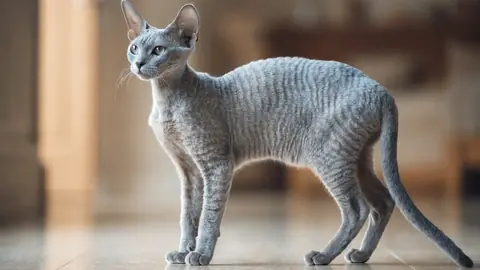 Cornish RexWhat a Cornish Rex actually costs in India, why the two Indian sources that publish a price do not overlap at all, what a coat...
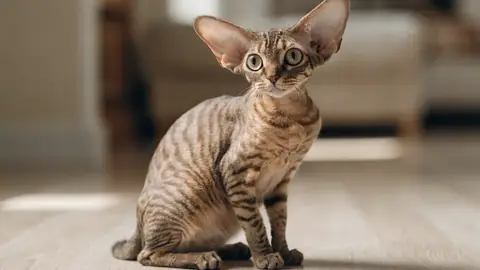 Devon RexWhat a Devon Rex actually costs in India, why published prices differ by three and a half times, the COLQ myopathy this breed...
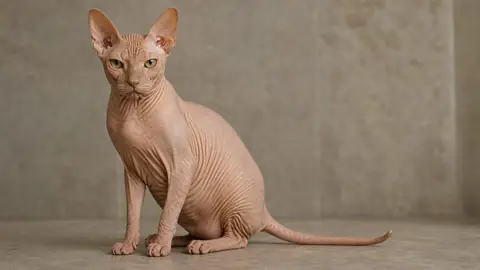 DonskoyWhy the Donskoy's hairlessness is dominant and not the Sphynx's mutation, what that changes about the questions you ask a...
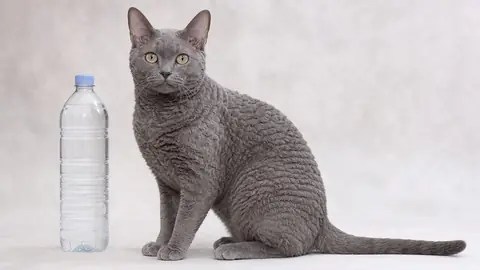 German RexOne rex mutation, two breed names, and a French studbook that demands two DNA tests the ranking pages say are unnecessary.
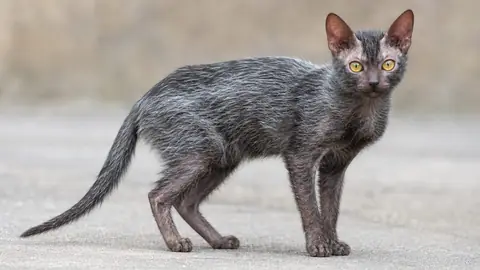 LykoiA partially haired cat whose coat is caused by loss-of-function variants in Hairless, not by any rex gene.
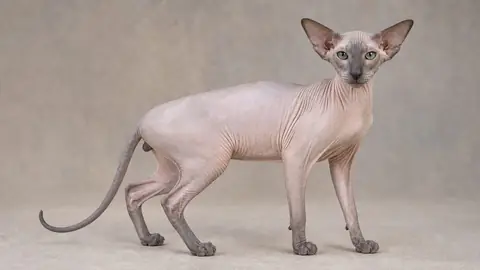 PeterbaldA Russian hairless breed built from a Donskoy and an Oriental Shorthair in 1994, carrying a dominant hair-losing allele whose...
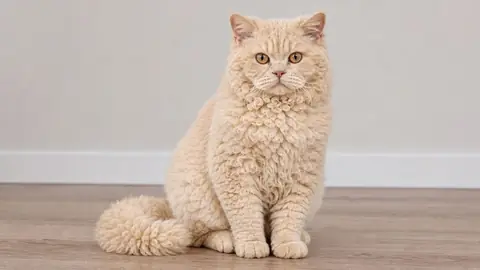 Selkirk RexA curly-coated cat built out of Persians and British Shorthairs, whose curl was mapped to a single splice variant and whose...
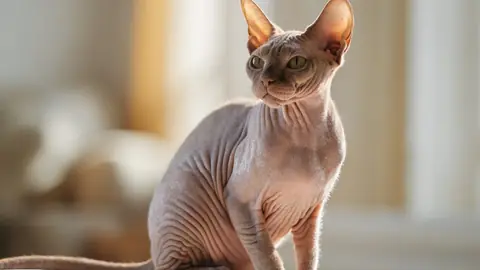 SphynxWhat a Sphynx cat actually costs in India, why published prices disagree by ten times, the 6.68 year life expectancy figure no...
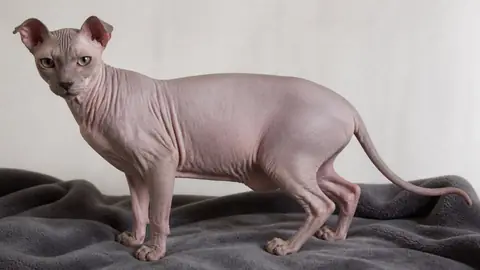 Ukrainian LevkoyA hairless cat with folded ears, built from a Donskoy and a Scottish Fold, held at provisional class by one Ukrainian registry...
Compare the breeds side by side
To compare these 9 breeds directly, read across the table rather than down the guides. Heat tolerance is a Bonbeno rating out of 5 for Indian conditions, and the reasoning behind each one sits on the breed's own page.
| Breed | Heat tolerance | Published price, India |
|---|---|---|
| Cornish Rex | 4 of 5 | Rs 40,000 to Rs 4,00,000 across two sources whose bands do not overlap |
| Devon Rex | 4 of 5 | Rs 35,000 to Rs 55,000 |
| Donskoy | 1 of 5 | Zero of 14 breeds priced |
| German Rex | 2 of 5 | Rs 1,50,000 to Rs 4,00,000 |
| Lykoi | 3 of 5 | None. Every rupee figure found was merchandise |
| Peterbald | 3 of 5 | None sourced. Both Indian sites that price other cat breeds have no Peterbald page at all |
| Selkirk Rex | 2 of 5 | None found. Six Indian commerce pages checked, zero carry the breed, with three control breeds present on all six |
| Sphynx | 3 of 5 | Rs 25,000 to Rs 50,000 |
| Ukrainian Levkoy | 3 of 5 | Rs 1,50,000 to Rs 3,00,000, after saying none exists |
What matters in this group
The points below are what the evidence on these 9 guides actually supports, not what the category is assumed to mean.
- The three coats are not variants of one thing. The Devon curl is a recessive KRT71 splice change, the Cornish is an LPAR6 deletion, and the Sphynx is a separate mutation again. A test mating in 1961 between a Cornish and a Devon produced all straight-coated kittens, which settled the question decades ago. The six breeds added to this page keep the pattern. The German Rex carries the same LPAR6 deletion as the Cornish, the Selkirk Rex curl is a separate KRT71 splice site variant mapped in 2013, the Lykoi's sparse roan coat comes from loss-of-function variants in the Hairless gene, the Donskoy's hair loss is an incompletely dominant allele distinct from the Sphynx mutation, the Peterbald's gene has not been identified and the Sphynx gene has been formally excluded as its cause, and the Ukrainian Levkoy adds the Scottish Fold's TRPV4 ear mutation on top of Donskoy hairlessness. Rex is a description, not a gene.
- The shared disease is worth knowing before buying. A COLQ founder mutation began in the Devon Rex and spread into the Sphynx through outcrossing, producing a congenital myasthenic syndrome in which creatine kinase and AST read normal, so a routine blood panel will not find it.
- Sun and skin are the Indian-specific risks. A sparse or absent coat leaves skin exposed, and the ears are both the least protected site and the site where solar damage is documented to begin. Any advice to keep these cats in an outdoor enclosure in India should be ignored. Two members read differently. The Selkirk Rex is a dense-coated rex whose curl sits on a full coat of guard, down and awn hairs, whose closest relatives are the Persian and the British Shorthair, and whose Indian risk is heat rather than sun. The Lykoi's page reports that nobody has shown the breed sunburns, so the Sphynx's sun record is not transferred to it; its cost is skin care, with the highest skin monitoring rating on the site.
Membership is generated from the breed data itself, not typed by hand, so this list cannot drift from the guides it points at and fills in as more publish. The 9 guides here cite 302 sources between them.
This page is a directory of published Bonbeno guides, generated from their data rather than written as clinical guidance, so no veterinarian reviewed this page itself. Each linked guide carries its own veterinary review and its own health sections. Breed level evidence describes populations, and your animal is an individual, so consult your nearby vet before acting on anything you read here.
Common questions
How does Bonbeno decide which breeds belong on this page?
Membership is generated from each breed's own published data rather than chosen by an editor. The group is defined by a shared trait rather than a rating, so its members are named in the site's own cluster definition and each one is checked against the published guide before it appears. A breed appears here the moment its guide publishes and meets that rule, and never before, which is why no link on this page can point at a guide that does not exist.
What is a Bonbeno heat tolerance rating?
It is a 1 to 5 rating of how well a breed copes with Indian conditions, where 5 is best. Almost no international breed reference publishes one, and in a country where summer temperatures pass 45 C it is the most decision-relevant trait there is. It is Bonbeno's own judgement, built from published heat-illness evidence where that exists and stated as inference where it does not.
Are the prices on this page current?
Each price is read from that breed's own guide, where it is compared across published Indian sources and cited. Published Indian breed prices disagree widely between sellers, sometimes by more than a lakh for the same breed, so treat the figure here as the lowest band Bonbeno found and read the guide for the full range.
Does Bonbeno sell or broker any of these cats?
No. Bonbeno does not sell pet food, products or animals and does not broker puppy or kitten sales. Nothing on this page is a listing, and no breeder or seller can pay to appear on it.