
Cat breed profile
Aphrodite Giant Cat in India: The Landrace That Got the Paperwork Done
A Cypriot mountain landrace with two published WCF standards, a contested TICA status, and no lawful route into India.
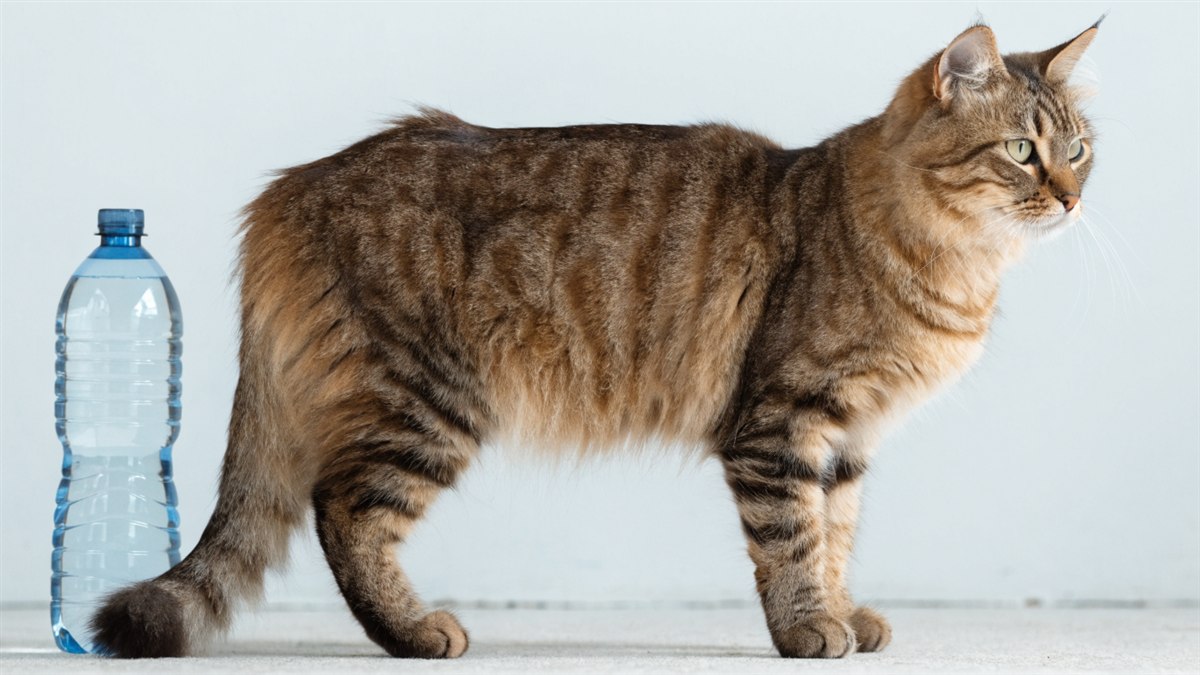
Quick answer
The aphrodite giant cat is a large Cypriot mountain landrace recognised by one registry, the World Cat Federation, which published shorthair and semi-longhair standards in February 2012. No Indian breeder, retailer, marketplace or price guide Bonbeno checked lists it, and India's import rules close the only route by which a breeding population could start. There is no Indian price.
This page reports published veterinary research and registry documents for general information. It is not a diagnosis and it is not a treatment plan. No breed-specific health data exists for this cat, so nothing here should be read as a prediction about an individual animal. Consult your nearby vet before acting on anything you read here, and take any cat showing heat stress, skin disease, breathing difficulty or sudden behaviour change to a qualified veterinarian the same day.
Aphrodite's Giant at a glance
What the Aphrodite Giant cat actually is
The Aphrodite Giant is a large natural cat from the mountains of Cyprus that one registry, the World Cat Federation, turned into a formal breed in 2012. It exists in two coat varieties with two separate published standards, it is one of very few breeds anywhere admitted on the strength of a DNA argument, and it is almost certainly not in India.
Start with the document, because the document is what separates this cat from every other island landrace. The World Cat Federation publishes a breed standard headed 'Aphrodite's Giant SH (APS)', dated February 2012, and a second headed 'Aphrodite's Giant (APL)', also dated February 2012 World Cat Federation. APS is the shorthair. APL is the semi-longhair, and it is the original variety. Both appear in WCF's live standards indexes, APS among 46 shorthair standards and APL among 24 semi-longhair standards alongside the Maine Coon, the Norwegian Forest Cat and the Turkish Van.
That matters because a landrace with a written breed standard is a different proposition from one without. A standard fixes head shape, eye shape, ear set, body, tail, coat and colour, and it assigns points, so a judge and a buyer can argue about a specific animal against a specific text. Most regional landraces never get one. This one has two.
What the standards actually describe
The WCF standard describes a big, long-bodied, unexaggerated cat with a soft woolly coat that changes with the season. Head is 'a long triangle, cheek line straight', with a long straight muzzle and nose carrying 'a very slight dip under the height of the eyes', a strong chin and a slightly domed forehead. Eyes are olive shaped and set oblique, and the standard makes a point of saying all colours are allowed, with 'Pale blue and light yellow is valued to be as good as dark blue and green';. Ears are medium to large, wide at the base, set 'in form of an open V'. Body is 'Big and strong. Elegant, lean muscular body, not cobby', with a long back and neck, big body measures, and back legs slightly longer than the front.
The coat is the part an Indian reader should read twice. WCF describes 'Soft cotton-woolly semi-long coat with undercoat in Winter, in summer much shorter and no undercoat'. The shorthair standard says the same thing with 'not too short' in place of 'semi-long';. So the breed's own defining document treats the coat as a seasonal system, thick and double in winter, thin and single in summer. TICA's standard puts it the same way, 'Length of coat and density of undercoat may vary with the seasons';. Hold onto that, because it is the single most decision-relevant sentence on this page for anyone in Chennai or Nagpur.
| Point | Aphrodite's Giant SH (APS) | Aphrodite's Giant (APL) |
|---|---|---|
| Date on the document | February 2012 | February 2012 |
| Coat | 'Soft cotton-woolly coat, not too short with undercoat in Winter'; | 'Soft cotton-woolly semi-long coat with undercoat in Winter'; |
| Tail | 'Tip of tail more slender than the heavy root'; | 'Full, well plumed tail in measure with the body'; |
| Colours | All except pointed and mink; solid without white | All except pointed and mink; solid without white |
| Scale of points | Head 20, eyes 5, ears 5, body 35, tail 5, coat and colour 25, condition 5 | Identical allocation |
| Weight range | Not specified | Not specified |
Read that last row carefully. Neither WCF standard states a weight, and neither does TICA's World Cat Federation The International Cat Association. Every weight figure you will see quoted for this breed therefore comes from somewhere other than a breed standard, which is why the published figures do not agree with each other.
How big is it, really
Nobody can tell you precisely, and the three published ranges disagree by 6 pounds at the top. Wikipedia gives adult males 15 to 18 pounds (6.8 to 8.2 kg) and females 10 to 14 pounds (4.5 to 6.4 kg), attributing the figures to TICA. CatTime prints a flat 'Large (11 - 18 pounds)' with no source at all. An aggregator gives males 15 to 24 pounds, that is 7 to 11 kg. The breed's own advocate account says the cats reached up to 10 kg under controlled breeding conditions. The TICA standard document itself contains no weight at all, only the instruction that 'females are smaller than males, and allowances should be made when comparing females and young cats to the standard';.
Bonbeno read both WCF standards and the TICA Aphrodite Breed Group Standard as text. None of the three contains a weight range World Cat Federation The International Cat Association. The weights circulating online are therefore secondary, and the honest description of this cat's size is the one the registries actually use: large, big-boned, and judged by proportion rather than by the scales. The World Cat Congress even asks judges to 'prefer large examples of both sexes of that breed';, which is a size instruction with no number behind it.
Where it came from, and where the origin story overreaches
Cats have lived alongside people on Cyprus for about 9,500 years, and that part is solid. A cat was buried beside a human at the Neolithic site of Shillourokambos, published in Science in 2004 and still the earliest known close cat-human association. The 2022 Heredity study restates it plainly, that feline remains buried alongside human remains at a site dating to about 9,500 years ago suggest humans had formed a relationship with cats and transported cats to Cyprus.
The WCF standard then takes a further step that the archaeology does not support. Its General section says the breed is 'based on the oldest documented cat that lived tamed with humans. Found in a Stone Age grave with a skeleton similar to the today living Aphrodite's Giants on the island of Cyprus';. Wikipedia flags exactly this, stating that there is no known connection between those ancient tamed-wild specimens and modern domesticated Cyprus cats despite breeder claims to the contrary, and that both WCF and TICA have uncritically repeated those claims. Bonbeno has read the WCF text and agrees with the criticism. A 9,500-year-old burial establishes that cats reached Cyprus with people. It does not establish descent from that individual to a cat registered in 2012.
The modern breed is much younger and much better documented. A British family already active in the cat fancy moved to Cyprus in 2005, noticed the local mountain cats were consistently different, and test-bred them; the cats bred true to type and grew larger under controlled conditions. Hepper dates the deliberate breed project to 2006. A WCF all-breeds judge saw the cats in Cyprus in 2008, the first formal local show was 2007 and the first WCF show appearance was Berlin in 2009. The Cyprus Cats National Breed Association was formed in 2009, applied at the WCF General Assembly in April 2012, and the breed became fully recognised on 1 July 2012. That is a twenty-year-old breed built on an ancient population, and saying so plainly is more useful than the Stone Age framing.
One further correction is worth making because it will save you money. An aggregator page states the coat comes in all colours and patterns 'except lilac, chocolate, mink, and colorpoint';. Neither WCF standard excludes lilac or chocolate. Both exclude only pointed colours and mink, and both add that a solid colour should be without white World Cat Federation. If a seller anywhere tells you a chocolate kitten is disqualified, or that a pointed one is acceptable, they have not read the standard they are invoking.
Which registries recognise the Aphrodite Giant, checked one by one
One registry fully recognises this breed, the World Cat Federation, and Bonbeno confirmed that by reading the standards, the candidate registers and the breed lists of six bodies rather than repeating the claim. The widely-copied line that TICA recognised the Aphrodite in 2017 does not survive contact with TICA's own current documents, and correcting it is the most useful thing this section does.
Every page ranking for this breed asserts the same two facts in the same sentence, WCF in 2012 and TICA in 2017, and none of them shows a document. So Bonbeno opened the registries. What follows is a verifiable audit you can repeat in about fifteen minutes, and the outcome is more interesting than either the pro or the anti version.
| Body | Status | Evidence Bonbeno actually read |
|---|---|---|
| World Cat Federation (WCF) | Full recognition | Two published standards, APS and APL, both dated February 2012, plus both breed indexes World Cat Federation World Cat Federation World Cat Federation |
| World Cat Congress (WCC) | Regulates breeding, does not recognise breeds | Its comparison table shows one 'full' entry against eight 'not recognised' for both aps and apl World Cat Congress |
| The International Cat Association (TICA) | Disputed. A standard exists, the breed does not appear in any TICA breed class | TICA still hosts an Aphrodite Breed Group Standard revised 05/01/2018, but the breed appears in none of its Championship, Advanced New Breed or Preliminary New Breed lists The International Cat Association The International Cat Association |
| Governing Council of the Cat Fancy (GCCF) | Not recognised, green candidate status | Listed green with the comment 'Not applied, probable acceptance if export from Cyprus is legal'; |
| Cat Fanciers' Association (CFA) | Not recognised | American Wirehair and Balinese are adjacent on the recognised-breed grid, with nothing between them |
| Fédération Internationale Féline (FIFe) | Not recognised | All four categories plus the preliminary list, which holds only Bombay and Lykoi |
The TICA claim, examined properly
TICA's position is genuinely unclear, and every page that states it as a settled fact is overstating what the evidence shows. Three documents matter here and they do not agree.
- A TICA standard exists and TICA still hosts it. The file is headed 'APHRODITE BREED GROUP (APS/APL)' and footed 'Revised 05/01/18 Aphrodite Breed Group Standard, 05/01/2018'. It allocates head 40 points, body 40 and coat, colour and pattern 20, permits no outcrosses, and withholds all awards for a locket.
- The breed appears in no TICA breed class. TICA's Browse All Breeds directory groups its breeds as Championship, Non-Championship, Advanced New Breeds and Preliminary New Breeds. On 20 August 2026 the Preliminary New Breed class contained one entry, the Toybob; by 3 September 2026 the Toybob had been promoted to Advanced New Breed and the preliminary class was empty. That drift is worth stating, because it shows the directory is actively maintained rather than a stale page, which is what gives the next sentence its force: the string Aphrodite does not occur anywhere on the page, in any class, on either reading.
- TICA's current breed-standards listing omits it. The list runs American Wirehair straight into Australian Mist, which is exactly where an Aphrodite entry would sort.
- The World Cat Congress records TICA as not recognising it. WCC's comparison table covers nine member associations, ACF, CCC of A, CFA, FIFe, GCCF, NZCF, SACC, TICA and WCF. For both aps and apl, eight cells read 'not recognised' and one reads 'full';.
The honest reading is that TICA accepted the Aphrodite as a preliminary new breed and that the status has not held. Wikipedia's own sub-infobox already carries the qualifier 'TICA recognition is only preliminary';, and preliminary is a probationary class a breed can leave in either direction. A page that tells an Indian reader 'TICA recognises this breed' without that qualification is selling them a certainty that TICA's own website does not currently support. If someone offers you a TICA-registered Aphrodite, ask which class the registration is in, and check the answer against TICA's published breed lists rather than against the seller.
The same discipline kills a second claim. One marketplace states that in 2014 the Australian Cat Federation recognised the breed and dropped 'Giant' from the name. ACF is one of the nine associations in the World Cat Congress comparison table, and its cell reads 'not recognised' for both varieties World Cat Congress. Two registry-adjacent sources, one confident claim, and the one published by the registries' own confederation is the one to believe.
GCCF, and the one obstacle that is named out loud
GCCF is the only body that publishes why it has not recognised the breed, and the reason is a legal question rather than a feline one. Its unrecognised-breeds register grades candidates green, amber or red, and the Aphrodite sits in green with the comment 'Not applied, probable acceptance if export from Cyprus is legal';. Green is the good list. The other green entries are the American Satin, American Shorthair, American Wirehair, European Shorthair, German Rex, Serengeti, Templecat, Tennessee Rex and the Thai Siamese. Red, by contrast, holds the Munchkin, the Scottish Fold, the Savannah and the Peterbald.
So GCCF's genetics committee has no welfare objection and no doubt about distinctiveness. It has a supply-chain question. That is a rare and specific thing for a registry to say in public, and it should shape how an Indian reader thinks about any kitten offered under this name, because the obstacle GCCF names is the obstacle between Cyprus and every other country including this one.
GCCF's wording is conditional, not a finding of fact. It says acceptance is probable if export from Cyprus is legal, which records uncertainty on GCCF's part rather than a confirmed Cypriot export ban. Bonbeno searched for a Cypriot export prohibition on cats and could not find one in a government source, so we are not asserting that one exists. What we can say is that the recognising body's own published blocker is about moving cats out of Cyprus, and that no page ranking for this breed mentions it at all.
What the recognition is worth to you in India
Registry recognition is a verification tool, not a quality guarantee, and in India it is the only tool you have. No Indian body registers cats to a breed standard, so a claimed pedigree can only be checked against the foreign registry that issued it. For this breed that means one place: WCF. A WCF pedigree names the breed as Aphrodite's Giant SH or Aphrodite's Giant, with EMS codes APS or APL, and no other cat registry currently issues one. If a paper says CFA, FIFe or GCCF on it, the paper is not what it claims to be, because none of those three lists the breed at any level Fédération Internationale Féline, Breeds Governing Council of the Cat Fancy.
The genetic study behind the breed, and what it actually measured
The genetic work behind the Aphrodite Giant is real, but it measured something narrower than the breed's own documents claim. A UC Davis laboratory found that Cyprus cats are a distinct population within the Mediterranean, which is a statement about an island's street and sanctuary cats. WCF's standard converts that into a 30-cat breed fingerprint, and no peer-reviewed paper indexed in PubMed supports the conversion.
Here is the sentence the whole breed rests on, quoted in full from WCF's own standard. 'The Davis laboratories in the U.S., Dr.Lyons in a Genetics research program has produced a specific fingerprint for purebred cats. 30 Aphrodite's Giants were also investigated and shown genetically. From the basis of DNA scans, Dr. Lyons has agreed that the genetic fingerprint of the Aphrodite's Giants is very consistent and could be recognized on this basis a breed'. That sentence appears identically in both the shorthair and the semi-longhair standard. It is the reason this breed is often described as the first admitted on DNA evidence.
Bonbeno set out to find the study behind it. Four things came back, and together they change the picture without demolishing it.
Finding 1: PubMed has never indexed a paper about this breed
A search of the biomedical literature for Aphrodite, cat and breed returns zero records. A broader query for Cyprus with cat or feline and breed or genetics returns 38 records, none of which is about the Aphrodite. So the fingerprint analysis described in the WCF standard has not been published in the indexed peer-reviewed literature, and it has not been peer reviewed in any form Bonbeno could locate. That is not the same as saying it did not happen. It means the only account of it is the account written by the body that recognised the breed.
Finding 2: the earlier Lyons breed survey did not include Cyprus
The paper that established the Davis laboratory's breed-fingerprint method is Lipinski and colleagues in Genomics, which genotyped over 1,100 cats across 22 breeds and 17 random-bred populations. Those 17 populations are Brazil, Hawaii, New York, Texas, Germany, Finland, Italy, Turkey, Israel, Egypt, Tunisia, Kenya, Sri Lanka, Singapore, Vietnam, Henan and Korea. Cyprus is not among them. So when the WCF standard invokes the Davis fingerprint method, it is invoking a real and well-cited method that had, at the time, no Cypriot reference population in it.
Finding 3: the peer-reviewed study that does include Cyprus studied street cats, not the breed
Cyprus does appear in the Lyons laboratory's later work, and reading it is the most useful twenty minutes anyone can spend on this breed. Nilson and colleagues, published in Heredity in 2022 with Leslie Lyons as senior author, genotyped 1,987 random-bred cats plus four African wildcats and ten putative hybrids, using 36 autosomal short tandem repeats and 132 unlinked SNPs, across more than 40 countries and more than 85 sampling sites. Cyprus is one of the sampled populations. The results place it in the Near East cluster, verbatim: 'Principal component 2 (PC2) highlights differences between Asian cats from the Near East (Cyprus, Israel, Egypt, Jordan, Lebanon, Greece), the Middle East (Bahrain, Iran, Iraq, Kuwait, Oman, Pakistan, UAE), and African cats';.
Now read the acknowledgements, because they tell you what those Cyprus cats were. The paper credits 'Bosmat Gal (Malcom Cat Protection Society, Cyprus)' for supplying the Cyprus samples. Those are sanctuary cats. The breed's own advocate account confirms the same sourcing from the other direction, describing a Lyons analysis of 248 cats that mixed cats from the breeding programme with random-bred cats from the Malcolm Cat Sanctuary, and reporting that the January 2012 conclusion was that 'Cyprus cats are a distinct population within the Mediterranean' and that 'a breed from Cyprus could be developed';. The word Aphrodite never appears in the Heredity paper.
| Source | Sample | What it claims to show |
|---|---|---|
| WCF breed standard, Feb 2012 | 30 Aphrodite's Giants | That the breed's genetic fingerprint 'is very consistent' and could ground recognition |
| Breed advocate account, Mar 2014 | 248 cats, breeding programme plus Malcolm Cat Sanctuary | That Cyprus cats are a distinct population within the Mediterranean and a breed could be developed |
| Nilson et al., Heredity 2022, peer reviewed | 1,987 random-bred cats, 40+ countries, 85+ sites, 36 STRs and 132 SNPs | That Cyprus clusters with the Near East. It makes no breed claim and never names the Aphrodite |
| Lipinski et al., Genomics 2008, peer reviewed | 1,100+ cats, 22 breeds, 17 random-bred populations | The fingerprint method itself. Cyprus was not one of the 17 populations |
| PubMed, all indexed literature | Zero records | No indexed paper names this breed |
Finding 4: two different claims are being run together
The gap between the strongest defensible claim and the claim on the standard is a real gap, and it is worth naming. 'The cats of Cyprus are a genetically distinguishable island population' is supported. 'A cohort of 30 registered Aphrodite's Giants shows a consistent within-breed fingerprint' is a different, stronger claim about a closed breeding population, and Bonbeno could not find it published anywhere outside the registry's own standard PubMed, search of the biomedical literature…. The first claim is about where cats come from. The second is about whether a specific breeding programme is producing a uniform animal, which is what a breed standard is supposed to guarantee.
Bonbeno's Aegean cat page describes the Aphrodite work as a genetic study genotyping around 30 cats to establish a consistent fingerprint. That accurately reports what the WCF standard says, and the Aegean page cited the standard for it, but it gives the work more standing than the evidence supports. There is no peer-reviewed publication of a 30-cat Aphrodite fingerprint analysis, PubMed indexes no paper naming the breed at all, and the peer-reviewed study that does cover Cyprus sampled sanctuary and street cats as a geographic population rather than a breed Nilson SM, Gandolfi B, Grahn RA. The comparison the Aegean page draws still holds, and holds for a better reason. Somebody collected Cypriot cats, sent them to a named laboratory, got a population-level result and built a registry case on it. Nobody has done any of that for the Aegean.
Why any of this matters to a buyer
A genetic result that describes an island population cannot verify an individual kitten, and that is the practical consequence. A DNA test that says a cat clusters with Near East random-bred cats would say the same of a great many street cats from Cyprus, Greece, Lebanon and Israel, and quite possibly of cats far closer to home. There is no commercial breed test for the Aphrodite Giant, because a breed test needs the closed-population reference panel that the published study never built. So the only document that connects a specific kitten to this breed is a WCF pedigree, and the only way to verify one is to check it with WCF.
Aphrodite Giant cat price in India, and why no honest figure exists
There is no Aphrodite Giant cat price in India, because there is no Indian market for the cat. Bonbeno checked the 50-breed list published by India's largest pet retailer, two Indian all-breed price guides, an Indian cat marketplace and a global marketplace that runs a dedicated Aphrodite Giant category, and found zero Indian listings, zero Indian rupee figures and zero listings anywhere in the world on the day of writing.
Say it once more plainly, because this is the answer to the query. No Indian source Bonbeno opened publishes a price in India for this breed, and Bonbeno will not invent one. Not a range, not a starting figure, not a 'roughly'. A manufactured number would be quoted back at us by an answer engine within weeks, and it would be the only rupee figure on the internet for a cat nobody in India has.
Four Indian sources, four blanks
Every Indian breed list and price guide Bonbeno opened omits this cat, including the ones that go deep into rarities. Heads Up For Tails publishes a list of 50 cat breeds kept in India, numbered and annotated breed by breed, that reaches the Sokoke from Kenya, the Khao Manee from Thailand, the Serengeti, the Cymric, the Donskoy, the Chausie, the Burmilla Longhair and the Australian Mist. The strings 'Aphrodite' and 'Cyprus' do not appear on the page at all. PawSpace prices ten breeds from the Indian Domestic Cat to the Sphynx, and neither string appears there either.
MyKitten, an Indian marketplace that describes itself as connecting buyers to verified cat breeders, offers exactly ten breeds in its navigation: Persian, Maine Coon, Ragdoll, Siamese, British Shorthair, Exotic Shorthair, Bengal, Scottish Fold, Siberian and Himalayan. Its 2026 price table prices eight of them, from Persian at Rs 20,000 to Rs 35,000 up to British Shorthair at Rs 95,000 to Rs 1,45,000. No Aphrodite line, no Cyprus line.
The strongest single piece of evidence is not Indian at all. GoKitty is a global cat marketplace that maintains a dedicated Aphrodite Giant breed category, a breed description page and a notification list. Set its search to worldwide and to every listing type it offers, kitties for sale, kitties for adoption, retired breeding cats and breeding cats, and the page returns 'No kittens available at this time';. Fourteen people are following the breed waiting for one to appear. If the global marketplace built for this breed has nothing anywhere on earth, the probability that a shop in Pune has one is not a number worth arguing about.
| Source checked | What it covers | Aphrodite Giant result |
|---|---|---|
| Heads Up For Tails, 50 Popular Cat Breeds In India | India's largest pet retailer, 50 breeds annotated | Not listed. 'Aphrodite' and 'Cyprus' absent from the page |
| PawSpace, Cat Price in India: All Breeds | Indian all-breed price guide, 10 breeds priced | Not listed |
| MyKitten, Cats for Sale in India | Indian marketplace, 10 breeds offered, 8 priced | Not offered. Breed filter does not include it |
| GoKitty, Aphrodite Giant listings | Global marketplace with a dedicated category, worldwide search | 'No kittens available at this time'; |
| Hepper, Aphrodite Cat | Ranking US breed profile | 'the beginning costs won't be cheap', no figure given |
| CatTime, Aphrodite Giant | Ranking US breed profile | No price published anywhere on the page |
Notice what the last two rows show. Even the American pet-media pages that would normally publish a confident dollar band decline to name one for this breed CatTime, Aphrodite Giant Cat Breed…. When the pages that price everything will not price this, that is the market speaking, not an editorial oversight.
Why an Indian population cannot form, on the import rules
India's import rules close the route by which a breeding population could ever start here, and the wording is unusually blunt. Under DGFT Trade Notice No. 22/2022-23 dated 19 December 2022, live mammals under ITC (HS) 01061900 are Restricted. Only cats and dogs may come in under baggage rules, without DGFT authorisation, and only for a person transferring residence to India after two years of continuous stay abroad. Paragraph 6 states verbatim that 'any applications for trading/breeding purposes, or applications made on behalf of some another person/entity shall be duly rejected';. Entry is limited to the airports and seaports of Delhi, Mumbai, Chennai, Hyderabad, Bengaluru and Kolkata and, since October 2024, Kochi airport Department of Animal Husbandry…. The full route, which covers cats too, is set out in how to import a dog to India.
The quarantine service says the same thing from its own side. Baggage imports are capped at two dogs or cats, governed by Customs Circular No. 15/2013 dated 8 April 2013, and require proof of two years of stay abroad plus proof of transferring residence. The owner must sign a declaration 'that the dog/cat is bonafide pet with no commercial interest, gift and breeding purpose', and the page states in capitals that import for breeding or any other commercial activity is not permitted. A cat also needs an official health certificate covering rabies, distemper, feline enteritis, feline panleukopenia and leptospirosis, and a rabies vaccination given more than one month but within 12 months before embarkation.
Put the two documents together and the arithmetic is simple. Two animals maximum, no breeding purpose, applications for breeding rejected outright, and an advance No Objection Certificate needed seven days before travel from the quarantine officer at one of seven ports Department of Animal Husbandry…. You can lawfully bring your own Aphrodite Giant to India if you already own one and you are moving here. You cannot lawfully import a pair to found an Indian line, which is precisely the step that would create an Indian price.
What you are actually being offered, if someone offers you one
Any Indian offer of an Aphrodite Giant kitten today is one of four things, and none of them is the breed. It is a mislabelled semi-longhaired cat of another breed or none, an Indian community cat with a good coat, an auto-generated directory or marketplace shell page that exists identically for every breed name, or an overseas seller quoting you a price plus a transport bill for an animal that would still need the paperwork above. The right question to a seller is never how much. It is which registry issued the pedigree, what the EMS code on it says, and whether the parents are registered with that same body.
We link no listings, endorse no seller and take no commission. The availability checks above are reported as editorial findings, not as shopping advice. If you are set on a large semi-longhaired cat in India, the practical answer is the adoption section at the foot of this page, not a search for this breed.
Monthly cost of keeping a large semi-longhaired cat in India
Budget around Rs 4,500 a month for a cat in an Indian city on the one Indian estimator that publishes its working, and add to it for this animal rather than subtracting. None of that figure is breed-specific to the Aphrodite Giant, because no Indian source costs this breed, so what follows is an all-cat baseline plus the three line items a big, dense-coated cat genuinely moves.
One Indian source publishes a monthly cost with its components visible. MyKitten's estimator returns Rs 4,500 a month, built from food at Rs 2,500, grooming at Rs 800, a veterinary reserve at Rs 600 and litter and supplies for the balance. Treat that as a floor for a medium cat in a metro, and treat the grooming line as the one most likely to be understated for a semi-longhair.
| Line item | Indian all-cat baseline | What changes for this animal |
|---|---|---|
| Food | Rs 2,500 a month | Rises with bodyweight. A cat at the 6.8 to 8.2 kg male figure quoted for this breed eats roughly twice what a 4 kg cat eats |
| Grooming | Rs 800 a month | The semi-longhair needs brushing every other day, more in a moult, so budget for tools and time rather than salon visits |
| Veterinary reserve | Rs 600 a month | No breed screening test exists to add, but Indian skin disease is common enough to plan for |
| Litter and supplies | Balance of the Rs 4,500 | Scales with body size. A larger cat needs a larger tray and gets through more litter |
| Cooling | Not in any published Indian estimate | Fans, a tiled or cool sleeping spot and reliable water. This is a real line item in an Indian summer |
| Breed-specific costs | None | There is no health screening panel, no breed club subscription and no Indian pedigree registration to pay for |
The reason the table has a 'no breed-specific costs' row is worth stating rather than hiding. For a Maine Coon or a Ragdoll an Indian buyer is told to budget for cardiac screening. For this breed no such recommendation exists from any registry, breed club or study, so there is nothing honest to add to the line. That is a saving on paper and a gap in reality, and the health section explains why they are the same thing.
The costs nobody puts in an Indian estimator
- Sterilisation, once, in the first year. Every responsible Indian rescue requires it and it removes the entire category of accidental litters.
- Core vaccination and boosters, annually, plus deworming. Ask your nearby vet what schedule they use for your city rather than copying an overseas calendar.
- Parasite control through the monsoon, monthly rather than seasonally in most of India, because fleas and ticks do not take the winter off here the way they do in Europe.
- A dermatology budget, which is the line an Indian cat owner is most likely to need unexpectedly. In a Kerala study of 82 cats presenting skin lesions, 36 were culture-positive for dermatophytes.
- Emergency reserve, because there is no pet insurance norm in India and a single night of hospitalisation can exceed three months of routine cost.
Two of those five are climate items rather than breed items, and that is the correct way to think about cost in India. Compare an imported cat's costs with an Indian community cat's and the difference is rarely the food. It is the coat maintenance, the skin problems a dense coat invites in a humid city, and the cooling you end up buying.
Heat tolerance in Indian conditions, rated 2 out of 5
Bonbeno rates this cat's heat tolerance 2 out of 5 for Indian conditions, and the reasoning is more interesting than the number. A Cypriot cat sounds like a good bet for Indian heat. Read the Cypriot climate data and the breed's own registry notes and it stops sounding like one, because this animal was shaped by dry heat at altitude and by winters cold enough to snow, and it carries a coat built for the second half of that sentence.
Three facts have to be held together to get the heat tolerance question right, and every ranking page holds only the first.
Fact one: Cyprus is hot, and that argues for the cat
Cyprus has, in its own meteorological service's words, 'Hot dry summers from mid-May to mid-September';. In July and August the average maximum temperature on the central plain reaches 36 degrees C. A cat that evolved through that is not a delicate animal, and its build helps. The muzzle is long and straight with only a very slight dip, so there is nothing brachycephalic obstructing an open-mouth breath, which is more than can be said for the Persian that dominates Indian cat ownership.
Fact two: the heat it evolved in is dry, and India's is often not
Cypriot summer air is extraordinarily dry, and that is the fact that breaks the easy comparison. The Cyprus Department of Meteorology records that near midday in summer relative humidity 'is very low with values on the central plain usually a little over 30% and occasionally as low as 15%';. A cat cools itself by evaporation, through panting and through grooming saliva onto its coat, and evaporation is fast at 30 percent humidity and slow at 80.
The Indian side of that comparison is documented too. A systematic review co-authored by an India Meteorological Department scientist notes that 'Humidity offsets mitigating sea breezes along coastal regions, heightening heat index at lower temperatures' and that 'Rising night-time humidity impedes relief from high temperatures, which is critical for coping with extreme day heat';. The same review points out that IMD's own heatwave thresholds, 40 degrees C in the plains and 30 degrees C in hilly regions, 'do not account for differences in humidity levels across regions, exacerbating heat stress'. India recorded 24,223 heatwave-attributed human deaths between 1992 and 2015.
What that means for a cat is measurable. In nine cats exposed to high ambient temperatures, four days of dehydration cut evaporative water loss to about 50 percent of hydrated levels at 35 and 38 degrees C, and core temperature rose significantly in dehydrated animals at 38, 40 and 43 degrees C. Evaporation is the cooling system. Humidity slows it from the outside and dehydration halves it from the inside, and an Indian May can deliver both at once.
Fact three: this is a mountain cat with a winter coat, and that is the part nobody reads
The breed did not develop on the 36-degree plain. It developed in the Troodos mountains, and the registries say so themselves. TICA's standard states that the Aphrodite is 'found on the island of Cyprus' and that 'They developed in the mountain region where their size and strength helped them in catching larger prey';. The World Cat Congress goes further, recording that the cats developed 'in the inner country of Cyprus' and that 'Due to the hard circumstances of living, cold, wet winters and very dry hot summers they developed their tremendous coats and huge boning';.
Now put the Cypriot numbers against that. In July and August the average maximum on the Troodos mountains is 27 degrees C and the mean daily temperature is 22 degrees C. The massif rises to 1,951 metres, snow 'falls frequently every winter on ground above 1,000 metres', and the seasonal difference between mid-summer and mid-winter inland is 18 degrees C. So the registries' own explanation for the coat is cold wet winters, and the summer this cat actually evolved through peaks nine degrees below the Cypriot plain and thirteen below the IMD plains heatwave threshold.
| Measure | Troodos mountains, Cyprus | Indian plains reference |
|---|---|---|
| July and August average maximum | 27 degrees C | IMD declares a plains heatwave at 40 degrees C |
| July and August mean daily temperature | 22 degrees C | Well above this across most of the country in summer |
| Midday summer relative humidity | Central plain a little over 30 percent, sometimes 15 percent | Coastal and eastern regions humid enough that humidity itself raises the heat index |
| Winter | Snow frequent above 1,000 metres every winter | Absent from almost all of India |
| Seasonal swing | 18 degrees C inland between mid-summer and mid-winter | Much smaller in the south and the coasts |
| What the coat is for | 'cold, wet winters' per the World Cat Congress | No Indian winter makes that demand outside the far north and the hills |
Why the rating is 2 and not 3
Four things pull the score down and two hold it up, and the honest total is a 2. Against the cat: a large body sheds heat more slowly than a small one, because mass grows faster than surface area; the coat carries a winter undercoat by design; the seasonal moult that strips that undercoat is cued by a swing India mostly does not provide; and the humidity that defines Indian summer is exactly the variable that disables feline evaporative cooling. For the cat: an unexaggerated muzzle that leaves panting unobstructed, and genuine ancestral exposure to hot dry summers.
The rating also splits by variety and by city, and pretending otherwise would be false precision. The shorthair APS variety sits closer to a 3 than the semi-longhair APL does. A dry-heat city such as Jaipur or Pune is a materially easier posting than Chennai, Mumbai or Kolkata, where the review above singles out coastal and eastern humidity as the aggravating factor. Shillong, Ooty or Shimla would suit this cat better than any plains city in the country.
The coat this breed carries is a seasonal system that thins itself, and shaving it removes the insulation that also keeps heat out and exposes skin to sunburn and to the fungal load an Indian monsoon carries. Cool the room and the cat, not the coat. Reliable water in more than one place matters more than any grooming intervention, because a dehydrated cat loses about half its evaporative capacity at 35 to 38 degrees C. If a cat is open-mouth breathing, drooling, unsteady or unresponsive, that is a same-day emergency and you should call your nearby vet immediately.
None of this makes the cat unkeepable in India. It makes summer an active management problem rather than a passive one, and it means anyone reading 'Mediterranean cat, therefore fine in Indian heat' has skipped both the altitude and the humidity.
Temperament and household fit, separating the standard from the sales copy
Two registry documents say something checkable about this cat's temperament, and everything else you will read about it is assertion. TICA's standard requires a gentle, unchallenging temperament and disqualifies a cat that threatens harm. Beyond that, no breed temperament survey exists, so treat confident personality profiles as what a handful of breeders have said rather than as measured behaviour.
Start with what is written down. TICA's general description ends with the phrase 'while maintaining a gentle temperament', and the standard's show-ring section states that 'Temperament must be unchallenging; any sign of definite challenge shall disqualify';. That is a real, enforceable requirement rather than a marketing line, because a cat that fails it leaves the ring. WCF, by contrast, sets no temperament rule at all for the breed, deferring breeding regulation to the World Cat Congress, and the World Cat Congress records breeding restrictions as 'none';.
Secondary accounts add the usual adjectives. Wikipedia reports that TICA's own overview describes the cats as affectionate and social and in some ways dog-like toward their keepers. Hepper describes them as gaining recognition for a friendly, extroverted temperament. Both are plausible and neither is evidence, because nobody has surveyed a population of these cats the way UK VetCompass surveys cats generally.
The one behavioural claim with a mechanism behind it
The most credible temperament claim about this cat is about hunting, and it comes from a registry rather than a blogger. The World Cat Congress explains the breed's size by its diet, recording that 'The main food were big lizards, snakes and rats. Smaller cats or cats with weak teeth were not able to survive hard living in the mountains';. TICA says the same in fewer words, that the cats developed in the mountain region 'where their size and strength helped them in catching larger prey';.
That is a description of a serious predator, and it has household consequences. A cat selected to take large prey is an athletic animal that needs somewhere to put that drive, and it is a poor housemate for a free-flying bird, a hamster or an open aquarium. It also means the standard's gentle-temperament requirement is about handling and showing, not about what the cat does to a gecko on your wall at two in the morning.
Apartment living, honestly assessed
The only published opinion on apartment living for this breed says no, and it is worth taking seriously even though it is unsourced. Hepper states that these cats 'aren't the best suited to small apartments and do best in a house with plenty of vertical and horizontal space'. Bonbeno cannot verify that against a study, because none exists. What we can say is that the physical description supports it: a large, muscular, long-bodied cat with back legs longer than the front is built to climb and jump.
For an Indian flat that translates into a practical rule rather than a prohibition. Build height, not floor area. A tall cat tree, two or three wall shelves and a window perch turn a 700 square foot flat into a workable territory for a big cat. Mesh the balcony before the cat arrives rather than after, because a cat bred to chase pigeons in a mountain village will treat a fourteenth-floor railing as a hunting position.
| Household | Fit | Why |
|---|---|---|
| A hill-station or northern-plains home with space | Good | Climate closest to the Troodos range it came from, and room for a large climbing cat |
| A humid coastal metro flat, no cooling | Poor | Combines the two things this coat handles worst, heat and humidity |
| Home with small caged pets or free-flying birds | Poor | Selected for taking large prey |
| First-time cat owner in India | Poor, for a different reason | There is no lawful Indian supply, so the search itself exposes a novice to misrepresentation |
| Household wanting a big affectionate lap cat | Plausible, unverified | Registry-adjacent descriptions say affectionate and social, with no survey behind them |
| Someone already owning one and relocating to India | Workable with management | Lawful under the baggage route, and the climate section is your manual |
Pet-media pages give this cat star ratings for kid-friendliness, friendliness toward strangers and playfulness. Nobody surveyed anything to produce them. In an unselected natural population, individual variation in temperament is wider than in a breed selected for a temperament over many generations, so a breed-level score would mislead more than it informs. Meet the individual cat, twice, before deciding anything about children.
Training approach, and the two things the standards tell you to expect
To train an Aphrodite Giant, work with the prey drive rather than against it and give the cat far longer to mature than a normal breed timeline suggests. Those are the only two training-relevant facts that come from a document rather than from an opinion, and they come from the breed standards themselves.
No training study exists for this breed and none is likely to, so anyone offering you a training profile is generalising from cats in general. Two things in the standards are specific enough to act on, and they happen to be the two that most change how you plan the first three years.
One: the two registries disagree about how fast this cat grows up
WCF says the cat matures quickly and TICA says it matures slowly, and Bonbeno confirmed the contradiction by reading both documents. The WCF standard states 'Morphology develops quickly. Due to development of breed, kitten could be less muscular but big boned from the beginning';. TICA's standard states 'They are slow to mature, females are smaller than males, and allowances should be made when comparing females and young cats to the standard', and repeats it under Allowances: 'Breed is slow to mature so coat and physical structure should be taken into consideration when judging kittens, females, and young adults';. Wikipedia notes the same conflict and suggests different foundation stock behind the two variants as the possible cause.
Plan on the slow reading, because the cost of being wrong is asymmetric. If you assume slow maturity and the cat matures fast, you have simply been patient. If you assume fast maturity, you will read normal adolescent behaviour at eighteen months as a training failure and start escalating, which is how cats learn to avoid people.
Two: the prey drive is a design feature, so redirect it
This cat was selected on hunting ability, so a training plan that suppresses hunting will fail and a plan that reschedules it will work. The World Cat Congress attributes the breed's size and dentition directly to a diet of 'big lizards, snakes and rats' in the mountains. In practice that means the wand toy is not enrichment, it is the training tool. Run a hunting sequence to a kill and a meal, twice a day, and the cat has somewhere to put the drive that is not your ankles at 5 am.
- Start carrier training in week one. In an Indian summer a cat that fights the carrier turns a routine vet visit into a heat-stress risk, and the physiology is unforgiving of a stressed cat in a hot car.
- Train handling before you need it. TICA's show requirement is a cat that tolerates examination without threatening harm, and the same skill is what lets a vet look in the ears of an 8 kg cat without sedation.
- Feed after play, not before. Hunt, catch, eat, groom, sleep is the sequence a cat is built around, and using it converts play into a settled evening.
- Teach a station. A mat or a shelf the cat goes to on cue is worth more in a small Indian flat than any trick, because it gives you somewhere to send a large animal during cooking, cleaning or guests.
- Skip punishment entirely. There is no version of this that works on cats, and on a cat this size a startled defensive reaction is a hospital visit.
Two housekeeping notes for India. Litter training is rarely a problem in cats raised indoors from kittenhood, but a cat that arrives from a semi-outdoor life may need a large uncovered tray with unscented litter before it will use one at all. And keep training sessions to the cool ends of the day from March to June, because a big cat in a hot room will decline to work and you will misread that as stubbornness.
Daily exercise requirement, and what happens without it
Give this cat two structured hunting sessions a day, roughly 15 to 20 minutes each, and vertical territory it can use for the rest of the day. No study sets a number for this breed, so that figure comes from the general feline play literature applied to an animal both recognising registries describe as a large-prey hunter. What happens without it is the one consequence with hard evidence behind it, and it is a lifespan consequence.
The registries describe the exercise requirement without ever using the word. TICA calls the Aphrodite 'large, athletic, well-muscled, solid' and says the cats developed catching larger prey. WCF calls the body 'Elegant, lean muscular body, not cobby' with back legs slightly longer than the front, which is a jumping animal's proportion. The World Cat Congress adds that cats too small or weak-toothed to take big lizards, snakes and rats did not survive in the mountains. Nothing in any of those documents describes a windowsill cat.
What underexercise actually costs, in years
The cost of an underexercised cat is measurable in UK veterinary data even though no such data exists for this breed. The VetCompass life tables built on 7,936 confirmed feline deaths conclude verbatim that 'Being entire, purebred and with a non-ideal body weight were significantly linked to a decreased lifespan';. Life expectancy at age 0 for UK cats overall was 11.74 years, with a 95 percent confidence interval of 11.61 to 11.87. Non-ideal bodyweight is the one risk factor on that list an owner controls daily, and in a big-framed cat it is also the one hardest to see.
That last point deserves its own line. On a cat whose registries instruct judges to prefer large examples, the visual cue that normally tells an owner their cat has gained weight is exactly the cue that has been bred toward. Use hands rather than eyes. Ribs should be findable under a light layer with flat fingers, and there should be a waist behind the ribs when you look down.
A workable Indian daily routine
- Morning, before the heat, one 15 to 20 minute wand session that ends in a catch and a meal.
- Daytime, food puzzles and a climbing route rather than active play, especially between 11 am and 4 pm from March to June.
- Evening, after the sun drops, the second session, longer if the cat is still wound up at bedtime.
- Vertical territory all day, meaning a tall tree, two or three shelves and one high perch with a view. Floor space is worth less than height to a climbing cat.
- A meshed balcony, which is enrichment and containment at once, and the single highest-value change most Indian flats can make.
Watch the intensity in summer. A cat that pants during play is telling you the session is over, and the physiology says the same: in cats measured at high ambient temperatures, respiratory rate is the main lever controlling evaporative cooling, and it is the lever that fails first when the animal is dehydrated. Water in more than one room, changed daily, is part of the exercise plan rather than separate from it.
Grooming and coat care in Indian humidity
Brush the semi-longhair every other day and the shorthair twice a week, then add a weekly skin check that the overseas advice does not mention, because the fungal pressure on a dense coat in India is different from the pressure in Cyprus. The published grooming guidance for this breed is written around a European spring moult, and that is the assumption an Indian owner has to adjust.
The standards describe a coat that manages itself seasonally. WCF's semi-longhair standard reads 'Soft cotton-woolly semi-long coat with undercoat in Winter, in summer much shorter and no undercoat' with 'Not much topcoat covering' and a 'Full, well plumed tail';. The shorthair carries the same woolly texture without the length. TICA describes the coat as 'LH - Semi-long; SH - Semi-plush' with texture 'Soft, silky, lush, luxuriant', and states that 'Length of coat and density of undercoat may vary with the seasons';.
That is a dense double coat in winter and a lighter single coat in summer, and it is why coat length on this breed is a moving target rather than a fixed number. Two things follow for India.
The overseas brushing advice, and where it stops transferring
The published routine is every other day for the semi-longhair, more during the moult. GoKitty's breed description says the semi-longhair 'needs to be brushed every other day, especially during their shedding season in spring', that 'Semi-longhaired coats shed dramatically in the spring and can almost resemble a shorthaired cat yet they still maintain their bushy tail', and that the shorthair 'requires very little grooming'. As a mechanical instruction that is sound. As a calendar it is written for a place with a spring.
In most of India the temperature and daylight swing that triggers a clean seasonal moult is smaller than in the Troodos range, where the mid-summer to mid-winter difference inland is 18 degrees C and snow falls above 1,000 metres every winter. A cat kept in an air-conditioned Indian flat gets an even flatter signal. The practical consequence is that the moult may arrive later, arrive in pieces, or simply run low-grade all year, so the correct approach is to brush to the coat in front of you rather than to a European calendar. Part the fur over the shoulder once a week and look for undercoat. If it is there, brush more. If it is not, brush less.
The skin check the overseas guides do not include
Indian humidity turns coat care into skin care, and there is a published Indian figure to plan around. In a study from the College of Veterinary and Animal Sciences at Pookode, Kerala, 82 cats presenting with dermatological lesions were cultured on dermatophyte test medium and 36 were positive. Of those 36 isolates, 29 were Microsporum canis and 7 were M. gypseum. Read that carefully: it is not a prevalence figure for all Indian cats, it is a figure for cats already at a clinic with skin lesions. What it establishes is that when an Indian cat has a skin problem, ringworm is a leading candidate rather than an exotic one, and Microsporum canis is zoonotic.
The same paper names an Indian cultural factor that no overseas grooming guide would think to mention. The authors set out to standardise treatment 'while accounting for the local stigma surrounding the regular bathing of cats', and note that the surge in domestic cat adoption across India, particularly the rising preference for high-pedigree cats, together with environmental factors, has raised dermatophytosis incidence. On treatment they found response fastest with a lime sulphur dip among topical therapies, and fastest overall when the dip was combined with oral itraconazole. None of that is a home remedy. It is a reason to take a spreading circular skin lesion to your nearby vet for a culture rather than reaching for a shampoo.
| Task | Frequency | Why |
|---|---|---|
| Brush the semi-longhair | Every other day, daily in a moult | Published breed guidance, and matting risk on a woolly coat |
| Brush the shorthair | Twice a week | Little grooming needed, but the woolly texture still holds shed hair |
| Undercoat check over the shoulder | Weekly | Tells you whether the seasonal moult has started in your city rather than in Europe |
| Flea comb and skin inspection | Weekly, more through the monsoon | Circular lesions and broken hairs are the presentation that took 82 Kerala cats to a clinic |
| Dry the coat fully after any bath | Every time | A woolly undercoat holds water, and damp dense coat plus Indian humidity is a fungal culture medium |
| Ear check | Weekly | Large open ears collect dust, and a big cat resents a first ear examination at four years old |
Overseas guidance for double-coated animals routinely says to towel off and let the coat air dry. That is reasonable in a Cypriot summer at 30 percent midday humidity. It is poor advice in an Indian monsoon, where a cotton-woolly undercoat can stay damp for hours against the skin. Towel, then dry properly with a cool blower or in front of a fan, and check the skin underneath the next day.
Health risks and lifespan, with the missing evidence named
No breed health survey, no screening scheme, no breed club health register and no lifespan study exists for the Aphrodite Giant, and PubMed indexes no paper that names the breed at all. Everything below is therefore either a general feline fact or a structural risk that follows from how the breed is registered, and the page says which is which. Consult your nearby vet before acting on any of it.
Four gaps define this breed's health picture, and naming them is more useful than filling them with borrowed numbers.
- No indexed literature. A PubMed search for Aphrodite with cat and breed returns zero records.
- No screening requirement from any registry. Neither WCF standard sets one, TICA's standard sets none, and the World Cat Congress records breeding restrictions as 'none';.
- No breed lifespan study. The 12 to 15 year figure printed on the ranking pages carries no source, and one aggregator concedes that 'some sources list a range of 8-15 years'; Cat Breeds Wiki, Aphrodite Giant Cat.
- No prevalence data for any condition. Not one percentage anywhere is specific to this breed.
Life expectancy, using the only defensible proxy
The closest honest life expectancy figure comes from UK primary-care veterinary records rather than from this breed. VetCompass life tables built on 7,936 confirmed feline deaths give life expectancy at age 0 for UK cats overall as 11.74 years, 95 percent confidence interval 11.61 to 11.87, with females at 12.51 years and males at 11.18. Across the 12 breeds analysed the spread is enormous: Burmese at 14.42 years and Birman at 14.39 at the top, Sphynx at 6.68 at the bottom.
That spread of nearly eight years is the reason a breed-free '12 to 15 years' means very little. Breed is one of the largest single predictors of feline lifespan in the only dataset large enough to measure it, and this breed is not in that dataset. The same study also found that 'Being entire, purebred and with a non-ideal body weight were significantly linked to a decreased lifespan';, which points at the two things an owner controls: sterilisation and body condition.
The heart-disease question, answered correctly
Do not buy a Maine Coon or Ragdoll cardiac DNA test for this cat, and be sceptical of any seller who offers one as proof of health. The ACVIM consensus statement on feline cardiomyopathies is explicit: 'Genetic testing for the A31P and R820W MYBPC3 mutations in non-Maine Coon or non-Ragdoll cats is not recommended, because these 2 mutations are almost completely specific to Maine Coon and Ragdoll cats';. A negative result on those variants in an Aphrodite Giant tells you almost nothing, because the variants were never expected to be there.
What is true of every cat is that hypertrophic cardiomyopathy is common. The same consensus statement gives an estimated prevalence of approximately 15 percent in the general cat population, rising to up to 29 percent reported affected in older cats even when hypertension and hyperthyroidism are excluded. That is a reason to have any large cat auscultated at its annual check and to take exercise intolerance or open-mouth breathing seriously, and it is not a breed claim about the Aphrodite Giant.
The structural risk nobody is monitoring
This breed's registration rules close the gene pool completely, and no one is publishing what that is doing. TICA's standard lists 'PERMISSIBLE OUTCROSSES: None';. The World Cat Congress allows only one outcross for each variety, the other variety of the same breed World Cat Congress. The founding population was small, described in the breed's own account as a test-breeding programme begun after a move to Cyprus in 2005, and the DNA cohort quoted in the WCF standard is 30 cats.
A closed pool founded on a small number of animals is exactly the situation that needs published health monitoring, and this breed has none. That is a statement about the breed's paperwork, not about any individual cat, and it is a fair question to put to any breeder anywhere: what is the coefficient of inbreeding on this pedigree, and what are you screening for.
| Item | Available for this breed? | What Bonbeno found |
|---|---|---|
| Breed-specific DNA panel | No | No commercial panel exists, because no closed-population reference set has been published |
| Registry screening requirement | No | WCF, TICA and WCC set none The International Cat Association World Cat Congress |
| Breed club health survey | No | None published that Bonbeno could locate |
| MYBPC3 A31P / R820W test | Not applicable | Almost completely specific to Maine Coon and Ragdoll, and not recommended in other breeds |
| Annual clinical examination | Yes | The only screening that actually applies here, and the one that finds a heart murmur |
| Body condition scoring at home | Yes | Non-ideal bodyweight is a significant lifespan risk factor in 7,936 UK cats |
The Indian health issues that would actually reach this cat
In India the realistic health issues for a large dense-coated cat are environmental rather than inherited. Skin disease heads the list, and the Kerala dermatophyte study is the one Indian figure worth carrying: 36 of 82 cats presenting with skin lesions cultured positive, 29 of those for the zoonotic Microsporum canis. Heat stress is the second, and the mechanism is documented in cats: four days of dehydration halved evaporative water loss at 35 and 38 degrees C and core temperature rose significantly at 38, 40 and 43 degrees C. Parasite load through an Indian monsoon is the third, and it is a year-round management item here rather than a seasonal one.
An absence of published disease data is not evidence of a healthy breed. It is evidence that nobody has looked. Pages that describe this cat as 'generally healthy'; are reporting the absence of findings as a finding, which is the opposite of what it means. The one genuine point in favour is structural rather than specific: UK life tables show purebred status linked to a decreased lifespan and a naturally derived population has had less time to accumulate selection pressure for exaggerated traits. That supports the instinct behind the natural-cat claim. It does not validate it. Consult your nearby vet for anything concerning your own animal.
Feeding and nutrition through the life stages
Feed this cat to a body condition score rather than to a bodyweight target, because no published weight standard exists for the breed and the registries actively reward size. Split the daily ration into several small meals, keep wet food in the diet for the water it carries, and extend kitten feeding well past the twelve-month mark if you follow TICA's slow-maturity reading.
Two documented facts drive the whole feeding plan. First, neither WCF standard nor TICA's contains a weight range, so there is no number to feed toward World Cat Federation The International Cat Association. Second, the largest feline life-table study available found that non-ideal bodyweight was significantly linked to a decreased lifespan across 7,936 cats. Together those say the same thing: feed the animal in front of you, measured by hand, and ignore the pounds quoted online, which range from 11 to 24 depending on which page you read.
Life stages, adjusted for a slow-maturing large cat
| Stage | Approach | The adjustment for this cat |
|---|---|---|
| 8 weeks to 6 months | Kitten formulation, four small meals a day, free access to water | Under Indian law a kitten below eight weeks is un-weaned and may not lawfully be sold |
| 6 to 12 months | Kitten formulation, three meals a day | Growth is still under way. Do not switch early because the cat looks big |
| 12 months to 3 years | Continue growth support if the frame is still filling, then transition | TICA states the breed is slow to mature and asks judges to make allowances for young adults |
| 3 to 8 years | Adult maintenance, two to three meals, portion measured | Watch the waist. On a breed judged to prefer large examples, weight gain hides in plain sight |
| 8 years and older | Senior formulation on veterinary advice, same measured portions | Age is when the general 15 percent HCM prevalence rises toward the older-cat figure |
| Any age, Indian summer | More wet food, water in several rooms | Dehydration halves evaporative cooling at 35 to 38 degrees C |
The WCF and TICA disagreement on maturity has a direct feeding consequence, and it is the reason the table has two growth rows rather than one. WCF says morphology develops quickly; TICA says the cat is slow to mature. If you switch a still-growing large cat to adult maintenance at twelve months on the WCF reading and TICA's reading turns out to be right for your animal, you have underfed a growing skeleton. Switching late costs nothing except a slightly richer diet for a few months, so switch late.
Water, which matters more here than in Cyprus
Hydration is a heat-tolerance intervention in India, not a nicety, and the evidence is specific. In nine cats measured at high ambient temperatures, four days of progressive dehydration cut evaporative water loss to about 50 percent of hydrated levels at 35 and 38 degrees C, and reductions in respiratory rate correlated highly with the reduced evaporation. A cat that drinks poorly in April is a cat with half a cooling system in May. Wet food carries water into the animal without asking it to choose to drink, which is why the summer adjustment in the table is a food change rather than a bigger bowl.
What is actually available in India
Indian availability is not a constraint for this animal, which is one of the few easy answers on this page. The Indian marketplace estimator that publishes its working puts monthly food at Rs 2,500 for a cat, and a cat at the upper end of the sizes quoted for this breed will run above that. Complete kitten, adult and senior diets from international and Indian brands are sold nationally, and prescription diets are available through veterinary clinics in the metros. What is not available is anything breed-specific, and nothing breed-specific is needed, because no published nutritional requirement distinguishes this cat from any other large domestic cat.
The World Cat Congress attributes this breed's size and teeth to a wild diet of 'big lizards, snakes and rats' in the Cypriot mountains. That is breed history, not a recommendation. Raw or wild-prey feeding in an Indian household introduces parasite and bacterial risk without any evidence of benefit for this breed, and there is no published nutritional research on it at all. Discuss any diet change with your nearby vet first.
Month by month through an Aphrodite Giant kitten's first year in India
Plan the first year around three things this breed changes: a legal minimum age of eight weeks before any lawful Indian sale, a growth curve the two registries cannot agree about, and a first Indian summer that will arrive before the cat is fully grown. Everything else is ordinary kitten care, and this timeline says which is which.
One caveat before the table. No breed-specific growth data exists for the Aphrodite Giant, so the milestones below are general feline development, adjusted where a registry document gives a reason to adjust. Treat it as a planning frame rather than as a growth chart.
| Age | What is happening | What you do |
|---|---|---|
| Under 8 weeks | Still un-weaned in law | No lawful Indian sale. The Pet Shop Rules define an un-weaned animal to include 'kittens and pups below eight weeks', and no pet shop may sell one |
| 8 to 12 weeks | Socialisation window closing | Handle daily, introduce the carrier, start the vaccination course on your vet's schedule, and meet visitors gently |
| 3 to 4 months | Teething, first big growth run | Four small kitten meals a day. Establish the twice-daily hunting play routine now, not later |
| 4 to 6 months | Coordination and climbing arrive | Install the cat tree and shelves before the cat needs them. Mesh the balcony now |
| 5 to 6 months | Sexual maturity approaches | Discuss sterilisation timing with your nearby vet. UK life tables link entire status to a decreased lifespan |
| 6 to 9 months | Frame lengthens, cat still lean | Stay on kitten formulation. A lean-looking six-month-old of a large breed is normal, not underfed |
| First March to June, whatever the age | First Indian summer | Shift play to dawn and dusk, add wet food, put water in several rooms |
| 9 to 12 months | Adolescent testing, coat thickens or does not | Weekly undercoat check over the shoulder to learn your city's moult pattern |
| 12 months | The registries part company here | WCF says morphology develops quickly; TICA says slow to mature. Delay the adult-food switch until the frame stops changing |
| 12 to 36 months | Filling out on the TICA reading | Annual clinical examination, monthly body condition check by hand, and no weight target because no standard sets one |
The three checkpoints that matter most
- Eight weeks is a legal floor, not a guideline. Rule 6(15) of the Prevention of Cruelty to Animals (Pet Shop) Rules, 2018 states that 'No pet shop shall sell un-weaned or underage animals or birds', and the definition of un-weaned covers kittens below eight weeks. Anyone offering a six-week-old kitten is telling you what kind of operation they run.
- The first summer is the real test. Whatever month the kitten arrives, its first Indian hot season is when you find out how this coat behaves in your city, and it will arrive before the cat is adult.
- The twelve-month decision is the one people get wrong. Two registries publish opposite maturity claims about the same breed. Feeding a growing large cat as an adult is the error with a lasting cost, so err late.
One honest note about who this timeline is for. Almost nobody in India will use it to raise an Aphrodite Giant kitten, because no lawful Indian supply exists GoKitty, Aphrodite Giant Kittens For Sale…. It is here for two readers: someone relocating to India with a kitten already registered abroad, and anyone who has been offered a kitten under this name and wants a checklist to hold the offer against.
How the Aphrodite Giant compares, against the Aegean and against what Indians actually buy
The most useful comparison for this cat is not with a Maine Coon. It is with the Aegean, the Greek island landrace that sits at the same starting line and never got out of it, because the difference between them is the whole argument of this page. The second comparison, against the large semi-longhaired breeds Indian buyers really choose between, matters only if you are shopping in India, where this cat is not for sale.
Two eastern Mediterranean island landraces, two very similar cats, two completely different outcomes. The Aegean cat of the Cyclades and the Aphrodite Giant of Cyprus are both naturally occurring populations of medium-to-large, often semi-longhaired cats from Greek-speaking islands. One of them has two published standards, an EMS code, a place in a registry confederation's comparison table and a named laboratory in its founding document. The other has none of that.
| Point | Aphrodite Giant (Cyprus) | Aegean (Cyclades, Greece) |
|---|---|---|
| Published breed standard | Two, APS and APL, both February 2012 World Cat Federation | None. No registry publishes one |
| EMS code | aps and apl World Cat Congress | None |
| Full recognition anywhere | Yes, WCF | No registry at any level |
| Position in a candidate queue | GCCF green, 'probable acceptance if export from Cyprus is legal'; | Absent from GCCF's green, amber and red lists |
| Genetic work commissioned | Yes, a named UC Davis laboratory, 248 cats analysed on the breed's own account | None published |
| Named in the peer-reviewed literature | No, PubMed returns zero | No |
| A national breed association | Yes, formed in Cyprus in 2009 | No equivalent body |
| Availability in India | None MyKitten, Cats for Sale in India | None |
Read the last row and then read the rest again. Both cats are equally unavailable in India, and the paperwork difference changes nothing about that. What it changes is what a claim about the cat is worth. If someone in Cyprus says they have an Aphrodite Giant, there is a document, a code and a registry to check it against. If someone in Greece says they have an Aegean, there is nothing to check. That is the practical value of the work the Cypriot club did, and it is why the comparison belongs on both pages.
What Indian buyers actually cross-shop, and how this cat would sit
An Indian buyer looking for a big, impressive, semi-longhaired cat is realistically choosing between four breeds, all of which are available here and none of which is this one. The comparison below is offered so you can see what you would be trading, not as an argument to buy any of them.
| Breed | Indian availability and published price | Heat and coat reality in India |
|---|---|---|
| Aphrodite Giant | None. No Indian listing, and no listing worldwide on the day checked | Mountain-derived, seasonal double coat, rated 2 of 5 here |
| Maine Coon | Widely sold, Rs 35,000 to Rs 1,80,000 on one Indian marketplace | Heavier coat again, and the one breed with a genuine breed-specific cardiac test |
| Ragdoll | Widely sold, Rs 25,000 to Rs 70,000 | Semi-longhaired, and the second breed with a specific MYBPC3 variant to test for |
| Persian | The default Indian pedigree cat, Rs 20,000 to Rs 35,000 | Long coat plus a shortened muzzle, the worst combination for Indian heat |
| Bengal | Widely sold, Rs 50,000 to Rs 90,000 | Short coat and high activity, an easier coat but a harder temperament fit for a flat |
| Indian community cat | Free, everywhere, and adoptable today | Locally adapted by generations of selection nobody had to organise |
Notice one thing the table quietly shows. Two of the four available alternatives, the Maine Coon and the Ragdoll, have a specific inherited cardiac variant with a validated DNA test, and a responsible breeder will screen for it. The Aphrodite Giant has no such test because nobody has looked for such a variant. A buyer can read that either way, and the honest framing is that the absence of a known problem and the absence of any investigation are the same fact seen from two sides.
For completeness, if it is the eastern Mediterranean shorthair look you want rather than the size, the Arabian Mau is another regional landrace with a published WCF standard, and the Turkish Angora is a semi-longhaired breed from the same corner of the world that FIFe, CFA and TICA all recognise Cat Fanciers' Association.
Mistakes Indian buyers make with this breed
The commonest mistake with this breed in India is believing you have found one. Every other error follows from that, because a cat sold under a name with no lawful Indian supply chain is a cat whose entire story is unverified. Six mistakes come up repeatedly, and five of them are avoidable in an afternoon.
1. Treating a Mediterranean origin as proof of heat tolerance
This is the mistake that costs the cat rather than the wallet. Cyprus is hot, but the breed developed in the Troodos mountains where the July and August average maximum is 27 degrees C, and Cypriot summer humidity at midday runs a little over 30 percent and occasionally as low as 15. The World Cat Congress attributes the coat directly to 'cold, wet winters';. An Indian plains summer is hotter, far more humid, and offers no seasonal signal to strip the undercoat. Read the climate section before the sales copy.
2. Accepting a pedigree without asking which registry issued it
One body fully recognises this breed. A pedigree naming CFA, FIFe or GCCF cannot be a pedigree for this breed, because none of those three lists it at any level Fédération Internationale Féline, Breeds Governing Council of the Cat Fancy. A pedigree naming TICA needs a follow-up question about which class, because the Aphrodite appears in none of TICA's published breed classes and the World Cat Congress records TICA as not recognising either variety World Cat Congress. Ask for the EMS code. It should read APS or APL World Cat Congress.
3. Paying for a Maine Coon or Ragdoll heart test as proof of health
The two MYBPC3 variants everyone knows about, A31P and R820W, are 'almost completely specific to Maine Coon and Ragdoll cats', and the ACVIM consensus explicitly does not recommend testing for them in other breeds. A clear result on those variants in an Aphrodite Giant is not a health certificate. It is a test that was never going to find anything.
4. Reading 'no known health problems' as good news
There is no breed health survey, no registry screening requirement, no breed club health register and no indexed paper naming this cat World Cat Federation The International Cat Association. Aggregators nonetheless describe the breed as generally healthy. Nobody has looked, and a gene pool that permits no outcrosses outside the two coat varieties is exactly the structure that most needs someone to.
5. Trying to import a pair to start an Indian line
This is not a grey area. DGFT Trade Notice No. 22/2022-23 states that 'any applications for trading/breeding purposes, or applications made on behalf of some another person/entity shall be duly rejected';, and the quarantine service requires a signed declaration that the animal is a bona fide pet with no breeding purpose. Two animals maximum, seven ports, two years of continuous stay abroad Department of Animal Husbandry…. There is no lawful path from here to an Indian breeding population.
6. Buying a kitten below eight weeks because it looks small for a giant breed
Indian law sets the floor and the reasoning is not about size. The Prevention of Cruelty to Animals (Pet Shop) Rules, 2018 define an un-weaned animal to include 'kittens and pups below eight weeks', and Rule 6(15) states that 'No pet shop shall sell un-weaned or underage animals or birds';. The rules define a pet shop to include 'online platforms over which the sale and purchase of pet animals is carried out', so an Instagram seller is inside the rule, not outside it.
| Mistake | Check that prevents it | Time it takes |
|---|---|---|
| Assuming heat tolerance from the word Mediterranean | Read the Troodos figures and the coat clause World Cat Federation | Five minutes |
| Accepting an unnamed pedigree | Ask which registry, then check that registry's breed list | Fifteen minutes |
| Buying a breed-inappropriate DNA test | Read the ACVIM recommendation on non-Maine Coon cats | Two minutes |
| Reading silence as health | Search PubMed for the breed name yourself | One minute |
| Planning a breeding import | Read paragraph 6 of the DGFT trade notice | Five minutes |
| Taking a kitten under eight weeks | Read Rule 2(p) and Rule 6(15) of the Pet Shop Rules | Five minutes |
Thirty-three minutes of checking, in total, against a purchase that would otherwise be entirely faith-based. That is the best return available on this page.
Adoption, responsible sourcing and the cat already near you
To get a cat like this one in India, adopt an Indian community cat rather than searching for the breed, because the Indian street cat is a landrace shaped by exactly the climate that this Cypriot mountain cat is not. If you are determined to verify a claimed Aphrodite Giant instead, the checklist at the end of this section is the whole of what can be checked and it takes about half an hour.
Begin with the honest recommendation. If what appeals to you is a large, hardy, naturally derived cat with no exaggerated features and no inherited-disease baggage, that animal is available for free within two kilometres of wherever you are reading this. India's community cats are a landrace in the same sense the Cypriot mountain cats are, and they have been selected by the specific heat, humidity and parasite pressure of your city rather than by a Mediterranean winter. Adopting one is not a consolation prize for failing to find a rare breed. On the evidence assembled on this page, it is the better-matched animal.
The lifespan evidence is quietly on the same side. The largest feline life-table study available found purebred status significantly linked to a decreased lifespan across 7,936 cats, and recorded a spread of nearly eight years between the longest-lived and shortest-lived of the 12 breeds it analysed. Nobody has placed the Aphrodite Giant anywhere on that scale.
How to adopt in India, practically
- Ask your own veterinary clinic first. Urban Indian clinics carry a steady stream of rescued kittens and adult cats needing homes, already examined and often already treated.
- Contact a registered local animal welfare organisation. The Prevention of Cruelty to Animals (Pet Shop) Rules define an Animal Welfare Organisation as one recognised by the Board, which gives you a category to ask about rather than a brand name.
- Take the adult, not only the kitten. An adult cat's temperament is already visible, which matters more than it would with a breed selected for temperament over generations.
- Sterilise, vaccinate and deworm on arrival, on your vet's schedule for your city.
- Budget for the same monthly cost, because an adopted cat eats, sees a vet and uses litter exactly like a bought one, at around Rs 4,500 a month on the one Indian estimator that publishes its components.
If somebody in India offers you an Aphrodite Giant
Treat the offer as a claim to be tested rather than a stroke of luck. Four documents decide the question and you can obtain all four.
| Ask for | What a genuine answer looks like | What it rules out |
|---|---|---|
| The registry and the EMS code | WCF, with code APS or APL World Cat Congress | A CFA, FIFe or GCCF pedigree, none of which can exist for this breed Fédération Internationale Féline, Breeds Governing Council of the Cat Fancy |
| The import paperwork | A DGFT authorisation or a baggage-route entry with the AQCS No Objection Certificate Animal Quarantine and Certification… | A cat that entered the country outside the seven permitted ports or without quarantine clearance |
| The seller's registration | A State Animal Welfare Board certificate of registration in Form II, displayed at the premises | An unregistered shop or an online seller, both of which the rules cover |
| The kitten's date of birth | Eight weeks or older at the point of sale | The un-weaned kitten sale prohibited by Rule 6(15) |
| Sight of both parents | Both parents, at the premises, with their own pedigrees | A middleman holding one kitten and no breeding history |
| A written health record | Vaccination dates, deworming, and a veterinarian's name you can call | An undocumented animal sold on trust alone |
Two further facts about the seller side are worth knowing because almost nobody quotes them. A pet shop certificate of registration costs five thousand rupees, lasts five years and is non-transferable, and a registered shop must be inspected at least once every year. And micro-chipping is required by the rules for puppies specifically, not for kittens, so a seller who tells you an Indian rule obliges them to microchip a kitten is either mistaken or improvising.
Bonbeno's honest recommendation for an Indian reader who came here looking to buy is to stop looking and adopt. There is no lawful Indian supply of this breed, there were no listings anywhere in the world on the day we checked, and the climate case for the animal in an Indian plains city is weak on the registries' own account of what its coat is for. If you later move to a country where the breed exists, the WCF standards and the verification checklist above will still be here.
One last word on the breed itself, because none of this is a criticism of the cat. A small group of people in Cyprus noticed a distinctive local population, test-bred it, paid for a named laboratory to look at the DNA, formed a national association, wrote a standard, took it to a general assembly and won a vote. That is how a landrace becomes a breed, and it is a genuine achievement that most island cat populations never manage. What it does not do is put a kitten within reach of anybody in India.
Aphrodite Giant cat questions Indian readers actually ask
How much does an Aphrodite Giant cat cost in India?
No Aphrodite Giant cat price in India exists, because no Indian breeder, retailer, marketplace or price guide lists the breed. Bonbeno checked India's largest pet retailer's 50-breed list, two Indian price guides and an Indian cat marketplace, and found no entry in any of them. A global marketplace with a dedicated Aphrodite Giant category returned no listings anywhere in the world on the day of writing.
Is the Aphrodite Giant cat suitable for the Indian climate?
Bonbeno rates its heat tolerance 2 out of 5 for Indian conditions. The breed developed in the Troodos mountains of Cyprus, where the July and August average maximum is 27 degrees C, and the World Cat Congress attributes its coat to cold, wet winters. Cypriot summer humidity runs a little over 30 percent at midday, while Indian humidity is the exact variable that disables a cat's evaporative cooling.
Are Cyprus Cats recognized by international cat associations?
One association fully recognises the breed. The World Cat Federation published two standards in February 2012, Aphrodite's Giant SH with code APS and Aphrodite's Giant with code APL. The World Cat Congress comparison table records the other eight of its nine member associations, including CFA, FIFe, GCCF and TICA, as not recognising either variety.
Is the Cyprus Cat closely related to the Aegean Cat?
Both are eastern Mediterranean island landraces, and the peer-reviewed genetics places Cyprus and Greece in the same Near East cluster of random-bred cats. That is a regional grouping rather than a close relationship, and no study has compared the two populations directly. What separates them is paperwork: the Cypriot cats have two published standards and the Aegean has none.
Do Cyprus Cats have any seasonal coat changes?
Yes, and the breed standards say so explicitly. The World Cat Federation describes a soft cotton-woolly coat with undercoat in winter that is much shorter with no undercoat in summer, and TICA states that length of coat and density of undercoat may vary with the seasons. In India the seasonal signal is weaker than in Cyprus, so the moult may be later, partial or year-round.
How big do Aphrodite Giant cats get?
Nobody can tell you precisely, because no breed standard contains a weight. Bonbeno read both World Cat Federation standards and the TICA Aphrodite Breed Group Standard, and none of the three states a weight range. Published figures range from 11 to 18 pounds on one page to 15 to 24 pounds on another, and the breed's own advocate account says up to 10 kg under controlled breeding.
How long do Aphrodite Giant cats live?
No lifespan study exists for this breed, and the 12 to 15 year figure repeated online carries no source. The closest defensible proxy is UK veterinary life-table data, which gives life expectancy at age 0 of 11.74 years for cats overall from 7,936 confirmed deaths, with a spread of nearly eight years between the longest and shortest lived of the 12 breeds analysed.
Do Aphrodite Giant cats shed?
Yes, and the semi-longhair sheds heavily during its moult. Published breed guidance says the semi-longhair needs brushing every other day, especially during the spring shedding season, when the coat can thin enough to almost resemble a shorthaired cat while keeping the plumed tail. The shorthair variety needs very little grooming by comparison.
Are These Cats Good for Families?
The only checkable temperament requirement comes from TICA's standard, which requires a gentle, unchallenging temperament and disqualifies a cat showing definite challenge. Beyond that no breed temperament survey exists, so the friendly and social descriptions circulating online are breeder testimony rather than measured behaviour. In an unselected natural population individual variation is wide, so meet the cat rather than trusting the breed.
Does This Breed Get Along with Other Pets?
Treat it as a serious hunter around small pets. The World Cat Congress explains the breed's size and dentition by a wild diet of big lizards, snakes and rats in the Cypriot mountains, and TICA's standard says the cats developed where size and strength helped them catch larger prey. That makes free-flying birds, hamsters and open aquariums a poor match regardless of temperament.
Did TICA recognise the Aphrodite cat in 2017?
The claim needs qualifying and every ranking page states it without qualification. TICA still hosts an Aphrodite Breed Group Standard revised 05/01/2018, but the breed appears in none of TICA's published Championship, Advanced New Breed or Preliminary New Breed lists, and the World Cat Congress comparison table records TICA as not recognising either variety. Ask which class a claimed TICA registration sits in.
Can I import an Aphrodite Giant cat to India to breed from?
No. DGFT Trade Notice No. 22/2022-23 states that applications for trading or breeding purposes shall be duly rejected, and the quarantine service requires a signed declaration that the animal is a bona fide pet with no breeding purpose. The baggage route is capped at two animals, requires two years of continuous stay abroad, and is limited to seven ports.
Compare with similar breeds
Aphrodite's Giant sits in 2 Bonbeno groups. Each one compares it directly against the breeds it is genuinely an alternative to, on the same figures.