
Dog and cat festival guide
Holi with your pet: what is in the colour, and what it does to a dog or a cat
No Holi colour has ever been tested for safety on an animal. What has been tested is the powder itself, and in 200 samples bought around Kolkata every colour carried lead above the limit set for cosmetics on human skin.
Quick answer
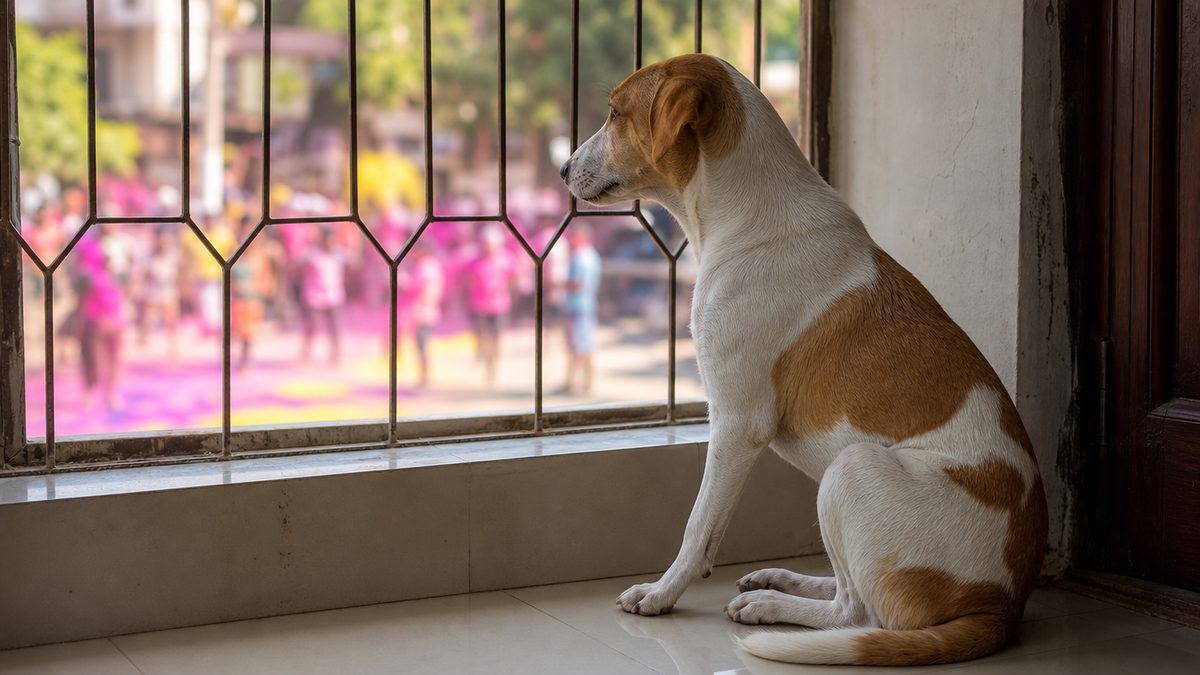
Is Holi colour safe for dogs? No. In 200 dry gulal samples bought around Kolkata, every colour carried lead above the limit set for cosmetics, and endotoxin the authors describe as almost 35 times the cosmetic reference. A dog or cat then licks that powder off its own coat, so a skin exposure becomes a swallowed dose. Keep pets indoors, apply no colour of any kind, rinse accidental contact with lukewarm water and a mild pet shampoo, and see a vet for any eye contact, vomiting or drowsiness.
This guide is general information for Indian pet owners and is not a diagnosis. Always consult a registered veterinarian near you before acting on anything you read here, and treat any sudden change in your pet's condition as urgent.
What synthetic Holi colour is actually made of
Synthetic Holi colour is an industrial dye or pigment mixed into a cheap bulking base, and published Indian analyses of it report heavy metals, industrial dyes, endotoxin and particles fine enough to breathe in.
Dry colour, sold as gulal or abeer, has two components, a colourant and a base, and both can cause problems. Dermatologists at R.G. Kar Medical College in Kolkata list the pigments behind the common shades as lead oxide for black, copper sulfate and malachite green for green, aluminium bromide for silver, Prussian blue for blue and mercury sulfate for red. Mica dust is added as a sparkling agent and can cause multiple microtraumas of the skin, and contaminated starch or wheat flour in the base raises the chance of skin or eye infection.
Those are identifications, not measurements. The measurements come from a 2021 study that bought 200 samples from 40 locations in and around Kolkata between 22 February and 2 March 2020, 40 each of red, pink, violet, green and yellow, and ran them through inductively coupled plasma mass spectrometry for lead and a Limulus amebocyte lysate test for endotoxin. Every colour came back over the reference limit on both.
| Colour | Lead (mg/kg, mean and SD) | Endotoxin (EU/ml, mean and SD) | Against the FDA cosmetic limit |
|---|---|---|---|
| Yellow | 37 plus or minus 5 | 1.96 plus or minus 0.19 | Highest lead of the five |
| Green | 32 plus or minus 3 | 2.91 plus or minus 0.14 | Highest endotoxin of the five |
| Violet | 31 plus or minus 6 | 2.01 plus or minus 0.09 | Widest spread between samples |
| Pink | 30 plus or minus 4 | 2.46 plus or minus 0.21 | Over both limits |
| Red | 29 plus or minus 3 | 2.31 plus or minus 0.16 | Over both limits |
| FDA maximum for cosmetics | 20 | 0.06 | The reference both are measured against |
Read the bottom row twice. The comparison the authors use is the limit for a cosmetic, a product designed for long and repeated contact with human skin, and the authors summarise their own result as lead almost two times that limit and endotoxin almost 35 times it. One internal inconsistency is worth flagging rather than smoothing over: the paper's running text gives an endotoxin range of 1.77 to 2.67 EU/ml, which does not contain its own tabulated green mean of 2.91. We have published the table values and the authors' summary wording, and have not reconciled the two.
Green has a second problem. Ocular pharmacologists at the Dr. Rajendra Prasad Centre at AIIMS in New Delhi collected 18 green and bluish-green colour samples around the capital during Holi and detected malachite green, a triphenylmethane dye, in 16 of them. In eyewash fluid taken from four affected patients they measured it at 1.3, 0.18, 3.5 and 5.4 micrograms in 250 ml, and concluded that malachite green was extensively used in Holi and had caused severe ocular irritation with an epithelial defect on exposure, although it did not penetrate through the cornea.
Particle size is the part nobody mentions. An occupational-medicine group ran four Holi colours through an electric field cell counting system and found that all four consisted of more than 40 percent particles under 10 microns across, the airborne fraction known as PM10, with two of the four above 75 percent. The same work found endotoxin in two colours and in the corn starch used as a carrier, fungal contamination in one colour, and a concentration-dependent cytotoxic effect at higher concentrations.
The label is not evidence
Here is the finding that should change how you read a gulal packet. Of the five colour types sampled in Kolkata, all five were labelled with herbal ingredients and carried the printed warning "Environmentally friendly, Non toxic". All five had no material safety data sheet and no regulation listed. All five were printed at Rs 40 per 100 gm and sold at Rs 20 per 100 gm in the open market. Those were the packets that measured 29 to 37 mg/kg of lead.
This is not a rogue batch. Holi colours are produced in India without quality checks and sold freely, and even in packaged form there is little information for the consumer about the source of the colours, their contents, or possible toxic effects. Colour sold loose from a roadside sack carries no information at all. The category is unregulated, and an unregulated product cannot be verified by reading it.
Every measurement on this page comes from analysis of the powder or from human patients. There is no published veterinary case series on Holi colour injury in dogs or cats in India, so nobody can tell you a safe dose for a 6 kg Indie or a 3 kg kitten. The absence of animal data is not reassurance. It is an absence.
Why a coloured dog ends up eating the colour
A dog or a cat removes colour from its own coat by licking it off, so within minutes a skin exposure becomes a swallowed dose, which is the single difference between an animal at Holi and a person at Holi.
Veterinary toxicology treats this as the default assumption rather than an edge case. The BSAVA guidance on decontamination opens its dermal section with the instruction that if the animal cannot undergo immediate dermal decontamination, fit an Elizabethan collar to prevent grooming and oral ingestion, and isolate the patient from other pets and children to prevent grooming or contamination. The collar is step one because the mouth is the real route.
The Merck Veterinary Manual states the same mechanism plainly for a different class of topical contaminant, noting that cats' natural grooming behaviour places them at additional risk from both dermal and oral exposures, and that a substance on the coat can be either absorbed directly through the skin or ingested during self-grooming.
The skin route alone is enough to cause systemic illness, and there is Indian evidence for that in people. Paediatricians at Lokmanya Tilak Municipal Medical College in Sion, Mumbai, reported 112 children aged 5 to 12 admitted with methaemoglobinaemia after playing Holi. The common symptoms were giddiness, vomiting and headache, treatment included a thorough skin wash, intravenous fluid and methylene blue in 111 of the 112, and all children had a good outcome. Those children did not eat the colour. They wore it.
Now add the mouth back in. A dog cannot be told not to lick its own flank, and a cat will clean a dyed coat until the coat is clean, whatever is in the dye. That is the whole argument, and it is why advice written for a human crowd does not transfer.
- Skin absorbs. Lead is absorbed through skin, which is why the Kolkata study benchmarks against a cosmetic limit rather than a food limit.
- Lungs absorb. Over 40 percent of tested colour is fine enough to count as airborne PM10, and a dog breathes at the height where thrown powder settles out of the air.
- The mouth absorbs the rest. Whatever the skin and lungs do not take, self-grooming delivers to the gut over the following hours.
What changes for a cat
Three things change for a cat, and all three point the same way. A cat grooms far more of its body surface than a dog does, so a greater share of what lands on the coat is eventually swallowed. A cat is smaller, so the same visible smear is a larger dose per kilogram. And a cat is deficient in the liver enzyme glucuronyl transferase, which makes it unusually sensitive to phenols and phenolic compounds, the family that fragrance oils in scented herbal gulal belong to.
If you have an indoor cat, the Holi plan is simply the usual plan, reinforced. Our guide to indoor cat safety in India covers the balcony and window side of it, which matters more than usual on a day when the building is full of strangers and open doors.
Whether herbal, organic and natural colours are safe
No Holi colour has been tested for safety on a dog or a cat, herbal ones included, and the herbal claim on an Indian gulal packet has no verification behind it at all.
Start with what the word buys you. In the Kolkata study the herbal label and the words "Non toxic" appeared on packets measuring up to 37 mg/kg of lead, with no material safety data sheet and no regulation cited. Synthetic Holi colours are sold as herbal colours in an unregulated manner in local markets, and no checks can be enforced on the product composition. The claim and the contents are independent of each other.
Second, genuinely plant-derived does not mean harmless to a dog. The clearest case in the veterinary literature involves henna, which is about as natural as a dye gets. An 8-year-old spayed Border Collie was presented five days after eating a box of natural hair dye containing Lawsonia inermis, showing lethargy, vomiting, diarrhoea and weakness. Bloodwork and urinalysis showed renal tubular dysfunction and a regenerative anaemia, and the dog needed a transfusion of packed red blood cells and intravenous fluids before recovering. The authors record it as the first reported case in the veterinary literature of toxicity following henna ingestion, associated with haemolytic anaemia and acute kidney injury.
Third, the traditional alternatives are not a clean slate either. Sindoor, sold as kumkum and widely suggested as a safe natural colour, was sampled in a 2017 study that bought 23 packets in India and 95 in New Jersey. Of the Indian samples, 18 of 23 (78.3 percent) contained at least 1.0 microgram of lead per gram, 43 percent exceeded the 20 micrograms per gram FDA limit, and the maximum lead content detected across both sets was more than 300,000 micrograms per gram. At that concentration the powder is roughly a third lead by weight.
Fourth, even the inert-sounding base is not inert. The corn starch commonly used as a carrier for Holi colour was itself found to contain endotoxin and to be capable of generating an oxidative burst in human granulocytes and monocytes.
Turmeric, beetroot and the homemade colour question
A colour you make at home from haldi and beetroot juice avoids the heavy metals, and that is a real improvement over a roadside packet. It does not make the colour tested, and it does not change the three things that matter for an animal. It still coats the fur, it still gets groomed off and swallowed, and it still goes into eyes that cannot be told to stay shut.
Note what the Animal Welfare Board of India chose to write when it had the chance to endorse natural colours for pets. Its 2026 advisory asks citizens to refrain from applying any dry or wet colours on animals, including pets, stray animals and birds, and separately to celebrate responsibly "by using natural colours only for humans";. The regulator draws the line at the species boundary, not at the ingredient list.
In India, herbal, organic and natural on a gulal packet are unverified claims on an unregulated product. The only packets with measured lead in the published literature were labelled herbal and non toxic. Treat the word as information about the seller, not about the powder.
Eyes, airway and ears
Eye contact is the Holi injury with the best Indian data behind it, and in animals it is the one that most often turns a bad afternoon into an emergency, because a dog cannot shut its eyes against a thrown handful.
Ophthalmologists at AIIMS in New Delhi examined 21 patients who came to the emergency department with colour in their eyes between 2 and 5 March 2018. Average age was 23 and 16 were male. Involvement was bilateral in 13 of the 21 (61.90 percent). Twelve had localised punctate epitheliopathy and nine had diffuse punctate epitheliopathy with an epithelial defect, and vision in the second group ranged from 6/12 to 6/24. Anterior segment OCT showed superficial stromal involvement to a depth of 60 microns, and in two patients the colour had reached the anterior chamber, staining the lens capsule and causing dense inflammation.
Milder eye irritation is common rather than rare. In the Kolkata dermatology series, 7 of 42 patients (16.7 percent) had ocular complaints alongside their skin problem, reported as redness, watering and grittiness. An animal reports none of these. It squints, paws at its face and keeps the eye closed, and the sign owners actually notice is a half-shut eye hours later.
The airway is the exposure that leaves no mark. With more than 40 percent of tested colour in the airborne PM10 fraction, a cloud of thrown gulal is a respirable aerosol, and the same laboratory work showed Holi colours inducing the pro-inflammatory cytokines TNF-alpha, IL-6 and IL-1-beta in human cells. A flat-faced dog already breathing through a narrowed airway, a cat with asthma and a young puppy are the three to keep furthest from any of it.
Ears are the quiet one. Coloured water runs into the canal, sits there and does not dry, and a flap-eared dog in humid March weather on the coast gives it ideal conditions. Check and dry the ears the same evening rather than finding out four days later.
- Flush an eye immediately, with copious water, for a minimum of 10 to 15 minutes. The veterinary first-aid standard is 0.9 percent saline or clean water, and repeated flushing is often needed.
- Use nothing else in the eye. Neutralising agents must not be used, because they can make the damage worse, and that includes any household remedy.
- Go to a vet the same day after any eye contact, even if the eye looks better. The AIIMS series shows surface damage that a torch in a living room will not reveal.
- Wipe airborne powder off the muzzle and nostrils with a damp cloth before the animal sniffs it deeper in.
Squinting, pawing at the face, a discharge or a cloudy surface after colour exposure needs a veterinary examination with fluorescein staining the same day. Corneal ulcers deepen over hours, and the dye sitting on the surface is what is doing it.
What the colour does to skin
The colour produces skin irritation in two forms, irritant contact dermatitis and allergic contact dermatitis, and the only clinical study of it found eczematous lesions in more than half of the patients who presented, with a quarter of the injuries caused by how the colour was removed rather than by the colour itself.
The study is an observational series of 42 consecutive patients who came to a Kolkata teaching hospital in the two weeks after Holi in 2008, mean age 24.2 years, and the authors recorded that patterns of Holi-related skin effects had not been reported in the literature before. A search of the biomedical literature on 20 October 2026 turned up no larger Indian series since. The pattern it describes is the one to look for on an animal, in the places where a coat traps powder against skin.
| Finding | Patients | Share |
|---|---|---|
| Eczematous lesions | 24 | 57.1 percent |
| Erosions | 9 | 21.4 percent |
| Xerosis and scaling | 7 | 16.7 percent |
| Erythema | 7 | 16.7 percent |
| Urticaria | 4 | 9.5 percent |
| Acute nail fold inflammation | 3 | 7.1 percent |
| Abrasions | 3 | 7.1 percent |
| Exacerbation of pre-existing skin disease | 13 | 30.9 percent |
Two rows deserve separate attention. Thirteen patients (30.9 percent) had an existing skin condition made worse, and three developed secondary bacterial infection. A dog that already has an itchy, broken, over-licked skin barrier is the one most likely to end up on antibiotics after Holi, not the one with a healthy coat. If that describes your dog, our page on dog skin allergy in India covers what an already-inflamed barrier does with a new irritant.
The other row is the abrasions. Eleven patients (26.2 percent) reported vigorous scrubbing with abrading materials to get the colour off, and three of them developed facial abrasions as a result. People injured themselves cleaning up. An owner scrubbing a struggling dog with a rough cloth is doing exactly that, with less cooperation.
- Check under the collar and harness, where damp powder sits against skin for hours.
- Check the skin folds, the groin, the armpits and between the toes, where colour stays wet longest.
- Check the muzzle and around the eyes, since the face was the commonest site affected in the human series at 24 of 42 patients.
- Check the paw pads and webbing of a dog that walked through coloured water on the street.
- Watch for 48 hours after the wash, because contact dermatitis often appears a day late.
Grooming routine matters here in a way that is easy to underrate. A matted, undercoat-heavy dog holds powder that a brushed-out coat sheds, and the wash is harder on every count. Our guide to dog grooming at home in India and the companion on cat grooming at home in India cover the brushing and bathing basics the week before matters more than the day itself.
Water balloons, pichkaris and getting soaked
Water balloons hurt animals by impact as well as by chemistry, and the Animal Welfare Board of India names them specifically, asking people to avoid throwing water balloons or spraying coloured water on animals because it can frighten and seriously injure them.
That is the regulator's wording, from its 2026 Holi advisory. A filled balloon thrown hard is a dense projectile, and an animal gets no warning and no chance to turn away from one. A pichkari jet at close range puts coloured water into an eye, an ear canal and a nostril in the same second.
Wet colour is a different exposure from dry gulal, not a milder one. It spreads across a larger area of skin, it penetrates to the roots of the coat where towelling will not reach it, and it stays in contact for hours. The human series captured this indirectly: 8 of the 42 patients (19 percent) attributed hand involvement to immersion in coloured solutions during their preparation. Prolonged wet contact is its own risk factor.
Then there is temperature. A soaked small dog, a kitten or a senior animal loses heat fast, and the veterinary decontamination guidance warns explicitly to take care not to induce hypothermia, especially in small patients, even in a controlled clinic bath. A ceiling fan running over a wet 4 kg dog on a March evening in Delhi is not a controlled bath.
- Keep the animal off balconies, terraces and front gates all day, which is where balloons arrive from above and from the street.
- Close the windows on the street side, since a balloon through an open window colours a room nobody was watching.
- Dry a soaked animal fully and warmly, towel first, and keep it out of the draught until the undercoat is dry.
- Check the ear canals of any animal that has taken coloured water to the head.
- Do not let a dog drink from a puddle of coloured water on the way home.
If you live in a housing society where the Holi party runs in the common area, the conversation to have is with the committee and the parents, a week early and in writing. Our page on society rules for pets in India sets out what a resident association can and cannot require, which is useful background if the reply is unhelpful.
Bhang, alcohol and what gets left on the table
Bhang is the Holi hazard with the strongest veterinary evidence behind it, because cannabis toxicosis in dogs is well documented, and because bhang is legally available in a way the rest of the cannabis plant is not.
The legal position explains the availability. The Narcotic Drugs and Psychotropic Substances Act, 1985 defines cannabis (hemp) at section 2(iii), and its definition of ganja is "the flowering or fruiting tops of the cannabis plant (excluding the seeds and leaves when not accompanied by the tops)". Bhang is made from the leaves. That exclusion is why government-licensed bhang shops operate, why thandai with bhang is sold openly at Holi in Varanasi, Jaipur and across north India, and why a dog at a Holi gathering can meet it in a glass on a low table.
What it does to a dog is not in dispute. A series of 213 dogs with clinical signs after eating marijuana recorded neurological signs in 99 percent and gastrointestinal signs in 30 percent. Onset ranged from 5 minutes to 96 hours, with most signs appearing within 1 to 3 hours, and signs lasted from 30 minutes to 96 hours. Management was decontamination, sedation, fluid therapy, thermoregulation and supportive care, and all followed animals made full recoveries.
A larger picture comes from a 2021 survey of 251 veterinarians in Canada and the United States. Cannabis toxicosis was most commonly reported in dogs, named by 226 of the respondents. The frequently reported signs were urinary incontinence (195), disorientation (182), ataxia (178), lethargy (150), hyperaesthesia (134) and bradycardia (112). Edibles were the most commonly suspected cause (116) and ingestion while unattended the most cited reason (135). Most pets recovered completely, and 16 deaths were reported, though the authors note that confounders such as other toxins and underlying conditions cannot be ruled out. Edibles and unattended ingestion is a precise description of a thandai glass on a side table.
Alcohol is the second drink problem and it is faster. Signs of alcohol toxicosis generally begin within 30 to 60 minutes of ingestion and include vomiting, diarrhoea, ataxia, disorientation, lethargy, tremors and difficulty breathing, with severe cases progressing to coma, hypothermia, seizures, bradycardia and respiratory depression. A 7 kg dog finishing a spilled drink is not a funny story.
Holi food has one specific trap beyond the usual sugar and dairy. Gujiya is filled with khoya and dry fruit, and the dry fruit is often kishmish. More than one grape or raisin per 4.5 kg of body weight may contain enough tartaric acid to pose a risk of kidney injury in a dog. Most affected dogs vomit or develop diarrhoea within 6 to 12 hours, oliguric or anuric kidney failure develops within 24 to 72 hours, and anuric dogs are unlikely to survive without dialysis. For a 9 kg Indie, that threshold is three raisins.
Three things to do before the guests arrive
- Move the drinks up. Thandai, bhang thandai, beer and whisky all go on a high surface the animal cannot reach, and glasses get cleared as they empty rather than at the end of the day.
- Put the sweets behind a door. One closed kitchen door beats five people remembering a rule, and gujiya, mithai and dry fruit all go behind it.
- Tell every guest, once, out loud, that the dog gets nothing. Written notes work better than hopeful glances, and the person who feeds your dog gujiya is almost always a guest who thought it was a kindness.
If your dog has had bhang, tell the vet it was bhang. Nobody is going to involve the police over a dog that drank thandai, and the treatment, the expected time course and the decision about whether to induce vomiting all depend on knowing what is on board. A vague history costs the animal hours.
Crowds, strangers and the bite that follows
A frightened animal that cannot get away bites, and Holi is built around strangers approaching, grabbing and smearing, which is the exact sequence that produces a bite and then a complaint against the dog.
Think about what Holi looks like from knee height. Unfamiliar people come at you fast, shouting, hands out, and they touch your face. A dog that has never growled at anyone will warn, then snap, when it is held still and cannot retreat. The bite is then attributed to the dog's temperament rather than to the five people who cornered it, and in India it frequently becomes a rabies exposure question, a society complaint, and in the worst cases a demand that the dog be removed.
How much of this reaches you depends on where you live, and the difference is large enough to plan around. Holi is at its most intense across the north, in Delhi, Uttar Pradesh, Rajasthan and Bihar, where colour play runs across open streets for most of a day. In Mumbai and Pune it concentrates inside housing societies and lasts a few hours. In Chennai, Bengaluru and Hyderabad it is smaller again and largely confined to apartment complexes and college campuses, which is exactly why a dog walked at the wrong hour there can meet a full party on one lane and nothing on the next.
The protection is physical, not behavioural. The AWBI advisory asks that pets be kept indoors or in a safe and quiet place, and that people extend help to stray animals by keeping them away from crowded or noisy areas. Keep pets indoors for the whole day, in one enclosed room with the door shut, not merely inside the flat where the front door opens forty times.
Do not confine a panicking animal in a way it cannot leave, though. An enclosed room it can move around is safety. A short tether, a shut crate or a bathroom with a slippery floor is a trap, and a frightened animal injures itself against the thing holding it.
Noise is a real part of the day and it is not this page's subject. Holi brings speakers, drums and in some places crackers, and if your dog already panics at loud sound, the preparation that works is the preparation for any noise event. Our guide on how to calm dogs during firecrackers covers desensitisation, the safe room and the veterinary conversation in full.
- Walk before dawn and after dark, and skip the midday walk entirely rather than shortening it.
- Keep the dog leashed outdoors even if it is reliable off-lead, because a colour-throwing stranger is a novel trigger.
- Check that the collar tag has a working number, and that the microchip registration is current. Our guide to the dog microchip in India covers how to update it.
- Photograph your animal in good light this week, so a lost-pet post has a current picture.
- Keep the gate and the front door shut and tell every guest why, because most festival escapes happen through a door opened for a visitor.
What to do if your animal is coloured
To get Holi colour off an animal, stop the licking first, then rinse with lukewarm water and a mild pet shampoo, working in sections until the rinse water runs clear, and never scrub.
Removing colour from fur is a decontamination procedure, and it has an established order. Doing the steps out of order is how an owner spends twenty minutes washing a dog that has already swallowed most of the dose.
- Stop the self-grooming before anything else. Fit a buster collar if you have one, or hold the head and keep the animal's mouth off its coat while someone else works.
- Separate the animals. Isolate the patient from other pets and children, because the second dog will happily lick the first one clean.
- Brush the dry powder out, outdoors, before adding any water. Water turns loose powder into a paste that bonds to the coat.
- Rinse with lukewarm water and a mild detergent. Warm water and mild detergents, of the baby shampoo class, are sufficient for most dermal contaminants, and a plain pet shampoo is the household version of that.
- Flush the eyes separately with clean water or saline for 10 to 15 minutes, and use no neutralising agent.
- Rinse until the water runs clear, then dry the animal fully and warmly. Take care not to induce hypothermia, especially in small patients.
- Consider carefully clipping the fur where colour will not come out of a long or matted coat, rather than attacking it with repeated washes.
Do not use solvents such as alcohol or white spirit, because they spread the contaminant further and irritate the skin. That rules out spirit, thinner, kerosene, turpentine, nail polish remover and sanitiser, all of which get used on humans at Holi. Do not scrub with an abrading cloth or a brush. And do not make the animal vomit at home: salt, syrup of ipecac, raw eggs, hot sauce, mustard and digital stimulation of the throat are all listed as inappropriate and are contraindicated.
Where the two standard references disagree
The two reference works a vet is most likely to reach for do not give the same default. The Merck Veterinary Manual states that decontamination for topically absorbed agents usually can be achieved by thorough washing with liquid degreasing dish soap and water, with clipping of the hair if necessary. The BSAVA guidance makes warm water and a mild detergent the default and reserves stronger degreasing detergents for contamination with oily substances, adding that those degreasers then need washing off thoroughly in turn.
For a dry powder on a pet at home, the gentler default is the one to follow, because the skin in question may already be inflamed and because degreasing soap used repeatedly strips the coat. For an oil-bound colour, the degreaser becomes relevant. We have published both positions rather than picking one, because the right answer depends on what the colour is carried in and neither source is wrong.
The coconut oil question
Indian pet clinics commonly advise rubbing a light layer of coconut oil into the coat before the festival so colour wipes off more easily. No published test of that exists, for dogs or for people, so it is a plausible practice rather than an evidence-based one. It is also worth noticing what it does downstream: an oiled coat moves the contamination into exactly the category for which the veterinary guidance calls for a stronger degreasing detergent afterwards. If you do it, use a little, and plan for a proper wash rather than a wipe.
When to see a vet
Go the same day for any of the following, and call ahead rather than arriving unannounced on a festival afternoon when clinic staffing is thin.
- Any colour in an eye, or a squinting, watering or half-closed eye afterwards.
- Vomiting, drooling, diarrhoea or refusing food after exposure.
- Wobbliness, disorientation, drowsiness, tremors or urinary incontinence, which are the recorded signs of cannabis toxicosis in dogs.
- Coughing, wheezing or laboured breathing after being in a cloud of powder.
- Known or suspected bhang, alcohol, chocolate or raisin ingestion, in any amount, without waiting for signs.
- Skin that is red, weeping, swollen or being chewed, within 48 hours of the wash.
Bonbeno does not recommend a drug or a dose for any of this. Decontamination decisions, whether to induce vomiting, and what to give afterwards are veterinary judgements made on the individual animal, which is why this page publishes under the medical disclaimer.
Community and street animals
Street animals take the same exposure with none of the protections, because no one closes a door for them, no one washes the colour off, and the colour stays in the coat until it wears away.
A community dog cannot leave the street the colour is being thrown on. It cannot be told to shut its eyes, it will not be bathed afterwards, and it will groom the powder off itself over the following days with nobody watching for the vomiting that follows. Deliberately colouring a street animal is also the version of this that happens most often, because it is treated as a joke rather than as an application of an unregulated industrial dye to an animal that did not consent and will not be treated.
The AWBI advisory addresses this directly and gives feeders and residents something concrete to do. It asks citizens to refrain from applying any dry or wet colours on animals including stray animals and birds, to extend help to stray animals by keeping them away from crowded or noisy areas, to maintain cleanliness after celebrations and remove colour residues, plastic waste and balloons so that animals do not ingest harmful substances, and, where an animal has been exposed to colours or injured, to gently rinse it with clean water and seek immediate veterinary or animal welfare assistance.
- Clear the balloon debris from your gate and lane the same evening, because the rubber fragments are what a street dog swallows two days later.
- Leave fresh drinking water out in a shaded spot, and refresh it, since the puddles available that day are coloured.
- Feed earlier than usual and away from the noise, which our guide to feeding stray dogs in India covers in more detail.
- Open a stairwell, a covered parking bay or a gate where you can, so the animals that shelter on your street have somewhere enclosed to go.
- Rinse a coloured street animal with plain water only if it is calm and known to you, and call a rescue group otherwise.
- Save the numbers of a local vet and an animal welfare organisation on your phone before the day, not during it.
Do not try to catch and wash a frightened street animal you do not know. A cornered animal bites, a bite becomes a rabies exposure question for you and a complaint against the dog, and neither outcome helps it. Our page on stray dogs in India sets out the legal and civic position, including who is responsible for what.
Cats on the street are harder again, because a frightened cat hides rather than runs and will not emerge for a stranger. If a community cat has been coloured, the realistic help is water, quiet and a call to someone who handles cats, not a chase.
What Indian law says about colouring an animal
Indian law prohibits subjecting an animal to unnecessary pain or suffering, which covers forcibly colouring one, and the maximum penalty for a first offence is the reason almost nobody is ever prosecuted for it.
The Prevention of Cruelty to Animals Act, 1960 defines an animal as "any living creature other than a human being", which covers a pet, a street dog, a cow and a bird equally. Section 11(1)(a) makes it an offence if a person "beats, kicks, over-rides, over-drives, over-loads, tortures or otherwise treats any animal so as to subject it to unnecessary pain or suffering or causes or, being the owner permits, any animal to be so treated". Section 11(1)(c) separately covers anyone who "wilfully and unreasonably administers any injurious drug or injurious substance to any domestic or captive animal";.
Now the part that explains the enforcement gap. In the text of the Act hosted by the Animal Welfare Board of India itself, the penalty under section 11(1) is a fine which may extend to fifty rupees for a first offence, rising to a fine which may extend to one hundred rupees, or imprisonment up to three months, or both, for a second or subsequent offence within three years. Fifty rupees is the ceiling, not the floor. The prohibition is real and the deterrent is not.
The Animal Welfare Board of India issued a Holi-specific advisory on 2 March 2026, ahead of Holi on 4 March 2026, and it is unusually direct. It states that chemical colours can burn animals' skin and eyes, that loud music can cause panic, and that chasing or forcefully colouring animals amounts to cruelty. It asks that Holi be celebrated with compassion, calling a humane celebration "not only a moral duty but also a legal obligation under animal welfare laws", and reminds readers that causing pain, injury or distress to animals is a punishable offence under the Prevention of Cruelty to Animals Act, 1960.
Is it cruel to dye a dog's fur?
Under Indian law, applying colour to a dog that does not want it is capable of being an offence under section 11(1) of the PCA Act, and the national animal welfare regulator says in writing that forcibly colouring an animal amounts to cruelty The Prevention of Cruelty to Animals Act. On the evidence side, the honest answer is narrower and more useful. Nobody has tested any Holi colour, or any pet fur dye, on a dog or a cat. What is known is that the product is unregulated, that the labels do not predict the contents, that the animal will swallow whatever goes on the coat, and that even a plant-derived dye has put a dog into a blood transfusion Goswami K and Mazumdar I. There is no upside against that, because the dog does not know it is a festival.
If you see an animal being coloured or chased, the AWBI asks that an exposed or injured animal be rinsed with clean water and taken for immediate veterinary or animal welfare assistance. A photograph, a time and a location are worth more to a local animal welfare organisation than an angry argument on the street, which usually ends with the animal still coloured.
None of this is an argument against Holi. Holi is a good festival and it will be celebrated regardless of what any directory thinks about it. The practical position is simply that the animal does not have to be in it. A shut room, an unfed guest list, a drink shelf out of reach and a dawn walk cost nothing and remove almost the entire risk, and everyone else still gets their afternoon.
Common questions
Is Holi colour safe for dogs?
No. In 200 dry gulal samples bought around Kolkata, lead ranged from 29 to 37 mg/kg by colour against an FDA cosmetic limit of 20 mg/kg, and endotoxin ran between 1.96 and 2.91 EU/ml against a reference of 0.06 EU/ml. Every one of those packets was labelled herbal and non toxic. No Holi colour of any kind has been tested for safety on a dog or a cat.
What colour is safe for dogs?
None has been tested as safe to apply to a dog, and the question is better answered by route than by shade. Whatever goes on the coat is groomed off and swallowed, so a colour is only as safe as it is to eat. Green is the worst documented, with malachite green found in 16 of 18 Delhi samples, but no shade in the published Indian analyses came in under the cosmetic lead limit.
Is Holi color powder safe to use?
Not on an animal, and the published data on human use is not reassuring either. Dry gulal is more than 40 percent PM10 particles in laboratory testing, carries endotoxin, and produced eczematous skin lesions in 24 of 42 patients in the only clinical series of Holi dermatoses. Indian Holi colours are produced without quality checks and sold with almost no ingredient information.
Is there dog safe food coloring?
Food colouring intended for eating is not the same thing as a dye tested for application to an animal's coat, and no pet fur colour has published safety data behind it. Natural origin does not settle it. A Border Collie that ate henna hair dye developed haemolytic anaemia and acute kidney injury and needed a red cell transfusion, which is the first such case in the veterinary literature.
Is it cruel to dye a dog's fur?
The Animal Welfare Board of India states that chasing or forcefully colouring animals amounts to cruelty, and section 11(1) of the Prevention of Cruelty to Animals Act, 1960 makes it an offence to treat any animal so as to subject it to unnecessary pain or suffering. The maximum fine for a first offence under that section, in the text AWBI hosts, is fifty rupees, which is why prosecutions are rare.
How do I remove Holi colour from my dog?
Stop the licking first with a buster collar, separate the animal from other pets, brush the dry powder out before adding water, then rinse with lukewarm water and a mild pet shampoo until the water runs clear. Do not scrub, and do not use alcohol, spirit, thinner or any solvent, because solvents spread the contaminant and irritate the skin. Dry the animal fully to avoid chilling it.
Is bhang dangerous for dogs?
Yes. In a series of 213 dogs with signs after eating cannabis, 99 percent had neurological signs and 30 percent gastrointestinal signs, with onset from 5 minutes to 96 hours and most signs appearing within 1 to 3 hours. Bhang is made from cannabis leaves, which sit outside the NDPS Act definition of ganja, so bhang thandai is openly sold at Holi and easily reached by a dog.
My cat walked through Holi colour. What should I do?
Treat it as more urgent than the same exposure on a dog. Cats groom far more of their body surface, weigh less per smear of powder, and are deficient in glucuronyl transferase, which makes them unusually sensitive to the phenols in fragranced colours. Fit a collar or hold the cat to stop grooming, rinse with lukewarm water and a mild pet shampoo, and call a vet if there is any drooling, vomiting, wobbliness or lethargy.