
Breed profile
Perdigueiro Galego in India: Recognition, Price, Climate and Health
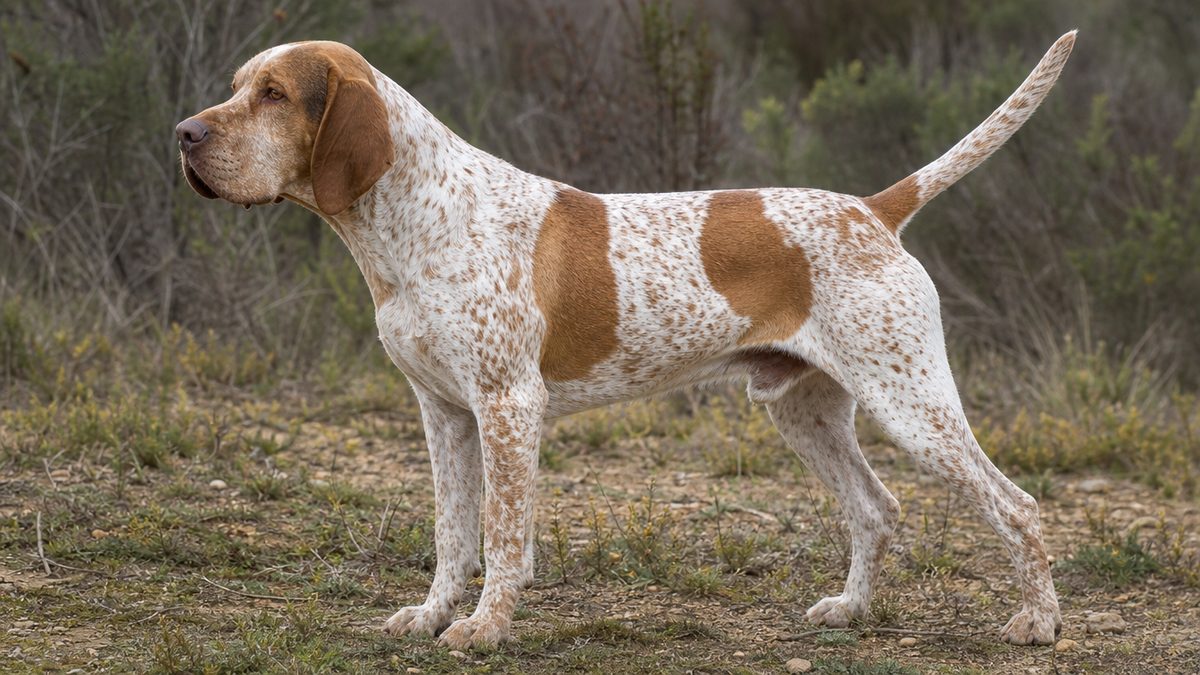
A Galician pointing dog that is a fully recognised Spanish breed at two levels of government, absent from the FCI entirely, and still rebuilding its studbook from an open founding register.
Quick answer
No verifiable Perdigueiro Galego price in India exists, and the breed has no Indian presence at all. Its recognition, though, is stronger than most English-language pages suggest: the Xunta de Galicia approved its standard and created its studbook on 26 April 2001, and a ministerial order inserted it into the annex to Real Decreto 558/2001 on 2 August 2001. It is simply not an FCI breed.
This page is reference information, not veterinary advice. The Perdigueiro Galego appears in no peer-reviewed veterinary literature under any of its name forms, so every health statement here is either a general canine fact or an inference from anatomy and work, and it is labelled as such. Take any lameness, ear problem or breathing difficulty in a working dog to your nearby vet rather than treating it from a page.
Perdigueiro Galego traits, rated for India
What the Perdigueiro Galego is, and how it was recognised
The Perdigueiro Galego is a medium-sized Galician pointing dog that became an officially recognised Spanish breed twice in 2001, first by the Xunta de Galicia and then by the Spanish state, and has never been recognised by the Federation Cynologique Internationale at all.
Most English-language pages compress that into a sentence about a studbook opening around 2001. The gazettes are more precise, and the sequence matters because it separates two different kinds of recognition. It also matters that this breed's breed standard exists in two official versions, a Galician one and a Spanish one, and that the two agree.
The Xunta lists exactly four native Galician canine breeds on its own index: Can de Palleiro, Guicho ou Quisquelo, Perdigueiro Galego and Podengo Galego. This gun dog is the only pointing breed among them.
| Date | What happened | Instrument |
|---|---|---|
| 26 April 2001 | The Xunta de Galicia approves the breed's racial standard and creates its Libro Xenealoxico | Orde of the Consellería de Agricultura, Gandería e Política Agroalimentaria |
| 11 May 2001 | Published in the Diario Oficial de Galicia number 91 at page 6.334, in force the next day | DOG 91 |
| 25 May 2001 | Real Decreto 558/2001 is made. Its original annex does not name this breed | RD 558/2001 |
| 18 June 2001 | The Comite de Razas de Ganado de Espana meets and admits five canine breeds | Committee minute recited in the Orden's preamble |
| 2 August 2001 | A ministerial Orden inserts those five, with their racial prototypes, into the annex of RD 558/2001 | Orden of 2 August 2001 |
| 13 August 2001 | Published in the Boletin Oficial del Estado number 193, pages 30424 to 30430, in force the next day | BOE 193, reference 15911 |
The Orden's single article names all five: Ratonero-Bodeguero Andaluz, Perdigueiro Galego, Podengo Galego, Can de Palleiro and Can Guicho. So the Perdigueiro Galego is one of the 33 Spanish canine breeds the annex now lists, and it has been since August 2001.
Its preamble says the five breeds must be incorporated into the annex of Real Decreto 558/2000, while its operative article correctly says 558/2001. The string 558/2000 appears once in the document and 558/2001 three times. The error is in the Boletin Oficial del Estado text itself, it is harmless, and it is the kind of detail that only shows up when somebody actually opens the file.
What the Galician instrument actually does
The Galician Orde is the more substantial of the two, because it builds machinery rather than just a list. It makes the Consellería the competent body for the breed's Libro Xenealoxico, with power to delegate management to officially recognised organisations, and it creates a Comisión Rectora empowered to approve registrations, issue genealogical documents, propose changes to the prototype, validate breed assessors and, where needed, verify parentage by paternity testing.
It also explains why the breed needed rescuing, in its own words. After a period of documentation, study and prospection of the Galician countryside, a canine population commonly called Perdigueiro Galego by breeders was found, sharing characteristics that distinguished it from breeds already described. The order attributes the decline to Galician emigration and the foreign breeds that returning emigrants brought, and it states that Galicia's native breeds are now in grave danger of extinction.
The studbook is still open, and that is the honest status
This is the detail that answers the question people actually mean when they ask whether the Perdigueiro Galego is a real breed. Its studbook runs two sections. The Sección Anexa admits dogs that lack full or partial genealogical documentation but whose ethnic characteristics can contribute to the breed, through a Rexistro Auxiliar de Nacementos, a Rexistro Fundacional for dogs over 24 months with unknown or unregistered parents that have passed breed confirmation, and a Rexistro Auxiliar de Adultos requiring confirmation from 18 months.
The Sección Principal is the closed half, admitting only pure-bred dogs whose parents, grandparents and great-grandparents are already in the book, with a Rexistro Definitivo entered after breed confirmation at 18 months and a Rexistro de Méritos above it. The Rexistro Fundacional has limited validity, set by the Comisión Rectora, which is precisely what a founding register is for: it stays open while a population is gathered and then closes.
So the accurate description is a recognised Spanish breed still building a closed studbook out of a surviving landrace population. That is stronger than a breed in formation and weaker than a settled international breed, and it is not a status the English-language pages have a word for.
The FCI has never held it, and the absence was tested properly
Read the register rather than a breed page. The FCI's group 7 Pointing Dogs index returns zero for galego with the diacritics stripped, while returning PERDIGUERO DE BURGOS (90) and PERDIGUEIRO PORTUGUES (187) on the same document as in-document controls. The complete 20-entry provisional register likewise contains no Galician breed, with GOS RATER VALENCIA (370) and RATONERO BODEGUERO ANDALUZ (371) present as controls.
That absence has a practical consequence for an Indian reader. India is a full FCI member represented by the Kennel Club of India, so a breed with no FCI standard has no route to an Indian pedigree either.
Perdigueiro Galego price in India, and why none exists
There is no verifiable Perdigueiro Galego price in India, and no Indian listing for the breed was found at any position in the results. Bonbeno publishes no rupee figure for this breed.
The composition of the result set is the evidence. Every page ranking for this breed is either an encyclopedia entry, a template breed-profile site, a hobbyist breed blog, or the Xunta de Galicia's own official pages. When a government department outranks every commercial page for a breed query, that is what an absent market looks like.
Three facts close the question. The breed has no FCI standard, so no FCI pedigree can be issued for it anywhere. Its studbook is held by a Spanish regional government that keeps it as a conservation programme for a population in grave danger of extinction. And India's import policy bars bringing dogs in for commercial purposes like breeding. Between them, no lawful supply chain can form.
One instrument limitation, stated rather than hidden
The ranked set above was harvested through a search tool whose geography is the United States rather than India. By the time this breed was researched, Bing India was serving a bot challenge reading One last step, Please solve the challenge below to continue, and DuckDuckGo was answering HTTP 202 with a stub for every query including the control. So this is a real ranked set and not an India-geo ranked set, and that distinction is recorded because it changes what the list proves.
A rupee band for a rare European breed that resolves to a round number of euros or dollars at 74, 80, 84.38 or anything near 91 was produced by multiplication rather than observed in India. This site has caught Indian pages and answer engines doing exactly that repeatedly, sometimes in the same sentence that says no Indian price exists. Bonbeno publishes no converted price, and a figure that survives a division test can still simply have been made up.
What an Indian reader can budget for is the cost of keeping a medium working gundog here, and that is real, published and rupee-denominated. It is the next section.
What a medium Spanish gundog costs to keep in India
A Perdigueiro Galego would be an inexpensive dog to groom in India and an expensive one to exercise properly, and its recurring costs sit in the ordinary medium-dog bands. Nothing about the coat costs money; everything about the working requirement does.
Establish the size honestly first, because the standard gives no weight. Both official texts give heights only, 55 to 60 cm for males and 50 to 55 cm for females, with no weight clause anywhere. A dog of that height and build sits in the 15 to 30 kg retail band in Indian terms, but the correct method is to weigh the animal and buy to the reading.
The two lines that matter most for a working dog in India are parasite cover and deworming. NexGard Spectra's 15 to 30 kg pack is Rs 3,308 for three tablets, about Rs 1,103 a month, combining afoxolaner with milbemycin oxime. Drontal Plus works out at Rs 125.67 a tablet dosed one per 10 kg, so a 25 kg dog needs three, about Rs 377 a dose.
| Line | Published Indian figure | Notes for a gundog |
|---|---|---|
| Anti-rabies, single | Rs 699 at a Vetic clinic, Rs 100 at a Goa government hospital | Not weight-banded. The delivery model drives the spread |
| 9-in-1 DHPPiL | From Rs 899 at a Vetic clinic, Rs 600 at a Goa government hospital | A 3.3 times spread on one identical vaccine |
| Kennel cough | Rs 1,349 | Worth doing for a dog that meets other dogs in the field |
| Deworming | About Rs 377 a dose at 25 kg | Three Drontal Plus tablets at Rs 125.67 each |
| Monthly tick, flea and worm cover | About Rs 1,103 | The single most important line for a dog working through undergrowth |
| Grooming | Bathing from Rs 934 in Delhi | There is no clip, strip or trim. You are paying for a bath |
| Overnight boarding | Rs 899 for 24 hours in Bengaluru | A 25 kg dog fits most Indian facilities |
| Municipal registration | Rs 500 in Delhi, Rs 50 in Chennai | Chennai's six municipal clinics also treat and vaccinate free |
Grooming is almost free. The coat is short, thick, very dense, smooth and harsh, with no clipping or stripping requirement, so a rubber mitt once a week and an occasional bath from Rs 934 is the entire budgetVetic, pet grooming price list for Delhi.
The cost nobody prices
- Somewhere to run, because a pointing dog quartering ground needs open space and Indian cities charge for access to it in fuel and time
- Air conditioning through the hot months, which for a heat-sensitive working dog is a monthly electricity line rather than a purchase
- Enrichment equipment, because a gundog with nothing to do dismantles the house
- Joint and soft-tissue veterinary care, which is what an athletic dog on hard Indian surfaces eventually needs
- Travel, since the only realistic way to exercise this breed in India is to leave the city regularly
Municipal fees stay flat regardless of breed. Delhi charges Rs 500 to register a pet dog and Rs 500 to renew, with a Rs 100 per month late fee, and has issued 18,958 certificates since 2021. Chennai charges Rs 50 for a pet licence, issued 9,115 in 2024, and runs six municipal pet clinics that provide treatment and anti-rabies vaccination free of cost. Boarding in Bengaluru runs Rs 599 for four hours, Rs 799 for a ten-hour day and Rs 899 overnight.
Can a Perdigueiro Galego handle the Indian climate
A Perdigueiro Galego is poorly suited to the Indian plains and marginal on the plateau, and the reason is a sixteen-degree heat gap rather than a humidity one. Galicia is the most humid homeland on any page in this Spanish cluster, at 82.25 percent.
Query the homeland by coordinates so no other place can be silently substituted. NASA POWER at latitude 42.878, longitude minus 8.545, over Santiago de Compostela, gives an annual mean of 13.35 C, an annual relative humidity of 82.25 percent, a hottest month of August at 19.25 C and a peak Stull wet bulb of 16.03 C. The cell elevation reported back is 226.66 m against a real 260 m, an understatement of 33.3 m, which is small enough to use.
A second Galician point confirms rather than repeats, which matters because two nearby cells returning identical numbers would mean one cell queried twice. Lugo, at latitude 43.012, longitude minus 7.556, returns a different cell at 522.34 m against a real 454 m, and a different series: annual 12.16 C, hottest August at 19.79 C, humidity 79.05 percent. Two distinct cells, both with small errors, agreeing on the shape of the climate.
| Place | Cell elevation and error | Annual mean | Annual humidity | Hottest month | Peak wet bulb |
|---|---|---|---|---|---|
| Santiago de Compostela | 226.66 m, minus 33.3 | 13.35 C | 82.25 % | August, 19.25 C | 16.03 C, August |
| Lugo, Galicia | 522.34 m, plus 68.3 | 12.16 C | 79.05 % | August, 19.79 C | 15.35 C, August |
| Delhi | 206.37 m, minus 9.6 | 25.57 C | 45.51 % | June, 35.88 C | 26.50 C, July |
| Chennai | 48.95 m, plus 43.0 | 27.94 C | 72.39 % | May, 31.51 C | 26.11 C, May |
| Mumbai | 97.15 m, plus 83.2 | 26.77 C | 67.28 % | May, 31.19 C | 25.77 C, June |
| Kolkata | 7.35 m, minus 1.7 | 25.80 C | 73.84 % | May, 31.53 C | 27.09 C, June |
| Bengaluru | 841.72 m, minus 78.3 | 23.74 C | 67.84 % | April, 28.37 C | 21.86 C, May |
| Pune | 635.99 m, plus 76.0 | 23.86 C | 66.68 % | April, 28.93 C | 22.97 C, June |
The humidity column settles an argument before it starts. Galicia at 82.25 percent is wetter than Kolkata at 73.84 and Chennai at 72.39, so any claim that Indian damp will overwhelm this breed is describing a climate nobody measured. This is an Atlantic dog from one of the rainiest parts of Spain.
The wet-bulb column is where the real difficulty is. Santiago peaks at 16.03 C and Kolkata at 27.09 C, a gap of 11.06 degrees, which is the largest homeland-to-India wet-bulb gap on any page in this cluster. Even Bengaluru at 21.86 C sits nearly six degrees above the breed's summer.
Why a pointing dog is worse off than the numbers suggest
The risk in this breed is exertional and the standard explains why. The prototype describes a dog that beats the terrain with method, attention and thoroughness, alternating a trot with a short gallop, keeping continuous contact with the hunter, and that does not flinch at gorse or brambles when searching for and retrieving shot game. That is a dog that works until the handler stops it.
The measured consequence is stark. Hall 2020 recorded 1,259 heat-related illness events from 1,222 dogs, of which 879 had a recorded trigger, and 652 of those 879, or 74.2 percent, were exertional rather than caused by a hot car or a hot room. Most canine heatstroke happens because a dog was working. For a gundog in an Indian summer, that is the whole problem in one statistic.
Bodyweight is the second measured factor and it transfers. A bodyweight at or above the breed and sex mean carried 1.42 times the odds of heat-related illness, 1.12 to 1.80. Keeping a working dog lean is a heat intervention as much as a fitness one.
Second Schedule Part IV paragraph 21(1) of the Prevention of Cruelty to Animals (Dog Breeding and Marketing) Rules 2017 bars keeping dogs in outdoor facilities without the attending veterinary practitioner's written approval where the dog is not accustomed to the temperatures prevalent in the area, where the breed cannot tolerate them, or where the animal is sick, infirm, aged or young. A Galician gundog in an Indian summer falls squarely inside the first category.
Perdigueiro Galego temperament and household fit
The Perdigueiro Galego is described in its own official standard as docile, obedient and affectionate, with great courage in the field. That is an unusually warm temperament clause for a state gazette, and it makes the breed's problem workload rather than character.
Read the prototype's own words. It describes an animal of docile, obedient and affectionate character, and a pointing dog with a temperament of great dash and bravery in the hunt, which does not shy from gorse or brambles when searching for and retrieving the game the hunter has brought down. The Galician text says the same thing in Galician.
The working description tells you as much about household fit as the temperament clause does. This is a dog that keeps continuous contact with its handler and transmits what it is smelling through its body posture, holding a firm rigid point with tense muscles, high tail and immobile head. A breed selected for staying in touch with a person is a breed that struggles alone.
Who this breed suits, and who it does not
- Households with real outdoor access and 90 minutes a day, every day, in the cool hours
- Owners who want a soft, biddable, handler-focused dog rather than an independent one
- Families in Bengaluru, Pune or a hill station, where the wet-bulb load is at least survivable
- People who will supply structured work, because this dog needs a job rather than a walk
- Nobody living in a metro flat, because an unemployed pointing dog is destructive rather than merely noisy
Separation is the specific risk. A breed bred for continuous contact with a handler, kept alone in an Indian flat for a working day, is a textbook setup for separation-related behaviour. That is not a training failure, it is a mismatch between what the breed was selected for and what the household can offer.
Everything above comes from two official standards. PubMed returns zero records for both spellings of the breed name against a control returning 126 in the same session. The one behavioural study of any Galician dog breed is of the Can de Palleiro, published in Animals in 2021, which shows the work is achievable and simply has not been done here.
Training a Perdigueiro Galego
Train a Perdigueiro Galego with food, short sessions and real work, because its official standard describes a docile and obedient dog that keeps continuous contact with its handler. The difficulty is not compliance, it is supplying enough for the dog to do.
Socialise first and hard, between eight and sixteen weeks, in the cool hours. A gundog that has met nothing becomes a fearful adult, and in an Indian city the list has to include auto-rickshaws, delivery riders, lift doors, cattle in the road, temple bells, firecrackers and other dogs. A soft-tempered breed is more vulnerable to a bad early experience, not less.
Then build the two behaviours that make a pointing dog liveable. A recall that works against a bird is the first, and it is built on a long line for the first two years with the recall always paid better than whatever the dog was heading for. A settle on a mat is the second, and it is what gives a working dog an off switch indoors.
Give it the work the standard describes
- Teach a find-it game indoors, which turns the nose into something you direct rather than something that directs the dog
- Teach a retrieve to hand, since the prototype describes a good retriever on land and in water
- Teach a quartering pattern on a long line in open ground, which is the breed's actual job in miniature
- Teach a wait before food, before doors and before the car, because impulse control transfers to the field
- Teach a quiet cue, because a frustrated gundog vocalises and an Indian building notices
Do not use correction-based methods. A dog its own gazette calls docile and affectionate shuts down under pressure rather than pushing back, and a shut-down gundog stops offering behaviour altogether. Food, brevity and consistency do far more here than they do with a guardian breed.
Timelines are quick because the raw material is good. Expect house training in three to six weeks, a settle by three months, workable lead manners by six months, and a recall that holds against moderate distraction between nine and fifteen months. Against live birds, treat the recall as permanently provisional.
Training is exercise, and 74.2 percent of the heat-illness events with a recorded trigger in Hall 2020 were exertional. From March to October in the plains cities, that means work before about 7 am and after about 8 pm, and indoor scent games in between.
Daily exercise a Perdigueiro Galego actually needs
A Perdigueiro Galego needs 90 minutes of real activity a day plus structured mental work, and in India it needs all of it inside the two coolest windows. This is the highest exercise requirement of any breed in this Spanish cluster.
The standard is explicit about the movement it is built for. It describes flexible movement with a broad, rhythmically cadenced trot, working close to the hunter and alternating that trot with a short gallop during a meticulous search of broken, closed Galician terrain of scrub and forest. A dog selected to quarter ground like that for hours is not satisfied by a lead walk.
Chest capacity backs it up. The prototype requires a chest girth about a quarter greater than the height at the withers, which is a purpose-built respiratory specification rather than a cosmetic one.
A realistic Indian week
- Two sessions a day of 40 to 50 minutes, before about 7 am and after about 8 pm from March to October
- Three or four structured scent or retrieve sessions a week, which tire this breed far faster than distance does
- One weekly outing to ground where a sustained trot and quartering are possible, which usually means leaving the city
- A long line rather than off-lead in any unfenced Indian space, for control and for heat safety together
- Indoor work on the many Indian days when the weather cancels the outdoor plan
Under-exercise in a pointing breed does not look like restlessness, it looks like damage. Chewed furniture, dug flooring, dismantled doors and self-directed behaviours are the usual signs, and all of them are the same problem: an athletic working dog with no outlet. Adding a second walk rarely fixes it; adding a job does.
Growth limits are ordinary for a medium athletic breed. Keep forced exercise low until about four months, restrict repetitive jumping and hard surfaces through the first year, and let the puppy set the pace. Skeletal maturity arrives somewhere around twelve to fifteen months.
Water work is worth arranging where it is safe, because the standard describes a dog that retrieves in water as well as on land. In India, safe means clean, supervised and still, not a canal, a monsoon drain or an untreated tank.
Grooming a Perdigueiro Galego in Indian humidity
The Perdigueiro Galego is the lowest-maintenance coat in this Spanish cluster. Short, thick, very dense, smooth and harsh hair needs a rubber mitt once a week, and everything else is skin and ear checking after work rather than grooming.
The coat clause is four words long in effect. Short, thick, very dense, smooth and harsh, with occasional slightly longer and thicker hairs around the muzzle and no wire coat at all. There is no clipping, stripping, hand-stripping or trimming requirement anywhere in either official document.
The skin is thin and tightly attached to the body, which is a working specification and a care implication. A thin-skinned dog that pushes through gorse and brambles collects scratches, and in Indian humidity a scratch that stays damp is where a skin infection starts.
| Task | Dry season, November to February | Hot season, March to June | Monsoon, July to October |
|---|---|---|---|
| Coat | Rubber mitt once a week | Once or twice a week | Twice a week, and dry the dog after every wet outing |
| Skin check after work | Weekly | Weekly | After EVERY outing, looking for scratches and thorns |
| Ears | Weekly | Every few days | Every two days, and dry after any swim or heavy rain |
| Bathing | When actually dirty | When actually dirty | Only when necessary, then dry completely |
| Feet and nails | Monthly | Monthly | Monthly, and check between the toes for softened skin |
| Tick check by hand | Weekly | Weekly | Twice weekly, because a short dense coat still hides them |
Ears are less of a problem here than in the Sabueso, and still not nothing. The standard sets them high, wide, large, thin and lying flat against the face without forming folds. A flat, high-set, unfolded ear ventilates far better than a low-set corkscrew one, so the routine is a check rather than a daily intervention.
Do not clip or shave this coat for the Indian summer. There is no undercoat to rake and no length to remove, and taking a short harsh coat down exposes thin skin the standard describes as delgada, thin and adherent, to direct sun. Cooling for this breed is a matter of timing and water, not of hair.
The salon budget is close to zero. A bath from Rs 934 at Delhi rates a handful of times a year covers it, and there is nothing to trim. Money that would go to a groomer for another breed is better spent here on monthly parasite cover at about Rs 1,103.
Perdigueiro Galego health, and an evidence vacuum
The Perdigueiro Galego has no veterinary literature at all. Both spellings return zero PubMed records against a control returning 126, the breed appears nowhere in the largest canine survival dataset, no OFA row could be obtained, and its studbook regulation publishes no health screening scheme.
Prove the absence before relying on it. Run on 9 September 2026 with the control query Labrador retriever hip dysplasia returning 126 records in the same session, PubMed gives 0 for "Perdigueiro Galego"[tiab] and 0 for "Perdiguero Galego"[tiab], both with clean unrewritten query translations and no collapse into an author search. Both spellings were tested precisely because the official documents use both.
Broadening the search does not rescue it. `"Galician"[tiab] AND dog[tiab]` returns exactly one record, and that record is a behavioural study of the Can de Palleiro, a different Galician breed. So the entire peer-reviewed literature of Galician dog breeds is one paper, and it is not about this one.
The survival data is an absence rather than an exclusion, which is a distinction worth making. McMillan 2024's supplementary Table S5 lists 345 breeds and contains no row at all for the Perdigueiro Galego or the Galician Pointer, while Spanish Hound, Spanish Mastiff, Spanish Greyhound and Spanish Water Dog all appear. A breed flagged N was considered and excluded; this one was never in the frame. Either way there is no median lifespan, and this page publishes none.
The Orthopedic Foundation for Animals could not be read. Its disease-statistics page returned HTTP 200 with 1,752 characters of visible text ending in Searching Database, Please wait and zero rows, and a LABRADOR control returned zero on the same fetch, which makes it an instrument failure rather than an absence.
What the studbook regulation does and does not require
This is where a breed page can normally find screening data, and here it cannot. The Galician Orde sets out registration criteria, breed confirmation at 18 or 24 months depending on register, a Comisión Rectora, and paternity testing to verify parentage. It names no health test: no hip scheme, no eye scheme, no DNA panel. Compare that with the Spanish Mastiff's club, which publishes hip dysplasia grade thresholds, and the difference is real.
| Question | What the evidence says | What this page publishes |
|---|---|---|
| Median lifespan | No row in McMillan 2024's 345-breed table | No figure at all |
| Inherited disease | Zero peer-reviewed papers under either spelling | No claim in either direction |
| Hip dysplasia rate | No OFA row obtainable, control also failed | General large-and-medium-breed risk only |
| Screening scheme | The studbook regulation names no health test | Stated as an absence, not filled in |
| Behaviour | One paper exists for a Galician breed, and it is the Can de Palleiro | Standard's own temperament clause, labelled as description |
Indian law asks for testing regardless of what the breed's own registry requires. Second Schedule Part III paragraph 8(10) requires that dogs used for breeding shall have been tested for genetic defects, including hip dysplasia, progressive retinal atrophy, night blindness, hypothyroidism, entropion, ectropion, overshot, undershot jaw, wry mouth, two or more missing teeth and cryptorchidism. The word including makes that list illustrative rather than closed, so a breeder cannot argue a defect out of scope because it is unlisted.
Two of the standard's own faults are health-relevant and worth knowing, because they are the only quality control the breed has. Ectropion and entropion are listed as faults, and lameness in the limbs, loss of vision from eye trauma, and missing teeth from extraction are listed as defects. That is a standard policing soundness rather than screening for disease, and the difference matters.
The Indian risks, which are measured even though the breed is not
Tick-borne disease is the dominant question for a dog that works through undergrowth in India. A survey of 584 dogs in West Bengal found Babesia gibsoni in 76.54 percent and two or more pathogens in 72.9 percent of the 584 dogs screened. An Odisha series of 178 dogs found Ehrlichia canis in 56 of 178, or 31.46 percent, with 75 percent of infected dogs over 20 kg and 79 percent carrying a tick history. Both sampled clinic caseloads rather than random populations.
Heat is the second, and for this breed the first. The transferable figures are that bodyweight at or above the breed and sex mean carries 1.42 times the odds of heat-related illness and that 74.2 percent of triggered heat-illness events are exertional. For a pointing dog, both apply at once.
Feeding a Perdigueiro Galego in India
Feed a Perdigueiro Galego by weighed portion to a lean body condition across two meals, and adjust to workload rather than to a chart. This is a working dog whose energy needs swing widely between a working week and an Indian hot season spent indoors.
There is no published weight for this breed, which changes the method rather than making it impossible. Neither official text prints one, and the adjacent Podengo Galego in the same annex does get 10 to 15 kg, so the omission is specific to this breed rather than a drafting convention. Weigh the dog, portion against the manufacturer's chart for that actual weight, and correct by feel every fortnight.
Score by hand weekly. Ribs easily felt under a thin covering, a waist visible from above, a tuck from the side. For an athletic breed the temptation is to feed for the work the dog did last week rather than for the work available this week, which in an Indian summer is much less.
Leanness is a heat intervention here. Hall 2020 found bodyweight at or above the breed and sex mean carried 1.42 times the odds of heat-related illness, 1.12 to 1.80. A gundog carrying two or three extra kilograms into a Chennai May has taken on a measurable and avoidable risk.
Practical rules
- Split the ration into two adult meals or three to four puppy meals, with an hour of rest either side
- Cut the ration in the hot months when the exercise stops, rather than keeping it constant and letting the dog gain
- Use the dog's own kibble as scent-work and training currency so the daily total stays honest
- Keep water available and expect intake to rise steeply from March onward
- Feed a large-breed or working formulation during growth and avoid adding any calcium supplement
Storage deserves real attention in India. Buy pack sizes you will finish in a few weeks, decant into an airtight container, keep the sack off the floor and discard anything that smells musty. Aflatoxin from mould on maize and groundnut in humid storage is a genuine Indian hazard for any breed, and the monsoon is when a stored sack goes wrong without warning.
Perdigueiro Galego puppy timeline, month by month
A Perdigueiro Galego's first year has two Indian legal fixed points and two Galician registry ones. No puppy may lawfully be sold in India below eight weeks, vaccination runs from seven or eight weeks to about eighteen, and breed confirmation in the Galician studbook happens at 18 or 24 months depending on the register.
The Indian points come from the gazette. Rule 8(1)(a) of the Prevention of Cruelty to Animals (Dog Breeding and Marketing) Rules 2017 requires that pups less than eight weeks in age are not sold, and Second Schedule Part III paragraph 8(9) states that all pups shall be vaccinated, which can start at seven to eight weeks and is usually completed at eighteen weeks.
| Age | What matters most | What to avoid |
|---|---|---|
| 8 to 10 weeks | Legal earliest sale in India. Vaccination begins. Handle every part of the body daily | Buying below eight weeks, which is unlawful rather than merely unwise |
| 10 to 16 weeks | The socialisation window, in the cool hours, every day without exception | Waiting for the vaccination course to end, which wastes the window |
| 16 to 18 weeks | Vaccination completes. Long line goes on and stays on outdoors | Off-lead freedom, which teaches a gundog that leaving works |
| 4 to 6 months | Lead manners and a settle, taught while the dog is still small enough to manage | Correction-based training, which shuts this temperament down |
| 6 to 9 months | Adolescent independence. Quartering and retrieve games begin properly | Assuming a biddable puppy stays biddable through adolescence |
| 9 to 12 months | Real work begins. Recall maintenance becomes a permanent routine | Hard-surface running before the growth plates close |
| 12 to 15 months | Skeletal maturity. Sustained trotting work can extend | Letting the dog gain weight as growth slows |
| 18 to 24 months | Breed confirmation age under the Galician studbook rules, if the dog is registered there | Breeding before confirmation, which the registry itself does not permit |
Get the growth right and most of the rest follows. A medium athletic breed that grows slowly on a lean body condition, with restricted forced exercise and no jumping onto hard floors, arrives at maturity with the joints it was born with. That is worth more to this breed than any supplement.
Because neither official document gives an adult weight for this breed, your own growth curve is the only weight reference you will ever have. It is also what makes parasiticide banding, drug dosing and body-condition management accurate rather than guessed.
Perdigueiro Galego against the pointers it is compared to
Four pointing breeds are the useful comparison here, and the Perdigueiro Galego is the only one of them with neither an FCI standard nor a measured lifespan. What it has instead is two layers of Spanish state recognition, which none of the others can claim in the same form.
| Breed | FCI standard | Spanish national annex | Measured lifespan | Available in India |
|---|---|---|---|---|
| Perdigueiro Galego | None. Absent from the group 7 index and the provisional register | Yes, since the Orden of 2 August 2001 | None. No row in McMillan's 345-breed table | No lawful purchase route, and no Indian listing found |
| Perdiguero de Burgos | 90, definitive, in the group 7 index | Yes, one of the 33 | Not in McMillan's included set | Effectively absent |
| Pachon Navarro | None | Yes, one of the 33 | None published | Effectively absent |
| Perdigueiro Portugues | 187, definitive, in the group 7 index | No, it is Portuguese | None published | Effectively absent |
| Podengo Galego | None | Yes, admitted alongside this breed in 2001 | None published | Effectively absent |
The Burgos comparison is the most instructive, because it shows exactly what an FCI number buys. The Burgos Pointer sits at standard 90 in the group 7 index and is therefore internationally registrable, judgeable at FCI shows and pedigree-able through any FCI member including the Kennel Club of India. The Perdigueiro Galego, with two Spanish instruments behind it, has none of that outside Spain.
The split-nose oddity, which is a genuine finding
One detail sets this breed apart from every pointer around it. Both of its official texts say the nose is large and that specimens may occasionally appear with a cleft noseXunta de Galicia. That tolerance is unusual: the Perdiguero de Burgos prototype printed in the same national annex lists a split nose among its eliminating faults, and FCI standard 204 disqualifies a split nose in the Sabueso Espanol. Spain's own annex therefore tolerates in one breed what it eliminates in another, which is worth publishing rather than smoothing over. The Pachon Navarro is the other Spanish breed where nose structure is a defining trait rather than a fault.
For an Indian household
None of these breeds is obtainable in India and all of them share the same heat gap. The realistic alternatives are Indian: the Chippiparai for a lean athletic hunting dog adapted to this climate, or the Indian Pariah Dog for almost every other case. Neither is a pointing breed, and neither will hold a point, which is the honest limit of the comparison.
Mistakes people make about this breed
Five mistakes recur about the Perdigueiro Galego, and three of them are factual errors that the official documents settle in a sentence. The other two are about what a working gundog needs.
- Quoting a weight of 20 to 30 kg, which appears in neither the Galician standard nor the national prototype
- Describing the breed as unrecognised, when two Spanish governments recognised it in 2001 and only the FCI has not
- Treating the two spellings as an error by whoever wrote them, when the official documents themselves use both
- Buying a working gundog for an Indian flat, which produces destruction rather than the calm the standard describes
- Exercising in the afternoon, when a pointing dog will work itself into heat illness rather than stop
The weight error is the one worth demonstrating rather than asserting. Both official texts give heights only, 55 to 60 cm for males and 50 to 55 cm for females, and neither contains a weight clause; the Galician normative document returns zero occurrences of peso, kg and quilo across all five pagesReal Decreto 558/2001, de 25 de mayo. The proof that this is a deliberate omission rather than an oversight is that the Podengo Galego, printed a few pages later in the same annex, does get a weight of 10 to 15 kg. English Wikipedia's 20 to 30 kg therefore comes from somewhere other than the breed's standards.
The spelling, which is genuinely the documents' fault
Both spellings are official, and they collide inside single documents. The Galician Orde is titled Perdiguero Galego while its own annexes say Perdigueiro Galego throughout. The consolidated Real Decreto 558/2001 carries Perdiguero Galego in its index at page 2 and as the section heading on page 55, and Perdigueiro Galego in the breed list at page 8 and as the prototype title on page 55, so both appear on that one page. The national Orden that inserted the breed uses only Perdigueiro Galego.
Search accordingly. A database query for one spelling will miss records filed under the other, which is exactly why the PubMed audit on this page ran both and reported both zeros.
The Xunta's own technical sheet explicitly flags perro de las perdices, partridge dog, as an *incorrect* alternative denomination for the breed. That is a registry correcting a common name in its own official material, and it is the sort of thing worth quoting rather than paraphrasing, because it settles a naming question that circulates unresolved elsewhere.
Adoption, sourcing and the Indian import position
You cannot lawfully import a Perdigueiro Galego into India in order to buy one, there is no Indian breeding population, and the breed's own studbook is a conservation programme rather than a supply channel. Adoption of a dog already in India is the honest route.
Read the import position from the instrument itself. The Directorate General of Foreign Trade's own FAQ states that the import policy for pet dogs and cats is restricted and permitted only with a DGFT authorisation under ITC(HS) code 01061900, and lists the permitted purposes exhaustively: research by R&D organisations with a CPCSEA recommendation, internal security by the Defence and Police Force, a therapy or emotional support dog with a medical certificate, and a dog that has been the applicant's own pet for at least two years where the applicant is transferring residence to India after two years of continuous stay abroad.
It then closes the commercial route outright. Dogs for commercial purposes like breeding or as a gift or for other purposes are not allowed to be imported, and new born puppies are not allowed. Import without authorisation is available only to a person shifting residence permanently to India under the customs baggage rules, capped at two pets, and only through the airports and seaports of Delhi, Mumbai, Chennai, Hyderabad, Bengaluru and Kolkata and, since October 2024, Kochi airport Department of Animal Husbandry…. The full route is set out in how to import a dog to India.
The supply side is closed from the other end too. The breed's studbook is held by the Xunta de Galicia as part of a recovery and conservation programme for a population its own founding order describes as in grave danger of extinction. A conservation studbook with an open founding register is not a channel that exports pet puppies to other continents.
What a rarity claim about this breed can honestly say
Any population figure for the Perdigueiro Galego would come from one register kept by one autonomous community, and there is no second register to check it against. The Real Sociedad Canina de Espana's own table of official Spanish genealogical books does not list this breed, or any other Galician breed, at all: searched with diacritics stripped it returns zero for perdigueiro, perdiguero, galego and palleiro, while returning hits for sabueso, agua espanol and mastin espanol as controls. That absence is real and it is also a limit on what anyone can say about numbers, so this page gives none.
What to do instead
- Adopt a medium Indian dog, which every metro shelter holds and which is already adapted to the local wet-bulb load
- Consider the Indian Pariah Dog, which needs no cooling budget and raises no import question
- Consider the Chippiparai if the athleticism and the hunting heritage are what appeal
- Register whatever dog you get. Delhi charges Rs 500, Chennai Rs 50, and Chennai's six municipal clinics treat and vaccinate free
- Ask any seller of any breed for the vaccination record and the parents' health testing, both of which Indian law already requires of a breeder
If your interest in this breed is genuine rather than acquisitive, the useful thing you can do from India is read the primary documents rather than the summaries. Both are public: the Galician Orde is on the Consellería do Medio Rural's own site, and the national Orden and the consolidated decree are on the Boletin Oficial del EstadoMinisterio de Agricultura. Almost nothing written about this dog in English has opened either of them.
Perdigueiro Galego questions, answered from the gazettes
Is the Perdigueiro Galego a recognised breed?
Yes, twice over in Spain and nowhere internationally. The Xunta de Galicia published its racial standard and created its studbook by an Orde of 26 April 2001, and a ministerial Orden of 2 August 2001 inserted it into the annex to Real Decreto 558/2001 as one of 33 Spanish canine breeds. It has no Federation Cynologique Internationale standard at all.
What is the Perdigueiro Galego price in India?
No verifiable Perdigueiro Galego price in India exists, and this research found no Indian listing for the breed at any position. The breed is rare even in Galicia, has no lawful commercial import route into India, and has no Indian breed club or registry presence. Bonbeno publishes no price for it.
How much does a Perdigueiro Galego weigh?
Neither official document says. The Galician standard of 2001 and the national prototype in Real Decreto 558/2001 both give heights only, 55 to 60 cm for males and 50 to 55 cm for females, and contain no weight clause. The widely quoted 20 to 30 kg appears in neither text, and the Podengo Galego printed a few pages later in the same annex does get a weight of 10 to 15 kg.
Why is the breed's name spelled two ways?
Because the official documents themselves spell it two ways. The Galician Orde is titled Perdiguero Galego while its own annexes say Perdigueiro Galego throughout, and the consolidated Real Decreto 558/2001 carries Perdiguero Galego in its index and section heading and Perdigueiro Galego in its breed list and prototype title, both on page 55.
Does the Perdigueiro Galego have a split nose?
Sometimes, and its standard allows for it. Both official texts say the nose is large and that specimens may occasionally appear with a cleft nose. That is unusual: FCI standard 204 disqualifies a split nose in the Sabueso Espanol, and the Perdiguero de Burgos prototype in the same national annex lists a split nose among its eliminating faults.
Who keeps the Perdigueiro Galego studbook?
The Xunta de Galicia does. The 2001 Orde makes the Consellería de Agricultura, Gandería e Política Agroalimentaria, now the Consellería do Medio Rural, the competent body for the Libro Xenealóxico, with power to delegate management to officially recognised organisations. The Real Sociedad Canina de Espana's own table of official Spanish studbooks does not list this breed at all.
How rare is the Perdigueiro Galego?
Rare enough that its own founding order describes Galicia's native breeds as being in grave danger of extinction, and rare enough that its studbook still runs an open Sección Anexa with a time-limited Rexistro Fundacional for adult dogs of unknown parentage. Any specific population number would come from one register in one autonomous community, so this page publishes none.
Can a Perdigueiro Galego live in India?
Only with a great deal of management, and the arithmetic is against it. Its Galician homeland runs an annual mean of 13.35 C at 82.25 percent humidity with a hottest month of 19.25 C, while Delhi peaks at 35.88 C. That is a working gundog carrying no heat adaptation into air about sixteen degrees hotter than anything it evolved in.
What is the Perdigueiro Galego used for?
Pointing and retrieving feather game, on land and in water. Its national prototype describes an excellent pointing dog and good retriever that quarters ground methodically, alternating a trot with a short gallop, unafraid of gorse or brambles, holding a firm rigid point with tense muscles, high tail and immobile head.
Is the Perdigueiro Galego good with children?
Its official temperament clause describes a docile, obedient and affectionate animal that keeps continuous contact with its handler, which is a gentle description. No behavioural study of the breed exists, so treat that as the standard's account rather than as measurement, and judge the individual dog.
Can you import a Perdigueiro Galego into India?
Not to buy one. India's pet import policy is restricted and permits import only with a Directorate General of Foreign Trade authorisation, for research with CPCSEA recommendation, Defence and Police use, a therapy or emotional support dog, or your own pet of at least two years on transfer of residence. Dogs for commercial purposes like breeding are not allowed to be imported.
Should a Perdigueiro Galego's tail be docked?
No, and two instruments say so. The Galician standard lists ablations or mutilations of ears and tail among its defects, and Second Schedule Part II paragraph 6(8) of the Prevention of Cruelty to Animals (Dog Breeding and Marketing) Rules 2017 prohibits tail docking, ear cropping, de-barking and de-clawing outright in India.
Are pointers a good family dog?
The Perdigueiro Galego's own state gazette says yes in unusually warm words: an animal of docile, obedient and affectionate character, with great dash and bravery in the hunt. The catch is workload rather than character. This is a dog selected to keep continuous contact with its handler, so a breed bred for that, kept alone in an Indian flat for a working day, is a textbook setup for separation-related behaviour. No behavioural study of the breed exists, so treat the clause as the standard's account and judge the individual dog.
Compare with similar breeds
Perdigueiro Galego sits in 2 Bonbeno groups. Each one compares it directly against the breeds it is genuinely an alternative to, on the same figures.