
Breed profile
Colorpoint Shorthair: A Breed in One Registry, a Colour in the Rest
Whether the Colorpoint Shorthair is a breed or a colour of the Siamese has no single answer, and this page publishes the disagreement instead of resolving it. Here is what each of six registries actually does, the controls that make each reading trustworthy, and what any of it means for a cat living in Chennai.
Quick answer
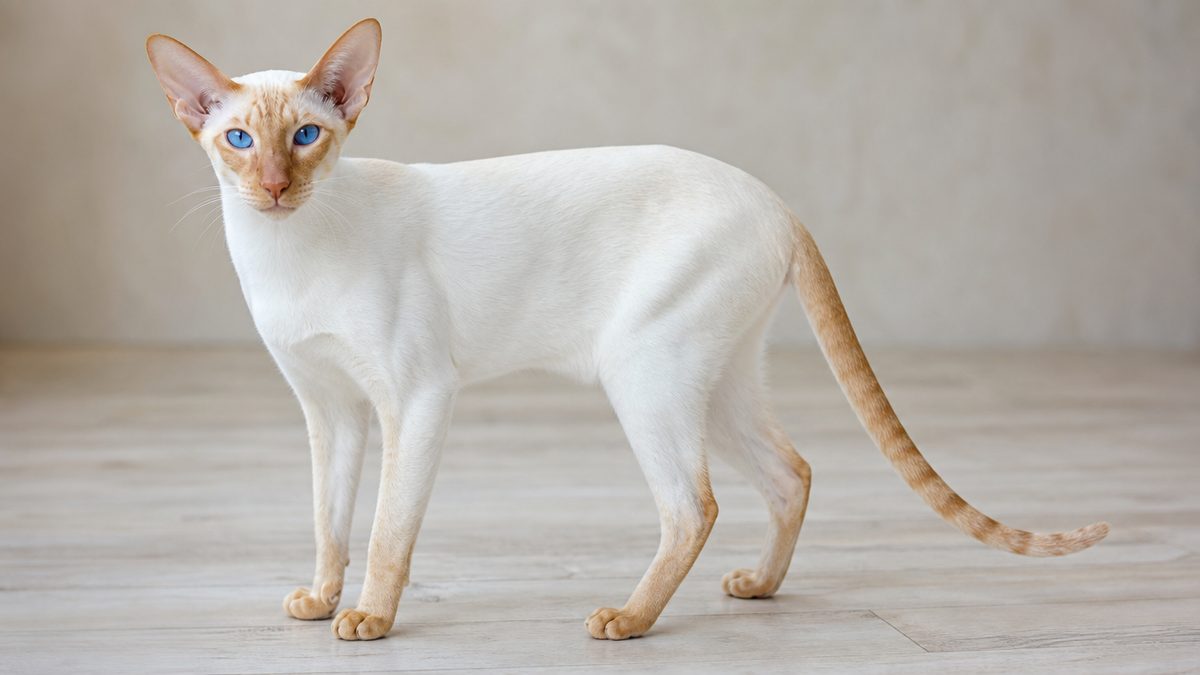
A Colorpoint Shorthair cat is a pointed shorthair built to the Siamese breed standard in one of sixteen point colours, and it is a breed in exactly one registry. CFA gave it championship status on 1 May 1964. TICA, FIFe, GCCF and LOOF all file the same cats as Siamese, and WCF's own table names CFA as the sole recogniser. Bonbeno found no Indian market under this name.
This guide is general information for Indian cat owners and is not a diagnosis. There is no veterinary literature under this breed's own name, so every health figure here comes from studies of the Siamese and the wider Siamese-related group and is labelled as such. Always consult a registered veterinarian near you before acting on anything you read. Treat laboured breathing, a cat straining to urinate, sudden blindness or disorientation, collapse in heat, or any abrupt change in appetite, thirst or weight as an emergency and go immediately.
Colorpoint Shorthair at a glance
What a Colorpoint Shorthair actually is
A Colorpoint Shorthair is a pointed shorthaired cat built to the Siamese standard in a point colour the traditional Siamese four do not cover. That is the whole description, and everything contested about the breed follows from it.
The Cat Fanciers' Association's own show standard states the position more plainly than any commentary could. It calls for a medium sized, svelte, refined cat with long tapering lines, very lithe but muscular, and then says the ideal is a cat with type identical to the Siamese, but with its own distinct and unique colors. The next sentence is the one that matters: while the color differences set it apart as a unique breed, the purpose of the hybridization was to establish cats identical in type to the Siamese but with separate colors. CFA is not claiming a different animal. It is claiming a different colour box.
The physical description is therefore the Siamese description. A long tapering wedge starting at the nose and running in straight lines to the ear tips with no break at the whiskers, a flat skull showing a long straight line in profile with no bulge over the eyes and no dip in the nose, strikingly large pointed ears wide at the base, vivid blue almond eyes slanted toward the nose and uncrossed, a long svelte tubular body with hips never wider than the shoulders, long slim legs with the hind legs higher than the front, dainty small oval paws, and a long thin tail tapering to a fine point. The coat is short, fine textured and glossy, lying close to the body.
The sixteen colours, counted from the standard itself
One point of vocabulary saves confusion later. Every cat in this breed is blue-eyed by rule, because the standard permits vivid blue and nothing else and disqualifies any other eye colour. That is not decoration: the same tyrosinase variant that restricts pigment to the cool extremities also produces the blue eye, so a green-eyed cat of this type is an Oriental Shorthair rather than a pointed one. Note too that WCF files this group on a separate Siamese and Oriental index rather than with its shorthairs, so a breed absent from the WCF shorthair list has not thereby been shown absent from WCF.
Sixteen point colours make up the breed, and the number is checkable rather than folklore. Count the colour headings in CFA's published standard and they come to two solid point colours, red and cream; ten lynx point colours, being seal, chocolate, blue, lilac, red and cream lynx point plus the seal-tortie, chocolate-tortie, blue-cream and lilac-cream lynx points; and four parti-colour point colours, seal-tortie, chocolate-tortie, blue-cream and lilac-cream. Two plus ten plus four is sixteen, and CFA's own registration notes use the same figure, recording that a 2010 change created a division where the 16 Colorpoint colors can compete in Colorpoint Shorthair classes.
Two exclusions sharpen the boundary. Cinnamon point and fawn point are listed under DO NOT ACCEPT in the registration rules, so a pointed cat in either colour cannot be registered as a Colorpoint Shorthair at all. And the four traditional Siamese colours, seal point, blue point, chocolate point and lilac point, are registered as AOV under codes 2298 and 2299. A Colorpoint Shorthair born in a Siamese colour stays a Colorpoint Shorthair on paper; it simply cannot compete in the colour.
It is the structural fact that decides the whole recognition question, and no ranking page mentions it. CFA does not convert a seal point kitten from a Colorpoint Shorthair litter into a Siamese. It keeps the kitten in the Colorpoint Shorthair register and marks the colour as Any Other Variety. So the line between the two breeds is drawn by ancestry and paperwork, not by the cat.
Where the cat came from
Breeders in the United States made it deliberately in the late 1940s, wanting a Siamese in colours the Siamese did not come in, red above all. The first cross was a red tabby American Shorthair to a seal point Siamese. CFA's own breed article says the same thing without embarrassment, describing the Colorpoint Shorthair as, like many of CFA's accepted breeds, a man-made breed. Championship status followed on 1 May 1964, with cream point and red point the only colours accepted at the time, and the lynx and tortoiseshell points added by 1969 Wikipedia. Colorpoint Shorthair. Quoted….
Historic registration rules record a second outcross that has since closed: cats born before 1 January 1977 could carry American Shorthair, the breed that supplied the red in the first place. Since then the only allowable outcross has been the Siamese.
| Attribute | What the documents say |
|---|---|
| Type | Identical to the Siamese by CFA's own standard: long tapering wedge, flat skull, large pointed ears, long svelte tubular body |
| Eyes | Vivid blue only. Any other shade or colour disqualifies, as do crossed eyes |
| Coat | Short, fine textured, glossy, lying close to the body, with no undercoat |
| Colours | 16, being 2 solid point, 10 lynx point and 4 parti-colour point |
| Not accepted | Cinnamon point and fawn point; albino colours since May 2012; longhair or longhair carrier since February 2024 |
| Siamese colours | Registered as AOV, codes 2298 and 2299, not transferred to the Siamese |
| Allowable outcross | Siamese only, plus American Shorthair for cats born before 1 January 1977 |
| CFA championship | Effective 1 May 1964 |
One further disqualification is worth an Indian buyer's attention because it is common in imported pointed lines. The standard disqualifies a visible kink in the tail and crossed eyes outright, alongside white toes or feet, white markings anywhere except as appropriate for a lynx point's tabby pattern, and any malocclusion producing an undershot or overshot chin. Kinked tails and crossed eyes were once so common in Siamese lines that they were treated as breed characteristics. They are faults, and a seller presenting either as charming is telling you something useful about the seller.
Is it a breed or a colour of the Siamese? Start with CFA, TICA and FIFe
One registry treats the Colorpoint Shorthair as a breed and the rest file the same cats as Siamese. Bonbeno checked six registers against their own live documents with an in-document control on each, and publishes the disagreement rather than picking a winner.
This is the question the ranking pages skip. Every page currently ranking describes the breed as though its existence were settled, then lists sixteen colours. None of them opens a register. The registers do not agree, and that disagreement is the most useful thing this page can tell you, because it decides what your cat's pedigree will say, which shows it can enter, and whether the word on the advertisement means anything at all.
Registry recognition is not one fact but six, and they do not agree. Bonbeno also has a population instrument for this group: LOOF publishes a live per-breed kitten count, and on 3 September 2026 it recorded 83 Siamese and 120 Oriental kittens born in the last 365 days, against 574 Chartreux in the same register on the same day Livre Officiel des Origines Felines.…. There is no Colorpoint Shorthair row to read, because LOOF does not hold one.
CFA: a breed, and the only register that says so
CFA holds the Colorpoint Shorthair as a full championship breed with its own standard, its own colour classes and its own registration rules, revised February 2026. Championship acceptance took effect on 1 May 1964. Breed codes run 09 for standard cats, with 67 and 68 for Oriental Shorthair re-registrations not for show and showable respectively, and the BCS series 2200 for standard registrations. This is a functioning, actively amended register rather than a legacy entry: the February 2026 revision added a DNA-testing requirement for cats registered by certified pedigree and opened an inter-registry transfer from the Balinese and Javanese.
Two provisions in those same rules undercut the separation even as they establish it. The allowable outcross breed is Siamese, and nothing else. And Siamese colours are registered as AOV rather than transferred out. So CFA permits the two populations to interbreed freely by design, then sorts the kittens by colour. Read structurally, that is a colour division administered as a breed.
No ranking page mentions it. CFA does not convert a seal point kitten from a Colorpoint Shorthair litter into a Siamese. It keeps the kitten in the Colorpoint Shorthair register and marks the colour Any Other Variety, codes 2298 and 2299. The line between the two breeds is therefore drawn by ancestry and paperwork, not by anything visible in the cat.
TICA: absent from all four classes
TICA does not carry the breed anywhere. Read on 3 September 2026, its Browse All Breeds index listed 81 rows, its Advanced New Breeds page listed the Serengeti and the Toybob, its Preliminary New Breeds page returned no entries at all, and its Non-Championship class held only Household Cat and Household Pet Kitten The International Cat Association.…. The Colorpoint Shorthair appears in none of them. The in-document controls passed on the same index: Siamese, Balinese, Oriental Shorthair and Oriental Longhair are each present, so this is a reading of a working list rather than a broken query.
One oddity is worth recording because it affects how anyone should quote TICA. The index page's own prose says TICA recognises 73 cat breeds, while the list beneath it carries 81 rows. The difference is almost certainly that TICA counts a breed once where its list enumerates the longhair and shorthair divisions separately, but the two numbers are printed on one page and do not match. Quote the rows you counted and say so.
TICA's preliminary class was empty on the day we read it, and it was not empty a fortnight earlier: the Toybob moved up to Advanced New Breed between 20 August and 3 September 2026. A membership claim about any register is only as good as its date. Every reading on this page carries one.
FIFe: the sixteen colours are Siamese colours
FIFe settles the question in a colour table rather than a policy statement. Its Category 4 standard, edition dated 01.01.2026, is a single document covering Balinese, Oriental Longhair, Oriental Shorthair and Siamese, and it opens by stating that all four have the same standard. Its recognised colour varieties table then gives the Siamese the pointed EMS codes n, a, b, c, f, g, h, j, o, p, q and r, plus d and e, and the tabby pointed forms of all of them under code 21.
In EMS notation d is red, e is cream, f through j are the tortie colours, o and p are cinnamon and fawn, and 21 is tabby, which English-speaking fanciers call lynx. Every colour CFA files as a Colorpoint Shorthair is therefore a FIFe Siamese. FIFe then goes further than CFA in the other direction, recognising cinnamon and fawn points that CFA's registration rules list under DO NOT ACCEPT. The two registries disagree in both directions at once, which is a better description of the situation than either being stricter.
FIFe's breed list confirms there is no separate code to find. Category 4 runs ABY, BAL, CRX, DRX, DSP, GRX, JBS, OLH, OSH, PEB, RUS, SIA, SOM, SPH and THA, and the fully recognised register across all four categories comes to 48 breeds with two more, Bombay and Lykoi, held in a time-boxed preliminary class stamped 2023 to 2027. No COS or equivalent exists at any level.
The British, French and German answers, and what the genetics say
Britain, France and Germany each answer the breed question in their own documents, and all three come down on the same side as FIFe. The peer-reviewed genetics agrees with them, with one caveat worth carrying.
GCCF: zero occurrences in 315 pages
The GCCF's Standard of Points for all breeds it recognises, June 2026 edition, runs 315 pages and 723,034 extracted characters. The strings Colourpoint Shorthair and Colorpoint Shorthair appear in it zero times. Absence is a strong claim, so it was earned with controls read from the same extraction in the same session: British Shorthair returns 34 hits, Siamese 47, Suffolk 10 and Chartreux 8. The instrument works, and the absence is real.
What Britain has instead is a Siamese section of roughly 20,800 characters carrying twenty-eight point-colour codes, from SIA a through SIA r in both solid point and tabby point form. Named in full, they include RED TABBY POINT SIA d 21, CREAM TABBY POINT SIA e 21, SEAL TORTIE TABBY POINT SIA f 21, CHOCOLATE TORTIE TABBY POINT SIA h 21 and FAWN TORTIE TABBY POINT SIA r 21, plus caramel and apricot variants carrying the 121 modifier. Britain recognises every one of these cats. It calls all of them Siamese.
LOOF: the same breed, described by different colours
France's national studbook is the most direct of the six. LOOF's Siamese record states that all colourpoint colours, meaning those with points darker than the body, are recognised. Its Oriental record goes further, describing the Oriental as no more, no less than the fully coloured version of the Siamese, and saying that Oriental and Siamese are used to describe different colours of the same breed. LOOF then does something no commentary could improve on: it serves the same standard file for both records.
LOOF's recognised-breed list contains no Colorpoint Shorthair. Siamese, Oriental, Balinese and Mandarin, Havana Brown, Chartreux and European Shorthair are all present on the same index as controls.
WCF prints a cross-registry map, and it names CFA
WCF supplies the cleanest single artefact of the six, because it publishes a recognition map of its own rather than only its own position. Its EMS code table, actualized 6 June 2026, lists in Category 4, the Oriental Group, a row reading Colourpoint Shorthair, code COS, recognized by CFA. The recognition column names CFA and no one else, WCF included.
The same table sets out what that means in practice. All WCF recognised breeds and colours get full pedigrees, and all others get RIEX pedigrees. Championship status at a WCF show extends to breeds recognised by any one WCC member, which includes CFA, so a Colorpoint Shorthair can be shown. It would not, on the face of that table, carry a full WCF pedigree.
| Register | Colorpoint Shorthair | In-document control that passed |
|---|---|---|
| CFA | A breed. Championship from 1 May 1964, own standard, rules revised 02/2026 | Standard and registration rules both published under the breed name |
| TICA | Absent from all four classes | Siamese, Balinese, Oriental SH, Oriental LH present on the same index |
| FIFe | Absent. The 16 colours are Siamese colour varieties | SIA, BAL, OSH, OLH, THA all carry EMS codes on the same page |
| GCCF | Zero occurrences in 723,034 characters | British Shorthair 34, Siamese 47, Suffolk 10, Chartreux 8 |
| LOOF | Absent. All colourpoint colours recognised within the Siamese | Siamese, Oriental, Balinese, Havana Brown all listed |
| WCF | Listed as COS, recognition column reads CFA | Siamese, OSH, OLH, BAL, THA, TON, HAV all on the same table |
The claim that WCF recognises it rests on a dead link
English Wikipedia states that the only major registries to recognise them are the Cat Fanciers' Association and the World Cat Federation, and adds that WCF recognises the breed under the name Colourpoint Shorthair although without a published standard. Its supporting reference is a URL on the wcf.info domain. Checked on 3 September 2026, that path returns HTTP 404 and the wcf.info root now redirects to wcf.de.
Bonbeno cannot confirm WCF recognition and will not assert its absence either, because a breed list and a standards index are different documents and only one of them was checkable. What can be said precisely is that the breed is not on WCF's live Siamese and Oriental standards index, which carries thirteen standards covering every relative it has; that it is on WCF's EMS table with CFA named as the recogniser; and that Wikipedia's own hedge about a missing standard is consistent with both. Wikipedia's TICA, GCCF and FIFe non-recognition claims, by contrast, we independently confirmed with controls.
One last cross-check on how these registries handle a Siamese derivative differently. TICA's own Havana page states that in Britain the shorthaired cat called the Havana is a brown variety of the Oriental Shorthair, while the Havana in the United States is a separate breed. That is the identical split this page has traced, applied to a solid colour instead of a pointed one, and it is why these two breeds were researched together.
What the genetics say, and the caveat everyone drops
Peer-reviewed genetics puts the Colorpoint Shorthair on the same side as the European registries, but the paper everyone quotes carries a qualifier that changes what it means.
A microsatellite survey of over 1,100 cats across 22 breeds and 17 random-bred populations reached this question independently of any registry, and its verdict is quotable. Discussing the Siamese, it records that the breed has been used to create numerous other breeds, including Colorpoints, Orientals, Havana Browns, and longhaired breed variants, and that although listed as different, most of these derived breeds vary only by a single gene variant, such as hair length, color patterns, and fur coloration; thus, these derived breeds will likely be inseparable as distinct breeds.
That sentence names this breed and its paired case on this site in the same clause, which is why the two pages were researched together. It is also the strongest independent support for the way FIFe, the GCCF and LOOF file these cats.
The caveat that gets dropped in transit
The same paper reports that four breed pairs, including Havana Brown and Siamese, could not be distinguished as distinct breeds in its twenty-cluster Bayesian analysis, and then adds that these four breed pairs could be unequivocally differentiated when analysed independently of the other breeds, with the supporting data not shown. Secondary write-ups routinely quote the first half and drop the second.
The honest reading is narrower than the headline. These populations are separable with the right analysis, and they are not separable by the ordinary markers that distinguish other breeds from each other. That is a statement about how recently they diverged, not a proof that they are the same thing. Anyone using this paper to close the argument in either direction is over-reading it.
What that means for the gene pool you are buying into
Genetic diversity here is constrained by rule rather than by accident, and the number is worth knowing. The same survey measured 32 Siamese and returned observed heterozygosity of 0.47 against a purebred average across all breeds of 0.51 and a random-bred average of 0.65, with 4.06 alleles per locus and an inbreeding coefficient of 0.10. Because CFA names Siamese as the only allowable outcross for this breed, that is the pool.
One recent change slightly widens it. From February 2026 CFA permits an inter-registry transfer into the Colorpoint Shorthair register from Balinese or Javanese longhair carriers, provided DNA testing proves the cat is not itself longhair and does not carry longhair or an unaccepted colour, with silver, smoke, cinnamon and fawn named as unaccepted. That is a register administering coat genetics directly, and it is the clearest sign yet that the boundaries in this group are drawn at single loci.
Ask for the coefficient of inbreeding on the proposed pairing and how many generations it was calculated over, not whether the cats are healthy. A five-generation figure is standard and a breeder working seriously will have it. Then ask which unrelated lines they have brought in during the last three years. Anyone who cannot answer either question is not managing a gene pool, whatever the pedigree says.
Colorpoint Shorthair price in India
There is no Colorpoint Shorthair market in India, and the honest answer to the price question is that an Indian buyer searching this term is offered a Siamese. One Indian page carries a breed-specific figure, Rs 30,000 to Rs 60,000, and its cost table is a template shared with unrelated breeds.
Start with what the search itself returns, because the composition is more informative than any number. Running the commercial query in India on 3 September 2026 returned ten results of which exactly one was about this breed. The rest were a kitten seller's Instagram page, Supertails' general cat price guide, a Siamese sales page, an Oriental Shorthair breed page, two Indian catteries selling British Shorthair and Persian, a YouTube video about British Shorthair prices in Kolkata, and a Quora thread about the cost of owning a cat.
That is not a broken search. The results are genuine Indian pages and the control query for a common breed returned a clean Indian result set with its own People also ask box in the same session. It is a finding about the market: the Indian trade does not stock or price this breed under this name, and the substitute it offers is the Siamese, which in most of the world's registries is exactly what this cat is.
The one Indian figure, and why to distrust the table it sits in
An Indian breed-page network prices the Colorpoint Shorthair at Rs 30,000 to Rs 60,000 and puts monthly expenses at Rs 2,800 basic and Rs 4,200 premium. Before using either number, compare the row against another breed on the same site. Bonbeno pulled the Oriental Shorthair page from the same network on the same day.
| Cost line | Colorpoint Shorthair | Oriental Shorthair | Havana Brown |
|---|---|---|---|
| Monthly, basic | Rs 2,800 | Rs 2,800 | Rs 2,800 |
| Monthly, premium | Rs 4,200 | Rs 4,200 | Rs 4,199 |
| Healthcare per month | Rs 500 - Rs 700 | Rs 500 - Rs 700 | Rs 500 - Rs 700 |
| Grooming per month | Rs 800 - Rs 1,500 | Rs 800 - Rs 1,500 | Rs 800 - Rs 1,499 |
| Food per month | Rs 1,500 - Rs 2,000 | Rs 1,500 - Rs 2,000 | Rs 1,500 - Rs 2,000 |
| Cost of buying | Rs 30,000 - Rs 60,000 | Rs 20,000 - Rs 60,000 | Rs 20,000 - Rs 50,000 |
Three unrelated cats, three identical healthcare lines, three identical food lines, and two of three identical grooming lines. These are template constants assigned per breed from a shared cost table, not observations of what any of these cats costs. Note also that the arithmetic closes: Rs 500 plus Rs 800 plus Rs 1,500 is Rs 2,800, the basic monthly figure, and Rs 700 plus Rs 1,500 plus Rs 2,000 is Rs 4,200, the premium one. The row is assembled from three preset lines and summed.
The Havana Brown page on the same site prints Rs 1,499 where the other two print Rs 1,500, and its premium total reads Rs 4,199 instead of Rs 4,200. That is one typo in a preset grooming ceiling propagating into the total, and it is the clearest possible proof that these rows are generated rather than researched. Two rows differing by exactly one rupee look independently derived. They are the opposite.
Running the conversion tests on the buying price
The Rs 30,000 to Rs 60,000 band does not resolve to a converted dollar list. Dividing by 84.38 gives 355.54 and 711.07, neither clean. Dividing by 74 gives 405.41 and 810.81, neither clean. Dividing by the flat rate of 80 gives exactly 375 and 750, but that test proves nothing on its own, because any rupee figure ending in three zeros divides cleanly by 80 by construction. The quotients are prices a seller might print, so a flat-80 conversion cannot be ruled out. It also cannot be shown.
Bonbeno's verdict is that this is a rupee-native editorial band on a template page rather than either a converted foreign price or a transacted Indian one. We publish it as the only Indian figure that exists and recommend acting on none of it.
What you will actually be quoted
A pointed shorthaired kitten of Siamese type, offered under the name Siamese. One Indian seller ranking for this very query gives an average of INR 50,000 to INR 1,20,000 or more for a Siamese, while a 40-breed Indian guide puts the Siamese at Rs 15,000 to Rs 50,000 and calls it widely available. Those two Indian sources disagree by more than a factor of two at the top. Treat any single quoted band as one opinion.
The practical consequence is simple and worth acting on. If a seller in India offers you a Colorpoint Shorthair at a premium over a Siamese, ask which registry issued the pedigree. Unless the answer is CFA, there is no register on earth that would print those words on the paperwork, and you are paying extra for a name.
What a pointed shorthair actually costs to keep in India
Budget Rs 2,000 to Rs 4,500 a month for an indoor pointed shorthair in an Indian metro, plus a first-year vaccination course that starts near Rs 4,000. Those figures come from named Indian providers rather than from a breed table.
The purchase price is the least reliable number on any breed page and the least important. What an Indian owner actually spends is vaccination, food, parasite control, litter and the occasional consultation, and every one of those has a published Indian figure that does not depend on which registry recognises your cat.
Vaccination, the first-year cost that surprises people
A national Indian clinic chain prices a kitten course of three visits at days 60, 90 and 120 from Rs 3,999, against a list price of Rs 5,065, with the adult annual booster from Rs 1,899, rabies at Rs 699 and the CRP vaccine at Rs 1,249. Treat those as promotional floors from one chain rather than a market average, and note that the same chain quotes different course prices on different city pages on the same day, so the city matters.
There is a cheaper route that most Indian breed pages never mention. Greater Chennai Corporation runs six municipal pet clinics that provide treatment and anti-rabies vaccination free of cost, and licenses pet animals generally, cats included, at Rs 50. For a Chennai owner that single fact is worth more than any price band on this page.
| Item | Realistic monthly range | Notes |
|---|---|---|
| Food | Rs 1,200 - Rs 2,500 | Higher at the top if you feed wet food, which this section argues you should |
| Litter | Rs 400 - Rs 900 | Clumping bentonite at the low end, silica or pine at the high end |
| Parasite control | Rs 150 - Rs 400 | Spot-on or oral, monthly through the warm months |
| Vaccination, amortised | Rs 160 - Rs 300 | Adult booster from Rs 1,899 plus rabies Rs 699, spread across the year |
| Consultation, amortised | Rs 100 - Rs 250 | One or two routine visits a year at Rs 500 to Rs 1,000 each |
| Grooming | Rs 0 - Rs 200 | Near zero for this coat. Nail clippers and a rubber mitt are the whole kit |
| Total | Rs 2,010 - Rs 4,550 | Excluding the first-year kitten course and any illness |
Set that against the Rs 2,800 to Rs 4,200 the template page quotes and the totals are not far apart, which is worth saying plainly. The difference is that these figures are traceable to named providers and can be re-checked, while the template row is a preset shared to the rupee with unrelated breeds HappyPet India. Oriental Shorthair cat….
Where the grooming budget goes instead
This breed refunds the grooming line. A short, fine, close-lying coat with no undercoat needs a rubber mitt once a week, and a professional groom is a cost you can simply delete. Move that money to wet food. The health section explains why the urinary tract is the thing worth spending on in an Indian climate, and a Rs 1,500 monthly grooming allowance redirected to canned food buys more health than any salon visit will.
Consultation prices in India are published at Rs 500 to Rs 1,000, but that range appears byte-identical on two unrelated organisations' sites, which means one copied the other and it is a single data point rather than two. Budget for it, and ask your own clinic for its rate card rather than trusting any published range, including this one.
Indian heat changes this cat's colour, and no other breed page says so
A Colorpoint Shorthair copes with Indian heat better than most imported pedigrees, and the heat visibly changes how it looks. Point colour is produced by a temperature-sensitive enzyme, so the same cat is a different colour in Chennai and in a hill station.
Take the welfare question first, because it is the one that matters. The coat is short, fine textured and lies close to the body with no undercoat, which is the best coat structure an imported cat can bring to an Indian summer. There is no dense underlayer to trap heat against the skin and nothing to mat in monsoon humidity. On coat alone this is a heat-tolerant cat, and the sensible comparison is not a desi cat but a Persian, against which it is far better equipped.
The colour is a thermometer
The pointed pattern exists because the enzyme that makes pigment does not work properly at body temperature. Tyrosinase in these cats is temperature-sensitive, so pigment forms only where the skin runs cool, which is why the mask, ears, feet, legs and tail are dark and the body is pale. This is not a metaphor. It is a measurable property of an enzyme, and ambient temperature is one of the inputs.
The consequence for an Indian owner is direct. Warm surroundings keep the extremities warmer, so less pigment forms and the points come in paler. CFA's standard already anticipates the other half of the effect, allowing for darker colour in older cats because Colorpoint Shorthairs generally darken with age, while insisting there must be definite contrast between body colour and points. A cat living in a warm Indian home is being pushed toward a paler mask and a darker body at the same time, and both reduce contrast.
| Place | Cell elevation vs real | Annual mean temp | Annual RH | Hottest month |
|---|---|---|---|---|
| Chennai | 48.95 m vs about 6 m | 27.95 C | 72.39 % | May, 31.51 C |
| Mumbai | 97.15 m vs about 14 m | 26.77 C | 67.39 % | May, 31.19 C |
| Kolkata | 7.35 m vs about 9 m | 25.81 C | 73.93 % | May, 31.53 C |
| Delhi | 206.37 m vs about 216 m | 25.60 C | 45.56 % | June, 35.88 C |
| Pune | 635.99 m vs about 560 m | 23.86 C | 66.80 % | April, 28.93 C |
| Bengaluru | 841.72 m vs about 920 m | 23.74 C | 67.94 % | April, 28.37 C |
| Kent, England | 38.05 m vs about 60 m | 10.78 C | 84.64 % | July, 17.67 C |
Read the temperature column downward and it predicts the coat. A cat kept in a Bengaluru or Pune flat, at an annual mean near 23.8 degrees C, will hold better point contrast than the same cat in Chennai at 27.95 degrees C. That is the most breed-specific piece of advice available to an Indian buyer of this cat, and no ranking page carries it.
FIFe lists insufficient contrast between points and body colour among the faults precluding the certificate for a Siamese or Balinese. So if you intend to show, an Indian summer is working against you, and the cat is not at fault. If you do not intend to show, this is aesthetics and nothing else. A paler mask is not a sick cat.
Do not repeat the humidity myth
Indian pages routinely warn that Indian humidity will overwhelm an imported cat. Check the numbers before repeating it. The Kent baseline runs 84.64 percent annual relative humidity, higher than Kolkata at 73.93, Chennai at 72.39, Bengaluru at 67.94, Mumbai at 67.39, Pune at 66.80 and far above Delhi at 45.56. Northern European air is damper than Indian air for most of the year. What India adds is heat, and the load on the cat is heat combined with humidity rather than humidity alone.
The hill-station figure everyone should distrust, including ours
Anyone reaching for a hill station as the cool alternative should know that the standard climate model cannot see one. NASA POWER returned a cell elevation of 897.65 m for the Shimla coordinates against a real ground level near 2,200 m, an error of about 1,302 m. The temperatures that cell reports are for terrain a kilometre and a third below the town, so they are far too warm and Bonbeno will not publish them as Shimla's. Correcting at the standard lapse rate of about 6.5 degrees C per 1,000 m suggests a real annual mean near 12.7 degrees C, and that is an estimate rather than a measurement.
The plains cells are trustworthy and that is the useful half. Delhi came back within 10 m of real ground level, Kolkata within 2 m, Chennai within 43 m, Pune within 76 m, Bengaluru within 78 m and Mumbai within 83 m. Where a page quotes a hill station's climate without saying which cell it used, distrust it.
Temperament and who should not buy one
Expect a loud, intelligent, physically demonstrative cat that will not leave you alone, because CFA describes exactly that. The Colorpoint Shorthair is a Siamese in temperament as well as in type, and the households it fails in are predictable.
CFA's own description is unusually candid for a registry. Colorpoints share the extraordinary ability of Siamese when it comes to communication with humans, as well as an exceptional level of intelligence, and it is a rare Colorpoint Shorthair owner who is not constantly made aware of their cat's current desires. It goes on to say you should expect your Colorpoint to demand both attention and devotion, which it will give back many times over, and to expect loud protests should you need some time and space to yourself.
That is a registry telling prospective buyers the cat will be difficult, which is worth taking at face value. This is a vocal, curious, affectionate animal that treats human activity as a participatory event. It is athletic, agile and inventive, and CFA notes it will take pleasure in any toy you offer but often greater pleasure in a crumpled ball of paper of its own devising.
Good with other animals, hard on solitude
Many Colorpoints develop close friendships with dogs and other pets but seem fondest of other cats, curling up together into an almost unrecognisable pile. That points to an obvious mitigation for an Indian working household: two cats rather than one. A second cat is a far better answer to separation distress than any toy, and it costs less than most people assume once the fixed costs are shared.
Who should not buy this cat
- Anyone out of the house twelve hours a day with no second animal. This breed will vocalise, and in an Indian apartment block that becomes a neighbour problem before it becomes a welfare one.
- Light sleepers, and anyone who works from home on calls. Assume conversation at 5 a.m. and assume the cat will join the call.
- Households wanting an ornamental cat. This one arrives on the keyboard, in the cupboard and under the bedsheet, and treats a closed door as an argument to be won.
- Anyone buying on colour alone. The points will shift with the season and with the room temperature, and a buyer who chose the cat for a dark mask will be disappointed by March.
- First-time owners who want a low-interaction pet. Choose a calmer breed and be honest about it; the shelter intake numbers for vocal breeds exist for a reason.
Who it suits very well
A household with somebody home, a tolerance for noise, and an appetite for a cat that behaves a little like a dog. Retired owners, work-from-home households and families with older children all do well with this temperament, provided everyone understands that the cat will socialise on its own schedule rather than yours. Households that already have a confident resident cat are the single best match, because the breed's preference for feline company is genuine.
Siamese-type vocalisation is louder and lower-pitched than the average cat's, and it carries through the thin internal walls common in Indian apartment construction. This is the most frequent reason Siamese-type cats are rehomed. If you share a wall with a bedroom, take the noise seriously before you buy rather than after.
Training a Colorpoint Shorthair, and what it will resist
Train this cat with food and short sessions, because CFA describes an exceptional level of intelligence and that intelligence is what you are working with. It will learn recall, harness and carrier quickly, and it will resist being ignored.
Begin with the honest framing. You are not training obedience; you are building habits that make an intelligent, demanding cat easier to live with in a flat. The three that repay effort in India are carrier tolerance, harness acceptance and a reliable recall, and all three are learned the same way, with a high-value food reward and sessions of two or three minutes.
Carrier training, the one that matters most in India
An Indian cat will travel to a clinic in traffic and heat, and a cat that fights the carrier arrives already stressed. Leave the carrier open in the living space permanently with a familiar blanket in it, feed a portion of every meal inside it for a fortnight, and never use it only for vet visits. Within a month most cats of this type will nap in it voluntarily, and the vet visit stops being a battle for both of you.
Harness and lead
Colorpoints take to a harness better than most cats because they are curious and physically confident. Fit the harness indoors, leave it on for five minutes at a time with food, and build to an hour before any lead is attached. Do not take a cat outdoors on a harness in an Indian city at midday: the surface temperature of a paved terrace in May will burn paw pads, and the same short coat that helps in shade offers nothing in direct sun.
What it will resist
- Being shut out of a room. Expect sustained vocal objection rather than acceptance, and expect the cat to test the door daily.
- Being left alone. No amount of training substitutes for company, and this is the one problem a second cat solves better than any technique.
- Punishment of any kind. A spray bottle produces a cat that avoids you and continues the behaviour when you leave the room.
- Boredom. An under-stimulated Colorpoint invents work, and the work it invents is usually your shelves.
- Being handled roughly during grooming. Keep sessions short and this stays easy; force it once and you will pay for it for months.
One genuinely useful trick with this breed is to give the vocalising a job. Teach a specific sound-to-reward association at a set time, such as a single call before the evening meal, and the cat will concentrate a good deal of its commentary into that window rather than distributing it across the day. You will not make a Siamese-type cat quiet. You can make it predictable.
Between roughly two and nine weeks a kitten forms its view of what is normal, and that window closes before most Indian buyers take a kitten home. Ask the breeder or foster what the kitten has already met: vacuum cleaners, pressure cookers, doorbells, children, autorickshaw noise, a car journey. A kitten raised in a quiet back room and sold at twelve weeks has missed the window, and no amount of later work fully replaces it.
Daily exercise, and what happens without it
Give this cat two structured play sessions of ten to fifteen minutes a day plus vertical space, because an athletic Siamese-type cat in an Indian flat has nowhere to put its energy. Without that, the energy goes into your furniture and your night.
The requirement is real and it is modest. Two sessions of ten to fifteen minutes with a wand toy, ideally one before the household's morning departure and one in the evening, covers most of what an indoor Colorpoint needs. CFA describes an athletic, agile and inventive cat that will take pleasure in any toy offered, and the operative word is inventive: denied a toy, it will find one, and it will not choose well.
Vertical space beats floor space in an Indian flat
Most Indian apartments cannot offer a cat more floor area, and they do not need to. A cat measures territory in three dimensions, so a tall post, two or three wall shelves at staggered heights and a clear route to the top of a wardrobe expand the usable space far more than another room would. This matters more for a long, muscular, jumping breed than for a heavy cobby one, and it is cheap.
Time the play around the heat
Do not run a vigorous play session at 3 p.m. in a Chennai May, when the annual pattern puts the hottest month at 31.51 degrees C. Play early and late. A short coat sheds heat well, but a cat that has been sprinting has no way to lose that load quickly except by panting, and a panting cat is already in trouble. Move the sessions to dawn and after sunset through the hot months and keep water within a few metres of wherever the cat plays.
| Time | What to do | Why |
|---|---|---|
| Early morning | 10 to 15 minutes wand play, then breakfast | Matches the natural hunt-eat-groom-sleep cycle and buys a quieter morning |
| Midday | Nothing active. Shade, airflow, fresh water | The hottest part of the Indian day, and the wrong time to raise a cat's core temperature |
| Late afternoon | Puzzle feeder or foraging toy | Mental work without physical heat load |
| Evening | 10 to 15 minutes wand play, then the main meal | The session that decides whether you sleep through the night |
| Night | Free access to vertical routes and a litter tray | A cat that can patrol its territory settles; a confined one vocalises |
What under-exercise looks like
It rarely looks like a cat that wants to play. It looks like a cat waking the household at four in the morning, over-grooming a patch on the belly or flank, ambushing ankles, knocking objects off surfaces deliberately while watching you, and putting on weight. Obesity is the quiet one, and it matters here more than on most breed pages because of the urinary risk this group carries: a heavier, less active indoor cat drinks less relative to its needs and moves less, and both push in the wrong direction.
Use a kitchen scale and a carrier, or weigh yourself holding the cat and subtract. A trend line over months tells you far more than a body condition score guessed once a year, and it is the cheapest health monitoring available to an Indian owner. A cat gaining steadily on a fixed ration is not eating more; it is moving less.
Grooming a short-coated pointed cat in Indian humidity
Groom this cat once a week with a rubber mitt and stop there. The coat is short, fine and close-lying with no undercoat, which makes it the lowest-maintenance coat on any pedigree cat page on this site.
CFA's standard specifies a coat that is short, fine textured, glossy and lying close to the body. There is no undercoat. That single structural fact removes almost every grooming problem Indian owners meet with other pedigree cats: no packed underlayer to trap moisture against the skin during the monsoon, no seasonal blow-out, no matting behind the ears or in the britches, and no reason to ever visit a groomer.
The weekly routine, in full
- Rubber curry mitt or a soft-bristled brush, once a week, five minutes, in the direction of the coat. This lifts dead hair and redistributes coat oil.
- Claws every two to three weeks. Take the sharp tip only and stay well clear of the pink quick, which is visible on pale nails.
- Ears checked weekly and cleaned only if visibly waxy, using a vet-supplied cleaner rather than cotton buds pushed into the canal.
- Teeth brushed with a feline enzymatic paste as often as you can manage. Dental disease is the most common finding on Indian breed pages for this group and the easiest to delay.
- Eyes wiped with a clean damp cloth if there is any discharge, using a separate corner of the cloth for each eye.
Brush gently, and here is the breed-specific reason
On a pointed cat, coat damage shows up as colour. Hair regrows at whatever temperature that patch of skin happens to be, so an area shaved for surgery or repeatedly abraded by a harsh brush can grow back darker than the surrounding coat, then fade again over months as it is replaced. This is a direct consequence of the temperature-sensitive pigment enzyme that creates the points in the first place. A wire slicker dragged across the flanks of a pale-bodied cat can leave visible tracks. Use rubber or soft bristle, and do not press.
It is normal, it is not a fault, and it is not a sign of illness. A shaved flank on a pointed cat frequently regrows dark because the exposed skin runs cooler than skin under coat, and it usually returns to normal colour over one or two coat cycles. Indian clinics see this often enough that most vets will mention it; if yours does not, now you know.
What Indian humidity actually does to this coat
Very little, and less than to the owner. The Indian cities measured here run between 45.56 and 73.93 percent annual relative humidity, all of them below the 84.64 percent of a northern European baseline. There is no undercoat to stay damp. Where humidity does matter for a cat is the ears and any skin fold, so keep the weekly ear check honest during the monsoon, and dry the cat properly if it ever gets soaked rather than letting it air dry in a humid room.
One thing not to do, and it is illegal to sell the result
Do not declaw. Beyond the welfare argument, the Prevention of Cruelty to Animals (Pet Shop) Rules, 2018 provide in rule 7(14) that no pet shop shall sell pet animals with any form of mutilation, with necessary curative surgery exempted on a veterinarian's prescription. A declawed cat is a mutilated cat under that provision. Trim the claws, provide a scratching post tall enough for a full stretch, and the furniture problem solves itself.
Health, and why every number here belongs to the Siamese
No veterinary literature exists under the name Colorpoint Shorthair, so every health figure on this page is borrowed from the Siamese and the wider Siamese-related group and labelled as such. That absence is a direct consequence of the recognition question rather than a separate fact.
Searched on 3 September 2026, PubMed returns zero records for the exact phrase Colorpoint Shorthair, with the database reporting that it could not match the phrase and falling back to a decomposed search. The control query in the same session returned 61 records, so the instrument was working. Broadening to the terms colorpoint or colourpoint returns six records in total across the whole database, and none is a study of this breed as a breed.
That is worth stating plainly rather than filling with borrowed certainty: researchers who study these cats enrol them as Siamese. A study of single nucleotide polymorphisms associated with AA-amyloidosis treats Siamese and Oriental Shorthair as one study population, which is exactly what you would expect if the breed boundary is administrative.
The oldest record in that set is worth naming because it is the only one that describes these cats by their pattern rather than their pedigree. A 1981 Veterinary Record report on corneal mummification in colourpoint cats predates most of the modern breed literature and still describes the population correctly. No breed standard mentions it, and no CFA or FIFe breed standard is a health document, which is worth remembering whenever a seller quotes one at you as reassurance.
What the Siamese group actually carries
| Condition | What the evidence says | What to do about it |
|---|---|---|
| AA amyloidosis | Studied with Siamese and Oriental Shorthair treated as one population, with associated SNPs identified | Ask a breeder directly whether amyloidosis has appeared in their lines and how far back they can trace it |
| Corneal sequestrum | Reported in colourpoint cats in the veterinary literature as far back as 1981 | Any persistent dark spot on the cornea is a same-week veterinary visit, not a wait-and-see |
| Progressive retinal atrophy | The rdAc variant runs at high frequency across the Siamese-related breeds | A DNA test exists. Ask for the parents' results in writing rather than a verbal assurance |
| Dental disease | The most consistently listed problem on Indian breed pages for this group | Brush what you can, and budget for a scale and polish under anaesthesia every few years |
| Hypertrophic cardiomyopathy | Listed among common issues for this breed on Indian pages, without breed-specific prevalence | Auscultation at every annual visit; echocardiography if a murmur or gallop is heard |
| Anaesthetic sensitivity | Widely reported for the Siamese type, and repeated by every consumer source we read | Tell the clinic the cat is Siamese-type before any procedure, and ask what protocol they use |
Bonbeno is deliberately not attaching prevalence percentages to these conditions, because no study has measured them in this breed and importing a Siamese percentage under a Colorpoint Shorthair heading would be a fabrication wearing a citation. Where a page gives you a confident percentage for this breed, ask which paper it came from.
The Indian risk nobody writes about: urinary tract disease
Two things combine badly in an Indian flat. Cats evolved to get most of their water from prey and drink poorly when fed dry food, and Indian ambient temperatures raise water loss. A cat on kibble in Chennai at an annual mean of 27.95 degrees C concentrates its urine, and concentrated urine is where crystals and stones form. This is the single most preventable serious problem an Indian pedigree cat owner faces, and the answer is in the feeding section rather than a supplement.
Learn the emergency. A male cat straining in the litter tray, producing nothing, crying, or repeatedly visiting the tray is a blocked urethra until proven otherwise, and it kills within about forty-eight hours untreated. Do not wait for morning, do not wait to see if it passes, and do not accept a phone diagnosis. Every Indian owner of a male cat should know this before they need it.
Screening to ask for before you buy
Ask for written test results rather than assurances. A serious breeder in this group will have PRA-rdAc DNA results for both parents, will know whether amyloidosis has appeared in the line, will have had the parents' hearts listened to and will say so, and will provide a vaccination record showing the kitten's own course. A breeder who answers all of that with the words healthy lines is telling you they do not test.
Feeding, and the calorie table on the only Indian page that is simply wrong
Feed wet food as a real share of the diet, because water intake is the lever that matters most for this group in an Indian climate. And ignore the calorie figures on the one Indian page carrying them, because they give kittens fewer calories than adults.
Start with the correction, because an Indian reader may act on it. The Indian breed page that carries nutrition figures for this breed prints calories per day as kittens 250 kcal and adults 300 kcal. That is backwards. A growing kitten needs substantially more energy per kilogram of body weight than an adult, which is why kitten diets are formulated denser. The same network's Havana Brown page prints kittens 300 and adults 250, and its Oriental Shorthair page prints kittens 200 and adults 250 HappyPet India. Oriental Shorthair cat….
Three pages on one site, three different calorie pairs, one of them inverted relative to feline nutrition. Do not feed from that table. Feed to body condition and use the manufacturer's guidance on the pack as a starting point, then adjust on the monthly weight trend.
Wet food is the single highest-value decision
Say it as an instruction rather than a principle: hydrate the cat through its food, not through hope. A cat will not drink its way out of a dry diet in an Indian summer, and the water it takes in with wet food is the portion you can actually control.
This is the recommendation to act on and it is cheap. A cat fed only dry food takes in far less total water than one fed wet, and in Indian conditions that difference shows up in urine concentration. Feed at least one wet meal a day, more if the budget allows, and treat it as preventive medicine rather than a luxury. If you take one thing from this page, take this, and take the money you were going to spend on grooming to pay for it.
- Provide water in wide, shallow bowls, because a cat dislikes its whiskers touching the sides. Several around the flat, not one.
- Keep water away from the food bowl and away from the litter tray. Cats reliably drink less from a bowl beside their food.
- Try a pet fountain if the cat ignores still water. Many Siamese-type cats will drink from moving water when they will not touch a bowl.
- Feed measured meals rather than free-feeding a bowl of kibble, so you notice on the first day when the cat goes off its food.
- Refresh water at least twice daily in Indian summer, because a bowl standing all day in a warm room stops being appealing.
Life-stage feeding
| Stage | Approach | Watch for |
|---|---|---|
| 8 to 16 weeks | Kitten formulation, four small meals a day, wet food from the start so it is never a novelty later | Loose stools on a diet change; transition over a week, never overnight |
| 4 to 12 months | Kitten formulation, three meals, introduce measured portions | The growth spurt masking overfeeding. Weigh monthly from the day it arrives |
| 1 to 7 years | Adult formulation, two meals, at least one wet, portions fixed | Slow weight gain after neutering. Reduce the ration rather than waiting |
| 7 to 11 years | Adult or mature, two meals, more wet food | Weight loss, increased thirst and increased urination, all worth a blood test |
| 11 years and over | Senior formulation on veterinary advice, smaller more frequent meals | Dental pain changing what the cat will eat, which reads as fussiness |
Availability in India
Every major feline life-stage diet is available in Indian metros through the large online pet retailers, and availability is not the constraint. Cost is. A pointed shorthair of this size is a small cat, so the food line is genuinely modest, and the realistic monthly range of Rs 1,200 to Rs 2,500 in the cost section already assumes a meaningful wet-food share. Buy the best wet food you can sustain rather than the best dry food you can afford.
Urinary supplements sold over the counter in India target struvite and oxalate stones with opposite mechanisms, and giving the wrong one is worse than giving none. Stone type is determined by analysis after the fact, not by guessing. If your cat has had a urinary episode, ask which stone type was found and let that decide the diet.
Kitten timeline, month by month through the first year
Take a kitten home at no earlier than eight weeks, because Indian law defines a kitten below eight weeks as un-weaned and bars its sale. What follows is what to expect and what to do in each month after that.
The legal floor is worth stating first because Indian sellers routinely breach it. The Prevention of Cruelty to Animals (Pet Shop) Rules, 2018 define an un-weaned animal in rule 2(1)(p)(ii) to include kittens and pups below eight weeks, and rule 7(15) provides that no pet shop shall sell un-weaned or underage animals or birds. A seller offering a six-week-old kitten is breaking the law and telling you what kind of operation they run.
| Age | What is happening | What you do |
|---|---|---|
| Birth to 3 weeks | Born pale. Points are barely visible because the kitten developed at uniform body temperature in the womb | Nothing. This is the breeder's period, and a kitten sold now is being sold illegally |
| 3 to 8 weeks | Points begin to show at the extremities. Weaning, litter training and the core socialisation window all run here | Visit if you can. Ask what the kitten has been exposed to: noise, handling, children, other animals |
| 8 to 9 weeks | The earliest lawful age to go home | Collect. Set up a small quiet room with litter, water, food and a hiding box. Do not give the run of the flat on day one |
| 9 to 12 weeks | Settling, first vaccinations, rapid growth | Start the vaccination course, from about Rs 3,999 for three visits. Begin carrier training now, not later |
| 3 to 4 months | Teething. Chewing increases and the kitten tests everything | Provide safe chew items. Start weekly claw trims and short grooming sessions to normalise handling |
| 4 to 6 months | Adult coat colour developing. Points darkening steadily | Discuss neutering timing with your vet. Keep weighing monthly |
| 6 to 9 months | Adolescence. Vocalisation increases sharply and boundaries are tested | Hold the routine. This is when most rehoming decisions get made, and most of them are avoidable |
| 9 to 12 months | Filling out into adult muscle. Points near final depth | Switch to adult food. Book the first annual health check and set the booster date |
Why a pointed kitten looks wrong at first
Colorpoint kittens are born almost white and colour up over weeks, because the womb is uniformly warm and there is nowhere cool for pigment to form. Points appear first at the ears, nose and tail tips and deepen over months, and the full adult depth is not settled until close to a year. A buyer choosing a kitten on the darkness of its mask at eight weeks is choosing on incomplete information, and in a warm Indian home the final result will be paler than the same kitten raised in a cool climate.
Ask for the kitten's own vaccination record with dates and vaccine names, the parents' DNA test results in writing, and the registration paperwork naming the registry. If the pedigree says Colorpoint Shorthair, it came from CFA or from a club using CFA's nomenclature, because no other register issues that name. That is not a reason to walk away. It is a reason to know what you are holding.
Head to head against the cats Indian buyers actually cross-shop
An Indian buyer searching this breed ends up comparing a Siamese, a Ragdoll, a Persian and an Oriental Shorthair, because those are what the market offers. Here is how the Colorpoint Shorthair sits against each on the things that decide a purchase.
The comparison that matters least is with the Siamese, because in five of six registers they are the same cat in different colours. The comparison that matters most is with the Persian, because that is India's default pedigree cat and the realistic alternative most buyers land on.
| Colorpoint Shorthair | Siamese | Ragdoll | Persian | Oriental Shorthair | |
|---|---|---|---|---|---|
| Indian price band published | Rs 30,000 - 60,000, template page only | Rs 15,000 - 50,000, widely available | Higher, commonly quoted above Rs 40,000 | India's most available pedigree cat | Rs 20,000 - 60,000 |
| Actually findable in India | No, under this name | Yes, easily | Yes | Yes, everywhere | Rarely |
| Coat and Indian heat | Short, no undercoat, sheds heat well | Identical | Semi-long, more work in humidity | Long, the hardest coat for Indian heat | Identical to Colorpoint |
| Grooming load | Once a week, five minutes | Same | Several times a week | Daily, non-negotiable | Same |
| Noise | Very high | Very high | Low to moderate | Low | Very high |
| Tolerates being alone | Poorly | Poorly | Moderately | Well | Poorly |
| Breed recognised as its own by | CFA only | Every registry | Every registry | Every registry | Every registry |
Against the Siamese
There is no meaningful difference in type, temperament, coat or care, and CFA's standard says the ideal is a cat with type identical to the Siamese. The difference is the colour box and the register. The Siamese is available in India, has a published price band, and carries the same cat's temperament and health profile. If you want this animal in India, that is the practical route to it.
Against the Oriental Shorthair
Same group, opposite colour rule. CFA's Oriental standard disqualifies precisely the four Siamese point colours and their smoke versions, which is the same boundary this breed's AOV rule draws from the other side. An Oriental Shorthair gives you the identical body, voice and care needs in a solid, tabby or bicolour coat, with green eyes rather than blue, and it is marginally easier to find in India.
Against the Ragdoll
Both are pointed, and that is where it ends. A Ragdoll is a large, semi-longhaired, comparatively quiet cat that tolerates handling and solitude better, and it needs real grooming through the monsoon. For an Indian household that wants a pointed cat but not a vocal one, the Ragdoll is the honest recommendation, and buyers are rarely told so.
Against the Persian
This is the comparison that should change minds. The Persian is India's most available pedigree cat and the hardest one to keep well in Indian heat, because a long dense coat and a shortened face are both liabilities here. A short-coated pointed cat with a normal muzzle is structurally better suited to the Indian climate than a Persian, and that argument is almost never made to an Indian buyer. Set against it: the Persian is quiet, and this cat is not.
An adult Indian shorthair from a shelter costs a fraction of any figure in that table, is already adapted to the climate, and carries none of the pointed group's inherited eye risk. If what you want is an affectionate short-coated cat rather than a specific pedigree, the adoption section is the honest place to start.
Mistakes Indian owners make with this breed
The recurring Indian errors with a pointed shorthair are paying a premium for a name only one registry issues, feeding dry food in a hot climate, and reading a seasonal colour change as illness. All three are avoidable and all three are common.
1. Paying a rarity premium for a registry name
This is the expensive one. Only CFA issues the name Colorpoint Shorthair, so a cat sold in India under that label either carries CFA paperwork or carries nothing. If the seller cannot name the registry, you are paying extra for a word. Ask which register issued the pedigree, ask to see it, and compare the price against a Siamese from the same seller, since that is the same cat in most of the world.
2. Feeding dry food only, in a country that punishes it
Cats drink poorly by design and Indian heat raises water loss, so a kibble-only diet in Chennai or Delhi concentrates urine in a group already prone to urinary problems. The correction costs less than the grooming you are not doing. One wet meal a day, several wide water bowls kept away from the food, and refreshed twice daily in summer.
3. Panicking about the colour, or ignoring it
Points darken with age and shift with temperature, because the pigment enzyme is heat-sensitive. A cat that darkens over a cool winter and pales through a Chennai summer is behaving normally, and CFA's standard explicitly allows for darker colour in older cats. What is not normal is a sudden change in one patch, which usually means the skin there is running cold or was shaved, or a change accompanied by weight loss or thirst, which means see a vet.
4. Buying a kitten under eight weeks
Indian sellers offer six and seven-week kittens routinely and buyers accept because the kitten is smaller and cuter. It is unlawful under rule 7(15) read with rule 2(1)(p)(ii) of the Pet Shop Rules, 2018, and it costs the kitten the end of its socialisation with its mother and littermates, which shows up later as poor bite inhibition and litter-tray problems.
5. Treating the vocalising as a training failure
It is not a fault to be corrected. CFA describes a cat that will make you constantly aware of its desires and will protest loudly when you want space. Owners who buy expecting to train the voice out end up with a frustrated cat and a rehoming decision at eight months. Buy the noise deliberately or buy a different breed.
6. Leaving the cat alone all day with no company
The breed's own registry recommends against it in effect, describing a cat that wants to be with you or actively involved in what you are doing. In an Indian dual-income household the practical fix is a second cat, and CFA notes these cats are fondest of other cats. Two cats in a flat is less than twice the work and considerably less than twice the noise.
7. Believing a price table without checking a second breed on the same site
The one Indian page with breed-specific numbers prints a healthcare line of Rs 500 to Rs 700 and a food line of Rs 1,500 to Rs 2,000 that are identical to the rupee on unrelated cat breeds. The test takes thirty seconds: open another breed on the same site and compare the rows. If they match, you are reading a template.
It happens, and it is worth refusing. Rule 7(14) of the Pet Shop Rules, 2018 bars a pet shop from selling any pet animal with a form of mutilation, with curative surgery exempted on a veterinarian's prescription. Declawing removes the last bone of each toe. A seller offering a declawed cat as low-maintenance is offering you an unlawful sale and a lame cat.
Adoption, and how to verify a seller in India
Adopt rather than buy, because there is no Colorpoint Shorthair supply chain in India and what you would be buying is a Siamese-type cat that Indian shelters already hold. If you do buy, here is exactly what to verify and what Indian law entitles you to.
The adoption argument is stronger here than on most breed pages, because the thing you are shopping for barely exists as a category in this country. The commercial search returns Siamese, British Shorthair and Persian listings, and a 40-breed Indian cat guide that lists breeds as rare as the Havana Brown does not contain the word Colorpoint once. There is no local breeding population to support and no local line to preserve.
What Indian shelters actually have
Pointed cats turn up in Indian shelters regularly, usually as Siamese or Siamese-cross surrenders, and the commonest reason for the surrender is the noise this page has warned about twice. That is an opportunity rather than a warning: an adult cat comes with a known personality, a known voice and a known tolerance for solitude, none of which a kitten can tell you.
- Start with municipal and NGO shelters in your own city rather than national listing sites, because transport across Indian states in summer is hard on a cat and often unnecessary.
- Ask specifically for adult cats. Kittens are adopted quickly everywhere; adults wait, and an adult is the better match for anyone who works.
- Take a cat that has already lived with another cat if you want a pair, because pairing two unfamiliar adults is a project.
- Expect to pay a nominal fee covering sterilisation and vaccination. That is a shelter recovering costs, not a sale.
- Ask what the cat's vaccination and deworming history is in writing, exactly as you would from a breeder.
Greater Chennai Corporation, the fact worth more than any price band
For anyone in Chennai the municipal route is genuinely good. Greater Chennai Corporation licenses pet animals generally at Rs 50, issued 9,115 licences in 2024, and runs six pet clinics that provide treatment and anti-rabies vaccination free of cost. A cat licence at Rs 50 and free rabies vaccination changes the first-year cost of ownership more than any decision about which breed to buy.
Note the scope trap that catches most Indian pet pages. Delhi's municipal registration is for pet dogs only, so its fee is not a cat cost and should never be quoted as one. Chennai's licence covers pet animals generally, cats included, which is why it appears here and Delhi's does not.
If you buy, verify these things
| Ask for | Why | The legal position |
|---|---|---|
| The kitten's age in weeks | Under eight weeks is unlawful and harmful | Rule 2(1)(p)(ii) treats kittens below eight weeks as un-weaned; rule 7(15) bars their sale |
| To see the mother with the litter | The single best signal of how the kitten was raised | Rule 7(3) bars a pet shop displaying or offering mothers caring for un-weaned young |
| Written DNA results for both parents | PRA-rdAc runs high across this group | No Indian requirement. This is a market standard, not a legal one |
| The kitten's own vaccination record | Dates and vaccine names, not a verbal assurance | No Indian requirement, so ask in writing |
| Confirmation the cat is not declawed | Declawing removes the last bone of each toe | Rule 7(14) bars sale of a pet animal with any form of mutilation |
| Which registry issued the pedigree | Only CFA issues this breed name | No Indian requirement. It is the question that tells you what you are buying |
Indian law mandates microchipping for puppies and not for kittens. Rule 7(16) of the Pet Shop Rules, 2018 requires every puppy to be micro-chipped by a veterinary practitioner and permits only micro-chipped puppies to be sold. The word puppy occurs exactly once in the whole gazette and that is where it occurs, so kittens sit outside the requirement entirely. Microchip your cat anyway. A chip at roughly Rs 1,250 from a Chennai clinic is the only thing that returns an indoor cat that got out.
What the Second Schedule requires of a pet shop housing cats
Worth knowing before you walk into one, because it gives you a checklist. Second Schedule paragraph 2, headed FOR CATS, requires a solid floor in an enclosure large enough for free movement and play, elevated resting surfaces, matting, soft and clean play toys within the enclosure, the litter box area excluded from the calculation of total space, and cats or kittens kept in a room not shared by other inimical animal species such as dogs. A shop keeping kittens in a wire cage next to a dog run is failing that paragraph, and you should leave.
Colorpoint Shorthair questions Indians actually search
What is a Colorpoint Shorthair cat?
A pointed shorthaired cat identical in type to the Siamese, in one of sixteen point colours that the four traditional Siamese colours do not cover, such as red point, cream point, the lynx points and the tortie points. Whether that makes it a breed depends on the registry. CFA holds it as a separate breed and says in its own standard that the purpose of the hybridization was to establish cats identical in type to the Siamese but with separate colours. Everyone else files the same cats as Siamese.
Are colorpoint cats rare?
Pointed cats are not rare at all, and this particular label is. The pointed pattern appears across the Siamese, Balinese, Birman, Ragdoll, Himalayan and Thai, and LOOF alone recorded 83 Siamese kittens born in the last 365 days. What is rare is a cat registered under the name Colorpoint Shorthair, because only one registry issues that name. In India the name is close to unknown: a 40-breed Indian cat guide does not contain the word once.
How much does a Colorpoint Shorthair cat cost?
In India, one page carries a breed-specific figure and it gives Rs 30,000 to Rs 60,000. Treat that as editorial rather than as a market rate, because the same page's healthcare, food and monthly cost lines are identical to the rupee on unrelated cat breeds, which makes the row a template constant rather than an observation. What an Indian buyer is actually offered under this search is a Siamese, quoted elsewhere at INR 50,000 to INR 1,20,000 or more.
Are Colorpoint Shorthairs good pets?
Yes, for the right household, and they are the same proposition as a Siamese. CFA describes an athletic, agile, inventive cat with an exceptional level of intelligence that will demand attention and devotion and give it back many times over, and warns to expect loud protests when you want time to yourself. They often bond closely with dogs and other cats. They are a poor fit for a quiet home, a light sleeper, or anyone out twelve hours a day.
Is the Colorpoint Shorthair the same as a Siamese?
Genetically it is very close, and administratively it depends who you ask. A microsatellite survey of 22 cat breeds says the Siamese-derived breeds, naming Colorpoints and Orientals, vary only by a single gene variant such as coat colour and will likely prove inseparable as distinct breeds. CFA disagrees in practice by keeping a separate register, but its own rules make Siamese the only allowable outcross, so the two interbreed freely by design.
Which registries recognise the Colorpoint Shorthair?
CFA does. On the evidence Bonbeno could gather, nobody else does. TICA carries it in none of its four classes, FIFe folds all sixteen colours into the Siamese in its own colour-variety table, the GCCF's Standard of Points does not contain the words in 723,034 characters, and LOOF states that all colourpoint colours are recognised within the Siamese. WCF's EMS code table lists the breed as COS with the recognition column reading CFA alone.
Does the World Cat Federation recognise the Colorpoint Shorthair?
Not on the evidence available, and the widely repeated claim that it does rests on a dead link. Wikipedia states that CFA and WCF are the only major registries to recognise the breed, and sources the WCF half to a URL that returns HTTP 404 with the domain now redirecting elsewhere. WCF's live EMS code table does list the breed as COS, but prints its recognition as CFA, and WCF's own rule is that breeds it has not recognised receive RIEX pedigrees rather than full ones.
What colours does a Colorpoint Shorthair come in?
Sixteen, counted from CFA's own standard headings: two solid point colours, red and cream; ten lynx point colours, being seal, chocolate, blue, lilac, red, cream and the seal-tortie, chocolate-tortie, blue-cream and lilac-cream lynx points; and four parti-colour points, seal-tortie, chocolate-tortie, blue-cream and lilac-cream. Cinnamon point and fawn point are explicitly not accepted, and the four traditional Siamese colours are registered as AOV.
Will an Indian climate change my cat's colour?
Yes, and it is the one genuinely breed-specific thing an Indian owner should expect. Point colour is produced by a temperature-sensitive form of tyrosinase, so pigment forms only where the skin runs cool. In a warm Indian home the extremities stay warmer, the points come in paler and the body darkens with age, which reduces the contrast between the two. FIFe treats insufficient contrast as a fault precluding the certificate, so this is a show consequence rather than a health problem.
Do Colorpoint Shorthairs have health problems?
There is no breed-specific evidence under this name, because researchers study these cats as Siamese. What the Siamese group carries is worth knowing: a study of single nucleotide polymorphisms associated with AA-amyloidosis treats the Siamese and Oriental Shorthair as one population, and corneal sequestrum has been reported in colourpoint cats since 1981. Ask a breeder what they screen for and expect a specific answer rather than a reassurance.
Are Colorpoint Shorthair cats hypoallergenic?
No cat breed is, and this one attracts the claim because it is short-coated. The published evidence on so-called hypoallergenic breeds is that they are not: a study measuring the major allergen across breeds sold on that basis found no reduction. A Colorpoint Shorthair sheds, produces Fel d 1 in its saliva and sebum like every other cat, and a short coat changes where the allergen lands rather than how much of it exists.
Is it legal to buy a kitten under eight weeks old in India?
No. The Prevention of Cruelty to Animals (Pet Shop) Rules, 2018 define an un-weaned animal in rule 2(1)(p)(ii) to include kittens and pups below eight weeks, and rule 7(15) states that no pet shop shall sell un-weaned or underage animals. Rule 7(14) separately bars the sale of any pet animal with a mutilation, which covers a declawed cat. Note what is absent: rule 7(16) mandates microchipping for puppies only, so kittens are outside it.
Compare with similar breeds
Colorpoint Shorthair sits in 1 Bonbeno group. Each one compares it directly against the breeds it is genuinely an alternative to, on the same figures.