
Breed profile
Techichi Dog: What the Record Actually Supports
A name from colonial-era Mexico that the modern internet has turned into a breed profile, complete with a temperament, a lifespan and a price. Here is what the documents and the ancient DNA actually say.
Quick answer
The Techichi dog is a historical name for a small companion dog kept in pre-Hispanic Mesoamerica, not a breed in any register. It fails both of Bonbeno's two conditions, a written breed standard and a studbook, and is absent from the FCI, the Royal Kennel Club and the OFA with controls passing. Ancient DNA now tests the Chihuahua descent claim rather than repeating it.
This page reports published veterinary research for general information, mostly about the Chihuahua, which is the living dog an Indian reader searching for a Techichi will actually meet. It is not a diagnosis and not a treatment plan. Consult your nearby vet before acting on anything here.
Techichi traits, and why most of them cannot honestly be rated
What the Techichi dog actually was
The Techichi dog is a name from the record of pre-Hispanic and colonial Mexico for a small companion dog, usually described as extinct and as ancestral to the modern Chihuahua, and it is not a breed in any register Bonbeno's own enumeration of the FCI….
Google India's own knowledge panel states the standard version in one sentence: the Techichi is an extinct breed of small dog bred by the Toltec culture in the 9th century CE, thought to be an ancestor of the modern Chihuahua. Britannica describes a small mute dog kept by the Toltec people of Mexico as long ago as the ninth century, sturdier than its modern descendant.
That version is repeated on every page that ranks for this term, and this page's job is to say where each part of it comes from and how much weight each part will bear. Some of it is well evidenced. Some of it rests on books published in 1840.
The appearance description, and its single source
Every physical description of this dog in circulation traces to the same place. English Wikipedia records that Techichis varied in appearance with coats ranging from brown, brown and white, black and white, to black, that their ears were sometimes cropped close to the head, and that their tails were left uncut in their natural state. All of that is sourced to two pages, 591 to 592, of Desmond Morris's 2002 popular reference *Dogs: the ultimate dictionary of over 1,000 dog breeds*.
One reference book is not a conspiracy and Morris is a serious writer. It is simply worth knowing that the physical description of this ancient breed is a single modern secondary source rather than a convergence of independent evidence, and that no breed standard exists behind it.
The physical evidence that does not depend on any book
Effigy pottery does. The object English Wikipedia uses to illustrate the article is a dog effigy from Colima, Mexico, dated 100 BCE to 300 CE, held by the Walters Art Museum as accession 2009.20.51. That is a dated, catalogued, physical artefact showing a small, heavy-bodied, short-legged dog, and it is the most reliable single thing in this entire subject.
Note what it does and does not establish. It shows that small companion dogs of a recognisable shape existed in western Mexico two thousand years ago, in enough cultural importance to be modelled repeatedly in clay. It does not establish a breed, a name or a bloodline, because pottery does not carry a studbook.
Not to sell you a dog, since none exists, and not to debunk for its own sake. The Techichi is the clearest available worked example of how a name becomes a breed profile on the internet, complete with a temperament and a price, and learning to take one apart is the most useful thing an Indian buyer can carry to any breeder of any breed.
Where the record comes from, listed rather than summarised
The Techichi record has four layers, and they differ enormously in reliability: sixteenth-century Spanish observation, nineteenth-century natural history, modern popular reference books, and twenty-first-century ancient DNA Manin A, Debruyne R, Lin.
Separating those layers is the whole task, because the ranking pages blend them into one confident paragraph.
| Layer | What it contributes | How much weight it bears |
|---|---|---|
| Spanish observation, 1578 | Francisco Hernández reports the dog's existence and that native people ate them as commonly as rabbits | Real contemporary testimony, but a single observer describing what he was shown |
| Nineteenth-century natural history | Charles Hamilton Smith, The Natural History of Dogs, 1840, and Humboldt's Aspects of Nature, both cited for the descent claim | Pre-Darwinian, pre-genetic, and working from the same colonial accounts |
| Modern popular reference | Desmond Morris 2002, pages 591 to 592, supplying the coat colours, the cropped ears and the 100,000 figure | Secondary, undocumented in the article that cites it, and the origin of most of what circulates |
| Ancient DNA, 2018 and 2025 | Ní Leathlobhair's 71 ancient genomes and Manin's 70 mitogenomes | Measurement, replicable, peer reviewed, and newer than every ranking page on this term |
One number worth following all the way back
The most-repeated figure attached to this breed is that Spanish explorers ate as many as 100,000 Techichis. Follow it. English Wikipedia states it as an estimate and cites Morris 2002, pages 591 to 592. When Bonbeno searched Google India for this breed, the engine's own AI panel returned the same figure stated as fact, in the form 'Spanish explorers arriving in the 16th century ate as many as 100,000 Techichis during their expeditions due to food shortages', attributing it to Wikipedia.
So a hedged estimate from one page range of one popular book has become, in two steps, a confident fact delivered to an Indian searcher by an answer engine. Nothing was fabricated at any point. The hedge simply fell off in transit, which is how most bad breed facts are made.
The clinical literature, which is empty and honestly so
PubMed holds nothing under this name. Searched quoted and unquoted, singular and plural, the count is zero every time, while controls in the same session returned 1,109 records for the Labrador Retriever and 750 for the Chihuahua. That zero is a real absence rather than a broken query, because it survived the unquoted retry that this project requires before any exact-phrase zero is reported.
Animalia's Techichi page is quoted by Google's own AI panel as an authority on why the breed went extinct. Asked for directly, twice, it returned HTTP 404 with the body text 'Page not found' and robots noindex. An answer engine cited a page that was not there.
Bonbeno's two-condition test, applied to the Techichi
To count as a breed on this site an animal needs two documents: a written breed standard and a studbook. The Techichi has neither and never had either, so the verdict is type, and the more precise description is a historical name for a regional population of companion dogs.
The test is run in public here because the verdict is the page's central claim, and a verdict nobody can check is worth nothing. Every cell in the table below names a document that was opened.
| Condition | Verdict | Evidence |
|---|---|---|
| A written breed standard | Never existed | No registry, club or author has published points, a height range or a weight range for this animal. The physical description in circulation is two pages of one 2002 popular dictionary, which is a description and not a standard |
| A studbook | Never existed | Absent from the FCI nomenclature server across records 1 to 400, from the Royal Kennel Club Breeds A to Z read with anchors kept, and from the OFA breed list. All three registers returned their controls, including the Chihuahua and the Xoloitzcuintle in every case |
| Is the name a bloodline name? | No. It is a regional and historical label | The name enters the European record through sixteenth-century Spanish observation of dogs kept by people, not through any breeding programme, and it is applied retrospectively by later writers |
| Was there controlled reproduction? | Partly, and this is the strongest positive | The record describes certain stud males and brood females kept to produce as many litters as possible, which is selection of a kind, though for supply rather than to a written type |
| Did contemporaries distinguish a type? | Yes, visually and repeatedly | Colima effigy pottery dated 100 BCE to 300 CE models a consistent small heavy-bodied short-legged dog often enough to be a recognised form |
| Is there a closed population? | No, and the genetics now says so | Pre-contact American dogs form a monophyletic lineage that almost completely disappeared after European arrival, leaving a minimal genetic legacy, so whatever population the name described was not maintained |
| Formal verdict | Type | A historical name for a regional population of Mesoamerican companion dogs, converted into a breed profile by later writers |
The other verdicts this site could have reached, and why each was rejected
A verdict is only informative if the alternatives were live, so here is what was considered.
- Breed was rejected on both conditions, decisively. There is no standard and no studbook, in any country, at any date.
- Breed in formation was rejected. That verdict fits a population with a standard and a register whose national body has not yet admitted it, which describes a living recovery project. Nothing here is in formation and no formation was ever attempted.
- Register without standard was rejected. That fits a body that will register a dog while stating no standard exists, which is a real modern state and the UKC's Bloodlines Listing Service is the worked example. No body has ever registered a Techichi.
- Brand was rejected. That fits a trademarked name applied to selected dogs under an owner's protocol. Techichi is a word from the colonial record, owned by nobody, and nobody sells under it.
Why the negative verdict is the useful part
Because it tells an Indian reader what to do with every page that says otherwise. If a site gives the Techichi a temperament rating, a weight in kilograms, a life expectancy or a rupee price, it did not find sources this page missed. It ran a breed-page template over a name.
The same three questions work on any dog offered for sale in India under an exotic label. Which register holds it. Which document defines it. What number does this animal carry. A seller who cannot answer all three is selling a description, and the Techichi is the purest available example of what a description with no dog behind it looks like.
That small companion dogs of a distinctive and consistent form were kept, modelled in clay, valued, ritually significant and deliberately bred for supply across Mesoamerica for at least two thousand years, and that a maternal thread from those dogs runs into some living Chihuahuas today. That is a real finding about human and canine history, and it does not need to be dressed up as a breed to be interesting.
The Chihuahua descent claim, tested rather than repeated
The claim that the Chihuahua descends from the Techichi is now partly measurable, and the answer is more interesting than either the confident version or the dismissive one: the pre-contact American dog lineage nearly vanished, and a Mesoamerican maternal lineage nonetheless persists in some modern Chihuahuas Manin A, Debruyne R, Lin.
Start with how the claim is normally phrased, because the phrasing carries the evidence. English Wikipedia says the Techichi 'is thought to be an ancestor of the modern Chihuahua'. That is a hedge, and the hedge is honest: the five references behind it include Charles Hamilton Smith's *The Natural History of Dogs* of 1840 and Humboldt's *Aspects of Nature*, neither of which could have known anything about ancestry in the modern sense.
Two papers have since replaced the hedge with measurement, and neither has reached the pages ranking for this term.
2018: the pre-contact lineage nearly disappeared
Ní Leathlobhair and colleagues sequenced 71 mitochondrial and 7 nuclear genomes from ancient North American and Siberian dogs spanning about 9,000 years. Their findings were that American dogs were not derived from North American wolves, that they form a monophyletic lineage which likely originated in Siberia and dispersed into the Americas alongside people, and that after the arrival of Europeans, native American dogs almost completely disappeared, leaving a minimal genetic legacy in modern dog populations.
Taken alone, that reads as a flat refutation of every Techichi-to-Chihuahua story. The pre-contact dogs went, and modern breeds are overwhelmingly of Eurasian descent.
2025: except in some Chihuahuas
Manin and colleagues then generated and analysed 70 complete mitochondrial genomes from archaeological and modern dogs ranging from Central Mexico to Central Chile and Argentina. They found that pre-contact Central and South American dogs all fall into a specific clade that diverged after dogs entered North America, that the divergence timing is consistent with the spread of agriculture and the adoption of maize in South America between 7,000 and 5,000 years ago, and that new lineages of likely European origin arrived after contact. And then, in their own words, the finding that matters here: the pre-contact Mesoamerican maternal origin of the Chihuahua has persisted in some modern individuals.
| Paper | Supports | Does not support |
|---|---|---|
| Ní Leathlobhair et al. 2018, Science | Pre-contact American dogs were a distinct monophyletic lineage that almost completely disappeared after European arrival | That every trace vanished, or any claim about a named breed |
| Manin et al. 2025, Proc R Soc B | A pre-contact Mesoamerican maternal lineage persists in some modern Chihuahuas | That the Chihuahua as a breed descends from pre-contact dogs, or that the Techichi was a breed |
The careful sentence
Here is what an Indian reader can safely say. Some living Chihuahuas carry a maternal, mitochondrial lineage that traces to pre-contact Mesoamerican dogs. Those dogs are what the colonial record called Techichis. Neither paper uses the word Techichi, because the word is a historical label rather than a genetic unit, and neither paper claims the modern breed as a whole descends from them.
So the popular story is neither true nor false as usually told. It is a claim about a name applied to a finding about a lineage, and the correct answer changes depending on which of those two you are asking about. That distinction is the single most useful thing on this page.
The 2025 mitogenome paper was published after most of the pages ranking for this term were written, and it is a South American dispersal study whose Chihuahua sentence sits at the very end of its abstract. It is not hidden. It is just not where anyone writing about a Toltec dog thought to look.
How the Techichi disappeared, separating the documented from the estimated
The Techichi disappeared as part of a continent-wide collapse of pre-contact American dog populations after European arrival, and the specific figures usually attached to its extinction are estimates from one modern reference book rather than counts Techichi, English Wikipedia.
The popular account has three elements and they are worth grading separately. First, that Francisco Hernández, the Spanish explorer, reported the dog's existence in 1578 and wrote that native people ate them as commonly as they ate rabbits. Second, that the Spanish, often short of food, ate them on their expeditions too, and that as many as 100,000 were eaten. Third, that by the nineteenth century they had disappeared altogether.
The first element is contemporary testimony from a named observer at a stated date, which is as good as sixteenth-century evidence gets. The second and third are sourced to Morris 2002, pages 591 to 592, and the 100,000 is explicitly framed there as an estimate.
What the genetics adds, which is a mechanism rather than a number
Ancient DNA cannot count dogs eaten, but it can measure what happened to a population. Ní Leathlobhair and colleagues found that after Europeans arrived, native American dogs almost completely disappeared, leaving a minimal genetic legacy in modern dog populations. That is a finding about the whole continent's dogs, not about one regional name, and it is much better evidenced than any figure for the Techichi specifically.
It also reframes the story. The usual telling makes hungry Spaniards the cause. The genomic result describes something larger: replacement of an entire dog lineage across two continents, alongside the replacement of the human societies that kept them. Consumption was part of it. It was not the whole of it, and no source consulted for this page quantifies the shares.
The one detail that survives the collapse
Manin and colleagues' 2025 result is the exception that makes the story precise rather than tidy: the pre-contact Mesoamerican maternal origin of the Chihuahua has persisted in some modern individuals. So the lineage was not quite erased. A thread of it runs, through the female line, into a living breed that an Indian buyer can walk into a shop and meet.
Morris writes an estimate. Wikipedia reports it as an estimate and cites him. An answer engine reads Wikipedia and returns it to an Indian searcher as a plain statement of what happened. No one lied and the number may even be right. But by the third step nothing in the sentence tells you it was ever an estimate, and that is the mechanism to watch for on every breed page you read.
Appearance, and the difference between a description and a standard
No breed standard for the Techichi has ever existed, so its appearance is known from one modern reference book and from dated effigy pottery, and those two kinds of evidence deserve very different confidence Dog Effigy, Colima, Mexico, 100 BCE-300 CE.
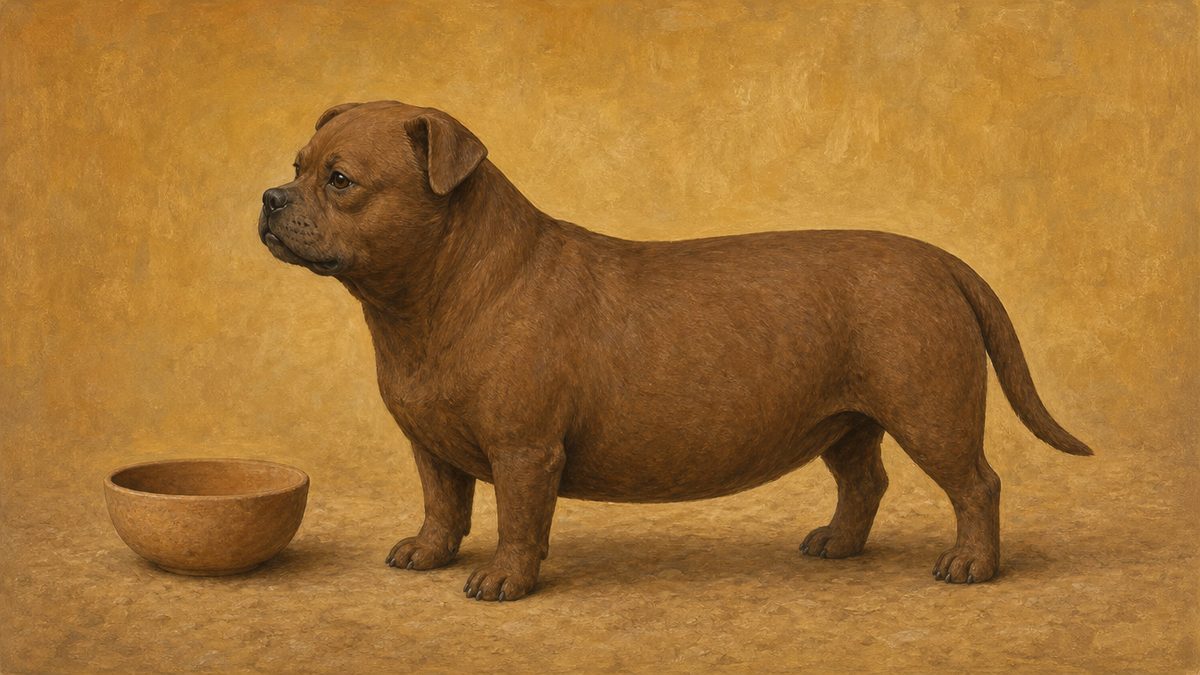
The written description is short and it is worth quoting in full because it is all there is. Techichis varied in appearance, with coats ranging from brown, brown and white, black and white, to black. Their ears were sometimes cropped close to the head, and their tails were left uncut in their natural state. They were mute and could not bark. They were larger than modern Chihuahuas, and were bred into the smaller lighter dog known today by the Aztecs.
Notice what is missing from that description, because a breed standard would have it and this does not: a height, a weight, a head proportion, a bite, a gait, a fault list. That absence is not an oversight in the writing. There is no document to take those from.
| Feature | Techichi, from the description | Chihuahua, from a registry |
|---|---|---|
| Height | Not stated anywhere | Specified by the registry standard |
| Weight | Not stated anywhere | Specified by the registry standard |
| Coat colour | Brown, brown and white, black and white, black | A defined and published colour list |
| Ears | Sometimes cropped close to the head | Naturally erect, and cropping is prohibited in India |
| Tail | Left uncut in its natural state | Defined carriage and set |
| Voice | Reported mute, on thin sourcing | Not mute |
| Size relative to the other | Larger than the modern Chihuahua | Smaller, bred down |
| Governing document | None | A published standard held by a registry |
The pottery, which is the better evidence
The Colima dog effigy in the Walters Art Museum is dated 100 BCE to 300 CE and catalogued as accession 2009.20.51. It shows a small, rounded, heavy-bodied dog with short legs, and this form is modelled repeatedly across western Mexican grave goods. Pottery is not a photograph and a potter is not a judge, but a form repeated across centuries in one region is real evidence of a recognised type in a way that a twentieth-century paragraph is not.
The honest reading of the two together is that a small, sturdy, short-legged companion dog existed in western Mexico for at least four centuries around the turn of the era, and that the written description of coat colours and ear carriage that circulates today is a much later reconstruction of it.
The record says these dogs' ears were sometimes cropped close to the head. India's Dog Breeding and Marketing Rules 2017, Second Schedule Part II paragraph 6(8), forbid ear cropping, tail docking, de-barking, de-clawing and any change of appearance by artificial means. That is why the reconstruction image on this page shows a dog with natural ears, and it is why no image on this site shows a cropped dog of any breed.
Registry status, checked in three registers with controls
No register anywhere holds the Techichi, and Bonbeno verified that in three independent registers with in-document controls passing in each rather than reasoning from a single empty search The Royal Kennel Club, Breeds A to Z Orthopedic Foundation for Animals breed….
An absence is a strong claim and this site makes it often, so it has to be earned. The rule this page follows is that an absence counts only when a control succeeded in the same fetch, through the same options, in the same session.
| Register | How it was read | Controls that returned | Techichi |
|---|---|---|---|
| FCI nomenclature | Records 1 to 400 probed by trailing integer, each page's own title read back; all 400 answered | 122 Labrador Retriever, 218 Chihuahueño, 234 Xoloitzcuintle, 153 Dalmatinski pas, 277 Hrvatski ovcar | Absent |
| Royal Kennel Club Breeds A to Z | HTTP 200, 90,775 characters, anchors deliberately kept | Chihuahua, Dalmatian, Xoloitzcuintle, Border Collie, Whippet, Yorkshire Terrier, Affenpinscher, Akita, Retriever (Labrador), Spaniel (Cocker) | Absent |
| OFA breed list | api.ofa.org breed list read on a basic proxy | Chihuahua, Xoloitzcuintli, Croatian Sheepdog | Absent |
Two things that would have manufactured a false absence, and how they were avoided
The first is anchor stripping. On a search-results page, excluding anchor tags halves the payload harmlessly. On an alphabetical breed index the breed names *are* the anchors, so excluding them returns HTTP 200, the correct page title, and an empty list. The Royal Kennel Club index here was fetched with anchors kept, which is why ten controls came back.
The second is name form, and it caught this page in the act. A first pass searched the Royal Kennel Club index for 'Labrador Retriever' and found zero, which looks alarming until you notice the register files the breed as 'Retriever (Labrador)'. Searched under the register's own filing name, it is there. That zero was manufactured by the query, and the same trap sits in the FCI register, which titles the Chihuahua 'Chihuahueño' and the Dalmatian 'Dalmatinski pas'.
So the Techichi absence reported here is an absence under every name form checked, in three registers, with controls. That is what makes it a finding rather than a failed search.
Nothing, on this question, and the reason is worth stating. The Kennel Club of India publishes no breed list at all, so a query there returns zero for the Techichi and zero for every control breed too, which is a broken instrument rather than a finding. What is checkable is that India is a full FCI member represented by the KCI, so Indian pedigrees are issued against FCI nomenclature, and the FCI holds no Techichi.
Techichi price in india, and what the search actually returns
There is no Techichi price in india because there is no Techichi, and the useful finding is what an Indian search returns instead: eight results, all of them about the Chihuahua.
The check was run through an instrument proved in the same session. A control query for Labrador Retriever puppies in India returned eight genuine Indian listings with real rupee ranges from named Indian sellers, so the tool was working.
Asked the same way for Techichi puppies in India, the engine returned eight results and every single one concerned the Chihuahua: a Supertails price guide, a YouTube price video, a Puppiezo product page, a Quora thread, a Petsworld adoption post, two Instagram listings and a Mr n Mrs Pet sales page. Not one mentioned the Techichi.
The substitution is itself the answer
A search engine that silently swaps the ancestor for the descendant is telling you something true about the world: there is nothing to sell under the older name, so the commercial index has nothing to return, and the closest match wins. For an Indian buyer this is more useful than a price would have been, because it means anyone who does quote you a Techichi price has quoted you a Chihuahua price with a different label on it.
What the substituted results reveal about Indian Chihuahua pricing
Since those eight results are what an Indian searcher will actually see, they are worth reading properly, and they do not agree with each other.
| Indian source | Price range published |
|---|---|
| Petsworld | Rs 4,000 to Rs 25,000 |
| Quora answer | Rs 15,000 to Rs 25,000 |
| Supertails | Rs 15,000 to Rs 60,000 for pet quality |
| Instagram summary | Rs 15,000 to Rs 60,000, show quality to Rs 1,00,000 |
| Mr n Mrs Pet | Rs 60,000 to over Rs 2,00,000, KCI registered Rs 1,00,000 to Rs 1,50,000 |
The floor and the ceiling differ by a factor of fifty for one breed in one country, which means the number is not measuring the dog. Bonbeno publishes the spread rather than an average, because an average of five disagreeing sources is a figure nobody observed.
One of those sellers gives the game away on a different breed. Its Labrador page prints an identical band of Rs 30,000 to Rs 1,20,000 for all eight Indian cities it lists, from Hyderabad to Pune. A price that is the same in eight cities is a template row, not eight market observations, and it is reasonable to read that site's other price tables the same way.
Which register holds the breed and what is the number on this dog's pedigree. Where are the parents and can you see them today. What screening results exist, and can you show the certificates. A seller who answers none of those is selling a description, and the Techichi is what a description with no dog behind it looks like.
Monthly cost of ownership for the dog you would actually get
A small companion dog costs roughly Rs 3,000 to Rs 6,500 a month to keep properly in an Indian metro, built from named published prices, and that is the honest budget for anyone whose search for a Techichi ends at a Chihuahua.
No cost of ownership can be given for an extinct dog, so this section prices the living one. The figures below apply to any small breed in India and are the numbers a buyer should have before the purchase rather than after it.
| Item | Published price | Source |
|---|---|---|
| Anti-rabies vaccine, single | Rs 699 | Vetic clinic price list |
| 9-in-1 DHPPiL | Rs 899 | Vetic clinic price list |
| Kennel cough | Rs 1,349 | Vetic clinic price list |
| Bath, Delhi | from Rs 934 | Vetic grooming, Delhi |
| Haircut, Delhi | from Rs 1,359 | Vetic grooming, Delhi |
| Monthly parasite cover | about Rs 1,103 in the 15 to 30 kg band; less for a small dog | Supertails listing |
| Boarding, 24 hours, Bengaluru | Rs 899 | PawSpace Bengaluru |
| Consultation | Rs 500 to 1,000 | VOSD, treated as one data point |
| Delhi municipal dog registration | Rs 500 | MCD Delhi portal |
| Chennai pet licence | Rs 50 | Greater Chennai Corporation |
| Microchipping, Chennai | Rs 1,250 | SKS Veterinary Hospital |
Two of those rows carry caveats rather than repetition. The VOSD consultation and vaccination ranges are published byte-identically by a large general insurer, and two unrelated organisations agreeing to the rupee on two separate quantities is evidence of copying rather than corroboration, so this page counts them once. And the Vetic figures are promotional floors from one chain that quotes different course prices on different city pages, so record which city page a figure came from before comparing it with anything.
The free option, which almost no breed page mentions
The Greater Chennai Corporation runs six municipal pet clinics that provide all treatment and anti-rabies vaccination free of cost, and issued 9,115 pet licences in 2024 against a licence fee of Rs 50. For a Chennai owner that is a better first stop than any private chain's promotional price, and it is a genuine three-figure annual saving on the single most important vaccine a dog in India receives.
Delhi is the other end of the same story. Registration costs Rs 500 and renews at Rs 500 with a late fee of Rs 100 a month, and the city's own portal reports 18,958 pet dog certificates issued since 2021 with 71 of 1,006 applications rejected in the current financial year. Applications do fail, so file properly.
The municipal fees, almost certainly. The retail prices, not necessarily: this project has watched a single Indian food listing change what it sold within days while the Delhi registration fee sat still. Re-price anything you are budgeting on and treat the municipal rows as the durable half.
Climate, and what a Mesoamerican origin does and does not tell you
A dog native to central and western Mexico came from a climate that is warm and dry rather than hot and humid, and the Indian cities that come closest are Bengaluru and Pune rather than Chennai or Kolkata.
No measurement of this animal's heat tolerance exists or could exist, so this section reasons from geography and says plainly that it is reasoning. Every figure below was queried by explicit latitude and longitude, with the grid-cell elevation NASA POWER returns printed beside the real elevation, because POWER returns a cell rather than a point and in mountainous terrain the cell can miss the town badly.
| Place | Cell elevation vs real | Annual mean | Annual mean humidity | Peak wet bulb |
|---|---|---|---|---|
| Colima, western Mexico | 531.66 m vs ~494 m, +38 m | 24.67 C | 69.86 percent | August, 22.97 C |
| Mexico City | 2,626.86 m vs ~2,240 m, +387 m | 13.83 C | 65.69 percent | June, 12.53 C |
| Oaxaca | 1,953.28 m vs ~1,555 m, +398 m | 16.79 C | 72.19 percent | June, 15.48 C |
| Bengaluru | 841.72 m vs ~920 m, -78 m | 23.74 C | 67.84 percent | May, 21.86 C |
| Pune | 635.99 m vs ~560 m, +76 m | 23.86 C | 66.68 percent | June, 22.97 C |
| Chennai | 48.95 m vs ~6 m, +43 m | 27.94 C | 72.39 percent | May, 26.11 C |
| Kolkata | 7.35 m vs ~9 m, -2 m | 25.80 C | 73.84 percent | June, 27.09 C |
| Delhi | 206.37 m vs ~216 m, -10 m | 25.57 C | 45.51 percent | July, 26.50 C |
Colima is the relevant comparison, because it is the region the effigy pottery comes from and it is low-lying rather than highland. Its annual mean of 24.67 C and peak wet bulb of 22.97 C sit almost exactly on Pune's 23.86 C and 22.97 C. Bengaluru is close behind. Chennai at a peak wet bulb of 26.11 C and Kolkata at 27.09 C are more than three degrees of wet bulb beyond anything in the Mexican range.
Two Indian months that are not when people expect
Delhi peaks in June at 35.88 C rather than May, and Bengaluru and Pune both peak in April and are coolest in December rather than January. Chennai, Mumbai, Kolkata and Ahmedabad do peak in May. Advice written around a single national hot month is wrong for at least three large Indian cities, and a small dog is walked in whichever month it actually is.
What the living descendant's data says about heat
Here the guessing can stop. Hall and colleagues modelled heat-related illness across 905,543 UK dogs and their Table 2 gives the Chihuahua an odds ratio of 0.44 against the Labrador Retriever comparator, which is among the lowest in the table and not significantly raised. A small, light, short-coated dog sheds heat comparatively well.
That is a UK cohort and Indian conditions are hotter than the ones that produced those events, so it is a relative ranking rather than an Indian safety guarantee. But it is real data on a real dog, and it points the same way the geography does.
The trait bar above rates heat tolerance 3 out of 5 and the note says openly that it is an inference from geography rather than an observation. No study measured this animal. Bonbeno would rather print a rating with its reasoning attached than either invent a confident number or leave a reader with nothing.
Temperament, and how much of it is knowable
No temperament assessment of the Techichi exists, because temperament is measured in living animals, and the descriptions in circulation are inferences from burial practice and from the living Chihuahua.
This is the section where breed-page templates do their worst damage. A template needs a temperament paragraph, so it generates one, and within two hops a generated paragraph about a four-hundred-year-dead animal is being read as description. Bonbeno will not do that, so here is what the record supports instead.
What the sources describe is a role rather than a character. These dogs were kept as companions, believed by the Toltecs to have supernatural powers such as seeing into the future, and often sacrificed so that they could guide their owners in the afterlife; the Aztecs held similar beliefs and thought the dogs could guard pyramids if buried beneath them. That tells you these animals lived close to people and were culturally central. It tells you nothing about whether they were nervous with strangers.
The word most often reached for is sacred, and it is a fair summary of what the tradition describes, provided it is read as a statement about people rather than about dogs. A sacred animal is one a society treats a particular way. It is not a temperament, and no amount of ritual significance tells you how an individual behaved on a lead.
The one behavioural claim, and its sourcing
That they were mute and could not bark. Britannica describes a small mute dog kept by the Toltec people, and English Wikipedia supports the claim with Britannica plus a 2020 preprint on the history of domesticated dogs in the Americas. A preprint has not been peer reviewed, and the one cited returned Access Denied when Bonbeno tried to open it on 10 September 2026, so this page cannot tell you what it says.
So the muteness claim is old, universally repeated, and rests on a tertiary encyclopedia and an unreadable preprint. Treat it as tradition. It may well be true, and it has not been established here.
Where a real temperament description does exist
In the living breed. The American Kennel Club publishes a temperament description for the Chihuahua, and UK primary-care data covers tens of thousands of them McMillan et al. 2024 Supplementary Table…. If you came to this page wanting to know how a small Mexican companion dog behaves in a household, that is the honest place to send you, and the Chihuahua page carries it.
Confident adjectives with no citation, a five-point rating for a trait nobody measured, and a claim that the dog is good with children. If you see those three things on a page about an extinct animal, the page was assembled rather than written, and its other numbers deserve the same suspicion.
Training, which cannot be described and can be transferred
Nothing is recorded about how Mesoamerican keepers trained these dogs, so this section covers what an Indian owner of the living descendant should actually do, and says clearly that the transfer is an assumption.
The record describes what these dogs were for and how they were bred for supply. It does not describe training, cues, work or handling. An honest breed page says so rather than filling the space.
What can be said is that a small companion dog in an Indian flat has a specific and well-understood set of training needs, and they are the same whichever small breed you end up with.
- Socialise early and deliberately, in controlled settings, because a small dog that finds the world frightening becomes a reactive dog and a reactive small dog is still a bite risk.
- Train house-training on a fixed schedule rather than ad hoc, since small bladders and Indian monsoon weeks make this the commonest first-year failure.
- Feed training rewards from the daily ration rather than on top of it, because a 3 kg dog reaches its calorie ceiling in a handful of treats.
- Protect the dog from well-meaning handling by visitors, which is how most small-dog defensiveness starts.
The Indian timing problem
The socialisation window and the vaccination course overlap, and the course is not short. Per-vaccine Indian prices run from Rs 699 for anti-rabies to Rs 1,349 for kennel cough at one national chain. Waiting for full cover before any exposure costs more in behaviour than it saves in risk, so plan carried, controlled outings and discuss the schedule with your nearby vet rather than deciding alone.
A note on the word 'ancient'
Owners sometimes expect an ancient breed to be harder to train, on the theory that it is closer to the wolf. That reasoning does not survive contact with the genetics: pre-contact American dogs were a domestic lineage that dispersed alongside people, not derived from North American wolves. Antiquity is not wildness, and it predicts nothing about biddability.
Whatever small dog you end up with, ask the seller to show you the puppy with its mother and littermates before six weeks are out. That single observation tells you more about the temperament you are buying than any breed description, ancient or modern.
Exercise requirements, transferred honestly
A small companion dog of this type needs 30 to 45 minutes of daily activity split across two or three outings, and in most Indian cities that has to move to dawn and after dark from March to June.
As with training, nothing in the Techichi record addresses exercise. What follows applies to the small Mexican companion dog an Indian reader can actually own, and the constraint is the Indian calendar rather than the dog.
| City | Hardest month | Mean that month | Peak wet bulb |
|---|---|---|---|
| Delhi | June | 35.88 C | 26.50 C in July |
| Ahmedabad | May | 35.06 C | 26.11 C in June |
| Hyderabad | May | 33.30 C | 23.35 C in June |
| Kolkata | May | 31.53 C | 27.09 C in June |
| Chennai | May | 31.51 C | 26.11 C in May |
| Mumbai | May | 31.19 C | 25.77 C in June |
| Pune | April | 28.93 C | 22.97 C in June |
| Bengaluru | April | 28.37 C | 21.86 C in May |
Kolkata's June wet bulb of 27.09 C is the hardest figure in that table, and Bengaluru's 21.86 C the easiest. A small dog carries less thermal mass than a large one and heats and cools faster, which cuts both ways: quicker to overheat on a bad walk, quicker to recover in shade and moving air.
The surface nobody checks
A dog 20 cm tall walks with its whole body inside the layer of superheated air just above Indian tarmac, and its pads are in direct contact with it. Check the surface with the back of your hand before you set out. If you cannot hold it for five seconds, the walk waits.
Exertion is the trigger that matters
Hall and colleagues confirmed 395 heat-related illness events across 905,543 UK dogs and found exertion rather than confinement in a vehicle to be the dominant trigger. That is a finding about walks, in a country far cooler than India, and it is the reason the timing advice above is not fussiness.
For a small dog, scent games, a flirt pole in a corridor and short training sessions genuinely substitute for a hot-afternoon walk. This is one of the few places where being small is a straightforward advantage in India.
Grooming, and the one detail the record does supply
Grooming a short-coated small dog in India takes a weekly rubber curry and a bath every four to six weeks, and the only grooming detail the Techichi record supplies is one that Indian law now prohibits Prevention of Cruelty to Animals.
The record describes coats ranging from brown, brown and white, black and white, to black, which tells you the dogs were coated rather than hairless and says nothing about coat length or texture. Effigy pottery shows a smooth-bodied dog without visible furnishings, which is weak evidence for a short coat and is offered as exactly that.
The grooming practice the record does describe is ear cropping, close to the head, with tails left in their natural state. In India that practice is now forbidden. Second Schedule Part II paragraph 6(8) of the Dog Breeding and Marketing Rules 2017 states that there shall be no tail docking, ear cropping, de-barking, de-clawing, branding, dyeing, injecting substances to enhance visual appeal, or any other kind of mutilation, and that any change of appearance by artificial means is strictly forbidden.
A grooming week for the living dog
- Groom with a rubber curry once a week, which removes more loose hair from a smooth coat than a bristle brush does.
- Bathe every four to six weeks, or after monsoon soakings, from about Rs 934 at a Delhi salon or at home for nothing.
- Dry thoroughly rather than letting the dog air-dry, since a damp small dog in an Indian August is how skin trouble starts.
- Check ears weekly and dry them after any bath, because the monsoon months are when ear problems cluster on Indian pages for almost every breed.
- Trim nails fortnightly, which matters more on a light dog that does not wear them down on pavement.
The Delhi salon price list gives bathing from Rs 934, complete bath and styling from Rs 1,869 and a haircut from Rs 1,359. For a smooth-coated small dog the haircut line does not apply, so grooming is one of the cheapest lines in the budget.
Care guidance written in a temperate country routinely says to towel a dog off and let it air-dry. In a Mumbai August at around 90 percent relative humidity that instruction leaves a dog damp for hours. Ask what climate a care instruction assumes before you follow it, whatever breed it was written for.
Health issues and life expectancy, from the living breed
No health data or life expectancy exists for the Techichi and none can, so this section reports the screening and survival data for the Chihuahua, which is the dog an Indian reader will actually own Orthopedic Foundation for Animals disease….
Say the negative first and precisely. There is no lifespan for this animal, no screening scheme, no prevalence estimate and no clinical literature. PubMed returns zero for every name form tried while controls in the same session returned 1,109 Labrador records and 750 Chihuahua records. McMillan and colleagues' Table S5, which lists 345 breeds including many that were excluded from analysis, carries no Techichi row at all.
That last point is worth dwelling on, and it is worth knowing what kind of study is being searched. McMillan and colleagues analysed UK companion-dog longevity across a very large primary-care dataset and published their breed-level detail in supplementary tables rather than in the article body, which is why a reader checking only the main text of that paper would wrongly conclude that many breeds were absent from it. The table names breeds the study considered and rejected, so a breed absent from it was never in the frame. The Chihuahua, by contrast, is flagged Y for inclusion with the reclassification 'Chihuahua (Long haired)Chihuahua (Smooth haired)', KC group Toy, body size Small, cephalic index Brachycephalic.
Chihuahua survival, with the disagreement shown
Table S3 gives the Chihuahua a median survival of 11.8 years with a 95 percent confidence interval of 11.5 to 11.9, on 3,848 deaths, and a hazard ratio of 1.17 (1.13 to 1.21) against the crossbred group. That hazard ratio is against crossbreds specifically, not against all dogs and not against a breed average.
The two supplementary tables disagree about the sample and agree about the deaths. Table S3's first column reads 10,788 and Table S6 gives a total of 10,837, while the death count is 3,848 in both. This page therefore quotes the death count and the median with its interval, and names the disagreement instead of silently picking one denominator.
Screening data, validated arithmetically
| Database | Evaluations | Normal | Abnormal | Row closes? |
|---|---|---|---|---|
| Patella | 5,506 | 93.6 percent | 6.4 percent | Yes. Grade I 4.2 + grade II 1.7 + grade III 0.4 = 6.3, within rounding |
| Hips | 175 | 93.7 percent | 5.7 percent dysplastic | Yes. Excellent 20.6 + good 61.7 + fair 11.4 = 93.7, and mild 4.6 + moderate 1.1 + severe 0.0 = 5.7 |
| Eyes, summary | 4,185 | 97.4 percent | 2.6 percent | See the note below |
| Degenerative myelopathy | 272 | 98.9 percent | 1.1 percent | Yes |
The patella row is the one that matters, because 5,506 evaluations is a large number for any breed and patellar luxation is the classic small-dog orthopaedic problem. It comfortably clears the OFA's own publication threshold, which requires at least 100 hip evaluations and at least 50 for every other database.
The eye figures contradict themselves in the familiar way. The summary line says 97.4 percent normal of 4,185, while the detail rows sit on 4,184 and give 3,382 as the largest category, which is 80.8 percent, a gap of 16.6 percentage points. Bonbeno quotes neither as the rate and prints both.
One finding that cuts against the usual advice
Redondo and colleagues analysed 55,019 anaesthetics, 54,542 after exclusions, with an overall mortality of 0.69 percent. Crude Chihuahua mortality was 1.35 percent, and after adjusting for ASA physical status the Chihuahua was one of only two breeds in the whole study to retain excess risk, at a relative risk of 1.80 with a confidence interval of 1.08 to 2.99.
That is worth raising with your vet before any elective procedure, and it is worth raising in the right terms: the paper's own conclusion is that most between-breed differences reflect case severity, and this breed is one of the two exceptions. Consult your nearby vet rather than acting on this paragraph.
Ask for a patella examination result, because it is the single most informative screening test for a small breed and the OFA holds 5,506 of them for the Chihuahua. Ask what the parents weighed. And ask, before any surgery is scheduled, that your vet is told about the anaesthetic finding above.
The Indian health risks that outrank any breed history
Tick-borne disease is what an Indian owner of any small dog should plan for first, and published Indian series report it at levels no overseas breed guidance prepares owners for Shil S, Chini DS, Mukherjee.
A dog's ancestry matters less to its Indian health outcomes than the parasites in its neighbourhood, and this is the section that would be identical whichever of these breeds you owned.
| Study | Where | Dogs tested | Finding |
|---|---|---|---|
| Venugopal et al. 2026 | Kerala | 120 | Babesia in 80 of 120 tested, 66.7 percent; Ehrlichia canis 5.0 percent; peak before the monsoon, March to May |
| Shil et al. 2026 | West Bengal | 584 | Babesia gibsoni 76.54 percent; Anaplasma 55.75 percent; 72.9 percent of the 584 screened carried two or more pathogens |
The framing caveat is mandatory. These studies sampled clinically suspected dogs or clinic caseloads, not random populations, so the honest phrasing is 'among dogs tested at veterinary clinics'. A figure of 76.54 percent is not your dog's risk. It is a measure of how heavily these pathogens feature in Indian veterinary practice, and it is why monthly parasite cover at around Rs 1,103 is the best-value line in the whole budget.
Note the seasonality in the Kerala series, which peaks before the monsoon in March to May rather than during it. Owners often assume the monsoon is the tick season. In that series it was the pre-monsoon months.
Heat, which the law also recognises
India's own breeding rules acknowledge the principle. Second Schedule Part IV paragraph 21(1) bars keeping in outdoor facilities, without the attending veterinary practitioner's written approval, dogs that are not accustomed to local temperatures, breeds that cannot tolerate them, and sick, infirm, aged or young animals. The clause names long-haired breeds in high temperature locations as its example, and it is the statutory hook worth knowing for any imported breed in India.
Daily tick checks by hand, along the ears, between the toes, under the collar and around the tail base, cost nothing and catch what the monthly tablet is there to back up. In a country where one series found 72.9 percent of screened dogs carrying two or more pathogens, five minutes a day is a good trade.
Feeding, and the one thing the record does tell us
Nothing is recorded about how these dogs were fed, but a great deal is recorded about them being eaten, and for a living small dog the Indian feeding question is portion discipline rather than brand choice.
The record's only dietary content runs the other way. Francisco Hernández reported in 1578 that native people ate these dogs as commonly as they ate rabbits, and that the Spanish did the same on their expeditions. Dogs as a food animal is genuinely part of Mesoamerican history and this page states it rather than skipping past it, and it also has no bearing on how anyone should feed a dog today.
Life stages, for the small dog you would actually own
- Puppy, to six months. Three to four small meals daily on a complete growth food for small breeds. Small dogs hypoglycaemia more readily than large ones, so do not let a young toy-sized puppy go long between meals.
- Adolescent, six to twelve months. Down to two meals. Weigh the food rather than eyeballing it, because a 20 percent overfeed on a 3 kg dog is invisible and enormous.
- Adult. Two meals daily, adjusted seasonally. Intake typically falls in the hot months.
- Senior. Two meals with protein maintained, and an annual dental conversation with your nearby vet, because small breeds accumulate dental disease faster than large ones.
Portion discipline is where most Indian small-dog owners go wrong, and the arithmetic explains why. A dog weighing 3 kg needs a fraction of the calories a 30 kg dog needs, so a shared biscuit represents a far larger share of its daily intake. Feed training rewards out of the daily ration rather than in addition to it.
One reassurance about growth
The OFA states plainly that hip dysplasia is a polygenic inherited disease, that a high-calorie diet during rapid growth may exacerbate changes in hips that are already dysplastic but will not create hip dysplasia, and that there is no evidence in the scientific literature that supplements such as vitamin C prevent it. Feed a growing puppy moderately and do not buy a supplement to fix a genetic risk.
Multiple bowls, changed twice daily, offered before and after every walk. In an Indian summer it is the single most effective thing an owner does, and it costs nothing at all.
Month by month through the first year
The first year of any small dog in India is organised around the vaccination course, the socialisation window and municipal registration, and none of it is breed-specific Municipal Corporation of Delhi pet dog….
| Age | What happens | What it costs, where published |
|---|---|---|
| 8 to 10 weeks | Home, settling, first vet visit, deworming, vaccination course begins | Anti-rabies Rs 699, 9-in-1 Rs 899 at one national chain |
| 10 to 14 weeks | Course continues; carried and controlled socialisation begins | Kennel cough Rs 1,349 if given |
| 3 to 4 months | House training consolidates; lead work begins | Consultation Rs 500 to 1,000 |
| 4 to 6 months | Adult teeth erupt; monthly parasite cover starts | About Rs 1,103 per month in the 15 to 30 kg band, less for a small dog |
| 6 to 9 months | Adolescence; two meals a day; first full grooming routine | Bath from Rs 934 in Delhi |
| 9 to 12 months | Adult size reached; municipal registration and microchipping | Delhi registration Rs 500, Chennai licence Rs 50, Chennai microchip Rs 1,250 |
| 12 months | Annual booster and first adult health check | Free at Greater Chennai Corporation's six municipal clinics |
The two decisions that matter most
The first is when to begin socialisation, and the answer is earlier than most Indian owners think, carried and in controlled settings, planned with your nearby vet rather than decided alone. A small dog that misses this window is far likelier to become defensive, and a defensive small dog in a crowded Indian building is a problem for the household and the neighbours.
The second is registration, which people put off. Delhi's own portal reports 71 of 1,006 applications rejected in the current financial year, so it is a real process with real requirements, and the late fee runs at Rs 100 a month.
What a good breeder shows you in this period
- Verify the mother on the premises, with the litter, before the puppy is six weeks old.
- Screen results in writing, and for a small breed that means a patella examination above all.
- Compare the puppy's weight against its littermates rather than against a breed chart, since charts for small breeds vary wildly.
- Establish what the puppy has eaten and keep it on that food for the first fortnight at home.
Rule 8(1)(a) of the Dog Breeding and Marketing Rules 2017 provides that pups less than eight weeks in age are not sold. That is a Rule rather than a Second Schedule paragraph, and it is the one number every Indian buyer should know. A seller offering a six-week-old puppy is breaking it.
What Indian law has to say about a breed that does not exist
Two provisions of India's Dog Breeding and Marketing Rules 2017 bear directly on the Techichi story, one on the practices the record describes and one on any attempt to recreate the breed.
The gazette was read directly rather than summarised from a secondary source, because this document has repeatedly handed writers tidy, plausible, invented rule numbers. The copy used here was retrieved at 160,481 bytes, runs to 14 pages, and extracted to 51,953 characters with a real text layer on every page.
| Provision | What it says | Why it matters here |
|---|---|---|
| Second Schedule Part II para 6(8) | No tail docking, ear cropping, de-barking, de-clawing, branding, dyeing, injecting substances to enhance visual appeal, or any other kind of mutilation, and any change of appearance by artificial means is strictly forbidden | The record describes Techichis whose ears were sometimes cropped close to the head. That practice is prohibited in India today |
| Second Schedule Part II para 6(9) | Breeding to create new breeds of dogs or unusual looks shall be strictly prohibited | Any programme to recreate or revive the Techichi in India would run into this clause on its face |
Getting the citation form right, which most pages do not
Both provisions are Second Schedule paragraphs, not Rules. The Rules themselves run 1 to 13 and stop, so any citation reading 'Rule 14' or higher is wrong by construction, and 'Rule 6(9)' is wrong too because Rule 6 is a different provision headed 'Requirements to be met by breeders and establishments'. What Rule 6 does is give the Second Schedule its force, which is why the paragraph binds without itself being a Rule.
This matters practically. A reader who looks up 'Rule 6(9)' will find something else and conclude the page invented it. Cite what you actually read.
The revival question
Breed revival projects exist for other extinct dogs and are usually recreations from related living stock rather than resurrections. Paragraph 6(9) is the clause any such project in India would have to answer to, since creating a new breed is what a recreation is, whatever it is called. Nothing here suggests such a project exists for the Techichi. It is worth stating because the question follows naturally from the rest of the page.
It does not restrict owning a Chihuahua, and nothing in this section is a reason to avoid one. These clauses bind breeders and breeding establishments. An Indian owner meets them only when buying, which is exactly when they are useful.
Head to head against the breeds people cross-shop
Anyone researching the Techichi is comparing it against the Chihuahua, the Xoloitzcuintle and other extinct dogs, and the four differ on the only axis that matters here, which is what documentation survives.
| Dog | Standard | Studbook | Screening data | Available in India |
|---|---|---|---|---|
| Techichi | None, ever | None, ever | None | No |
| Chihuahua | Held by the FCI as record 218, titled Chihuahueño | Yes | 5,506 OFA patella evaluations | Yes, Rs 4,000 to over Rs 2,00,000 across published sources |
| Xoloitzcuintle | FCI standard 234, definitive since 1961 | Yes | 281 OFA hip evaluations | No listing found with a passing control |
| Salish Wool Dog | None, ever | None, ever | None, but strong ancient-genome evidence | No |
The Chihuahua is the only row in that table an Indian buyer can act on, and it is the dog the search engine substitutes when you ask for a Techichi. The Xoloitzcuintle is the instructive contrast within Mexico: an equally ancient dog that acquired a standard, a register and screening data, and therefore survives as a breed rather than as a story.
The comparison with other extinct dogs
Bonbeno has run this same two-condition test on several extinct animals, and the Techichi sits in the middle of the range rather than at the bottom. The Tesem is worse documented, being a word in a dead language applied to more than one kind of dog. The Salish Wool Dog is far better documented, with a sequenced specimen and oral testimony about deliberate reproductive isolation. The Turnspit Dog has the best documentary record of the four, because it survived into the era of photography and written husbandry.
What the Techichi has that most of them lack is dated physical evidence in quantity: effigy pottery across centuries and regions, catalogued in museums. What it lacks is any document that defines a type.
That is the Xoloitzcuintle, and it is genuinely ancient, genuinely documented and genuinely registered. It is also effectively unavailable in India, which the Xolo page says plainly. The realistic Indian answer to 'ancient Mexican companion dog' is a Chihuahua, and some of them carry a pre-contact Mesoamerican maternal lineage, which is a better claim to antiquity than most breeds can make.
Mistakes people make about the Techichi
Six errors recur across the pages ranking for this term, and five of them come from treating a name as a breed.
- Quoting a weight, a height or a lifespan. No document supplies any of the three, so a page that gives you one has generated it.
- Stating the 100,000 figure as fact. It is an estimate from two pages of one 2002 popular dictionary, reported as an estimate by Wikipedia and then flattened into fact by an answer engine.
- Treating the Chihuahua descent claim as settled either way. It is now partly measured, and the honest answer distinguishes a maternal lineage from a breed.
- Assuming an extinct breed has no search demand. This one returned about 114 results and a live four-question box on Google India, all four questions on-breed.
- Reading the muteness claim as established. It rests on a tertiary encyclopedia and a preprint that could not be opened.
- Repeating the ear-cropping description without noting that the practice is prohibited in India under paragraph 6(8).
The seventh mistake, which is a research one
Concluding an absence from a single empty search. This page reports the Techichi absent from three registers, and each absence is reported only because controls passed in the same fetch. The first attempt at the Royal Kennel Club index found no Labrador Retriever either, which would have been an alarming result had the register not simply filed the breed as 'Retriever (Labrador)'.
How to check any breed claim in four steps
- Establish which register is supposed to hold the breed, and open that register's own index rather than a summary of it.
- Verify that a control breed you know is present actually comes back in the same fetch, through the same options.
- Compare the name form you searched against the name form the register files under, since Chihuahueño and Retriever (Labrador) both defeat the obvious query.
- Screen the claim's citation chain by opening the cited page and confirming the claim is actually in it.
Over-correcting. It would be easy to read the 2018 genomics and declare the whole Techichi-to-Chihuahua story a myth. The 2025 mitogenome result says otherwise for some dogs. The evidence supports a careful answer, not a debunking, and a page that swings too far the other way is as wrong as the pages it is correcting.
Adoption and responsible sourcing in India
No Techichi can be adopted or bought, so the useful advice is how to source the small dog you will actually end up with, and Indian shelters are the honest first stop.
The search that ends on this page began somewhere: someone wanted a small, ancient, Mexican companion dog. Two of those three adjectives are available in India and one is not.
The shelter route
- Adopt from a municipal or registered shelter and ask specifically for a small short-coated adult, which is the closest genuine match to what the Techichi description describes.
- Verify vaccination and deworming records before the dog comes home, and get them in writing.
- Register the dog with your municipality afterwards: Rs 500 in Delhi, Rs 50 in Chennai.
- Protect the arrangement with a microchip, about Rs 1,250 at a named Chennai clinic, which matters more for a small dog that can slip a gate.
Budget the boarding line before you need it rather than after. A Bengaluru operator publishes an hourly rate to four hours at Rs 599, daycare to ten hours at Rs 799 and an overnight stay to 24 hours at Rs 899, so a week away comes to about Rs 6,300. Most Indian facilities price per animal rather than per kilogram, so being small saves nothing here.
If you buy instead
Then apply the same three questions this page has used throughout. Which register holds the breed and what number is on this dog's pedigree. Where are the parents and can you see them today. What screening exists, and can the certificates be produced. For a small breed the screening answer that matters most is a patella examination, and the OFA holds 5,506 of them for the Chihuahua, so the test is routine and a breeder who has not done it has chosen not to.
And know the legal floor. Pups under eight weeks may not be sold in India under Rule 8(1)(a), and any seller offering one younger is breaking the rule that exists to protect exactly the dog you are about to take home.
What this page is really for
The Techichi cannot be bought, adopted, fed, trained or groomed. What it can do is teach an Indian buyer to read a breed page properly: to ask which document defines the breed, to follow a repeated figure back to its source, to notice when a hedge has fallen off in transit, and to distrust a temperament rating for an animal nobody has met in four hundred years.
A maternal lineage from pre-contact Mesoamerican dogs still runs in some living Chihuahuas. If you adopt or buy one in Bengaluru or Chennai, there is a real chance the dog on your sofa carries a thread of ancestry that reaches back past the Spanish conquest. That is a better story than any invented price, and it is true.
Techichi questions people actually ask
Why did Techichi go extinct?
The honest answer separates what is documented from what is estimated. English Wikipedia states that Spanish explorers ate as many as 100,000 Techichis and that the dogs had disappeared by the nineteenth century, and both statements trace to two pages of one popular reference book from 2002. What is far better evidenced is the wider collapse: Ní Leathlobhair and colleagues sequenced 71 mitochondrial and 7 nuclear ancient genomes and found that after Europeans arrived, native American dogs almost completely disappeared, leaving a minimal genetic legacy in modern dog populations.
What is the difference between a Chihuahua and a Techichi?
One is a living registered breed with a standard, a studbook and 5,506 patella evaluations on record, and the other is a name from the colonial-era record with none of those things. On the physical description, the sources say Techichis were larger than modern Chihuahuas and were bred down into the smaller lighter dog by the Aztecs. On ancestry, the relationship is now partly measurable rather than merely asserted, and the 2025 mitogenome study is the place to look.
Do Techichi dogs still exist?
No dog is registered anywhere under that name. Bonbeno checked three registers with controls passing in each: the FCI nomenclature server across records 1 to 400, the Royal Kennel Club's Breeds A to Z, and the Orthopedic Foundation for Animals breed list. All three hold the Chihuahua and the Xoloitzcuintle. None holds a Techichi. What does still exist is a maternal genetic lineage, which is a different claim and is covered below.
What did the Aztecs think of Techichi dogs?
The commonly repeated account is that both the Toltecs and the Aztecs believed these dogs could guide human souls after death, and that they were sacrificed for that purpose. Treat it as reported tradition rather than as measurement. What is archaeologically solid is that Mesoamerican states managed animals ritually at scale: Teotihuacan's ritual caches, securely dated to AD 1 to 550, contained the remains of nearly 200 carnivorous animals alongside human sacrificial victims.
Is the Chihuahua really descended from the Techichi?
Partly, and 2025 is the first year that sentence could be written with evidence rather than with a hedge. Manin and colleagues generated 70 complete mitochondrial genomes from archaeological and modern dogs from Central Mexico to Central Chile and Argentina, and report that the pre-contact Mesoamerican maternal origin of the Chihuahua has persisted in some modern individuals. That supports maternal continuity in some dogs. It does not make the Techichi a breed, and it does not contradict the 2018 finding that the pre-contact lineage as a whole nearly vanished.
What is the Techichi price in india?
There is none, and the search result is the finding. Asked for Techichi puppy prices in India through an instrument proved by a passing Labrador control in the same session, the engine returned eight results and every one was about the Chihuahua. Not one concerned the Techichi. Any page quoting you a rupee figure for this breed has quoted you a Chihuahua price, or invented one.
Was the Techichi really mute?
It is repeated everywhere and the sourcing is weaker than the confidence suggests. Britannica describes a small mute dog kept by the Toltec people, and English Wikipedia supports the same claim with Britannica plus a 2020 preprint on the history of domesticated dogs in the Americas. A preprint has not been peer reviewed, and Bonbeno could not open that one, which returned Access Denied on this attempt. So the claim is old, widely repeated and thinly evidenced.
What did the Techichi look like?
The description everyone uses comes from one 2002 reference book by way of Wikipedia: coats ranging from brown, brown and white, black and white to black, ears sometimes cropped close to the head, tails left in their natural state. The independent physical evidence is the effigy pottery, and the specific object used to illustrate the breed is a Colima dog effigy dated 100 BCE to 300 CE in the Walters Art Museum, accession 2009.20.51.
Is the Techichi recognised by any kennel club?
No, and this was checked rather than assumed. The FCI's nomenclature server was enumerated across records 1 to 400, all of which answered, with in-document controls returning 122 Labrador Retriever, 218 Chihuahueño and 234 Xoloitzcuintle. The Royal Kennel Club's Breeds A to Z was read with anchors kept, since on an A to Z the breed names are the anchors, and ten controls passed. Neither register holds the name.
Should I buy a Chihuahua instead?
If a small Mexican companion dog is what you want, the Chihuahua is the one you can actually get in India, and it comes with real data. UK primary-care records give a median survival of 11.8 years on 3,848 deaths. Published Indian prices run from Rs 4,000 to over Rs 2,00,000 across four sources, a spread of fifty times, so compare sellers carefully. Ask about patellae specifically, and consult your nearby vet about anaesthetic risk before any elective surgery.
Does Indian law say anything relevant to this breed?
It says something about the description rather than the dog. The sources describe Techichis whose ears were sometimes cropped close to the head. Second Schedule Part II paragraph 6(8) of India's Dog Breeding and Marketing Rules 2017 forbids ear cropping, tail docking, de-barking, de-clawing and any change of appearance by artificial means, in those words. So the historical practice that the record describes is prohibited in India today, which is why the reconstruction image on this page shows natural ears.
Why does an extinct breed have a People also ask box at all?
Because search demand and biological existence are unrelated, and this is worth knowing if you are researching any rare breed. Google India returned about 114 results for this term, a knowledge panel headed 'Techichi, Dog breed', and a live four-question box in which all four questions were genuinely about the Techichi. Extinction does not predict being unsearched, and an absent box is a claim that needs a passing control before anyone makes it.
Compare with similar breeds
Techichi sits in 2 Bonbeno groups. Each one compares it directly against the breeds it is genuinely an alternative to, on the same figures.