
Breed profile
Russo-European Laika: Price in India, Heat Tolerance and Real Care Costs
A Russian all-round hunting dog recognised on a definitive basis since 3 June 1980, with no Indian market, two competing Russian registers and a homeland 25 degrees colder than Delhi.
Quick answer
The Russo-European Laika is FCI standard 304, a medium-sized Russian hunting spitz accepted on a definitive basis on 3 June 1980. Males stand 52 to 58 cm and females 48 to 54 cm, and the standard gives no weight at all. No Indian price exists because no Indian seller offers the breed. Its homeland at Arkhangelsk averages 0.71 degrees Celsius across the year against Delhi's 25.60, so heat, not humidity, decides whether you can keep one in India.
This page reports published veterinary and registry evidence. It is not veterinary advice and it cannot examine your dog. Discuss vaccination, parasite control, heat risk, anaesthesia and any breeding decision with your nearby vet, who can see the animal in front of them and knows the disease pressure in your city.
Russo-European Laika at a glance
What the Russo-European Laika is, and what FCI standard 304 actually says
The Russo-European Laika is a Russian all-round hunting dog governed by FCI standard 304, whose official valid text is dated 13 October 2010 and whose English edition was published on 2 March 2011.
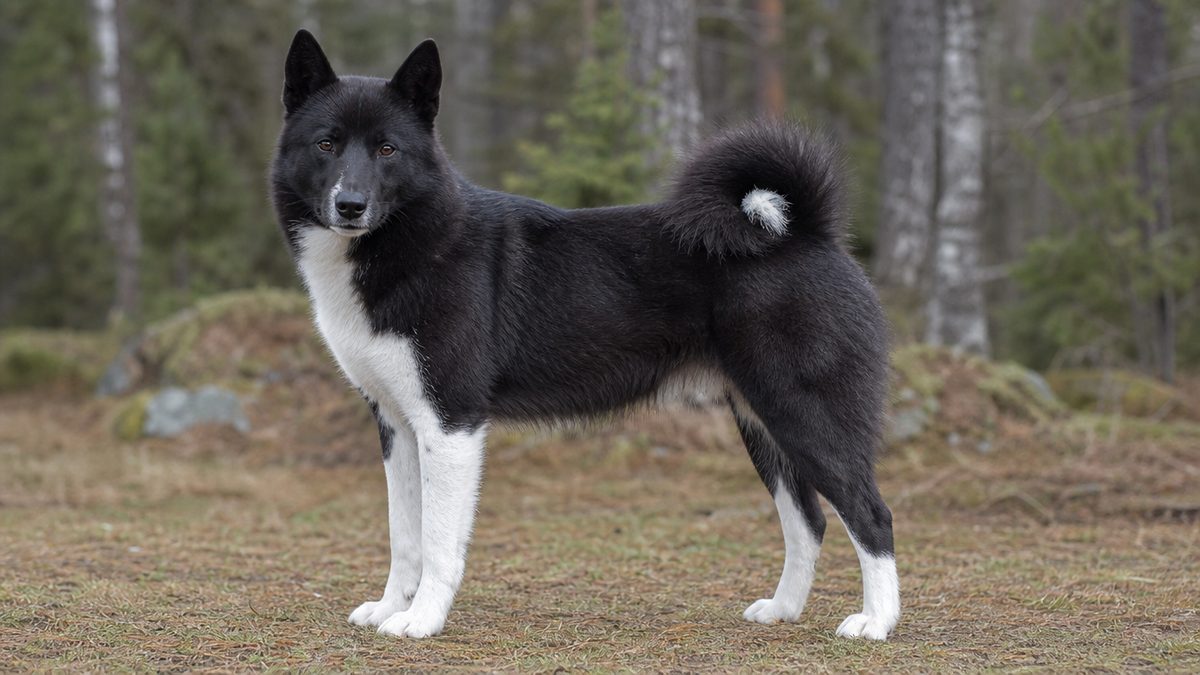
English is the standard's official authentic language, so the English text governs and no translation can overrule it. The FCI accepted the breed on a definitive basis on 3 June 1980, files it in Group 5 Spitz and primitive types, Section 2 Nordic hunting dogs, records the country of origin as the Russian Federation, and marks it as subject to a working trial. It is a medium-sized, muscular, square-built spitz with prick ears and a tightly curled tail, and it is the smallest of the three Russian hunting laikas. The breed number was read off the FCI's own Group 5 index, which lists 46 breeds, before any standard document was opened, because an FCI URL resolves on its trailing number and will serve a different breed's page without warning.
| What | The standard's own words |
|---|---|
| Utilization | Hunting dog for all-round purposes |
| Height, males | 52 to 58 cm |
| Height, females | 48 to 54 cm |
| Weight | No weight clause exists |
| Index of format | Males 100/100-103, females 100/100-105 |
| Behaviour | Steady, evenly-tempered, with very well developed sense of scent and detection of game |
| Ears | Pricked, not large, mobile, set on high, V-shaped, pointed |
| Tail | Curled or sickle curled; touches the back, the upper thigh or buttocks |
| Colour | Black with white or white with black; solid black and solid white also occur |
| Teeth | Complete 42-tooth dental formula, scissor bite |
The most useful thing in that table is the row with nothing in it. FCI 304 carries a heading reading SIZE, and beneath it a single line giving heights. There is no weight clause, which means every weight figure published for this breed comes from somewhere the FCI did not write. That matters in India for a practical reason rather than a pedantic one: food quantity, most drug doses and crate sizing are all keyed to bodyweight, so an owner who inherits an invented weight range inherits an invented feeding chart with it.
What the standard demands that Indian law forbids
The standard states a preference the 2017 Rules make illegal to act on. Under FOREQUARTERS it reads "Preferably no first digits (dewclaws)", and under the rear pastern "The presence of dewclaws is not desirable";. Second Schedule Part II paragraph 6(8) of the Prevention of Cruelty to Animals (Dog Breeding and Marketing) Rules, 2017 prohibits, in one sentence, tail docking, ear cropping, de-barking, de-clawing, branding, dyeing, injecting substances to enhance visual appeal, and any other kind of mutilation, adding that any change of appearance by artificial means is strictly forbidden. A preference expressed as an absence is satisfiable by breeding; it is not satisfiable by surgery on a puppy in India.
A laika is named after barking. The Russian word derives from the verb meaning to bark, and the breed's working method is to find game, hold it in place and keep barking until the hunter walks in. That is not a training problem to be solved. In an Indian apartment it is a noise complaint with a shared wall attached, and neighbour complaints are how dogs end up surrendered.
Telling the three Russian laikas apart, using colour rather than size
Colour separates the three Russian hunting laikas faster than size does, because black and white is the Russo-European's typical coat and a severe fault in the West Siberian.
Size overlaps between the three breeds and colour does not. FCI 306 lists "Black or black and white colour"; among the West Siberian Laika's severe faults, and gives its own palette as grey with reddish-brown, red with reddish-brown, grey, red, fawn and reddish-brown in all shades, plus pure white and parti-colour. FCI 304 gives the Russo-European exactly the opposite: black with white or white with black as the typical colours, with tan or red markings on the head and legs listed as a severe fault. A grey or red laika is not a Russo-European, and a black and white one is not a West Siberian.
| Russo-European 304 | West Siberian 306 | East Siberian 305 | |
|---|---|---|---|
| Height, males | 52 to 58 cm | 55 to 62 cm | 57 to 64 cm |
| Height, females | 48 to 54 cm | 51 to 58 cm | 53 to 60 cm |
| Index of format, males | 100/100-103 | 100/103-107 | 100/104-109 |
| Typical colour | Black and white, white and black | Grey, red, fawn, reddish-brown, white | Black and tan, black, black and white, white, piebald |
| Black and white is | The typical colour | A severe fault | An accepted colour |
| Attitude to strangers | Not addressed in the standard | Self-confident and alert towards strangers | Friendly, kind and trustful towards people |
| Accepted by the FCI | 3 June 1980 | 3 June 1980 | 3 June 1980 |
All three were accepted on the same day, 3 June 1980, which is worth knowing because English-language pages routinely present one as older or more established than the others, and our East Siberian Laika and West Siberian Laika pages carry the same dates Federation Cynologique Internationale. They were separated on paper long before that: the FCI history sections for 304 and 306 both record that the 1947 reorganisation of Soviet laika classification merged regional populations into breeds, and that both breed standards were approved in 1952 Federation Cynologique Internationale.
The fourth dog in the confusion is Finnish, not Russian
The Karelian Bear Dog is the hardest of all to separate from this breed, and it is not a laika at all in registry terms. FCI 48 is Finnish, was accepted on a definitive basis on 2 August 1954, twenty-six years before the Russian laikas, and is subject to a working trial only for the Nordic countries. It is also black and white. The genetics section below covers what a genome-wide study found when it put the two breeds in the same analysis, and the answer is not what a tidy story would predict.
History: a breed assembled in 1947 out of five regional hunting dogs
The Russo-European Laika became a single breed in 1947, when Soviet cynology merged the hunting laikas of Arkhangelsk, Komi, Karelia and Votiatsk into one population, and its first breed standard followed in 1952.
The FCI standard's own historical summary starts earlier, with a book. It records that the first account of northern prick-eared dogs was published by A. A. Shirinsky-Shikhmatov in the Album of northern sledge dogs-laikas in 1895, and that the dogs described there were called Cheremis and Zyrianskiy Laikas. It names the breed's original range as Komi, Udmurtia, Arkhangelsk, Yaroslavl, Tver, Moscow and other areas of Russia.
The standard is then unusually blunt about what happened next. "In 1947 the off-spring of Arkhangelsk, Komi, Karelia, Votiatsk and other Laikas were united into one breed under the modern name of Russian-European Laika", and the breed standard for it as a purebred dog was approved in 1952. The paragraph that follows is the interesting one, because it pushes back on the obvious reading: "The correct modern type of Russian-European Laika, as a recognized purebred dog, was not achieved by breeding different Laikas off-spring; it is the result of selective breeding over a long period of time";.
The date the FCI standard and the independent genetics agree on
A genome-wide study of northern Eurasian spitz breeds states the same founding independently: "The establishment of the Russian-European Laika as a breed is known to have taken place only after the Second World War, based on founder dogs from Archangel'sk, Komi, Russian Karelian territories and Udmurtskaya";. Two documents with no relationship to each other, a breed standard and a population-genetics paper, naming the same four founding regions is about as much corroboration as a post-war Soviet breed history is ever going to get.
A breed assembled from five regional populations inside one human lifetime is a young breed with a narrow founding base, whatever its ancestors were doing for centuries before. That is not a criticism, it is the reason the genetic diversity figures further down this page are worth reading, and it is why the sample size behind them matters as much as the figures themselves.
Russia keeps two studbooks for this dog, and no ranking page mentions it
Two Russian bodies register Russo-European Laikas in parallel: the Russian Kynological Federation, which holds the FCI franchise, and the Association Rosokhotrybolovsoyuz, whose hunting-dog studbook was vested in it by a state order in 1962.
The second one is the one outsiders miss. Rosokhotrybolovsoyuz states on its own hunting-dog department site that on 12 June 1962, by order No. 140 of the Main Directorate of Hunting and Reserves under the Council of Ministers of the RSFSR, the right to keep the Pedigree and Studbook of Hunting Dogs was vested in Rosokhotsoyuz, and that it still keeps that book today, along with the largest number of field and show events for all hunting breeds in the country. That is a state instrument creating a register, which is exactly the kind of recognition a kennel-club-only search never surfaces. Neither body publishes a per-breed count, so the honest description of this dog's status is that it is rare outside Russia and unmeasured inside it.
| RKF, the FCI member | Rosokhotrybolovsoyuz | |
|---|---|---|
| Book | All-Russian Unified Studbook (VERK) | All-Russian Studbook of Hunting Dogs (VPKOS) |
| Authority | FCI membership for Russia | Order No. 140 of 12 June 1962, RSFSR |
| Scope | All breeds | Hunting breeds only |
| Entry test | Pedigree and RKF breeding rules | Conformation grade of at least good, a field-trial grade in the main test types, and a complete four-generation pedigree |
| Publication | Continuous online records | Volumes published every three to five years, one per breed |
The VPKOS regulation, approved by decision No. 77 of the Rosokhotrybolovsoyuz Central Board on 21 May 2013, sets a bar that is about working ability rather than paperwork: a dog is entered only if it has been graded at least "good"; for conformation, holds a field grade in the main types of trial, and carries a full four-generation pedigree. Dogs with incomplete pedigrees go into a subsidiary book whose numbers are prefixed with a letter and which does not qualify a dog for the top breeding classes.
One clause in that regulation separates this breed from its eastern sibling
Paragraph 9 of the same regulation carves out an exception, and the exception names only one laika. Aboriginal borzois and East Siberian Laikas with an incomplete pedigree of not fewer than two generations may still be entered in the main studbook, provided they hold a conformation grade of at least good and a field diploma. The Russo-European Laika and the West Siberian Laika get no such concession. Russia's own hunting studbook is therefore saying, in a procedural rule rather than a press release, that it treats this breed as consolidated and the East Siberian as still partly aboriginal.
The two systems recognise each other, which is the fact that settles it
The National Breed Club for the West Siberian Laika in the RKF system publishes the entry requirements for its Russian championship on penned boar, and the list of acceptable documents runs: RKF pedigrees, a Certificate for a hunting dog, a Certificate of origin of a hunting dog, or pedigrees of FCI member or FCI-recognised countries. The second and third of those are Rosokhotrybolovsoyuz documents, not RKF ones. So an RKF national breed club accepts the rival register's paperwork at its own championship, which is the cheapest possible proof that these are two live parallel systems rather than one system and one legacy.
No national population figure for the Russo-European Laika could be established. Neither register publishes an annual per-breed registration count that is reachable from outside, the VPKOS volumes appear only every three to five years, and the two books do not aggregate, so even a complete figure from one would be a fraction rather than a total. Any single number you see quoted for how many Russo-European Laikas exist is therefore either a partial count presented as a whole one, or an estimate with nothing behind it. This page publishes no population figure for that reason.
Genetic diversity: one study, nine dogs, and a result about a Finnish breed
The only genome-wide study to include the Russo-European Laika sampled nine dogs, reported a median heterozygosity of 0.28, and found high levels of gene flow into the breed from the Karelian Bear Dog.
Pohjoismaki and colleagues genotyped thirteen northern Eurasian spitz and hound breeds on a panel of neutral, non-coding markers with a median intermarker distance of 1,585 kilobases, and published the sample size beside every figure. Reading the sample sizes is the point of the table below, because three of the rows rest on fewer than ten dogs.
| Breed | Dogs sampled | Median heterozygosity |
|---|---|---|
| Nordic Spitz | 122 | 0.41 |
| Swedish Lapphund | 224 | 0.39 |
| East Siberian Laika | 37 | 0.38 |
| Lapponian Herder | 31 | 0.38 |
| Karelian Bear Dog | 90 | 0.36 |
| Finnish Hound | 224 | 0.34 |
| Finnish Spitz | 143 | 0.31 |
| Norwegian Elkhound, Grey | 253 | 0.31 |
| Swedish Elkhound | 6 | 0.31 |
| Swedish Vallhund | 136 | 0.30 |
| West Siberian Laika | 2 | 0.29 |
| Russo-European Laika | 9 | 0.28 |
| Norwegian Lundehund | 8 | 0.05 |
Nine dogs is the whole basis of the Russo-European Laika's 0.28, and two dogs is the whole basis of the West Siberian Laika's 0.29. Any page that prints either figure without its denominator is presenting an unpublishably small sample as a breed characteristic. The reason the samples are small is worth stating: every dog in the study had been submitted for commercial DNA testing by its owner, so the sampling frame is Nordic pet owners who buy dog DNA kits, not Russian hunters.
The finding that does survive the small sample
TreeMix analysis in the same paper suggested high levels of gene flow from the Karelian Bear Dog into the Russo-European Laika, and one of the two phylogenetic methods placed the Karelian Bear Dog as a close sister breed of this one. The authors then did the thing this site keeps asking sources to do, and disclosed the weakness themselves: "Due to the small number of Russian-European Laika included in the study, this observation should be treated with caution";, adding that the two breeds are superficially strikingly similar and geographically adjacent, which makes the admixture hypothesis plausible. Population differentiation between the two was measured at FST 0.167 and 0.111.
Genetic diversity in a breed with nine sampled dogs is not something you can act on. What you can act on is the same discipline in miniature: ask any breeder anywhere for the litter's inbreeding coefficient, the number of litters the sire has produced, and the pedigree depth behind both parents. A breeder who has those three numbers to hand is managing the problem. One who has never been asked is not.
Heat tolerance: a homeland 25 degrees colder than Delhi, and wetter than Chennai
The Russo-European Laika's homeland averages 0.71 degrees Celsius across the year against Delhi's 25.60, and the difference that matters is heat rather than humidity, because Arkhangelsk is wetter than any Indian city on this page.
Every figure below was pulled from NASA POWER by explicit latitude and longitude on 9 September 2026, and each cell's reported elevation was checked against the real elevation of the place before the figure was used, because POWER returns a grid cell rather than a point and its cells are badly wrong in hill country. Arkhangelsk at 64.5401 N 40.5433 E returned a cell elevation of 41.36 m against a real elevation near 7 m, an error of about 34 m. Syktyvkar in Komi returned 137.91 m against about 100 m, and Tver 155.81 m against about 134 m. All three are flat country and all three cells are usable.
| Place | Annual mean C | Warmest month | Coldest month | Annual humidity percent | Peak wet bulb C |
|---|---|---|---|---|---|
| Arkhangelsk | 0.71 | July, 16.09 | January, -13.60 | 92.48 | July, 14.14 |
| Syktyvkar, Komi | 0.23 | July, 17.19 | January, -16.19 | 92.58 | July, 15.22 |
| Tver | 4.25 | July, 18.54 | January, -10.16 | 89.39 | July, 16.41 |
| Delhi | 25.60 | June, 35.88 | January, 13.61 | 45.56 | July, 26.50 |
| Chennai | 27.95 | May, 31.51 | January, 24.09 | 72.39 | May, 26.11 |
| Mumbai | 26.77 | May, 31.19 | January, 23.19 | 67.39 | June, 25.77 |
| Kolkata | 25.81 | May, 31.53 | January, 17.31 | 73.93 | June, 27.09 |
| Bengaluru | 23.74 | April, 28.37 | December, 20.22 | 67.94 | May, 21.86 |
| Pune | 23.86 | April, 28.93 | December, 19.62 | 66.80 | June, 22.97 |
Read the warmest-month column carefully, because two of those cells surprise people. Delhi peaks in June at 35.88, not May, and Bengaluru peaks in April at 28.37 and is coolest in December, so an Indian summer routine planned around May gets the hardest month wrong in both cities.
The humidity warning everyone reaches for is the wrong warning
Arkhangelsk runs 92.48 percent annual relative humidity, and Syktyvkar 92.58, against Kolkata's 73.93, Chennai's 72.39, Mumbai's 67.39 and Delhi's 45.56. The forests this breed comes from are damper than any Indian metro. So the sentence you will read on other pages, that Indian humidity will destroy a northern coat, is not supported by the numbers. What destroys a heat-sensitive northern breed in India is heat, or heat and humidity together, measured as wet bulb. Arkhangelsk's worst wet-bulb month is 14.14 degrees Celsius. Kolkata's is 27.09. That gap of 12.95 degrees is the whole problem in one number, and no amount of shade fixes it.
What the coat can and cannot do about it
The standard describes a harsh, straight outer coat over an undercoat that is "well developed, thick, soft, abundant and woolly";, with a collar at the neck, side-whiskers on the cheekbones and trousers on the hind legs. It then lists insufficient undercoat as a fault, so the standard is actively selecting for the insulation that makes an Indian summer harder. A double coat is a genuine advantage against radiant heat and a genuine disadvantage against sustained heat load, and India supplies the second one for four to six months a year.
Shaving a double coat removes the layer that reflects sun and does not remove the layer that traps heat, and it grows back wrong. Manage heat by timing instead: work the dog before sunrise and after dark from March to June, keep water and shade constant, and stop at the first sign of trouble. Staggering, bright red gums, thick ropey drool or collapse is an emergency. Cool with room-temperature water and get to your nearby vet immediately rather than waiting to see whether the dog settles.
What the heat-illness evidence actually covers for this breed
The strongest study of canine heat illness does not model any laika, so only its transferable risk factors apply here, and the most important of them is that most heat casualties were exercising.
Hall, Carter and O'Neill studied 905,543 UK dogs under primary veterinary care in 2016 and recorded 1,259 heat-related illness events from 1,222 dogs. Of those events, 380 had no trigger recorded, leaving 879 with one, and 652 of those 879 events, 74.2 percent, were exertional, against 113 environmental and 46 from confinement in a vehicle. The denominator there is 879, not 1,259, and getting that wrong overstates the absolute count by more than 280 events.
No laika appears in that study's breed model, so no breed-specific odds ratio is claimed on this page. What transfers is the mechanism. A dog bred to range and hold game does not stop when it is too hot; it stops when the job is finished, which is precisely the behaviour the exertional finding describes. In an Indian summer that is a dog working itself past its own limit in a climate its ancestors never met.
- Move all real exercise to before sunrise and after dark from March through June.
- Carry water on every outing and offer it before the dog asks.
- Watch the gums, because bright red gums and thick drool precede collapse.
- Treat any staggering as an emergency and drive to your nearby vet.
- Skip the walk entirely on a day your own city's heat advisory is active.
Russo-European Laika price in India: none exists, and here is what the search returns instead
There is no Russo-European Laika price in india, because no Indian breeder or seller offers the breed and no lawful commercial import route exists to create one.
The India-located ranking set for this breed carries no rupee figure at all. Its ten results are English Wikipedia, the United Kennel Club, Wisdom Panel, a YouTube video, Royal Canin US, Pinterest, a zooplus magazine article, a Dutch owner's Jimdo site, Adobe Stock and a listicle blog. Not one of them is an Indian seller, an Indian breeder or an Indian classified listing. That composition is the evidence, not the absence of a number, because a result count on its own means nothing.
Why no lawful commercial supply can form
Two things would have to be true for an Indian price to exist. Someone would have to breed the dog here, which requires breeding stock, or someone would have to import it for sale. Indian import policy closes the second route in writing. DGFT Trade Notice No. 22/2022-23 of 19 December 2022 records dogs under ITC(HS) 01061900 as a Restricted import, and its Policy Condition (7) permits import only for a pet dog with a valid pet book in the importer's own name, for research by an R&D organisation with CPCSEA recommendation, or for internal security by the defence and police forces. Policy Condition (8) then states that "Import of commercial dogs for breeding or any other commercial activities other than the purposes mentioned above is not permitted", and paragraph 6 adds that any application for trading or breeding purposes "shall be duly rejected";. The first route needs the second one first, so neither opens.
If you do find a price attached to this breed in India, check which of these it is before you believe it. First, a converted foreign price: divide the rupee figure by 84.38, by 80 and by 74, and if any of those gives a round dollar or euro number you are reading arithmetic rather than a market. Second, a template default: a listing site that prints the same band for every large breed, usually with a truncated label reading nothing more specific than large size dog breed. Third, merchandise: a poster, a mug or a photo book, which is a real price for a real product that is not a dog.
Importing one: the seven ports, the two-year rule and the paperwork
To import a Russo-European Laika into India lawfully, bring it as your own pet through one of seven named cities, with a pet book in your name, after either transferring residence following two years abroad or obtaining a DGFT import authorisation.
The route exists, it is narrow, and it is written down. DGFT Trade Notice 22/2022-23 sets out the whole procedure, and the six entry points are named in its paragraph 7: import of pet animals is allowed only through the airports and seaports of Delhi, Mumbai, Chennai, Hyderabad, Bangalore and Kolkata, with quarantine at the government station of that port where required. DAHD added a seventh port, Cochin International Airport at Kochi, for pets arriving under the baggage rules in October 2024. The full route is set out in how to import a dog to India.
| Situation | Up to two pets | More than two pets |
|---|---|---|
| Permanent import, transferring residence after two or more continuous years abroad | Allowed as passenger baggage without DGFT authorisation | DGFT authorisation required |
| Permanent import, less than two years abroad, or not travelling as baggage | DGFT authorisation required | DGFT authorisation required |
| Temporary import | DGFT authorisation required | DGFT authorisation required |
Two details in that notice save people money and are almost never repeated correctly. Only cats and dogs can be imported under the baggage rules at all, and an applicant without an Importer Exporter Code may apply against the permanent IEC number IIHIE0153E, the code for persons importing goods for personal use not connected with trade. The notice also tells you to start the application at least two months before travel, and to obtain an Advance No Objection Certificate from the Animal Quarantine and Certification Service officer at your port seven days before the date of travel, relaxable to three days in specific circumstances.
This notice has been reported unreachable at its published address as recently as this month. It was fetched again on 9 September 2026 and returned HTTP 200 with 226,361 bytes of real PDF carrying a genuine text layer, and every clause quoted here was read from that extraction rather than from any summary of it. A source that failed once is not a source that is gone.
Cost of ownership in India: a borrowed structure, priced today
No cost-of-ownership figure exists for a Russo-European Laika in India because no Indian owner base exists to survey, so the honest guide is the published Indian cost structure for a dog of the same size, with every line priced from a named seller.
Every figure below was read live from the seller's own page on 9 September 2026, and each one was divided by 84.38, 80 and 74 to check whether it is a foreign price wearing a rupee sign. None of them is: the puppy vaccination course at Rs 6,499 gives 77.02, 81.24 and 87.82, and no seller anywhere prices a vaccine course at 77 dollars and two cents.
| Line | Price | Source and note |
|---|---|---|
| Puppy vaccination course | From Rs 6,499 | Vetic national page, listed against Rs 8,111, seven visits from day 30 |
| Annual booster course | From Rs 3,199 | Vetic national page, listed against Rs 3,806 |
| Anti-rabies, single | Rs 699 | Vetic national page |
| 9-in-1 DHPPiL, single | Rs 899 | Vetic national page |
| Kennel cough, single | Rs 1,349 | Vetic national page |
| Tick, flea and worm control | Rs 3,308 for 3 months | Supertails, NexGard Spectra 15-30 kg, MRP Rs 3,375, so about Rs 1,103 a month |
| Grooming, full bath and styling | From Rs 1,869 | Vetic Delhi, listed against Rs 2,199 |
| Grooming, bath only | From Rs 934 | Vetic Delhi, listed against Rs 1,099 |
| Boarding, 24 hours | Rs 899 | PawSpace Bengaluru, overnight plan |
| Delhi registration | Rs 500 | Municipal Corporation of Delhi, same for renewal, Rs 100 a month late fee |
| Chennai licence | Rs 50 | Greater Chennai Corporation |
| Microchipping, Chennai | Rs 1,250 | SKS Veterinary Hospital's own transacted price |
Read those vaccination figures as one chain's promotional floors rather than a market average, because that is what they are, and because the same chain quotes different course prices on different city pages on the same day while keeping the per-vaccine prices identical Vetic Pet Clinic PawSpace, home pet boarding price plans….
The two lines a laika adds that a Labrador does not
Air conditioning is the first, and nobody budgets it as a dog cost. A double-coated northern breed in an Indian summer needs a cool room for most of the day from March to June, which is a monthly electricity line rather than a one-off. The second is boarding refusal: at Rs 899 a night a large working dog is affordable to board, but a vocal breed that has never met another Indian dog of its own kind is exactly the animal a home-boarding host declines. Ask before you need the answer. A third line applies only in Chennai and is worth budgeting rather than discovering: microchipping under the Greater Chennai Corporation mandate costs Rs 1,250 at one clinic's own published rate.
Greater Chennai Corporation licenses a pet dog for Rs 50, and its municipal pet clinics provide treatment and anti-rabies vaccination free of cost. That is a tenth of Delhi's fee and it comes with a free rabies shot, which for most Indian owners is worth more than any discount a private chain advertises.
Temperament: steady with people, and loud about everything else
FCI 304 describes the Russo-European Laika as steady and evenly tempered with a very well developed sense of scent, and the trait that decides most households is not in that sentence at all.
The standard's behaviour clause reads in full: "Steady, evenly-tempered, with very well developed sense of scent and detection of game";, and it disqualifies aggressive or overly shy dogs. That is a short clause even by hound and spitz standards, and it says nothing about strangers. Its West Siberian sibling's clause, written by the same commission in the same year, adds "Self-confident and alert towards strangers";, so the omission in 304 is a choice rather than an oversight, and a page that describes the Russo-European Laika as a natural guard dog is adding something the standard declined to write.
The bark is the working method, not a behaviour problem
A laika hunts by finding game, holding it in place and barking until the hunter arrives, and the breed group takes its name from the Russian verb meaning to bark. The FCI's utilization clause is a single line, "Hunting dog for all-round purposes";, which in Russian practice means squirrel, marten, capercaillie, elk and boar rather than one specialty. A dog selected for four generations to be vocal about what it has found does not become quiet because it now lives on the fourth floor.
- Suits a rural or semi-rural Indian home with secure fencing, shade and space to run before dawn.
- Suits an owner who wants an independent, hardy working dog and can supply two hours of real work daily.
- Suits a household that genuinely does not mind a loud dog and has no shared wall.
- Does not suit an apartment, for noise before heat and heat before anything else.
- Does not suit a first-time owner, because no Indian vet, trainer or boarder has met the breed.
- Does not suit a home with free-roaming cats, poultry or small pets, given what the dog was bred to find.
- Does not suit anyone who wants reliable off-lead recall, because a spitz on a scent has stopped listening.
There is no published behaviour-test dataset for this breed, no mentality description of the kind the Nordic kennel clubs run, and no survey of owners. The temperament picture on this page rests on two sentences of a breed standard and on what its working use requires. That is thin, and it is better said out loud than dressed up as a personality profile.
Training an independent hunting spitz that was never bred to take direction
To train a Russo-European Laika, build everything on a long line and on the dog's own initiative, because a breed selected to range out and make decisions alone will not be handled like a retriever.
Start from what the job required. A laika works ahead of the hunter, finds the animal itself and commits to holding it, so independence is a selected trait rather than a training failure. Handlers who try to socialise that out of a puppy end up with a dog that is both disobedient and frustrated. The productive approach is to train the behaviours that make an independent dog safe, and to stop expecting the ones that make a biddable dog convenient.
- Teach a rock-solid stop and recall on a 10 metre long line, before any off-lead work is attempted.
- Pay the recall with something better than what the dog left, every single time, for the first year.
- Build a settle on a mat indoors, because a dog that cannot switch off will bark at everything it hears.
- Introduce muzzle training early and calmly, since an Indian vet visit for an unfamiliar working breed goes better with it.
- Socialise the puppy to traffic, autos, crowds and monsoon noise inside the first sixteen weeks.
The bark is trainable in timing, not in existence
You can teach when to bark and when to stop; you cannot teach a laika not to bark. Reward silence on cue, name the behaviour, and use it before the dog has wound itself up rather than after. What does not work is punishing the bark, because in this breed the bark is the behaviour every generation of breeders deliberately kept, and suppressing it tends to produce a dog that is anxious as well as loud.
De-barking is not an option, and neither is sedating a dog to manage its behaviour. Second Schedule Part II paragraph 6(8) of the 2017 Rules names de-barking in its list of prohibited procedures alongside tail docking and ear cropping, and Part IV of the same Schedule forbids the use of sedation to control a dog's behaviour. If the noise is the problem, the answer is a different breed, not a quieter dog.
Exercise: a ranging hunting dog in cities that allow four usable hours a day
An adult Russo-European Laika needs at least two hours of real physical work a day plus deliberate scent work, and in most Indian cities that time only exists before sunrise and after dark for half the year.
The FCI classifies this breed with working trial, which means the register itself expects the dog to be tested on a job rather than shown. A dog built to that specification does not settle on two twenty-minute walks. Its exercise needs are not a lifestyle preference, they are the reason the breed exists, and an under-exercised laika becomes a destructive and extremely vocal one.
| When | What | Why |
|---|---|---|
| Before sunrise, daily | 45 to 75 minutes of long-line walking over varied ground | The only reliably cool window from March to June in Delhi, Chennai, Mumbai and Kolkata |
| Mid-morning, indoors | 15 minutes of scent games, hidden food, a snuffle mat | Nose work tires this breed faster than distance does |
| Afternoon | Nothing outdoors | Delhi's June mean is 35.88 C and Chennai's May wet bulb is 26.11 C |
| After dark, daily | 45 to 60 minutes, including some free running in a secure space | The second usable window, and the one most owners skip |
| Weekly | One longer outing outside the city, on a long line | A ranging breed needs ground, not repetition |
Bengaluru and Pune are the two Indian metros where this is genuinely easier, and the numbers say why: both peak in April rather than May, at 28.37 and 28.93 degrees Celsius, and both are coolest in December rather than January. That is roughly seven degrees below Delhi's June and it moves the usable window by more than an hour at each end of the day.
Grooming: a double coat in Indian humidity, and the one advantage this breed has
Brush a Russo-European Laika to the skin at least twice a week all year and daily through coat change, which is more than any English-language guidance for the breed recommends, because that guidance was written for a country with a real winter.
The coat is built in two layers and the standard specifies both. The outer coat is harsh and straight; the undercoat is "well developed, thick, soft, abundant and woolly";, and the standard lists insufficient undercoat as a fault. On top of that it describes a collar of longer hair over the shoulders and neck, side-whiskers on the cheekbones, trousers on the hind legs without feathering, and a protective growth of hair between the toes. Every one of those is a place a dense mat can form in an Indian monsoon.
- Brush to the skin with an undercoat rake twice weekly, and daily during the two heavy sheds.
- Work the collar, the trousers and behind the elbows first, because those mat before the back does.
- Check between the toes every week in the monsoon, since the standard's protective hair there traps water.
- Dry the dog fully after any bath or rain, with a towel and a cool dryer, never by letting it air dry.
- Run your hands over the whole dog daily in tick season, feeling for ticks in the undercoat rather than looking for them.
Why air drying is the imported advice to ignore
Overseas breed guidance for northern coats routinely says to towel the dog and let it air dry. That is sound in a cold, dry climate and wrong in an Indian one, where a wet woolly undercoat under a harsh outercoat stays damp for hours and becomes a warm, humid layer against the skin. Dry the dog properly. It costs ten minutes and it is the difference between a coat that breathes and a coat that becomes a skin problem.
The one thing this breed's build gives you for free
Its ears are an advantage, and it is worth saying so on a page that is otherwise cautious. The standard requires pricked, not large, mobile, high-set, V-shaped, pointed ears, and drops or semi-drops disqualify. An erect, open ear canal ventilates, which is the opposite of the heavy hanging ear that makes so many hound pages in Indian humidity a story about ear infections. Check the ears weekly anyway, but do not import a drop-eared breed's ear regime onto this dog.
A dense woolly undercoat is a tick habitat. In one Kerala series of 120 dogs presented at veterinary clinics, Babesia was detected in 80 of them, with a pre-monsoon peak from March to May, and Ehrlichia canis in 5.0 percent. Those are clinic caseloads rather than a random population, so read them as evidence of pressure rather than as a prevalence rate. Keep a year-round acaricide going, and take any lethargy, pale gums or dark urine to your nearby vet the same day.
Feeding: there is no target weight, so feed to body condition
Feed a Russo-European Laika to visible body condition rather than to a number, because FCI 304 specifies no weight at all and every weight figure published for the breed comes from outside the standard.
The standard has a SIZE heading, one height line and nothing else. The only measured weight for a named individual anywhere in the peer-reviewed literature is 25 kg, recorded for a five-year-old bitch in a Korean surgical case report. One dog is not a breed range, and this page does not turn it into one.
- Feel for the last two ribs under light pressure, and adjust the ration rather than the schedule.
- Split the daily ration into two meals for an adult and three or four for a puppy.
- Feed the smaller meal in the heat of the day and the larger one after the evening exercise.
- Weigh the food rather than scooping it, because a working-breed appetite outruns a household eye.
- Cut the ration in the hot months, when a dog that cannot exercise is burning far less than its label assumes.
The Indian summer feeding adjustment nobody writes down
A Russian hunting dog's ration assumes a dog working through a cold day. An Indian summer takes the work away and leaves the appetite, so the same bowl becomes a weight problem inside a season. That matters here more than it does for most breeds, because bodyweight at or above the breed and sex mean was associated with higher odds of heat-related illness in the largest UK study of the condition. A heavier laika in an Indian May is carrying two risks at once.
The one clinical paper on this breed describes a 25 kg bitch with a thoracic depth-to-width ratio of 1.39, which is above the 1.25 threshold used to define a deep-chested dog, and she was operated on precisely because her mother had died of gastric dilatation and volvulus. Feed two or three smaller meals rather than one large one, avoid exercise for an hour either side of a meal, and treat a dog that is retching without producing anything, with a swelling abdomen, as an emergency: drive to your nearby vet immediately.
What Indian law requires, quoted from the gazette rather than paraphrased
Three provisions of the Prevention of Cruelty to Animals (Dog Breeding and Marketing) Rules, 2017 bear on anyone breeding, selling or housing this dog in India, and all three are quoted below from the gazette text.
The Rules run from 1 to 13 and stop there, so any citation reading Rule 14 or higher is wrong by construction. Everything numbered above 13 is a paragraph of the Second Schedule, whose paragraphs are numbered continuously from 1 to 30 across its four Parts. That distinction is worth keeping, because a reader who looks up the wrong number finds nothing and concludes the rule does not exist.
| Provision | What it says | Why it reaches this breed |
|---|---|---|
| Rule 8(1)(a) | Pups less than eight weeks in age are not sold | A hard floor on the age of any puppy offered to you, whatever the seller's schedule |
| Second Schedule Part II paragraph 6(8) | No tail docking, ear cropping, de-barking, de-clawing, branding, dyeing, injecting substances to enhance visual appeal, or any other kind of mutilation, and any change of appearance by artificial means is strictly forbidden | FCI 304 prefers a dog without dewclaws. Breeding for that is lawful; removing them is not, and neither is de-barking a vocal breed |
| Second Schedule Part IV paragraph 21(1) | Bars keeping in outdoor facilities, without the attending veterinary practitioner's written approval, dogs not accustomed to local temperatures and breeds that cannot tolerate them, naming long-haired breeds in high temperature locations | A double-coated northern hunting dog kennelled outdoors in an Indian summer is the first category named |
Read paragraph 6(8) twice if you are looking at this breed. It is a single sentence and it names both de-clawing and de-barking, which are the two procedures a buyer might otherwise be told are normal for a dewclaw-free standard and a loud dog. Enforcement is a separate question from what the text says, and this page makes no claim about how often it is enforced. What the text says is not in doubt.
The 2024 breed circular does not name any laika
The Union circular of 12 March 2024 that asked states to stop licensing certain breeds names no laika of any kind, and it no longer has effect in any case: the Karnataka High Court quashed it on 10 April 2024 and the Delhi High Court set it aside later that month. No Indian law in force today bans owning, breeding or selling this breed. Ordinary municipal registration still applies, at Rs 500 in Delhi and Rs 50 in Chennai Greater Chennai Corporation.
That circular's list carried four bare category words it never defined, including Wolf dogs and Terriers, and pages that cleared a breed by checking only proper names got several of them wrong. A laika is a hunting spitz, not a wolf hybrid, and no Russian instrument treats it as one either. But the general lesson holds: when a list contains an undefined category word, read the word, not just the names.
Month by month through the first year in India
Plan a Russo-European Laika's first year around three collisions: the eight-week legal floor, a socialisation window that falls inside the monsoon for most litters, and a prey drive that matures during the hottest months of the year.
| Age | What matters | The Indian complication |
|---|---|---|
| 0 to 8 weeks | With the litter. Rule 8(1)(a) forbids sale below eight weeks | Any seller offering a six-week puppy is breaking the Rules, whatever the reason given |
| 8 to 16 weeks | The socialisation window. Traffic, autos, crowds, stairs, handling, monsoon noise | Half of Indian litters hit this window in the rains, so plan indoor exposure rather than losing it |
| 3 to 5 months | Core vaccination course, then the rabies dose | A seven-visit course from day 30 starting at Rs 6,499 with a chain, or free anti-rabies at a Chennai corporation clinic |
| 4 to 6 months | Long-line recall built daily, before any freedom is given | Start before the prey drive arrives, not after, because the window closes quietly |
| 6 to 9 months | Prey drive matures. Cats, poultry and street animals become interesting | This usually lands in March to June, when the dog cannot be worked off its energy in daylight |
| 9 to 12 months | Adult coat comes in, shedding becomes a household fact | First real Indian summer in a full double coat. Do not shave it |
| 12 months | Growth plates closing, real endurance work can begin | Time the start for October, not April |
The most avoidable mistake on that table is the recall one. Owners of biddable breeds can afford to start recall late. An owner of an independent hunting spitz cannot, because by the time the drive matures the dog has learned that leaving pays. Build it on a long line from four months, pay it every time for a year, and never call the dog to end something it enjoys.
Head to head against the breeds an Indian buyer is actually choosing between
Anyone considering a Russo-European Laika in India is realistically choosing between it, a Siberian Husky and an Indian Spitz, and the comparison that decides it is availability and heat rather than looks.
| Russo-European Laika | West Siberian Laika | Siberian Husky | Indian Spitz | |
|---|---|---|---|---|
| Height, males | 52 to 58 cm | 55 to 62 cm | 53.5 to 60 cm | Small to medium, no FCI standard |
| Available in India | No breeder, no listing | No breeder, no listing | Widely, at every price point | Widely, cheaply |
| Heat tolerance | Very low | Very low | Very low | Adapted, bred here for generations |
| Noise | Very high, barking is the working method | Very high | High, howling rather than barking | Moderate to high |
| Daily work needed | Two hours plus scent work | Two hours plus scent work | Substantial | Moderate |
| Vet familiarity in India | None | None | High | High |
| Lawful commercial import | No | No | Not needed, bred here | Not needed, bred here |
Availability is not a detail, it is the answer. A breed with no Indian population has no Indian veterinarian who has treated one, no boarding kennel that has taken one, no rescue that knows what to do with one, which is exactly the position the Siberian Husky was in here twenty years ago and is not in now, and no route to obtain one that does not run through DGFT Trade Notice 22/2022-23 and a pet book in your own name. Every other row in that table is secondary to that one.
If what you actually want is the look
Buyers usually want three things from this dog: a wolfish outline, a curled tail and a working temperament. The Indian Spitz gives the first two in a body that was bred in this climate and can be bought in any Indian city, and an Indian pariah or a rescued working crossbreed gives the third at a fraction of the trouble. Neither is a compromise on welfare grounds; both are better dogs for the climate they will actually live in.
Eight mistakes Indian buyers make with this breed, and the check that catches each
Every mistake below appears on a page currently ranking for this breed, which is why each one names the specific check that catches it rather than simply warning you off.
| The mistake | The check that catches it |
|---|---|
| Buying a grey or red dog sold as a Russo-European Laika | Read the colour clause. FCI 304 accepts black and white, white and black, solid black and solid white, and disqualifies anything else. Grey and red are the West Siberian's palette |
| Taking a published weight range as the standard's | FCI 304 has no weight clause. Ask any seller quoting one which document it comes from |
| Treating the breed as a guard dog | The standard's behaviour clause is nine words and mentions strangers not at all. The West Siberian's does. Compare the two |
| Expecting the barking to be trainable away | The breed group is named after the verb to bark. Listen to an adult before you commit, not a puppy |
| Assuming Indian humidity is the problem | Arkhangelsk runs 92.48 percent annual humidity, wetter than Kolkata. The problem is heat and wet-bulb load |
| Shaving the coat for summer | A double coat regrows wrong after shaving and stops reflecting sun. Manage heat by timing the exercise instead |
| Believing an Indian price you found online | Divide it by 84.38, 80 and 74. Check whether the listing is for a live animal rather than a poster. Check whether the same figure appears on that site's other breed pages |
| Removing dewclaws because the standard prefers none | Second Schedule Part II paragraph 6(8) of the 2017 Rules names de-clawing among prohibited procedures. Breeding for it is lawful; cutting for it is not |
The one that costs the most money is the price check, and it takes thirty seconds. A figure that divides cleanly into a round dollar or euro number was produced by arithmetic rather than by anyone selling a dog in India, and a figure that appears identically on four unrelated breed pages of the same site is that site's template, not this breed's price.
Adoption and responsible sourcing: what to do instead
No Russo-European Laika is available for adoption in India, so the honest options are an Indian landrace, a rescued working crossbreed, or a genuine personal import through the one narrow route the law allows.
Start from what is actually in front of you. Adopt an Indian dog and you get the traits people actually want here. Indian shelters and municipal pounds hold large numbers of Indian pariah dogs and working crossbreeds, and a great many of them have exactly the traits people say they want from a laika: independence, hardiness, a real working brain and a coat that evolved in this climate rather than fighting it. Greater Chennai Corporation's six pet clinics provide treatment and anti-rabies vaccination free of cost, which makes the first year of a rescued dog cheaper than most people expect.
If you are set on the breed, the only lawful route runs through you
There is one legal path and it is a personal one, not a commercial one. You import the dog as your own pet, with a valid pet book and records in your own name, through the airport or seaport of Delhi, Mumbai, Chennai, Hyderabad, Bengaluru, Kolkata or, since October 2024, Kochi, with quarantine where required and an advance No Objection Certificate from the Animal Quarantine and Certification Service officer at that port seven days before travel Department of Animal Husbandry…. An application made on behalf of another person, or for trading or breeding, is rejected by the notice's own paragraph 6.
- Verify the exporting kennel's registration in its own country's register, and read the dog's pedigree yourself.
- Ask for the parents' health screening results as documents rather than as claims.
- Confirm the pet book is in your name before any money moves, because the import turns on that single fact.
- Budget the quarantine, the health certificate and the flight as part of the cost, not as extras.
- Arrange an Indian vet who will take the dog on before it lands, because none of them has treated one.
Ask for three numbers: the litter's inbreeding coefficient, the number of litters the sire has already produced, and the field or conformation grades of both parents. A serious breeder of a working breed has all three to hand, because the register they use demands them. A broker will offer photographs instead. This works in Sweden, in Russia and in India, and it does not require you to know anything about the breed.
Health: two papers, no screening statistics, and one surgical case report
The entire published literature on the Russo-European Laika is two papers, no screening registry publishes a single statistic for it, and both of those absences were established with controls rather than assumed.
PubMed holds two genuine records for this breed. One is the 2018 population-genetics paper covered above; the other is a 2025 surgical case report. Everything else that a search for the word returns is something else entirely: the 1957 space dog, a brand of entomological light trap, and at least six different people with Laika as a surname. Four controls passed in the same session, including Siberian Husky at 188 records and Samoyed at 88, so the small number is a property of the breed's literature rather than of a broken search.
Russian-language searches were attempted and are not reportable. PubMed silently empties a Cyrillic query: the search for the Russian name returned a blank translation line, which means the database ran an empty search and the zero it gave back measures nothing. So this page says the English and transliterated literature is two papers, and says plainly that the Russian-language veterinary literature was not searchable here rather than implying it was searched and empty.
The one clinical paper, and what it tells an owner
A Korean veterinary teaching hospital published a case report in November 2025 describing prophylactic gastropexy on a five-year-old, 25 kg female Russo-European Laika whose mother had died of gastric dilatation and volvulus. The dog's thoracic depth-to-width ratio was 1.39, above the 1.25 threshold used to classify a dog as deep-chested, and those three factors together, purebred, deep-chested and a family history, are what placed her in the high-risk group. The gastropexy suturing time was 29 minutes and follow-up at one month confirmed stable adhesion.
One dog is not a prevalence figure and this page does not present it as one. What it does establish is that a competent surgical team looked at this breed's build and classified it as deep-chested, which is the single most useful health fact available for a breed with no screening data at all. Feed two or three smaller meals, keep the dog quiet for an hour either side of a meal, and treat unproductive retching with a swelling abdomen as an emergency. Discuss whether prophylactic gastropexy makes sense for your dog with your nearby vet, particularly if a parent or sibling has bloated.
Screening registries publish nothing, and the reason is arithmetic
The Orthopedic Foundation for Animals holds a breed code for this dog and publishes no statistics under it. OFA files the breed as RUSSIAN EUROPEAN LIAKA, code REL, with Laika transposed to Liaka, so a correctly spelled search returns nothing and manufactures a false absence. Under the HIPS, ELBOW, PATELLA and EYES markers there is no row for it, while the Labrador Retriever control appears under all four with 319,018 hip evaluations. OFA states the reason in its own FAQ: "For hips, each breed must have at least 100 evaluations in the database. For all other databases, there must be at least 50";. So the correct statement is that the breed has no row in OFA's published statistics tables, not that it is absent from the database.
| Source | What it holds | What that means |
|---|---|---|
| OFA breed codes | REL, filed as RUSSIAN EUROPEAN LIAKA | A code exists; a correctly spelled search finds nothing |
| OFA hips, elbows, patella, eyes | No row under any marker | Below the 100-evaluation and 50-evaluation thresholds |
| McMillan 2024, Table S5 | Listed as Russian-European Laika, flagged N | Named in the nomenclature, excluded from the survival analysis for absence of data |
| McMillan 2024, Table S3 | No row | No median lifespan, no hazard ratio, no sample size |
| PubMed | 2 genuine records | One genetics paper, one surgical case report |
| UKC | Recognised 1 January 1996, Northern Breed Group | A standard exists, no health scheme attached |
Reading that table honestly matters more than filling it. A breed with no screening data is not a healthy breed, it is an unmeasured one, and the difference is the whole point. Any page telling you this dog is robust and free of hereditary problems is describing an absence of records rather than an absence of disease. The UKC is the one register that does publish a standard for this dog outside Russia, having recognised it on 1 January 1996 in its Northern Breed Group, and its page carries no health scheme and no revision line at all.
Three exposures sit outside anything the FCI, OFA or the Russian registers ever addressed for this breed. Heat, covered above, and it is the one that kills. Tick-borne disease, because a dense woolly undercoat is a tick habitat and one Kerala series of 120 dogs presented at veterinary clinics found Babesia in 80 of them with a pre-monsoon peak in March to May. And rabies exposure, because an independent hunting dog off a lead in an Indian street meets free-roaming dogs. Keep the rabies vaccination current, keep an acaricide going year-round, and take any lethargy, pale gums or dark urine to your nearby vet the same day rather than watching it overnight.
Russian law: the breed is not on the dangerous-dogs list, and what that list actually requires
The Russo-European Laika appears nowhere on Russia's list of potentially dangerous dogs, which runs to thirteen entries and contains no hunting breed of any kind.
Russian Government Decree No. 974 of 29 July 2019 approved the list, which took effect on 7 August 2019. Its thirteen entries are the Akbash, American Bandog, Ambulldog, Brazilian Bulldog, Bully Kutta, Alapaha Blue Blood Bulldog, Bandog, wolf-dog hybrids, the Volkosob wolf hybrid, Gull Dong, Pit Bull Mastiff, North Caucasian Dog, and crossbreeds of any of the twelve above. No laika of any kind is among them, under any name or spelling, and the list is composed entirely of fighting and guarding types.
The wolf-hybrid entry is the one worth checking rather than assuming, because laikas are wolf-like in outline and English-language pages sometimes describe them as part wolf. It does not reach them. Item 8 names hybrids, crosses between a wolf and a dog, and item 9 names the Volkosob specifically as a wolf hybrid. A Russo-European Laika is a purebred FCI-standardised hunting spitz with a studbook behind it. Looking like a wolf is not the criterion; having a wolf parent is.
What being on that list would have meant, so you can see the scale of it
The decree only approves the list. The obligation lives in article 13(6) of Federal Law No. 498-FZ of 27 December 2018, in force from 1 January 2020, which prohibits walking a listed dog without both a muzzle and a lead regardless of location, except on enclosed land the owner holds lawfully, where a warning notice must be posted at the entrance. There is no ban on owning, breeding, importing or selling any listed breed. That is worth knowing because English-language coverage routinely describes the Russian list as a ban, and it is a leash law.
Because Indian breed-restriction lists are collated from other countries' lists rather than drafted against a register, and the same names keep travelling. Knowing that Russia's own list excludes every laika is the fastest way to answer anyone who tells you this breed is restricted somewhere. It is not restricted in its own country, and it is not named in India's quashed 2024 circular either.
Russo-European Laika: the questions the ranking pages ask, answered
How Big and Heavy is the Russian-European Laika?
FCI standard 304 gives males 52 to 58 cm at the withers and females 48 to 54 cm, and gives no weight at all. The standard has a SIZE heading with a single height line under it, so every weight figure you will read for this breed comes from somewhere other than the standard. The one measured weight in the peer-reviewed literature is 25 kg, for a single five-year-old bitch in a Korean surgical case report.
Black and White Coat Colour in the Russian-European Laika
Black with white and white with black are the standard's two typical colours, and it adds that solid black and solid white also occur. Anything else disqualifies. Grey is not in the clause, despite a ranking page saying the breed is always black or dark grey with white, and tan or red markings on the head and legs are listed as a severe fault rather than a colour variant.
Are Laika dogs good family pets?
It can live in a family, and it is a poor fit for most Indian families. The standard calls it steady and evenly tempered with a very well developed sense of scent and detection of game, and aggression disqualifies. The problems are the bark, the two hours of daily work and a homeland 25 degrees Celsius cooler than Delhi, not the temperament.
Is the Russian-European Laika Suitable for Novices?
No. This is a specialist hunting breed with a working trial attached to its FCI classification, no Indian support network, no Indian breed club and no Indian veterinarian who has seen one. A first dog should be a breed your city already knows how to treat, feed and board.
What Should a Russian-European Laika Eat?
Feed to body condition rather than to a number, because the breed standard specifies no weight and the figures circulating online disagree with each other. A lean, well muscled dog whose last two ribs you can feel under light pressure is the target, and in Indian heat the working ration a Russian hunter feeds is simply wrong for a dog that cannot work.
How Long Does a Russian-European Laika Live?
No measured life expectancy exists for this breed. The figures of ten to twelve years that circulate come from commercial breed pages that name no dataset, and the breed does not appear in the large UK longevity studies this site normally uses. Treat any lifespan number you read for a Russo-European Laika as an estimate with nothing behind it.
How much does a Russo-European Laika cost in India?
There is no Russo-European Laika price in india, because no Indian breeder or seller offers the breed and Indian import law does not permit importing a dog for breeding or sale. Any rupee figure you find attached to the name belongs to a different animal, a template default or a piece of merchandise.
Can a Russo-European Laika live in Indian heat?
Not without a level of climate control most Indian households do not have. Its homeland at Arkhangelsk averages 0.71 degrees Celsius across the year and reaches only 16.09 in its warmest month, while Delhi averages 25.60 and peaks at 35.88. The gap is heat, not humidity: Arkhangelsk runs 92.48 percent relative humidity, wetter than any Indian city on this page.
Is the Russo-European Laika the same as a Karelian Bear Dog?
They are separate breeds under separate registers, and they are genuinely hard to tell apart. FCI 48 is Finnish and was accepted on 2 August 1954; FCI 304 is Russian and was accepted on 3 June 1980. A 2018 genome-wide study found high levels of gene flow from the Karelian Bear Dog into the Russo-European Laika, and its authors cautioned that only nine Russo-European Laikas were sampled.
Does the Russo-European Laika bark a lot?
Yes, and that is the job. The Russian word laika derives from the verb meaning to bark, and the breed works by finding game and holding it in place with sustained barking until the hunter arrives. A quiet laika would be a failed hunting dog, so no amount of training removes the behaviour.
Which is bigger, the Russo-European Laika or the West Siberian Laika?
The West Siberian Laika is bigger. FCI 306 gives males 55 to 62 cm and females 51 to 58 cm, against 52 to 58 and 48 to 54 for the Russo-European. Colour separates them faster than size does: black and white is typical for the Russo-European and a severe fault in the West Siberian.
Is a Russo-European Laika legal to own in India?
Yes. No Indian law in force names this breed or bans owning it. The Union circular of 12 March 2024 that asked states to stop licensing certain breeds does not name any laika, and it was quashed by the Karnataka High Court and set aside by the Delhi High Court in April 2024. Ordinary municipal registration still applies.
Compare with similar breeds
Russo-European Laika sits in 1 Bonbeno group. Each one compares it directly against the breeds it is genuinely an alternative to, on the same figures.