
Breed profile
Prazsky Krysarik: Price in India, Health and Heat
A 2.6 kg Czech ratting dog that the FCI has held on provisional recognition since 2019, whose entire world veterinary literature is two case reports, and whose FCI section name was rewritten to admit it.
Quick answer
No verifiable Prazsky Krysarik price in India exists. India's dog import policy is restricted and bars commercial import for breeding, the breed holds only provisional FCI recognition, and the figures circulating for it are US dollar and Australian dollar asking prices from overseas breeders rather than Indian observations.
This page reports published veterinary research, registry documents and Indian price data. It is not a diagnosis and it is not a treatment plan. Coughing or laboured breathing after any oral dosing, a soft spot on the skull that has not closed, a hind leg that skips, and low blood sugar in a very small puppy are all urgent. Consult your nearby vet before acting on anything here, and before starting or stopping any medicine.
Pražský Krysařík at a glance
What a Prazsky Krysarik is, and what provisional recognition means
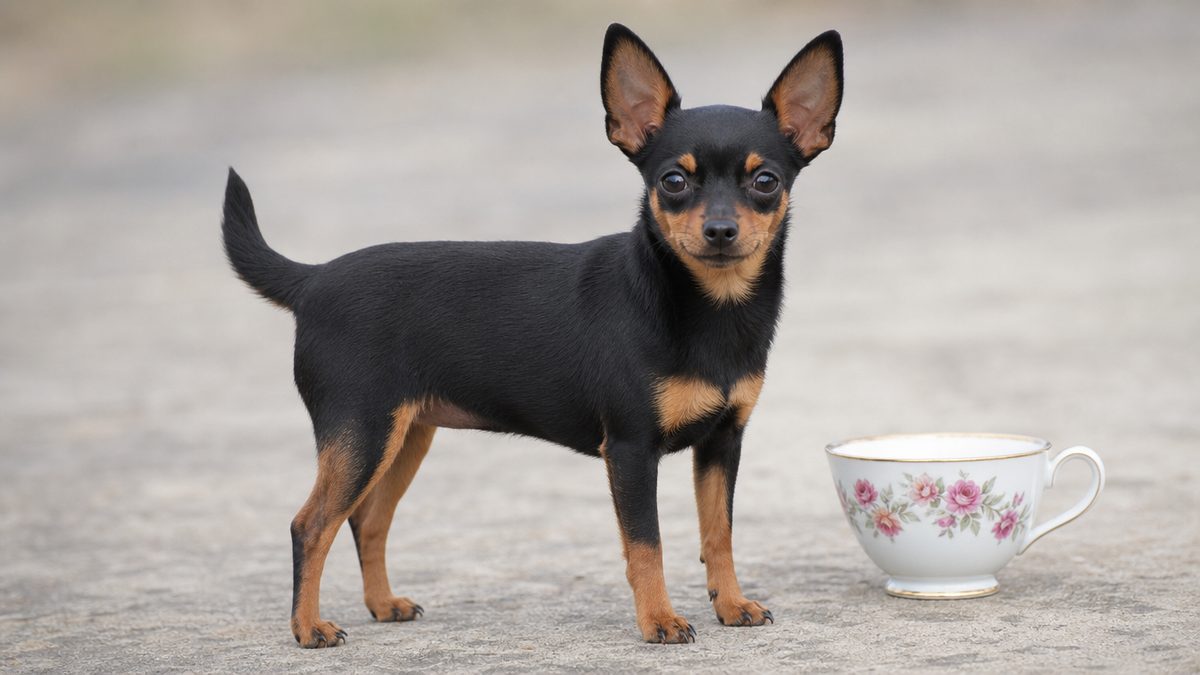
The Pražský Krysařík is a very small Czech companion dog held by the FCI as standard 363 on a provisional basis since 29 April 2019, standing 21 to 23 cm at the withers and weighing about 2.6 kg.
Almost every page about this breed says it is FCI-recognised and stops there. The FCI record says something more specific. Under Breed status it reads Recognized on a provisional basis, with a date of acceptance on a provisional basis of 29 April 2019 and no date of acceptance on a definitive basis at all. That is a real and checkable distinction: a provisional breed has a full published standard, can be entered at shows and has a country of origin on record, but it is not on the FCI's definitive list.
How long provisional status can last
The useful comparison sits one record away, in the same section of the same group. The Russkiy Toy went provisional on 21 February 2006 and definitive on 7 November 2017, a wait of eleven years and eight months. The Prazsky Krysarik has been provisional since April 2019, which is seven years and four months as this page is written. If the Russkiy Toy is any guide, the position may not change for several more years, and a buyer being told the breed is fully FCI-recognised is being told something the register does not say.
| Prazsky Krysarik | Russkiy Toy | |
|---|---|---|
| FCI number | 363 | 352 |
| Provisional acceptance | 29 April 2019 | 21 February 2006 |
| Definitive acceptance | None to date | 7 November 2017 |
| Current status | Recognized on a provisional basis | Recognized on a definitive basis |
| Time on the provisional list | Over seven years and counting | Eleven years and eight months |
| Authentic language | English | English |
The section name that grew to admit it
There is a detail in these documents that no other page appears to have noticed, and it is a small piece of registry history readable only by comparing two PDFs. The Russkiy Toy standard of 5 December 2017 prints its classification as Group 9, Section 9 Continental Toy Spaniels and Russian Toys. The Prague Ratter standard of 7 May 2019 prints the same section as Continental Toy Spaniel, Russian Toy & Prague Ratter.
The section was literally renamed to make room for each breed in turn. The FCI's own web records for both breeds abbreviate this to Continental Toy Spaniel and others, which conceals it. The two standards, read side by side, preserve the sequence.
The dog itself
The FCI breed standard describes a small smooth-haired or medium long coated dog with an almost square and compact body, and requires height to length in a ratio of 1 to 1.05, with females permitted slightly longer. Chest depth should be 45 to 50 percent of height at the withers, and skull width should equal skull length, with the standard stating that the skull must not be wider than longer.
Size is tightly bounded. Height at the withers is 21 to 23 cm for both sexes with a tolerance of plus or minus 1 cm, and optimal weight is approximately 2.60 kg. Anything over 24 cm or under 20 cm is a fault, and anything over 26 cm or under 18 cm is a disqualifying fault. For comparison, Dogs Victoria, one of Dogs Australia's state bodies, describes the breed as acknowledged as the smallest breed in the world by breed standard, because it is measured by maximum height rather than weight.
Colour is broad: black, brown or blue with tan markings including their diluted variations, yellow recessive and rich reds without tan markings, and black and tan merle and brown and tan merle. Tan markings sit above the eyes, on the cheeks, on the chest, on the pasterns and feet, inside the hindquarters and under the root of the tail, and on the fore chest they form two similar and separated triangles.
The standard's history says the breed has been known since the remote past of the Czech state, that it was often seen at aristocratic feasts of Czech kings at Prague castle, and that it passed as a gift from Bohemian kings to other European rulers. It also gives a date that is checkable and recent: in 1980 its regeneration successfully started. Treat the medieval material as the standard's account of the breed's own tradition and the 1980 date as the documented modern event.
Prazsky Krysarik price in India, and why every circulating figure is foreign
No verifiable Prazsky Krysarik price in India exists, because no Indian page ranks for the breed and India's dog import policy bars the commercial route by which a domestic price would form.
A Google India pull for this breed on 9 September 2026 returned Wikipedia, Wisdom Panel, Embark, three Australian state kennel bodies, the Prague Ratter Club of America, the Australian Prague Ratter Club and two aggregators. Not one Indian commercial listing appeared. That absence is a result rather than a gap, because the control passed in the same session: a search for labrador retriever puppy price in india returned ten genuine Indian listings with real rupee figures.
What the circulating figures actually are
Three price figures appear in search snippets for this breed, and all three are foreign. One aggregator's snippet gives an average of 1,500 to 2,500 US dollars. A Reddit thread quotes 3,500 Australian dollars. A breeder listing platform quotes a 500 dollar deposit plus a 3,000 dollar final payment. None of these appeared inside the body of a page this site retrieved, so they are recorded here as search snippets rather than as verified figures, and this page converts none of them into rupees.
Converting a foreign asking price into rupees produces a number no Indian seller has quoted and no Indian buyer can act on. This site has repeatedly documented answer engines performing exactly that conversion, stating that no Indian price exists and then printing a rupee band in the next sentence. A converted figure is arithmetic, not an observation, and it does not belong on a price page.
The structural reason no Indian price exists
India's import policy for pet dogs is restricted and permitted only with a DGFT authorisation. The permitted purposes are research with a CPCSEA recommendation, internal security by the Defence and Police forces, a certified therapy or emotional support dog, and a dog that has been with its owner for at least two years arriving on transfer of residence. The guidance then states plainly that dogs for commercial purposes like breeding, as a gift or other purposes are not allowed to be imported, and that new born puppies of less than 7 months are not to be allowed.
Those two sentences close the question. A breed with no Indian population cannot acquire one, because the only way to start a domestic breeding line is to import breeding stock, and that is the specific thing the policy forbids. Import runs through seven ports only, the airports and seaports of Delhi, Mumbai, Chennai, Hyderabad, Bengaluru and Kolkata and, since October 2024, Kochi airport, under ITC(HS) code 01061900. Department of Animal Husbandry…
Does the 2024 circular reach this breed?
Not on its face, and the honest answer includes a complication. CBIC Instruction 05/2024-Customs of 14 March 2024 reproduces a Department of Animal Husbandry and Dairying letter listing breeds prohibited for import, and four of its entries are bare category words the instrument never defines: Mastiffs (boerbulls), Terriers, Wolf dogs and Canario. The FCI classifies this breed in Group 9, Companion and Toy Dogs, not among the terriers, so the word Terriers does not reach it by classification.
The complication is that Wisdom Panel, one of the largest consumer dog DNA companies, files the Prague Ratter under the breed group Terrier on its own breed page. Since the instrument defines nothing and a customs officer has no reason to prefer the FCI's grouping over a commercial one, the question is not as closed as the classification alone suggests. It is worth knowing, and worth saying, rather than being asserted either way.
The wider legal position is settled enough to state. The Karnataka High Court quashed the circular on 10 April 2024 and the Delhi High Court set it aside that month, and the Centre told the Bombay High Court in January 2025 that it is not acting on it. No Indian law in force today bans owning, breeding or selling any of the breeds it named.
Cost of ownership for a 2.6 kg dog in India
The cost of ownership for a dog this small is unusual: almost every consumable is cheap because doses are tiny, and the single largest cost is the emergency you have to be able to afford at short notice.
No Indian breed page carries a monthly cost table for this dog, which means there is no template constant to inherit and no fabricated figure to correct. What follows is built from Indian retail and municipal prices that name their supplier, sized to a 2.6 kg animal.
- Core vaccination, per shot. Anti-rabies Rs 699, puppy DP Rs 849, 9-in-1 DHPPiL Rs 899, canine corona Rs 899 and kennel cough Rs 1,349 at one national clinic chain. These are promotional starting prices and the same chain quotes different course totals on different city pages, so record which city quoted you.
- Deworming. Drontal Plus is Rs 754 for six tablets against an MRP of Rs 838, which is Rs 125.67 a tablet dosed at one per 10 kg. A 2.6 kg dog takes a quarter of a tablet, so a single deworming costs about Rs 32 of product. Splitting tablets accurately at that size is a job for your vet, not for a kitchen knife.
- Food. A 2.6 kg dog eats a very small quantity, and food is genuinely a minor line in this breed's budget. The trap is the opposite of underfeeding: at this size a few extra grams a day is a large proportional gain.
- Municipal registration. Rs 500 in Delhi for a new registration and Rs 500 to renew, with a Rs 100 monthly late fee. Rs 50 in Chennai, where the corporation issued 9,115 licences in 2024 and runs six pet clinics giving treatment and anti-rabies vaccination free of cost.
- Grooming. Effectively nothing. The standard requires a short, glossy, close-lying coat without bald places, and a rubber mitt once a week is the whole routine.
The cost that is not on the list
For a toy breed the meaningful financial risk is not the monthly total, it is the unscheduled event. The two published case reports on this breed are instructive precisely because both involved intensive care. One puppy spent seven days in hospital including time in an infant incubator with supplemental oxygen. The other dog was treated with prednisolone and azathioprine for nine months. Neither is a monthly line item; both are the reason a contingency fund matters more for a small dog than a large one.
Greater Chennai Corporation's six municipal pet clinics provide all treatment and anti-rabies vaccination free of cost, and the corporation issued 9,115 pet licences in 2024. For a Chennai household that removes the biggest scheduled veterinary line above, and it is a more useful fact for an Indian reader than any imported breed price.
Heat tolerance: Prague against three Indian cities
The Prazsky Krysarik has moderate heat tolerance for a European breed, because a short glossy coat and a tiny body shed heat efficiently, but a 2.6 kg dog has almost no water reserve and dehydrates faster than any figure about coat suggests.
This section opens with a limitation rather than a figure, because the homeland point is one where NASA POWER's grid is unreliable. Queried at 50.0755 N, 14.4378 E, POWER returned a cell elevation of 353.91 m against a real Prague city elevation near 200 m, an error of about plus 154 metres. The cell is reading the Bohemian plateau around the city rather than the Vltava valley the city sits in.
Air temperature falls with elevation at roughly 6.5 C per 1,000 m, so a cell 154 m too high runs about 1.0 C too cold. The cell's annual mean of 8.92 C therefore corresponds to a real Prague figure of roughly 9.9 C. That correction is an estimate and it is labelled as one. The figure is published here as a Bohemian plateau baseline, not as a Prague city reading, which is the honest way to use a cell like this.
| Place | Cell elevation vs real | Annual mean C | Annual RH % | Hottest month | Peak wet bulb C |
|---|---|---|---|---|---|
| Prague, Bohemian plateau cell | 354 m vs 200 m, plus 154 m | 8.92 | 78.74 | Jul 20.06 | 15.55 (Jul) |
| Bengaluru | 842 m vs 920 m, minus 78 m | 23.74 | 67.94 | Apr 28.37 | 21.86 (May) |
| Delhi | 206 m vs 216 m, minus 10 m | 25.60 | 45.56 | Jun 35.88 | 26.50 (Jul) |
| Chennai | 49 m vs 6 m, plus 43 m | 27.95 | 72.39 | May 31.51 | 26.11 (May) |
Even taking the corrected figure of about 9.9 C, the gap is large. Prague's hottest month averages roughly 20 C. Chennai's coolest month averages 24.09 C. Bengaluru, at 23.74 C annual mean and 28.37 C in its hottest month of April, is the least hostile major Indian city for this breed. Delhi, whose June averages 35.88 C, is the most hostile.
Why a very small dog is not automatically heat-tolerant
Small dogs lose heat well because they have a large surface area relative to their mass. The same arithmetic works against them on water. A 2.6 kg animal carries a very small absolute volume of body water, so the same amount of panting that costs a 25 kg dog a modest fraction of its reserve costs this one a large one. Dehydration therefore arrives sooner, not later, in a toy breed.
- Carry water on every outing, even short ones, from March to June. This is not fussiness at 2.6 kg.
- Walk before sunrise or well after dark through the Indian summer, and treat surface temperature as the limit rather than air temperature.
- Test the ground with the back of your hand. A dog 21 cm tall has its whole body in the layer of superheated air just above hot tarmac.
- Watch for panting that does not settle within five minutes in shade, and for gums that feel tacky rather than wet.
- Treat air conditioning as a health measure rather than a luxury in Delhi, Chennai, Mumbai or Ahmedabad, and remember that the monsoon is humid rather than cool.
India's Dog Breeding and Marketing Rules 2017, Second Schedule Part IV paragraph 21(1), bar keeping dogs in outdoor facilities without the attending veterinary practitioner's written approval where they are not accustomed to local temperatures, where the breed cannot tolerate the temperatures prevalent in the area, or where the animal is sick, infirm, aged or young. A 2.6 kg dog falls under the third limb for much of its life, and the clause is a useful thing to be able to quote.
Temperament and household fit
The Prazsky Krysarik is a gentle, curious, affectionate companion that is slightly reserved with strangers and very friendly inside its own family, and the standard describes it in exactly those words.
The behaviour clause of FCI 363 is short and unusually warm: gentle, curious and affectionate; quick with good movement and steady pace; by nature slightly reserved towards strangers but very friendly in the family; with natural nobility and character. There is no guarding language, no snapping clause and no mention of prey drive anywhere in the behavioural section, despite the breed's name meaning ratter.
That last point is worth pausing on. The history says the breed was used for killing rats because of its small size, quick movement and highly developed sense of smell. The behaviour section, written for the modern dog, does not carry that forward as a temperament warning, which is a meaningful editorial choice by the breed's own custodians and distinguishes it from the working terriers this site also covers. DOGS NSW, which publishes the fullest registry write-up of the breed available in English, describes the same combination under separate Characteristics and Suitability headings.
Who this breed suits
- Apartment households, for whom a 21 cm dog with a short coat and modest exercise needs is close to ideal.
- Adults and older children who understand that this dog can be injured by ordinary domestic events.
- People who want a dog that travels, since at 2.6 kg it fits in a carrier that goes almost anywhere.
- Owners who will socialise deliberately, because slightly reserved becomes genuinely fearful without early positive exposure.
Who should look elsewhere
- Households with toddlers. A 2.6 kg dog and a small child are a fracture risk to each other, and no amount of training changes the physics.
- Homes with large boisterous dogs, where a play accident becomes a serious injury.
- Anyone who wants a guard dog. Reserved is in the standard; protective is not.
- Owners without reliable indoor cooling in a hot Indian city.
Almost every difficulty owners of this breed report traces to size rather than to character. This is a physically fragile dog in an ordinary household: being stepped on, jumping off furniture, being caught in a closing door and being injured by a larger dog at play are the realistic risks. DOGS NSW, whose breed page is the strongest registry write-up available, reaches the same conclusion under its own Suitability heading. Manage the environment and the alert, affectionate temperament looks after itself.
Training a toy breed properly
To train a Prazsky Krysarik, use the same methods you would use for any biddable dog and change only the physical setting, because the limits on training a 21 cm dog are ergonomic rather than mental.
The standard describes a quick dog with good movement and a steady pace, gentle and curious, which in practice means a willing learner. Nothing in the temperament makes this breed hard to train. What makes toy breeds appear untrained is usually that nobody trained them, because a badly behaved 2.6 kg dog is easy to pick up and carry away from the problem rather than to work through it.
Four priorities
- Teach four feet on the floor before you teach anything else. Jumping down from a sofa is a genuine fracture mechanism at this size. Teach the dog to ask to be lifted and provide steps or a ramp.
- Housetrain with an indoor option. A tiny bladder plus a lift ride to street level is a losing combination in an Indian high-rise. An indoor tray during the first year solves more than any correction will.
- Socialise early and deliberately. Slightly reserved is the standard's phrase, and a reserved dog that meets nothing before four months becomes a fearful adult. Lifts, watchmen, traffic noise, other dogs and monsoon rain, in short pleasant doses.
- Train a reliable settle and a carrier cue. A dog this portable will spend time in a bag, and a dog that finds the bag safe travels calmly.
Handling tolerance deserves its own mention. This is a dog whose teeth, patellae and skull will all need examining regularly, and a small dog that struggles is easy to restrain by force and hard to examine properly. Teach the puppy to lie calmly on its side, have its mouth opened and its legs handled, and the whole of its veterinary life gets easier.
The commonest handling error with a breed this small is that it never walks. A dog that is always carried does not build the muscle that stabilises small joints, does not learn to negotiate the world and becomes more reactive rather than less. Let it walk, on the ground, on its own feet, every day.
How much exercise this breed needs
A Prazsky Krysarik needs about 30 to 45 minutes of activity a day split into short outings, plus daily mental work, and the practical limit in India is heat rather than stamina.
The standard describes a dog that is quick with good movement and a steady pace, and requires balanced angulations front and rear producing steady, flowing, parallel, light movement with a ground-covering trot and pads that must not drag along. That is a description of a sound, active little dog rather than an ornament, and it should be exercised as one.
In practice, several short outings beat one long one at this size. A 21 cm dog covers far less ground per step, so a walk that feels short to the handler is a substantial distance for the dog, and small joints do better with variety than with duration.
- Two or three short walks a day rather than one long one, all of them outside the heat of the day.
- Scentwork indoors, which suits a breed whose own standard credits it with a highly developed sense of smell and which costs nothing.
- Food puzzles and training games, which tire a curious dog faster than distance does.
- Controlled play with dogs of similar size only. This is a safety rule rather than a socialisation preference.
Patellar luxation is the orthopaedic problem toy breeds are watched for, and one of the two ranking veterinary pages for this breed names patella luxation and fractures as its two health headings. Repetitive jumping on and off furniture is the everyday version of the load that matters. Provide steps, and see your nearby vet if you notice a hind leg skipping or held up for a few strides before returning to normal.
Grooming, which is close to nothing
Groom a Prazsky Krysarik with a rubber mitt once a week, and spend the time you save on teeth, nails and skin checks, which matter far more in this breed than coat care does.
The standard's coat clause is brief because there is little to describe: short, glossy, fitting close to body, thick, without bald places, with the head usually carrying thinner and shorter coat than the body. A second variety is moderately long, with fringes on the ears, quarters, tail and slightly longer hair on the chest. Bald spots on any part of the body are a disqualifying fault, which makes coat condition a genuine breeding consideration rather than a cosmetic one.
What to do instead of grooming
- Brush the teeth daily. Toy breeds carry a full-size dental formula in a small jaw, and the standard prefers a full dentition while disqualifying a dog missing more than four teeth excluding P1 and M3. Dental disease is the single most predictable health cost in a dog this size.
- Trim nails every two to three weeks. A very light dog does not wear its nails down, and overlong nails change the angle of the foot and load the small joints wrongly.
- Check the skin weekly in daylight, particularly through the monsoon, and part the coat rather than stroking it.
- Check for ticks by hand. Given the Indian tick burden set out in the health section, a weekly physical check is not optional even on a short-coated indoor dog.
- Feel the top of the skull. An unclosed fontanel is a disqualifying fault in this breed's standard and a finding worth taking to a vet, which is covered below.
A short close coat dries quickly, which removes most of the monsoon skin risk that troubles coated breeds. What it does not remove is chill: a 2.6 kg dog wet in an air-conditioned room loses heat fast. Dry the dog properly before returning it to cooled air, and do not bath more often than the coat needs, which is rarely.
Health, and the unusual shape of what is known
Almost nothing has been measured in this breed. Its entire world veterinary literature is two case reports, it holds an OFA breed code with no published statistics, and it is absent from the largest recent longevity study altogether.
That is an uncomfortable sentence to write on a health section, and it is the accurate one. The value of this page is in showing exactly how the absence was established, because an unproven absence is not evidence.
The literature, and the search that finds it
The obvious search returns nothing. The quoted phrase Prague Ratter in title or abstract returns zero records, with PubMed's own quotedphrasesnotfound warning attached. So does the quoted native name, and so does krysarik alone. Dropping the quotation marks changes everything: the unquoted query returns two records, and both are genuine on-breed case reports. Controls run in the same session returned 126 for Labrador retriever hip dysplasia and 31 for a comparably rare breed, so the instrument was working.
The two papers are worth reading properly, because in a literature of two, each one carries weight.
| Year | Report | Outcome |
|---|---|---|
| 2017 | A 3-month-old male developed syndrome of inappropriate antidiuretic hormone secretion after aspiration pneumonia | Discharged after 7 days |
| 2022 | A 2-year-old female developed pulmonary eosinophilic granulomatosis | Granuloma resolved in 2 months; free of signs after almost 3 years |
The 2017 report contains a detail every Indian owner of a toy puppy should know. The three-month-old presented with lethargy, weakness, coughing and laboured breathing after an episode of resistance to oral deworming. Aspiration pneumonia followed, then severe hyponatraemia, plasma hypotonicity, high natriuresis and seizures, and a diagnosis of SIADH. The puppy was treated with hypertonic saline and loop diuretics and discharged seven days after admission. The authors describe it as the first report of a puppy younger than 12 weeks developing SIADH associated with aspiration pneumonia.
Oral deworming is the most routine thing an Indian owner does at home, and in the only published paediatric case report on this breed it was the trigger for a week in intensive care. A puppy that struggles hard against oral dosing can inhale the liquid. If a very small puppy coughs, gags repeatedly or breathes with effort after any oral dosing, that is an emergency and not something to watch overnight. Ask your nearby vet to demonstrate the technique, or to dose the puppy for you.
The 2022 report is more encouraging. A two-year-old female presented with cough, exercise intolerance and worsening dyspnoea that antibiotics had not resolved. Investigation found peripheral eosinophilia, endoscopic bronchial changes, eosinophilic inflammation on bronchoalveolar lavage and a solitary lung mass on radiographs, confirmed by computed tomography and ultrasound-guided biopsy. Treatment with prednisolone and azathioprine cleared the granuloma radiographically within two months, all medication was withdrawn after nine months, and the dog remained free of clinical signs almost three years later.
Screening data: a code without a table
OFA holds this breed. Its breed selector carries PRAGUE RATTER with the code PRT, and notably with an empty groups attribute, meaning OFA maps it to no AKC, CKC, UKC or Kennel Club group. Holding a code and appearing in the statistics are different things. The string PRAGUE RATTER appears zero times in OFA's published statistics dataset, while in-session controls of LABRADOR 109, BULLDOG 170 and BEAGLE 61 all matched their expected counts.
That is a threshold result rather than a clean bill of health, and OFA states the threshold itself: a breed needs at least 100 hip evaluations to appear, or at least 50 for its other databases. Too few Prague Ratters have been screened. The correct wording is that this breed has no row in OFA's published statistics tables, not that it is absent from the OFA database.
What the standard itself flags, which is the best evidence available
In the absence of prevalence data, the standard's disqualifying faults are the nearest thing to a breed health list, because they record what the breed's custodians thought worth excluding.
- Open fontanel is a disqualifying fault, with no age qualifier at all. That is stricter than the neighbouring Russkiy Toy standard, which disqualifies an open fontanel only in dogs over 9 months. A persistent soft spot on the skull matters because it is associated with hydrocephalus risk in toy breeds, and it is a finding to raise with a vet rather than a quirk.
- More than 4 teeth missing, excluding P1 and M3, or 2 or more incisors missing, is disqualifying, and a full dentition is preferred. India's Dog Breeding and Marketing Rules 2017, Second Schedule Part III paragraph 8(10), separately require breeding dogs to have been tested for genetic defects including two or more missing teeth and wry mouth. The two documents point the same way.
- Blue or predatory eye is disqualifying, and for merle dogs blue in the eye over 50 percent of the area is disqualifying while up to 50 percent is a fault. Merle is permitted in this breed, and merle to merle breeding carries well-known risks to hearing and vision, so a merle puppy's parentage is a fair question to ask.
- Bald spots on any part of the body are disqualifying, which makes coat quality a health signal rather than a cosmetic one.
What consumer panels list, and how to read it
Wisdom Panel's page for this breed names four genetic conditions: chondrodystrophy and intervertebral disc disease risk, hyperuricosuria, von Willebrand's disease type 1, and juvenile dilated cardiomyopathy, which its own heading says was discovered in the Toy Manchester Terrier. Read that last one carefully. A panel listing a variant on a breed page means the test is offered for dogs of that breed, not that the disease has been documented in the breed. That is a different claim and the heading says so.
Life expectancy, and why this page gives none
There is no study-grade life expectancy figure for this breed. The breed is absent from the entire 344-name frame of McMillan 2024's supplementary Table S5, so it was not merely excluded from the survival analysis, it was never in the consideration set. Registry and aggregator pages give 11 to 14 years with no denominator, no cohort and no study behind them. Wikipedia carries a Life expectancy subheading for the breed, which is more than most sources manage, but the figure beneath it rests on the same absence.
The Indian risk that has nothing to do with the breed
Tick-borne disease is what a Prague Ratter in India would actually meet. A West Bengal study of 584 dogs screened at veterinary clinics detected Babesia gibsoni in 76.54 percent, with 72.9 percent of those 584 carrying two or more pathogens. A Kerala study of 120 dogs found Babesia in 80 of them, peaking before the monsoon between March and May. Both sampled clinic caseloads rather than random populations, so they are not general prevalence figures. In a 2.6 kg dog, the anaemia these organisms cause has far less margin to work in than it does in a large dog, which makes prevention proportionally more important, not less.
Feeding a 2.6 kg dog without getting it wrong
Feed a Prazsky Krysarik little and often, weigh the food rather than scooping it, and watch body condition weekly, because at this size a ten gram error is a large proportional one.
The standard gives an optimal weight of approximately 2.60 kg and disqualifies nothing on weight, unlike its neighbour the Russkiy Toy which disqualifies above 3 kg and below 1.5 kg. FCI-Standard N 352 Russkiy Toy What it does disqualify is size, over 26 cm or under 18 cm, so the weight target is a proportion question rather than an absolute one.
Weigh the food on a kitchen scale. A measuring cup is accurate to perhaps five grams, which is a rounding error for a Labrador and roughly two percent of this dog's daily ration. Weigh the dog weekly on the same kitchen scale for the first year, then monthly, and adjust in small steps.
Two size-specific risks
- Hypoglycaemia in puppies. Very small puppies have limited glycogen reserves and can become hypoglycaemic if a meal is missed, particularly when stressed, travelling or unwell. Feed a puppy this size four times a day and never leave it more than a few hours without food. Weakness, wobbliness or collapse in a toy puppy is a veterinary emergency.
- Overfeeding by kindness. A dog eating 60 to 80 grams a day gains proportionally from every scrap. Table food that would be trivial for a medium dog is a meaningful share of this one's intake, and extra weight loads small joints that are already the breed's weak point.
Assess by feel, since a short glossy coat hides less than a long one but still hides something. You should feel the ribs easily under a thin covering, see a waist from above and a clear tuck from the side. In an Indian summer, watch water intake as closely as food intake, and mention any sustained increase in drinking to your nearby vet rather than simply refilling the bowl more often.
Toy breeds carry the same number of teeth as large breeds in a much smaller jaw, and the standard prefers a full dentition. Soft food alone accelerates dental disease, which is the most predictable long-term health cost in a dog this size. Ask your vet what texture and what dental routine suits your dog, and start it while the puppy still accepts having its mouth opened.
The first year, month by month
The first year with a Prazsky Krysarik is about three things: not letting the puppy get hurt, not letting it go hungry for long, and getting socialisation done before four months.
- Months 0 to 2. With the breeder. Indian law sets eight weeks as the floor: Rule 8(1)(a) of the 2017 Rules provides that pups less than eight weeks in age are not sold. For an imported dog the DGFT floor is far higher at seven months.
- Month 2. Home. Feed four times a day. Vaccination begins, with anti-rabies around Rs 699 and multivalent shots in the Rs 849 to Rs 899 band at one national chain. Ask your vet to check the fontanel and record whether it is open.
- Months 2 to 4. The socialisation window and the most valuable eight weeks of the year. A slightly reserved breed that meets nothing becomes a fearful adult. Lifts, watchmen, traffic, monsoon rain, other small dogs, all in short pleasant doses, and always with the puppy on the ground rather than in your arms.
- Month 3 to 4. Deworming on your vet's schedule. At 2.6 kg that is roughly a quarter tablet, about Rs 32 of product, and it should be dosed by someone who can split it accurately. Ask for a demonstration of oral dosing technique, given what the 2017 case report describes.
- Month 3 to 4. Register the dog with your municipality: Rs 500 in Delhi, Rs 50 in Chennai. Greater Chennai Corporation veterinary…
- Months 4 to 6. Teething. Count the adult teeth as they arrive and tell your vet what is missing, since the standard disqualifies a dog missing more than four teeth and Indian law names two or more missing teeth as a defect to be tested for.
- Months 4 to 9. Watch the hind legs. A skip, a hop or a leg held up for a few strides before normal gait resumes is the classic presentation of a luxating patella and it needs examining rather than waiting.
- Months 6 to 12. Adolescence. Keep the furniture rules. This is the age at which a confident young dog starts launching off sofas, and the age at which most avoidable fractures happen.
- Month 12 onwards. Adult. Move to two meals a day, keep the dental routine daily, and weigh monthly. If the fontanel has not closed by now, it is a conversation to have with your vet, not something to ignore.
Almost everything on this list is about physics rather than about the dog. The standard describes a gentle, curious, affectionate animal with natural nobility, and nothing in the breed's temperament makes the first year difficult. It is the 2.6 kg that requires the care.
Prazsky Krysarik against the toys it is confused with
Google's own People also ask box asks whether this breed is a Chihuahua and how it differs from a Miniature Pinscher, so this table answers both from the standards rather than from opinion.
The confusion is real and measurable. Google's People also search for row for this breed lists Russian Toy, Miniature Pinscher, Chihuahua and English Toy Terrier, and two of the four People also ask questions captured for it are explicitly about telling it apart from other small dogs.
| Prazsky Krysarik | Russkiy Toy | Chihuahua | Miniature Pinscher | |
|---|---|---|---|---|
| Height | 21 to 23 cm, tolerance 1 cm | 22 to 27 cm, preferable 25 cm | Judged on weight, not height | Taller than both Czech and Russian toys |
| Weight | About 2.60 kg optimal | Up to 3 kg, preferable 2.3 kg | Judged by weight | Considerably heavier |
| Skull | Rounded in profile, must not be wider than long | High, slightly rounded forehead | Apple dome | Narrow wedge, parallel planes |
| Apple head | A disqualifying fault | Not the breed type | The breed's signature | Not the breed type |
| Open fontanel | Disqualifying at any age | Disqualifying over 9 months | Common and tolerated | Not typical |
| FCI status | Provisional since 2019 | Definitive since 2017 | Definitive | Definitive |
The clearest single discriminator is the head. An apple shaped head is a disqualifying fault in this breed and the defining feature of the Chihuahua, so a dog with a domed skull and a short muzzle sold as a Prazsky Krysarik is either not one or is a very poor one. The second is ear set: this standard requires ears set at the back of the head, carried at a gentle angle to the sides, which is a distinctly different placement from either comparator.
The comparison that matters in India
None of the three European toys above is realistically obtainable in India. The Chihuahua is, and it is what an Indian buyer looking for a very small dog will actually be shown. The honest framing is therefore not which of these breeds is better, but whether a dog of two to three kilograms suits your household at all, in a climate where a small body dehydrates quickly and in homes where the floor is a busy place.
Of the four breeds above, this one has the strictest rule: an open fontanel is disqualifying at any age, where the Russkiy Toy allows it until nine months and the Chihuahua tolerates it as normal. If you are choosing between very small breeds and worry about hydrocephalus risk, that difference in what the standards will accept is a real signal about what each breed's custodians are selecting against.
Mistakes owners make with this breed
Most avoidable harm to a Prazsky Krysarik comes from treating it as a small dog rather than as a very small one, and the rest comes from believing what search results say about its status.
- Dosing oral medicine without technique. In the only published paediatric case report on this breed, resistance to oral deworming led to aspiration pneumonia and a week in intensive care. Ask your vet to show you how.
- Letting the dog jump off furniture. Provide steps or a ramp. At 2.6 kg, a sofa is a proportionally enormous drop and fractures are one of the two health headings the ranking veterinary page gives this breed.
- Missing meals in a young puppy. Hypoglycaemia in a toy puppy presents as weakness or collapse and is an emergency. Four meals a day until at least four months.
- Skipping tick prevention because the dog is indoors and short-coated. Indian clinic-based studies report very high haemoprotozoan burdens, and a 2.6 kg dog has little margin for anaemia.
- Believing the breed is fully FCI-recognised. It is recognised on a provisional basis, and has been for over seven years.
Two errors that come from the search results
The first is reading a consumer DNA panel's condition list as a list of diseases documented in the breed. One of the four conditions listed for this breed says in its own heading that it was discovered in the Toy Manchester Terrier. The second is trusting the aggregator pages at all: one of them serves the correct breed content under stale metadata pointing at a different breed, the Chinese Crested Dog on 9 September 2026 and the Molossus of Epirus on 17 September, and the Embark URL that aggregators cite for this breed returns a 404 while the live replacement, which has moved twice since, is a short card with a fun fact, a height and a weight.
The 2017 Rules, Second Schedule Part II paragraph 6(3), prohibit in-breeding within four generations and incest breeding, naming uncle to niece, nephew to aunt, cousin to cousin and grandparent to grandchild. Paragraph 6(8) forbids tail docking, which this breed's own standard notes is sporadically practised in the country of origin. Paragraph 6(9) prohibits breeding to create new breeds or unusual looks. A numerically small breed's overseas guidance sometimes assumes close breeding is available. In India it is not.
Adopt, verify and source responsibly
There is no lawful commercial route to a Prazsky Krysarik in India, so the honest options are bringing your own dog in on transfer of residence or choosing a different very small dog, and this section covers both.
The DGFT position settles sourcing. Import of pet dogs is restricted and requires an authorisation, dogs for commercial purposes like breeding, as a gift or other purposes are not allowed to be imported, and new born puppies of less than 7 months are not allowed at all. The only route without an authorisation is the customs baggage route, for up to two pets, for a person transferring residence permanently to India after two years of continuous stay abroad.
If you are bringing your own dog to India
- Confirm the two-year rule applies. More than two years of continuous stay abroad for the baggage route, otherwise a DGFT authorisation is needed.
- Start at least two months before travel. The application goes to the Department of Animal Husbandry, Dairying and Fisheries for an NOC, then to the Exim Facilitation Committee, which meets monthly.
- Get the advance NOC from the AQCS at your port seven days before travel, relaxable to three days in specific circumstances.
- Plan on one of seven ports: Delhi, Mumbai, Chennai, Hyderabad, Bengaluru, Kolkata or, since October 2024, Kochi. The full route is set out in how to import a dog to India.
- Carry the pet book, vaccination certificate and the official veterinarian's health certificate, and expect quarantine where required.
- Bring the pedigree and any health certificates. For a breed no Indian vet will have seen, a written record of the dog's fontanel status, patella grades and dental history is worth more than a show title.
If you are choosing rather than importing
There is no Indian population of this breed to rescue from, and saying otherwise would be dishonest. What is available is the dog underneath the description. The standard describes a gentle, curious, affectionate small companion, slightly reserved with strangers and very friendly at home, that fits in an apartment and needs almost no grooming. Indian shelters and small-dog rescues rehome dogs matching every word of that, already adapted to the climate.
- Verify a claimed pedigree against the issuing registry's own records, and remember that a provisional FCI breed's papers come through a national member body rather than from the FCI directly.
- Ask about the fontanel and the patellae specifically. These are the two things a buyer of any toy breed should ask about, and in this breed the standard makes the first a disqualifying fault.
- Ask whether either parent is merle, because the standard permits merle and merle to merle breeding carries known risks.
- Register with your municipality. Rs 500 in Delhi, Rs 50 in Chennai. Greater Chennai Corporation veterinary…
- Use free municipal veterinary services where they exist, such as Greater Chennai Corporation's six pet clinics.
We report published prices and registry documents as editorial content. We do not recommend breeders, link puppy listings or quote a live price as an offer. For this breed we publish no price in any currency, because no Indian figure exists and converting a foreign one would be arithmetic rather than reporting.
Prazsky Krysarik questions people actually ask
Are Prague Ratters good dogs?
The FCI standard describes a gentle, curious and affectionate dog, quick with good movement and a steady pace, slightly reserved towards strangers by nature but very friendly within the family, with natural nobility and character. That is a good companion temperament. The difficulty is not behaviour, it is that a 2.6 kg dog needs husbandry a normal small dog does not.
Is a Prague Ratter a Chihuahua?
No, and the standard draws the line at the skull. The Prague Ratter's skull is rounded in profile with a visible occiput and a distinct stop, and an apple shaped head is a disqualifying fault. The apple dome is the Chihuahua's signature. The two also differ on ear set: the Prague Ratter's ears are set at the back of the head and carried at a gentle angle to the sides.
What breed of dog is a ratter?
Ratter is a job rather than a breed, and many unrelated breeds hold the name. Krysarik is simply Czech for ratter, and the FCI standard says the breed earned the name because its small size, quick movement and highly developed sense of smell were used for killing rats. The FCI nonetheless classifies it in Group 9 Companion and Toy Dogs, not among the terriers.
What are the key differences between a Miniature Pinscher and a Prague Ratter?
Size and skull. The Prague Ratter stands 21 to 23 cm and weighs about 2.6 kg, well below a Miniature Pinscher, and the FCI disqualifies it over 26 cm. Its skull is rounded in profile and not parallel with the muzzle, whereas the Pinscher's head is a narrow wedge with parallel planes. The Pinscher's high-stepping hackney gait is also absent from this standard.
What is the Prazsky Krysarik price in India?
There is no verifiable figure. No Indian page ranks for the breed, India's import policy for dogs is restricted, and dogs for commercial purposes like breeding or as a gift are not allowed to be imported at all. The dollar and Australian dollar prices circulating in search snippets are overseas breeder asking prices and this page does not convert them.
Is the Prazsky Krysarik fully recognised by the FCI?
No. FCI record 363 states the breed status as recognized on a provisional basis, with acceptance on a provisional basis dated 29 April 2019. It has held that status for over seven years. Provisional breeds have a full published standard and can be shown, but they are not on the definitive list and the position can take a decade or more to change.
How long do Prague Ratters live?
No study-grade figure exists. The breed is absent from the entire 344-breed frame of McMillan 2024, the largest recent analysis of dog longevity, so it has no median, no confidence interval and no hazard ratio there. The 11 to 14 year figures circulating on registry and aggregator pages carry no stated denominator or study behind them.
What health screening data exists for this breed?
Almost none. OFA holds a breed code for the Prague Ratter, PRT, but the breed appears zero times in OFA's published statistics dump, while in-session controls for Labrador, Bulldog and Beagle all returned their expected counts. OFA publishes a breed only once it holds 100 hip evaluations, or 50 for its other databases, so this is a threshold problem rather than a clean bill of health.
How much veterinary literature is there on the Prague Ratter?
Two case reports in the whole world literature, and both are invisible to the obvious search. The quoted phrase Prague Ratter in title or abstract returns zero with PubMed's own phrase-not-found warning, and only dropping the quotation marks surfaces a 2017 report of SIADH in a three-month-old puppy and a 2022 report of pulmonary eosinophilic granulomatosis.
Can a Prazsky Krysarik cope with Indian heat?
Better than a coated breed and worse than its size suggests. The smooth coat is an advantage, but a 2.6 kg body carries almost no water reserve and dehydrates quickly. Prague's hottest month averages about 20 C on a grid cell reading 154 m too high, against Delhi at 35.88 C in June and Chennai's coolest month at 24.09 C.
Does the 2024 Indian breed circular apply to this breed?
Not on its face, but the question is not fully closed. The circular's list contains four undefined category words, Mastiffs (boerbulls), Terriers, Wolf dogs and Canario. The FCI classifies this breed in Companion and Toy Dogs rather than among terriers, so the word does not reach it by classification. At least one major consumer DNA company nonetheless files it under the breed group Terrier.
Is tail docking of this breed allowed in India?
No. The FCI standard notes that the tail is sporadically docked in the country of origin, but India's Dog Breeding and Marketing Rules 2017, Second Schedule Part II paragraph 6(8), state that there shall be no tail docking, ear cropping, de-barking, de-clawing or any other kind of mutilation, and that any change of appearance by artificial means is strictly forbidden.
Compare with similar breeds
Pražský Krysařík sits in 2 Bonbeno groups. Each one compares it directly against the breeds it is genuinely an alternative to, on the same figures.